News

News

Italian Artist Plans Bold Tribute to Charlie Kirk With Statue in Times Square [WATCH]

Italian artist Sergio Furnari says he plans to unveil a memorial statue honoring Turning Point USA founder Charlie Kirk in New York City’s Times Square on Sept. 10, marking the one-year anniversary of Kirk’s assassination, as reported by Fox News.

Furnari has been sculpting images of Kirk since last year and has documented the project’s development through videos posted on his Instagram account.

The artist said the completed monument will be displayed in Times Square and is intended to honor Kirk while promoting the principle of free speech.

“It’s going to be in the middle of Times Square, the center of the universe,” Furnari said in one of his videos over the weekend.

“You can bring over whoever you want, family or friends. If you were a big fan of Charlie, this will be your opportunity to maybe find a little bit of peace or harmony.”


View this post on Instagram


A post shared by Sergio Furnari (@sergiofurnariart)

According to Furnari, work on the project began after Kirk was assassinated during a Utah Valley University event. The sculptor has continued refining the design over the past several months while sharing updates with supporters online.

In one of his earliest videos discussing the project, posted in November, Furnari explained that he had not been a supporter of Kirk before his death but came to respect what he viewed as Kirk’s willingness to engage with people who disagreed with him.

“I did not agree with 99.9% of whatever he was talking about, but there’s the 0.001% that I agree with him. At the moment you kill or assassinate people just because you don’t agree with somebody, that’s when you become like the worst country ever,” Furnari said.


View this post on Instagram


A post shared by Sergio Furnari (@sergiofurnariart)

Since then, Furnari has continued promoting the larger memorial sculpture and has announced plans to publicly display it on Sept. 10.

As the unveiling date approaches, Furnari said he has received threats directed at both himself and the statue.

Addressing critics in a video posted Tuesday, the artist defended the project and said it represents free expression rather than a political message.

“Now, to all the haters, how many times you guys want to kill Charlie?” Furnari asked.

“I mean, wasn’t one time enough? To all of you guys out there that want to come and destroy…want to bring a drill bat and some spray paint, and you want to destroy him, you want to burn him, come on, guys. The guy’s dead. I mean, if you guys are afraid of a statue, there’s something really wrong with you. It’s just a statue. The message is simple: freedom of speech. I’m exercising my First Amendment [right], which is freedom of speech. That’s all it is.”


View this post on Instagram


A post shared by Sergio Furnari (@sergiofurnariart)

In comments provided to Fox News Digital, Furnari said he is not overly concerned about criticism surrounding the project.

He said critics “bark like chihuahuas” but “they don’t bite.”

Furnari also noted that he experienced similar reactions after creating a bust of President Donald Trump, which he displayed in recognition of Trump’s 80th birthday.

The artist rejected suggestions that the Charlie Kirk memorial is intended as a political statement, saying his motivation centers on honoring someone who lost his life.

“I’m not into that stuff at all. I like Trump, but that’s it. I’m basically talking, you know what I mean? You know, it felt like I’m a MAGA, you know, or I’m Republican, or I am a Democrat. I’m an artist, that’s it. I never voted, never will. Yeah, it’s not about politics. You know, this is not like a political statement. This is just like a guy that got killed and then got bullied,” Furnari said.

To help complete the project, Furnari has established a GoFundMe campaign for what he describes as a “bigger than life-size” statue of Kirk.

According to the fundraising page, the sculptor has sold his apartment to continue financing the memorial.

If completed as planned, the statue will be unveiled in Times Square on Sept. 10, one year after Kirk’s death, as Furnari continues to promote the project as a tribute focused on free speech and remembrance.

News

GOP Divides Over McConnell Absence Before Trump’s Senate Agenda Moves Forward [WATCH]

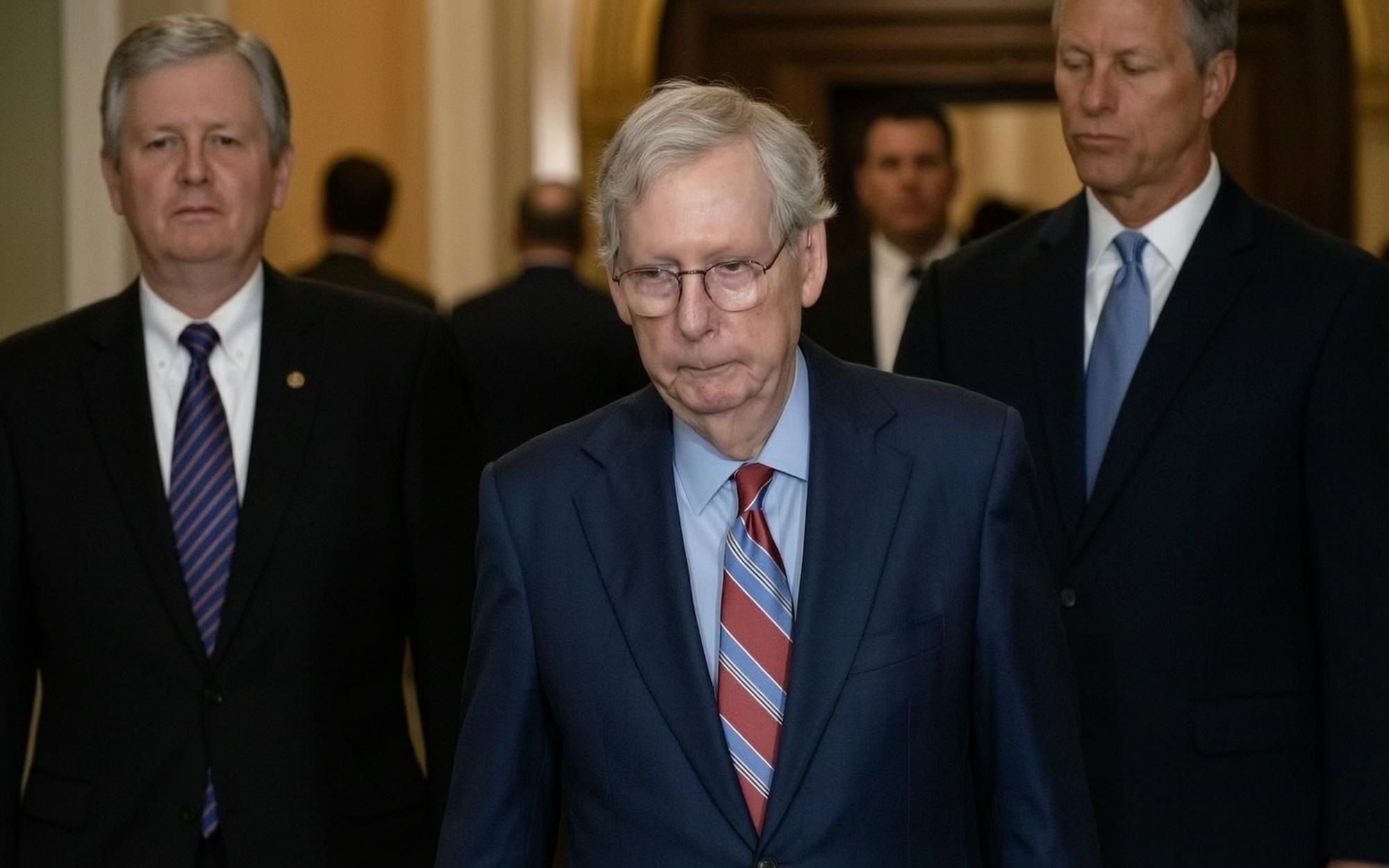
Republican senators are divided over questions surrounding Sen. Mitch McConnell’s extended absence from the Senate, with Sen. Tommy Tuberville calling for more information about the Kentucky Republican’s condition while Sen. John Kennedy urged colleagues and the public to stop speculating about McConnell’s health, as reported by Fox News.

McConnell, R-Ky., has been away from the Senate since he was hospitalized on June 14. After weeks of silence about his condition, he recently issued a statement on social media explaining that he remains under doctors’ orders and is not yet ready to return to the Senate floor.

McConnell also pledged that he intends to return before retiring at the end of his current term.

Mitch McConnell Hospitalized After Sudden Illness, Condition Still a Mystery

Tuberville, R-Ala., said Republicans need more clarity as the Senate prepares to vote on key portions of President Donald Trump’s legislative agenda before lawmakers leave Washington for the August recess.

“Somebody needs to do something,” Tuberville told Fox News Digital. “Somebody needs to come out.”

According to Tuberville, Senate Republicans have not received additional information from leadership regarding McConnell’s expected timeline for returning or any further details about his condition.

“We didn’t get any information today in our luncheon,” Tuberville said Tuesday. “I don’t know what’s going on, but you know that’s not my business.”

McConnell recently disclosed that complications stemming from childhood polio contributed to a fall last month that left him “briefly unconscious.”

He said he later developed a “mild case of pneumonia” while recovering, extending the amount of time needed before he could return to work.

His statement addressed widespread speculation that followed his June hospitalization, including rumors suggesting he had suffered cardiac arrest.

Kennedy, R-La., strongly rejected rumors circulating about McConnell’s condition and said he believes what the longtime senator has publicly stated.

“Look, I believe Mitch,” Kennedy said. “I don’t believe all these stories that he’s brain dead and all of that. People need to get a life.”

Kennedy also pointed to McConnell’s age and injuries as reasons for his recovery period.

“I think he had a fall, and Mitch is not 29 anymore,” Kennedy said. “And he’s recuperating from it, and he’ll be back as soon as he can.”

He added, “That’s what he said, and I take him at his word.”

While Tuberville emphasized that he wishes McConnell a full recovery, he argued that Republicans need to know when the Kentucky senator expects to return because of the Senate’s upcoming schedule.

Lawmakers are expected to remain in session for several more weeks before departing for the August recess. Senators are scheduled to leave Washington beginning Aug. 8 and return on Sept. 13.

Tuberville said the Senate’s narrow margins make every Republican vote important as lawmakers prepare to consider President Trump’s legislative priorities before the extended break.

“He’s gonna need to come back probably before this three-week session’s over with, because then we’re off for like five weeks,” Tuberville said.

Republicans, he added, cannot expect assistance from Democrats during upcoming legislative votes.

“We’re gonna need him, because the Democrats are not gonna give us any votes,” Tuberville said.

McConnell has not publicly provided a specific date for his return to the Senate.

In his recent statement, he said he plans to return once his doctors determine he is medically cleared to do so and reiterated his commitment to serving through the end of his term before retiring.

His continued absence has fueled questions on Capitol Hill as the Senate prepares for a series of legislative votes ahead of the August recess.

While some Republicans, including Tuberville, are seeking additional information about McConnell’s status, others, including Kennedy, say the senator’s public explanation should be accepted as he continues his recovery.

News

Coast Guard Suspends Search After Deadly San Francisco Bay Boat Tragedy Near Alcatraz [WATCH]

The U.S. Coast Guard has suspended its search for three people who remain missing after a 49-foot cabin cruiser carrying members of an extended family capsized near Alcatraz Island during a memorial outing in San Francisco Bay, as reported by Fox News.

The vessel sank on Tuesday afternoon with 20 people aboard. Authorities said one passenger, identified as 79-year-old Clifford Joseph Boisa of Sutter County, died after being pulled from the water.

Sixteen other people were rescued, while three remain missing. Officials also confirmed that a dog aboard the vessel died.

According to authorities, the family had gathered on the recreational boat to scatter the ashes of a loved one during a memorial service before the accident occurred.

The Coast Guard announced Wednesday evening that the active search had been suspended after rescue crews spent nearly a full day searching the bay without finding additional survivors.

“Suspending an active search is one of the most difficult things we do as Coast Guard commanders,” Coast Guard Sector San Francisco Commander Capt. Jarod Toczko said during a Wednesday news conference.

“Our goal is always to bring home families’ loved ones.”

Toczko said rescue crews searched for approximately 23 hours using 11 surface vessels and four aircraft.

During that effort, responders covered about 950 square nautical miles and more than 1,700 miles of search track before concluding there was little likelihood of locating additional survivors.

He added that the families of the missing were notified before the search was suspended.

Investigators said the boat encountered a wave that caused it to list heavily before losing stability, rolling over, and sinking into San Francisco Bay.

Emergency dispatchers initially received reports suggesting the boat may have caught fire before sinking. However, investigators later determined there was no evidence of a fire.

Toczko said investigators concluded that what witnesses believed to be smoke was likely steam coming from the sinking vessel.

Authorities said the cabin cruiser had three enclosed levels. Survivor interviews indicated that several passengers were inside the main and lower decks when the boat overturned.

Toczko said investigators believe it remains possible that some of the missing passengers became trapped inside the vessel as it sank, although he emphasized that investigators have not reached any final conclusions.

The San Francisco Fire Department said three rescued passengers were transported to local hospitals for treatment and were later released.

Thirteen additional survivors received medical evaluations at a reunification center following the rescue operation.

San Francisco Fire Chief Dean Crispen confirmed that one person and one canine died in the incident.

Officials believe the boat came to rest approximately 130 feet below the surface near the location where it capsized.

Before recovery operations can begin, authorities said crews must first locate the vessel. Once it is found, an underwater drone will be used to determine whether the boat can be safely recovered.

Officials noted that divers generally cannot safely operate at depths greater than 120 feet, making remotely operated equipment an important part of the recovery effort.

Toczko also recognized nearby boaters and fishermen who responded immediately after the boat overturned, saying their quick actions helped prevent additional fatalities before emergency crews arrived.

“Those folks saved lives,” he said.

According to investigators, the recreational vessel departed from the area near San Francisco’s St. Francis Yacht Club before traveling to Angel Island as part of the family memorial gathering.

The emergency occurred while the boat was returning across San Francisco Bay.

Federal, state, and local agencies participated in the response, and officials said the cause of the sinking remains under investigation.

News

Kai Trump Shines Her Own Way And Refuses To Play The Political Game [WATCH]

Kai Trump, the granddaughter of President Donald Trump and an incoming collegiate golfer for the Miami Hurricanes, said she prefers to stay out of politics and instead wants to inspire young people by documenting her life through video blogs, as reported by Fox News.

Speaking at the ESPYs on Wednesday, Trump discussed her growing online presence and explained that her focus remains on athletics and sharing her personal journey rather than engaging in political issues.

Her social media content has given followers and supporters of the president a look inside life as a member of the first family while also highlighting her development as a golfer.

In an interview with Sportico, Trump said her goal is to encourage other young people by showing the work that has gone into reaching the next stage of her athletic career.

“Honestly, I kind of stay out of politics completely. It’s just not my thing,” she told Sportico.

“I just like showing my life and showing how you can still be an athlete, and you can still do a ton of other things and enjoy a ton of other things.”

“So, I just kind of like showing people that everything’s possible, and I love just showing the new generation my progress through college, eventually, but obviously, how I got to where I am today.”

Trump has steadily built an audience by sharing moments from golf tournaments, family events, and everyday life.

Her online videos have also offered viewers a behind-the-scenes look at activities involving the Trump family while maintaining a strong emphasis on her athletic goals.

The 2026 ESPYs appearance came as Trump prepares to begin her freshman season with the University of Miami women’s golf team.

She is expected to make her collegiate debut in the coming months after joining the Hurricanes roster as one of two incoming freshmen.

The roster also includes freshman Bella Dovhey.

Trump has attracted attention in recent months through both golf and public appearances.

Earlier this year, she reflected on her LPGA debut and spoke about overcoming nerves as a young golfer. She has also appeared at several high-profile sporting events.

Among those appearances was the UFC Freedom 250 event held on the South Lawn of the White House in Washington, D.C., on June 13, 2026.

During her interview at the ESPYs, she was asked about the relationship between sports and politics, particularly following that event.

Trump reiterated that political issues are not her focus.

“Honestly, I just stay out of politics. It’s not my thing,” she said.

“But I think the UFC event was great, and it was really cool being there, and especially having veterans in the stadium as well, that’s where you can kinda combine the (America) 250 point of view on it. But I thought it was great.”

Her comments reflected the same approach she described earlier in the interview, emphasizing athletics and personal development over political involvement.

As she prepares for her first collegiate season, Trump said she intends to continue producing video blogs documenting her experiences.

She said she hopes viewers, particularly younger audiences, will see that it is possible to pursue competitive athletics while balancing other interests and milestones.

With her freshman year approaching, Trump will soon begin competing for the Miami Hurricanes while continuing to grow her online following through content centered on golf, college life, and her personal journey.

News

Air Force Bets Big on Thousands of Low-Cost Cruise Missiles to Overwhelm Enemies

The U.S. Air Force is turning a major page in its strategy book, moving away from ultra-expensive cruise missiles toward an arsenal that can be built in bulk and fired at will.

The Pentagon announced new framework agreements with three companies for the Family of Affordable Mass Missiles, known as FAMM, signaling a clear pivot toward a “quantity has a quality all its own” approach rooted in battlefield realism rather than bureaucratic extravagance.

At the heart of the new program are three defense innovators: Anduril, CoAspire, and Zone 5 Technologies. Each will be developing its own low-cost missile variant designed to expand the Air Force’s strike reach across vast distances without draining the war chest.

The decision reflects a long-overdue correction in Pentagon acquisition strategy—championed by War Secretary Pete Hegseth—to favor fast, scalable, and affordable solutions that deter near-peer adversaries like China and Russia.

The contrast in costs tells the story. The Air Force’s current Joint Air-to-Surface Standoff Missiles cost over $1.3 million apiece. In stark comparison, the new FAMM missiles will clock in around $218,000 each—a price point that lets the service fire several shots for the cost of just one of its high-end weapons. This means the Air Force could saturate enemy defenses with sheer numbers instead of relying solely on elite but limited munitions.

FAMM comes in two variants: FAMM-L, designed for fighters and bombers, and FAMM-P, meant to be dropped by cargo planes. Both will boast operational ranges between 250 and 500 miles, a sweet spot that allows pilots to strike deep behind enemy lines while staying well outside the reach of hostile missile defenses.

According to Anduril, their Barracuda-500 missile was “specifically designed to expand the United States’ stand-off strike capability.”

In a statement, the company said, “By augmenting existing critical munitions inventories with a more affordable, producible, and flexible option, Anduril is enhancing America’s arsenal of munitions, ensuring that we have the capability required to deter our adversaries.”

Top NATO Commander Accelerates Patriot Missile Deliveries to Ukraine Amid Rising Demand
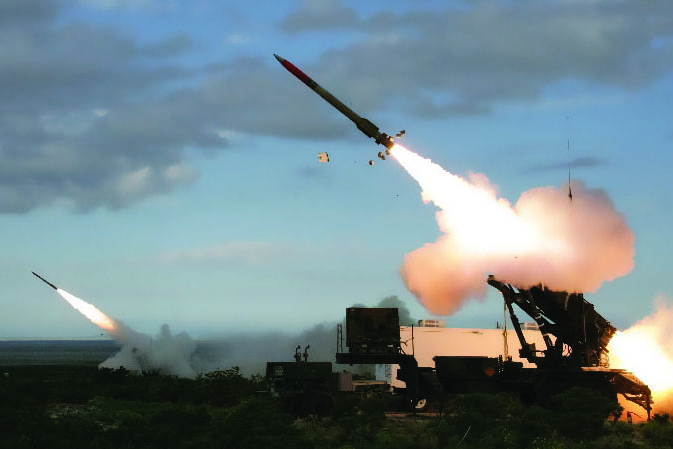
The Army test fires a Patriot missile in a recent test. The Patriot missile system is a ground-based, mobile missile defense interceptor deployed by the United States to detect, track and engage unmanned aerial vehicles, cruise missiles, and short-range and tactical ballistic missiles. Patriot, along with other missile defense systems, are included in the Army Air and Missile Defense 2028, which provides the Army’s overarching vision for the AMD force, describes how the AMD force is postured to support the Army and joint forces, and articulates what must be accomplished to achieve the 2028 desired end state of preventing and defeating adversary air and missile attacks through a combination of deterrence, active and passive defense, and support to attack operations. (U.S. Army photo)

The framework agreements don’t lock in immediate missile purchases but instead set the stage for a long-term partnership. This contract model gives these firms confidence to invest in production lines while keeping the Air Force’s procurement options open.

The expectation is that real production will ramp up beginning in 2027, with as many as 8,000 missiles purchased annually across all vendors.

Anduril’s deal runs for seven years, with CoAspire and Zone 5 signed on under similar terms. Collectively, the Air Force intends to buy roughly 28,000 FAMM missiles over five years, at a projected program cost of $12.6 billion.

It’s an investment strategy rooted in wartime practicality: giving airmen the tools to dominate any engagement without being handcuffed by budgetary absurdities.

Still, none of these deals mean anything without congressional approval. The Pentagon will need lawmakers on board to fund the multiyear agreements. With many in Congress increasingly supportive of industrial expansion and rearmament amid global instability, there’s a growing recognition that speed and affordability are now just as vital as capability.

To keep the vendors sharp and competitive, the Pentagon has tied the deals to firm fixed-price terms with guaranteed minimum orders. Companies that outperform expectations and beat production schedules become eligible for more orders.

Cruise Missiles Are the Real Backbone of Modern Warfare
180326-N-UK333-012
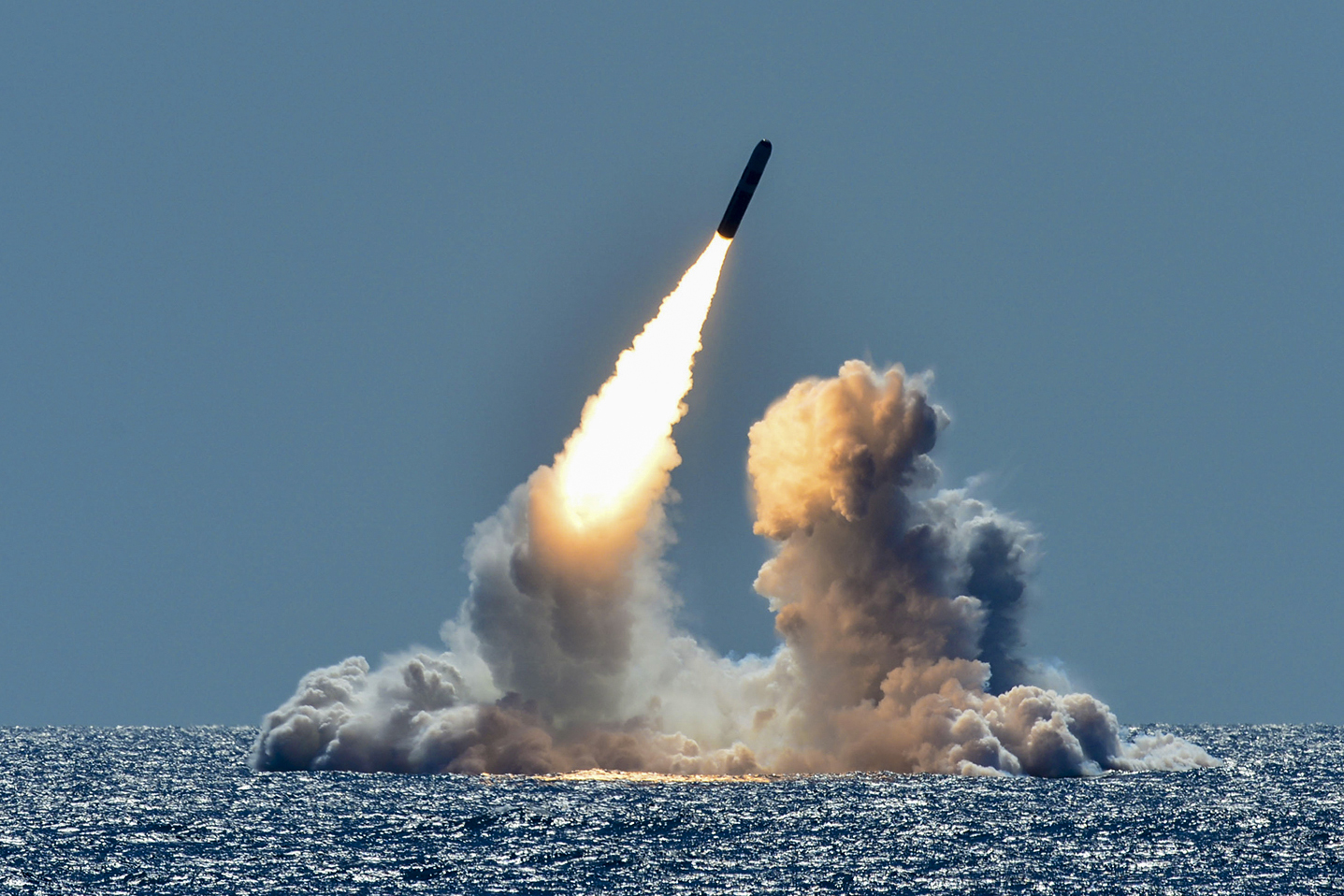
PACIFIC OCEAN (March 26, 2008) An unarmed Trident II D5 missile launches from the Ohio-class ballistic missile submarine USS Nebraska (SSBN 739) off the coast of California. The test launch was part of the U.S. Navy Strategic Systems Program’s demonstration and shakedown operation certification process. The successful launch certified the readiness of an SSBN crew and the operational performance of the submarine’s strategic weapons system before returning to operational availability. (U.S. Navy photo by Mass Communication Specialist 1st Class Ronald Gutridge/Released)

This incentivized model, a hallmark of Hegseth’s Acquisition Transformation Strategy, aims to break free from stagnant procurement habits that plagued the War Department for decades.

Michael P. Duffey, undersecretary for acquisition and sustainment, praised the agreements as proof of progress. He said the FAMM deals exemplify efforts to “expand the defense industrial base, field capabilities faster, and attract private investment.” Translation: the War Department is finally moving at the speed of war, not red tape.

Zone 5 Technologies—though acquired by Norwegian firm Kongsberg—continues to run its U.S. operations out of California. Anduril is a familiar American defense disruptor headquartered in California, and CoAspire hails from Virginia.

All three companies stand to benefit from the War Department’s push to tap into private-sector speed and innovation rather than relying solely on the traditional “Big Five” contractors that dominate the landscape.

This FAMM effort also coincides with the Army-led Low-Cost Containerized Missiles program that’s engaging many of the same companies.

That program focuses on portable, ground-based missile systems that could fill warehouses and transport containers worldwide—a logistical advantage that echoes the same “cheaper, faster, smarter” spirit driving the Air Force’s FAMM initiative.

Cruise Missiles Are the Real Backbone of Modern Warfare

The message behind this new strategy couldn’t be clearer: the Pentagon is done overpaying for yesterday’s solutions. With Secretary Hegseth leading the charge, the Department of War is sharpening America’s arsenal for an age of rapid confrontation and high-intensity conflict.

The United States no longer needs to rely on scarcity and complexity to win. This time, it’s about scale, strength, and a return to tactical common sense.

News

Johnson and Shirley Expose Massive Minnesota Fraud Funnel Sending Tax Dollars to Somali Terrorists [WATCH]

Senator Ron Johnson of Wisconsin and investigative journalist Nick Shirley have pulled back the curtain on a shocking operation that funneled millions of taxpayer dollars from Minnesota straight into the hands of Islamic terrorists in Somalia.

What began as an inquiry into government waste has now revealed a disturbing financial pipeline connecting American welfare fraud to international terrorism.

During a Senate Homeland Security and Governmental Affairs Committee hearing on government fraud, Johnson pressed Shirley on how deep the problem really runs.

The senator noted that as much as seven hundred million dollars in cash had flowed out of the Minneapolis airport to African countries over time.

His concern was straightforward and deeply alarming, as he asked, “Have either of you gentlemen kind of investigated the foreign sourcing or an organization of a lot of this fraud? I mean, we’re opening up to foreign governments to fund their own operations.”

WATCH:

Shirley confirmed Johnson’s worst suspicions, explaining, “It’s been proven that a lot of the money in suitcases that left Minnesota went back into the hands of people inside Somalia.”

This was not a baseless claim.

Multiple reports have revealed that welfare fraud schemes in Minnesota and other blue states have been exploited not only for personal enrichment but also to finance terror groups like Al-Shabaab.

This is not just about theft of taxpayer money.

It is about the federal government’s failure to monitor how welfare dollars are distributed.

The fraud mechanisms have been so loose and unregulated that entire criminal networks have been able to manipulate the system like a personal ATM.

As Shirley pointed out, daycare fraud schemes in New York have reached such absurd levels that nobody even knows who actually owns many of the facilities collecting taxpayer checks.

The Minnesota scandal was exposed after investigators discovered that massive amounts of welfare funds were being laundered through fake or fraudulent childcare and food assistance programs.

When reporters and law enforcement began to dig deeper, the true motive behind some of these operations came to light: supporting extremist groups overseas.

One confidential source described the situation bluntly, saying, “The largest funder of Al-Shabaab is the Minnesota taxpayer.”

It is difficult to imagine a more disgraceful slap in the face to working Americans.

Citizens across the nation squeeze every dollar to pay taxes, believing their money is going toward schools, infrastructure, or national defense.

Instead, the welfare bureaucracy in one of the most liberal states has been exploited by terrorist sympathizers who view the system as a cash cow.

Meanwhile, federal agencies under left leaning state leadership have done little to stop it.

Under the Trump administration, warnings were issued to multiple states that such abuses would no longer be tolerated.

The administration even threatened to cut off federal funding for welfare programs in states that refused to tighten their fraud prevention protocols.

Predictably, some governors and state lawmakers screamed political discrimination rather than taking responsibility for their massive oversight failures.

The fact that this scandal has spiraled into potential terrorism financing raises serious questions about national security.

If hijacked welfare programs can operate freely enough to send hundreds of millions of dollars across international borders, what else is slipping through the cracks?

The federal bureaucracy has expanded endlessly, yet oversight seems weaker than ever.

Johnson’s willingness to drag this issue into the spotlight, despite predictable resistance from the political establishment and the media, demonstrates exactly why conservatives continue to trust him.

He has been relentless about chasing down the corruption that festers within the maze of Washington spending and state level welfare graft.

Every added layer of bureaucracy becomes another door for fraudsters to walk through.

Shirley’s investigative reporting has exposed what many conservatives have warned about for years.

Government programs designed under the guise of compassion and inclusion often become ripe targets for manipulation, with taxpayer money never reaching people truly in need.

When fraud rings redirect those funds to foreign extremists, the problem stops being a domestic welfare issue and becomes a matter of national defense.

The Minnesota fraud network is only one case among what many believe will turn out to be an even broader national pattern.

Johnson made it clear he intends to press for further investigations and potential policy changes.

Americans deserve to know exactly how their tax dollars are being handled, and just as importantly, where they are ultimately going.

The next time Democrats in Congress lecture about fairness and social justice, they might want to explain why money meant to feed American families has ended up bankrolling Al-Shabaab militants another continent away.

Conservatives are right to demand not just oversight but consequences for the bureaucrats who turned a blind eye while taxpayers unknowingly subsidized terrorism.

This scandal has ripped the mask off the welfare state and revealed what lies beneath when big government meets big corruption.

News

Dem Rep Jahana Hayes Claims Teaching Colonialism in Healthcare Is Vital for Doctors [WATCH]

Representative Jahana Hayes of Connecticut took to the witness chair this week to defend diversity, equity, and inclusion programs inside America’s medical schools.

During a House Education and Commerce Committee hearing, she declared that teaching “colonialism in healthcare” is not optional but essential training for future physicians. In her view, diagnosing old political sins is the cure for modern disparities.

Hayes made the argument after medical school leaders from the University of California at Los Angeles and the University of California at San Francisco appeared unable to answer her question about how they teach colonialism in their medical programs.

That answer left her “incredibly disappointed.” She seemed far more concerned about ideological curriculum details than with whether doctors can competently perform surgery or diagnose illness.

She insisted that “teaching colonialism directly addresses the systemic roots of healthcare inequities.”

According to Hayes, it also “exposes how historic power structures dictate who receives quality care.”

She said that ensuring future doctors study this topic would help them identify biases in the healthcare system.

It is another reminder that for Democrats, political ideology now trumps practical training, even in critical fields like medicine.

The Congresswoman also scolded California medical deans for not promptly invoking the Black Panther Party as “central to healthcare discussions.”

WATCH:

To Hayes, a radical political group from the 1960s apparently deserves a loud place in twenty first century medical education.

One cannot help but ask what that has to do with anatomy, pathology, or pharmacology.

The hearing itself was called to investigate whether DEI programs are undermining educational standards in medical schools.

Lawmakers requested testimony from several academic leaders amid growing concern that identity politics may be reshaping admissions, instruction, and even grading practices.

Critics say these programs often elevate ideology above merit and distract students from actual science.

Federal watchdogs are paying attention.

Just last month, the Justice Department’s Civil Rights Division launched fifteen new investigations into medical schools to determine whether their admissions methods are illegally discriminating against applicants.

The Supreme Court’s decision against race based admissions has put universities on notice.

Medical schools, long shielded by progressive rhetoric, are now being forced into compliance.

Assistant Attorney General Harmeet K. Dhillon, who heads the Civil Rights Division, left no doubt that this Justice Department intends to act.

She said, “Many of America’s top medical schools appear more concerned about the demographics of their incoming classes than training students to succeed in the profession.”

Dhillon added that the Department will “protect American students from discriminatory and illegal preferences in admissions, especially in professions as critical as medicine, where quality of training should be the top priority.”

Her position echoes what many parents, students, and practicing physicians have been saying quietly for years.

Across the country, patients do not want doctors who can deliver political lectures.

They want doctors who can deliver babies, diagnose diseases, and save lives.

Yet far too many schools are forcing students into seminars on oppression theory rather than laboratories and clinics.

While progressives like Hayes claim that DEI reduces health disparities, evidence shows that turning medical education into a sociology class only erodes trust in the profession.

When ideology replaces rigorous scientific method, standards drop. When standards drop, patient outcomes eventually suffer.

Conservatives argue that excellence, not equity quotas, is the best path to fairness in medicine.

The spectacle of a sitting member of Congress berating deans for failing to teach colonialism reveals how entrenched the left’s new orthodoxy has become.

It is not enough to graduate competent doctors; they must also be fluent in the political catechism of the moment.

Hayes’ comments echo the far left’s obsession with labeling every institution as structurally racist.

Medicine is simply the next frontier in their march through American life.

Medical training once focused on precision, discipline, and ethics.

Today it is riddled with courses that sound more like grievance studies than clinical practice.

The House hearing exposed just how deep the ideological capture has gone inside elite schools.

Every hour spent teaching about perceived colonial structures is an hour not spent on anatomy, pharmacology, or surgical technique.

Republicans on the committee have signaled that the fight is far from over.

They intend to pursue legislative remedies that ensure merit based admissions and evidence based instruction remain the foundation of all medical schools receiving federal funds.

For now, though, Democrats like Hayes continue to defend the transformation of medicine into another arm of social activism.

Voters will have to decide whether ideology or ability should define the next generation of American doctors.

News

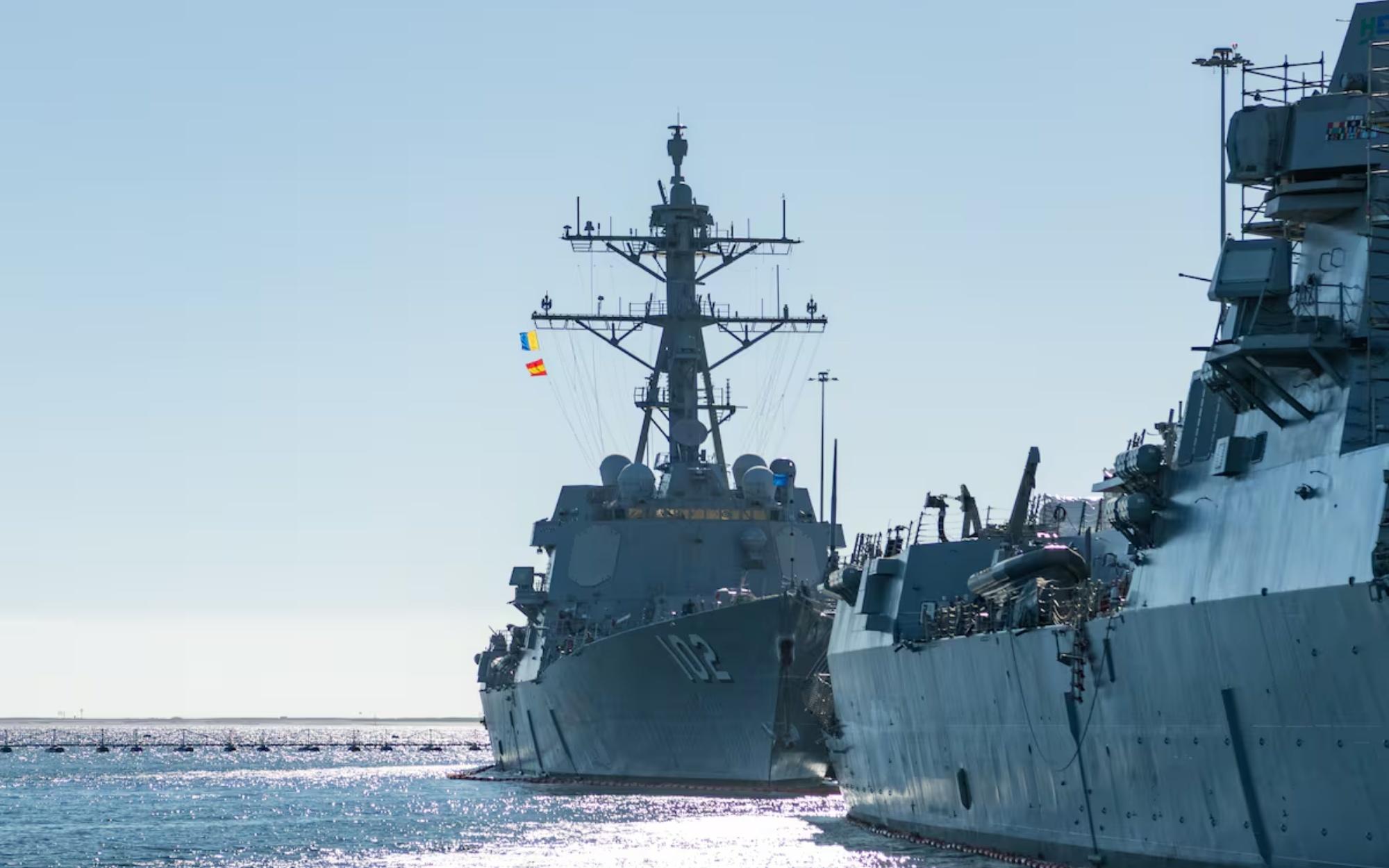
USS Sampson Accidentally Dumps 2,000 Gallons of Diesel Fuel Into Seattle Harbor

A guided missile destroyer stationed in Seattle accidentally released thousands of gallons of diesel fuel into local waters this week, prompting an urgent response from military and environmental crews.

The USS Sampson, an Arleigh Burke-class Aegis destroyer, was undergoing routine defueling operations at the Vigor Shipyard on Harbor Island when the incident occurred Monday.

According to the War Department, around 2,000 gallons of diesel escaped into Elliott Bay. Earlier estimates placed the spill at closer to 5,000 gallons, but recalculations later lowered that figure. Either way, it was a serious breach that raised eyebrows in both military and environmental circles.

Containment procedures were fortunately already in place before the spill happened.

The Navy had pre-positioned oil containment booms around the vessel — standard protocol for such work — which helped keep the contamination localized. That decision likely prevented a much broader environmental headache for the city of Seattle.

“The Navy is working with shipyard contractors and spill response partners to resolve this quickly and responsibly,” the Navy said in an official statement. Crews have been working on a 24-hour schedule to recover as much of the diesel as possible. By Tuesday evening, officials reported that most of the escaped fuel had been recovered.

A combination of three portable skimmers, a skimmer boat, and oil-absorbent pads were deployed to soak up the diesel from the surface of the harbor. The containment boom and absorbent barriers will remain in place until experts confirm that all recoverable fuel has been eliminated and the destroyer is safely moved into dry dock.

The Washington State Department of Ecology confirmed that cleanup operations are continuing in coordination with the U.S. Coast Guard and Navy environmental units. According to the department, the containment measures were functioning as expected and significantly limited the environmental damage.

However, the Coast Guard’s initial review determined that the U.S. Navy was at fault for the spill. That finding will undoubtedly be part of the investigation now underway to determine whether procedural failures or mechanical issues led to the release. It’s a reminder that even the world’s most powerful military fleet occasionally faces human and technical error.

Despite the accident, this isn’t the USS Sampson’s first brush with operational scrutiny. The destroyer had just returned to its home port of Naval Base San Diego last September after completing a deployment in the Caribbean. The ship supported U.S. Southern Command’s counter-narcotics mission before being replaced by its sister ship, the USS Stockdale.

Engineers familiar with Arleigh Burke-class destroyers point out that defueling operations can be particularly delicate due to the fuel volume and complex pumping systems involved. Even a minor equipment malfunction can lead to an unplanned discharge — and when working with thousands of gallons of diesel, “minor” isn’t the right word.

For Seattle, the incident also hit a nerve with local officials who have long complained about the risks of military and industrial operations near the city’s shoreline. Yet, as some military advocates noted, the Navy’s quick and comprehensive response to contain and recover the spill showed the professionalism embedded within the service’s operational protocols.

While environmental activists were predictably quick to criticize the Navy, those familiar with maritime operations recognized the event as an operational accident rather than systemic negligence. Given the immediate reaction and recovery efforts, the long-term environmental impact is expected to be minimal.

Officials say that once all fuel traces are cleared and inspections complete, the vessel will resume its maintenance schedule before returning to operational readiness. No injuries or security concerns were reported, and harbor traffic around Harbor Island proceeded without disruption.

The spill might not rise to the level of an international incident, but it is a blunt reminder that every operation carries risks, even in port. As investigations continue, the Navy’s transparency and rapid recovery effort will be key to reassuring both the public and Congress that the fleet holds itself accountable.

Under the leadership of War Secretary Pete Hegseth, the Department of War has placed renewed emphasis on maintenance discipline and accountability throughout the fleet. This incident will likely fuel further discussions about risk management, repair discipline, and the importance of maintaining America’s naval readiness while protecting its home waters.

Despite Seattle’s political theatrics, the reality is simple — the Navy confronted an operational error, moved fast to correct it, and is cleaning up its mess.

That’s what professional militaries do. The USS Sampson will soon be back on duty, and the mission to project American power at sea will continue, mistakes and all.

News

Posobiec Shreds Leftist Peddling Lies About Attempted Charlie Kirk Assassination [WATCH]

A heated exchange over the assassination of conservative activist Charlie Kirk unfolded Tuesday night on Piers Morgan Uncensored, as commentator Jack Posobiec challenged claims made by Wajahat Ali and Brian Tyler-Cohen regarding the motive behind the killing, as reported by The Post Millennial.

The discussion came after prosecutors presented evidence in court linking Tyler Robinson to Kirk’s assassination. Robinson has been charged in the case.

During the debate, Ali argued that the available evidence suggested Robinson was politically motivated from the political right.

“Most likely, Tyler Robinson was radicalized,” Ali said. “Here is a white man with a gun; he had his own grievance, and he shot and killed Charlie Kirk.”

Ali also referenced reports that Robinson admitted responsibility for the killing and argued the incident reflected internal divisions within the conservative movement.

“This is an entire political movement in real time that is eating itself,” Ali said. “Candace Owens came from MAGA. MAGA is now turning on MAGA.”

He continued, “If there’s any self-reflection and any decency, which there isn’t, they would sit back and say, huh, maybe, just maybe, we shouldn’t have spread these insane conspiracy theories.”

Posobiec rejected that characterization, arguing that evidence presented in the investigation pointed in a different direction.

He said some media figures, including late-night host Jimmy Kimmel, had incorrectly suggested the suspect was connected to the political right while overlooking other evidence recovered during the investigation.

According to Posobiec, investigators recovered shell casings at the crime scene bearing phrases associated with the political left, including “fascist catch” and “bella ciao.”

“People who falsely claimed that it was a groyper, that it was a member of the right, Jimmy Kimmel spread that on nighttime news,” Posobiec said.

“This was big news. There was a huge push about it. This was big news. There were headlines about it. We debated it on the show.”

Posobiec argued that critics were ignoring evidence that he said suggested a left-wing political motive.

“Notice that you seem to have skipped over the radical left, which we now know absolutely was responsible for this,” Posobiec said.

“And we even knew that before we had the identification of Tyler Robinson, because we had the etchings on the bullets.”

“Hey, fascist catch. Bella Ciao, the Antifa anthem. All of that evidence was out there, but you seem to have missed it,” he added.

Ali responded by accusing Posobiec of reinforcing the point he had been making throughout the discussion.

“Yeah, so you’re literally doing what I accused you of doing,” Ali said. “So thank you for proving.”

Posobiec answered that he was relying on the available evidence.

“The courage of following the evidence?” Posobiec replied.

The debate continued as Ali argued that the controversy reflected divisions within the conservative movement.

“This is the movement that you have created, and this is the movement now that is eating itself,” Ali said.

Posobiec rejected that claim and responded by blaming political violence on individuals aligned with Ali’s political views.

“The movement that you are part of killed Charlie,” Posobiec said.

He continued, “You seem more upset about me simply being here talking than people who agree with your politics, murdering people, one at a campus, one in her own kitchen.”

Ali replied, “I’m perfectly fine condemning violent extremism on all sides.”

Brian Tyler-Cohen also participated in the discussion and argued that Kirk had been appropriately labeled a fascist based on his conduct.

The exchange highlighted sharply different interpretations of the evidence surrounding Robinson’s alleged motive and the broader political implications following Kirk’s assassination.

Robinson remains charged in the case as the legal proceedings continue.

News

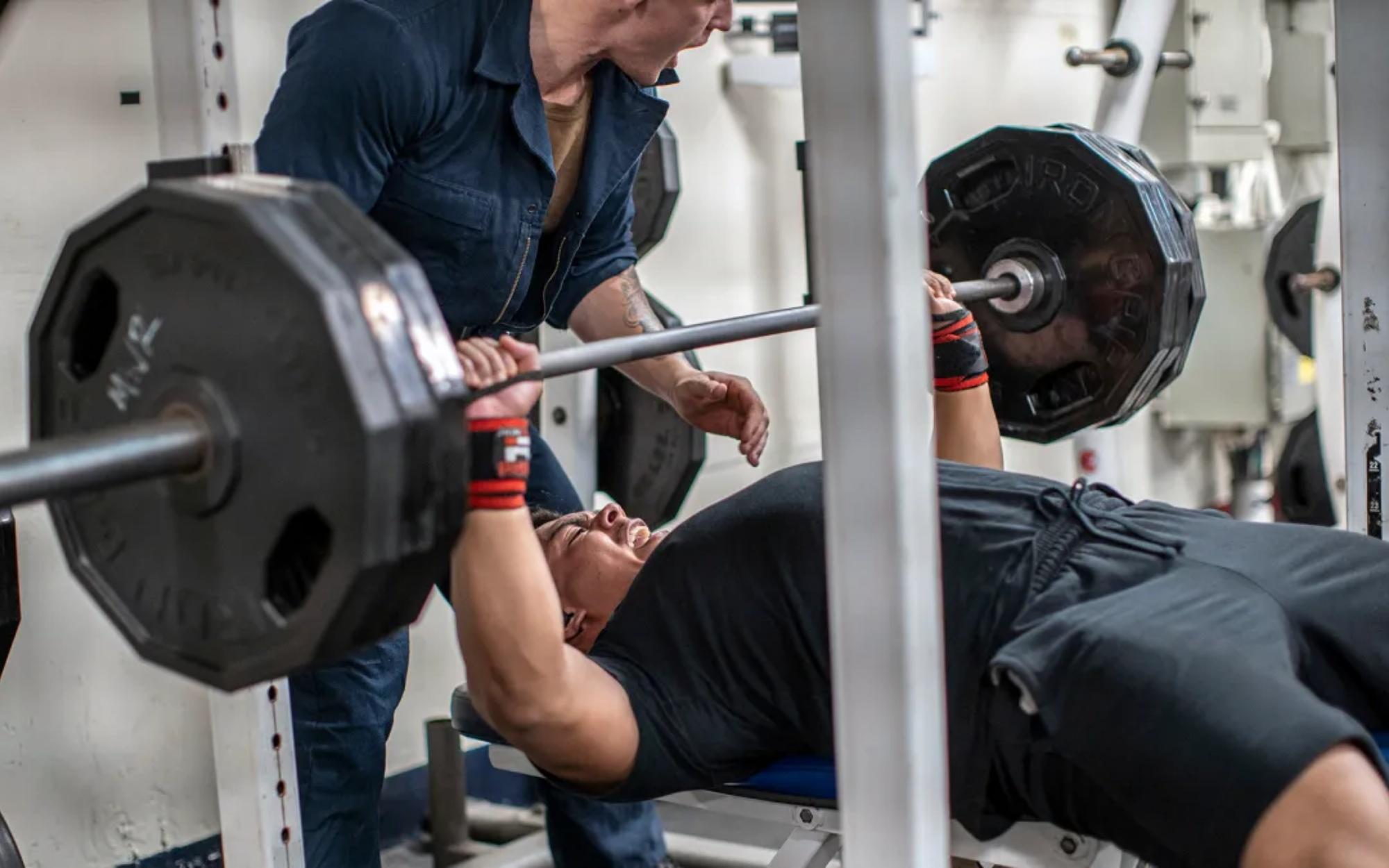
Pentagon Launches Testosterone Check Program to Boost Warrior Readiness

War Secretary Pete Hegseth is once again shaking things up at the War Department, this time with a new policy aimed squarely at troop health and combat effectiveness.

Starting this year, troops aged 30 and older will undergo annual testosterone screenings as part of their routine health assessments.

The announcement came directly from Hegseth in a social media video on Wednesday, with his signature no-nonsense approach that has marked his tenure leading the nation’s military machine.

Hegseth said the new program is about giving troops every physical edge they can get in a demanding, often unforgiving profession. “We want to make sure every warfighter has the right testosterone levels to operate at your absolute best,” he declared.

Troops under 30 may also opt for the screenings voluntarily.

The move follows years of growing concern about declining testosterone levels among American men, especially those in physically and mentally taxing professions such as the armed forces.

Multiple studies since the 1990s have shown a measurable drop in testosterone among young men, signaling what some researchers describe as a generational hormonal decline.

Hegseth pointed out that this biological shift matters a great deal when it comes to maintaining an aggressive and ready fighting force. Testosterone affects everything from strength and endurance to confidence and focus—traits no nation’s military can afford to lose.

In his words, it’s about “keeping America’s edge on the battlefield and the warrior’s spirit sharp.”

The link between stress, operational tempo, and low testosterone is no secret among military doctors. Years of high stress, combat deployments, poor sleep, and mental strain have all been shown to lower testosterone levels, often compounding other health challenges faced by service members.

The Department of Veterans Affairs already offers evaluation and treatment protocols for low testosterone, including hormone replacement therapy, but the War Department’s new screening effort marks the first time the active-duty force will be systematically checked.

The initiative’s roots trace back to congressional action. In 2024, lawmakers inserted a provision into the fiscal year 2025 national defense bill mandating a detailed briefing on the military’s approach to testosterone deficiency. Many saw this as long overdue, given mounting anecdotal evidence from elite operators and career service members struggling with unexplained fatigue, emotional flatness, and reduced drive.

Special operations veterans, in particular, have been outspoken about the need for greater recognition of hormonal decline as a legitimate readiness concern. Some have even formed nonprofits and clinics catering specifically to veterans dealing with what’s now known as “Operator Syndrome.”

The term refers to a cluster of physical and psychological symptoms—many rooted in hormonal imbalance—that emerged among operators after years of extreme stress and deployment cycles.

For Hegseth, the testosterone screening initiative fits neatly into his broader philosophy of restoring strength, focus, and warrior culture to the U.S. military. Throughout his time in leadership, he’s pushed to strip away political distractions and bureaucratic nonsense, replacing them with priorities that directly enhance lethality and survivability.

“The modern battlefield is brutal and unrelenting,” Hegseth reminded viewers.

“By addressing these health markers early, we keep our troops at the leading edge of lethality and readiness—and give them the same level of support they give this nation: the absolute best.”

Unlike the defense czars of the past who obsessed over diversity quotas and woke training sessions, Hegseth’s War Department is steering hard back to fundamentals. This initiative sends a message: America’s military will no longer ignore issues that directly affect performance and combat capability.

Medical experts within and outside the armed forces note that testosterone deficits can also drive sleep issues, depression, lethargy, and poor motivation, which can quietly degrade a unit’s operational effectiveness.

By catching these issues early, Hegseth’s program could prove every bit as impactful as physical conditioning or weapons qualification when it comes to keeping troops mission-ready.

Some in the media will no doubt twist the program as “controversial,” but Hegseth’s move is arguably one of the most practical morale and readiness boosters in years.

When the commander of a special forces unit finds half his men struggling with fatigue and stress chemistry, that’s not vanity—it’s science.

The rollout of this program underscores the administration’s commitment to warrior wellness and lethality.

Under President Trump’s leadership and War Secretary Hegseth’s guidance, the military is realigning priorities toward battle readiness, masculine strength, and operational dominance—the core ingredients of victory.

In short, the Pentagon isn’t just testing testosterone levels. It’s testing whether America still has the resolve to keep its fighters strong, proud, and prepared to win.

WATCH BELOW:


Scroll to Top