News

News

Air Force Permanently Stations Global Hawk Recon Drones in Japan Amid Rising Pacific Tensions

The United States Air Force is making a decisive move in the Indo-Pacific theater, permanently repositioning its RQ-4 Global Hawk reconnaissance drones from Guam to Yokota Air Base in Japan.

The decision follows more than a decade of seasonal rotations and demonstrates a clear strategic message amid rising challenges from China and North Korea.

The 4th Reconnaissance Squadron, part of the 319th Operations Group, began the relocation process in late May.

The first Global Hawk officially landed at Yokota on May 27, though the transfer was only recently confirmed by the 374th Airlift Wing.

About 150 U.S. Air Force personnel have moved alongside the aircraft, signaling a serious and long-term investment in maintaining real-time intelligence across the region.

Lt. Col. Adam Otten, commander of the 4th Reconnaissance Squadron, stated that “Yokota Air Base is the right location to support current and future RQ-4 operations in the theater, while upholding the quality of life of our Airmen and families.”

In plain terms, the move positions America’s most sophisticated eyes-in-the-sky closer to where the threats are actually unfolding.

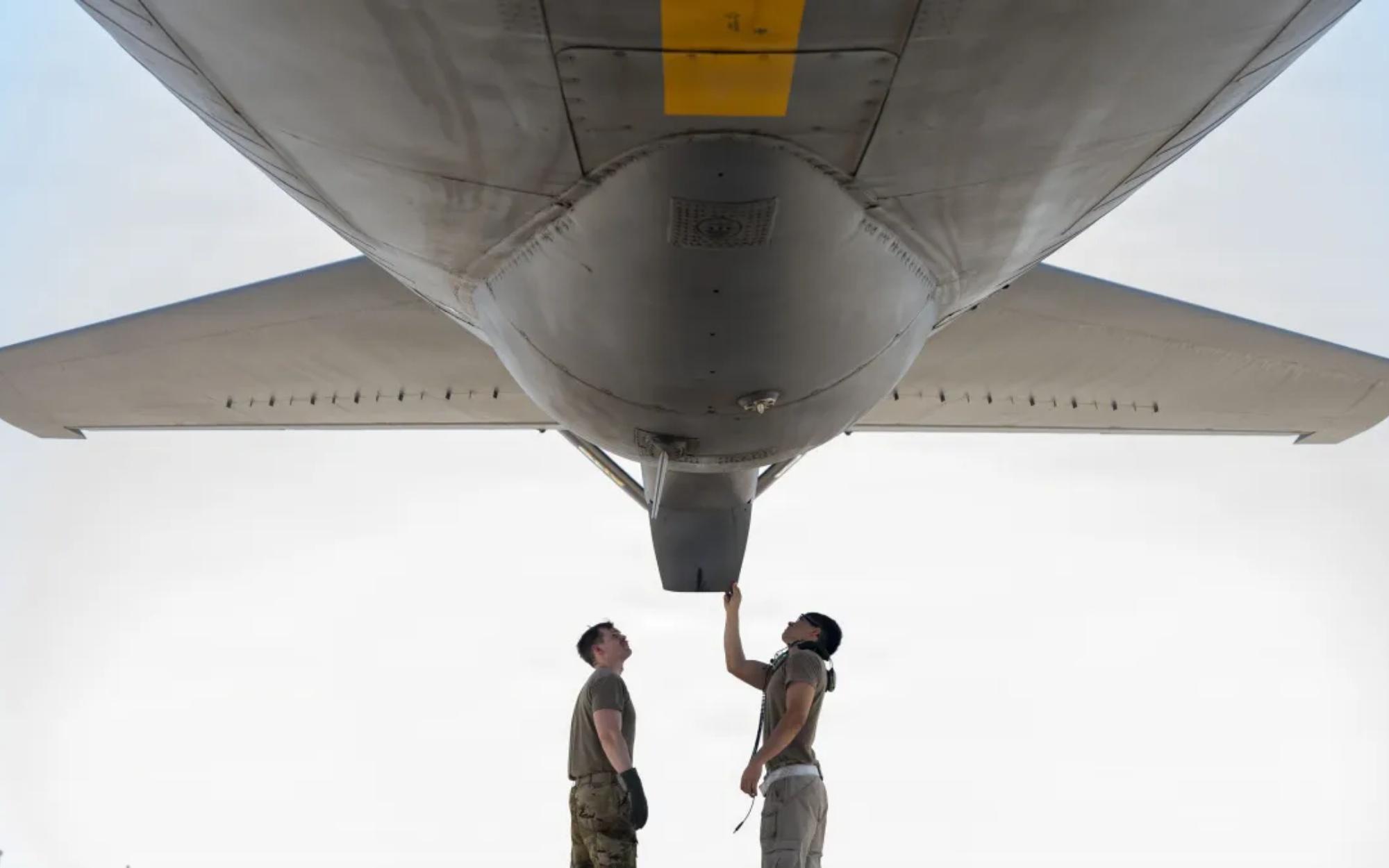
Yokota has long been a hub of U.S. airpower in Japan, home to the Fifth Air Force headquarters and the 374th Airlift Wing, which operates C-130J and C-12J aircraft.

The addition of the Global Hawk detachment weaves a new layer of surveillance capability directly into the command nerve center for operations across East Asia.

The RQ-4 Global Hawk isn’t just another drone. This unmanned aircraft is a monster of modern reconnaissance, with a 130.9-foot wingspan and weighing nearly 15,000 pounds.

Air Force Permanently Stations Global Hawk Recon Drones in Japan Amid Rising Pacific Tensions
Air Force Airman 1st Class Bryant Vides-Perlera pulls chocks beside an RQ-4 Global Hawk remotely piloted aircraft as it’s towed across the flightline at Grand Forks Air Force Base, N.D., Oct. 23, 2020.

It can stay aloft for over 30 hours while flying at about 60,000 feet, gathering high-resolution imagery across thousands of square miles with precision sensors. It’s essentially an unblinking sentinel quietly monitoring the Pacific skies for hostile activity.

According to the Air Force, the rearranged squadron will “support theater-wide operations,” which include everything from peacetime intelligence missions to full-spectrum crisis responses.

The service pointed to the drone’s vital role during Japan’s 2011 earthquake and tsunami disaster as proof of its versatile value to both allies and humanitarian efforts.

Weather patterns were also a major factor in the move. Guam faces brutal typhoon seasons that complicate flight operations and maintenance schedules.

Japan’s more stable conditions—particularly during the storm-heavy months—provide a more favorable environment for continuous surveillance missions. That stability translates to a ready-to-fly fleet when tension flares.

Air Force Permanently Stations Global Hawk Recon Drones in Japan Amid Rising Pacific Tensions
RQ-4 Global Hawk

It’s an uncommon reversal, as most recent Pentagon investment has focused on expanding Guam’s military footprint through new missile defenses, refueling capabilities, and storage depots.

Yet shifting a Global Hawk squadron northward places these critical assets within faster reaction range of both the East China Sea and the Korean Peninsula—exactly where Washington’s attention needs to be.

The move fits within a broader U.S. pattern of tightening intelligence coverage and deterrence posture across Asia. Last year, MQ-9 Reaper drones were permanently stationed in South Korea for round-the-clock reconnaissance.

The Marine Corps also temporarily deployed MQ-9A units to the Philippines as part of growing efforts to monitor the South China Sea. Each shift is part of a comprehensive realignment to sustain a “free and open Indo-Pacific,” as the Air Force describes it.

With the RQ-4s now at Yokota, the U.S. and its allies can expect enhanced monitoring capabilities over hot zones where China’s naval forces and aircraft are becoming increasingly aggressive.

Beijing’s saber-rattling has escalated in recent months, making persistent, precise, and uninterrupted surveillance more crucial than ever.

American commanders, under the assertive leadership of War Secretary Pete Hegseth, are taking deliberate and smart steps to strengthen deterrence.

By situating world-class reconnaissance platforms closer to the action, the U.S. military sends a clear message: America’s vigilance will not waver, and its commitment to its Pacific allies remains ironclad.

Air Force Permanently Stations Global Hawk Recon Drones in Japan Amid Rising Pacific Tensions
Air Force Maj. Marc Nichols, 452nd Flight Test Squadron assistant director of operations, inspects an RQ-4 Global Hawk remotely piloted aircraft at Edwards Air Force Base, Calif., April 6, 2020.

Critics may spin this as another “provocative” move, but the real provocation comes from China’s missiles, naval militias, and constant surveillance flights intruding into allied airspace.

The Global Hawk’s relocation isn’t an escalation—it’s preparation. And as history shows, preparedness is the surest way to keep peace.

This shift also ensures greater coordination with Japan’s Self-Defense Forces, which will benefit from direct intelligence feeds that help track maritime activities and potential threats.

In a region where every radar blip could turn into a crisis, that coordination is worth its weight in gold.

The Air Force’s relocation of its Global Hawk fleet to Japan is a powerful demonstration of America adjusting to the times—not retreating, but repositioning.

The Pacific theater remains the most contested strategic front of the 21st century, and this move places American eyes right where they’re needed.

In an age of technology-driven warfare, information dominance is everything.

By planting the world’s most advanced reconnaissance systems firmly in the heart of East Asia, Washington is doing exactly what must be done to keep adversaries guessing and allies reassured.

News

Remains of Fallen B-52 Heroes Head to Dover for Final Honors and Identification

The remains of eight American patriots lost in Monday’s devastating B-52 Stratofortress crash at Edwards Air Force Base are being airlifted to Delaware’s Dover Air Force Base for post-mortem care and identification.

The transfer, set for Friday, marks the next solemn step in honoring the eight men who died serving their country during a high-stakes test mission.

Officials at Edwards confirmed Wednesday that all eight members onboard were killed instantly when the massive bomber went down shortly after takeoff.

The aircraft erupted into flames on the runway, with Air Force leaders calling the crash “unsurvivable.”

Among the fallen are Col. Gregory Watson, 53; Lt. Col. Gabriel Estrella, 40; Maj. Alexander Davis, 34; Maj. Robert Dee, 40; Maj. Brad Hovey, 35; Retired Lt. Col. Miles Middleton, 50; Jeromy Smith, 32; and Christopher Rischar, 41.

Their remains are being transported to the Charles C. Carson Center for Mortuary Affairs at Dover, the nation’s premier facility for handling the remains of fallen military members.

These men, a combination of active-duty personnel, veterans, and skilled civilians, were part of a radar modernization test mission — a critical project supporting America’s air superiority.

Their loss underscores both the risks and dedication tied to advancing the United States’ aerial warfare capabilities.

At Dover, the remains will undergo advanced identification procedures and preparation for return to their loved ones.

The military has not released details about the process, focusing instead on ensuring families receive accurate information and the highest standard of care.

The Edwards community has rallied in tribute. More than 700 airmen, families, and base workers gathered Wednesday evening at the flightline chapel for a candlelight vigil.

Air Force Identifies Eight Heroes Lost in Deadly B-52 Crash at Edwards Base
The Air Force released the names of the crew members killed June 15 when a B-52 crashed at Edwards Air Force Base, California. (top row) Col. Gregory Watson; Lt. Col. Gabriel Estrella; Maj. Alexander Davis; Maj. Robert Dee; (bottom row) Maj. Brad Hovey; retired Lt. Col. Miles Middleton; Christopher Rischar; and Jeromy Smith. Air Force photos.

The somber event honored the eight men’s service and sacrifice, a testament to the strong bond shared by those stationed at the storied California base.

“The base’s Emergency Family Assistance Center remains open until further notice,” the base said in a statement.

“We are providing chaplain support, mental health resources, child care, and legal assistance to any member of the base community who needs it.” It’s a reminder that the military family doesn’t just fight together— it mourns together.

Edwards officials said details of a broader memorial service will be released next week once the immediate recovery efforts conclude.

The base temporarily shut down the airfield following the crash to allow emergency crews to secure the site, extinguish the blaze, and recover the bomber’s flight recorder.

By Thursday, the airfield had reopened for limited operations, but regular flight tests are paused until next week while the investigation continues.

Air Force safety boards have already begun the painstaking process of determining what happened in the final moments before the crash.

An Interim Safety Investigation Board is currently managing the initial review before the formal Safety Investigation Board begins.

That process can take up to 30 days, after which an Accident Investigation Board will lead a deeper review into the causes and recommend corrective actions. Final reports, expected in about six months, will determine what information can be shared publicly.

U.S. Casualties Mount as Iran Clash Triggers Broad Military Response
Air Force personel watch as the caskets of six fallen soldiers are loaded onto a waiting hearse at Dover Air Force Base Delaware July 8, 2009. All fallen service members are transferred directly from theater to the Air Force Mortuary Affairs Operation Center at Dover Air Force Base Delaware. (DoD photo by Benjamin Faske) (released)

The B-52 Stratofortress has long been a symbol of American strength from the skies—a workhorse of deterrence since the Cold War.

It’s a platform older than many of its pilots, yet it continues to serve effectively through constant modernization. That such an accident occurred during radar upgrade testing highlights both the aircraft’s complexity and the unseen dangers of keeping America’s airpower dominant.

Safety experts caution that while testing and modernization bring inherent risks, every lesson learned from tragedy sharpens readiness and innovation.

It’s the same spirit that has carried the Air Force through decades of warfare, deterrence, and technological leaps.

For the families of those lost, however, the focus now turns to remembrance. Dover’s dignified transfer ceremonies, conducted in full military precision, will ensure that each fallen patriot is honored exactly as they deserve. There, surrounded by America’s finest mortuary affairs team, their legacy will be treated with the care reserved for heroes.

The nation watches as eight more names join the long roll of those who gave everything in pursuit of duty and excellence. The Air Force community remains strong, unified, and determined to learn from tragedy—because that’s what warriors do.

The final journey from Edwards to Dover is not the end of the story, but a solemn reminder of the cost of maintaining America’s edge.

Every switch flipped, every radar tested, every flight made safer from this investigation will bear the fingerprints of these eight fallen patriots who gave their last full measure of devotion in the service of this great Republic.

News

Media Meltdown Over Reflecting Pool Backfires After Scott Jennings Exposes Obama’s Costly Mess [WATCH]

The liberal media’s obsession with the Lincoln Memorial Reflecting Pool has turned into a comedy show of selective outrage.

When President Donald Trump’s administration repaired and cleaned up one of the nation’s most iconic landmarks, the press could not find a way to simply say job well done.

Instead, reporters scrambled to dig up something, anything, to criticize.

Their grand discovery?

Algae in the reflecting pool, as if that were a national crisis worthy of prime time coverage.

This time, CNN decided to get technical.

They even tested the water to declare that, yes indeed, algae was… algae.

That was supposed to be the “gotcha” moment proving Trump’s team was somehow failing.

But when the network revisited the topic during a Friday panel, Salem Media host Scott Jennings reminded them that this story had already been written, and it did not favor their hero from years past.

Jennings asked Democrat strategist Ameshia Cross whether she had opposed Barack Obama’s renovation of the same reflecting pool.

Obama’s version cost $34 million and took much longer, yet no one in the press seemed to care.

Cross, scrambling for a defense, claimed Obama “did it with science in mind, so there was not an algae takeover.”

She insisted the pool had been “treated.”

That narrative collapsed almost instantly.

Jennings pulled up a 2012 news report showing that within a month of Obama’s work being completed, the pool had a massive algae bloom.

Bright green slime covered much of the surface. So much for “science.”

The left’s favorite president had not discovered a cure for nature, just made Washington’s water problems more expensive.

“Investment” is what Democrats like to call their overspending.

When Obama threw millions into landscaping, it was visionary.

When Trump efficiently repairs broken infrastructure at a fraction of the cost, it is a scandal.

Jennings’ simple reminder forced the CNN panel to face that truth, though they seemed allergic to acknowledging it.

WATCH:

Even after Obama’s supposed fixes, the pool kept leaking millions of gallons of water each year.

The upgraded system still failed, and the structure continued to decay.

By the time Trump’s team took over, the situation was a full-blown mess.

Interior Secretary Doug Burgum explained how Trump’s administration actually solved the issue instead of endlessly studying it.

“That thing, when we took this project over, was leaking 45,000 gallons of water a day,” Burgum said.

He added that Americans should be celebrating how Trump got “a project done 10x faster, at a fraction of the cost of a previous administration.”

In other words, real results achieved through competence rather than flashy spending sprees.

The Department of the Interior confirmed that the Trump-era renovation used innovative nanobubbler technology to clean up the algae and keep the water clear.

The system continues to work, which is more than can be said for the one that followed Obama’s “scientific” upgrade.

Maintaining a large outdoor pool is always an ongoing effort, but now the approach is practical and effective instead of performative and overfunded.

Yet, you would never know from watching CNN or reading the Washington Post.

They focus on any micro issue they can inflate into controversy while ignoring the long list of monuments and parks Trump restored throughout the nation.

They refuse to highlight the crime reduction around the capital that coincided with his administration’s improvements.

Asking those questions would force them to admit that Democrats let these landmarks and neighborhoods deteriorate in the first place.

The left’s selective blindness has become predictable. When Republicans fix problems, liberals cry foul.

When Democrats break the bank for photo ops, the same journalists swoon about progress.

This is the cycle of media spin that Americans have grown weary of, a never-ending effort to turn good news into a narrative against conservatives.

Jennings’ on-air correction may not have changed any minds at CNN headquarters, but it exposed the double standard.

The same people who praised Obama’s algae-filled pool now act scandalized when Trump actually cleans it.

It was a satisfying reality check broadcast live for anyone tired of media hypocrisy.

Conservatives have long understood that the biggest disinfectant for false narratives is truth, and Jennings delivered it with precision.

The facts were indisputable: Obama’s project failed to stop leaks and left the pool crawling with green muck.

Trump’s team fixed it faster, better, and cheaper. No amount of televised spin can hide that.

So the next time the media obsesses over the color of pond water, maybe they should first ask which administration actually solved the underlying problem.

Until then, we can expect more “reflecting” from the press—just not much reflection about their own bias.

News

Kamala Harris Delivers Baffling Word Salad Claiming ‘Hope Should Be a Verb’ [WATCH]

Former Vice President Kamala Harris is back in viral territory, and it is not for a policy breakthrough or a vision that excites voters.

This time, it is over her latest philosophical ramble about “hope,” which turned into another internet sensation for all the wrong reasons.

Appearing on Don Lemon’s podcast, Harris attempted to redefine the word, insisting that “hope should be a verb,” leaving even her supporters scratching their heads.

For many Americans, this is classic Harris. Her trademark habit of stringing together lofty-sounding phrases that go nowhere has made her a constant target of mockery online.

Conservative critics long ago dubbed her speeches “word salads,” and this latest appearance only reinforced that unflattering reputation.

“I really, truly believe this,” Harris told Lemon. “We each have light inside of us. And we need to know that that is what inspires our hope as much as anything external to ourselves.”

What came next was a meandering explanation about the power of internal optimism that might have worked in a college creative writing class, but certainly not in a conversation about leadership or government.

Her winding comments continued as she urged Americans not to lose their sense of purpose following challenges or elections.

“And when we feel that and and and not allow an election or an individual to dampen that light, and instead light, let that light kind of carry us in particular through moments of darkness,” she said. “That we not only act on that hope, but we inspire that hope in each other.”

Then came the line that set off the internet: “It is so important that we not only have hope, but that we understand that that should be a verb.”

WATCH:

Within minutes, critics on X were hammering the former vice president for trying to redefine the English language while saying very little of substance.

One user dryly summarized Harris’s entire monologue: “Good word salad answer that can be summed up in two words: stay positive.”

Another compared her speech to a student padding an essay with filler, writing, “When the teacher told you to write a 300 word essay but you could only think of 100 words.” The post went viral almost as quickly as Harris’s original quote.

Linguistic sticklers were quick to point out that “hope” is already both a noun and a verb.

“It’s a noun: ‘I have hope that she never runs for any government office again,’” one commenter wrote.

“And it is a verb: ‘I hope she never runs for any government office again.’”

That response summed up the sentiment of frustrated voters tired of hearing from politicians who complicate simple ideas.

The moment also reignited a familiar conversation about Harris’s communication style, something even Democrat strategists have quietly admitted has been a recurring problem.

Her tendency to speak in circles about abstract “light,” “truth,” or “possibility” has drawn endless ridicule.

Conservative pundits joke that everything she says sounds like a motivational poster that somehow never finishes the thought.

Don Lemon, now in podcasting after his CNN exit, tried to steer the discussion back to politics and asked whether she planned another run for president in 2028.

Harris would not give a clear answer but did not close the door either.

“I have not decided, to be honest with you,” she said.

“I’ve been spending a lot of time traveling the country [and] listening to folks.”

She added, “I think that people want a leader who is willing to take risks, as opposed to just doing what is popular.”

Many conservatives would probably agree with that statement, though Harris’s record hardly fits that description.

Critics note that her brand of “risk taking” usually involves rhetorical experiments that sound profound but lack practical meaning.

Harris also claimed that leadership requires attentiveness to the public’s needs.

“I think people want to know that they are being seen and heard, and that their leaders, whether they’re at the local, state, federal level or in the White House, are looking first at the people.

You know, not looking at themselves in the mirror.” The line might have landed better coming from someone other than a professional politician known for self-congratulatory sound bites.

As the viral clip continues to circulate, it has become another reminder of the public’s weariness with polished but pointless rhetoric from career politicians.

If Harris truly plans to reignite her ambitions in 2028, she may want to spend less time turning grammar into abstract art and more time explaining actual solutions.

For now, “hope should be a verb” joins “the significance of the passage of time” and “we’ve got to do what we’ve been doing” in the long archive of Kamala Harris’s rhetorical curiosities.

Whether voters find inspiration in it or simply laugh along, the message is clear.

When Kamala Harris starts talking, the people brace themselves for another serving of word salad.

News

‘Radical Extremists and Cowards’: Stephen Miller Says That’s All That’s Left of the Democratic Party [WATCH]

White House Deputy Chief of Staff for Policy Stephen Miller sharply criticized the Democratic Party over immigration policy, arguing that calls to abolish Immigration and Customs Enforcement would endanger Americans and empower criminal organizations operating inside and outside the United States.

Miller made the remarks while discussing what he described as growing divisions within the Democratic Party and the consequences of immigration policies implemented under the Biden administration.

“The Democratic party has two groups now, radical extremists and cowards,” Miller said.

According to Miller, one faction drives the party’s agenda while another allows those policies to advance without opposition.

“The cowards who have allowed the radical extremists to eat the party alive, maybe they know at some level that it’s wrong, that it’s evil, that it’s dangerous, that is leading to all this incredible violence against conservatives that we’ve seen,” Miller said.

Miller suggested that some Democrats may understand the consequences of those policies but refuse to challenge them.

“Maybe they’re just too stupid, they don’t know that, but you have cowards and you have extremists,” Miller said.

Miller focused much of his criticism on proposals to abolish ICE, arguing that eliminating the agency would remove a key tool used to combat criminal organizations and terrorist threats.

“When you talk about abolishing ICE, what you are talking about is allowing every drug cartel, every Mexican criminal organization, like the Sinaloa cartel, you’re talking about letting every terrorist organization on planet earth prey freely upon American men, women, and children,” Miller said.

He argued that the most vulnerable victims of such policies would be children.

“Worst of all, the children,” Miller said.

Miller then referenced the case of Jocelyn Nungaray, which has become a prominent example cited by administration officials during discussions about border security and immigration enforcement.

“You remember names like Jocelyn Nungary, where two illegal alien gang members from trained Tren de Aragua were released on purpose deliberately by the Biden administration and sexually assaulted and killed this precious little angel,” Miller said.

Miller claimed the case was not an isolated incident and argued that similar crimes have occurred repeatedly.

“1000s of examples just like that, they know what happens, they know they’re causing it, they don’t care, because they’ve become that extreme and that dangerous,” Miller said.

Miller contrasted those policies with the current administration’s approach, praising President Donald Trump’s leadership on immigration and national security issues.

“And thank God, we have President Trump in the White House, in the Oval Office, defending and protecting this nation every day,” Miller said.

According to Miller, Trump faces challenges not only from criminal organizations and foreign threats but also from political opposition at home.

“He has to fight two battles every day,” Miller said.

Miller said one battle involves confronting criminals, terrorists, and foreign adversaries, while the other involves opposing policies supported by Democrats.

“He has to fight a battle against the criminals and the terrorists and the four enemies of this country,” Miller said.

“He has to fight a battle against the Democrats who are providing aid, shelter, and comfort to those same enemies,” Miller said.

WATCH:

News

Trump Torches Italian PM Giorgia Meloni After Her Meltdown Over Photo Snub [WATCH]

President Donald Trump is once again proving that when it comes to dealing with fair weather friends, he does not hold back.

The Commander in Chief ignited an international firestorm this weekend after blasting Italian Prime Minister Giorgia Meloni for her behavior during and after the G7 meeting.

Trump revealed that Meloni had “asked, over and over, for a picture” with him, and then turned around to attack him publicly when the request did not go as planned.

According to Trump, Meloni’s troubles at home are the real reason for her sudden outburst.

Her popularity in Italy has plummeted, and Trump suggested that her refusal to stand with the United States in its confrontation with Iran exposed her weakness.

In his trademark Truth Social post, Trump reminded everyone that America contributes hundreds of billions of dollars every year to defend countries like Italy through NATO, yet Meloni and other European leaders refused even minimal cooperation when called upon.

“She is doing poorly in Italy with her level of popularity, possibly because she turned down the United States of America,” Trump stated.

The President’s post carried the same blunt tone that his supporters have come to expect, declaring that after the U.S. defeated Iran militarily, “she wants to be friends again in order to get her numbers up. No thanks!”

The skirmish began after Meloni recorded a fiery video Friday claiming Trump’s comments were false and “completely invented.”

She seemed visibly angry that Trump told an Italian outlet she had “begged” him for a photograph during the G7 summit.

Meloni insisted that “neither I nor Italy ever beg,” attempting to reclaim her dignity online, though her response only amplified the story worldwide.

“What a shame,” she added in the tense message. “It is not the first time the President of the United States behaves this way with his allies.”

She accused Trump of showing more flexibility toward America’s “enemies” than its friends, an accusation that fell flat given her own refusal to help the U.S. stand up to Iran’s aggressive nuclear program.

WATCH:


Trump’s team and MAGA supporters were quick to dismiss Meloni’s outburst as the tantrum of a leader who suddenly realized just how badly she misjudged the President.

During his time on the world stage, Trump consistently demanded that NATO allies shoulder more of their own defense expenses and follow through on commitments.

When politely asking did not work, he resorted to public shaming that proved remarkably effective in getting results.

The latest spat is reminiscent of Trump’s past clashes with European leaders who preferred photo ops and panel discussions over real military action.

Meloni’s request for a personal picture with Trump seems to have been exactly the type of superficial gesture he has long criticized.

When he declined to play along, her reaction looked like classic political theater.

Trump reportedly told the Italian interviewer, “She’s probably happy I talked to her. I didn’t have to talk to her. She begged me to take a picture with her.”

Whether she begged or not, the damage to Meloni’s public image was done.

Her furious denial only served to validate Trump’s claim in the eyes of millions of skeptical viewers who have watched this script before whenever a global figure becomes offended that Donald Trump refuses to play politics as usual.

Italy’s Deputy Prime Minister Antonio Tajani poured a bit of fuel on the fire by labeling Trump’s remarks “serious and offensive” and abruptly canceling a scheduled trip to the United States.

To most Americans, however, the decision just confirmed that the Italian government is more preoccupied with bruised egos than practical alliances.

Trump’s team, unsurprisingly, shrugged it off as irrelevant.

Critics of NATO and its perpetual underperformance point out that Trump’s frustration with European partners has been both consistent and justified.

When American soldiers face danger and sacrifice on behalf of others, it is entirely reasonable to expect solidarity in return.

Trump, unlike career politicians, has been willing to call out betrayal openly even if it upsets fragile feelings abroad.

The political class in Europe may find Trump’s bluntness distasteful, but millions of Americans find it refreshing.

It cuts through the carefully curated diplomacy that too often allows allied nations to freeload on U.S. strength while complaining about American power.

For Meloni, her outburst might play well to an Italian press desperate to pin her government’s domestic problems on someone else, but to Trump’s supporters, it merely confirms that their candidate still knows how to expose weakness when he sees it.

In the end, the episode reflects the continuing divide between world leaders who pretend diplomacy is about smiling for cameras and those who treat alliances as matters of national interest.

Trump made clear which side he is on.

Giorgia Meloni may not appreciate his refusal to engage in polite fiction, but Trump’s message could not be more direct: the days of America being taken for granted are over.

For Meloni, that means no photo, no photo op friendship, and absolutely no thanks.

News

FBI Captures Fugitive Behind 1.2 Billion Dollar Medicare Fraud Scheme [WATCH]

A notorious American fugitive wanted for one of the largest Medicare fraud cases in history has finally been captured.

Authorities confirmed that Herbert Leon Kimble, age 60, who managed to dodge law enforcement for almost two years, was arrested in the Philippines and is now in custody awaiting extradition to the United States.

Kimble, who prosecutors say masterminded a staggering 1.2 billion dollar fraud operation, had been on the FBI’s Most Wanted list for crimes involving healthcare fraud, conspiracy, and money laundering.

The arrest marks a significant victory for federal investigators who have spent years tracking down those who exploit the nation’s healthcare programs for personal gain.

For years, Kimble allegedly used a complex web of shell companies to siphon off massive sums from Medicare through fake claims, inflated prices, and nonexistent medical services.

Investigators believe he funneled millions of taxpayer dollars out of the country while living a life of luxury abroad.

It is the kind of corruption that thrives when bureaucratic systems invite waste and abuse without proper oversight.

The FBI confirmed that Kimble’s capture came after close cooperation between U.S. law enforcement and Philippine authorities.

Details of his movements suggest he had been living under false identities and moving from one remote area to another, hoping to avoid detection.

Investigators say he may have been receiving help from accomplices who provided him shelter and financial resources to remain hidden.

His arrest brings closure to an extensive international pursuit and serves as a warning to other fugitives who believe they can outrun the long arm of American justice.

“We will continue to pursue every lead and every fugitive who steals from the American people,” an FBI spokesperson stated following the arrest.

The massive fraud scheme highlights the ongoing vulnerability of large government programs like Medicare.

While Washington politicians love to talk about “expanding access” to federal healthcare systems, the Kimble case reminds taxpayers that these programs remain ripe targets for fraudsters who exploit unreliable oversight and political neglect.

According to court filings, Kimble and his conspirators submitted thousands of fraudulent claims for medical equipment and services that were never actually delivered or performed.

The result was an enormous windfall of stolen taxpayer dollars that funded lavish lifestyles while patients went untreated and honest healthcare providers struggled under layers of red tape.

This arrest is being hailed by agents as one of the biggest Medicare fraud takedowns in recent memory.

While Kimble’s capture is a step in the right direction, it also highlights how easily abuse can occur in bloated government operations where accountability takes a back seat to bureaucracy.

Conservative watchdogs have been warning for years that massive entitlement programs like Medicare are ripe for corruption and inefficiency, and sadly this case proves them right.

The Medicare system, originally designed to support America’s most vulnerable citizens, now faces rampant abuse that drains funds from those who truly need help.

Critics argue that this kind of large-scale fraud is not just an economic issue but a moral one.

Stealing from taxpayers and patients alike represents the worst kind of exploitation.

It reflects a growing culture of entitlement among criminal enterprises that thrive under government complacency.

The case also raises questions about how many more fraudsters may be hiding abroad, enjoying stolen American tax dollars.

The FBI continues to track multiple fugitives linked to healthcare-related crimes, and officials hope Kimble’s capture will send a message to those thinking they can escape justice.

Federal agents have expressed confidence that Kimble will soon be extradited back to the United States where he faces lengthy prison time and restitution orders.

While his arrest closes one chapter, it exposes the ongoing need for structural reform in the way Medicare fraud is detected and prosecuted.

For now, taxpayers can at least breathe a sigh of relief knowing that another criminal who profited at their expense is finally off the streets.

The capture of Herbert Leon Kimble should stand as both a triumph for law enforcement and a wake-up call for Washington lawmakers who prefer to throw money at problems instead of fixing them.

The message is clear: when government lacks accountability, criminals thrive.

News

Iran Threatens Strait of Hormuz Shutdown as U.S. Calls Bluff and Oil Flow Soars [WATCH]

Iran’s Revolutionary Guard Corps kicked up global tensions once again after claiming over the weekend that it had shut down the Strait of Hormuz.

The announcement came even as the U.S. Central Command confirmed that ship traffic and oil movement through the critical waterway had actually surged, contradicting Tehran’s bluster.

According to CENTCOM, roughly 55 merchant vessels navigated safely through the strait on Saturday, carrying billions of barrels of oil and other goods.

The American assessment painted a very different picture from that of the Iranian regime, which continues to posture and issue empty threats meant to score political points back home and intimidate the West.

“U.S. forces remain present and vigilant to ensure all aspects of the agreement with Iran are adhered to, obeyed, and in full force and effect,” CENTCOM stated, referring to the recently signed Memorandum of Understanding between Washington and Tehran.

The memo promised the reopening of the strait in exchange for the U.S. lifting certain port restrictions that had crippled Iran’s export capabilities.

Hours before that update, Iranian state media declared the strategic corridor closed, naming the move a response to renewed fighting in Lebanon between Israel and the Iran-backed terror group Hezbollah.

The supposed closure, according to the IRGC, was punishment for what it claimed were “enemy breaches of promises.”

“It is hereby announced that the Strait of Hormuz will be closed to vessel traffic,” an IRGC spokesman warned.

The message continued with threats to “take further steps” if the confrontation escalated, a routine line that the regime uses whenever its influence begins to wane or internal problems surface.

Even with that attempt at intimidation, U.S. officials and shipping data confirmed that traffic continued largely unhindered.

WATCH:

On Thursday alone, 25 commercial ships passed through the waterway, marking a record since April but still well below prewar averages of 120 ships.

The movement continued into Friday, right up to the point when fighting flared again in Lebanon.

The IRGC’s Friday afternoon warning to mariners claimed that U.S. forces had violated Wednesday’s agreement between President Trump and Iranian President Masoud Pezeshkian.

Still, the ships kept sailing, showing once again that when Tehran rattles its sabers, the world often shrugs and keeps business moving.

In Lebanon, the situation grew worse as Israeli airstrikes targeted Hezbollah installations following incoming projectiles from the terror group.

Lebanese Civil Defense said at least 16 people were killed, including women and children.

Israel later reported that four of its soldiers were killed and five others wounded in attacks by Hezbollah fighters in southern Lebanon.

The U.S. played a key role in brokering the fragile cease-fire between Israel and Hezbollah, though that truce appears to be in jeopardy.

President Trump said he told Prime Minister Benjamin Netanyahu to hold the line and use restraint.

“You just gotta calm down sometimes and use your head,” Trump told NBC News, emphasizing that diplomacy was still the preferred route, at least for now.

The new understanding between Trump and Iran called for reopening the strait, which had been closed since February, in exchange for lifting the U.S. blockade on Iranian ports.

The deal was viewed by critics as risky, but the Trump team argues it has put America squarely in control of the situation.

Vice President JD Vance, speaking on Fox & Friends, brushed aside Iran’s threats. “We actually got 16 million barrels of oil out of the Strait of Hormuz yesterday. That is a record,” Vance said confidently. “So you’re seeing those ships move.”

His remarks echoed the administration’s stance that Tehran’s declarations are more for local consumption than actual military policy.

Vance confirmed that U.S. envoy Steve Witkoff and Trump’s son-in-law Jared Kushner were stationed in Switzerland, leading talks with Iranian Foreign Minister Abbas Araqchi.

The next phase of negotiations is expected to begin soon in Geneva as both sides navigate the terms of this new regional framework.

WATCH:

Pakistani Interior Minister Mohsin Naqvi and Qatar’s Prime Minister Mohammed Bin Abdul Rahman al Thani, who has long acted as a go-between, were also reportedly at the talks in Switzerland.

The Swiss foreign ministry described the serene Burgenstock resort above Lake Lucerne as a “discreet and reliable setting” for sensitive diplomacy.

Back in the United States, President Trump used Truth Social to remind his critics what leadership actually looks like. He blasted the “radical Left fools and Dumocrats” and ripped into Barack “Obuma” and “Sleepy Joe Biden” for decades of weakness toward Iran.

With trademark humor and bluntness, Trump wrote, “Iran got away with murder for 47 years, until I came along. Then it all changed.”

The spectacle over the Strait of Hormuz may turn out to be more talk than action from Tehran, but the episode emphasizes a familiar pattern.

The Iranian regime blusters, Israel defends itself, and the United States ends up managing the fallout.

For now, CENTCOM’s message is clear, ships are moving, oil is flowing, and America is watching every inch of that waterway.

News

Sheriff Sounds Off: Democrat Immigration Policies Nearly Turned UFC 250 Into a War Zone [WATCH]

A Nebraska sheriff has revealed chilling details about the so called mastermind behind a terror plot targeting the White House.

The suspect, Abraham Alvarez, should never have been in the United States.

Yet thanks to a well-known loophole in the Obama and Biden-era DACA program, he remained shielded from deportation until his arrest.

Sheriff Aaron Hanson spoke frankly on Fox and Friends, saying “Alvarez never should have been here to begin with.”

According to Hanson, the man originally entered the country with a temporary visa in 2001 and overstayed it.

Rather than being removed, he benefited from President Barack Obama’s Deferred Action for Childhood Arrivals plan, the same program conservatives have long warned was ripe for abuse.

Investigators say Alvarez, using the online alias “Shepard,” built an elaborate scheme involving drones rigged with explosives and trained sniper teams that could have created mass casualties.

Authorities report that one drone was already armed with explosives and another was in progress.

Federal agents also discovered a safe house Alvarez had prepared inside an abandoned Nebraska church.

It is chilling to realize how far this individual got while staying under legal protection from deportation.

In 2014, the DACA program shielded him from removal and effectively granted him a free pass to remain, despite his expired visa.

The result, according to Sheriff Hanson, was a direct threat to the safety of every American.

During President Donald Trump’s first term, his administration sought to dismantle DACA, calling it unconstitutional.

But federal courts blocked that effort, keeping the program alive.

When Joe Biden took office, he doubled down, expanding protections and promising that no DACA recipient would be deported.

WATCH:

That decision, critics say, has made America less secure by keeping dangerous individuals inside the country.

The failed attack plan has reignited concerns over Biden’s open border and lenient immigration policies.

Conservative lawmakers are pointing to Alvarez’s case as Exhibit A for what happens when ideology trumps national security.

They argue that Democrats’ obsession with political correctness has blinded them to the real dangers of unrestricted immigration.

Alvarez was not operating alone. Four others have been charged as co conspirators, facing serious federal charges of conspiracy to commit murder and conspiracy to commit violence on White House grounds.

Authorities believe the group intended to target the White House during a public event that would have drawn thousands of spectators.

Thankfully, the plan was interrupted before they could act.

WATCH:

Federal officials have continued to downplay the immigration angle in public briefings, focusing instead on the technical details of the plot.

That omission has not gone unnoticed.

Conservative analysts say it is one more example of the administration trying to bury anything that reflects poorly on its immigration record.

The fact remains that Alvarez’s ability to remain in this country was a direct result of left wing immigration leniency.

This episode serves as yet another reminder that national security and border control are inseparable.

When policy makers choose politics over safety, they gamble with American lives.

The border crisis is no longer a problem isolated to Texas or Arizona.

It is a nationwide security threat that reaches right into the heart of the country, as Nebraska has now learned firsthand.

Had Trump’s efforts to wind down DACA not been blocked, Alvarez would have been deported years ago, long before he could assemble a cache of explosives.

Instead, the Biden administration’s policies have kept the door open for countless others who may not have America’s best interests at heart.

The White House has refused to comment on the security failure, though officials have quietly emphasized that DACA recipients undergo background checks.

Conservatives find that claim laughable after this incident.

If Alvarez slipped through with such ease, what confidence can anyone have in those so called vetting procedures?

Sheriff Hanson has warned that his community and others like it remain vulnerable.

“We cannot protect our nation if we keep inviting danger into our neighborhoods,” he said.

His words echo the frustrations of countless Americans who feel Washington’s priorities have been reversed, putting foreign nationals ahead of citizens.

This latest revelation adds urgency to Republican efforts to reestablish enforcement first immigration policies.

Until lawmakers restore serious border control and end programs that protect illegal residents, America’s safety remains at risk.

A terror plot from the heartland should be the final wake up call.

News

Fauci Begged Biden for His Pardon Just Hours Before Trump’s Inauguration on January 20th [WATCH]

It seems the smoke swirling around Dr. Anthony Fauci just keeps getting thicker.

Every time the former government health czar slips out of sight, another revelation pops up about his questionable decisions, his political maneuvering, or his desperate attempts to protect himself from accountability.

The latest twist came from a bombshell conversation shared by independent journalist Nick Shirley, who claims Fauci was frantically seeking a presidential pardon on the very morning Joe Biden shuffled out of the White House.

According to Shirley’s interview with Pardon Attorney Edward R. Martin Jr., Fauci’s lawyers were emailing feverishly to ensure their client secured official forgiveness before Donald Trump could return to power.

That is quite the image for the man once portrayed as America’s scientific hero.

By Inauguration Day morning, Fauci and his legal team reportedly had their eyes locked on one goal: getting that pardon signed, sealed, and safely accepted.

Martin confirmed that the pardons were being pumped out by autopen rather than Joe Biden himself.

He explained that, legally speaking, the presidential pardon power is near absolute.

The Constitution grants it without need for procedure or justification.

In other words, Biden or his staff could push through a pardon for anyone they pleased, with or without the President actually lifting a pen.

The troubling part, Martin noted, was that all these last minute pardons were robotic signatures, not real ink.

WATCH:

That revelation raises a glaring question: did Joe Biden even know what was being pushed through under his name in those final chaotic hours?

Given the state of his administration, that may not surprise anyone.

Several reports have already made it clear Biden often left critical decisions to faceless staffers.

Using an autopen for something as serious as presidential pardons takes that problem to an entirely new level.

The credibility issue here is obvious.

Traditionally, autopen signatures are used for ceremonial certificates or mass letters of congratulations.

They are not typically seen on legally binding executive actions.

Attorneys familiar with pardon procedures have said that such robotic signatures could create a gray area about their legitimacy, though courts are unlikely to challenge them due to the broad constitutional scope of the pardon power.

For Fauci, that gray area might have been the only path to peace of mind.

Martin stated that Fauci’s lawyers sent their acceptance almost immediately after the pardon was issued.

Under American law, a pardon must be formally accepted to take legal effect.

That small action, hastily signing off in the early hours of January 20, suggests deep anxiety about what could come next.

It looks very much like Fauci and his team feared that a returning Trump administration would waste no time putting the pandemic architect under a microscope.

The optics here are devastating for a man who spent years demanding trust as the supposed voice of science.

From funding questionable research overseas to dodging blame for the policies that crippled small businesses and divided families, Fauci’s record has already been battered.

This newly revealed panic over a pardon only deepens doubts about his integrity and the honesty of the bureaucratic machine that sheltered him.

Tulsi Gabbard, who recently stepped down as Director of National Intelligence, had already stated that Fauci played a central role in covering up information about the origins of COVID and the dangerous research that led to it.

Gabbard said her goal was to push for transparency, even as evidence continued to surface showing how select agencies and officials worked to bury inconvenient facts.

Her statements now seem even more potent given that Fauci was allegedly racing to collect a pardon behind closed doors.

WATCH:

There is another level of irony here.

Democrats spent years preaching about accountability and “protecting democracy,” yet when one of their own faced questions about ethics, the system appeared to warp itself into a shield.

If confirmed, Biden’s pardon for Fauci could become one of the more damaging symbols of quiet Washington corruption, a reminder that insider privilege remains alive and well under the pretense of public service.

Legally, there may be no undoing what was done. Presidential pardons, validly accepted, are as final as it gets.

Unless Biden somehow steps forward to disown them, which seems laughably unlikely, they stand.

But even if the piece of paper holds legal protection, no pardon can erase the stench of panic from this story.

The image of Fauci’s legal team scrambling on Inauguration morning does more damage to his reputation than any congressional hearing ever could.

For ordinary Americans who endured lockdowns, censorship, and economic fallout under Fauci’s guidance, learning that he might have asked for preemptive forgiveness is a gut punch.

It reinforces what many suspected all along: the so-called experts never played by the same rules as the people they lectured.

They guarded their power, bent the truth, and when the walls began to close in, they begged for political salvation.

And through it all, Biden’s team quietly let the autopen do the dirty work.

It is a snapshot of Washington at its least accountable, an administration asleep at the wheel, a bureaucrat clinging to his lifeline, and a justice system twisted by politics.

Fauci may have managed to get his pardon, but he will never get back what he once had: the public’s trust.

That damage, unlike a signature on White House stationery, cannot be automated away.


Scroll to Top