News

News

Carville Explodes as He Rips Into ‘Left Wing Idiots’ for Wrecking Democrats [WATCH]

James Carville is furious again, and this time his legendary temper is directed squarely at the left flank of his own party.

The man who helped steer Bill Clinton into the White House lit into what he called “left wing idiots” after a series of socialist primary victories sent tremors through the Democratic establishment.

Appearing on Politicon’s YouTube channel, Carville erupted in frustration, unleashing an uncensored tirade against the hard left activists who have taken over much of the Democratic conversation. “These people are so fucking stupid, I don’t know what to say about it,” he ranted.

“So now we have this idea that these insurgent Democrats, and what is their solution? Is their solution to beat Republicans, to run against Republicans? No!”

According to Carville, these self-styled revolutionaries are more interested in fighting their own party than defeating conservatives.

“Their solution is to beat Democrats like they’re part of the problem,” he said, shaking his head in disbelief.

WATCH:

It was a vintage Carville moment, complete with raw energy and his trademark Cajun bite.

Despite his over-the-top style, Carville is still widely regarded as one of the shrewdest Democratic strategists alive.

He built his fame as the political brain behind Bill Clinton’s 1992 campaign that rebranded Democrats as centrist “New Democrats” after a decade of Reagan dominance.

That centrist message, one grounded in practical politics and winning elections, is precisely what Carville believes the modern Democratic Party has abandoned.

In his view, young socialist candidates are not only unelectable, they are actively sabotaging the party’s chances of victory.

Carville was quick to recall a moment that still haunts him: Hillary Clinton’s 2016 loss to Donald Trump.

He placed the blame squarely at the feet of Bernie Sanders and the insurgent left.

“How did Trump win? I’ll tell you how, because goddamn Bernie Sanders is the reason that Donald Trump is president. You hear me?” Carville fumed.

“Listen to me.”

That raw anger shows how deeply Carville sees the socialist movement as poison to the Democratic cause.

He argued that the rise of figures like Sanders and New York’s Zohran Mamdani reflects a dangerous shift away from realism toward a fantasy world of government giveaways and class warfare.

Carville has no patience for those who claim that centrist Democrats are somehow responsible for voter disillusionment.

He dismissed that theory as “idiotic” and warned voters not to “fall for the allure of false prophets” promising a socialist utopia.

Michigan’s Abdul El Sayed became another target of Carville’s wrath after El Sayed argued that progressives do not need the party establishment to create change.

Carville snapped back, saying the leftist movement is tearing down the Democratic coalition he spent decades building.

“The socialist movement is not both parties’ fault,” Carville shouted.

“One party expanded health insurance, alright? Another party destroyed it. One party balanced the budget and created economic prosperity. The other party destroyed it. One party brought about a deal with Iran’s nuclear program. Another party destroyed it.”

The comment dripped with partisan righteousness, but it was also layered with deep resentment toward what he sees as the naive purism of the far left.

In his own odd way, Carville sounded almost nostalgic for a time when Democrats courted working-class Americans instead of online activists living on social media outrage.

He portrayed himself as a “proud liberal,” emphasizing that his brand of liberalism has always been about improving lives, not destroying institutions.

“I am not a leftist,” he said.

“I don’t believe you ought to break the thing up. I think the role of government is to help people, to be a partner with people, to help them get educated, to help them have retirement security.”

WATCH:

His language may have been blistering, but his meaning was clear.

The Democratic Party of today, riddled with self-inflicted wounds, has lost sight of the very voters that Clinton and Carville once courted: working Americans who care more about jobs and stability than slogans about social justice.

While Republicans can enjoy the spectacle of the “Ragin’ Cajun” taking a blowtorch to his own team, his meltdown reveals a broader truth.

The Democratic coalition is fractured.

The so-called moderates are trapped between an old playbook that no longer wins elections and a restless socialist base that demands purity tests rather than political victories.

For decades, Carville thrived on being the brawler in the backroom who could find common ground between liberals and conservative-leaning independents.

Now, even he sounds exasperated that his party’s loudest voices seem content to lose elections in exchange for clicks and applause on Twitter.

Whether the party listens to him or not, Carville has made it clear that he believes the socialist drift is toxic.

And while he may use language that makes Sunday school teachers wince, plenty of Democrats quietly agree with him but are too scared to say it out loud.

For Republicans watching from the sidelines, it is yet another reminder that Democrats are too busy fighting each other to fight the real opposition.

News

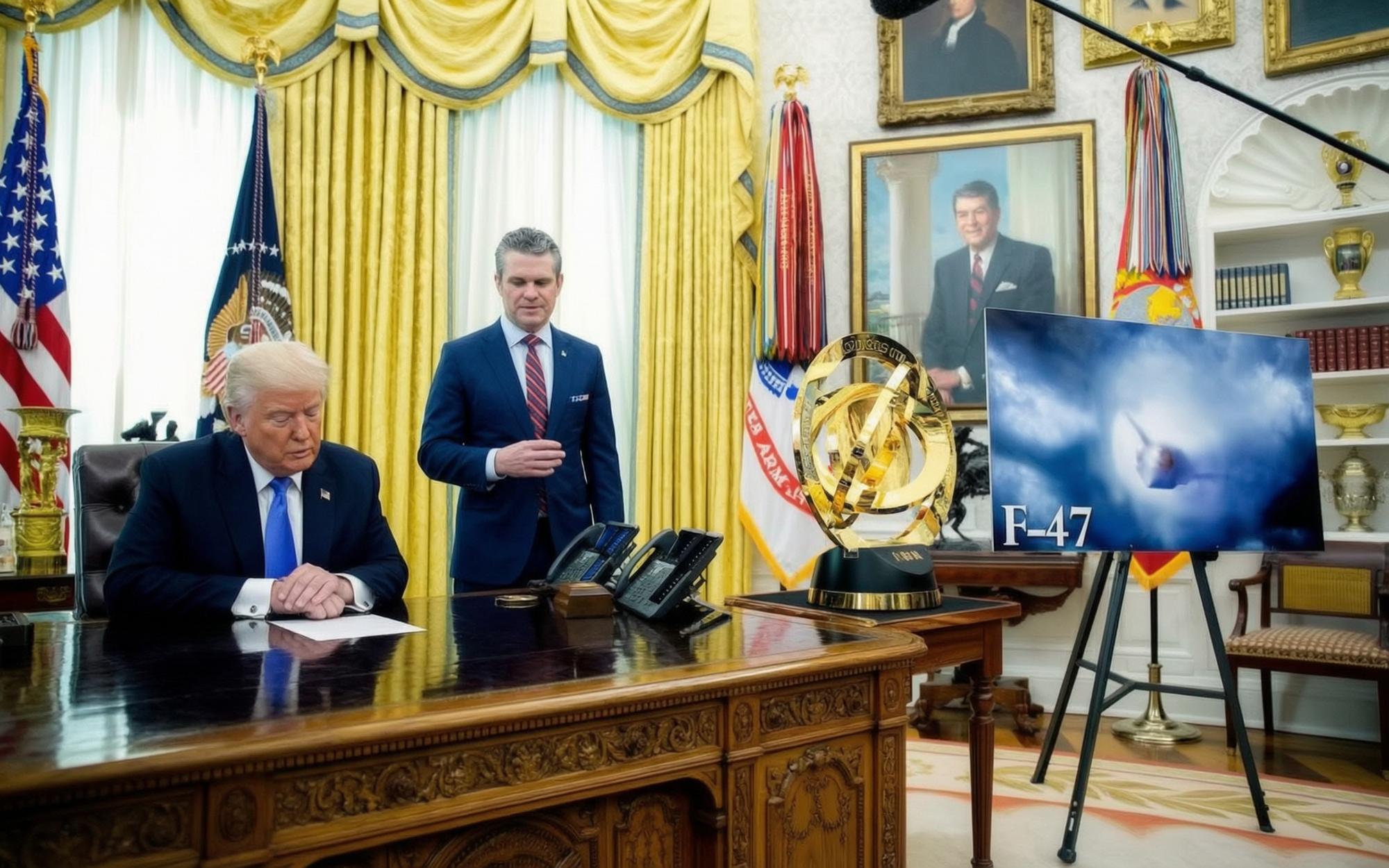
Pentagon Set To Keep National Guard Presence In Washington Through Trump’s Second Term [WATCH]

The Pentagon has decided to maintain a National Guard mission in Washington through January 2029, ensuring that troops will remain in place through the end of President Donald Trump’s second term.

The mission has been operating since August 2025 when President Trump took decisive steps to deal with spiraling crime in the capital.

While Democrats dismissed the deployment as unnecessary, the results speak loudly: crime is down, visitors feel safer, and the streets of Washington actually look clean again.

According to two U.S. officials who spoke to ABC News, the plan to extend through 2029 only awaits final approval from War Secretary Pete Hegseth, and approval is considered a near certainty.

Hegseth has been one of the most vocal defenders of law and order in the Trump administration and has shown little hesitation in confronting Washington’s crime problem.

Pentagon press secretary Kingsley Wilson declined to comment directly, saying only there were “no announcements to make at this time.”

However, he added that the Defense Department remains “committed to supporting the President’s mission to address the epidemic of crime in our Nation’s capital.”

That statement alone gives a clear picture: the Trump administration sees this mission as essential and ongoing.

The operation, known formally as the D.C. Safe and Beautiful Mission, includes more than just standing guard.

National Guard personnel assist the Metropolitan Police Department with public safety patrols, traffic control, protection of major landmarks, and even cleanup tasks like graffiti removal and landscaping.

It is part security effort, part restoration project, and the results on the ground have shown measurable improvement.

WATCH:

Visitors to downtown Washington, the National Mall, and Metro rail stations have seen a steady presence of uniformed soldiers, a far cry from the years when violent crime surged while local politicians debated defunding the police.

Having National Guard troops stationed among historical monuments has also deterred vandalism that plagued the city during the height of anti-police protests earlier in the decade.

A spokesperson for Joint Task Force D.C. praised the ongoing work, saying, “The D.C. National Guard remains focused on its mission assisting the Metropolitan Police Department and federal partners with monument security, community safety patrols, and the protection of federal facilities. Our Soldiers continue to provide traffic control and area beautification to safeguard District residents and visitors.”

This is not a temporary assignment.

The Pentagon has authority to bring in additional forces as necessary, working in coordination with state governors.

That allows flexibility in troop numbers depending on crime trends and upcoming major events.

Reports on troop strength have varied, with about 2,865 personnel counted in early 2026 according to ABC News.

The majority of these troops came from Republican-led states such as Florida, Georgia, South Carolina, and Oklahoma.

Those states have reliably provided dependable personnel who understand law and order is not optional.

Some accounts have listed as few as 2,600 or as many as over 5,000 troops at peak periods, depending on specific missions or security needs.

The original deployment in 2025 began with around 800 D.C. National Guard members.

It grew quickly as violent incidents fell and the administration saw clear improvement in public safety metrics.

The mission was extended once before and has now become an integral part of how the Trump administration handles urban crime prevention.

Statistics from the D.C. Metropolitan Police show that by the middle of 2026, overall crime had fallen by 21 percent compared to the prior year.

Property crimes were down 23 percent and motor vehicle thefts plummeted.

Even categories like robbery, which used to dominate the crime blotter, have seen meaningful drops.

For residents who remember the chaos of 2020 and 2021, these numbers are not abstract figures, they represent a tangible return to public order.

While local progressive politicians have largely kept quiet about the continuing mission, residents and tourists alike have grown accustomed to seeing uniformed Guard members nearby.

For many, that visibility means reassurance.

The fear that once kept families from visiting the National Mall at night or walking downtown after dark has eased.

The contrast is so stark that even critics of the deployment are struggling to explain why peace and safety suddenly improved once the Guard arrived.

The extension through 2029 clearly signals the administration’s long-term commitment to maintaining order and restoring the nation’s capital to the kind of prideful symbol it should be.

Washington may be filled with endless bureaucratic debates, but on the street level, the Trump plan is producing results most residents can actually see.

The move also represents something more significant than just a military presence in a major city.

It highlights the administration’s belief that public safety is nonnegotiable.

For years, Democrats talked about “reimagining policing,” which turned out to mean letting crime spiral out of control.

The Trump approach has been to reassert authority, back the police, and clean up the mess that decades of progressive policy left behind.

By continuing this mission, the administration is ensuring the capital will serve as a model of renewed law and order, while signaling to other cities what can happen when leadership stops making excuses and starts enforcing the law.

News

Maine Democrat Machine in Panic Mode: Executive Director Plots Platner Replacement [WATCH]

Maine Democrats are once again proving that when they say “fair and inclusive,” what they really mean is “we will decide,” not the voters.

Following the sudden exit of scandal-ridden Graham Platner from one of the most watched Senate races of the year, the party leadership is moving fast to handpick a replacement behind closed doors.

The decision gives party insiders the power to anoint a new candidate without any input from ordinary Democrats who actually showed up to vote in the primary.

Platner’s withdrawal threw the Maine political scene into chaos, but Democrats wasted no time seizing control of the situation.

Instead of a special election or a transparent vote, the party boss-led process will settle the question internally.

Their deadline, July 27, sets the stage for a hurried coronation disguised as a fair procedure.

Party officials have scrambled to defend their move, describing it as “fair, transparent, and inclusive.”

WATCH:

Those words have quickly become hollow political jargon, especially since the base voters who are supposed to benefit will have absolutely zero say in who replaces Platner.

To many, the announcement feels like déjà vu from the 2024 Democratic presidential swap, when Joe Biden bowed out after a disastrous campaign and the party elite simply elevated Kamala Harris to the top of the ticket without allowing voters to weigh in again.

The similarities are striking. Once again, the left’s “democracy” involves party bosses, committee meetings, and pre-approved talking points rather than real input from the public.

If the Maine Democrats had their way, voters would only be useful for photo ops and donation drives, not meaningful decisions.

Political observers across the country are calling out the hypocrisy.

After years of lecturing Republicans about protecting “democratic norms,” the Democrats in Maine are rewriting the rules to suit themselves.

The same people who cried foul over election integrity in other states are now perfectly fine cutting their own supporters out of one of their state’s most important races.

Speculation is running wild about who might be picked as the new nominee. Several names have surfaced as potential replacements, and most of them come straight from the insider establishment.

The party’s leadership, according to local reports, began quietly discussing back-up candidates weeks before Platner ever stepped down.

That timing makes it hard for anyone to believe the withdrawal was a complete surprise.

The nomination switch also raises new questions about the Democratic Party’s long-term confidence in its candidates.

If Platner was touted as their best hope and collapsed within weeks of securing the nomination, what does that say about the party’s vetting process or its bench strength?

The whole episode looks like blatant damage control mixed with political desperation.

Meanwhile, longtime Republican Senator Susan Collins is preparing for re-election and remains one of the state’s most respected figures.

Her record as a moderate, bipartisan problem-solver continues to connect with voters who are tired of chaos.

Facing a Democratic Party that cannot seem to keep its own house in order, Collins stands to benefit from this internal implosion.

The Maine spectacle might also influence races beyond state borders.

National Democrats, already suffering from weak enthusiasm and sliding trust among independent voters, now appear even more opportunistic.

The optics of party officials once again overriding voters will not play well across the country.

Conservatives and independents alike are taking note of what happens when Democrats are left in charge of the rules: they change them whenever they like.

Even some Democratic grassroots organizers privately admit they are uncomfortable with how this process is unfolding.

They know that ordinary voters believe primaries exist for a reason. When that fundamental act of democracy gets overturned by a closed-door committee, trust in the process begins to crumble.

By the time the July 27 deadline arrives, the Democrats will have their handpicked nominee ready for press photos and scripted lines about “unity.”

The reality, however, is that the party’s maneuver reflects fear, not strength.

Their repeated pattern of centralizing control exposes their belief that voters cannot be trusted to make the “right” choice.

It is a belief that Republicans and conservatives have called out for years, and one that continues to define how the modern Democratic Party operates.

Whether in Washington or Augusta, their message is clear: democracy only counts when it delivers the outcomes they prefer.

For Maine voters who expected their voices to matter, this latest episode is one more reminder that the Democratic leadership is more committed to power than principle.

As the state’s political temperature rises heading into November, voters will remember which party respected their choice and which one took it away.

Maine Democrats may soon find that their version of “inclusive” politics comes with a heavy electoral price.

News

GOP Scrambles Over South Carolina Senate Seat After Lindsey Graham’s Sudden Death [WATCH]

Senator Lindsey Graham’s sudden passing from an undisclosed illness has jolted Washington and unleashed a fast-moving scramble for his successor in the Senate.

The South Carolina Republican died at 71, leaving behind a legacy built on decades in national politics and a seat that instantly becomes one of the most sought-after in the GOP ranks.

Republicans now find themselves in a delicate situation.

With their narrow 52-vote advantage in the Senate already stretched thin by Mitch McConnell’s uncertain health status, the loss of Graham puts added pressure on the party to move swiftly.

A single seat may not seem like much, but in today’s razor-edged politics, one missing vote on the floor can make or break an agenda.

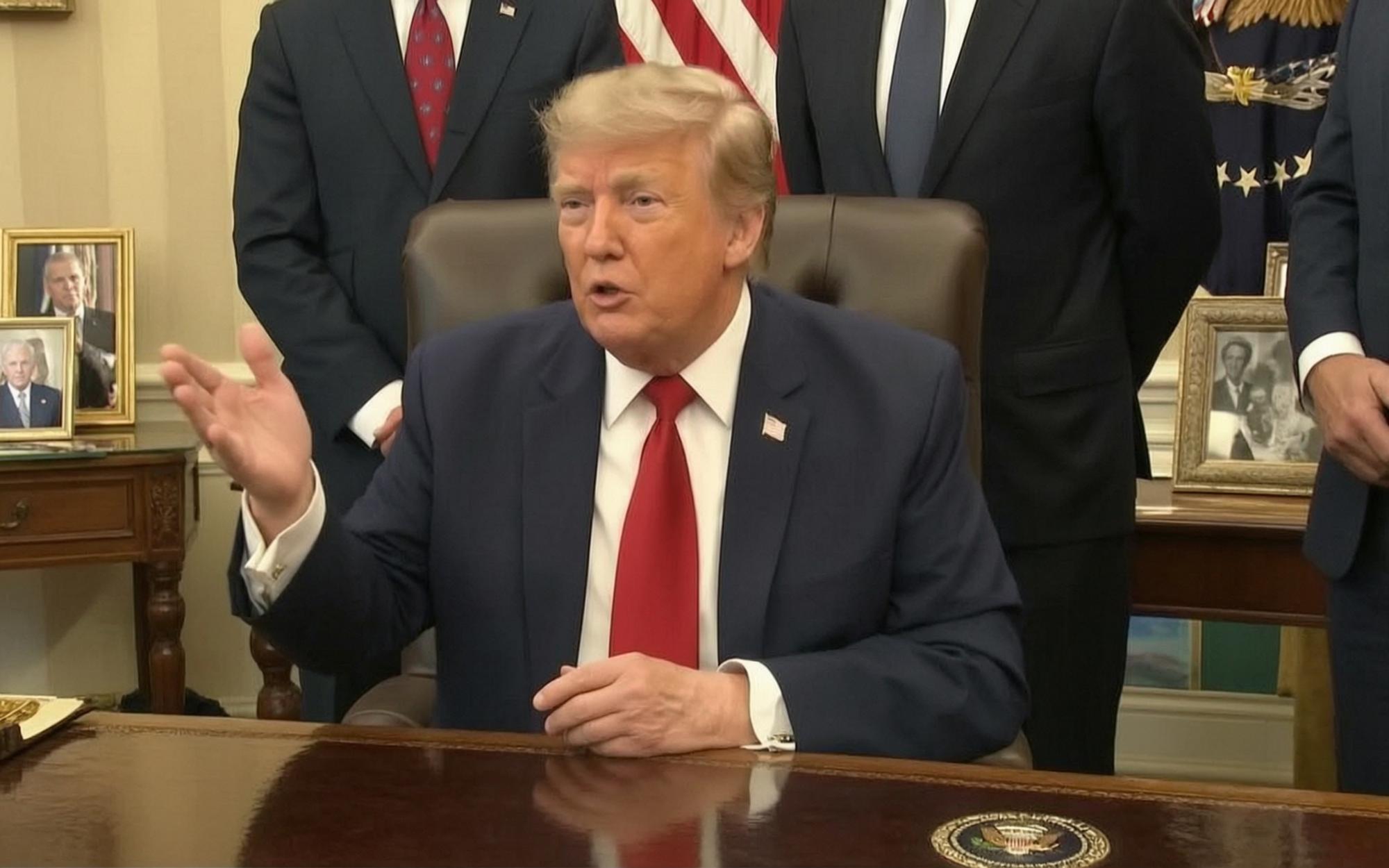
President Donald Trump wasted no time signaling his influence over the process.

Appearing on NBC’s “Meet the Press,” Trump hinted at having a preferred candidate for Graham’s replacement but stopped short of naming names.

“I have somebody that I think would be great,” he said.

“But I don’t want to say it now because it’s just, it’s too soon with Lindsey.”

In characteristic fashion, Trump made clear that while he would show respect for the late senator, his political instincts remain sharp and ready.

Under South Carolina law, Governor Henry McMaster will appoint a temporary replacement for Graham, who will serve until a special election is held.

McMaster, a close Trump ally and longtime figure in state Republican politics, could announce his decision at any time.

His choice will not only shape the future of the state’s representation in Washington but could also influence the national balance of power.

WATCH:

Graham was already gearing up for a fifth Senate term after coasting through the South Carolina GOP primary earlier this summer.

That makes the timing of his death especially significant.

Whoever McMaster appoints will serve only until the end of the current year, completing the rest of Graham’s term, before the state hosts a special election for the next full term.

That immediate political future now looms large over South Carolina. State election officials have set the GOP candidate filing window to open on July 21, with the special election planned for August 11.

The familiar rhythm of South Carolina Republican politics is about to erupt into a full-blown race, complete with old rivalries, Trump’s influence, and the state’s well-oiled conservative machinery.

Names are already swirling.

WATCH:

McMaster himself, who is finishing his final term as governor, has not ruled out the possibility of seeking the Senate seat.

Trump lavished praise on him during his Sunday appearance, noting, “Henry’s been a great governor, you know now he’s termed out, but he’s going to do the right thing. I think Henry will be fantastic.”

That kind of nod from Trump could be all it takes to set the tone of the race.

Rep. Nancy Mace is also eyeing the seat.

The South Carolina congresswoman, who recently lost her bid for the governor’s mansion, reportedly is “considering a bid to run,” according to a source familiar with her plans.

Mace has long been a polarizing figure in state GOP circles, often caught between the traditional conservative base and the populist wave that Trump helped shape.

Another seasoned lawmaker, Rep. Joe Wilson, quickly shut down speculation about entering the race.

After speaking with Trump, Wilson stated that his “goal is to remain in the House to keep his two-vote majority for the American people.”

Wilson’s remark drew attention to perhaps the most important factor in all of this: every Republican seat counts in a Senate where the party’s legislative ambitions hang by a thread.

Several other South Carolina Republicans are also in the background.

Reps. Ralph Norman, Russell Fry, William Timmons, and Sheri Biggs have stayed quiet so far, though none can be fully ruled out in the unpredictable world of state politics.

Pamela Evette, the former lieutenant governor who was endorsed by Trump in her failed gubernatorial bid, could also step forward.

For now, McMaster’s office has given no timeline for when the interim appointment will be made.

But the internal pressure is clear.

The GOP leadership in Washington is eager to restore its full voting strength, while conservatives across South Carolina want assurance that the state’s representation will continue firmly in the pro-Trump camp.

The stakes could hardly be higher. Graham’s seat was more than a Senate position.

It was a symbol of a stable conservative pillar in Washington, one that represented a mix of establishment expertise and pragmatic loyalty to the grassroots Republican cause.

His sudden departure leaves not only an emotional void but a strategic one as well.

The coming days will define not only who takes Graham’s seat but how the Republican Party in South Carolina positions itself ahead of the 2026 midterms.

With Trump actively engaged, McMaster under the spotlight, and an open field of ambitious conservatives waiting for a sign, one thing is certain.

The Palmetto State’s political scene is about to become the center of the GOP universe once again, and every conservative eye in America will be watching.

News

Nick Shirley Blows Lid Off Massive Medicare Scam Targeting Elderly Centers [WATCH]

Nick Shirley has once again dropped a bombshell that Democrats and bureaucrats are going to hate.

His latest hour long expose dives into what appears to be a massive Medicare fraud ring operating through senior centers catering to elderly Koreans and Chinese Americans. It is not pretty, and it is your tax dollars footing the bill.

Shirley’s video is already making the rounds online, not only for what it reveals but for how flagrantly the scam seems to operate.

“Your tax dollars are paying for elderly Koreans and Chinese to play ping pong and do tai chi, while the fraudsters give kickbacks to those who enroll,” Shirley wrote as he released the segment.

Even for the hardened political observer, it is jaw dropping.

The footage shows Shirley walking into a facility in Flushing, New York, one that has somehow billed millions through Medicare programs under the pretense of community wellness.

Shirley asked a staff member if it was true that over seven thousand people were registered there.

The man insisted that number was wrong.

Unfazed, Shirley pressed him, noting that the numbers are publicly available through official channels.

The back and forth grows tense when Shirley asks how the center could charge sixteen hundred dollars per person and not be pulling in millions.

The staffer offered no solid explanation.

The moment serves as the clearest visual example yet of how the bureaucratic swamp all but invites exploitation.

What Shirley exposes cuts right to the heart of how easily federal benefits can be twisted into cash machines by opportunists who know no one is checking.

There is no rigorous oversight.

There are no Democrats in Congress asking real questions about where your money goes while they lecture Americans about “equity” and “compassion.”

This investigation shines yet another spotlight on how fraud flourishes within entitlement programs that are supposedly protected by the very bureaucrats who created the mess.

For decades, conservatives have warned that government programs grow waste, fraud, and abuse faster than any private business ever could. Here is the proof in living color.

In interviews following the release, Shirley said he was inspired to dig deeper after hearing reports from whistleblowers inside several similar facilities who claimed they were pressured to “inflate numbers” to secure more federal funding.

These are people working on the inside, not partisans or pundits. They saw first hand how the scam worked.

The supposed “health programs” at these centers often revolve around light exercise, recreational activities, and social events.

But behind the scenes, the billing data lists them as medical treatment or physical therapy.

That allows the operators to charge as if they were legitimate healthcare providers.

The result is tens of millions in questionable claims that taxpayers are forced to cover.

WATCH:

Democrats, naturally, will call anyone who questions this “racist” or “insensitive.”

They always do when they get caught spending other people’s money without accountability.

What makes Shirley’s work so effective is that he does not retreat from those attacks.

He simply presents the evidence, tape by tape, fact by fact.

Conservative readers and taxpayers have every reason to be furious.

Washington bureaucrats love to brag about their expanding social programs, yet no one is watching when those same programs become free money for fraudsters.

It is a perfect example of what happens when the government tries to do everything for everyone and ends up serving no one honestly.

Those who have followed Shirley’s channel know this is not his first rodeo.

His previous videos exposed city level corruption, nonprofit financial abuse, and twisted government grant games.

This latest Medicare exposé is just another brick in a wall of dishonesty that good Americans are expected to finance.

Momentum is already building among conservative watchdog groups to demand a full investigation.

Lawmakers in Washington who still value fiscal responsibility should take note.

Real reform begins by cutting off the easy cash pipeline that encourages scams disguised as community care.

Conservatives have been right all along that oversight matters.

Nick Shirley’s work is shaking up the establishment again, and Republicans should seize the moment.

Taxpayers want answers, and they deserve them.

Whether Washington likes it or not, the people have every right to know where their money is going.

News

Ro Khanna Complains About Being Detained by Israel’s IDF After He Backed Dems Nazi Tattoo Guy [WATCH]

Democrat Congressman Ro Khanna has had quite a week.

After endorsing Maine Senate candidate Graham Platner, who abruptly dropped out of the race when a serious rape allegation surfaced, Khanna found himself scrambling to change the subject.

Conveniently, he landed in the Middle East and quickly posted a dramatic account on social media claiming he had been “detained” by armed Israeli settlers in the West Bank.

Khanna’s story, tailor-made for sympathetic headlines, describes an encounter in the ruins of a Bedouin village where he says gun-toting settlers surrounded his group and delayed their departure. According to his post, “Israeli settlers, brandishing American made M4s, detained me and other Americans on my trip to Palestine.”

He added that when the Israel Defense Forces arrived, they allegedly sided with the settlers.

The New York Times, which happened to have a photographer traveling alongside Khanna’s delegation, sprinted to publish his account.

Their write-up emphasized that Khanna was frightened and painted the scene as hostile and chaotic.

The coverage also made sure to slip in that Khanna is “exploring a 2028 presidential run,” a detail that sounds curiously well timed for a man desperate to distance himself from a political disaster back home.

Reports from Israeli authorities, however, contradict Khanna’s tale.

The IDF explained that their forces resolved the situation and ensured the congressman’s party could safely leave.

Israeli police added that the area was a “Closed Military Zone,” meaning civilians were not authorized to be there in the first place.

That part did not make it into the congressman’s dramatic retelling.

For anyone paying attention, this latest stunt looks like an exercise in political damage control.

Khanna was already under fire for championing Platner despite previous troubling accusations circulating for months before the official withdrawal.

When that imploded, his credibility took another hit. It is no surprise he was eager to pivot the headlines toward something that might play well with progressive activists and his increasingly anti-Israel base.

The pattern is obvious. When Democrats are cornered, they fall back on spectacle or victimhood.

Khanna’s experience, if as benign as Israeli authorities describe, would have merited little more than a brief diplomatic clarification.

Yet, in his retelling, it became an international incident involving armed settlers, the IDF, and high moral drama.

He even hinted, “You will be hearing more soon,” teasing the story like a campaign rollout.

This carefully crafted outrage also fits neatly into Khanna’s political rebranding.

Lately, he has tried to position himself as the “moral conscience” of the Democratic Party.

His recent statement to Reuters drives that home. “I’m strongly considering it,” he said about a potential presidential run, “and I’m more resolved to consider it after this trip. We need a new moral direction in our party. A new moral vision that respects the dignity and human rights of people around the world.”

The irony, of course, is striking.

The congressman’s attempt to sound like a statesman is undermined by his habit of inserting himself into controversies he does not seem equipped to handle.

Whether at home promoting failed candidates or abroad lecturing foreign governments, Khanna’s self-importance shines through.

His advice to Israel, which came packaged as a soundbite for the press, was classic Washington arrogance.

“Free advice to the Israelis,” he said.

“It’s not a good idea to detain long-shot presidential candidates. Not how you’re going to build good will with the next American president, whoever that is.”

WATCH:

It is doubtful Jerusalem lost any sleep over the remarks.

The only “detention” happening here is Khanna’s campaign stuck in political quicksand.

His “long-shot” chance at the presidency might not survive the fallout from Platner, much less his theater abroad.

Instead of impressing voters with moral clarity, he looks like yet another Democrat who substitutes grandstanding for substance.

Back home, conservatives are pointing out exactly that. Khanna’s social media post received widespread mockery, with users accusing him of manufacturing drama for sympathy points.

Others noted the convenient presence of a New York Times photographer, as if the congressman’s entire visit was staged for optics rather than diplomacy.

What is truly revealing is how the Democratic establishment keeps tolerating this behavior.

A congressman embroiled in controversy, a disgraced candidate endorsement, a conveniently timed photo op in the West Bank, and self-congratulatory rhetoric about global “moral vision.”

This is what passes for leadership in today’s Democratic Party.

Ro Khanna has made one thing clear.

When his political fortunes plummet, he will do whatever it takes to redirect the spotlight, even if it means turning a vague misunderstanding abroad into a media-ready crisis.

The problem for Khanna is that voters are learning to see through these manipulative tactics.

Israel may not have detained him, but his own choices have certainly imprisoned his credibility.

WATCH:

The congressman may soon find that the real battle will not be with settlers in the West Bank but with the growing perception that he is another elitist politician performing for cameras instead of confronting reality.

That is one contest no carefully staged international trip can fix.

News

Fox Reveals Democratic Socialists of America’s Stunning Agenda to Remake the Government [WATCH]

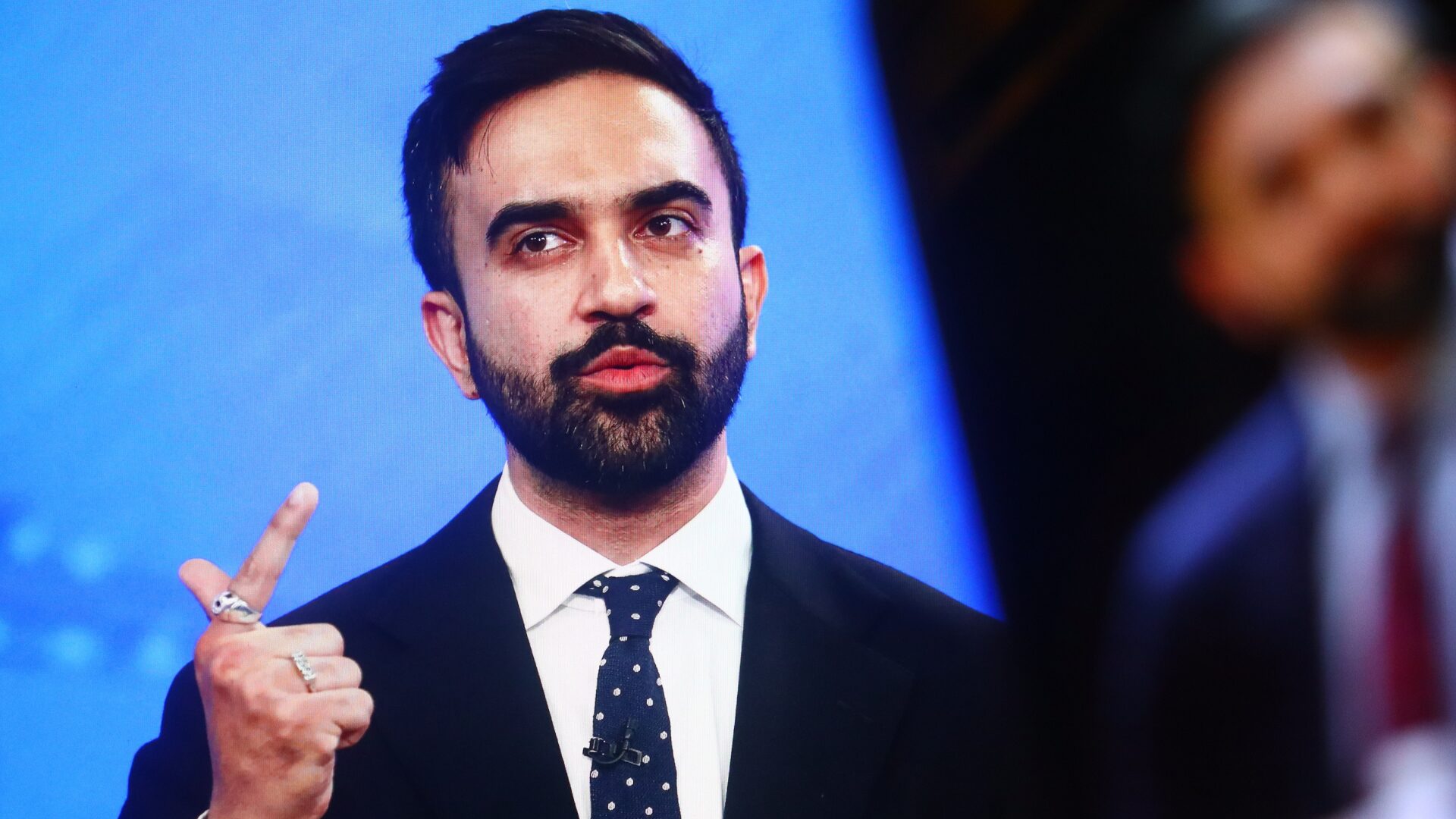
Fox News reported that the Democratic Socialists of America (DSA) is preparing to unveil a new political platform next week featuring several proposals that would significantly alter the structure of the federal government. During a discussion of the reported platform, Fox News correspondent Aishah Hasnie outlined the proposals while commentator Lisa Boothe argued they reflect an effort to fundamentally reshape the American political system.

Hasnie introduced the report by describing it as a Fox News exclusive.

“Fox has learned this is a big scoop. Fox has learned the DSA, the Democratic Socialists of America, plan to roll out their brand new platform next week, and we have the details,” Hasnie said.

She then listed what she said were several of the organization’s major policy proposals.

“Let’s put it up on the screen, and your jaw is going to drop it. The first one here. So number one, they want to eliminate the U.S. Senate. So a whole third branch of government. Let’s just get rid of it. That’s number one,” Hasnie said.

According to Hasnie, the platform also proposes restructuring the executive and judicial branches.

“Number two, let’s just replace the president and the Supreme Court with an executive and judiciary chosen by and subordinate to Congress. So no more equal branches of government,” she said.

Hasnie also cited immigration policy as another component of the reported platform.

“And then third, amnesty for all immigrants. We saw that one coming,” she said.

She concluded by identifying another proposal that she said appears in the platform.

“And number four, defunding the Department of War. This is this is real, I mean this is coming in a matter of days, and these are the candidates that are winning across America,” Hasnie said.

Boothe responded by first discussing candidate vetting before turning to the reported DSA platform.

“Well, absolutely, and just real quick on the vetting aspect, yeah, Graham Platter, the people who brought him into the race only vetted him in three days. Vetting typically takes weeks, so Democrats are going to potentially end up in the same position they were with Graham Platter,” Boothe said.

She then argued that the proposals outlined by Hasnie indicate a broader political objective.

“But on this, yeah, Aisha, what they are telling us is they want to dismantle the system from within,” Boothe said.

Boothe compared the reported platform to the historical development of socialism in Venezuela.

“And you look at countries like Venezuela, where socialism took over. Hugo Chavez was democratically elected. He promised on the same things we’re hearing from some of these socialist candidates on the left to return power to the people to fight corruption,” Boothe said.

She argued that events unfolded differently after Chávez assumed office.

“And then what happens is they get elected and they do the opposite. The power gets consolidated with these bureaucrats, with these you know politicians, with this new ruling class, and the system gets corrupted,” Boothe said.

According to Boothe, the promises made by socialist politicians ultimately differ from the results they produce.

“And you know, so these same people who say that they want to you know empower the people, they don’t. They just want to empower and enrich themselves,” she said.

Boothe concluded by criticizing what she views as the motivations of those promoting the platform.

“And these are people who can’t get powerful or rich on their own,” Boothe said.

WATCH:

The discussion focused on the reported contents of the Democratic Socialists of America’s forthcoming platform and the potential implications of those proposals if adopted.

Hasnie outlined what Fox News reported are the organization’s planned policy positions, including eliminating the U.S. Senate, restructuring the executive and judicial branches, granting amnesty for all immigrants and defunding the Department of War.

Boothe argued that the reported proposals represent an effort to fundamentally change the structure of the federal government.

She maintained that similar political movements have historically centralized authority rather than dispersing it, citing Venezuela under Hugo Chávez as an example.

The exchange also touched on Democratic candidate vetting, with Boothe contending that insufficient background review could create additional political challenges for Democrats while broader ideological debates continue over the direction of the party and the policies being advanced by socialist candidates.

News

U.S. Unleashes Major Retaliation Strikes On Iran After Regime Claims to Close Strait Of Hormuz [WATCH]

American forces are sending a message that cannot be mistaken for diplomacy or weakness.

The United States military, under direct authorization from President Donald Trump, unleashed another sweeping wave of precision strikes against Iran’s military infrastructure after Tehran’s reckless move to close the Strait of Hormuz to international shipping.

This decisive action marks the third round of strikes since the President declared the ceasefire “over” during the NATO Leaders’ Summit in Ankara earlier this week.

The latest wave of strikes comes in direct response to yet another Iranian provocation, this time the brazen attack on the Cyprus-flagged commercial vessel GFS Galaxy.

According to U.S. Central Command, the Iranian assault left the ship’s engine room severely damaged, and one crew member remains unaccounted for.

Iran’s Islamic Revolutionary Guard Corps claimed it fired on the ship for refusing to follow its unlawful directions through Iranian territorial waters.

CENTCOM announced that American forces struck targeted Iranian military assets to “impose costs” on the regime’s aggression.

The statement made clear that the objective was to degrade Iran’s ability to threaten civilian mariners and free commerce in one of the world’s most vital shipping channels.

While the full list of targets has not been made public, the strikes reportedly hit naval sites and missile installations tied to the IRGC.

Defense Secretary Pete Hegseth stood firm, reposting CENTCOM’s statement on X with a sharp message that captured the mood of the administration.

“Iran made a poor choice. Now they pay,” he wrote.

The powerful remark reflected the administration’s ongoing refusal to let Tehran control the world’s oil chokepoint or intimidate global trade routes through force.

Iran’s decision to close the Strait of Hormuz came after months of escalating maritime harassment, culminating in this latest closure announcement that declared the channel would remain blocked “until the end of U.S. interference in this region.”

That sort of language might be familiar from Iran’s theocratic mouthpieces, but this time, it appears Washington is finished tolerating the act.

The Iranian regime’s aggressive posture escalated dramatically in July, with four commercial ships attacked in only a few weeks.

Each missile fired, each warning ignored, has reminded the world what happens when radical clerics and military hardliners think they can test American resolve without consequence.

They miscalculated, and it is now costing them.

WATCH:

Reports indicate the fresh U.S. strikes targeted missile storage sites, radar tracking systems, and communications facilities that support Iran’s naval coordination in the Persian Gulf.

Satellite images show significant damage at several IRGC bases, though Iranian state media is predictably minimizing the scope of losses.

Earlier this week, Iranian Foreign Minister Abbas Araghchi met with Omani officials to discuss potential reopening of maritime routes, but the talks yielded no progress.

Tehran dismissed calls to guarantee safe passage, asserting it would only reconsider if Washington entirely withdrew its presence from the region.

That ultimatum was met with the sound of American fighter jets taking off.

The Trump administration’s swift response demonstrates a clear contrast to the weak handling of Iranian threats seen under previous Democrat leadership.

Gone are the days when Tehran could seize tankers, shoot down drones, or menace shipping lanes while receiving secret pallets of cash from Washington.

Under Trump, the U.S. is enforcing freedom of navigation the old fashioned way, through strength and unapologetic deterrence.

In official comments on Saturday evening, the Pentagon confirmed that the operation had been meticulously planned for days.

“Iran must realize its provocations have consequences,” a defense official said.

The message is unmistakable: every attack on a non military vessel will now meet with overwhelming response.

WATCH:

Meanwhile, global markets are reacting to the turmoil. Oil prices briefly spiked before stabilizing once it became clear that the U.S. Navy maintained full control of shipping routes through adjacent waters.

Analysts say the rapid response prevented broader panic in energy markets and reaffirmed the United States’ dominance over strategic waterways.

President Trump returned to the White House early Saturday afternoon after a briefing with NATO partners in Ankara.

Reports indicate he convened his national security team in the Situation Room before authorizing the latest strikes.

Insiders describe the mood as calm but determined, a sign that the President intends to maintain pressure until Iran backs down completely.

The coming days will test the regime’s resolve.

Facing internal unrest, economic strain, and now, direct military retaliation, Iran finds itself cornered by its own aggression.

As the U.S. makes clear there will be no tolerance for further provocations, even Iran’s usual backers in Europe are running out of patience.

The Strait of Hormuz may remain closed for now, but Tehran’s political isolation is what truly matters.

For now, the message resonates across the Gulf: American strength is back on the water, and the days of appeasement are finished. Iran wanted a confrontation.

Now it has one, and the outcome is as predictable as it is deserved.

News

U.S. Unleashes More Than 100 Strikes Inside Iran as Tehran Fires Back at Gulf Bases

The United States military pummeled more than 100 Iranian targets Saturday night, marking the most extensive barrage yet in a week of escalating combat between Washington and Tehran.

The strikes were launched from American fighter jets, warships, and drones under U.S. Central Command’s authority, signaling that the era of half-measures in the Persian Gulf is over.

CENTCOM confirmed that American forces hit missile and drone launch sites, naval operations centers, ammunition storage facilities, communications hubs, and Iranian coastal surveillance posts.

The operation was broad, deliberate, and designed to cripple Iran’s regional aggression machinery that has terrorized international shipping lanes for years.

Iran responded with its standard bluster, firing drones and missiles toward U.S. installations scattered across Jordan, Qatar, Bahrain, Oman, and the United Arab Emirates.

Tehran claimed it was “targeting naval support infrastructure,” though early assessments show no confirmed U.S. casualties or impacts on American hardware. In short, Iran barked — but Washington bit back harder.

These latest airstrikes mark a major escalation since hostilities reignited earlier in the week.

Fighting resumed after Iranian proxies attacked cargo ships transiting the Strait of Hormuz — a vital chokepoint for global oil and trade. President Donald Trump’s administration wasted no time striking back, sending a message not just to Tehran but to every regime betting that weakness had returned to the Oval Office.

US Navy Takes Out Two Iranian Tankers Defying Blockade in Strait of Hormuz
An F/A-18E Super Hornet taxis on the flight deck of Nimitz-class aircraft carrier USS Abraham Lincoln on April 16, 2026. (U.S. Navy)

As tension across the Middle East spiked, Trump declared during the NATO summit in Turkey that the so-called ceasefire with Iran was “over.”

The statement, clear and unapologetic, ended the illusion that Iran could hide behind diplomatic paperwork while plotting attacks in international waters. Trump’s plainspoken clarity has brought back the deterrence America desperately needed.

The United States currently fields two aircraft carriers, multiple destroyers, and several fighter squadrons in and around the Strait of Hormuz.

Iran Pounds Kuwait As U.S. Forces Hit Back Near Hormuz In Escalating Gulf Clash

The arrival of the Boxer Amphibious Ready Group — hauling over 2,000 Marines — reinforced American posture in the region and reminded Tehran that this isn’t the sleepy, politically correct Pentagon of the Obama years. This is a War Department under Pete Hegseth’s watch, where strength, not appeasement, drives the mission.

According to updated figures from CENTCOM, America struck 80 Iranian military assets on July 7 and another 90 the following day.

In those consecutive nights of precision strikes, the targets included missile batteries, naval boats, and radar systems Tehran depended on for projecting power near the Gulf. That brings the total to more than 300 Iranian assets destroyed in less than a week.

Iran’s Revolutionary Guard Corps countered by declaring the temporary closure of the Strait of Hormuz — a symbolic act more than a practical threat.

US Forces Hammer Iranian Targets After Drone Shootdown, Intercept Missiles Over Kuwait
An F/A-18F Super Hornet lands on the flight deck of Nimitz-class aircraft carrier USS George H.W. Bush while sailing in the Arabian Sea, May 26, 2026. (U.S. Navy)

Within hours, U.S. Central Command publicly confirmed that American forces remain “positioned and prepared” to ensure free navigation through one of the world’s busiest shipping routes. Once again, Iran was exposed for what it is: bluster with rockets.

The escalating confrontation underscores a reality that many on the left refuse to confront. America’s adversaries understand one language — strength.

When the War Department acts decisively, with air superiority and a clear chain of command, enemies don’t negotiate; they retreat. Trump’s strategy, backed by Hegseth’s no-nonsense execution, is showing that the United States still owns the skies and seas when necessary.

Despite Tehran’s claims of vengeance, there is little to suggest Iran’s attacks achieved any significant military effect.

U.S. Hits Iran With Punishing New Strikes After Oil Sanctions Snapback Over Tanker Attacks
A U.S. Air Force F-16 Fighting Falcon aircraft refuels from a KC-135 Stratotanker aircraft during Operation Epic Fury, April 2, 2026. (U.S. Air Force)

Experts indicate that the regime’s missile and drone strikes were either intercepted or failed to reach their intended marks. Meanwhile, U.S. strikes have reportedly reduced Iran’s ability to launch further long-range operations in the near future.

For decades, Iran has tested America’s resolve through proxy strikes, maritime harassment, and diplomatic gamesmanship.

The difference now is Washington’s unwillingness to blink. Trump’s insistence on projecting overwhelming force — rather than chasing another hollow “deal” — has reshaped the region’s power balance practically overnight.

Naval Blockade Sparks Showdown as Destroyer Halts Iranian-Bound Cargo Vessel
The destroyers Spruance, front, and Decatur alongside the fleet oiler Carl Brashear. (U.S. Navy photo by MC2 Will Gaskill)

While bureaucratic elites and legacy media outlets may clutch their pearls over “escalation,” realists know deterrence is built on credibility.

The War Department’s blow against Tehran isn’t just a tactical maneuver — it’s a loud reminder that the United States military, when unshackled by weakness, still carries the biggest stick on earth.

Iran’s regime wanted a show of power. It got one, courtesy of the U.S. Armed Forces. And as long as this administration holds the line, Tehran’s days of unchecked aggression in the Gulf are numbered.

News

Space Force Unveils Its First Anti-Satellite Weapon Ready for Orbital Warfare

After years of development and quiet investment, the United States Space Force has officially declared operational one of its first real-deal weapons — a ground-based system capable of jamming and neutralizing enemy satellites.

The “Meadowlands” system represents a new chapter in the projection of American military power into the final frontier — space.

The Meadowlands system, built by L3Harris Technologies, isn’t a missile designed to shatter enemy equipment into orbiting debris.

Instead, it’s a precision electromagnetic warfare weapon using radiation to “detect, deny, disrupt, and degrade” an adversary’s satellite systems.

In simpler terms, it can shut down hostile communications, geolocation trackers, and surveillance feeds in space — all without firing a kinetic shot.

Stationed under Mission Delta 3 at Peterson Space Force Base in Colorado, this weapon joins the Space Force’s growing list of real capabilities rather than symbolic projects. Guardians, the service’s elite operators, now have a tool that lets them engage in combined arms operations even across the boundary between Earth and space.

What makes this system especially clever is its reversibility. Unlike a missile or debris-creating weapon, the Meadowlands can jam a satellite for as long as necessary and then “unjam” it when conditions change. No permanent damage, no space junk, no diplomatic headache. It’s surgical warfare for the information age.

Col. Angelo Fernandez, who commands Mission Delta 3, emphasized how vital continuous modernization is.

“Continued U.S. Space Force investment in electromagnetic warfare systems, software, and advanced training is essential to modern warfare,” he said. His statement reads more like a challenge to keep pace with growing threats from China and Russia, who have made no secret of their own anti-satellite ambitions.

Space Force Sets Distinct Dress and Appearance Standards for Guardians

The hardware looks simple to the untrained eye — a large dish antenna mounted on a mobile trailer. But that simplicity hides decades of sophisticated development.

The system traces its roots back to the Counter Communications System first put in place in 2004. What once required large stationary equipment can now fit on mobility platforms, meaning these systems can be relocated fast or even airlifted inside cargo planes.

That flexibility matters, especially in a world where potential flash points spread across multiple theaters. A unit stationed at Peterson can be deployed to “forward austere environments” quickly, providing electromagnetic superiority wherever American forces set up operations.

The Space Force has been quietly proving its value in recent joint missions, particularly Operations Midnight Hammer and Absolute Resolve. In these real-world scenarios, Space Force’s jamming and satellite operations helped pave the way for American and allied forces to operate unchallenged.

Gen. Dan Caine, Chairman of the Joint Chiefs of Staff, credited the Guardians for creating vital pathways for U.S. special operations missions earlier this year in Venezuela.

Nation’s ICBM Readiness Reaffirmed as U.S. Expands Its Nuclear Deterrent
An unarmed Minuteman III intercontinental ballistic missile launches during an operational test Tuesday in California. (Staff Sgt. Joshua LeRoi/Space Force)

Critics have often dismissed the Space Force as little more than a bureaucratic reshuffling of existing Air Force assets. But weapons like the Meadowlands prove the service has its own teeth.

It’s not about fancy uniforms or clever logos anymore — it’s about real power projection at the orbital level. And in an age when adversaries rely heavily on satellites for coordination, targeting, and propaganda, disrupting their celestial lifeline is a strategic win.

Make no mistake, America’s rivals are investing heavily in their own counterspace programs. China has been testing direct-ascent missiles specifically engineered to take out U.S. satellites.

Russia has repeatedly attempted to interfere with GPS systems in Europe and Ukraine. The Meadowlands brings a strong message back to those adversaries: space may be vast, but nowhere above Earth is beyond the reach of U.S. capabilities.

Under the leadership of President Trump and War Secretary Pete Hegseth’s commitment to operational strength, the military’s focus has shifted back toward deterrence backed by overwhelming force.

The Meadowlands is a perfect fit for that doctrine — showing strength without unnecessary escalation, projecting dominance without laying waste to orbit.

Strategically, this electromagnetic weapon aligns with the doctrine of information superiority. Whoever controls communication, data flow, and satellite systems effectively controls the modern battlespace.

The introduction of Meadowlands signals that America isn’t just defending its skies anymore; we’re defending what lies far beyond them.

Pentagon Faces Pushback as Hegseth Seeks to Ditch Claude Despite Military Reluctance
The U.S. Space Command Joint Operations Center at Peterson Space Force Base, Colo., Jan. 27, 2023.

For too long, Washington insiders and liberal pundits mocked the idea of a Space Force as if it was some science fiction gimmick.

Now, those same critics are being forced to face reality: space combat has arrived, and the United States intends to win that domain decisively. The raw capability of this system leaves no doubt that the nation’s investment is already paying dividends in deterrence and operational readiness.

As the Space Force continues to expand its reach, its partnership with private industry like L3Harris suggests that American innovation — not bureaucracy — is leading the charge.

Our adversaries are building weapons to destroy; we’re building systems to dominate and control. That’s the difference between reckless ambition and strategic strength.

Bottom line: with Meadowlands now in play, the U.S. military has taken one more major step toward securing space-based supremacy.

America just reminded the world that it still leads, builds, and fights smarter than anyone else — including in orbit.


Scroll to Top