News

News

FBI Floods Fulton County With Hundreds of Agents in Deep Dive on 2020 Election Fraud [WATCH]

More than 200 FBI agents have poured into Fulton County, Georgia, in what the bureau is calling a top-priority probe into alleged fraud tied to the 2020 presidential election, as reported by PJ Media.

The agency’s memo described the deployment as a high-level investigation involving 260 agents who are now combing through troves of evidence, raising eyebrows and questions about what exactly has been uncovered in Georgia’s most controversial county.

According to several reports, this massive federal presence is focused on reexamining ballots, machines, and voter rolls from the 2020 election, which have been locked away in storage since last January.

Pararescue Heroes Leap 700 Miles Out to Save Fisherman’s Life at Sea

The Department of Justice made an earlier attempt to obtain personal contact information for every election worker from that year, only to have that subpoena struck down by a judge.

That setback did not stop the swarm of federal agents from rushing in.

A pair of FBI employees, a married couple, was allegedly fired after refusing to take part in the Fulton County assignment.

That revelation has fueled speculation among conservative observers that even within the bureau, there are concerns about the political overtones surrounding the investigation.

The operation comes as frustration continues to mount among voters who never believed the official narrative that Georgia’s 2020 vote was conducted fairly.

An audit performed earlier this year found a measurable difference between hand-marked and machine-marked ballots.

Georgia’s secretary of state admitted that such discrepancies could translate into thousands of mismatched votes in a statewide contest.

That small but significant error rate was enough to restore doubts among those who have long questioned the voting systems used during the last presidential election.

Fulton County officials themselves seemed taken aback by the extent of the new probe. They called the influx of agents one of the clearest signs yet of how serious this investigation has become.

Agents reportedly have until mid-July to conclude their review and issue findings. Even so, the fast-moving nature of the operation suggests that something beyond routine scrutiny may be at play.

Predictably, the corporate media has already dismissed the operation. Outlets such as the Associated Press continue insisting there was nothing to see in 2020 and that all three counts of Georgia’s presidential votes, including the hand recount, confirmed Joe Biden’s win.

However, the same voices refuse to address inconvenient data like duplicate ballots, irregular vote batches, and tens of thousands of unexplained votes.

Much of this renewed interest stems from earlier complaints filed against local prosecutors, particularly District Attorney Fani Willis.

The same Fani Willis, often described as Soros-backed, tried to launch a racketeering case against President Donald Trump and his allies for simply questioning the 2020 outcome.

That case collapsed, and Willis was later fined for violating her state’s open records law while attempting to keep certain communications secret.

The timing of the FBI’s surge into the county is drawing skepticism from several directions. Conservatives see it as a delayed effort to sanitize or redirect public scrutiny before more facts surface about what truly happened four years ago.

Others suspect this may be an internal house cleaning after media narratives about perfect elections have lost credibility. The truth might lie somewhere deeper within the piles of confiscated ballots and machines now under federal guard.

Evidence details released so far show records of duplicate ballots and large numbers of votes with no physical paper trail. Reports have even highlighted unreported tabulator results that allegedly accounted for over twenty thousand votes of uncertain origin.

Those gaps do not sound like trivial clerical mistakes. They look more like system-wide breakdowns in oversight and accountability.

The addition of sixteen thousand new votes to official reports during the certification period only added more fuel to an already raging fire.

How that chain of events unfolded remains in question, though these are precisely the sorts of inconsistencies that have led to growing public distrust.

After all, a government that claims to protect democracy should never bristle at basic transparency when millions of citizens are demanding answers.

As the agents work in Georgia, Republican leaders across Capitol Hill are watching closely. Many believe the political establishment that once mocked election integrity concerns is now quietly backpedaling.

If even a fraction of the irregularities being examined turn out to be credible, the credibility of past investigations could crumble.

For grassroots conservatives, this operation is the long-awaited test of whether Washington still has any commitment to accountability.

If the bureau does the job that Americans expect, there will be nowhere left for local politicians and their enablers in the media to hide.

If not, it only deepens the suspicion that justice has one set of rules for Democrats and another for everyone else.

Either way, this story is far from over. The American people are watching. And for once, it looks like the FBI might be forced to produce more than press releases.

News

U.S. Hammers Iran, Declares Strait of Hormuz Off Limits to Tehran’s Control

The United States is making it crystal clear: Iran does not own the Strait of Hormuz, and American firepower will enforce that fact as often as necessary.

U.S. Central Command announced another decisive wave of strikes targeting Iranian military assets after Tehran’s latest attempt to intimidate global shipping lanes.

CENTCOM confirmed Monday that it struck Iranian radar installations, coastal defense systems, missile launchers, and drone sites across strategic areas near the Persian Gulf.

The U.S. operation, executed with precision from fighter jets, naval warships, and advanced sea and air drones, is part of a sustained campaign to strip Tehran of its ability to disrupt vital maritime routes.

“The Strait of Hormuz is a vital maritime corridor for global trade. Iran does not control it,” the command declared bluntly, signaling that America’s posture is neither defensive nor diplomatic—it’s deterrence with teeth.

Nearly one-fifth of the world’s oil passes through this narrow waterway, and President Trump’s administration refuses to let the Iranian regime choke global commerce with threats and rockets.

U.S. Forces Seize Sanctioned Iranian-Linked Tanker In The Indian Ocean
U.S. forces carry out a maritime interdiction and right-of-visit boarding of the MT DAVINA.

The strikes followed Tehran’s weekend barrage of drones and missiles aimed at U.S. allies across the Middle East, including Kuwait, Jordan, and Qatar. The attacks caused minimal damage and no reported casualties, but they revealed Iran’s reckless obsession with testing American resolve.

Sirens blared across Gulf states hosting U.S. troops, from Bahrain to the United Arab Emirates, reminding everyone that American service members remain in harm’s way because of Iran’s provocations.

Washington responded with the only language bullies understand—overwhelming power. CENTCOM had already pummeled approximately 140 Iranian military targets on Saturday, hitting drone launch sites, missile factories, naval capabilities, and key communication centers.

US Forces Hammer Iranian Targets After Drone Shootdown, Intercept Missiles Over Kuwait
An F/A-18F Super Hornet lands on the flight deck of Nimitz-class aircraft carrier USS George H.W. Bush while sailing in the Arabian Sea, May 26, 2026. (U.S. Navy)

By Monday morning, additional salvos had taken out more of Iran’s coastal radar and anti-ship networks, effectively blinding Tehran’s attempt to monitor traffic through the Strait.

Iran’s state outlets predictably boasted that they had struck U.S. facilities in retaliation, claiming hits on surface-to-air defenses and logistics centers across the region.

CENTCOM quickly dismissed the propaganda, offering no evidence that any American base had sustained damage. The truth is simple: the Iranian military is bleeding capability faster than it can replace it.

US Navy Takes Out Two Iranian Tankers Defying Blockade in Strait of Hormuz
An F/A-18E Super Hornet taxis on the flight deck of Nimitz-class aircraft carrier USS Abraham Lincoln on April 16, 2026. (U.S. Navy)

In Bahrain, home to the U.S. 5th Fleet and CENTRALCOM’s maritime nerve center, military leadership maintained high alert even as operations continued smoothly. In Kuwait, the army reported intercepting several “hostile aerial targets,” confirming the Iranian aggression.

Meanwhile, Jordan’s forces shot down four inbound missiles before they could cause any harm. These responses demonstrate not only the strength of America’s regional partnerships but also the futility of Tehran’s scattershot offensives.

President Trump didn’t mince words in his Sunday interview on NBC. “We bombed the hell out of them last night,” he said, a clear message that the United States would not tolerate Iran’s interference with the flow of international trade.

Pentagon Confirms Safe Passage Through Strait of Hormuz as U.S. Counters Iranian Mine Threat
Independence-class littoral combat ship USS Santa Barbara, equipped with a mine countermeasures mission package, participates in a training exercise in the Arabian Gulf on Feb. 2, 2026. (MCS2 Iain Page/U.S. Navy)

His statement left no doubt that America’s deterrence strategy under his leadership is back—precise, unapologetic, and focused on winning.

Despite the chaos, the Joint Maritime Information Center confirmed that vessel traffic through the southern route of the Strait of Hormuz remains open.

In real terms, global commerce continues, safeguarded by U.S. naval dominance and the confidence of allied forces. That operational reality undermines Tehran’s narrative and reinforces that it cannot strangle the global economy by threatening a single choke point.

Tensions remain high, however. The White House says it still supports diplomatic options tied to the temporary June agreement that paused earlier fighting. But after this weekend’s attacks, any talk of peace seems fragile.

Iran’s repeated violations of the deal—especially its continued targeting of U.S. allies—may well have ended any hope of serious negotiation.

Trump Ends Hormuz Blockade After Securing Peace Deal With Iran
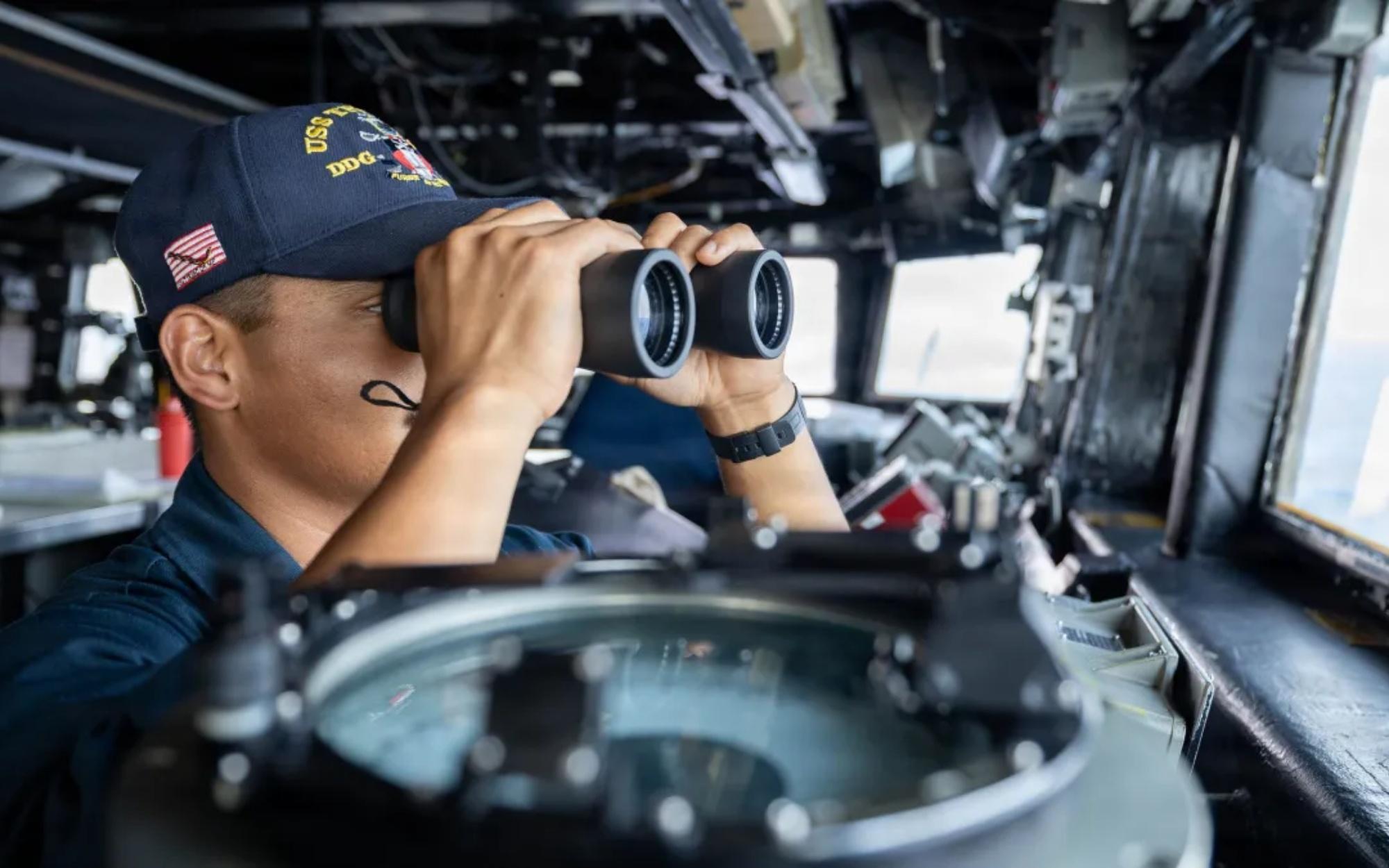
A sailor stands watch on the USS Truxtun, a destroyer participating in the blockade of the Strait of Hormuz. Navy photo.

Even the United Nations, usually timid in its condemnation of Tehran, urged restraint. Secretary-General Antonio Guterres called for both sides to halt attacks, warning of “catastrophic consequences.”

Yet the blame lies squarely with Tehran’s mullahs, who continue to provoke conflict while crying victimhood in global forums. The UN’s words carry little weight when American sailors are dodging drones because of Iranian belligerence.

The reality on the ground is this: the United States and its allies control the Strait of Hormuz through superior technology, coordination, and willpower. Iran controls only its bluster.

Every missile launch from Tehran invites another series of U.S. strikes that degrade its capacity further. The message could not be clearer—freedom of navigation will be protected by force if necessary.

The war that began in late February after U.S. and Israeli operations killed several Iranian commanders now hangs in a delicate balance.

Talks aimed at fully reopening the Strait and dismantling Tehran’s nuclear ambitions are stalled, largely because Iran keeps violating its commitments. Across American bases in the region, from Qatar to Kuwait, morale remains strong, sustained by the knowledge that the world’s most advanced military has their back.

America has no intention of ceding ground—or sea—to Iran’s crumbling regime.

The Strait of Hormuz will remain open, not because Tehran allows it, but because U.S. power ensures it. That’s not up for negotiation.

News

Army Unveils $130 Million Barracks Upgrade at Camp Humphreys

The U.S. Army just received the keys to its latest investment in troop living quarters overseas — a high-end $130 million barracks complex at Camp Humphreys, South Korea.

The sprawling base, already known as America’s largest military hub outside the homeland, continues to expand its infrastructure as tensions with North Korea persist and Washington strengthens its readiness posture in East Asia.

The three new eight-story barracks buildings will house more than 900 unaccompanied enlisted soldiers stationed at Humphreys.

This milestone, confirmed by the U.S. Army Corps of Engineers on July 8, 2026, marks another major improvement in living conditions for American warfighters forward-deployed in the region.

According to an Army announcement, each of the three state-of-the-art buildings can accommodate over 300 troops.

The project was designed to balance comfort, practicality, and security — essential qualities for service members enduring extended tours away from family.

Although the construction phase is complete, soldiers will not start moving in until fall, once the Army finishes furnishing the buildings.

Rachel Napolitan, spokeswoman for the Army Corps of Engineers’ Far East District, confirmed the final outfitting stage will include furniture, upgraded locks, and essential living items to ensure the barracks are fully operational before occupancy.

A Stronger, Smarter Presence: Trump-Era Vision Strengthens South Korea Force with Longer Deployments
Republic of Korea and U.S. Soldiers at the demilitarized zone in South Korea facing North Korea on Nov. 11, 2012. DoW photo by D. Myles Cullen

Each two-bedroom suite is paired with a shared bathroom and kitchenette. Laundry facilities are available on each floor, and common areas near elevators allow soldiers to create their own social spaces.

Outdoor features include multipurpose recreation courts, gazebos, barbecue areas, and secure bike racks — amenities that speak to both functionality and morale.

While the barracks adhere to the Army’s standard design blueprint, the Far East District added several enhancements following years of feedback from residents of previous housing complexes.

A Stronger, Smarter Presence: Trump-Era Vision Strengthens South Korea Force with Longer Deployments
ROK and U.S. noncommissioned officers work together during land navigation exercises as part of the Mangudai Challenge at Story Live Fire Complex, South Korea, Oct. 22, 2024. The challenge highlights shared leadership and capability within the ROK-U.S. alliance.

Resident engineer Nathan Han explained that troops’ input was valuable in improving air circulation, increasing the ratio of dryers to washers, upgrading outdoor gear, and solving recurring maintenance problems.

Samuel Brooks, Camp Humphreys’ housing chief, said the improvements reflect the Army’s commitment to delivering “the high quality of life soldiers deserve.” The upgrades are part of a broader modernization drive that matches America’s growing military presence on the Korean Peninsula — one that continues to serve as a crucial deterrent against North Korean aggression.

Located across from the installation’s golf course, the new barracks sit adjacent to another complex that opened in June 2024. That earlier $67 million project added 151 suites, providing housing for over 600 single troops.

A Stronger, Smarter Presence: Trump-Era Vision Strengthens South Korea Force with Longer Deployments

Together, the developments strengthen Humphreys’ role as a model U.S. Army facility abroad, combining military efficiency with modern living standards.

Funding for this latest $130 million project came from South Korea under the Special Measures Agreement, a cost-sharing deal reflecting Seoul’s contribution toward stationing roughly 28,500 U.S. troops across the peninsula.

The current five-year agreement, which began this year and will run through 2030, outlines a South Korean contribution of around $1.1 billion in 2026, with annual increases tied to inflation.

More barracks construction is already underway at Camp Humphreys. Another four buildings are scheduled for completion later this year, further expanding the installation’s housing capacity.

A Stronger, Smarter Presence: Trump-Era Vision Strengthens South Korea Force with Longer Deployments

These projects demonstrate Washington’s long-term commitment to maintaining a stable, secure presence under the U.S.-South Korea alliance — one that remains vital to countering threats from Pyongyang.

Camp Humphreys sits about 40 miles south of Seoul and functions as the headquarters for U.S. Forces Korea, U.N. Command, Combined Forces Command, the Eighth Army, and the 2nd Infantry Division.

The facility represents a powerful symbol of U.S. resolve and readiness in Asia, serving not only as a deterrent hub but also as an enduring signal to both allies and adversaries that American forces are here to stay.

USFK Commander Reaffirms Importance of Troop Presence in South Korea Amid Speculation of Reductions

At a time when many focus on Washington politics or bureaucratic distractions, this project is a reminder of real priorities — ensuring U.S. soldiers have what they need to live, train, and serve effectively.

With strong leadership under President Trump and War Secretary Pete Hegseth’s vision for a revitalized War Department, initiatives like this reinforce the core mission: making sure the U.S. military remains the best-trained and best-supported fighting force in the world.

For the hundreds of American men and women who will soon call these new barracks home, the project is more than just new buildings.

It’s a message of commitment from the nation they serve, a sign that their sacrifices are matched with modern comforts and respect for their daily lives on the frontlines of freedom.

News

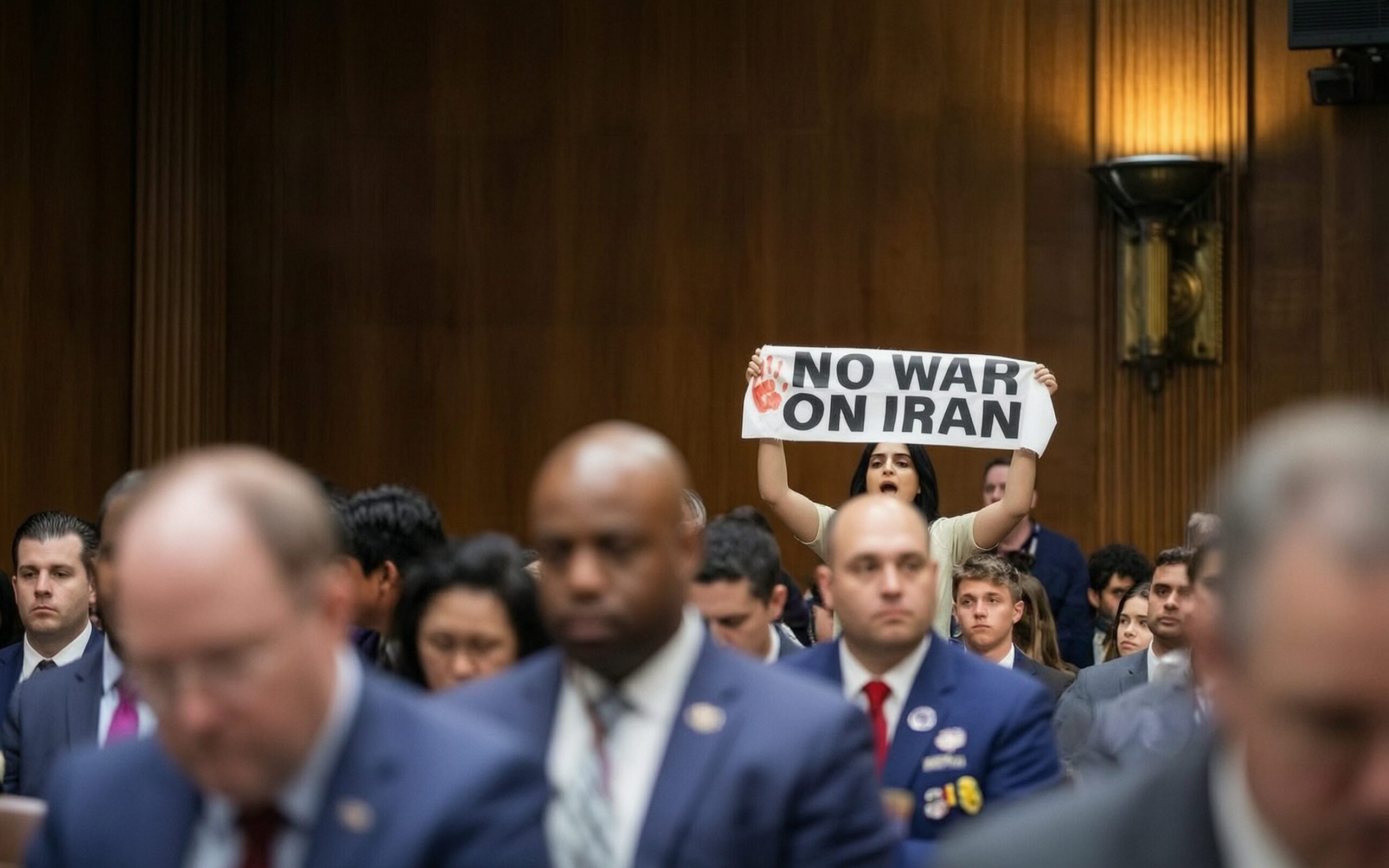
President Trump Orders Fierce U.S. Airstrikes To Crush Iran’s Military Aggression [WATCH]

President Donald Trump unleashed another forceful wave of U.S. military strikes on Iran Sunday evening, intensifying an already explosive confrontation in the Persian Gulf, as reported by The New York Post.

The action followed days of escalating Iranian hostility against commercial shipping and a dangerous attempt by Tehran to choke off the Strait of Hormuz, one of the world’s most critical oil routes.

According to U.S. Central Command, the strikes began around 5 p.m. Eastern Time under direct orders from President Trump.

The declared goal was clear: to hold Iranian forces accountable and dismantle their ability to target international vessels with impunity.

American forces hit dozens of carefully selected military installations throughout Iran using precision weaponry.

Among the primary targets were Iranian air defense systems, missile and drone launch sites, radar systems, and small naval craft used to harass commercial ships.

The operation demonstrated not only military precision but also America’s readiness to defend freedom of navigation despite Tehran’s repeated threats and provocations.

Central Command confirmed that the operation utilized a powerful mix of U.S. fighter aircraft, naval assets, and both aerial and sea-based drones.

This marked the first use of one-way attack sea drones, signaling a shift in military tactics that put Iran’s aggressors on notice.

Iranian officials quickly admitted the strikes caused damage in several provinces and acknowledged at least one fatality and multiple injuries.

Their official media outlets framed the events as American aggression, even as they continued to boast of their own retaliatory moves across the region.

Iran’s Revolutionary Guard Corps quickly attempted to retaliate by shelling U.S. military locations in Kuwait and Bahrain.

Reports from Iranian state media claimed they damaged fuel storage facilities and air defense installations in Kuwait while striking hangars and maintenance centers in Bahrain.

Those claims have not been independently verified, though Iran’s habit of propaganda exaggeration is well known.

This latest escalation followed an intense bombing campaign over the weekend when U.S. forces hit more than 140 Iranian military targets.

That initial strike came hours after the Islamic Republic fired on a commercial vessel and falsely declared the Strait of Hormuz closed. It was a direct challenge to international order and global commerce.

President Trump responded bluntly. When asked by NBC whether the strategic waterway remained open, he simply replied:

“Yeah, it’s open. We bombed the hell out of them last night.”

That unfiltered confidence has become a defining feature of his foreign policy stance: peace through unmistakable strength.

Iran’s retaliatory actions only deepened its isolation. Its forces took aim at American installations in Jordan, Oman, Kuwait, Qatar, and even the United Arab Emirates, damaging radar and drone coordination centers while also provoking international condemnation.

Several missiles were intercepted before impact, avoiding what could have been significant American and allied casualties.

The tension comes at a delicate time in what was supposed to be a 60-day interim deal between Washington and Tehran, an agreement aimed at winding down hostilities that began late February.

Yet Iran’s leadership seems more interested in posturing than peace. Tehran’s chief negotiator, Mohammad Bagher Ghalibaf, threatened that attacks would continue if Washington interfered with Iran’s dominance in the region’s vital waterway.

He boasted online, “The era of one-sided deals is OVER. We told you: keep your word or pay the price. Reality is knocking.”

Such rhetoric reveals the true mindset inside Iran’s regime. It is not the language of diplomacy but of defiance by a government accustomed to challenging the West without consequence.

What they did not anticipate was the new reality under President Trump: the United States will not sit idle while rogue nations bully the free world.

Behind the high-tech military displays lies a broader strategic message. America can, and will, defend its interests wherever they are threatened.

The longevity of Iran’s regime now faces a pressure test it has not encountered in decades. This was not a symbolic strike or a political gesture.

It was a calculated response reminding Tehran that reckless aggression will be met with overwhelming power.

The White House and Pentagon appear aligned on a singular objective: to deter further Iranian boldness through visible action rather than hollow words.

The message is unmistakable across the Middle East. America’s might remains unmatched, and those who gamble against it risk heavy consequences.

In an era where weakness invites chaos, Trump’s decision signaled the return of resolve. His actions reaffirm that freedom of navigation, international trade, and American credibility will not be dictated by Islamic hardliners in Tehran.

While the Iranian regime may wish to frame itself as a victim, the truth remains that it provoked this confrontation and now faces the repercussions of its own aggression.

For now, tension remains high across the region, but the balance of power is clearer than ever. The United States is acting as the guardian of global stability, punishing bad actors who mistake diplomacy for an opportunity to deceive.

Iran has tested the limits, and President Trump has made it clear that those limits are no longer flexible. The world is watching who blinks first, and this time, it will not be America.

News

Sen. Lindsey Graham, Air Force Colonel and Staunch Patriot, Dies Unexpectedly at 71

Senator Lindsey Graham, an American patriot, Air Force veteran, and steadfast conservative voice, passed away suddenly at the age of 71 after what his office described as a brief and unexpected illness.

The longtime South Carolina senator and retired Air Force colonel leaves behind a legacy of service, strength, and unapologetic defense of America’s role as a force for good around the world.

His office released an early Sunday statement asking for prayers and privacy for the Graham family during “this incredibly difficult period.”

Later, according to the Medical Examiner of the District of Columbia, preliminary findings indicated that Graham died of an aortic dissection caused by arteriosclerotic cardiovascular disease—an aortic rupture related to hardened arteries.

Graham’s passing caught Washington and the nation by surprise.

Emergency responders had rushed to his D.C. residence late Saturday night after reports of cardiac arrest, according to NBC News. There had been no public signs of poor health, and Graham had even been scheduled to appear on “Meet the Press” Sunday morning.

Just days before his death, Graham had returned from Kyiv, his tenth trip to the war-torn nation since Russia’s 2022 invasion.

Ukrainian President Volodymyr Zelenskyy posted that Graham had been “a true defender of freedom” and a voice for global stability. The senator had pressed Washington to continue supporting Ukraine against Moscow’s aggression.

President Donald Trump, with whom Graham shared both a fierce rivalry and deep later friendship, described him on Truth Social as “one of the greatest people and Senators I have ever known.”

Sen. Lindsey Graham, Air Force Colonel and Staunch Patriot, Dies Unexpectedly at 71
U.S. Sen. Lindsey Graham, a retired Air Force Reserve colonel, is shown in his military uniform during a visit to Afghanistan.

Trump praised Graham’s relentless work ethic and patriotic heart, writing, “He was always working, and was a true American Patriot. Lindsey will be greatly missed!!!”

Tributes poured in from allies and adversaries alike. Israeli Prime Minister Benjamin Netanyahu mourned the loss, declaring that both America and Israel had lost a great friend.

“America has lost a great patriot. I have lost a beloved friend,” he said. Even Democrat Rep. Jim Clyburn, a fellow South Carolinian, wrote that he and Graham had maintained “mutual respect” despite their political divides.

Graham’s career spanned decades, with service to both his state and his country in uniform. A native of South Carolina, he served for 33 years in the Air Force and Air Force Reserve, retiring in 2015 as a colonel.

His time in the Air Force began as a lawyer stationed in Germany, but his passion for national defense and military justice kept him connected to America’s fighting men and women throughout his long political career.

Sen. Lindsey Graham, Air Force Colonel and Staunch Patriot, Dies Unexpectedly at 71
Senator Lindsey Graham addresses SPAWAR employees at SPAWAR Headquarters during a visit to Joint Base Charleston for briefings on space and naval warfare systems in Charleston, S.C., June 18, 2012. (DoD Photo By Glenn Fawcett) (Released)

When America went to war in Iraq and Afghanistan, Graham volunteered for short tours during congressional breaks, serving on the ground as a military lawyer.

His office biography said he spent numerous congressional recesses working among troops in combat zones, believing firmly that lawmakers should not just vote for war—they should understand it.

Elected first to the House of Representatives in 1994 and then to the Senate in 2002, Graham became a fixture on the Senate Armed Services Committee. He pushed for a strong War Department, better care for veterans, and a renewed sense of moral purpose in American global leadership.

He was re-elected three times, securing one of the longest tenures ever for a South Carolina Republican in the Senate.

Throughout his career, Graham consistently advocated for a tougher approach toward enemies like Iran and North Korea.

He applauded President Trump’s decisive, no-nonsense war policies, saying that Trump “deserved a Nobel Peace Prize” for his strength in foreign affairs. Graham once described Trump as “the gold standard for Republicans, maybe any president, when it comes to foreign policy.”

Although the pair had once been sharp rivals during the 2016 GOP primary—when Graham was critical of Trump’s rhetoric on alliances and immigration—the two later forged a resilient partnership centered on rebuilding America’s strength, security, and respect on the world stage.

Sen. Lindsey Graham, Air Force Colonel and Staunch Patriot, Dies Unexpectedly at 71
Col. Lindsey Graham, a senior Senator from South Carolina, is presented a 386th Expeditionary Medical Group coin by Col. Andrew Montiero in the Contingency Air Medical Staging Facility on the Rock on April 9.

It was one of the most unpredictable but ultimately influential alliances in modern conservatism.

In addition to his policy work, Graham was a regular presence among service members at home and overseas.

Photos from recent trips show him chatting with U.S. troops in Saudi Arabia, meeting Air Expeditionary Wing personnel, and thanking them for their service. Those who served alongside him, both in and out of uniform, say he connected with the military not as a distant lawmaker but as a fellow warrior.

For those who knew him, Graham was more than a senator—he was a commanding presence who believed deeply in duty, discipline, and destiny.

Conservatives and military veterans across the country see his death as the passing of an era, one defined by firm American conviction and defense of liberty abroad.

As flags fly half-staff across South Carolina, Washington loses one of its toughest and most seasoned defenders of the American mission. Whether sparring in hearings or visiting troops overseas, Lindsey Graham never forgot the nation he served.

At 71, the colonel, senator, and patriot’s watch has ended—but his mission will not be forgotten.

News

Army Intensifies Search for Fort Bragg Soldier Missing Nearly Two Weeks

The U.S. Army is ramping up its search for Spc. Sayveon Anderson, a Fort Bragg soldier who vanished nearly two weeks ago under troubling circumstances.

The 25-year-old soldier’s disappearance has sparked concern across the installation and among his family, who say they have been praying daily for his safe return.

Army Criminal Investigation Division (CID) officials confirmed they are leading the ongoing search, coordinating with civilian law enforcement across several jurisdictions.

In a formal statement, officials at Fort Bragg — recently renamed Fort Liberty — said, “The investigation is ongoing, and Army CID remains the lead investigative office.”

According to Anderson’s mother, Pamela Anderson of Charlottesville, Virginia, the last communication she had with her son was on June 27.

Two days later, she was contacted by her son’s command after he failed to show up for formation, a red flag for any soldier in good standing.

In a heartfelt message shared through social media, Pamela wrote, “We had hoped and prayed that he would return home within a few days, but unfortunately that has not happened.

After continued communication with military police and his sergeants, a missing persons report has been filed, and we are now asking for the public’s help while we continue to pray for his safe return.”

Army Intensifies Search for Fort Bragg Soldier Missing Nearly Two Weeks

Anderson graduated from Charlottesville High School in 2019, and according to his family, he and his wife were expecting a baby girl in August.

His disappearance has brought immense stress to the young family during what should be a time of preparation and joy.

Local broadcasters have covered the unfolding situation as more details surfaced about Anderson’s recent months.

He had been living in the barracks following a no-contact order issued by a civilian court after a domestic dispute involving his pregnant wife earlier this year. That matter, court records show, was ultimately dismissed.

Adding to the complexity, Anderson was arrested in late June, just two days before his disappearance. Fayetteville police records show he was taken into custody at the Comfort Inn on Skibo Road for second-degree trespassing and resisting arrest.

Officers reported that Anderson refused to leave his motel room after his payment for an additional night was declined. Despite the minor nature of the charge, he reportedly resisted officers, and the incident ended with his arrest.

Following his release, the timeline of Anderson’s whereabouts becomes murky.

He failed to report for formation and has not contacted his family or unit since. His phone reportedly goes straight to voicemail, and friends say social media activity ceased the same week.

According to the missing-person flyer issued by Army CID, Anderson is described as 5 feet 10 inches tall, weighing approximately 260 pounds, with a chipped front tooth, a scar on his left arm, tattoos behind both ears, and another on his upper left arm.

CID is urging anyone with information to contact local law enforcement, call their Carolinas Field Office at 910-391-4911, or submit an anonymous tip directly to CID.

The Army’s handling of the search is being closely watched, particularly after past failures at major installations across the country where missing service members were not promptly or thoroughly investigated.

Officials on the ground at Fort Bragg insist that every available resource is being directed toward locating Anderson as quickly as possible.

While the Biden administration remains largely silent on the ongoing trend of missing troops, the families of soldiers like Anderson are left to rely on grassroots awareness and the efforts of their local military communities.

It’s a stark reminder of the challenges the rank and file face under a bureaucracy that’s too often distracted by politics instead of focusing on the welfare of those serving.

Veterans advocates say the case highlights systemic issues in tracking and supporting individual soldiers, especially those facing personal or legal troubles.

“Too often, a soldier in distress slips through the cracks,” said one retired NCO familiar with Fort Bragg’s operations. “We can’t allow that to happen again.”

As the search continues into a second week, Anderson’s unit has joined with local police to canvass nearby areas, check hotels, and follow up on any potential leads.

While officials have not indicated any evidence of foul play, the extended absence without contact raises growing concern.

For now, Fort Bragg and the wider Army community are rallying around Anderson’s family in prayer and support, hoping that answers—and a safe return—come soon.

Until then, a mother waits, a wife prepares to give birth, and a military community refuses to give up on one of their own.

News

Leftist Protesters Rage After ICE Shooting of Illegal Alien in Houston [WATCH]

About one hundred activists gathered on the steps of San Antonio City Hall to protest the fatal shooting of an illegal immigrant by Immigration and Customs Enforcement officers in Houston, as reported by Breitbart.

The demonstration turned into a full-blown rally against law enforcement, border control, and immigration policy, with leftist organizers calling for the complete abolition of ICE.

Members of the Party for Socialism and Liberation were among those leading the gathering, holding signs and shouting chants accusing ICE of injustice and racism.

Their message was loud, but their facts were noticeably selective.

The protest centered on the death of Lorenzo Salgado Araujo, a Mexican national who had been living illegally in the United States and who, according to ICE, attempted to ram an officer with his vehicle during a targeted enforcement operation.

Corrie Rosen, one of the event organizers and a self-identified public school teacher, spoke passionately to the crowd, saying:

“He was in the country for 35 years, but let’s be clear, I don’t care if he was here for 35 years or 35 days, the injustice does not stand.”

For Rosen and her fellow activists, the issue seemed less about the facts of the case and more about using the incident as another excuse to smear federal immigration enforcement.

According to federal authorities, Salgado Araujo applied for a work permit earlier this year and claimed he entered the United States in 2005.

His family, however, contradicted that timeline, saying he had been here much longer. Regardless of the timeline, Salgado was not a legal resident, yet the activists in San Antonio portrayed ICE as the villain for enforcing the law.

Rosen spent part of her speech attacking the opening of a new ICE detention center on the city’s East Side, calling it a “concentration camp.”

She told protesters that the facility was a misuse of taxpayer money and claimed it sat across from a school being closed due to neglect from the state.

What she left out was that the school, Essence Preparatory Charter School, had been shut down by the Texas Education Agency after repeated years of academic failure.

The closure had nothing to do with ICE or border enforcement.

The facts surrounding the Houston shooting paint a different picture than that shouted by protesters through bullhorns.

ICE officials said they had been conducting surveillance for weeks after receiving a credible tip from law enforcement partners about Salgado Araujo. When agents identified a van driven by a man matching his description, they attempted to stop the vehicle.

According to the agency, Salgado Araujo rammed a government vehicle, ignored multiple commands, and then used his car as a weapon against an officer, prompting the officer to fire in self-defense.

After the shooting, emergency responders transported Salgado Araujo to a Houston-area hospital, where he later died from his injuries.

The FBI’s Houston office has taken over the investigation, as is standard whenever federal agents are involved in an incident leading to loss of life.

That part of the story, of course, did not make it into many of the protesters’ chants.

Activists in Houston and San Antonio have used the shooting as a rallying cry to demand an end to immigration enforcement in Texas.

Protests have also been held in Houston’s East End and Magnolia Park neighborhoods, with large crowds carrying banners calling for ICE to be “shut down for good.”

It appears that for these activists, open borders and no accountability are the ultimate goals.

Even while the investigation continues, the rhetoric from groups like the Party for Socialism and Liberation shows no sign of cooling off.

Their vision for America looks more like lawlessness than justice. The idea that a federal officer should hesitate in the face of someone weaponizing a car is not rooted in concern for fairness.

It is rooted in hostility toward any form of enforcement that protects American sovereignty and public safety.

The broader public might question the priorities of activists who show more outrage over a lawfully justified shooting than they do over the risks posed by violent encounters with illegal immigrants.

ICE’s account, backed by surveillance and eyewitness reports, indicates the officer faced immediate danger. Yet left-wing radicals seem determined to rewrite the story into a narrative about systemic oppression.

Meanwhile, ordinary Americans, especially those living along the southern border, have grown tired of protests that distort reality and paint criminals as martyrs.

Communities are calling for secure borders, not the chaos that comes from ignoring immigration law.

The events in Houston are a reminder of how dangerous the job of law enforcement can be when politics replaces truth.

As the protests fizzle out, the facts remain. A man illegally in the country chose to resist arrest and endanger federal agents.

Activists can shout until their voices give out, but America is still a nation of laws, and no amount of chanting will change that.

News

Lindsey Graham’s Cause of Death Confirmed After Sudden Passing at 71 [WATCH]

Senator Lindsey Graham’s sudden passing over the weekend shocked Washington and sent ripples through both political parties.

The South Carolina Republican, a long-serving member of the Senate and one of the most recognizable figures on Capitol Hill, died at the age of seventy-one following what officials describe as a sudden cardiac event at his Washington residence.

According to a preliminary report from the DC Medical Examiner’s Office, Graham’s cause of death has been determined as an aortic dissection caused by arteriosclerotic cardiovascular disease.

In plain terms, this means a tear in the aorta that resulted from hardening and narrowing in the arteries, the unfortunate consequence of underlying heart disease that can strike without warning.

The report added that “the death certificate will be pending until all toxicological and microscopic testing are finalized.”

Once those results are complete, officials say, the medical examiner will update the certificate and formally classify the manner of death.

At this stage, there is no suspicion of foul play, and everything points to a natural medical event.

Graham had just returned from a trip abroad.

He had been visiting a drone production facility in Ukraine, part of his ongoing commitment to foreign policy and national defense.

Those close to him say he had been in good spirits and eager to return to the Senate to tackle pending legislative battles ahead of the fall session.

His family’s history may have played a role.

Graham’s father passed away due to a heart attack at the age of sixty-eight, suggesting that cardiovascular issues may have been hereditary.

Close associates note that the senator had occasionally spoken about maintaining his health but rarely slowed down, even with an unforgiving travel and work schedule.

Tributes poured in across the political spectrum, and President Donald Trump released a statement describing Graham as “a steadfast American who never stopped believing in the strength of our nation.”

Trump’s message reflected the long and at times complicated political relationship between the two men, which ultimately evolved into a partnership rooted in advancing conservative values.

WATCH:

While Graham’s conservative allies mourned his loss, some on the left failed to show even basic civility.

Across social media, left-wing activists and online trolls mocked the senator’s death, revealing once again the spiteful nature of the political environment the country now endures.

It was a grim display of how far the nation has drifted from respect and decency.

In contrast, even seasoned Democratic lawmakers who sparred regularly with Graham offered genuine condolences.

Former Senator Joe Lieberman once said Graham “was a patriot even when we disagreed.”

Those who knew him best often described him as a fighter who upheld the importance of strong defense, unwavering support for Israel, and the value of constitutional order.

Graham served in the Senate since 2003 after several terms in the House.

He built a reputation for foreign policy expertise, long-standing support for the U.S. military, and staunch adherence to conservative judicial appointments.

He played a pivotal role in shaping federal courts under President Trump and was a leading force behind the confirmation of Justice Amy Coney Barrett to the Supreme Court.

The senator’s leadership within the Republican Party made him a critical ally to President Trump in the latter half of his presidency.

He helped steer policy and defend key legislative achievements, from judicial reform to tax measures that fueled economic recovery before the pandemic.

His ability to navigate both sides of the aisle made him one of Washington’s most strategic players, though often the target of partisan attacks.

In South Carolina, flags have been flown at half-staff, and community gatherings have been organized to pay tribute to his decades of public service.

Constituents remember him not only as a political figure but also as a man who rose from humble beginnings to wield significant influence in national politics.

Many admired his wit and resilience in the face of unrelenting political hostility.

The void his passing leaves in the Senate is immense.

Both party leaders acknowledge that Graham’s absence will be deeply felt in committees that oversee foreign relations and defense spending.

His deep knowledge of law and commitment to strong national security cannot be easily replaced, especially at a time when America’s adversaries are watching for any sign of weakness.

Although much of Washington has paused to honor his life, the next phase of the investigation remains procedural.

The toxicology report and final classification could take weeks, but officials are confident the primary cause of death will remain consistent with cardiovascular disease.

The statement from the examiner’s office leaves little doubt that this was a tragic medical event, not a suspicious one.

Supporters across the country are gathering to celebrate his legacy and his commitment to the conservative cause.

For them, Lindsey Graham will be remembered as a man who fought for his nation, stood by his president, and represented the heart of the American South with courage and conviction.

News

McConnell Breaks Silence on Hospital Mystery as Senate Faces Fresh Turmoil After Graham’s Death [WATCH]

Senate Minority Leader Mitch McConnell has finally broken his silence after weeks of speculation about his mysterious hospitalization.

In a detailed statement to Kentuckians, McConnell explained that his recent fall at home was linked to lingering complications from childhood polio.

The incident left him briefly unconscious and later fighting pneumonia during recovery, prompting a month-long absence from the Senate.

The 82-year-old lawmaker said doctors confirmed there were no fractures, heart problems, strokes, or tumors.

He insisted he remains fully capable of performing his duties, though he admitted that his return to the Senate floor will have to wait.

“As much as it frustrates me, this process takes time,” McConnell said, assuring supporters that while his physical recovery continues, he remains active in Senate affairs from home.

McConnell’s physician provided further clarity, explaining that the senator has had several falls this year attributed to post-polio complications.

The doctor described the June 14 incident as a minor fall that initially sparked concern but was thoroughly evaluated.

After developing mild pneumonia early in his hospital stay, McConnell was treated successfully with antibiotics and has been recovering steadily since.

Yet, the explanation has not entirely calmed Washington.

The lack of information from McConnell’s office for several weeks had fueled stormy speculation about his condition.

WATCH:

Leaked emergency dispatch audio suggested the senator was found “unconscious” and possibly suffering a heart attack, although these claims were quickly dismissed by his team.

The online rumor mill, however, was not so patient.

Conspiracies even circled around his wife, former Transportation Secretary Elaine Chao, who traveled to China just days after his hospitalization.

Critics questioned her decision not to cancel the trip, but her office called the travel long planned and focused on family philanthropy.

They emphasized that McConnell’s condition did not require her immediate return to the United States.

The timing of McConnell’s health scare could hardly have been worse for Republicans.

The Senate lost another key member last week with the sudden death of Senator Lindsey Graham of South Carolina, a longtime ally of both McConnell and President Donald Trump.

Graham’s death at 71 shocked Capitol Hill, particularly as he had been energetically defending Trump’s foreign policy goals right up to his final days.

McConnell, who acknowledged Graham’s passing in private statements, now finds himself leading a thin GOP bench in a crucial legislative stretch.

With congressional deadlines looming and the Trump administration pushing to close out major initiatives by early August, the absence of two senior Republican senators leaves the chamber in political uncertainty.

WATCH:

In his statement, McConnell reminded supporters that he will complete his Senate term, which ends in January, and he intends to finish the work Kentuckians elected him to do.

“You’re right to expect your representatives to work hard for you,” he said.

“Part of my earlier decision to retire at the end of my term was out of honesty about the demands of this job. But I have unfinished business to complete on your behalf.”

McConnell’s reassurance did little to satisfy his critics on the left, who have seized on every whisper about his health to call for his resignation.

Democrats have hypocritically demanded transparency from McConnell while remaining tight-lipped about Biden’s obvious and repeated health lapses.

Meanwhile, establishment media outlets have gleefully speculated over every detail, trying to sow panic within the GOP.

Within conservative circles, reaction has been more measured.

Many Republican lawmakers and voters are standing by McConnell, recognizing his long record of leadership even as some call for the next generation to begin stepping up.

There is acknowledgment that the grueling political calendar takes its toll, but also confidence that McConnell will see his duties through.

Political observers note that McConnell’s candor about his condition could help ease anxieties among Republican voters and reassert a sense of stability as the party navigates the dual shock of his health scare and Graham’s death.

Still, the episode highlights how crucial leadership communication is in an era when rumors spread within minutes and can shape public opinion before facts emerge.

McConnell’s words carried a message of perseverance familiar to those who watched him rise through decades of Washington combat.

Having fought polio as a child and weathered decades of political battles, he now faces what may be one of his toughest personal challenges.

For his supporters, that familiar grit offers reassurance that he will return stronger and ready to fight through what remains of his final term.

At a time when the Senate feels unsteady and the nation mourns the sudden loss of a Republican statesman, McConnell’s determination signals a promise of continuity and conviction.

Whether from his Kentucky home or back on the Senate floor, his message was clear: the work is not finished, and the fight for a stronger conservative future continues.

News

Sheriff Sounds Alarm as Somali Gang Violence Spikes Across Minnesota Communities [WATCH]

A Minnesota sheriff is warning that Somali gang violence is spiraling out of control in several of the state’s ethnic enclaves, an issue local officials and corporate media have long avoided mentioning out of fear of offending the wrong political crowd. His message was blunt and impossible to spin.

“If you stay in denial, you’ll never fix the problem,” the sheriff said, breaking ranks with the politically correct silence that has allowed the crisis to fester.

For years, community leaders and city officials in Minnesota have celebrated the influx of Somali refugees as a success story of diversity and inclusion.

Yet behind the rhetoric is a reality of growing gang activity, violent crime, and organized street warfare that has taken root in cities like Minneapolis, St. Cloud, and St. Paul.

Despite mounting evidence, most politicians remain more concerned about being labeled insensitive than about public safety.

According to law enforcement sources, multiple Somali-based gangs have been operating across the state, competing over territory, trafficking drugs, and terrorizing their own communities.

These groups have names, members, and organized structures, but they thrive largely because of political and media denial.

Local police officers describe the situation as a “powder keg” that could explode at any moment if not confronted directly.

The sheriff’s warning represents one of the first times a high-ranking official has spoken so openly about the problem.

He explained that while most residents are peaceful and law-abiding, there is a small but extremely dangerous criminal network growing within the Somali population that is being ignored for the sake of woke appearances.

“People are afraid to talk about it,” he said, “because they don’t want to be called racist.”

The refusal to acknowledge what is happening has created fertile ground for gang recruitment.

Many of the young men being pulled into these groups are second-generation immigrants who feel disconnected from both American society and their parents’ homeland.

Instead of finding opportunity, they find power and belonging through gangs that promise quick money and status on the streets.

Law enforcement officers say the violence has become “predictable yet unstoppable,” as rival gangs engage in shootings, car theft rings, and assaults that go largely unreported in the media.

WATCH:

While police resources are stretched thin and crime spikes across the nation, Minnesota’s situation has become particularly alarming because of its strong progressive political culture.

City leaders prioritize community outreach programs funded by taxpayers while cutting back on police budgets and limiting officers’ ability to act.

Critics argue that the “soft on crime” approach fueled by left-wing politics has only emboldened the gangs.

Residents in the hardest-hit areas are feeling abandoned. Many have told local outlets they no longer let their children play outside or walk to school alone.

Businesses have shut their doors early due to safety concerns.

Yet the same officials who should be protecting them remain fixated on maintaining a positive narrative about multicultural harmony rather than facing tough truths.

Community figures who dare to speak up often face backlash. Activists and neighborhood watch groups who raise alarms are quickly branded as intolerant or fearmongering.

The sheriff’s recent comments, however, seem to have broken through that wall of silence, sparking a renewed conversation about public safety and government accountability.

“You cannot fix a problem you refuse to see,” he said.

“We need to start addressing the real issues instead of pretending they do not exist.”

Conservative commentators view this as another example of ideology outweighing reality in blue-state governance.

When policies are built on image rather than practical enforcement, the consequences are borne by working families living in neighborhoods plagued by crime.

The situation in Minnesota mirrors similar warning signs in other Democrat-led urban centers where violence grows under the radar because officials are too concerned about optics.

The sheriff’s remarks have drawn both praise and condemnation.

Supporters call him courageous for putting public safety ahead of political correctness.

Critics, largely from progressive advocacy groups, insist the focus should be on youth programs and “systemic” reforms rather than policing.

Yet as violent incidents rise, patience for lip service and lectures about equity is running thin among ordinary citizens.

In conservative circles, Minnesota’s situation has become a rallying cry for law and order.

Leaders argue that refusing to enforce the law equally, out of fear of appearing prejudiced, ends up hurting minority communities the most.

The longer politicians ignore the issue, they say, the stronger these gangs become and the more innocent lives are put at risk.

As the sheriff’s words circulate, the hope among many Minnesotans is that real action will follow.

They want safety restored, not more empty declarations about diversity.

Genuine equality means acknowledging when something has gone off track and taking honest steps to fix it.

For now, that begins with admitting what too many have spent years denying.

The violence is real, and it is growing, whether the political class wants to admit it or not.


Scroll to Top