News

News

KBJ Preaches Neutrality on Michelle Obama Podcast as Credibility Takes a Hit [WATCH]

Supreme Court Justice Ketanji Brown Jackson has developed quite a reputation, and it is not exactly one of quiet restraint from the bench.

The Biden appointee is known for sprawling questions, emotional flourishes, and opinions that often sound less like constitutional analysis and more like a graduate seminar in progressive grievance politics, as reported by Red State.

That is why her latest media moment landed with such a thud. Jackson appeared on Michelle Obama’s podcast to talk about impartiality, because apparently nobody in the room spotted the flashing irony sign.

The episode of IMO with Michelle Obama and Craig Robinson debuted Wednesday after being recorded in May. Jackson sat for more than an hour with the former first lady and her brother, offering thoughts on judging, public life, and the need to avoid looking biased.

“You really have to be focused on that.”

That was Jackson’s message on judicial neutrality, delivered while sitting across from one of the most recognizable Democratic political figures in America. The optics were not subtle, unless one is paid to pretend Washington power circles are somehow above politics.

“There are lots of limits on what judges can do, and I try to be very, very mindful and scrupulous with respect to that because, as you say, our obligation is to be unbiased in our approach.”

She added, “And, so, you have to then navigate all the sources that could make for an appearance of partiality, which you want to avoid.”

That last line is the one doing all the work here. If a justice truly wants to avoid the appearance of partiality, a warm media sit down with Michelle Obama may not be the first stop on the public relations tour.

Jackson’s defenders will no doubt insist this was just a harmless conversation. Of course they will, because the same crowd that screams about institutional norms whenever a conservative breathes near a microphone tends to discover nuance when a liberal favorite is involved.

The trouble for Jackson is that this was not happening in a vacuum. Her record on the Court has already drawn sharp criticism from colleagues who appear less than enchanted with her approach.

Justice Amy Coney Barrett previously brushed aside one of Jackson’s arguments with a stinging line that said plenty. “We will not dwell on Justice Jackson’s argument, which is at odds with more than two centuries worth of precedent, not to mention the Constitution itself,” Barrett wrote.

Justice Samuel Alito has also taken issue with Jackson’s rhetoric, calling one dissent “baseless and insulting” and saying it “lacks restraint.” Those are not exactly glowing peer reviews from inside the marble palace.

The podcast title added another layer of absurdity. “Move Through the Hard Times With Ketanji Brown Jackson” made the justice sound like some struggling outsider rather than a lifetime power player sitting on the highest court in the land.

Let us also remember how Jackson arrived at the Court. Former President Joe Biden openly promised that his nominee would be chosen by race and gender, and Democrats then demanded the country treat the result as above political scrutiny.

Now the same justice is lecturing Americans about the importance of avoiding even the appearance of bias. It is the kind of Washington theater that would be too on the nose for parody.

Reaction online was swift and brutal. One widely shared response put it plainly: “Justice Ketanji Brown Jackson can’t be real. She says it is important to be neutral as a Supreme Court justice……..while she is literally on MAJOR leftist Michelle Obama’s podcast. Make it make sense.”

That is the core problem. Jackson can insist she is scrupulous and unbiased, but public trust depends on more than polished words in a friendly studio.

A Supreme Court justice does not have to live like a monk, but judgment matters. Choosing a partisan celebrity platform while preaching neutrality is not merely awkward, it is a gift wrapped exhibit for every American who already suspects the left’s idea of impartiality means progressives get to do whatever they want.

Jackson wanted to talk about the dignity and limits of the judiciary. Instead, she reminded the country that some of Washington’s most powerful figures still cannot hear themselves over the applause of their own side.

News

Democrat Darling Bails On Governor Race as Party Fears Damaging News [WATCH]

Wisconsin Democrats watched their already messy race for governor take another hard turn Thursday, as former Lt. Gov. Mandela Barnes abruptly ended his campaign and left the party staring at a primary battlefield it can no longer pretend is orderly, as reported by Trending Politics News.

Barnes, once treated by Democrats as a rising star, announced his exit in a video posted to social media after a day of conversations with advisers about whether his campaign had any realistic path left.

He did not endorse a rival on his way out the door, but he conceded that it had become “very clear” who the Democratic nominee would be. That was not exactly a ringing note of confidence for the party establishment.

The timing only made the retreat more striking. Reports had already indicated that Barnes and his team were considering whether to remain in the contest while Democratic officials braced for potentially damaging media stories expected to surface Thursday.

For Francesca Hong, the Madison lawmaker and self-described democratic socialist, Barnes dropping out is a major gift. Her rise has rattled more traditional Democrats who understand that nominating a socialist may thrill activists, but general election voters are a different crowd.

Hong has rapidly become the frontrunner in the closing stretch of the primary. A Marquette Law School poll released this week showed her at 38 percent among Democratic primary voters, while Barnes sat far behind at 16 percent.

Milwaukee County Executive David Crowley received 7 percent in that same survey, while roughly one-third of Democratic voters remained undecided. Other recent polling also showed Barnes trailing Hong by double digits, which likely made the math look brutal.

The Democratic field has been coming apart for weeks, and Barnes is only the latest piece to fall. Lt. Gov. Sara Rodriguez suspended her campaign after a campaign finance scandal, adding another headache for a party that loves to lecture everyone else about ethics.

Former Wisconsin Economic Development Corp. CEO Missy Hughes also left the race. Crowley then jumped back in after securing the endorsement of Gov. Tony Evers, a move clearly designed to consolidate more moderate Democrats before Hong could fully run away with the nomination.

Instead, the Evers endorsement appears to have further split the anti-Hong vote. That left Hong in a stronger position and gave the party establishment yet another reminder that political engineering does not always work, especially when the activist left has other plans.

The presumed Republican nominee, Tom Tiffany, has already consolidated Republican support. That contrast is hard to miss, with Republicans lining up behind their candidate while Democrats scramble through scandal, suspensions, withdrawals and socialist momentum.

Moderate Democrats have been sounding alarms about what a Hong nomination could mean in November. Their concern is obvious, because Republicans would likely relish the chance to run against a candidate who proudly embraces democratic socialism in a state that is often decided by persuadable voters.

Barnes once looked like a serious contender, at least on paper. He had statewide name recognition, a familiar resume and enough goodwill inside Democratic circles to be taken seriously when the race began.

But campaigns are not won on old headlines and party affection. By the time Thursday arrived, Barnes appeared to be staring at a race where momentum had shifted, money and message were not enough, and the left flank was taking command.

His departure clears more space for Hong at precisely the moment she appears to need it least. If undecided Democratic voters continue moving her way, the party could soon find itself represented by the kind of nominee Republicans would put in fundraising emails before breakfast.

The situation also exposes a deeper problem for Democrats in Wisconsin. Their coalition is not simply divided over personalities; it is divided over whether the party should chase the socialist energy of its base or try to look normal enough to survive a statewide election.

For now, the activist wing seems to be winning. Barnes is out, the establishment lane is fractured, and Hong is positioned to benefit from a Democratic primary that has turned into a slow-motion pileup.

Wisconsin voters have seen plenty of close races, and Democrats know they cannot afford a nominee who gives Republicans an easy target. Yet that may be exactly where this race is heading, because once the left takes the wheel, the rest of the party usually discovers it is just along for the ride.

News

U.S. Locks in $58.6 Billion Patriot Missile Push as Stockpile Alarms Grow

The U.S. Army has awarded Lockheed Martin a contract worth up to $58.6 billion to produce Patriot interceptor missiles, a major procurement move that comes as America faces growing pressure on its missile stockpiles from Ukraine, the Middle East, and recent U.S. operations involving Iran.

The War Department announced the award Wednesday, and the timing is not subtle.

After years of sending weapons abroad while also burning through munitions in active operations, Washington is now confronting the very predictable reality that arsenals do not refill themselves.

The new Lockheed deal converts a one year $4.7 billion award issued in April into a seven year draft agreement.

The Army said the arrangement creates a multi year procurement plan for Patriot interceptors from fiscal 2026 through 2032.

That longer runway matters because missile production is not like ordering office furniture, no matter how many bureaucrats in Washington seem to treat it that way.

Supply chains, rocket motors, guidance systems, skilled labor, and testing capacity all take time, money, and seriousness.

The Patriot system has become one of the most important air defense assets in the American arsenal and among U.S. allies.

Its interceptors are designed to counter ballistic missiles, cruise missiles, and aircraft, making them central to modern air defense in a world that keeps getting more dangerous.

Ukraine Cleared To Build Patriots Under Trump Deal, But Production Could Take Years
A PAC-3 interceptor fires from Medium Extended Air Defense system launcher during a test. (John Hamilton/U.S. Army)

The United States has supplied large quantities of weapons to allies, especially as the war in Ukraine has dragged on. At the same time, U.S. forces have used munitions in their own operations in the Middle East, including in connection with Iran related threats.

Those demands have sharpened concerns about inventories of critical air defense and precision guided weapons. For a superpower, running short on the missiles needed to protect troops, bases, ships, and allies is not a minor accounting problem.

War Department negotiators have been pressing contractors to move much faster.

Tentative production agreements reached earlier this year are now central to the broader effort to increase missile output before another crisis exposes empty shelves.

President Donald Trump’s administration has also increased pressure on contractors to put production ahead of shareholder payouts.

Trump signed an executive order in January aimed at identifying contractors considered to be underperforming on government contracts while still distributing profits to shareholders.

That is the kind of message the defense industry needed to hear, because patriotic press releases do not intercept incoming missiles. If companies want taxpayer dollars, they should be able to deliver weapons at the speed and scale the country requires.

Industry executives have welcomed the production agreements, but they have also argued that Congress must appropriate the money before companies can make major investments in parts, facilities, and expanded capacity. That means Capitol Hill still has to do something useful, which is always the tricky part.

Exact terms and delivery dates for many War Department munitions agreements remain under negotiation. That uncertainty matters because the operational need is not theoretical, and the enemy gets a vote while Washington debates paperwork.

A similar framework agreement has also been struck with RTX, the parent company of Raytheon, to increase production of Tomahawk cruise missiles.

Navy to Arm Aegis With PAC-3 MSE Interceptor, Strengthening Sea Defense

The goal is to move from the current U.S. production rate of about 60 Tomahawks per year to eventually 1,000 units annually.

Lockheed Martin, based in Bethesda, Maryland, said the new funding would help it follow through on a pledge to triple production capacity for the Patriot Advanced Capability 3 Missile Segment Enhancement by the end of 2030. The company also said it expects to grow jobs at its Camden, Arkansas, plant by 50 percent, from about 1,200 workers to roughly 1,850.

Lockheed has previously said Patriot interceptor production would rise to 2,000 units annually. The company also said it is investing $8 billion to $9 billion through 2030 to modernize more than 20 U.S. facilities, including new munitions centers in Alabama and Arkansas.

The Patriot Advanced Capability 3 Missile Segment Enhancement is a hit to kill interceptor, meaning it destroys threats through direct impact rather than relying on a traditional explosive blast pattern. That capability has made it especially valuable against ballistic missiles and other high speed threats.

The urgency behind the production push is reinforced by outside estimates.

The Center for Strategic and International Studies, a Washington based think tank, estimated this week that the U.S. military has fewer than 1,000 Patriot interceptors on hand and fewer than 250 THAAD interceptors.

Those two air defense systems have both seen heavy recent use in the Middle East. That is a flashing warning light for anyone paying attention, because American forces cannot deter adversaries with talking points and good intentions.

The $58.6 billion Lockheed agreement is therefore not just another defense contract.

It is a recognition that the United States needs a deeper, faster, and more reliable industrial base if it intends to protect its troops, support allies, and keep hostile regimes from testing American weakness.

News

Kamala Harris Faces Backlash After Luxury Mansion Purchase in Predominantly White Neighborhood [WATCH]

Kamala Harris has reportedly found herself a plush new California landing spot, and the location is raising some very inconvenient questions for the party that never stops lecturing America about diversity, as reported by The Gateway Pundit.

According to reports, the former VP’s new mansion sits in Point Dume, an exclusive seaside pocket of Malibu where racial diversity appears to be about as common as a modest Democrat real estate purchase.

The property reportedly cost $8.15 million and spans roughly 4,000 square feet. It comes with ocean views, multiple wine fridges, private golf greens, and parking for five vehicles.

Not exactly the kind of setup Democrats usually describe when they are scolding working families about privilege, equity, and systemic unfairness.

The neighborhood is located inside Census tract 8004.08, according to the report. Census Bureau American Community Survey estimates from 2019 put the area at just 0.2% Black and roughly 94% White.

That detail is especially rich given Harris’ long public record of talking about race, representation, and the supposed importance of living around Black Americans.

Harris has often leaned into her experience at Howard University and the cultural meaning she attached to being surrounded by other Black students in Washington, D.C. In 2019, she described that experience to the Washington Post in sweeping personal terms.

“When you’re at (a historically Black college or university), and especially one with the size and with the history of Howard University, and also in the context of also being in D.C., which was known forever as being ‘Chocolate City,’ it just becomes about you understanding that there is a whole world of people who are like you,” Harris said.

That was the public message, anyway. The private real estate choice appears to tell a very different story.

For ordinary Americans, Democrats sell the idea that diversity must be engineered into neighborhoods, schools, workplaces, and every corner of civic life. For elite Democrats, the ideal neighborhood apparently includes ocean views, golf greens, wine storage, and almost no evidence of the diversity they demand from everyone else.

This is the familiar liberal pattern: preach one thing from the stage, then buy something entirely different when the check clears.

Harris is hardly alone in this. The modern Democrat leadership class has turned moral performance into an art form while insulating itself from the consequences of its own policies.

They talk endlessly about affordable housing, then settle into wealthy enclaves. They demand open borders, then retreat behind private security and quiet coastal streets.

They rail against inequality, then acquire homes with price tags that would make middle-class voters dizzy. They lecture Americans about environmental sacrifice, then live in oversized luxury properties by the water.

Point Dume is one of those places that screams exclusivity, even if the political class would prefer a softer brochure description. The neighborhood has long been associated with wealth, privacy, and the kind of comfort most voters only see in glossy magazine spreads.

There is nothing illegal about Harris buying an expensive home in a wealthy neighborhood, of course. The issue is the hypocrisy, and that hypocrisy is the whole show.

If a Republican spent years talking about the moral necessity of diversity and then moved into a neighborhood with virtually no Black residents, the corporate media would be producing panel discussions before breakfast.

There would be solemn essays, cable news chyrons, and expert commentary about what the move revealed about hidden attitudes. Since it is Kamala Harris, expect plenty of throat-clearing and very little curiosity from the usual press corps.

The same media class that hyperventilates over every Republican neighborhood choice can suddenly discover nuance when a Democrat icon is involved. Funny how that works.

For voters who have watched Harris and her party lecture the country for years, the purchase feels like another entry in the rules for thee playbook. Diversity is a campaign slogan, but exclusivity is where the elites actually want to live.

The Point Dume mansion also arrives after Harris spent years as one of the loudest national voices in a party obsessed with identity politics. Her political brand has depended heavily on symbolic firsts, racial messaging, and moral posturing.

Yet when it came time to pick a home, the reported choice was not some vibrant model of progressive integration. It was a multimillion-dollar estate in a heavily White coastal enclave.

That contrast is why the story lands with such force. Americans are tired of being preached at by people who use virtue as a ladder, then pull it up behind them.

Kamala Harris can live where she wants, but voters are allowed to notice what her choices say. The sermon was diversity, the purchase was Point Dume, and the contradiction is impossible to miss.

News

Race for Cheaper Anti Ballistic Weapons Kicks Into Overdrive

The global race to build cheaper anti ballistic weapons is no longer a future procurement debate.

It is happening now, driven by depleted stockpiles, brutal missile barrages, and the plain fact that million dollar interceptors cannot be treated like unlimited inventory.

For decades, the U.S. made Patriot system and its PAC 3 interceptor have been the gold standard for stopping ballistic missiles.

That reputation was earned the hard way, because shooting down a ballistic missile is often described as hitting one bullet with another bullet, except the other side keeps firing more bullets.

The urgency accelerated after President Donald Trump made a blunt pledge during the NATO summit in Ankara earlier this month.

“We’re going to give a license to you to make Patriots. That’s pretty cool. This way, you can’t complain that we’re not giving ‘em enough,” Trump said.

That comment, delivered in classic Trump fashion, helped kick open a door that the bureaucracy had kept locked for years.

Five days later, Ukraine and nine European nations launched a coalition in Paris to develop Freyja, a new Patriot style anti ballistic system built around a Ukrainian interceptor that could cost roughly one fifth of a Patriot round.

Then Lockheed Martin rolled out its own lower cost Patriot option, the PAC 3 Adapted Capability Effector, known as ACE.

On Wednesday, the War Department awarded Lockheed another $53.86 billion for PAC 3 production, lifting the multiyear deal to as much as $58.62 billion and aiming to triple production capacity by the end of 2030.

The reason for the scramble is not complicated.

A new analysis by the Center for Strategic and International Studies estimates American forces fired at least 1,060 to 1,430 Patriots during the U.S. Israeli war with Iran, at roughly $3.9 million each, draining an estimated two thirds of America’s prewar Patriot inventory.

Patriot Intercept Costs Redefine U.S. Air Defense Strategy
U.S. soldiers conduct a Patriot missile live-fire exercise at MacGregor Range near Fort Bliss, Texas, Aug. 23, 2025. (Sgt. JaDarius Duncan/U.S. Army)

Ukraine’s war has added another brutal lesson. Kyiv can still counter many Russian threats, but ballistic missiles remain the hardest problem, and Patriot interceptors remain the scarce munition everyone wants until the bill arrives.

The current Patriot system pairs radar, command posts, and launchers with multiple interceptor families. Lockheed builds the PAC 3 MSE, the hit-to-kill round used against ballistic missiles, while Raytheon builds the older PAC 2 GEM T, which is better suited for aircraft and cruise missiles.

The PAC 3 MSE has proven itself in Ukrainian hands against Russian Iskanders, modified S 300s, and even the air launched Kinzhal, which flies at hypersonic speeds.

Army Builds New Missile Defense MOS to Merge Patriot and THAAD Expertise
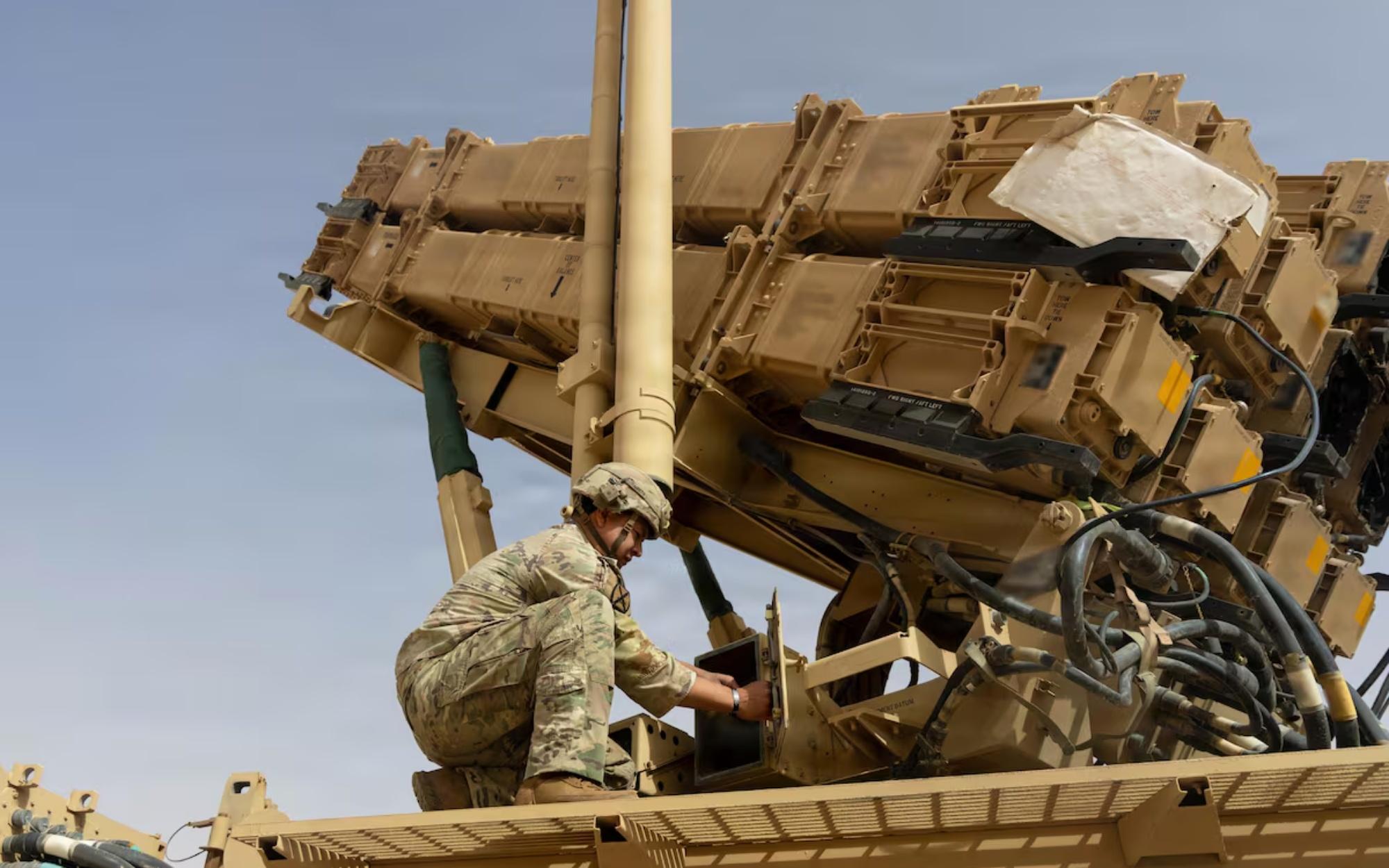
A soldier conducts maintenance on an MIM-104 Patriot missile system in the Middle East. (U.S. Army)

“This is a once-in-a-generation moment, and we are moving with wartime urgency to deliver the Arsenal of Freedom,” Lockheed chairman and CEO Jim Taiclet said in a statement.

Trump’s licensing pledge could make Ukraine only the second country outside the United States allowed to build Patriot missiles, after Japan.

Germany, the Netherlands, and Spain are working on joint production, while Berlin is pursuing its own license arrangements.

For Ukraine, the license would likely apply to missiles rather than full Patriot batteries, and may begin with final assembly from imported component kits.

Poland has offered to host production for obvious security reasons, because putting a fresh missile line inside easy Russian striking distance would be the kind of planning only a committee could love.

“It is about securing this production, so that this production takes place in a safe location,” Polish Deputy Defense Minister Magdalena Sobkowiak Czarnecka said in Washington on July 23.

Ukrainian President Volodymyr Zelenskyy said after meeting Lockheed representatives that “Our teams are already working on specific solutions to move to joint production as soon as possible.”

Lockheed Martin Rolls Out Budget Patriot Interceptor to Battle Cheap Drone Swarms
Defense companies are exploring cheaper alternatives to the Patriot system. (Anthony Sweeney/U.S. Army)

Still, licensed Patriot production will not be cheap. The PAC 3 would remain close to $4 million per shot, and Ukrainian officials estimate a pilot line may take 18 to 24 months before weapons start coming off it.

Zelenskyy wants the schedule tightened. “We expect that by the end of 2026, our Ukrainian team will have the technical capability to produce U.S. missiles,” he said on July 15.

Freyja is the more ambitious alternative, a complete anti ballistic system with interceptor, launcher, radar, and command network. Zelenskyy called it “an analogue of Patriot, but a system for more mass production and a cheaper system.”

The Fire Point designed FP 7.X interceptor flew for the first time in early June and is meant to destroy ballistic targets around 15 miles up with a high explosive fragmentation warhead.

Its projected cost is about $700,000 per interceptor, which is why Europe suddenly looks very interested.

Trump Strikes Back: Reclaims Historic Army Base Names with Bold Patriotic Move

“We have an ambitious goal: to have an MVP ready by the first half of next year,” Davyd Aloian, deputy secretary of Ukraine’s National Security and Defense Council, told Reuters. “That is a prototype that can already demonstrate its first practical results.”

Lockheed’s ACE is another path, aimed at air breathing threats, cruise missiles, and close and short range ballistic missiles.

“American and allied warfighters need a solution that is battle-tested and budget-smart, and PAC-3 ACE delivers exactly that by building on the unrivaled performance of the PAC-3 MSE,” said Tim Cahill, president of Lockheed Martin Missiles and Fire Control.

The first ACE flight is expected in early 2028, with international production under consideration and a price advertised at less than half of an MSE.

The strategic takeaway is simple enough: the West needs more interceptors, cheaper interceptors, and faster production, because hostile regimes do not pause their missile programs while Washington enjoys another procurement seminar.

News

Chinese Military Researchers Exploit U.S. AI Models to Sharpen Beijing’s War Machine

Chinese military researchers have been using outputs from leading American artificial intelligence models to train homegrown systems aimed at strengthening Beijing’s military capabilities, according to a Reuters review of more than 80 Chinese academic papers and patents.

The findings offer a blunt look at how China’s military and security establishment is trying to squeeze value out of U.S. innovation while Washington works to limit Beijing’s access to advanced chips and strategic technology.

At the center of the issue is “model distillation,” a technique in which the outputs of a powerful AI model are used to train smaller, specialized systems.

In plain English, China appears to be taking lessons from the best American systems and using them to build cheaper tools it can run on its own networks.

Reuters said its review included research compiled by the Washington based Jamestown Foundation and shared exclusively with the news agency.

The material showed the technique is being used widely by researchers tied to the People’s Liberation Army and other military institutions.

The papers suggest Chinese defense institutions view U.S. AI models as both a technical shortcut and a way to narrow the gap with American rivals.

That is not exactly shocking to anyone who has watched Beijing treat Western innovation like an all you can copy buffet.

The dispute is not over distillation itself, which is a common practice in the tech industry.

The sharper concern is unauthorized extraction from U.S. models, especially when the resulting capabilities could support surveillance, cyber warfare, targeting, or battlefield decision making.

Russia Shares Intelligence with Iran That Could Enable Tehran to Hit U.S. Forces, Officials Say
Navy Seaman Landon Blackwell monitors surface contacts from the combat information center aboard Arleigh Burke-class guided-missile destroyer USS John S. McCain in the East China Sea, July 15, 2021.

The issue is now a major flashpoint ahead of U.S. and China talks on AI governance and safety. U.S. officials have accused some Chinese entities of using distillation to pull capabilities from American AI models, potentially undermining export controls and violating intellectual property rights.

China has rejected the accusations and accused Washington of AI “hegemonism,” because apparently Beijing believes the real problem is America noticing the pattern. Chinese developers have also pushed back on claims that their advances depend on foreign models.

AI startup Moonshot recently denied allegations by the Trump administration that its Kimi K3 model was built using distillation. The company claimed the model was driven by proprietary innovations.

China, Iran and Russia Hold Joint Naval Drills in Mideast

Sunny Cheung, a Jamestown fellow who analyzed more than 60 of the papers, said Chinese military scientists are systematically capturing the reasoning steps of Western models. He said they are adapting those capabilities for surveillance, cyber warfare, and tactical decision making.

“Teaching a model the right answer is one thing but teaching it the reasoning behind the answer is much harder,” said Cheung.

“These papers show Chinese military-linked researchers are trying to transfer that expensive, proprietary reasoning from Western models into smaller systems they can control and deploy locally.”

Reuters verified the academic literature and identified about two dozen additional military linked case studies.

One paper published last year by researchers in PLA Unit 96941, a military intelligence and cyber warfare unit in Beijing, described using OpenAI’s GPT 3.5 to process sensitive military source code.

China to Develop Robot Dog Drones with Thermobaric Weapons for 'Comprehensive Destruction'

The researchers said outside models were not suitable for classified information. Their workaround was to use GPT 3.5 to summarize software code, then train a domestic model on those summaries so it could operate inside Chinese military networks.

The White House, War Department, China’s foreign ministry, the PLA, and OpenAI did not respond to Reuters requests for comment.

The review found Chinese researchers using distillation for everything from content monitoring to military deployment.

At the North University of China, which has close ties to the weapons industry, researchers used Anthropic’s Claude 3 Haiku to generate synthetic training data for a text classification model focused on social media monitoring and content moderation.

Anthropic said it does not provide commercial access to Claude in China or to Beijing controlled firms. The company said it uses monitoring systems to detect policy violations and warned that distilled models may lose the original safety safeguards.

A 2024 paper from the PLA’s National University of Defense Technology described using distillation to shrink an image processing model for use on unmanned aerial vehicles.

That would allow drones to analyze live video and support navigation and targeting decisions even when communications are cut.

China's Shipbuilding Dominance a National Security Risk for US: Report

Researchers at China’s Academy of Military Sciences also used distillation to run a target recognition model on tactical hardware during simulated maritime operations.

Those exercises involved drones, ships, and unmanned submarines, according to a study published earlier this year.

China has embraced distillation as it tries to compete with the United States in frontier AI while dealing with Washington’s export controls on high end chips.

Central and local governments have promoted model lightweighting and edge computing for drones, satellites, and other platforms with limited processing power.

Still, experts warn that distilled models have real limits.

Chinese military researchers are also studying distillation as a security threat, including “data-free distillation,” a method of reverse engineering model capabilities without direct access to core parameters.

Trevor Koverko, co founder of AI data company Sapien, said distilled models remain less capable than their teacher systems.

“It is best understood as transferring selected capabilities into a cheaper, locally controlled system, not achieving independence from frontier AI.”

News

B-21 Raiders Set to Roll onto Ellsworth Air Force Base Ramp in 2027

The Air Force’s next generation B-21 Raider program is moving toward a major milestone, with the service expecting the first operational stealth bombers to arrive at Ellsworth Air Force Base in South Dakota in 2027.

Gen. Dale White, director of Critical Major Weapon Systems, said Wednesday that the bombers are on pace to be “on the ramp” at Ellsworth next year, keeping the program aligned with the delivery timeline previously projected in February.

White made the remarks during a keynote address at Life Cycle Industry Days in Dayton, Ohio, an event hosted by the Air Force Life Cycle Management Center.

The update matters because the B-21 is not just another aircraft program drifting through the usual Washington swamp of delays, excuses, and contractor finger pointing.

It is intended to become the backbone of America’s long range strike force for decades.

White, who also serves as direct reporting portfolio manager to the deputy War Secretary, manages major weapons programs including the F 47 and B-21 efforts.

He described the Raider program as “the physical proof our warfighting-focused acquisition mindset can and will work,” a pointed message at a time when the country needs lethality delivered on time, not another glossy PowerPoint from the bureaucracy.

The B-21 is currently in initial production, and the program has increased production capacity by 25%.

That boost is expected to accelerate delivery of the stealth bomber to operational units and give commanders a faster path to a critical combat capability.

Northrop Grumman is building the Raider under a 2024 contract award with the Air Force. The program also received $4.5 billion in already authorized funding through a reconciliation bill signed in fiscal 2025 as the “One Big Beautiful Bill,” part of the Pentagon’s fiscal 2026 war budget.

Second B-21 Raider Completes First Flight, Signaling Major Step in Air Force Modernization
A second B-21 Raider test aircraft takes off Thursday from Palmdale, California, to join the Air Force’s flight test campaign at Edwards Air Force Base. The Air Force hopes having two B-21s at Edwards will allow it to expand testing into weapons integration and critical mission systems checks. (Air Force)

For fiscal 2027, the historic $1.5 trillion budget request proposes $6.1 billion for the B-21 program. That number signals that Washington, at least on this front, understands that deterrence does not come cheap and weakness is far more expensive.

The first next generation stealth bomber began flight testing in 2023 at Edwards Air Force Base in California.

A second aircraft followed in 2025 as the Air Force moved into the complicated work of integrating weapons and mission systems into the platform.

Those steps are essential because the Raider is expected to penetrate advanced enemy air defenses and strike high value targets across vast distances. In plain English, it is being built for the kind of fights America cannot afford to lose.

B-21 Raider Completes Close-Proximity Flight with KC-135 Tanker, Air Force Confirms
A second B-21 Raider joins flight testing at Edwards Air Force Base, Calif., Sept. 11, 2025. (Secretary of the Air Force Public Affairs)

The production plan calls for a gradual increase, eventually reaching a rate of about seven aircraft per year. The Air Force wants at least 100 B-21 bombers to replace the aging B-1B Lancer and B-2 Spirit fleets over the coming decades.

“This is what disciplined acquisition delivers,” White said in a February release announcing the expanded production capacity.

“This decision reflects our confidence in the program’s performance and the stability of the industrial base. By increasing production capacity now, we are responsibly accelerating delivery of a critical, combat-effective capability to the warfighter.”

That is the kind of language the American people should expect from the Department of War under leaders focused on readiness, deterrence, and victory.

Under President Trump and War Secretary Pete Hegseth, the priority is simple enough for even the Beltway class to understand: build what the warfighter needs, build it fast, and stop apologizing for American strength.

Pentagon Urged to Arm Air Force With 500 Sixth-Generation Fighters and Bombers to Counter China
The Air Force needs to buy at least 200 B-21 Raider stealth bombers, the Mitchell Institute argued in a new paper. (Kyle Brasier/U.S. Air Force)

Ellsworth is set to become the first main operating base for the Raider, putting South Dakota at the center of the future bomber force. For the airmen preparing to receive the aircraft, the 2027 arrival will mark the beginning of a new chapter in strategic aviation.

The B-21’s arrival will also send a message well beyond the ramp at Ellsworth. America is preparing for a dangerous world with serious weapons, serious funding, and a renewed focus on combat power.

There will always be critics who sneer at military modernization while adversaries race to build missiles, ships, drones, and nuclear forces.

Fortunately, the Raider program appears to be doing what too many government programs fail to do: move forward, increase capacity, and put capability into the hands of the warfighter.

If the current timeline holds, the sight of B-21 Raiders at Ellsworth in 2027 will be more than a procurement milestone.

It will be a reminder that peace through strength still requires strength, and America’s bomber force is getting ready for the next era.

News

Average VA Disability Payments Surged Nearly 40% Over 14 Years, Study Finds

Average annual disability compensation paid by the Department of Veterans Affairs has climbed sharply since 2010, even as the overall number of living American veterans has fallen, according to a new study that puts hard numbers behind a major shift in federal veterans benefits.

The analysis found that average yearly VA disability payments rose nearly 40% over 14 years, increasing from $17,286 in 2010 to $24,057 in 2024.

Researchers at the VA Palo Alto Health Care System and Stanford University School of Medicine reviewed VA disability compensation and Social Security Disability Insurance payments to veterans across that period.

They also found that the share of U.S. veterans receiving VA disability compensation more than doubled, rising from 9% in 2010 to 22% in 2024.

That is a major change in the veterans benefits landscape, especially at a time when Washington loves to pretend money moves by magic until taxpayers ask for receipts.

The study points to several likely reasons for the increase, including the heavy deployment tempo faced by post 9/11 veterans and the higher chance of serious service connected illnesses and injuries tied to those wars.

Researchers also noted that improved battlefield medicine and trauma care helped more troops survive severe combat wounds in Iraq and Afghanistan.

At the same time, VA policy changes expanded eligibility and made it easier for more veterans to receive benefits, a reality that has reshaped the system in both cost and reach.

Lawmakers to Unveil FY2026 Budget for Veterans Affairs, Military Construction

While VA disability payments moved upward, Social Security Disability Insurance payments to veterans remained comparatively steady over the same span.

The study found that annual SSDI payments averaged around $19,550, and veterans can qualify for those payments when a medical condition limits their ability to work.

The findings were published Thursday in JAMA Network Open and also highlighted differences in which veterans were more likely to receive each type of disability support.

College educated, married, and younger veterans were more likely to receive VA compensation, while older veterans with disabilities not tied to military service were more likely to receive SSDI.

The authors suggested that the VA claims process itself may influence who gets benefits and who does not.

They described the process as involving “administrative hurdles,” and said those challenges, combined with the pull of VA education benefits, may favor veterans who are better equipped to navigate the bureaucracy.

That is not exactly a shock to anyone who has ever dealt with federal paperwork, where patience, persistence, and a tolerance for alphabet soup can matter almost as much as the underlying claim.

Still, the numbers raise important questions for policymakers, veterans advocates, and officials responsible for keeping the system both fair and sustainable.

The growth in VA disability payments comes as the total U.S. veteran population has dropped substantially.

In 2010, the United States had about 22 million veterans, but by 2024 that figure had fallen to 15.8 million.

Veterans Win as VA Pulls Back on Debated Disability Rating Rule Amid Backlash
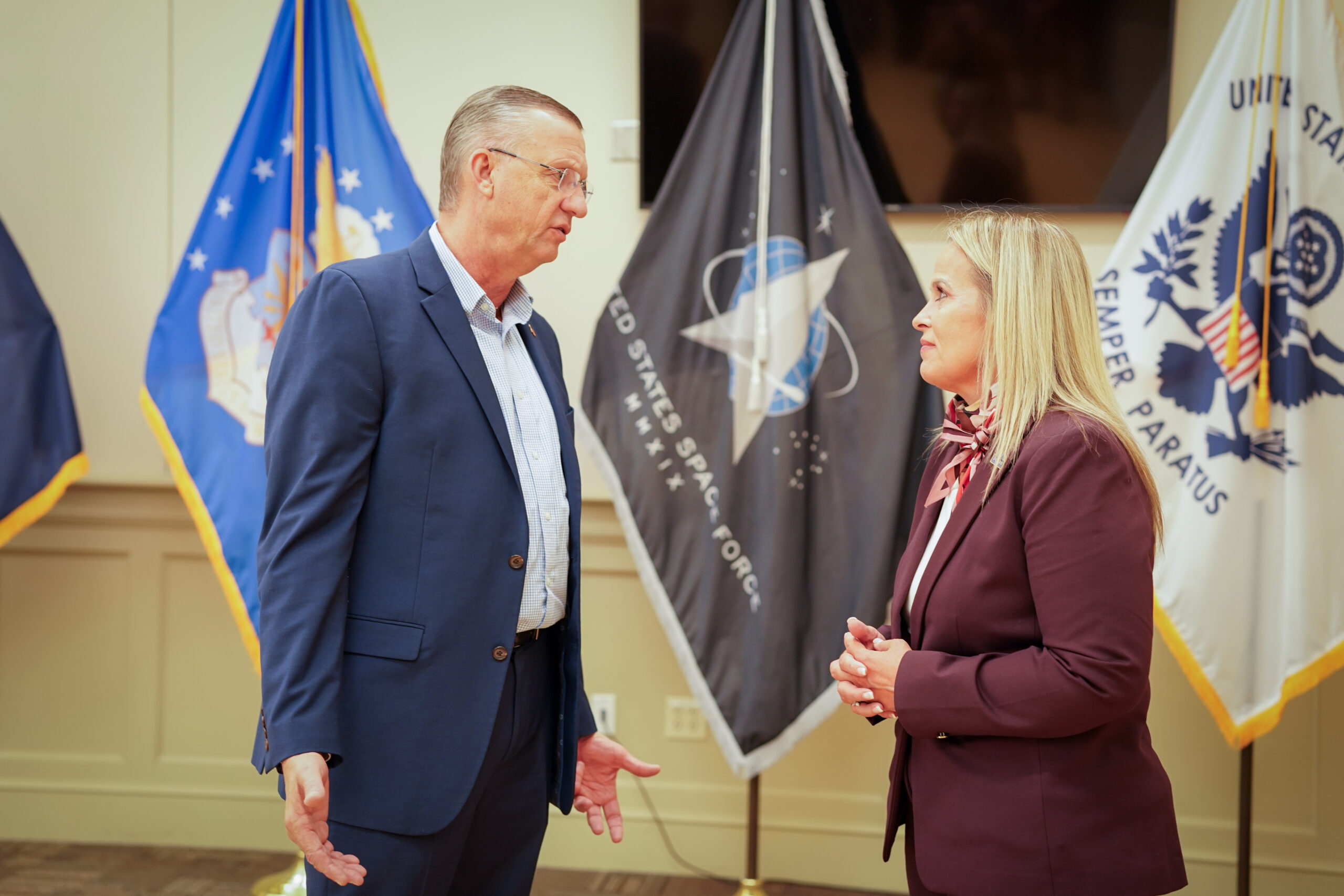
Department of Veterans Affairs Secretary Doug Collins speaks with VA Central Iowa Health Care System Director Lisa Curnes at the Des Moines VA Medical Center in Des Moines, Iowa, on Sept. 8, 2025. Collins visited the Vet Center and Des Moines VA Medical Center to meet with staff, engage with Veterans, and toured the facility as part of his commitment to improving Veteran healthcare and benefits across the country. He also recognized staff for their dedication and service. (Veterans Affairs photo by Sam Hircock)

So the country has fewer veterans overall, but a much larger share of them are receiving VA disability compensation, and the average payment has increased significantly.

That combination is certain to fuel future debates over program structure, eligibility, claims processing, and the long term cost of caring for men and women who served.

The researchers described their work as “descriptive” and stopped short of drawing sweeping conclusions.

“These findings can inform policy discussions about optimal fiscal payments and program structures needed to achieve and streamline federal programmatic goals, while underscoring the need to reduce growing disability burden among veterans and to ensure ease of benefits navigation,” they wrote.

The authors did not respond to a request for an interview before publication, according to the report.

Their silence leaves the data to speak for itself, and the data shows a benefits system that has grown more expensive, more widely used, and more central to the lives of American veterans.

For a nation that sent troops into two long wars after 9/11, the rising disability burden is not some abstract budget line.

It is part of the bill that comes due after years of combat deployments, traumatic injuries, toxic exposures, and a federal system that often manages to be both essential and maddening at the same time.

The policy challenge now is straightforward, even if Washington will no doubt find a way to make it complicated.

Veterans with legitimate service connected conditions should get the support they earned, while the system must be simple enough to navigate and disciplined enough to protect public trust.

News

Body Language Expert: Fauci Looked Terrified, Fake, and Completely Busted Under Oath [WATCH]

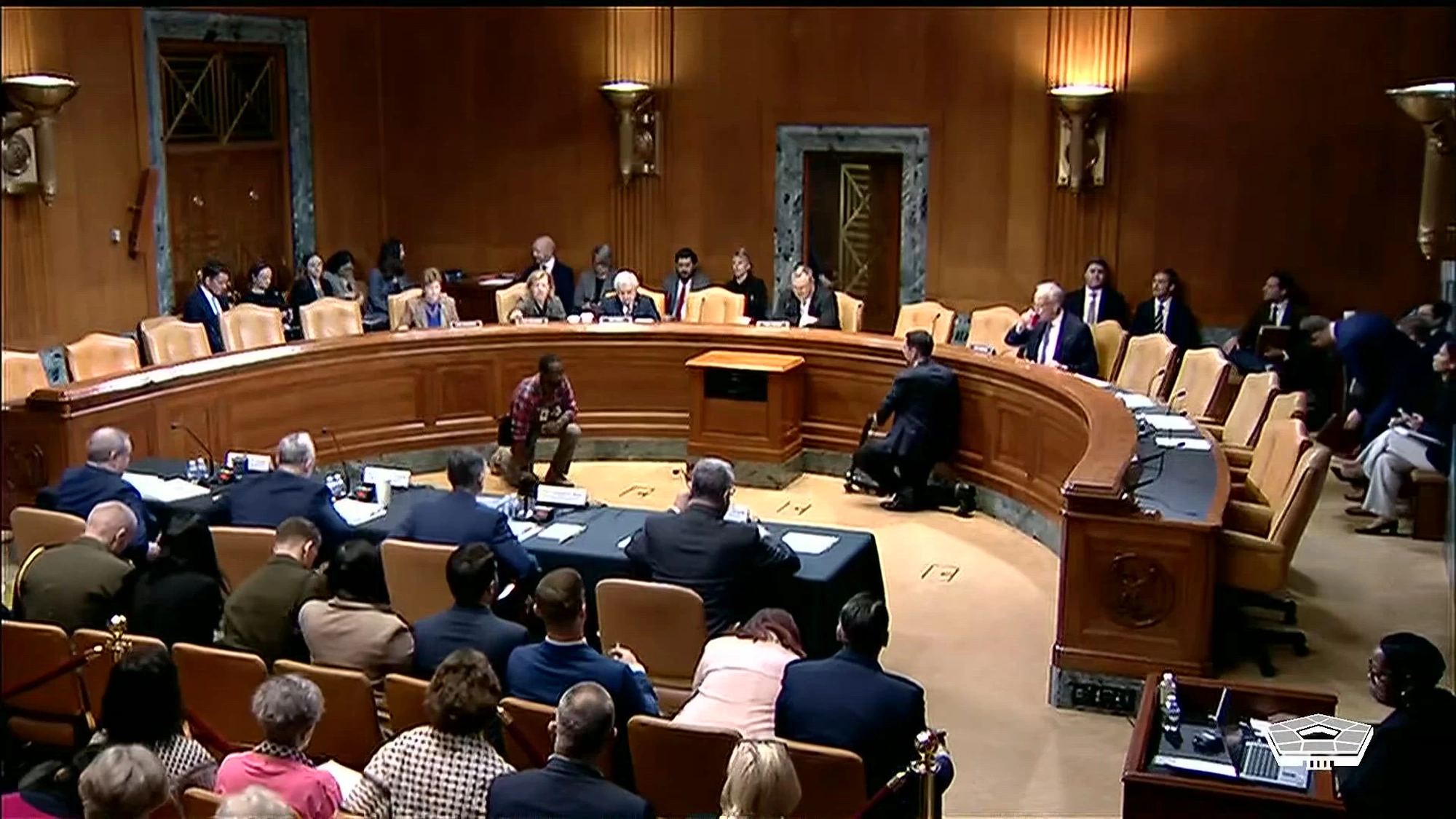
Newsmax host Greg Kelly and body language expert Lena Sisco analyzed Dr. Anthony Fauci’s Senate testimony, arguing that his posture, facial expressions, and physical movements revealed fear, stress, and what Sisco described as a lack of respect for those questioning him.

Kelly opened the discussion by reflecting on Fauci’s appearance before senators.

“Man, what a difference the truth makes!” Kelly said. “He was at times petrified, at times contemptuous, at times well.”

Introducing Sisco, Kelly asked for her overall assessment.

“Welcome back, Lena. I want to show you some specific clips, but do me a favor. Overall, just give us a quick snapshot. What kind of man did you see today testifying?”

Sisco did not hesitate.

“A liar.”

She referenced comments made during the hearing by Sen. Josh Hawley.

“I think Senator Awley. I hope I’m pronouncing his name right. He couldn’t have said it better. He said nothing says honesty more than taking the fifth.”

According to Sisco, refusing to answer questions can reflect concern about revealing deception.

“Listen, liars don’t want to talk because they’re so afraid that they’re going to give away the truth in their body language or words, so they say nothing.”

She added, “And that was the big elephant in the room today.”

Kelly then played footage showing Fauci repeatedly placing his fingertips together during the hearing.

“I found this to be I don’t know, I don’t know what the hell. What do you make of that? It says something.”

Sisco identified the gesture as a “steeple.”

“It does, and you’re right. So it’s a steeple, and it’s a power pose.”

She said the gesture often followed visible nervous behavior.

“But the funny thing is, is that he did it after he was fidgeting?”

According to Sisco, Fauci alternated between playing with his pen out of boredom and nervousness.

“So if you watched him play with his pen often, there were some times he played with it out of complete boredom, as though he wanted to leave, and other times out of nervous energy.”

She concluded that the hand gesture appeared calculated.

“Whenever he didn’t know what to do with his hands, he would go right to here to say, ‘Nope, I have to regain power and authority.’ But it was all contrived.”

Kelly also pointed to Fauci’s posture throughout the hearing.

“I found him. He was slouching a little bit.”

He added, “You know, if you were a nine-year-old kid at dinner, your mom would tell you to sit up a little bit.”

Sisco interpreted the body position as a subconscious response to fear.

“When the body curls up like balls in, his chin would tuck. He’d look down. He’d close his shoulders in. That is a subconscious reaction to fear.”

She explained that people instinctively protect vulnerable areas of the body when experiencing fear.

“So when we have fear, we will tend to protect our body. This is the most vulnerable spot of the body, the neck.”

Rather than touching his neck directly, Sisco said Fauci protected it by changing his posture.

“And you can see him by covering it up this way. And some people may touch their neck, but he doesn’t. He just tips and kind of curls over and avoids eye contact.”

Kelly next played video from Sen. Bernie Moreno (R-Ohio), who challenged Fauci during the hearing.

Moreno urged Fauci to acknowledge people who he said had been criticized for expressing views that later proved accurate.

“If you thought closing schools was catastrophically stupid, and that you thought that during these times saying these things made you somehow a lesser human being, Dr. Fauci, you just turn around and look at the people Behind you,” Moreno said.

“You’re not willing to do that. That’s not a question. It’s not a question to your lawyers. Not a question. It’s a request.”

Moreno continued, “All you have to do is look up from your lawyers and look at the people who were absolutely shamed for saying what we know now to be the truth. You can’t even look at him.”

After the clip, Kelly asked Sisco for her reaction.

“Wow! Did he want to? He looked a little scared there.”

Sisco said she noticed something different.

“He, but he also had a little smile on his face.”

She said Fauci displayed similar expressions several times during the hearing.

“And a couple times after he would be asked a question and gave us his canned response. He would smile.”

According to Sisco, that expression communicated confidence rather than concern.

“And that smile is, ‘I’m getting one over on you. I won this.'”

She concluded that Fauci showed little respect toward those addressing him.

“So for me, I really don’t think he cares at all.”

She added, “If he did, he would have turned around and looked at them out of respect. He has no respect.”

Kelly then turned to questioning by Sen. Rand Paul (R-Ky.), who discussed scientific debate over natural immunity.

“My favorite quote from that is from Martin Koldor from from Harvard,” Paul said. “You called him one of the people that you had to take down, the fringe epidemiologist.”

Paul continued, “He jokingly said on Twitter, he said, ‘Yeah, we knew about natural immunity from 486 BC, from the time of the Athenian plague, we lost all knowledge of it in 2020. The good news is it’s slowly coming back, 24 to 2025. We’re beginning to understand what natural immunity is again-not something perfect, but a useful tool that could have been used, but also something that could have helped people.'”

Kelly then asked Sisco what she observed.

“What’s going on?”

Sisco said Fauci appeared significantly more stressed during Paul’s questioning.

“This topic stressed him out.”

She explained that several physical reactions suggested elevated stress.

“So I can tell that cortisol spiked in his system for two reasons.”

“Number one, he did this eye blink flutter, and when cortisol releases in the body, and it’s our stress hormone, it dries us out in our mouth and in our eyes.”

She also pointed to repeated face touching.

“And the next thing he started doing was touching his face a lot.”

Sisco concluded that the movements were consistent with someone experiencing heightened stress.

“Right, he’s scratching and touching. When cortisol releases in the body, we go into fight or flight. The blood goes to our head; it makes the surface of our skin itchy.”

She added, “So he’s scratching intensely during this question. That tells me it is very stressful for him.”

Kelly ended the segment with a joke directed at Sisco.

“Damn! I think I’m gonna just put my hands in my pockets, if I ever see you.”

Sisco quickly replied, “No, don’t do that. That’s not good.”

WATCH:

News

Knife Wielding Maniac Meets Deadly Reality After Attacking LA County Deputies [WATCH]

A violent confrontation in Lancaster, California, ended exactly the way sane people would expect when a man allegedly armed with a knife attacked Los Angeles County sheriff’s deputies in a parking lot.

The Los Angeles County Sheriff’s Department released body camera footage Tuesday showing the June 20 incident, which began after a concerned citizen reported a man swinging knives in public. That call brought deputies to the scene, and the situation escalated fast.

According to KABC, the man was identified as Robert Castro. Surveillance footage shows three sheriff’s patrol vehicles arriving as deputies moved to confront him in the parking lot.

Castro is seen walking away at first, but that changed when the first deputy drove up.

Instead of complying or stopping, Castro turned toward the patrol vehicle and rushed in the deputy’s direction.

As the deputy exited his vehicle, Castro attacked him with a knife.

The deputy, facing a direct threat to his life, fired several rounds and Castro fell to the ground.

The Sheriff’s Department described the encounter plainly, without the usual activist fog machine that so often appears whenever officers are forced to make split-second decisions.

“Before Deputy #1’s patrol vehicle came to a stop, Castro turned and rapidly walked in the deputy’s direction.

Castro then ran at Deputy #1, drew a knife, stabbed the deputy, and Deputy #1 discharged his service weapon.”

A second deputy arrived moments later to assist his wounded partner.

When Castro moved toward the knife on the ground, that deputy ordered him not to reach for it and then opened fire when the danger continued.

“Don’t move, don’t move!” Stop reaching!” the deputy repeatedly yelled during the encounter.

Castro eventually stopped moving.

WATCH:

He was later transported to a hospital, where he was pronounced dead, according to KABC.

The wounded deputy was also taken to a hospital for treatment.

Physicians treated him for a stab wound, a detail that should matter to anyone still pretending these calls are harmless misunderstandings.

The Sheriff’s Department also released another portion of its account explaining the second deputy’s response.

It stated, “When Castro moves his hand, Deputy #2 commands him to ‘Stop reaching.’ The second deputy then opens fire.”

This is the kind of footage that cuts through the usual noise.

A citizen saw a man swinging knives, deputies responded, and one of those deputies was stabbed before deadly force was used.

In a healthier country, the lesson would be simple.

Do not charge police officers with a knife, do not stab them, and do not reach again once you are on the ground beside the weapon.

But in today’s political climate, especially in places dominated by soft on crime talking points, even obvious cases can get dragged into the familiar circus.

The public gets lectures from people who were nowhere near the scene, while deputies are expected to absorb chaos and somehow make everyone happy.

Body camera footage matters because it lets the public see what officers actually faced.

In this case, deputies were not dealing with a paperwork dispute or a peaceful passerby, but an armed man who reportedly turned a public parking lot into a danger zone.

The incident is another reminder that law enforcement officers are asked to walk straight into situations most critics would flee from in a heartbeat.

When they survive those encounters, the same armchair experts often show up to second guess every second.

Castro made a deadly choice, and the deputies responded to a deadly threat.

That is not complicated, no matter how hard the professional excuse makers may try to make it.


Scroll to Top