
The U.S. Air Force’s next leap in air dominance is moving from briefing slides into metal, software and test aircraft, with the F 47 program now inside its engineering and manufacturing development phase and still tracking toward a 2028 first flight.
Gen. Dale White, director of Critical Major Weapon Systems, said Wednesday that the program entered the new phase with “unprecedented maturity,” a notable statement in a Pentagon culture where big programs often arrive with more promises than proof.
White made the remarks during a keynote address at Life Cycle Industry Days in Dayton, Ohio, an event hosted by the Air Force Life Cycle Management Center.
His message was straightforward: the F-47 is not drifting, slipping or waiting for another blue ribbon review.
The engineering and manufacturing development phase is where the Air Force matures, integrates and tests the aircraft’s core systems.
It also produces a limited number of test aircraft for evaluation and includes priced options for low rate initial production.
White did not say how many test aircraft are being built, but the phase marks a major step for the Boeing program. For a sixth generation fighter meant to replace the F-22 Raptor, that is not a minor milestone.
The first Boeing F-47 is currently on pace to fly in 2028. The Air Force plans to buy at least 185 of the aircraft, matching the size of the F-22 fleet it is intended to replace.
“The F-47 will fly in this administration,” White said, giving President Donald Trump’s White House a clear marker on one of the most important combat aviation programs in the world.
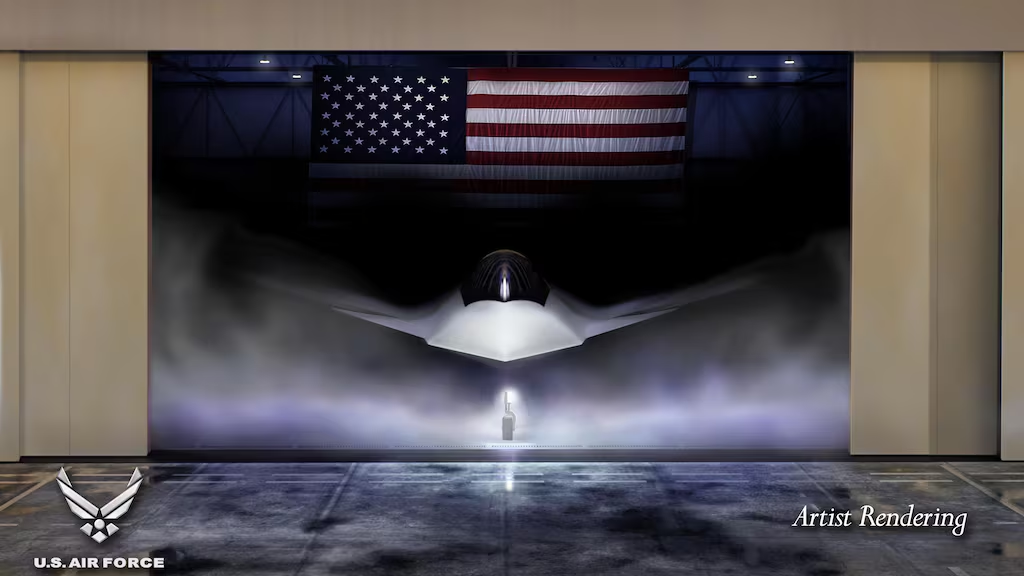
That matters because the F-47 is not just another shiny aircraft for procurement charts.
It is the manned centerpiece of the Next Generation Air Dominance effort, a family of systems built to keep American pilots ahead of China, Russia and any other regime that thinks air superiority is up for grabs.
Trump announced in March 2025 that the Air Force would proceed with development of the sixth generation Boeing F-47 under the NGAD program. As usual, the president did not bury the lead in Beltway jargon.
“In terms of all of the attributes of a fighter jet, there’s never been anything even close to it, from speed to maneuverability, to what it can have, to payload,” Trump said at the time, insisting that the aircraft would be built and flying during his administration.
“And this has been in the works for a long period of time,” he continued. “America’s enemies will never see it coming.”
That last line is exactly the point. The F-47 is designed for a battlefield where stealth, range, sensors, electronic warfare and rapid adaptation will decide who survives and who becomes debris.
NGAD is described as a family of systems, pairing the F-47 with Collaborative Combat Aircraft that can expand reach, complicate enemy targeting and help overwhelm hostile air defenses.
In plain English, it is about making sure America’s pilots are not sent into tomorrow’s fights with yesterday’s tools.
The F-47’s modular design is meant to absorb emerging technology without forcing the Air Force into a slow, expensive rebuild every time the threat changes.
It is also expected to integrate long range strike capabilities for contested environments where enemies have invested heavily in missiles, sensors and layered defenses.
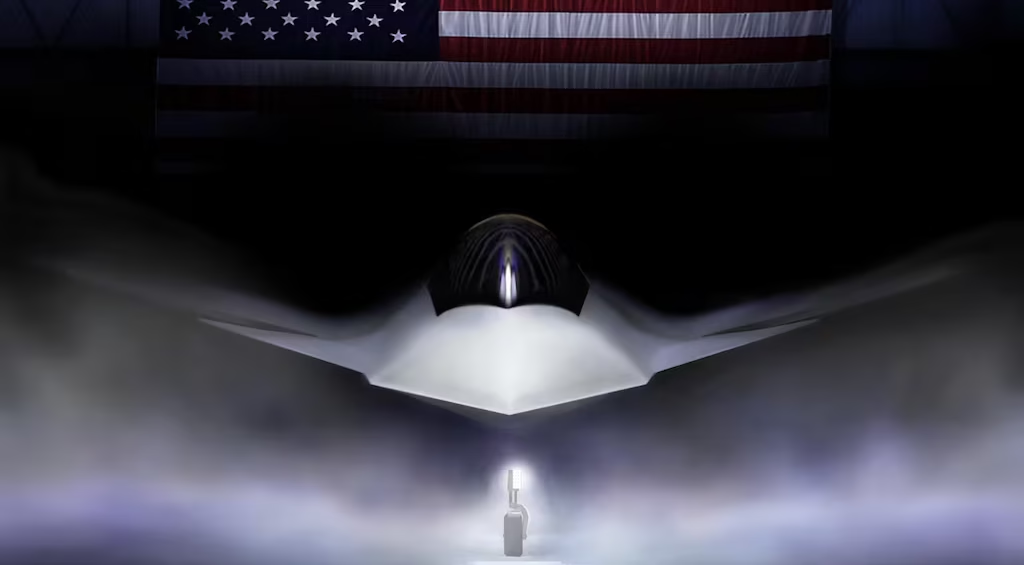
That is the kind of modernization Washington talks about endlessly but too often manages to smother in process.
Here, at least, the Air Force is signaling that industry partners and government program leaders are moving with unusual alignment, what White described as “extreme teaming.”
The money is already following the mission. The F-47 program received $3.45 billion in fiscal year 2026 funding, with more than $5 billion included in the fiscal 2027 budget request.
For the War Department, the stakes are obvious. If the United States wants to deter war, it must field weapons that convince adversaries they cannot win one, and the F-47 is being built for exactly that message.
The 2028 flight target gives the program a public clock, and White’s comments make clear the Air Force believes it can meet it.
After years of talk about next generation airpower, the F-47 is now producing test aircraft and moving toward the runway.
America’s enemies may not like the sound of that. Too bad for them.
