News

News

Creepy Teen Clown Seen Going Door-to-Door Before Deadly Illinois Attack [WATCH]

A 15-year-old wearing a clown costume was taken into custody Monday night after police investigating a fatal stabbing in East St. Louis, Illinois, identified the teenager as a suspect.

The investigation began after neighbors reported seeing a teenager dressed in a black-and-red clown costume carrying a knife while walking through a residential neighborhood earlier in the evening.

Residents told police the teen had been going door-to-door before the deadly incident unfolded. Doorbell camera footage captured the individual wearing a clown mask, glasses and a black-and-red costume as he approached at least one home.

In the video, the unidentified teenager can be heard telling the homeowner, “I have a gift for you,” before turning around and walking away.

Hours later, authorities received a report of a body lying in the roadway.

According to police, officers with the East St. Louis Police Department responded to the scene shortly after 10 p.m. Monday after receiving a call regarding a person in the roadway.

When officers arrived, they discovered the victim deceased.

The St. Clair County Coroner’s Office later identified the victim as 78-year-old John Wesley Allen Sr.

The coroner determined that Allen died after suffering multiple stab wounds.

As officers investigated the homicide, police identified the 15-year-old as a suspect in the case.

The teenager, whose identity has not been released because of his age, was taken into custody Monday night. Authorities have not announced whether formal criminal charges have been filed.

Illinois State Police confirmed the teenager’s detention while the homicide investigation remains ongoing.

According to NBC News, East St. Louis police identified the juvenile as a suspect after officers arrived at the scene of the homicide.

The investigation has also focused on video circulating online that appears to show the teenager before the fatal stabbing.

Illinois State Police acknowledged that footage of the suspect wearing the clown costume has been widely shared on social media.

According to state police, investigators are working to collect all available video connected to the incident as part of the ongoing investigation.

The doorbell camera footage has drawn significant attention because it appears to show the suspect approaching homes before police were called to the scene where Allen’s body was later discovered.

Residents who encountered the teenager earlier in the evening told investigators they observed him carrying a knife while walking through the neighborhood.

The sequence of events has become a central part of the investigation as authorities work to determine exactly what occurred between the time the teenager was seen going door-to-door and the discovery of Allen’s body.

The homicide has shaken the East St. Louis community, where investigators continue gathering evidence and interviewing witnesses.

Officials have not publicly discussed a possible motive, nor have they released additional details about any interaction between the victim and the suspect prior to the stabbing.

Because the suspect is a juvenile, authorities have also released limited information regarding his identity.

Investigators are continuing to review surveillance footage from the neighborhood, including recordings from residential security cameras, as they work to establish a complete timeline of the events leading up to the killing.

State police said they are seeking all available video related to the case, including the footage already circulating online, as part of the homicide investigation.

At this stage, officials have confirmed only that the teenager remains in custody while investigators continue their work.

No additional information regarding possible charges or future court proceedings has been announced.

The investigation remains active as law enforcement agencies continue collecting evidence surrounding the fatal stabbing of John Wesley Allen Sr. in East St. Louis.

News

Hamas Linked CAIR Figures Flood El Sayed Campaign with More Than $100,000 [WATCH]

Michigan Democrat Abdul El Sayed has emerged from his party primary with a Senate nomination and a sizable controversy attached to his campaign.

Federal election records reviewed by Fox News reportedly show more than $115,000 in donations from employees and leaders connected to the Council on American Islamic Relations, commonly known as CAIR, as reported by PJ Media.

El Sayed will face Republican Mike Rogers in a closely watched midterm contest that could help determine control of the Senate.

The money trail is especially awkward because El Sayed has made “money out of politics” a central campaign message while benefiting from a concentrated network of politically connected donors.

Among the donors identified were CAIR national Board Chair Manal Fakhoury, national Vice Chair Emad Sabbah, national Board Treasurer Eyas Abdeen, and CAIR Michigan board member Jukaku Tayeb.

Tayeb is also El Sayed’s father-in-law, adding a family connection to the financial support surrounding the campaign.

Tayeb has reportedly become one of the largest backers of a super PAC supporting El Sayed.

He was also described as a member of the founding committee of the Islamic Society of North America, an organization that critics and investigators have scrutinized over alleged historical links to Muslim Brotherhood and Hamas financing networks.

Another donor cited in federal records was CAIR Executive Director Nihad Awad, who appeared under the name Nehad Hammad.

Awad faced national condemnation after saying he was “happy” to see Hamas break out of Gaza on October 7, 2023, comments that remain politically radioactive for any candidate taking his money.

Fox News reported that donors tied to CAIR chapters in Arizona, California, Texas, Georgia, Illinois, Washington, Minnesota, and Ohio also contributed.

That broad geographic reach makes the support look less like a few isolated checks, and more like a coordinated political network rallying behind one favored Michigan candidate.

CAIR itself did more than watch from the sidelines. Its Michigan primary voting guide placed El Sayed first among the organization’s endorsements, a public show of support that will give Rogers and national Republicans ample material as the general election campaign intensifies.

The list of contributors also included Rubina Alvi, Asaad Traina, Muzammil Ahmed, Atef Ibrahim, Dina Ezzeddine, and former CAIR national Board Chair Roula Allouch.

Ahmed, a CAIR Michigan board member, reportedly gave $11,600, making him one of the more prominent individual donors named in the review.

CAIR has long faced scrutiny from federal law enforcement and conservative state leaders over its history and associations.

Since 2008, the FBI has restricted official contact with the organization after evidence introduced in a terror financing case identified CAIR within a network tied by prosecutors to Hamas.

That history is not ancient trivia when money is pouring into a major Senate campaign.

Voters have every right to ask whether El Sayed shares the priorities of these donors, what access they expect, and why so many CAIR figures consider his victory important.

CAIR has also fought efforts to expose its finances, according to the source material, settling a 2025 lawsuit brought by a former board member and employee before funding information could be disclosed.

Critics argue that such secrecy only deepens questions that transparency could otherwise answer.

Texas Governor Greg Abbott designated CAIR a foreign terrorist organization, while Florida Governor Ron DeSantis labeled it a domestic terror organization.

Those state actions have intensified the political pressure, even as legislation in the United States House seeks a federal terrorist designation for the group.

CAIR disputes characterizations that it is a terrorist organization, and a federal designation has not been enacted.

Still, that does not erase the documented controversy, the FBI restrictions, Awad’s inflammatory remarks, or the unmistakable enthusiasm CAIR officials have shown for El Sayed’s candidacy.

El Sayed now has a credibility problem of his own making.

A politician cannot rail against entrenched money while welcoming more than six figures from a tightly connected ideological circle, then expect working families to shrug and accept the usual campaign finance word games.

Rogers will almost certainly make this donor network a defining issue in the race, and he should.

Michigan voters deserve direct answers about who financed El Sayed’s rise, what influence those supporters seek, and whether his campaign’s reform rhetoric is anything more than polished Democrat packaging.

News

Air Force Robot Rescues C-17 with Part No Vendor Would Build

A C-17 Globemaster III once expected to remain grounded for as long as two years is flying again after the Air Force manufactured an unavailable replacement part with robotic technology.

The recovery returned a mission essential airlifter to service while proving that American engineering can overcome a supply chain dead end.

The aircraft, tail number 01 0194, belongs to the 445th Airlift Wing at Wright Patterson Air Force Base in Ohio.

It was parked overnight at Perot Field Fort Worth Alliance Airport in Texas when violent weather tore through the area on March 4, 2025.

Severe storms and microbursts reaching 80 miles per hour sent two privately owned Bombardier Challenger jets sliding into the military transport.

Video recorded that morning showed one business jet lodged beneath the wing of the much larger C-17.

The same storm system damaged numerous aircraft at airports across the Dallas and Fort Worth metroplex.

For the Air Force, however, the collision threatened to remove one of the wing’s nine mission essential C-17s from duty for an extended period.

The impact damaged the aircraft’s left side door, fuselage and nose section.

Its crew managed to fly the wounded transport home with the landing gear extended and a temporary nose panel that was qualified by Boeing and approved by the Air Force.

Once the aircraft returned to Ohio, maintainers repaired the damaged door and fuselage.

Their work then hit a serious obstacle when inspectors determined that the left nose panel could not be salvaged and would have to be replaced.

Boeing searched for a supplier, but no vendor was willing to create specialized tooling for a single replacement panel, according to the Air Force. Apparently, keeping a strategic airlifter operational was not enough to make a one item production run attractive to the usual supply chain.

An unsuccessful attempt to repair the original panel made the problem even more urgent.

Without another solution, the C-17 faced roughly one year in storage followed by another year of repair work, an unacceptable loss of capacity for a wing with only nine essential aircraft.

The 445th Airlift Wing brought the problem to the Air Force Rapid Sustainment Office at Wright Patterson.

The office, part of the Life Cycle Management Center, specializes in finding practical ways to manufacture components that conventional suppliers cannot or will not provide.

Engineers identified the nose panel as a strong candidate for incremental sheet forming, commonly called ISF.

With that process, a robot follows a programmed digital path and gradually presses a flat sheet of metal into the required shape.

Unlike traditional manufacturing methods, ISF does not require a dedicated mold or expensive tooling for each component.

That distinction made it ideal for producing one highly specialized panel without waiting for a reluctant vendor to decide the project was worth the trouble.

Working alongside the University of Dayton Research Institute, the team started production in January 2026.

The digital manufacturing approach transformed an otherwise unobtainable component from a supply chain nightmare into a manageable engineering challenge.

Boeing personnel and maintainers from the 445th Airlift Wing installed the completed panel in July.

On July 30, tail number 01-0194 returned to the sky, nearly 17 months after the Texas storm battered the aircraft.

“This is a tremendous win for our maintenance group,” Col. Karen Gharst, the 445th Maintenance Group commander, said in a statement. “Using the ISF technology to rapidly produce an otherwise unobtainable part allowed us to avoid a prolonged work stoppage.”

The flight marked the first time an incrementally formed component had flown aboard an Air Force aircraft.

More importantly, it demonstrated that robotic manufacturing can restore critical military equipment when aging production lines and hesitant vendors fail to deliver.

Boeing shut down C-17 production in 2015, but the Air Force expects the Globemaster fleet to remain in service into the 2070s.

That long horizon means maintainers will increasingly confront scarce components, retired tooling and suppliers unwilling to accept small orders.

The Rapid Sustainment Office is already applying its expertise to components for the KC-135 and F-15. If those efforts succeed, the C-17 nose panel will be more than an impressive repair story because it will provide a blueprint for keeping proven American aircraft ready for decades to come.

News

Trump Unleashes Sweeping Orders Against Birthright Citizenship Abuse and Birth Tourism [WATCH]

President Donald Trump moved aggressively on Thursday to defend the value of American citizenship, signing two executive orders aimed at limiting birthright citizenship claims under recognized historical exceptions and shutting down birth tourism, as reported by Trending Politics News.

The actions put federal agencies on notice that citizenship is not supposed to function as an immigration prize.

The orders follow the Supreme Court’s June 30, 2026, ruling in Trump v. Barbara, which examined an earlier directive issued on January 20, 2025.

Trump Blasts Critics as 'Fools' While Calling for Global Ceasefire and Celebrating Market Boom

That directive told federal agencies not to recognize citizenship in certain cases involving parents who were unlawfully present or legally present only on a temporary basis.

Under the earlier policy, the restriction applied when the other parent was neither an American citizen nor a lawful permanent resident.

The dispute placed the Citizenship Clause of the Fourteenth Amendment squarely at the center of the administration’s broader immigration fight.

The Court held that citizenship reaches children born to parents in the United States “for whom no extraterritorial fiction applie[s].”

Trump responded by promising further action, particularly against a birth tourism industry built around exploiting American soil.

The first new order, “Continuing to Protect the Meaning and Value of American Citizenship,” directs the executive branch to identify categories of children who fall outside the rule described by the Supreme Court.

It also instructs agencies on when citizenship documents should not be issued or accepted.

One covered category involves a child whose parents are not citizens and whose mother or father is considered an alien enemy.

That definition includes members of designated Foreign Terrorist Organizations and individuals classified as Specially Designated Global Terrorists.

The order also addresses children of foreign government personnel, including ambassadors and certain embassy or consulate employees who remain nationals of another country.

It further covers people serving foreign governments in official roles and employees of international organizations who enjoy immunity.

The second order, “Ending Birth Tourism,” targets the calculated practice of entering the country on a temporary visa primarily to give birth and secure American citizenship for a child.

Operators have turned that loophole into a business, offering travel arrangements, housing, and other services to foreign customers.

“United States citizenship is among the greatest inheritances the Nation can bestow. It embodies a sacred bond between the American people and the Nation in which they live, and carries profound rights, privileges, and responsibilities reflective of the enduring allegiance of citizens to the United States and our Constitution.”

“Citizenship is not a commodity to be acquired through calculated exploitation and evasion of the immigration laws, such as by entering the United States on a nonimmigrant visa for the purpose of giving birth within the Nation’s borders,” the order states.

That is plain common sense, even if Washington’s open borders crowd finds it offensive.

The order defines birth tourism as “(a) the entry of any foreign national into the United States via a nonimmigrant visa for the purpose of giving birth on American soil; or (b) any effort by any foreign national to facilitate the entry of any foreign national into the United States via a nonimmigrant visa for the purpose of giving birth on American soil.”

It reaches both visitors seeking citizenship by location and networks helping arrange the trip.

Trump delegated authority under section 215(a) of the Immigration and Nationality Act to the secretaries of State and Homeland Security.

They may implement the directive through agency rules, policies, and guidance designed to detect and prevent birth tourism.

Possible enforcement measures include denying visas, blocking entry, revoking existing visas, removing participants, and taking action against facilitators.

The administration is making clear that commercial schemes built around manipulating citizenship rules will face federal scrutiny.

The directive allows exemptions for humanitarian reasons or when admission would serve the national interest.

Those determinations will rest with the relevant secretaries rather than travel operators selling access to American citizenship.

During the Oval Office signing ceremony, Trump said, “We had a very unfortunate decision in the Supreme Court concerning birthright… So we’re making adjustments because it’s very unfair.”

“They’re building businesses around birthright citizenship. That’s not the way it was supposed to work.”

“It’s a disgrace. They’re buying their way in, and we’re not going to let it happen.”

The orders continue Trump’s push to make citizenship meaningful rather than transactional.

While legal challenges are certain, the administration has drawn a bright line against those who view American citizenship as another product to purchase through clever travel planning.

News

Bodycam Captures Police K9 Leaping Into Action as Defiant Suspect Refuses Surrender [WATCH]

A suspected impaired driver in Washington refused to surrender for more than 40 minutes before police sent K9 Midas through the driver’s side window, ending a tense roadside standoff captured on newly released body camera footage, as reported by Fox News.

The Vancouver Police Department released body camera and dashboard camera video Thursday showing the July 26 pursuit, prolonged confrontation, and arrest.

Officers displayed considerable patience before Midas delivered the unmistakable message that discussion time was finished.

Police said the incident began after dispatchers received multiple reports about a driver who appeared impaired.

Witnesses reportedly said the man had passed out behind the wheel and was inhaling from compressed air cans while operating the vehicle.

Officers located the vehicle and allegedly saw the driver continuing to inhale from a can. They attempted to initiate a traffic stop, but police said the driver refused to pull over and instead tried to escape.

Video shows the vehicle striking a curb, accelerating away, and nearly entering a residential yard during the attempted getaway.

Police determined that the reckless driving created an immediate threat to motorists, pedestrians, and nearby residents.

An officer then deployed a Grappler device, which is designed to stop a fleeing vehicle by capturing one of its rear wheels.

The device worked, bringing the dangerous pursuit to a controlled stop before the driver could cause further havoc.

Stopping the car did not produce immediate cooperation from the man inside. Police said he repeatedly ignored commands to exit the vehicle, forcing officers to establish a perimeter and consider how to safely remove him.

For more than 40 minutes, officers communicated with the driver and evaluated several possible tactics.

Those options included a 40 millimeter less lethal launcher and pepper balls, but police continued giving the suspect opportunities to surrender peacefully.

Authorities said the driver kept inhaling from compressed air cans throughout the standoff.

He also continued refusing repeated commands, apparently believing that ignoring police long enough might somehow make the entire situation disappear.

Officers eventually issued multiple warnings that a police dog would be deployed if the suspect did not comply.

When those warnings failed, K9 Midas was directed through the open driver-side window and into the vehicle.

The footage shows Midas springing through the window without hesitation.

Officers immediately moved in around the vehicle, secured the driver, and brought the confrontation to a rapid conclusion after patience and repeated warnings had gotten nowhere.

Police took Brandon Wells into custody without allowing the roadside standoff to drag into an even more dangerous spectacle.

The coordinated response also prevented the suspect from restarting the vehicle or creating another threat to the public.

Wells was booked into the Clark County Jail on charges of attempting to elude police, driving under the influence, reckless driving, and resisting arrest.

Those accusations reflect nearly every stage of the incident, from the alleged impairment to the chase and refusal to surrender.

The department said the arrest followed extensive efforts to gain voluntary compliance.

Officers tried communication, warnings, and less lethal options before calling on Midas, showing the sort of measured escalation critics of law enforcement often pretend does not happen.

The dramatic footage offers a clear view of what officers face when a routine traffic stop turns into a prolonged confrontation.

Midas did not debate, posture, or make excuses; he simply leaped into action and helped officers finish the job.

News

North Carolina Career Criminal Busted After Terrifying Attacks on Women Flood Social Media [WATCH]

A North Carolina man with a long criminal record is back in custody after police say he attacked one woman and chased another while recording the encounters for social media.

The footage presents a chilling picture of random street violence unfolding in a Charlotte neighborhood, according to The New York Post.

Authorities identified the suspect as 32-year-old Di Quan Schafar Hunt. Charlotte Mecklenburg police arrested him Thursday in connection with an alleged assault near the 400 block of East Boulevard on July 30.

Police reportedly learned about the incidents after being shown several disturbing videos from Hunt’s social media account.

Rather than conceal his alleged conduct, Hunt apparently broadcast his confrontations for the public to see, giving investigators unusually direct evidence.

In one recording, Hunt discussed what he called a “real issue” that occurred on July 21. He then crossed paths with an unidentified woman who was carrying a get-well balloon and appeared to be minding her own business.

“Nah, don’t wave to me,” Hunt shouted before allegedly flying into a rage and punching the woman to the pavement.

The sudden attack appeared unprovoked, turning an ordinary walk through the neighborhood into a terrifying ordeal.

Police said the woman was hospitalized following the assault. Hunt, described as five foot nine and weighing approximately 220 pounds, allegedly stood over the motionless victim while screaming racial slurs as she remained on the ground.

“You still talking? You still talking?” Hunt yelled during the recording.

He also allegedly ripped the broken frames from the woman’s sunglasses, kicked the balloon from her hand, and fled the area after the assault.

Another video showed Hunt ranting about McDonald’s before charging toward a different woman on a sidewalk.

The frightened woman attempted to escape by circling a parked vehicle as Hunt chased her and shouted profanities.

The second encounter was not dated in the available footage, but its disturbing nature helped prompt police action.

The videos showed the sort of street chaos residents are routinely told to tolerate until the danger becomes impossible for officials to ignore.

On Thursday morning, officers responded to an “attempt to locate” call in central Charlotte and were shown the videos attributed to Hunt.

Authorities obtained an arrest warrant and took him into custody at approximately 7:30 that evening.

Hunt was transported to a medical facility for treatment after his arrest, though officials did not disclose why treatment was necessary.

Police said he would be transferred to the Mecklenburg County Sheriff’s Office following his release from the facility.

He is expected to be charged with Assault with a Deadly Weapon.

That charge comes despite a criminal record stretching across years and containing numerous accusations involving violence, weapons, trespassing, probation violations, and domestic disputes.

Jail records reviewed by the New York Post reportedly show that Hunt has been arrested at least nine times in Mecklenburg County during the past 34 months.

Those cases included simple assault, assault on a female, trespassing, and violating a domestic violence protective order.

Between December 2012 and June 2019, Hunt was arrested three times for assault on a female and three times for violating a domestic violence protective order.

He was also arrested for discharging a firearm inside the city and causing injury to personal property.

In June 2019, Hunt pleaded guilty to discharging a weapon into occupied property and violating felony probation.

He received a prison sentence of 20 to 36 months but was released in June 2020 for reasons that were not immediately explained.

Hunt was arrested again in August 2024 and later convicted of breaking or entering, damaging personal property, and violating misdemeanor probation.

He received 90 days in jail, but the sentence was credited as time already served.

His most recent conviction came in March 2026 for assault with a deadly weapon and carrying a concealed weapon stemming from a December 2025 incident.

He received an 89-day sentence but did not return to jail because of credit accumulated while awaiting trial.

The latest attack occurred less than one year after Ukrainian refugee Iryna Zarutska was fatally stabbed aboard a Charlotte light rail train.

The 23-year-old had fled Russia’s invasion of Ukraine only to be killed in a random attack while traveling home from work.

Decarlos Brown Jr. was accused of stabbing Zarutska on August 22, 2025, as she sat alone inside the train.

Hunt’s arrest now raises another grim question for Charlotte residents about how many warnings the system needs before repeat offenders are kept away from innocent people.

News

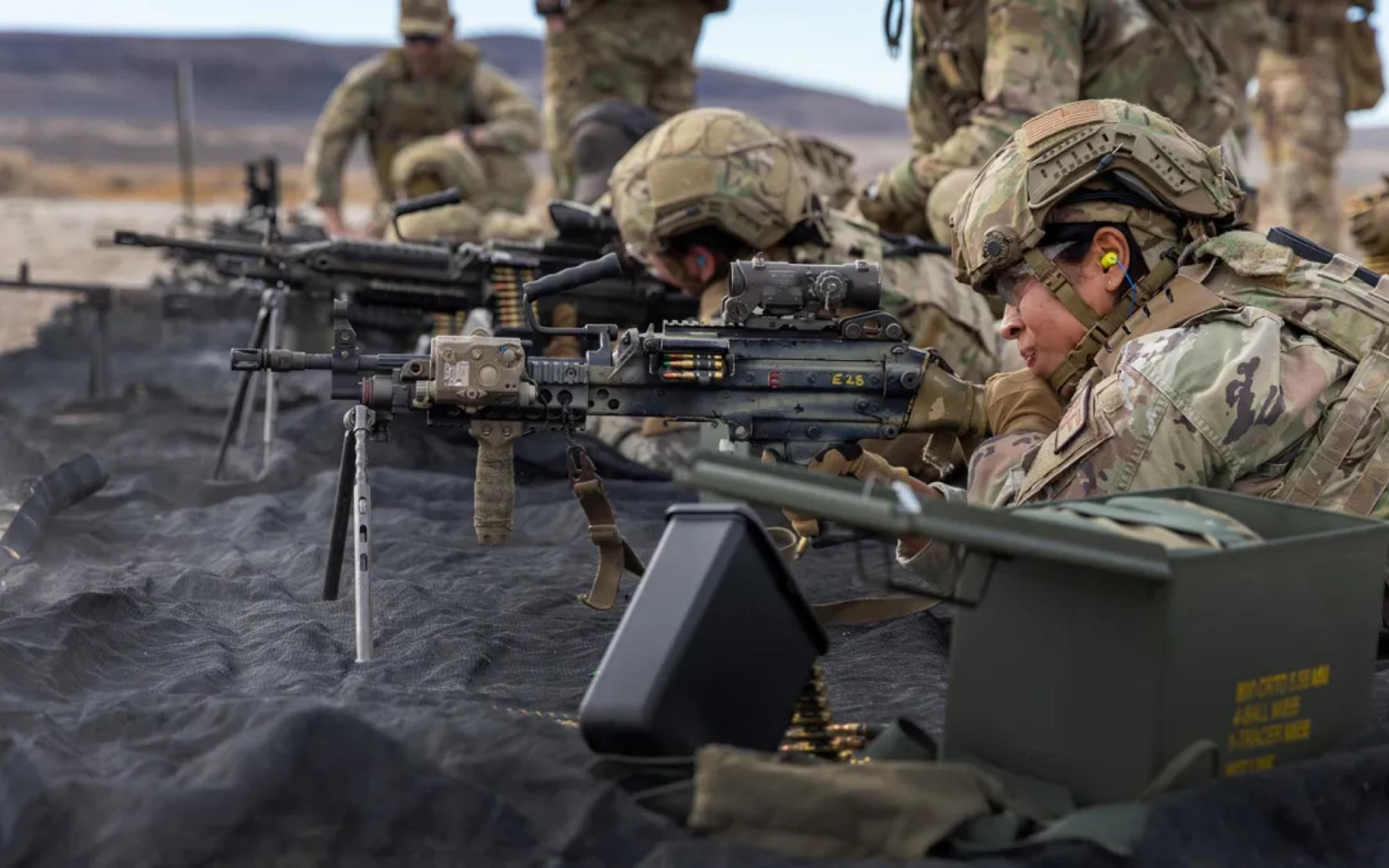
Special Operations Command Seeks Powerful 10 Pound 5.56mm Machine Gun

United States Special Operations Command is hunting for a radically lighter machine gun that weighs about 10 pounds and fires standard 5.56x45mm NATO ammunition.

The proposed Flyweight Assault Machine Gun is intended to give elite operators serious suppressive fire without forcing them to haul another battlefield anchor.

Navy Cmdr. Joe Vermette, a spokesperson for the command, confirmed that the weapon would replace the Mk 46.

That special operations version of the M249 Squad Automatic Weapon has served for roughly 30 years, making the search a substantial modernization effort rather than another Pentagon science project.

“The goal is to replace the MK46 while integrating advancements in material, manufacturing, and technology to provide the operators with a technically superior weapon system that will allow an operator to effectively shoot, maneuver, and lay down suppressive fire,” Vermette said.

That combination of mobility and sustained fire is especially important for special operators, who routinely carry weapons, ammunition, communications equipment, armor, medical gear, and other mission essentials.

Shaving pounds from a primary weapon can translate directly into greater speed, endurance, or additional ammunition when the shooting starts.

SOCOM expects to award a contract for the new machine gun late next year, according to Vermette. If testing proceeds as planned, the command intends to begin fielding the Flyweight Assault Machine Gun during fiscal year 2028.

The War Zone first reported in May that SOCOM was seeking a new lightweight machine gun for special operations forces.

A Navy contract opportunity posted in June later provided a clearer picture of the performance standards the command expects industry to meet.

Under those requirements, the weapon can be no longer than 39 inches, although that ceiling could eventually shrink to 35 inches.

It must also provide an effective range of at least 500 meters against area targets, giving operators useful reach despite the compact design and lightweight frame.

The solicitation calls for a “quick-change barrel” that can be replaced within 30 seconds or less. It also requires a collapsible buttstock and “no stoppages in extreme cold and heat,” because elite troops do not get to choose pleasant weather before going to work.

Recoil must be controlled well enough for operators to engage targets at the weapon’s maximum effective range during both daytime and nighttime missions.

The gun must also work with SOCOM’s Visual Augmentation Systems and Weapon Accessories, ensuring compatibility with the specialized optics and equipment already used across the force.

Delivering all of that in a weapon weighing approximately 10 pounds will be no small engineering task. Machine guns must survive heat, vibration, sustained firing, rough handling, and filthy battlefield conditions, all while remaining reliable enough that an operator can trust the weapon when a mission turns ugly.

The Flyweight program is only one part of SOCOM’s broader effort to modernize its machine gun inventory. Vermette said the command is separately pursuing the Lightweight Machine Gun Medium, chambered in .338 Norma Magnum, and the Light Machine Gun Assault, chambered in 7.62mm NATO.

Those programs would provide special operators with multiple levels of firepower tailored to different missions.

The 5.56mm weapon emphasizes mobility, the 7.62mm platform provides greater power, and the .338 Norma Magnum option is meant to extend machine gun reach and battlefield authority.

SOCOM is also preparing to place a new rifle into operators’ hands. Vermette said in May that the command expected to begin fielding the MK24 Mid Range Gas Gun Assault during the current fiscal year as a replacement for the MK17 SCAR H Special Operations Forces Combat Assault Rifle Heavy.

The MK24 includes a “quick-change swappable barrel” that allows the rifle to fire both 7.62mm NATO and 6.5mm Creedmoor ammunition.

That flexibility gives operators another tool for adapting weapon configuration to mission distance, ammunition requirements, and expected threats.

For troops who already count every ounce before stepping outside the wire, a capable 10 pound machine gun could be a major improvement.

If manufacturers can meet SOCOM’s demanding reliability, range, recoil, and durability standards, America’s special operators may soon carry lighter weapons without surrendering the suppressive fire their missions demand.

News

Masked Communist Goon Invades St. Paul Meeting to Demand Abolition of Private Property [WATCH]

A masked radical used a St. Paul City Council meeting to unload an angry attack on private property, capitalism, police power, and the American system itself.

The spectacle offered another warning about how openly communist ideas are creeping into local government forums, as reported by Townhall.

The Democratic Socialists of America and their ideological allies have spent years demanding the elimination of institutions that protect freedom, prosperity, and individual responsibility.

Private property remains one of their favorite targets because ownership gives ordinary citizens independence from government control.

That is precisely why the radical left treats landlords, homeowners, and business owners as villains.

Once government can seize or dictate the use of property, citizens become dependent on politicians and bureaucrats who suddenly control where people live and how wealth is distributed.

Naturally, socialist rules rarely seem to apply equally to socialist elites and their politically connected friends.

Cea Weaver, a housing adviser to New York City Mayor Zohran Mamdani, has advocated taking property from landlords even as her family enjoys considerable private wealth.

Mamdani also comes from a family with access to a private compound in Uganda. Apparently, private property becomes morally offensive only when it belongs to somebody outside the socialist club.

The masked speaker in St. Paul delivered the familiar collection of accusations about colonialism, capitalism, fascism, and government oppression.

His appearance also raised an obvious question about why someone addressing elected officials was permitted to conceal his identity.

“What we are all participating in here is a settler colony on stolen land. This is a government that represents the settlers, and the capitalists, and the other neoliberal fascists that live amongst us,” the masked man said.

The rhetoric quickly shifted from revolutionary buzzwords to an emotional attack on authorities and the economic system.

Like most communist speeches, it portrayed enforcement of basic public rules as proof of some vast capitalist conspiracy.

“Why are they brutalizing all of these innocent, beautiful people? It’s crazy.”

“I mean, I’m sure they take care of their pets at home, and they take care of their kids at home, and they kiss their kids goodnight and all that,” he continued, “but what this government, what this system exists to do is to enforce private property.”

“And if these people think that they can just go live in the park, no no no. That’ll bring all our property values down.”

“That’ll collapse the whole system. So what can we do besides beg and plead you motherf***ers for a little bit of humanity?”

The rant exposed the central grievance behind the performance.

The speaker was not merely criticizing a particular policy or asking officials to improve services; he was condemning the basic right of people to own homes, land, and businesses.

He then appeared to call for authorities to be stripped of the tools they use to enforce the law. The language was clumsy, but the hostility toward police power and public order was unmistakable.

“I think what we should do is take their ability away to brutalize us like this.”

“I think we should take away the weapons from the armed group. of things that they use to brutalize all of us,” he concluded.

There is also a glaring contradiction surrounding the mask. Leftist activists routinely complain when federal immigration officers conceal their faces during dangerous operations.

Yet, a radical can hide his identity while berating public officials and cursing during a council meeting.

The public is also left to wonder whether the speaker personally owns property or enjoys the financial security he wants denied to others.

Socialist agitators have a long tradition of demanding sacrifice from everyone else while protecting their own homes, incomes, and privileges.

Private property is not some minor administrative preference.

It is a foundation of liberty because it allows families to build wealth, create businesses, pass assets to their children, and live without asking government permission for every major decision.

Abolishing that right would produce economic ruin, social disorder, and massive government coercion.

That result is not an accidental flaw in communism; it is the inevitable destination of an ideology built on confiscation, resentment, and centralized control.

Americans should take these public eruptions seriously, even when the messenger resembles a masked street performer reciting revolutionary slogans.

Dangerous movements grow when citizens dismiss them as theater instead of confronting their destructive goals directly.

News

Boeing Scores First Production Contract for Jet Powered JDAM with Cruise Missile Reach

The United States Air Force has committed $75 million for the initial production of a jet powered guided bomb capable of flying more than 300 nautical miles, Boeing announced Wednesday.

The award moves the ambitious weapon from testing toward operational inventory.

Boeing’s BSU 111 B Payload Delivery Unit combines deployable wings with a turbojet engine to transform a 500 pound Joint Direct Attack Munition into a much longer range strike weapon.

The resulting GBU 75 offers the reach of a cruise missile while building upon the proven JDAM family.

The company has invested nearly $100 million of its own money in the program, signaling substantial confidence in both the technology and expected military demand.

That private investment also helped move development forward before the government committed to the first production batch.

“Scaling production of the GBU-75 will provide the fleet with an affordable, sustainable solution designed to eliminate long-range land and sea-based threats to U.S. and international forces,” said Bob Ciesla, vice president of Boeing Precision Engagement Systems.

The BSU 111 B represents the latest major improvement to a weapon family that has steadily gained range and flexibility.

Early JDAM tail kits allowed conventional gravity bombs to steer toward targets roughly 15 nautical miles away.

A later wing kit extended that reach to about 40 nautical miles. Now, a Kratos designed TDI J85 turbojet engine pushes the weapon beyond 300 nautical miles, placing a dramatically larger target area within striking distance.

That range matters because modern enemy air defenses make close approaches increasingly dangerous for American aircraft and crews.

A bomb that can travel hundreds of miles gives pilots more room to attack while staying farther from hostile missiles, radar systems, and fighter patrols.

The GBU 75 is not limited to conventional land targets. Boeing is also developing the QuickStrike Long Range mining variant, which combines the propulsion package with a bomb equipped with a sensor designed to detect and track ships.

Boeing has released concepts showing large numbers of these weapons loaded aboard Air Force bombers.

The Air Force has not announced a purchase for that particular configuration, but the concept points toward massed, lower cost strike options against land and maritime threats.

The Air Force Life Cycle Management Center at Hill Air Force Base in Utah purchases JDAM weapons for both the Air Force and the United States Navy. The first production GBU 75 weapons are slated to go to the Navy.

Navy Super Hornets demonstrated the weapon over the Point Mugu Sea Range off California in April.

During the April 1 test, the weapon separated cleanly, started its engine, remained airborne for 34 minutes, and landed within meters of its intended target.

A second test on April 3 added altitude changes and maneuvering to further challenge the system.

Each weapon traveled roughly 200 nautical miles, demonstrating meaningful range while also validating controlled flight under more demanding conditions.

“As Naval Air Forces in theater continue to rely heavily on JDAM systems, the program recognizes a critical need to provide the fleet with greater standoff range,” Navy Precision Strike Weapons program manager Capt. Sarah Abbott said.

“This new capability allows pilots to engage targets from significantly safer distances, maintaining a tactical advantage in contested environments.”

One major advantage is that the military does not need to create an entirely new weapons ecosystem.

Navy budget documents describe JDAM LR as a modification of the baseline program using existing production lines, guidance equipment, and support infrastructure.

According to Boeing, any aircraft already capable of dropping a conventional JDAM can carry the new version without modification. That compatibility could reduce integration headaches, training demands, and additional costs that frequently bog down new weapons programs in bureaucratic quicksand.

The award had not appeared in the Pentagon’s daily contract announcements as of Aug. 5. It is an undefinitized action, which means Boeing began work before the government and company finished negotiating the final price.

The Government Accountability Office has repeatedly warned that such arrangements can carry financial risk because contractors receive reimbursement for allowable costs. Boeing did not disclose how many weapons the $75 million will purchase, the cost of each GBU 75, or when deliveries will begin.

Even with those unanswered contracting questions, the operational logic is clear. The GBU 75 could give American naval aviation a powerful new way to strike distant land and maritime threats without forcing pilots to fly straight into the enemy’s engagement zone.

News

John Kennedy Torches John Thune and Far Left Democrats with a Brutal Reality Check [WATCH]

Senator John Kennedy brought his trademark bluntness to Fox Business during an appearance with Larry Kudlow, taking aim at Washington delay tactics and the increasingly radical agenda of the Democratic Party.

The Louisiana Republican was funny, direct, and clearly tired of excuses, as reported by Red State.

Kennedy focused on the SAVE America Act and the failure of Senate Majority Leader John Thune to move the legislation forward.

He made clear that he was prepared to remain in Washington until senators finished the job voters sent them there to do.

The senator said he did not know when leadership planned to hold a vote, but insisted that the matter could not be delayed forever.

If Kennedy were running the show, he said, the legislation would have already received a reconciliation vote.

Washington politicians have perfected the art of replacing action with meetings, memos, and endless discussion.

Kennedy clearly has had enough of that familiar Capitol Hill routine, where urgency disappears as soon as lawmakers enter a conference room.

“I am prepared to stay here as long as it takes. I’ve been to a squillion meetings to talk about this stuff that could’ve been an email!”

Kennedy then delivered the line that instantly captured the frustration of millions of Americans.

“I’d rather have a back alley colonoscopy than go to another meeting! It’s time to vote!”

That is vintage Kennedy, colorful enough to get attention and pointed enough to expose the absurdity.

His message was simple: stop talking, stop stalling, and put senators on the record so Americans can see who supports the legislation.

The SAVE America Act is too important to be buried under another mountain of procedural excuses.

Kennedy argued that lawmakers should remain in Washington, skip the recess if necessary, and handle the business sitting directly in front of them.

His frustration also reflected a larger problem within Republican leadership.

Conservatives have watched too many priorities get slowed by process while Democrats rarely hesitate to push their agenda with every available lever of power.

Kennedy was not finished after calling out Senate inaction.

He also turned his attention toward the far left wing of the Democratic Party and its effort to disguise radical policies beneath carefully packaged claims about helping ordinary Americans.

Democrats increasingly wrap themselves in a “We care about the working class” costume, but their policies often tell a very different story.

Socialist figures such as New York Mayor Zohran Mamdani struggle to explain who belongs to the “working class” they claim to represent.

That confusion is not surprising when the modern left appears more comfortable with academic slogans than with the daily concerns of families, police officers, small business owners, and taxpayers.

The more Democratic activists talk, the more detached their agenda sounds outside deeply blue political enclaves.

Kennedy summarized that disconnect with characteristic clarity. “These folks have contempt for America when they should have gratitude.”

He continued by warning that radical Democrats “wanna open the prisons, open the border, defund the police, defund ICE, abolish Thanksgiving,” while also seeking an economy directed by Washington bureaucrats.

Those ideas may earn applause from activists, but they are a hard sell across most of America.

Kennedy closed with the political reality Democrats keep trying to ignore. “The American people aren’t gonna, not going to support that kind of nonsense.”

That judgment explains why the left keeps relying on softer branding and emotional appeals instead of openly defending its agenda.

Americans can recognize a radical program even when Democrats package it as compassion and cover it with promises about fairness.

Kennedy’s response worked because it cut through both Republican hesitation and Democratic spin.

Voters are not asking for another meeting, another slogan, or another carefully managed delay; they want lawmakers to vote and stand behind the consequences.


Scroll to Top