News

News

‘Too Many White People’ DSA Candidate’s Bid to Excuse Radical Tweets Backfires Spectacularly [WATCH]

Francesca Hong, a self-identified Democratic Socialist and Democratic candidate for governor of Wisconsin, is facing renewed attention over social media posts she made between 2019 and 2021 as voters prepare to cast ballots in the state’s August 11 primary, as reported by Trending Politics News.

Hong has sought to explain several of the controversial posts by pointing to her earlier ambitions of becoming a sports journalist.

During a recent press gaggle, she said, “I was actually trying to become a sports journalist when I first went to college. So I learned you sometimes have bad takes on Twitter,” she said with a smirk.

Several of the posts were published in 2020. In November of that year, Hong wrote, “Cancel Thanksgiving. Should have done this in 1621,” and described the holiday as being rooted in “genocide.”

Thanksgiving was established as a national holiday by President Abraham Lincoln in 1863 during the Civil War, with the holiday intended in part to promote national unity.

In another post from roughly the same period, Hong referred to Thanksgiving as a “colonizer holiday.”

Other posts from the same general timeframe included critical comments about holidays such as Valentine’s Day and Christmas-related imagery.

Hong also drew attention for a 2019 post concerning an experience at a Culver’s restaurant in Black River Falls.

She wrote that she left after eating briefly because she was “on the verge of a anxiety attack” due to “to many old white people who didn’t think we spoke English.”

Additional posts from 2020 and 2021 included strong statements about policing and the U.S. Senate.

In one post, Hong wrote, “Police exist to uphold white supremacy. Defund then abolish. Reform can’t be an option.” In another, she called for the “Abolish the Senate.”

The timing of the posts has also become part of the discussion surrounding Hong’s explanation. Hong was first elected to the Wisconsin State House in 2020.

Some of the posts now receiving attention were published after she had been elected but before she formally took office, while others were written during her tenure as a state representative.

The November 2020 Thanksgiving post came after her election victory but before she was sworn into office.

The October 2021 statement concerning police and the February 2021 call to abolish the Senate were made while she was serving as a state representative.

Hong has separately attempted to clarify her comments about Thanksgiving in interviews and public statements.

In an interview with Politico, she said Thanksgiving is her favorite holiday and stated, “I don’t want to cancel it. I actually love it.”

She has also described herself as “kind of a curmudgeon when it comes to holidays in general.”

At the same time, Hong has continued to characterize Thanksgiving as a holiday rooted in “genocide” while campaigning.

The controversy comes as Wisconsin Democrats and Republicans prepare for the August 11 primary.

With less than 24 hours remaining before polls close in the state, Hong holds a substantial lead in available polling and is widely projected to win the Democratic nomination for governor.

On the Republican side, U.S. Rep. Tom Tiffany, a member of the House Freedom Caucus, is widely projected to secure the GOP nomination.

The outcome of Tuesday’s primary will determine the nominees who advance to the general election for governor.

Hong’s past social media activity has become a prominent issue in the final stretch of the Democratic primary campaign as voters consider the candidates seeking the party’s nomination.

News

‘Wake Up, Buddy’: Iranian American Blasts Political Islam Marching in Texas Streets [WATCH]

Iranian-American advocate Meeda warned that a recent demonstration in Houston, Texas, reflects what she believes is a broader ideological movement rather than a simple expression of political activism, drawing comparisons to events that preceded Iran’s 1979 Islamic Revolution.

Speaking in a video message, Meeda said Americans should pay close attention to demonstrations she believes are presented as peaceful calls for justice but may carry a broader political message.

“Pay attention, please, because this is not the Middle East. This is Houston, Texas, 2026.”

She described seeing marchers carrying signs with messages supporting the oppressed and invoking Hussein.

“People marching, holding up these beautiful signs. Stand beside the oppressed. Hussein stood against injustice. So moving, right? So peaceful.”

According to Meeda, however, those images reminded her of events she experienced through Iran’s history.

“Except I’m Iranian, and I know exactly what I’m looking at.”

She argued that Americans should view such demonstrations with caution.

“In America, you need to wake up, buddy, because you are looking at a Trojan horse.”

Meeda then reflected on Iran before the Islamic Revolution, describing the country as one where women held professional positions and enjoyed greater freedoms.

“Let’s do a quick history lesson here. Before 1979, Iran was a powerhouse. We were free. Women were judges, doctors. We had music. We had life. Tehran was called the Paris of the Middle East.”

She said those conditions changed following the revolution.

“Then came the Islamic Revolution, and it did not start with guns. It started with marches just like this one, slogans about justice, and then, boom! Hijab became the law. Music was banned. Nine-year-old girls could be married off. The real oppression began, all in the name of the exact same religion on those sides.”

Meeda also discussed the history of Persia’s conquest in the seventh century, arguing that Islam spread through military conquest rather than peaceful conversion.

“But let’s go back even further. How do you think Iran became Muslim in the first place? Did they just politely hand out pamphlets? No, of course not.”

She continued, “In the seventh century, the Arab Islamic conquest invaded Persia. They destroyed 1000-year-old Zoroastrian civilization. They burned libraries. They forced conversions or made people pay a tax just to stay alive.”

According to Meeda, similar events occurred in Egypt.

“They did the same thing to Egypt. Egypt was Christian, for God’s sake. The Copts were conquered, subjugated, and erased.”

She argued that this history demonstrates what she believes is an ideological pattern.

“This is not a religion just peacefully hanging out. Historically, it is an ideology of conquest.”

Meeda also addressed the historical Battle of Karbala, saying she believes it is frequently portrayed in a misleading way.

“And these signs about Hussein and Karbala. Let’s talk about the actual Battle of Karbala in 680 A.D. It was not some noble fight for human rights. It was a political power struggle.”

She added, “Hussein and Yazid were fighting over the land, over the caliphate, over who got to rule the empire.”

She further challenged common narratives surrounding the event.

“And by the way, Karbala is not some barren desert where they were dying of thirst for no reason. It sits right between two rivers. The whole romanticized victim story, political propaganda designed to keep people mourning and compliant.”

Meeda said Iranians have attempted to warn Western countries about the ideology promoted by Iran’s current government.

“My people were not told the truth, but we tried to warn you.”

She referenced both the late Shah of Iran and Crown Prince Reza Pahlavi.

“The late Shah of Iran warned the West decades ago. Crown Prince Reza Pahlavi has been shouting this from the rooftops.”

According to Meeda, she believes the ideology promoted by the Islamic Republic extends beyond Iran.

“The Islamic Republic’s ideology does not stay in the Middle East; it exports itself.”

She pointed to Europe as an example of what she views as that expansion.

“Look at Europe; it is already a mess. Parallel legal system, neighborhoods where secular law doesn’t even apply anymore. The cultural and demographic shift is already happening there, and now it’s in Houston, in our backyard.”

Meeda concluded by saying she supports constitutional freedoms while arguing that ideologies seeking to replace those freedoms should not receive constitutional protection.

“I believe in the constitution. I believe in freedom of speech, but the constitution does not protect ideologies whose stated goal is to conquer and replace the constitution.”

She continued, “We banned communism for trying to overthrow the government. Why are we blind to political Islam doing the exact same thing?”

Closing her remarks, Meeda urged Americans to learn from Iran’s experience.

“They conquered Persia. They conquered Egypt. They took my beloved Iran in 1979, and now they are marching in America, holding signs about justice, while the regime they represent hangs people from cranes in Iran. We warned you, please do not let America be next.”

WATCH:

News

Florida Trolls Mamdani Hard with Massive Times Square Billboard [WATCH]

Florida is thanking New York City Mayor Zohran Mamdani for sending jobs, companies, wealth, and residents south.

The Florida Chamber of Commerce delivered that message in unmistakable fashion with a massive Times Square billboard declaring, “Thanks for the jobs!”

Located at Broadway and West 43rd Street, the digital advertisement names Mamdani Florida’s “Economic Developer of the Year.”

It is a sharp jab at progressive leadership and a public celebration of the economic migration enriching the Sunshine State.

The campaign reflects a broader national battle between free enterprise and growing government control.

Florida leaders argue that lower taxes, lighter regulation, and personal liberty encourage investment, while socialist experiments drive productive citizens toward the exits.

Florida Chamber of Commerce CEO Mark Wilson said the organization wants Americans to recognize what is happening in plain sight.

New York keeps squeezing businesses and taxpayers, while Florida welcomes them and enjoys the economic rewards.

Wilson described Mamdani’s agenda as dangerous for New York and harmful to the country.

His concern is that Democratic socialist policies attack the economic freedoms that allowed generations of Americans to build businesses, create jobs, and pursue prosperity.

The Chamber says Florida gains approximately $2.4 million in net taxable income every hour, based on Internal Revenue Service migration data.

New York, by comparison, loses about $1.1 million in taxable income during that same period.

Population figures tell a similar story, according to the organization.

Florida gains a net 551 residents each day, while New York loses approximately 115, giving the Sunshine State a steady stream of workers, consumers, entrepreneurs, and tax revenue.

“What do people like Mayor Mamdani do? They want to then increase taxes on the people who are left, which just further accelerates people leaving places like New York,” Wilson explained.

WATCH:

That cycle is hardly complicated, despite the left’s best efforts to dress it up in academic jargon.

Higher taxes push people away, the tax base shrinks, government demands more money, and the remaining residents receive another bill for progressive mismanagement.

Florida has taken the opposite approach, reducing taxes more than 50 times during the past 15 years while collecting record revenue.

Economic growth has expanded the state’s tax base without relying on the familiar blue state ritual of punishing success.

The Chamber also highlighted the enormous difference in government spending between the two states.

New York’s state budget is more than twice the size of Florida’s, while New York City’s municipal budget alone exceeds Florida’s entire state budget by more than $8 billion.

Those numbers raise an obvious question about what New Yorkers are receiving for all that spending.

Florida is building a $1.8 trillion economy while attracting wealth and residents, yet New York continues demanding more from a population already looking for escape routes.

City Hall rejected the Chamber’s argument and claimed New York City’s economy under Mamdani remains historically strong.

The administration also said it intends to continue growing the economy while ensuring that workers benefit, the usual promise accompanying another progressive expansion of government.

Wilson insisted the billboard is not about cheering for New York’s decline.

He said Florida wants other states to succeed, but that success requires rejecting socialism and returning to the principles of freedom, competition, and private enterprise.

The Chamber views the states as competitors in a national contest of ideas.

Florida’s results offer a powerful scorecard, while New York provides a warning about what happens when politicians treat businesses and affluent residents like permanent sources of government cash.

Wilson said the campaign could eventually expand beyond Manhattan, with Chicago, California, and Minneapolis among the possible future targets.

Each has become associated with progressive governance, rising burdens, and policies that give residents and employers fresh reasons to consider Florida.

The campaign arrives as the United States celebrates 250 years of independence and debates which economic direction it will follow.

Florida’s message is refreshingly direct: freedom and enterprise create opportunity, while socialism creates moving trucks headed south.

News

They Knew: CDC, Fauci, and the Great Cover-Up as 82% Miscarriage Rate Buried in ‘Safe and Effective’ Study [WATCH]

Newly released text messages show leading Biden administration health officials privately discussing whether COVID 19 vaccination early in pregnancy could raise the risk of miscarriage.

The concerns surfaced during the first week of the Biden presidency, even as officials publicly worked to reassure Americans about vaccine safety.

The messages came from Dr. Anthony Fauci’s government-issued cellphone and were released by Republican Senators Ron Johnson of Wisconsin and Rand Paul of Kentucky.

WATCH:

They involved Fauci, Surgeon General Vivek Murthy, and then Centers for Disease Control and Prevention Director Rochelle Walensky.

Murthy asked Fauci and Walensky whether there was “any data or theoretical reason why vaccinating early vs late in pregnancy would be preferred.”

The question went directly to a major uncertainty surrounding pregnant women, a group that had not been meaningfully represented in the original vaccine trials.

Murthy said he had been telling pregnant women there was no “evidence of concerning adverse outcomes in the trials.”

At the same time, he acknowledged that the number of pregnant participants was “likely […] limited,” while Fauci reminded him that “pregnant women were not allowed” in those trials.

Fauci initially described as a “misperception” the concern among some people, including “female health care professionals,” that vaccination “very early in pregnancy” might be harmful.

Within two hours, however, his private assessment became considerably less dismissive.

Fauci told the group he had “asked around a bit more.”

WATCH:

He said he was warned that the “significant cytokines storm and fever” commonly associated with the second dose “theoretically could be associated with miscarriage in the 1st trimester.”

WATCH:

Walensky and Murthy each called the concern a “good point.”

Walensky also said she had heard worries about “mRNA causing mutations in the developing fetus as well,” showing that the questions circulating privately went beyond the narrow issue officials were discussing publicly.

The following day, Murthy reacted with alarm after the World Health Organization recommended that pregnant women avoid the Moderna vaccine “unless they are at risk of high exposure.”

He warned that the recommendation was “potentially quite damaging to public confidence among pregnant women,” and Walensky agreed.

WATCH:

Fauci sought to calm the group by pointing to vaccinations administered after emergency authorization.

“No issues have arisen,” he wrote, after saying that “more than 10,000” pregnant women had already received a vaccine.

WATCH:

The messages add fuel to criticism that federal health leaders entertained concerns behind closed doors while people raising similar questions publicly were smeared as dangerous cranks.

Louisiana Attorney General Liz Murrill said those skeptics were branded anti vaccine and accused of lying or trying to cause COVID deaths.

Murrill told Just the News, No Noise that people “on the ground” could see “rampant and pervasive” problems.

She said her own son spent a week in an intensive care unit with myocarditis after receiving a COVID vaccine.

According to Murrill, “Parents were being told ‘vaccinate your kids’” as young as five. She said officials claimed “that there’s no side effects [..] that myocarditis is not severe and that they bounce back within a few days,” an assertion she called “just frankly not true.”

Murrill argued that pediatric heart specialists understood the seriousness of such cases but feared consequences for speaking candidly.

“I think pediatric cardiologists know this,” she said, while alleging that medical professionals faced threats involving their licenses if they warned parents.

The Louisiana attorney general also pointed to Fauci’s repeated invocation of the Fifth Amendment during recent congressional testimony.

She suspects he did so because “he knows he has exposure in the states,” including Louisiana.

Murrill has pursued a criminal case connected to Fauci’s contemporaneous notes, which she says may conflict with his deposition testimony in Louisiana litigation over federal pressure on social media companies.

That lawsuit challenged government efforts to suppress disfavored claims involving COVID treatments and other pandemic disputes.

“We’re looking at, I’m looking at what Fauci did in the context of our litigation to see whether he lied and whether there are potentially perjury charges that could arise from that,” Murrill said.

Her review places the former federal health official’s sworn statements under renewed scrutiny.

The larger issue is public trust after years of officials presenting certainty to Americans while privately discussing unresolved risks and potentially damaging information.

The public reassurance machine apparently had room for private doubts, just not for ordinary citizens voicing them.

“I think the public needs to hear the truth,” Murrill said.

She added that “we need people to be able to question the science without threat of retaliation from the government,” a basic principle that pandemic era authorities too often treated as an inconvenience.

WATCH:

News

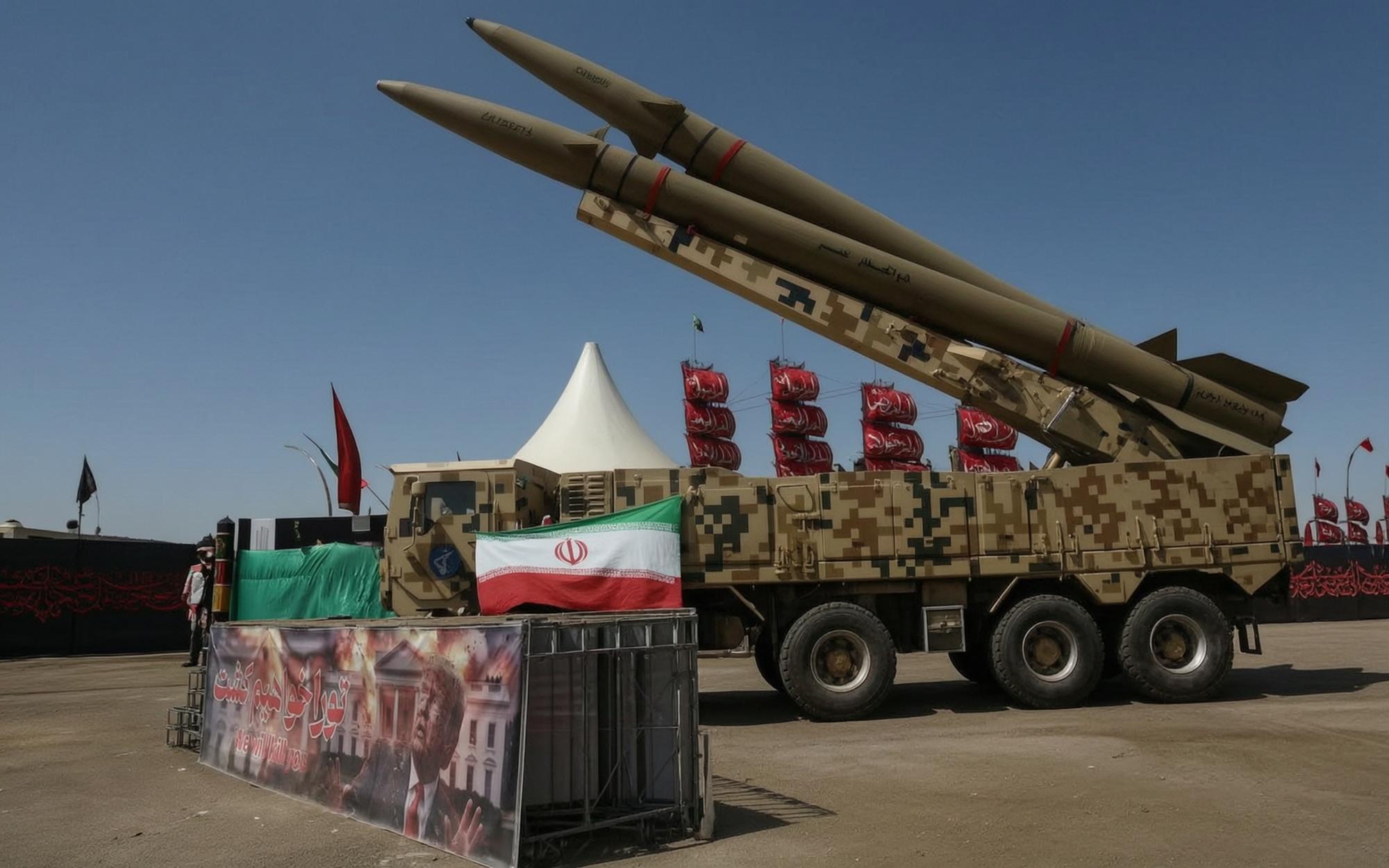
Iran Threatens Gulf Catastrophe: Stop US Strikes or Face Devastating Attacks

Iran has launched a coordinated diplomatic pressure campaign against Gulf governments, threatening devastating attacks on their critical infrastructure unless they convince President Donald Trump to halt US military strikes.

Tehran is effectively holding regional energy and water systems hostage while dressing the threat up as diplomacy.

According to a senior Iranian official, the threatened targets include oil fields, refineries, electricity grids, water facilities, transportation networks and other strategic assets belonging to Washington’s closest Arab partners.

Such attacks could destabilize Gulf economies and send shock waves through global energy markets.

The warnings followed Trump’s July 28 threat to strike Iran’s energy network and infrastructure. Iranian leaders responded by contacting neighboring governments and making clear that another US operation could produce destruction far beyond Iran’s borders.

Iranian Foreign Minister Abbas Araqchi reportedly spoke with his counterparts in Saudi Arabia, Turkey and Qatar, along with Pakistan’s army chief.

Two senior Iranian officials, two Gulf sources and a regional diplomat described the conversations anonymously because of their sensitivity.

Araqchi pressed America’s Gulf partners to use their influence with Trump and discourage renewed military action.

According to the diplomat, his message remained consistent: “We’re ready to retaliate, but finding a diplomatic solution is the best way to avoid wider escalation and destruction across the region.”

Another Gulf source described Tehran’s message in considerably blunter terms. “The Iranian warning was unequivocal: if America targeted Iran’s infrastructure, they would retaliate by striking Gulf energy facilities and other regional targets,” the source said.

The campaign shows how Iran intends to exploit the Gulf’s economic vulnerabilities as leverage against Washington.

Rather than limiting retaliation to US forces, Tehran is threatening civilian infrastructure that provides power, water, transportation and economic security to millions of people.

Saudi Crown Prince Mohammed bin Salman subsequently spoke with Trump and urged him to delay military action, seek a ceasefire and return to negotiations, according to the regional diplomat and Gulf sources.

The outreach reflected Riyadh’s concern that an expanding conflict could expose the kingdom’s infrastructure to Iranian missiles and drones.

The warning reportedly applied to every Gulf government, although Iran primarily delivered it through Saudi Arabia and Qatar.

Qatar, Oman and Saudi Arabia have encouraged Washington to reopen negotiations after Tehran warned that more US strikes could “turn the region into a fireball.”

On Aug. 2, Trump said he had agreed to cancel the planned attack “subject to being able to rapidly make a deal”. The president’s position preserved the threat of overwhelming force while leaving Tehran a narrow opportunity to abandon escalation and accept a negotiated outcome.

“Saudi Arabia believes further escalation will only bring more destruction,” the first Gulf source said. “That is why it urged Trump to give diplomacy a chance.”

Riyadh, however, is not offering Tehran a free pass to bomb Saudi territory. A second Gulf source said the kingdom warned that any attack would trigger a military response, making clear that diplomacy should not be confused with weakness.

Ali Shihabi, a Saudi analyst close to the Royal Court, said Saudi leaders do not believe uncontrolled escalation will produce Washington’s desired result.

“The Kingdom believes a combination of proportionate military responses and sustained pressure on Iran in the Strait of Hormuz offers the strongest path toward a practical diplomatic settlement,” Shihabi said.

Iran’s clerical regime has repeatedly demanded the closure of US military bases across the Gulf and called on Arab states to stop sharing intelligence with Washington.

Tehran claims that such intelligence has helped enable attacks against Iranian targets, but its answer is the familiar one: threats, coercion and regional blackmail.

“They still remember Saudi Arabia’s Aramco,” the Iranian official said, referring to the September 2019 attacks on the Abqaiq and Khurais facilities.

Those drone and missile strikes temporarily eliminated more than half of Saudi crude production and revealed serious weaknesses in Gulf energy defenses.

“The enemy continues to threaten Iranian infrastructure.

If Iran suffers damage, it will inflict far greater damage in return,” the official added. The alleged target list includes refineries and power grids, suggesting Tehran is prepared to inflict widespread economic and civilian disruption.

Iran believes Trump must choose between a larger regional conflict and a settlement Tehran could portray as survival or victory. Yet the president’s willingness to pause an attack does not erase the military pressure facing Iran or the ability of US forces to resume operations rapidly.

One regional diplomat said political optics remain a major barrier to reaching an agreement.

“The United States wants something it can present as proof that it won the war,” the diplomat said, while Tehran remains equally determined to avoid admitting that American pressure forced it back to the table.

News

Mexican Cartel Boss Tied to Mayor and Influencer Murders Captured

Mexican authorities have captured the alleged leader of a notoriously violent criminal cell tied to the Jalisco New Generation Cartel.

Officials say the arrest connects a mayoral assassination with the horrifying livestreamed murder of a 23-year-old beauty influencer, as reported by Fox News.

Ramón Ángel Álvarez Ayala was taken into custody during a coordinated operation involving military personnel and law enforcement officers.

Authorities identified him as the leader of Los Rs, a criminal organization operating across parts of Michoacán and Jalisco.

Investigators allege Álvarez Ayala ordered and financed the November 2025 assassination of Uruapan Mayor Carlos Manzo.

His organization has also been linked to the May 2025 killing of social media creator Valeria Márquez inside her beauty salon.

Mexican Security Secretary Omar García Harfuch released details about the investigation one day after the arrest.

He described Los Rs as one of the most violent criminal cells associated with the powerful Jalisco New Generation Cartel.

“This organization is involved in extortion, murders and drug trafficking, directly affecting producers, business owners and families in the region,” García Harfuch said.

The statement paints a familiar picture of cartel rule, where ordinary citizens pay the price while criminals enforce their will through bloodshed.

Authorities said the cell maintained operations in Apatzingán, Uruapan and Morelia in Michoacán, along with territory in Jalisco.

The group allegedly used murder and intimidation to control communities, pressure businesses and protect its drug trafficking network.

Márquez had built a substantial following on TikTok, where more than 100,000 people watched her beauty and lifestyle content.

She was livestreaming from her salon in Zapopan when an armed man reportedly entered and asked, “Are you Valeria?”

Video from the broadcast appeared to show the man handing Márquez a gift before shooting her in the chest and head.

She collapsed while the camera continued recording, and another individual eventually ended the livestream.

The brutal killing was initially investigated as a femicide, a classification under Mexican law for certain gender based murders.

Authorities now say evidence links the crime to Francisco, Márquez’s former boyfriend and the son of Álvarez Ayala.

García Harfuch said Francisco had allegedly threatened Márquez several times after their relationship ended.

Investigators believe he may have turned to his cartel-connected father to arrange the killing, an allegation prosecutors will now have to establish with evidence.

“This criminal cell allegedly participated under his orders in coordinating multiple violent acts in the region. Among them is the tragic feminicide of Valeria Márquez, which occurred in May 2025 in Zapopan, Jalisco, a crime linked to Francisco, the victim’s former partner and Ramón Ángel’s son,” García Harfuch said.

Francisco remains at large as authorities continue searching for him.

Jalisco officials have arrested another man accused of participating in Márquez’s murder, suggesting investigators are continuing to unravel the network behind the public execution.

Álvarez Ayala also stands accused of orchestrating the assassination of Mayor Manzo during Day of the Dead celebrations in November 2025.

Manzo was an outspoken critic of organized crime and had worked to remove corruption from the local police force.

That stance made Manzo a threat to criminal interests accustomed to buying officials or silencing them through violence.

Authorities have arrested 31 people in connection with his killing, according to García Harfuch, reflecting the scale of the alleged conspiracy.

Álvarez Ayala is being held at the Altiplano maximum security prison while federal prosecutors pursue charges.

Investigations into both killings remain active, and Mexican authorities have not announced when Francisco or other suspected conspirators might be captured.

The Treasury Department has described the Jalisco New Generation Cartel as “one of the most powerful cartels in the world.”

American officials sanctioned more than 50 people and entities in Mexico linked to the organization in July, targeting its financial infrastructure.

The arrest represents a significant strike against a criminal cell accused of terrorizing families, entrepreneurs and elected officials.

Whether it produces lasting security will depend on prosecutions, additional arrests and Mexico’s willingness to keep cartel operatives behind bars.

News

Conspiracy Theory No More: Intel Files Reveal 5 Foreign Regimes Can Flip Voting Machine Votes [WATCH]

Investigative journalist John Solomon said newly discussed intelligence findings show the U.S. intelligence community identified vulnerabilities in American voting machines before the 2020 election but failed to ensure those weaknesses were addressed, despite concluding that multiple foreign adversaries had the capability to exploit them.

Speaking with Benny Johnson, Solomon said the intelligence assessments dated back to January 2020, when officials were already examining election-related security concerns.

Johnson introduced the topic by asking about the security of electronic voting systems.

“And then, so let’s shatter the the next myth of the 2020 election, which is that the electronic voting machines were secure. You just said in your last answer that Venezuela can just straight up switch out electronically the votes. Please.”

Solomon responded by describing what he said were classified intelligence assessments produced at the beginning of 2020.

“So, beginning in January of 2020, the same time they warned about the vulnerabilities of the voter registration data, the intelligence community unanimously, albeit secretly, assessed that American voting machines could be compromised by five foreign powers.”

According to Solomon, intelligence officials concluded that five countries possessed the capability to exploit known vulnerabilities in voting systems.

“There were five foreign powers who could take the known vulnerabilities of the machines and potentially flip votes: China, Russia, Iran, North Korea, and Venezuela.”

He said intelligence officials understood where the weaknesses existed but that no action was taken to eliminate them during either the final year of President Donald Trump’s first administration or during President Joe Biden’s administration.

“They knew what the vulnerabilities were at that point. Nobody acted to in the Trump presidency at the end of Trump One, or at any time in the Biden presidency to close those vulnerabilities down.”

Solomon said later intelligence reporting intensified those concerns.

According to Solomon, the CIA observed an exercise in September 2020 involving a voting machine that operated similarly to those used in the United States.

“And that becomes even more alarming when you realize nine months after the first warning in January 2020, in September 2020, the CIA detected Venezuela taking a voter machine that worked a lot like American machines.”

He said the equipment involved in the exercise was not an American voting machine but shared many of the same operating protocols.

“It wasn’t an American machine, but it had a lot of the protocols that we use here, so it was relevant to the United States.”

Solomon said intelligence officials determined that, during a controlled test, participants successfully manipulated vote totals.

“And they were able, in a controlled environment, to swap out votes. Now, it wasn’t in a real election; it was a test. It was in a test environment, but they were able to get through the encryption, take out the votes that were filed, put in fake ballots and fake numbers, and then send them up to the central repository as part of a test.”

He described that development as a significant warning inside the intelligence community.

“That was a red alarm inside the intelligence community.”

According to Solomon, however, the information remained classified and did not result in broader action.

“But you know what? Other than reporting it internally secretly, nothing changed.”

He argued that the vulnerabilities remained in place through multiple election cycles.

“And so we went through the 2020 election, the 2022 election and the 2024 election, with those same vulnerabilities sitting there.”

Solomon criticized what he described as a failure to notify state officials, Congress and the president about the identified risks.

“We basically stuck a glass chin out and told a foreign power, ‘Come on and punch us, because we haven’t told the states, we haven’t told the president, we haven’t told the Congress.'”

At the same time, Solomon said he has not found evidence showing that any foreign government actually exploited those vulnerabilities to alter election results.

“Now, to date, I’ve not seen anything, Benny, that said that a foreign power exploited in flip votes. I haven’t found a document that says any votes have flipped in any election.”

Even so, he argued that failing to correct known weaknesses represented a serious lapse by intelligence officials.

“But it is gross negligence for our intelligence community to have left that glass chin unfixed for six months. Just because Avar Power didn’t do it didn’t mean it was the right thing to do.”

Solomon said the intelligence community’s responsibility extends beyond identifying threats to ensuring the country is better protected against them.

“We should have hardened our defenses. That’s why we have an intelligence community.”

He concluded by arguing that the vulnerabilities remained unresolved for years.

“They left us with a glass chin for six years, and that is no longer in doubt. That is no longer a conspiracy theory. It’s another one that came true.”

WATCH:

News

Dems Boycott Hearing on the Muslim Brotherhood Terrorist Organization [WATCH]

Sen. Ted Cruz criticized Democratic members of a Senate subcommittee for not attending a hearing focused on the Muslim Brotherhood, arguing that their absence reflected a broader unwillingness to confront what he described as the organization’s influence and activities.

Speaking at the opening of the hearing, Cruz drew attention to the empty seats on the Democratic side of the dais and questioned why no members of the minority party chose to participate.

“You may notice that there are empty chairs on the Democrat side of the dais,” Cruz said.

“The American people should ask themselves why not a single member of the minority decided that a hearing on terrorism was worth their time.”

Cruz said he viewed the absence as a failure to address issues involving terrorism and national security.

“It is an embarrassment and a disservice to the 1000s of American victims of the Muslim Brotherhood.”

He argued that history demonstrates the dangers of underestimating extremist organizations and warned against dismissing threats because they appear unlikely or distant.

“History has taught Americans the danger of dismissing determined jihadist movements because their ambitions seem too extreme to be real.”

According to Cruz, the hearing was organized to examine two primary topics related to the Muslim Brotherhood’s presence and influence.

“The present members of this subcommittee will look at two questions: first, how the Muslim Brotherhood built its network in America, and second, what that network looks like today.”

During his remarks, Cruz described the Muslim Brotherhood as an organization that has influenced or given rise to multiple terrorist groups.

“The Muslim Brotherhood spawned Hamas, influenced the ideology of Al Qaeda, and gave rise to multiple terrorist organizations.”

He also noted that several governments have designated the Muslim Brotherhood as a terrorist organization.

“Egypt, Saudi Arabia, the UAE, and now the United States have all designated the Muslim Brotherhood as a terrorist organization.”

Cruz then turned to Michigan’s Democratic Senate race, referencing Democratic nominee Abdul El-Sayed while discussing what he characterized as connections between political campaigns and organizations examined during the hearing.

“Abdul Al-Saad, the son-in-law of a leading member of several brotherhood groups, won Michigan’s Democrat primary for U.S. Senate.”

He argued that the timing of the hearing and the Democratic primary may explain why no Democratic senators attended the proceedings.

“Perfect timing for this hearing, probably explains why no Democrats are here and none intend to attend, because their campaign is now openly embracing terrorist organizations waging war on America.”

Cruz further contended that organizations discussed during the hearing have spent decades building influence in the United States and that political leaders have failed to recognize that effort.

“Behind El Sayed’s political rise sits a much older and more entrenched institutional network.”

He continued, “Two major parties refuses even to see is exactly the outcome these organizations that we’re discussing have spent 40 years working to produce.”

Throughout his remarks, Cruz argued that congressional oversight of organizations accused of supporting terrorism should continue regardless of political considerations.

He said his focus remains on investigating individuals and entities that provide material support or financing to terrorist organizations operating within the United States.

“My promise to the American people is to hold accountable those who finance and support terrorism on American soil.”

Cruz concluded by saying that organizations should not be shielded from scrutiny because of their legal status or organizational structure.

“No matter how many tax exemptions, charitable registrations, or civil rights letterheads, they hide behind.”

WATCH:

News

From Moscow With Love: Dems Cozy Up to Candidates Who Think America ‘Deserved 9/11′ [WATCH]

White House Deputy Chief of Staff Stephen Miller argued that the Democratic Party’s support for progressive candidates will face a significant challenge in the November elections, contending that voters in the political center will reject what he described as an embrace of communist ideology.

Speaking during an interview, Miller pointed to Michigan’s U.S. Senate race as an example of what he believes is a broader shift within the Democratic Party.

“Well, I think they’re going to be severely challenged come November as they continue to nominate these true communist candidates,” Miller said.

He cited Democratic Senate nominee Abdul El-Sayed as an example of that trend.

“Look at Michigan, right? El Sayed. They’re nominating communist candidates for office.”

According to Miller, the party’s direction is out of step with most American voters and will become a liability in the general election.

“The center of this country, the middle of this country, the mainstream of this country, is going to thunderously reject the Democrats’ embrace of communism.”

Miller also criticized El-Sayed’s association with political commentator Hasan Piker, arguing that Democratic leaders have failed to distance themselves from the endorsement.

“And then, Sayed, you also have somebody, as you’ve talked about this evening, Sean, who campaigned, who embraced, who courted the endorsement of this execrable, heinous, deplorable, monstrous Hasan Piker, somebody who has celebrated assassination culture, and somebody who has said that America deserved 9/11.”

Addressing host Sean Hannity directly, Miller referenced the lasting impact of the Sept. 11, 2001, terrorist attacks on New York City and questioned why Democratic leaders had not publicly responded.

“Sean, you’re from New York. How much time have you spent, Sean, with the victims and the families, the police officers, the firefighters after 9/11.”

He argued that any candidate associated with those views should face greater scrutiny.

“To have someone running for Senate who’s going to associate with that kind of evil, and where is Schumer? Where is Jeffries? Where are any of the leaders of the Democratic Party?”

Miller contended that Democratic leadership has accepted those associations rather than rejecting them.

“They are supporting it. They are embracing it. They are allowing it, Sean.”

The discussion then turned to what Miller described as a broader ideological struggle taking place in American politics.

He compared the current political climate to the Cold War between the United States and the Soviet Union, arguing that the conflict has shifted from foreign policy to domestic politics.

“We spent decades fighting a cold war with the Soviet Union.”

Miller said he viewed today’s political environment as a continuation of that conflict in a different form.

“I choose my words carefully, but I’m going to say this tonight, Sean. That cold war has come home. It’s here in America.”

According to Miller, he believes the stakes extend beyond individual elections and represent what he described as a defining moment for the country.

“This is the biggest, greatest, most existential struggle this country will ever face Sean, because if communists get control of House seats, then Senate seats and governors’ mansions, the American dream that for 250 years our heroes bled and died for is gone, and it won’t come back because they will never let you get it back.”

Miller concluded by arguing that President Donald Trump represents the principal obstacle to the political outcome he described.

“President Trump is the only thing right now standing between the American people and that abyss.”

WATCH:

Miller’s remarks came as candidates in several high-profile races continue campaigning ahead of the November elections, with Michigan among the states expected to receive significant national attention.

During the interview, he argued that the Democratic Party’s recent nominations and alliances will become a central issue as voters evaluate candidates in congressional, Senate, and statewide races across the country.

News

Navy Ousts Drone Program Chief Just Eight Months Into Tenure

The Navy removed Rebecca J. Gassler from her post overseeing robotic and autonomous systems on Wednesday, abruptly ending her tenure only eight months after she was appointed in December 2025.

The leadership change comes as the service pushes to repair an acquisition system criticized for moving too slowly and scattering responsibility across too many offices.

Gassler had served as the Portfolio Acquisition Executive for Robotic and Autonomous Systems.

Her dismissal was announced alongside a broader restructuring intended to put one official clearly in charge of unmanned systems acquisition and delivery.

The Navy established a new Direct Reporting Portfolio Manager for Robotic and Autonomous Systems as part of that overhaul.

According to the service memo, the office is supposed to correct “years of fragmented requirements, resourcing, and acquisition practices that dispersed accountability, complicated industry engagement, and slowed delivery to the warfighter.”

Christopher Miller was selected to serve as the acting direct reporting portfolio manager.

He will also assume Gassler’s previous responsibilities as the portfolio acquisition executive for robotic and autonomous systems.

Miller will report directly to William Toti, who is performing the duties of the under secretary of the Navy.

That reporting arrangement is designed to reduce bureaucratic distance between program decisions and senior Navy leadership.

“We are at an inflection point in naval warfare, and the Department has been approaching robotic and autonomous systems through arcane processes that do not deliver capabilities at the speed our Sailors and Marines need,” Toti said.

His assessment was blunt, but hardly surprising to anyone who has watched the military acquisition bureaucracy turn urgency into paperwork.

“Secretary Cao has directed us to replace that model with clear accountability, faster decisions, and a relentless focus on the warfighter,” Toti continued.

That direction reflects a growing recognition that unmanned vessels and autonomous platforms cannot remain trapped in a procurement maze while China rapidly expands its maritime power.

The personnel change also arrives while the robotic and autonomous systems organization faces scrutiny from two federal lawsuits.

Those cases followed the Navy’s decision to revise the acquisition framework for its medium unmanned surface vessel effort twice within roughly two years.

Blue Water Autonomy and Saildrone filed separate lawsuits in federal court on July 14 after they were excluded from the Navy’s latest unmanned surface vessel acquisition program. Both companies contend that the service mishandled the process and failed to follow its own stated requirements.

The disputed competition involves the Medium Unmanned Surface Vessel Family of Systems program.

These vessels are expected to play an increasingly important role in surveillance, communications, logistics and combat operations across contested waters.

Blue Water Autonomy described the Navy’s decision to eliminate the company from consideration for the request for prototype proposal as “capricious.” The company also argued that the move was not “in accordance with statute or regulation.”

Those legal challenges place additional pressure on Navy leaders to prove that the new management structure can produce fair competitions, clear requirements and usable systems.

Industry cannot efficiently build what the fleet needs when acquisition officials repeatedly rewrite the rules or leave responsibility spread across a collection of bureaucratic silos.

Gassler was the first official to hold the portfolio acquisition executive position after the Navy created the role in December.

That earlier reform was itself intended to streamline acquisitions and accelerate purchases of drones and autonomous vehicles for sailors and Marines.

Her removal after only eight months suggests Navy leadership concluded that another structural correction was necessary.

The service did not provide a detailed public explanation addressing whether the decision was tied directly to her performance, the lawsuits or the troubled acquisition framework.

Gassler also served as deputy director for Project Overmatch, a position she had held since joining the Senior Executive Service in October 2024.

In that role, she worked with the Navy, the joint force, coalition members and allied partners to design, develop and field the Naval Operational Architecture.

Project Overmatch is central to the Navy’s effort to connect ships, aircraft, sensors, weapons and commanders across a contested battlespace. That mission overlaps with autonomous warfare because unmanned platforms are only as effective as the networks, command systems and data architecture supporting them.

The creation of the new direct reporting position signals that Navy leadership wants fewer excuses and a much shorter path from requirement to deployment.

For the fleet, the real test will not be another organizational chart, but whether Miller can deliver reliable autonomous capabilities before America’s adversaries gain an even larger operational advantage.

Modern naval warfare is moving toward distributed fleets, artificial intelligence and unmanned systems at a pace Washington’s old acquisition culture has struggled to match.

Replacing “arcane processes” with actual accountability is overdue, and sailors and Marines will be watching closely to see whether this shakeup produces hardware rather than another wave of memos.


Scroll to Top