News

News

Brandon Gill Destroys Ayanna Pressley’s Feminist Rant With One Brutal Question [WATCH]

A House Oversight Committee hearing examining diversity, equity, and inclusion policies turned into a pointed exchange Tuesday when Rep. Brandon Gill, R-Texas, questioned Rep. Ayanna Pressley, D-Mass., over legislation related to the Equal Rights Amendment, as reported by Red State.

The House Oversight Committee Task Force on Defending Constitutional Rights and Exposing Institutional Abuses convened the hearing, titled “Combating DEI in American Institutions,” on July 14.

Gill, who chairs the task force, opened the proceedings by arguing that diversity, equity, and inclusion policies conflict with the nation’s founding principles and constitutional protections.

In his opening remarks, Gill said:

“DEI is, by its very nature, an affront to the principles and ideals that define our great nation and a rejection of the progress our predecessors made in ensuring civil rights protections for all Americans.”

He continued by arguing that DEI policies evaluate individuals based on race and other characteristics rather than merit.

“DEI represents a conscious effort to specifically judge people by the color of their skin and other immutable characteristics. Not only is this an utterly disgusting and racist ideology, but it is also a clear violation of the Constitution and federal law.”

During her time to question witnesses and speak at the hearing, Pressley defended policies supported by congressional Democrats and referenced legislation she introduced concerning the Equal Rights Amendment.

Pressley noted that House Democrats had signed onto her proposal “to add the Equal Rights Amendment as the 28th Amendment, enshrining it as the law of this land.”

She also pointed out that no House Republicans had joined the measure.

Gill responded by saying he would review the proposal but asked Pressley a question about the legislation’s language.

“Thank you, Congresswoman. I’d be happy to look at your Equal Rights Amendment and read through it. I guess my biggest question was, does it define what a woman is?”

Pressley replied, “I look forward to your signing on.”

Gill responded, “We’ll take a look at it.”

Pressley repeated, “I look forward to your signing on.”

Gill concluded the exchange by saying, “I just was hoping for some analytical clarity, but thank you. We’ll take a look at it.”

Following the hearing, Gill posted a video of the exchange on X with the caption:

“Ayanna Presley asked me to sign onto her ‘Equal Rights Amendment.'”

“I asked her if it clearly defines what a woman is.”

Gill also shared additional video clips from the hearing focused on DEI policies and their impact on higher education admissions.

In one post, Gill wrote:

“DEI = racial quotas.”

“Racial quotas are un-American and illegal.”

Another clip featured testimony from witness Feltscher-Stepman regarding college admissions practices.

Gill asked, “Under DEI regimes, what races do colleges and universities typically least prefer in their admissions processes?”

Feltscher-Stepman responded, “Whites and Asians primarily.”

The hearing was part of the House Oversight Committee Task Force on Defending Constitutional Rights and Exposing Institutional Abuses’ ongoing examination of diversity, equity, and inclusion programs in government agencies, universities, and other American institutions.

Republican lawmakers have argued that DEI policies violate equal protection principles by considering race and other characteristics in hiring, admissions, and workplace decisions.

Democrats have generally defended such programs as efforts designed to address disparities and expand opportunities.

Tuesday’s hearing centered on those competing views, with lawmakers questioning witnesses about the legal and constitutional implications of DEI initiatives.

The exchange between Gill and Pressley drew attention online after Gill shared video clips from the hearing on social media, including his question about whether the proposed Equal Rights Amendment defines what a woman is.
News

Ammo Production Meltdown: Pentagon Watchdog Slams Failure to Meet 155mm Shell Targets

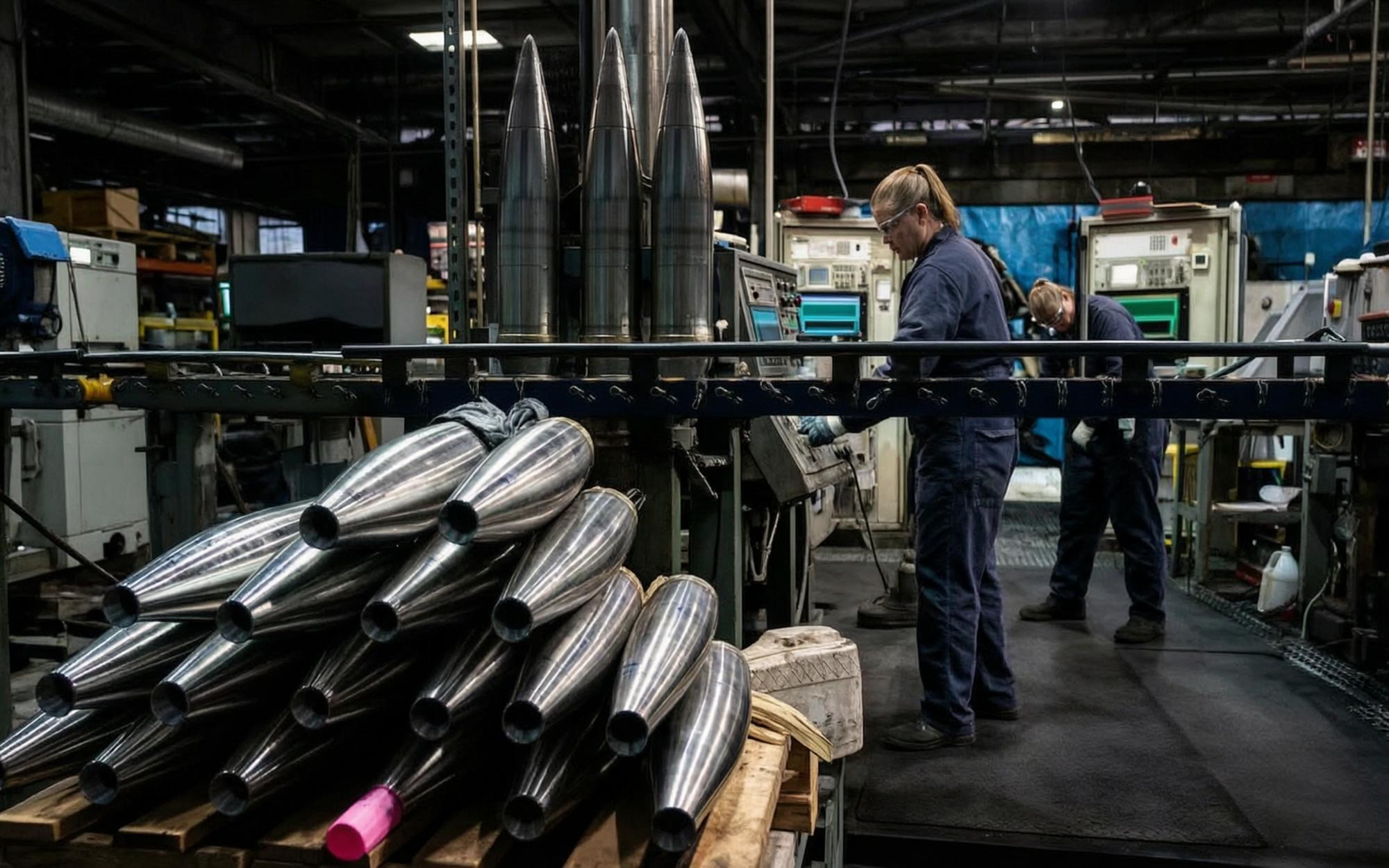
The U.S. Army’s grand promise to crank out 155-mm howitzer shells at record speed is sputtering into a slow-motion disaster.

A new Pentagon watchdog report confirmed what insiders have whispered for months—the Army’s much-hyped production ramp-up is being strangled by manufacturing failures, bureaucratic missteps, and questionable contracting decisions.

The Department of War Inspector General’s findings show that the Army has fallen miles short of its goal to produce 100,000 rounds a month by October 2025.

Instead, by March 2026, production limped along at a mere 36,000 per month—barely a third of the target.

The bottleneck centers on the production of metal parts for 155-mm projectiles, the backbone of modern artillery firepower. The process starts at a metal parts factory before moving to another facility for explosive packing.

But if your factories can’t forge enough metal shells to begin with, no amount of later-stage production magic will save you.

That exact problem has crippled the Army’s new multimillion-dollar facility in Mesquite, Texas.

Despite $469 million invested and high expectations from the Universal Artillery Projectile Lines plant—run by General Dynamics Ordnance and Tactical Systems—the facility has not produced a single batch of projectiles meeting U.S. specifications. Not one.

The Mesquite operation was built to symbolize the Army’s push into next-gen production, boasting “modern manufacturing practices, high levels of automation, and digital data capture ability.” Instead, it’s become a monument to overpromising and underdelivering.

The Inspector General report bluntly noted that the Army’s Capability Program Executive Ammunition & Energetics (CPE A&E) “issued the contract and accepted the risk associated with purchasing and adapting unique production equipment that had not been proven.”

Leadership gambled on untested tech, and taxpayers are holding the bag.

Lawmakers Want Answers After Artillery Shell Explosion Over Highway

In a move that smacks of bureaucratic desperation, engineers in Mesquite tried to retrofit manufacturing lines made for the 1958-era M107 shell to produce newer M795 variants.

That attempt, apparently, fell far short of the more demanding tolerances required today. The result? Millions spent, zero shells that pass muster, and a backlog that continues to grow.

The Inspector General report also pointed to concerns from Army officials about oversight and accountability.

At a time when every artillery round matters, Army Contracting Command ignored calls to open competition for the Mesquite contract, locking in General Dynamics and cutting off potential rivals who might have actually delivered results.

Meanwhile, factories in Scranton and Wilkes-Barre, Pennsylvania, and Ingersoll, Canada, have scrambled to compensate for Mesquite’s failure.

But even with their efforts, production remains throttled. That’s especially problematic since Ukraine’s war has devoured U.S. munitions stockpiles, leaving American readiness in question.

The 2022 congressionally mandated modernization plan was supposed to fix all this.

Ammo Production Meltdown: Pentagon Watchdog Slams Failure to Meet 155-mm Shell Targets
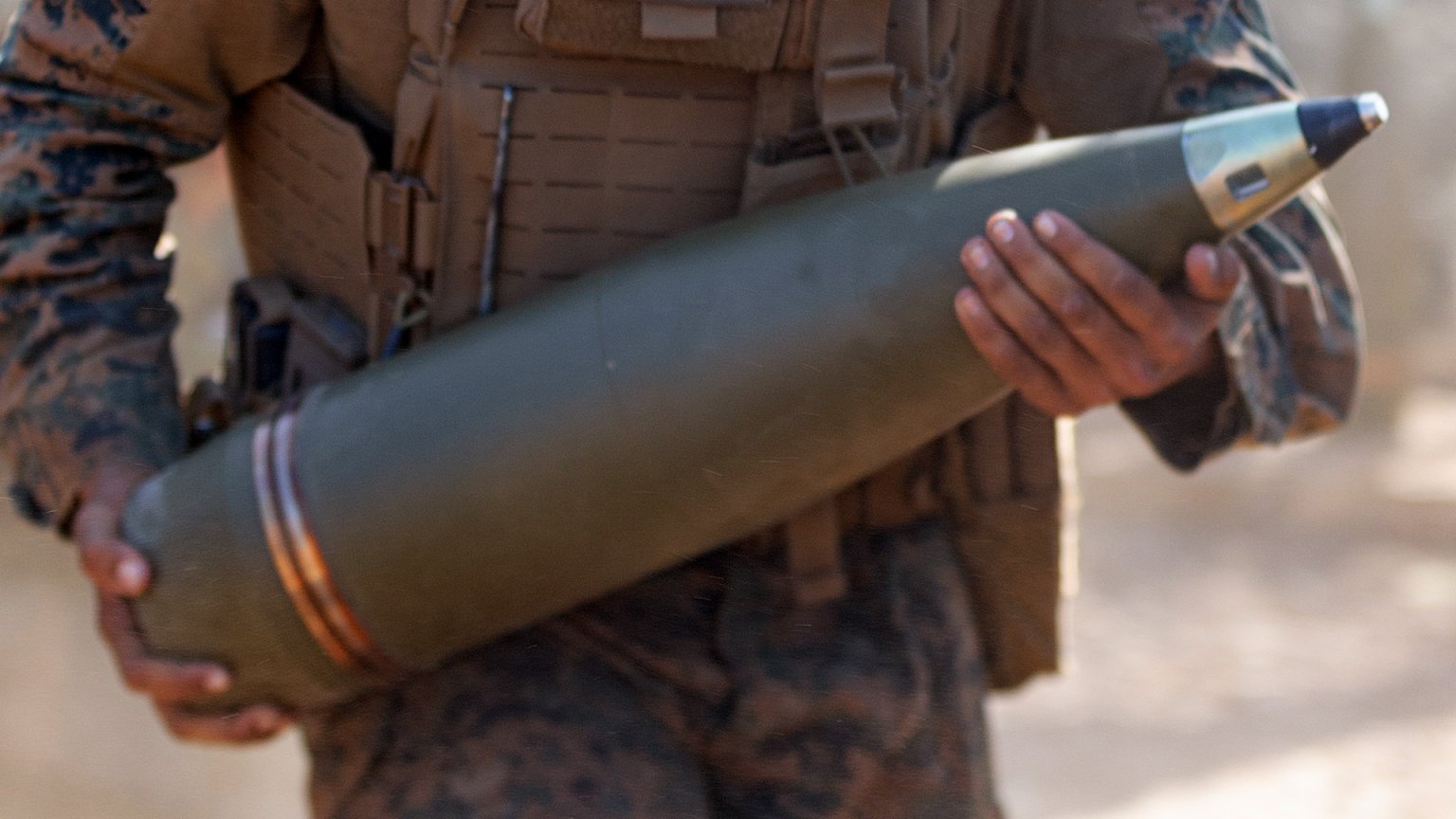
A Marine carries a 155 mm shell during artillery training in 2024. A Texas factory built in 2024 to build 30,000 shells per month has so far built zero. Marine Corps photo by Cpl. Migel A. Reynosa.

The War Department rolled out a strategy to ramp artillery production and restore America’s manufacturing edge. Yet, the reality paints a grim picture of mismanagement and lack of urgency.

There has been some progress in capacity elsewhere. Modernization of the Iowa Army Ammunition Plant, combined with new facilities in Kansas and Arkansas, could eventually boost production to 140,000 rounds by late 2027.

However, the IG’s report makes clear: optimism doesn’t fill shell casings, and sloppy execution has consequences that ripple through the warfighter ranks.

What’s worse, the IG suggested the Army might seek a refund—an embarrassing indicator that the government got next to nothing for its half-billion-dollar investment.

While refunding taxpayers might sound righteous, it doesn’t fix the fundamental issue: America’s inability to surge munitions output at scale when our allies and our own forces need it most.

The Trump-era call to reinvigorate the U.S. industrial base was precisely meant to avert this kind of fiasco. Sadly, under current bureaucratic leadership, that vision has been buried under inefficiency and risk aversion.

When Trump and Secretary of War Pete Hegseth talk about bringing back “real industrial power,” this is exactly what they mean—cut through red tape, hold contractors accountable, and rebuild a war machine that can actually win.

Right now, the Pentagon’s failure on ammo production is more than a procurement issue—it’s a strategic liability.

And unless the War Department acts decisively to enforce accountability and restore serious oversight, American artillery production risks becoming yet another costly cautionary tale in the age of endless excuses.

News

Tom Homan Fires Back After ICE Traffic Stops Halted, Slams Misleading Leftist Narrative [WATCH]

The Department of Homeland Security temporarily paused most non-urgent Immigration and Customs Enforcement vehicle stops following an officer-involved shooting in Maine, prompting concern among ICE personnel that the move could slow immigration enforcement.

Border czar Tom Homan, however, said the directive is not a permanent policy change and insisted the agency remains prepared to continue its operations, as reported by Townhall.

The temporary pause followed an incident in Biddeford, Maine, involving 26-year-old Joan Sebastian Guerrero, an illegal immigrant from Colombia.

Video released on July 14 showed part of the ICE operation.

According to the Department of Homeland Security, Guerrero was shot after he allegedly attempted to flee while federal agents were trying to stop a vehicle that had left a residence under surveillance.

Authorities said he reportedly tried to run over federal agents during the encounter.

The incident prompted DHS Secretary Markwayne Mullin to order ICE to suspend nearly all non-urgent vehicle stops while the situation is reviewed.

The directive quickly sparked concern among immigration officers who rely heavily on traffic stops during enforcement operations.

Posts circulating on social media stated that Senator Susan Collins confirmed that Mullin personally issued the order to suspend non-urgent vehicle stops.

Critics argued the decision could reduce the agency’s ability to arrest illegal immigrants who would otherwise be encountered during routine enforcement efforts.

Fox News correspondent Bill Melugin reported that multiple ICE sources expressed frustration with the temporary directive.

“In speaking with numerous ICE sources today, most are expressing frustration that this will cause their arrest numbers to fall off a cliff while in effect,” Melugin wrote.

“A large majority of their arrests involve vehicle stops. They will now largely have to rely on court arrests, detainer…”

Despite those concerns, Homan said reports suggesting ICE operations would be significantly disrupted were overstated.

Appearing on Fox News, Homan rejected speculation that recent officer-involved shootings were the result of inadequate training among ICE personnel.

“The officers involved in these shootings are well-trained. They’re not a part of that new hires […] I asked ICE to give me the training curriculum for the academy.…”

Homan also emphasized that the suspension is temporary and does not represent a long-term shift in enforcement policy.

“It’s not a policy change, it’s a temporary pause […] I think it’s gonna be a short pause, and I’m confident ICE is well-trained in vehicle stops, and you’re gonna see us keep moving forward”

He also disputed claims that ICE arrest numbers would significantly decline because of the temporary order.

“Let me say this too: I hear a lot of noise, this is going to affect ICE arrests, and it’s not going to”

Homan explained that ICE agents often have the intelligence necessary to apprehend illegal immigrants before they ever enter a vehicle, reducing the need for traffic stops in some cases.

“We know vehicle assaults are up 3,400 percent. So, if we can arrest that alien outside that vehicle and take that two-ton weapon away from them, that’s good in some instances.”

According to Homan, ICE officers remain capable of carrying out immigration enforcement while minimizing unnecessary risks to agents and the public.

He indicated that vehicle stops will likely resume after the temporary review period concludes.

The pause comes as ICE continues immigration enforcement operations nationwide amid increased attention on officer safety.

While some agents worry the temporary directive could complicate day-to-day operations, Homan maintained that ICE’s training, intelligence gathering, and operational planning will allow the agency to continue making arrests even while the temporary restrictions remain in place.

News

Thousands of Soldiers Swelter in Hawaii Barracks After Water Plant Breakdown

Roughly 4,000 soldiers stationed in Hawaii are roasting in their barracks without the comfort of air conditioning after a mechanical failure knocked a key water treatment facility offline, crippling cooling systems across several Army bases on the island of Oahu.

The breakdown has left troops sweating through tropical heat as engineers scramble for specialized parts that could take weeks to arrive.

Army officials confirmed that the severe equipment failure at an underground water treatment plant on July 10 has slashed water availability for Schofield Barracks, Wheeler Army Airfield, and several nearby installations.

With only one deep well pump left running, base authorities were forced to shut down water-cooled air systems to conserve what little water remains available for critical functions.

Nathan Wilkes, spokesperson for U.S. Army Garrison Hawaii, explained that the decision was unavoidable. “With only one deep well pump operating, we must keep those chillers offline to preserve essential water service,” Wilkes said.

“The chiller systems alone make up nearly 40% of normal daily water demand.” In short, the troops can either have air conditioning or working toilets—but not both.

Family housing for officers and dependents, conveniently, remains fully functional, meaning only enlisted warriors are bearing the brunt of the problem.

Soldiers have been told they can open windows and use fans or any unit-issued portable air conditioning gear they can find, but widespread discomfort remains the reality.

August humidity is creeping higher, and while forecasts predict temperatures in the 80s, it feels much hotter in stagnant barracks with no airflow.

Leaders across Oahu’s Army community are in damage-control mode, offering temporary relief spots in recreation and conference facilities—essentially makeshift cool zones for overheated troops.

“Leaders are engaged with their units to provide what relief they can while repairs continue,” Wilkes said diplomatically, though many stationed soldiers call it a patch-job solution that does little after long, sweaty days in the field.

The big question gripping the affected installations is how long this misery will last. For now, there’s no firm answer.

Repairs require hard-to-find replacement parts shipped across the Pacific, each needing careful calibration before being reinstalled in the fragile underground pump system. The hardware is both old and buried deep, which makes access painfully slow and repairs even slower.

Army engineers have begun work but remain cautious about projections.

“Repairs to the deep well pumps are underway, but we cannot provide a precise timeline for repairs at this time,” said Wilkes. That’s bureaucratic speak for “this might take longer than anyone wants to admit.”

The cause of the malfunction still isn’t crystal clear, but officials believe the decades-old equipment simply gave out under strain, worsened by recent ventilation system maintenance and the island’s oppressive summer heat.

Heat plus aging infrastructure—a recipe for breakdown that’s become far too common across the service’s global footprint. It’s another reminder that the War Department’s maintenance funding can’t keep up with the realities of overworked and under-serviced facilities.

For the time being, soldiers still have running water for drinking, sanitation, and food prep, which keeps the situation from reaching full-blown crisis level. Sinks, toilets, and showers work fine.

The 25th Infantry Division is also employing portable water systems to provide extra support, ensuring hydration stays top priority. Still, the thin comfort of a cold shower isn’t much consolation after a day of living in stifling quarters that feel more like an oven than a barracks.

Officials have ordered strict water conservation measures across affected bases. All personnel—troops, families, and civilians alike—are being told to report any wasted water they notice, like sprinklers left running.

“Military Police and the Directorate of Public Works are actively working these reports,” Wilkes said, emphasizing that any leaks or carelessness could further prolong the misery.

While the official line is calm and measured, morale around Schofield and Wheeler is sinking fast. Many soldiers see the situation as yet another example of logistics shortfalls and system neglect hitting the grunts first.

The officers stay cool while the rank and file bake, waiting on bureaucratic supply chains to fix a critical infrastructure failure no one saw coming—or maybe just no one prioritized.

For a military force that drills for combat readiness in every environment, even the tropics, this kind of oversight doesn’t inspire confidence.

It’s one thing to tough it out in deployment zones, but sweating in a crippled barracks stateside because of broken infrastructure feels entirely different. And as the hours stretch into days, frustration is growing almost as fast as the thermometer readings.

This breakdown in Hawaii offers a snapshot of a much broader issue. Across the force, too many installations are running on outdated systems that can barely support peacetime operations, much less surge capacity during emergencies.

The Hawaii outage is just the latest casualty in a long war against bureaucratic neglect of the facilities our troops depend on daily.

Until those replacement parts arrive and the deep well pumps start humming again, soldiers in Oahu will keep sweating it out, fans on full blast, hoping the guys at the War Department can finally deliver more than speeches about modernization.

Because at the end of the day, troops don’t need promises—they need working air conditioning.

News

Illegal Immigrant Gets Slap on the Wrist After Killing Three in California Semi Crash [WATCH]

A California courtroom has yet again shown how broken the justice system can be under Democrat leadership.

An illegal immigrant who killed three innocent people in a horrific semi truck crash will serve less than five years behind bars, proving that Gavin Newsom’s California continues to prioritize leniency over accountability, as reported by The Post Millennial.

The case has sparked fresh outrage from those who believe the lives of law-abiding citizens are being devalued by a system consumed with political correctness.

The tragedy unfolded when the driver, an illegal immigrant operating a semi truck, plowed straight into a line of stopped vehicles without attempting to brake or swerve.

Witnesses were stunned by the lack of reaction from behind the wheel.

“It didn’t stop. It didn’t swerve. It didn’t make any kind of maneuvers. It just went straight in.”

Three lives were lost in an instant. Families have been left to pick up the pieces while the man responsible faces less than five years in prison, a punishment that many consider an insult to the dead and an indictment of California’s justice system.

Critics argue that this decision reflects a disturbing pattern in a state run by leaders more interested in protecting non-citizens than in delivering justice for Americans.

Governor Gavin Newsom, who never misses an opportunity to moralize about “compassion” and “equity,” has presided over a state that constantly bends the rules for those who enter the country illegally.

The result is a growing list of tragedies that leave citizens dead, families devastated, and offenders barely punished. This latest sentencing will do little to change that narrative.

For the victims’ families, the pain is compounded by a sense of betrayal. Many Californians feel abandoned by a government that prioritizes sanctuary policies and lenient sentencing over the rule of law. The fact that a man who entered the country illegally and caused three deaths will be walking free in less than five years is almost too much for grieving families to bear.

Supporters of tougher immigration enforcement say this case shines a light on the disastrous consequences of California’s open-door approach.

Sanctuary city laws restrict law enforcement from cooperating with federal immigration officials, meaning dangerous individuals often remain in communities where they can cause more harm.

This policy failure has become a deadly pattern under liberal leadership.

In any truly just system, reckless driving that kills three people would carry a severe sentence regardless of the perpetrator’s immigration status.

But in today’s California, the rules change when politics and ideology get involved. Prosecutors and judges operating in a culture of leniency and identity politics continue to hand out soft penalties while victims are left without closure.

Law enforcement officers across the state are frustrated as well. They are forced to work within a broken framework where their hands are tied by progressive regulations.

Some have expressed quiet disgust at seeing violent offenders, including illegal immigrants, receive light sentences or be released early under Newsom’s so-called reform initiatives.

The message sent by this sentencing is clear. In California, you can cross the border illegally, kill innocent people, and still expect mercy.

Ordinary citizens who dutifully follow the law are left wondering when the state will start protecting them instead of coddling those who break its laws.

This incident has reignited debate over America’s immigration policies nationally as well. Conservatives are using this case as another example of what happens when border enforcement and local accountability disappear in favor of political grandstanding.

Meanwhile, liberal leaders in the state continue to double down on the very policies that make these tragedies possible.

As families mourn their loved ones, the justice system’s failure to deliver a meaningful punishment only deepens the wound.

California is now living proof that progressive ideology has real-world consequences measured not in headlines but in lives lost.

If there is any silver lining, it may be that voters are finally waking up. Each case like this shakes public faith in leadership that values ideology over safety.

California families deserve better. They deserve a state that upholds justice, enforces laws, and puts the rights of its citizens above those who have no legal right to be here.

News

U.S. to Launch Drone Warfare Academy in Morocco as Strategy Turns to Local Empowerment

The United States is moving to strengthen its footprint in North Africa — not by boots on the ground, but by building brains behind the drones.

The War Department’s Africa Command announced plans to open a full-scale “drone academy” in Morocco as part of a broader shift in strategy across the continent.

The Africa Multidomain Training and Experimentation Center, slated to open in Tan-Tan, Morocco by 2030, will serve as the beating heart of that mission.

Under a freshly signed memorandum of understanding with the Royal Moroccan Armed Forces, U.S. military leaders are betting on a future where America’s partners in Africa can fight terrorist groups more effectively on their own turf.

The move comes as U.S. Africa Command, or AFRICOM, tightens its operational focus.

Recent months have seen significant troop withdrawals from Niger and Nigeria, signaling a pivot away from pervasive on-the-ground deployment toward empowering local allies with the technology, training, and autonomy to take the lead.

In simple terms, Washington is handing off the steering wheel but keeping its hand close to the ignition.

Pentagon Readies High Energy Laser Test to Take Down Drones
A resupply drone takes off during a test flight at the Joint Multinational Readiness Center near Hohenfels, Germany, Feb. 18, 2026. (Sgt. Glenn Brennan/U.S. Army National Guard)

An AFRICOM official told Task & Purpose that the academy’s goal is to “train African forces so they can conduct these operations on their own.”

That’s the latest reflection of an American strategy of “empowerment over dependency,” a phrase repeated by AFRICOM commanders for more than a year.

Instead of endless deployments, the U.S. is now exporting its expertise — particularly in drones and surveillance technologies that deliver results.

The drone academy and its surrounding training complex will include an experimentation hub, an innovation center, and a multi-domain training range.

The site is expected to bring together U.S. troops, contractors, and academics to test and refine new drone technologies while boosting local capability among trusted African allies.

Trump Sons Back U.S. Drone Startups to Fill Battlefield Gaps
Marine Corps Cpl. Calvin Burke, an intelligence specialist assigned to the 31st Marine Expeditionary Unit, activates a small unmanned aerial system to survey the defensive line for opposing forces during a simulated assault and seizure at Glen Airfield, Queensland, Australia, July 2025. The War Department has undertaken the drone dominance initiative to put more drones into the hands of warfighters.

Drone warfare has already proven to be a game-changer in counterterrorism operations across the Middle East, and now it’s being unleashed in Africa.

These systems offer real-time intelligence, precision targeting, and persistent surveillance — perfect tools for tracking militant groups scattered across the vast deserts and jungles of West Africa.

AFRICOM leader Gen. Dagvin Anderson praised the initiative, saying, “The Africa Multidomain Training and Experimentation Center will increase readiness and advance capabilities of both nations.”

He highlighted the benefits for both U.S. and African war industries, emphasizing collaboration on emerging technologies. The partnership, he said, offers a new model for innovation — one where American and African industries share knowledge and develop adaptable solutions for irregular warfare.

The academy will also tie directly into ongoing multinational exercises like African Lion, the annual military training event that brings together dozens of nations each year.

The 2027 iteration of African Lion will serve as an official “proof of concept” for the Morocco center, effectively testing realism-based scenarios involving drones, multi-domain operations, and combined-force tactics.

In previous African Lion exercises, troops have already been experimenting with drones like the FPV (first-person viewer) models, long-range precision drones, and even the ‘Bumblebee,’ a multi-rotor mini-UAS designed to collide with enemy drones mid-flight.

Pentagon Launches First ‘Top Drone’ School to Sharpen Drone Operator Skills
As the Pentagon looks to field more drones to military units, it’s also working to build up the organizational and training infrastructure needed to support that push. (Staff Sgt. Dylan Bailey/U.S. Army)

The past few years have shown how small, inexpensive, and adaptable these aerial platforms can be when used smartly — something the U.S. military wants its partners to understand inside and out.

Earlier, during the 2026 exercise, the War Department led a three-day crash course in unmanned aerial systems followed by a “drone academics” program.

That course trained Moroccan, Ghanaian, and Nigerian troops on comprehensive drone operational tactics, from reconnaissance to mission planning and execution. The feedback, according to officials, was overwhelmingly positive.

What’s clear is that the U.S. is no longer interested in playing endless global babysitter. After decades of entrenched presence around the world, the military is adopting a leaner, smarter approach that emphasizes partners doing their part.

In Africa, the idea isn’t to withdraw from the fight — it’s to arm the right friends with the technological edge to win it.

Critics may call this a drawdown, but to those watching closely, this is strategic conservation of power. By training reliable allies and building regional competencies, Washington keeps influence intact without draining its forces or resources.

That’s a page straight from President Trump’s America First playbook — strengthen allies where it benefits America most, and cut loose where it doesn’t.

Morocco, already one of the most stable countries on the continent, is a smart partner for this new experiment in regional security.

With its proximity to both Europe and the Sahel, and a long partnership with U.S. military training programs, the kingdom offers strategic location, leadership reliability, and regional reach.

When the academy opens its doors, it will mark more than another military base — it will represent a turning point in U.S. engagement across Africa.

Instead of spreading thin across endless commitments, America will be centralizing its strength and innovation, teaching our allies to take the lead in fighting terror.

The future of military power on the continent won’t just be measured in troop numbers, but in how effectively American-trained drone operators can keep tabs on the enemy and strike when it counts.

That’s a future where American ingenuity guides the action, even when American uniforms aren’t in the field — and that’s exactly the kind of forward-thinking strategy the War Department needs to keep America dominant and safe.

News

Inflation Slumps Hard as June Prices Tumble in Biggest Drop in Six Years [WATCH]

American households finally caught a break in June as inflation cooled far faster than anyone in Washington expected.

The newest report from the Department of Labor revealed that consumer prices fell by 0.4 percent from May, marking the sharpest drop since 2020 and offering some long-awaited relief to families battered by years of price hikes under the Biden era.

Compared with last year, prices remain 3.5 percent higher, but that increase was still smaller than economists anticipated.

They had projected a mild 0.1 percent monthly dip following May’s surge of 0.5 percent.

The actual drop was a genuine surprise and signaled that inflationary pressures may finally be loosening.

Core prices, which exclude the volatile costs of food and energy, were flat for the month.

That represents the best core reading since early 2021, showing that price growth across much of the economy has largely leveled off.

Over the past year, core costs are still up 2.6 percent, but even that figure is a relief for households used to endless increases in the post pandemic years.

When factoring in the last three months, the overall consumer price index has been running at an annualized rate of about 2.8 percent.

This is close to the Federal Reserve’s long standing inflation target and could dramatically change the tone of the next monetary policy meeting.

The decline in June came largely thanks to a massive pullback in energy prices. Gasoline costs plunged 9.7 percent for the month following a steep rise in May.

A steady slide in oil prices and expanded domestic production helped push those numbers lower, providing much needed breathing room for commuters and consumers alike.

Energy in general fell 5.7 percent in June, reversing months of increases.

Even grocery bills, which have hammered families during the Biden administration, grew only 0.2 percent for the month and 2.7 percent from a year ago.

Restaurant prices ticked up at the same small pace, signaling that food inflation is cooling. For comparison, those prices were skyrocketing yearly not long ago as transportation and input costs spiraled out of control.

Core goods, which exclude food and energy, dropped 0.2 percent.

Over the past year, they barely grew, up less than one percent.

The cost of services excluding energy held steady in June, while services other than rent fell slightly.

That was the best performance for that category in over three years and another sign that inflation is no longer running wild.

Housing costs, one of the most frustrating sectors for average Americans, barely budged.

Shelter prices rose just 0.1 percent, the smallest increase in five years.

Annual rent growth held at 3.3 percent, and the measure of homeowners’ equivalent rent edged up by only 0.2 percent.

For renters and buyers who have watched housing costs balloon since 2021, this might signal that the cooling trend will continue.

Consumers even saw relief in areas that had been stubborn holdouts. New car and truck prices held flat, while used vehicles fell 0.2 percent in June and are now down more than 2 percent from last year.

Insurance costs for motor vehicles dropped two percent.

Meanwhile, apparel prices fell by 0.6 percent and medical care costs ticked slightly lower.

Technology products also saw declines despite mainstream suggestions that artificial intelligence chip demand would drive costs skyward.

Computer prices fell 0.7 percent, and smartphone prices slipped 0.8 percent, proving that innovation and competition can often be better inflation fighters than bureaucratic intervention.

WATCH:

This strikingly good inflation report effectively takes any notion of a summer rate hike off the table.

Wall Street had been factoring in a real possibility that the Federal Reserve might raise interest rates again if inflation stayed hot.

Now policymakers appear to have little justification for tightening credit further.

Several Fed officials had admitted that another increase would only come if price data demanded it.

The broader economic message here cuts directly against the alarmists who claimed that tariffs enacted under President Trump had added to inflation.

The data released this week paints the opposite picture. Core goods prices, which would have been affected most by foreign trade policies, show virtually no sign of upward pressure.

That reality demolishes the left’s talking point that tariffs are a “national sales tax.”

Democrats made that claim throughout the 2024 campaign as part of their anti tariff rhetoric, but the numbers now prove them wrong.

For conservatives, this report validates what common sense and economic history have long indicated.

Strong trade enforcement, energy independence, and a manufacturing renaissance can stabilize prices better than globalist policies or reckless government spending.

When Americans produce, supply chains strengthen, and dependence on foreign suppliers eases.

Inflation falls not because of bureaucratic wizardry but because of real productivity and competition.

Yes, prices remain higher than they were before Joe Biden took office, but this unexpected decline in June shows that America can still correct course when sound policy replaces political gamesmanship.

The markets responded positively to the news, and confidence continues to climb among consumers who have watched their paychecks stretch just a bit further for the first time in years.

The message from this report rings loud and clear across the heartland.

When energy becomes affordable, when Washington stops overreacting, and when American industry leads again, the economy improves.

The decline in inflation is not a miracle; it is proof that reality always trumps the talking points of career bureaucrats and liberal economists.

News

Trump Replaces Strait Protection Fee With Massive Gulf Investment Pledge [WATCH]

President Donald Trump has decided to scrap his proposed twenty percent fee on commercial ships passing through the Strait of Hormuz, opting instead for what he calls “Trade and Investment Deals” from Gulf nations eager to pour money into the American economy.

The move highlights Trump’s signature blend of strength and deal making that puts America first while delivering results without burdening taxpayers.

The president explained that the change comes as oil and natural gas shipments have stabilized in the region, following recent U.S. action that reopened the crucial waterway for global energy flow.

Trump declared on Truth Social that “Oil is flowing like never before, thanks to the awesome Power of the United States Military.”

He added that the Strait remains open to all ship traffic except Iran, blasting Tehran’s “lying, violent, malicious leadership” that he said has led Iran down “the path of total destruction.”

While Trump is backing away from the shipping fee, he made clear that his administration will maintain a full blockade on Iranian vessels.

“We will therefore have a FULL Blockade, but only on Ships coming to and from Iranian ports, or carrying anything have to do with Iranian cargo,” Trump said.

His emphasis on selective enforcement shows his intention to choke off Iran’s economy while maintaining trade for friendly partners.

The new investment-based approach comes after extensive talks with key Middle Eastern partners, leaders who expressed willingness to invest “at record amounts” in the United States.

Trump said the move ensures that America still gains financial benefits for protecting international shipping lanes that serve the entire world without the need for an outright fee.

“They’re investing, and they’re getting a return on their money, and it’s good,” he noted, “but they’re going to be making massive investments into the United States and I like that much better.”

WATCH:

This trade-focused adjustment once again demonstrates Trump’s transactional approach to foreign policy.

Rather than endless global policing with no return, he aims to make America’s strength pay dividends.

The Gulf states, flush with oil wealth, can reinvest into U.S. industries that generate jobs and opportunity at home.

The context for this shift has been escalating tension between Washington and Tehran.

Over the weekend, U.S. and Iranian forces exchanged missile and drone fire. Tehran, once again, falsely claimed sovereignty over the Strait of Hormuz, a vital waterway connecting the Persian Gulf to global markets.

The United States swiftly responded, and by Monday it launched precision strikes against Iranian military targets.

By Tuesday, Trump told reporters that Iranian forces had been “very much destabilized.”

He described Iran as a country that has “lost almost all of its military capability.”

In characteristic fashion, he reminded the world that he had given Tehran a fair chance to negotiate a peace deal.

“I gave them a chance. I wanted to give them a chance at making a deal,” Trump said.

But after what he described as Iran’s decision to “shoot first,” he made it clear the regime had made “a big mistake.”

The decision to pivot from fees to investment deals also reflects strategic patience.

Trump wants to keep America out of costly, open-ended global entanglements while maintaining full dominance where U.S. interests are at stake.

Instead of sending invoices to allies or enemies, he is crafting partnerships that bring money flowing back into domestic infrastructure, technology, and energy projects.

For years, critics have argued that America foots the bill for protecting international shipping lanes, often to the advantage of economic competitors like China.

Trump’s announcement suggests those days may be fading.

The United States will continue to guarantee stability in the Gulf, but on terms that also reward American workers and businesses.

The president told reporters in the Oval Office that he disliked the concept of a direct fee.

“I don’t like the concept of a fee, but at the same time, it’s not fair that we’re protecting this strait for the entire world, for China and everyone,” he said.

That simple statement cuts to the core of Trump’s long-standing foreign policy: America can lead, but leadership is not charity.

Oil markets reacted immediately to the series of events, first spiking on fears of disruption, then calming as Trump’s message of control and stability took effect.

FOX Business reported that oil prices plunged to early March levels by the end of the day as confidence returned to global shipping routes.

In essence, Trump’s announcement highlights a shift from being the world’s unpaid security guard to acting as a strategic partner that demands and secures long-term investment in America.

The Gulf capitals appear ready to meet his terms.

The result is a show of American power that turns regional security into tangible economic gains, proving once again that Trump’s style of deal making merges diplomacy, defense, and dollars into one coherent strategy.

As Iran grows weaker and the U.S. position in the Middle East grows firmer, this development strengthens Trump’s case that peace through strength still works.

The Strait of Hormuz remains open, America’s allies are investing billions, and Iran is isolated.

All of that reflects a strategy that puts American interests first without apology.

News

Millionaires Flee New York as Socialist Taxes Spark Financial Exodus [WATCH]

New York’s socialist movement is learning a hard economic lesson: you can only squeeze taxpayers so long before they pack their bags and leave.

The latest numbers show that the wealthy are doing exactly that, and the consequences are hitting the state’s socialist dreamers right in the tax base.

A new report from the Citizens Budget Committee revealed an alarming shift. In 2010, New York was home to 12.7 percent of America’s millionaires.

Today, that share has plunged to just 8.7 percent.

That is not a rounding error; that is a collapse.

And while the socialists cheer for “equity,” the real result is emptier coffers and shrinking opportunity.

Even more worrying for those still trying to fund lavish state programs, the report shows that high earners are leaving the state much faster than low earners.

The people who shoulder the largest portion of the taxes, and therefore fund government services, are packing up for friendlier territory.

That reality puts the Democratic Socialists of America and politicians like New York City Mayor Zohran Mamdani in quite the political bind.

On one hand, they have built their campaigns on vilifying successful people.

On the other, they desperately need the money those same people generate through taxes to pay for social programs and handouts.

Mamdani has openly pushed for a two percent hike in taxes on millionaires.

The New York City DSA chapter has also proposed raising taxes on anyone making over $300,000 a year, as well as on capital gains and inheritances.

To them, “tax the rich” is a slogan and a strategy rolled into one.

Unfortunately for them, math is not on their side.

New York already ranks near the top nationwide in taxes collected as a share of income.

That should be no surprise.

The state’s wealthy residents face the highest combined federal, state, and city tax burden anywhere in the country.

If the DSA’s strategy were working, then New York should be swimming in cash.

Instead, it is bleeding revenue.

WATCH:

Economists Joshua Rauh and Ryan Shyu have shown that even in progressive strongholds like California, raising taxes on high earners triggers a flight of wealth.

In one year after California’s income tax hike, almost one percent of top earners left, taking their incomes with them.

That meant lost taxable income, lost sales, and ultimately lost revenue despite all the rhetoric about “fairness.”

Another study by Enrico Moretti and Daniel Wilson found that top scientific talent follows much the same pattern.

A one percent increase in after-tax income draws about two percent more star scientists into a state, while a tax increase has the opposite effect.

Talent, like capital, goes where it is treated best.

The numbers in New York are already stark.

Between 2019 and 2023, the state lost more than $7 billion of annual taxpayer income to Fairfield County, Connecticut.

Another $7 billion migrated south to Palm Beach County, Florida. That is not ideological speculation.

Those are IRS migration data points showing what millions of New Yorkers already know: the wealthy are escaping the socialist squeeze.

Some progressives even admit it and cheer. Seattle’s socialist mayor, Katie Wilson, mocked concerns over rich residents leaving after her city imposed higher taxes.

“The ones that leave? Like, bye,” she said flippantly, as if watching prosperity walk out the door is some sort of political victory.

There is a cynical logic to that view. By chasing away wealthier residents, leftist politicians secure their voter base.

Economists call this pattern “the Curley effect,” named after Boston Mayor James Michael Curley, who intentionally drove out the well-off to lock in electoral power among poorer voters who depended on him.

In the short term, that kind of politics can work. In the long term, it kills the city.

The history is clear. Once you lose your tax base, the lights dim fast.

Fewer wealthy taxpayers means smaller budgets, fewer services, and higher costs for everyone left behind.

But the socialists at city hall appear uninterested in economic reality. Their vision is one where ideology trumps practicality and taxes can always be raised just one more time.

A century ago, Joseph Stalin promised the Soviet people “socialism in one country.”

New York’s left-wing leaders seem to have borrowed that line, but today they are trying to build socialism in one city.

The problem is simple but fatal for their vision.

The very people they expect to fund their utopia have the freedom to go somewhere else, and they are exercising that freedom faster than ever.

Judge Glock, senior fellow at the Manhattan Institute, summed it up best by pointing out that the mobility of Americans will always make socialist dreams financially impossible in a free society.

The rich are mobile, the states compete for talent, and the winners tend to be the ones that understand that success should be rewarded, not punished.

Until New York’s socialists learn that basic truth, they will keep running in circles.

Their tax base will keep shrinking while they complain about “inequality.”

And before long, their dream of a socialist paradise will look like every other failed experiment in redistribution, only with higher rent and colder winters.

News

Justice Barrett Delivers Haunting Testimony About Bulletproof Vest and Attacks on Her Family [WATCH]

When Supreme Court Justice Amy Coney Barrett sat before Congress this week, the country got a jarring reminder of the dangerous and lawless climate America’s top jurists now face.

Her testimony was not about abstract threats or statistics.

It was personal, frightening, and heavy with the reality that mobs motivated by politics have stripped away even the most basic sense of safety for those on the highest court in the land.

Appearing alongside Justice Elena Kagan before the House Appropriations Subcommittee on Financial Services and General Government, Barrett laid out the grim truth that the justices are living under siege.

The Court is asking for a significant increase in its security budget, requesting $228.4 million for fiscal year 2027, nearly a ten percent rise from the previous allocation.

Their reasoning is as clear as it is horrifying.

Barrett recounted to lawmakers that only six weeks earlier, she and her family had become victims of a swatting attack.

“My teenage son opened the door and saw in our street full of police cars who responded to a false report of gun shots in my home,” she said.

“Supreme Court police explained that it was a false alarm, the police did not actually attempt to enter our home.”

WATCH:

The experience made real for her the surge of dangerous harassment aimed at the Court in recent years.

And this was no isolated scare. “Many of us including me have received threatening anonymous deliveries to harass and intimidate us,” Barrett testified.

In one case, the packages bore the name of a deceased judge’s son who was murdered by a deranged gunman. It is twisted intimidation meant to send a message of fear.

Barrett shared that she has now been issued a bulletproof vest by security officials, which she keeps at home in case she needs it.

“Imagine having to explain that to your child,” she said.

WATCH:

The remark hit lawmakers hard, cutting through the political posturing and revealing just how far society has fallen when a Supreme Court Justice must justify body armor at her kitchen table.

This is not the first time the public has seen threats against justices turn deadly serious.

In 2022, an armed man was arrested outside Justice Brett Kavanaugh’s home after allegedly plotting assassination.

He was driven by rage over a leaked abortion decision.

Since then, left wing activists have normalized protests outside justices’ residences, and the calls for violence have only grown louder on social media and at street demonstrations.

Barrett told Congress the statistics might “sound abstract,” but “being on the receiving end of them is not.”

According to the U.S. Marshals Service, there have been more than 500 active investigations into threats against federal judges already this year.

That compares to over 800 cases in 2025, meaning the numbers remain staggeringly high.

The situation is no mystery. For years, Democrat leaders and leftist agitators have stirred dangerous hostility toward the Court because they could not control its decisions.

Senate Majority Leader Chuck Schumer once shouted from the steps of the Supreme Court that justices Kavanaugh and Gorsuch would “pay the price” for their rulings.

That kind of rhetoric is an open invitation for unstable radicals to act out.

Even now, as the Court wrestles with critical cases on election integrity, the administrative state, and religious liberty, the threats keep coming.

Social media is filled with abuse targeting conservative justices, while Democrat operatives fan the flames by suggesting that every ruling they dislike is illegitimate.

It is an orchestrated campaign to undermine the judiciary and intimidate those who stand in the way of progressive power grabs.

As Barrett calmly detailed the measures she and her colleagues must take to stay alive, the contrast between her steadfast professionalism and the venom of her attackers could not have been starker.

She still shows up for work.

She still hears arguments and writes opinions with respect for the rule of law, even while anonymous cowards send twisted warnings to her home.

At its core, this moment speaks to the hypocrisy of the Left that constantly preaches about “protecting democracy” while turning a blind eye to mob harassment against anyone who defends constitutional principles.

If protecting democracy means endangering judges who do not rule their way, their movement has already lost its moral compass.

Congress now faces a clear choice. Lawmakers can approve the modest budget request and give the Supreme Court the needed resources to protect its members, or they can continue to ignore the danger and pretend that political violence is not happening.

The American people are watching, and the truth is beyond denial.

Justice Barrett’s testimony was a sobering snapshot of an America where standing up for the Constitution puts you in a crosshair.

The threats are real.


Scroll to Top