News

News

Epstein, Uranium One, Clinton Foundation, and the FBI: Mike Benz Connects the Dots

Former State Department official Mike Benz and television host Grant Stinchfield accused the FBI of longstanding misconduct and political favoritism during a recent on-air exchange, arguing that alleged cover-ups tied to the Clinton Foundation, the Uranium One deal, and the January 6 pipe bomb investigation demonstrate a systemic failure that Congress must address immediately.

Benz argued that multiple controversies often treated as separate scandals are, in his view, interconnected and rooted in institutional protection of powerful political figures.

He pointed to testimony involving convicted sex offender Jeffrey Epstein and his alleged role in the early formation of the Clinton Foundation.

“Well, my reaction to this is, these things are all related,” Benz said.

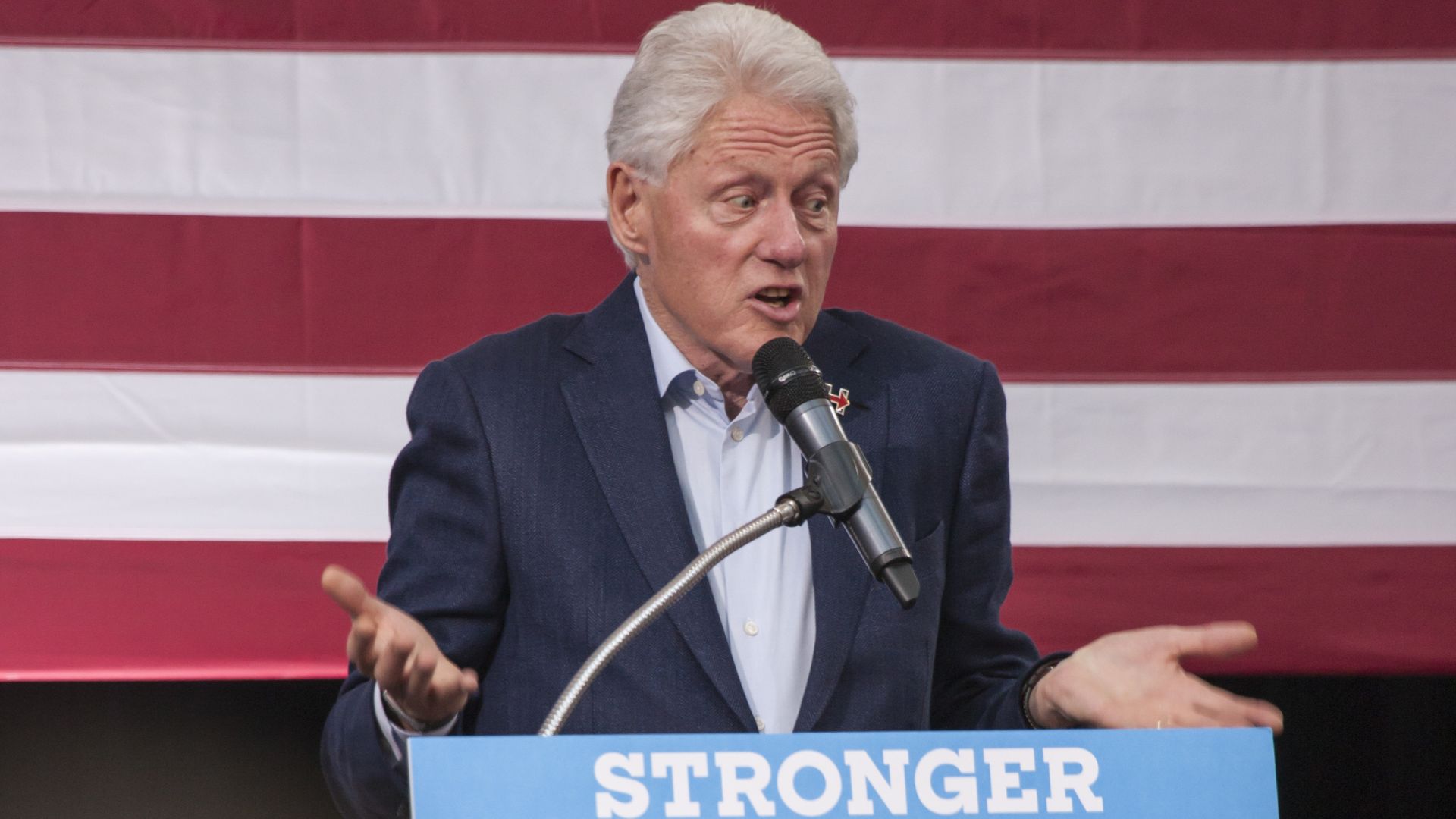
“It was actually Jeffrey Epstein who whose lawyer testified in court that Jeffrey Epstein helped establish the Clinton Foundation in the early 2000s right when Bill Clinton was leaving office and Hillary Clinton was beginning her Senate career and then into into the White House.”

Benz said Epstein’s access to the Clinton White House raised unresolved questions.

“This Jeffrey Epstein visited the Clinton White House 17 times during the Clinton presidency,” he said.

He then turned to the Uranium One controversy, referencing reporting and declassified materials tied to Sen. Chuck Grassley.

Benz said the FBI had an active criminal investigation into the deal involving the sale of 20 percent of U.S. uranium to Russian interests during the Obama administration’s “reset” with Russia.

“According to the New York Post the there’s a pay for play relationship that the Clintons evidently had surprise to no one what’s happening right now with the uranium? One scandal breaking open again with these newly declassified memos from Chuck Grassley that the FBI had an active criminal investigation into the Uranium One scandal that was 20% of all US uranium being sold off to Russia,” Benz said.

He noted that the transaction occurred while Hillary Clinton served as Secretary of State and sat on the Committee on Foreign Investment in the United States, which approved the deal.

Benz said donors connected to Uranium One subsequently contributed millions to the Clinton Foundation.

“It looked like a direct payoff of the foundation associated with the Secretary of State, so that the Secretary of State would bless the the sale of Uranium One since she sat on the CFIUS review board that authorized the sale,” Benz said.

Benz further alleged that the FBI investigation was halted internally.

“The FBI tried to investigate it, but was shut down by by Andy McCabe, the Deputy Director of the FBI, who would go on to play a significant role in russiagate, no less,” he said.

Stinchfield responded by linking those claims to other controversies involving federal law enforcement, including the raid on Mar-a-Lago and the lack of prosecutions tied to past investigations.

“So take the whole beginning of the show. We’ve got the FBI basically knew. FBI agent knew that the raid on Mar a Lago was bogus,” Stinchfield said.

“More evidence as you lay out that there was wrongdoing at every level. And I believe you could make an argument for criminal wrongdoing.”

He expressed frustration over the absence of consequences.

“And yet, here we are today, you and me talking again as we’ve been doing for two years or more, and we have no charges really to speak of,” Stinchfield said.

“We’ve got nothing. No one’s arrested, no no penalties, no retribution, nothing.”

Benz argued the issue stems from weak ethics enforcement within the bureau and cited the January 6 pipe bomb investigation as another example. He said the case was stalled for months despite available evidence.

“You know that that case was solved simply by retrieving the data that the FBI testified was corrupted,” Benz said, adding that phone carriers later told the House Judiciary Committee the data had not been corrupted when initially provided.

He questioned what consequences exist for agents who interfere with investigations.

“What are you going to do to ensure that the ethics rules around malfeasance is tampering with evidence?” Benz asked.

“What is the penalty? The criminal penalty for FBI agents who willfully sabotage criminal investigations to protect their friends?”

Stinchfield was skeptical Congress would act.

“I doubt they will get on it, because this just isn’t what they do,” he said.

“They don’t have the cojones to do it.”

Benz said the political moment is critical, citing unified Republican control across multiple branches of government.

“I think that there has to be a sense of urgency right now,” Benz said.

“If it’s not done in the next 10 months, it’ll never get done. And frankly, if you want to lose the midterms, this is how you do it.”

Stinchfield agreed, closing the segment by reiterating his frustration over the lack of accountability and thanking Benz for his analysis.

WATCH:

News

Ohio Democrat Busted For Felony Child Sex Crimes, Bodycam Released

Newly released police body-camera footage shows Whitehall City Council member Gerald Dixon being taken into custody on felony charges, including gross sexual imposition and compelling prostitution, as investigators allege he targeted teenage boys for sexual exploitation.

The arrest occurred around 5:30 p.m. Monday at Dixon’s home.

In the video, Dixon appears calm as officers place him in handcuffs.

One officer tells him, “We have warrants out for your arrest.”

Dixon responds, “Oh, do you?”

As officers escort him outside, Dixon asks, “What is this about please?”

An officer replies, “We’ll explain that to you in one second.”

During the encounter, Dixon appears surprised by the arrest and can be heard saying, “I mean, I’m a councilman, are you kidding me?”

Whitehall Police Chief Mike Crispen said the investigation centers on allegations that Dixon groomed teenage boys for sexual exploitation.

According to Crispen, the alleged conduct occurred before Dixon was elected to the Whitehall City Council. He said investigators have identified eight known victims so far, including one individual who is cognitively impaired.

Crispen said that victim was allegedly paid by Dixon for sex acts.

He added that investigators believe there may be additional victims as the case continues.

Following Dixon’s arrest, Whitehall police officers, along with the FBI, executed a search warrant at his residence.

Body-camera footage captures officers coordinating the search, with one officer stating, “Suspect is in custody, all units move to the house for entry.”

As officers prepared to enter the home, Dixon asks, “They aren’t going into my house are they? They have a search warrant for the house?”

Crispen said investigators seized electronic devices and artwork from the home as part of the evidence collection.

During the process, Dixon tells officers, “I’m home alone, can we make sure my doors are shut?” An officer responds, “Yeah, we’ll take care of that.”

Police then transported Dixon to the Whitehall Police Department for questioning.

Body-camera footage shows an officer explaining the next steps, telling Dixon, “You are going to go down to the police station for right now.”

After questioning, Dixon was taken to the Franklin County jail.

He was later released on a personal recognizance bond, which allows a defendant to be released without posting bail based on a written promise to return to court.

Court records show Dixon is scheduled to appear again on Dec. 23.

The charges against Dixon include two felony counts: gross sexual imposition and compelling prostitution.

Authorities have not released additional details about the alleged victims or the timeline of the offenses beyond stating that the conduct occurred prior to Dixon’s election to city council.

Whitehall police said the investigation remains ongoing and encouraged anyone with information related to the case to contact law enforcement.

The involvement of the FBI indicates the case may include potential federal elements, though officials have not publicly detailed that aspect.

Dixon’s arrest has sent shockwaves through the Whitehall community, where he has served as an elected official.

City officials have not yet announced whether Dixon has been suspended or removed from his council position pending the outcome of the case.

The body-camera footage released by police provides a detailed look at the arrest and search process, showing Dixon cooperating with officers as they executed the warrants.

Authorities said additional updates will be provided as the investigation develops and the case moves through the court system.

News

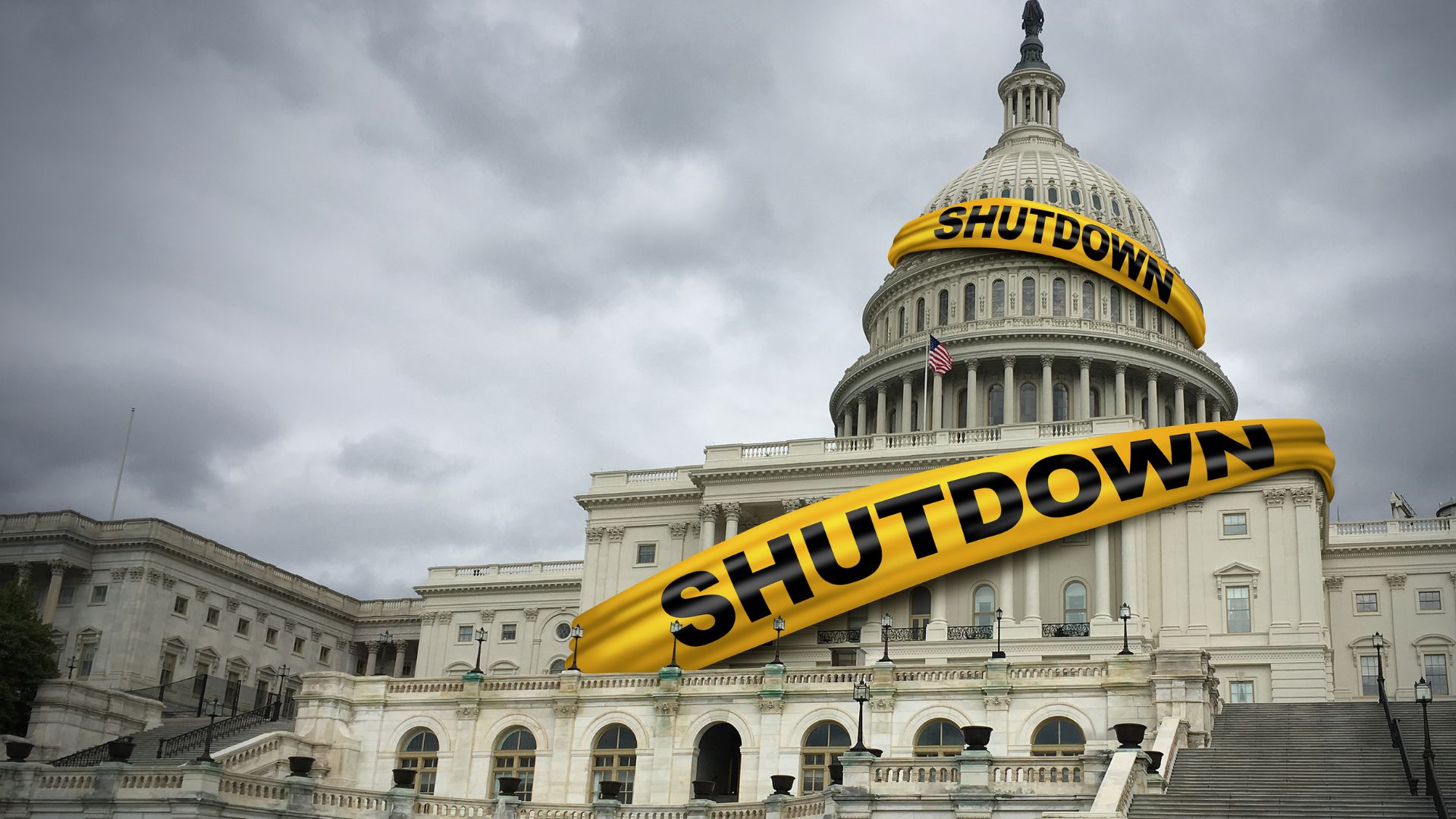
Schumer Shutdown 2.0?: ‘The Toothpaste is Already Out of the Tube’ After Jan 1st

Senate Minority Leader Chuck Schumer declined on Tuesday to rule out the possibility of another government shutdown as Democrats continue pressing Republicans to extend enhanced Affordable Care Act subsidies ahead of an approaching federal funding deadline.

President Donald Trump ended the longest government shutdown in U.S. history on Nov. 12 after signing a spending package that funded the government through the end of January and restored pay to federal workers who had been furloughed during the lapse.

With government funding set to expire again on Jan. 30, lawmakers are facing renewed pressure to pass additional appropriations bills or a temporary funding measure to avoid another shutdown.

During an exchange with reporters, Schumer repeatedly avoided giving a direct answer when asked whether Democrats would once again tie government funding to their demand for extending enhanced Obamacare premium tax credits, a strategy Democrats used during the previous shutdown.

“Mr. Chairman, you mentioned January 1. There is also a January 30 deadline to fund the government. Do you have any expectation that Democrats might tie back to ACA like you did last time to try to get a result?” one reporter asked.

“Look, just as I said, it’s on the Republicans that we haven’t had health care done after January 1. It’s very, very hard to put it back in the bottom,” Schumer responded.

When reporters asked directly whether Democrats would vote to shut down the government on Jan. 30 if they failed to secure an extension of the ACA subsidies, Schumer again declined to give a clear commitment.

“As I said, the bottom line is very simple, and that is that the way to solve this problem, because the toothpaste is already out of the tube, is get it done by January 1. The Republicans, if they care so much and feel the heat, they should make sure they pass our bill,” Schumer said.

Pressed again on whether Democrats would use the looming government funding deadline as leverage for health care demands, Schumer refused to clarify his position.

“That doesn’t sound like you’ve arrived on a strategy for how to handle January 30. So is that in play? Yes or no? The health care issue, the same as it was in the government shutdown this fall?” a reporter asked.

“I answered the question,” Schumer replied.

“That doesn’t sound clear, though,” one reporter noted.

“The bottom line is very clear. You can’t do it after January 1st, especially when the issues of Hyde and all these people. It’s expired already. It’s not the same as it was before. Once it expires, the toothpaste is out of the tube,” Schumer said.

Government funding is scheduled to expire on Jan. 30, and Congress has not passed any additional appropriations bills since the shutdown ended in November, according to Congress.gov and the Congressional Research Service.

Under the agreement that ended the shutdown, President Trump signed three appropriations bills that fund roughly 10 percent of the federal government and the Supplemental Nutrition Assistance Program through the fiscal year.

The remaining nine appropriations bills, accounting for about 90 percent of federal spending, remain unfunded unless Congress passes them or approves a continuing resolution, according to CRS data.

The signing ceremony followed a House vote approving a Senate-passed funding package by a margin of 222–209.

The vote largely split along party lines, though Reps. Thomas Massie of Kentucky and Greg Steube of Florida voted against the measure despite being Republicans, while six Democrats voted in favor of it.

Democrats ended the November shutdown without securing their primary demand for extending enhanced Obamacare premium tax credits.

As part of the shutdown resolution, Senate Majority Leader John Thune agreed to schedule a December vote on a Democratic bill aimed at extending the ACA subsidies. House Speaker Mike Johnson has not agreed to take up the measure.

The Democratic bill faces significant hurdles in the Senate, where it would need to clear the chamber’s 60-vote threshold to advance.

With funding deadlines approaching and major portions of the federal government still unfunded, Schumer’s refusal to rule out another shutdown has added uncertainty to negotiations as Congress moves toward the Jan. 30 deadline.

News

Democrats’ Voter Registration Advantage Has ‘Crumbled,’ Key Swing State Trending Red

Democrats are facing declining voter registration numbers across multiple states, but new data from North Carolina shows one of the most dramatic shifts yet in a longtime political battleground.

According to the latest figures from the North Carolina State Board of Elections, the gap between registered Democrats and Republicans in the state has narrowed to just over 1,000 voters.

A decade ago, Democrats held an advantage of nearly 750,000 registered voters over Republicans.

Representative Richard Hudson, R-N.C., said the change reflects voter dissatisfaction with Democratic leadership and growing support for Republicans across the state.

“Voters across North Carolina are rejecting the Democrats’ failed agenda and choosing Republican leadership,” Hudson said.

“This shift didn’t happen overnight, it’s the result of years of good common sense Republican governance and our focus on offering serious solutions on the issues that matter to the people.”

State-level data shows that between 2005 and 2015, the difference in registered Democrats and Republicans in North Carolina remained relatively stable, with Democrats maintaining an advantage of roughly 670,000 voters during that period.

That margin began shrinking in 2015 and continued to narrow over the following years.

By 2020, Democrats still held a lead of just under 380,000 registered voters.

As of the most recent update from the State Board of Elections, that lead has dropped to only 1,216 voters.

The changes in North Carolina mirror a broader national trend.

Earlier this year, a New York Times analysis found that Democrats lost approximately 2.1 million registered voters between 2020 and 2024 across 30 states that track voter registration by party.

During the same period, Republicans gained about 2.4 million registered voters.

Combined, the data reflects a net swing of roughly 4.5 million voters away from the Democratic Party over four years.

Former Republican National Committee chairman and North Carolina Republican Senate candidate Michael Whatley said Democratic policies at both the state and federal levels are contributing to the decline.

“The reality is that bad Democrat policies coming out of Washington are driving voters away from the party here at home,” Whatley said.

He also criticized state and national Democratic leaders, citing their electoral performance in North Carolina.

“Insane policies supported by Roy Cooper and pushed by DC Democrats like Bernie Sanders and Kamala Harris are completely out of step with North Carolinians,” Whatley said.

“Democrats couldn’t win Senate races here even when they had a cash advantage and a huge voter-registration edge.

Now they’ve lost that registration advantage too, and voters are making it clear they’re done with failed Democrat leadership.”

Democrats have responded by pointing to changes in voter affiliation trends.

The Democratic Congressional Campaign Committee said the Republican share of registered voters statewide has declined, while the number of unaffiliated voters has increased.

However, voter registration data shows the rise in unaffiliated voters has affected both parties, with Democrats experiencing a significantly larger decline in total registered voters over the last decade compared to Republicans.

Madison Andrus, the DCCC’s regional spokesperson for North Carolina, attributed the changes to Republican actions in the state.

“Despite their repeated attempts at gerrymandering the state to subvert the will of the voters, Republicans have not managed to increase their share of registered voters in nearly four decades,” Andrus told Fox News Digital.

She also argued that Republican policies are contributing to voter dissatisfaction.

“Now, with this latest scheme top of mind, voters across the state are souring on Republicans’ failing agenda that has led to higher grocery prices, more expensive health care, and greater difficulty making ends meet,” Andrus said.

“Republicans have abandoned North Carolina’s working families and people are taking notice.”

Republican National Committee Chairman Joe Gruters disputed that assessment, saying the data shows a fundamental shift in voter behavior.

“North Carolina is undergoing a historic shift,” Gruters said.

“Democrats’ advantage has crumbled.”

Gruters also referenced recent election results as evidence of broader voter sentiment.

“Voters rejected Kamala Harris last year, and they’re continuing that trend as they turn away from the failed policies of Roy Cooper and Josh Stein,” he said.

With registration numbers nearly even for the first time in decades, North Carolina’s changing voter rolls are drawing national attention as both parties prepare for upcoming statewide and federal elections.

News

Trump’s Marijuana Move Has Democrats Nervous, CNN Analyst Says

CNN senior data reporter Harry Enten said Tuesday that President Donald Trump could gain a political advantage over Democrats if he moves forward with reclassifying marijuana under federal law.

Trump told reporters on Monday that he is considering reclassifying marijuana from a Schedule I drug to a Schedule III drug. Schedule I substances are defined as having no accepted medical use and a high potential for abuse, while Schedule III drugs are described as having a “moderate to low potential for physical and psychological dependence.”

Enten discussed the potential political impact of such a move during an appearance on “CNN News Central,” saying the issue could benefit Trump, particularly among younger voters.

“Take a look at those under the age of 35 because they have been a real swing group, right? They swung wildly from the 2020 to 2024 election, going increasingly into the president’s column, and then we’ve seen them actually shift back away from the president,” Enten said.

“This could be an issue that could help, among other issues, help bring them back into the president’s camp … So for me, this could be a wedge issue that the president could use, in fact, against his Democratic opposition and say, ‘hey, you know what?’ Democrats have talked the talk, but I’m actually going to walk the walk when it comes to legalizing marijuana.”

Enten said the potential reclassification could place Democrats at a disadvantage on an issue they have long discussed but not finalized at the federal level. He also referenced prediction markets while discussing the likelihood of the policy change.

According to Enten, prediction markets currently show an 88% chance that Trump will reclassify marijuana before the end of his term.

Enten also cited polling data showing long-term shifts in public opinion on marijuana legalization.

A Gallup poll found that support for legal marijuana among Americans rose from 36% in 2005 to 64% currently.

Among adults under the age of 35, support is higher.

According to the same Gallup poll, 72% of people in that age group support legalizing marijuana, and 49% reported having used it.

The discussion of potential reclassification comes alongside ongoing debates over marijuana’s health effects.

Studies have identified several risks associated with marijuana use.

Research has shown that marijuana use can be associated with negative health outcomes, including heart attacks and strokes.

A study published in May 2023 examined data from nearly 7 million men and women in Denmark over almost three decades.

That study found evidence that cannabis use among young men may increase the risk of developing schizophrenia.

Another research paper published in 2023 found that older Americans with cardiovascular risk factors faced a 20% increased risk of “a major heart or brain event while hospitalized” when marijuana use was involved.

Additional research has also linked marijuana use to heart attack risk among younger adults.

According to the American College of Cardiology, two studies found that cannabis users under the age of 50 were six times more likely to suffer a heart attack compared to non-users.

Supporters of marijuana legalization dispute those findings and argue that cannabis is less toxic or addictive than alcohol.

Advocates also say marijuana provides medical benefits for certain conditions, including anxiety and chronic pain.

Trump has not announced a final decision on reclassifying marijuana, but his comments to reporters indicate the issue remains under consideration.

News

Trump Makes Major Moves to Choke Out Maduro and His Narco-Terrorists

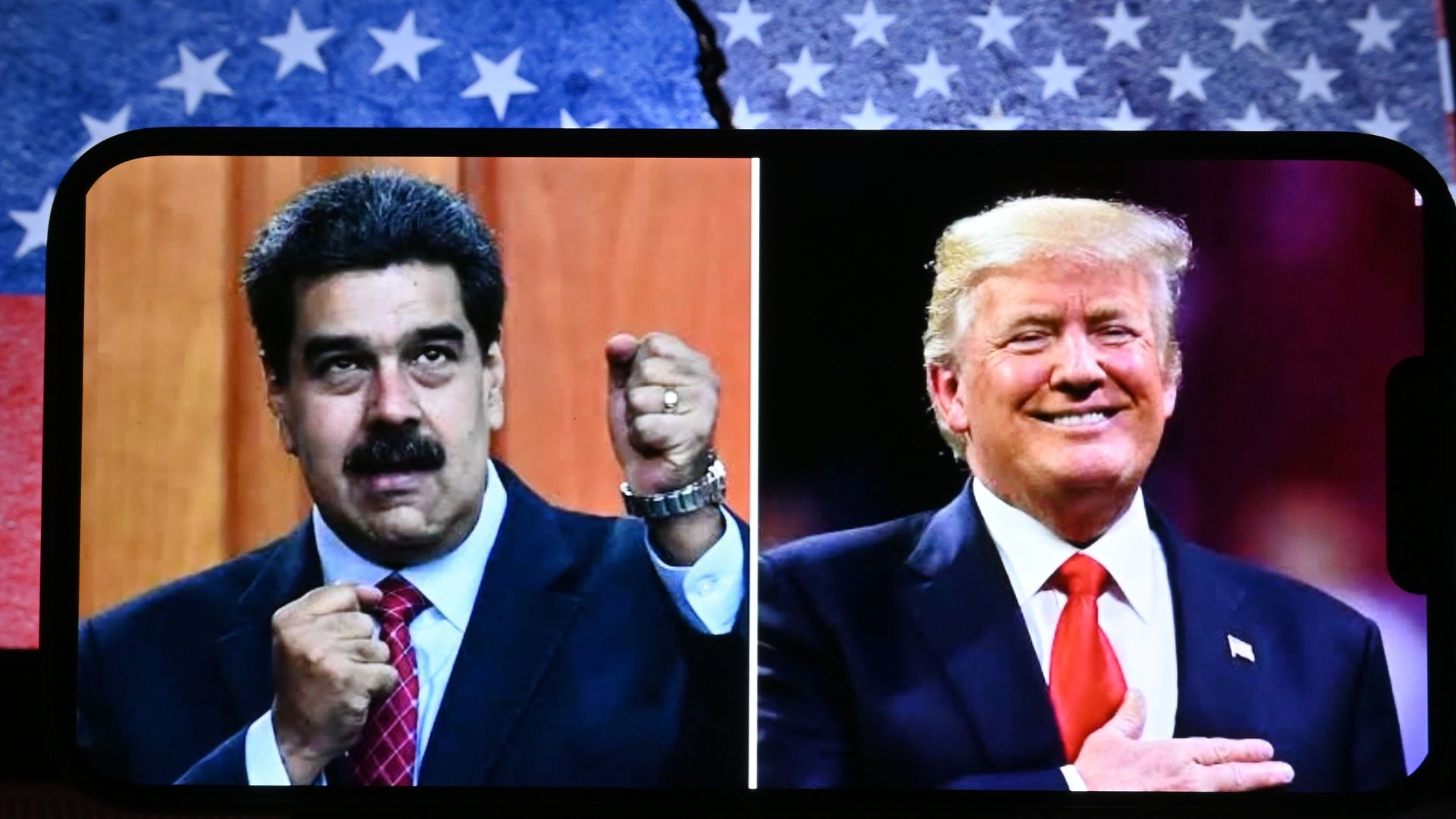
President Donald Trump has declared the Venezuelan regime a foreign terrorist organization and ordered what he described as “a total and complete blockade” of sanctioned oil tankers traveling to and from the country, marking a major escalation in U.S. pressure on Venezuelan leader Nicolas Maduro.

The move follows an ongoing U.S. drone strike campaign targeting drug-smuggling boats in the region, which has killed 95 people to date.

Trump is now expanding that effort as part of a broader campaign against Maduro, whom he has repeatedly described as illegitimate and has previously urged to flee Venezuela.

“Venezuela is completely surrounded by the largest Armada ever assembled in the History of South America,” Trump said.

Trump stated that Maduro must return oil, land, and other assets that he said were stolen from the United States.

He accused the Venezuelan leader of using illicit oil revenues to fund narco-terrorism, human trafficking, murder, kidnapping, and personal enrichment.

“For the theft of our Assets, and many other reasons, including Terrorism, Drug Smuggling, and Human Trafficking, the Venezuelan Regime has been designated a FOREIGN TERRORIST ORGANIZATION,” Trump said.

“Therefore, today, I am ordering A TOTAL AND COMPLETE BLOCKADE OF ALL SANCTIONED OIL TANKERS going into, and out of, Venezuela. The Illegal Aliens and Criminals that the Maduro Regime has sent into the United States during the weak and inept Biden Administration, are being returned to Venezuela at a rapid pace.”

The announcement follows a sharp escalation last week, when U.S. forces seized a sanctioned oil tanker that the Trump administration accused of smuggling illicit crude.

Trump also demanded that Maduro’s “hostile regime” return American assets “IMMEDIATELY.”

The blockade order coincides with a significant U.S. military buildup in the Caribbean.

Trump has paired the ongoing strikes with the deployment of major naval assets, including the world’s largest aircraft carrier and multiple additional warships.

U.S. military aircraft have also conducted repeated flights along Venezuela’s coastline in recent weeks.

While Trump and his administration have said the military buildup is aimed at combating drug trafficking, Maduro has accused Washington of using narcotics smuggling as a pretext for regime change in Caracas.

The United States has sought to link the two issues, accusing Maduro of leading the alleged “Cartel of the Suns,” which was designated a “narco-terrorist” organization last month.

The U.S. has also offered a $50 million reward for information leading to Maduro’s capture.

The U.S. military presence in the region is now the largest in decades.

American forces have launched a series of deadly strikes against suspected drug-smuggling vessels in both the Caribbean Sea and the eastern Pacific Ocean.

The Trump administration has said the campaign is focused on stopping drugs bound for the United States.

However, Trump’s chief of staff, Susie Wiles, appeared to confirm in a Vanity Fair interview published Tuesday that the campaign is also intended to pressure Maduro.

Wiles said Trump “wants to keep on blowing boats up until Maduro cries uncle.”

On Monday, Trump signed an executive order placing fentanyl in the same category as nuclear and chemical weapons, a move intended to signal the seriousness of his administration’s efforts to stop the flow of drugs into the United States.

Trump has also said that land attacks are coming, though he has not provided details on timing or location.

At the Pentagon, Secretary of War Pete Hegseth has faced continued questioning over his approval of strikes on Venezuelan drug vessels, including a second strike following an initial attack in September that killed two survivors.

The incident involved a speedboat in the Caribbean Sea that the administration said was carrying cocaine en route to the United States.

After a missile disabled the vessel and killed most of those onboard, two survivors were seen clinging to the wreckage and were believed to be attempting to radio for help.

Pentagon officials have defended the decision to authorize the second strike on September 2, arguing it was based on a perceived ongoing threat.

Lawmakers have since demanded unedited video footage of the strikes.

Hegseth told congressional leaders he was still weighing whether to release the footage and instead provided a classified briefing alongside Rubio and other senior national security officials.

That same day, Admiral Alvin Holsey, who is retiring from U.S. Southern Command this week, held separate discussions with the Republican chairman and the ranking Democrat on the Senate Armed Services Committee.

In late November, Trump warned Maduro to flee the country with his wife or face consequences as U.S. warships and troops continued to deploy to the region.

Trump reportedly offered Maduro, his wife, and son safe passage if he resigned immediately, according to The Miami Herald.

A source familiar with the call said Maduro requested global amnesty, which Trump rejected, before proposing that he retain control of the Venezuelan armed forces in exchange for free elections.

Trump declined that proposal as well, and Maduro ultimately rejected the idea of resigning.

Trump later confirmed that the talks had taken place as tensions between Washington and Caracas intensified.

Maduro, who has been in power since 2013, has relied heavily on military loyalty, appointing officers to senior government roles.

The United States has condemned his rule, citing his claimed election victory in 2024 despite evidence that his opposition received more votes.

The current wave of U.S. deployments began in August with the arrival of the Iwo Jima Amphibious Ready Group.

In October, the Pentagon announced that the USS Gerald R. Ford, the world’s largest aircraft carrier, would join the mission.

Aerial drone photo of USS Gerald R. Ford latest technology nuclear powered aircraft carrier anchored in deep blue open ocean sea

The carrier entered Caribbean waters on November 11 with more than 4,000 sailors, fighter jets, and support vessels, including the USS Thomas Hudner, USS Rampage, and USS Normandy.

The Pentagon has named the operation “Operation Southern Spear,” with more than 15,000 U.S. troops and 11 warships estimated to be operating in the region.

Meanwhile, Maduro has said that eight million civilians in Venezuela are training in militias, though much of the country’s military equipment dates back decades and was largely purchased from Russia in the early 2000s.

News

Tuberville Ignites a ‘Pearl Clutchers’ Firestorm with His Comments About Islam

Following the Bondi Beach attack in Australia, reports that the Brown University killer screamed “Allahu Akbar” as he opened fire, the ISIS murder of two American servicemen in Syria, and the arrest of a Muslim student at the University of Delaware who plotted a jihad attack against campus police, renewed attention has focused on Islamic jihad.

In that context, Sen. Tommy Tuberville (R-Ala.) issued remarks that drew immediate responses from Democratic lawmakers and other officials.

Tuberville wrote Sunday, “Islam is not a religion. It’s a cult. Islamists aren’t here to assimilate. They’re here to conquer. Stop worrying about offending the pearl clutchers. We’ve got to SEND THEM HOME NOW or we’ll become the United Caliphate of America.”

The comments prompted swift reactions from Democrats. Sen. Ed Markey (D) responded, “These are hateful lies. Islamophobia has no place in our society. MAGA Republicans should stop spewing the kind of hate that divides us and foments violence.”

California State Senator Scott Wiener (D) also weighed in, writing, “It’s unwise to respond to every dumb a** bigoted thing people say on the internet, but when a United States senator — albeit the dumbest United States senator — calls for denaturalization & deportation of an entire religion, you have to call it out as the evil it is.”

Rep. Alexandria Ocasio-Cortez (D) added her response, stating, “The normalization and acceptance of Islamophobia in our politics is disgusting. Our Muslim neighbors are not Republicans’ scapegoats for antisemitic attacks and Trump’s failed policies. We must absolutely condemn Islamophobia loudly and hold those perpetuating it accountable.”

Senate Majority Leader Chuck Schumer (D) issued his own statement, saying, “An outrageous, disgusting display of islamophobia from Sen. Tuberville. The answer to despicable antisemitism is not despicable islamophobia. This type of rhetoric is beneath a United States Senator – or any good citizen for that matter.”

Tuberville’s remarks came amid heightened scrutiny of recent violent incidents linked to Islamic extremism.

The senator’s statement that Islam is not a religion drew criticism, though a religion does not require a moral framework to meet the definition.

A religion is generally defined as a belief system claiming to connect human beings to the divine, which Islam does claim to do.

At the same time, Islam is also described by critics as a political system.

The debate surrounding Tuberville’s remarks centered on whether Islamic texts promote political authority and conquest.

Critics of the senator rejected that framing, while Tuberville’s supporters pointed to Islamic writings as evidence.

Pakistani politician and Islamic scholar Maulana Maududi wrote in his commentary on the Qur’an that the purpose of fighting is “to put an end to the suzerainty of the unbelievers so that the latter are unable to rule over people.”

Maududi wrote that authority should be vested in followers of Islam and that unbelievers should live in a state of subordination, paying jizyah in return for protection as dhimmis.

A manual of Islamic law endorsed by Al-Azhar in Cairo states that the leader of Muslims “makes war upon Jews, Christians, and Zoroastrians…until they become Muslim or else pay the non-Muslim poll tax,” citing Qur’an 9:29: “Fight against those who do not believe in Allah or the last day…until they pay the jizya with willing submission and feel themselves subdued.”

Muslim leaders have made statements asserting political dominance and conquest of Western societies, according to critics.

Those statements have been cited by supporters of Tuberville as evidence that his remarks reflect Islamic texts rather than prejudice.

The lawmakers who criticized Tuberville focused their responses on accusations of Islamophobia.

The question raised by the controversy was whether Tuberville’s statements about Islam’s political and supremacist teachings are accurate, and if so, how elected officials should address them.

News

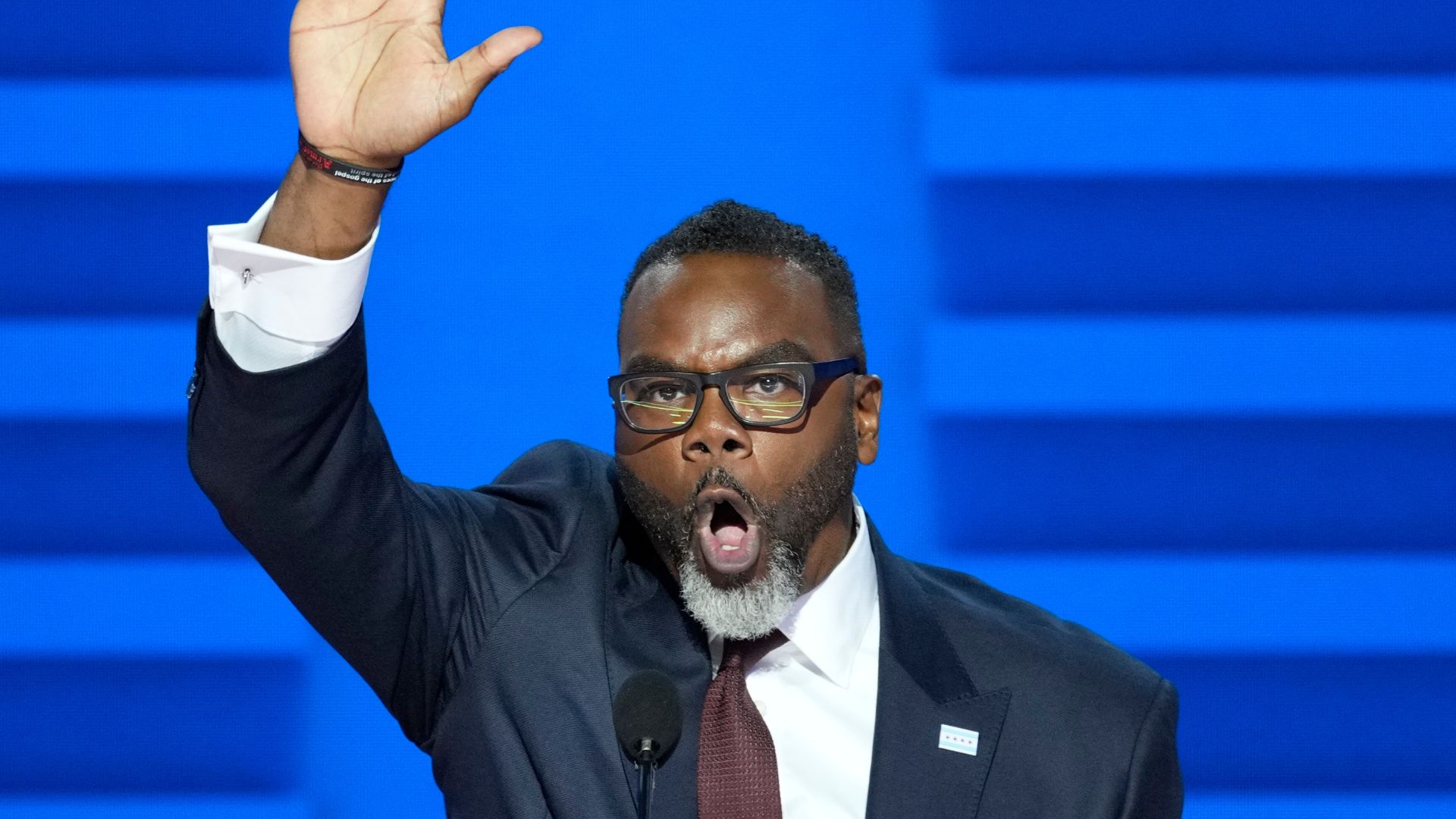
WaPo Editorial Board Blasts Chicago Mayor Brandon Johnson’s Budget Plan

The Washington Post Editorial Board issued a sharp rebuke of Chicago Mayor Brandon Johnson’s latest budget proposal, raising concerns about the city’s long-term financial stability and criticizing what it described as a continued reliance on short-term fixes rather than structural reform, as reported by the Gateway Pundit.

In an editorial published this week, the board focused on Chicago’s deep pension liabilities and warned that Johnson’s plan to close a $1.15 billion budget shortfall through higher taxes, borrowing, and other measures risks worsening the city’s fiscal problems rather than solving them.

“Chicago has long-term structural problems with its finances, thanks in large part to wildly underfunded pensions,” the editorial board wrote.

The board pointed to the city’s history of temporary solutions, including “a notorious 2008 deal that sold off 75 years of future parking meter revenue for $1.15 billion, which was quickly spent.”

Mojahid Mottakin – Shutterstock.com

“That deal is still hurting finances today, which should have taught local politicians that there is no substitute for serious fiscal reform,” the board continued. “Alas, apparently not.”

The editorial cited data showing significant growth in city spending over recent years, much of it tied to federal pandemic aid that has since expired.

The city’s net operating budget increased nearly 40 percent between 2019 and 2025, according to Grant McClintock of the Civic Federation.

“The pandemic is over, but many of the programs and personnel positions established during that time remain, and without the benefit of the federal funding that previously supported them,” McClintock said, as quoted by the Post.

Mayor Johnson, a Democrat elected in 2023, has proposed a series of tax increases to address the budget gap.

Aug 19, 2024; Chicago, IL, USA; Chicago Mayor Brandon Johnson speaks during the first day of the Democratic National Convention at the United Center. The DNC program will feature President Joe Biden and Former Secretary of State Hillary Clinton during Monday’s ceremonies. Mandatory Credit: Jasper Colt-USA TODAY

Among them is a plan to raise the tax on leased “personal property,” including computers, vehicles, and software, from 11 percent to 14 percent.

Johnson also wants to revive Chicago’s so-called “head tax,” which would require large employers to pay $33 per worker, per month.

The Washington Post editorial board warned that such measures could damage the city’s economic prospects.

“By making it more expensive to do business or hire workers in the city, these measures threaten Chicago’s future economic growth and tax collections,” the board wrote.

It added that the proposals come at a particularly difficult moment, noting that the Chicago Federal Reserve’s 12-month hiring outlook is “the weakest it’s been since the pandemic.”

Illinois Gov. JB Pritzker, also a Democrat, has publicly criticized the proposed head tax, saying it would penalize employment.

Johnson was asked about Pritzker’s concerns during a recent press event and rejected them, defending his approach to closing the budget gap.

The Post editorial framed Johnson’s plan as a continuation of what it described as Chicago’s pattern of avoiding difficult fiscal choices, relying instead on borrowing, tax increases, and temporary measures to cover long-term obligations.

The criticism is notable given the newspaper’s generally favorable stance toward Democratic leaders and policies. In this case, the editorial board concluded that Chicago’s approach to budgeting reflects a failure to confront fundamental financial realities.

The city now faces the challenge of addressing pension obligations, expiring federal support, and a slowing economic outlook, all while debating whether Johnson’s proposed tax increases will stabilize city finances or accelerate economic pressure on businesses and workers.

News

MTG Declares ‘Dam Is Breaking’ and GOP Defections Spell Trouble—Trump Keeps Moving

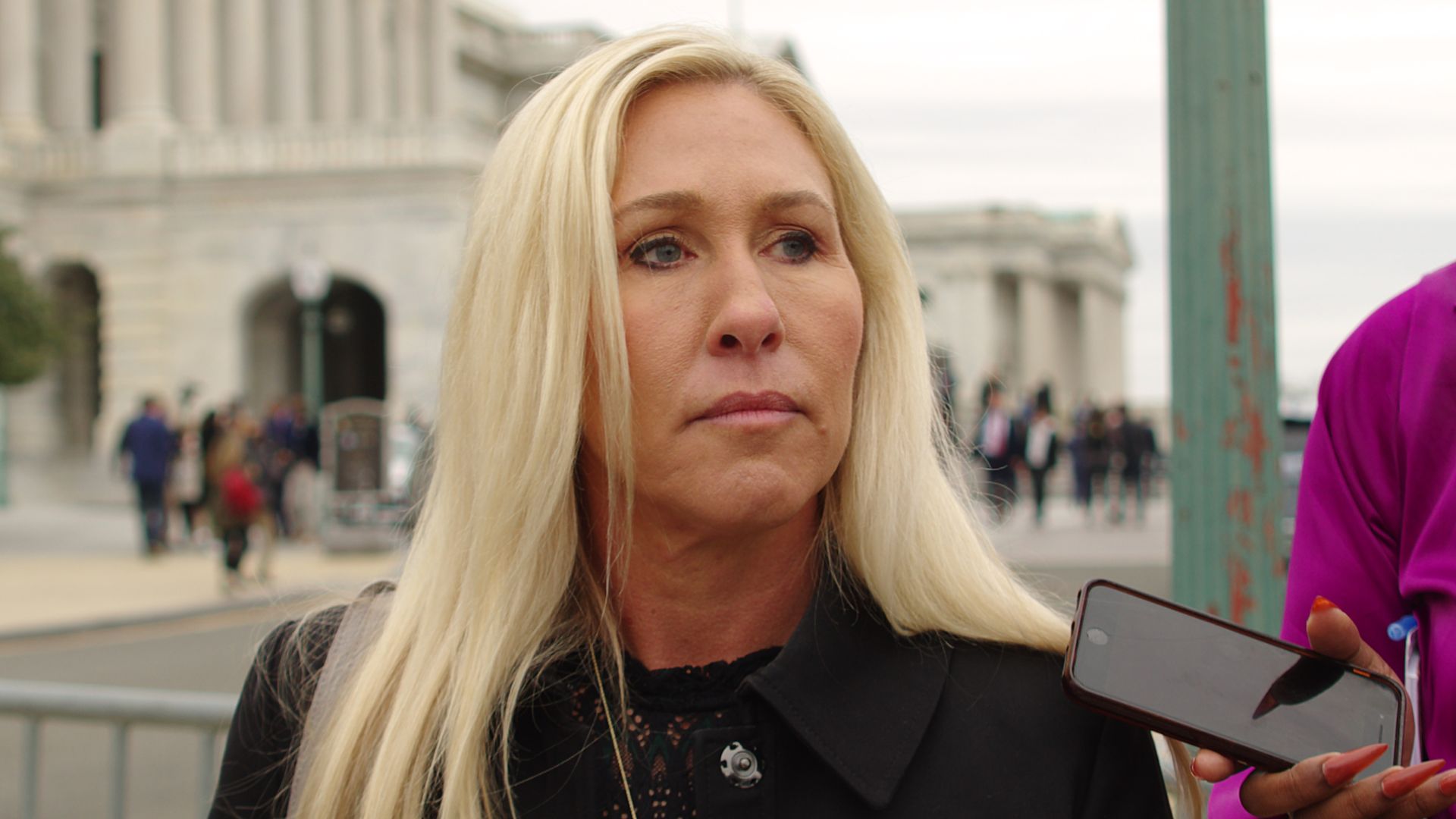
Rep. Marjorie Taylor Greene, R-Ga., said Tuesday that President Donald Trump is losing control over the Republican Party, pointing to recent votes by GOP lawmakers that broke with the White House and signaling what she described as the start of a “lame duck” phase ahead of the 2026 midterm elections, as reported by Breitbart.

Greene made the remarks during an appearance on CNN’s The Source, hosted by Kaitlan Collins, where she argued that recent actions by Republican lawmakers show a shift away from strict party discipline around the president.

WASHINGTON, DC – March 22, 2024: U.S. Rep. Marjorie Taylor Greene (R-Ga.) speaks to reporters after voting against a government spending bill, and filing a motion to oust House Speaker Mike Johnson.

“I’d like to point something out. Just last week, and I think the dam is breaking, many Republicans may not have called him out, but last week, 13 Republicans voted with Democrats to overturn one of President Trump’s executive orders, which enabled him to fire federal workers,” Greene said.

She also referenced Republican resistance at the state level.

“We also saw Indiana Republicans vote against redistricting,” Greene said.

According to Greene, those actions reflect a broader political calculation by lawmakers preparing for the next election cycle.

“He didn’t call any of them traitors and call for primaries against them, but I would like to say that is a sign where you’re seeing Republicans, they’re entering the campaign phase for 2026, which is a large signal that lame duck season has begun and that Republicans will go in all in for themselves in order to save their own reelections,” she said.

Collins responded by pressing Greene on the implications of her comments.

WASHINGTON D.C., USA – FEBRUARY 4, 2025: Kaitlan Collins speaks ahead of Prime Minister Benjamin Netanyahu and President Donald Trump news conference in the East Room of the White House.

“You think the dam is breaking in terms of the president’s iron grip of support when it comes to your party,” Collins said.

“Absolutely,” Greene replied, pointing to what she described as a striking contrast between lawmakers’ public votes and their private behavior.

“Those 13 Republicans that voted to take down his executive order last week literally that same evening put on their tuxedos and their evening ball gowns and went to the White House Christmas party. That’s pretty bold,” Greene said.

The comments highlighted growing internal tensions within the Republican Party as lawmakers weigh loyalty to President Trump against their own political futures.

Greene suggested that some Republicans are increasingly willing to distance themselves from the president when it serves their electoral interests, even while maintaining outward appearances of unity.

Greene’s remarks come as Republicans begin positioning themselves for the 2026 midterm elections, a period that often brings heightened intraparty competition and shifting alliances.

Her comments also underscored frustration among some conservative lawmakers who view recent defections as a sign of weakening resolve within the GOP conference.

The vote Greene referenced involved a bipartisan effort to overturn an executive order signed by President Trump that allowed for the dismissal of certain federal workers.

Thirteen Republicans joined Democrats in opposing the order, a move that drew attention on Capitol Hill and within conservative media circles.

While Greene has been one of President Trump’s most outspoken defenders in Congress, her comments on CNN marked a rare public acknowledgment from within the GOP that the president’s influence may be facing resistance from his own party.

The White House has not responded publicly to Greene’s remarks. The lawmakers involved in the vote have also not issued collective statements addressing her criticism.

As Republicans look toward the next election cycle, Greene’s comments suggest that internal divisions, rather than unified opposition to Democrats, may become a defining feature of the party’s political landscape.

News

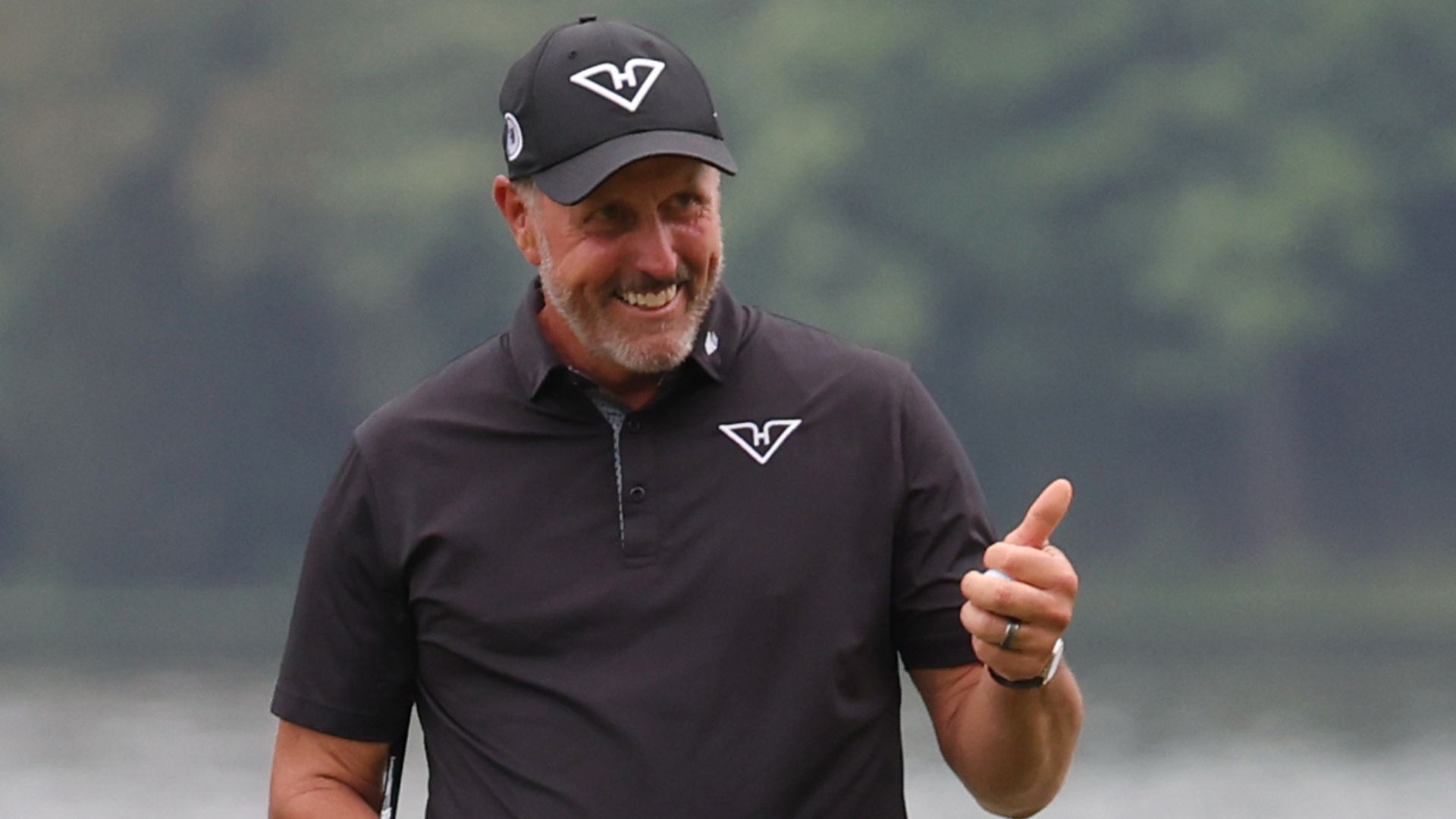
Phil Mickelson Mocks Australian Gun Control Logic After Terrorist Shooting

Golf legend Phil Mickelson responded publicly to Australian Prime Minister Anthony Albanese following the Bondi Beach attack, criticizing calls for expanded gun control by pointing to the actions of the two terrorists who opened fire Sunday evening.

Mickelson made his remarks in response to Albanese’s post-attack comments suggesting Australia should consider expanding its already strict firearms regulations. Writing in a post on X, Mickelson said the attackers “didn’t seem affected by the strict gun laws already in place.”

“In fact the shooting went on for a long time since there wasn’t anybody else with a gun to stop them,” Mickelson wrote.

Mickelson included a link to Albanese’s speech discussing the potential expansion of Australian gun controls.

Mickelson added, “I’m not a big gun guy but even I’m not this dumb to believe what this guy is selling.”

Breitbart News reported that Albanese has suggested a significant expansion of gun controls in the days following the Bondi Beach attack.

According to the report, the proposed measures would apply to law-abiding citizens rather than the two terrorists responsible for the attack.

The New York Times reported that the Australian government is considering several measures as part of its review.

Those measures include “a limit on the number of firearms a person can own and a ban on gun licenses for noncitizens.”

Albanese has also raised the possibility of setting specific time frames for reviewing gun licenses.

The purpose of those reviews, according to Albanese, would be to determine whether licensed individuals have become “radicalized.”

NPR reported that additional proposals under consideration include efforts to “speed up the establishment of a National Firearms Register.”

NPR also reported that changes to import policies are being discussed, including measures to bar “items involving 3D printing or accessories that hold large amounts of ammunition.”

Australia already maintains some of the most stringent gun control laws in the world.

Those laws were in place at the time of the Bondi Beach attack.

Mickelson’s comments focused on the fact that those existing controls did not prevent the attackers from carrying out the shooting.

Mickelson’s response came as international attention remained focused on the Bondi Beach incident and the political response that followed.

His remarks directly addressed the argument that additional restrictions would prevent similar attacks in the future.

By referencing the length of the shooting and the absence of armed intervention, Mickelson framed his criticism around the effectiveness of current policies.

His comments were limited to the actions of the attackers and the laws already governing firearm ownership in Australia.

The exchange unfolded entirely through public statements and media reporting.

Mickelson’s comments were made through X, while Albanese’s proposals were outlined through speeches and comments reported by Breitbart News, The New York Times, and NPR.

The discussion reflects the ongoing debate following the Bondi Beach attack, as Australian officials evaluate potential policy changes and critics question whether expanded gun controls would address the actions of terrorists who carried out the attack.


Scroll to Top