News

News

Trump Confirms U.S. Strike Eliminated Tren de Aragua Warlord in Venezuela [WATCH]

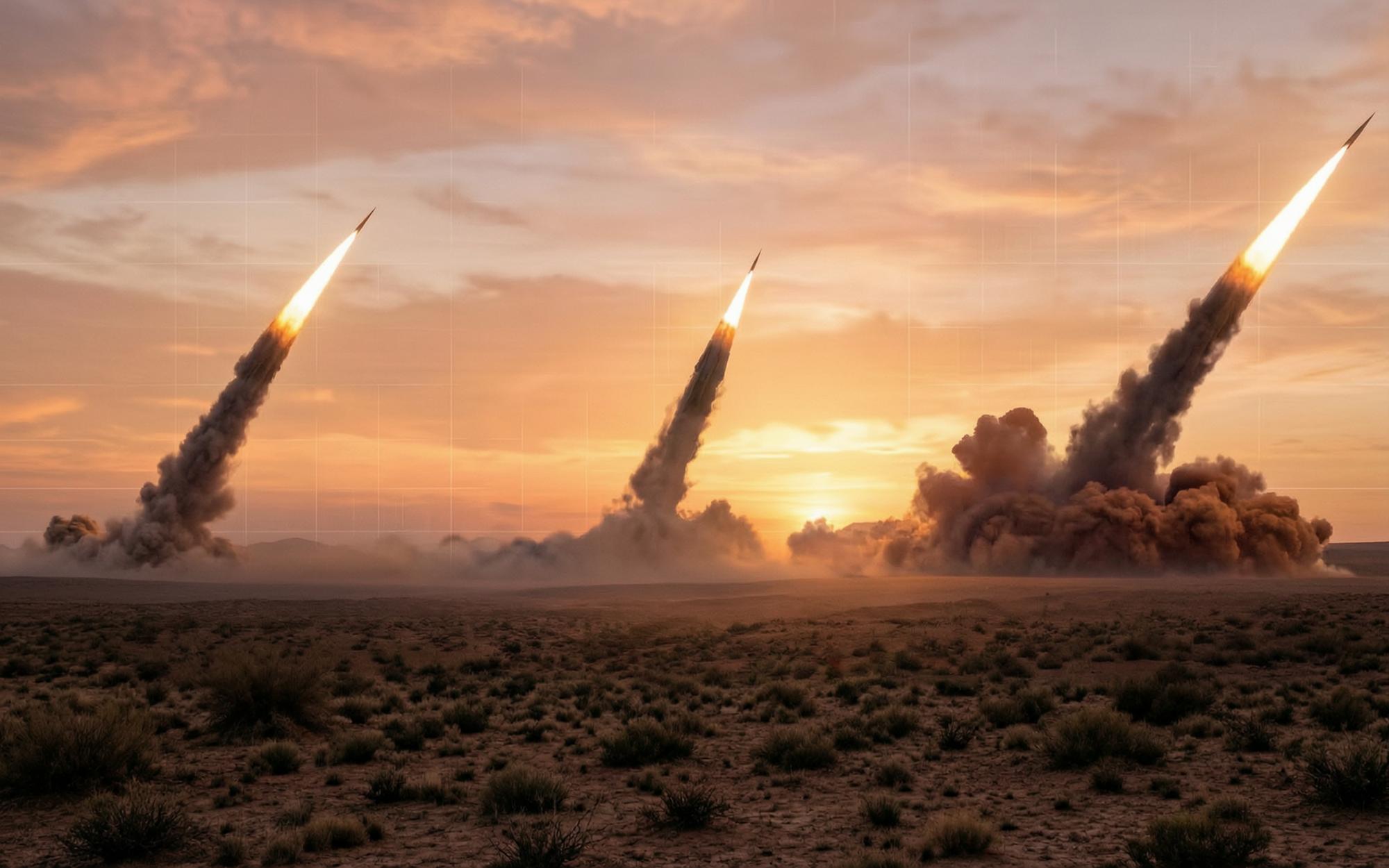
President Donald Trump announced Friday that the ringleader of Venezuela’s most notorious criminal syndicate, Tren de Aragua, has been eliminated in a U.S. military strike—another bold example of Trump’s unapologetic approach to eradicating international threats before they reach American soil.

According to Trump, the U.S. Southern Command executed a “swift and lethal kinetic strike” that took out Hector Rusthenford Guerrero Flores, known as “Niño Guerrero.”

The gang boss led Tren de Aragua, a violent cartel-like faction that started in Venezuela’s prison system and metastasized across Latin America.

The strike marks the first American military operation within Venezuela since January’s Operation Absolute Resolve, when U.S. forces captured former Venezuelan dictator Nicolás Maduro.

It’s clear that the Trump administration is dead serious about dismantling the power structures fueling lawlessness, terrorism, and the flow of drugs through South America.

Trump made the announcement on his Truth Social platform, praising the success and coordination of the mission. “This action was coordinated closely with our friends in Venezuela,” Trump stated.

U.S. Joint Chiefs Chief Visits Post-Maduro Venezuela in First Official Trip

“We are working very well together.” The post included dramatic aerial footage of a building engulfed in fire—a testament to U.S. precision and dominance from the skies.

While details remain classified, the message is unmistakable: under Trump’s leadership, the days of restraint and endless negotiations with narco-terrorists are over. Questions were directed to the White House, which declined to elaborate, while SOUTHCOM stayed tight-lipped on operational specifics—a sign of proper military discipline and continued readiness.

Guerrero Flores had long been on the radar of U.S. intelligence services. His Tren de Aragua organization has grown into Venezuela’s most powerful homegrown criminal empire, diversifying into everything from human trafficking to narcotics smuggling.

Even after Venezuelan forces raided the gang’s prison base in 2023, Guerrero escaped and rebuilt his forces across Latin America.

President Trump made the group a focal point of his counterterrorism campaign. Early last year, his administration officially designated Tren de Aragua as a foreign terrorist organization, unlocking a broad range of military and financial measures against its leadership and operations.

The Department of Justice followed in December by issuing an indictment against Guerrero Flores for financing and directing terrorist acts.

This recent strike marks a new phase of the Trump administration’s campaign in the Western Hemisphere—an offensive that combines intelligence, diplomacy, and force.

American troops launched multiple precision operations in Venezuela this year, culminating in Maduro’s capture and the subsequent stabilization missions across key supply routes and waterways in the Caribbean.

Since January, U.S. forces have maintained a robust military presence in the region, striking at cartel networks and illegal trafficking vessels. Last month, the administration disclosed that more than 200 criminals and traffickers had been neutralized in maritime interdictions aimed at cutting the head off the drug trade between South America and the United States.

Massive Bomber Demo Near Shores of Venezuela Sends Clear Message
A U.S. Air Force B-52H Stratofortress bomber assigned to the 2nd Bomb Wing integrates with a U.S. Marine Corps F-35B Lightning II aircraft assigned to the Marine Fighter Attack Squadron 225, in the U.S. Southern Command area of responsibility, Oct. 15, 2025. (U.S. Air Force)

While this latest strike is the first aimed directly at a drug-linked organization inside Venezuela, it builds on earlier successes across the continent.

In March, working with allies in Ecuador, U.S. forces carried out air raids against the Comandos de la Frontera gang near the Colombia-Ecuador border—another sign that the Trump Doctrine of forward power projection is fully operational.

Venezuelan officials have not commented on the operation, but insiders suggest coordination between American special operations units and newly formed Venezuelan security forces loyal to their transitional government.

That partnership is producing tangible results: gang leadership is being dismantled, the cartels are losing ground, and America’s southern approaches are more secure.

Tren de Aragua was no small adversary. Intelligence reports describe it as operating across five nations, including Venezuela, Peru, Chile, Colombia, and Brazil.

Its members are known for brutality rivaling Mexican drug cartels, and its top leadership had evaded multiple international warrants—until now.

Guerrero’s death signals a decisive shift in the balance of power within Latin America’s underworld.

Under Trump’s command, the War Department continues to reassert America’s dominance in regions long neglected by previous administrations. As Trump himself has said repeatedly, peace is achieved only through strength. With each strike, the world is reminded that the United States does not just issue warnings—it takes action.

The elimination of Guerrero Flores is both symbolic and strategic. Symbolic, because it reaffirms American might. Strategic, because it disrupts a criminal empire that has plagued the hemisphere for years.

With one precision strike, Trump and the War Department have delivered a message to every warlord and trafficker watching: there is no safe haven left.

WATCH BELOW:

News

Elephant Urinates Right Next to the Press at Texas GOP Convention [WATCH]

The Texas Republican Party’s state convention in San Antonio is turning heads not just for its political unity but also for an actual elephant that decided to make a literal statement near the press area.

The creature’s presence may have been symbolic, but when it relieved itself by the media zone, it felt like poetic justice for years of press mockery of conservative gatherings.

This year’s Texas GOP convention arrives after years of intense infighting and leadership challenges.

Yet, for the first time in quite a while, Republicans across the Lone Star State seem to be marching in the same direction.

The victory of Attorney General Ken Paxton over Senator John Cornyn in the Senate primary has reset the table, with conservatives firmly in the driver’s seat.

The party’s leadership is promoting unity and loyalty to conservative principles rather than chasing media approval.

Gov. Greg Abbott, once seen as maintaining a careful distance from certain grassroots factions, has now emerged as a strong backer of the event.

His newfound partnership with the party chair Abraham George marks a turning point for the Texas GOP.

State House Speaker Dustin Burrows, a man credited with steering Texas through a series of major conservative wins, made history by addressing delegates as the first sitting speaker to do so.

His speech was met with applause that highlighted a mood of focus and momentum.

This is a dramatic difference from just a few years ago when boos often drowned out speakers viewed as too moderate.

Abraham George, who serves as state party chair, is receiving enthusiastic support for reelection.

Delegates want to keep him in charge as they look ahead to a stacked agenda of conservative policies.

Party insiders say George’s leadership has brought structure and clarity after previous years of factional chaos and personality clashes.

Only a few years ago, the Texas GOP seemed to be in permanent battle mode internally.

There were resignations, primary challenges, and public disputes that were often amplified by gleeful national media.

WATCH:

In contrast, the current convention feels like a reset.

The noise of division has mostly faded, replaced with plans to push forward a conservative agenda that aligns closely with Governor Abbott’s priorities and reflects Trump-style populism.

Paxton’s recent landslide over Cornyn in the primary runoff has become a rallying symbol for delegates who believe true conservatives have taken back the party.

As one delegate put it, “For the first time in years, we have the chance to speak with one voice and stop apologizing for being conservative.”

The alignment of state-level power with grassroots accountability could make Texas a model for the Republican revival nationwide.

Another thorn in the side of party unity just resolved itself neatly.

Secretary of State Jane Nelson, an Abbott appointee who opposed the GOP’s plan to close primaries, announced her upcoming resignation.

That issue had caused friction since the party had even sued her in federal court over her opposition.

Her departure clears the way for the Texas GOP to push forward on reforms to protect Republican primaries from interference.

Behind the lighthearted viral moment of the elephant’s unexpected bathroom break lies a deeper message.

The party that was once caricatured as chaotic is now controlling its narrative again.

The spectacle of the animal’s inconvenient stop near reporters summed up how little sympathy many conservatives have left for the press corps.

The symbolism of a giant elephant marking its ground near the media cannot be invented.

Delegates at the convention noted that morale was higher than it had been in years.

Booths were filled with talk of expanding border security, defending parents’ rights in education, and pushing for election integrity measures.

For many Texas Republicans, these are nonnegotiable goals and not talking points for photo ops.

President Donald Trump’s continued influence was also felt throughout the event.

Paxton’s victory came with Trump’s eleventh-hour backing, and his supporters are using that energy to strengthen the new coalition of unapologetic conservatives.

Talk of “RINO season being over” could be heard across the hallways as party activists made clear they were tired of politicians who only play conservative at election time.

As always, the media focused on the spectacle, trying to turn attention to the mishap involving the elephant instead of the real story: a unified conservative force forming in Texas.

Delegates shrugged off the coverage with a grin, noting that perhaps the elephant simply had better instincts about where to leave a message.

The Texas GOP’s convention may have featured a humorous headline, but beneath the laughs is a renewed seriousness of purpose.

Conservatives in Texas seem ready to move from winning primaries to winning the policy battles that will define the state and set an example for the rest of the nation.

The elephant may have stolen the moment, but it is Texas conservatives who stole the show.

News

America Pulls Back Power in Europe as NATO Faces Reality Check

The Biden administration appears prepared to pull back a major chunk of U.S. air and sea muscle from Europe, according to a report in The New York Times.

The plan would sharply reduce the number of jets, warships, and surveillance aircraft the U.S. dedicates to NATO operations in the region.

Two senior European officials told the *Times* that the U.S. is preparing to cut its F-16 and F-15E fighter presence from around 150 to just 100.

Maritime reconnaissance aircraft will drop from 26 to a mere 15, and the already stretched aerial tanker fleet is reportedly being pulled out completely.

That’s eight tankers gone — the critical aircraft required to keep fighters in the sky longer.

This move also includes the redeployment of a missile-launching submarine and an aircraft carrier, along with supporting warships and scores of carrier-based jets.

One of two bomber task groups previously available for Europe could also be reallocated elsewhere, further shrinking NATO’s air deterrence umbrella.

For decades, NATO has relied heavily on American might to cover its security shortcomings. Now, Washington is signaling that era may be ending. Biden’s Pentagon, or rather the War Department, is calling the move an effort to “rightsize” its contributions to the NATO Force Model.

In bureaucratic speak, that means Europe will have to finally step up.

NATO spokesperson Allison Hart tried to spin the shift as a positive, claiming it will “strengthen NATO’s defense by reducing reliance on a single ally.” She added that as Europe and Canada increase defense spending, the alliance’s “balance of responsibility” can shift.

Trump Weighs Reducing U.S. Troops in Europe as NATO Tensions Grow
President Donald J. Trump and Defense Secretary Pete Hegseth participate in a press conference during the 2025 NATO Summit at the World Forum in The Hague, Netherlands, June 25, 2025.

Spoken like someone who knows what’s coming — a massive security vacuum if the U.S. walks away.

European nations will no doubt talk tough. But history shows many of them prefer meetings and press conferences over manufacturing missiles or maintaining fighter fleets.

When push comes to shove, it’s the United States that provides the aircraft, the intelligence networks, and the naval firepower to make NATO mean something more than just a logo in Brussels.

The timing of this pullback isn’t accidental. Just last year, the War Department revealed that the U.S. would “scale back” the assets it would make available in a NATO crisis scenario. Translation: the freebies are drying up.

This shift echoes a familiar Trump administration message — allies need to pay their fair share and rebuild their militaries before expecting endless American protection.

Trump Reviews Troop Levels in Europe as Germany Footprint Remains a Cornerstone
U.S. Soldiers assigned to 1st Squadron, 2nd Cavalry Regiment (1/2CR) exchange patches with German soldiers during a Schuetzenschnur (German weapons proficiency test) event with the German partner unit of 1/2CR, the Panzergrenadierbataillon 112, at Regen, Germany, Sept. 29, 2022. 1/2CR provided an opportunity for exemplary Soldiers to earn a foreign award and to build camaraderie with German Army counterparts in order to strengthen NATO and multinational partnerships. (U.S. Army photo by Markus Rauchenberger)

President Trump hammered NATO allies for years about slacking off on defense spending. He called out Europe for freeloading under the U.S. security umbrella while funneling taxpayer money into socialist welfare programs instead of soldier salaries and weapons.

The Trump White House was clear — 3.5% of GDP should be the minimum for true partnership in keeping the free world safe.

By contrast, the Biden team seems to be parachuting out of Europe’s defense role under the guise of “balance.” Yet Washington’s retreat from European deployments also plays neatly into Trump’s original strategic vision: force NATO to grow up, or risk standing on its own.

After decades of American taxpayers footing the bill, maybe the White House finally sees that the generosity card has expired.

The upcoming realignment will cause significant heartburn in European capitals, especially in Germany, where expectations of automatic U.S. rescue have become a habit.

Poland and the Baltic states have reason to worry too, given the ongoing threats from Moscow. The U.S. pullout raises one unsettling question: who fills the void when the American fighter jets, bombers, and ships stop showing up?

USS Gerald R. Ford Enters the Mediterranean, Strengthening Allied Naval Presence
ATLANTIC OCEAN (Oct. 18, 2022) Sailors assigned to the first-in-class aircraft carrier USS Gerald R. Ford (CVN 78) prepare for flight operations while transiting through a storm, Oct. 18, 2022. The Gerald R. Ford Carrier Strike Group is deployed in the Atlantic Ocean, conducting training and operations alongside NATO allies and partners to enhance integration for future operations and demonstrate the U.S. NavyÕs commitment to a peaceful, stable and conflict-free Atlantic region. (U.S. Navy photo illustration by Mass Communication Specialist 2nd Class Nolan Pennington)

NATO will tell its members to “invest more.” Easier said than done. Europe’s manufacturing base has been tied up in climate policies, not military arsenals.

The continent’s woke leadership has spent years chasing symbolic victories on social equity while ignoring hard power realities. Without U.S. command, their coordination and interoperability could become tangled messes overnight.

From a strategic standpoint, the shift will also likely redirect American assets toward the Pacific, where China’s ambitions grow bolder by the day.

Redeploying submarines, carriers, and bombers to the Indo-Pacific hints that the War Department is shifting focus — from propping up NATO to confronting Beijing’s military buildup.

The irony: Biden may end up doing exactly what Trump called for, albeit under less decisive circumstances. NATO’s dependency has been an open secret, and Washington’s patience wore thin long ago.

Whether intentional or forced, pulling back U.S. hardware from Europe might finally jolt the alliance into the reality that the American military is not an all-you-can-eat buffet.

Trump Warns NATO Expansion Risks Fracturing the West
First Council meeting in new Room 1 conference chamber with Allied Ambassadors

If Europe wants a credible defense posture, it’s going to need more than conferences and communiqués. It’s going to need warships, jets, and the will to fight — something no bureaucrat in Brussels can conjure on paper.

One thing is clear: the days of endless American cover are drawing to a close, and NATO’s next chapter may be written without the comfort of guaranteed U.S. air power overhead.

News

Army’s Billion-Dollar Blunder: 10,000 Combat Headsets Headed for Storage, Not Soldiers

The Army has stumbled into another high-priced embarrassment after sinking more than a billion taxpayer dollars into futuristic augmented-reality headsets that reportedly won’t see any real combat use.

The so-called Integrated Visual Augmentation System, or IVAS, was meant to revolutionize battlefield awareness. Instead, it’s heading straight to the warehouse—10,000 units strong.

The Government Accountability Office slammed the program in a recent report, pointing out that the costly endeavor “has yet to deliver operational capability” after years of mismanagement and repeated design failures.

Despite grand promises of a “digital combat edge,” the only thing soldiers are getting is another reminder of how bureaucratic waste inside the War Department burns through public funds like there’s no tomorrow.

According to the GAO, IVAS—developed under a $22 billion deal with Microsoft—has fallen far short of meeting soldiers’ needs. Troops who tested the headsets complained of headaches, eye strain, motion sickness, and even reduced efficiency on the firing range.

Soldiers said they actually hit fewer targets using the headset than with their standard-issue gear. So much for “enhanced situational awareness.”

Army officials conceded that operational reliability was “not acceptable.” Yet, instead of halting procurement before the billions disappeared, the brass waited until after tens of thousands of units were purchased before pulling the plug.

Now, nearly 10,000 of those headsets will sit unused, collecting dust in storage. A few might be used for testing or training, but the combat field won’t be seeing them anytime soon.

Ellen Lovett, an Army spokesperson, tried to spin the failure by claiming the service is pivoting toward something new. She said the Army has “developed and received over 400 IVAS 1.2 prototypes,” but those too proved unaffordable to produce in large numbers.

The Army is now rebranding the entire concept as the Soldier Borne Mission Command System—essentially a do-over dressed up as innovation.

Lovett claimed that some of the IVAS prototypes are being used as surrogates in ongoing border missions, saying they’ve been spotted during patrols alongside Border Patrol agents.

That brief appearance at least gave the Army a faint justification for the billions spent. But the reality remains: 10,000 systems, at a total program cost of nearly $1.8 billion, will see no meaningful use.

The GAO revealed that the program’s foundation was flawed from the beginning. Launched with ambitious goals in 2018, it was rushed through the acquisition process to meet a grand vision of battlefield “mixed reality.” Testing delays, unstable requirements, and rapidly changing technology turned that vision into a costly nightmare.

Carmen Malone, assistant inspector general for acquisition programs, told Congress that rushing immature technologies led directly to costly redesigns and greater delays.

“When requirements are unstable or overly ambitious, programs pursue systems they are not ready to build,” she said. That’s Washington-speak for “we wasted billions on a gadget no one asked for.”

The first major warning came in 2022 when soldiers testing the headsets during war games revealed how poorly they performed in the field. The Pentagon’s own inspector general flagged that key user criteria weren’t even defined.

In other words, the War Department bought 10,000 units of a system without deciding what success even looked like.

Still, instead of demanding accountability or returning to fundamentals, the bureaucracy doubled down. That’s a familiar theme in the capital’s military-industrial complex—big tech promises world-changing tools, Washington writes the check, and troops get stuck testing half-baked prototypes in real-world situations.

Now, the Army says it’s “moving fast” toward developing another new system with Anduril Industries. That next project, dubbed the Soldier Borne Mission Command, is supposed to take the lessons learned from the IVAS flop and turn them into something usable.

Anduril’s own “EagleEye” headset concept puts the battery in the chest plate to reduce neck strain—a fix that feels like closing the stable door after the horse bolted.

The GAO’s broader assessment torched more than just the IVAS debacle. The watchdog warned that major DoW programs now take an average of over 12 years just to deliver an initial capability. For anyone wondering why U.S. troops often make do with outdated equipment while politicians tout the next “revolutionary” system, there’s your answer.

This fiasco proves again that America’s warfighters don’t need Silicon Valley pipe dreams. They need reliable equipment, steady leadership, and the kind of no-nonsense accountability that President Trump and Secretary of War Pete Hegseth have insisted on restoring.

Until that happens, taxpayers will keep footing the bill for tech toys that never make it to the front lines.

News

Toxic Command Exposed: Secret Recording Reveals ‘Mutiny’ Allegations After Marine’s Suicide at Quantico

The fallout from a young Marine’s tragic death has ripped open a festering wound inside the Corps, revealing a command culture at Quantico that some Marines are calling downright toxic.

A secret recording captured top leaders berating subordinates, dismissing mental health concerns, and branding their complaints as “mutiny” after Cpl. Drew Mobley, 22, took his own life.

Mobley, part of the Aircraft Rescue and Fire Fighting (ARFF) unit, had endured a string of injuries and allegedly cruel treatment by superiors before ending his life in April 2025.

The War Horse obtained secret audio exposing a post-suicide meeting that will make any Marine shake their head — and any leader question what happened to real command accountability.

According to recordings, First Sgt. Christopher Rushton mocked those who suggested the harsh environment contributed to Mobley’s death. He rattled off a list of sarcastic “who knows” questions about Mobley’s personal life, then sneered, “Who the fuck knows that?” His message was clear: stop blaming leadership.

Rushton, a Marine drill instructor for more than a decade, told his silent audience that Mobley’s suicide was a “personal decision” and scolded them for putting fault on the command. “Do any of y’all have a suicide note? No, you don’t,” he barked. “You don’t know what was going through his head.”

This tone-deaf, hyper-aggressive tirade took place barely three days after Mobley’s memorial. It’s the kind of “leadership by intimidation” that guts morale and obliterates trust — and it’s exactly what the Marine Corps’ own suicide prevention manual warns against.

According to Marines who spoke to The War Horse, the meeting lasted more than two hours. Rushton and Col. Scott Warman ordered Marines to leave their phones outside before reading aloud private survey comments and written statements about toxic leadership.

Their reactions were blistering, with Warman calling some Marines “selfish,” “entitled,” and “disloyal.”

One passage, where a Marine requested a review of Master Sgt. Jerry Chapman’s leadership, triggered Rushton to declare: “That sounds like mutiny. It’s a fucking mutiny.” This is how honest feedback was met — not with humility or introspection, but with threats and accusations.

Several Marines said the heavy-handed culture within ARFF had been deteriorating for years. They were understaffed, overworked, and burdened with marathon shifts that kept them from their families.

Mobley’s mother recalled her son’s long hours and his words that sounded more like resignation than motivation. “Why didn’t they just kick him out?” she asked. “Why keep doing that to him every day?”

Mobley had suffered a severe leg injury that pulled him off the flight line, the work he’d dreamed of since childhood. Instead of being supported during recovery, he was stuck with grueling dispatch shifts — an isolation chamber in uniform. Marines say the constant verbal abuse, humiliation, and lack of understanding drove him deeper into despair. His fellow Marine, Michael Snell, described the environment as “horribly preventable.”

The tragedy wasn’t new at Quantico’s Marine Corps Air Facility. Mobley’s death marked the third suicide in that small circle in under two years. Despite the heartbreaking pattern, little seemed to change. Investigations were promised, but the same leaders remained in power, the same culture continued unchecked, and the same warnings went nowhere.

When he died, Mobley left behind a mother still searching for answers and Marines left to shoulder the emotional wreckage. His friends recalled how he had worried about others more than himself, even after losing his own purpose. He was known as “Horse” around the unit – quiet, dependable, and genuine.

When Rushton and Warman lashed out after his death, it only reinforced every toxic stereotype the Corps has been trying to shake off. Their conduct seemed, at best, unprofessional and, at worst, a violation of everything Marine leadership stands for.

As one retired Marine judge advocate, Rob Bracknell, put it, “Berating Marines weeks after the third suicide in two years—that just sounds like the worst possible way to handle this.”

The new Commandant’s guidelines, ironically issued less than a week before that meeting, stress empathy, connection, and careful attention to warning signs. Instead, ARFF’s leadership resorted to public humiliation, finger-pointing, and crude mockery of psychological struggles. That isn’t strength — it’s cowardice hiding behind rank.

When asked about the internal chaos, Capt. Michael Kennedy, a Marine spokesman, gave the standard bureaucratic line: the “incident is currently under investigation.” Translation: another burial of responsibility under red tape and silence. Few Marines expect anything meaningful to come from it.

Americans expect their military leaders to embody courage and integrity both in battle and in barracks. What took place in that closed room at Quantico suggests some have forgotten that leadership isn’t barking orders — it’s earning trust. The Corps can’t preach about caring for Marines while allowing an environment that breaks them from within.

If the Marine Corps wants to stop losing its warriors to despair, it must confront the leadership rot that festers in its own ranks. Real strength means accountability, not cover-ups. Mobley’s death was a tragedy. The behavior that followed was a disgrace.

News

Teen Thug Arrested After Armed Robbery of Kids Lemonade Stand in Boston [WATCH]

A stunning crime out of South Boston has parents and residents absolutely outraged after police arrested a 14-year-old who allegedly robbed two children running a lemonade stand in the middle of the day.

The young entrepreneurs, ages twelve and eleven, were only trying to make an honest buck on a summer afternoon when a teenage criminal decided to terrorize them with a firearm.

According to police, the suspects approached the stand, asked if the kids accepted Apple Pay, then snatched their cash box and flashed a gun before running off.

Twelve-year-old David Byrne and his 11-year-old sister were the victims of what should have been an unthinkable act even in the worst neighborhoods.

“He walked over here, he said, ‘I might need to take the box,’ and he grabbed it with one hand, and then he showed us the gun,” young David recalled.

“My sister, she put her hands up and I just said, ‘You can have it.’ But after that I just was like a little annoyed because we were 12 and 11, and you shouldn’t really do that.”

It is hard not to be impressed by the calmness of these two children in the face of criminal insanity.

Their father, Dave, said what everyone else in South Boston is thinking: “I think we need some more presence around in order for this to never happen again.”

He called the attack “outrageous” and added, “I’m pretty disgusted with it. They’re young children. It was in the middle of broad daylight.”

Detectives assigned to District C-6 in South Boston arrested the 14-year-old suspect on June 12.

The thug is expected to face charges of Delinquent to wit Armed Robbery and Unlawful Possession of a Firearm.

The alleged crime took place on June 10, at approximately 4:44 PM, as the kids were setting up shop near West Ninth Street.

The additional suspect seen in surveillance footage remains at large.

The story perfectly captures the lawlessness and decay that so many major American cities are facing.

Even something as simple and wholesome as a lemonade stand, a symbol of childhood fun and entrepreneurship, is now being targeted by armed criminals.

It is a disgrace that this can happen in Boston of all places, in the bright afternoon sun.

WATCH:

The community has rallied to support the kids, offering donations and visiting their stand after the frightening ordeal.

Parents have been sharing their frustration on local forums about how crime is now seeping into every corner of city life.

It is not a problem limited to one neighborhood or one city.

From carjackings to robberies to random attacks on the street, citizens are being forced to confront the reality that law enforcement is stretched thin and criminals do not fear consequences anymore.

Residents say they used to see police cruisers regularly patrolling the streets, but now, officers are tied up responding to one violent incident after another.

Some blame the city’s leadership for cutting back on proactive policing and empowering activists who prefer slogans about social justice over safety.

When officials tie the hands of police, neighborhoods pay the price, as this family just learned the hard way.

Video released by investigators shows the suspects making several passes by the stand before pulling their stunt.

At one point, one suspect places his hand inside his waistband to flash what appeared to be a black firearm.

The intimidation tactic was enough to frighten two innocent children who thought they were starting a summer business.

Many in Boston describe this kind of violence as a symptom of a deeper failure in the justice system.

A growing number of juveniles are committing serious violent crimes, only to be released after slaps on the wrist.

In this case, the offender is only 14 years old and already brandishing a gun.

The courts will likely treat him as a juvenile, meaning no real prison time, no real accountability, and no real deterrent from doing it again.

Local conservative activists are pointing to this story as a glaring example of how “soft on crime” policies destroy quality of life.

Instead of focusing on protecting law-abiding families, officials waste time lecturing residents about privilege and inclusivity while ignoring the criminals running wild.

Honest parents trying to raise good kids are left to look over their shoulders as dangerous offenders roam free.

David Byrne’s simple statement says it all. “We’re 12 and 11, and you shouldn’t really do that,” he told reporters. If only our city leaders possessed that same basic moral compass.

The innocence of two children just doing what generations of kids have done every summer became the latest casualty of urban chaos.

Maybe this story will finally push Boston’s leadership to focus less on political grandstanding and more on restoring safety.

Neighborhoods deserve to feel safe again. A lemonade stand belongs in the sunshine, not behind a police barricade.

News

SpaceX IPO Turns Regular Workers Into Overnight Millionaires As Musk Makes History [WATCH]

SpaceX’s long awaited initial public offering has taken off with a bang, and the results are nothing short of historic.

The company’s record setting debut has not only made Elon Musk the world’s first trillionaire, but it has also created thousands of new millionaires among the company’s rank and file workers.

From engineers designing rockets to baristas keeping the coffee flowing at the California headquarters, employees are basking in the kind of payout most Americans can only dream about.

For years, workers at the Hawthorne facility received company stock as a part of their compensation package.

Those shares, once locked and largely illiquid, became golden tickets following the company’s blockbuster public debut.

Now, as the post IPO lock up periods begin to run their course, many SpaceX employees are preparing to convert their hard work and loyalty into real wealth.

Several employees told FOX Business that the moment feels surreal.

One process planner described the IPO as “a beautiful thing” and declared, “Elon is the best. Go Elon!”

WATCH:

Another, already well off, still called the day “great” and said it would feel even better once employees could start selling shares freely.

The collective sentiment in Hawthorne is clear; Musk has changed lives.

Former welder Juan Hernandez might be one of the most vivid examples of the dream realized.

When he joined SpaceX in 2015, he received ten thousand dollars in company stock.

At the time, he admitted that it “wasn’t a big deal.”

Today those shares could net him close to eight hundred eighty thousand dollars.

Hernandez said owning a stake in SpaceX drove him to perform better, because in his words, “it’s their company as well.”

Even those who have since moved on from SpaceX remain grateful for what the experience brought them.

Hernandez now works at Blue Origin, but he still credits Musk for “making all these lives much better and meaningful for their families.”

WATCH:

That respect and appreciation are rare in an age when most corporate workers see their pay stagnate while management cashes in.

SpaceX’s IPO has rewritten the record books, with the company raising roughly seventy five billion dollars in what has become the largest public offering ever.

For longtime SpaceX employees, that means previously modest equity stakes have turned into fortunes overnight.

Tom Mueller, SpaceX’s first employee, said on FOX Business that the IPO truly was “life changing.”

He recalled Musk’s early promise that equity would be the real source of wealth, noting, “That day is here. It’s great.”

At sixty three, former engineer J. André Lavoie knows the feeling well.

After moving to Italy five years ago, he now holds shares valued at twenty eight million dollars.

He plans to use the money to renovate a historic hotel and help his community adopt cleaner energy.

“Every year the shares have been going up so radically it keeps messing up my life plans,” Lavoie joked, adding that he does not want to die with piles of unused wealth.

For younger workers like twenty seven year old Maryellen Musselman, the IPO has opened doors to entrepreneurship.

She worked on the ships that retrieve rocket parts after launches and used ten percent of her pay to buy extra SpaceX shares.

With her newfound wealth, she is planning to open a ship repair business in Virginia, saying that “Mariners are not usually stock owners in their companies.”

Her story showcases how Musk’s approach to equity has empowered employees well beyond the executive level.

While Silicon Valley loves to talk about empowerment and opportunity, Musk appears to have actually delivered it.

SpaceX’s structure gave blue collar workers and office staff alike a piece of the enterprise they helped build.

The result is a workforce that feels genuinely invested in the mission and rewarded when it succeeds.

Of course, it is not just the workers celebrating. Investors across Wall Street are buzzing about the scale of the SpaceX offering and what it might mean for future space ventures.

Some experts predict the IPO will spark investor fear of missing out, pushing capital into a sector once seen as untouchable for average investors.

SpaceX has already signaled a new era in private space enterprise.

Critics may grumble about Musk’s growing personal fortune, but it is hard to ignore the fact that, unlike most titans of industry, he made many of his workers rich right along with him.

The transformation from cafeteria cashiers to millionaires proves that innovation can go hand in hand with shared prosperity, all without government intervention or bureaucratic schemes.

As trading begins to stabilize and markets digest the frenzy, Musk’s message to his team reportedly remains the same one he has delivered since the beginning: build great things, and ownership will do the rest.

Given the smiles outside the SpaceX gates this week, it looks like that philosophy has paid off in ways no one could have imagined twenty years ago.

News

Trump Releases Footage Showing US Military Taking Out Notorious Tren de Aragua Boss Niño Guerrero [WATCH]

President Trump confirmed Friday night that the United States military carried out a lethal strike eliminating the ruthless Venezuelan gang leader Niño Guerrero, head of the violent Tren de Aragua organization.

The president said the action fulfilled his pledge to bring justice to victims of the gang’s reign of terror and to restore security that Joe Biden’s open border policies had shredded.

Speaking bluntly as always, Trump declared that under his leadership, the United States would no longer tolerate foreign criminal armies invading the nation and preying on innocent Americans.

He reminded the country that Biden’s negligence allowed Tren de Aragua members and other dangerous actors to flood through the border with near impunity, leaving families devastated by a wave of violence.

In a dramatic statement, Trump announced, “At my direction, the United States Southern Command delivered a swift and lethal kinetic strike to successfully execute Niño Guerrero, the infamous leader of Tren De Aragua, one of the most bloodthirsty Terrorist Organizations on Planet Earth.”

That quote alone sent a shudder through the criminal underworld and a surge of relief across communities that have suffered amid Biden’s reckless border disaster.

The president made clear that this mission was personal to him.

He referenced young victims such as Jocelyn Nungaray, a twelve-year-old, and Laken Riley, a twenty-two-year-old college student, both brutally killed by illegal aliens.

Trump said the successful strike delivered “retribution for them, their families, and their loved ones,” reminding America that justice had been delayed but not denied.

Trump also emphasized that he had kept a major campaign promise early in his administration by designating Tren de Aragua as a Foreign Terrorist Organization.

That move paved the way for U.S. forces to act decisively and publicly against its leadership.

The designation also reflected Trump’s view that organized foreign crime spreading into U.S. cities must be treated as terrorism, not typical law enforcement matters.

Unclassified video footage showed the exact moment when U.S. Southern Command neutralized Guerrero.

The clip has since gone viral, showcasing the precision and power of American military action once again unleashed under Trump’s direct orders.

WATCH:

The images served not just as proof of success, but as a message to every cartel boss and criminal operative watching that America’s patience has expired.

Trump credited coordination with Venezuelan authorities for the mission’s success, noting the two governments “are working very well.”

That collaboration marked a turning point in international crime fighting, an indication that Trump’s tough peace-through-strength model can elicit cooperation even from nations with past political tensions.

Perhaps most striking was Trump’s renewal of his border and crime platform.

He promised to continue a full-scale war against cartels and transnational criminal networks that he said have “waged war against our citizens, while weak leaders left America helpless.”

The contrast with the previous administration could not have been sharper.

Biden’s leniency, sanctuary policies, and refusal to secure the border have produced deadly results across the nation.

While the mainstream press has largely ignored stories of victims ravaged by open border chaos, conservative outlets and grassroots voices have refused to remain silent.

Families of those murdered and assaulted by illegal entrants have pleaded for justice and reform, only to be met with Democratic talking points.

Trump’s military strike, however, sent an unmistakable sign that those pleas have finally reached a White House willing to act.

The broader implications stretch beyond one operation.

Trump’s move to take out a top foreign gang leader signals the restoration of deterrence on the world stage.

Instead of appeasement and endless bureaucratic hand-wringing, Trump’s approach is simple: identify America’s enemies, take swift action, and protect American lives.

For many conservatives who have grown weary of globalist weakness, this represents the America they recognize and cherish.

Reactions online have been electric. Supporters hailed the footage as proof that Trump “gets things done,” while critics fumed that the strike violated protocol.

Yet the outrage of the professional class only highlighted the divide between elites insulated from border violence and families who live in the shadow of it daily.

For parents of victims, the word “justice” suddenly carries real meaning again.

Conservative commentators have pointed out that Biden’s Department of Homeland Security allowed Tren de Aragua’s expansion into major U.S. cities, from Miami to Chicago.

Sanctuary policies prevented local law enforcement from coordinating with Immigration and Customs Enforcement, giving these criminals the breathing room to operate.

Trump’s decisive action is therefore not only an attack on a gang leader but a direct rebuke to the entire leftist approach to border security.

The president ended his message triumphantly, proclaiming that under his leadership, Tren de Aragua members “no longer have safe haven in Venezuela or anywhere else.”

He vowed that the United States would find “these vicious murderers and drug lords anytime, anyplace, and send them to the depths of hell where they belong.”

Then came the words that fired up millions of his supporters yet again: “God bless America.”

The footage and Trump’s address together symbolize something far greater than one victory over a foreign criminal.

It represents the reawakening of American resolve, the return of a commander in chief willing to defend his people, and the beginning of justice for those whose blood was spilled while politicians made excuses.

Once again, President Trump is speaking the only language criminals understand, and letting America’s enemies know that their time is up.

News

Senator Kennedy Torches Chuck Schumer As Graham Platner Wing Seizes Control Of Democrat Party [WATCH]

Senator John Kennedy of Louisiana isn’t known for mincing words, and this week he proved again why he’s one of the sharpest thorns in the side of Washington Democrats.

In his trademark southern drawl and quick wit, Kennedy let loose on Senator Chuck Schumer and Maine Senate candidate Graham Platner, declaring that the so-called Platner wing now has the Democratic Party under its thumb.

His message was simple: Democrats are being led by extremists, and Schumer is just following orders.

The comments came as questions continue to swirl around Platner, whose controversial past and volatile temperament have made headlines in Maine and beyond.

Despite accusations of abusive behavior and deeply offensive statements, Maine Democrats in their primary showed they are perfectly fine with turning a blind eye, as long as Platner helps them cling to Senate power.

Kennedy could not resist pointing out the hypocrisy and moral bankruptcy in that calculation.

On the Senate floor, Kennedy accused Schumer of taking his marching orders from radicals like Platner and described Democrat leadership as scared to death.

According to Kennedy, they will do whatever the leftist activist crowd demands.

He warned that this faction wants to burn everything down and create chaos because they believe disorder and division will help them win elections.

WATCH:

For Kennedy, this is not just reckless politics; it is a direct threat to the stability of the country.

When Kennedy took to Fox News later in the week, he unleashed a series of blistering one-liners that left commentators replaying clips all night.

“Mr. Platner seems to be one of the new faces of the loon wing of the Democratic Party,” Kennedy said, shaking his head.

WATCH:

He went on to describe Platner as angry and bizarre, joking that whenever Platner appears on television he looks like he is straining to have a stool.

Kennedy added that Platner’s unhinged behavior makes Alexandria Ocasio-Cortez look like Aunt Bea from Mayberry.

Kennedy did not stop at humor.

He drilled down on Platner’s long record of outrageous conduct, including vile remarks about race, off-color comments about women, and open contempt for the country he wants to serve in Washington.

Kennedy reminded Fox viewers that Platner once implied he wished the Taliban had been better shots in attacks against American troops, and that such attitudes were not only offensive but dangerous.

“This is not normal,” Kennedy said.

“This guy is ten exits past normal.”

WATCH:

Platner’s personal scandals have added more fuel to the fire.

After claiming he had been “born again” and moved past his ugly past, new revelations surfaced that he had been sending sexually explicit messages to women other than his wife.

Kennedy compared the behavior to disgraced ex-Congressman Anthony Weiner and demanded that Platner release the messages to prove whether or not he is a sexual predator.

For Kennedy, transparency matters, and the voters of Maine deserve to know who they might be sending to Washington.

It was pure Kennedy: plain-spoken, sharp, and impossible to ignore.

His ability to mix humor with serious criticism made his takedown of the Platner wing resonate with conservatives and independents alike.

Kennedy pointed out that while Republicans are far from perfect, at least they are not led by what he called the “crazy side” of American politics.

In his view, the modern Democratic Party has drifted into a strange new place where moral boundaries and basic decency no longer matter.

The senator’s remarks come as Democrats face increasing turmoil within their own ranks.

With figures like Bernie Sanders and Elizabeth Warren lending quiet support to the Platner faction, Schumer appears caught between appeasing the far left and maintaining an image of moderation.

Kennedy’s comments drew a clear picture of a party in disarray, consumed by radicals and void of leadership willing to stand up to them.

For voters in Maine, Kennedy’s words hit especially close to home.

Incumbent Republican Senator Susan Collins, a long-time target of Democrat operatives, is expected to face Platner in the general election.

With each new controversy, Platner becomes less a candidate and more a liability for Democrats nationwide.

Kennedy’s remarks could just as easily serve as campaign material for Collins, reminding Mainers of what’s truly at stake.

The disconnect between Platner’s disturbing behavior and Democratic silence has not gone unnoticed.

The media, eager to protect one of its own, has largely downplayed the seriousness of the allegations, but Kennedy is having none of it.

He has made it clear that Republicans will not let the issue die quietly.

Every voter deserves to know who Platner is, what he has said, and why Schumer and other Democrats refuse to distance themselves from him.

In Kennedy’s estimation, the Platner wing represents something more sinister than just another round of internal Democrat infighting.

It is emblematic of a party that prioritizes ideological zeal over moral integrity, chaos over competence, and partisan power over patriotism.

As Kennedy put it, the other side is not just wrong; it is downright crazy.

As the 2026 midterm elections draw closer, Kennedy’s message serves as both a warning and a rallying cry.

If the Platner wing of the Democratic Party continues to tighten its grip, the consequences for the country could be severe.

And if the voters of Maine are paying attention, they just might agree that Kennedy says what many Americans are quietly thinking.

News

‘Bombshell of All Bombshells’: ‘Conspiracy Theorists’ Just Proven Right About Biolabs in Ukraine [WATCH]

Director of National Intelligence Tulsi Gabbard has sent shockwaves through Washington after declassifying intelligence documents that confirm the existence of 40 biological research facilities in Ukraine funded and supported by the US government.

The revelations cast new light on what many have alleged for years, that American taxpayer dollars were quietly routed into projects overseas that carried enormous risks.

The newly released material reportedly details links between US agencies and Ukrainian laboratories that handled what officials described as “dangerous pathogens.”

Though the Biden administration and its allies have long dismissed concerns as “Russian disinformation,” Gabbard’s order now makes those denials look less like fact-checking and more like a cover story.

According to the documents, the American government funneled tens of millions of dollars into these labs through defense and health agencies under programs labeled “public health and threat reduction.”

WATCH:

Yet experts reviewing the files warn that the substances stored and experiments conducted were well beyond basic medical work.

The labs, they say, contained pathogens that could have devastating consequences if mishandled or leaked.

“The intelligence community had previously warned that a US-funded bio lab in Ukraine likely housed dangerous pathogens and remained vulnerable,” the report stated.

That single sentence alone is likely to ignite outrage among lawmakers and citizens who already question Washington’s track record when it comes to transparency and foreign intervention.

Tulsi Gabbard, who took on the role of DNI last year after years of warning about government secrecy and military adventurism, appears determined to pull the curtain back.

Her move to authorize the declassification follows growing skepticism about where US resources have been going inside Ukraine over the past decade, especially amid billions in military and humanitarian packages approved with little accountability.

WATCH:

Critics say this revelation could mark the beginning of a long overdue reckoning.

“When you have funding going overseas for labs handling dangerous materials and no public oversight, that is a national security issue,” one defense analyst said.

“The fact that it took Tulsi Gabbard’s order to bring this to light tells you how deep the culture of secrecy runs.”

The reaction in Washington has been predictably split. Republicans are demanding full hearings, insisting that the American people have a right to know exactly what has been done in their name.

Several House committee chairs have already announced plans to subpoena records from both the Department of Defense and the Department of Health and Human Services.

Meanwhile, predictably, Democrat leaders and their media allies are scrambling to discredit the report.

Cable news chatter has echoed familiar talking points that any criticism of US operations in Ukraine “plays into Kremlin narratives.”

But Gabbard’s unassailable record as an independent-minded veteran and former congresswoman makes that tactic ring hollow.

She has often been smeared for refusing to go along with establishment talking points.

What makes this development even more striking is how long the intelligence community sat on these warnings.

Internal memos show staff raised concerns about safety standards at multiple facilities years ago, but funding continued uninterrupted.

According to one senior official, certain labs failed even basic security audits, leaving samples unguarded and staff improperly trained.

Now that the curtain is lifted, foreign policy hawks face tough questions.

Were these labs part of legitimate research, or did they serve as quiet extensions of US complex biological programs overseas, programs that would trigger public alarm if conducted on American soil?

The documentation gives ammunition to those demanding a massive clean-up within the intelligence bureaucracy itself.

Gabbard has publicly stated that transparency is non-negotiable when national security and public safety intersect.

Her decision reflects not only a challenge to entrenched Washington power but also a demand for government accountability that resonates with millions of Americans skeptical of top-down narratives.

Grassroots conservatives who have long warned of global overreach now see validation in these disclosures.

Many are urging Congress to halt all bio-related international funding until a full review is conducted.

“This scandal describes exactly why Americans no longer trust the intelligence community,” commented one former Senate staffer.

“We spend obscene amounts overseas while we are told not to ask questions.”

WATCH:

The declassified documents could also put the White House in an uncomfortable position.

The Biden administration has insisted repeatedly that the United States has no involvement with offensive biological activity in Ukraine.

Yet with funds and contracts detailed in official documents, that claim may soon unravel.

Investigators will likely explore how deeply senior officials were informed and whether attempts were made to obscure the connections.

As the story develops, one thing is clear. Tulsi Gabbard’s decision to shine sunlight on these labs may alter the course of US policy toward Ukraine and redefine how much longer the establishment can hide behind bureaucratic double-speak.

With the credibility of key agencies now hanging in the balance, the call for transparency is echoing louder than ever.


Scroll to Top