News

News

Boeing Unveils Dirt Cheap Radar Seeker Built from Commercial Parts

Boeing has unveiled an ultra low cost radar seeker designed to put precision guidance on more American weapons without burying taxpayers under another mountain of procurement bills. The company introduced the system Tuesday as the Space and Missile Defense Symposium opened in Huntsville, Alabama.

Known as the Ultra Low Cost Seeker, or ULCS, the device fits inside the nose of a missile or guided bomb. It locates a target and guides the weapon toward it during an engagement.

Seekers are among the most expensive components inside modern precision weapons, which directly affects how many missiles and bombs the military can afford to stockpile. Boeing believes reducing that cost could expand inventories while preserving the precision American forces expect.

The ULCS is an active seeker, meaning it transmits its own radar signal instead of depending on an aircraft or ground station. Boeing assembled it largely from commercial components adapted for military use, although the system remains under development.

Boeing is considering the seeker for air and missile defense interceptors, guided bombs, and cruise missiles. Its common design could serve all three weapon classes rather than forcing engineers to create a separate seeker for every munition.

That kind of commonality matters when the United States needs affordable mass as well as advanced performance. A reusable architecture could reduce engineering expenses, simplify upgrades, and help production lines turn out more guided weapons faster.

The company said ULCS is intended to support strikes launched from the air, land, or sea. It is also designed to operate in any weather and engage moving targets, requirements that separate a useful combat sensor from a laboratory curiosity.

Boeing conducted several tests earlier this summer, beginning with evaluations inside an anechoic chamber that absorbs unwanted signal reflections. Engineers used that controlled environment to examine the sensor design before moving into more demanding field trials.

The seeker later flew aboard a Beechcraft 1900 over both land and water. According to Boeing, it located and tracked targets as expected, giving engineers evidence that the commercial component approach can function outside a test chamber.

Additional trials took place at Spaceport America in New Mexico. From a fixed position on the ground, the seeker tracked a passing drone before Boeing moved on to a launch test intended to simulate a missile engagement.

Engineers mounted ULCS on a rocket serving as a missile substitute and fired it toward another drone carrying a radar reflector. The reflector returned the radar signal in a manner intended to make the drone appear like a full size target.

Boeing said the seeker survived the acceleration and vibration produced during every test. It also detected and tracked its assigned targets each time, an encouraging result for a system built around affordability rather than gold plated procurement habits.

“We are developing ULCS with the goal of sharing a common sensor architecture across several of our programs,” said Bob Ciesla, vice president of Boeing Precision Engagement Systems. He added that the modular, open standard design should allow Boeing to install the sensor on different weapons and modify it without starting over.

Boeing already manufactures seekers for multiple weapons, including systems produced by competitors. The company builds the active radar seeker used by Lockheed Martin’s PAC 3 Missile Segment Enhancement interceptor and drew upon that experience while pursuing a cheaper option for less sophisticated threats.

Steve Wright, Boeing’s senior manager for weapon sensors and advanced guidance, acknowledged that development is not finished. “We still have more work to do, but the rapid testing our teams have completed prove[s] that this capability is real and will fundamentally change how we look at seeker affordability across our programs,” he said.

Boeing teams are now reviewing the collected data and using those findings to plan the next development phase. Several flight tests scheduled for 2027 are expected to reproduce real world operating conditions more closely and push the seeker beyond its initial demonstrations.

The company is not alone in chasing modular sensor technology. Lockheed Martin announced Strigo on Aug. 10, introducing a family of radio frequency sensors, missile datalinks, and seeker technologies designed around a similar common architecture for multiple weapons.

Important questions remain, including whether Boeing is financing ULCS internally or connecting it to an existing funded weapons program. Boeing also has not disclosed exactly how low the final price will be, so the biggest selling point still needs a number attached to it.

Even so, the early tests suggest Boeing has more than a glossy trade show prop. If ULCS delivers affordable guidance across interceptors, bombs, and cruise missiles, American forces could gain deeper precision weapon stockpiles without accepting weaker targeting performance.

News

Multiple USS Lincoln Sailors Try to Go Overboard as Extended Deployment Takes Brutal Toll

Families of sailors aboard the aircraft carrier USS Abraham Lincoln are sounding the alarm after multiple crew members reportedly tried to go overboard during an extended Middle East deployment. The disturbing incidents have intensified concerns about exhaustion, mental health and uncertainty among the roughly 5,000 sailors and Marines aboard.

Annabelle Loma said her husband attempted to jump from the Lincoln after being repeatedly overextended. Communication has been scarce since the incident, and he is now being held for medical reasons.

“He’s scared,” Loma said. “He thinks he’ll get a dishonorable discharge, and just because he was burnt out, his 13 year career is ruined, just like that. That’s not fair, that’s not right. That’s not what he should be worrying about right now.”

Loma, who lives in San Diego, initially received a call from the ship’s ombudsman. However, she said she has not heard from Navy officials in recent weeks, leaving the family with little information about her husband’s condition or future.

The Lincoln began its deployment on Nov. 21 and has remained at sea for more than eight months while supporting American operations against Iran in the Middle East. The deployment was expected to conclude in May, but it was extended without a publicly announced return date.

In another reported incident, a sailor standing watch spotted a shipmate preparing to go overboard, according to Maria Rodriguez, the watchstander’s wife. Her husband called to the sailor, grabbed the person’s arms and pulled the individual back onto the deck as three additional sailors rushed over to help.

“He said he hadn’t felt adrenaline like that in his life, and he was just so thankful he was able to get to [the sailor] in time, to stop them from going overboard,” Rodriguez said. She did not know what happened to the sailor following the rescue.

Stars and Stripes separately reported that watchstanders prevented another crew member from jumping overboard. According to that report, the Lincoln’s crew learned of the incident through a shipwide announcement, although the Navy has not publicly provided a precise number of attempts or cases of self harm aboard the carrier.

More than 200 family members met with acting Secretary of the Navy Hung Cao in San Diego last week. During a separate virtual meeting that evening, relatives raised concerns about mental health, fatigue and safety, according to recordings reviewed by MS NOW.

Vice Adm. Joseph Cahill, commander of Naval Surface Forces, acknowledged the strain facing both sailors and their loved ones. “We hear you loud and clear [regarding] the impact this has on families, on service members and the long term ability of us to stand, sustain our forces’ health,” Cahill said.

Cahill pointed to deployment resilience counselors, chaplains and Human Factors Councils that examine conditions affecting sailors. The Navy also said Lincoln commanders continuously assess psychological readiness and have access to medical professionals and other support services, but families clearly want more than bureaucratic assurances.

Shelby Sanders, whose mother serves aboard the Lincoln, said communication has been difficult throughout the deployment. “When she can email me, she’s definitely down,” Sanders said. “I think they’ve had five weeks of nonstop combat operations or something like that, so that makes it really tough to communicate consistently or even know if we’ll be able to. It sucks.”

Sanders is preparing to start her senior year of high school without knowing when her mother will return. “I don’t know how to enjoy starting my senior year when my mom isn’t here, you know?” she said. “Will she be back before homecoming? My birthday? Christmas? I have no idea, and that’s all that I think about.”

Manuel Guevara said his son, another Lincoln sailor, sounded exhausted and worried during their most recent conversation. “Us being out there keeps wars out of our country, but it sucks having your family away. It makes the homecoming that much sweeter, but the uncertainty of when that day will come starts to eat away at you,” Guevara said.

Guevara said concerns about food, laundry and basic living conditions have added to the family’s burden. “I don’t want to worry that the circumstances of this deployment will get the best of my son, and he doesn’t make it back home,” he said. “That’s an unbearable burden on my heart.”

The Navy is preparing the USS Theodore Roosevelt carrier strike group to relieve the Lincoln, Cao told families. Officials have declined to provide a timeline because of operational security, meaning families still cannot circle a homecoming date on the calendar.

Loma, meanwhile, is caring for the couple’s three children while her husband remains on medical hold. “I’m trying to keep a happy face for our three kids,” she said. “They’re little, they miss their daddy, they just want to know mommy and daddy are okay. So I can’t just worry and break down, even though I want to, every single day.”

News

Jealous Costco Worker Accused of Fatally Ramming Coworker After Hug Sent His Blood Boiling [WATCH]

A 22-year-old Costco employee in Issaquah, Washington, has been charged with second-degree murder after authorities say he intentionally drove into a co-worker’s motorcycle following an encounter that allegedly triggered jealousy, as reported by Fox News.

Tyler Sorensen is accused of killing 20-year-old Jonathon Langdon on July 31 in the Seattle suburb of Issaquah.

According to court documents obtained by Fox News Digital, Sorensen allegedly followed Langdon after the two left a Costco parking lot before moving his vehicle into the motorcycle’s lane and striking it.

Investigators say the confrontation followed an interaction between Langdon and a female Costco co-worker whom Sorensen allegedly believed was his girlfriend.

Authorities said Sorensen told investigators he became angry after seeing Langdon hug the woman. Following the encounter, Sorensen allegedly sent messages to friends saying his “blood is boiling.”

Police and prosecutors say Sorensen then followed Langdon from the Costco parking lot. Security footage reportedly captured the events leading up to the collision.

Langdon was killed in the incident. Sorensen allegedly left the area afterward but returned approximately an hour later with a family member to speak with investigators, according to the Issaquah Police Department.

Prosecutors said Sorensen initially told his father that he “did something stupid” and had been involved in a collision but continued driving.

After learning that his son had left the scene, Sorensen’s father drove him back to the location of the crash about an hour later.

During questioning, Sorensen allegedly acknowledged that his actions were “stupid.” He also told investigators that he intended only to “spook” Langdon, according to prosecutors.

The circumstances surrounding Sorensen’s relationship with the female co-worker are disputed.

Sorensen allegedly told investigators that he and the woman had been romantically involved for approximately two to three months and that their relationship ended in late May.

The woman gave investigators a different account, authorities said.

According to police, she said she and Sorensen had never dated and that she regarded him only as a friend.

She also told authorities that she had repeatedly informed Sorensen that she “needed space” and that he was “crossing boundaries.”

The conflicting accounts are part of the investigation into what led to the July 31 incident.

Sorensen now faces a second-degree murder charge in connection with Langdon’s death.

The case stems from an incident that investigators say began with an ordinary interaction between co-workers and escalated into a deadly confrontation.

Issaquah Police Chief Steve Mylett expressed sympathy for Langdon’s relatives and friends following the incident.

“Our hearts go out to the family and friends of the victim as they process this tragic loss of life,” said Issaquah Police Chief Steve Mylett.

The case highlights the allegations prosecutors are making about Sorensen’s actions, while the charges remain allegations unless and until proven in court.

Sorensen’s account, the female co-worker’s statement, and evidence collected by investigators will be considered as the criminal case moves forward.

The incident occurred in Issaquah, a city east of Seattle, and involved employees connected to a local Costco location.

Authorities continue to rely on surveillance footage, witness accounts, and statements made during the investigation as they build the case against Sorensen.

News

Report: AOC Hid Fiancé Split as Even Stranger Political Theater Unfolded [WATCH]

Rep. Alexandria Ocasio-Cortez, D-N.Y., and her longtime fiancé, Riley Roberts, have reportedly ended their engagement, with reports indicating the couple separated roughly two years ago, as reported by Red State.

TMZ reported Tuesday, Aug. 11, 2026, that Ocasio-Cortez and Roberts had split and called off their engagement.

The New York congresswoman has not publicly confirmed the report and gave TMZ “no comment.”

Leigh Ann Caldwell, chief Washington correspondent for Puck, was the first to report that the relationship had ended, according to TMZ.

The precise timing of the breakup has not been established publicly.

The reported separation has drawn attention because Ocasio-Cortez recently disclosed that she is freezing her eggs.

She announced the decision publicly and has been documenting portions of the process on social media.

Ocasio-Cortez said she had spent considerable time considering the decision and wanted to discuss it publicly because she believed there was limited information available about the process.

“Usually, I keep my private life quite private, but I have made the decision to start freezing my eggs, and I want to share it with anyone who is — and I want to share this because I was weighing it for a very long time, and I think that, you know, I was saving for it for a very long time, and there just isn’t a ton out there, I feel, and sometimes it can feel very daunting,” she said.

The congresswoman also discussed what she described as a difference between the pressures faced by women and men pursuing demanding careers, including public office.

“This is just not something that men deal with,” she said. “Men run for office, or frankly, they interview for jobs and people don’t think in the back of their mind, ‘OK, this guy’s running for office, how old is he? Oh, well, is he gonna wanna start a family?’”

“And because women can do anything, and I think it’s bada** that I’m going to be giving myself shots in the green room [as I] get my glam on,” she added.

Ocasio-Cortez also posted videos documenting her use of hormone injections associated with the egg-freezing process and told viewers, “don’t be weird about this.”

The timing of the breakup report has prompted additional attention because Ocasio-Cortez and Roberts had maintained a relatively low public profile as a couple.

The pair were photographed together at the 2021 Met Gala, where Ocasio-Cortez wore her well-known white “Tax the Rich” dress.

In May 2022, Ocasio-Cortez publicly confirmed that she and Roberts were engaged. More recently, reports noted that she was no longer wearing an engagement ring.

The reported split also arrives as Ocasio-Cortez faces continuing speculation about a possible 2028 presidential campaign.

She has not announced a presidential bid, but her national profile and political activity have fueled discussion about whether she could seek the White House.

The relationship news is therefore being examined in a political context, although there is no public evidence establishing that the reported breakup was connected to Ocasio-Cortez’s political ambitions or her decision to freeze her eggs.

Ocasio-Cortez remains a prominent progressive Democrat and a member of the Democratic Socialists of America.

In recent political coverage, some commentators have also debated how closely she should be identified with the DSA and whether her political positioning has shifted.

The reported end of her engagement is a personal matter, and Ocasio-Cortez has not publicly offered details about when or why the relationship ended.

For now, the available reporting establishes that the engagement was called off, while leaving the exact circumstances private.

The development comes during the August congressional recess and shortly after Ocasio-Cortez made her egg-freezing decision public, putting two previously private aspects of her life into the national spotlight at the same time.

News

Marines Face Deadline as Service Cuts Religious Affiliation List to 30 Choices

Marines have less than two months to update their religious affiliation after the service condensed more than 200 available designations into 30 broader options. The deadline for correcting personnel records is Sept. 30, according to an administrative message released Tuesday.

The sweeping change is part of a Pentagon wide effort to simplify how the military records faith and belief information. Instead of maintaining hundreds of individual codes, the services will now place many identities under broader religious categories.

Marine leaders directed personnel to review the new list and determine which available category most accurately reflects their beliefs. For some Marines, the process will be straightforward, while others may find that a previously listed denomination or faith designation has been folded into a larger group.

The service explained the practical effect of the overhaul directly in its administrative message. It also acknowledged that numerous affiliations once available as individual selections will no longer appear separately in military personnel systems.

The message stated: “as a result of this change, some previously authorized faith and belief designations are no longer individually represented and have been consolidated into broader religious affiliation categories.” Marines must therefore review their records rather than assume existing information will automatically transfer cleanly.

Service members were told to select “the most appropriate” identity from the condensed list. That instruction gives Marines some discretion, though it also places responsibility on each individual to complete the update before the September deadline.

When the Pentagon first announced the larger policy change earlier this year, spokesman Sean Parnell said the purpose was to help military chaplains better understand the religious composition of their units. He stressed that the change was not intended to delegitimize any service member’s faith or personal beliefs.

That distinction matters because the religious affiliation data can help chaplains plan services, provide counseling and identify the spiritual needs present within a command. A shorter and more consistent list could make those records easier to evaluate across units and military branches.

At the same time, consolidation inevitably means losing some of the detail found in the previous system. More than 200 codes offered highly specific choices, while the new structure places a far greater number of beliefs beneath just 30 headings.

The Marine Corps did not suggest that the broader categories would restrict anyone’s right to practice a particular faith. The administrative change concerns how affiliations are recorded in personnel files, not whether Marines may observe their religious traditions.

The overhaul arrives amid several changes to military religious programs and the chaplain corps under War Secretary Pete Hegseth. His approach has emphasized recognizable religious service, practical spiritual support and a retreat from fashionable ideological language that has crept into military institutions.

In March, Hegseth announced that chaplains would no longer display military rank on their uniforms in the usual manner. Instead, they would wear symbols of faith, making their chaplain role and religious function immediately recognizable to the troops they serve.

Hegseth also took aim last December at what he called “new age notions” contained in the Army Spiritual Fitness Guide. In a video posted on social media, he said he had signed a directive ordering the guide scrapped.

Those moves signal a broader effort by the Trump administration and Hegseth to refocus military spiritual programs on faith, readiness and service to the force. That is a notable course correction after years in which bureaucratic language often seemed to multiply faster than practical support for troops.

For Marines, however, the immediate issue is simple: check the personnel record, review the 30 available options and make a selection by Sept. 30. Waiting until the last minute could create unnecessary administrative trouble, something no Marine needs added to an already demanding schedule.

The condensed list may not capture every denominational distinction or individual belief with the precision of the previous system. Still, Pentagon officials maintain that the objective is better unit awareness for chaplains, not an official judgment on which religious identities count.

News

Ohio Golfer Captures Terrifying Instant Lightning Bolt Strikes Him on Course [WATCH]

An Ohio golfer is fortunate to be alive after his cellphone captured the terrifying instant a lightning bolt struck him during a round with friends.

The frightening encounter unfolded Friday at Pebble Creek Golf Course near Cincinnati as severe weather moved across the area, as reported by The New York Post.

Chris Schiavone had been golfing with friends when a thunderstorm rolled through and quickly transformed the course into a muddy mess.

According to USA Today, the group found itself dealing with a golf cart that had become stuck in the wet ground.

Schiavone pulled out his phone to record his friends as they struggled to free the bogged cart. Instead of capturing a routine clip for the group chat, he recorded the kind of moment most people would prefer never to experience.

Without warning, a lightning bolt struck Schiavone in the arm and knocked him to the ground.

The dramatic video shows a sudden fiery flash immediately after the strike, followed by the chaos and confusion of a dangerously close encounter with nature.

Schiavone later said the strike temporarily left him unable to feel his body. His hearing was also affected, showing just how much force passed through him during the split-second blast.

Despite the violent impact, Schiavone survived with injuries that were not considered life-threatening.

He is now recovering, according to the outlet, after receiving a powerful reminder that thunderstorms do not care about tee times or unfinished rounds.

Schiavone eventually posted the remarkable footage on social media, where it quickly spread and collected more than two million views.

Viewers expressed amazement that he survived, though plenty also questioned the decisions leading up to the strike.

“1 in 1,000,000, they say,” Schiavone wrote while sharing the video. He added that he is “very lucky and blessed” to be alive after an incident that could easily have ended with a far more tragic result.

The online reaction included a barrage of criticism because Schiavone appeared to be standing beneath a tree while holding an umbrella during the storm.

That combination is practically a checklist of things safety experts warn people not to do when lightning is nearby.

“Dude, holding an umbrella while standing under a tree in a lightning storm is about as bad idea as jumping out of an airplane without a parachute on or sleeping outside in a bathing suit and subzero temperatures,” one commenter wrote.

Another viewer offered a shorter assessment of the obvious danger. “Before the strike I was thinking, doesn’t every golfer know not to shelter under a tree? Guess not,” the commenter quipped.

The criticism may be blunt, but the safety concern behind it is legitimate.

Golf courses are especially dangerous during thunderstorms because they contain broad open spaces, exposed players, metal equipment, isolated structures, and tall trees that can become attractive targets for lightning.

Lightning ranks among the deadliest weather hazards in the United States.

Open fields and areas near tall objects are particularly risky, while standing under a tree can expose someone to a direct strike, a side flash, or electrical current moving through the ground.

An umbrella also offers no meaningful protection from lightning, regardless of how effectively it blocks rain.

When thunder can be heard, the safest move is to stop the game, abandon the cart if necessary, and seek shelter inside a substantial building or enclosed vehicle.

The National Weather Service urges people to move indoors as soon as they hear thunder rather than waiting for lightning to appear nearby.

Its guidance is simple enough for every golfer, hiker, coach, and outdoor worker to remember: “When thunder roars, go indoors.”

Schiavone’s viral recording provides a chilling demonstration of why that warning matters.

He walked away lucky, blessed, and recovering, but the next person who tries to squeeze in one more shot while the sky is rumbling may not receive the same mercy.

News

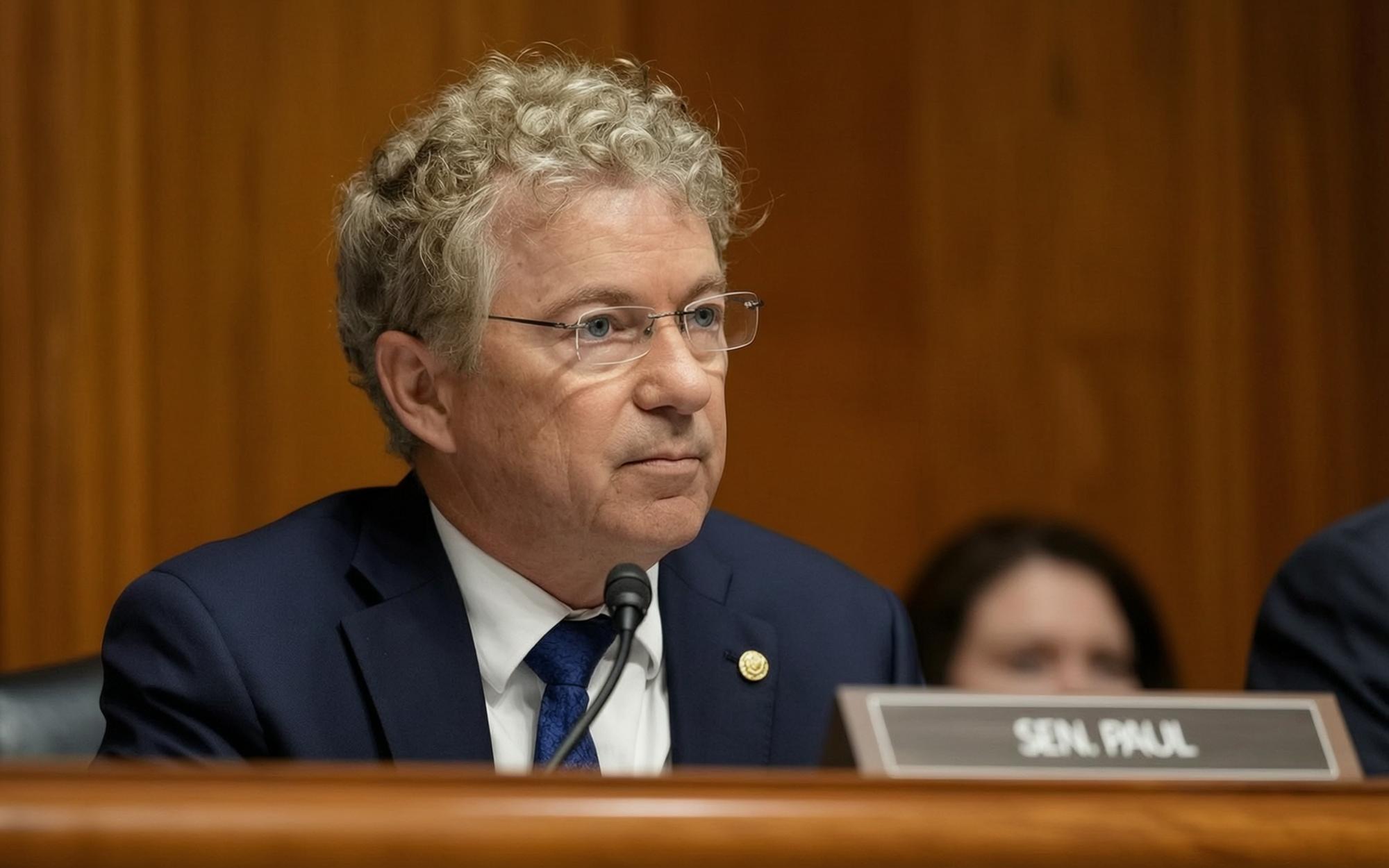
Rand Paul Descends Beneath Fort Knox and Reveals What He Found in America’s Gold Vault [WATCH]

Sen. Rand Paul, R-Ky., traveled to Fort Knox in northern Kentucky on Monday to inspect the nation’s gold reserves and discuss the history of the U.S. dollar, as reported by The Gateway Pundit.

Paul’s visit comes amid renewed attention to the country’s gold holdings and the purchasing power of the dollar.

Rand Paul Uncovers Private Messages Showing COVID Paper Authors Quietly Questioned Their Own Claims

According to the U.S. Mint, the last full audit of the gold reserves stored at Fort Knox was conducted in 1953. A partial audit followed in 1974.

Fort Knox has also been the subject of longstanding speculation about the condition and contents of the gold stored inside the U.S. Bullion Depository.

Over the years, rumors have circulated that some of the gold could have been replaced with gold-plated tungsten.

Paul went underground inside the facility Monday as part of his inspection.

“I’m at Fort Knox. We’ve come to see the gold. Our country has about 147 million ounces of gold, and about half of it is stored here at Fort Knox,” Paul said.

He said the visit was also an opportunity to discuss the consequences of the United States ending the dollar’s direct link to gold in 1971.

“We’re going to be going deep underground to see the gold, but more importantly, we’re going to be talking about what happened to the dollar when we separated from gold in 1971. Over 85 percent of the value of the dollar has been lost since we de-linked from gold,” he added.

Paul then turned to inflation, arguing that the term commonly used in political discussions to describe rising household expenses does not fully explain the underlying issue.

“So there is a problem. The media now calls this affordability, but what it really is is inflation.”

The Kentucky senator also pointed to federal deficits and the role of the Federal Reserve in purchasing government debt with newly created dollars.

“We run a debt. As the deficit runs up — $2 trillion a year — part of that debt is bought by the Federal Reserve with newly created dollars. This leads to inflation, and prices are up,” he explained.

“Prices are up 25 percent in the last five years. It’s inflation. It’s related to deficit spending. It’s related to unbalanced budgets.”

Paul said he would provide an update after entering the underground storage area.

“I’m going down underground, and I’ll let you know what I see in a little bit,” Rand Paul said.

Later Monday, Paul reported that the gold was present and said the inspection demonstrated the significance of the nation’s gold reserves.

“Yes, the gold is there, all (approximately) 147 million ounces. It is impressive, but the real point is what it still teaches in 2026,” Rand Paul said later Monday.

Paul also connected the condition of the dollar to the Federal Reserve’s history, saying the currency has lost most of its purchasing power since the central bank was established.

“I visited Fort Knox today. The dollar has lost 97% of its purchasing power since the Fed opened in 1913. $100 then is worth just over $3,300 today. This is no accident. Congress spends without limit, while the Fed prints the difference,” Rand Paul said later.

The inspection puts the physical presence of the nation’s gold reserves alongside a broader debate over federal spending, deficits, monetary policy and inflation.

For Paul, the Fort Knox visit was about more than confirming that the gold remains in storage.

He used the occasion to highlight what he sees as the long-term consequences of government spending and changes to the nation’s monetary system.

News

Donald Trump Teases Election Emergency as Midterms Loom: Stranger Things Have Happened [WATCH]

President Donald Trump said Tuesday that “stranger things have happened” when asked whether he could declare a national security emergency for elections ahead of the 2026 midterm elections, as reported by Breitbart.

The remark came during an interview that aired on Real America Voice’s America Speaks, where host Wayne Allyn Root raised the possibility of using a national emergency declaration to impose voter identification requirements at polling places.

Root argued that the president could declare a national security emergency if Congress fails to pass the SAVE America Act.

He cited the Supreme Court’s 1983 ruling in Immigration and Naturalization Service v. Chadha during his explanation.

“Because it’s so hard to get the Senate to do anything— now they’re on recess; they don’t get anything done—if they never get the Save America Act done, you have the right to declare a national security emergency for elections. And the Supreme Court ruled in 1983 under Reagan, INS versus Chadha, that if you declare a national security emergency as the president of the United States, they can’t challenge it. It can only be overturned by a two-thirds vote of both houses of Congress. So if you do this in the next month, we will get photo ID, proof of citizenship and a limit to mail-in ballots.”

Trump offered a short response to the proposal.

“Let me just say that stranger things have happened, okay? I’ll leave it at that,” he said.

The exchange comes after the U.S. Senate failed to pass the SAVE America Act before lawmakers left Washington for the August recess. The legislation faces difficult prospects when the Senate returns.

The SAVE America Act would establish voter identification requirements, require proof of citizenship when registering to vote and end universal mail-in ballots, with some exceptions.

The legislation would also codify several measures Trump has pursued through executive action, including restrictions involving medical procedures for minors and rules concerning participation in women’s sports.

The Senate’s legislative rules present another obstacle. Sixty votes are needed to advance the legislation, meaning seven Democrats would need to support the measure if every Republican senator voted for it.

Trump called on Senate Republicans late last month to remain in session and terminate the filibuster so the bill could move forward. The Senate did not take up that proposal before beginning its August recess.

The debate over the SAVE America Act comes as election-related voting rules remain a major issue heading into the 2026 midterm elections.

Republicans have emphasized voter identification and citizenship verification, while Democrats have generally opposed federal measures they argue could restrict access to voting.

For now, Trump has not announced that he will declare a national security emergency for the midterm elections.

His response to Root’s proposal leaves the possibility open without committing the administration to such a move.

With the Senate away from Washington and the SAVE America Act stalled, the president’s brief answer is likely to keep the question alive: whether the administration will pursue an executive route if Congress does not deliver the election reforms Trump has requested.

FULL EPISODE:

News

People Die as Homelessness Explodes and Los Angeles Socialists Trade Blame [WATCH]

Los Angeles City Councilwoman Nithya Raman is losing her position as chair of the city Housing and Homelessness Committee while she campaigns against Mayor Karen Bass.

The two progressive politicians are now blaming each other as homelessness ravages the city they helped govern.

Neither official has much room to boast.

Bass and Raman have occupied influential positions while residents watched public money disappear into a sprawling homelessness system that repeatedly produces excuses, bureaucracy, and shockingly meager results.

Raman, a Democratic Socialist, championed a $62.6 million housing initiative that reportedly placed only three households.

That works out to a staggering sum for a program that barely moved the needle while thousands of people remained on sidewalks, beneath overpasses, and inside encampments.

The stakes are not abstract. People are dying, neighborhoods are deteriorating, businesses are struggling, and families are watching once recognizable communities become monuments to progressive government failure.

Raman claims her removal is political retaliation orchestrated by Bass.

City Council President Marqueece Harris Dawson, a Bass ally, is reportedly preparing to divide the homelessness committee into two separate bodies, with Raman chairing neither one.

That brewing shakeup has produced a bitter public fight between two politicians whose records invite more questions than applause.

Raman insists she has pushed aggressively for solutions, while the Bass camp portrays her tenure as an expensive and absentee fiasco.

“Nithya Raman canceled committee meetings for weeks, didn’t show up to votes, and failed to deliver on building more housing or getting people off the streets,” said Alex Stack, a campaign spokesperson for Bass.

“Her signature program has been a failure, spending over $60 million for nearly a year but only filling 3 apartments. Karen Bass approached these crises with urgency, cleaning up over 120 encampments and unlocking 100,000 new homes.”

WATCH:

Bass may want voters to view her as the responsible adult in the room, but Los Angeles remains buried beneath the consequences of years of progressive rule.

Cleaning encampments and announcing future housing does not erase the visible crisis confronting residents every day.

The Trump administration has also taken notice of the dysfunction.

Federal funding was pulled from the Los Angeles Homeless Services Authority, commonly known as LAHSA, an agency repeatedly criticized as a massive money vacuum with little accountability and weak oversight.

Federal investigators found that LAHSA failed to verify nearly 2,300 housing sites under its supervision.

Roughly 70 percent of contracts connected to those sites reportedly showed no spending during the previous year, raising obvious questions about management and basic competence.

Despite those findings, Raman’s committee approved another $358 million for LAHSA in the current city budget.

City officials argued that Los Angeles lacked the infrastructure needed to replace the agency, which is a remarkable admission after years of enormous spending.

Raman says the disorder supports her demand for stronger city oversight.

WATCH:

That argument would carry more weight if she had not already been sitting in a powerful oversight position while the dysfunction continued and taxpayer dollars kept flowing.

Los Angeles currently has about 45,000 homeless people within city limits.

The number rises to approximately 73,000 across Los Angeles County, illustrating the enormous scale of a crisis that progressive officials have promised to solve for years.

After a modest decline in recent years, the number of people living on the streets reportedly increased by eight percent in 2026.

That happened despite billions of dollars being poured into programs, agencies, contractors, consultants, and housing plans marketed as bold solutions.

The spectacle fits a broader California pattern, with Democratic politicians fighting each other while basic government functions crumble.

Governor Gavin Newsom and his ideological allies have spent years promoting progressive experiments, yet ordinary Californians keep receiving higher costs, worsening disorder, and endless lectures.

Raman and Bass can continue trading accusations, but voters have already seen the results.

One failed program or one cleaned encampment cannot disguise a political establishment that spent fortunes, expanded bureaucracy, and left tens of thousands of vulnerable people trapped in misery.

News

Lauren Boebert’s Son Arrested on Explosive Child Exploitation Felony Charges [WATCH]

The oldest son of Republican Colorado Rep. Lauren Boebert has been arrested on multiple felony charges involving the alleged sexual exploitation of a minor.

The disturbing accusations emerge from an investigation that authorities say stretched across more than two years.

Tyler Jay Boebert, 21, was taken into custody Sunday by the Garfield County Sheriff’s Office after investigators obtained a warrant.

He was booked into the Garfield County jail as the serious new criminal case moved into public view.

Court records indicate that Boebert faces five felony counts.

Those charges include three counts of sexual exploitation of a child and two counts of contributing to the delinquency of a minor.

The allegations concern sexually explicit material involving Boebert and a girl who was younger than 18 at the time.

Investigators claim Boebert recorded a video showing himself engaging in sexual intercourse with the minor and later distributed that recording.

Boebert was reportedly 18 when the alleged conduct occurred, while the girl was 17.

That relatively narrow age difference does not erase the legal questions surrounding the alleged creation, possession, and distribution of explicit material involving someone legally considered a minor.

The investigation reportedly began after authorities received information through Colorado’s Safe2Tell program in 2024.

Investigators then focused on explicit videos that were allegedly circulated through social media, eventually producing the charges now confronting Boebert.

The counts include accusations that Boebert induced or enticed a child to participate in sexually exploitative material.

Prosecutors also allege that he possessed such material with the intention of distributing it and committed sexual exploitation involving a video.

Authorities arrested Boebert on August 9, according to the available records.

He was released later that day after posting a $10,000 surety bond and is expected to return to court on August 19.

Rep. Boebert responded to the arrest with a statement acknowledging the severity of the situation.

“I love my son,” the Colorado Republican said while also expressing concern and prayers for everyone connected to the case.

The allegations represent another entry in Tyler Boebert’s growing record of legal trouble.

While every defendant is entitled to due process, the number and seriousness of the cases now surrounding him make this far more than a single youthful mistake.

WATCH:

In February 2024, Boebert was arrested following a series of vehicle break ins and property thefts in Garfield County.

Authorities accused him and other individuals of entering vehicles and using stolen credit cards to purchase goods.

Boebert later reached a plea agreement in that case and is still awaiting sentencing.

His sentencing in connection with the vehicle trespass and theft matter is currently scheduled for September 10.

He also awaits sentencing in a separate case tied to a 2025 child abuse incident in Weld County.

Boebert pleaded guilty in that matter and is scheduled to receive his sentence on September 4, only days before the hearing in the theft case.

The newly filed exploitation charges are considerably more severe and could further complicate his already tangled legal position.

Prosecutors will now have to present evidence supporting the accusations, while Boebert and his attorneys will have an opportunity to challenge the state’s case.

The arrest also arrives as Rep. Boebert seeks another term in Congress from Colorado’s 4th Congressional District.

She shifted her political base across the state before the 2024 election after previously representing the 3rd Congressional District, then captured the heavily Republican 4th District seat.

Rep. Boebert is campaigning for reelection against Democrat Eileen Laubacher, meaning the case will almost certainly attract political attention.

Still, the allegations concern her adult son, and attempts by partisan operatives to assign his alleged conduct to the congresswoman would be the usual cheap political theater.

Tyler Boebert has not been convicted of the newly filed charges.

The accusations must be proven in court, and his August 19 appearance is expected to offer the first significant indication of how prosecutors intend to pursue the felony case.


Scroll to Top