Author name: Common Defense

News

B-52 Crash Sparks Tough Questions About Future of America’s Legendary Bomber

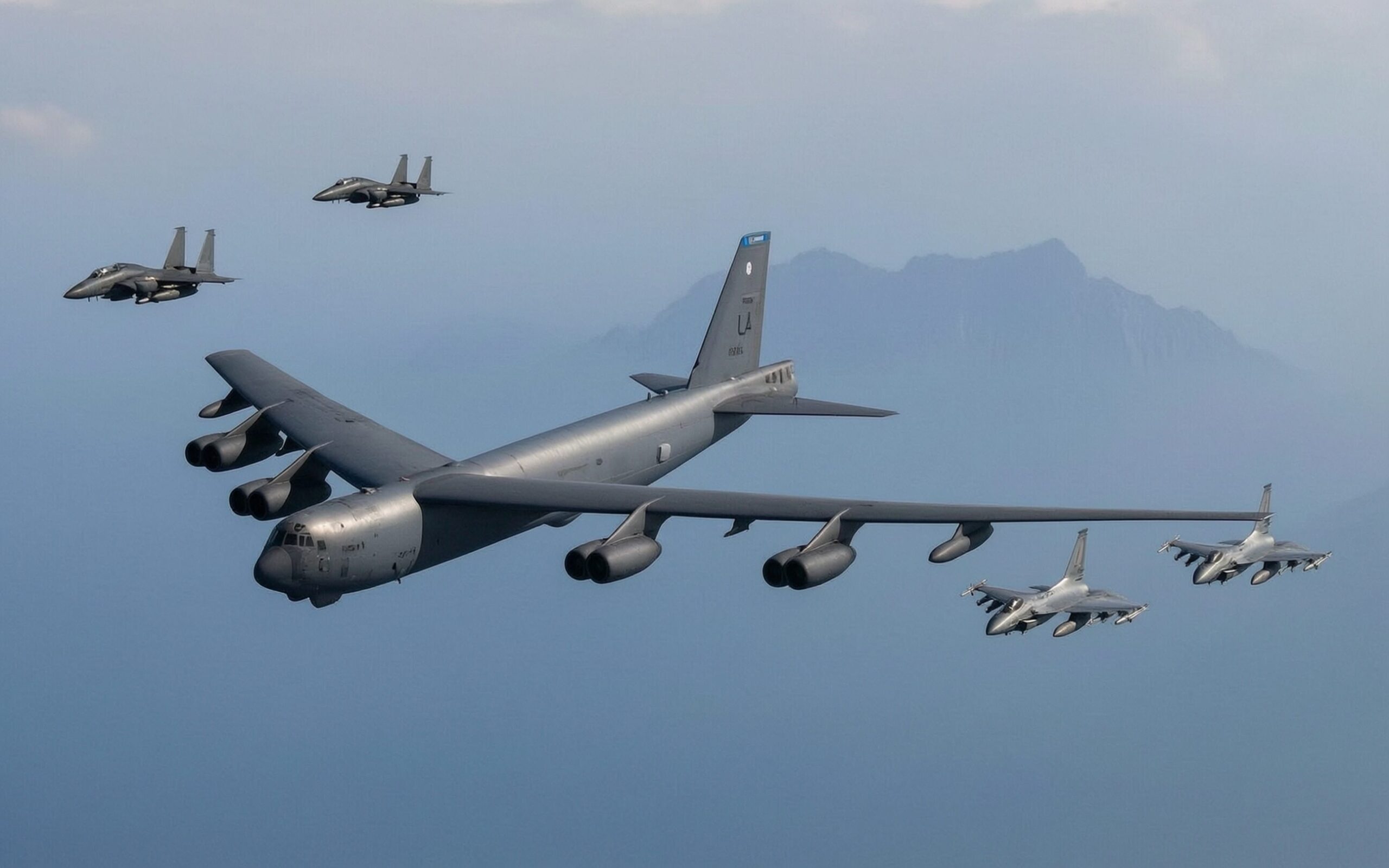
The B-52 Stratofortress has long stood as one of the most recognizable and formidable symbols of American airpower.

Towering over the skies since the 1950s, the massive bomber remains a pillar of U.S. military strategy—a weapon of endurance, strength and deterrence.

But after a tragic crash at Edwards Air Force Base this week claimed eight lives, questions are intensifying over whether this Cold War icon can keep flying confidently into the next century.

The Air Force has expressed full intent to extend the operational lifespan of the B-52 fleet well into the 2050s, supported by new technology and ongoing modernization projects.

Yet the crash is forcing a hard look inside a fleet that has faithfully served through every major American conflict for seven decades—from Vietnam to Iraq to the recent war with Iran.

Initial reports from Edwards AB confirm the crash occurred shortly after takeoff during what was described as a routine test mission. The plane was part of the Radar Modernization Program, an effort to update the bomber’s radar capabilities with state-of-the-art systems.

Tragically, the routine sortie ended with catastrophic failure and a devastating fireball, claiming all eight aboard, including U.S. Air Force crew and Boeing contractors.

An Interim Safety Investigation Board has begun assessing the wreckage, collecting evidence, and preparing to pass findings to a final Safety Investigation Board made up of top-tier experts in Air Force aviation.

Unlike civilian crashes, there is no National Transportation Safety Board involvement; this is a military matter through and through—handled internally within the Air Force structure. It’s what the War Department insists on: accountability within the ranks.

Analysts like Douglas Birkey from the Mitchell Institute for Aerospace Studies caution that while the B-52 fleet has performed remarkably well, structural fatigue is a real concern.

“When you do the math, that’s Cold War hardware we’re flying in a 21st-century battlespace,” Birkey noted. The engineering resilience of the B-52 is proven, but even fine-tuned workhorses can only be rebuilt so many times before fatigue finds its way into the frame.
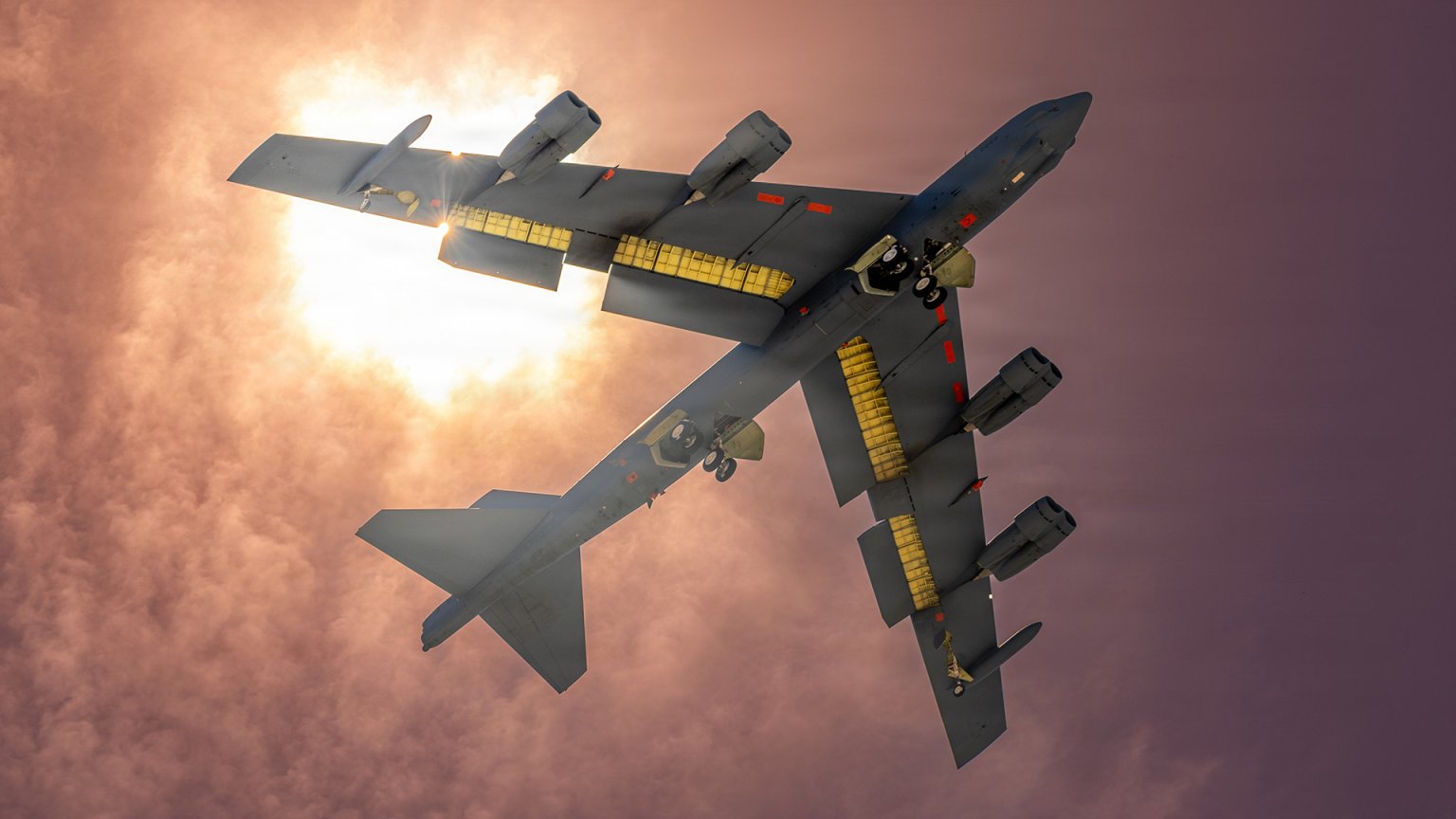
Eight Tragically Killed in Fiery B-52 Crash at Edwards Air Force Base
A B-52H Stratofortress from Edwards Air Force Base, California, departs for an evening test mission on Aug. 7, 2025. Air Force photo by Todd Schannuth.

The Air Force, however, believes modernization will keep these bombers alive and potent. Current plans include complete engine replacements, a new radar system, and improved computer systems to integrate with modern warfare networks.

In other words, while the B-52 may be old, it’s far from obsolete—especially when guided by capable leadership seeking to keep American military deterrence strong.

Still, the accident raises a familiar dilemma: at what point does upgrading a classic turn into overextending it? Aviation expert Ross Aimer put it bluntly. “Reimagining and changing an old airplane—it’s like putting chrome wheels on a ’70s Honda Civic.

It’s still a Honda Civic.” Aimer, a retired airline captain and consultant, underscored that aging frames can create new mechanical mysteries, no matter how much new tech is bolted onto them.

Historically, the B-52’s safety record has been impressive for such an old and heavily deployed aircraft. In an era where other aircraft types have long since retired, the B-52 has remarkably few recorded incidents.

The last fatal crash before this week’s happened in Guam in 2008. That longevity speaks to both the design genius of the Boeing engineers who built it and the vigilant maintenance by America’s airmen.
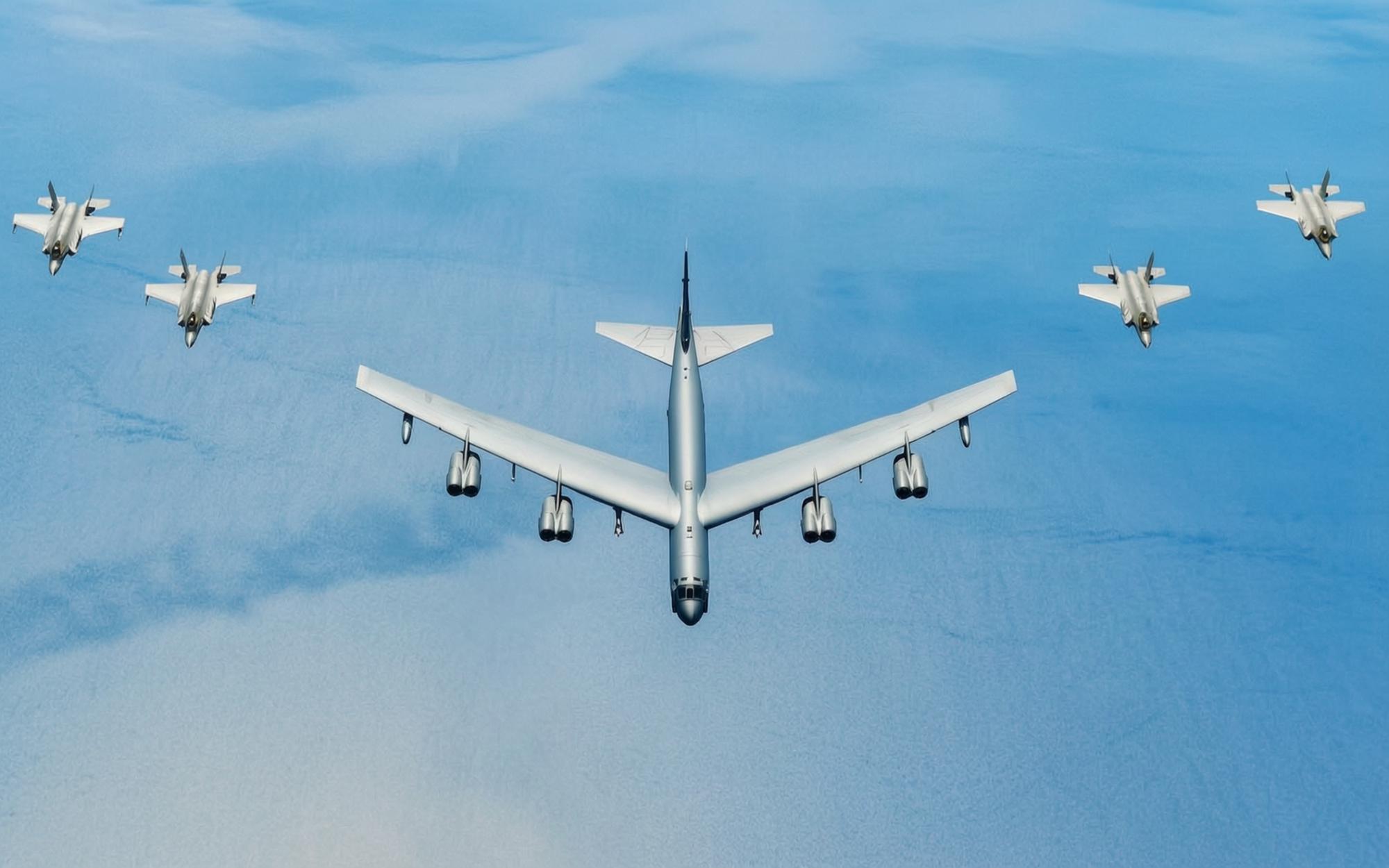
B-52 Bomber Upgrade Clears Key Design Hurdle, Set to Begin Powerhouse Engine Overhaul

At the same time, critics of endless modernization argue that the Air Force is reluctant to invest in a fresh bomber platform simply because of cost. Developing a completely new long-range strategic bomber program from scratch would demand staggering sums.

Instead, the service has chosen to stretch the B-52’s lifespan through iterative upgrades.

It’s a practical decision—one that aligns with the fiscal discipline favored by President Trump’s vision for a strong but smart military rebuild, reinforced by War Secretary Pete Hegseth’s emphasis on efficiency without sacrificing combat power.

As for the current crash investigation, experts believe it will not only review the immediate causes—mechanical, human, or procedural—but also analyze patterns across the entire B-52 fleet.

“They’re going to have to do a very thorough inspection of the fleet,” Birkey said. “If they think it’s something structural or mechanical, it could cause extra inspection.” That means the results could influence operational readiness for months, or even years to come.

Meanwhile, modernization efforts continue. Testing of the new radar system is already underway, with the updated engines scheduled for testing in 2027.

These projects are aimed at keeping the Stratofortress viable in a world increasingly dominated by stealth platforms and unmanned systems. Yet, as Aimer admits, the very future of the B-52 may depend not on its hardware, but on how the nature of warfare evolves.
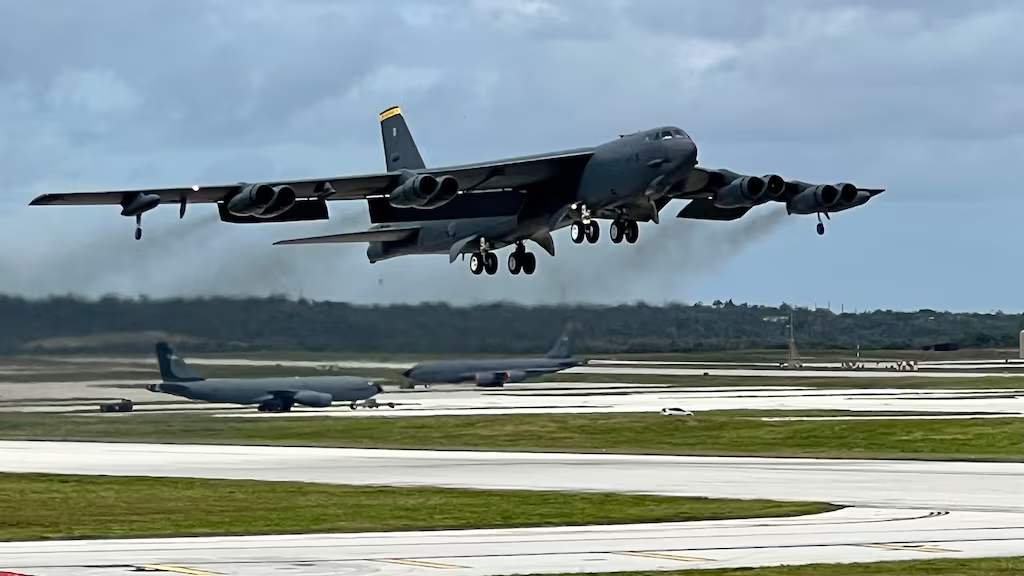
Air Force Clarifies B-52 Flyover Incident Near Minot Airport, Says Crew Unaware of Passenger Jet
The Air Force said a B-52 crew that had a near-miss with a passenger aircraft last Friday told air traffic controllers at the Minot International Airport of their plans for a flyover of a nearby fairgrounds, but were not told a commercial airliner was on the way as well. (Capt. Stephen J. Collier/U.S. Air Force)

For now, the Air Force is committed to keeping this warhorse in the air. The plane represents far more than an aging design—it’s an enduring promise of American resolve and reach.

Veterans and pilots who’ve served aboard the Stratofortress continue to describe it as a “living legend” and a reminder that strength doesn’t always need a new nameplate to stay lethal.

If the investigation shows the crash was an isolated mechanical failure, the B-52 will likely continue its long march into a new era. If deeper problems appear, policymakers may have to weigh tough options.

Either way, the bomber that has carried American power across the globe won’t be grounded quietly. It’s lasted seventy years because it works—and because the men and women behind it refuse to let age define American might.

News

Retired Army General Sounds Alarm on AI and Quantum Computing Threats to U.S. Security

Retired Army Lt. Gen. Ross Coffman isn’t mincing words when it comes to the next frontier of warfare.

The former commander and now president of Forward Edge-AI warns that America and its allies are standing at a dangerous crossroads — a point where artificial intelligence and quantum computing could rewrite the rules of military dominance and national survival.

Coffman, whose company builds cutting-edge tools at the intersection of AI, cybersecurity, and national defense, told Military.com that we’ve entered a perilous new era.

“We’re in a very dangerous place in the cyber world right now,” he said, underscoring how artificial intelligence has supercharged the pace and power of cyberattacks, many of which now run autonomously 24/7.

The General wasn’t talking about hypothetical sci-fi threats. He was referring to real-world capabilities already in play — AI-powered cyberweapons capable of scanning global networks in milliseconds to find vulnerabilities without a single human involved.

These intelligent viruses don’t sleep, don’t need breaks, and don’t wait for orders. They just hunt.

Coffman’s warning is particularly stark because it connects two fast-advancing technologies — AI and quantum computing — that most Americans only hear about at tech conferences or in science sections of the news. But for him, these aren’t laboratory curiosities.

They’re potential weapons that could cripple entire sectors of national security if the nation doesn’t prepare.

As he explained, “With AI being used in cyberattacks without a human in the loop, that means it doesn’t sleep.

It goes 24/7, 365, looking for vulnerabilities.” That reality, paired with adversaries who know how to exploit it, presents a threat unlike anything the War Department has faced before.

Forward Edge-AI’s work focuses on making sure the United States isn’t caught off guard when this technology leap proves decisive. Among its projects is Isidore Quantum, a platform built for what’s called “post-quantum cryptography.”

The goal: develop encryption strong enough to survive the coming wave of quantum-capable codebreakers.

Quantum computing is not about more powerful laptops—it’s about machines using quantum bits, or qubits, to calculate on a scale that shatters today’s encryption.

Experts warn that when “Q-Day” comes — the moment quantum systems can break public-key cryptography — the world’s digital security as we know it could collapse. Banks, hospitals, power grids, even military communication systems could be at risk.

It’s no wonder the feds are scrambling. The National Institute of Standards and Technology (NIST) recently finalized the first post-quantum cryptography standards and urged immediate migration.

The National Security Agency, through its Commercial National Security Algorithm Suite 2.0, has already established hard deadlines — mandating that key systems become quantum-proof by 2035. Any gear that can’t make the cut will be retired by 2030.

Coffman supports that urgency but warns that implementation is another beast entirely. Transitioning massive, layered federal networks, many built on outdated architectures, to quantum-resistant standards is not a weekend project. “It’s not difficult, but it’s not something you do overnight if you have a large network,” he said.

That statement carries weight. Forward Edge-AI isn’t just talking theory — it is developing the hardware-and-software hybrid solutions to retrofit the systems that run America’s cyber backbone.

Coffman’s team aims to shield sensitive data across military, energy, and financial sectors from a day when traditional encryption could be rendered worthless.

The general’s military mindset informs his approach. He sees the AI and quantum threats as part of the same evolving battlespace, one where lines blur between digital and physical warfare.

Cyberattacks often accompany real-world tensions now, as seen in the Ukraine conflict and China’s global hacking campaigns. America’s adversaries no longer need to build a fleet or occupy territory to inflict damage — they simply need to breach a network.

And they’re getting better at it. Coffman points out that artificial intelligence now makes it easier for state and non-state actors to automate intrusion attempts, tailor phishing campaigns, and exploit human error faster than security teams can respond. “Technology isn’t the biggest vulnerability,” he said, “people are.”

He’s right. The weakest link remains human oversight — from careless users clicking questionable links to bureaucrats delaying critical tech transitions. That’s a gap our adversaries, from Beijing to Tehran, are eager to exploit.

Coffman’s ultimate message is both warning and opportunity. America can either lead in secure, AI-enhanced defense systems or play catch-up to nations with fewer moral limits on how they deploy this technology.

The difference will be leadership and preparation — both hallmarks of the Trump-era approach to national security that emphasized dominance, not dependence.

Secretary of War Pete Hegseth and the Trump administration’s defense vision have already made it clear that keeping America safe in the next generation of combat will require muscle, vigilance, and technological superiority.

Coffman’s words simply drive home the point that this battle has already begun — online, in code, and at the speed of thought.

News

Zelenskyy Sends Back Poland’s Top Medal After Furious Fallout Over WWII History

Ukrainian leader Volodymyr Zelenskyy has mailed back Poland’s highest state decoration, the Order of the White Eagle, after the Polish president revoked it in a fiery political skirmish rooted in bitter World War II memories and modern national rivalries.

The spat, which erupted over Zelenskyy’s decision to name a Ukrainian military unit after a controversial wartime formation, spotlights how fragile the alliance between Warsaw and Kyiv has become amid their shared struggle against Russian aggression.

Zelenskyy explained his decision bluntly on X, declaring that the Polish order “was meant for the Ukrainian People and our army” but that he now believes it should be returned.

The post included photos of the medal and a postal receipt addressed to the Polish presidential office, signaling that the Ukrainian leader had formally mailed it back.

The crisis began when Polish President Karol Nawrocki decided to strip Zelenskyy of the prestigious Order of the White Eagle.

His reasoning: Zelenskyy’s late-May decree naming a Special Operations Forces unit after the Ukrainian Insurgent Army, or UPA — a force accused by generations of Poles of massacring Polish civilians during WWII.

“The Ukrainian Insurgent Army remains, for the majority of Polish society, a formation responsible for cruel crimes against the citizens of the Polish Republic during World War II,” Nawrocki declared in a social media speech lasting over a dozen minutes.

Zelenskyy’s decree, however, had been meant to restore historic military traditions, recognizing soldiers who continue to defend Ukraine’s independence in its fight against Russia.

Trump Secures Three-Day Ceasefire Between Russia and Ukraine Amid Prisoner Swap Deal

The UPA’s history is complicated: it fought both Nazi Germany and the Soviet Union, but also committed atrocities against Poles. The Polish Parliament officially labeled those wartime killings as genocide in 2016.

Poland has been one of Ukraine’s staunchest supporters since Russia’s invasion, hosting millions of refugees and supplying weapons.

Yet domestic politics in Warsaw have grown tense, with Nawrocki—a nationalist who thrives on populist energy—seizing the issue to score political points and whip up anti-Ukrainian sentiment ahead of elections.

Ukraine’s presidential office took Nawrocki’s move as an insult to the Ukrainian people and a propaganda victory for Moscow. Kyrylo Budanov, chief of the Ukrainian Presidential Office, claimed the revocation was “an unfriendly act toward our people” and “a gift to the Moscow aggressor.”

He added that the Kremlin would gladly exploit the drama to drive a wedge between two countries that have fought shoulder to shoulder against Putin’s war machine.

In solidarity, several Ukrainian officials, including Budanov, announced they too would return state honors awarded by Poland, viewing the Polish president’s action as a betrayal.

Among them was former Ukrainian Prime Minister Arseniy Yatsenyuk, who warned that “one harmful and incorrect decision by the current president of Poland cannot be corrected by other incorrect decisions of ours.”

This dispute comes at a particularly awkward time. Poland is set to host a major conference on Ukraine’s postwar reconstruction in the coming days—a diplomatic affair Zelenskyy had planned to attend. Now, his participation appears uncertain, with tensions running high between the two leaders.

Trump Strengthens Support for Ukraine, Calls Russia a “Paper Tiger”

Polish Prime Minister Donald Tusk, who remains a political rival of Nawrocki, publicly appealed for calm, urging both presidents to “tone down emotions, not stoke tensions.”

He warned that the current war of words “delights Putin and shocks our allies,” a reminder that internal division within NATO’s Eastern flank benefits only the Kremlin.

Zelenskyy, for his part, maintained a tone of pride and defiance, stating he was “proud of our people and of EVERY Ukrainian warrior.” He reaffirmed Ukraine’s gratitude to Poland for its wartime aid and insisted that his country remains open to constructive dialogue about their shared but painful history.

Yet beneath the diplomacy, this exchange reveals how much friction still simmers under the surface of the Polish-Ukrainian alliance. Historical memory—especially memories written in blood—can be weaponized just as easily as tanks or drones.

In today’s Europe, that history is once again at the center of a fight about identity, patriotism, and loyalty.

The timing could not be worse for the Western coalition backing Kyiv, as divisions over history give Putin new ammunition in his campaign to fracture support for Ukraine.

Many conservatives across Europe now question whether Zelenskyy’s political theatrics help or harm his cause, especially as Western taxpayers grow weary of bankrolling his endless appeals for aid.

For Warsaw and Kyiv alike, the symbolism of medals and names might seem trivial compared to missiles and manpower.

But in the halls of power, symbols matter. They’re about who owns the narrative of heroism—and who gets to define history itself.

One thing is certain: while Zelenskyy and Nawrocki argue over the ghosts of the past, Vladimir Putin is smiling in the present.

News

Air Force Permanently Stations Global Hawk Recon Drones in Japan Amid Rising Pacific Tensions

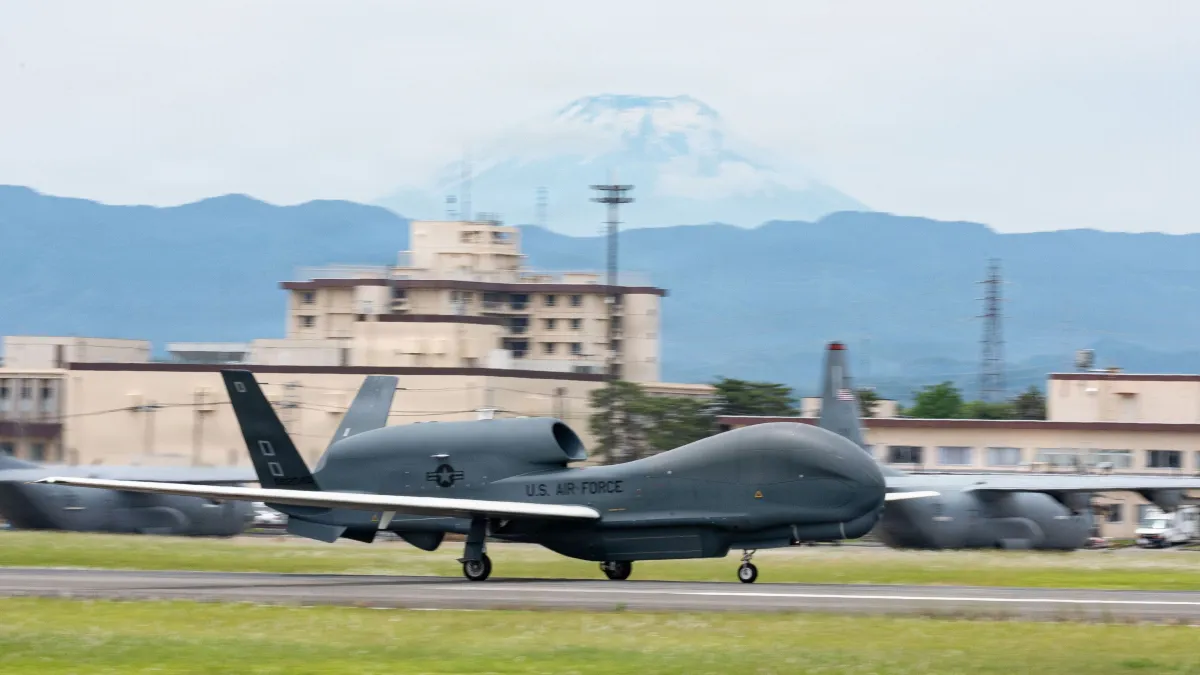
The United States Air Force is making a decisive move in the Indo-Pacific theater, permanently repositioning its RQ-4 Global Hawk reconnaissance drones from Guam to Yokota Air Base in Japan.

The decision follows more than a decade of seasonal rotations and demonstrates a clear strategic message amid rising challenges from China and North Korea.

The 4th Reconnaissance Squadron, part of the 319th Operations Group, began the relocation process in late May.

The first Global Hawk officially landed at Yokota on May 27, though the transfer was only recently confirmed by the 374th Airlift Wing.

About 150 U.S. Air Force personnel have moved alongside the aircraft, signaling a serious and long-term investment in maintaining real-time intelligence across the region.

Lt. Col. Adam Otten, commander of the 4th Reconnaissance Squadron, stated that “Yokota Air Base is the right location to support current and future RQ-4 operations in the theater, while upholding the quality of life of our Airmen and families.”

In plain terms, the move positions America’s most sophisticated eyes-in-the-sky closer to where the threats are actually unfolding.

Yokota has long been a hub of U.S. airpower in Japan, home to the Fifth Air Force headquarters and the 374th Airlift Wing, which operates C-130J and C-12J aircraft.

The addition of the Global Hawk detachment weaves a new layer of surveillance capability directly into the command nerve center for operations across East Asia.

The RQ-4 Global Hawk isn’t just another drone. This unmanned aircraft is a monster of modern reconnaissance, with a 130.9-foot wingspan and weighing nearly 15,000 pounds.

Air Force Permanently Stations Global Hawk Recon Drones in Japan Amid Rising Pacific Tensions
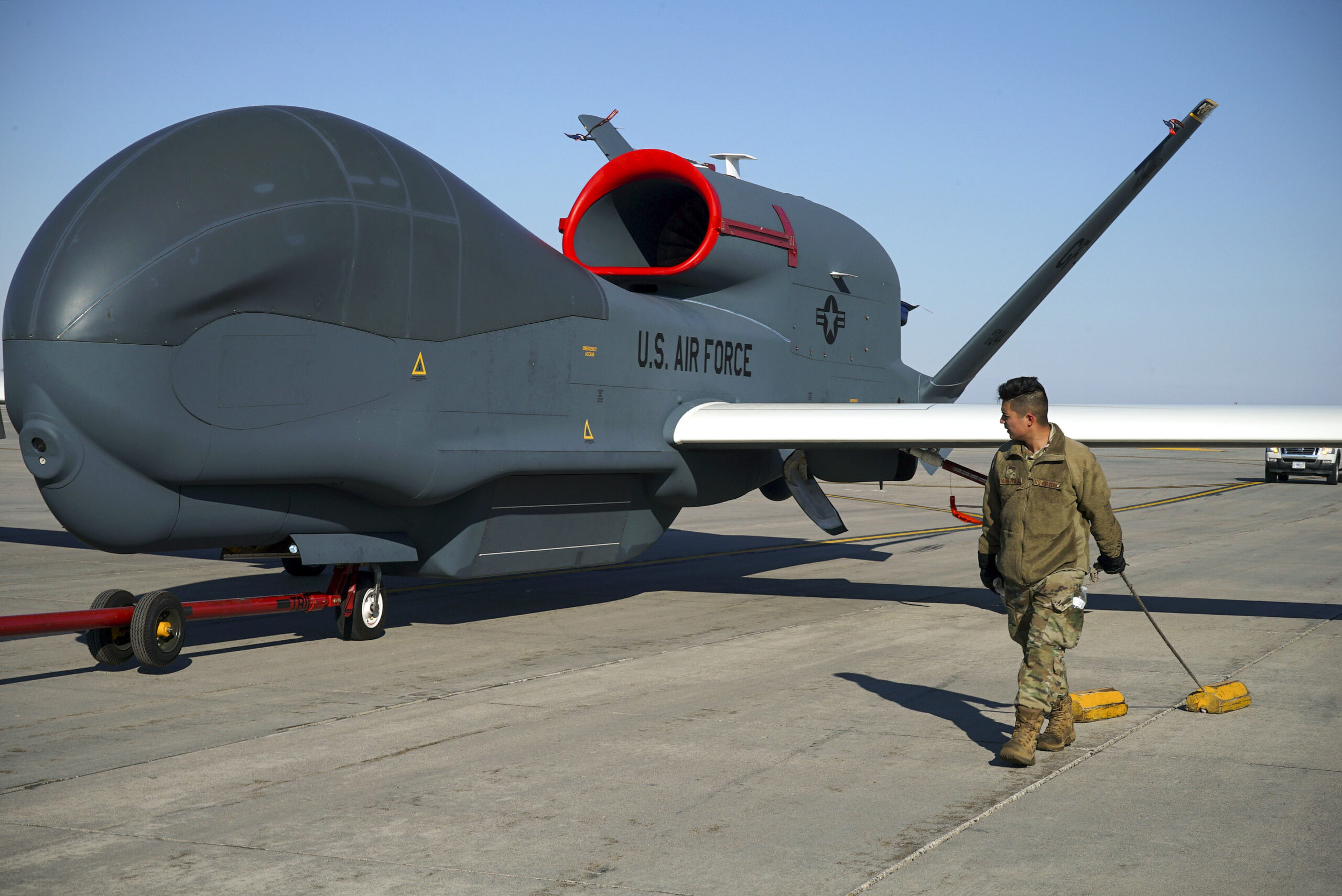
Air Force Airman 1st Class Bryant Vides-Perlera pulls chocks beside an RQ-4 Global Hawk remotely piloted aircraft as it’s towed across the flightline at Grand Forks Air Force Base, N.D., Oct. 23, 2020.

It can stay aloft for over 30 hours while flying at about 60,000 feet, gathering high-resolution imagery across thousands of square miles with precision sensors. It’s essentially an unblinking sentinel quietly monitoring the Pacific skies for hostile activity.

According to the Air Force, the rearranged squadron will “support theater-wide operations,” which include everything from peacetime intelligence missions to full-spectrum crisis responses.

The service pointed to the drone’s vital role during Japan’s 2011 earthquake and tsunami disaster as proof of its versatile value to both allies and humanitarian efforts.

Weather patterns were also a major factor in the move. Guam faces brutal typhoon seasons that complicate flight operations and maintenance schedules.

Japan’s more stable conditions—particularly during the storm-heavy months—provide a more favorable environment for continuous surveillance missions. That stability translates to a ready-to-fly fleet when tension flares.

Air Force Permanently Stations Global Hawk Recon Drones in Japan Amid Rising Pacific Tensions
RQ-4 Global Hawk

It’s an uncommon reversal, as most recent Pentagon investment has focused on expanding Guam’s military footprint through new missile defenses, refueling capabilities, and storage depots.

Yet shifting a Global Hawk squadron northward places these critical assets within faster reaction range of both the East China Sea and the Korean Peninsula—exactly where Washington’s attention needs to be.

The move fits within a broader U.S. pattern of tightening intelligence coverage and deterrence posture across Asia. Last year, MQ-9 Reaper drones were permanently stationed in South Korea for round-the-clock reconnaissance.

The Marine Corps also temporarily deployed MQ-9A units to the Philippines as part of growing efforts to monitor the South China Sea. Each shift is part of a comprehensive realignment to sustain a “free and open Indo-Pacific,” as the Air Force describes it.

With the RQ-4s now at Yokota, the U.S. and its allies can expect enhanced monitoring capabilities over hot zones where China’s naval forces and aircraft are becoming increasingly aggressive.

Beijing’s saber-rattling has escalated in recent months, making persistent, precise, and uninterrupted surveillance more crucial than ever.

American commanders, under the assertive leadership of War Secretary Pete Hegseth, are taking deliberate and smart steps to strengthen deterrence.

By situating world-class reconnaissance platforms closer to the action, the U.S. military sends a clear message: America’s vigilance will not waver, and its commitment to its Pacific allies remains ironclad.

Air Force Permanently Stations Global Hawk Recon Drones in Japan Amid Rising Pacific Tensions
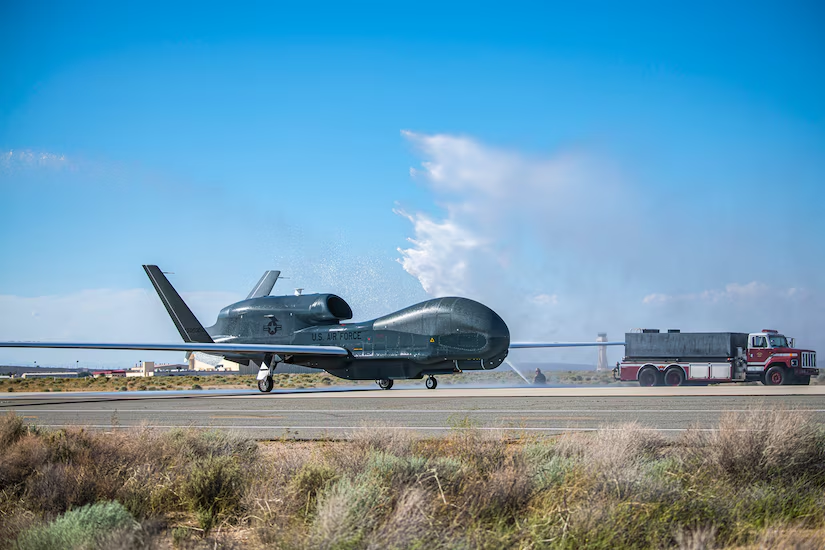
Air Force Maj. Marc Nichols, 452nd Flight Test Squadron assistant director of operations, inspects an RQ-4 Global Hawk remotely piloted aircraft at Edwards Air Force Base, Calif., April 6, 2020.

Critics may spin this as another “provocative” move, but the real provocation comes from China’s missiles, naval militias, and constant surveillance flights intruding into allied airspace.

The Global Hawk’s relocation isn’t an escalation—it’s preparation. And as history shows, preparedness is the surest way to keep peace.

This shift also ensures greater coordination with Japan’s Self-Defense Forces, which will benefit from direct intelligence feeds that help track maritime activities and potential threats.

In a region where every radar blip could turn into a crisis, that coordination is worth its weight in gold.

The Air Force’s relocation of its Global Hawk fleet to Japan is a powerful demonstration of America adjusting to the times—not retreating, but repositioning.

The Pacific theater remains the most contested strategic front of the 21st century, and this move places American eyes right where they’re needed.

In an age of technology-driven warfare, information dominance is everything.

By planting the world’s most advanced reconnaissance systems firmly in the heart of East Asia, Washington is doing exactly what must be done to keep adversaries guessing and allies reassured.

News

Remains of Fallen B-52 Heroes Head to Dover for Final Honors and Identification

The remains of eight American patriots lost in Monday’s devastating B-52 Stratofortress crash at Edwards Air Force Base are being airlifted to Delaware’s Dover Air Force Base for post-mortem care and identification.

The transfer, set for Friday, marks the next solemn step in honoring the eight men who died serving their country during a high-stakes test mission.

Officials at Edwards confirmed Wednesday that all eight members onboard were killed instantly when the massive bomber went down shortly after takeoff.

The aircraft erupted into flames on the runway, with Air Force leaders calling the crash “unsurvivable.”

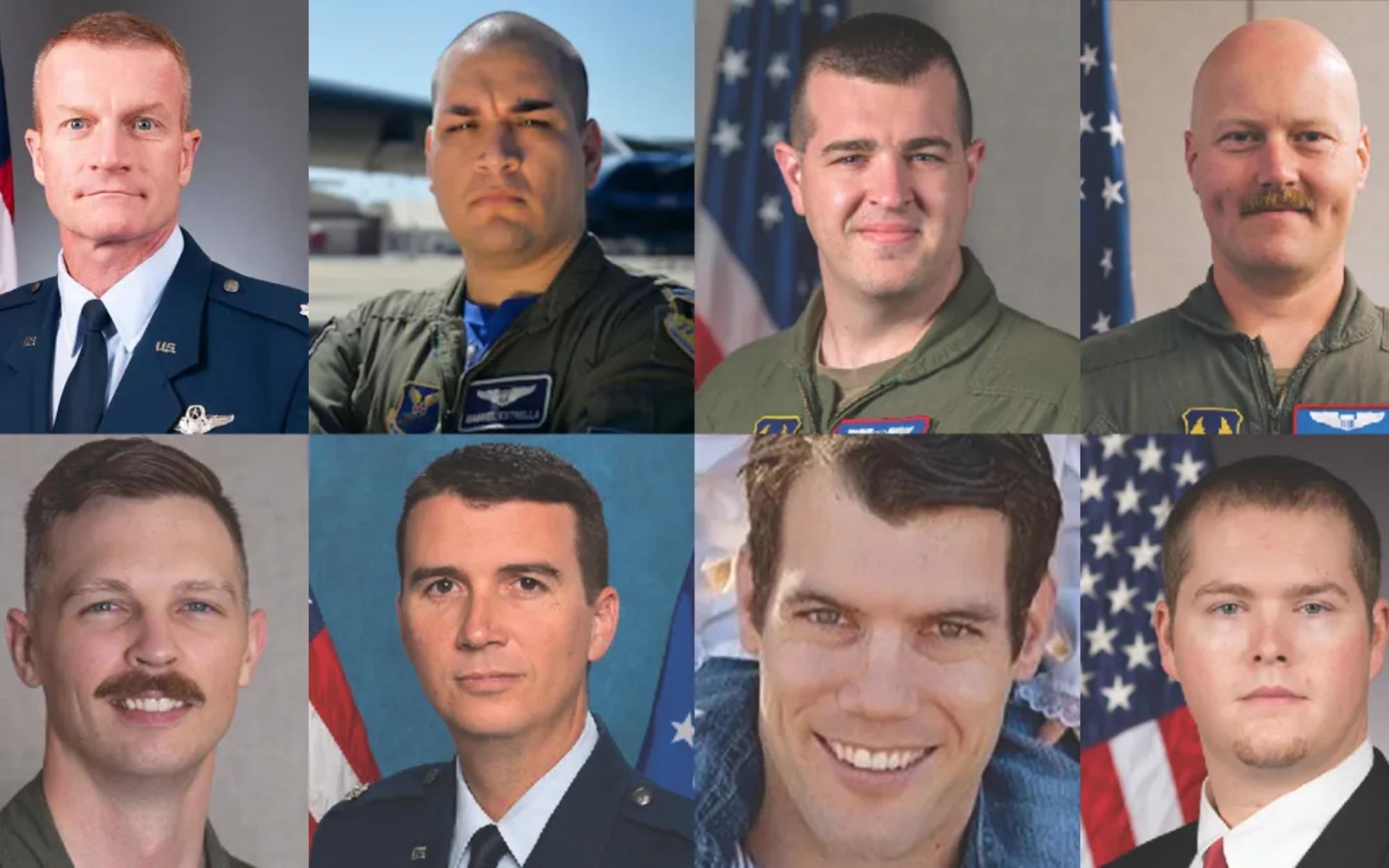
Among the fallen are Col. Gregory Watson, 53; Lt. Col. Gabriel Estrella, 40; Maj. Alexander Davis, 34; Maj. Robert Dee, 40; Maj. Brad Hovey, 35; Retired Lt. Col. Miles Middleton, 50; Jeromy Smith, 32; and Christopher Rischar, 41.

Their remains are being transported to the Charles C. Carson Center for Mortuary Affairs at Dover, the nation’s premier facility for handling the remains of fallen military members.

These men, a combination of active-duty personnel, veterans, and skilled civilians, were part of a radar modernization test mission — a critical project supporting America’s air superiority.

Their loss underscores both the risks and dedication tied to advancing the United States’ aerial warfare capabilities.

At Dover, the remains will undergo advanced identification procedures and preparation for return to their loved ones.

The military has not released details about the process, focusing instead on ensuring families receive accurate information and the highest standard of care.

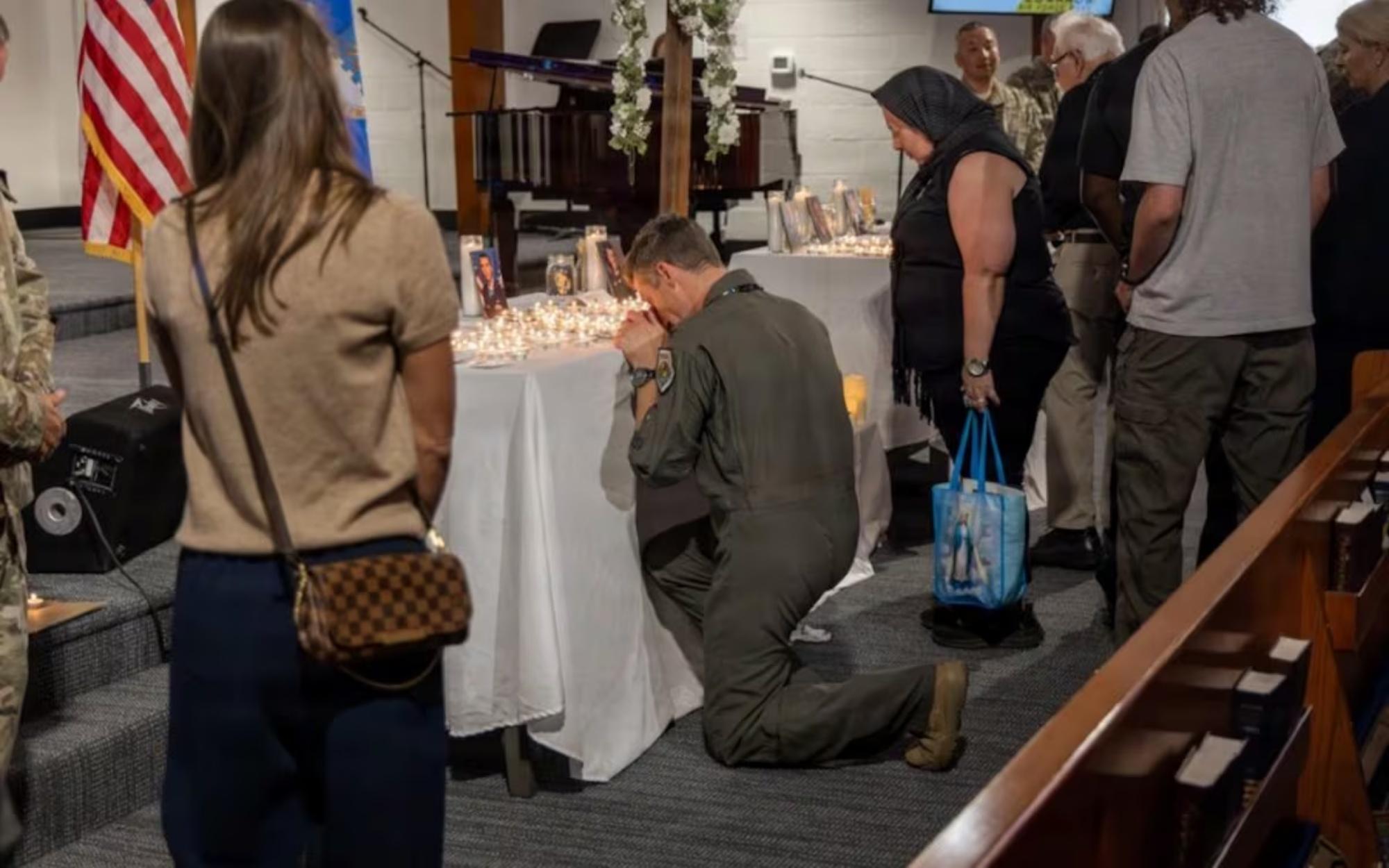
The Edwards community has rallied in tribute. More than 700 airmen, families, and base workers gathered Wednesday evening at the flightline chapel for a candlelight vigil.

Air Force Identifies Eight Heroes Lost in Deadly B-52 Crash at Edwards Base
The Air Force released the names of the crew members killed June 15 when a B-52 crashed at Edwards Air Force Base, California. (top row) Col. Gregory Watson; Lt. Col. Gabriel Estrella; Maj. Alexander Davis; Maj. Robert Dee; (bottom row) Maj. Brad Hovey; retired Lt. Col. Miles Middleton; Christopher Rischar; and Jeromy Smith. Air Force photos.

The somber event honored the eight men’s service and sacrifice, a testament to the strong bond shared by those stationed at the storied California base.

“The base’s Emergency Family Assistance Center remains open until further notice,” the base said in a statement.

“We are providing chaplain support, mental health resources, child care, and legal assistance to any member of the base community who needs it.” It’s a reminder that the military family doesn’t just fight together— it mourns together.

Edwards officials said details of a broader memorial service will be released next week once the immediate recovery efforts conclude.

The base temporarily shut down the airfield following the crash to allow emergency crews to secure the site, extinguish the blaze, and recover the bomber’s flight recorder.

By Thursday, the airfield had reopened for limited operations, but regular flight tests are paused until next week while the investigation continues.

Air Force safety boards have already begun the painstaking process of determining what happened in the final moments before the crash.

An Interim Safety Investigation Board is currently managing the initial review before the formal Safety Investigation Board begins.

That process can take up to 30 days, after which an Accident Investigation Board will lead a deeper review into the causes and recommend corrective actions. Final reports, expected in about six months, will determine what information can be shared publicly.

U.S. Casualties Mount as Iran Clash Triggers Broad Military Response
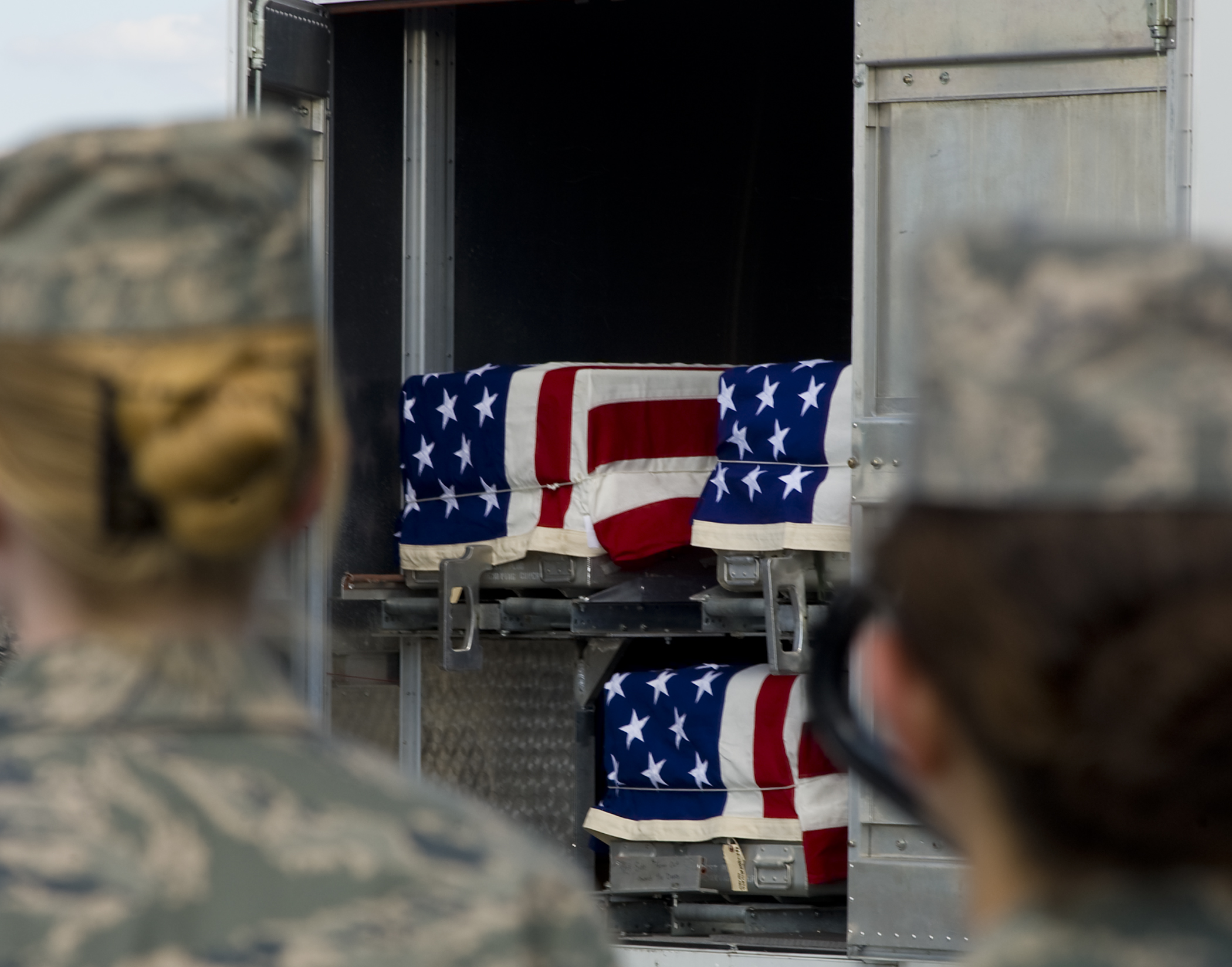
Air Force personel watch as the caskets of six fallen soldiers are loaded onto a waiting hearse at Dover Air Force Base Delaware July 8, 2009. All fallen service members are transferred directly from theater to the Air Force Mortuary Affairs Operation Center at Dover Air Force Base Delaware. (DoD photo by Benjamin Faske) (released)

The B-52 Stratofortress has long been a symbol of American strength from the skies—a workhorse of deterrence since the Cold War.

It’s a platform older than many of its pilots, yet it continues to serve effectively through constant modernization. That such an accident occurred during radar upgrade testing highlights both the aircraft’s complexity and the unseen dangers of keeping America’s airpower dominant.

Safety experts caution that while testing and modernization bring inherent risks, every lesson learned from tragedy sharpens readiness and innovation.

It’s the same spirit that has carried the Air Force through decades of warfare, deterrence, and technological leaps.

For the families of those lost, however, the focus now turns to remembrance. Dover’s dignified transfer ceremonies, conducted in full military precision, will ensure that each fallen patriot is honored exactly as they deserve. There, surrounded by America’s finest mortuary affairs team, their legacy will be treated with the care reserved for heroes.

The nation watches as eight more names join the long roll of those who gave everything in pursuit of duty and excellence. The Air Force community remains strong, unified, and determined to learn from tragedy—because that’s what warriors do.

The final journey from Edwards to Dover is not the end of the story, but a solemn reminder of the cost of maintaining America’s edge.

Every switch flipped, every radar tested, every flight made safer from this investigation will bear the fingerprints of these eight fallen patriots who gave their last full measure of devotion in the service of this great Republic.

News

Navy Ends Blockade But Keeps Warships On Guard Near Strait Of Hormuz

U.S. Central Command confirmed Thursday that the American naval blockade in the Strait of Hormuz has officially been lifted after two months of tight maritime control, but U.S. Navy ships will remain stationed nearby to ensure Iran sticks to the terms of its agreement with President Donald Trump.

CENTCOM’s statement clarified that “American forces are not impeding the transit of vessels to or from Iranian ports” and that “all U.S. military blockade enforcement efforts have ceased.”

The move marks the start of a 60-day ceasefire period, giving both sides a moment to breathe—though, as history proves, Tehran’s pledges sometimes have a short shelf life.

The decision follows President Trump’s signing of an initial peace agreement to end hostilities and reopen the vital waterway.

Still, numerous U.S. warships, including several destroyers and the carrier USS Abraham Lincoln, will continue to patrol “in the general area” to make sure, as CENTCOM put it, “that all aspects of the agreement are adhered to, obeyed and in full force and effect.”

Translation: trust, but verify.

Trump had earlier authorized the “immediate removal” of the U.S. naval blockade, but bureaucratic and operational delays kept it in place until he formally signed the agreement in Europe.

Now that the paperwork is sealed, the pressure is on Iran to hold up its end—ending its nuclear pursuit, halting weapons buildup, and accepting a freeze on its assets as they become unfrozen by international banking systems.

US Forces Blast Defiant Cargo Ship With Hellfire Missile After Ignoring Blockade Orders
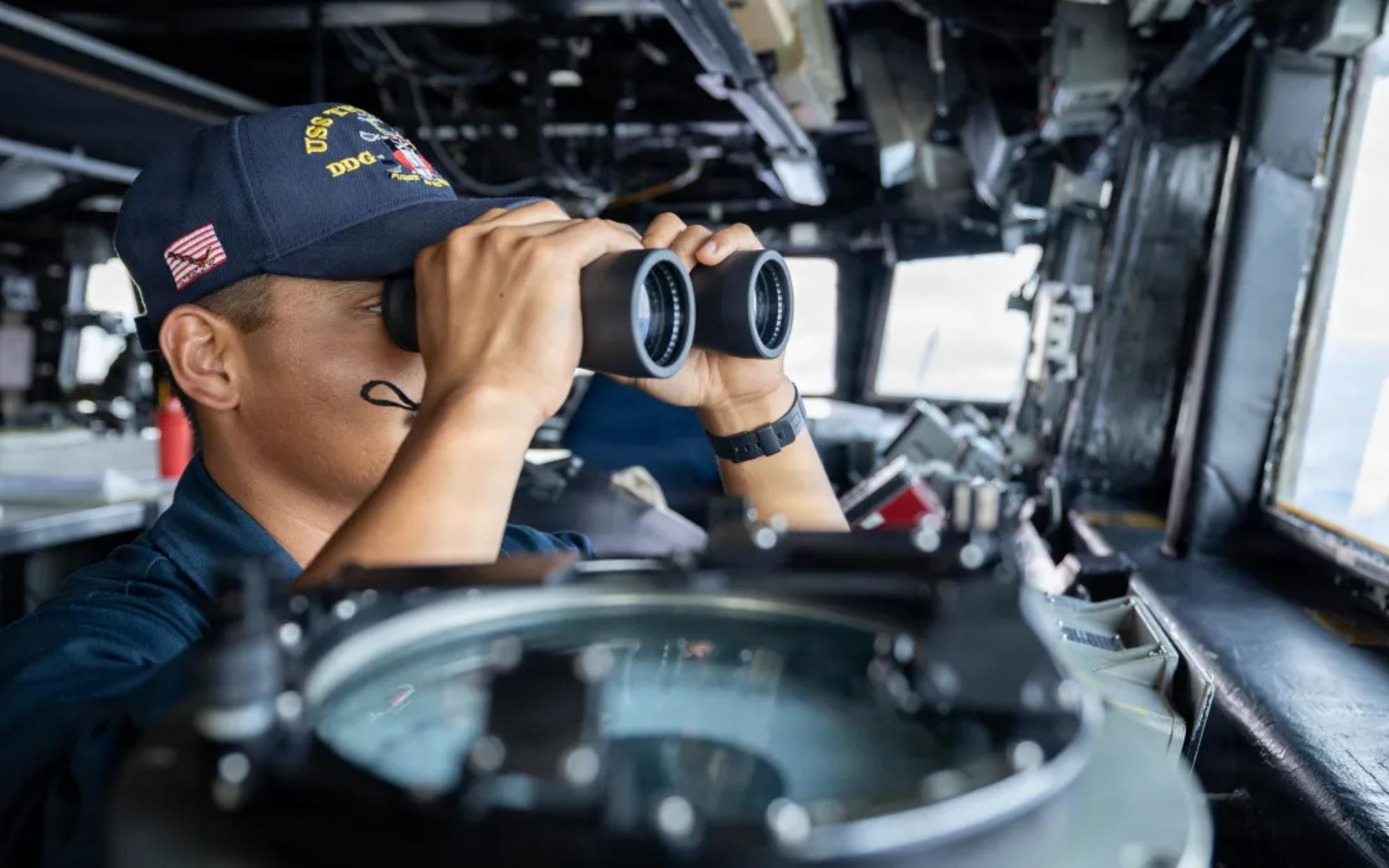
A sailor stands watch on the USS Truxtun, a destroyer participating in the blockade of the Strait of Hormuz. Navy photo.

The ceasefire deal does more than reopen one of the world’s most critical chokepoints for global oil—it marks the first major test of Iranian sincerity under Trump’s restructured pressure regimen.

For weeks, President Trump warned that while the U.S. is ready for dialogue, it is also fully prepared to return to “bombing Iran” should Tehran break faith or threaten shipping lanes again. That warning was echoed at the recent Group of Seven summit, where allies privately admitted American resolve has restored deterrence after years of drift.

In the early phase of the war, Iran clamped down on global shipping transiting through the Strait of Hormuz, throttling the flow of oil and chemicals, and sending energy prices into a tailspin.

That blockade eventually drew a firm response from CENTCOM, which led to the U.S. Navy sealing off Iranian ports by mid-April and tightening the maritime chokehold until Iran blinked.

Vessels Hit as Iran Declares Hormuz Closed Again, Escalating Gulf Tensions

Over the two-month blockade, more than 15,000 U.S. troops were deployed to enforce control and monitor the movement of vessels.

CENTCOM commander Adm. Brad Cooper confirmed that U.S. forces “redirected 142 commercial ships attempting to cross into Iranian waters” and “disabled nine vessels” that defied enforcement orders. That show of force served as a clear reminder of U.S. naval dominance and capability when push comes to shove.

The operations were not without consequence. According to CENTCOM, some blockade enforcement actions involved firing warning shots and, when ignored, striking ships directly.

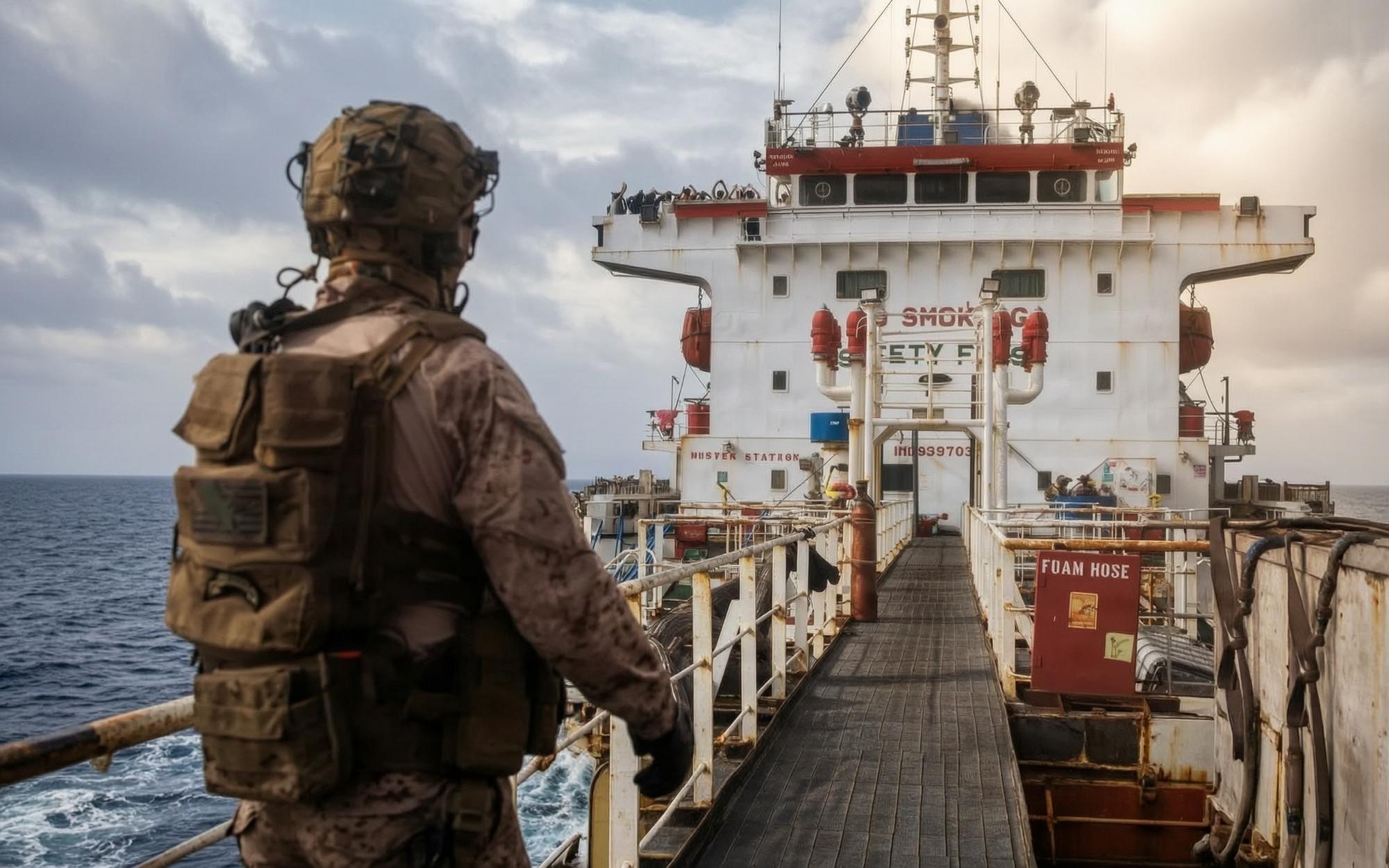
Marines and Navy boarding teams conducted multiple interdictions, seizing several illegal cargoes and capturing crews attempting covert supply runs to Iran’s military facilities.

Pentagon Confirms Safe Passage Through Strait of Hormuz as U.S. Counters Iranian Mine Threat
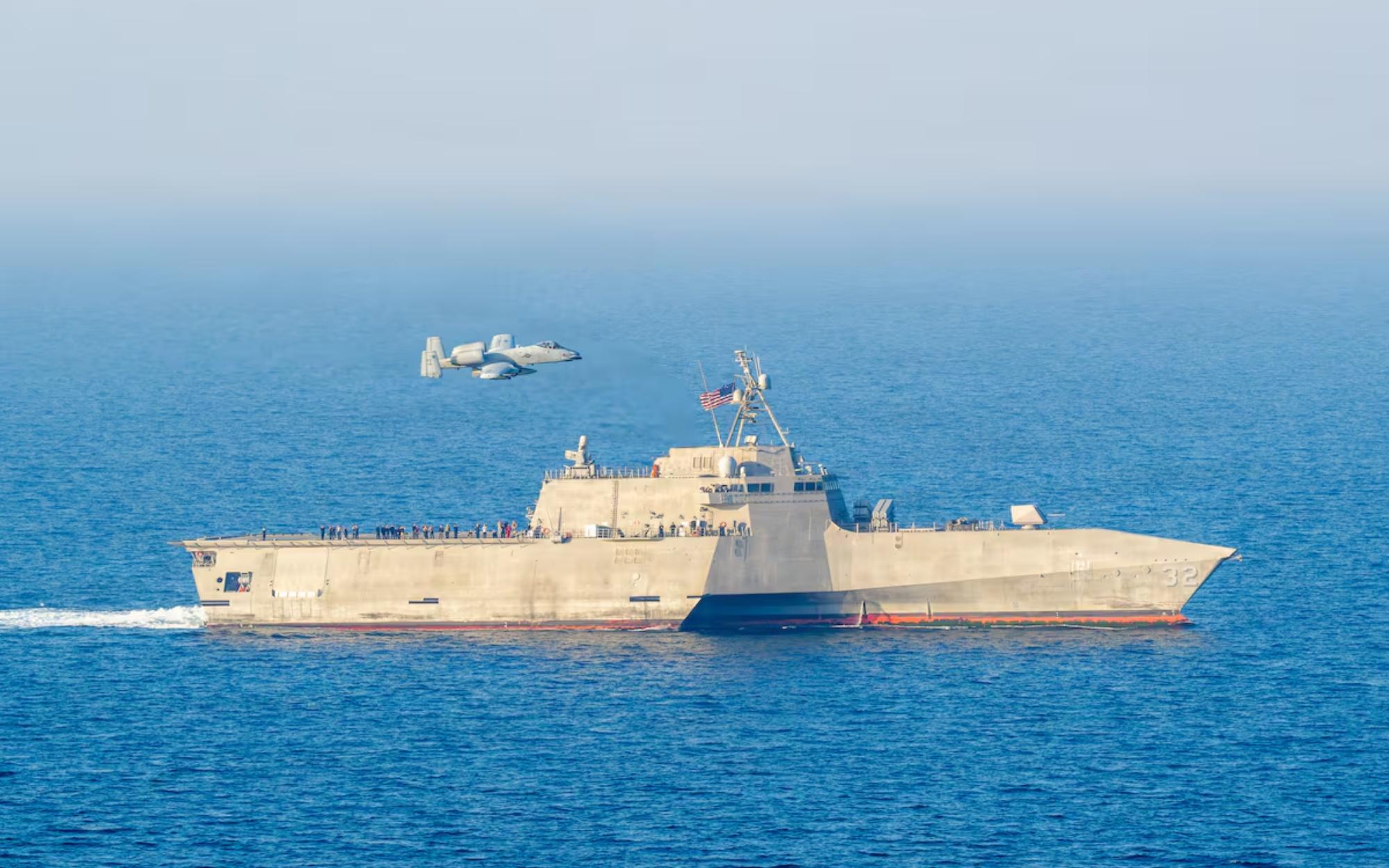
Independence-class littoral combat ship USS Santa Barbara, equipped with a mine countermeasures mission package, participates in a training exercise in the Arabian Gulf on Feb. 2, 2026. (MCS2 Iain Page/U.S. Navy)

On June 11, one of those operations turned deadly when U.S. forces struck the M/T Settebello, killing three Indian sailors aboard.

Though tragic, U.S. officials maintained that the ship had repeatedly ignored orders and was carrying restricted materials headed toward Iranian-controlled docks. The incident underscored the deadly seriousness of maritime control in contested waters.

Now, with the blockade lifted, global shipping operators are cautiously optimistic about resuming normal passage through the Strait. Yet few are under illusions—the region remains a tinderbox, and even a single provocation could reignite hostilities.

For Trump’s team, the test lies in maintaining peace without compromising strength. Keeping the Navy’s footprint in the area signals both confidence and readiness.

It demonstrates that America can show restraint when warranted while simultaneously warning Tehran that any violation of the agreement will be met with overwhelming power.

Hormuz Strait Exposes the Limits of Air Denial in Open Shipping

The Navy’s presence is not just about deterring Iran but also about reassuring allies across the Persian Gulf that U.S. strength remains anchored in the region.

Oil markets, energy traders, and military analysts alike recognize that when American carrier groups patrol contested waters, global commerce breathes easier.

CENTCOM’s announcement concludes with a blunt reminder: the mission around the Strait of Hormuz isn’t finished—it’s simply entered a new phase.

The transition from blockade enforcement to ceasefire observation may define the next chapter of U.S. strategy in the Middle East, one built on deterrence, not dependency.

And if Tehran forgets who controls the sea lanes, the USS Abraham Lincoln and her battle group will be there to jog their memory.

News

Flu Outbreak Hits Air Force Boot Camp After Vaccine Mandate Lifted

An influenza outbreak at Lackland Air Force Base has left roughly 160 trainees sick, with several requiring hospitalization, just two months after the War Department ended the decades-old flu shot mandate.

The situation, now stretching into its third week, has become a flashpoint for critics who still can’t accept that Secretary of War Pete Hegseth restored a basic American principle—freedom of choice.

An Air Force spokesperson confirmed the outbreak began in late May among Basic Military Training (BMT) recruits at the 37th Training Wing in San Antonio, Texas. Despite the number of illnesses, the service emphasized that training has continued uninterrupted.

Medical teams immediately isolated and treated symptomatic trainees and distributed antiviral medications like Tamiflu. Officials stated that each person will return to training once cleared by healthcare providers.

According to reports from The New York Times and ABC News, around 40% of recruits opted for the flu shot this year after the mandate was lifted in April. Predictably, left-leaning outlets have leapt to blame Hegseth’s decision, suggesting that removing the requirement caused the outbreak.

Yet such speculation ignores how flu outbreaks have occurred for decades—even under compulsory vaccination.

The Air Force maintains that mitigation measures remain firmly in place, emphasizing that infected trainees are being quarantined and receiving appropriate care.

“We are continuing to monitor the situation,” the service said in a statement, while reinforcing that training operations remain fully functional at this critical gateway to Air Force service.

In April, Secretary of War Pete Hegseth formally reversed the mandatory vaccine directive, declaring that the military needed to “trust and respect” the autonomy of its service members. He accurately described the prior policy as “overly broad and not rational.”

Air Force and Space Force Surpass 2026 Recruitment Goals Ahead of Schedule
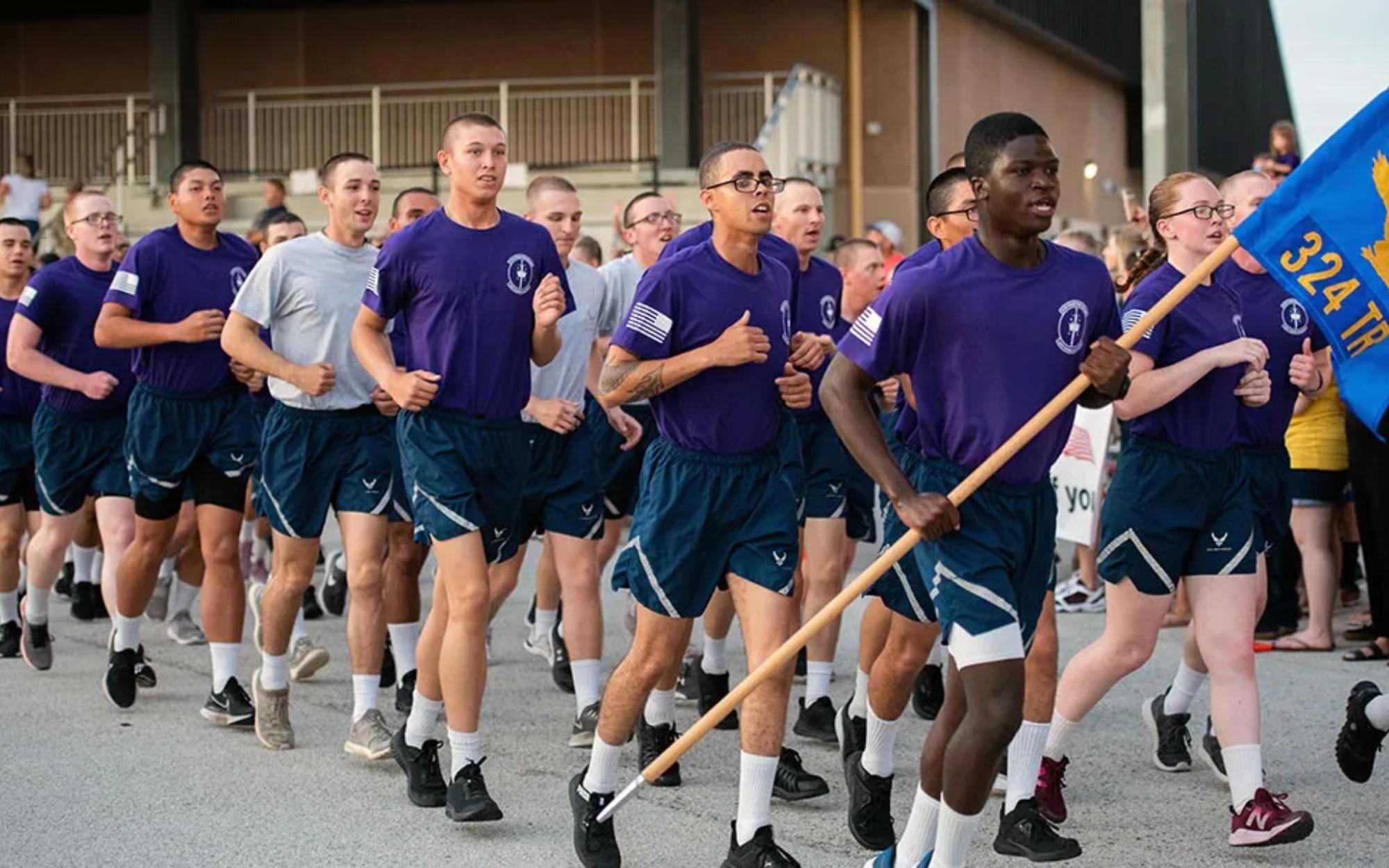
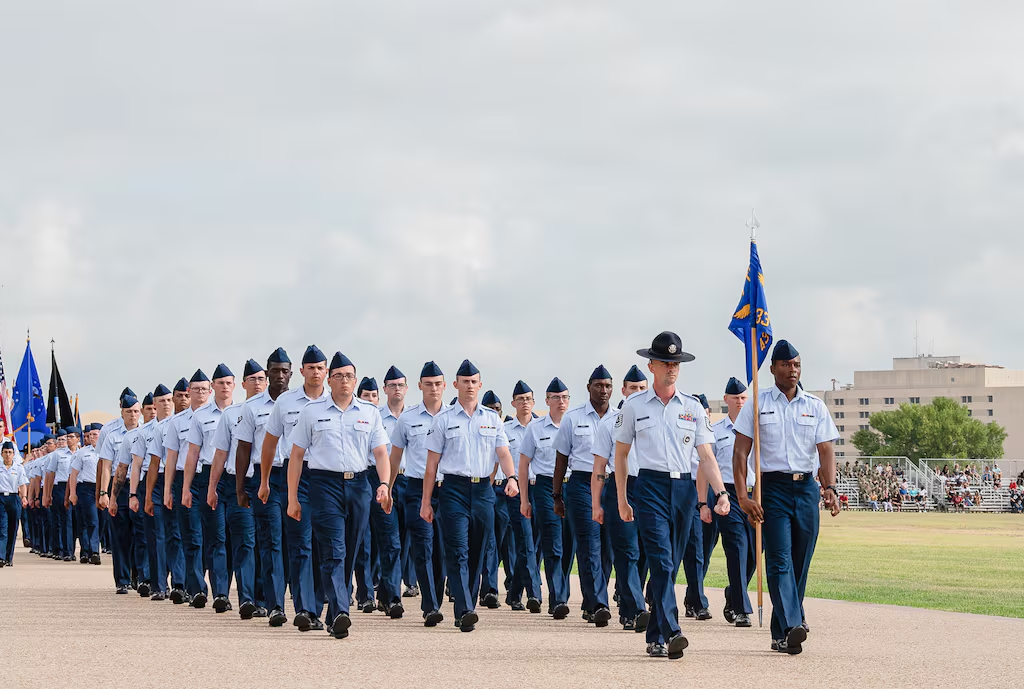
Air Force recruits graduate from basic military training. (U.S. Air Force)

Hegseth’s call for freedom of choice resonated across the ranks, especially after years of heavy-handed medical mandates under previous leadership.

Lackland Air Force Base processes thousands of recruits each year, making occasional illness inevitable. The shared barracks, close quarters, and high-paced environment are perfect conditions for seasonal bugs.

Yet commanders at the base have repeatedly stated that the outbreak remains contained and controlled, even as monitoring continues for any potential spread among close contacts.

The same week the flu issue expanded, the base also faced tragedy when trainee Keon McDaniel died following a medical emergency on June 16.

The 37th Training Wing announced a comprehensive medical review, and officials have not linked the death to the flu outbreak. Still, the timing has fueled online rumors, mostly stirred up by anonymous social media users and the usual anti-military agitators.

Officials have not detailed what additional measures are being taken across the installation beyond isolating those who were exposed. However, reports indicate that recruits were once again ordered to receive the flu vaccine after the outbreak began—a precaution specific to this training environment.

That selective action demonstrates the flexibility the new policy allows: commanders can decide when a vaccine is necessary rather than relying on a one-size-fits-all mandate.

In other words, the War Department’s decision under Secretary Hegseth wasn’t about eliminating medical care or disregarding health. It was about restoring reason to military leadership and returning respected commanders to the position of decision-makers.

And when considering the broader record, the Air Force continues operating smoothly, even under the stress of a temporary health flare-up.

Critics in progressive media outlets have tried to build a narrative that rescinding the mandate jeopardizes force readiness. Yet the data suggest the opposite.

The trainees at Lackland, like generations before them, are recovering quickly and will soon return to normal training. There’s no sign that Air Force operations or national security have been affected in any way.

The predictable pearl-clutching from liberal pundits ignores basic medical reality: outbreaks happen in all closed populations—from cruise ships to college dorms—regardless of vaccination policies.

But the difference now is that service members have the freedom to make informed decisions about their own health, not just follow orders handed down by bureaucrats in Washington.

This brief outbreak serves as a reminder that freedom sometimes comes with responsibility. Secretary Hegseth’s directive empowered units to handle medical concerns at the local level, an approach that aligns with his broader philosophy—mission first, liberty always.

Training continues, operations are ongoing, and America’s newest Airmen are learning not just military discipline, but also what it means to serve in a country that values personal choice.

While the mainstream media treats every bump in the road as a crisis, the facts are simple: the outbreak is being managed, medical teams are working around the clock, and the system is doing exactly what it was designed to do. The result isn’t chaos—it’s competency.

The Air Force’s commitment to readiness remains steady, even as it respects the freedoms its recruits are sworn to defend. That might frustrate the critics, but it’s exactly what leadership under Hegseth promised—a stronger, freer, more accountable War Department.

News

Fallen Hero of the Revolution Finally Identified After 246 Years

Nearly two and a half centuries after he gave his life for American independence, Pvt. John Pumphrey has finally been identified among the fallen at the Battle of Camden.

His name, long lost in the annals of Revolutionary War history, has been restored by a dedicated team of researchers determined to give forgotten patriots their due.

The South Carolina Institute of Archaeology and Anthropology, working alongside the Historic Camden museum and FHD Forensics, confirmed that Pumphrey was one of the Continental soldiers discovered in 2022 near Camden, South Carolina.

The find came after bones began appearing on the battlefield, prompting an extensive excavation and investigation.

Fourteen bodies were recovered from the site, thirteen of them Continental patriots and one British soldier.

Through meticulous forensic work and DNA testing, scientists traced the remains of one young fighter back to Pumphrey, who hailed from a well-known family in Anne Arundel County, Maryland.

Though he never had descendants, genealogists successfully connected his bloodline through his siblings.

Pumphrey’s service began when he was barely a teenager, enlisting at roughly fourteen years of age in 1777.

Like so many of that era’s young patriots, he didn’t have to join—but he did. He traded the safety of a comfortable life in Maryland for the grit and sacrifice of a long fight with the 7th Maryland Regiment.

Heroes Finally Laid To Rest: Revolutionary War Soldiers Receive Honors After 250 Years

Maryland records reveal that Pumphrey formally reenlisted for the entire duration of the war in 1779 for the princely sum of $100—a fortune back then, though no price could be placed on the freedom he volunteered to defend.

His regiment, part of the fabled Maryland Line, fought bravely at key battles including Brandywine, Germantown, and Monmouth, before marching south into the thick of the Southern campaign.

When Maj. Gen. Horatio Gates, then hailed as the hero of Saratoga, led American troops from Maryland and Delaware into South Carolina, the patriots faced brutal conditions and deep Loyalist territory.

Outnumbered or not, Gates’ men found themselves trapped in an unforgiving position that led to the crushing defeat at the Battle of Camden in August 1780. Hundreds were killed and captured, including Pumphrey.

For centuries, the brave private lay anonymous, his sacrifice recognized only in the collective memory of a nation that owes its birth to unknown soldiers like him. The rediscovery of his remains nearly 250 years later closes one small but meaningful chapter in the American story.

This is the kind of uncovering the corporate liberal historians rarely emphasize—the individual grit, the faith, and sheer audacity it took for young Americans to throw off an empire.

Allison Peacock, President of FHD Forensics, described the process of identifying Pumphrey as “incredibly complicated research to go all of the way back to the colonial era.”

The process involved modern technology, genealogical databases, and the kind of persistence only patriotic determination can drive.

U.S. Army to End Most of Its Ceremonial Horse Programs, Adopts New Strategy
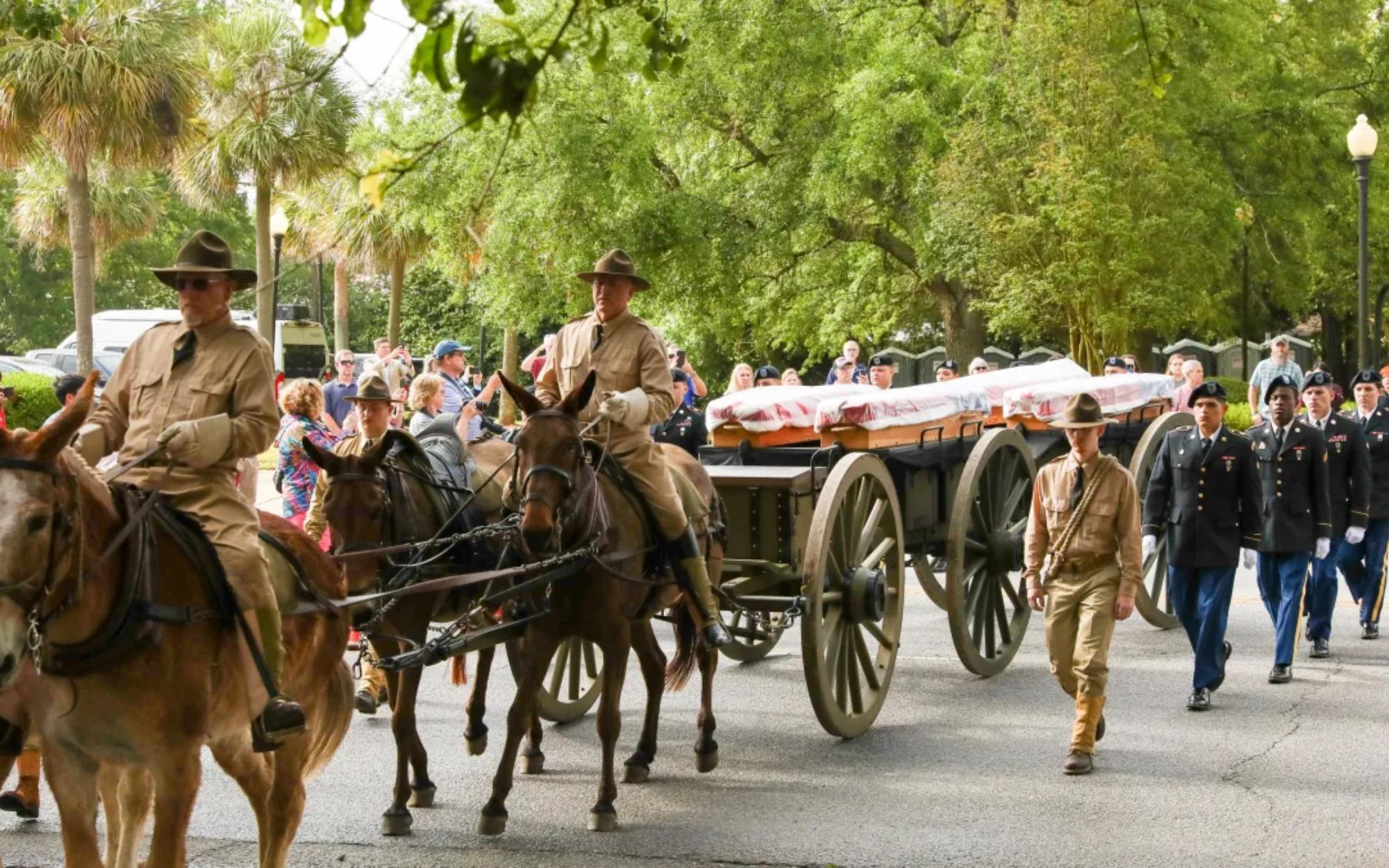
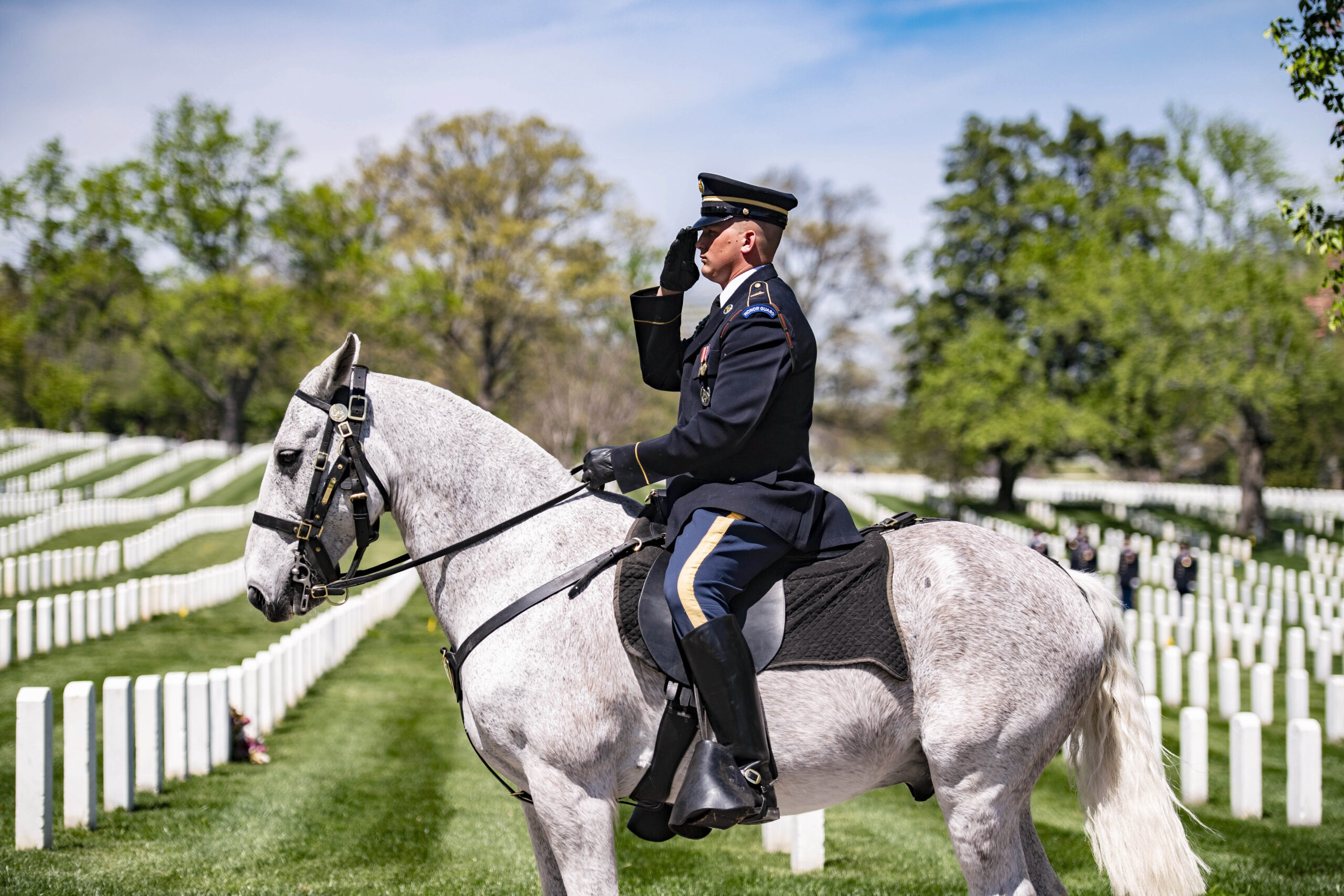
Soldiers from the 3d U.S. Infantry Regiment (The Old Guard), the 3d U.S. Infantry Regiment Caisson Platoon, and the U.S. Army Band, “Pershing’s Own” conduct military funeral honors with funeral escort for U.S. Army Sgt. Elwood M. Truslow in Section 33 of Arlington National Cemetery, Arlington, Va., April 22, 2022.
From the Defense POW/MIA Accounting Agency (DPAA) press release:
In late 1950, Truslow was a member of Company L, 3rd Battalion, 31st Infantry Regiment, 7th Infantry Division. He was reported missing in action on Dec. 12, 1950, after his unit was attacked by enemy forces as they attempted to withdraw near the Chosin Reservoir, North Korea. Following the battle, his remains could not be recovered.
On July 27, 2018, following the summit between the U.S. President and the North Korean Supreme Leader in June 2018, North Korea turned over 55 boxes, purported to contain the remains of American service members killed during the Korean War. The remains arrived at Joint Base Pearl Harbor-Hickam, Hawaii on Aug. 1, 2018, and were subsequently accessioned into the DPAA laboratory for identification.
To identify Truslow’s remains, scientists from DPAA used anthropological analysis, as well as circumstantial evidence. Additionally, scientists from the Armed Forces Medical Examiner System used mitochondrial DNA (mtDNA), and autosomal DNA (auSTR) analysis.
Truslow was officially accounted for on June 7, 2021. Truslow’s niece, Lucy Howe, received the U.S. flag from his funeral service.
(U.S. Army photo by Elizabeth Fraser / Arlington National Cemetery / released)

The revelation is a powerful reminder that America’s freedom wasn’t won by faceless bureaucrats or political elites.

It was secured by teenagers who didn’t think twice about putting life and limb on the line for liberty—boys like Pumphrey, who answered the call of revolution and never looked back.

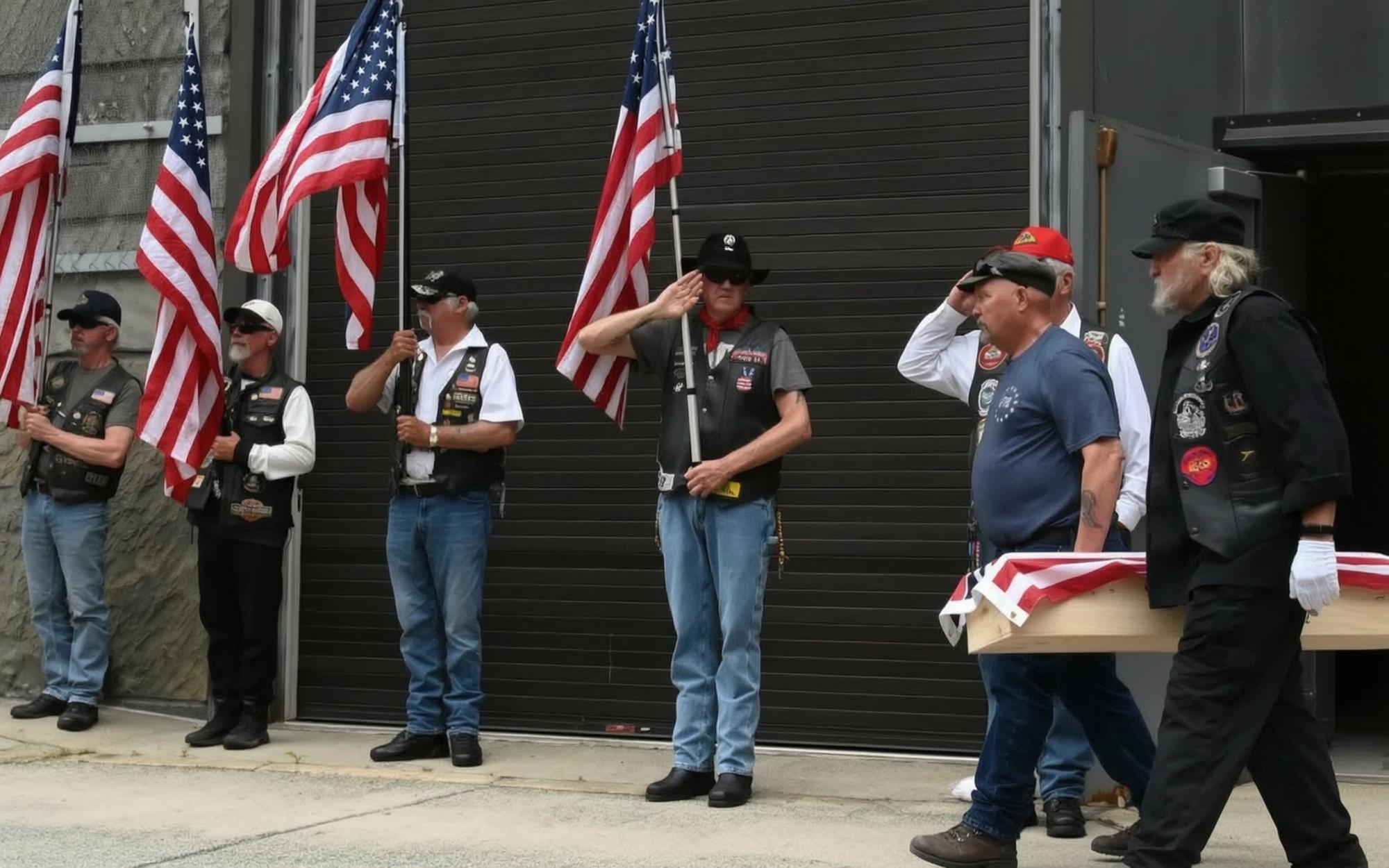
After the remains were identified, the heroes of Camden were laid to rest with full honors a year after their discovery.

The burial ceremony fittingly included both American and British honor guards, offering a somber nod to the shared humanity and the lasting scars of that bloody conflict.

For modern America, rediscovering these patriots carries a deeper resonance. It isn’t just about history; it’s about remembering who we are and what forged this Republic.

At a time when far too many on the left sneer at patriotism and try to rewrite the Revolution as something morally complicated, stories like Pumphrey’s remind us what true service, courage, and sacrifice look like.

The Most Dangerous Gravesite in America Lies Quietly in Arlington Cemetery
Soldiers from the 3d U.S. Infantry Regiment (The Old Guard) place flags in front of the gravesites in Arlington National Cemetary, Va., May 22, 2014, during “Flags In”. ( U.S. Army photos by Klinton Smith)

His identification honors not just one soldier, but all those countless unnamed who fought for the birth of a free nation.

Pumphrey’s name and story now take their rightful place in the proud tradition of American warriors who made sure this land would always stand independent and strong.

No woke lecture, no revisionist spin—just a young American boy who believed in something bigger than himself. And nearly 250 years later, his country remembers him at last.

News

Trump Heads to Camp David as High-Stakes Iran Questions Mount

President Trump is heading to Camp David this weekend, taking a rare break from Washington, but make no mistake — this is no vacation.

The Commander in Chief is using the historic presidential retreat as a policy war room, preparing to face the next crucial stage of negotiations with Iran after signing a historic memorandum of understanding earlier this week.

The 14-point MOU, signed at the Palace of Versailles and co-signed by Iranian President Masoud Pezeshkian, set a sixty-day timeline to hammer out final terms aimed at stabilizing the Gulf region and reopening the vital Strait of Hormuz.

For Trump, the deal signals peace through strength — a strategy his critics never seem to understand.

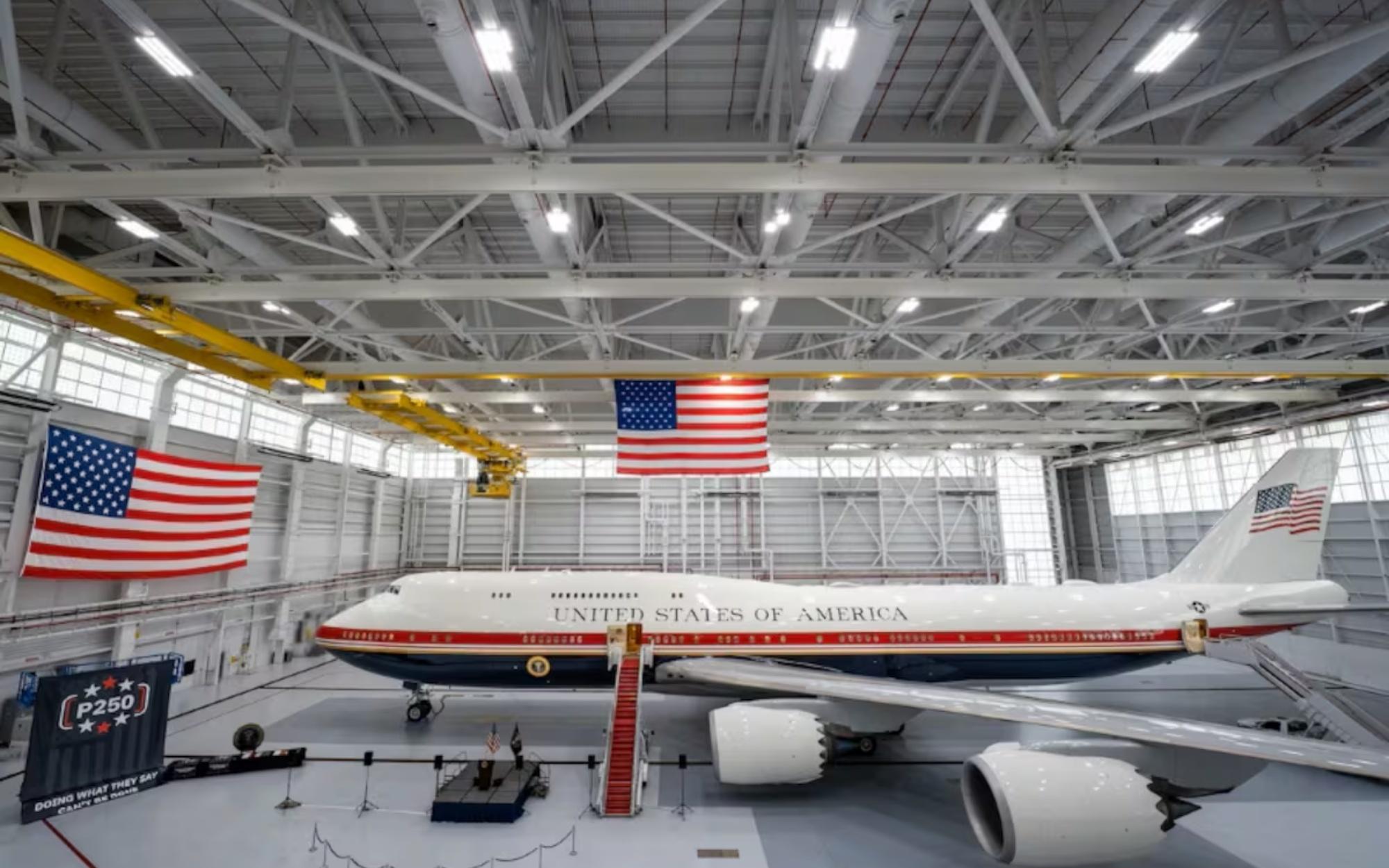
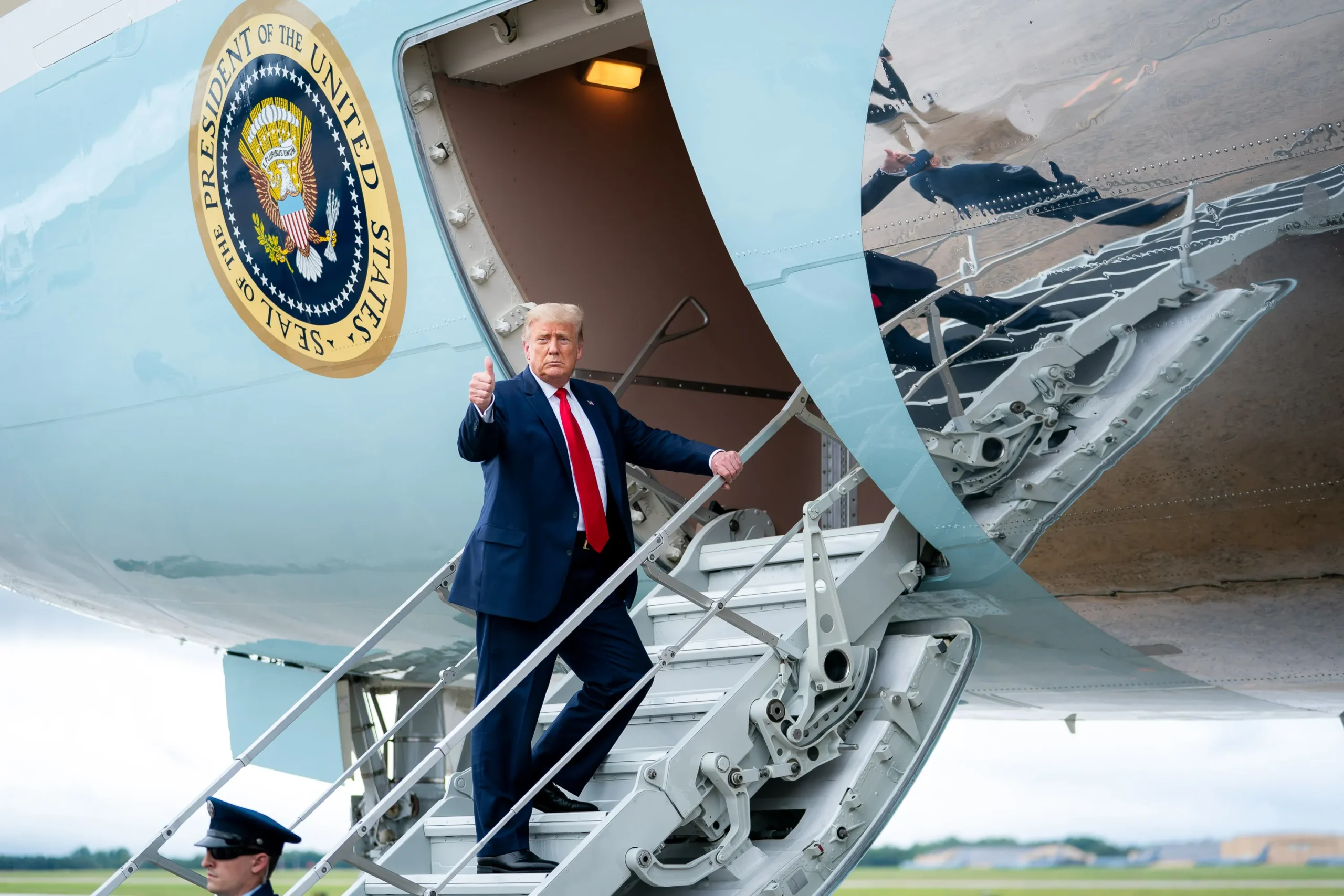
Speaking at the unveiling of the new Air Force One, Trump struck an unmistakably confident tone. “If Tehran fails to agree to a final deal within sixty days,” he said, “we will do things that won’t make them happy.”

But the President also added, “I don’t think it’s going to get to that. I think it’s going to be very good.” That’s Trump-style diplomacy — measured calm with a hint of firepower behind every syllable.

The deal’s announcement sparked an immediate uptick on Wall Street, a signal that America’s economy still follows confidence in its leadership.

Investors and allies alike understand that a steady White House hand can push peace forward without surrendering strength. For Trump, that balance is his signature approach: peace pursued through unmistakable leverage.

Of course, the critics are circling. Some Republican lawmakers — never missing a chance to doubt Trump’s moves — are suggesting the agreement gives too much breathing room to Tehran.

And, as expected, Iran’s Supreme Leader Mojtaba Khamenei wasted no time twisting the optics, claiming Trump acted out of “desperation.” The irony of that claim is obvious — it’s Tehran that’s desperate, not Washington.

Trump Declares Iran Fight ‘Not Done’ While Left Sounds Alarms Over Ammo Shortfalls

Meanwhile, the situation in the Middle East remains volatile. Vice President JD Vance was scheduled to lead an American delegation to talks in Switzerland, but the White House confirmed Thursday that his trip was temporarily postponed.

That move raised eyebrows and questions, though insiders insist it’s a strategic pause, not a setback.

Iran continues to stress it wants guarantees regarding Lebanon, where Israeli forces have been striking at Hezbollah targets for months.

The Lebanese Health Ministry has reported nearly 4,000 deaths since early March, underscoring how deep and dangerous Iran’s reach into the region truly runs. The MOU Trump signed called for a suspension of hostilities everywhere, Lebanon included.

But Friday night brought yet another grim scene — the second deadliest round since the escalation began. Israeli strikes killed 47 militants in Lebanon, while Israel mourned four of its own soldiers lost.

Hours later, U.S. officials announced a truce between Israel and Hezbollah that had been quickly brokered, a quiet but clear sign that American influence still carries heavy weight.

Still, Lebanon remains a thorny problem. For Trump, any lasting peace requires a recalibrated balance of power across the Middle East, not just empty promises from clerics in Tehran.

Israel’s Prime Minister Benjamin Netanyahu, America’s most resolute ally in the region, has voiced skepticism about the MOU, calling it too lenient. But no one doubts Netanyahu’s resolve — or Trump’s backing for Israel’s right to defend itself.

Trump Seeks Rapid Weapons Replenishment As Defense Leaders Convene for Iran Campaign Push

Iran, predictably, is already posturing, signaling that it could abandon talks if Washington doesn’t keep Netanyahu “in check.”

That kind of manipulation is vintage Tehran — using peace as leverage for chaos. But Trump’s team has made it clear: America’s allies don’t answer to Iran’s threats, and Israel will always defend its borders as it sees fit.

At Camp David, Trump will be surrounded by both his senior advisors and family members, turning the scenic Catoctin retreat into both a command center and a Father’s Day gathering spot.

A White House official confirmed the weekend would blend policy meetings with “private time,” but those close to the President know he never truly clocks out.

This marks only Trump’s second return to Camp David since retaking office in January 2025, a symbolic gesture underscoring his preference for direct, focused engagement over bureaucratic routine.

As questions swirl about Iran, Lebanon, and Israel, Trump’s presence there sends a message — the Commander in Chief is in control, sharpening strategy, and keeping both friends and foes guessing.

At this inflection point, with diplomacy and deterrence walking hand in hand, Trump once again stands where he thrives: right at the intersection of strength and history.

The Iran deal might be complex, but one thing isn’t — America now has a leader willing to make the hard calls and back them with steel.

News

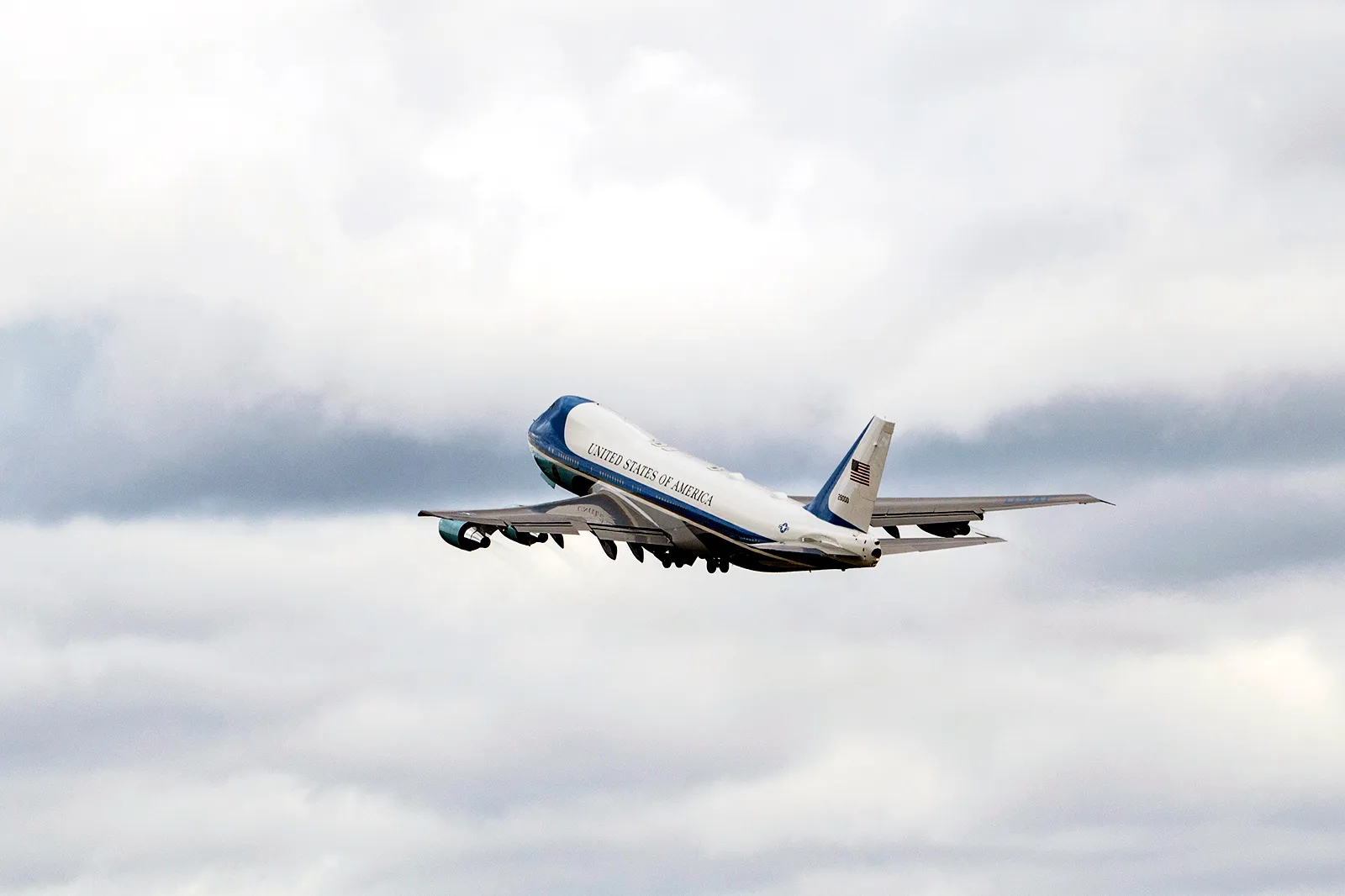
New Air Force One Takes Flight in Final Tests Before Serving President Trump

The U.S. Air Force has kicked off commissioning flights for the newly delivered Air Force One, a major milestone that marks the final step before President Trump takes command of the aircraft.

The sleek red, white, and blue Boeing VC-25B “Bridge” aircraft arrived at Joint Base Andrews, Maryland, signaling that America’s presidential fleet is getting the upgrade many thought might never arrive.

Nearly two weeks after its patriotic paint scheme was unveiled, the aircraft entered service with the Presidential Airlift Group.

According to the Air Force, the aircraft represents a “secure continuity platform for the commander in chief,” one built to ensure the president’s ability to operate anywhere in the world without pause.

The journey to get this jet airborne wasn’t easy. The effort to replace the aging VC-25A planes had been plagued with delays and bureaucracy that tested both Washington’s patience and Trump’s own persistence.

Determined to override sluggish progress from Boeing, President Trump accepted a donation from Qatar of a Boeing 747-8i, which the U.S. modified extensively to meet the most stringent security demands.

Initially, the plan was for Boeing’s new VC-25Bs to be ready by 2024. Predictably, federal bottlenecks, a shortage of cleared workers, and supply chain breakdowns pushed that target to a ridiculous 2028.

Rather than sit idle, Trump pushed for a practical interim solution—and that’s exactly what the “Bridge” aircraft has become.

War Secretary Pete Hegseth and Air Force leadership worked in concert to accelerate modifications and testing. Officials confirmed that the cost to bring the aircraft up to presidential grade would stay under $400 million, far less than many inside-the-Beltway critics expected.

Qatari Gifted Air Force One Decked Out in Patriotic Red, White and Blue
This February 2026 artist rendering depicts the VC-25B in its new red, white and blue livery. (DVIDS)

“This jet is built for strength, reliability, and national command,” said one senior official familiar with the project.

The current commissioning flights are effectively the aircraft’s final examination.

Each sortie allows White House and military officials to validate mission readiness, test communications and defense systems, and finalize security protocols that guarantee safe transit for the president under any circumstance.

Once finished, the aircraft will be formally commissioned into the executive airlift fleet alongside the existing VC-25A and C-32 aircraft.

The Air Force has kept the exact number of test flights classified. However, sources within the Presidential Airlift Group indicate that the aircraft’s commissioning will be completed within weeks.

Trump’s first official flight aboard the new Air Force One could come soon after, closing the chapter on the aging VC-25A fleet that carried him through much of his presidency.

The engineering effort behind the aircraft’s transformation has been intense. While few details are public for operational security reasons, the Air Force confirmed the project followed a “disciplined engineering approach” ensuring the highest safety and mission standards.

Insiders have hinted that everything from secure communications networks to missile countermeasures has been overhauled.

Qatar-Gifted 747 Sparks Security, Ethics Concerns as U.S. Military Weighs Air Force One Conversion

Meanwhile, the Air Force began pilot and crew training last October using a leased Atlas Air 747-8F and later a Lufthansa 747-8i, both designed to replicate the systems used aboard the Bridge aircraft.

Crews logged extensive simulator hours as well, ensuring precise familiarity with executive airlift operations before President Trump’s team ever steps aboard.

A three-dimensional mock-up of the aircraft’s interior was even installed in the White House this past January.

This simulation allowed presidential staffers to familiarize themselves with the new layout and operational flow long before the aircraft took its first commissioning flight. It’s a reflection of the same meticulous planning that has long characterized the Trump administration’s approach to military and executive readiness.

“Many thought it could not be done,” said Air Force Chief of Staff Gen. Ken Wilsbach, praising the project.

“But the United States Air Force was able to execute and provide a secure, reliable airborne command post on an accelerated timeline.”

That “accelerated timeline” is no small feat in an era where most major aircraft programs drown in red tape and political infighting. Instead, this presidential bird came together in large part thanks to Trump’s impatience with bureaucratic excuses. He demanded results—and the War Department delivered.

Qatar-Gifted 747 Sparks Security, Ethics Concerns as U.S. Military Weighs Air Force One Conversion

The VC-25A, which faithfully served but has aged past its technical prime, reportedly made its final flight last Thursday.

According to a social media post from a Trump administration official, the event marked the end of an era and the beginning of a new chapter in executive air power.

At a time when America’s global posture demands a president who can command securely from anywhere on Earth, this aircraft is more than just a symbol. It’s a critical flying headquarters, engineered for the 21st century battlefield and shaped by Trump’s no-nonsense leadership ethos.

In a world full of threats, America’s greatest symbol of strength is once again aloft—and this time, built on Trump’s timetable, not the swamp’s.


Scroll to Top