Author name: Common Defense

News

Marines Land F-35s on Finnish Highways in Bold NATO Combat Drill

Highways aren’t just for cars anymore, at least not when U.S. Marines are in town.

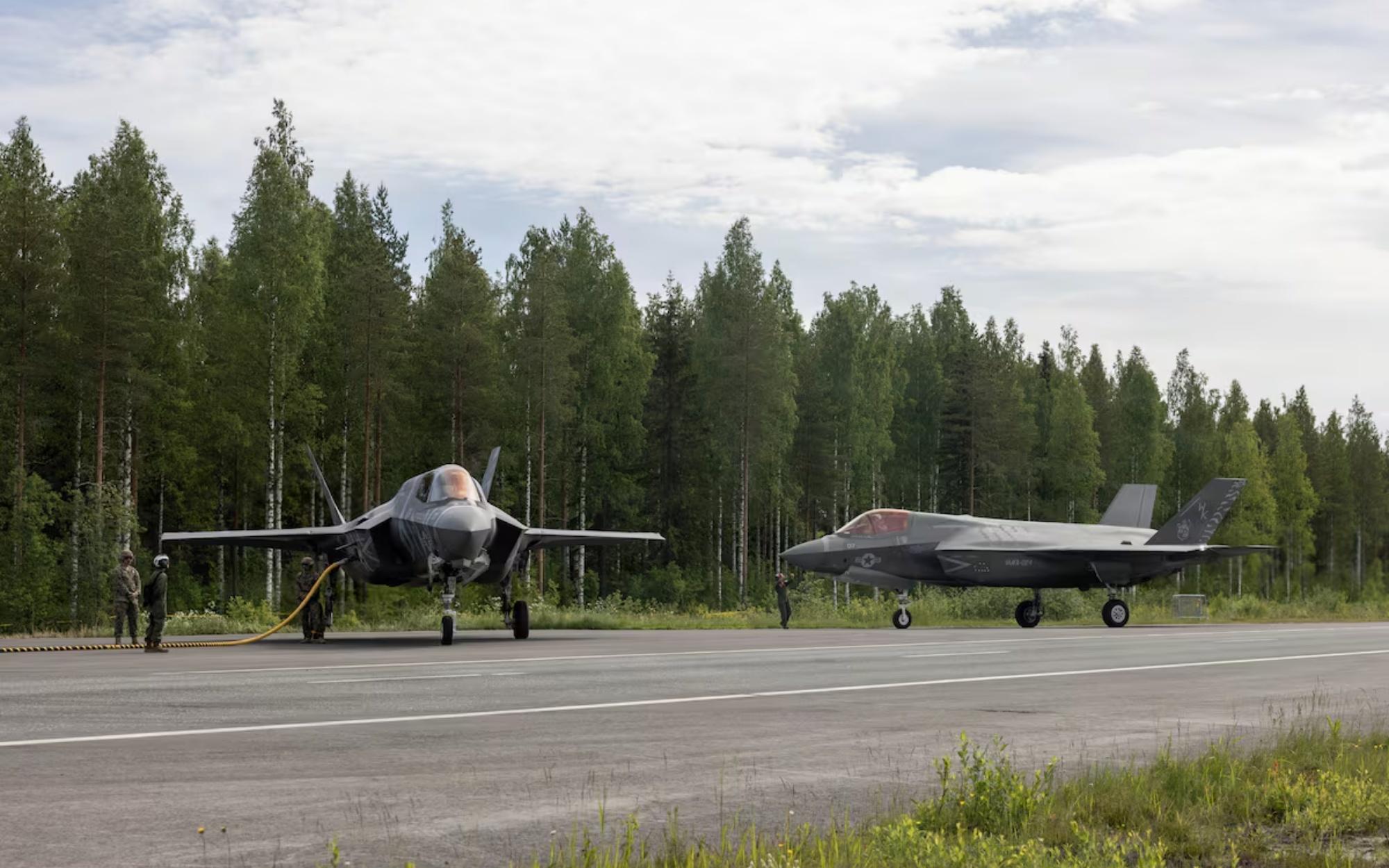
Earlier this month, a pair of Marine Corps F-35B Lightning IIs turned heads across Finland when they roared down a rural highway and took flight, marking a first-of-its-kind operation for the Corps in the Nordic nation.

The event was part of NATO’s sprawling Exercise Ramstein Flag 2026, a massive war-readiness drill that pulled in 19 nations and stretched across 15 locations from the Arctic Circle to southern Spain.

The goal: prove that the alliance can fight anywhere, anytime, on any surface — including asphalt designed for SUVs and semis.

The Marines’ stealth fighters, belonging to Marine Fighter Attack Squadron 224 out of the 2nd Marine Aircraft Wing, made history as the first U.S. Marine aircraft to deploy to Finland.

The move underscores NATO’s increasing focus on Arctic operations as threats from Russia and China continue to grow in the North.

“This mission is about ensuring the joint force can fight and win,” said Maj. Gen. Daniel Shipley, who commands U.S. Marine Corps Forces Europe and Africa.

“Our participation in Ramstein Flag enhances the lethality of the Marine Corps, enables NATO success and guarantees our ability to deter and defeat sophisticated aerial threats.”

Massive Bomber Demo Near Shores of Venezuela Sends Clear Message
A U.S. Air Force B-52H Stratofortress bomber assigned to the 2nd Bomb Wing integrates with a U.S. Marine Corps F-35B Lightning II aircraft assigned to the Marine Fighter Attack Squadron 225, in the U.S. Southern Command area of responsibility, Oct. 15, 2025. (U.S. Air Force)

Shipley’s statement came at a time when the Pentagon’s younger warriors — many hardened by two decades of counterinsurgency warfare — are shifting attention toward great-power competition.

For these pilots, touching down and taking off on a highway in Finland isn’t just a publicity stunt. It’s a message: the Marines can bring the fight anywhere, even from Europe’s frozen roads.

The operation in Tervo put American F-35Bs alongside Spanish EF-18s, Polish F-16s, and Finnish F/A-18 Hornets in a show of interoperability that left no doubt about NATO’s expanding reach.

With Finland officially joining the alliance in 2023, its forests and roadways have become valuable staging grounds for air operations close to Russia’s northwest border.

NATO’s Combined Air Operations Center in Bodo, Norway, coordinated the sprawling air missions.

According to U.S. Air Force Lt. Gen. Jason T. Hinds, commander of Allied Air Command, this year’s Ramstein Flag was designed to demonstrate a “360-degree approach to defend every inch of NATO territory.” That means every highway, airstrip, and stretch of tundra could soon double as a runway for Western aircraft.

“The scale of this exercise is a testament to NATO’s determination to counter modern and emerging threats,” Hinds said. “We’re executing distributed operations that ensure our forces remain lethal, survivable, and unpredictable.”
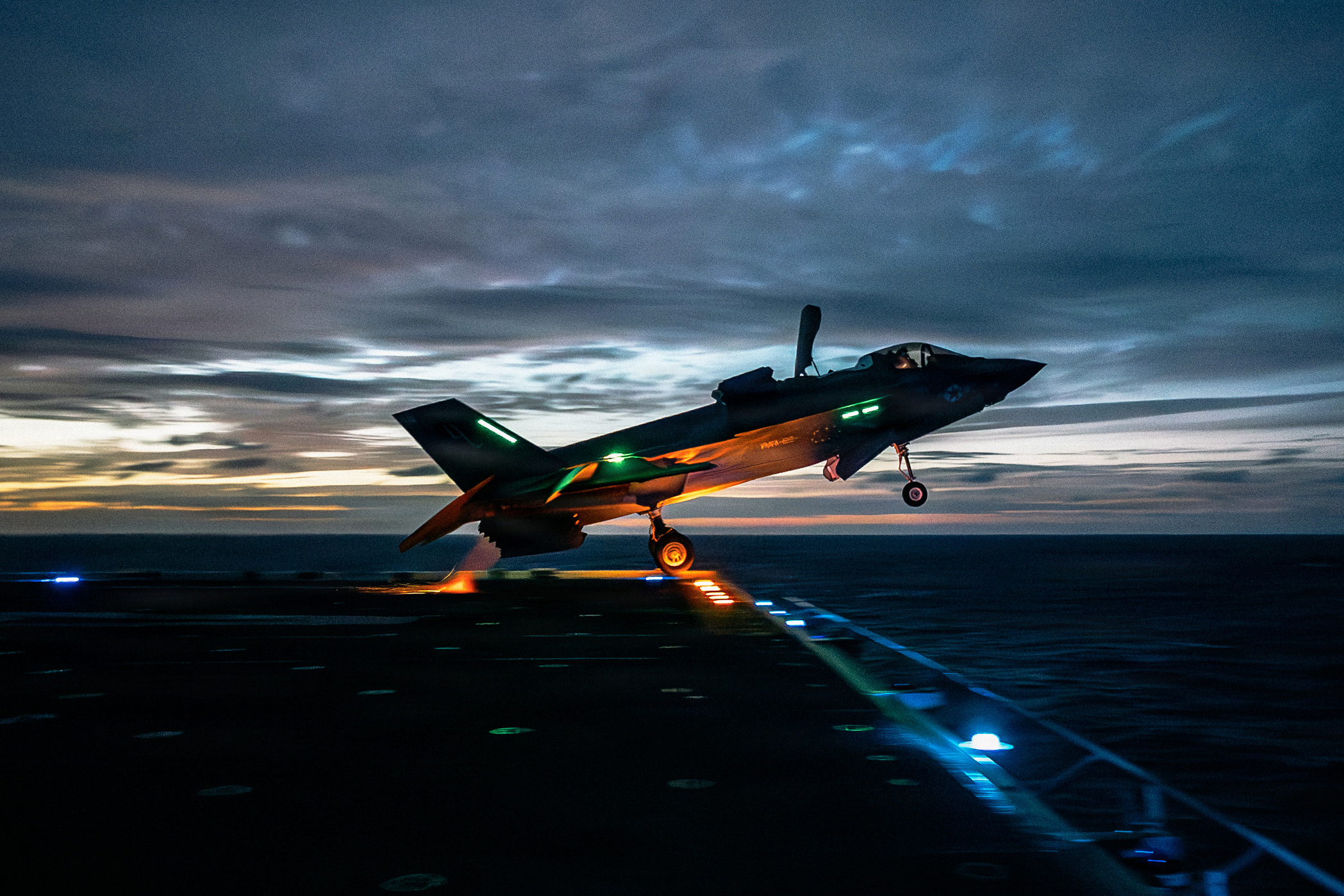
Marines Bet Big on F-35, Turning Stealth Jet Into a Battlefield Data Engine
A Marine Corps F-35B Lightning II takes off from the USS Boxer in the Pacific Ocean, March 28, 2026.

The choice of Finland wasn’t accidental. The country’s well-built highway network was originally designed during the Cold War with hidden landing strips to ensure aircraft could disperse in wartime.

Now, those forgotten roads are proving their value as NATO adjusts to a world where fixed bases are prime targets for long-range strikes.

For the Marines, this experiment dovetailed with their push for what they call “expeditionary advanced base operations” — or EABO — a strategy that relies on mobility, flexibility, and the ability to operate from austere locations under threat.

In simple terms, the warfighters are training to turn any stretch of open ground into a launch point for America’s most advanced aircraft.

Earlier this year, elements of the same Marine Air Wing had been slated to take part in Norway’s Arctic warfare exercise Cold Response 2026.

That deployment was delayed due to increased tensions with Iran, but the lessons from northern Europe remain valuable as the Corps continues preparing for a future defined by unpredictable flashpoints.

The Finnish highway operation, therefore, wasn’t just a training stunt — it was a signal.

Washington’s allies are learning to share risk, distribute their forces, and maintain combat readiness across new kinds of terrain. For the Marines, that’s simply back to basics: adapting, overcoming, and staying one move ahead of America’s adversaries.
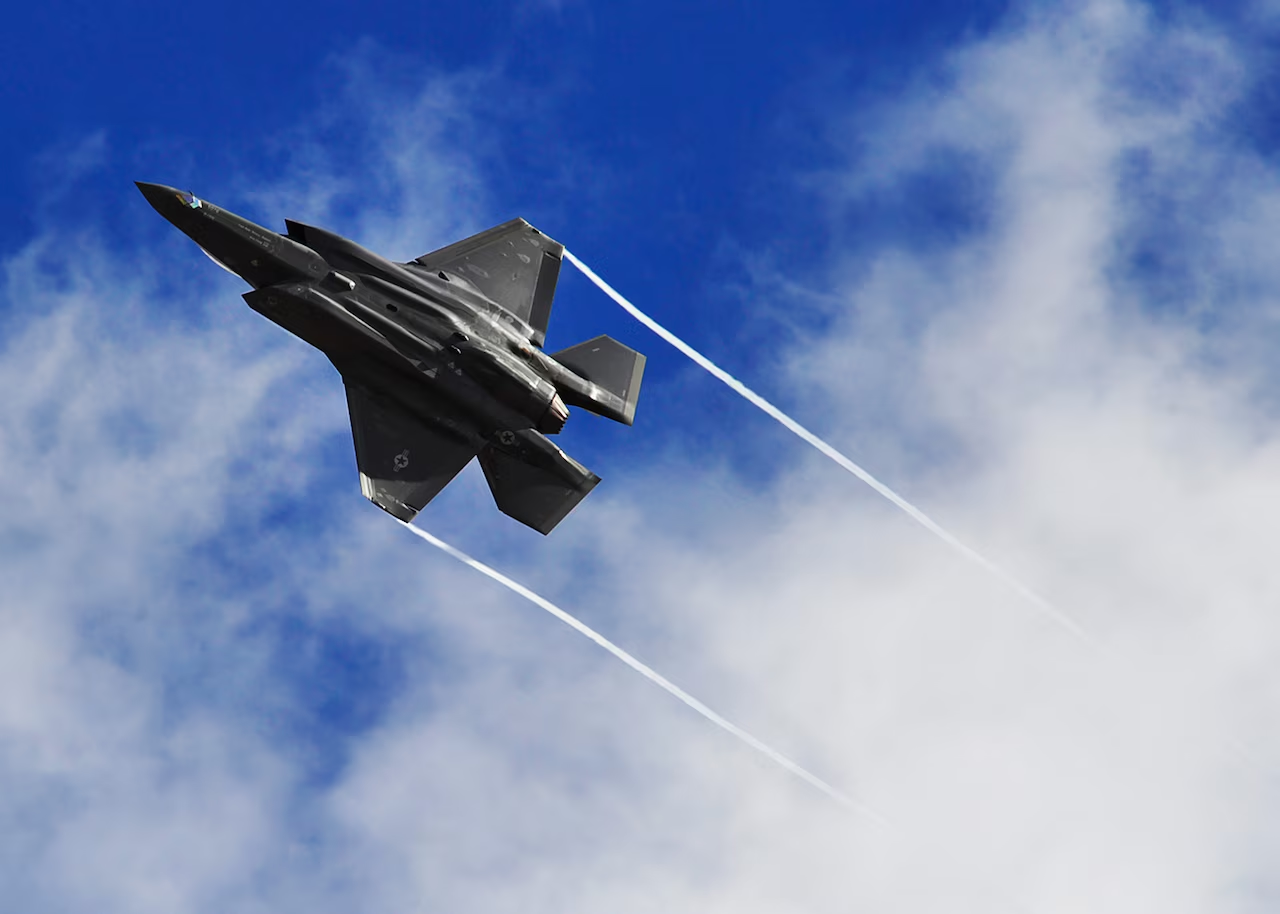
Pilot Safe After F-35C Fighter Jet Crashes Near California Navy Base

While the left-wing press often portrays NATO coordination as symbolic theater, this exercise looked anything but.

In reality, Ramstein Flag 2026 revealed hard-edge cooperation among warriors who understand that deterrence only works when it’s visible, credible, and backed by firepower.

As global tensions rise, one thing is clear: the Marines aren’t waiting for bureaucrats in Brussels to grant permission to innovate. They’re already converting Europe’s highways into runways and reminding the world that America still leads the world’s most capable fighting alliance.

The F-35B, engineered to launch vertically and fight from anywhere, is proving that U.S. airpower will remain dominant in every environment — whether over the desert, the Pacific, or, now, the Finnish outback.
News

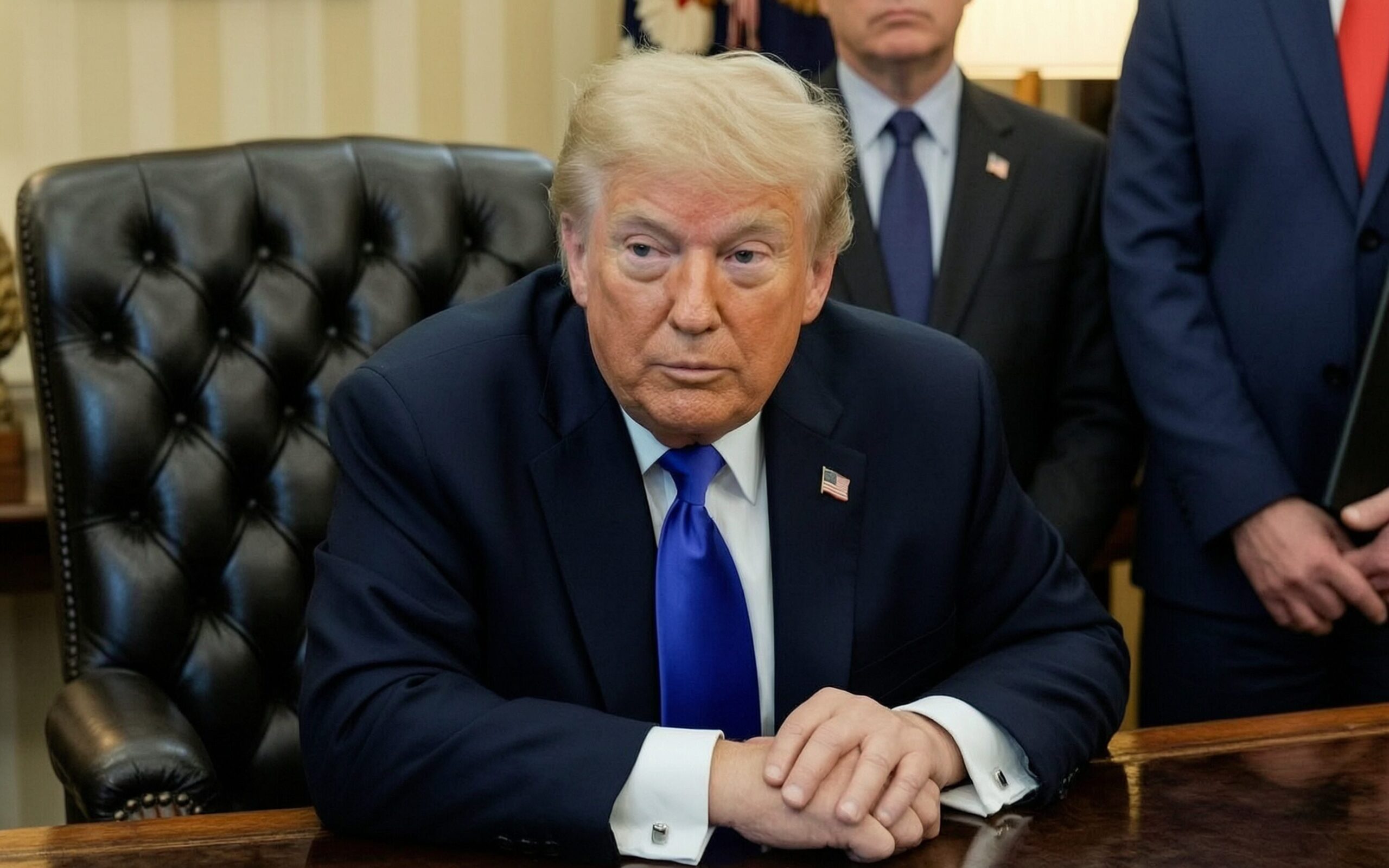
Trump Ends Strait of Hormuz Blockade After Securing U.S.-Iran Ceasefire Deal

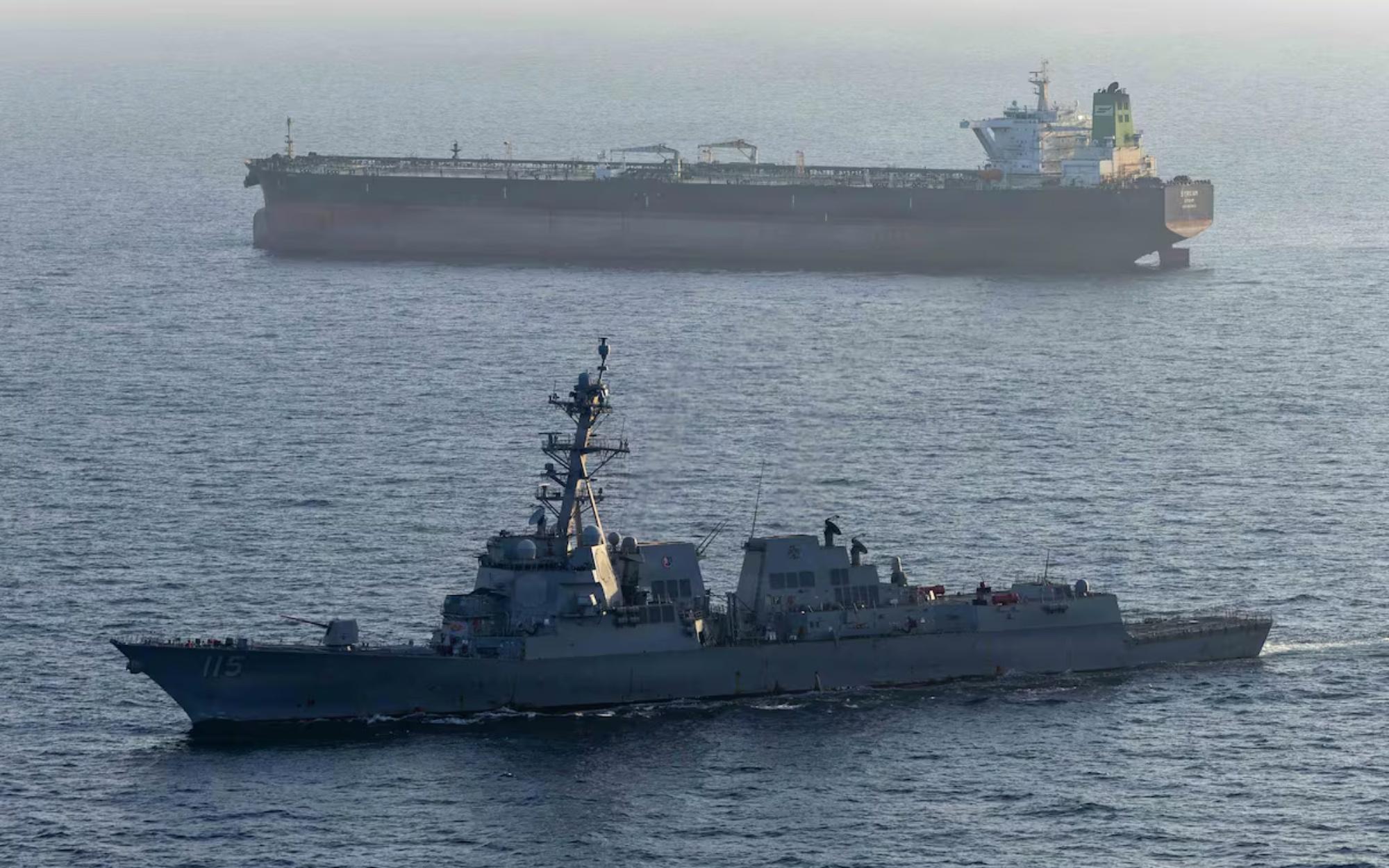
After two tense months guarding one of the most critical chokepoints in global energy corridors, the U.S. Navy has lifted its blockade of the Strait of Hormuz.

The move comes at the direction of President Donald Trump, following a memorandum of understanding signed between Washington and Tehran that imposes a 60-day ceasefire and reopens the strategic waterway to commercial traffic.

The operation, launched April 12, had redirected over 140 commercial vessels and disabled nine that refused compliance.

Trump’s order to conclude the blockade comes as part of a broader plan to deescalate tensions while projecting unmistakable American strength in the Persian Gulf.

U.S. Central Command confirmed Thursday that naval assets will not fully depart the region but remain nearby to enforce adherence to the agreement.

“Our great naval ships will remain in the general area to make sure that all aspects of the agreement are adhered to, obeyed and in full force and effect,” read the CENTCOM statement.

That assurance means the Iranian regime knows the U.S. continues to hold both the power and the will to act if red lines are crossed.

At the center of this breakthrough is President Trump’s aggressive but effective diplomacy — power first, patience second.

Trump Says Downed Apache Crew ‘Got Very Lucky’ After Iranian Attack

Unlike the weak appeasement deals of past administrations, this memorandum of understanding outlines both economic and security components designed to hold Iran accountable while avoiding further humanitarian disaster in global oil markets.

Under the terms, sanctions on Iran will be temporarily lifted to open the door for a $300 billion reconstruction fund aimed at stabilizing the Iranian economy.

Critics on the left may call this a concession, but the reality is simple: Trump forced Tehran to the table after making it clear the alternative was destruction. Once again, peace through strength delivers results.

Trump has long stood firm that no peace arrangement is meaningful until Iran’s nuclear ambitions are dismantled.

Navy Super Hornet Blows Iranian-Bound Tanker Out of Action in Gulf of Oman
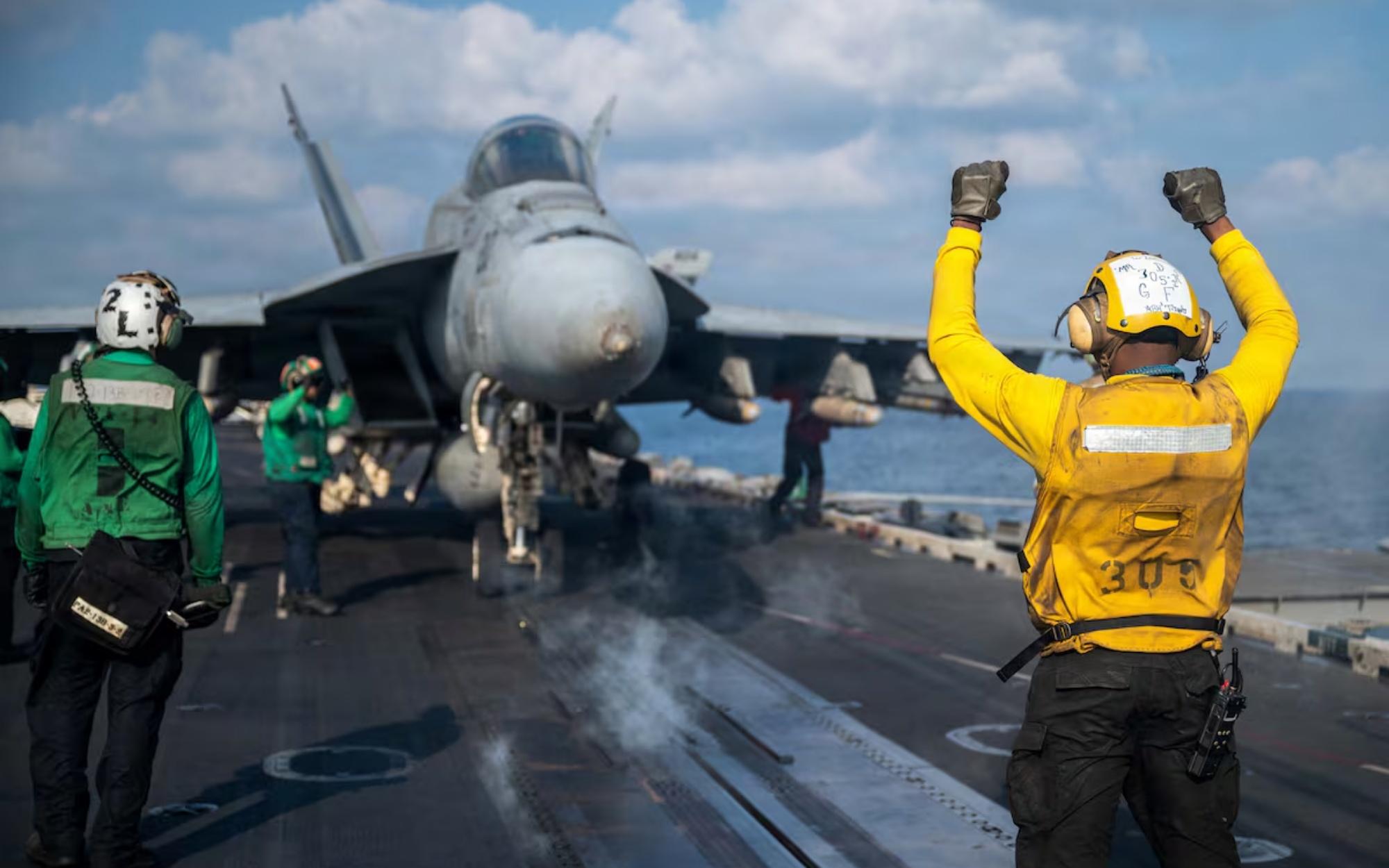
A U.S. sailor signals an F/A-18E Super Hornet on the flight deck of the USS Abraham Lincoln, March 4, 2026. (U.S. Navy)

However, both sides agreed that those specific terms will be handled in follow-up discussions. That condition ensures the U.S. maintains leverage while allowing a temporary de-escalation period to verify Iran’s sincerity.

Speaking at the G7 Summit in France, President Trump minced no words when describing the expectations going forward. “If Iran didn’t comply with the agreement,” he said, “the U.S. would go right back to dropping bombs right smack in the middle of their head.”

The blunt warning drew predictable outrage from liberal commentators but made America’s deterrent position unmistakable.

Pentagon Confirms Safe Passage Through Strait of Hormuz as U.S. Counters Iranian Mine Threat
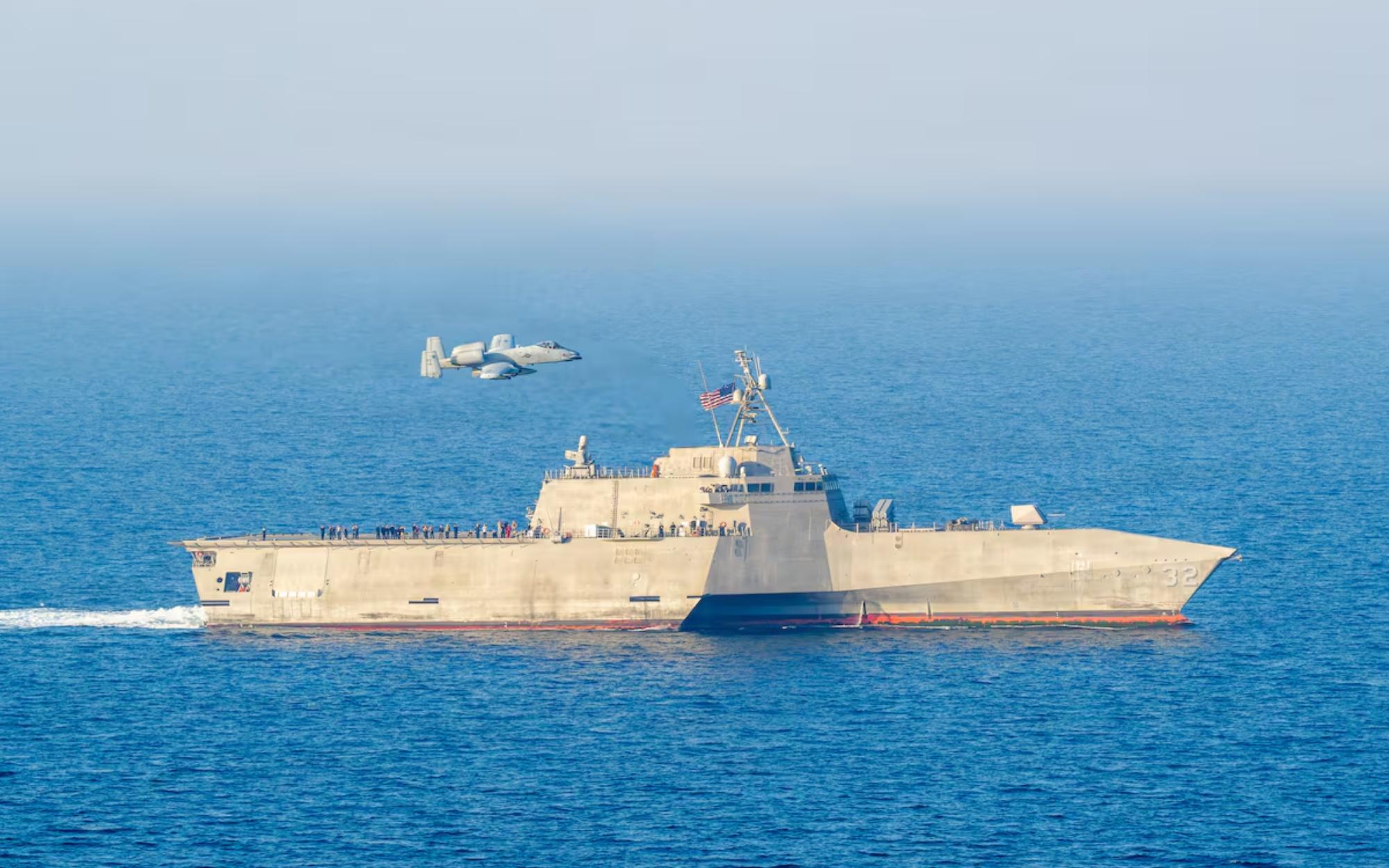
Independence-class littoral combat ship USS Santa Barbara, equipped with a mine countermeasures mission package, participates in a training exercise in the Arabian Gulf on Feb. 2, 2026. (MCS2 Iain Page/U.S. Navy)

Since the lifting of the blockade, the first reports of oil tanker traffic resuming through the Strait of Hormuz have circulated, marking a cautious return to normal maritime commerce.

Two tankers were confirmed transiting the passage from Iranian ports on Thursday, signaling a measurable relief in global shipping flows.

Trump noted earlier in the week on Truth Social that the strait had reopened but clarified at the summit that U.S. naval forces remain engaged in clearing mines that Iran had scattered along the sea lanes.

The careful mine-hunting and sweeping operations demonstrate both prudence and precision — the kind of military competence expected under War Secretary Pete Hegseth’s strong hand and Trump’s clear direction.

Reports of Vessels Hit as Iran Declares Hormuz Closed Again, Escalating Gulf Tensions

The operation’s completion underscores an important shift: America is reasserting its will in the global order without being shackled by endless conflict.

When force is used, it’s decisive, and when diplomacy is leveraged, it’s backed by that same credible threat. The contrast to the weak, bureaucratic dithering of the Obama-era foreign policy couldn’t be clearer.

For Tehran, the move offers a slim chance to behave like a rational actor in the international community. For Washington, it keeps all options on the table.

And for the men and women of the U.S. Navy who’ve kept watch over one of the world’s most dangerous maritime intersections, it’s another job done with excellence, professionalism, and power.

The world knows once more that under Trump’s leadership, America doesn’t back down — it directs the terms of peace.

With U.S. ships still in the vicinity and the Strait of Hormuz opening under American supervision, this latest chapter reminds friend and foe alike who truly controls the tide in the Gulf.

US Forces Blast Defiant Cargo Ship With Hellfire Missile After Ignoring Blockade Orders
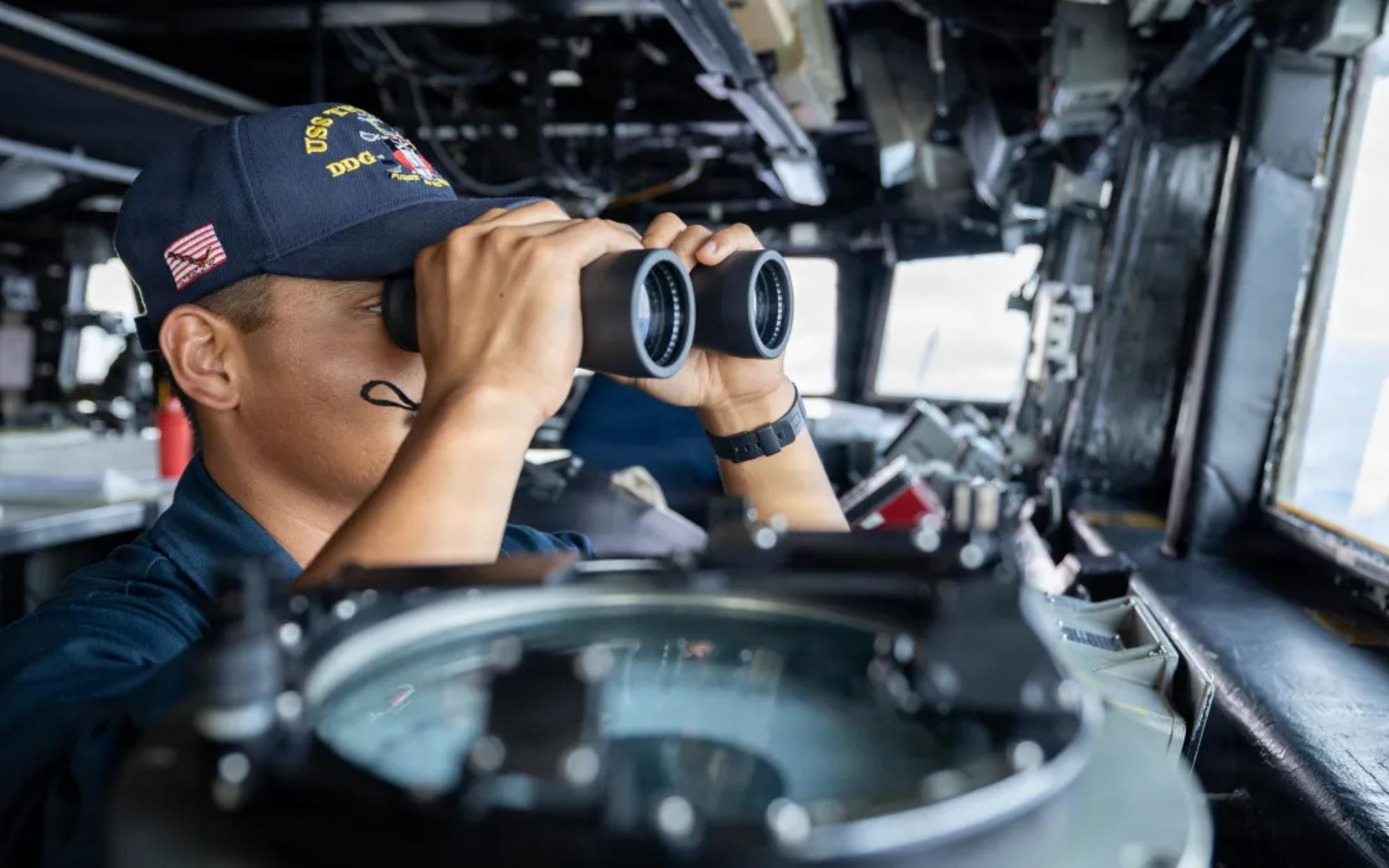
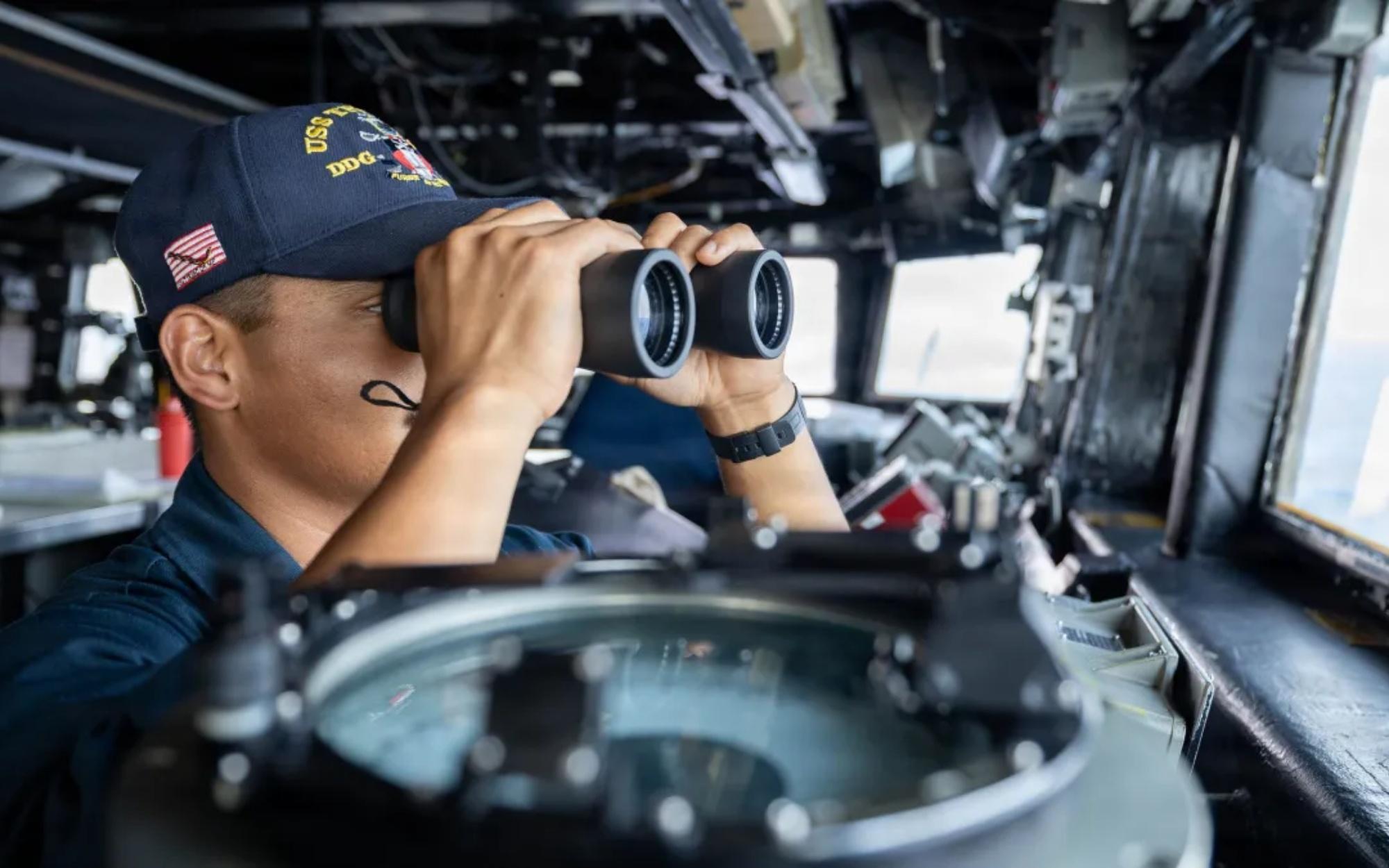
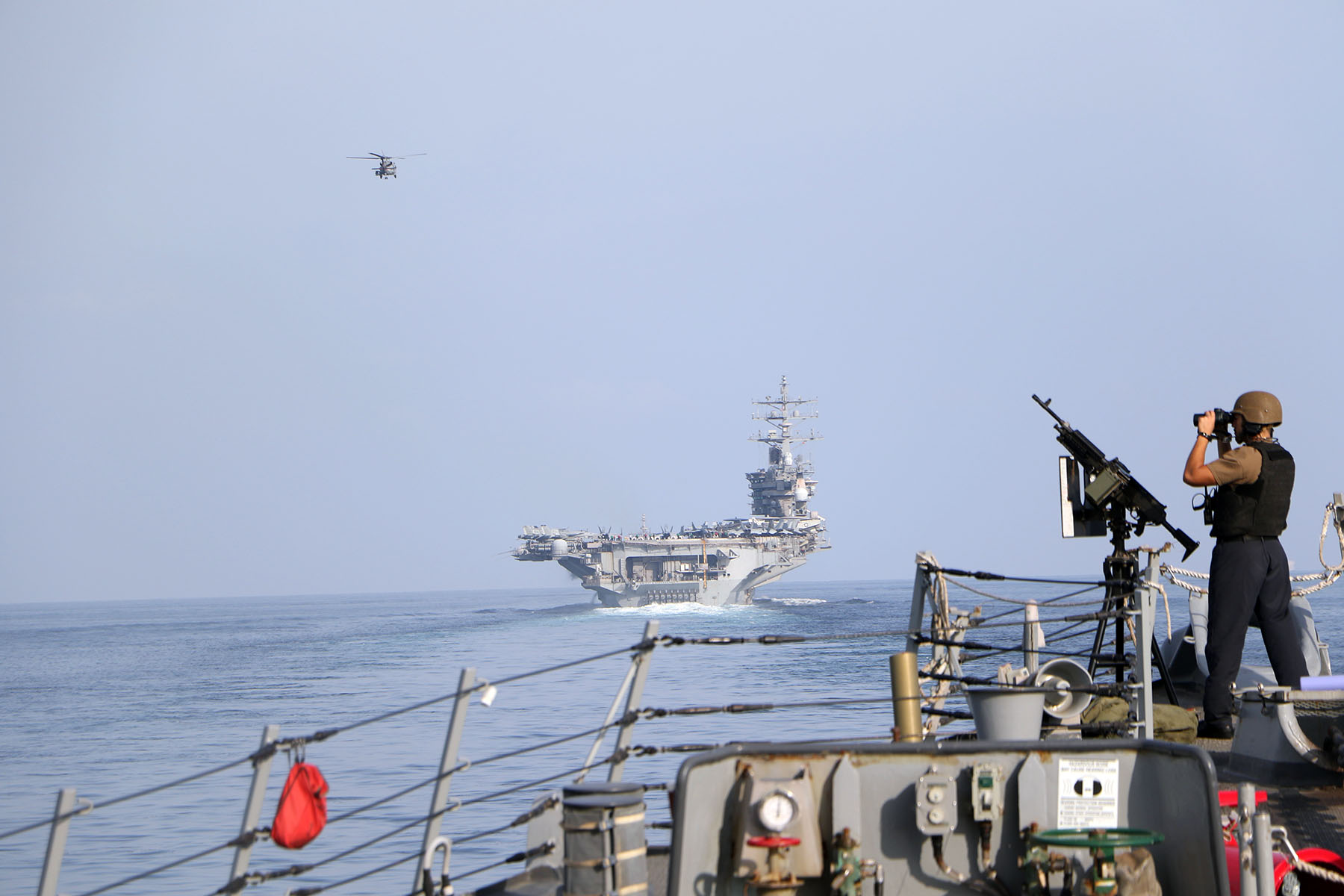
A sailor stands watch on the USS Truxtun, a destroyer participating in the blockade of the Strait of Hormuz. Navy photo.
News

Pentagon Signals Openness to Permanent U.S. Base in Poland

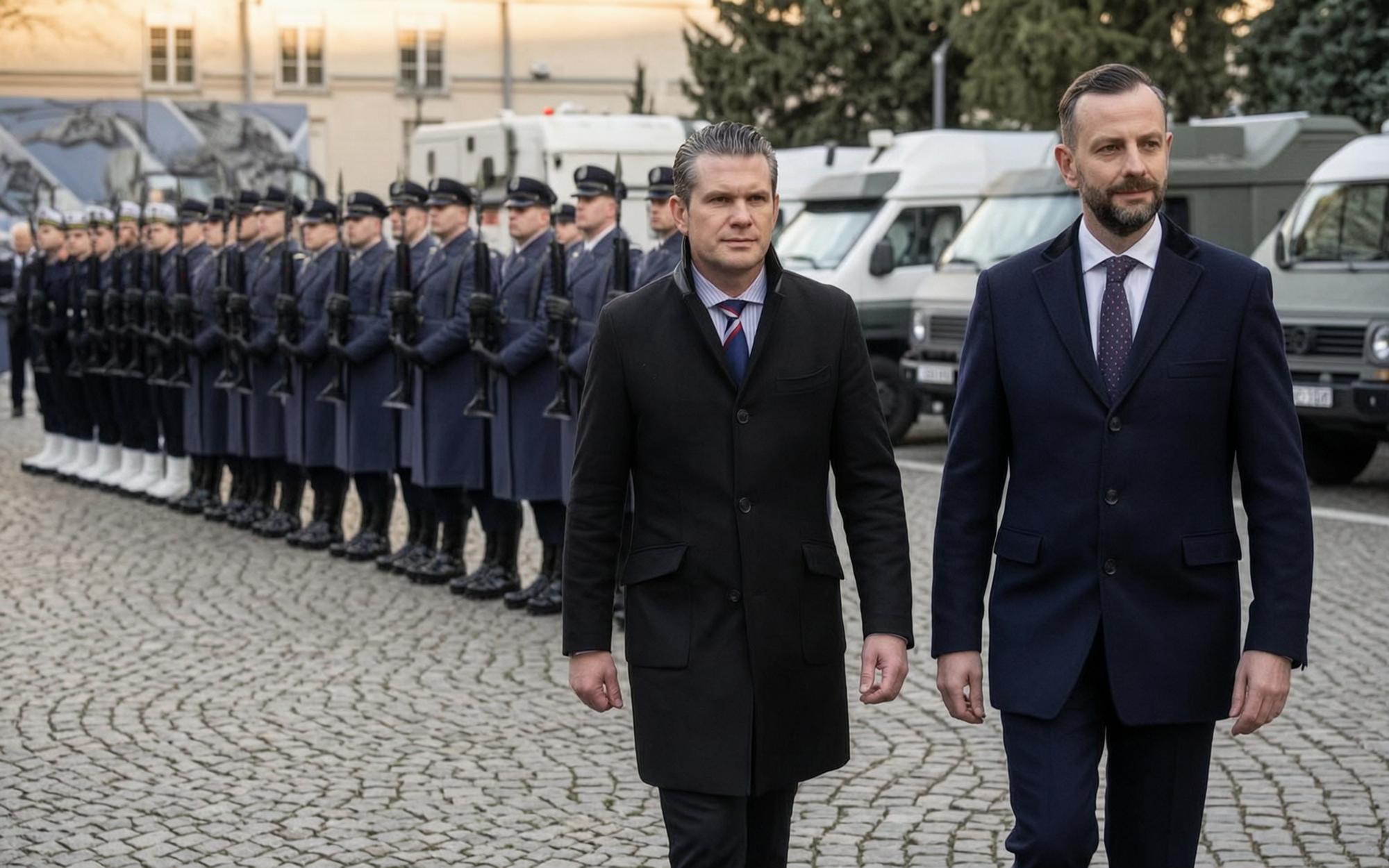
The War Department appears receptive to Poland’s push for a permanent American military base on its soil, according to Polish Defence Minister Wladyslaw Kosiniak-Kamysz.

Following fresh discussions in Brussels with U.S. War Secretary Pete Hegseth, Poland’s top military official said Washington responded positively to the idea, signaling a growing bond between the two nations amid the ongoing instability created by Moscow’s aggression.

Kosiniak-Kamysz told reporters that his meeting with Hegseth covered collective defense priorities and bilateral cooperation, with a particular focus on strengthening NATO’s eastern flank.

“The U.S. responded positively to Poland’s proposal to establish a permanent U.S. military base in Poland,” he said.

While no official decision has been finalized, the announcement marks a strong step forward in consolidating long-term American military presence in the region.

Poland has repeatedly urged both NATO and the United States to move beyond rotational troop deployments and commit to a fixed, enduring American footprint.

That stance comes as Russian provocations along the alliance’s eastern borders continue to raise alarms. For Warsaw, a permanent U.S. garrison represents not only a security guarantee but also a symbolic reinforcement that Poland is on the front line of liberty in Eastern Europe.

For the United States, a base in Poland would also enhance logistical reach and deterrence capabilities across the region.

With Hegseth leading the review of America’s global troop posture, it’s clear the War Department is taking a pragmatic approach that prioritizes readiness over political indulgence.

Under Hegseth’s leadership, the emphasis is shifting from legacy deployments to strategic positioning where America’s interests are most at risk.

During the meetings in Brussels, Hegseth announced a comprehensive review of U.S. troop deployments across Europe, specifically targeting cost efficiency and alliance accountability.

U.S. Postpones Weapons Deliveries to European Partners Amid Iran Conflict
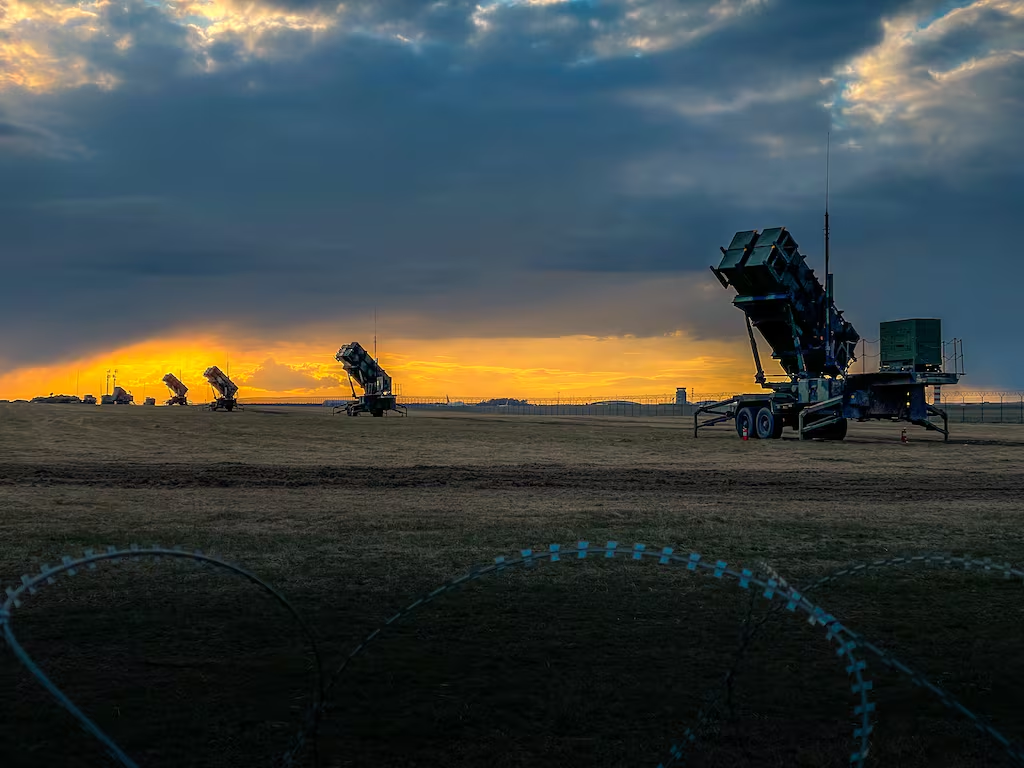
U.S. Patriot missile batteries stand ready in Poland, April 2022. (Sgt. 1st Class Christopher Smith/U.S. Army)

He reaffirmed America’s commitment to NATO’s collective defense principles while calling out nations that continue to shirk their 2 percent GDP defense spending commitments. The message was unmistakable: America will no longer bankroll Europe’s security theater while some allies sit on the sidelines.

“We’re done with free riding,” Hegseth stated bluntly. According to those close to the talks, the War Secretary made it clear that U.S. taxpayers deserve responsible partners, not complacent ones hiding behind American might.

“If you want the shield of freedom, you’ve got to share the cost of holding it,” an aide summarized afterward.

Poland, by contrast, is not hiding behind anyone. The country has invested heavily in modernizing its armed forces, purchasing American-made equipment such as Abrams tanks, HIMARS rocket systems, and F-35 fighter aircraft.

U.S. Greenlights Nearly $2 Billion Counter-Drone Sale to Kuwait Amid Rising Iranian Aggression
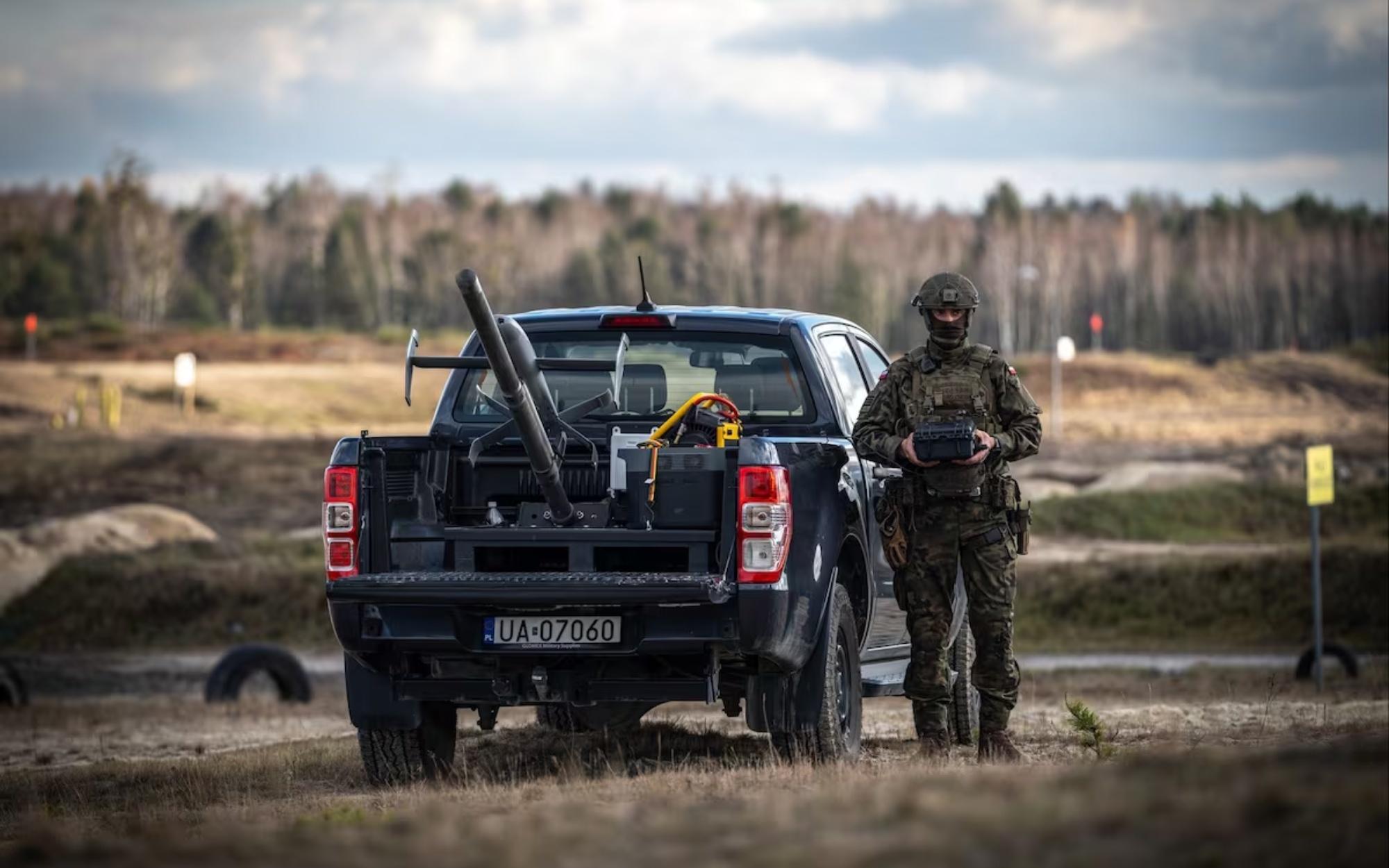
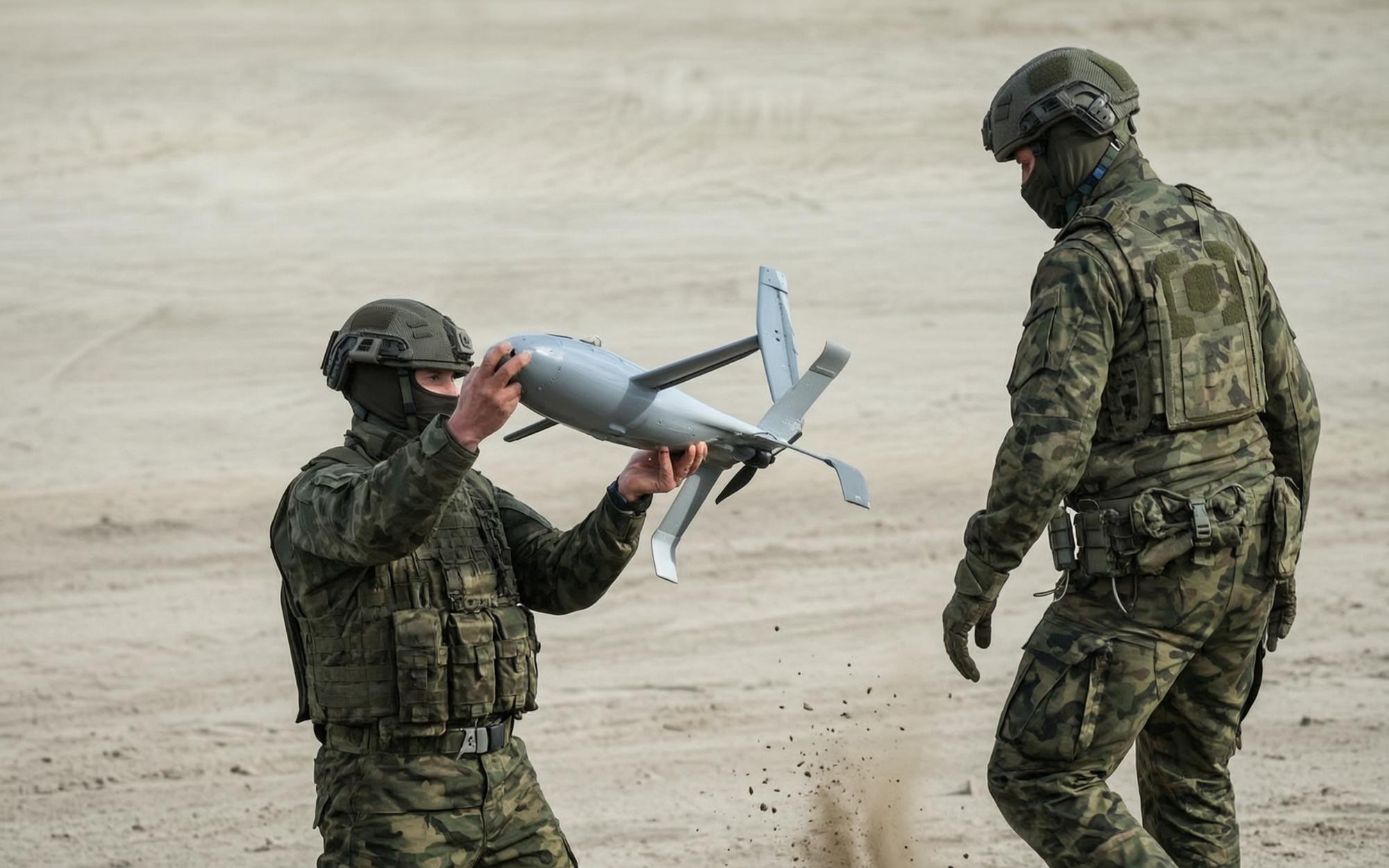
A Polish soldier prepares to launch a counter-UAS system during a showcase in Nowa Deba Training Area, Poland, on Nov. 18, 2025. (Luis Garcia/U.S. Army)

Warsaw’s defense spending now exceeds NATO’s 2 percent benchmark, positioning Poland as one of Washington’s most reliable allies on the continent. That kind of commitment resonates deeply with the current War Department’s “burden-sharing” philosophy.

From a strategic standpoint, a permanent U.S. base in Poland would allow NATO forces to project power faster and respond more effectively to threats along the eastern border.

It would also send a clear message to Russia’s Vladimir Putin that America and its allies aren’t retreating or dithering—they’re doubling down. A fixed American presence would reinforce deterrence and solidify NATO’s operational posture in Central Europe.

At the same time, a long-term base would benefit American troops with purpose-built infrastructure rather than the logistical headaches of the rotational model.

Poland Signs Onto Pentagon’s Counter-Drone Network After Abrupt U.S. Troop Pullback

Permanent installations allow for integrated command structures, continuity in training, and deeper coordination with host nation forces. Such integration boosts response times and enhances deterrence, making strategic sense both economically and militarily.

The plan isn’t without critics—mostly from within the “global management class” that fears a more assertive, Europe-focused U.S. presence could disrupt their delicate international order.

Those critics argue that making Poland a more central node of American power would provoke Russia needlessly. But that argument ignores reality: Russia has already invaded Ukraine, conducted cyber operations, and deployed nuclear-capable systems in Kaliningrad. Waiting politely has only emboldened Putin.

It’s no coincidence that this push comes as President Trump and War Secretary Hegseth are realigning America’s defense posture toward strength and reciprocity.

The Trump-Hegseth approach discards diplomatic niceties and focuses on practical, results-driven alliances. Ensuring that the allies who claim to value freedom actually invest in defending it is not controversial—it’s common sense.

Army Announces Unit Rotations in Europe and the Middle East, Including Return of Soldiers from Lithuania
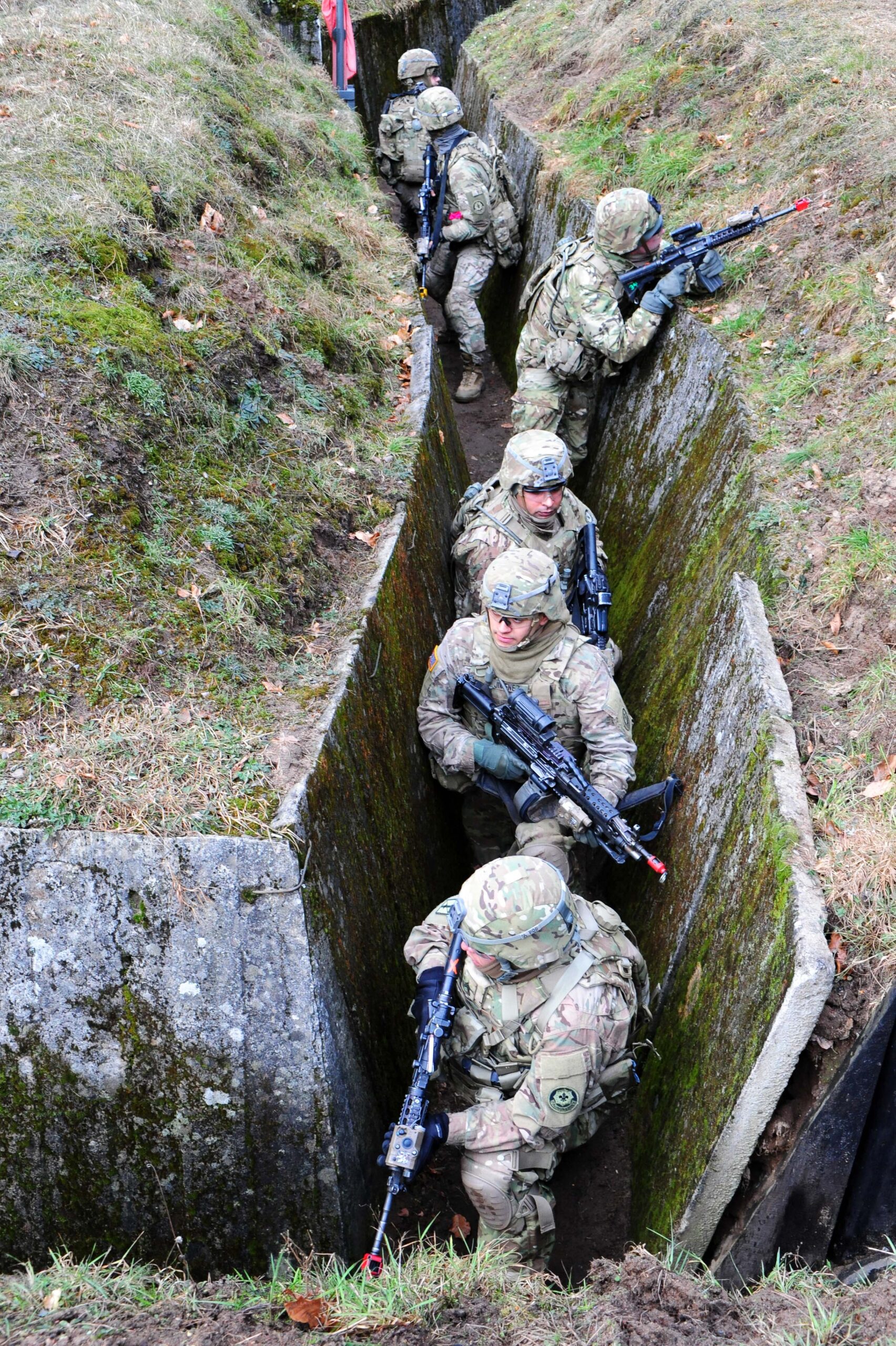
U.S. Soldiers assigned to Killer Troop, 2nd Platoon, 3rd Squadron, 2nd Cavalry Regiment, move and clear a trench during a situational exercise part of Operation Atlantic Resolve in Drawsko Pomorskie training area, Poland, Feb. 24, 2015. Operation Atlantic Resolve is a U.S. Army Europe-led land force assurance training mission taking place across Estonia, Latvia, Lithuania and Poland to enhance multinational interoperability, strengthen relationships among allied militaries, contribute to regional stability and demonstrate U.S. commitment to NATO. (U.S. Army photo by Staff Sgt. Pablo N. Piedra / released)

For Poland, the opportunity to host a permanent U.S. base represents more than deterrence.

It is a declaration that their nation stands shoulder-to-shoulder with the American vision of security grounded in sovereignty and resolve. If the War Department moves this initiative forward, it could dramatically reshape NATO’s eastern defense arc for a generation to come.

As Hegseth’s review unfolds, allies from the Baltics to the Balkans will be watching closely.

But for now, Warsaw’s diplomatic persistence and America’s newfound strategic clarity are converging on a single premise: a strong Poland means a stronger NATO front line. And that is precisely what keeps both Europe and the United States safer from threats that refuse to fade.

News

Simplify Chaos: New Bill Seeks to Fix Guard and Reserve Pay Confusion

For decades, America’s National Guard and Reserve troops have been buried under a mountain of bureaucratic nonsense when it comes to their orders, pay, and benefits.

Now, Congress is trying to untangle that mess with a new piece of legislation called the Duty Status Reform Act.

The mission is simple: cut through the endless red tape that’s been shortchanging those who serve both state and country.

The current system is a hodgepodge of over 30 duty statuses, ranging from Title 10 to Title 32 and State Active Duty designations.

The result is confusion, uneven benefits, and in some cases, outright unfairness.

The type of duty order you’re on determines what pay, housing allowance, health care, and retirement points you get — and the inconsistencies have frustrated troops for years.

Senator Jerry Moran of Kansas, one of the bill’s Republican champions, said the reform would “simplify the structure and strengthen the Guard’s ability to carry out its missions by standardizing pay and benefits.”

Senator Moran’s statement cuts right to the heart of the issue: the Guard’s role has evolved, but Washington’s outdated paperwork hasn’t kept up.

Guardsmen Honored for Their Heroic Stand Against DC Gunman
Two guardsman deployed to Washington, D.C., were awarded the Soldier’s Medal and Airman’s Medal for their response to a shooting that killed a fellow West Virginia guardsman. National Guard photo by Master Sgt. William Blankenship.

President Donald Trump brought much-needed attention to this issue when he spoke out in Memphis last March, noting that Guardsmen deployed to American cities should receive deployment pay and benefits like any active-duty soldier.

His remarks spotlighted the very real inequities built into the current system — inequities that this reform seeks to erase.

Julian Plamann, deputy director of government affairs at the National Guard Association of the United States, put it bluntly: “If you’re a Guardsman and you’re on orders for less than 30 days, you do not receive health care or housing benefits.” That’s the catch.

The difference between a 29-day order and a 31-day order can mean the difference between having coverage or not — a ridiculous game of bureaucratic limbo that punishes those who serve.

Plamann called the reform long overdue but admitted the challenge is huge. Reforming the duty status system means rewriting hundreds of policies across war department regulations, joint travel rules, and federal pay codes.

National Guard’s DC Presence Slammed by Critics as ‘Ineffective’ Despite Visible Results

“The can of worms that this is, is so massive it really has stagnated progress,” she said. But it’s exactly the type of problem determined lawmakers and leaders should tackle head-on.

The RAND Corporation released a report in August 2025 that confirmed what every Guardsman already knew — the current system causes confusion for both commanders and troops.

RAND found that some units hesitate to activate their personnel because of pay, benefits, and administrative headaches. That doesn’t just waste time; it undercuts readiness.

One blatant example of the system’s absurdity played out during the 2020 COVID-19 response in New York. Navy reservists deployed on the hospital ship USNS Comfort were under Title 10 orders, which came with full benefits.

But Army National Guard troops working at the nearby Javits Center were under Title 32 orders, meaning their pay and benefits were completely different — even though they were doing the same mission.

Matt Schwartzman, policy director for the Reserve Organization of America, explained another major problem: “The system rewards how orders are written over the duty actually performed.”

Troops can work nearly full-time under a mix of short-term orders and still lack consistent health coverage or housing support. That reality is unacceptable in a nation that claims to support its service members.

The impact doesn’t stop with the troops themselves. Military families have also been caught in the crossfire of bureaucratic rules.

Trump Sends National Guard to New Orleans as He Backs Swamp Sweep Immigration Crackdown
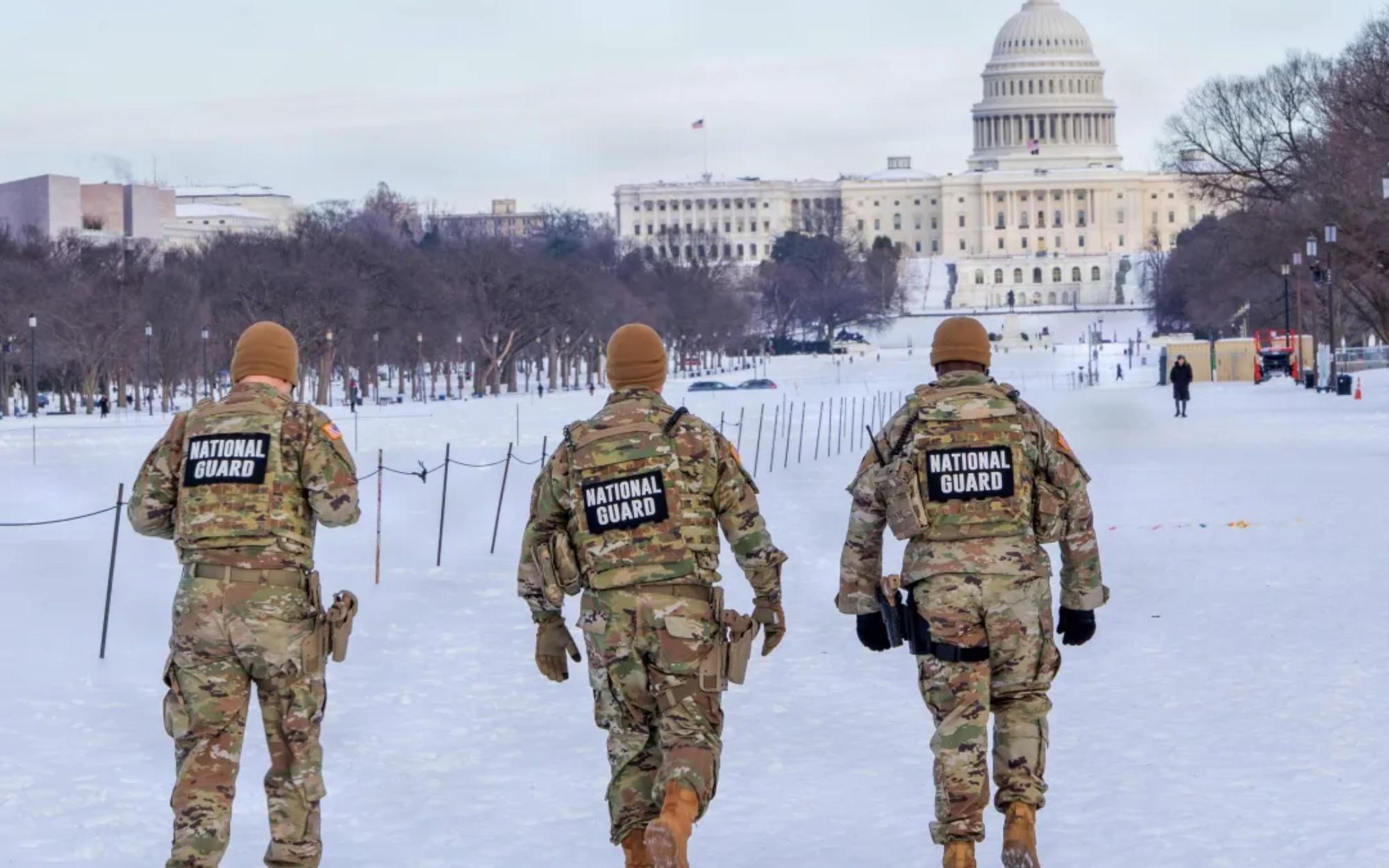
Army National Guardsmen patrol a walkway in Washington, Nov. 21, 2025. About 2,400 guardsmen are supporting the D.C. Safe and Beautiful Task Force mission, helping law enforcement and community partners strengthen public safety, resilience and quality of life in the nation’s capital.

After a tragic 2015 helicopter crash in the Gulf of Mexico that killed four Guard members and seven Marines, it was revealed that the Guard families received less in survivor payments simply because their loved ones were on “inactive duty training.”

Congress tried to fix that inequity in the 2017 annual war bill, but other loopholes remain.

The new bill proposes cutting more than two dozen statuses down to four broad categories that clearly define who qualifies for what. These categories would cover everything from war and national emergency response to state-level disaster deployments, training, and even remote cyber operations.

It’s modernization the Guard desperately needs as cyber and remote missions become more frequent.

Major Plamann, who also serves as a Maryland National Guard company commander, said the change would bring much-needed clarity for modern Guard units that do remote or tech-driven work.

“There’s so much that we do in between drills,” she said. “This will be nice to actually have something to point to in a structure that allows us to get some sort of compensation for that.”

Supporters believe that passing this bill isn’t just about simplifying paperwork — it’s about fairness, respect, and finally giving Guardsmen and reservists what they’ve earned.

The Department of War exists to support our troops in every aspect, and this legislative cleanup could finally bring that principle to life.

If Congress follows through, the Duty Status Reform Act could be the long-overdue victory America’s part-time warriors have been waiting for.

Our troops deserve consistency, not confusion. The message is clear: if you serve this country, your benefits shouldn’t depend on what line of text appears at the top of your orders.

News

Air Force Identifies Eight Heroes Lost in Deadly B-52 Crash at Edwards Base

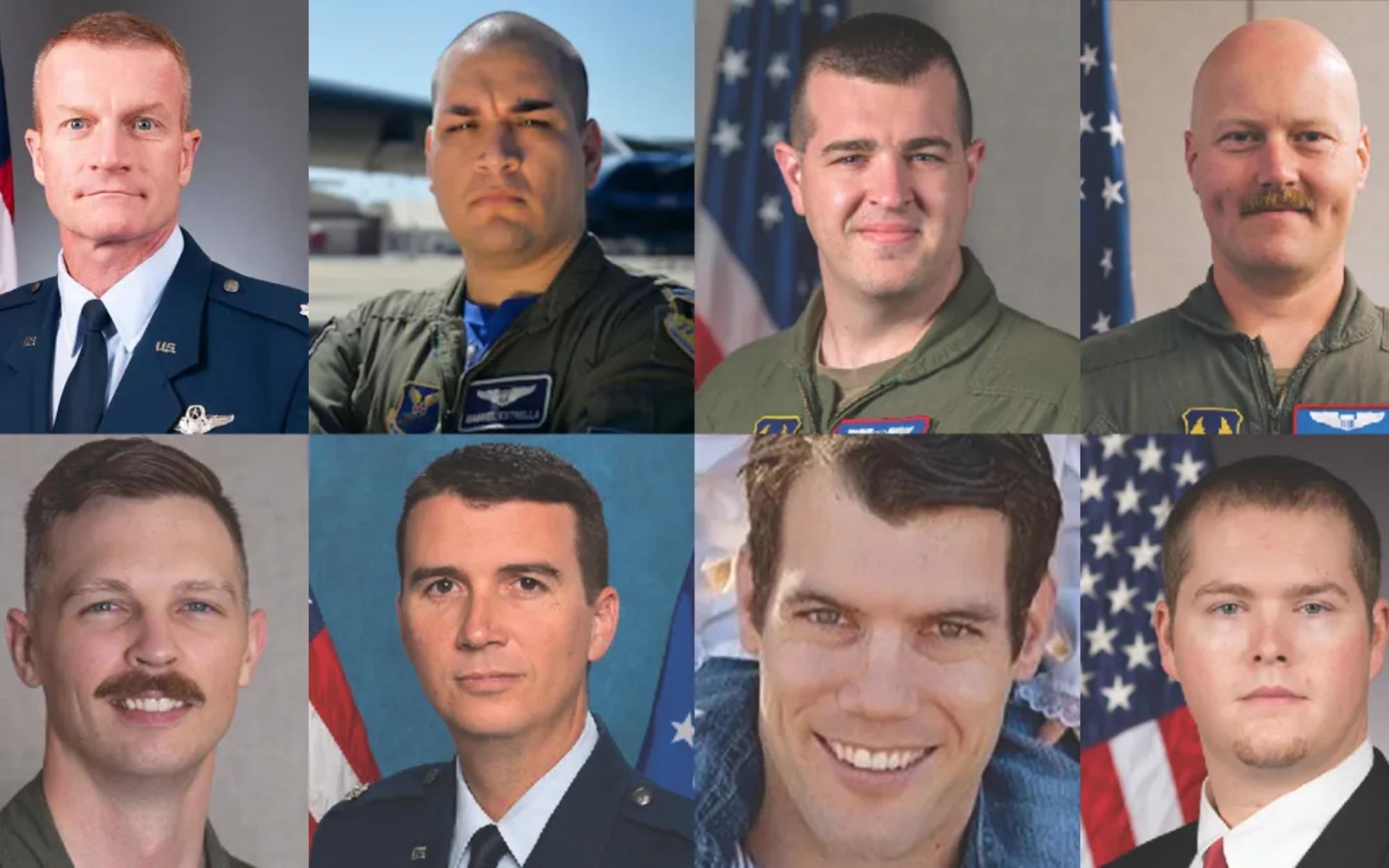
The U.S. Air Force has officially released the names of the eight crew members who were killed when a B-52 Stratofortress went down shortly after takeoff from Edwards Air Force Base in California.

The tragedy has sent shockwaves through the Air Force community and across the wider military family.

According to base officials, the crew consisted of five active-duty Air Force service members and three civilians working in concert during a routine training mission.

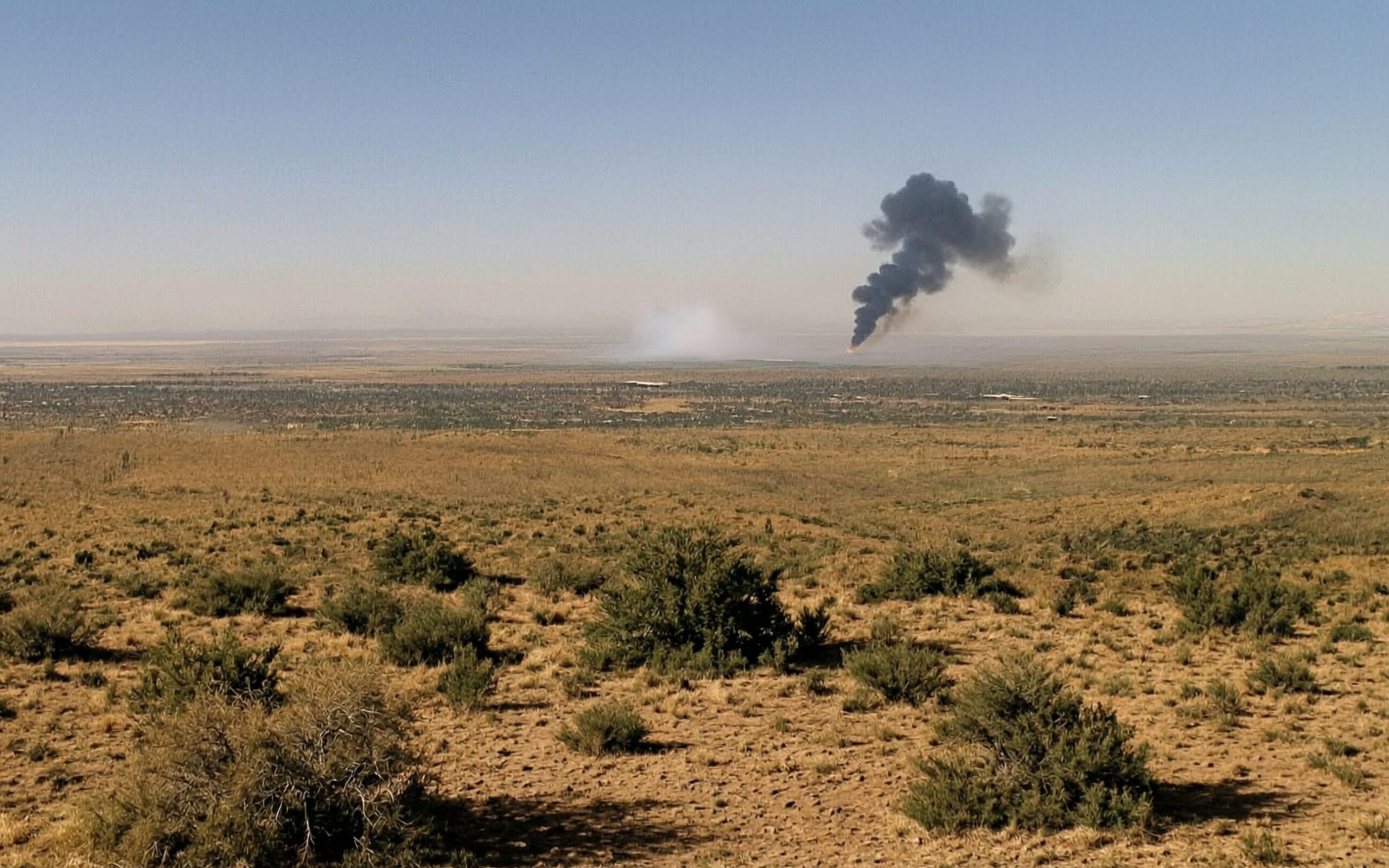
The bomber, a workhorse of the U.S. strategic fleet for decades, crashed around 11:20 a.m. Pacific time on June 15. Emergency crews responded quickly, but the devastation was total.

Col. Thomas Tauer, commander of the 412th Test Wing, issued a somber statement honoring the fallen, saying, “These airmen were more than coworkers. They were friends, mentors, teammates and valued members of our Edwards and Air Force family.”

He emphasized the base’s immediate focus was to support the families of those lost and ensure every resource was made available to help them through this unimaginable loss.

Among those killed were Lt. Col. Gabriel Estrella, 40, of the Air Force Operational Test and Evaluation Center; Maj. Alexander Davis, 34, of the 419th Flight Test Squadron; Maj. Robert Dee, 40, and Maj. Brad Hovey, 35, both pilots from the 419th Flight Test Squadron; Col. Greg Watson, 53, a Boeing employee and Air Force reservist; retired Lt. Col. Miles Middleton, 50, also a Boeing employee; Jeromy Smith, 32, a flight test engineer; and Christopher Rischar, 41, a contractor with JT4.

Each man represented the very best of the Air Force’s tradition of courage, precision, and dedication. They served in an unforgiving profession where technical excellence meets split-second decision-making, all in the defense of America’s skies.

Two Boeing Employees Were Among the Eight Killed in Fiery B-52 Crash at Edwards Air Force Base

The nation is reminded that these warriors risk their lives not only in combat, but also in the essential testing, evaluation, and advancement of the aircraft that keep our warfighters dominant.

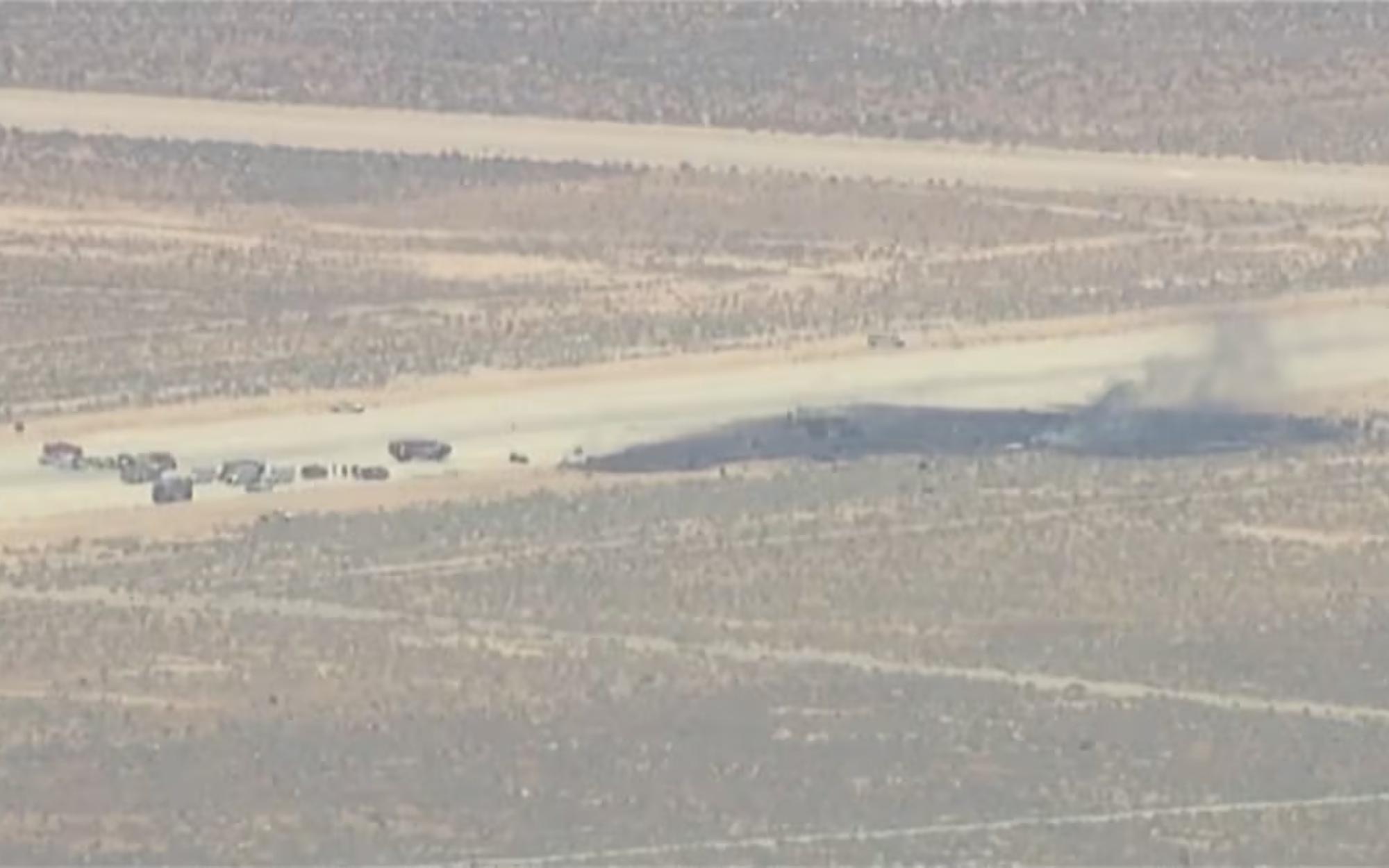
The Air Force stated that the cause of the crash remains under investigation, with the airfield at Edwards still closed while recovery and analysis operations are underway.

The crash occurred during a “routine training flight,” the sort that has been conducted countless times at the storied desert base—a test and training ground for the most advanced aircraft on Earth.

This tragedy marks the deadliest B-52 incident since 1982, when nine airmen lost their lives during a simulated combat flight near Mather Air Force Base.

The loss serves as a grim reminder that even during training, service to this nation demands ultimate sacrifice. Every takeoff in service of readiness carries inherent risk, but that risk is accepted with courage few outside the uniformed world can truly grasp.

Recent months have been marked by an unsettling uptick in aviation mishaps across the armed forces.

Eight Tragically Killed in Fiery B-52 Crash at Edwards Air Force Base
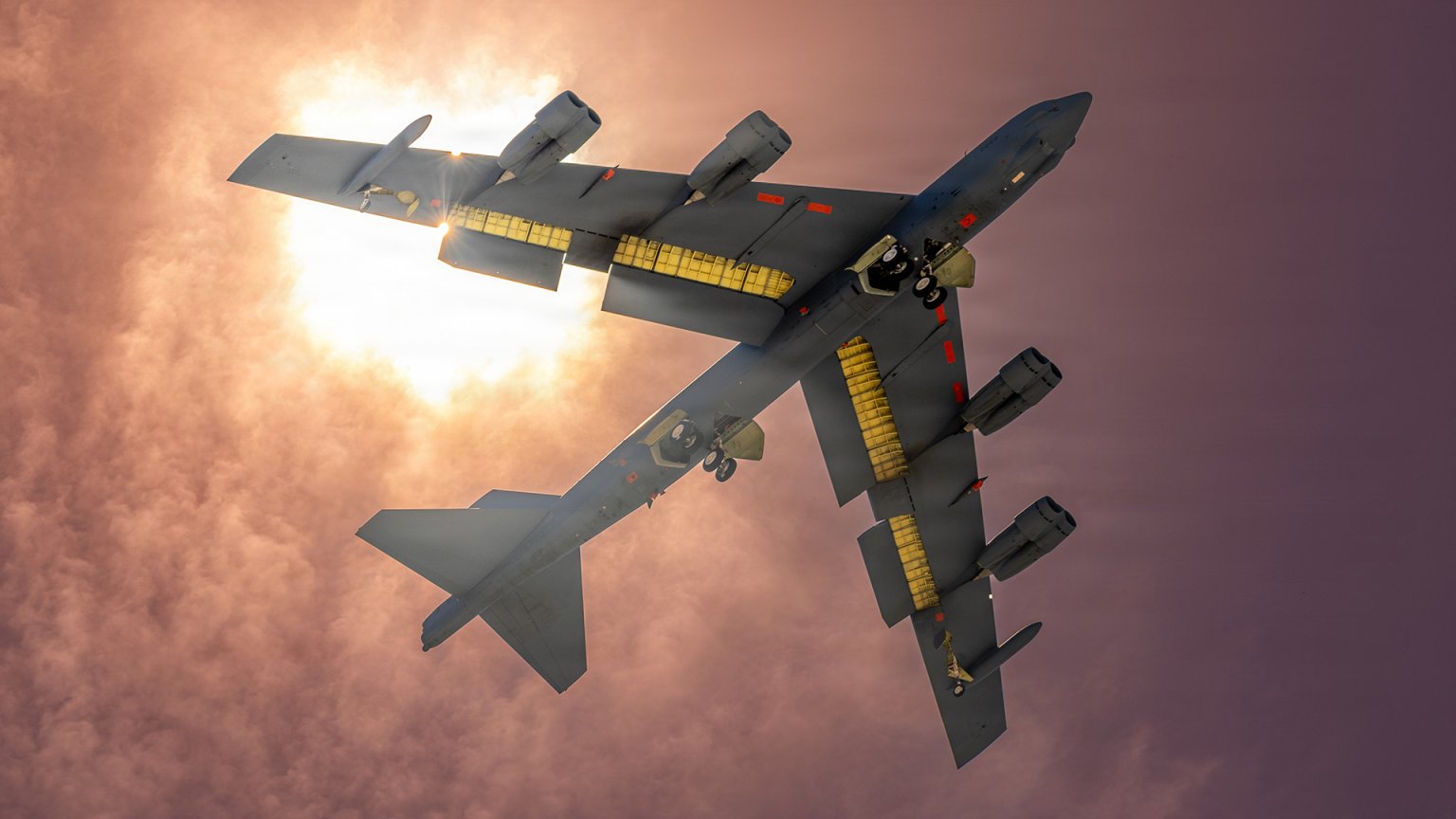
A B-52H Stratofortress from Edwards Air Force Base, California, departs for an evening test mission on Aug. 7, 2025. Air Force photo by Todd Schannuth.

Just within the past five weeks, a midair collision between two Navy EA-18G Growlers and a separate fatal crash of a Marine Corps F/A-18 Hornet near Mount Rainier have reminded the nation of the razor’s edge our aviators walk.

Each tragedy underscores the urgent need for vigilance, maintenance focus, and renewed commitment to supporting our military test programs without political interference or budget chokeholds from Washington bureaucrats.

Test flight operations remain a vital part of America’s readiness posture. The mission at Edwards Air Force Base, located in California’s Mojave Desert, is the backbone of innovation and experimentation for U.S. air power.

Every new weapons system, aircraft upgrade, and flight maneuver must be proven and perfected before reaching the front lines. That process is risky by nature, but it ensures American dominance in every theater of war.

While some in the media focus on headlines or bureaucratic blame games, those who understand military aviation know that every airman on that B-52 took off that morning in the proud tradition of American service.

They were fearless professionals—doing their part to keep this country strong and battle-ready.

Eight Tragically Killed in Fiery B-52 Crash at Edwards Air Force Base
Smoke rises from a blackened part of Edwards Air Force Base after the crash of a U.S. Air Force B-52 bomber aircraft on June 15, 2026, in a still image from news helicopter video. (KABC via Reuters)

Their families, colleagues, and communities will now face unimaginable grief.

Yet their sacrifice will not be forgotten. Secretary of War Pete Hegseth and the Trump administration have consistently emphasized rebuilding America’s warfighting capability and honoring those who put their lives on the line, both in combat zones and in test flights like this.

Their vision to restore the strength and pride of the U.S. military stands as the truest tribute to those who serve and fall in the line of duty.

As the investigation continues, what remains clear is the enduring spirit of America’s airmen.

From the flight line at Edwards to bases around the globe, the Air Force family grieves—but also steels itself to continue the mission. The skies may be dangerous, but it is those skies that keep this nation free.

When the flag is raised tomorrow at Edwards Air Force Base, it will wave for eight heroes who gave everything they had in service to their country.

Their memory deserves not only our tears, but our unwavering commitment to continue the mission they so honorably served.

News

Coast Guard Crushes Cartel Lifeline with Massive Cocaine Seizure in Eastern Pacific

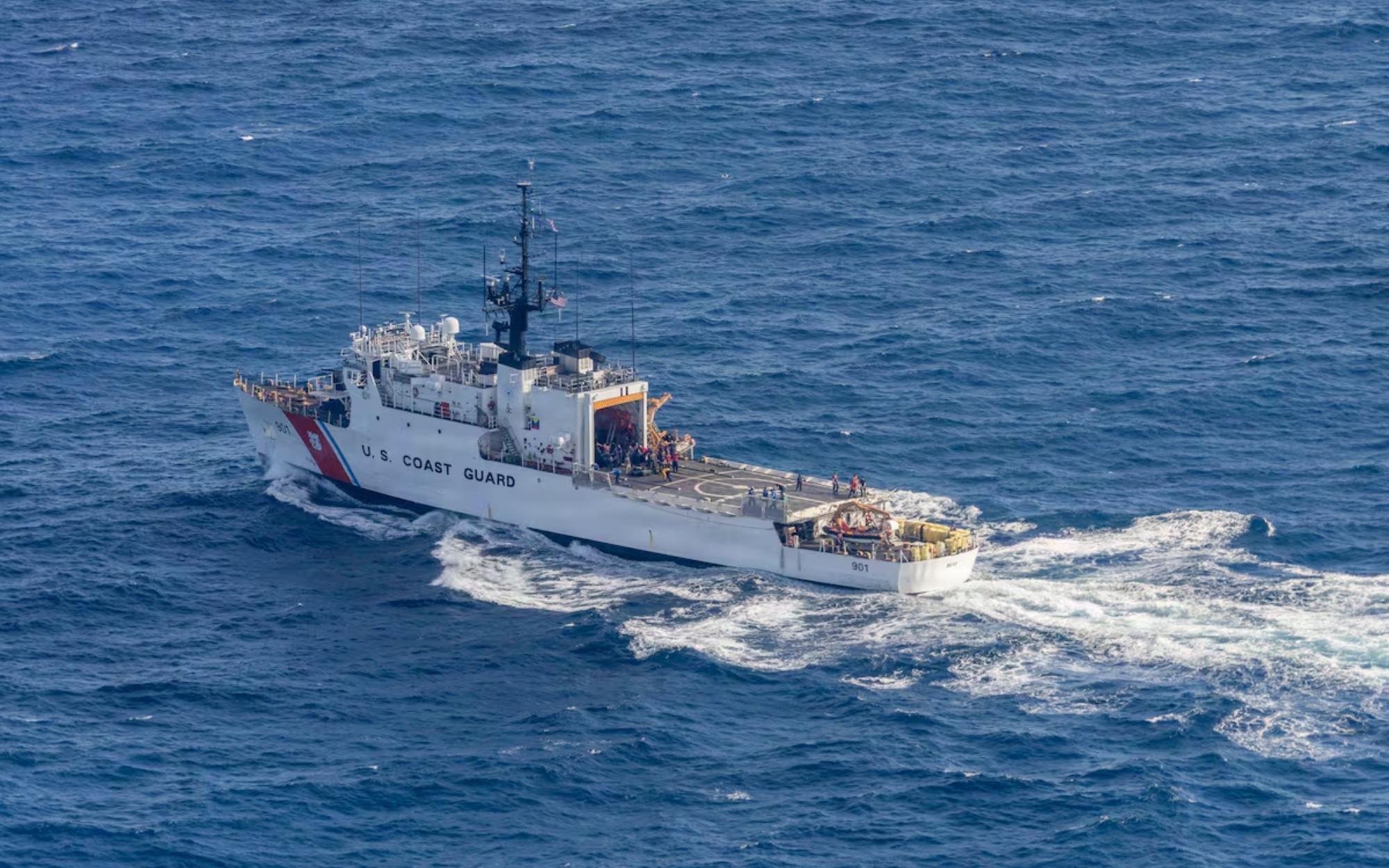
The U.S. Coast Guard struck a massive blow against the cartels this week, seizing more than 225,000 pounds of cocaine in the eastern Pacific through Operation Pacific Viper.

The effort marks a decisive win in President Trump’s aggressive counternarcotics campaign, proving that America’s warfighters on the water are keeping the poison off U.S. streets and out of American veins.

According to the Coast Guard, the cutter Bear alone snatched up 7,707 pounds of cocaine over the weekend, pushing the total tally under Operation Pacific Viper to nearly a quarter-million pounds.

The operation began in August 2025 and has kept relentless pressure on the narco-smugglers operating through the maritime corridors of Central America.

Adm. Kevin Lunday, the commandant of the Coast Guard, praised the mission’s success.

“Our forces conducting Operation Pacific Viper continue to defeat the cartels and stop the flow of deadly drugs to the United States,” he said. It’s not an overstatement.

Each pound taken represents thousands of lives potentially saved from overdose and addiction, and each bust tells hostile traffickers that America’s resolve isn’t going anywhere.

Coast Guard Breaks Recruitment Record, Reaching a 34-Year High in Active-Duty Enlistments
The U.S. Coast Guard, whose Law Enforcement Detachment 105 is seen here seizing cocaine from a smuggling vessel on Aug 11 in the eastern Pacific Ocean, brought in 5,204 new enlisted personnel. (MCS2 Sheryssa DoWard/U.S. Navy)

During the operation, the Bear and its embarked helicopter crew disabled two drug-smuggling vessels, seized several thousand pounds of cocaine, and apprehended six suspected narco-terrorists.

The precision and coordination required to pull off such actions show a level of discipline and skill that rivals any military operation conducted on foreign soil.

Officials also emphasized just how lethal this cargo could have been. The Coast Guard estimates that just 1.2 grams of cocaine can prove fatal.

That means the 225,000 pounds captured equates to about 93 million potentially deadly doses. That’s 93 million reasons why aggressive maritime enforcement must continue to ramp up under a no-nonsense American administration.

Poll Shows Broad Backing for Stronger Military Action Against Drug Traffickers as Strikes Escalate
CARIBBEAN SEA (May 25, 2025) An MH-60R Sea Hawk helicopter assigned to Helicopter Maritime Strike Squadron (HSM) 74, the “Swamp Foxes,” lifts off from the flight deck of the Arleigh Burke-class guided-missile destroyer USS Gravely (DDG 107) to conduct a routine maritime interdiction operation patrol while underway in the Caribbean Sea. U.S. Navy assets are deployed under U.S. Northern Command’s maritime homeland defense authorities with a U.S. Coast Guard Law Enforcement Detachment embarked to enable maritime interdiction missions to prevent the flow of illegal drugs and other illegal activity. U.S. Northern Command is working together with the Department of Homeland Security to provide additional military forces and capabilities at the southern border. (U.S. Navy photo by Mass Communication Specialist 1st Class Ryan Williams)

The Trump administration has been unapologetic about taking the gloves off when it comes to fighting drug cartels. Critics have sniffed at what they call “controversial tactics,” but the results speak for themselves.

Cocaine isn’t reaching American cities, overdose rates are slowing, and the traffickers have been pushed back into hiding. That’s not controversy—that’s success.

In coordination with the War Department, the administration launched targeted strikes last fall against vessels suspected of carrying narcotics in both the Caribbean and eastern Pacific.

These operations, often conducted far from public view, form part of a new counter-narcoterrorism front designed to choke off the cartels’ infrastructure at sea before it reaches U.S. borders.

The Pentagon, standing firmly behind President Trump’s directive, has labeled these missions as “counternarcotics efforts” within a “non-international armed conflict.”

Taiwan and United States Launch Firepower Center to Master Asymmetric Warfare
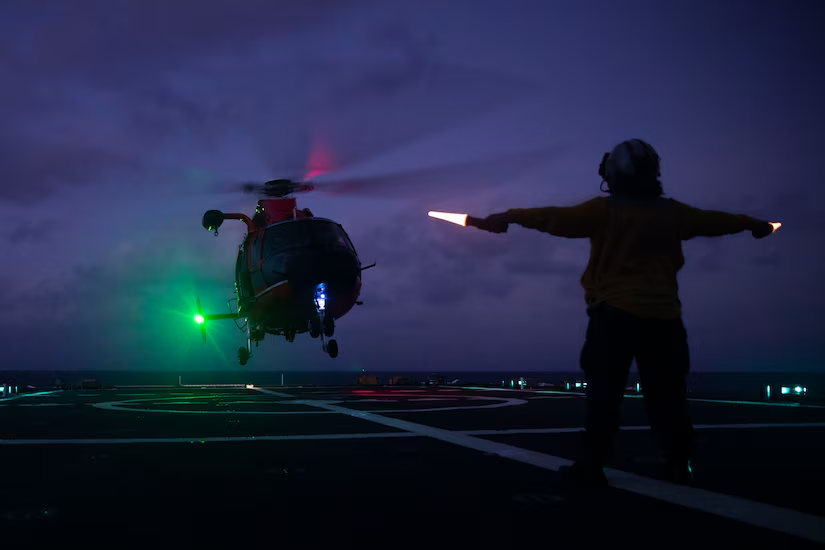
A sailor directs a helicopter to a vessel’s flight deck at night.
A service member directs an MH-65E Dolphin helicopter during routine nighttime flight operations aboard the Coast Guard cutter Munro in the South China Sea, Aug. 23, 2023. The Munro is deployed to the Indo-Pacific to advance relationships with ally and partner nations.

While predictably, left-wing legal scholars and certain media voices have tried to accuse the military of overreach or even “war crimes,” the facts remain clear: U.S. forces are dismantling the operational capacity of drug-running enemies who profit off American death.

Since September 2025, the War Department has reported 64 precision strikes in the Caribbean and eastern Pacific.

Those engagements have eliminated at least 191 cartel-affiliated criminals and destroyed dozens of smuggling craft before they could spread their poison. The cartels may not wear official uniforms, but they pose just as great a threat to American security as any foreign terrorist cell.

Coast Guard operations like Pacific Viper highlight the increasingly military nature of America’s counternarcotics fight. These aren’t routine arrests of fishing boats gone rogue. These are heavily armed, cartel-backed vessels running interdiction-countermeasures, communications encryption, and sometimes even foreign-sourced weaponry.

The Coast Guard’s men and women are literally waging low-intensity warfare against criminal networks that cross borders and bribe nations.

Coast Guard Expands Elite Interdiction Teams To Crush Narco-Terror Threats
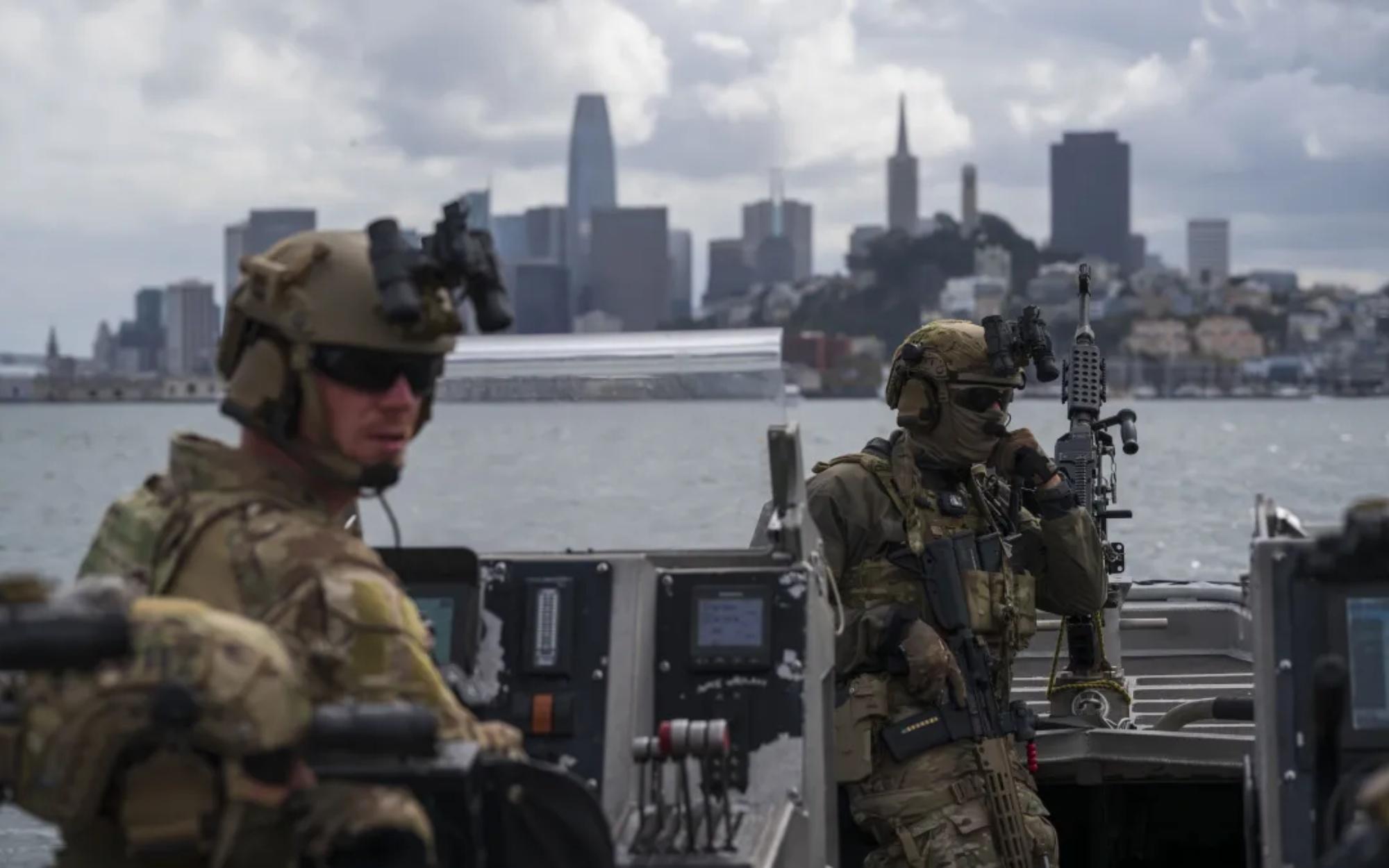
Members of the U.S. Coast Guard Maritime Security Response Team (MSRT) West patrol waterways in the San Francisco Bay, Oct. 9, 2025. MSRT’s primary mission is to provide specialized maritime law enforcement and counterterrorism capabilities in support of Homeland Security and Defense Readiness operations. Coast Guard photo by Petty Officer 3rd Class Joel LaVallee.

With leadership like Adm. Lunday at the helm and War Secretary Pete Hegseth reinforcing the naval and air missions, the United States is projecting power where it counts most—on the sea lanes that cartels once believed they controlled. Every ton of cocaine seized is strategic leverage gained, and every trafficker caught scrambles the narco-economy.

While political opportunists in Washington will always nitpick tactics or question legality, anyone paying attention to the numbers knows the truth. Operation Pacific Viper is working.

The cartels are reeling, America’s maritime border is stronger, and the bad guys are either locked up or at the bottom of the ocean. To every sailor and airman involved, the message from America’s heartland is clear: job well done, now keep going until the cartels run out of boats.

News

Senate Targets Hegseth’s Travel Budget While Ignoring Iran School Bombing and Boat Strike Facts

The Senate is at it again, using bureaucratic games to try and hobble Secretary of War Pete Hegseth while conveniently sidestepping the real issues involving Iran and America’s ongoing global fight against terrorism and narcotics networks.

The so-called “restrictions” on Hegseth’s travel are less about fiscal responsibility and more about political theater from lawmakers who can’t stomach a strong leader executing the Commander in Chief’s agenda.

The Senate Armed Services Committee slipped a provision into its version of the fiscal year 2027 National Defense Authorization Act that would gut 75 percent of Hegseth’s travel budget until he turns over unedited footage and civilian harm reports tied to operations in Iran and Latin America.

The provision passed the committee 18-9, heading now for a floor vote.

Let’s be honest—this has little to do with “oversight” and everything to do with undermining a Secretary of War who has backed President Trump’s unapologetic doctrine of peace through strength.

The same senators playing watchdog now were silent during the aimless foreign fiascos of the previous administration.

At the heart of the scuffle is the February 28 U.S. Tomahawk strike that hit a school in southern Iran on the opening day of the Iran war.

The tragic blast killed 165 people, most of them schoolgirls, according to Iranian state media. However, the situation has remained murky, with conflicting reports about who was really responsible.

President Trump, who launched the operation to neutralize Tehran’s military capabilities, made it clear that evidence suggested Iran could have obtained and launched the missile itself.

“Nobody did that on purpose. Mistakes are made. War is nasty,” Trump said, emphasizing that the incident was under investigation and urging reporters to ask Hegseth for updates.

Hegseth Returns to Capitol Hill to Defend Trump’s 2026 Defense Budget Proposal
Secretary of War Pete Hegseth stands with his spouse Jennifer prior to conducting a press conference after taking part in a NATO Defense Ministerial Session at NATO Headquarters in Brussels, Belgium, Feb. 13, 2025. (DoW photo by U.S. Navy Petty Officer 1st Class Alexander C. Kubitza)

Despite these clear statements, Senate Democrats and a few fence-sitters on the Republican side still jammed the NDAA with micromanaging mandates. They demanded “uncut” videos from Latin American strike missions and detailed civilian harm assessments for three previous strikes in Yemen as well.

Those Latin American operations were part of efforts by U.S. Southern Command to dismantle drug-running routes used by terrorist-linked cartels across the Caribbean and eastern Pacific.

Between September 2025 and June 2026, 64 strikes were executed, killing 191 operatives tied to narco-terrorist syndicates.

The missions have saved untold lives by blocking dangerous drugs destined for American streets, but lawmakers now want to second-guess the men and women risking their lives to stop that flow.

The committee even tried slipping in another amendment that would have barred the War Department from using military funds in operations against Iran without congressional greenlight—a measure that barely failed by one vote.

The attempt was a naked power play meant to strip the Commander in Chief of operational authority and hand national security decisions to self-righteous politicians.

The History, Evolution and Healing of Military Tattoos from Sailor Jerry to Punisher Skulls
SecWar Pete Hegseth’s arm on display with tattoos that have been meaningful to his time in the service of the United States (Instagram/@PeteHegseth)

Lawmakers have also zeroed in on “Operation Absolution Resolve,” the daring January 20 mission by U.S. Special Operations Forces to capture Venezuelan dictator Nicolás Maduro.

They want unredacted investigative documents and certification of contractor participation in related clandestine and intelligence activities. In other words, they’re demanding to see the inner workings of highly classified missions that keep America safe, all to feed their political suspicions.

It’s worth remembering that much of this Senate pushback stems from prior media blow-ups over an alleged incident off Venezuela’s coast last year, when operators targeting drug smugglers were accused of firing on survivors.

Hegseth made the right call by limiting footage access to key House and Senate committee members rather than giving political opportunists raw material to grandstand on cable news.

Burgers, Booing, and a Bold Message: Vance and Hegseth Stand with Troops in Washington
Defense Secretary Pete Hegseth meets with a National Guardsman in Union Station as part of the D.C. Safe and Beautiful Task Force, Washington, Aug. 20, 2025.

Critics of the committee’s actions say the provisions could have a chilling effect on current and future operations, as commanders might hold back or hesitate knowing that their split-second battlefield decisions could end up the subject of Senate hearings and partisan speculation.

It’s another example of Washington’s obsession with optics over outcomes.

Meanwhile, the same lawmakers calling for “transparency” have shown zero urgency in investigating Iran’s war crimes or China’s deep involvement in Latin American corruption networks.

Their outrage seems carefully reserved for moments that can tarnish the Trump-Hegseth team’s record.

Hegseth’s office continues to coordinate directly with Congress on required briefings and has produced dozens of classified reports to the proper committees.

What Senate obstructionists really want isn’t information—they want control. And they can’t stand that a War Secretary who’s unapologetically patriotic runs circles around them.

Ukraine Opens Battlefield AI Data to Partners, Building a Global Edge
Defense Secretary Pete Hegseth visits the Army Prepositioned Stocks-2 site in Powidz, Poland, with Polish Deputy Prime Minister Wladyslaw Kosiniak-Kamysz, Feb. 15, 2025. The visit highlighted the U.S. Army’s commitment to equipping its forces with cutting-edge technology and bolstering deterrence in Eastern Europe, particularly through the V Corps’ leading role in the “Transforming in Contact” initiative.

At a time when America’s enemies grow bolder by the day and our troops are stretched thin across multiple theaters, the last thing this country needs is a politically motivated spending squeeze designed to weaken the War Department’s leadership. The men and women in uniform deserve better than partisan games and selective outrage.

Hegseth’s mission remains the same—to protect America’s interests abroad and ensure our forces never fight with one arm tied behind their back.

The Senate should stop playing watchdog and start being a partner in defense.

News

Apache Down Near Oman Signals Dangerous Shift in Air Combat

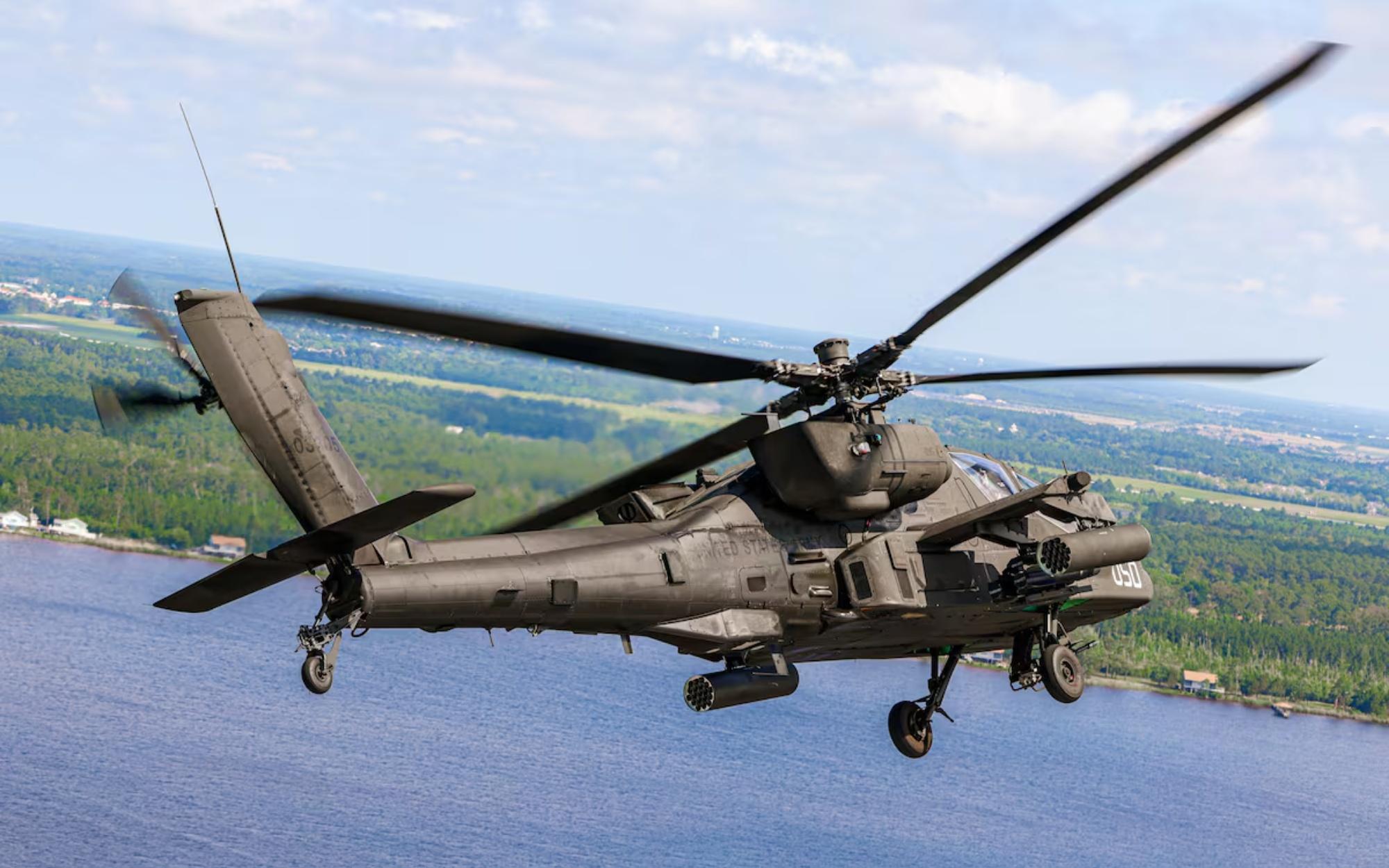
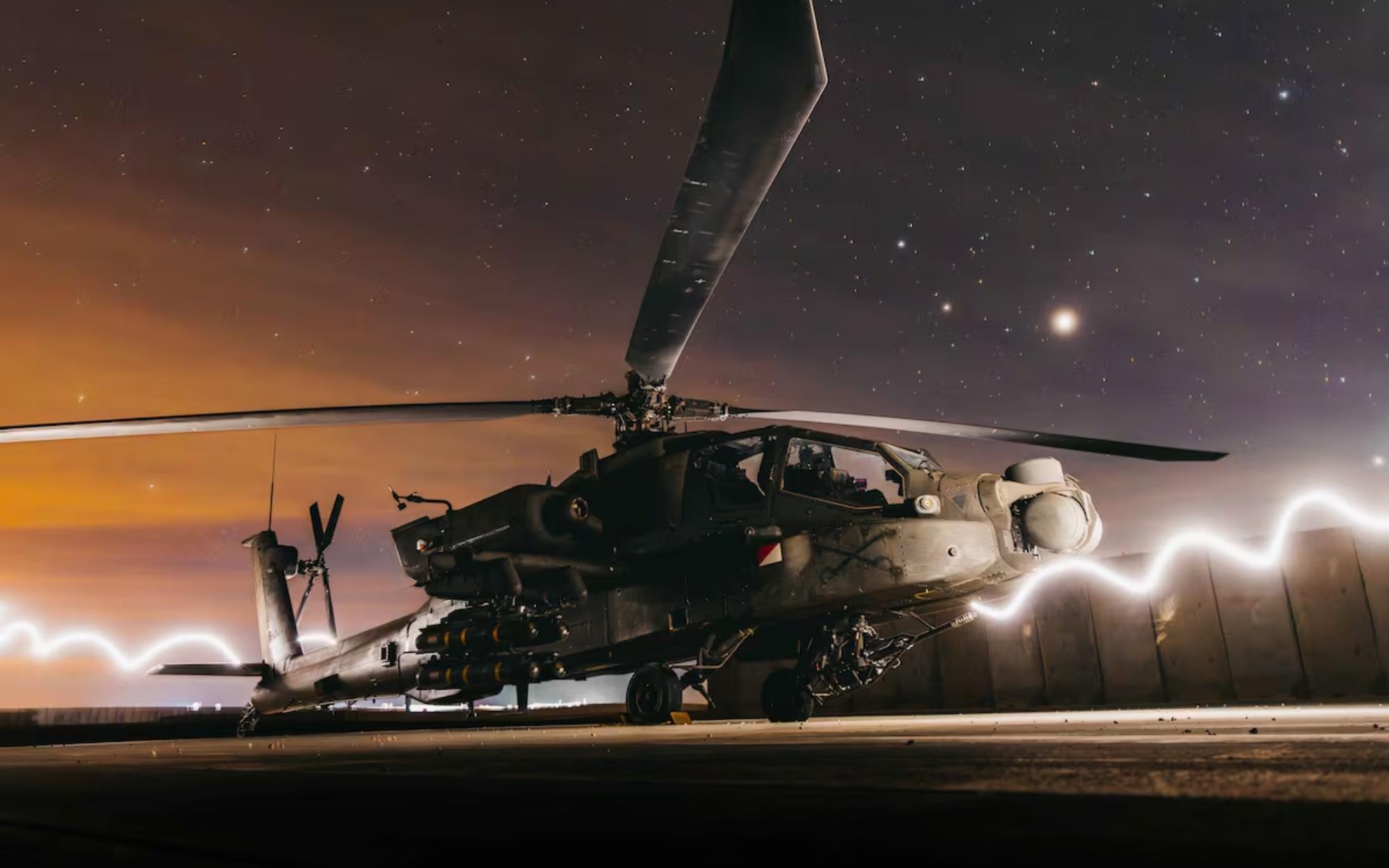
When an Apache attack helicopter went down off the coast of Oman after an encounter with an Iranian-made Shahed drone, it wasn’t just a tragic close call for the crew—it was a moment that revealed how modern warfare is rapidly changing.

Analysts say the incident marks a turning point in the skies, where even America’s toughest rotary-wing aircraft are finding themselves vulnerable to swarms of cheap, weaponized drones built by U.S. adversaries.

The Army confirmed that the two crew members aboard the Apache were rescued by a passing vessel hours after the crash, and thankfully both survived.

What caused the helicopter to go into the water remains unclear, but experts suspect a Shahed drone—the same type Iran has shipped in droves to Russia for use in Ukraine—may have either impacted or detonated near the aircraft.

That possibility has analysts across the military community rethinking what it means to dominate the air.

Iran’s Shahed-136 drones are not sophisticated by American standards.

They’re relatively inexpensive, often pre-programmed to fly toward fixed coordinates, and typically used to strike stationary targets. Kelly Campa from the Institute for the Study of War explained that such drones aren’t designed to take down helicopters mid-flight.

U.S. Army Apaches and Navy Seahawks Obliterate Iranian Boats Blocking the Strait of Hormuz
Army AH-64 Apache attack helicopters sunk several Iranian boats, U.S. officials said, as the first day of the operation to escort commercial ships through the Straits of Hormuz resulted in combat. U.S. Army photo.

“A Shahed hitting a helicopter is highly unusual,” she said, noting that Russia’s experimentation with guided variants makes that capability more likely there than anywhere else.

Still, suspicions that Iran—or one of its proxy groups—may be testing or modifying Shahed models to perform this kind of attack raises serious red flags for pilots in hostile airspace.

If even a rudimentary drone can jeopardize an Apache, the battlefield calculus shifts dramatically, especially in a region where Tehran is constantly probing for weakness.

Kelly Grieco, a senior fellow with the Stimson Center, suggests multiple possible scenarios for the downing.

The Apache might have collided with the drone while maneuvering for an intercept, or it could have encountered a variant rigged with a proximity fuse that exploded nearby. “The fact that both crew members survived and appear to have made a controlled water landing argues against a direct impact with the warhead,” she said.

That detail may indicate the Apache crew fought the aircraft all the way down, buying precious seconds before escape.

But beyond the specifics of how the incident unfolded, the larger question gripping military analysts is what this event reveals about the evolving nature of air power. For decades, Apaches represented the pinnacle of close air support—a flying tank capable of hunting ground targets with precision and agility.

U.S. Soldiers Saved by Navy Drone After Apache Crash Off Oman Coast
A U.S. Army AH-64 Apache Attack Helicopter in the U.S. Central Command area of responsibility, Dec. 19, 2025. (U.S. Army)

Now they’re flying into a sky where cheap, unmanned weapons can punch far above their cost and threaten even the best U.S. machines.

Doug Birkey, executive director of the Mitchell Institute for Aerospace Studies, called the crash a wake-up call. “This should be the last fight where we use a lot of legacy constructs and technologies,” Birkey said.

After two decades of flying relatively unchallenged during counterinsurgency campaigns in Iraq and Afghanistan, American pilots are suddenly facing skies crammed with drones, electronic warfare, and advanced air defenses.

He argues the military must move fast to adapt, pairing manned aircraft like the Apache with autonomous wingmen—uncrewed assets that can scout ahead, jam threats, or even absorb enemy fire.

“Could you partner that Apache with an uncrewed asset to net similar effect?” Birkey asked. In this vision, human pilots stay close enough to guide the fight but far enough to remain alive.

The Army is already taking steps in that direction, testing a pilot-optional version of the Black Hawk helicopter this year. The next evolution might combine human ingenuity with mechanical endurance—a pairing that could redefine battlefield dominance under Secretary of War Pete Hegseth’s push for readiness, lethality, and innovation.

Mark Cancian, a retired Marine colonel and senior adviser at the Center for Strategic and International Studies, sees the Oman incident as an extension of drone tactics tested in Ukraine.

“It was the Shahed being used as anti-helicopter,” he said. “That had happened in Ukraine. It had not happened in the Gulf.” That expansion beyond Europe shows just how rapidly adversaries are sharing technology and adapting new threat profiles.

Apache Becomes Drone Hunter as Army Tests Airburst Rounds to Take Down Drones
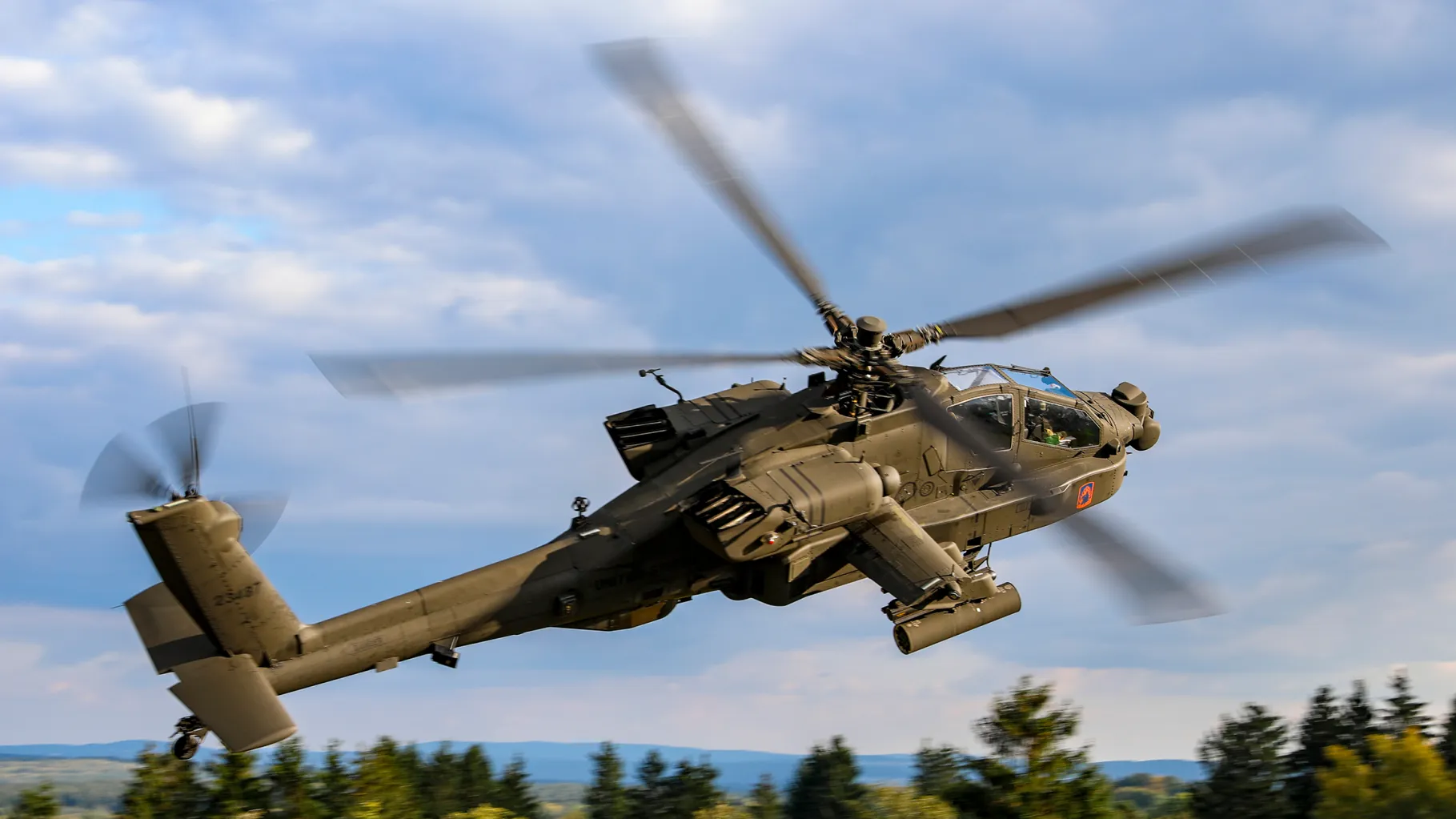
An AH-64E Apache prepares to engage during aerial gunnery training at Grafenwoehr Training Area, Germany, Oct. 2, 2025. Army photo by Spc. Josefina Garcia.

Apaches flying around the Strait of Hormuz have long operated as the tip of the spear against Iranian forces, often engaging small boats or intercepting drones.

Now, they may have to fly in formations, coordinate more closely with uncrewed scouts, and limit their exposure to hostile skies. In short, the rules of engagement are changing in real time.

Veteran pilots understand the stakes better than anyone. One recalled his underwater escape training, designed to prepare aircrews for crashes over water. “It was my biggest fear,” he admitted.

Darkness, disorientation, and panic are the first enemies a downed crew must fight. Still, training kicks in—and in every case, one rule remains the same: bubbles always rise.

That principle, both literal and symbolic, fits the new air war ahead. America’s warfighters will adapt, rise, and overcome.

The tools of conflict may change, but as history proves, American pilots still define courage—and even in the darkest waters off hostile shores, that spirit never sinks.

News

Trump Signs 14-Point Peace Accord Setting 60-Day Ceasefire and $300 Billion Iran Reconstruction Plan

In a move reshaping the Middle East chessboard, President Donald Trump has signed a 14-point memorandum of understanding with Iran establishing a 60-day ceasefire, reopening the Strait of Hormuz, and outlining up to $300 billion in potential reconstruction incentives for the Islamic Republic.

The accord, inked electronically by President Trump and Vice President JD Vance, marks the most daring high-stakes diplomatic engagement between Washington and Tehran in decades.

The signing, conducted ahead of a formal ceremony expected in Switzerland, also reflects the new administration’s willingness to negotiate from a position of strength while keeping the threat of overwhelming military response on the table.

“If they don’t behave, we’ll go right back to dropping bombs right smack in the middle of their head,” President Trump told reporters at the Group of Seven summit in France, a clear warning to Tehran that peace comes only with good behavior.

The agreement—referred to as the “Islamabad Memorandum of Understanding”—commits both nations to immediately halt military operations and hold to strict non-aggression terms.

It also calls for a full reopening of maritime traffic through the Strait of Hormuz, the critical global oil chokepoint that Iran has periodically threatened to close.

Under the terms of the document, the U.S. will begin removing its naval blockade and other “impediments” against Iran within 30 days.

Hormuz Strait Exposes the Limits of Air Denial in Open Shipping

In return, Iran will ensure safe passage for commercial vessels, promising 60 days of toll-free maritime traffic while working with Oman and other Gulf states to establish a longer-term governance framework for the strait.

The MOU also lays the groundwork for a massive economic reconstruction initiative funded by $300 billion in combined regional and international investment.

The proposal is clearly designed to incentivize Tehran to comply with negotiations, rebuild its shattered economy, and reduce its reliance on hostile state sponsorship and terror financing networks.

As part of the agreement, the U.S. has committed to lifting all sanctions—both unilateral and multilateral—if a final deal is reached within 60 days.

Reports of Vessels Hit as Iran Declares Hormuz Closed Again, Escalating Gulf Tensions

The memorandum also specifies that all frozen or restricted Iranian funds and assets will be released for use by Tehran, pending oversight procedures established during negotiations.

Iran, for its part, reaffirmed that it “shall not procure or develop nuclear weapons” and agreed to work with international inspectors on neutralizing its enriched uranium stockpiles through supervised down-blending on Iranian soil.

The two nations also agreed to immediately begin discussions on peaceful nuclear energy needs within an established oversight mechanism.

Still, the most difficult issues remain unresolved. The question of Iran’s ballistic missile program, its regional proxy militias, and the long-term verification of its nuclear activities will be tabled for the final round of talks.

Trump Ends Hormuz Blockade After Securing Peace Deal With Iran
A sailor stands watch on the USS Truxtun, a destroyer participating in the blockade of the Strait of Hormuz. Navy photo.

Those talks are to conclude within the 60-day window—though extensions are possible if both sides agree.

American officials close to the discussions told reporters that Vice President JD Vance, a strong advocate of peace through strength, will lead the American delegation in the coming negotiations.

He will be joined by special envoy Steve Witkoff and Jared Kushner, bringing a balance of diplomatic, business, and political expertise to the table.

The accord also contains a strict compliance enforcement framework. Both nations agreed to establish a joint “executive mechanism” responsible for verifying the implementation of the deal and ensuring adherence to every major provision.
The United Nations Security Council will ultimately endorse the final agreement through a binding resolution.

Behind the scenes, Pentagon insiders view the MOU as part of a broader strategic maneuver.

With the Taliban eliminated, the Houthis neutralized, and Israel stabilizing northern fronts, the administration is seeking to lock in a sustainable peace, freeze Iranian escalation, restore Gulf navigation, and leverage economic incentives to drain Iran’s rogue funding networks.

Blockade at Hormuz Grips Global Trade as United States Tightens Grip on Iranian Ports
The aircraft carrier USS Dwight D. Eisenhower (CVN 69) (IKE), Ticonderoga-class guided-missile cruiser USS Philippine Sea (CG 58), guided-missile destroyer USS Gravely (DDG 107), guided-missile destroyer USS Stethem (DDG 63), and French Navy destroyer FS Languedoc (D 653) transit the Strait of Hormuz along with air support from a French Navy E-2C Hawkeye and Air Force Rafale strike aircraft, Nov. 26. IKECSG is deployed to the U.S. 5th Fleet area of operations to help ensure maritime security and stability In the Middle East region. (U.S. Navy photo by Information Technician Second Class Ruskin Naval)

Critics on the left immediately accused President Trump of “appeasing Tehran,” but the hard language built into the MOU tells a different story.

The deal gives Washington total leverage—should Iran violate its commitments, American forces will be fully authorized to resume military operations without delay.

Supporters argue that this exact blend of reward and deterrence typifies Trump’s foreign policy. Similar to his approach with North Korea, the message is clear: engage if you behave, face destruction if you cheat.

For decades, U.S. leaders have offered Iran concessions for nothing in return; this time, Trump has bet that a combination of pressure and opportunity will force change from within.

War Secretary Pete Hegseth has praised the accord’s balance of power and restraint, telling reporters, “Peace is good—but peace only lasts when it’s enforced by overwhelming strength. This memorandum sets that standard.”

For Iran, the opening is both an opportunity and a test. For the United States, it’s a strategic challenge to consolidate victory after years of regional conflict.

Either way, American warfighters and taxpayers can expect a future where stability is enforced not by weakness, but by an unflinching readiness to act.

If Tehran honors its word, the Middle East could see its first genuine ceasefire in decades.

If it doesn’t, President Trump has already made clear where America stands—ready, armed, and unwilling to be played twice.

News

Hegseth Orders Sweeping Review of Troops in Europe, Warns NATO Freeloaders the Ride is Over

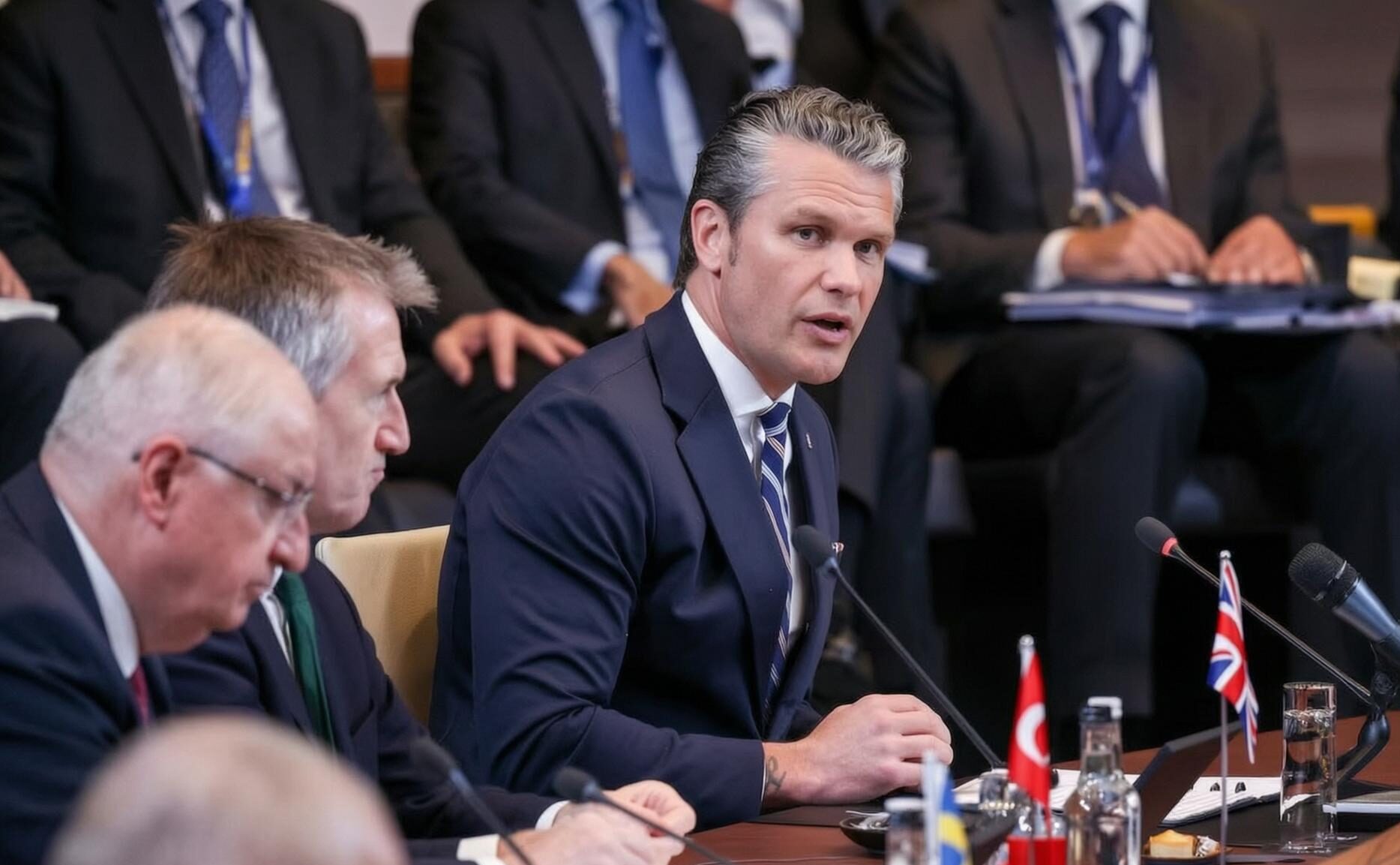
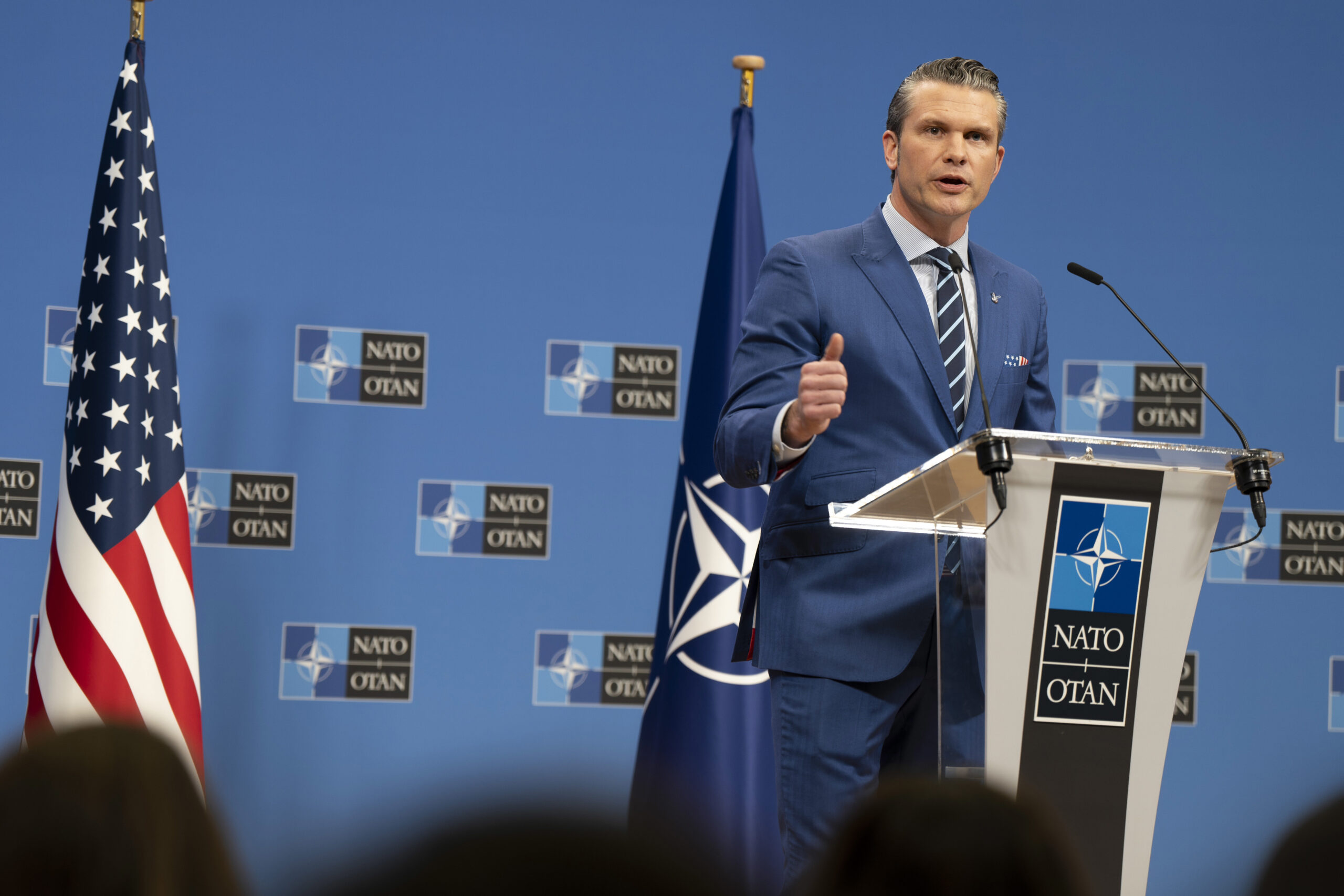
War Secretary Pete Hegseth dropped a thunderbolt on NATO’s doorstep this week, announcing a comprehensive review of U.S. troop deployments in Europe and taking sharp aim at so-called “allies” who still refuse to pay their fair share for their own defense.

His message in Brussels was clear — America will no longer bankroll Europe’s security while others sit comfortably on the sidelines.

Speaking before a gathering of European defense ministers, Hegseth outlined a six-month review process that will evaluate not just troop counts, but also the deeper strategic posture of U.S. forces across the continent.

The review will consult with Congress, which has mandates for minimum troop levels in Europe, but Hegseth made it plain this is about accountability, not bureaucracy.

“Make no mistake about it, this will be a real review,” Hegseth told NATO ministers.

“It will ensure that NATO is moving fast and irreversibly toward Europe leading, stepping up to take primary responsibility for the defense of Europe.” To many, that sounded like the end of the decades-old European dependence on U.S. muscle.

The bold move comes as NATO grapples with shrinking U.S. contributions to its so-called crisis forces.

Washington recently notified allies that it would scale back certain assets previously available for NATO emergency deployments, including fighter jets, drones, and refueling aircraft.

Europe Reduces U.S. Arms Dependence as SIPRI Data Spotlight Regional Diversification
Secretary of War Pete Hegseth stands with his spouse Jennifer prior to conducting a press conference after taking part in a NATO Defense Ministerial Session at NATO Headquarters in Brussels, Belgium, Feb. 13, 2025. (DoD photo by U.S. Navy Petty Officer 1st Class Alexander C. Kubitza)

The reason, according to U.S. commanders, is simple: America must prepare for multiple potential war fronts at once, not just defend countries that won’t defend themselves.

NATO’s top U.S. commander, Air Force Gen. Alexus Grynkewich, called the move part of reducing Europe’s “unhealthy co-dependence” on U.S. capabilities. Translation: time to grow up and shoulder the load.

Hegseth, who embodies the unapologetic America First spirit of President Trump, did not mince words about freeloading allies. “Some still need to do more, and we will be candid about that — both in private and in public,” he said.

“Friends need to be honest with friends.”

The War Secretary blasted certain members for stonewalling U.S. operations during the war with Iran, noting that several nations refused basing and overflight rights when American forces needed them most.

“This review,” Hegseth declared, “will ensure those rights are guaranteed moving forward.” He added that NATO’s next evolution — “NATO 3.0” — must be a “real hardline military alliance” capable of defending Europe without hiding behind U.S. forces as the first and only responders.

NATO’s civilian leadership, including recently promoted Secretary General Mark Rutte, confirmed that U.S. force reductions had already taken effect.

Trump Reviews Troop Levels in Europe as Germany Footprint Remains a Cornerstone
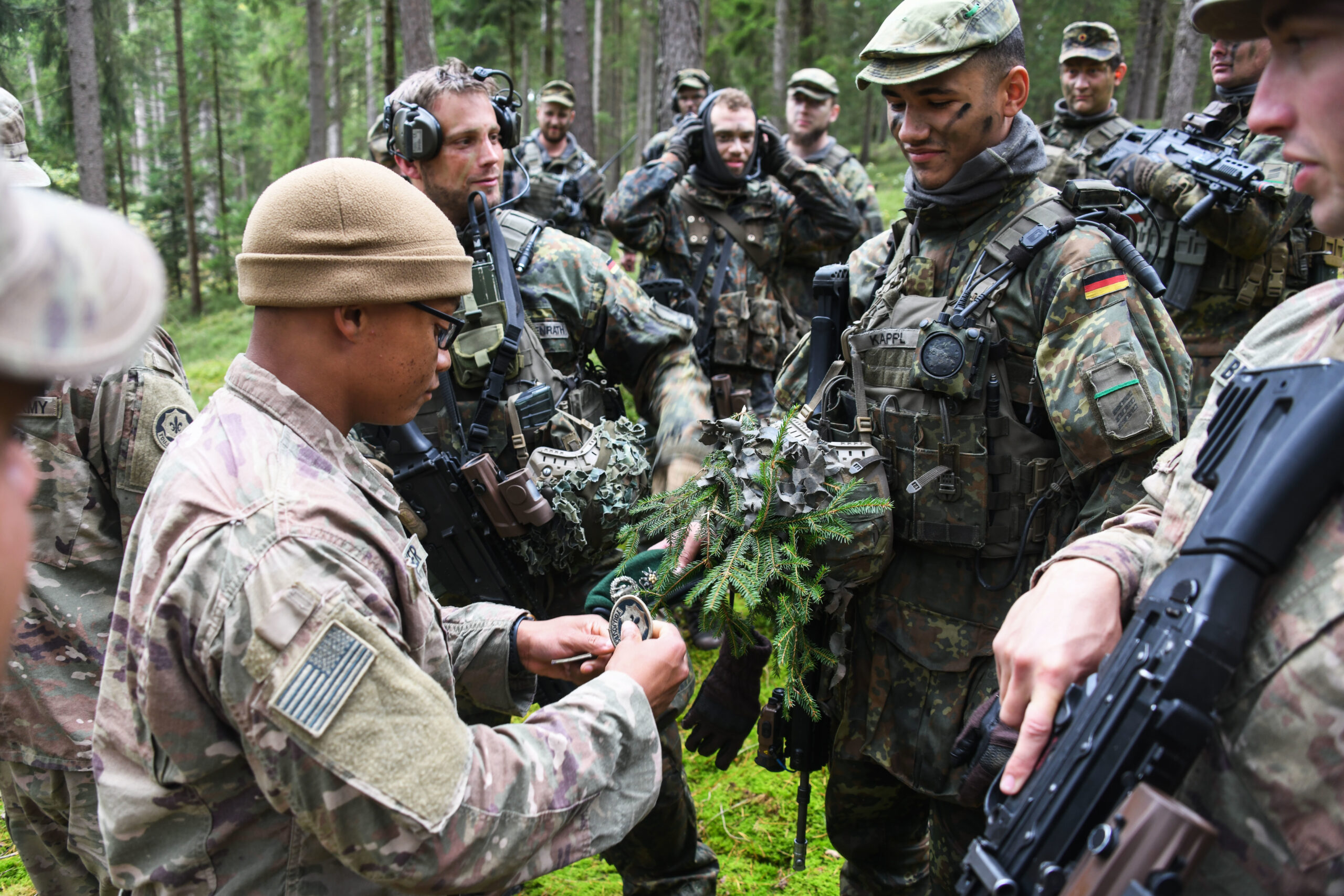
U.S. Soldiers assigned to 1st Squadron, 2nd Cavalry Regiment (1/2CR) exchange patches with German soldiers during a Schuetzenschnur (German weapons proficiency test) event with the German partner unit of 1/2CR, the Panzergrenadierbataillon 112, at Regen, Germany, Sept. 29, 2022. 1/2CR provided an opportunity for exemplary Soldiers to earn a foreign award and to build camaraderie with German Army counterparts in order to strengthen NATO and multinational partnerships. (U.S. Army photo by Markus Rauchenberger)

“The question yesterday came up: Is this immediate or not? It is immediate,” Rutte admitted.

Still, he tried to soothe tensions, claiming that in the event of war, every ally — including America — would “max out” support.

European ministers scrambled to save face, rushing out promises to plug the gaps created by reduced U.S. assets.

Belgium’s Defense Minister Theo Francken pledged additional F-16s and MQ-9B drones to NATO’s crisis forces, saying, “There will be heavy discussions on who is doing what, but Belgium is contributing.”

The question is whether that commitment will hold, or if it’s just European politeness masking panic.

Germany’s Defense Minister Boris Pistorius voiced the typical European hesitancy, warning that a quick U.S. drawdown could create “dangerous capability gaps.”

He pleaded for “stop-gap solutions” or “more time” before any withdrawal, acknowledging that many European militaries simply don’t possess the hardware to fill the void left by the U.S. deep strike, refueling, and surveillance assets.

Meanwhile, insider sources revealed the hard numbers: U.S. contributions to NATO’s airborne power are taking a noticeable hit.

The number of F-15 and F-15E fighters available to NATO will reportedly shrink by a third, while U.S. MQ-4 and MQ-9 drones available to the alliance will be cut in half. For those still clinging to the illusion that America’s commitment is infinite, the signal couldn’t be clearer.

Trump Warns NATO Expansion Risks Fracturing the West
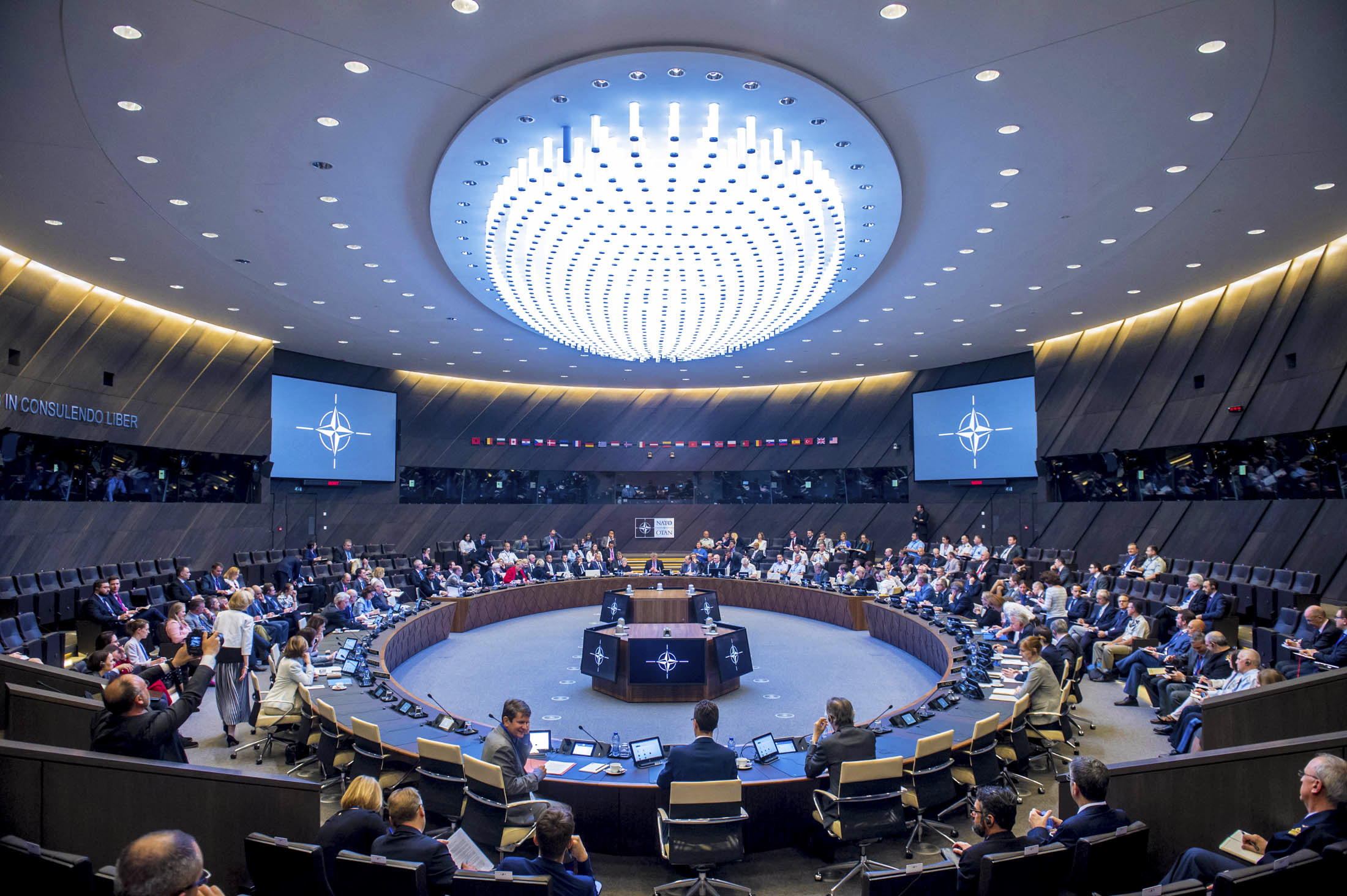
First Council meeting in new Room 1 conference chamber with Allied Ambassadors

The review also comes as NATO prepares for a major summit in Ankara this July, where Hegseth is expected to lead U.S. demands for hard commitments — not lofty declarations — from European partners.

The War Secretary’s core premise is brutally simple: Europe must defend Europe. Washington will remain a leader, but not a crutch.

Critics in Europe see the move as heavy-handed, but for millions of patriotic Americans, it’s long overdue.

After decades of watching America pick up the tab while European capitals moralized about spending caps, Hegseth’s approach marks a shift back to realism and strength.

The message is very much in the Trump mold: if you want protection, invest in defense; if not, don’t expect endless U.S. subsidies.

While some European elites grumble that Hegseth’s rhetoric is “too blunt,” the War Secretary’s stance resonates deeply with the grassroots base at home — veterans, families, and taxpayers who’ve shouldered the cost of Europe’s comfort for generations.

They see in Hegseth a leader unafraid to call freeloading what it is, and unapologetic about putting America’s security first.


Scroll to Top