Author name: Common Defense

News

VA Chief Promises Immediate Firing of Worker Accused of Beating Marine Veteran [WATCH]

Veterans Affairs Secretary Doug Collins has pledged swift and decisive action after reports surfaced showing a state facility worker abusing a Marine veteran in New York.

The shocking video caught nationwide attention and raised urgent questions about veteran care standards across state-run facilities and their federal counterparts.

Collins announced that the Department of Veterans Affairs would “immediately initiate removal proceedings” against the employee, identified as Matthew Cox.

The Secretary made it clear that the incident “didn’t happen at a VA facility” but promised that the VA would not tolerate any employee involved in such behavior, no matter where it occurred.

News 12 New York broke the story after obtaining disturbing footage supposedly showing Cox repeatedly striking an elderly Marine veteran, Albert O’Toole, at the Montrose Veterans Home. O’Toole, a Gulf War veteran, suffers from a brain injury and Alzheimer’s disease—conditions that demand compassion, not cruelty.

The video was secretly recorded by O’Toole’s wife, Angela Sangro, who grew suspicious when her husband began showing unexplained bruises.

She said her husband had previously received quality treatment at a federal VA facility but that his condition quickly deteriorated after he was transferred to the state-run home.

The footage, which has sparked outrage among veterans groups, reportedly shows Cox throwing the Marine into a chair and striking him with a broom.

In response, New York’s health department moved quickly to fire Cox after their internal review and confirmed he faces felony charges.

According to state officials, Cox has been charged with “endangering the welfare of an incompetent or physically disabled person in the first degree.”

Westchester County District Attorney Susan Cacace confirmed that Cox was swiftly arrested and arraigned once prosecutors viewed the video evidence.

Cacace stated, “The conduct that is visible on the video footage published by News 12 is deeply disturbing and cannot be allowed to recur.”

She added that families who entrust loved ones to veteran care facilities expect service members to “be treated with the dignity befitting a military veteran.”

The VA’s statement through spokesperson Quinn Slaven confirmed that Cox had already been removed from his patient-related duties prior to Collins’ public announcement.

Despite being listed as a VA employee, his direct involvement at a state facility highlights the murky overlap between state and federal veteran care operations—a problem many critics say Washington has long ignored.

The New York Department of Health also released a statement emphasizing that “maintaining a safe environment for the residents and workers at this facility is our top priority.”

It added that once they became aware of the incident, the worker “was immediately put on leave, terminated after review, and is facing criminal charges.”

Collins’ response drew immediate praise from conservatives and veteran advocates who have long criticized bureaucratic complacency at both federal and state-run care networks.

In the Biden years, too many headlines have revealed mistreatment and neglect inside facilities trusted with caring for America’s heroes.

By decisively calling for Cox’s firing, Collins is setting a new tone of accountability within the VA system—one that reflects President Trump’s legacy of veterans-first reform.

Under previous liberal leadership, disciplinary action often stalled in endless red tape, allowing problems to fester unchecked.

While the Montrose home is state-operated, the outrage has revived discussion about nationwide oversight and the need to ensure that every facility entrusted with caring for veterans—federal or state—is subject to the same strict standards.

For many, the scandal reinforces the belief that only firm leadership can restore integrity to institutions responsible for the nation’s warriors.

The matter has ignited a larger debate about the treatment of veterans who can no longer advocate for themselves.

As many of these facilities rely on partnerships between state and federal care systems, the challenge lies in cutting through bureaucratic walls before the next tragedy occurs.

For now, Secretary Collins has made one thing clear: there will be zero tolerance for abuse, excuses, or inaction.

The American people demand nothing less for the men and women who wore the uniform, and the nation’s veterans deserve every ounce of respect they earned on the battlefield.

WATCH BELOW:

News

Space Force Prepares Sleek New Mess Dress Uniform for Guardians This Fall

The newest branch of the U.S. Armed Forces is finally getting its own tuxedo.

The Space Force, which has been operating in modified Air Force uniforms since its creation in 2019, is set to test a new mess dress uniform this fall—a slick black attire with silver detailing that looks like it’s ready for a galactic gala.

The uniform was first spotted when Gen. Chance Saltzman, Chief of Space Operations, appeared at a U.S. Air Force Weapons School graduation in Las Vegas sporting the new look.

According to the War Department, what Saltzman wore wasn’t just for show—it was the very first test version of the Space Force’s new mess dress.

The design is all about embracing the Space Force’s identity while keeping the sharp, ceremonial appeal of traditional military formal wear.

The coat is black, not the Air Force’s blue, and it comes with silver buttons and intricate embroidery. The sleeve cuffs feature a diamond pattern nodding to the Space Force flag, complete with its signature delta, orbit, globe, and Polaris star elements. It’s the kind of uniform that says: sleek, serious, and space-ready.

Much like a military tuxedo, the mess dress is the most formal uniform Guardians will wear for events such as awards ceremonies or black-tie functions.

The service’s move to finalize its distinct look reflects a maturing branch asserting its independence within the military family. After all, sharing uniform styles with the Air Force was only ever supposed to be temporary.

Space Force Unveils First Dress Uniform for Its New Guardians, Signaling a More Ready Service
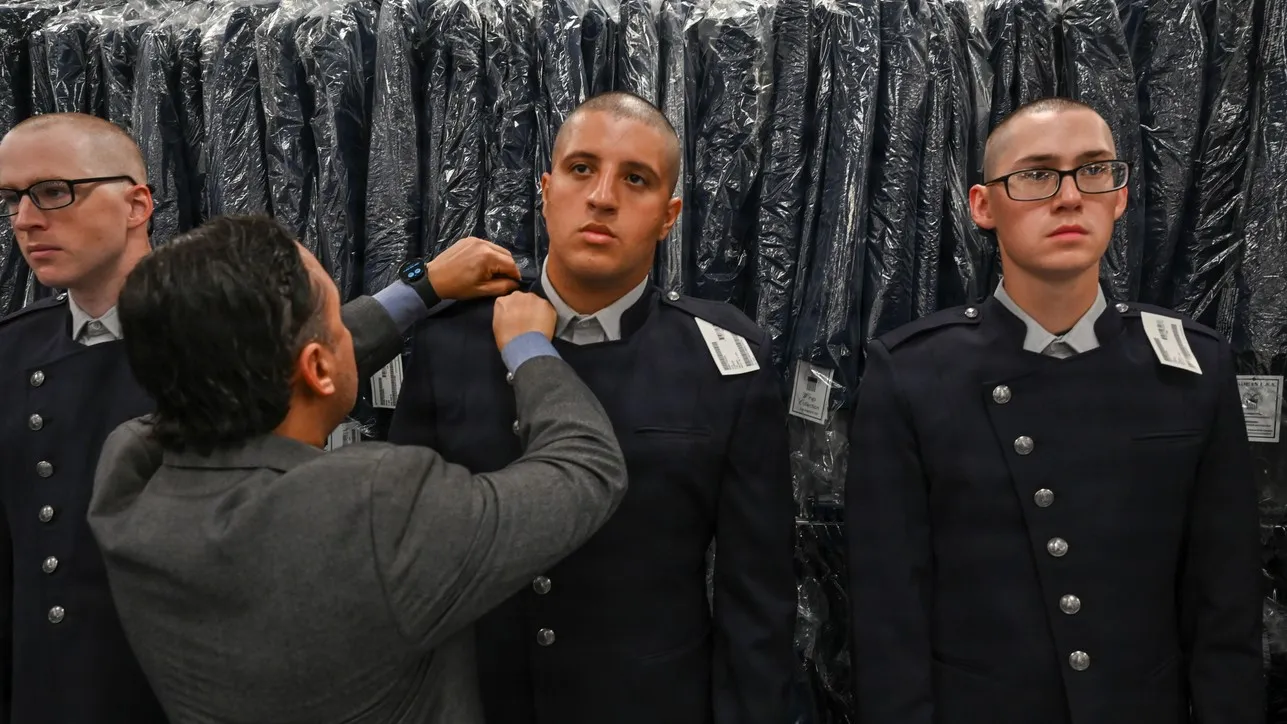
Space Force trainees are fitted for the service’s new dress uniform. Air Force photo by Daniel Cruz.

An Air Force spokesperson confirmed that the Space Force is entering “formal wear testing” this fall. Selected Guardians have already been fitted to help refine the final design before it’s rolled out service-wide.

“The Space Force is continuing to work with industry partners to determine production requirements and the timeline for service-wide availability,” the official explained. Translation: they’re making sure this sharp new uniform doesn’t just look good but can be produced at scale without waist-deep bureaucracy.

The process marks a new milestone for a service that’s spent its early years building everything from doctrine to dress code from scratch.

Guardians have been wearing an altered version of the Air Force mess dress uniform since 2019, a hand-me-down arrangement that never quite fit the new branch’s identity as the nation’s protector beyond the atmosphere.

Once the new design hits military stores, the service will issue a “mandatory wear date,” giving Guardians a countdown to transition from borrowed blues to their own black-and-silver getup.

According to the War Department, officers will continue wearing the Air Force version until the new Space Force uniform becomes widely available for purchase.

Earlier this year, the Air Force laid down new rules for service members transferring into the Space Force: they must buy the new uniform once they reach their new posts. To ease the shift, the Space Force will give Guardians a full year’s notice before the new mess dress becomes mandatory wear.

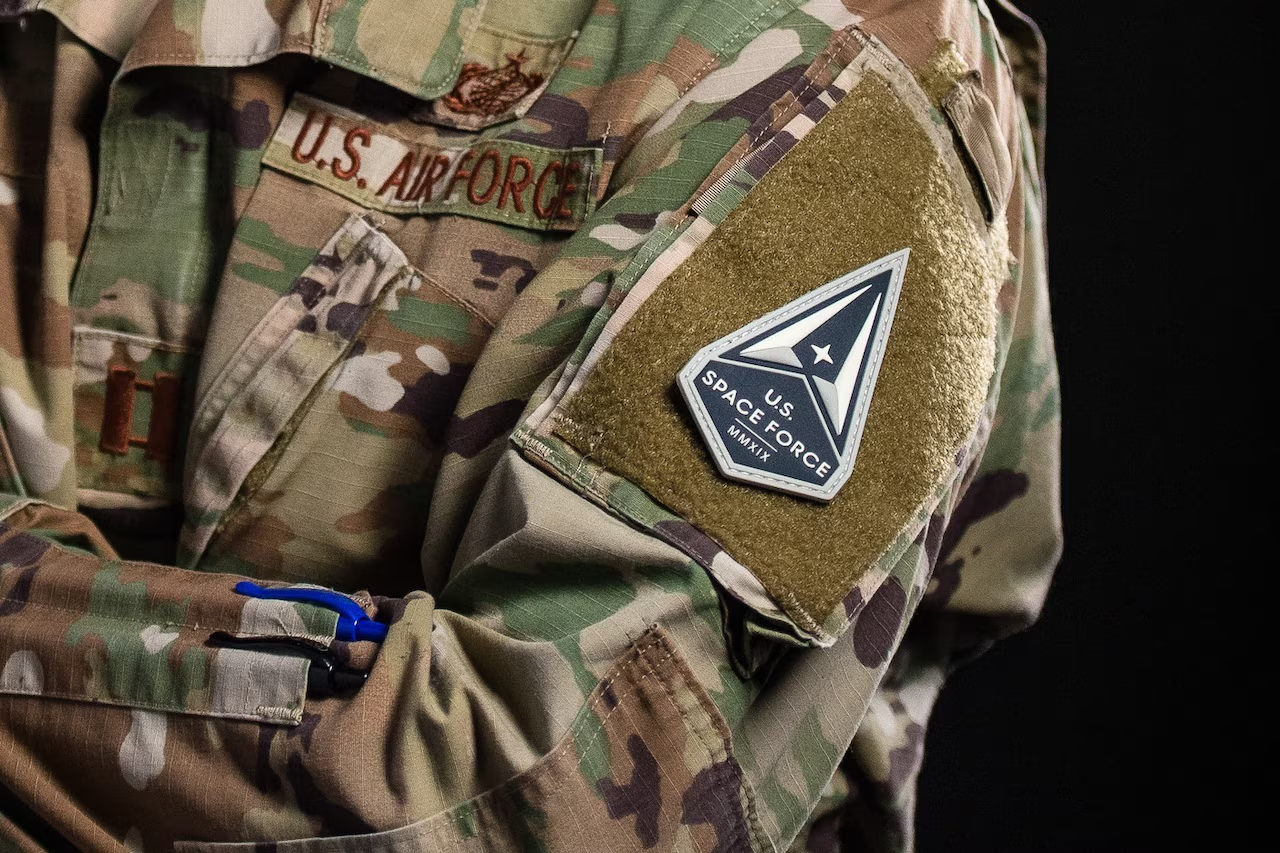
A Space Force insignia patch on a Guardian’s uniform is made of PVC, not thread like most other military patches.

This move symbolizes a step toward independence and identity for the young branch, which has fought to define itself against early mockery and political noise.

Ever since President Trump launched the Space Force, critics—mostly the predictable Beltway types—enjoyed snickering at what they branded a “military in space.”

But real warfighters understood the mission from the start: securing U.S. dominance in space domains threatened by adversaries like China and Russia.

Under Trump’s leadership and now with War Secretary Pete Hegseth’s emphasis on clear, proud tradition, the Space Force’s progress represents serious strategic purpose dressed in sleek professionalism.

Having a distinct uniform may sound cosmetic to the uninitiated, but in military culture, uniforms embody identity, purpose, and pride.

By moving away from Air Force leftovers, the Space Force signals readiness to stand on its own footing—not as a sidekick branch, but as the point of the spear for America’s space defense operations. It’s a message that no one in Beijing, Moscow, or Tehran should take lightly.

The timeline looks promising, and there’s buzz across the ranks. Guardians who volunteered for wear testing report that fittings have already wrapped, meaning the uniform is nearing its operational debut. Given the formal testing phase scheduled this fall, official rollout could follow sooner than many expect.

For a branch still defining its culture, every symbol counts. A distinctive mess dress completes a puzzle piece of identity that inspires morale, strengthens esprit de corps, and sets the tone for years to come.

Functional, futuristic, and unmistakably tailored for Guardians, the new mess dress is not just a uniform—it’s a declaration that the Space Force has landed, and it’s here to stay.

News

North Korea Races to Bulk Up Nukes and Build Massive Missile Cruiser

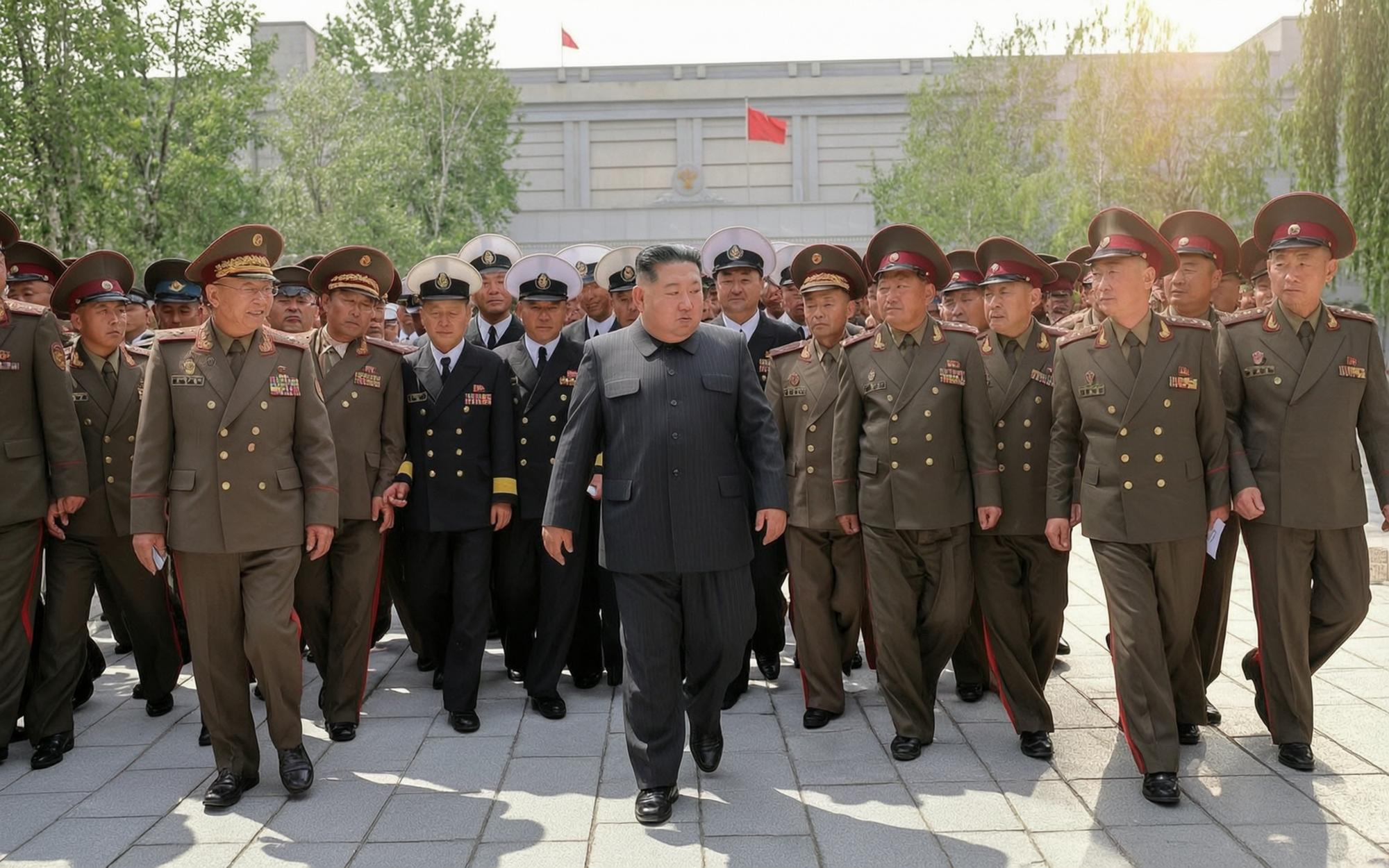
North Korea is doubling down on its nuclear ambitions once again. Kim Jong Un has declared that his regime will expand its nuclear arsenal and ramp up production of advanced warships, including a massive 10,000-ton strategic guided missile cruiser.

According to state-run media, Kim’s latest directive signals an all-out drive to project power and prestige on the international stage — at any cost.

The announcement came during a plenary meeting of the ruling Workers’ Party, where Kim reportedly told his generals and party elites that the nation’s war capabilities must be strengthened “without pause” with the explicit goal of “overtaking the world.”

In the eyes of Kim, more nukes and bigger ships are the keys to survival and dominance in an “unpredictable military and political environment.”

North Korea’s propaganda arm, the Korean Central News Agency (KCNA), framed the decision as a defensive reaction to what it described as U.S.-South Korean “aggression.”

The regime claimed that expanding joint drills and tightening cooperation through the Nuclear Consultative Group in 2023 had left Pyongyang with “no choice” but to accelerate arms expansion.

The KCNA report pushed a familiar narrative, accusing Washington and Seoul of “criminal” plans and alleging that allied exercises were rehearsals for an invasion.

It claimed the Nuclear Consultative Group had already drafted “detailed nuclear war scenarios,” proof, it said, that the United States was pushing the peninsula “to the brink of nuclear war.” In reality, the group’s purpose is deterrence — reminding Kim that any nuclear gamble would end his regime in hours.

Kim’s revelation of the planned missile cruiser caught analysts’ attention. The 10,000-ton vessel, if ever completed, would dwarf anything in the current North Korean fleet. Such a ship — roughly the size of U.S. Ticonderoga-class cruisers — would be a huge leap for a nation whose shipbuilding capacity is still limited.

A Stronger, Smarter Presence: Trump-Era Vision Strengthens South Korea Force with Longer Deployments

Yet the move fits Kim’s obsession with prestige projects meant to look formidable, even when the reality tells another story.

Behind the propaganda, North Korea’s renewed focus on naval power is likely an attempt to offset U.S. and South Korean advances in missile defense and undersea warfare. Seoul has been steadily upgrading its submarine fleet and considering nuclear propulsion technology, a step Pyongyang describes as “undisguised provocation.”

South Korea’s War Ministry has not commented publicly on Kim’s latest remarks, but officials in Seoul have long dismissed North Korea’s threats as routine saber-rattling.

Still, the pace of Kim’s weapons testing has increased sharply in 2024. New tactical nuclear drills, multiple ballistic missile launches, and satellite missions have turned the Korean Peninsula into one of the most dangerous flashpoints on the planet.

A Stronger, Smarter Presence: Trump-Era Vision Strengthens South Korea Force with Longer Deployments

The North’s emphasis on “uninterrupted strengthening” of its nuclear arsenal highlights the regime’s fixation with global attention — and its belief that intimidation equals relevance.

There’s also a domestic angle. By pushing new weapons programs and bold announcements, Kim rallies elites and reminds the public that the “supreme leader” alone ensures the nation’s survival.

It’s a well-used strategy to distract from food shortages and economic misery that continue to cripple ordinary North Koreans.

U.S. military officials have repeatedly warned that North Korea’s weapons actions are not just posturing. The continued progress of its nuclear and ballistic missile programs poses a growing threat to American forces in the region.

The Pentagon’s reborn War Department has been tightening cooperation with South Korea and Japan under President Trump’s leadership, ensuring mutual deterrence is credible — not just theoretical.

Secretary of War Pete Hegseth has backed a posture of “peace through strength,” arguing that only overwhelming readiness and a clear line of deterrence will keep Kim Jong Un in check. “Weakness invites conflict,” Hegseth has said, echoing a policy philosophy sorely missing during the last Democrat administration.

A Stronger, Smarter Presence: Trump-Era Vision Strengthens South Korea Force with Longer Deployments
ROK and U.S. noncommissioned officers work together during land navigation exercises as part of the Mangudai Challenge at Story Live Fire Complex, South Korea, Oct. 22, 2024. The challenge highlights shared leadership and capability within the ROK-U.S. alliance.

The alliance’s growing coordination under current leadership is a direct response to the failed appeasement that empowered Kim’s program years ago.

Meanwhile, China and Russia continue to provide political cover for North Korea at the United Nations, blocking new sanctions and enabling the tyrant’s weapons trade.

It is a dangerous partnership, one that aligns perfectly with Kim’s dream of standing shoulder to shoulder with anti-Western powers.

Analysts predict Kim’s latest push could lead to new testing — possibly another long-range ballistic missile launch or even an underground nuclear detonation — in the coming months.

If that happens, it will test regional unity and global resolve. Kim may see volatility as his best bet for leverage in negotiations, but it also risks drawing a stronger reaction from a far less patient Washington.

Kim Jong Un Orders North Korean Army To Fortify Border Into ‘Warproof Wall’

For now, the Korean Peninsula remains trapped in a cycle of provocation and response.

Kim’s nuclear bravado is nothing new, but this latest escalation signals a dangerous ambition to militarize the seas and threaten beyond his borders. It’s a reminder that decades of concessions and wishful diplomacy only embolden dictators who mistake restraint for weakness.

As America reasserts deterrence under new leadership at the War Department, one thing remains clear: the free world can’t afford to take its eyes off Pyongyang.

Kim’s ambition for a bigger arsenal and a massive warship fleet might be delusional, but his willingness to destabilize the region is deadly serious.

News

Trump Slams Weak NATO Allies Over Iran War Ahead of Summit Showdown

President Donald Trump is once again reminding NATO who calls the shots on the global stage, and Europe’s political class isn’t happy about it.

Ahead of this week’s meeting with NATO Secretary-General Mark Rutte, Trump unleashed a volley of criticism at allies he says failed to step up during the Iran war — and, as usual, he hit them where it hurts most, their pride.

Speaking from the White House on Monday, Trump made it clear he’s tired of watching Europe sit on its hands while American forces shoulder the heavy lifting.

“They say, ‘No, we’d rather not help,’” Trump said, adding pointedly, “Stupid thing to say because we can say that to them if we want, and we might.”

In other words, the United States may not be bailing them out forever.

The former president, never one to mince words, singled out Italy and Germany as “very bad” allies.

He then took a jab at outgoing British Prime Minister Keir Starmer, quipping, “This was not Winston Churchill we’re dealing with.”

That sort of blunt talk may send the global elite into therapy, but for average Americans who’ve watched NATO freeloading for decades, it’s music to their ears.

In recent days, Trump’s tough stance has sparked a spat with Italian Prime Minister Giorgia Meloni, once thought to be among his closest allies in Europe.

Their falling out underscores a larger problem: Europe talks about solidarity when it benefits them, but suddenly loses interest when America asks for help in a real shooting war.

Trump’s timing isn’t random either. NATO is gearing up for a major summit next month in Ankara, where the future shape of the alliance — and how much longer the United States foots the bill — will be front and center.

Trump Weighs Reducing U.S. Troops in Europe as NATO Tensions Grow
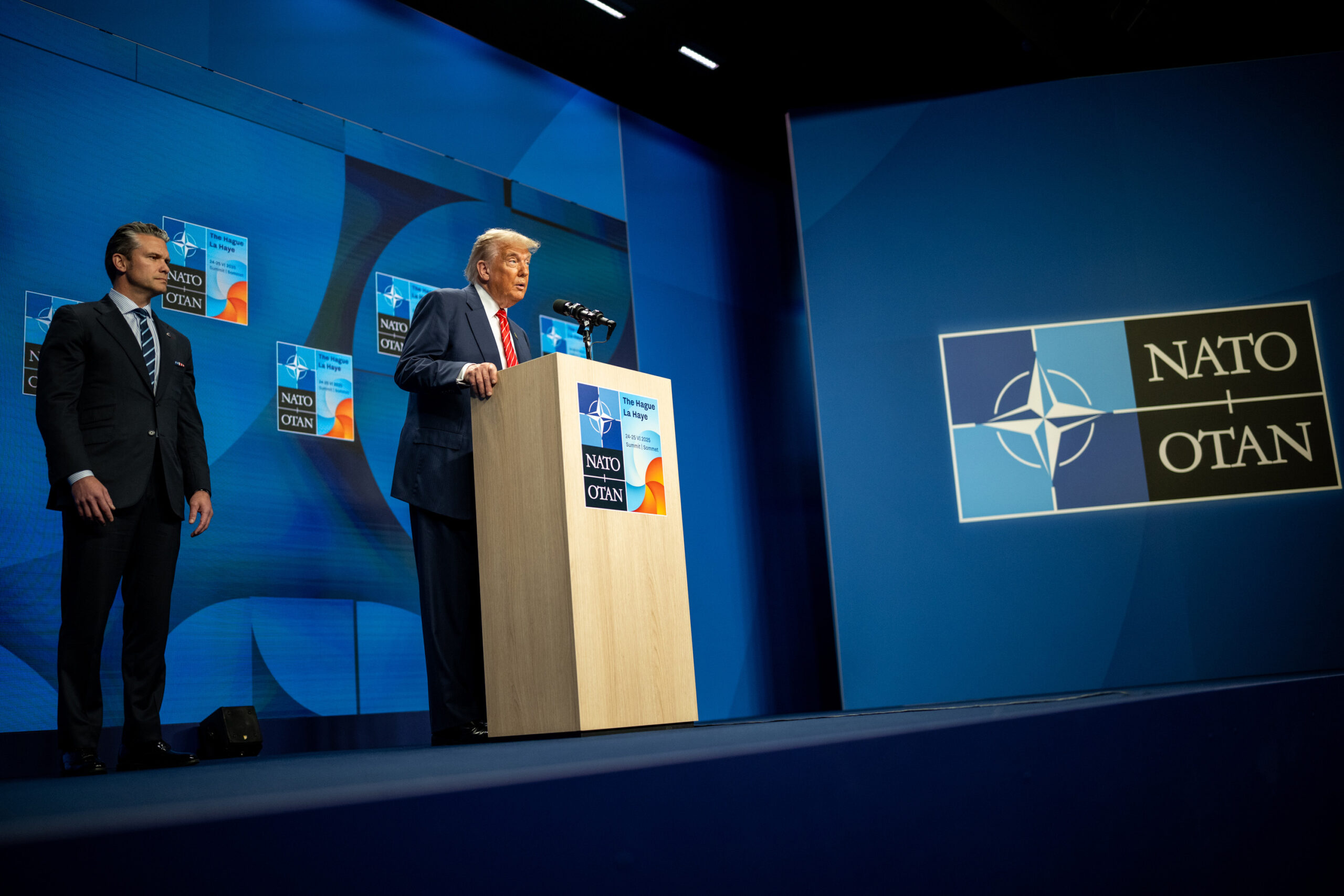
President Donald J. Trump and Defense Secretary Pete Hegseth participate in a press conference during the 2025 NATO Summit at the World Forum in The Hague, Netherlands, June 25, 2025.

This is precisely the kind of fight Trump relishes: forcing America’s so-called friends to finally take responsibility for their own defense.

He already has his War Secretary, Pete Hegseth, running a full-scale force posture review through the War Department.

The results of that review could fundamentally reshape where U.S. forces are based across Europe, and whether certain long-standing commitments still make sense. Given Trump’s history of cutting through bureaucratic sludge, no one should expect business as usual this time.

The upcoming meeting with Secretary-General Rutte is expected to set the tone for July’s leaders’ summit.

It could also determine whether the alliance continues its Cold War comfort zone or shifts to a brass-tacks, performance-based model — one where allies are judged by their actions, not their photo-ops. Trump’s first term already rattled NATO, but this round might turn polite diplomatic discomfort into outright panic.

Back in 2018, Trump’s blunt message on defense spending had European elites calling him a bully.

Today, it’s clear he was right. He warned that if Europe didn’t pull its weight, they’d have to face an increasingly aggressive Russia with less help from Washington. Six years and one Russian invasion later, that warning looks prophetic.

Trump Warns NATO Expansion Risks Fracturing the West
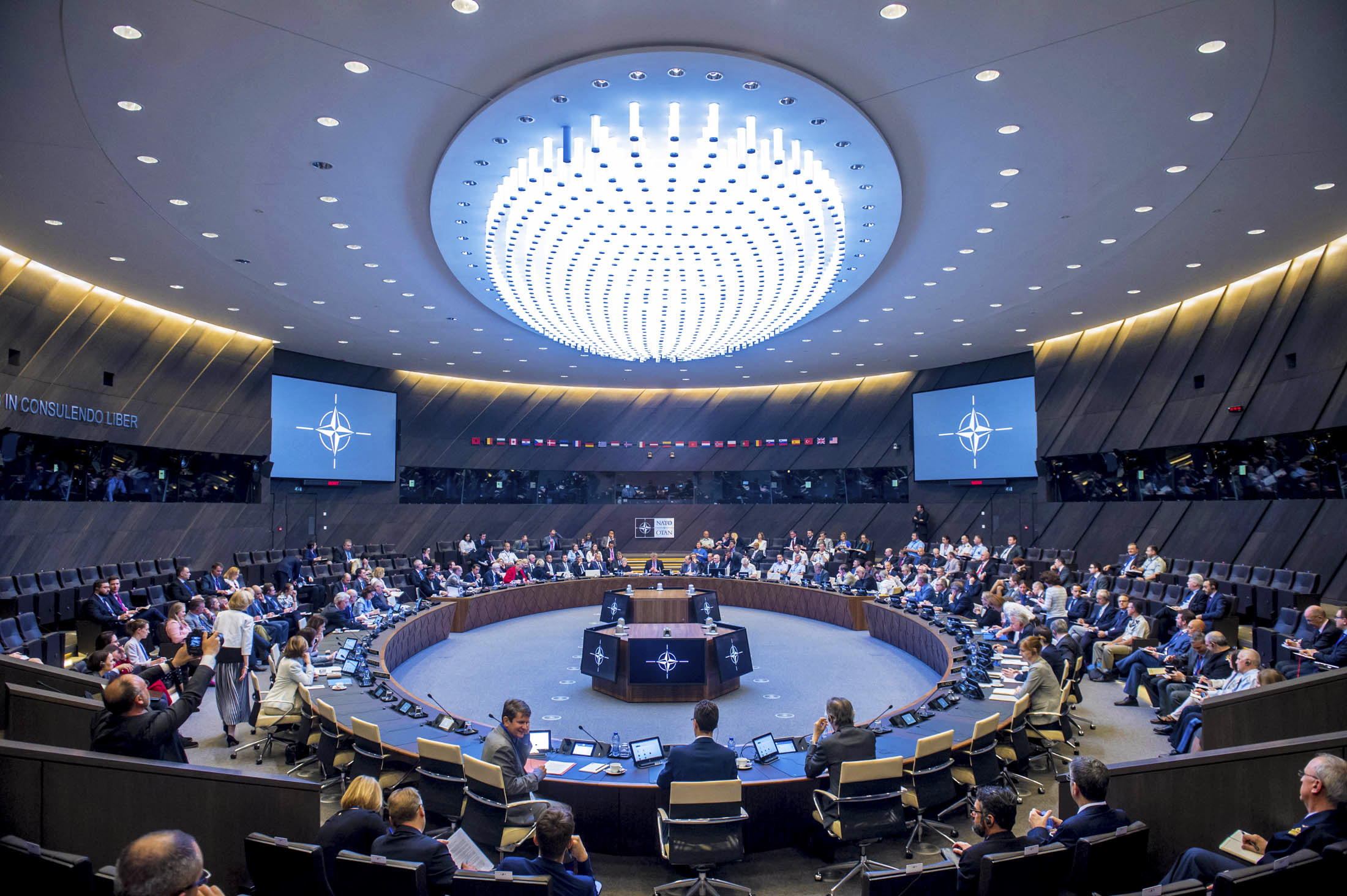
First Council meeting in new Room 1 conference chamber with Allied Ambassadors

Meanwhile, Trump continues to highlight what everyone knows but few admit: the United States spends astronomical sums on NATO operations, while many member nations still lag far behind on their defense contributions.

He called the current numbers “crazy” and pointed out that when America needed support against Iran, “(allies) weren’t there for us.” That’s not partnership — that’s dependency dressed up as diplomacy.

To their credit, some European states have started increasing their military budgets since Russia’s full invasion of Ukraine in 2022. Still, their spending remains a fraction of what the U.S. puts on the table.

Rutte and other European leaders now talk about taking the lead in defending their own continent, but the question remains whether talk will turn into action — or if they’ll just keep expecting Washington to hold the line.

As it stands, roughly 80,000 American troops remain stationed across Europe. A War Department plan to withdraw 5,000 troops from Germany stirred alarm before it became clear most of those personnel were headed to Poland on a rotational deployment anyway.

USS Gerald R. Ford Heads to Port for Safety Checks After Onboard Fire
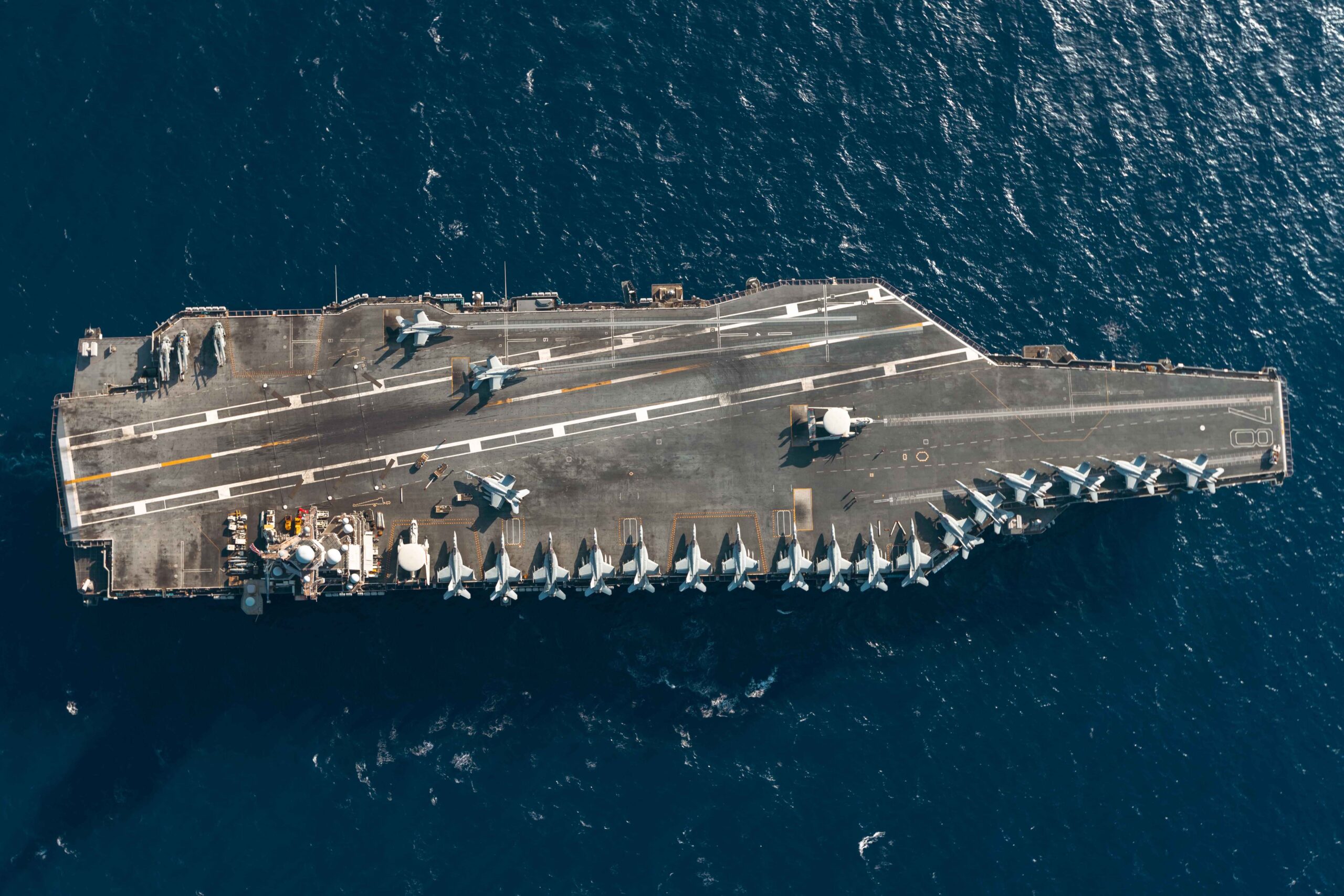
The world’s largest aircraft carrier, USS Gerald R. Ford (CVN 78), sails in the Ionian Sea, July 29, 2025. Gerald R. Ford is participating in NATO’s Neptune Strike enhanced vigilance activity that facilitates combined maritime integration and demonstrates the force’s resolve and readiness to defend and protect Allied nations’ security and peace using Allied high-end capability assets. (U.S. Navy photo by Mass Communication Specialist 2nd Class Maxwell Orlosky)

Trump later floated sending an additional 5,000 troops to Poland, a steadfast ally that continues to welcome U.S. strength on its soil.

Poland has made no secret of wanting an even stronger American presence, seeking up to 15,000 U.S. troops as it closely aligns with Trump’s vision of a tougher, more capable NATO.

Meanwhile, elsewhere in Europe, some leaders can’t resist grandstanding and virtue-signaling instead of combating real threats.

If there’s one message Trump is hammering home before this NATO summit, it’s that America will no longer serve as the alliance’s wallet and shield while Europe lectures about “shared values.”

Under his leadership, the United States is reverting to a more muscular, results-driven standard. Allies who deliver will earn respect — and those who don’t may find Washington far less generous moving forward.

News

Marines Bolster Indo-Pacific Might With New Anti-Ship and Air Defense Platforms in Okinawa

U.S. Marines stationed in Okinawa are stepping up their game in a big way.

The installation has now formally received its first sets of next-generation systems — the Navy-Marine Expeditionary Ship Interdiction System (NMESIS) and the Marine Air Defense Integrated System (MADIS).

Both weapons platforms mark a critical leap forward in the Corps’ ability to fight and win in the increasingly contested Indo-Pacific arena.

The 12th Marine Littoral Regiment, part of the 3rd Marine Division, welcomed the two platforms as essential upgrades to their mission profile.

The delivery is part of a broader modernization effort to ensure Marine forces remain lethal, agile, and ready to hit back at hostile threats from the sea or sky.

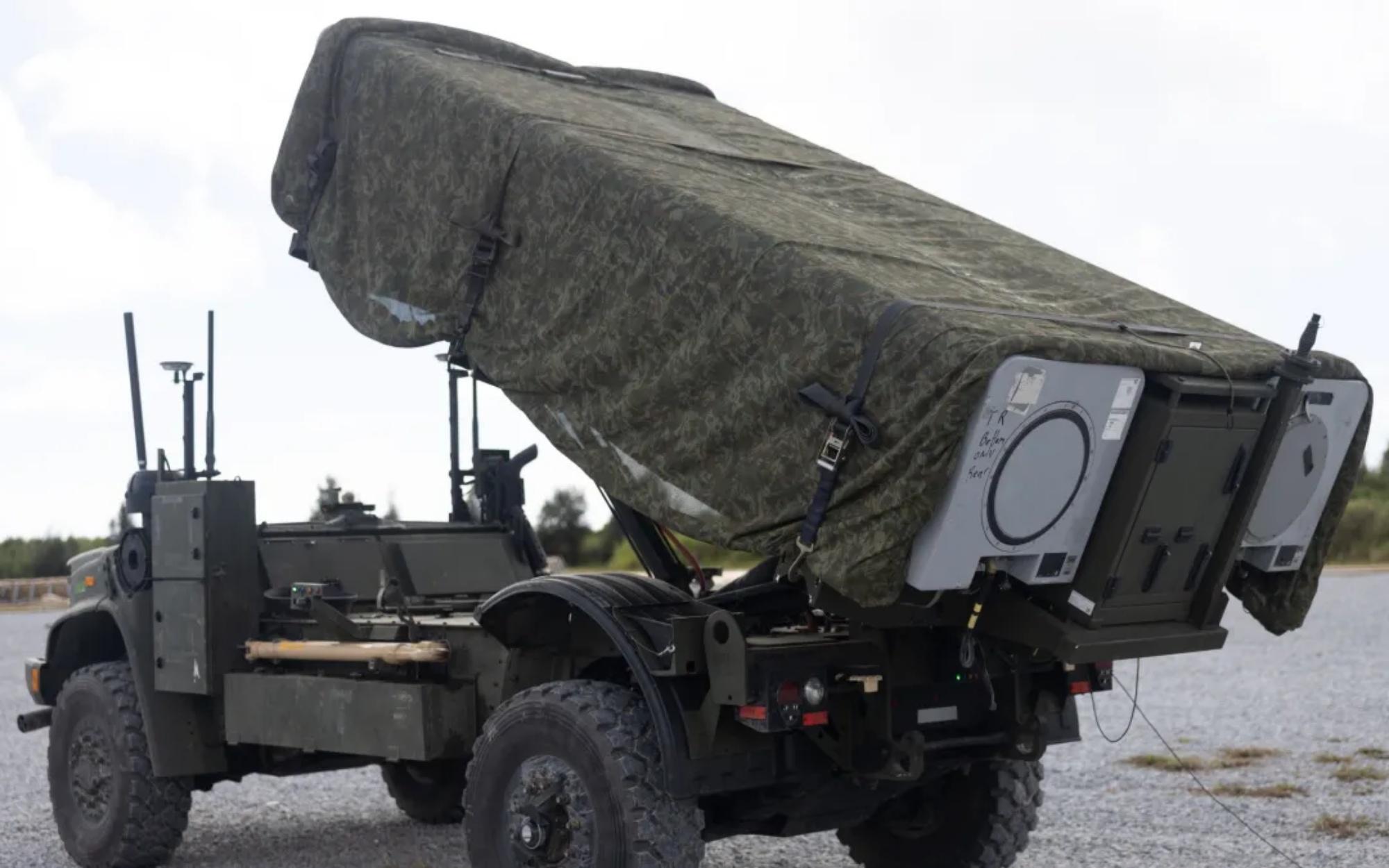
The NMESIS is not just another missile launcher. It’s a ground-based anti-ship weapon designed specifically for sea denial operations — a key function in preventing enemy ships from gaining the upper hand near allied coastlines. Essentially, it gives the Marines the power to control entire maritime zones without needing traditional naval support.

Marines on Okinawa Arm Up With New Anti-Ship and Counter-Drone Systems to Deter China
Marines from the 3rd Marine Division test fire the Navy-Marine Expeditionary Ship Interdiction System or NMESIS platform during Resolute Dragon 25. Marine Corps photo by Cpl. Lucas Lu.

That’s a serious message to Beijing, whose naval buildup and island encroachments continue to test America’s resolve.

This system carries the Naval Strike Missile (NSM), one of the world’s most advanced ship-killing weapons. Mounted on a Joint Light Tactical Vehicle, NMESIS can fire both in semi-autonomous and fully autonomous modes, ensuring maximum flexibility for expeditionary operations.

In plain language, that means Marines can take out enemy ships even from small, forward island bases — no warship required.

U.S. Army Faces Setback as Hawaii Land Board Rejects Environmental Study
Soldiers assigned to 1st Battalion, 27th Infantry Regiment and 65th Brigade Engineer Battalion, 25th Infantry Division, performed an air assault mission during Indo-Pacific Army Chiefs Conference (IPACC) on Schofield Barracks, Hawaii, Sept. 10-13, 2021. Soldiers performed breaching skills and insertion skills on a marked objective. (U.S. Army photo by Pfc. Daniel Proper, 25th Infantry Division)

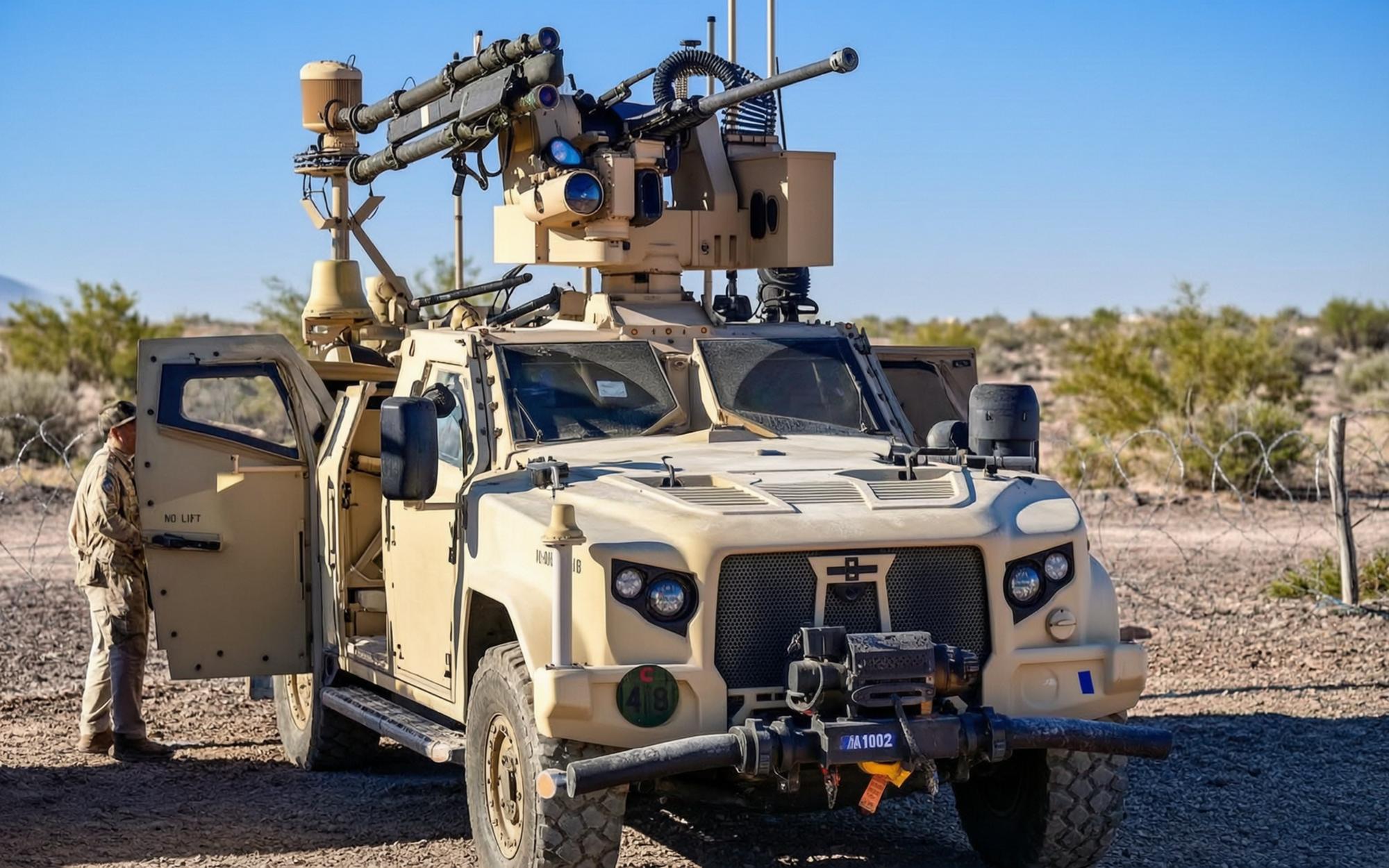
If NMESIS covers the oceans, MADIS dominates the skies. The Marine Air Defense Integrated System is a short-range but highly capable air defense solution mounted on two 4×4 tactical vehicles.

The first vehicle hunts and disables drones or other low-altitude airborne threats through 360-degree radar coverage, an electronic warfare suite, and command-and-control systems. The second vehicle packs a punch with its multi-Stinger missile pod, a 30mm cannon, and its own electronic warfare tools.

Together, the pair forms a deadly mobile duo that can respond to everything from quadcopters to enemy helicopters or fighter jets.

The flexibility of the MADIS allows Marines to counteract the swarm drone tactics used by adversaries like China and Iran, whose cheap but dangerous unmanned aircraft systems have been wreaking havoc in various theaters.

Army Expands Reenlistment Window for Epic Fury Troops Two Years Early
Army soldiers fire M142 High Mobility Artillery Rocket Systems (HIMARS) as part of Operation Epic Fury. Army photo.

This isn’t the first time the Corps has fielded these systems in the Indo-Pacific, but Okinawa’s deployment underscores the U.S. commitment to maintaining deterrence right on the front line of potential conflict.

The Hawaii-based 3rd Marine Littoral Regiment was the first to receive NMESIS and MADIS, and has since proven their worth in multiple exercises across the Pacific theater.

Back in May, Marines with the 3rd MLR demonstrated the NMESIS’s capabilities during the Balikatan 26 exercise with the Philippines.

They moved their launchers across the Batanes Islands via Air Force C-130Js and Army landing craft — a clear illustration of how joint mobility can expand Marine Corps reach. For three days, they ran mock fire missions, practicing ship interdiction tactics designed to deny adversaries access to the strategically vital Luzon Strait.

Iranian Navy Helicopter Confronts U.S. Destroyer in Gulf of Oman Standoff
170601-N-RM689-190
SEA OF JAPAN (June 1, 2017) Arleigh Burke-class guided-missile destroyer USS Fitzgerald (DDG 62) sails in formation during a bilateral exercise between USS Carl Vinson and USS Ronald Reagan carrier strike groups and the Japanese Maritime Self-Defense Force (JMSDF). The Ronald Reagan and Carl Vinson Carrier Strike Groups conduct maritime training operations with Japan Maritime Self-Defense Force ships, JS Hyuga (DDH 181) and JS Ashigara (DDG178). JMSDF and U.S. Navy forces routinely train together to improve interoperability and readiness to provide stability and security for the Indo-Asia Pacific region. (U.S. Navy photo by Mass Communication Specialist 3rd Class Kelsey L. Adams/Released)

At nearly the same time, Marines in Zambales showcased the MADIS’s abilities by knocking drones out of the sky.

Those live demonstrations weren’t just drills — they were proofs of concept showing that the Corps can relocate quickly, set up shop on any island, and dominate any battlespace, whether air or sea.

The integration of MADIS and NMESIS also signals a larger shift in Marine Corps doctrine under the “Force Design” modernization plan.

The focus now is speed, deception, and lethality. By cutting down heavy legacy systems in favor of agile, high-impact platforms, the Corps is aligning itself for what modern conflict really demands — the ability to strike fast, move faster, and vanish before the enemy can respond.

Army Combines 7th Infantry and 1st MDTF Into New Indo-Pacific Warfighting Command
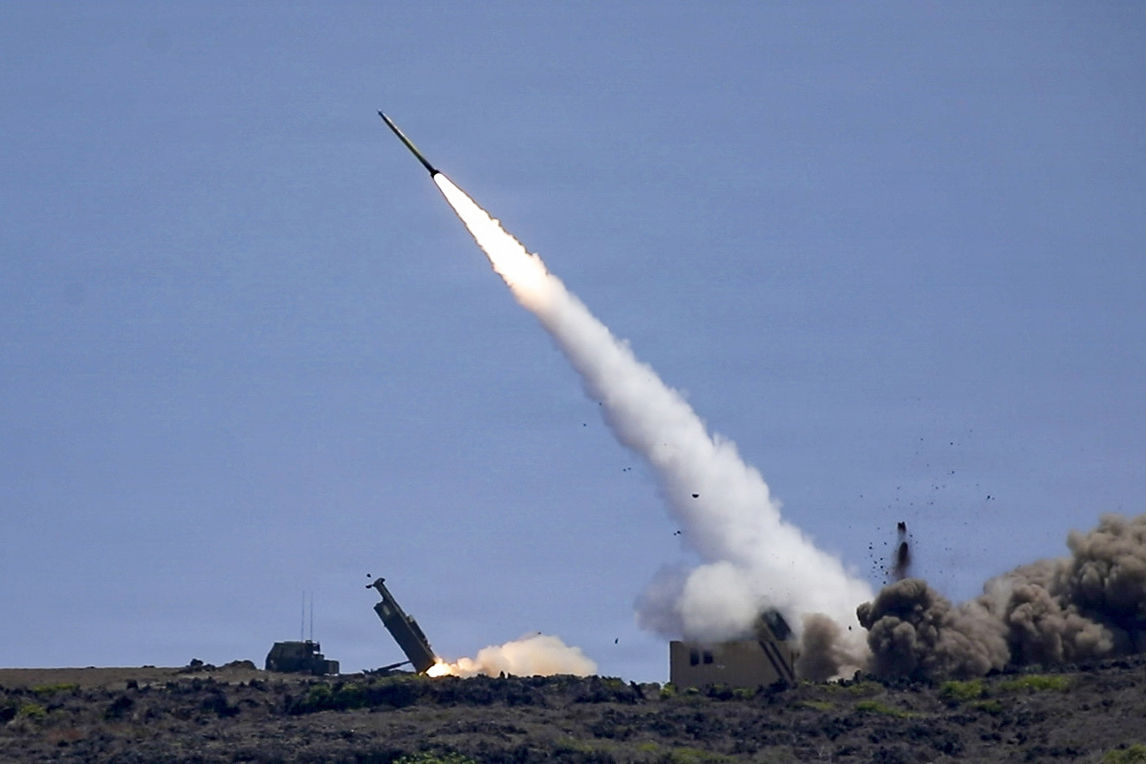
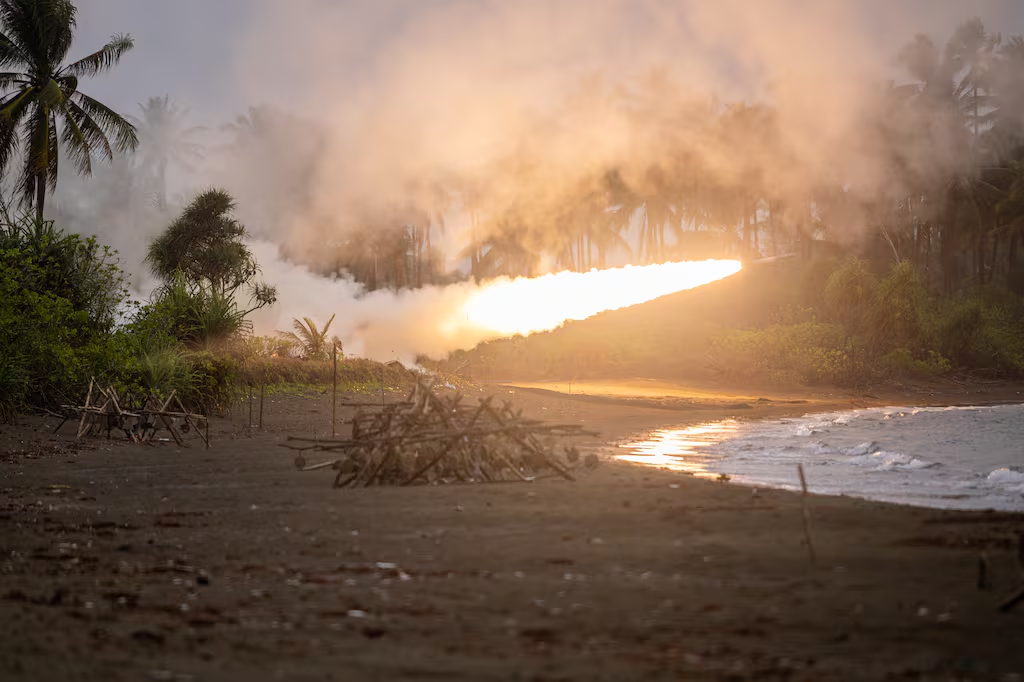
An M142 HIMARS operated by the 7th ID/MDC-PAC launches a missile from Palawan, Philippines, during a live-fire exercise, Apr. 27, 2026. (Staff Sgt. Brandon Rickert/U.S. Army)

Secretary of War Pete Hegseth’s emphasis on restoring America’s warrior mindset and strengthening Pacific readiness is paying off.

These systems are a direct result of that approach — a return to the expeditionary, hard-hitting Marine Corps built to deter adversaries through strength, not endless diplomacy.

And make no mistake, the timing is intentional. With Chinese warships prowling near Taiwan, and North Korea testing missiles like it’s their national sport, the U.S. presence in Okinawa has never been more essential.

Every piece of hardware that expands Marine capability sends one message loud and clear: America is not retreating from the Pacific — we’re reinforcing it.

The Marines’ new tech arsenal represents more than just shiny equipment; it’s the embodiment of deterrence through readiness.

Army Combines 7th Infantry and 1st MDTF Into New Indo-Pacific Warfighting Command
U.S. Soldiers assigned to the 7th Infantry Division (Multi-Domain Command – Pacific) shoot artillery during Exercise Balikatan 2026 at Cape Bojeador, Philippines, May 6, 2026. Balikatan is a longstanding annual exercise between the Armed Forces of the Philippines and U.S. military that represents the strength of our alliance, improves our capable combined force, and demonstrates our commitment to regional peace and prosperity. (U.S. Army photo by Staff Sgt. Jameson Harris)

By giving our warriors the tools to neutralize threats from both land and sea, the War Department ensures that any adversary thinking about challenging American dominance in the Indo-Pacific will have to think twice.

The enemy’s calculus just got a lot more complicated, and that’s exactly how the Marines like it — ready, forward, and unapologetically lethal.

News

House to Vote on Sweeping Veterans Bill That Expands Key Benefits While Cutting Others

The U.S. House is gearing up this week to vote on a sweeping piece of legislation that could reshape veterans’ benefits for years to come.

The proposal, known as the Take Care of America’s Veterans Act, would give wounded warriors long-overdue financial relief while trimming other programs in a bid to balance the books.

It’s a massive package negotiated chiefly by Republican lawmakers aiming to strike a compromise between compassion and fiscal responsibility.

At the heart of the bill are two major reform efforts that veterans’ groups have fought for over the past decade. One is the Major Richard Star Act, which ensures that roughly 54,000 medically retired veterans finally get both their full military retirement pay and their Veterans Affairs disability compensation—without being punished by overlapping offsets.

The other is the Love Lives On Act, which would allow spouses of fallen servicemembers to keep benefits if they remarry before age 55.

House Veterans Affairs Committee Chairman Rep. Mike Bost of Illinois and his Senate counterpart Jerry Moran of Kansas spearheaded the move after years of meetings with advocates who have demanded action from Congress.

“Over the past few months, we have heard from thousands of veterans who want to see the Major Richard Star Act passed,” Bost said, framing it as a moral obligation, not just a financial matter.

Sen. Moran echoed that sentiment, saying that real leadership means delivering results instead of slogans. “It takes hard work and consensus building to pass legislation that matters so greatly to them,” he said in Senate remarks.

Despite overwhelming bipartisan support—336 House members and 79 senators—the Star Act was repeatedly blocked because of sticker shock. The projected $11 billion cost over the next decade left lawmakers divided over where the money should come from.

Lawmakers to Unveil FY2026 Budget for Veterans Affairs, Military Construction

The Take Care of America’s Veterans Act attempts to solve that by modernizing VA disability criteria and cutting certain ratings—moves that critics say shift the financial burden onto future veterans.

Key changes would tighten disability ratings for conditions like sleep apnea and tinnitus. Under the new scale, veterans with asymptomatic or well-controlled sleep apnea could see their benefits reduced to as little as a 0% rating.

Likewise, tinnitus, currently rated at 10%, would no longer qualify on its own and instead be treated as a symptom tied to another injury.

Republican lawmakers argue the shift modernizes old, inflated standards and saves billions that can then fund battlefield-injured service members.

Yet veterans organizations say those savings come straight from the pockets of future generations who might need help later. Disabled American Veterans National Commander Coleman Lee called the cuts “a betrayal cloaked in reform.”

The Veterans of Foreign Wars issued a similarly tough rebuke. “We reject the idea that the only way to care for some veterans is by stealing benefits from others,” National Commander Carol Whitmore said, blasting what she viewed as backdoor austerity targeting common, combat-related conditions.

Meanwhile, Senate Democrats like Richard Blumenthal have launched their own attacks on the bill.

The Connecticut senator accused Republicans of using fiscal tricks instead of tapping existing funds. Blumenthal argued the War Department could simply draw from the $1.7 trillion Military Retirement Fund.

“Correcting this injustice for combat-injured veterans should not deprive others of benefits they need and deserve,” he claimed, pushing for a no-cuts alternative.

Veterans Win as VA Pulls Back on Debated Disability Rating Rule Amid Backlash
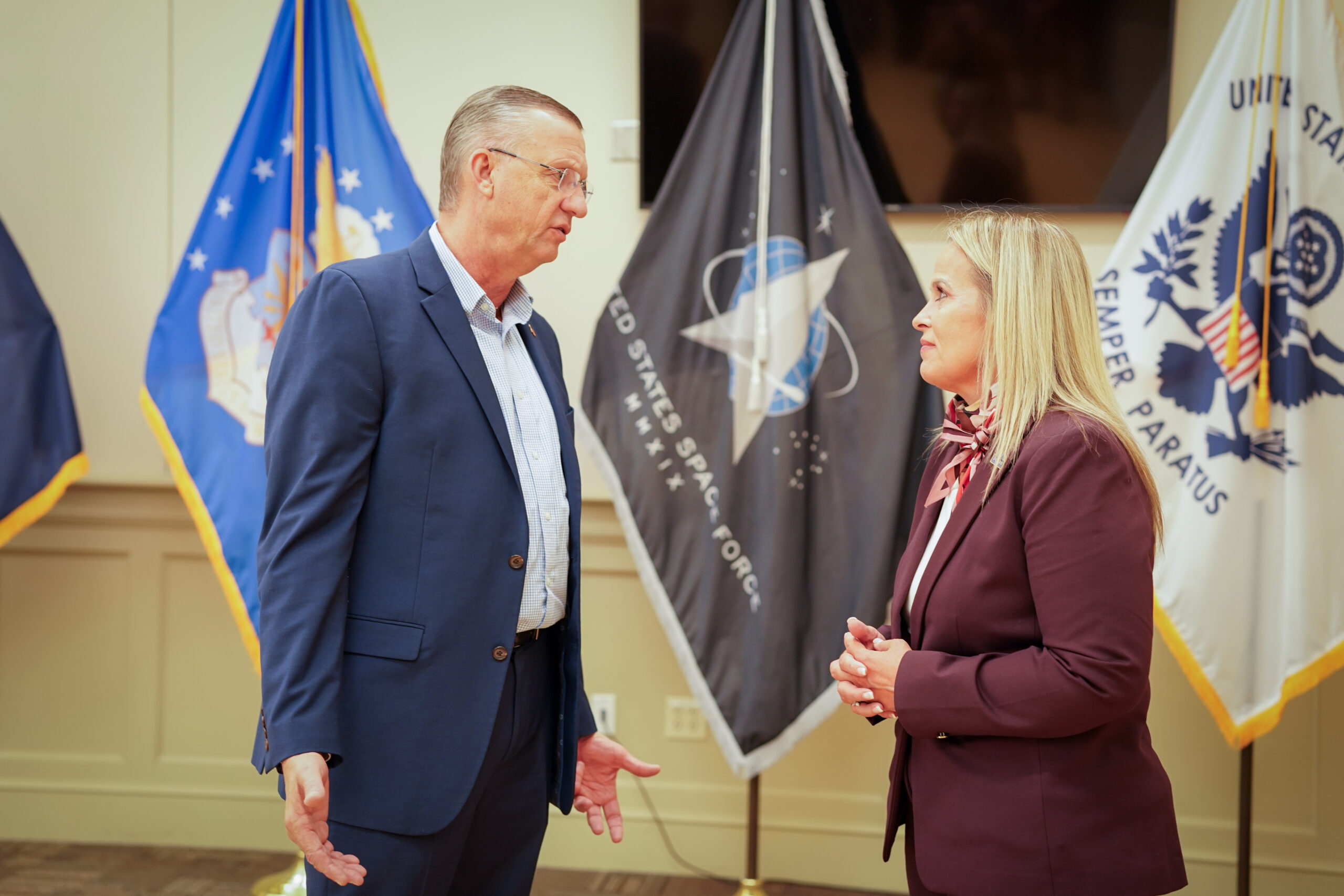
Department of Veterans Affairs Secretary Doug Collins speaks with VA Central Iowa Health Care System Director Lisa Curnes at the Des Moines VA Medical Center in Des Moines, Iowa, on Sept. 8, 2025. Collins visited the Vet Center and Des Moines VA Medical Center to meet with staff, engage with Veterans, and toured the facility as part of his commitment to improving Veteran healthcare and benefits across the country. He also recognized staff for their dedication and service. (Veterans Affairs photo by Sam Hircock)

But veteran advocates who patiently waited for reform warn that ideological purity won’t fix decades of broken promises. American Legion National Commander Dan Wiley said pragmatism must prevail.

“Critics may focus on trade-offs, but the alternative is continued gridlock. Success takes a pragmatic path forward, not just good intentions,” Wiley noted.

Even War Secretary Pete Hegseth, who has remained in favor of the Major Richard Star Act for years, urged lawmakers to focus on passage first, payment later. Although he did not specify methods to cover the cost, Hegseth reiterated that equal treatment for combat-wounded retirees is a matter of integrity and national honor—not partisan debate.

Beyond the flagship measures, the 554-page bill would also expand financial and family support for severely injured veterans.

The Sharri Briley and Eric Edmundson Veterans Benefits Expansion Act included in the package would raise annual payments to families of catastrophically wounded veterans by $10,000 and slightly increase survivor benefits.

It also boosts payouts for families of veterans who died from ALS and funds traveling VA physicians to reach isolated territories and Pacific island communities.

VA Expands Electronic Health Record Rollout Despite Past Safety Concerns
A Georgia Army National Guardsman updates patient medical records on May 12, 2020, at Wellstar Atlanta Medical Center in Atlanta, Ga. (Pfc. Isaiah Matthews/U.S. Army National Guard)

The legislation would also require a host of studies and oversight measures. These include annual reports on veteran death causes, a Government Accountability Office review on hyperbaric oxygen therapy for traumatic brain injuries, and research into hereditary effects of toxic exposure on veterans’ descendants.

The reporting aims to improve transparency and strengthen treatment and care for the long term.

Still, opponents on both sides question whether the ends justify the means. Some call the bill a “shell game” built on balancing noble goals with uncomfortable trade-offs. But supporters argue it’s better than the status quo—where Congress preaches about veterans but rarely delivers life-changing results.

The House is expected to take up H.R. 9237 in the coming days, setting up what could be one of the most consequential veterans votes in years.

If passed, it would mark a clear example of Republican-led pragmatism: cutting bureaucratic waste to deliver real help to the combat-wounded and their families, even in the face of partisan critics and Washington bean counters.

In the eyes of everyday veterans, that kind of action—the kind that actually gets signed into law—might finally restore some faith that Capitol Hill hasn’t completely forgotten who fought for freedom in the first place.

News

Coast Guard Helicopter Crashes During Training Mission in Alaska, All Crew Survive

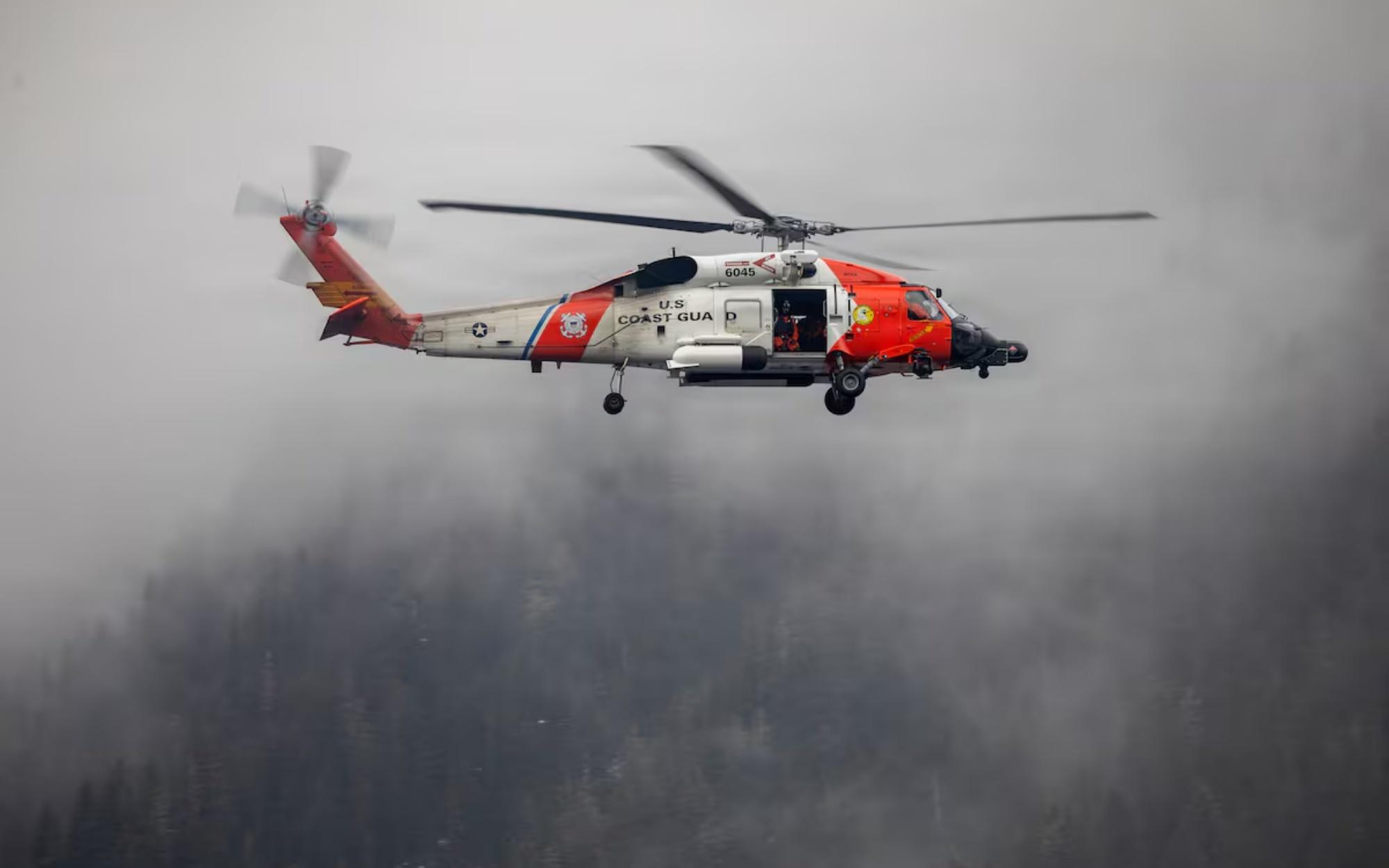
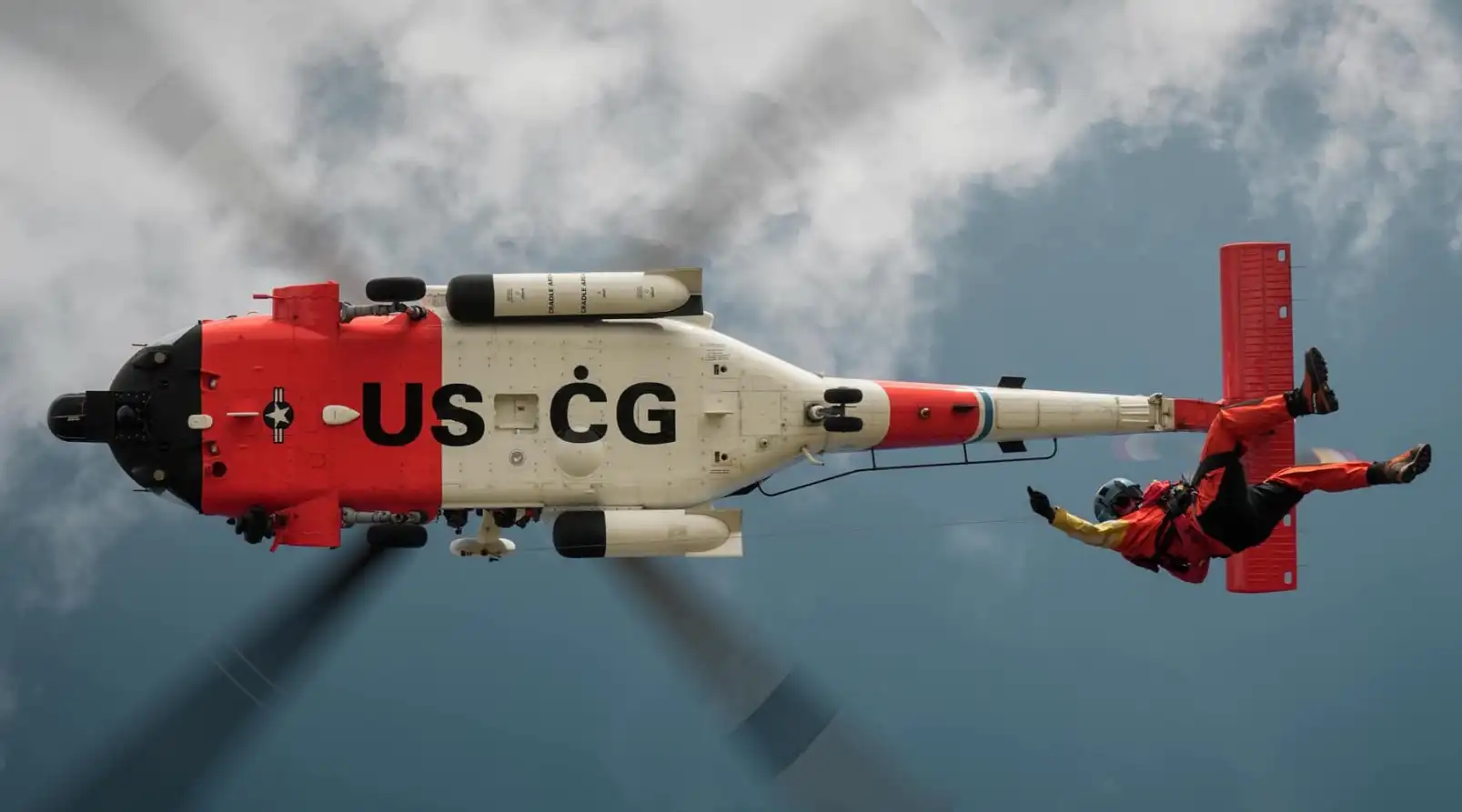
A U.S. Coast Guard MH-60 Jayhawk helicopter went down Monday morning in the rugged terrain near Sitka, Alaska, during what officials described as a routine training flight.

The chopper, carrying four service members, reportedly crashed near Harbor Mountain just after 10 a.m. local time.

Miraculously, all crew members survived the impact, though their exact conditions remain unknown.

According to the Coast Guard, rescue teams were on the ground within minutes of the alert, which was received at approximately 10:07 a.m. Local search-and-rescue personnel from the Sitka Fire Department joined Coast Guard crews in reaching the wreckage site.

The four members were transported to Mt. Edgecumbe Medical Center for evaluation.

Officials confirmed that no fatalities have been reported, a rare stroke of good fortune in a crash of this nature.

The Jayhawk, a highly capable air platform built for Arctic weather and sea rescues, is used extensively throughout Alaska’s unforgiving terrain for both operations and training.

“The safety, well-being, and rescue of our crew members is our absolute immediate priority,” the Coast Guard emphasized in a statement released hours after the incident. As of now, the specific cause of the crash is unknown and is under investigation by the service.

Coast Guard crews in Alaska train constantly under some of the most extreme flying conditions on Earth. With subzero temperatures, high winds, and mountainous terrain surrounding the coastal city of Sitka, even veteran pilots can face surprise weather shifts or mechanical stress during flight.

The area around Harbor Mountain is particularly tricky, with steep elevation changes and sudden fog banks often complicating visual flight.

The MH-60 Jayhawk, derived from the Army’s Black Hawk design, is among the most reliable aircraft in the fleet.

Coast Guard Crew Pulls Off Daring Rescue After Roof Collapse Traps Workers in Hardening Concrete

Its reputation for toughness has made it the workhorse of Coast Guard aviation for decades, capable of flying long-distance rescue missions over the Bering Sea, the Gulf of Alaska, and remote mountain ranges.

That said, training mishaps are a constant reminder of the inherent risk service members face daily to keep America’s maritime frontiers safe. Every Coast Guard member flying out of Air Station Sitka understands that their mission could turn dangerous in a matter of seconds—yet they do it anyway, a testament to their grit and readiness.

The uncertainty surrounding Monday’s crash has renewed calls for ensuring that aging aviation assets used in extreme conditions receive proper maintenance support.

Under President Trump’s prior administration, significant funding was directed toward rebuilding military aviation readiness.

Supporters of this effort have warned that bureaucratic belt-tightening in recent years has again begun to strain readiness budgets, even for essential aviation units like those based in Alaska.

Taiwan and United States Launch Firepower Center to Master Asymmetric Warfare
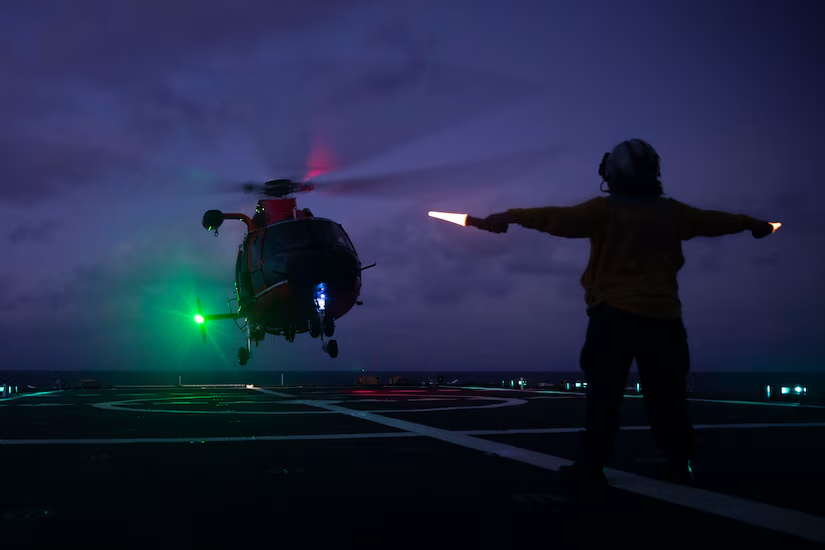
A sailor directs a helicopter to a vessel’s flight deck at night.
A service member directs an MH-65E Dolphin helicopter during routine nighttime flight operations aboard the Coast Guard cutter Munro in the South China Sea, Aug. 23, 2023. The Munro is deployed to the Indo-Pacific to advance relationships with ally and partner nations.

The Coast Guard’s Arctic District command center will lead the investigation into what went wrong, coordinating with aviation safety experts and maintenance specialists.

They will look at flight data, weather conditions, and mechanical logs to determine whether this was a technical malfunction, pilot issue, or environmental factor.

Locals near Sitka reported hearing a loud thud just after 10 a.m., followed by the sound of aircraft engines cutting off.

Heavy fog reportedly blanketed the area throughout the morning, a possible factor in the crash. Mountain rescue personnel praised the speed and professionalism of the responding teams, noting that the recovery and transport to the hospital were conducted quickly despite tough terrain.

For the Coast Guard family, incidents like this hit close to home. Every crew member knows that training in Alaska is as real as it gets—isolated, dangerous, and often unpredictable. Yet that same environment forges some of the most capable aviators and rescue professionals in the world.

As the investigation begins, one fact is clear: four American servicemen are alive today after their helicopter went down in the Alaskan wilderness.

Search Intensifies as Survivors Surface After U.S. Strikes on Drug Vessels
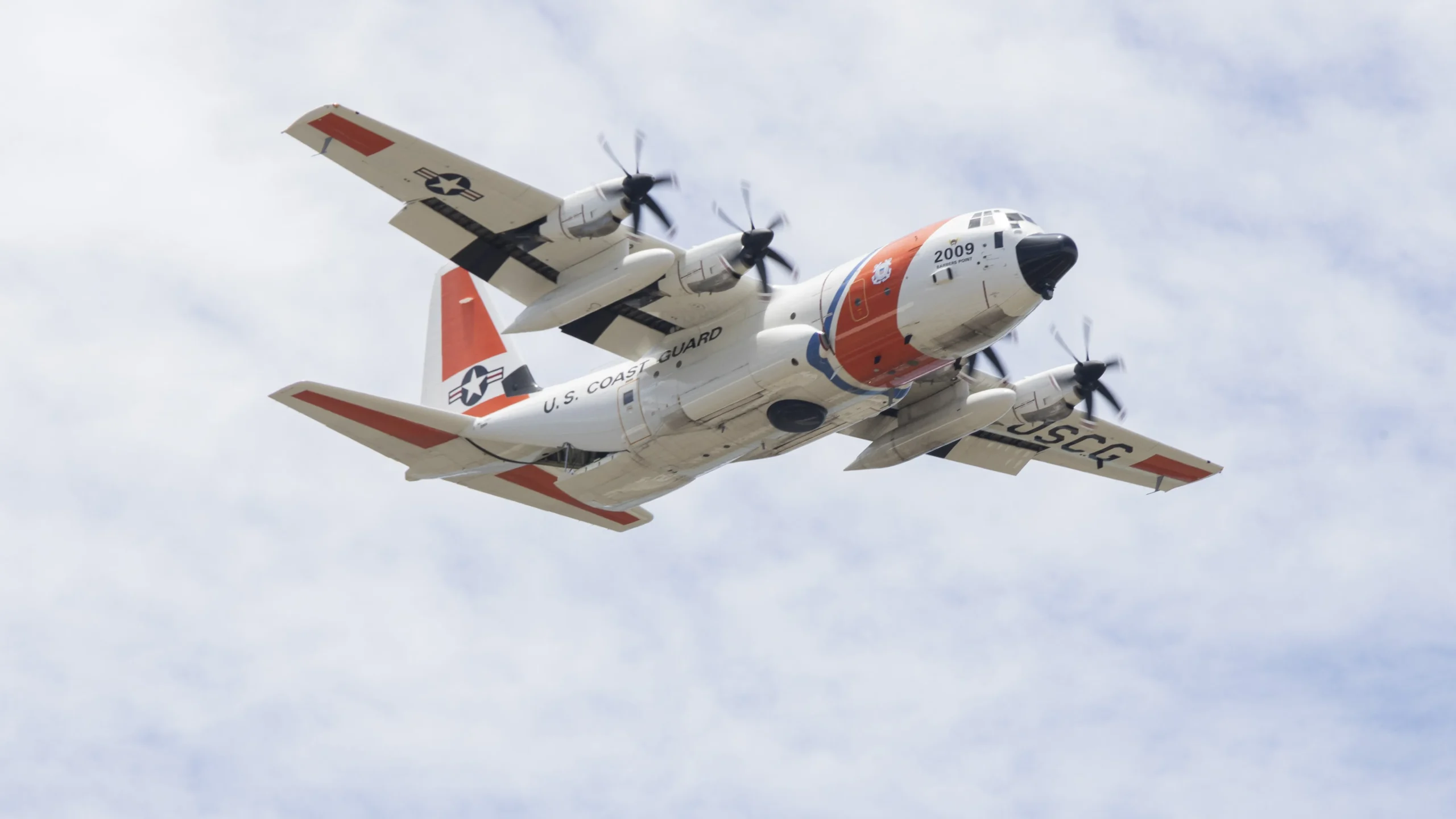
The Coast Guard dispatched a HC-130J to waters near the Mexico-Guatemala border following a Dec. 30 airstrike. Marine Corps photo by Cpl. Jade K. Venegas.

Credit goes not only to their courage but also to the swift response of their teammates who refused to back down until everyone was found. That’s the spirit of the U.S. Coast Guard—quiet professionalism, relentless training, and the refusal to leave anyone behind, no matter the conditions.

The Department of War and the nation’s military leadership will no doubt be closely reviewing the outcome of this crash.

With increased emphasis on Arctic operations and northern readiness, those responsible for maintaining America’s military readiness have no time to spare when it comes to protecting the lives of those who serve.

News

U.S. and Japan Flex Allied Naval Muscle in Early Start to Massive Valiant Shield Drill

U.S. and Japanese naval forces wasted no time showing off the kind of maritime dominance that keeps the Indo-Pacific stable and adversaries uneasy.

Over the weekend, warships from both nations steamed together in the Philippine Sea, kicking off the latest and most ambitious iteration yet of exercise Valiant Shield.

The move sent a clear message that America’s arsenal, paired with Japan’s growing might, is a wall that no communist regime can easily scale.

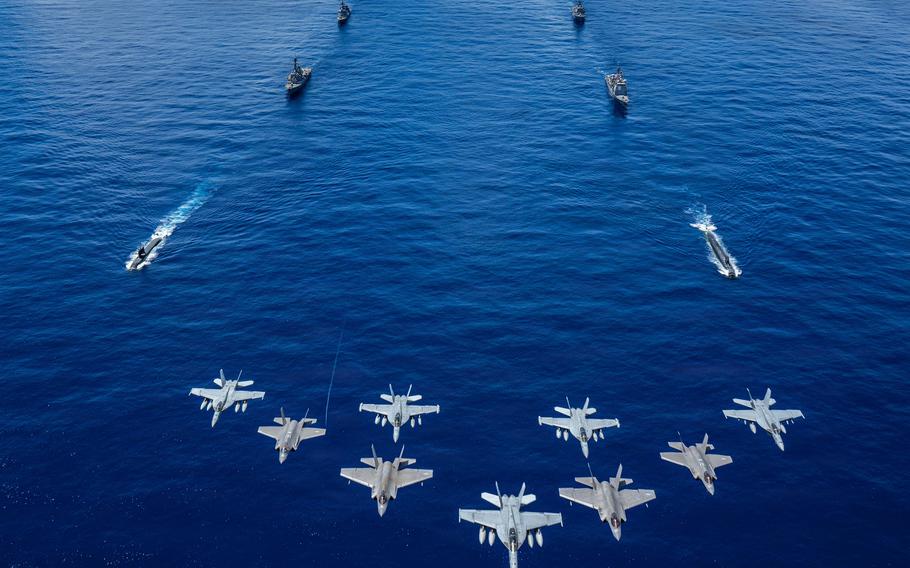
The aircraft carrier USS George Washington and its escorts joined Japan’s Maritime Self-Defense Force for early operations ahead of the official start date, putting jets in the sky and ships in formation before most Western media even took notice.

The images released by the Navy’s visual service weren’t just pretty pictures—they were power statements.

Now in its 11th edition since 2006, the Valiant Shield exercise unites all six branches of the U.S. military in coordinated drills across the western Pacific.

This year’s training stretches around Guam, Japan, and the Northern Mariana Islands—territories that form the front line of deterrence against China’s ambitions and North Korea’s volatile threats.

“Valiant Shield demonstrates our enduring commitment to a free and open Indo-Pacific,” said Adm. Steve Koehler, commander of the U.S. Pacific Fleet.

“Exercising advanced multidomain capabilities with our allies ensures we continue to seamlessly innovate and operate together, project combat power together, and prevail over any challenge—together.” For all the admiral’s usual formality, the message was unmistakably sharp: America and its allies are not backing down.

The George Washington strike group isn’t operating alone. Joining the carrier are guided-missile destroyers USS Benfold and USS Shoup, along with the guided-missile cruiser USS Robert Smalls and the fast-attack submarine USS Virginia.

U.S. And Japan Flex Allied Naval Muscle In Early Start To Massive Valiant Shield Drill
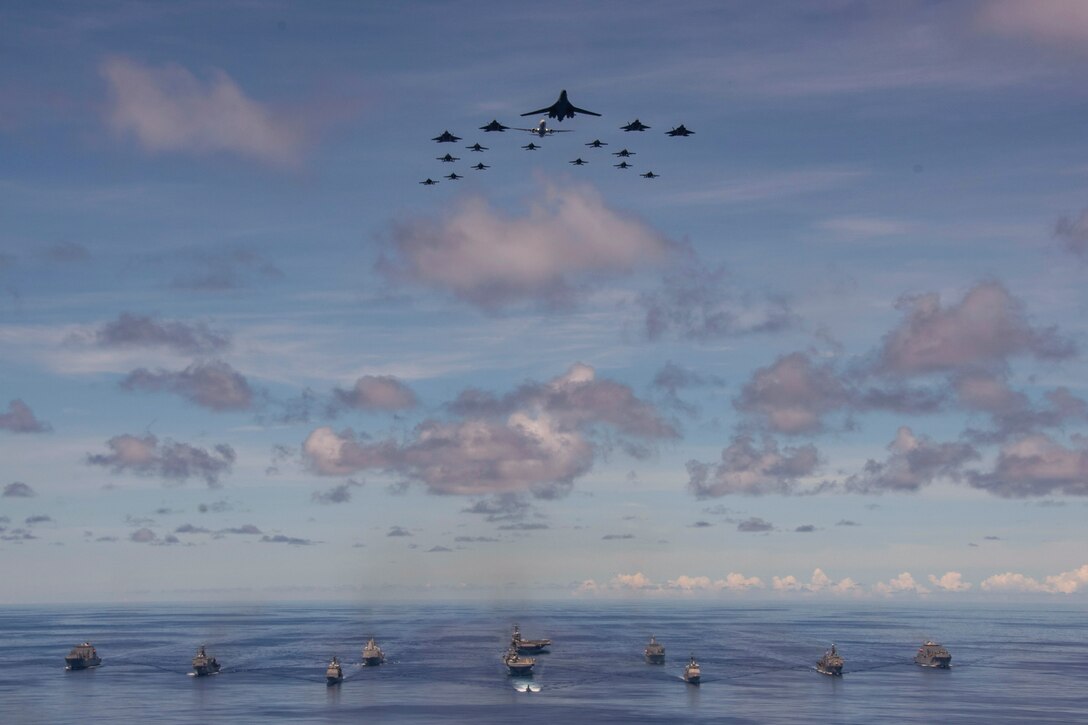
Left to right: The USNS Charles Drew, the USS Comstock, the USS Shiloh, the USS New Orleans, the USS Chicago, the USS America, the USS Ronald Reagan, the USNS John Ericsson, the USS Antietam, the USS Germantown and the USNS Sacagawea sail in formation with Navy and Air Force aircraft during Valiant Shield in the Philippine Sea, Sept. 25, 2020. The exercise is designed to focus on integration of joint training in a blue-water environment among U.S. forces.

Together, they represent a lethal force capable of responding quickly to any flashpoint in the region.

Japan, stepping up its regional role under growing pressure to counter communist China, deployed an impressive fleet of its own.

The helicopter destroyer JS Kaga, guided-missile destroyer JS Fuyuzuki, and attack submarine JS Jingei sailed with the U.S. formation—showing that Tokyo is more than ready to move from self-defense to serious power projection.

This marks only Japan’s second appearance in the Valiant Shield series, following its 2024 debut. The nation’s Air and Ground Self-Defense Forces are also participating, a sign of Tokyo’s expanding military capability and willingness to integrate with U.S. forces in multidomain operations.

Roughly 4,100 Japanese troops, 150 vehicles, and 60 aircraft are participating this year, according to Japan’s Joint Staff. That’s no symbolic effort—it’s a serious investment in readiness.

For a country that long hesitated to flex its military muscle, this level of involvement underscores that Japan is done playing the pacifist spectator.

The George Washington group had arrived in Guam on June 16 after leaving its homeport of Yokosuka, Japan, on May 10. The visit to Guam was both a breather and a reminder of why the island remains a critical hub for the U.S. Navy’s carrier operations. “Guam remains a critical nexus for the Navy’s carrier strike groups,” said Capt.

Nicholas DeLeo, the ship’s commanding officer. “These Sailors have been working very hard, and I’m excited they have the opportunity to recharge here in Guam before we return to sea, ready to support our mission here in the Indo-Pacific.”

Even while anchored, the George Washington’s crew didn’t just sit idle. Sailors joined community events, including cleanup projects at Naval Station Guam and local beaches.

U.S. And Japan Flex Allied Naval Muscle In Early Start To Massive Valiant Shield Drill
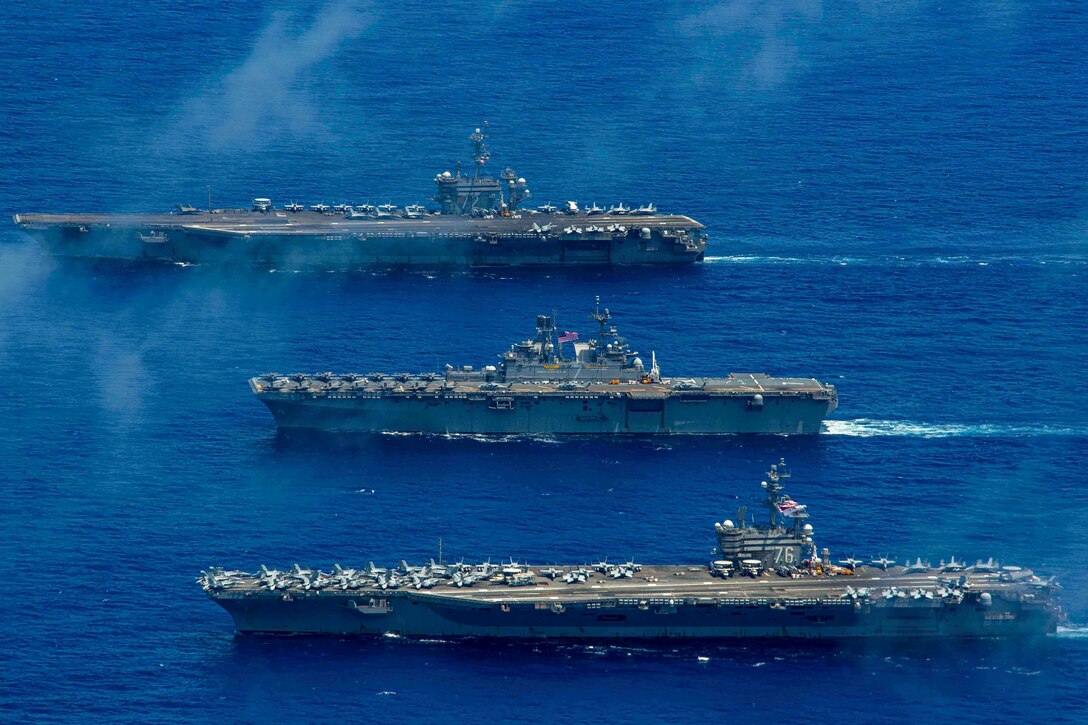
The USS Ronald Reagan, USS Tripoli and USS Abraham Lincoln steam in formation in the Philippine Sea, June 12, 2022, during Valiant Shield, a field training exercise.

It’s the kind of grassroots engagement that showcases America’s professionalism abroad—and the same discipline that keeps our Navy the best in the world.

Valiant Shield’s early underway period served as an unmistakable preview of what’s coming for the next ten days. The U.S. Pacific Fleet’s strategy is clear: stay ready, stay present, stay dominant.

Every operation in the Philippine Sea drives home the same truth—the Pacific belongs to free nations willing to fight for it.

With 2026 shaping up as another year of heightened tensions from Beijing’s aggressive moves in the South China Sea and Taiwan Strait, this year’s exercise carries extra weight.

The show of allied firepower is not just about drills—it’s about deterrence. It tells any adversary lurking in the shadows that if they gamble on challenging the United States and its allies, they’ll lose that bet fast.

These exercises are exactly the kind of forward-deployed readiness initiatives President Trump championed during his first term and that War Secretary Pete Hegseth continues to support with renewed energy. A strong Navy, a confident alliance, and a crystal-clear message: peace through power.

As the George Washington and her strike group cut through the Pacific, flanked by Japan’s finest, the message carries across the horizon.

In an era where weakness invites aggression, Valiant Shield reminds the world that America still leads from the front, and those who sail with her do so under the promise of strength and freedom.

News

New Commander Takes Helm of Europe’s Expanding Air Shield

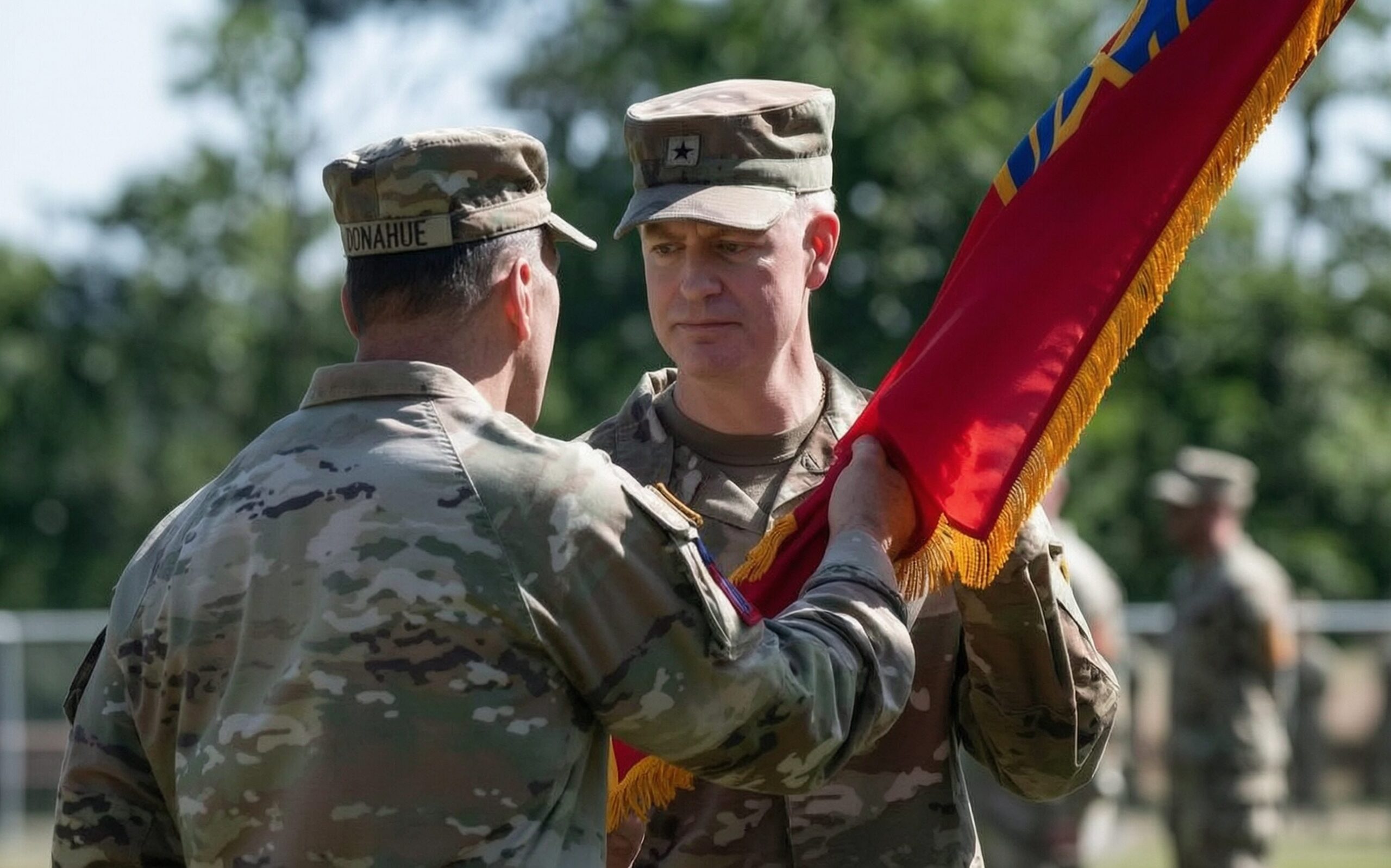
A new chapter opened for the U.S. Army’s air and missile defense mission in Europe as Brig. Gen. Glenn Henke assumed command of the 10th Army Air and Missile Defense Command during a ceremony at Sembach Kaserne, Germany.

The timing is hardly symbolic—Europe’s skies haven’t been this tense since the Cold War, and the 10th AAMDC is right at the heart of keeping them secure.

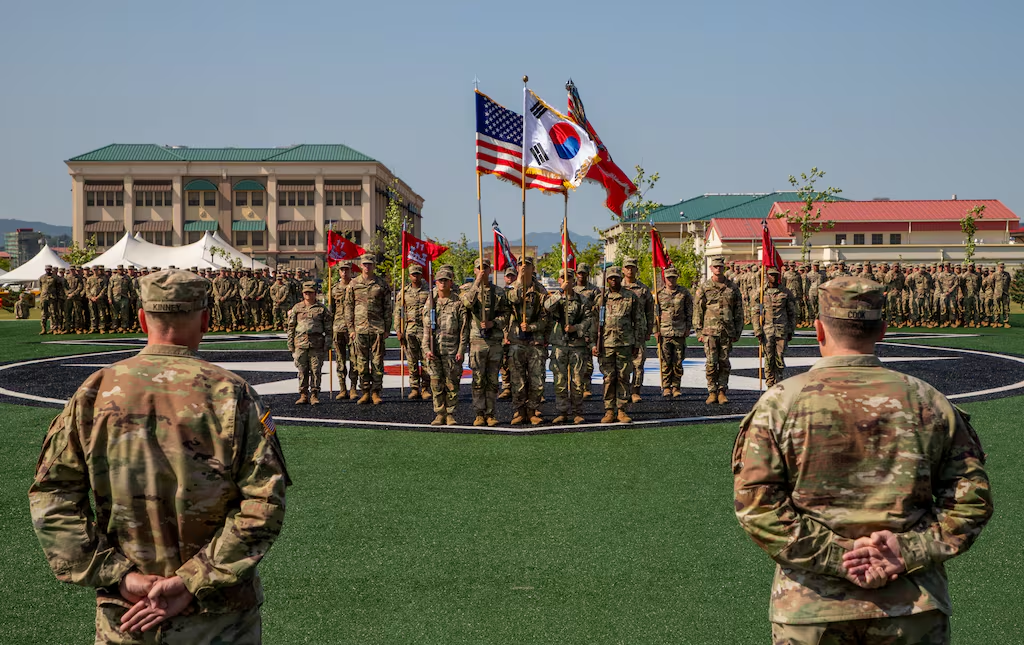
Henke took the reins from Brig. Gen. Curtis King, who led the command through an era of nonstop operational expansion.

Under King’s leadership, the unit extended America’s air defense reach from the Arctic circle to the Horn of Africa, deploying rapidly to NATO’s eastern flank as Russian hostilities intensified and Iran stirred trouble in the Middle East.

Gen. Christopher Donahue, commander of U.S. Army Europe and Africa, presided over the ceremony and made it clear that the 10th AAMDC had set the gold standard for modern air defense readiness. He lauded King for proving that the United States can shift air-defense assets across continents in days, not months, a feat he described as “unheard of in air defense history.”

Among those swift missions was the deployment of the U.S.-made Merops counter-drone system to Poland and Romania. Those countries, sitting on NATO’s fragile eastern front, were seeing constant drone incursions blamed squarely on Russia.

Thanks to America’s muscle and the innovation of its systems, those incursions were met with a capable shield that Europe had been sorely lacking.

King’s command also supported air defense forces sent briefly to U.S. Central Command’s area of responsibility during Operation Epic Fury against Iran.

Although officials were tight-lipped on the details, it was clear that the 10th AAMDC’s assets were integral to defending coalition forces. Donahue also noted that troops were sent to Turkey to bolster protection along NATO’s southern flank as Iran’s aggression simmered on the horizon.

The command doesn’t just operate in Europe—it extends into Africa, where forces in Djibouti continue to protect critical American and allied assets in a strategically vital region often overlooked by civilian policymakers in Washington.

The scale of these operations proves why the 10th has evolved from a support command into a combat-ready force built for the 21st century.

In his farewell speech, King underscored the urgency of his mission to adapt to new-age warfare defined by swarms of drones and high-velocity missiles.

He described the creation of the Eastern Flank Deterrence Initiative, aimed at uniting manned and unmanned defense systems under a common intelligence network capable of instantly relaying battlefield data. The initiative, he said, was meant to ensure NATO could not just defend, but dominate.

“The mission is clear,” King told the assembled soldiers.

“To counter mass by defeating one-way attack drones, cruise missiles, ballistic missiles, to enable the offense to inflict overwhelming violence on the enemy.” It was a plainspoken statement reflecting the clarity of purpose the Army needs in a new age of high-tech war.

That clarity is precisely what Henke inherits. A combat veteran of Iraq, Henke reminded attendees that when he left Europe two decades ago, the Army had just deactivated its last Bradley Stinger Fighting Vehicle battery.

Back then, the experts claimed air threats to ground troops were a thing of the past. “We all know that is now our present and our future,” he said, acknowledging the hard truth of today’s battlefield realities.

Henke’s background is fit for the fight ahead. As the former military deputy director of the Pentagon’s Joint Counter–Small Unmanned Aircraft Systems Office, he brings a wealth of knowledge on combating the very drone technologies transforming modern warfare.

His goal now is to ensure that the 10th AAMDC can detect, track, and destroy airborne threats before they can endanger allied forces or sovereign lands.

The timing of Henke’s appointment couldn’t be more consequential. The War Department is refocusing on Europe’s security architecture after years of neglect under weak leadership in Washington.

Thankfully, with strong military voices like Secretary of War Pete Hegseth and the steady backing of President Trump’s America First national defense posture, commands like the 10th are equipped, motivated, and politically unshackled to do what’s necessary to keep the peace from a position of undeniable strength.

As Patriot missile launchers framed the change-of-command ceremony, the symbolism was striking. The soldiers standing at attention in the German morning air represented more than tradition—they embodied readiness.

From Poland to Romania and Turkey to Djibouti, they are America’s sentinels, ensuring no adversary ever again mistakes NATO’s resolve for weakness.

With Henke now in command, the mission continues relentlessly.

Europe’s skies are crowded and contested, but thanks to America’s warriors and the leadership of men like Henke and Hegseth, they remain under the protection of the most powerful military the world has ever seen.

News

Global Military Brass Unites in Hawaii to Plan the Future of Coastal Warfare

Military leaders from 25 nations met this week in Waikiki at the Asia Pacific Center for Security Studies, uniting under the U.S. Marine Corps’ guidance to sharpen strategies for coastal warfare in a world where land, sea, and technology now blend into one battlespace.

Around 300 service members assembled for the 12th Pacific Amphibious Leaders Symposium, hosted by U.S. Marine Corps Forces Pacific, in what has become an essential forum for rehearsing the future of global littoral conflict.

The annual summit rotates across key Pacific locations, and this year, Hawaii served as the hub—a fitting location given its status as the nerve center for U.S. military operations in the Indo-Pacific region.

Lt. Gen. James Glynn, the top Marine in the Pacific, opened the gathering with words that captured both the gravity and history of the moment. “Trying to get to Hawaii’s a long way from everywhere, which puts it right in the middle of everything at a time when it’s needed most,” he told attendees.

Glynn’s point was clear: from this island stronghold, America projects power across the entire Pacific, deterring adversaries and reassuring allies.

Glynn drew parallels between ancient Hawaiian warriors guarding their coastline and the modern realities of amphibious and coastal warfare today.

He reminded the visiting officers that the line where ocean meets land has always been a contested frontier—then as now, both a zone of trade and of confrontation.

For the United States, that frontier has once again become critical as tensions continue to rise with Beijing over the South China Sea and Taiwan.

U.S. Army Quietly Stages Rotation in Philippines as Washington Expands Pacific Partnerships
U.S. Army soldiers with the 25th Infantry Division train in the Philippines as part of exercise Balikatan 25. Army photo by Staff Sgt. Brenden Delgado.

Washington’s renewed interest in such partnerships reflects the urgency of maintaining open sea lanes and freedom of navigation against China’s endless territorial aggression.

While Glynn, like any seasoned Marine, chose his words carefully, his message was unmistakable: regional alliances are becoming indispensable as adversaries like China push boundaries and provoke instability.

Behind closed doors, discussion centered on coordination, readiness, and logistics for rapid-response amphibious operations anywhere from the Philippines to the Bering Strait.

The symposium highlighted recent joint training efforts under the massive Exercise Balikatan in the Philippines.

Experts Call to Stop Okinawa Drawdown as China’s Rise Tests Pacific Deterrence
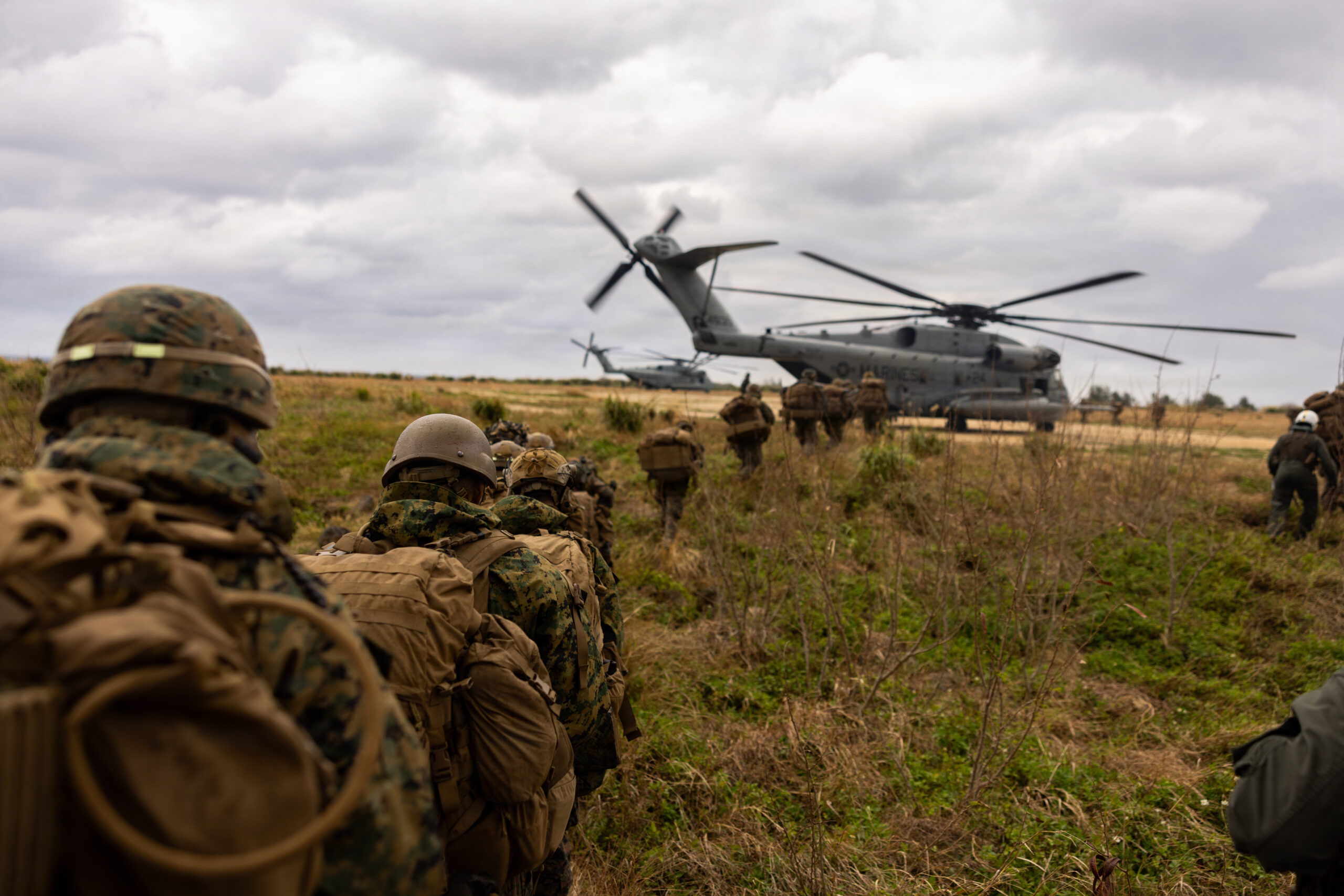
U.S. Marines with 2nd Battalion, 7th Marines, forward deployed to 3rd Marine Division, 4th Marine Regiment as part of the unit deployment program, load onto CH-53E Super Stallions after conducting a helicopter raid as part of a combined Marine Corps Combat Readiness Evaluation on Ie-Shima, Okinawa, Japan, Jan. 27, 2026. The MCCRE is a formal evaluation of 4th Marine Regiment, 3d Reconnaissance Battalion, and 3rd Marine Division’s Headquarters Battalion to confirm combat readiness for each unit. (U.S. Marine Corps photo by Cpl. John Simpson)

Glynn described the exercise as “consequential,” with Marines from nations including Australia, Japan, France, and Canada conducting live operations on sites edging contested waters. Not surprisingly, these are the very same regions China attempts to claim as “sovereign.”

China’s disregard for international rulings and its blatant militarization of the South China Sea continue to raise alarms.
Despite a 2016 international court ruling affirming the Philippines’ rights, Beijing has forged ahead with base construction, intimidation of fishermen, and military posturing designed to bully its neighbors.

During Balikatan, Marines from Hawaii’s own 3rd Marine Littoral Regiment exercised new anti-ship missile systems alongside Philippine forces just 100 miles from Taiwan—a not-so-subtle reminder that American reach remains strong and that aggression in the region will be met with credible deterrence.

Navy Chief Pushes Leaner, Faster Response with Tailored Fleets Over Carrier Centric Tactics
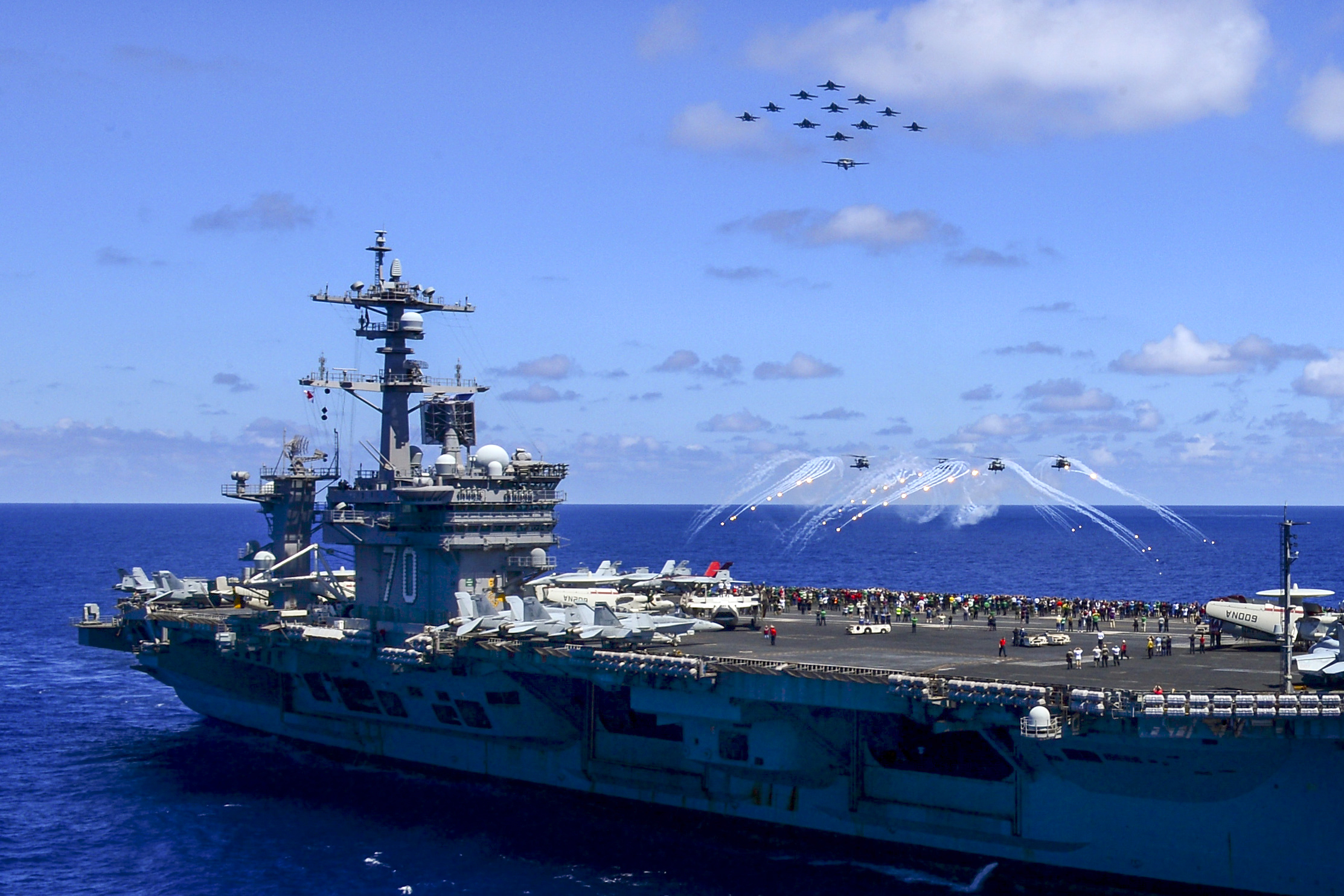
150531-N-GW139-2550 PACIFIC OCEAN (May 31, 2015) Aircraft assigned to Carrier Air Wing (CVW) 17 fly in formation during an air-power demonstration above aircraft carrier USS Carl Vinson (CVN 70). Carl Vinson and its embarked air wing, Carrier Air Wing (CVW) 17, are in the 3rd Fleet area of operations returning to homeport after a Middle East and Western Pacific Deployment. (U.S. Navy Photo by Mass Communication Specialist 3rd Class Eric Coffer/Released)

Although Glynn avoided naming China directly, the context of every discussion made it clear that the Chinese Communist Party and its expansionist ambitions loomed large in the background.

Interestingly, this massive Pacific war-planning conference came only weeks after President Trump’s trip to China to meet Xi Jinping, where he reaffirmed his commitment to peace through strength and fair trade without compromising America’s security interests.

Conflict across the globe—from Iran’s missile attacks on regional oil infrastructure to Russia’s aggression in Ukraine—provided additional case studies for the participants.

Each scenario underscored the same truth: the modern battlefield is multi-domain, layered across air, sea, space, and cyber. Glynn noted, “Longer-range weapons require deeper sensing, and deeper sensing extends into space and cyber.” The implication was plain: victory now depends on mastering information dominance as much as battlefield positioning.

At the heart of the U.S. Marines’ evolving strategy is Force Design 2030, a bold reorganization emphasizing flexibility, mobility, and coastal warfare supremacy.

The plan dissolves old formations, including tank battalions, to build agile units centered on anti-ship missile batteries and high-tech reconnaissance. While some critics claim it’s an untested gamble, battlefield realities from the Persian Gulf to the South China Sea seem to affirm its necessity.

U.S. Army Reorganizes for Multi-Domain Operations in the Pacific to Deter China
A U.S. HIMARS, seen here being fired by U.S. soldiers during the Balikatan military exercise in Rizal, Philippines, May 2, 2024. (Cpl. Kyle Chan/Marine Corps)

Glynn used the recent Iran conflict as an example of modern firepower’s reach and asymmetrical danger, pointing out that cheap precision drones and missiles prove why the Marines’ transformation is essential.

“The proliferation of long-range, cheap, destructive means has demonstrated the utility of the Force Design concept,” Glynn said, emphasizing that resilience, repairability, and sensor networks are now vital to survival and victory alike.

This Waikiki gathering served as more than just another meeting—it signaled the strengthening of a Pacific partnership web, one designed to ensure that no shoreline or sea lane falls quietly under the shadow of authoritarian expansion.

For America and its allies, projecting strength from the islands of Hawaii to the edges of Asia is not merely a strategic choice. It’s a necessary reminder that freedom still has guardians watching the tides.


Scroll to Top