
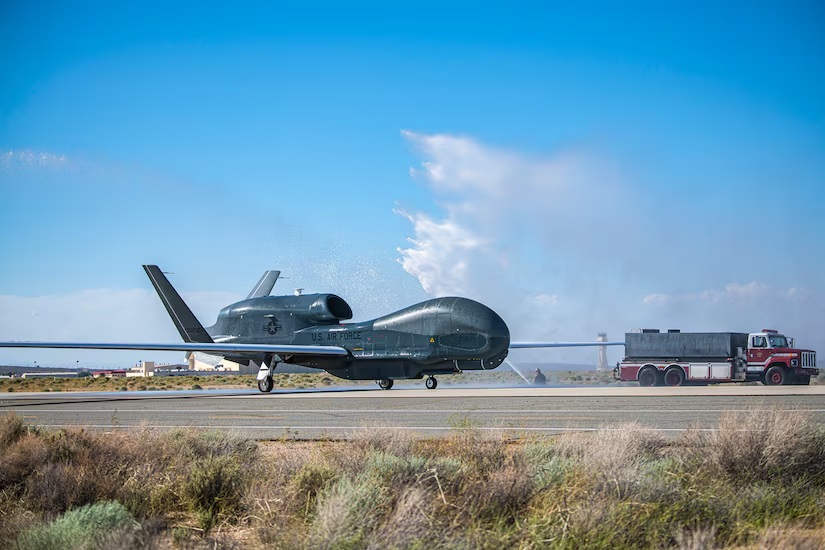
The United States Air Force is making a decisive move in the Indo-Pacific theater, permanently repositioning its RQ-4 Global Hawk reconnaissance drones from Guam to Yokota Air Base in Japan.
The decision follows more than a decade of seasonal rotations and demonstrates a clear strategic message amid rising challenges from China and North Korea.
The 4th Reconnaissance Squadron, part of the 319th Operations Group, began the relocation process in late May.
The first Global Hawk officially landed at Yokota on May 27, though the transfer was only recently confirmed by the 374th Airlift Wing.
About 150 U.S. Air Force personnel have moved alongside the aircraft, signaling a serious and long-term investment in maintaining real-time intelligence across the region.
Lt. Col. Adam Otten, commander of the 4th Reconnaissance Squadron, stated that “Yokota Air Base is the right location to support current and future RQ-4 operations in the theater, while upholding the quality of life of our Airmen and families.”
In plain terms, the move positions America’s most sophisticated eyes-in-the-sky closer to where the threats are actually unfolding.
Yokota has long been a hub of U.S. airpower in Japan, home to the Fifth Air Force headquarters and the 374th Airlift Wing, which operates C-130J and C-12J aircraft.
The addition of the Global Hawk detachment weaves a new layer of surveillance capability directly into the command nerve center for operations across East Asia.
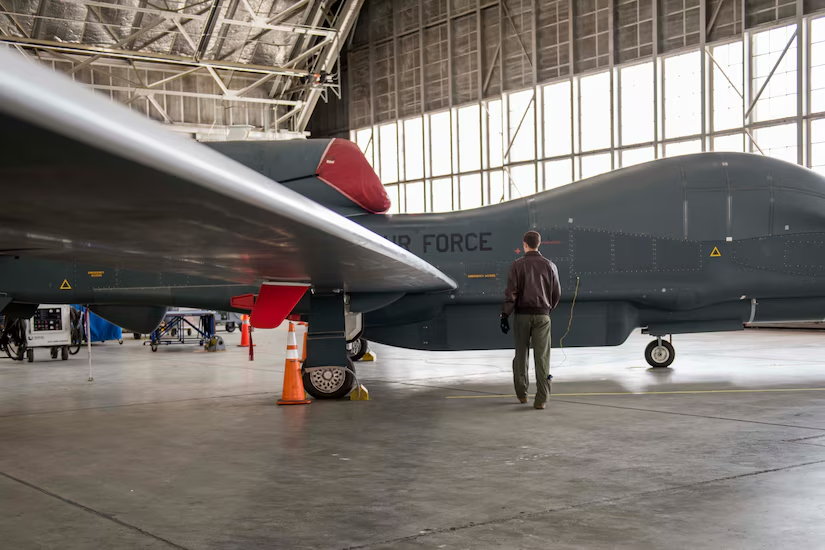
The RQ-4 Global Hawk isn’t just another drone. This unmanned aircraft is a monster of modern reconnaissance, with a 130.9-foot wingspan and weighing nearly 15,000 pounds.
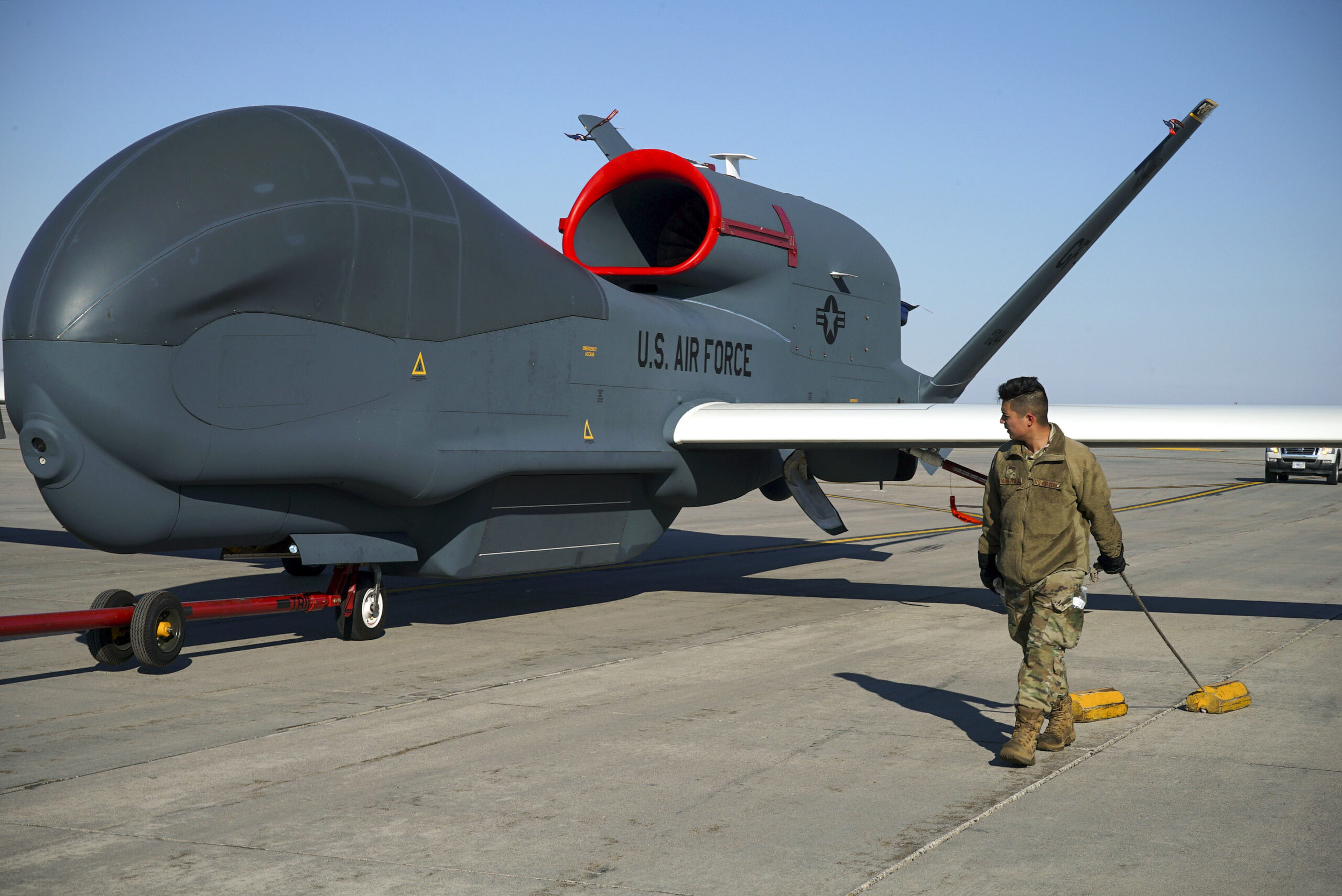
It can stay aloft for over 30 hours while flying at about 60,000 feet, gathering high-resolution imagery across thousands of square miles with precision sensors. It’s essentially an unblinking sentinel quietly monitoring the Pacific skies for hostile activity.
According to the Air Force, the rearranged squadron will “support theater-wide operations,” which include everything from peacetime intelligence missions to full-spectrum crisis responses.
The service pointed to the drone’s vital role during Japan’s 2011 earthquake and tsunami disaster as proof of its versatile value to both allies and humanitarian efforts.
Weather patterns were also a major factor in the move. Guam faces brutal typhoon seasons that complicate flight operations and maintenance schedules.
Japan’s more stable conditions—particularly during the storm-heavy months—provide a more favorable environment for continuous surveillance missions. That stability translates to a ready-to-fly fleet when tension flares.
It’s an uncommon reversal, as most recent Pentagon investment has focused on expanding Guam’s military footprint through new missile defenses, refueling capabilities, and storage depots.
Yet shifting a Global Hawk squadron northward places these critical assets within faster reaction range of both the East China Sea and the Korean Peninsula—exactly where Washington’s attention needs to be.
The move fits within a broader U.S. pattern of tightening intelligence coverage and deterrence posture across Asia. Last year, MQ-9 Reaper drones were permanently stationed in South Korea for round-the-clock reconnaissance.
The Marine Corps also temporarily deployed MQ-9A units to the Philippines as part of growing efforts to monitor the South China Sea. Each shift is part of a comprehensive realignment to sustain a “free and open Indo-Pacific,” as the Air Force describes it.
With the RQ-4s now at Yokota, the U.S. and its allies can expect enhanced monitoring capabilities over hot zones where China’s naval forces and aircraft are becoming increasingly aggressive.
Beijing’s saber-rattling has escalated in recent months, making persistent, precise, and uninterrupted surveillance more crucial than ever.
American commanders, under the assertive leadership of War Secretary Pete Hegseth, are taking deliberate and smart steps to strengthen deterrence.
By situating world-class reconnaissance platforms closer to the action, the U.S. military sends a clear message: America’s vigilance will not waver, and its commitment to its Pacific allies remains ironclad.
Critics may spin this as another “provocative” move, but the real provocation comes from China’s missiles, naval militias, and constant surveillance flights intruding into allied airspace.
The Global Hawk’s relocation isn’t an escalation—it’s preparation. And as history shows, preparedness is the surest way to keep peace.
This shift also ensures greater coordination with Japan’s Self-Defense Forces, which will benefit from direct intelligence feeds that help track maritime activities and potential threats.
In a region where every radar blip could turn into a crisis, that coordination is worth its weight in gold.
The Air Force’s relocation of its Global Hawk fleet to Japan is a powerful demonstration of America adjusting to the times—not retreating, but repositioning.
The Pacific theater remains the most contested strategic front of the 21st century, and this move places American eyes right where they’re needed.
In an age of technology-driven warfare, information dominance is everything.
By planting the world’s most advanced reconnaissance systems firmly in the heart of East Asia, Washington is doing exactly what must be done to keep adversaries guessing and allies reassured.
