News

News

Liberal Historian Loses It, Claims White House UFC Event Mirrors Lynching Era [WATCH]

Historian and Substack writer Heather Cox Richardson is drawing attention following comments she made during a recent discussion with former CNN anchor Jim Acosta in which she compared a planned UFC event at the White House to the history of lynching in the United States, as reported by The Gateway Pundit.

The remarks came during a conversation about President Donald Trump and a proposed UFC Freedom 250 event expected to be held on the White House grounds as part of the nation’s upcoming 250th anniversary celebrations.

Richardson, who has built a large following through her writings and commentary on American politics and history, argued that there was a connection between the cultural appeal of the UFC event and historical acts of mob violence.

During the discussion, Richardson said:

“It’s not really a stretch to say that the same impulse that created the UFC fight on the white House lawn is the impulse that really pushed lynching in the late 19th century.”

Video clips of the remarks circulated online and quickly generated reactions from political commentators and social media users across the ideological spectrum.

The comments also renewed attention on Richardson’s previous political observations.

Last month, she drew notice after discussing Republican political tactics and suggesting that members of the GOP often accuse opponents of actions they themselves are allegedly engaged in.

During that discussion, she also referenced Nazi-era political methods.

Richardson is one of the most widely followed political writers on the Substack platform, where she regularly publishes commentary on current events, history, and American politics.

Her newsletter reaches a large audience and frequently influences discussions among progressive activists and Democratic voters.

The UFC Freedom 250 event has attracted national attention since details about the proposed celebration became public.

Supporters have described the event as a high-profile addition to America’s semiquincentennial festivities, while critics have questioned the appropriateness of holding a mixed martial arts competition on White House grounds.

Richardson’s comparison between the UFC event and historical lynchings immediately became the focus of debate.

Critics argued that the comparison was inappropriate and historically unsupported, while supporters of Richardson defended her broader argument regarding public spectacles and political culture.

The discussion highlights the increasingly sharp disagreements surrounding cultural and political events associated with the Trump administration.

Public figures from both the left and right have frequently used historical comparisons to frame contemporary political debates, often drawing strong reactions from opponents.

Acosta, who hosted the discussion with Richardson, has remained a frequent commentator on national politics since his departure from CNN.

The exchange gained wider visibility after clips were shared on social media platforms and discussed by political commentators.

As reactions continue online, Richardson’s remarks have become another flashpoint in the ongoing debate over the role of political rhetoric, historical analogies, and public events tied to the White House and the Trump administration.

The video of the discussion remains widely available online and continues to generate responses from both supporters and critics of Richardson’s comments.

News

CNN’s Harry Enten Breaks Down New Midterm Warning for Democrats [WATCH]

New polling data highlighted by CNN senior data analyst Harry Enten suggests Democrats may not be performing at the levels historically associated with major midterm election waves, despite holding an advantage in generic congressional ballot polling, as reported by Red State.

During a segment aired Monday, Enten reviewed several recent surveys and compared current Democratic margins with those recorded before previous election cycles that resulted in significant gains for the party out of power.

Historically, the party not controlling the White House has often enjoyed strong polling advantages heading into midterm elections.

Democrats currently hold a lead in several generic congressional ballot surveys. Still, Enten argued that the size of that lead may be less impressive when measured against previous wave-election benchmarks.

According to Enten, recent polling from Ipsos, Marquette University Law School, and NBC News showed Democrats leading Republicans on the generic ballot, but by narrower margins than in past election cycles.

He noted that Democrats were “shy of their generic ballot benchmark in past wave years.”

Enten pointed to NBC News polling showing Democrats ahead by five percentage points in 2026. He compared that figure to the party’s position in 2018 and 2006, when Democrats held significantly larger advantages at similar points in the election cycle.

According to the analysis, the five-point lead recorded in the NBC poll is roughly half of the Democratic advantage seen in 2018 and less than half of the margin the party held in 2006.

Enten also noted that redistricting remains a factor that could influence the outcome of House races across the country.

Based on his calculations, Democrats may need a lead of approximately three to four points nationally to have a realistic path toward regaining control of the House of Representatives.

However, he observed that the average Democratic advantage across the Ipsos, Marquette University Law School, and NBC News polls currently stands at three points.

As a result, Enten suggested the numbers indicate a competitive environment rather than a guaranteed Democratic victory.

“Far from a guarantee,” Enten said.

The discussion also included political forecasting models. According to the segment, the Kalshi prediction market continued to favor Republicans in the battle for House control while also giving Republicans an advantage in the race for the Senate.

The polling analysis comes as both parties continue preparing for the 2026 midterm elections, which will determine control of Congress during the second half of President Donald Trump’s current term.

Control of the House remains a key political objective for Democrats, who hope to regain a congressional check on the Trump administration. Republicans, meanwhile, are seeking to defend their majority and expand their position in both chambers.

Election analysts have cautioned that polling conducted more than a year before Election Day can change significantly as campaigns develop, candidates emerge, fundraising intensifies, and national issues evolve.

Still, Enten’s review of the available data focused on one central point: while Democrats currently hold an advantage in generic ballot polling, the margins are smaller than those seen during previous election cycles that produced major congressional gains for the party out of power.

With more than a year remaining before voters cast ballots in the 2026 midterm elections, both parties will continue watching polling trends closely as they shape campaign strategies and target competitive districts across the country.

News

CNN Forced to Admit Democrat One Party Rule Turned California Into a Disaster Zone [WATCH]

CNN host Fareed Zakaria used a recent broadcast to examine California’s political and economic challenges, arguing that years of one-party Democratic control have coincided with growing problems in housing, government spending, homelessness, and population loss, as reported by The Gateway Pundit.

During his monologue, Zakaria pointed to recent election results and voter dissatisfaction as evidence that frustrations with the state’s direction are becoming increasingly difficult for Democrats to dismiss.

“At a time when President Trump and Republicans are faring poorly in most polls, the story has been different in California,” Zakaria said.

Zakaria noted that Republican candidate Steve Hilton advanced to the November gubernatorial election after finishing ahead of several well-funded Democratic candidates. Hilton is set to face Democrat Xavier Becerra in the general election.

He also highlighted the performance of Republican mayoral candidate Spencer Pratt in Los Angeles, one of the country’s most heavily Democratic cities.

“In Los Angeles, an overwhelmingly Democratic city, Spencer Pratt, a Republican, former reality television personality, looked as if he might make the mayoral general election before finishing third,” Zakaria said.

According to Zakaria, California Democrats risk overlooking a growing sense of dissatisfaction among voters if they dismiss such results as isolated political events.

“California Democrats will be tempted to dismiss all this as a sideshow, but the frustration is real and justified,” he said.

Zakaria contrasted California’s vast economic strengths with what he described as shortcomings in governance. He cited Silicon Valley, Hollywood, major ports, agriculture, universities, talent, and natural resources as examples of the state’s advantages.

“California is one of the most dynamic places on the planet. It has Silicon Valley, Hollywood, world-class universities, extraordinary agriculture, ports, talent, and natural beauty,” Zakaria said.

Despite those strengths, he argued that government performance has failed to keep pace.

“But it is a case study in how a rich society can spend more and more while producing less and less of what its ordinary citizens need,” he said.

“The paradox of California today is a successful economy attached to a failing model of governance.”

Zakaria devoted significant attention to the state’s fiscal growth over the last quarter-century.

He noted that California’s population has increased by approximately 15 percent since 2000, while general expenditures have increased by more than 200 percent during the same period.

According to the figures cited during the segment, state spending rose from $78 billion to approximately $248 billion. Spending per resident increased from roughly $2,300 to about $6,300, while the number of state employees grew by more than 50 percent.

“Does anyone think that the California government and its benefits have gotten 200 percent better in the last 25 years?” Zakaria asked.

Housing represented another major focus of the segment. Zakaria described the issue as California’s most significant policy failure and cited reporting from Alicia Finley of The Wall Street Journal.

According to the figures he referenced, the Los Angeles metropolitan area issued 118,000 building permits for new homes between 2021 and 2024 despite having nearly 13 million residents.

By comparison, Atlanta, with roughly half that population, issued 163,000 permits during the same period.

“California has made it too hard, slow, and expensive to build,” Zakaria said.

“The result is predictable. Home prices soar, rents rise, workers commute farther, homelessness grows, young people leave.”

Zakaria also pointed to migration trends as another warning sign.

“And people are leaving. Over the past seven years, the state has lost a net 1.9 million people through domestic migration.”

His comments come as California voters prepare for upcoming statewide and local elections, with housing affordability, homelessness, government spending, and population trends remaining central issues in political debates across the state.

News

JD Vance Details Trump’s Peace Deal with Iran: No, Trump Isn’t Handing Iran ‘Billions in Cash’ [WATCH]

Iran could gain access to as much as $300 billion in reconstruction-related investments from Gulf nations under a newly signed memorandum of understanding with the United States, according to comments made Monday by Vice President JD Vance, as reported by The New York Post.

The agreement, which was electronically signed on Sunday, has not yet been publicly released. Administration officials say any economic benefits for Tehran would be conditioned on significant changes in behavior, including ending its nuclear program and complying with international inspections.

Speaking with CBS News, Vance addressed reports that the agreement includes a reconstruction initiative worth up to $300 billion.

“That’s the sort of thing they could have access to, funded by the Gulf Coast Coalition, so long as they honor their end of the obligation,” Vance said.

Administration officials emphasized that the proposed investments would not involve American taxpayer funds. Vance reiterated that point during an interview with Fox News host Sean Hannity.

“The Iranians don’t get a dime unless they behave and change their behavior” and will “never get a dime of American taxpayer money. Ever. Full stop. Not even close.”

According to Vance, Iran would only become eligible for investment if it permanently abandons its nuclear ambitions and complies with a strict monitoring system.

“We absolutely are open to the Gulf Coast countries investing in the reconstruction of Iran, but only if Iran ends their nuclear program, ends their enriched stockpile of material, and is really open to an inspections and enforcement regime that gives the American people confidence they’re never going to have a nuclear weapon,” Vance said.

The proposal has generated skepticism among some Republicans, largely because the text of the agreement remains unavailable to lawmakers and the public.

Lindsey Graham criticized reports of a reconstruction fund last week, writing on X that the “idea of a $300 billion reconstruction fund, given who is in charge of Iran, seems to be tone deaf.

It would be akin to a Marshall Plan for Germany with the Nazis still in charge.”

By Monday, Graham said he expected the Trump administration to release the agreement’s text and stated that if the memorandum contains the provisions described by administration officials, “the proposal as envisioned by the Vice President and the Trump Administration to end the Iranian conflict would be transformative for the region and a major achievement, leading to broader peace.”

The agreement follows more than three months of conflict that began when the United States and Israel launched attacks against Iran on Feb. 28.

During the conflict, Iran launched strikes against regional countries, including the UAE, Qatar, Jordan, Kuwait, and Saudi Arabia, all of which host American military facilities.

Administration officials said the memorandum is designed to restore conditions that existed before the conflict, including reopening the Strait of Hormuz and ending the U.S. naval blockade.

More detailed negotiations regarding Iran’s nuclear activities would occur later.

Senior U.S. officials also outlined broader economic incentives available to Tehran if it complies with future requirements.

“The more they behave like a normal country, the more that they show they’re willing to be a good partner, then we’re going to be willing to be extraordinarily generous in opening up their economy and opening up the sanctions relief that the deal contemplates,” one official said.

Officials said Iran could receive phased sanctions relief, access to frozen assets, and eventual reintegration into the global economy.

In exchange, Tehran would be expected to meet denuclearization benchmarks and could potentially end support for proxy organizations, including Hamas and Hezbollah.

The administration also confirmed that the reconstruction initiative would consist of investment projects rather than direct cash transfers.

Gulf nations would provide capital through infrastructure and development investments if Iran becomes a viable destination for those projects.

“That only happens if they make themselves investable, when they make themselves a country where you can really see that there’s not going to be snapback [sanctions for] pursuing a nuclear weapon or playing these games in the shadows,” a senior official said.

Administration officials acknowledged that misinformation surrounding the still-unreleased agreement has fueled speculation about its contents.

“There is a lot of misinformation out there,” one official said.

The White House has indicated that the memorandum’s text is expected to be released by Friday. Officials also said technical discussions with Iranian representatives are scheduled to begin later this week.

The agreement also contemplates a gradual lifting of the U.S. blockade currently affecting Iranian trade. In exchange, Iran would reopen the Strait of Hormuz to international shipping without imposing transit tolls.

Officials cautioned that commercial traffic through the strait could take weeks to return to normal levels as shipping companies and crews evaluate regional stability following the conflict.

News

All Eight Crew Feared Dead After B52 Test Mission Crash in California Desert [WATCH]

All eight crew members aboard a U.S. Air Force B-52 Stratofortress are believed to have died after the aircraft crashed Monday morning shortly after departing from Edwards Air Force Base in California, according to military officials, as reported by The Post Millennial.

The crash occurred shortly after takeoff during what officials described as a routine test mission. Emergency response teams were immediately dispatched to the scene as authorities began assessing the wreckage and gathering information about the incident.

In a statement released following the crash, officials said the aircraft was carrying eight people when it went down at approximately 11:20 a.m. local time.

“Initial indications are that the crash was not survivable.”

Military officials have not yet released the identities of the crew members, and no additional details regarding the cause of the crash were immediately available.

Investigators are expected to examine flight data, maintenance records, weather conditions, and other factors as part of the inquiry into what led to the loss of the aircraft.

The B-52 Stratofortress has served as a cornerstone of the U.S. Air Force’s long-range bomber fleet for decades. The aircraft remains in active service and continues to be used for a variety of missions, including testing, training, and strategic operations.

Monday’s crash occurred near Edwards Air Force Base, one of the nation’s most significant military aviation facilities.

Located in California’s Mojave Desert, approximately 100 miles north of Los Angeles, the installation has played a central role in American aerospace development and military flight testing.

Edwards Air Force Base has been the site of numerous aviation milestones over the years.

Among its most notable achievements was the historic 1947 flight by test pilot Chuck Yeager, who became the first person to break the sound barrier during a supersonic flight conducted in the area.

The base continues to serve as a major center for aircraft testing and evaluation, supporting both military and aerospace programs.

As emergency crews worked at the crash site, officials provided few additional details about the circumstances surrounding the incident.

The Air Force has not announced whether any distress calls were made before the aircraft went down or whether there were any indications of mechanical problems before takeoff.

The loss of a B-52 and its crew would mark a significant incident for the Air Force, and military investigators are expected to conduct a comprehensive review of the crash.

Authorities have indicated that additional information will be released as the investigation progresses and more facts become available.

For now, officials say all eight individuals aboard the aircraft are believed to have perished in the crash shortly after departure from Edwards Air Force Base.

The incident remains under investigation.

News

Minnesota Colleges Expose Massive Ghost Student Financial Aid Scam [WATCH]

Minnesota colleges and universities are confronting a growing wave of financial aid fraud involving so-called “ghost students,” fraudulent applicants who use stolen or fabricated identities to enroll in classes, secure federal aid, and then disappear, as reported by Trending Politics News.

The problem has expanded to the point that state lawmakers and higher education officials are now pursuing additional safeguards aimed at protecting taxpayers and ensuring legitimate students are not displaced by fraudulent enrollments.

The issue gained widespread attention after Minnesota State, which oversees 33 public colleges and universities, reported a significant increase in suspicious applications during the past academic year.

According to state officials and reporting by KSTP, more than 7,700 applications were flagged as fraudulent or potentially fraudulent.

While many of those applications were identified before financial aid funds were distributed, some fraudulent applicants successfully obtained federal aid, resulting in schools being required to repay the federal government.

Ghost students typically take advantage of online enrollment systems and federal student aid programs.

Investigators say scammers use stolen Social Security numbers, synthetic identities, or other fraudulent information to gain admission to colleges and universities. Once enrolled, they register for courses and apply for Pell Grants and federal student loans.

After aid money is disbursed, the individuals often withdraw from classes or simply stop participating.

In some cases, investigators say fraudulent students submit coursework generated by artificial intelligence to maintain enrollment long enough for aid payments to be released.

Although colleges across the country have reported similar schemes, Minnesota has become one of the states taking a more aggressive approach to addressing the issue.

According to reports, at least three Minnesota institutions were required to repay between $9,500 and $63,457 to the federal government after ghost students successfully obtained financial aid funds.

State officials have not publicly identified the schools involved, citing concerns that disclosure could attract additional fraud attempts.

Beyond the financial impact, college administrators warn that fraudulent enrollments create obstacles for legitimate students seeking access to classes.

Ghost students can occupy limited classroom seats, particularly in courses that routinely reach enrollment capacity. As a result, legitimate students may face difficulties registering for required classes.

The issue is especially challenging for students who depend on financial aid and timely course registration to remain on track toward graduation.

In response, Minnesota lawmakers are considering legislation that would strengthen identity verification procedures for prospective students.

A proposal currently moving through the Minnesota Legislature would provide approximately $1.5 million each year for advanced identity verification technology.

The proposed system would employ tools such as biometric verification, document authentication, and behavioral analysis to confirm applicants’ identities before they are allowed to register for classes or receive financial aid.

Federal officials have also highlighted the broader national scope of the problem.

Education investigators have identified more than $350 million in student aid fraud nationwide since 2019, though authorities believe the true figure could be substantially higher.

The rapid expansion of online learning during and after the COVID-19 pandemic created additional opportunities for organized fraud operations to target college enrollment systems and federal aid programs.

Some observers believe Minnesota’s losses may exceed earlier estimates. Reports cited by higher education officials indicate that nearly 2,000 ghost students may have obtained approximately $12.5 million in federal financial aid from Minnesota colleges.

Those figures have intensified concerns among state officials, who argue that stronger identity verification measures are necessary to prevent additional taxpayer-funded losses and protect educational opportunities for legitimate students.

News

Journalist Destroys Hakeem Jeffries After His Failed Attempt to Slam Trump on Gas Prices [WATCH]

House Minority Leader Hakeem Jeffries walked straight into a rhetorical buzzsaw when he tried to dunk on President Trump over gas prices during an appearance on “Good Day New York.”

The smug attempt to paint Trump as responsible for America’s pump pain quickly collapsed once the host reminded Jeffries of a few inconvenient truths from the Obama and Biden years.

Jeffries, who has never missed a chance to parrot Democrat talking points, arrived loaded with prepackaged lines about the supposed failings of the Trump economy.

His goal was to slam Trump for higher fuel costs, dismiss the improving numbers, and push the usual “Trump chaos” narrative that the corporate press adores.

Unfortunately for him, reality barged in.

As conservative readers know, recent gas price fluctuations have been driven by global turmoil in Iran and the temporary closure of the Strait of Hormuz.

Even then, prices have remained below the historic highs registered under the Obama and Biden administrations.

The ironic twist is that President Trump’s recent diplomatic victory with Iran, which ended the Middle East conflict, is already driving prices back down.

But those stubborn facts were nowhere in Jeffries’ talking notes.

When co-host Rosanna Scotto pushed back and reminded him that gas prices soared under Obama and Biden, his misfire was complete.

Scotto’s calm correction left Jeffries fumbling for an explanation he clearly did not have.

“Gas prices were this high under Obama, too,” Scotto reminded him mid-interview.

Jeffries’ face tightened as he struggled for a comeback.

“Well, there were gas prices in the immediate aftermath,” he stammered, offering nothing but confusion.

The exchange was painful to watch for anyone who expected competence from a man vying to lead House Democrats into relevance.

Scotto did not stop there.

She quipped about how even egg prices skyrocketed under Biden’s mismanagement, saying she remembered when eggs hit twelve dollars a dozen.

WATCH:

In one sentence, she torpedoed the entire Biden-era narrative that the economy was stabilizing.

For many Americans still recovering from record inflation and supply shortages, her observation hit home.

The scene perfectly captured the growing frustration among Americans who are weary of Democrats pretending the economic mess created under Biden never happened.

Jeffries’ performance was a live illustration of how detached Democrat leadership has become from kitchen table reality.

When challenged with facts instead of applause from liberal hosts, they crumble.

Jeffries’ humiliation is the latest reminder that the left’s anti-Trump obsession often backfires when tested in open discussion.

Trump’s economic record, including energy independence and low fuel prices before Biden dismantled it, remains one of his strongest achievements.

By contrast, the Biden administration strangled domestic production, drained the Strategic Petroleum Reserve for political optics, and left the country vulnerable to global shocks.

That record speaks louder than any soundbite Jeffries could muster.

While Democrats attempt to rewrite recent history, Americans remember who made energy affordable and who made it painful to fill the tank.

Trump unleashed American energy and promoted independence. Biden and his congressional allies, including Jeffries, retreated into green agenda fantasies that kneecapped producers and punished consumers.

Watching Jeffries’ awkward stumble illuminated the growing problem for Democrats headed into the next election cycle.

Their talking points are outdated, their numbers are bad, and the public no longer buys the narrative of “Trump’s chaos.”

The exchange on “Good Day New York” also showed something the media rarely allows to happen on national television.

A liberal politician faced direct questioning instead of polite hand-holding, and the result was brutal.

It is exactly why the mainstream outlets try to insulate their favored figures. When accountability breaks through, the mask slips and the results are predictable.

For years, Democrats like Jeffries have perfected the art of sermonizing without scrutiny.

But the tide is turning.

Americans are asking tougher questions, and even local hosts like Scotto are refusing to carry water for the party line.

The backlash may only intensify as Trump’s policy successes continue to contrast sharply with Democrat failures that voters feel in their wallets.

If this moment is a preview of how Democrats plan to campaign against Trump’s economic record, they are in serious trouble.

Jeffries learned the hard way that parroting party slogans does not work when the receipts are this public and the facts are this fresh.

His attempt to score political points turned into a slow-motion self-own that viewers will not soon forget.

News

San Antonio Teen Accused of Murder After Store Clerk Stabbed Over 99 Cent Item [WATCH]

A Texas teen is facing a murder charge after allegedly stabbing a convenience store clerk to death during an argument over a 99 cent tobacco product.

Police in San Antonio say the suspect, identified as a 17-year-old male, attacked the clerk in what they described as a brutal and senseless act of violence inside the store earlier this week.

Authorities report that the suspect was detained shortly after fleeing the scene.

Surveillance footage and multiple witness statements were key to his swift arrest.

The victim, a store clerk doing his job late in the evening, was pronounced dead after suffering multiple stab wounds.

Coworkers told local media that the suspect, identified by police as Samuel Davis, was a frequent visitor to the store and had been caught stealing in the past.

“He was always trying to take things, always causing problems,” one said.

They noted that staff had confronted him before over petty theft and disrespectful behavior.

Police say the entire situation erupted over a 99-cent tobacco product, leading to an argument that turned deadly.

Detectives described it as an unprovoked attack that underscores a rise in violent, impulsive crime among young men.

The motive appears to have been rooted in anger and defiance rather than true desperation.

WATCH:

This case has shocked the community, where residents are demanding answers about how a simple cheap item could lead to such violence.

Many have expressed frustration that criminals often seem to face little consequence until tragedy strikes.

Local business owners are now calling for more police patrols and tougher penalties for shoplifters and repeat offenders.

The suspect remains in custody as prosecutors prepare formal charges.

Police confirmed that he will be tried as an adult given the severity of the offense.

The family of the clerk, who was described as a hardworking father trying to make ends meet, is calling for justice.

The incident has reignited debate about the erosion of public safety in cities across America.

Critics of left leaning policies point to bail reform and lax enforcement as major contributors to a growing sense of danger for ordinary citizens simply trying to work and live their lives.

San Antonio residents say this tragedy is just one more sign that something has gone very wrong in society.

Law enforcement leaders have repeatedly warned that many youth offenders feel emboldened because consequences have become weaker.

They argue that leniency has created a culture of impunity, where individuals think they can attack clerks or steal merchandise without fear of serious punishment.

This kind of crime is not just about one incident.

It reflects a deeper social decline tied to broken discipline, weakening families, and permissive attitudes that have overtaken schools and communities.

Across the country, everyday people are paying the price as public order gives way to chaos.

Community members are mourning the victim and questioning whether officials will finally take a firmer stand against violent offenders.

“We cannot keep making excuses for them,” one resident said during a candlelight vigil outside the store.

“We need justice and we need it now.”

Several conservative state lawmakers have already called for new legislation aimed at enhancing penalties for violent acts committed during thefts or robberies.

They argue that hardworking store employees should never be left unprotected while simply doing their jobs.

For many Americans, crimes like this are reminders of what happens when respect for law and order breaks down.

Once again, a simple dispute that should have ended with an apology instead ended in bloodshed.

The community now waits to see whether justice will be delivered and whether lessons will finally be learned from another senseless tragedy.

The victim’s coworkers have vowed to keep his memory alive and continue demanding accountability.

As investigations proceed, San Antonio residents hope this case sparks real conversation about law enforcement, responsibility, and the growing violence plaguing small businesses across the nation.

News

Feds Hunt Driver Who Ran Down ICE Agent as New Jersey Police Brag They Weren’t Helping [WATCH]

A dramatic confrontation in New Jersey erupted Monday morning after an Immigration and Customs Enforcement agent was struck by a van driven by a fleeing suspect during a pursuit in Stafford Township.

The agent returned fire, hitting the vehicle several times, as law enforcement rushed to lock down the scene and find the suspect.

The clash happened around 9:30 a.m. near Mermaid Drive in the Manahawkin section, roughly 60 miles east of Philadelphia.

ICE had been attempting to capture a suspect around that time, but details about why the individual was wanted remain under wraps.

Authorities said the agent’s condition was not immediately clear, but NBC Philadelphia reported that the officer is expected to recover after being hit.

The suspect, meanwhile, managed to speed away, with the van’s rear window reportedly blown out from the gunfire.

Police locked down Route 72 in both directions as the manhunt got underway, drawing a swarm of federal and local law enforcement to the residential neighborhood.

Aerial footage showed roughly two dozen ICE agents in tactical gear combing the area, while yellow tape sealed off portions of the street as investigators documented the scene.

WATCH:

For many residents, this was an unnerving incident, but it is becoming all too familiar for ICE officers.

Federal data show vehicle attacks targeting ICE agents have soared dramatically since President Trump returned to the White House for his second term.

It is a trend that some officials are blaming on radical anti-law enforcement rhetoric coming from sanctuary state politicians and activist groups.

Between January 21, 2025, and January 7, 2026, agents reported 66 vehicle-related attacks compared to only two during the same stretch one year earlier.

That represents a spike of more than thirty-two hundred percent in just a single year, according to the Department of Homeland Security data obtained by The Post.

A veteran ICE officer familiar with recent violence described an atmosphere of rising hostility toward federal law enforcement.

“Our agents are being targeted simply for doing their jobs,” he said.

“We are dealing with criminals emboldened by politicians who demonize law enforcement every chance they get.”

Officials have not released the name or description of the suspect behind Monday’s assault or any details about what prompted the attempted arrest.

What is clear is that the attack marks yet another disturbing episode in a growing wave of aggression against federal personnel.

Residents near the scene told reporters they heard popping sounds and saw police cars racing toward the neighborhood.

One local homeowner described seeing “a van speed through the intersection like it was running for its life” just moments before officers descended on the area.

Investigators are now working to determine whether the suspect was injured during the exchange.

Video footage from the aerial scene showed the van riddled with bullet holes, which could indicate the driver was at least grazed by gunfire.

Federal sources have said that the rise in attacks coincides with a nationwide narrative pushed by state and local leaders in sanctuary jurisdictions.

Many of those politicians have worked to restrict cooperation with ICE, portraying the agency as the enemy rather than a necessary branch of national defense.

ICE critics often claim their policies protect immigrant communities, but agents on the ground argue that has led to violent offenders slipping through the cracks and turning their anger on law enforcement itself.

WATCH:

Former DHS officials argue the rhetoric has consequences beyond policy disagreements.

“When politicians call ICE officers thugs or racists, it gives criminals license to treat them like open targets,” one retired agent said.

Federal law enforcement organizations have called for Congress to take action by increasing penalties for anyone who attacks a federal officer, especially during an arrest attempt.

Some lawmakers in the Republican-controlled House have already introduced measures aimed at boosting security funding for ICE field operations and expanding training for high-risk scenarios.

For residents of communities like Manahawkin, the violence feels unsettling.

New Jersey, a state long dominated by liberal sanctuary policies, has often clashed with federal immigration authorities under both Republican and Democrat presidents.

ICE operations in the state frequently make headlines not only for arrests but for local backlash from activists and politicians who oppose them.

The suspect in Monday’s incident remains on the run as federal and local agencies continue the search.

Investigators have not ruled out the possibility that the suspect could be connected to other violent encounters with ICE in the region.

Agents across the East Coast have reportedly been told to remain on heightened alert following the incident.

Several ICE offices have increased patrol presence and surveillance activity in anticipation of potential copycat attempts.

For the injured officer, the encounter is a sobering reminder of the growing danger facing ICE personnel as they carry out their duties.

Despite the rising hostility, agents say they remain committed to enforcing the nation’s immigration laws, no matter how unpopular that mission may be with coastal politicians.

News

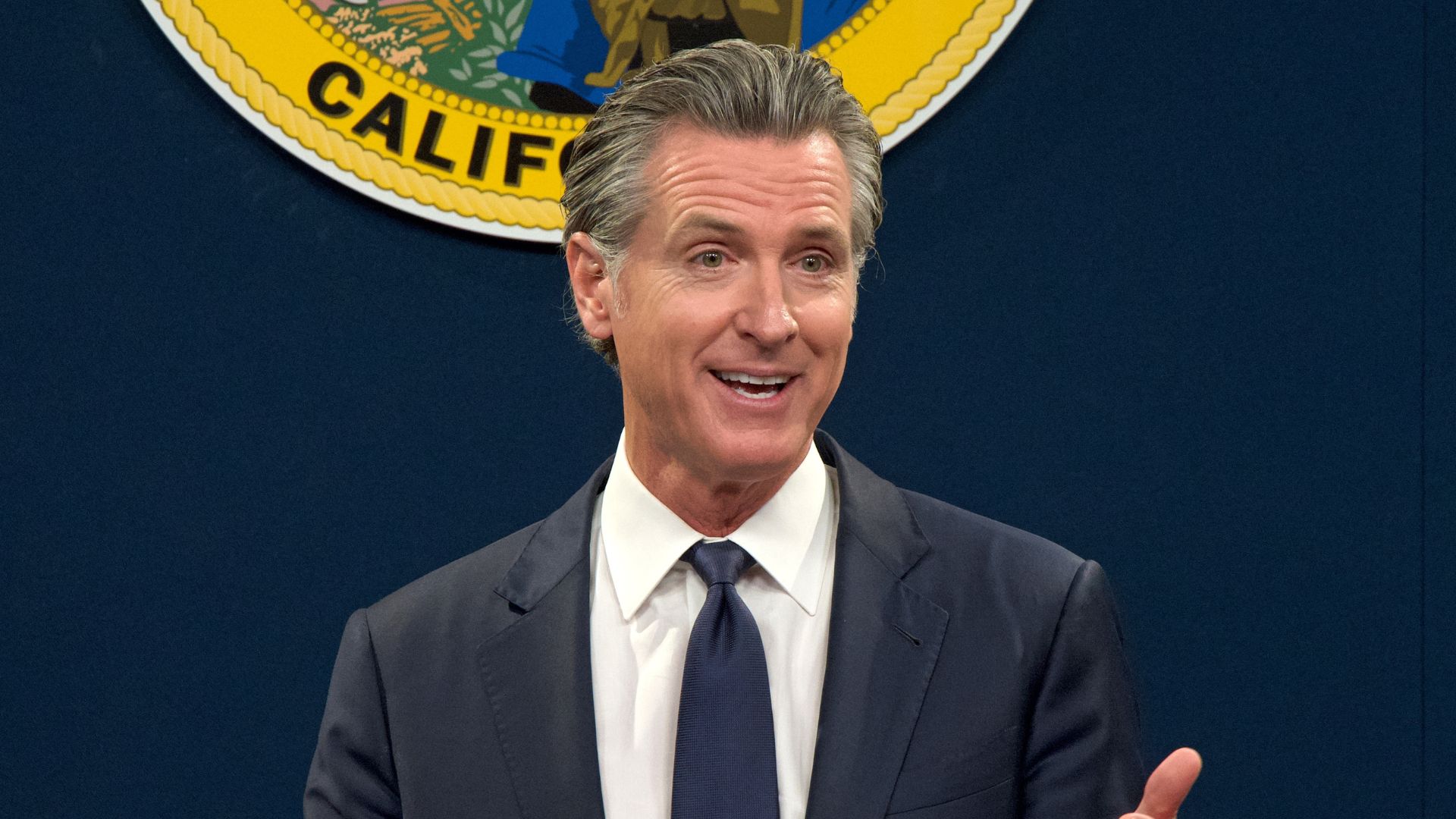
Newsom Melts Down, Claims Trump Sent DOJ After Him and His Wife [WATCH]

California Governor Gavin Newsom is once again in the spotlight, and not for anything that involves helping his state’s struggling citizens.

On Monday, Newsom dramatically announced that federal investigators have come knocking, demanding records as part of an ongoing Department of Justice probe into his activities.

The investigation reportedly reaches beyond Newsom himself, touching his wife and his chief of staff.

Newsom, never one to miss a chance for performative outrage, took to X for a nearly five-minute video tirade, accusing President Donald Trump of weaponizing the government against him.

According to Newsom, the Justice Department’s interest is not about evidence of wrongdoing, but about political persecution.

“In recent days, federal agents have knocked on the doors of family, friends, and former employees. Not because they found a crime, because they’re simply trying to find one,” he complained.

He went further, claiming that agents were “abusing the grand jury process” and “digging through years and years of random documents.”

With his characteristic flair for melodrama, Newsom declared that he is being hunted by the most corrupt president in American history, calling Trump “a man who uses the levers of government to reward cronies and jail his opponents.”

The California governor insisted that he has “nothing to hide,” even as reports emerged that the investigation may have been initiated by whistleblowers from within California’s own ranks, not by the Trump Justice Department as he claimed.

That key detail collapses much of Newsom’s grand conspiracy theory, but the governor seemed far more interested in striking a self righteous pose than in clearing up the facts.

“After calling for my arrest last year, Donald Trump directed his Department of Justice to investigate me,” Newsom said.

“To get me, he’s coming after my wife, Jen. A public servant, a woman who has done nothing wrong other than having the temerity to advocate for what she believes in.”

Newsom told viewers that federal scrutiny of his wife crossed a moral line, proclaiming, “Donald Trump picked the wrong target. We have nothing to hide.”

It did not take long for sources to clarify that Trump had nothing to do with these investigations.

According to individuals familiar with the matter, multiple probes stem from internal whistleblower complaints concerning potential misuse of state resources.

That inconvenient truth has not stopped Newsom from trying to turn the story into a political weapon, positioning himself as a martyr standing up to so called authoritarianism.

In his video, Newsom directly addressed Trump: “You can subpoena my records. You can investigate me. You can harass me. Put my name on every and any enemies list you have. But leave my wife and family out of your personal vendetta.”

The tone was theatrical, filled with righteous indignation, the kind that plays well with his online followers but does little to address actual allegations.

“This country does not belong to you,” Newsom proclaimed, bizarrely lecturing the president as though he were addressing the nation’s conscience.

He promised to fight Trump’s supposed “lawlessness” and to “remind Americans of his corruption.”

For someone who claims to be above politics, Newsom seems remarkably eager to make this a political fight.

The truth, however, looks less like political persecution and more like a high profile politician being faced with serious questions.

California whistleblowers have reportedly provided evidence that prompted investigators to dig deeper into activities connected to the governor’s office.

Federal investigators appear to be doing their job, while Newsom tries to shift attention with a public performance full of indignation.

It is also telling that Newsom quickly tied the probe to his rumored presidential ambitions.

He claimed Trump is retaliating because he might run for the White House.

Newsom’s narrative of persecution might play well with the activist left, but it likely strikes many Americans as yet another example of a Democrat blaming everyone but himself.

Newsom’s video ended with him vowing that he will not back down.

“Mr. President, come after me. I’m not going anywhere. And the country is watching,” he said defiantly.

WATCH:

It was the kind of sound bite that appeals to donors and social media fans, but not one that changes the uncomfortable fact that there is an active federal investigation into his administration.

At this point, the subject of the investigation remains unclear. Yet one thing is unmistakable: Newsom is doing his best to control the optics before the facts come to light.

His strategy leans on a familiar Democrat playbook, crying “political persecution” whenever real accountability looms on the horizon.

For all the political theater, Californians might wish their governor would focus less on Trump and more on the crises unfolding back home.

Rampant crime, homelessness, and mass exodus from the state have defined Newsom’s tenure, and now it seems potential corruption may join that list.

If the investigation uncovers wrongdoing, all the indignant speeches in the world will not wash away the stain of hypocrisy.


Scroll to Top