News

News

Platner Suspends Campaign As Rape Allegation Blows Up Maine Senate Race And Sinks Democrat Hopes [WATCH]

Democrats in Maine are scrambling for damage control after their Senate nominee, Graham Platner, dropped out of the race following explosive rape allegations from an ex-girlfriend.

Platner, once the progressive darling backed by none other than Bernie Sanders, became political kryptonite almost overnight.

His sudden withdrawal blew up what Democrats hoped would be a serious challenge to incumbent Republican Senator Susan Collins, a Maine fixture who once again appears untouchable as her opponents self-destruct.

Platner had barely finished celebrating his landslide primary win when a political earthquake hit.

A report detailed shocking allegations from a former girlfriend who accused him of rape.

The story ricocheted through Washington, prompting everyone from Chuck Schumer to Elizabeth Warren to demand Platner’s immediate departure.

The left’s supposed champion of women’s rights suddenly found his own party turning on him in record time.

In an online video, Platner attempted to reclaim control of the narrative.

He called the allegations “false” and “not real,” while blaming “those in power” for stripping away his campaign infrastructure.

It was a defiant statement, but one that did little to slow the political freefall.

Platner complained that party elites had used the situation as an excuse to take away his ability to raise money and access voter data, effectively ending any realistic path forward.

Platner’s decision came just five days before a crucial deadline that allows Democrats to swap out a candidate.

By withdrawing when he did, he preserved their ability to find a new nominee, though who would willingly step into that radioactive mess is another matter entirely.

State Democrats immediately began holding emergency meetings to plan a replacement, insisting they were working “around the clock” to salvage the race.

Of course, in typical fashion, Platner accused them of backroom politics.

In his announcement, Platner sounded more like a man railing against a conspiracy than taking responsibility.

He demanded that the next steps “come from the people of Maine” rather than “people in DC” manipulating the process.

WATCH:

It was rich coming from a candidate whose own campaign had been built almost entirely on the backing of national progressives from Washington.

The rape allegations that rocked his campaign came from Jenny Racicot, who described in detail an encounter where Platner allegedly forced himself on her while drunk.

She told multiple outlets she felt “violated” and decided to come forward after seeing Platner speak dismissively about women and sexual assault.

Platner, in response, called her claims “troubling, serious, and false.”

As bad as that accusation was, a follow-up report from The Washington Post piled on even more.

Another ex-girlfriend, Lyndsey Fifield, accused Platner of removing condoms during sex without consent and described other instances of physical aggression.

The Platner campaign shot back, claiming her account was “politically motivated,” pointing to her previous work for the conservative Heritage Foundation.

That might have worked for the Bernie crowd, but the damage was done.

Within hours, the Democratic establishment abandoned him. Schumer called his behavior “disturbing,” progressive Sen. Elizabeth Warren rescinded her endorsement, and Rep. Ro Khanna publicly dumped him after championing his campaign for months.

The progressive movement that once championed Platner’s brand of populist politics turned away in a frantic attempt to distance itself.

“The trash took itself out tonight,” joked Democratic Sen. John Fetterman on Fox News.

WATCH:

Rarely has a party dropped one of its own this quickly.

Republicans, naturally, wasted no time capitalizing on the chaos.

The National Republican Senatorial Committee blasted Democrats for nominating “a rapist Nazi,” a jab referencing Platner’s old tattoo that resembled a Nazi symbol, which he later claimed to have covered up.

GOP strategists gleefully pointed out that this was the same man Democrats once celebrated as the new face of “authentic working-class progressivism.”

WATCH:

The whole saga is especially embarrassing given how central Maine was to Democrats’ hoped-for Senate takeover.

Before the scandal, polling showed Platner in a dead heat with Collins.

That now seems like ancient history.

The race that once offered Democrats their best chance of unseating the veteran Republican has turned into a circular firing squad.

With state Democrats scrambling to fill the ballot slot and progressives pointing fingers, Collins looks more secure than ever heading into another term.

Even before the allegations, warnings about Platner’s volatility were abundant.

His history of bizarre online posts, drinking binges, sexual misconduct rumors, and a past Nazi-style tattoo were all red flags that the national party apparently ignored.

WATCH:

The same Democrats who insisted Republicans have a “woman problem” now face their own candidate accused of violent sexual assault.

Platner’s fall from grace highlights the fragility of today’s Democratic Party coalition.

They tried to sell voters on an anti-establishment Marine with working-class appeal, only to watch the experiment implode in scandal and hypocrisy.

Once again, their obsession with identity and narrative left them blind to character and integrity.

Meanwhile, Susan Collins remains calm, collected, and largely above the fray.

In a brief statement, she called the allegations “appalling” but said she would let Democrats choose their own nominee.

It was a sharp contrast to the meltdown unfolding on the other side.

As Maine Democrats scramble and elites maneuver to install a replacement, Collins prepares to coast toward November with one more opponent down.

News

Trump Slams Spain At NATO Summit, Demands End To All Trade Ties [WATCH]

President Donald Trump lit up the NATO Leaders’ summit in Ankara when he took direct aim at Spain, calling the nation a “terrible partner” and threatening to sever all trade with Madrid.

The comments came as Trump spoke beside NATO Secretary General Mark Rutte, just hours before scheduled meetings with alliance leaders, including Spanish Prime Minister Pedro Sánchez.

Trump, never one to mince words, told reporters, “Spain is a wasted cause. We don’t want to do any trade business with Spain anymore. Spain is a terrible partner in NATO. They don’t participate, they don’t pay. I don’t want to have anything to do with Spain. Cut off all trade with Spain, please, including visits… Watch them come running back.”

The president’s remarks immediately made waves across European capitals, but it was clear Trump had planned to make a point.

Spain, under its socialist government, has dragged its feet for years when it comes to defense spending goals, preferring to burn through taxpayer funds on welfare programs instead of pulling its weight for collective defense.

Trump called Spain’s attitude toward NATO and the United States “hostile” and “unsustainable.”

He mocked their likely response once Washington acts: “Let’s see how hostile they remain when they call up and they say, ‘Please, please. We want to trade with you, sir.’”

WATCH:

The tone was pure Trump, mixing hardline policy with a salesman’s confidence that America holds the upper hand.

The feud between Trump and Spain’s leftist leadership has been brewing for years, as Madrid repeatedly resists higher defense spending targets.

At the 2025 NATO summit, Spain rejected U.S. efforts to push members toward a 5 percent GDP defense contribution by 2035.

Spain instead clung to its paltry 2.1 percent share, arguing it was sufficient for its “national priorities.”

Those priorities, of course, include endless domestic entitlement programs and climate handouts that play well with socialist voters but do little to protect Europe from real threats.

Trump has said for years that the United States is shouldering far too much of the NATO burden.

Last year, he pointed out that Washington covers the majority of alliance costs while nations like Spain enjoy the security benefits without paying their fair share.

His Ankara remarks simply put those frustrations back in the spotlight.

Spain’s behavior has gone beyond defense freeloading. It also interfered with U.S. operations tied to Iran, another flashpoint that clearly irritated the president.

Back in March, Spain refused to allow U.S. access to the jointly operated bases at Rota and Morón for operations against Iranian targets.

Spanish airspace was also closed to U.S. aircraft involved in those missions.

Those moves forced American planners to reroute assets and delay operations, showing that Madrid’s so-called allies are happy to obstruct rather than assist.

Spanish Defense Minister Margarita Robles defended the decision at the time, claiming Spain wanted to avoid escalating tensions.

That excuse fell flat in Washington, where Trump viewed the Spanish actions as a slap in the face from a government too timid to stand up to Tehran but apparently bold enough to undermine allied operations.

By the time Trump landed in Ankara, those old wounds were already reopening.

The president’s trade threat did more than target Spain’s fragile economy; it sent a clear message to NATO partners still hesitating about spending commitments.

If they want American defense and trade advantages, they should start acting like partners, not parasites.

While the usual chorus of European bureaucrats and American Democrats are rushing to clutch their pearls, the fact remains that Trump’s criticism hits a nerve.

Europe has gotten used to the luxury of U.S. protection without paying the bill. Spain, led by a socialist government more focused on virtue signaling than military readiness, has become a prime example of that entitlement.

Analysts predict that Spain’s economy could take a major hit if Trump follows through.

The U.S. is a top non-European trading partner, and any disruption could push Spain’s already sluggish recovery off course.

Meanwhile, the Spanish public is unlikely to rally behind Sánchez if they start feeling the heat of inflation or export losses tied directly to U.S. retaliation.

Trump allies view this as part of his broader push to force accountability among NATO nations, especially those that promise much but deliver little.

The president has been consistent in saying that America’s allies should contribute fairly or face consequences.

His bluntness, though criticized by diplomatic elites, has repeatedly produced results.

One senior White House adviser reportedly summed it up neatly: “President Trump is tired of NATO members talking big and paying small. Spain is about to find out what it means to have a real businessman running foreign policy instead of another globalist pushover.”

If Spain wants to remain relevant in the alliance and preserve its trade with the United States, it may need to rethink its socialist spending spree and start taking its defense commitments seriously.

Otherwise, Trump’s words may soon become official policy, and the shock in Madrid will be felt across the entire European Union.

News

Democrat Trying to Replace Graham Platner Has a Few Scandals of His Own [WATCH]

The Maine Democrat Party is seeing open warfare among its own as far left groups scramble to find a clean candidate to replace embattled U.S. Senate hopeful Graham Platner.

What was meant to be a proud progressive campaign to unseat Senator Susan Collins has collapsed into a full-scale scandal, complete with rape allegations, political double talk, and one liberal organization accusing another Democrat of physically assaulting a woman.

Progressive Victory, a far left activist group, has revealed a bombshell accusation against Troy Jackson, former president of the Maine Senate, who has been floated as a possible replacement for Platner.

According to the group, Jackson allegedly “struck a female colleague with a bottle he threw at her” during a heated dispute, an event reportedly witnessed by several people.

The claim, they say, is an “open secret” in Maine politics.

WATCH:

This development comes as Platner faces mounting allegations that have effectively torpedoed his Senate campaign.

Jenny Racicot, 41, accused Platner of forcing himself on her in 2021 after allegedly breaking into her home “uninvited.”

In her interview with Politico, Racicot said she repeatedly told Platner to stop but he ignored her pleas.

When asked by CNN if she considered it rape, her response was blunt: “By definition? Yes, absolutely.”

Platner, already unpopular among many voters over prior controversies, tried to maintain control of the fallout, claiming media bias and “inaccurate reporting.”

In a carefully staged video message, he said his campaign was “taking the time to reflect on the best path forward,” though critics noted that his focus appeared more on salvaging political optics than addressing the serious allegations.

WATCH:

As Platner’s credibility imploded, Democrat loyalists began backpedaling in record time.

Many of the same party figures who had gushed over his progressive credentials have now pulled their endorsements, desperate to create distance.

This includes national names like Bernie Sanders, who publicly suggested Platner “step aside” for the good of the movement.

WATCH:

The exodus has been swift and humiliating for Maine Democrats who once viewed Platner as their progressive champion.

Progressive Victory’s statement about Troy Jackson only made things worse for the party.

“We began asking our contacts on the ground in Maine about Troy Jackson earlier today after seeing many suggestions that he should replace Graham Platner against Susan Collins,” the group explained.

After its “discussions,” Progressive Victory said it heard troubling reports not just about Jackson but about a broader pattern of disrespect toward women among Maine Democrats.

Their decision to go public, they said, was based on the seriousness of those claims and the fear of “making the same mistake twice.”

The post read, “As Maine Senate President in a state senate caucus meeting several years ago, Troy Jackson in a heated disagreement struck a female colleague with a bottle he threw at her. There are many witnesses, and it appears this is a widespread open secret within Maine politics and not an isolated incident.”

The mention of “many witnesses” spread through political circles like wildfire.

Jackson’s team flatly denied the accusation, but Progressive Victory brushed it off, insisting the denial “is not a credible refutation on its own.”

The group says it is continuing to investigate and will update as more evidence emerges.

The entire debacle has left Maine Democrats in chaos.

Having spent years branding themselves as the party of women’s rights and equality, they now find themselves under scrutiny for allegedly fostering a political culture where abuse and misconduct are commonplace.

Even far left allies appear unable to cover for their own without setting off internal infighting.

WATCH:

Meanwhile, Republicans see the turmoil as further confirmation that Democrat governance is plagued by hypocrisy.

Senator Susan Collins has stayed largely silent on the issue, but her allies quietly note that her consistent record of civility looks downright refreshing next to the ethical disaster playing out across the aisle.

The larger national media has also tread lightly, careful not to pile on Democrats the way it eagerly would against Republicans.

CNN, MSNBC, and even local outlets in Maine appear more interested in packaging the story as a “tragedy” within the progressive movement than confronting the character rot beneath it.

But grassroots conservatives are calling it what it is: a mess of the Democrats’ own making.

For Democrat voters in Maine, the timing could not be worse.

With the Senate majority hanging by a thread, the state’s left wing has managed to turn its race into a circus of scandal and self destruction.

As one conservative strategist noted, “It’s pretty clear they did not vet their heroes before parading them in front of voters.”

With Platner effectively finished and Jackson under a cloud of suspicion, Progressive Victory and its allies are running out of options.

Their campaign against Susan Collins was supposed to be the shining example of progressive unity.

Instead, it has become a case study in Democrat dysfunction, infighting, and moral collapse.

News

Mom Booted From Supermarket For Wearing Backless Top During Scorching Heat Wave

A mother of three in the United Kingdom says she was prevented from entering a Tesco supermarket after a security guard told her that the design of her backless top posed a concern because someone could untie it, as reported by The New York Post.

Alixe Galatis, 31, said the incident occurred on June 26 at a Tesco store in Essex, southeast England, during a period of unusually high temperatures across the country.

According to Galatis, temperatures reached approximately 99 degrees Fahrenheit that day as a heat wave affected much of the UK.

Galatis said she had just finished the school run and entered the store with her three children when a security guard approached her before she began shopping.

“It was just after the school run, I think it peaked around 36, 37 [degrees Celsius] or something crazy,” she said.

“The kids were picking up the [scan gun], and then the security was standing behind us. When I turned around, he said, ‘You’re not allowed in here.’”

According to Galatis, she asked the guard why she was not permitted to enter.

“I said, ‘Why not?’ He said, ‘You can’t come in here wearing that top because it’s got a tie-up at the back.’”

She said she was surprised by the explanation.

“I was just really confused, and the kids were a bit stunned. I don’t know why, but he wouldn’t give me any eye contact.”

Galatis said the security guard then explained his concern.

“Someone can untie your top.”

She said she had never considered that possibility.

“Again, I looked at him, so confused because that’s something that I’ve never even thought of,” she said.

Galatis said she then asked whether she could enter the store to purchase another shirt.

“I said, ‘OK, so can I go and buy a top then because I just want to get the shopping done?’ and he said, ‘No, you’re not allowed in at all.’”

According to Galatis, she returned to her vehicle, where the only additional clothing she had available was a gym sweatshirt.

“The only thing I had in my car was my gym jumper,” she said. “It was so hot, and I was thinking, ‘I can’t physically put this on,’ so I put it over my shoulders so it was covering my shoulders and my back.”

After covering her back, Galatis said she re-entered the supermarket and completed her shopping.

“We did our shop, I had the jumper around me, and then on the way out he was watching me walk out,” she said. “He was looking at me with such disdain and just shaking his head at me.”

She questioned why she had been prevented from entering the store.

“I was just completely shocked. Why should I not be allowed in the shop? If someone ever, God forbid, tried to undress me, why would that be my fault?”

Following the incident, Galatis filed a complaint with Tesco and said she does not intend to shop at the store again.

“Sometimes I pop in wearing gym gear, and no one’s ever stopped me,” she said. “It was just so bizarre that it was this top and that he said, ‘Someone can untie it and leave you exposed.’”

She added:

“Should you not be more worried about those who are untying people’s clothing rather than stopping the person who is dressed?”

Tesco later issued a statement apologizing for the incident.

“We are really sorry to hear about this experience. We want everyone to feel welcome in our stores, and this should not have happened.”

The encounter occurred during a period of extreme heat across much of Europe in late June. High temperatures affected multiple countries, and reports indicated that thousands of excess deaths were linked to the heat wave.

The unusually warm weather also led to increased demand for cooling equipment in France, where some shoppers reportedly competed for the remaining air conditioners and fans available in stores.

News

Miami TV Exec Scolds Staff Over Bikini Pics and Social Media ‘Nonsense’ [WATCH]

A South Florida television station has reminded newsroom employees about its long-standing social media guidelines after online vacation posts by one of its anchors drew attention and prompted renewed discussion about journalists’ online presence, as reported by The New York Post.

WPLG Vice President of News Bill Pohovey circulated a memo to employees emphasizing that station staff should present themselves as journalists rather than social media influencers, according to a memo obtained by industry publication FTVLive.

The memo became public after WPLG anchor and reporter Jenise Fernandez shared vacation photos and videos from Fiji on her Instagram account.


View this post on Instagram


A post shared by Jenise Fernandez (@jferntv)

The posts included images of Fernandez aboard what appeared to be a resort boat and other vacation activities during her trip.

However, Pohovey disputed reports that the memo was issued in response to Fernandez’s social media posts.


View this post on Instagram


A post shared by Jenise Fernandez (@jferntv)

Speaking to the New York Post, Pohovey said the directive had been distributed months earlier.

He said the memo “was not a response to one individual post [but rather] just a reminder of long-standing guidelines.”

When asked to further explain the timing, Pohovey reiterated that point.

“This had nothing to do with a current employee. As I said, the memo was sent out many months ago and is not new.”

The internal memo nevertheless outlined management’s expectations for employees’ use of social media and urged staff members to avoid content that could diminish their professional credibility.

“I have emailed about this numerous times in the past, but we seem to be going in the wrong direction again,” Pohovey wrote.

He continued by criticizing the type of content he had observed on some employees’ accounts.

“Too many of our social media accounts are being used for foolish nonsense.”

The memo instructed newsroom employees to avoid producing content more commonly associated with online influencers.

“We don’t want dance videos with our staff. We don’t want fashion shows, outfits of the day, or other silly content that detracts from you as journalists.”

Pohovey also told employees that station facilities should never be used to create that type of material.

“We should never produce such content, and we should absolutely NEVER create such content inside the station, in our newsroom or studios, using our news set as the background,” he wrote.

The guidance extended beyond official station accounts.

“Your station social media accounts should be used to share news/weather/sports information and help to drive traffic to our newscasts and website,” Pohovey wrote.

“But I think these same guidelines apply to personal social media accounts. Whether you are working or not, you still represent the station and must always remember your role as a credible, trusted journalist, not a Kardashian.”

He also wrote:

“Some of what I see is cringeworthy.”

The memo concluded by expressing concern about public confidence in journalism.

“I’m exhausted to have to repeat this, but we are not influencers, we are journalists,” Pohovey wrote.

He referenced longtime WPLG personalities Dwight Lauderdale and Ann Bishop, asking employees to consider whether they would have approached social media in a similar fashion had those platforms existed during their broadcasting careers.

“I’ve been accused of being old and out of touch on this subject, but journalism and journalists are already under attack,” Pohovey wrote.

“People are losing trust in the news, and the nickname ‘fake news’ is beginning to stick. We’re seen as not serious, and this unprofessional behavior only adds fuel to that fire.”

He concluded the memo by writing:

“The likes and follows are not worth eroding your credibility and the credibility of this news organization.”

Fernandez, a Miami native, joined WPLG in 2014 after stops in television news in Louisiana and Pensacola. She currently anchors the station’s weekday 3 p.m. and 10 p.m. newscasts and is a six-time Emmy Award winner.

According to her station biography, she is also a former Miss Miami and finished as fourth runner-up in the Miss Florida pageant.

The New York Post reported that it contacted Fernandez for comment.

News

Indiana Grandma’s Cause of Death Revealed After Tim Hortons Fight Sparks Outrage [WATCH]

An Indiana woman who died following an altercation inside a Tim Hortons restaurant in Fort Wayne suffered an acute flare-up of congestive heart failure that occurred during the confrontation, according to the Allen County Coroner’s Office, as reported by The New York Post.

Anita Grayson, 75, died after an incident on May 13 at a Tim Hortons location in Fort Wayne.

According to the coroner’s office, her cause of death was determined to be “acute exacerbation of congestive heart failure in the setting of physical altercation.”

The Allen County Coroner’s Office classified Grayson’s manner of death as “undetermined,” concluding that the circumstances did not fit the legal definitions of a natural death, an accidental death, or a homicide.

Allen County Coroner Dr. E. Jon Brandenberger explained the medical terminology used in the ruling during an interview with WANE 15.

“Acute exacerbation means that the heart failure suddenly got much worse,” Brandenberger said.

“So, it’s like an acute flare-up of congestive heart failure. Then that will cause symptoms and possibly lead to death.”

According to investigators, the confrontation began after Grayson became upset about her drive-thru coffee order.

Police said she argued with a 17-year-old employee before becoming involved in a physical confrontation with a 20-year-old shift manager after being asked to leave the restaurant.

Investigators alleged that Grayson punched the shift manager, and the two became involved in a struggle on the floor.

Police also alleged that Grayson pulled out a chunk of the manager’s hair before other employees intervened and separated the two.

After the altercation ended, Grayson sat at a table inside the restaurant and made a phone call, according to investigators.

She later lay down on the floor. Employees checked on her, brought her water, and attempted to assist before she became unresponsive.

Emergency responders transported Grayson to a local hospital, where she was later pronounced dead despite lifesaving efforts by paramedics.

Brandenberger said the physical struggle likely intensified her pre-existing heart condition.

“The symptoms of congestive heart failure get worse when there is adrenaline flowing in a physical altercation, and then a sudden flare-up of the heart failure, which then can lead to symptoms, or hospitalization, and even death,” he said.

The coroner said his office carefully considered several possible manners of death before issuing its final determination.

“It’s not like she was sitting in her chair or walking through Kroger and died from congestive heart failure,” Brandenberger said.

“That would be natural. But there was something about this, the altercation, that made it unnatural.”

Investigators also evaluated whether the death should be classified as an accident or a homicide.

“There has been exhaustive investigation and review in the evidence of this case,” Brandenberger said.

“The video was reviewed multiple times by the homicide detectives, by my staff, by the prosecutor, and by the forensic pathologist. Bodycam videos were reviewed. We listened to and transcribed the four 911 calls and multiple meetings.”

According to the coroner, the case did not meet the legal definition of homicide because Grayson died from congestive heart failure, and the autopsy found no “significant contributory injuries” resulting from the altercation.

Following the incident, Fort Wayne police released surveillance video of the confrontation without audio, stating it was intended to address misinformation circulating on social media.

Grayson’s daughter, Tawnda Grayson, has publicly criticized the handling of the case and called for criminal charges against the employees involved in the confrontation.

“If our police here would just do what we pay our taxes for them to do, which is protect and serve, we wouldn’t be here,” Tawnda told WANE 15 during a protest after the incident.

“Y’all have to lock them up, y’all don’t understand. My mother is gone… I want justice for my mom.”

The family has retained civil rights attorney Ben Crump as it considers possible legal action.

As of Tuesday, no Tim Hortons employees had been charged. The Allen County Prosecutor’s Office said it will review the coroner’s completed autopsy report before deciding whether criminal charges are warranted.

News

U.S. Hits Iran with Punishing New Strikes After Oil Sanctions Snapback Over Tanker Attacks

The U.S. military has unleashed a new round of punishing strikes on Iranian targets after the Islamic Republic’s latest act of aggression in the Strait of Hormuz.

Washington also reinstated oil sanctions that had briefly been paused under an interim ceasefire agreement, marking a major escalation against Tehran’s radical regime.

American officials said the strikes hit Iranian air defense systems, surface-to-air missile sites, drone launch facilities, and coastal surveillance systems used to monitor and harass international shipping.

Explosions were reported overnight in Iran’s southern port city of Sirik, on Qeshm Island, and in Bandar Abbas.

Central Command bluntly called Iran’s actions “unwarranted and dangerous,” labeling them a direct violation of the fragile ceasefire hammered out last month. The message from Washington was unmistakable: Iran’s attacks on international shipping will no longer be tolerated.

This latest round of violence came after three tankers—including one Qatari liquefied natural gas carrier and a Saudi-flagged oil supertanker—were struck in the waterways connecting the Persian Gulf and the Arabian Sea.

Qatar and Saudi Arabia have both accused Tehran of orchestrating the attacks via armed drones.

While Iran’s foreign ministry denied responsibility, it couldn’t hide behind its usual playbook of plausible deniability. The regime claimed that “foreign vessels using uncoordinated routes” were at risk, an implicit admission that Tehran insists on controlling traffic through international waters.

The United States responded swiftly. Hours after the attacks, the War Department announced it was revoking the license that temporarily allowed Iran to sell crude oil on global markets.

That concession was originally granted under an interim U.S.-Iran truce that was supposed to last through August 21, giving Iran room to offload oil while talks continued.

By snapping those sanctions back into place, the Trump administration sent a thunderous signal: Iran doesn’t get to fund global terrorism with American leniency. The Treasury gave Tehran until July 17 to wrap up any pending transactions tied to that deal.

Oil prices jumped more than three percent after the news broke, underscoring just how much leverage Tehran has built by holding the world’s energy arteries hostage.

Iran’s rulers have long viewed control of the Strait of Hormuz as their political insurance policy against Western pressure.

Inside Iran, mass funerals for slain Supreme Leader Ayatollah Ali Khamenei—killed during the February conflicts—spilled over into huge political rallies. State-controlled media predictably tried to turn grief into propaganda, with mobs chanting “Kill Trump” in the holy city of Qom.

Iranian state television later showed Khamenei’s casket being flown to Najaf, Iraq, in a show of supposed unity among the region’s Shi’ite movements. But despite the display, Iran’s leadership is visibly shaken.

The combination of sanctions and precision U.S. strikes has left Tehran scrambling to project control while mourning a dead despot.

Qatar’s Foreign Ministry, meanwhile, publicly reprimanded Tehran by summoning Iran’s deputy ambassador and delivering a formal protest over the drone strike on the Qatari LNG tanker. That rebuke is unusual and shows that even Gulf states often hesitant to confront Iran are losing patience with its reckless behavior.

A second U.S. official confirmed to Reuters that intelligence suggested Iranian forces were behind attacks on at least three commercial vessels.

Iran’s pattern of targeting civilian and commercial ships is an old tactic meant to maintain leverage through chaos. Yet under President Trump, the U.S. is done tolerating it.

The administration has made clear it will either secure a new agreement ending Iran’s nuclear and missile ambitions or finish the fight outright. “We’re either going to make a deal or we’re going to finish the job,” Trump told reporters from the Oval Office.

“We can knock down their bridges in one hour, we can knock out their energy supply.”

Iran’s hardline Foreign Minister Abbas Araqchi responded by saying that final ceasefire talks would “not commence if threats continue.” In reality, Iran’s leadership has always used threats and terror as bargaining tools. That approach just met a wall.

The current standoff began four months ago when the U.S. and Israel struck deep into Iran’s military infrastructure in response to Tehran’s nuclear provocations.

The goal remains to destroy Iran’s offensive capabilities, neutralize its nuclear dreams, and give the Iranian people a chance to overthrow the theocrats who have dragged them into endless conflict.

Trump’s message is the same as always: peace through strength.

America won’t bow to Iranian extortion, and the world’s most powerful military will defend free commerce wherever it sails. If Tehran thought a ceasefire meant a free pass, it just got a fresh reminder who controls the skies.

News

Dem Civil War Boils Over: Debate Between Progressive and Establishment Candidates Gets Spicy [WATCH]

Michigan’s Democratic race for the U.S. Senate intensified Tuesday night as Rep. Haley Stevens and former Wayne County Health Department Director Abdul El-Sayed confronted one another during a debate that highlighted the ideological divide within the party ahead of the Aug. 4 primary, as reported by Fox News.

The debate came as Democrats compete to replace retiring Sen. Gary Peters in one of the nation’s most closely watched Senate races.

The winner of the Democratic nomination is expected to face former Republican Rep. Mike Rogers, who is the leading Republican candidate for the seat in the November general election.

Stevens, who has received support from Senate Minority Leader Chuck Schumer and other Democratic establishment figures, repeatedly defended her record in Congress while challenging El-Sayed on transparency and campaign funding.

El-Sayed, who has been endorsed by Sen. Bernie Sanders and Rep. Alexandria Ocasio-Cortez, portrayed himself as an outsider focused on reducing corporate influence in politics and advancing progressive priorities.

One of the debate’s sharpest exchanges centered on outside spending and campaign financing.

“If you want your politics dictated by AIPAC or Chuck Schumer, then I’m not your guy,” El-Sayed said as he criticized the influence of corporate and pro-Israel political organizations.

Stevens responded by accusing El-Sayed of benefiting from Republican political spending.

“What my opponent needs to answer is, why is the GOP spending thousands of dollars to prop up his campaign, saying that he will make Mike Rogers the next U.S. senator?” Stevens said.

The candidates also sparred over financial transparency.

Stevens noted that she had publicly released her tax returns and challenged El-Sayed to do the same.

“Well, look, transparency is also important, and this is why I have released my tax returns. My opponent, Abdul, he said that transparency is key, but yet he hasn’t released his tax returns,” Stevens said.

“Abdul, you talk about getting money out of politics and putting money in people’s pockets. But who is putting money in yours? What are you hiding?”

Foreign policy also became a major topic during the debate.

El-Sayed criticized the role of AIPAC in American politics and argued that its influence affected U.S. policy toward Israel.

“So long as our politicians continue to be bought off by AIPAC do not be surprised when we fight wars that are in their best interest,” El-Sayed said.

Stevens said she supports a two-state solution and drew a distinction between her position and that of her opponent.

“The difference between my opponent and myself on this issue is that I believe in a two-state solution,” Stevens said. “I can say that Israel has a right to peacefully exist alongside the people of Palestine and in Gaza.”

Immigration enforcement emerged as another point of disagreement.

El-Sayed reiterated his position that Immigration and Customs Enforcement should be abolished and criticized Stevens over a House vote that he argued reflected support for the agency.

Stevens rejected that characterization and said Republicans had combined unrelated issues into a single bill.

“There was a bill on the House floor to condemn an antisemitic terrorist attack that in Boulder, Colorado, that killed an individual and injured a Holocaust survivor. Instead of bringing us together, Republicans put in a cynical point about thanking ICE,” Stevens said.

“I am always going to stand up to violence, and I just wish my opponent wouldn’t pursue the cynical approaches of Republicans when we do need to be united.”

The candidates also debated childcare policy and artificial intelligence.

Stevens promoted expanding childcare grants and paid family leave, while El-Sayed proposed making childcare “100% free” by taxing billionaire wealth.

On artificial intelligence, El-Sayed called for stronger federal regulation, union labor requirements, and what he described as an “FDA for AI’s.”

Stevens argued that operators of data centers should bear their own utility and water costs rather than passing those expenses on to Michigan residents.

The debate took place two days after state Sen. Mallory McMorrow suspended her Senate campaign. McMorrow said she would support the eventual Democratic nominee in the general election.

Stevens praised McMorrow as “an important voice” for Michigan families, while El-Sayed said she had demonstrated the “courage” to challenge what he described as a political system influenced by establishment interests.

Throughout the debate, Stevens highlighted her work in Congress, her service on the Obama administration’s U.S. Auto Rescue Task Force, and legislation aimed at protecting American manufacturing.

“We can build affordable cars here in Michigan without having the Chinese come in and eat our lunch. Not on my watch,” Stevens said.

El-Sayed emphasized that he does not accept PAC contributions and pointed to his endorsement from the United Auto Workers.

“There’s a reason that the UAW has endorsed me in this race,” El-Sayed said, arguing that corporations are “a lot more interested in a quarterly bottom line than they are in the long term sustainability of manufacturing.”

The Michigan Senate contest remains one of the most competitive races of the 2026 election cycle as Democrats seek to retain the seat, and Republicans attempt to flip it in a state won by President Donald Trump in the 2024 election.

News

U.S. Troops Poised to Resume Poland Deployments After Abrupt Pentagon Halt

After weeks of speculation, it appears American boots will soon be back on Polish soil.

A top Polish defense official confirmed this week that the United States military will restart troop rotations to Poland “in the coming weeks,” signaling a reversal after the Pentagon, under President Trump’s war department, had abruptly paused the movement of nearly 4,000 soldiers earlier this year.

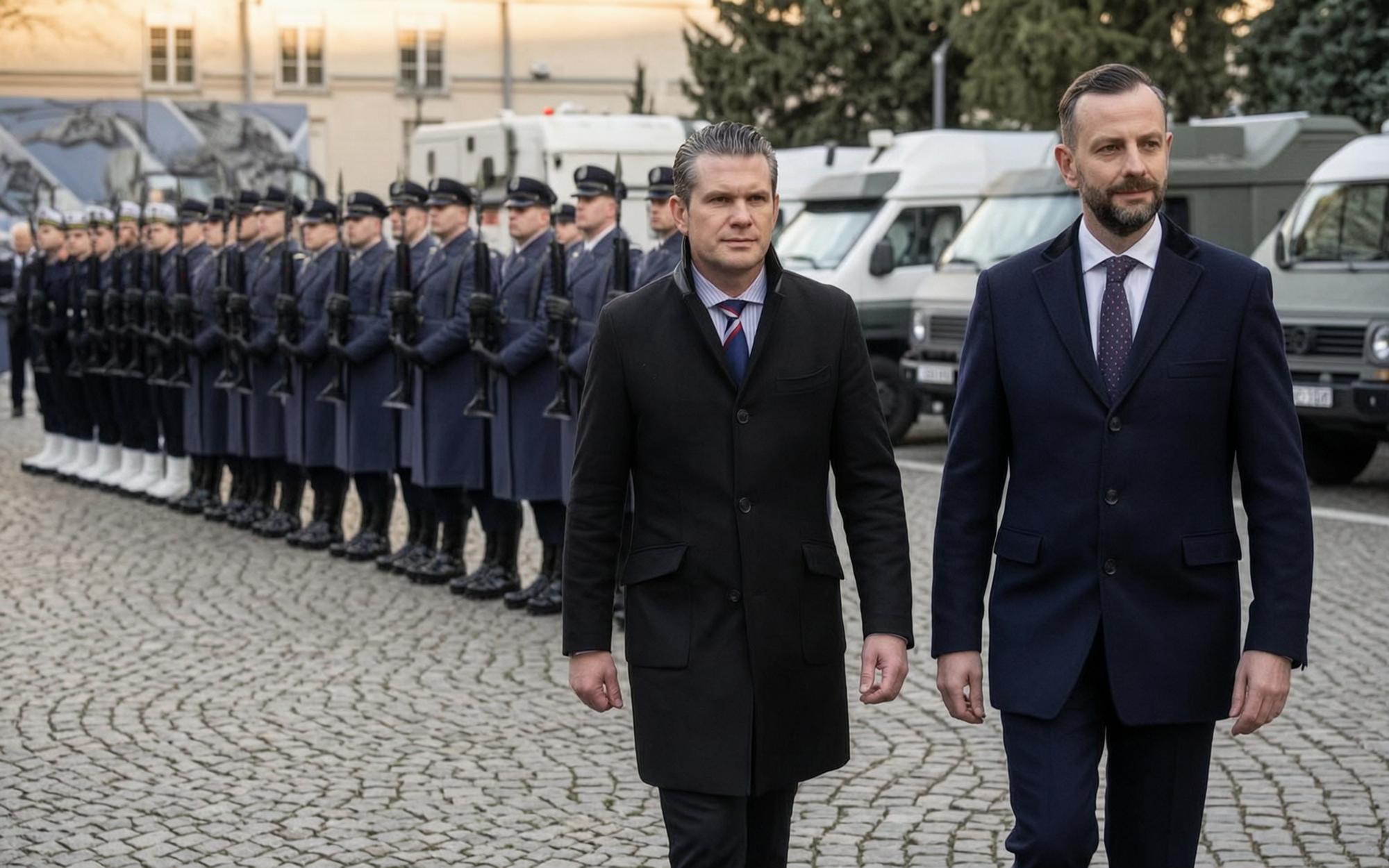
Poland’s Minister of National Defense, Wladyslaw Kosiniak-Kamysz, announced the restart during a speech in Bydgoszcz, Poland, where he was marking a new deal for Polish production of American-designed cruise missiles.

“The rotation of U.S. troops, which was suspended several weeks ago, is resuming and will continue, and in the coming weeks, the rotation of U.S. troops to Poland will be completed,” Kosiniak-Kamysz declared to strong applause.

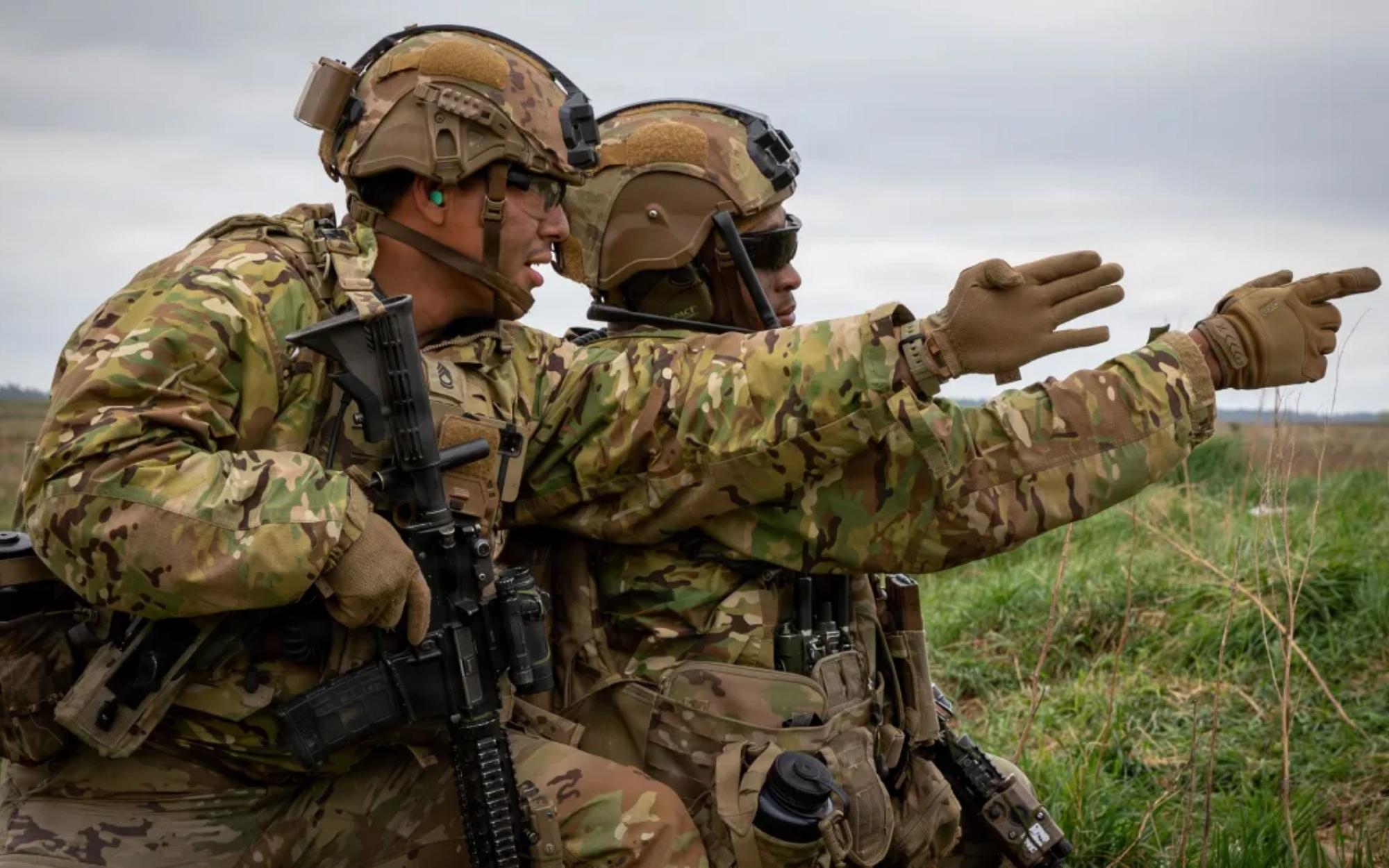
The suspended rotation involved the 2nd Armored Brigade Combat Team, 1st Cavalry Division—roughly 4,000 soldiers who were set to deploy to Poland as part of Operation Atlantic Resolve.

The mission, launched to bolster NATO allies and deter Moscow’s aggression, had been one of the highest-profile components of the U.S. military’s presence in Eastern Europe since Russia’s 2022 invasion of Ukraine.

Kosiniak-Kamysz said he received the confirmation from U.S. Embassy officials in Warsaw, including Deputy Chief of Mission Stephanie Holmes and Washington’s Military Attaché in Poland.

Pentagon Signals Openness to Permanent U.S. Base in Poland

While the U.S. State Department and War Department have remained tight-lipped on specifics—including deployment size and timing—Polish officials made clear that the message was straightforward: the troop flow is coming back online.

The announcement marks a notable shift after the Pentagon suddenly canceled the brigade’s anticipated May deployment.

That decision coincided with President Trump’s move to reassess America’s long-term force posture in Europe, including the plan to draw down 5,000 troops from Germany due to Berlin’s weak support in the Iran conflict and NATO cost-sharing disputes.

While the Biden-era War Department might have preferred to slow-roll deployments, the change comes amid Trump’s recalibration of U.S. global commitments toward nations that actually pull their weight.

Trump himself previously vowed to station an additional 5,000 American troops in Poland, a move that instantly rattled the sleepy bureaucrats in Brussels but thrilled frontline NATO allies who take defense seriously.

Even amid the temporary pause, several thousand U.S. soldiers have remained in Poland. At the end of June, command of the mission shifted from the 3rd Infantry Division to the 1st Infantry Division, continuing rotational operations in the eastern flank.

American armored units, aviation brigades, and sustainment forces have provided intelligence support, logistics, and deterrence missions throughout the region.

Army Abruptly Scraps Deployment of 4,000 Troops to Poland Amid Chaos and Budget Shortfall

Since the early stages of the Ukraine war, Operation Atlantic Resolve has seen American troop numbers in Central and Eastern Europe rise to historic levels.

Five full brigade rotations and two division headquarters deployed through Poland, Romania, and the Baltics at the height of the conflict. Those numbers have since scaled back slightly amid Trump’s Europe force review led by War Secretary Pete Hegseth.

Hegseth’s ongoing strategic review—a key piece of Trump’s broader military realignment—aims to move beyond NATO dependency and towards a structure that reinforces America’s interests, not Brussels’ bureaucracy.

Sources close to the review say the plan seeks to redirect overstretched resources and dismantle the lingering inertia from the globalist defense policies of the last several administrations.

While the details of this new Poland rotation remain confidential, the symbolic value is crystal clear. Reestablishing the presence signals that the United States once again prioritizes strong, practical allies on NATO’s front line.

For Poland, a nation historically wary of Russian pressure, an active U.S. military footprint serves both as deterrence and diplomatic reassurance.

President Trump’s decision to use rotational force presence instead of permanent basing aligns with his strategy of flexible power projection.

U.S. Postpones Weapons Deliveries to European Partners Amid Iran Conflict
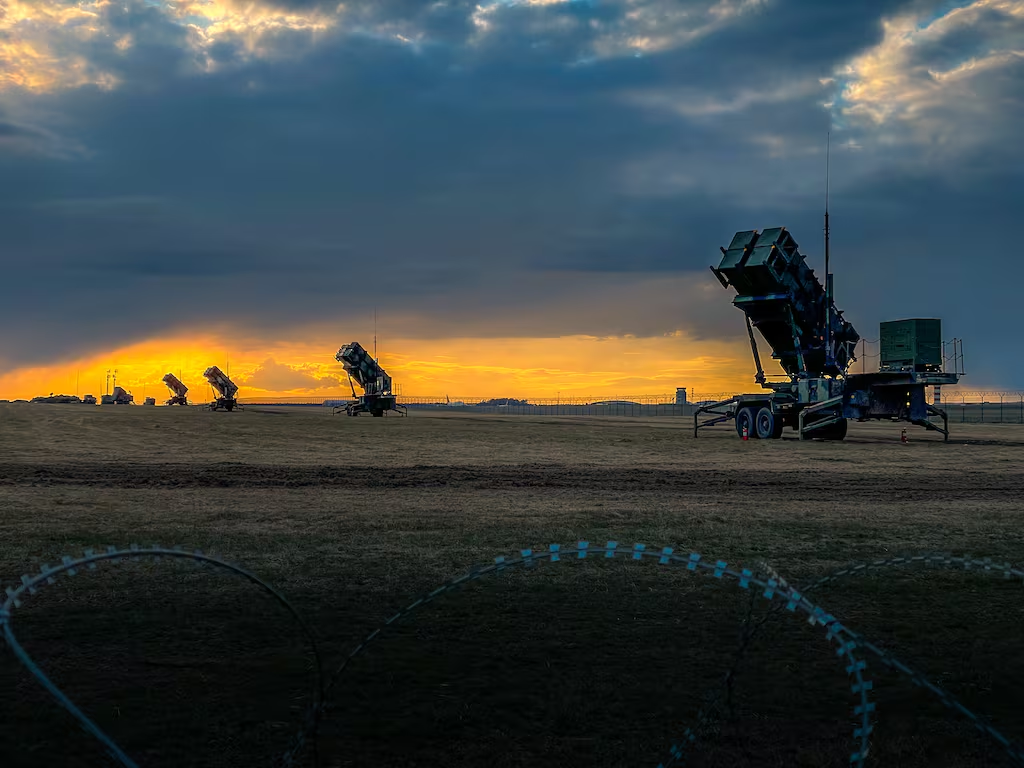
U.S. Patriot missile batteries stand ready in Poland, April 2022. (Sgt. 1st Class Christopher Smith/U.S. Army)

Poland, in turn, has responded by investing heavily in its own defense—ordering American Abrams tanks, Apache helicopters, and Patriot air defense systems. In short, Warsaw is stepping up while the rest of Europe debates.

The May cancellation, which stirred anxiety among both Polish military planners and some American commanders, now seems more like a temporary pause in a broader shuffle rather than a retreat.

Reinstating this rotation will restore operational continuity for Atlantic Resolve and maintain America’s credibility on NATO’s most active flank.

The White House and War Department have yet to commit to exact troop figures or units involved in the resumed rotation. However, the move aligns with Trump’s consistent pledge to maintain U.S. strength abroad while refusing to bankroll European complacency. As one senior Polish defense analyst put it this week, “Washington’s message is clear: America stands with partners that stand with America.”

For now, Poland’s message is equally firm: when it comes to defending the frontier of freedom in Eastern Europe, the eagle and the white-and-red flag are still flying side by side.

And soon, if all goes as planned, the thunder of American tanks will once again roll across Polish fields—not as conquerors, but as allies ready for whatever Moscow dreams up next.

News

Navy Identifies Fallen Squadron Commander Lost in Arabian Sea Helicopter Crash

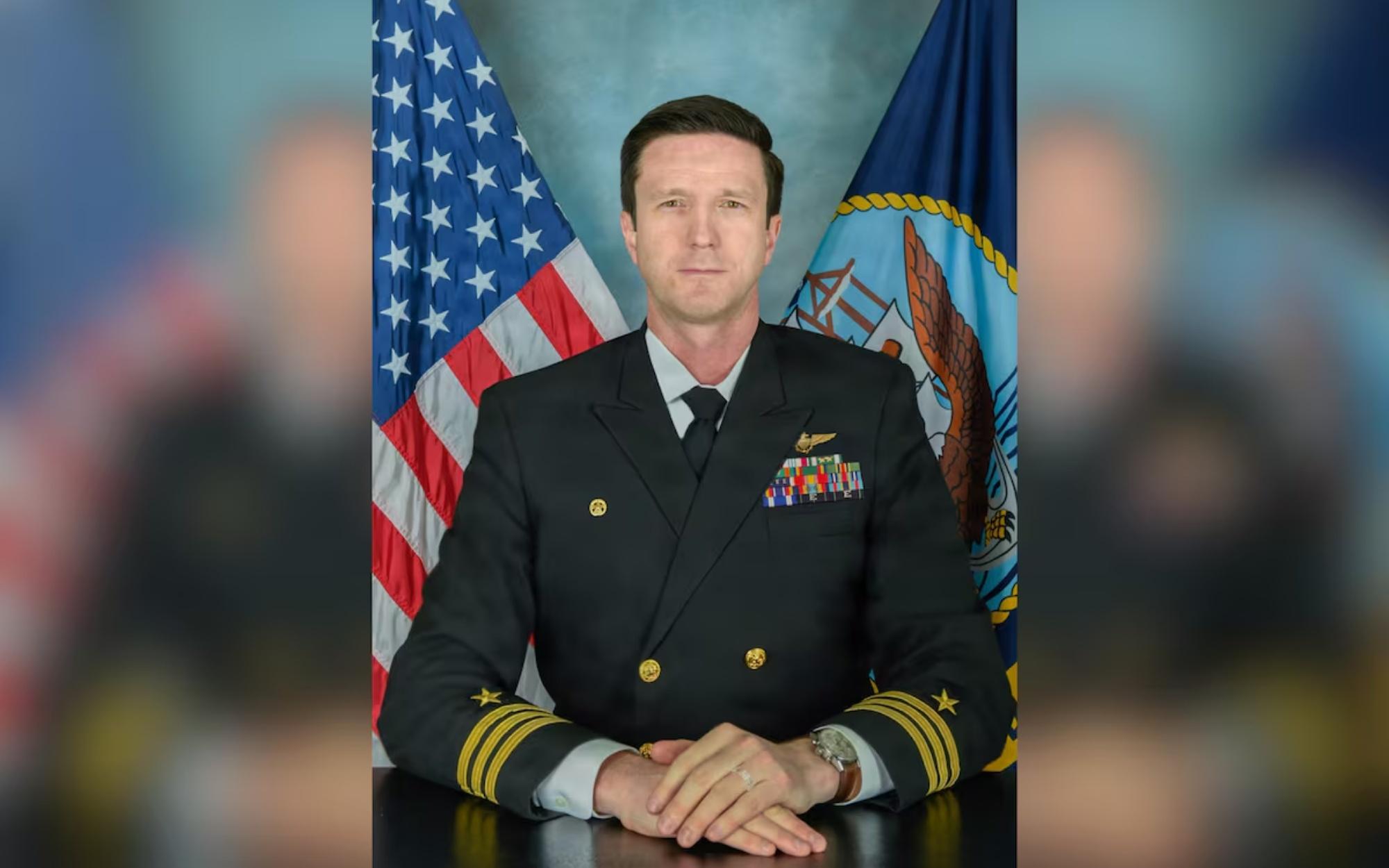
The U.S. Navy has confirmed the loss of Commander Gabriel Edwards, the commanding officer of Helicopter Sea Combat Squadron 5, who perished after his MH-60S Sea Hawk helicopter went down in the Arabian Sea during an emergency landing on July 1.

Edwards’ name is now etched into the long, proud roll call of American warriors who gave everything while serving aboard one of our nation’s front-line carriers.

The crash occurred at approximately 3:30 a.m. Eastern Time, and while three other sailors aboard the helicopter were rescued, Edwards never returned.

The Navy mounted a massive search-and-rescue operation, covering an incredible 14,000 square miles of ocean, but after 102 grueling hours, the effort was called off when no trace of the commander could be found.

“Commander Gabe Edwards was the epitome of selfless leadership, who dedicated himself to service and sacrifice for the last 20 years,” said Capt. Matthew Lewis, commander of Carrier Air Wing 7.

“Our deepest gratitude and sympathy go out to his family.” It is statements like these, though simple, that remind Americans that our best and brightest still serve not for fame or politics, but for country.

At the time of the incident, HSC-5 was embarked aboard the USS George H.W. Bush, a Nimitz-class aircraft carrier deployed in support of military operations in the ever-volatile Middle East.

Navy Ends Search For Missing Sailor After Arabian Sea Helicopter Crash
A MH-60S Seahawk from Helicopter Sea Combat Squadron (HSC) 5 flies by the USS Donald Cook in the Middle East on June 18, 2025. Navy photo.

The deployment, like many in recent years, has tested both the endurance and resolve of America’s naval aviators as threats from Iran-backed militants and rogue elements persist across the region.

The circumstances surrounding the downing are still under investigation, though Navy officials have stated the event does not appear to have been caused by hostile action.

That’s cold comfort to those on board the Bush and back home who understand the risks these men and women face daily, often in unforgiving conditions far from the comforts of home.

Edwards’ career reads like a textbook example of American grit and excellence in military aviation. Receiving his “Wings of Gold” in 2008, he went on to fly with multiple squadrons, including HSC-22, HSC-84, HSC-85, and Naval Special Warfare Group 4.

His work as an air-to-ground fires officer and Joint Terminal Attack Controller placed him directly at the intersection of the Navy’s rotary and special operations communities — a demanding arena where leadership, precision, and composure mean everything.

Rising through the ranks, Edwards took command of HSC-5 in July 2025. His leadership quickly earned him the respect of those under his command and recognition at the highest levels.

By the time of his passing, he had been selected for promotion to captain, a testament to the Navy’s confidence in his potential to lead even further.

Acting Navy Secretary Hung Cao announced on Tuesday that Commander Edwards will receive his promotion posthumously, honoring his outstanding career and sacrifice.

“For 20 years, Commander Edwards served our nation with courage and integrity,” Cao wrote. “In recognition of his extraordinary service and sacrifice, I have directed that Commander Edwards be posthumously promoted to his selected rank of captain.”

That promotion speaks volumes — not as a bureaucratic gesture, but as a reflection of the kind of warrior Edwards was.

He logged more than 2,000 flight hours and earned an array of decorations, including the Defense Meritorious Service Medal, three Navy and Marine Corps Commendation Medals, and two Navy and Marine Corps Achievement Medals. His record is the kind America should celebrate, the type that reflects the steel backbone of the nation’s fighting force.

Navy Aviator Missing After Sea Hawk Goes Down in Arabian Sea Emergency Landing
A crew member was missing after a Navy MH-60S helicopter crashed in the Arabian Sea on Wednesday. Navy photo by Seaman Apprentice Lucas Krug.

Tragically, Edwards leaves behind his wife, Rebecca, their two children, and a large extended family. In a heartfelt statement, Rebecca Edwards expressed gratitude to all who joined in the effort to bring her husband home.

“Gabe has dedicated his life to serving his country with honor, courage, and commitment,” she said. “He led with humility, integrity, and compassion, always putting his people before himself.” Her words reminded Americans that behind every uniform is a family that shoulders the same burden of sacrifice.

This tragedy also renews calls among veteran leaders and active-duty personnel for continued focus on aviation safety and readiness across the War Department.

The Navy’s helicopter community, while among the most capable in the world, has faced multiple challenges from aging equipment to overextended deployment cycles.

Under President Trump’s revitalization agenda and War Secretary Pete Hegseth’s push to rebuild America’s military strength, such issues are being met head-on with a priority on readiness and modernization.

Commander Edwards’ loss is a heavy one, but his life speaks to what the American military still represents: duty, loyalty, and the willingness to serve in the face of danger.

In a time when the media often fixates on political theater and social division, his story cuts through the noise — a reminder that heroes still take flight every day under the Stars and Stripes.

For those still serving at sea or in the air, the legacy of Commander Gabriel Edwards will live on as a standard of leadership and valor. He embodied the very core of what it means to wear the uniform — the kind of man our enemies fear and our nation should forever honor.


Scroll to Top