News

News

Germany Seals Deal to Buy U.S. Tomahawks, Bolstering Its Long-Range Strike Power

Germany is finally stepping up to the plate, sealing a deal with the United States to purchase Tomahawk cruise missiles and their accompanying launchers.

Chancellor Friedrich Merz announced Thursday that Germany will station the American-made weapons on its own soil, marking a major shift from relying on U.S. deployments to developing a homegrown long-range strike capability.

Merz revealed to lawmakers that the deal was finalized on the sidelines of a NATO summit in Ankara, describing the negotiations with U.S. officials as a major success and saying they surpassed expectations.

His statement signals a crucial recalibration of Germany’s posture within NATO—a clear acknowledgment that the days of depending entirely on American deterrence are over.

In his remarks, Merz emphasized that this move “closes a critical strategic gap” in German defense. He also pointed to Germany’s efforts to work with European partners to create indigenous missile systems that can eventually be stationed within Europe.

The long-term goal appears to be blending American capability with European production to create a stronger, independent deterrent system that aligns with transatlantic strategy.

German government officials confirmed that the U.S. approved the purchase in a letter of intent signed Tuesday. Washington’s green light came after weeks of behind-the-scenes coordination between the War Department and German defense authorities.

The approval is part of broader efforts to realign NATO’s missile capabilities as tensions with Russia remain high and as Europe tries to prove it can secure its own backyard without excessive reliance on American boots on the ground.
Trump Backed U.S. Retaliation After Iranian Drone Attack Kills Four Reserve Soldiers
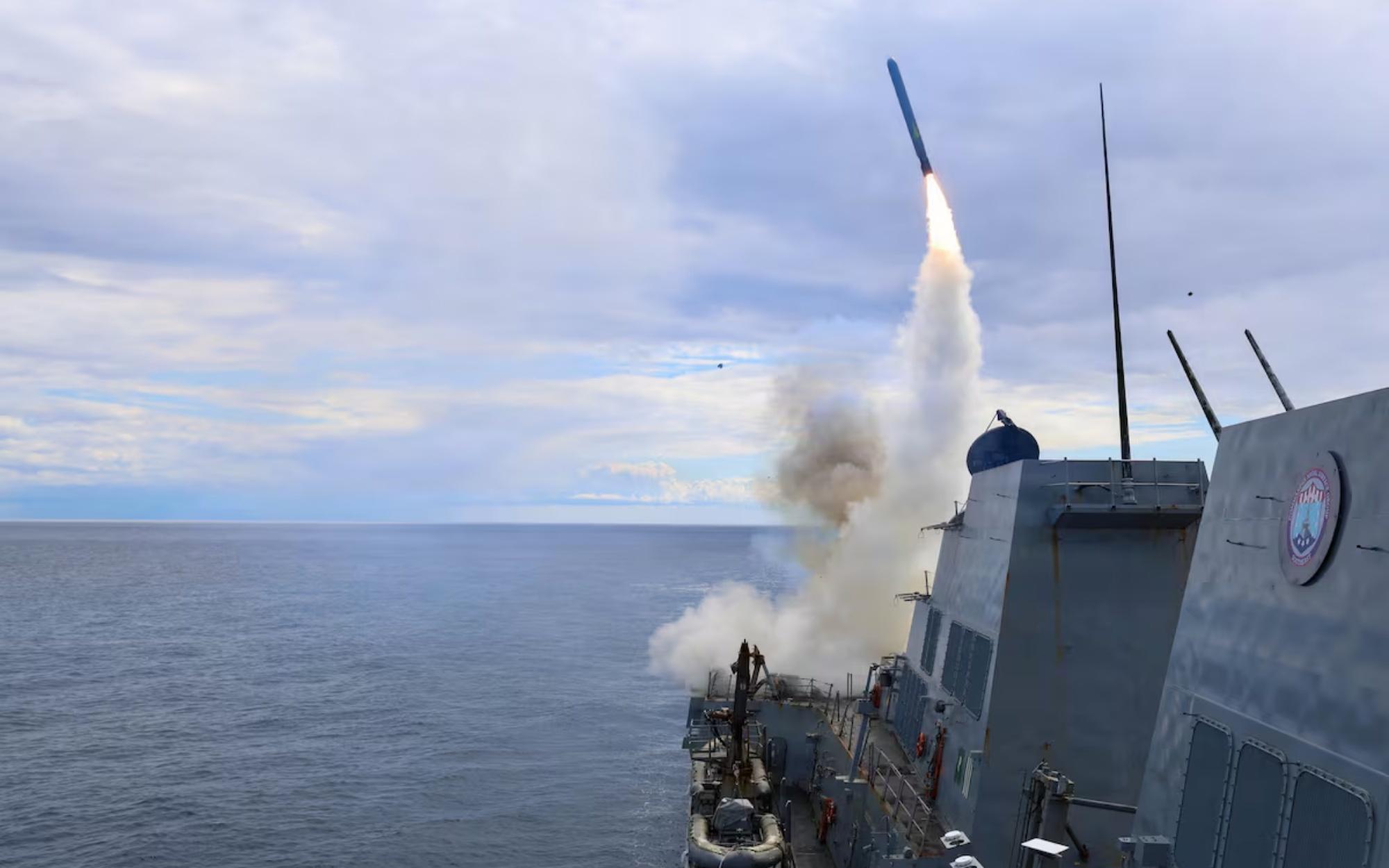
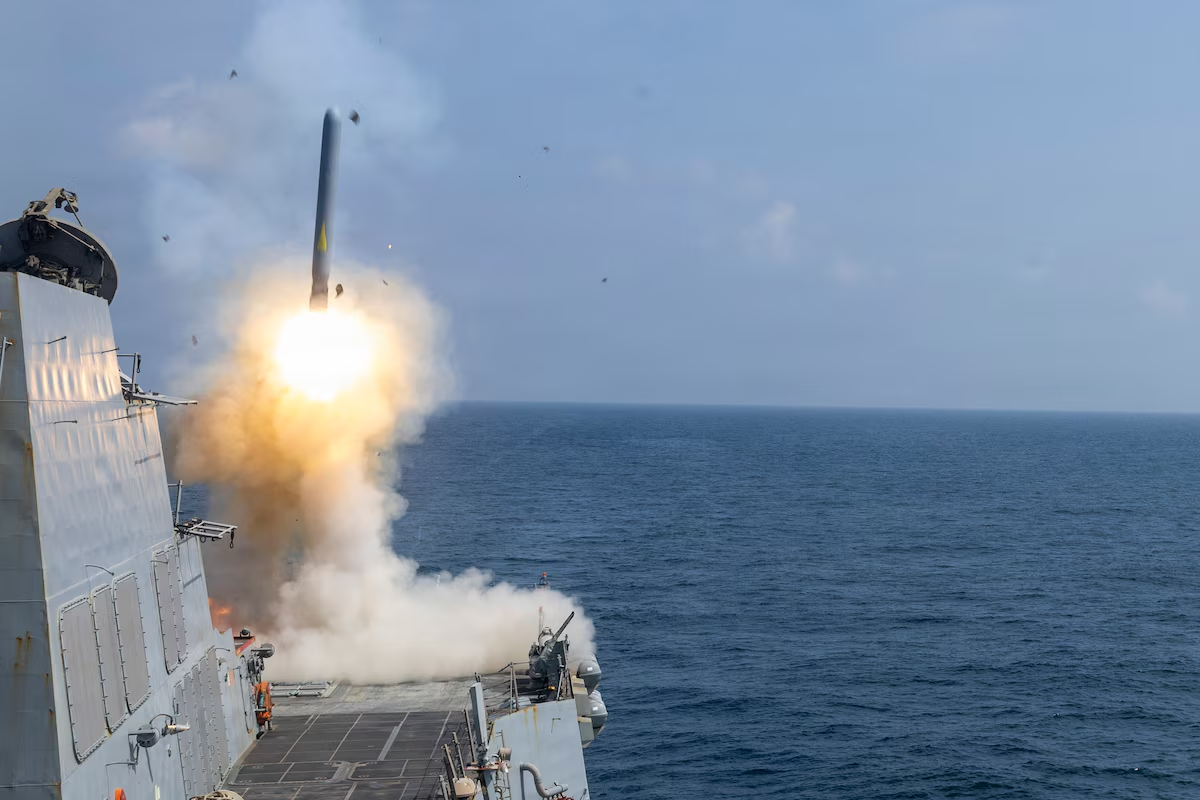
The guided-missile destroyer USS Delbert D. Black fires a Tomahawk land attack missile in support of Operation Epic Fury in an undisclosed location, Feb. 28, 2026.

While officials have not disclosed the exact number of Tomahawks or launchers involved in the sale—information that remains classified—it is understood that the procurement will significantly expand Germany’s precision strike range.

This move puts Berlin closer to operational parity with other key NATO players that already have advanced cruise missile arsenals.

The timing of the deal is notable. President Donald Trump has long pushed European allies to carry their own weight in NATO, urging them to invest more in military modernization and stop freeloading off the U.S. taxpayer. This purchase fits neatly into that vision.

By buying American missiles and taking greater responsibility for its own defense, Germany appears to be answering the call that Trump’s administration began years ago and continues to guide U.S.-European defense cooperation today.
Cruise Missiles Are the Real Backbone of Modern Warfare
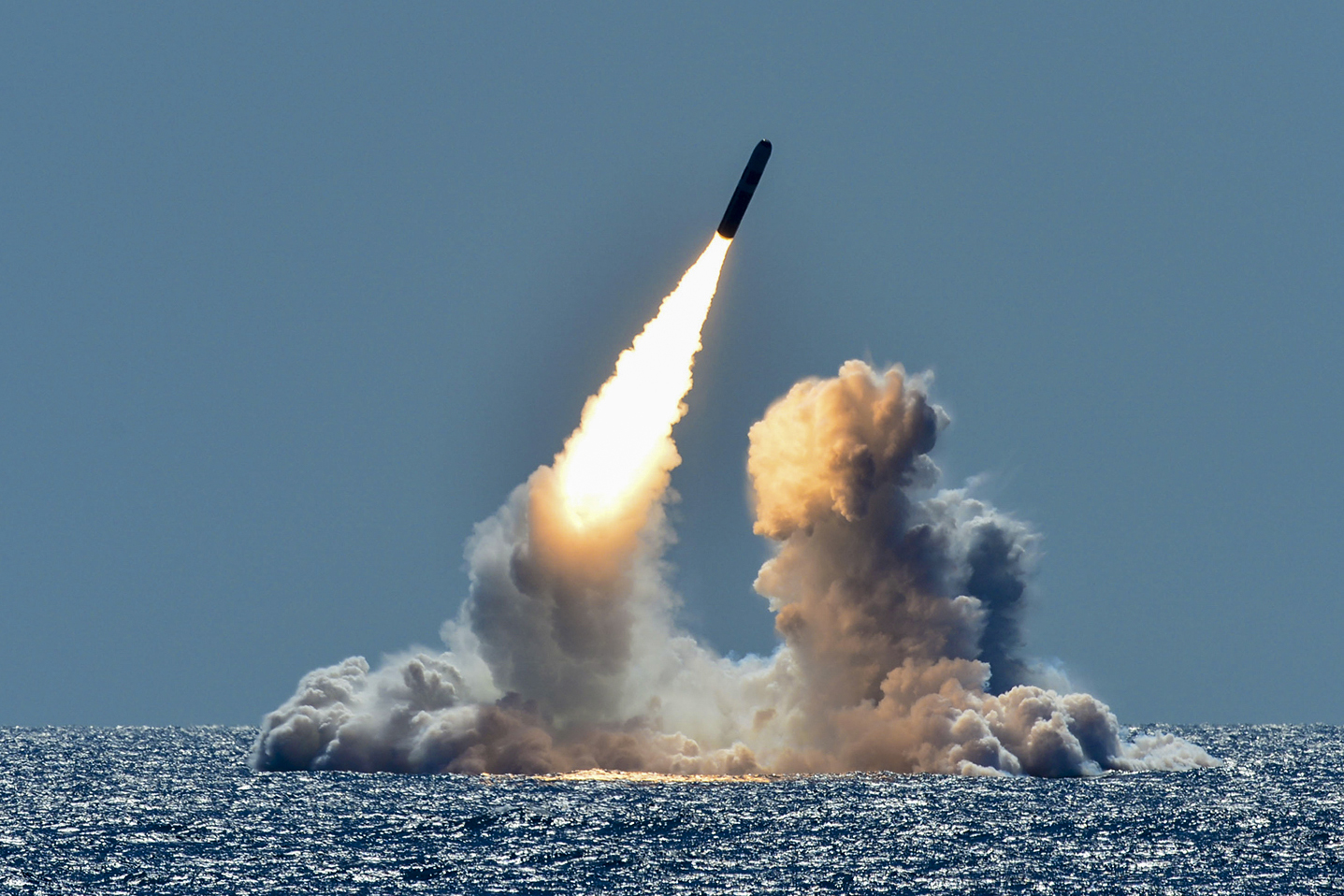
180326-N-UK333-012
PACIFIC OCEAN (March 26, 2008) An unarmed Trident II D5 missile launches from the Ohio-class ballistic missile submarine USS Nebraska (SSBN 739) off the coast of California. The test launch was part of the U.S. Navy Strategic Systems Program’s demonstration and shakedown operation certification process. The successful launch certified the readiness of an SSBN crew and the operational performance of the submarine’s strategic weapons system before returning to operational availability. (U.S. Navy photo by Mass Communication Specialist 1st Class Ronald Gutridge/Released)

The sale also resolves an open question that emerged after Trump reduced the U.S. military presence in Germany earlier this year.

The former plan, initiated by the previous administration, had been to station a U.S. battalion armed with Tomahawks on German territory. Once that deployment was canceled, European leaders were left wondering how to fill the strategic void. The new purchase essentially closes that chapter by transferring operational responsibility to Germany itself.

This shift isn’t just symbolic—it’s a practical enhancement of Europe’s military capability. For decades, Germany and other NATO members have relied almost exclusively on the American deterrent umbrella.

Now, Germany’s acquisition of Tomahawks means it can field its own long-range deterrent, vastly extending its reach far beyond its borders. That capability will be essential should NATO ever need to counter aggression from the East.

While Germany already possesses its own cruise missile, the Taurus, its maximum range is about 311 miles—three to five times shorter than the Tomahawks. The American-made missiles can strike deep into hostile territory, offering far greater flexibility and retaliation power in the event of conflict.
Cruise Missiles Are the Real Backbone of Modern Warfare

For a Germany that’s long hesitated to flex its military muscle after World War II, this development represents a major turning point.

European defense analysts say this move could trigger a larger wave of modernization among NATO members. Nations like Poland, the Czech Republic, and the Baltics will likely follow Germany’s lead, further integrating into a stronger transatlantic missile defense framework.

For Washington, it’s a win-win: allies become stronger self-defenders while continuing to purchase top-tier U.S. weapon systems, tying NATO’s operational readiness to American technology.

The agreement also strengthens ties between the U.S. War Department and the German armed forces at a time when unity within NATO’s European flank is more vital than ever.

With escalating tensions on the continent, particularly as Russian military exercises push closer to NATO borders, the Tomahawk purchase sends a clear, unmistakable message: the alliance is not retreating—it’s rearming.
Cruise Missiles Are the Real Backbone of Modern Warfare

By investing in Tomahawks, Germany is not only updating its arsenal but also sending a political signal of loyalty and seriousness within NATO.

As Chancellor Merz put it, this is not just a procurement decision, it’s a strategic declaration that Germany intends to play a full role in Europe’s security architecture rather than sitting back and letting Washington bear all the weight.

Bottom line: Berlin’s new Tomahawk deal is far more than a weapons purchase.

It’s a recognition that the Trump-era vision of NATO self-reliance wasn’t just rhetoric—it was the future. For the U.S., it proves once again that real leadership means encouraging allies to stand on their own two feet, armed and ready.
News

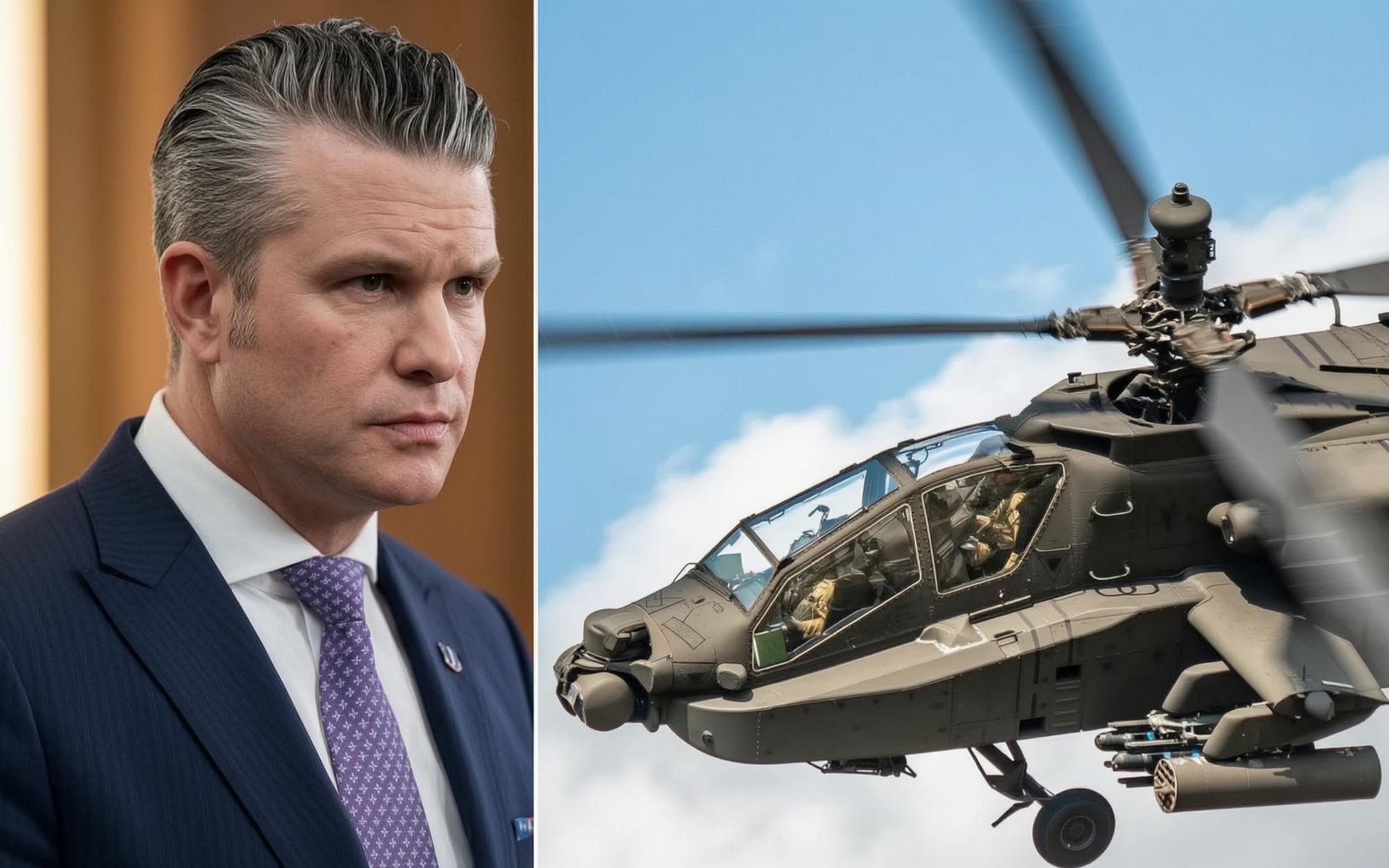
Hegseth Steps In, Suspensions Dropped for 8 Apache Pilots After July 4th Flyover Flap

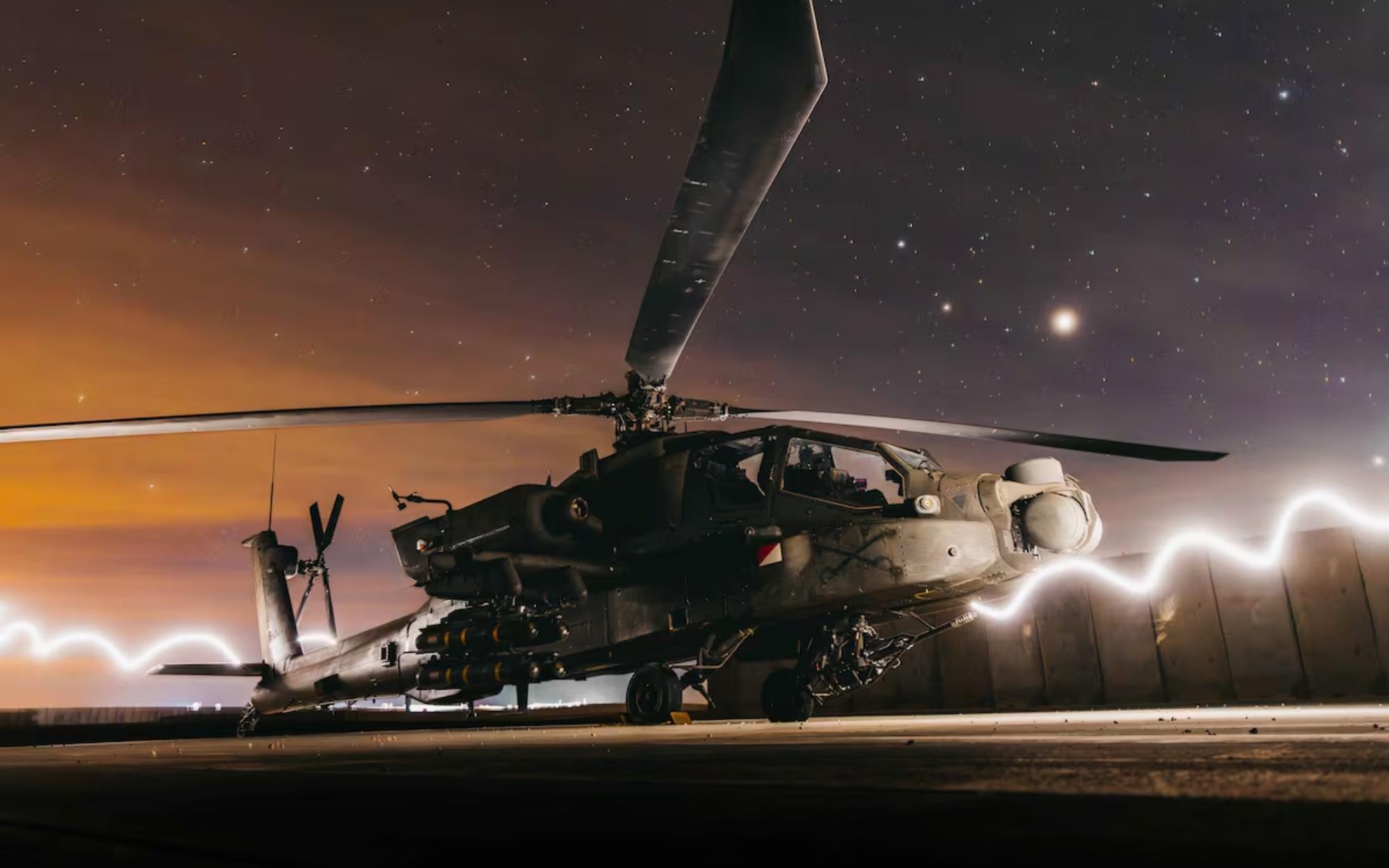
Eight South Carolina National Guard Apache pilots are back in the air after War Secretary Pete Hegseth personally intervened in what many called a ridiculous case of bureaucratic overreaction.

The pilots had been grounded earlier this week for flying low along crowded beaches during the state’s patriotic “Salute From The Shore” celebration.

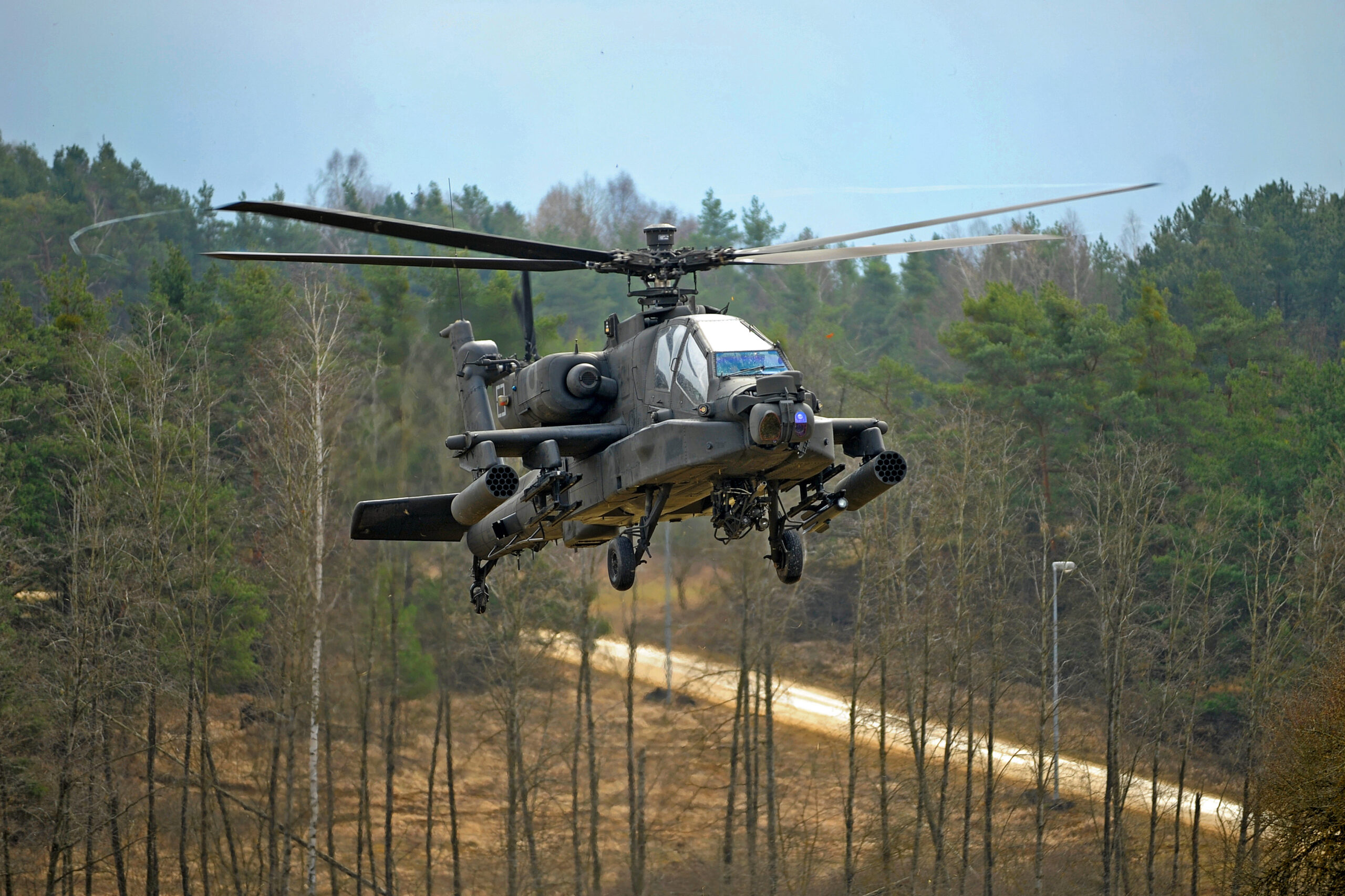
The so-called incident involved AH-64 Apaches from the 1-151st Attack Battalion based at McEntire Joint National Guard Base near Columbia.

The aircraft were part of a much-loved annual Independence Day air parade that salutes America’s military and inspires patriotic pride across South Carolina’s coastal towns.

When videos of the flyover hit social media, showing Apaches roaring low past cheering beachgoers, the usual safety bureaucrats jumped into “damage control” mode.

Local commanders quickly suspended the eight pilots pending a review, labeling the move a “non-punitive administrative measure.”

Enter Secretary of War Pete Hegseth, a man who has made it clear that he stands squarely with America’s warfighters over timid desk jockeys.

Late Thursday night, Hegseth tweeted, “We’ll fix this. Carry on, Patriots.” That message, simple but powerful, immediately sent the left-wing outrage machine into overdrive—but it also signaled real leadership.

Apache Becomes Drone Hunter as Army Tests Airburst Rounds to Take Down Drones
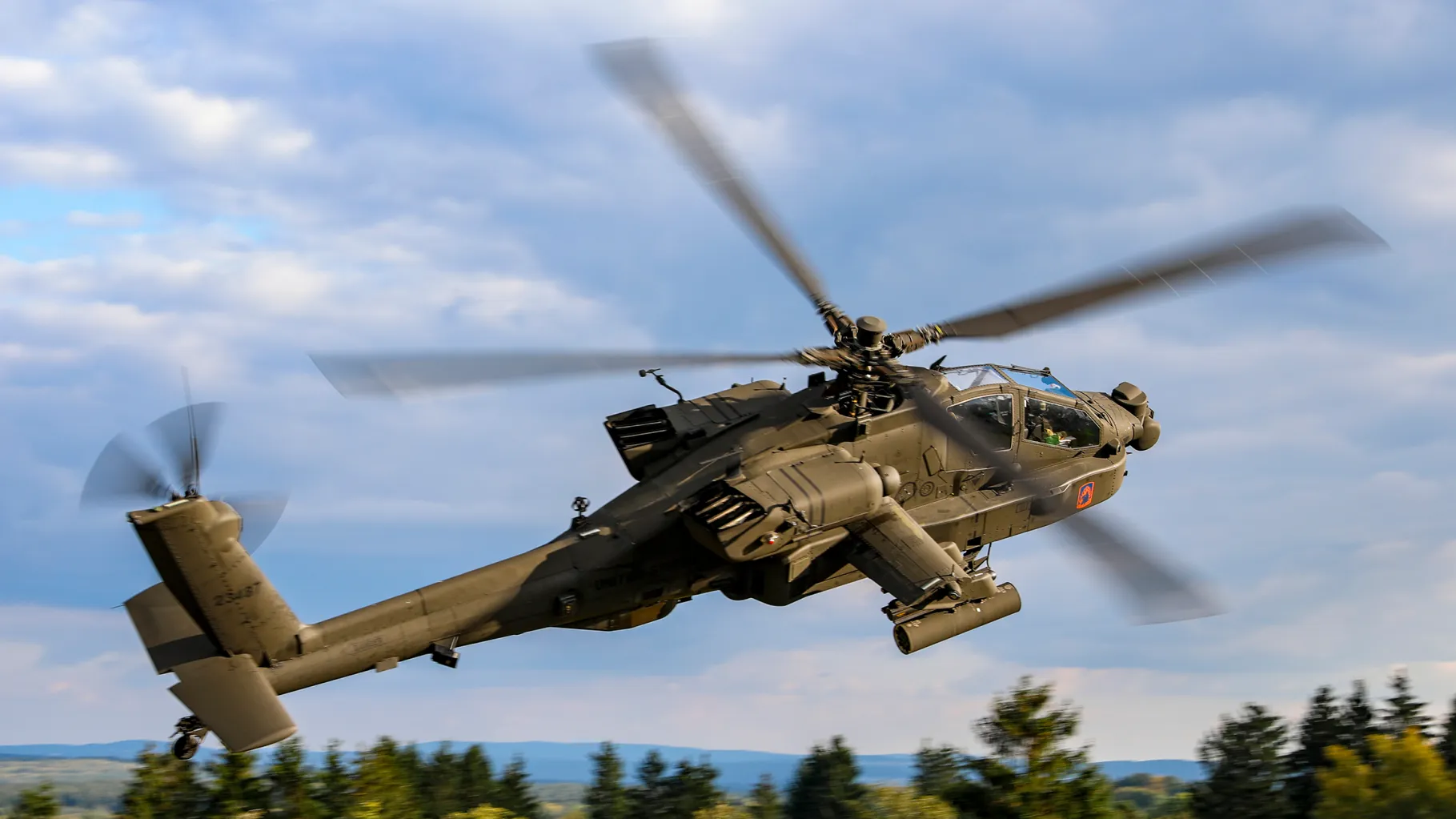
An AH-64E Apache prepares to engage during aerial gunnery training at Grafenwoehr Training Area, Germany, Oct. 2, 2025. Army photo by Spc. Josefina Garcia.

By Friday morning, Pentagon spokesman Sean Parnell confirmed exactly what troops and veterans hoped to hear: all eight pilots were back on flight status. “Effective immediately, the suspension of all involved South Carolina pilots has been lifted,” he said.

Lawmakers and citizens across the Palmetto State applauded the move, saying the pilots deserved celebration, not punishment.

“These pilots should be celebrated, not sanctioned,” said Representative Russell Fry, a Republican from South Carolina. He’s right. Americans are tired of watching their military be second-guessed for showing pride in their country.

The Army brass, meanwhile, had tried spinning the incident as no big deal, releasing an embarrassingly sugary social media post featuring “group heart” and “handshake” graphics.

U.S. Army Apaches and Navy Seahawks Obliterate Iranian Boats Blocking the Strait of Hormuz
Army AH-64 Apache attack helicopters sunk several Iranian boats, U.S. officials said, as the first day of the operation to escort commercial ships through the Straits of Hormuz resulted in combat. U.S. Army photo.

The post read like something from a college diversity office rather than a proud military command. “We are also aware of the public feedback and concerns regarding the temporary suspension,” the statement claimed. The fact that they had to walk it back within 24 hours says everything about the state of bloated War Department bureaucracy today.

Hegseth’s quick intervention wasn’t unprecedented. Earlier this year, he jumped into another “investigation” aimed at Apache pilots from the 101st Airborne Division who buzzed Kid Rock’s home in Tennessee. The safety inspectors again overreacted—Hegseth again restored sanity with his now-famous “Carry on, Patriots” tweet.

Nobody was hurt in either the Kid Rock case or the South Carolina beach flyovers. Yet bureaucrats keep treating routine, morale-boosting flights like major scandals.

U.S. Soldiers Saved by Navy Drone After Apache Crash Off Oman Coast
A U.S. Army AH-64 Apache Attack Helicopter in the U.S. Central Command area of responsibility, Dec. 19, 2025. (U.S. Army)

Compare that to a real tragedy in 2025, when an Air Force rescue helicopter fatally injured a civilian during a school visit in Japan. That was a case of genuine operational error, one that demanded a serious inquiry. That accident involved safety distances being ignored, and the report cited “false confidence of safety.”

But the July 4th Apaches? They flew over the beach under FAA-approved parameters. Helicopters are allowed flexibility on altitude rules so long as their flight paths are approved.

The entire operation was part of a public event supported by the state and military alike, designed to lift spirits and show appreciation for America’s fighting force.

So what exactly were they “investigating”? The only “crime” the pilots committed was being bold, proud, and inspiring—traits that make career bureaucrats nervous.

Fortunately, Hegseth’s brand of unapologetic patriotism is cutting through the nonsense and standing up for the warriors who still get the job done.

Apache Aces Down Drones in Daring Sky Duel Using Proximity 30mm Rounds
U.S. Army soldiers, assigned to 12th Combat Aviation Brigade, support 1st Squadron, 91st Cavalry Regiment, 173rd Infantry Brigade Combat Team (Airborne), in an AH-64 Apache Helicopter during an air assault operation at the 7th Army Joint Multinational Readiness Command’s Hohenfels Training Area, Germany, March 19, 2014. (U.S. Army photo by Visual Information Specialist Gertrud Zach/released)

Hegseth, an Army veteran himself, has made it clear that morale and readiness matter more than political correctness.

His leadership style resonates deeply with rank-and-file troops who feel unsupported by risk-averse managers in Washington. With his direct, unapologetic stance, he’s reminding commanders that the mission comes first, not optics.

The “Salute From The Shore” flyover is one of those uniquely American events that binds the military and the public together.

Thousands gathered along Myrtle Beach, Charleston, and Hilton Head to cheer on the helicopters roaring overhead. For a few moments, everyone there was reminded of the strength of freedom and the cost of keeping it. And that’s why Hegseth acted—he understands that public patriotism isn’t a PR problem, it’s a national necessity.

As the pilots returned to the skies, the message was clear: America’s warriors have an ally at the top who actually trusts them to do their jobs.

The warfighters flying those Apaches don’t need lectures from career staffers; they need leaders who’ve worn the uniform and who remember what it means to serve.

In Pete Hegseth, they’ve got exactly that.

News

Iran’s Assassination Plot Against Trump Exposed: Israeli Intel Warns the White House [WATCH]

Israel recently shared intelligence with the United States indicating that Iran had developed a new plan to assassinate President Donald Trump, according to a report published Thursday by The Wall Street Journal, which cited people familiar with the matter.

The reported intelligence marks the latest development in the longstanding threats Iran has directed toward Trump following the January 2020 U.S. military strike that killed Islamic Revolutionary Guard Corps Gen. Qassem Soleimani in Baghdad.

Fox News Digital reported that the White House referred questions about the Journal’s report to remarks Trump made on Wednesday, addressing ongoing threats against his life.

Trump Declares America Back in Fiery 250th Celebration Kickoff

“They want to take out the U.S. leader — me. I’m on whatever list. I saw this morning I’m on every single one of their lists,” Trump said.

“And, so far, I guess I’ve been a bit lucky, but maybe that doesn’t last very long. These are evil, sick people. And we have to root out that cancer. That cancer. You know what you do? You’ve got to cut out cancer early. And that’s the way I feel.”

Trump made those comments during a news conference at the NATO Summit in Ankara, Turkey, on July 8, 2026.

Fox News Digital also reported that it contacted Israel’s Embassy in Washington and Iran’s Mission to the United Nations, seeking comment on the reported intelligence.

According to The Wall Street Journal, the intelligence emerged as Trump and Israeli Prime Minister Benjamin Netanyahu have taken different approaches in recent weeks regarding Iran following last month’s conflict.

The report stated that Netanyahu has favored maintaining military pressure on Tehran, while Trump has sought to preserve the ceasefire that followed U.S. strikes on Iranian nuclear facilities.

Despite reports describing differences over strategy, Netanyahu’s office said Thursday that the two leaders spoke by telephone and agreed to continue close coordination between the United States and Israel.

According to Netanyahu’s office, Trump also briefed the Israeli prime minister on recent U.S. activity in the Gulf during their conversation.

The reported assassination threat comes as Iran has continued to publicly vow retaliation against Trump for authorizing the strike that killed Soleimani, who served as commander of the Islamic Revolutionary Guard Corps’ Quds Force.

The Journal also reported that mourners attending the funeral of Iranian Supreme Leader Ali Khamenei displayed a banner reading, “We Will Kill Trump.”

According to the report, attendees at the funeral also chanted for Trump’s death.

The latest intelligence report follows years of public statements by Iranian officials and affiliated groups pledging revenge for Soleimani’s death.

Trump also referenced Soleimani during his remarks on Wednesday, revealing that Israel had previously declined to participate in a plan to eliminate the Iranian general in 2020 before the United States carried out the strike.

Neither the White House nor Israeli officials publicly released additional details about the intelligence referenced in The Wall Street Journal report.

No further information has been made public regarding the alleged plot, including its timing, operational details, or whether any arrests have been made.

The reported intelligence underscores the continuing security concerns surrounding threats against Trump more than six years after the strike that killed Soleimani and amid ongoing tensions between the United States, Israel, and Iran.

News

Marines Activate New Drone Warfare Units on Both Coasts to Dominate the Skies

The Marine Corps is doubling down on drone warfare with the launch of two new units—one on each coast—dedicated to sharpening America’s edge in both drone offense and defense.

It’s a clear signal that the Corps is adapting aggressively to modern battlefield realities where small, cheap drones can now influence massive outcomes.

At Twentynine Palms, California, the new Marine Corps Robotics Integration Group will spearhead the development of training programs to prepare Marines for real-world combat where unmanned systems are now a daily threat.

This West Coast hub will be responsible for teaching Marines not only how to use drones but just as importantly, how to survive and fight back when hostile swarms fill the air.

Meanwhile, on the East Coast, at Marine Corps Base Quantico, Virginia, another team is taking a more experimental route.

This newly established counter-drone unit under the Weapons Training Battalion will rigorously test the latest drone-busting tech and tactics. Their mission is to ensure that when Marines face the enemy’s buzzing eyes and ears, they can cut them out of the sky with precision and speed.

U.S. Marines Form Elite 'Attack Drone Team' to Revolutionize Battlefield Tactics

Maj. Hector Infante, spokesman for the Training and Education Command, explained that the Robotics Integration Group will create standardized training programs and certification processes that all deploying Marines will follow.

This ensures every Marine is equipped with the tactical and technical skills to integrate drones effectively across missions.

Maj. Gen. Mark H. Clingan, commanding general at Twentynine Palms, put it bluntly: small drones are no longer optional.

“The battlefield continues to demonstrate that small unmanned aircraft systems are no longer niche capabilities; they are indispensable tools for reconnaissance, precision strike, force protection and survivability,” Clingan said. His statement drives home the Marine Corps’ shift toward institutionalizing technology once seen as specialized.

The Quantico-based team’s role complements that West Coast development hub perfectly.

Conceived as a counterpart to the already established attack drone team at Quantico, the counter-drone group will be focused on testing new countermeasures and tactics, many inspired by the fast-paced and improvised drone warfare seen in the Middle East and Eastern Europe.

Marines to Deploy New Counter-Drone Systems with Upcoming Units

The Marines aren’t building these capabilities in a vacuum. Lessons from Ukraine, Syria, and other modern battlefields have shown how $500 drones can cause chaos for million-dollar armored vehicles.

The Corps knows the answer isn’t throwing money at bigger weapons but training Marines smarter, faster, and more effectively with what’s already available or rapidly deployable.

Both the attack drone and counter-drone teams are expected to funnel their findings to the Robotics Integration Group in California, creating a continuous loop between experimentation, implementation, and battlefield readiness. The result will be a tighter, more agile system that adapts faster than America’s adversaries.

This aligns neatly with broader Marine modernization efforts—moving away from static, heavy units toward smaller, more dispersed forces capable of fighting in contested zones.

Drones, whether used for surveillance or attack, are key to that transformation. They can gather intel in seconds, shield patrols, or deliver payloads precisely where needed.

Trump Sons Back U.S. Drone Startups to Fill Battlefield Gaps
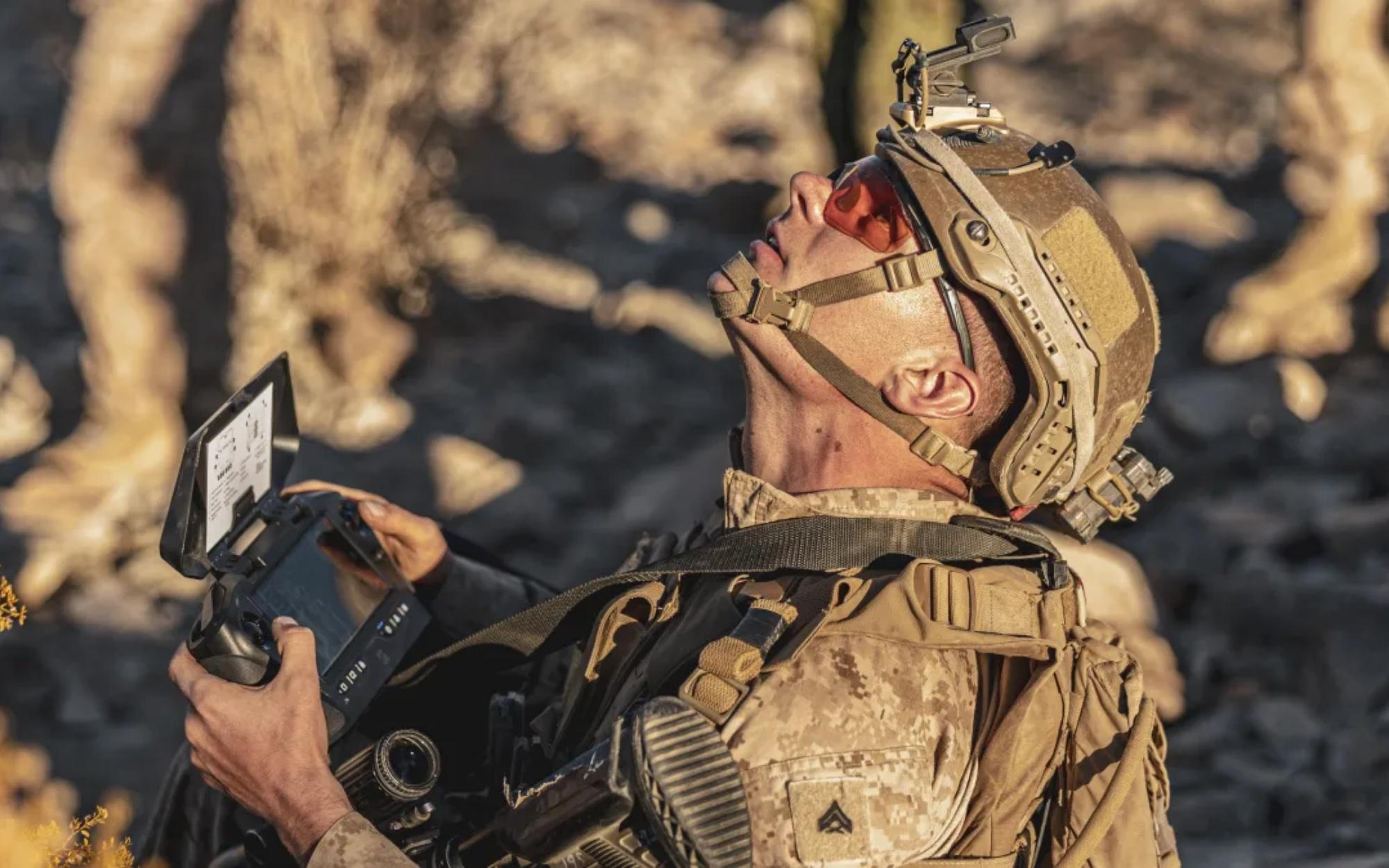
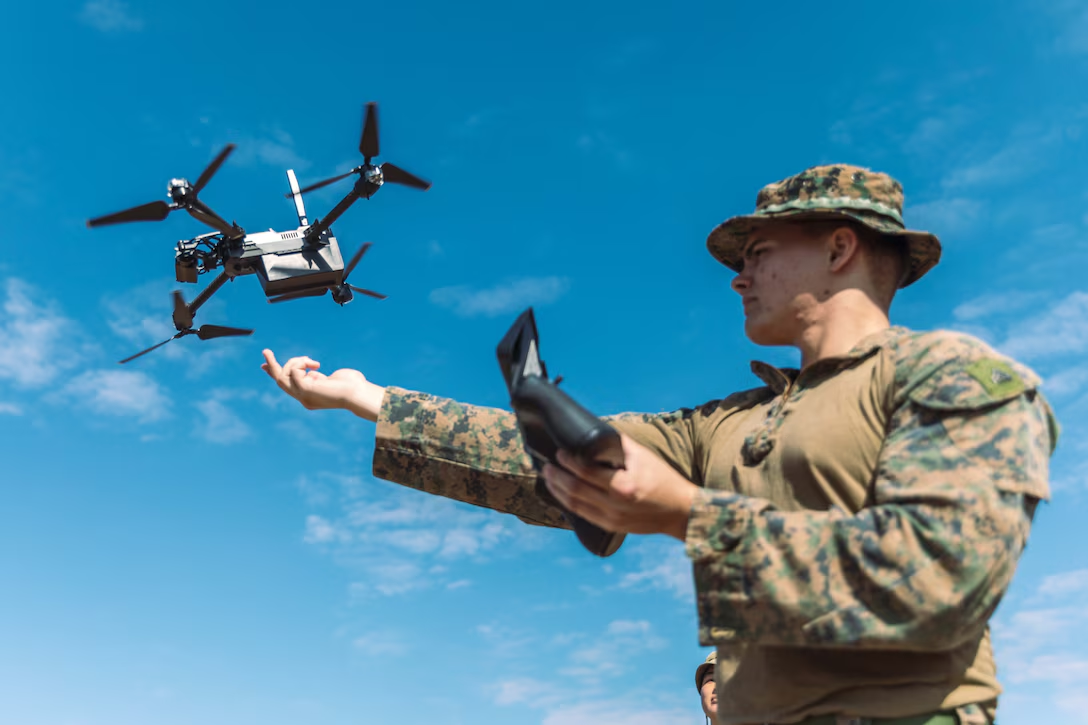
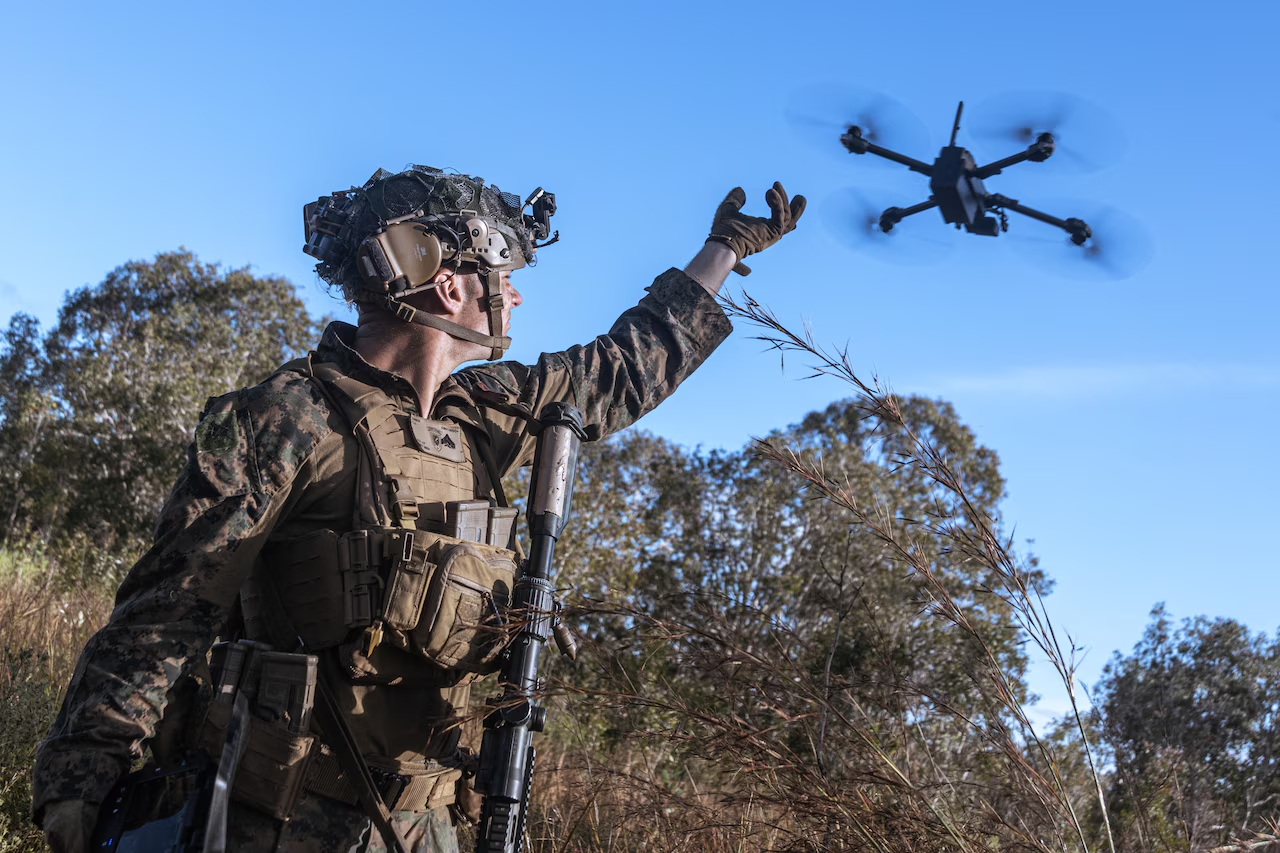
Marine Corps Cpl. Calvin Burke, an intelligence specialist assigned to the 31st Marine Expeditionary Unit, activates a small unmanned aerial system to survey the defensive line for opposing forces during a simulated assault and seizure at Glen Airfield, Queensland, Australia, July 2025. The War Department has undertaken the drone dominance initiative to put more drones into the hands of warfighters.

Across the Corps, there’s also been a push to equip Marines deploying to high-risk regions with systems that help them detect and neutralize enemy drones.

In some cases, Marines are receiving trench and camouflage training intended to reduce their visibility to aerial sensors and quadcopters, especially in environments where air superiority can’t be guaranteed.

Critics who once mocked the Corps for lagging behind on unmanned systems are quietly realizing that those days are over.

Under current leadership, the Marines are embracing agility and adaptability—key elements of the kind of future force outlined by President Trump’s ongoing national defense emphasis and strongly supported by War Secretary Pete Hegseth.

The new drone-focused units also reflect a broader shift in American military thinking.

As emerging threats from China, Russia, and Iran leverage cheap drone tech for disruption and surveillance, the U.S. must stay not just reactive but dominant in every sky. The Marines aren’t waiting for bureaucrats to catch up; they’re moving now, turning experimentation into execution.

U.S. Marines Form Elite 'Attack Drone Team' to Revolutionize Battlefield Tactics

By standing up these two coastal power hubs, the Corps ensures that next-generation Marines will be just as skilled fighting robotic enemies as they are human ones.

It’s about creating agile warriors who can outthink and outmaneuver modern foes with tools that once belonged exclusively to tech firms or niche military projects.

In a world where aerial battlegrounds are increasingly crowded, the Marines’ two-pronged approach—attack and defend, experiment and train—shows exactly why America’s expeditionary force remains second to none. When the next fight comes, the Corps won’t be caught staring at the sky, it will own it.

News

Trump Clears Out Election Commission, Sends Democrats Into Full Meltdown [WATCH]

President Donald Trump removed two Democratic members of the U.S. Election Assistance Commission on Thursday, leaving the federal agency without any sitting commissioners after the panel’s remaining Republican member had already resigned, as reported by Townhall.

The personnel changes effectively vacate the four-member commission responsible for issuing voluntary election administration guidance to state and local officials.

The Election Assistance Commission, commonly known as the EAC, has no enforcement authority but develops best practices for election administration and establishes specifications used in testing and certifying voting systems.

Trump Eyes Australian Style Retirement Plan, Promises to Make It Even Sharper for Americans

According to NOTUS, the White House dismissed the two Democratic commissioners on Thursday afternoon, completing the departure of every member of the bipartisan panel.

The move immediately drew criticism from Democratic election officials and strategists, who argued the dismissals could affect the commission’s work ahead of the 2026 midterm elections.

Tim Lim, a Democratic strategist who works on election administration issues, criticized the action.

“Trump couldn’t rig the elections through the SAVE Act, so he’s now moving unilaterally to subvert the 2026 elections, starting with sacking the bipartisan EAC commissioners,” Lim said.

“Between the FBI surging into Fulton County and today’s action, it’s clear Donald Trump is determined to stop a free and fair election this November.”

The Election Assistance Commission was created by Congress through the Help America Vote Act, following the closely contested 2000 presidential election.

Its mission is to provide election administration guidance, distribute certain federal election funds, and develop voluntary standards for voting systems used by states and local jurisdictions.

Although the commission issues recommendations and technical guidance, election administration remains primarily the responsibility of state and local governments.

Throughout its history, the commission has periodically operated without a full complement of commissioners.

According to reports, the agency lacked a quorum for several years before the Senate confirmed new commissioners in 2019, allowing it to resume updating election guidance.

NOTUS also reported that Republicans have previously sought to eliminate the agency, though those efforts were unsuccessful. During former President Joe Biden’s administration, the commission’s staff reportedly doubled in size.

Following staffing reductions during the Trump administration, the agency now has approximately 65 employees.

The departure of all commissioners raises questions about how the agency will carry out its bipartisan advisory responsibilities unless new members are nominated and confirmed.

The White House action comes as the Trump administration continues to reshape federal agencies and exercise executive authority over independent commissions.

The dismissals also follow a recent Supreme Court ruling involving former Federal Trade Commission Commissioner Rebecca Kelly Slaughter.

The decision concluded that the president could remove certain independent agency officials without cause, while distinguishing the Federal Reserve from that holding.

Legal observers have noted that the ruling may influence how future administrations approach appointments and removals at independent federal agencies.

As of Thursday evening, the White House had not publicly announced replacements for the vacant Election Assistance Commission seats.

The timeline for nominating and confirming new commissioners also remained unclear.

With the commission now lacking any sitting members, its ability to issue bipartisan recommendations or update election guidance may remain on hold until new appointments are made and confirmed.

News

Suspect Caught After Firebombing Two New York City Churches With Molotov Cocktails [WATCH]

A man has been arrested after authorities say he carried out a series of Molotov cocktail attacks targeting two churches in Queens late Wednesday night, with investigators also examining whether the case is connected to similar incidents reported in the area last month, as reported by The Post Millennial.

According to police, the suspect is a 36-year-old man who has not yet been publicly identified.

Investigators said he was captured on surveillance video allegedly throwing incendiary devices at Iglesia Bautista El Mesias in Ozone Park and a Kingdom Hall of Jehovah’s Witnesses in nearby Woodhaven.

The first incident occurred shortly after 11:35 p.m. Wednesday outside Iglesia Bautista El Mesias on 75th Street in Ozone Park.

Police said the suspect was seen speaking with several people outside the church before pulling a Molotov cocktail from his belongings, lighting it, and throwing it toward the building’s front entrance.

Investigators said the device exploded after striking the front door. Despite the explosion, authorities reported that the church did not sustain any damage.

The suspect then allegedly traveled to the Kingdom Hall of Jehovah’s Witnesses in Woodhaven, where police say he launched a second Molotov cocktail at the building.

According to investigators, the incendiary device bounced off the structure before landing on the ground. Officials said the second building also escaped without damage.

Authorities said a third building was targeted during the incident, although it likewise sustained no damage.

Pastor Alex Garcia of Iglesia Bautista El Mesias expressed disbelief following the attack.

“I have no words because, like I told you, we have no enemies; the church is growing. I cannot say anything because we have no enemies, so I don’t know where this is coming from,” Garcia told ABC 7 News.

Police quickly launched an investigation after the attacks and located the suspect approximately 35 minutes later.

According to authorities, officers arrested the man around 12:10 a.m. Thursday.

During the arrest, investigators recovered two additional Molotov cocktails that police said were inside the suspect’s bag. Those devices were seized before they could allegedly be used.

Authorities have not announced a motive for the attacks, and the suspect’s identity has not been released publicly.

Police said criminal charges are pending.

According to the New York Post, investigators are also examining whether the incident is connected to similar attacks reported in the same area during the previous month.

Officials have not announced whether evidence has established a direct link between those cases.

The suspect is expected to face federal charges in the U.S. District Court for the Eastern District of New York.

The investigation remains ongoing as law enforcement officials continue reviewing surveillance footage, collecting evidence from the scenes, and determining whether additional incidents may be connected to the suspect’s alleged actions.

No injuries were reported during the attacks, and authorities said none of the targeted buildings suffered structural damage despite the explosive devices being thrown at the properties.

News

Army Unveils Breakthrough Rifling Tech to Supercharge Cannon Power and Longevity

The U.S. Army has developed a groundbreaking new process for rifling artillery barrels that could dramatically extend the life of America’s big guns while cutting costs and boosting performance — a combination that’s welcome news in today’s high-demand world of cannon warfare.

The cutting-edge process, known as electrochemical machining (ECM), was unveiled at the Army’s Benét Laboratories in New York, where engineers have spent years fine-tuning a method that carves the rifled grooves of 155mm howitzer barrels without the cutting tool ever scraping the metal.

Instead of grinding through hardened steel, ECM uses a fascinating combination of salt water, electricity, and chemistry to dissolve metal precisely.

The result is a pristine interior barrel surface — one far better suited for modern artillery that faces extreme levels of heat, pressure, and erosion in battle.

Christopher Mulligan, a materials engineer at Benét Laboratories, explained just how critical this process is.

“The protective coating applied to the bore is the primary defense against the extreme thermal and erosive environment inside a firing cannon,” he said. Without a flawless surface for bonding, those coatings fail, he added, leading to catastrophic barrel wear under the stresses of modern propellants.

Traditional rifling cuts, which physically grind grooves into the bore, leave micro-damage and imperfections that can weaken the barrel over time.

ECM eliminates that problem entirely, producing a chemically perfect surface that bonds seamlessly with modern high-resistance coatings.

The ECM method can carve all 48 rifling grooves of an M284 cannon barrel in one swift operation, making it both faster and more precise than older mechanical processes. That speed translates into real-world readiness and cost savings for America’s arsenal of democracy.

Christopher Humiston, who leads the ECM project at Benét Laboratories, called the breakthrough “a significant advancement in cannon production.”

He emphasized that since the tool never physically touches the steel, “it experiences virtually no wear,” saving untold maintenance hours and replacement costs.

Humiston added that the flexibility of ECM opens new doors for precision design, allowing engineers to experiment with complex rifling profiles, including variable depth grooves that were previously impossible to manufacture reliably.

This gives the Army an edge in developing artillery that shoots farther and lasts longer in the field — exactly what’s needed as global threats evolve.

The project was made possible through collaboration between Benét Laboratories, part of the Army Combat Capabilities Development Command Armaments Center, and several private industry partners who brought advanced machining expertise into the fold.

NATO Artillery Drill Unites Allies in Massive Deterrence Fueled Firepower Push
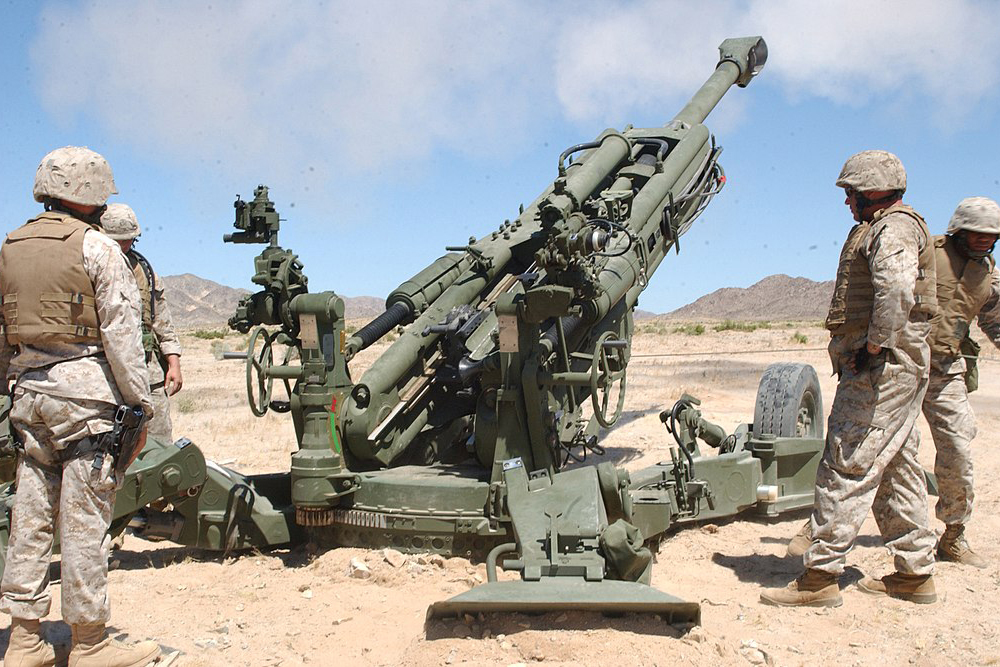
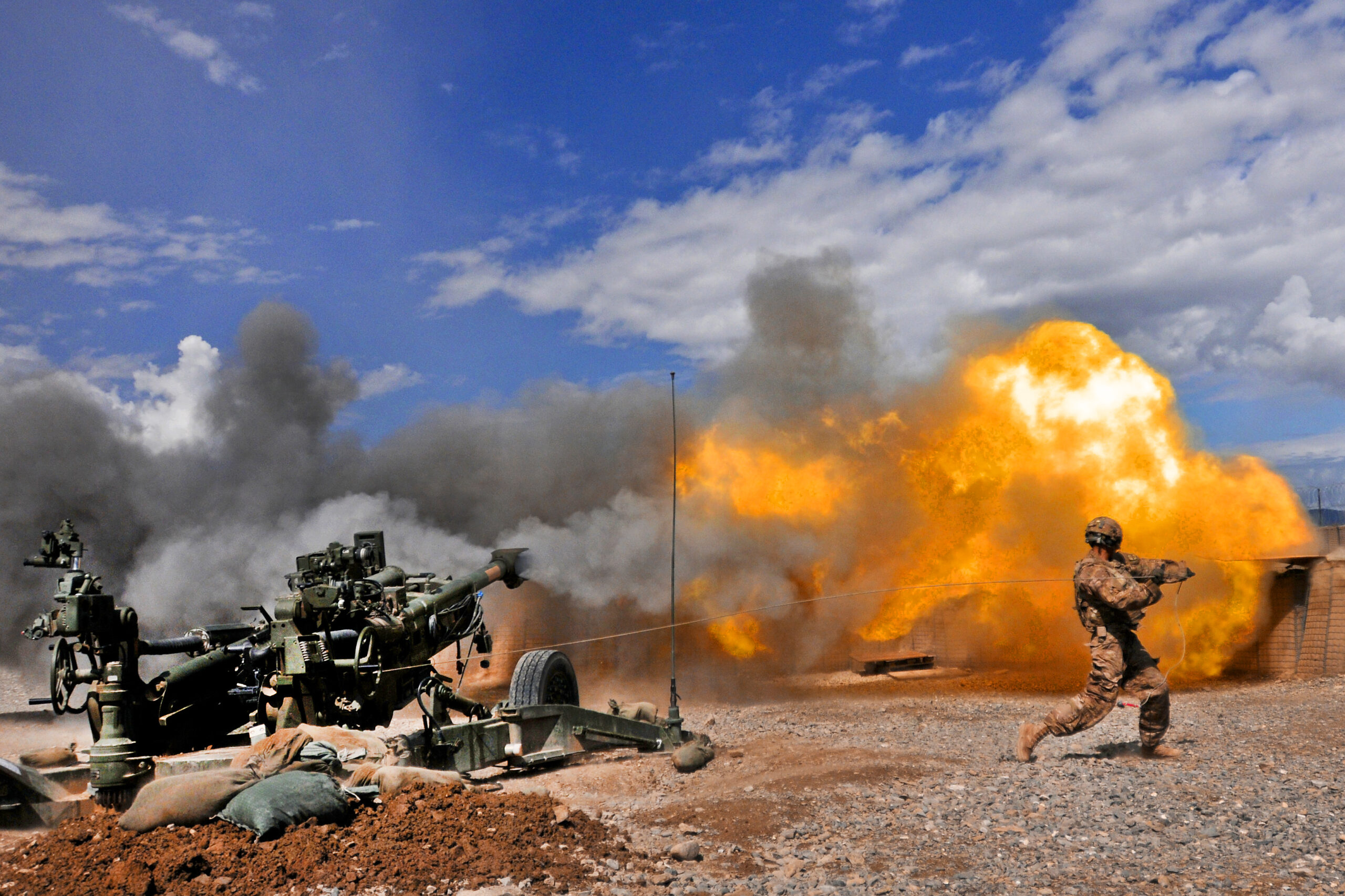
PAKTIKA PROVINCE, Afghanistan–Private first class Erik Park from San Mateo, California, fires his M-777 155mm howitzer, Sep. 3. Park – who is in 3rd Platoon, Alpha Battery, 1st Battalion, 77th Field Artillery Regiment, 172nd Infantry Brigade, is the number one man on the five-man numbered team that operates the massive weapon system. He was 12 years old on 9/11. (U.S. Army photo by Spc. Ken Scar, 7th MPAD)

It’s a shining example of what happens when the U.S. military teams up with American ingenuity to outpace adversaries.

The Army isn’t wasting any time turning this lab wonder into real-world production.

The legendary Watervliet Arsenal in New York, the oldest continuously operating arsenal in America and the Army’s sole manufacturer of cannon barrels, will soon install its own ECM machine directly onto the production line. That move marks a major milestone in modernizing the arsenal’s capabilities for the next generation of warfare.

Watervliet Arsenal has been manufacturing heavy artillery since before the War of 1812.

Now, thanks to a $1.7 billion congressional modernization investment following Russia’s invasion of Ukraine, the arsenal is gearing up to meet exploding demand for firepower — literally.

ECM could help produce barrels faster, stronger, and cheaper than ever before, ensuring U.S. artillery dominance stays unchallenged.

This development also comes at a critical time. With conflicts burning from Europe to the Pacific and America’s allies looking to bolster their defensive capabilities, reliable cannon manufacturing isn’t just a matter of efficiency — it’s a matter of national security.

The Army’s technological leap with ECM shows that innovation in America’s War Department isn’t slowing down under Secretary of War Pete Hegseth’s “lethality first” ethos.

It’s about protecting the lives of U.S. troops, preserving the strength of our warfighting tools, and keeping American artillery well ahead of any foe foolish enough to test it.

The new rifling technique is one more reminder that when pushed, American grit and ingenuity still lead the world — from the labs of Benét to the firing ranges of freedom’s defenders.

News

America’s Battle-Tested Amphibious Assault Vehicles Find New Life Guarding Allies in the Black Sea

After more than fifty years of roaring across beaches and carrying Marines into battle, the U.S. Marine Corps’ Assault Amphibious Vehicle, or AAV, is turning the page to a new chapter — one that keeps it on the frontlines of freedom.

Instead of being mothballed after decades of faithful service, these battle-hardened beasts are being transferred to allied nations along the increasingly volatile Black Sea, where Moscow’s ambitions keep NATO members on high alert.

The AAV-P7, affectionately known as “Trax” by Marines who lived and breathed inside its steel hull, was officially retired from active U.S. service after being replaced by the newer Amphibious Combat Vehicle.

But as the War Department confirmed this week, the AAV’s next mission is to strengthen partners defending the eastern flank of Europe — and to remind adversaries that American ingenuity never fades.

The vehicles are being handed over with training support from seasoned Marine instructors who know every bolt, seal, and throttle position by heart. These aren’t museum pieces; they’re still capable of delivering raw combat mobility on land and sea.

Built to withstand the chaos of amphibious warfare, Trax has landed Marines in conflict zones since 1972.

It fought through the dust of Lebanon and the deserts of Iraq, evolving over generations with better armor, weapons systems, and communications gear. Each upgrade kept it relevant in a changing world.

Marines Explore Counter-Drone Capabilities for Amphibious Combat Vehicle Amid Growing Threats
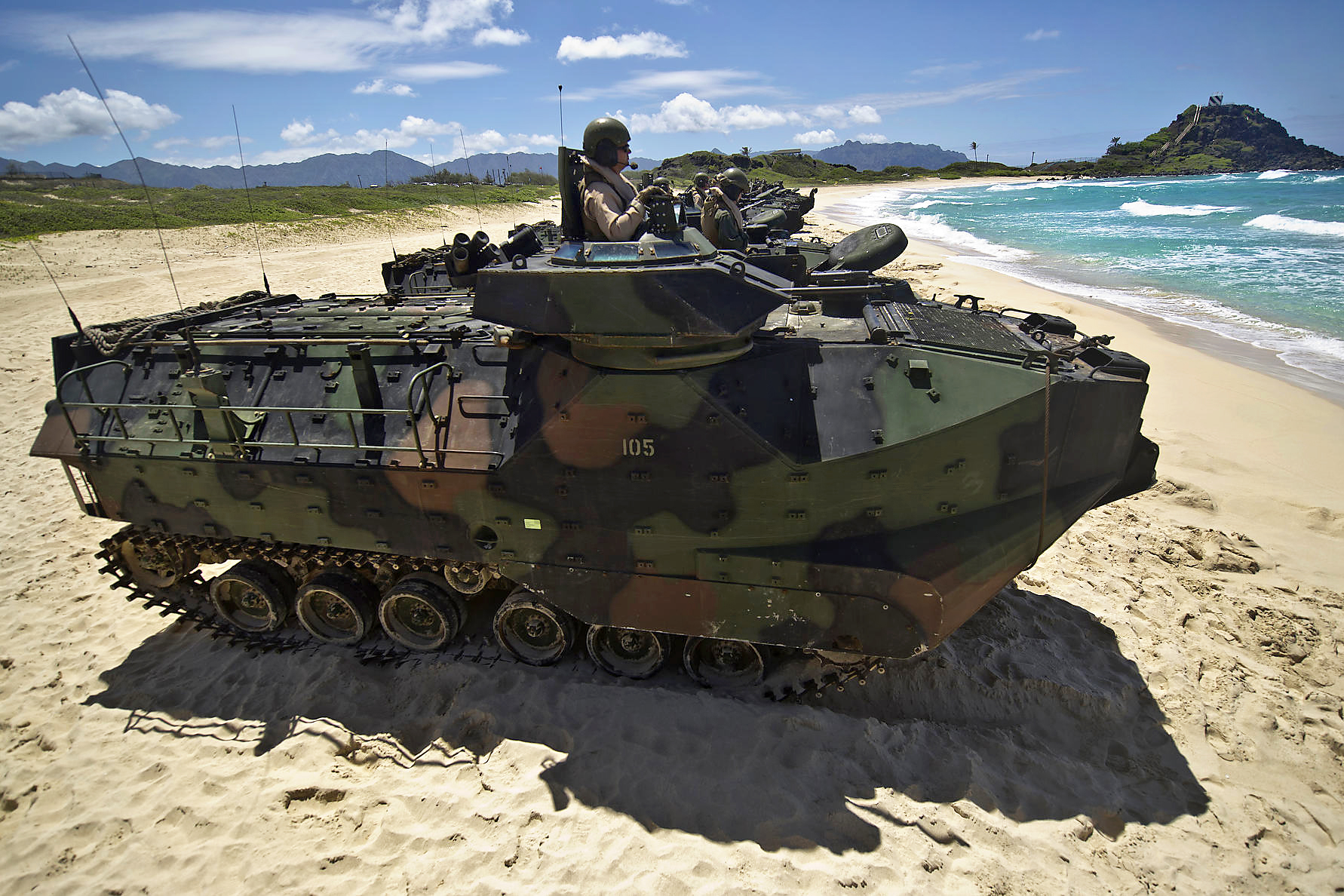
U.S. Marines assigned to Combat Assault Company, 3rd Marine Regiment, Marine Corps Base Hawaii Ð KaneÕohe Bay stand by in R7-A1 amphibious assault vehicles off Pyramid beach July 12, 2012, to meet up with the USS Essex (LHD-2) off shore during the Rim of the Pacific Exercise 2012.. Twenty-two nations, more than 40 ships and submarines, more than 200 aircraft and 25,000 personnel are participating in RIMPAC exercise from Jun. 29 to Aug. 3, in and around the Hawaiian Islands. The world’s largest international maritime exercise, RIMPAC provides a unique training opportunity that helps participants foster and sustain the cooperative relationships that are critical to ensuring the safety of sea lanes and security on the world’s oceans. RIMPAC 2012 is the 23rd exercise in the series that began in 1971.(Department of War photo by U.S. Air Force Tech. Sgt. Michael R. Holzworth/Released)

During a recent exercise in Romania, Marines rolled out the “old girl” for one last display of power.

The AAV demonstrated its versatility — acting as a mechanized assault platform, a logistics hauler, and even a direct-fire asset — while integrated with modern drone systems that now dominate contemporary battlefields.

For those who have spent decades maintaining and operating the vehicle, the moment was bittersweet.

The Marine Corps’ 4th Assault Amphibian Battalion logistics chief, Master Sgt. Daniel Porter, summed it up perfectly. “This has been my home since I started in the Marine Corps,” he said, giving his final goodbye after 22 years working with Trax. His last words, simple and powerful: “Last ride.”

Marines Explore Counter-Drone Capabilities for Amphibious Combat Vehicle Amid Growing Threats
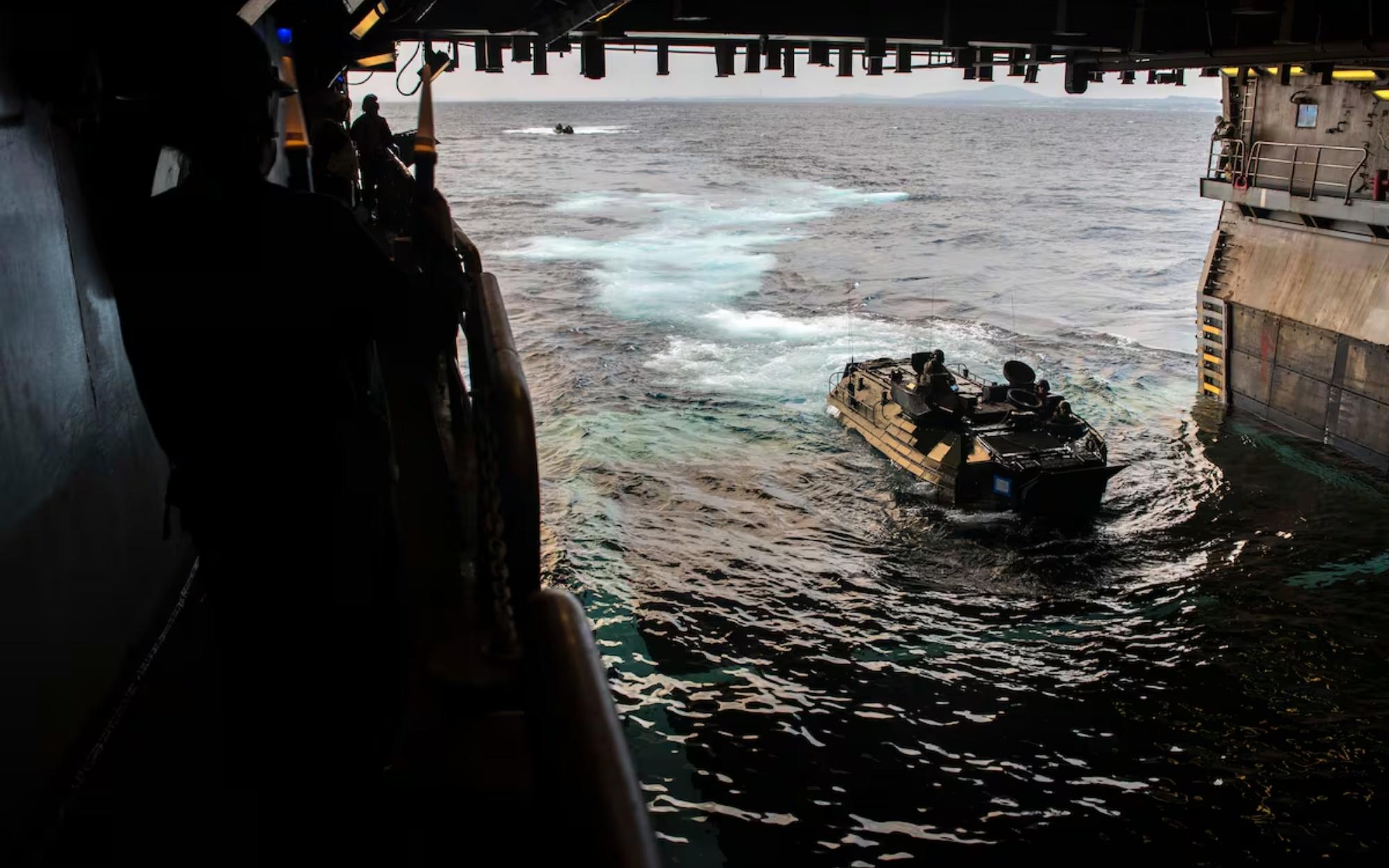
111101-N-YG354-189
PACIFIC OCEAN (Nov. 1, 2011) An amphibious assault vehicle assigned to the 11th Marine Expeditionary Unit (11th MEU) approaches the amphibious assault ship USS Makin Island (LHD 8). Makin Island is underway for routine operations off the coast of Southern California in preparation for the ship’s first operational deployment later this year. (U.S. Navy photo by Mass Communication Specialist 1st Class Douglas Bedford/Released)

Yet while Marines may feel nostalgic, the operational value of these machines is far from over.

In the unpredictable geopolitical chessboard around the Black Sea — where Russia’s provocations rattle smaller nations — sending these AAVs to allies is both symbolic and strategic. It’s a reminder that when America’s old warfighters leave the Corps, they can still serve the cause of liberty abroad.

Washington’s move signals a broader determination to bolster allies in a region that remains central to European and global security.

Ukraine’s experience has taught Western militaries the importance of mobility, logistics protection, and rapid amphibious response — all capabilities that the AAV platform helps deliver.

Marine expeditionary warfare has always been about adaptability, and this transition underlines that principle.

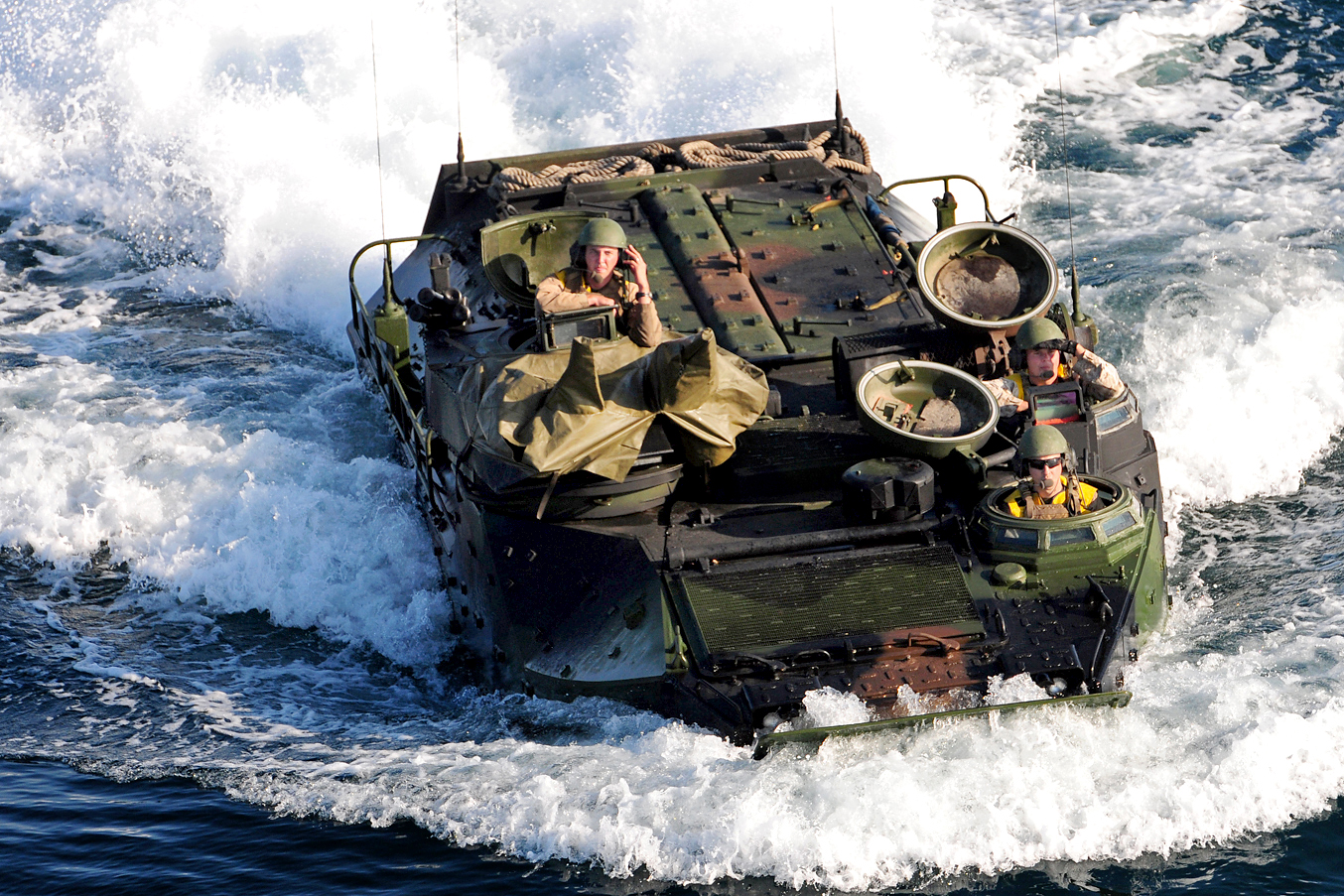
fter more than 50 years in service, the Marine Corps is sunsetting its Assault Amphibious Vehicle. (Lance Cpl. Brendan Mullin/Marine Corps)

While the new Amphibious Combat Vehicle takes over primary U.S. Marine duties, the AAV will keep delivering deterrence where it’s needed most. Instead of rusting away in storage, they’ll now help allied troops patrol coastlines, strengthen defenses, and train on combined operations with NATO support.

This kind of military recycling highlights how American design endures even as warfare evolves. Sure, drones and cyberwarfare dominate headlines, but when it comes to moving troops, supplies, and firepower from sea to shore, nothing replaces the grit of armored steel and diesel power.

The move also shows the Trump-era vision for smart power projection continues to take hold — practical, cost-effective, and supportive of allies ready to fight beside us, not hide behind us.

Col. Lynn W. Berendsen gives remarks during the Assault Amphibious Vehicle Sundown Ceremony on Sept. 26, 2025. (Lance Cpl. Ricardo DelCastillo/Marine Corps)

President Trump and War Secretary Pete Hegseth have both stressed strengthening alliances not by endless subsidies, but through strategic handovers that build self-reliance. This transfer fits that approach perfectly.

As the Marines conclude their chapter with Trax, the Black Sea nations inheriting them gain more than just vehicles — they gain a proven tool of freedom, shipped straight from America’s steel heart. And that, in times like these, sends a message louder than any diplomatic memo or press release ever could.

News

Army Orders Social Media Blackout Across Unit Specific Accounts, Centralizing Social Media

The United States Army has hit the brakes on its sprawling social media network, ordering a near-complete blackout across thousands of official accounts at the unit level.

A new directive from Secretary of the Army Dan Driscoll has instructed commanders to shut down non-sanctioned accounts within 30 days, consolidating the service’s online presence into a smaller, centralized digital footprint.

The move is being sold as an effort to “ensure a clear, unified voice” and “reduce operational risk.”

But to many inside and outside the ranks, it smells more like another bureaucratic clampdown on free communication and transparency at a time when service morale is already running thin.

According to the memo, only a handful of higher-level commands will retain their official social media pages. That means countless battalions, brigades, and specialty units that used their platforms to engage families, veterans, and local communities will go dark.

The Army claims those stories will simply be filtered upward and published through approved hubs, but anyone who’s watched this government try to “streamline” communication knows what that really means—less authenticity, more bureaucracy.

The War Department insists the change won’t impact soldiers’ personal social media, but seasoned troops understand how this works.

The brass may not be officially policing private accounts, yet commanders are now working under an explicit order to eliminate anything not rubber-stamped from the top. That has a chilling effect, plain and simple.

It’s not just about cutting back accounts; it’s about tightening control. Every major institution that centralizes messaging does it for one reason—to manage what gets said and who gets to say it.

U.S. Navy Reissues Guidance on Social Media Use for Sailors and Marines

It’s the same story we’ve seen with the growing federal obsession over “disinformation,” which somehow always means silencing voices outside their narrative.

The timing also raises eyebrows. The Army’s directive aligns with a broader push by the Pentagon to centralize communications across all branches.

Just last month, Acting Navy Secretary Hung Cao said his service was “in a fight for the narrative,” a phrase that reeks of politics more than defense readiness. Apparently, rather than strengthening America’s warfighting posture, some leaders think the military’s priority should be filtering social media posts.

The centralization push hasn’t come without controversy. The Pentagon’s recent attempts to impose restrictions on journalists have already triggered legal action from major publications, including The New York Times. When the establishment press is suing the Pentagon for censorship, the rest of us should pay attention.

Under Driscoll’s memo, exceptions to the new rule may be made, but only for accounts that “demonstrate a mission critical imperative unmet by existing accounts.”

In other words, if Big Army doesn’t like what you’re doing online, you’ll need to prove you have no other way to talk to your own people. It’s a bureaucratic masterpiece—tight control dressed in official language about “security” and “efficiency.”

U.S. Navy Reissues Guidance on Social Media Use for Sailors and Marines

The Army insists this is about operational safety and improving access to information, but that optimistic framing rings hollow.

For decades, unit-level social media pages have served as real-life connection points for families and deployed soldiers alike. Commanders used them to share updates, celebrate milestones, and give the public a glimpse into the daily lives of those who serve. Cutting that line of communication is a gut punch to the very communities the Army claims to support.

Supporters of this shift argue that fewer accounts mean fewer cyber vulnerabilities, but opponents worry the new policy punishes transparency over potential risk.

After all, the Army didn’t have a problem with local pages when morale and recruiting numbers were stronger. Now, amid historic shortfalls and public distrust, shutting down organic communication feels less like security and more like silencing.

For a force built on trust and accountability, hiding unit-level activity behind centralized messaging creates a wall between the military and the people it serves.

Military Responds with More Suspensions Over Service Members’ Social Media Activity After Charlie Kirk Shooting
A recent Air Forces Central Command and 380th Air Expeditionary Wing policy prohibits all personnel from bringing portable electronic devices (PED) into most work centers on the installation. A PED is any electronic device that would have the capability to record audio, video, save notes or has wireless communication ability. PED’s can pose a threat to cyber security by allowing sensitive or classified information to be transferred illegally and allow adversaries to collect electronic signals emitted by classified systems. Examples of PEDs include, but are not limited to, BlackBerrys, cell phones, personal digital assistants (PDAs), laptops, MP3 players, iPods, iPads, digital photo frames, non-government USB devices/external hard drives, computer tablets, and GPS watches. (U.S. Air Force photo by Tech Sgt. Christina M. Styer/Released)

It replaces hometown authenticity with sterile messaging from the top. Soldiers and their families deserve better than another “policy fix” that erases their voice online.

In an era where America’s adversaries exploit information faster than ever, the solution shouldn’t be to muzzle our own troops. What the Army calls “reducing operational risk” may just end up reducing the human connection that keeps this all-volunteer force alive and proud.

At a time when Washington’s priorities often seem backward, many would prefer the Army focus on recruiting, readiness, and lethality—not social media management.

As President Trump and War Secretary Pete Hegseth have both emphasized, real strength comes from empowering the ranks, not isolating them. The Army’s new digital muzzle is a step in the wrong direction.

News

Texas Cops Slammed for Threatening to Ticket Preachers for ‘Offensive’ Speech [WATCH]

A confrontation between Fort Worth police officers and a Christian street preacher at a Trinity Pride Fest event has sparked criticism after a video circulated online showing officers warning that speech deemed offensive could result in a citation, as reported by Red State.

The exchange, which took place in Fort Worth, Texas, involved a Christian street preacher and a retired federal law enforcement officer speaking at the event.

Videos shared on social media captured two Fort Worth police officers discussing whether speech that offended others could lead to enforcement action.

One of the videos was posted by Blue Lives Matter, which criticized the officers’ handling of the encounter despite identifying itself as a pro-law enforcement organization.

In a statement accompanying the video, Blue Lives Matter wrote:

“On behalf of the largest police news outlet in the world, we’re officially calling for the resignation or termination of this officer IMMEDIATELY.

A female Fort Worth police officer was caught on camera threatening to ticket a retired federal law enforcement officer and a Christian street preacher for ‘offensive speech.’

The officer told the man that if someone is offended by his preaching, then ‘we have a problem’ and said she would issue him a ticket. When he asked if she was really going to ticket him for offensive speech, she replied, ‘Yes, I am.’

This is a blatant violation of the First Amendment. Police officers do not have the authority to ticket people for speech that offends others. That is the exact opposite of how freedom of speech works in America.

The fact that this officer targeted a retired federal law enforcement officer who was simply preaching makes this even more unacceptable.

Departments that employ officers who openly disregard the Constitution need to clean house. This kind of behavior erodes public trust and makes every good officer’s job harder.

Pass this along so more people see what is happening on our streets.”

Another video showed a separate exchange between a male Fort Worth officer and the preacher. During the discussion, the preacher questioned whether speech that offended him would also be treated as a potential violation.

The preacher asked, “What if I’m offended by what they say? Like, they come up telling me this and that, swearing at me. Will they get cited?”

The officer responded, “Are you offended?”

The preacher replied, “Oh, I’m offended by all of this. I’m offended by seeing half-naked men running around with children. I am deeply offended by that.”

The officer answered, “Unfortunately, there’s not much on our side to do anything [about that].”

Another video posted by Libs of TikTok claimed:

“IT GETS WORSE”

Fort Worth police officer says that calling a biological male a ‘sir’ is a ‘grey area’ and that he would potentially ticket @wfcpreacher for ‘offending’ a man pretending to be a woman.

The cop then says he WOULD NOT ticket the LGBTQ activists for offending the preacher by marching around half-naked men in front of children.

‘Unfortunately, there’s not much on our side to do anything about it.’

Following the public attention surrounding the incident, the Fort Worth Police Department indicated additional instruction would be provided to officers.

According to a statement obtained by the Dallas Express, the department said:

“The City of Fort Worth and the Fort Worth Police Department recognize that incidents involving First Amendment activity require thoughtful consideration and understanding of the law.”

The department said it would issue additional training following the incident.

The videos continued circulating online as the exchange fueled broader discussion about First Amendment protections and police interactions during public demonstrations.


Scroll to Top