News

News

Air Conditioning War: Iran Melts Down, Asks Citizens to Turn AC Off as Regime Blames US Strikes [WATCH]

In a stunning display of desperation and mismanagement, Iran’s rulers have told their suffering citizens to turn off their air conditioners in the middle of a scorching heat wave.

The mullahs claim that US strikes have strained the electrical grid, so ordinary Iranians are now being ordered to sweat it out for the sake of the regime’s survival.

According to a statement from Tehran’s Ministry of Energy, the blackouts and shutoffs are designed “to help ensure a stable electricity supply in the southern provinces, which are currently facing extreme heat and attacks on electricity supply facilities.”

The statement offered no specifics on what infrastructure had been struck, but the message was simple enough: blame Washington for the latest misery inside Iran.

Temperatures in Tehran were expected to pierce the triple digits this weekend, with the forecast showing 102 degrees for both Saturday and Sunday.

Down in the southern port of Bandar Abbas, the heat was even worse, hitting 105 degrees, giving the government’s plea to shut off air conditioning an absurd sense of irony.

What the Iranian regime would not mention publicly is that years of corruption, neglect, and failed engineering projects have left its electrical grid weak and unstable even before a single American bomb fell.

WATCH:

The recent strikes have merely exposed how brittle and poorly maintained the nation’s vital systems are after decades of the ayatollahs prioritizing weapons over infrastructure.

Reports indicate that the latest US strikes targeted road and rail bridges linking Bandar Abbas to the rest of the country, aiming to disrupt Iranian supply lines.

Another attack collapsed a tower at the Chabahar port on the Gulf of Oman, a crucial trade route for neighboring Afghanistan.

The state-run IRNA agency reluctantly admitted the impact of the attacks, though predictably accused the US of aggression.

Chabahar, partly run with support from India, has long been a center of Iran’s regional trade operations, and also one of its most frequently hit targets in American campaigns.

Tehran’s Health Ministry claims that the six straight days of bombardment have killed at least 38 people and wounded more than 400, but every observer knows that propaganda inflates these numbers whenever the regime needs international sympathy.

As American fighters continued to strike military and infrastructure targets, Iran struck back in typical fashion by lashing out at US partners.

In Kuwait, authorities said the Iranians launched missiles at a power and water desalination plant, triggering a fire and putting the region’s water supply at risk.

With about 90 percent of Kuwait’s drinking water coming from desalination, this reckless act could have had catastrophic consequences.

Kuwait’s officials confirmed they had extinguished the blaze and were working to restore operations, though the attack served as a reminder that Iran’s leadership is perfectly willing to endanger civilians in other countries when it feels cornered.

The pattern of retaliation has become a hallmark of Tehran’s foreign policy strategy, a volatile mix of victimhood and vengeance.

Qatar and Jordan were also forced into defensive action, with Doha issuing two public warnings for residents to seek shelter as air defenses intercepted multiple missiles overhead.

Jordan’s military said three incoming Iranian missiles were shot down early Friday, preventing what could have been widespread damage.

A child in Qatar was wounded by falling debris, another innocent caught in the crossfire of Iran’s regional tantrums.

Meanwhile, explosions were reported in northern Iraq’s Kurdish region, with at least nine people killed when Iranian forces apparently targeted the Iranian-Kurdish dissident group Komala.

Iran did not immediately take credit, but this sort of attack fits its long record of cracking down on any group opposing the regime, whether inside or outside its borders.

Adding to the chaos, a commercial tanker came under attack in the Strait of Hormuz, sustaining only minor damage according to British military officials.

The incident further highlights how unstable the region has become as Tehran swings wildly between denials and threats.

It is telling that, after years of boasting about its military prowess and supposed resistance to Western pressure, the Iranian government is now telling its citizens to conserve power because foreign strikes have pushed them to the brink.

The people are paying the price for their dictators’ reckless ambitions, and the scenes out of Tehran and Bandar Abbas are a grim snapshot of life under the Islamic Republic’s mismanagement.

The message seems clear: if Tehran keeps stirring trouble, it will feel the consequences where it hurts.

Iran’s response, forcing its citizens to endure stifling heat without air conditioning, is as much about control as it is about conserving electricity.

When a regime that built its identity on anti-American bluster starts forcing its people to suffer for its failures, it becomes obvious that the real heat is not just from the summer sun, but from the pressure of its own decaying rule.

News

Craig Melvin Brushes Off NBC Intruder Scare With Forced Smile and Studio Spin [WATCH]

NBC’s “Today” show turned serious this week after an intruder managed to breach security at the network’s New York headquarters, confronting cohost Craig Melvin in what has become yet another embarrassing example of corporate media chaos behind the scenes.

The network scrambled to control the story, making sure viewers heard that everyone was “safe and sound” before questions could pile up about how someone with eight prior arrests slipped past their supposedly airtight controls.

WATCH:

On Friday morning, Melvin spoke directly to viewers about what happened, taking a measured tone meant to reassure.

“I want to take a quick moment to address an incident that happened yesterday,” he said.

“You may have heard that unfortunately an intruder made his way into an unauthorized area here at Studio 1A. Thankfully he was apprehended quickly. He was placed under arrest. We are cooperating fully with the NYPD as they investigate the matter.”

The TV host added a smile and said, “We are just very happy that everyone is safe,” before coanchor Laura Jarrett chimed in that they were glad he was fine.

Melvin nodded and repeated that he was “safe and sound.”

WATCH:

The problem, of course, is that the safety message is doing a lot of heavy lifting for a network that just fired one of its security guards over the failure.

It was later revealed that the intruder, a man named Andrew Truelove, had entered an area near the building’s lobby and managed to confront Melvin before he was stopped.

While NBC’s staff framed the confrontation as minor, reports from Page Six and The Post suggest it was more unsettling than the upbeat tone of the morning show indicated.

Truelove, 41, apparently was looking for weatherman Al Roker when he instead came across Melvin.

According to witnesses, he hurled a racial slur at Melvin before being detained within seconds by security personnel.

NBC’s official statement said the company takes “the safety and security of [its] employees, talent, staff and guests” extremely seriously.

That may be true on paper, but this incident makes clear there are serious lapses behind NBC’s polished glass facade.

Police arrested Truelove on multiple charges, including burglary, menacing, and criminal trespass classified as hate crimes.

He also faces harassment charges. Authorities say Truelove has a long record of petty run-ins with the law, most involving so-called “mischief.”

He did not manage to reach the main broadcast studio, but anyone familiar with Manhattan media buildings knows that even breaching a stairwell near a production floor is no small feat in a supposedly secure location.

Roker posted his own social media message of solidarity, praising viewers for their concern.

“A really heartfelt thank you to all who reached out over the last 24 hours to check in on my brother, @craigmelvinnbc. We are both OK,” Roker said.

He added a dramatic twist about unity in the newsroom: “You come after one of us, you come after all of us.”

The rhetoric might sound inspiring, but it also felt like classic network theater, a little crisis management wrapped in sentimental brotherhood.

Behind the scenes, Page Six reports that “Today” staffers remain jittery.

The incident followed months of tense headlines surrounding a different tragedy in the NBC family, including the mysterious abduction of host Savannah Guthrie’s mother earlier this year.

Though the two events are unrelated, they are combining to leave NBC’s workforce uneasy and viewers skeptical of how safe the much-hyped “Studio 1A” really is.

NBC’s attempt to frame the story as overblown is not surprising.

Major outlets prefer to tell audiences that everything is under control, even when facts suggest otherwise.

As viewers learned when the network refused to carry President Trump’s recent remarks live, NBC leadership is far more interested in shaping narratives than reporting them.

A direct breach of corporate security involving a nationally known anchor is a difficult image problem for executives trying to project confidence.

The real question is how someone with a criminal background was able to get so close to a celebrity journalist in the first place.

Given that NBC’s headquarters sits in a city plagued by lax law enforcement and soft justice policies, it may not be shocking that repeat offenders feel emboldened to try their luck.

This is New York under left-wing rule, and the “Today” show just experienced a glimpse of what millions of ordinary citizens live with every day.

Melvin’s calm front and quick assurance to viewers likely helped contain immediate panic, but it also gave viewers a reminder that behind all the artificial smiles, television newsrooms are not invincible bubbles.

Even the high-earning anchors at NBC are not immune from the real consequences of eroding security and the kind of policy failures that New Yorkers endure routinely.

While the network reviews its security protocols, perhaps NBC should also review the environment it has helped to create.

Progressive soft-on-crime policies that the media establishment champions have consequences, even for the same people who lecture Americans from behind studio walls.

On Friday, NBC insisted it remains committed to a “safe and secure environment.”

If only that promise extended beyond its lobby to the city streets outside.

The “Today” show will move on, of course, maybe with a few new keycards and another round of training sessions.

But the public should remember that it is not just a “scary moment” for a celebrity host, it is an example of how fragile safety has become in liberal-run cities.

Maybe NBC’s next deep dive should focus on law enforcement and accountability right in their own neighborhood.

News

Mullin Unveils Election Crackdown After DHS Finds 278K Noncitizens on Voter Rolls [WATCH]

Homeland Security Secretary Markwayne Mullin plans to roll out sweeping new election security measures after federal investigators uncovered what can only be described as a bombshell revelation.

According to a Department of Homeland Security report obtained by The Post, at least 278,000 noncitizens are currently registered to vote in American elections.

That number may just be the tip of the iceberg.

The president used national television to warn that America’s elections remain disturbingly vulnerable to foreign interference, but not by the Russians the media obsessed over.

This time the threat comes from within the voter rolls themselves.

Trump confirmed the findings, framing the news as undeniable proof that the left’s loose handling of voter registration has left the system wide open to abuse.

“Only Americans should be electing American leaders,” Homeland Security posted to X ahead of the announcement, echoing the message his boss delivered the previous evening.

In his speech, Trump blasted the lack of cooperation from Democrat-led states that refused to share full voter data with DHS investigators.

“Since Democrat states refuse to share their voter files, the real number is actually much higher than that,” Trump warned.

“Even this limited analysis found more than a quarter million foreigners illegally registered to vote.”

The figures, he said, highlight the urgent need for national standards to verify citizenship before ballots are cast.

Sources familiar with the DHS findings told The Post that while investigators cannot yet determine how many of the noncitizens actually voted, the discovery alone marks the largest known instance of voter roll contamination in American history.

It confirms what conservatives have argued for years, that left-wing sanctuaries allow their voter lists to become cluttered with ineligible registrants while denying it publicly.

Immediately after The Post broke the story, Fox News Digital confirmed that DHS had already notified election officials in four key states: California, New Jersey, Nevada and Pennsylvania.

Those letters warned that over 256,000 noncitizens had been identified on voter rolls within their states, most of them in California, long a hotbed of progressive voting reforms that critics say weaken basic safeguards.

WATCH:

Federal law clearly states that it is illegal for any noncitizen to vote in the United States, carrying penalties of up to one year in jail and steep fines.

But despite that law, individual states hold the primary responsibility for verifying each ballot’s eligibility.

In practice, many Democrat-controlled election offices overlook that responsibility in the name of so-called voter inclusion, effectively inviting unlawful registration.

The administration is now leveraging the findings to push momentum behind the SAVE America Act, a stalled piece of legislation that would require proof of citizenship to vote in federal elections.

The bill has languished in the Senate thanks to repeated Democrat filibusters.

To the frustration of many voters, Democrats continue to block what should be common sense election integrity reform.

Trump urged every American watching to pick up the phone and pressure their representatives.

“We must pass this legislation to protect the sanctity of our elections,” he declared.

The president made clear that his administration will not sit back while state officials ignore illegal registrations.

Along with instructing DHS to send direct notifications to each state, Trump has ordered the immediate removal of ineligible voters from the rolls.

The announcement follows another development from the Department of Justice, which last week sent formal warnings to election offices across the nation.

The DOJ said employees could face criminal prosecution if they knowingly process or count illegal noncitizen ballots.

That warning alone shows the seriousness of what Biden-era bureaucrats long dismissed as a conservative talking point.

Critics on the left will no doubt attempt to deflect or downplay this discovery, but for everyday Americans who have watched faith in elections crumble, it lands like confirmation of what they suspected all along.

Election integrity is not a partisan issue.

It is a national security matter, and the idea that hundreds of thousands of foreign nationals may be sitting on active voter rolls should alarm every citizen no matter their party affiliation.

The revelation also places enormous political pressure on Democrat governors in the affected states.

With California, New Jersey, and Nevada now exposed as hosting the majority of illegal registrations, the question becomes whether those states will act transparently or circle the wagons to protect the narrative that their elections were already secure.

Meanwhile, Republicans in both chambers are rallying behind Mullin’s push to restore confidence in the ballot box.

They view the DHS report as overwhelming evidence that federal oversight is necessary to ensure honest elections.

For years, liberals brushed off conservative warnings about illegal voting as fearmongering.

Now, they are facing a mountain of evidence compiled by their own federal agencies.

DHS itself documented what millions of Americans have felt in their gut for decades.

Some voices in Washington want to look away, but Trump and Mullin are signaling that under their watch, that era is over.

The American vote belongs to American citizens.

Every illegitimate registration dilutes a citizen’s voice and erodes faith in democracy.

This new crackdown is the first major step in cleaning up the mess left behind by years of neglect.

News

Florida Mom’s Close Call Caught on Video as Lightning Hits Right Behind Her [WATCH]

A Florida mother found herself in a terrifying moment that could have turned deadly, and the entire scene was captured by her doorbell camera, as reported by the New York Post.

What started as a routine day unloading her car quickly escalated into a near disaster when a lightning bolt slammed into a neighbor’s yard just a few feet behind her, sending sparks, flames, and adrenaline soaring.

Jessika Gonzalez, a resident of Florida, was filmed by her Ring camera on June 27 as she stood outside her home amid an evening storm.

The sky flashed violently just before a thunderous crack signaled a lightning strike that set the nearby grass ablaze.

In the blink of an eye, Gonzalez turned and sprinted for safety inside her home, leaving behind a scene that looked like something out of a disaster movie.

“I felt like a firecracker was lit next to me and the sparks were hitting me,” Gonzalez later told Storyful.

Her description gives a chilling glimpse into how close the strike really was and how fast it all happened.

For a moment, she found herself engulfed by blinding light and raw power before instinct kicked in and she ran.

The video shows her slamming her car door and dashing into the garage as flames grow behind her.

According to Gonzalez, her children were inside the home and started screaming as they realized how close their mother had come to tragedy.

Fire officials reported that the strike sparked a blaze on the lawn, but there were no injuries and the damage was limited.

While lightning is nothing new for Floridians after all, the Sunshine State also happens to be the lightning capital of the country few people ever find themselves in a scenario that is close to a direct hit.

The footage quickly spread online as viewers reacted with disbelief at how close Gonzalez came to disaster.

Many saw it as a reminder that storms in Florida can turn from ordinary to deadly in moments. Social media users called the video “insane,” “terrifying,” and “a miracle moment,” as the flames were seen flashing behind her just seconds after she turned away.

Neighbors reportedly rushed to check on the family after seeing the flash and hearing the thunderclap.

Some residents described it as one of the loudest strikes they had ever experienced.

Experts often warn that during storm season, lightning safety is not something to take lightly. The National Weather Service urges people to seek shelter indoors when thunder is first heard.

Gonzalez’s experience shows exactly why that advice matters. She had only a few seconds to react, and her quick thinking saved her from possible injury or worse.

Local authorities confirmed that no homes suffered major structural damage, and the small fire was extinguished before firefighters arrived.

Some online commenters jokingly noted that Florida’s wild weather is practically a character of its own, with sudden tropical storms, lightning shows, and tornado warnings becoming an everyday occurrence.

But as this story clearly shows, jokes aside, the forces of nature demand respect.

For Jessika Gonzalez, the moment captured on her Ring camera may serve as a lifelong reminder never to underestimate what can happen when a storm rolls in.

She summed up the experience best when she said she ran inside “shocked,” as her children screamed in confusion and fear.

And judging by the frightening footage, no one could fault her for that reaction.

This Florida mom escaped with her life and a powerful story that highlights faith, luck, and the reality of living in a state where lightning strikes are part of daily life.

News

Teen Girls Fight Back and Thrash Knife-Armed Pervert After Attempted Rape in Woods [WATCH]

Two teenage girls fought back against a knife-wielding suspect during an alleged attack at Kettletown State Park in Southbury, Connecticut, on Monday, helping each other escape before authorities arrested the suspect, according to state officials and court testimony, as reported by The New York Post.

The suspect, identified as 23-year-old Darius Moreno, is accused of threatening the two girls with a knife and attempting to sexually assault them inside the park, according to the Connecticut Department of Energy and Environmental Protection’s Environmental Conservation Police.

During Moreno’s arraignment on Tuesday, Waterbury State’s Attorney Maureen Platt described the allegations presented by prosecutors, the CTPost reported.

According to Platt, Moreno approached the girls while armed with a knife and told them he was “going to [expletive] them and rob them.”

Prosecutors alleged that Moreno attempted to drag the girls into a wooded area by pulling them by the hair.

Court testimony stated that he threw one of the girls to the ground and attempted to force her head into the dirt while also trying to place the other girl into a choke hold.

“It’s a horrific scene. The girls are terrified,” Platt said during the arraignment, according to the outlet.

Despite the attack, prosecutors said the girls fought back.

According to Platt’s account in court, one of the teens managed to break free and threw a large rock that struck Moreno in the head.

Even after being hit, prosecutors said Moreno continued holding onto the other girl.

The second teen then began throwing rocks at Moreno as well. Prosecutors said the girls continued striking him until they were able to escape together and run to safety.

Authorities later arrested Moreno.

During the investigation, prosecutors said Moreno, who is from out of state and had been living in his car, apologized to officers after being taken into custody.

Prosecutors also told the court that Moreno admitted to liking aggressive pornography and stated that the assault was a “sexual fantasy for him.”

A booking photograph released after his arrest showed Moreno wearing glasses with a large bandage wrapped around his head.

Authorities charged Moreno with multiple offenses, including robbery, interfering with an emergency call, assault, strangulation, unlawful restraint, disorderly conduct, carrying a dangerous weapon, and criminal attempt at sexual assault, according to law enforcement officials.

Following Tuesday’s court appearance, Moreno was ordered held on a $250,000 bond.

The Connecticut Department of Energy and Environmental Protection’s Environmental Conservation Police continues to identify the incident as occurring at Kettletown State Park in Southbury.

Prosecutors credited the teenagers’ actions with helping them escape the alleged attack before officers took Moreno into custody.

News

Hooters Aims for Family Comeback as Servers Say the Wings and Welcome Never Changed

Hooters, the restaurant chain known for its orange shorts and chicken wings, is trying to prove that family friendliness has always been part of the brand, not a new marketing ploy, as reported by The New York Post.

After the original founders regained control following a corporate bankruptcy, they promised to restore the chain’s roots, with a sharper focus on food, hospitality, and its trademark Florida charm.

Neil Kiefer, the current CEO and one of Hooters’ founding members, said the goal is to tone down what he called an “oversexualized” image pushed by previous management.

In recent interviews, Kiefer explained that some franchisees turned locations into what he described as “little boys’ club stores,” drifting far from the brand’s original spirit that combined casual fun, friendly service, and quality comfort food.

In South Florida, however, employees say they never got that memo because their restaurants never lost the balance in the first place.

“Here in South Florida, nothing is changing for us,” said Gracie Williams, a Hooters server of nearly six years who also appears on this year’s Hooters calendar cover.

“We are the same Hooters girls that we have been from the start.”

Her coworker, Micayla Williams, agreed. She said her two years behind the bar have shown her that Hooters never stopped being a place for everyone.

“We get families. We get elderly people. We get teenagers, even kids,” she said. “Nothing’s really changed for our locations.”

Their comments highlight a striking contrast between how the public may perceive Hooters nationally versus the reality in its home turf of Florida.

The brand has often been caricatured by activists and the usual left-wing cultural critics as outdated or objectifying.

But the workers themselves say their experience is one of community, charity, and yes, a good plate of wings for everyone.

Kiefer said the larger mission for Hooters moving forward is to reestablish that sense of broad customer appeal across all outlets.

“We’re starting to build that broad base of consumer appeal again, like we have in the original Hooters,” he told Fox News Digital.

The emphasis now is on “hospitality, food, and community involvement,” not cheap gimmicks or unrealistic expectations.

In South Florida, community involvement is nothing new. The servers described a series of local fundraisers, sports sponsorships, and events that keep the restaurants tied to their surrounding neighborhoods.

“A lot of people think regulars are just guys who come in and tip big,” said Gracie Williams.

“But here at Hooters, regulars are our family.”

One recent example includes hosting multiple youth rugby teams at a charity event where a portion of sales went to local sports programs.

These types of initiatives, the servers say, help Hooters shed the stereotype of being some kind of adult hangout.

“We’re always building an oasis for others to come,” Gracie added. “Good food, hot wings, cold beer, and of course, pretty girls.”

Micayla explained that during daytime hours, many families visit the beachfront locations to enjoy the relaxed atmosphere.

She said that parents often sit inside with food and conversation while their kids play on the sand.

“Obviously, we get more families during the day,” she said. “But there are also plenty of date nights here, which is pretty neat to see.”

For all the criticism the brand has endured from puritanical progressives who love to complain about “objectification,” the employees on the ground seem focused on something far simpler.

They see themselves as hosts, servers, and members of their community who just happen to wear orange shorts and smile for the customers.

The South Florida approach may well be the model for the brand’s national revival.

Instead of trying to “modernize” Hooters into something unrecognizable, the original owners are betting that authenticity, consistency, and genuine hospitality will win over a new generation of customers.

As for the women in orange and white, they seem confident that Hooters never lost its family appeal to begin with.

For them, the atmosphere is the same as it has always been, with the same mission that started in Clearwater decades ago: hot food, cold drinks, friendly faces, and a welcoming table for everyone who walks in the door.

News

Russian Soldiers Last Just 20 Minutes on Front Lines, CIA Chief Confirms

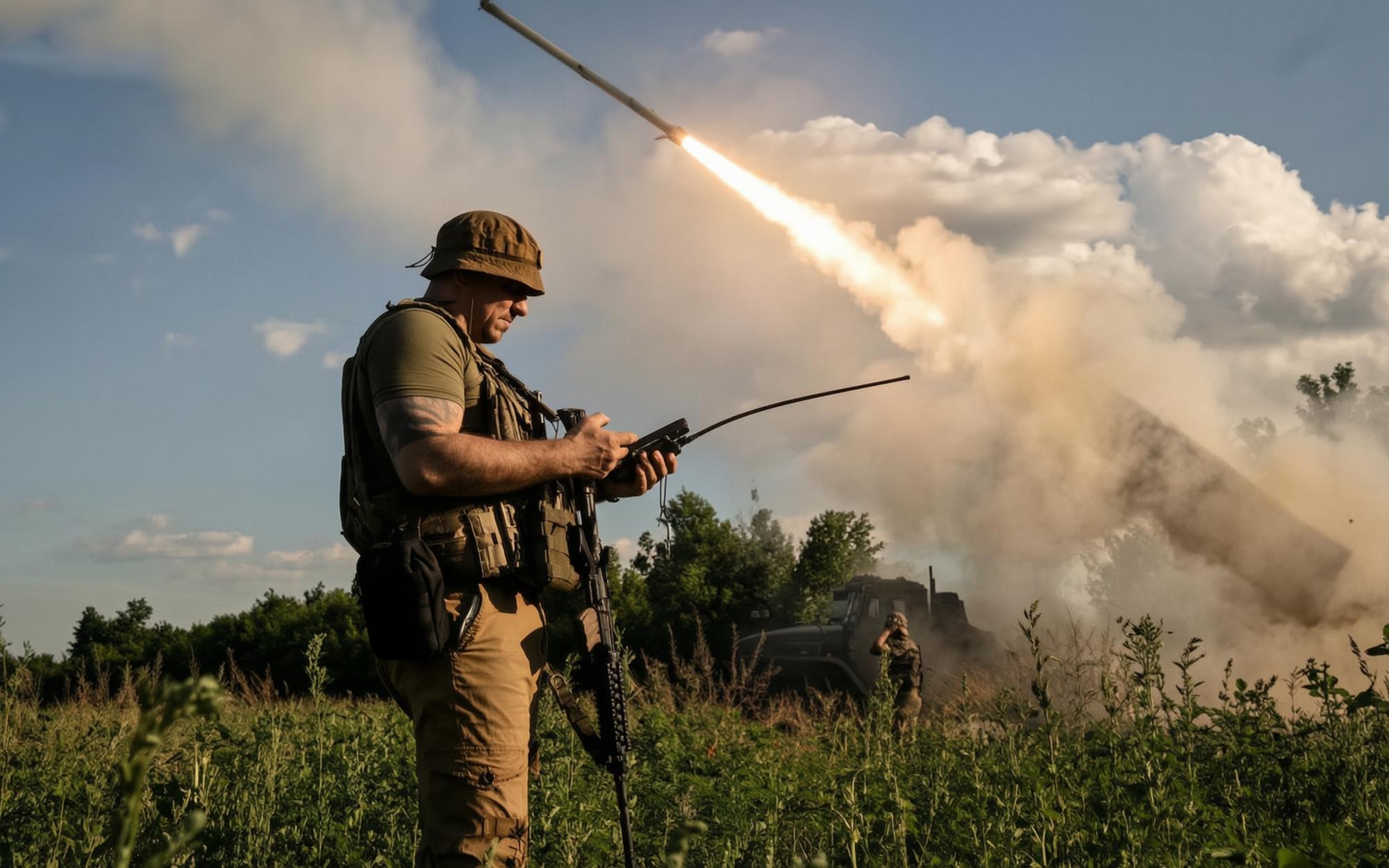
Russian troops on Ukraine’s front lines are facing a meat grinder of biblical proportions, with many surviving less than half an hour before being killed or wounded, according to CIA Director John Ratcliffe.

His assessment, shared this week at the Defense and Innovation Summit in Pennsylvania, paints a brutal picture of Moscow’s human wave tactics and highlights how technology-driven warfare is rewriting the rules of combat.

Ratcliffe confirmed that the average Russian recruit sent to the front in Ukraine survives between 20 and 30 minutes, primarily due to the lethal precision of AI-powered drones that Ukraine has fielded.

For the first time, a high-ranking American intelligence official has pulled back the curtain on just how catastrophic this conflict has become for Russia.

“Our intelligence is consistent with what’s been seen on the ground,” Ratcliffe noted.

“The average life expectancy of a Russian recruit right now, arriving on the battlefield in Ukraine, is estimated to be between 20 and 30 minutes. That’s because AI-powered drones have gotten to be such specialized, low-cost killing machines.”

That statement reflects the staggering shift in modern warfare as advanced technology increasingly determines the outcome of major conflicts.

Ratcliffe stressed that the U.S. cannot afford to lag behind in this new era of combat innovation where drones and artificial intelligence serve as force multipliers capable of crushing even numerically superior armies.

According to data from the Center for Strategic and International Studies, the casualty ratio between Russia and Ukraine has widened dramatically, reaching almost 8-to-1 during the first half of 2026. E

arlier in the war, the ratio hovered around 2-to-1 or 3-to-1. The growing divide underscores how effective Ukraine’s use of precision-driven, AI-guided systems has become.

European and Ukrainian officials estimate that over two million soldiers have been killed or wounded since Moscow’s invasion began in February 2022. Of those, approximately 1.4 million are Russian, including as many as 450,000 confirmed dead—the highest toll suffered by any major power since World War II.

The Kremlin’s constant waves of mobilized men are being chewed apart faster than they can be trained or equipped.

Ratcliffe emphasized that this massive casualty count is evidence of a larger truth: mastering cutting-edge military technology is now every bit as essential as traditional manpower or hardware.

“The takeaway is that the mastery of these emerging technologies is every bit as important as military strength,” he said. “That’s why an inferior force, four and a half years later, has held off the superior force of Russia.”

Ukraine’s battlefield innovation has effectively halted Russia’s advances. Its AI-guided drones are rewriting the tactical playbook and proving that asymmetric warfare remains the great equalizer when matched with steady resolve and creativity.

Ratcliffe pointedly warned that Washington must learn from this and stay ahead of technological shifts or risk being left in the dust by adversaries willing to adapt faster.

“The pace of their advance has stopped as Ukraine’s mastery of emerging technologies—especially drone warfare—has become such a great equalizer,” Ratcliffe said. “It shows why we have to be leading on this in all respects for us to maintain our place in the global marketplace.”

That statement wasn’t just about Ukraine. It was a thinly veiled call to action for U.S. policymakers to stop letting bureaucrats slow down military innovation.

Under President Trump and War Secretary Pete Hegseth’s leadership, the Department of War has been reoriented toward mission clarity, modernization, and lethal efficiency. Ratcliffe’s remarks fit perfectly into that strategic framework: dominate the technological battlefield or become obsolete.

Meanwhile, Ukraine’s partnerships with Western allies are growing stronger. This week, Kyiv signed a $6 billion drone production deal with the European Union, while President Volodymyr Zelenskyy announced progress on a similar multibillion-dollar package with Washington.

For all the chaos of Europe’s politics, when it comes to Russia’s aggression, there is a growing recognition that technology—and not just manpower—is what will win this war.

As the Kremlin continues sending untrained conscripts into a high-tech death trap, Moscow seems increasingly desperate.

The Russian regime once prided itself on Soviet-era manpower and tank warfare, but in today’s battlefield, AI-guided drones don’t care how many men Putin throws into the meat grinder. They simply hunt, target, and destroy.

For the United States, Ratcliffe’s message was unmistakable: Ukraine’s example is not just a story about heroism—it’s a reminder that modern warfare waits for no one.

Any nation unwilling to innovate might soon find its soldiers sharing the same grim fate as Russia’s—counting their life expectancy in minutes.

News

Spencer Pratt Shreds Karen Bass Over Her Bizarre ‘Meth for Self Defense’ Claim [WATCH]

Los Angeles Mayor Karen Bass is facing criticism following remarks she made about homelessness and methamphetamine use during a press conference on Wednesday, comments that prompted reactions from political opponents and public figures, including former Los Angeles mayoral candidate Spencer Pratt.

During the press conference, Bass discussed the challenges faced by people experiencing homelessness, including concerns about safety while sleeping outdoors, as reported by Red State.

In remarks that circulated widely on social media, Bass suggested that some homeless individuals use methamphetamine to remain awake because they fear being assaulted while sleeping.

After reporters asked Bass to clarify her comments, she responded, “What I said is, is that I know that people have used meth to stay awake at night, so they don’t fall asleep because they’re worried about being assaulted.”

The comments generated significant discussion online, with critics arguing that the mayor’s explanation appeared to normalize drug use instead of focusing on solutions to homelessness, addiction, and public safety.

Among those responding was Spencer Pratt, who previously ran for mayor of Los Angeles. Pratt criticized Bass on social media following her remarks.

The source material also referenced several previous statements made by Bass that have drawn public attention during her time in office.

According to the source, Bass referred to former Cuban leader Fidel Castro as “Comandante en Jefe” following his death in 2016.

The article also referenced a 2025 wildfire press conference during which Bass said, “All of this can be found at URL,” without identifying the specific website.

In addition, the source cited Bass’s response during the 2026 Los Angeles mayoral debate when she was asked whether noncitizens should be permitted to vote in local elections.

According to the source, Bass replied, “It depends. It’s not a yes or no.”

The discussion surrounding Bass’s homelessness comments coincided with another major event in the Los Angeles area.

During the early morning hours on Thursday, a large water main burst beneath Sunset Boulevard in West Hollywood, sending water through streets and affecting vehicles, businesses, residences, and public transportation.

Although West Hollywood is an independent city and is not governed by the City of Los Angeles, it is located within Los Angeles County.

The source noted that some critics viewed the incident as another example of broader infrastructure concerns affecting the region.

Following Bass’s clarification, discussion of her comments continued across social media platforms, with supporters and critics debating both the context of her remarks and the city’s response to homelessness.

The source also referenced additional criticism from Pratt, who previously sought the mayor’s office.

According to the source, Pratt questioned Bass’s leadership while commenting on the ongoing issues facing Los Angeles.

The article further noted that Los Angeles voters are preparing for the November general election.

Bass is expected to face Democratic Socialist candidate Nithya Raman in the mayoral contest.

Homelessness, public safety, infrastructure, and drug addiction remain central issues in Los Angeles politics.

City officials have continued to debate strategies for addressing the homeless population while responding to concerns involving public health, crime, and municipal services.

Bass’s comments have added to that ongoing discussion, drawing attention from elected officials, political candidates, and residents as the city’s leadership continues to face scrutiny over its handling of homelessness and related public policy challenges.

News

Troy Jackson Calls to ‘Get Rid’ of Americans Who Support ICE in Maine Senate Uproar [WATCH]

Former Maine Senate President Troy Jackson is facing criticism after making remarks about U.S. Immigration and Customs Enforcement and people who support the agency, as his name continues to be mentioned as a possible Democratic candidate in Maine’s U.S. Senate race, as reported by Townhall.

According to the source material, Maine Democrats are preparing to announce their selection to replace Graham Platner in the Senate race, with Jackson among the names reportedly under consideration.

The controversy centers on comments Jackson made regarding ICE and its supporters.

During his remarks, Jackson said, “Here we go. We’re going to do something to get rid of ICE, we’re going to do something to get rid of the people who that support them,” Jackson said, “because in no world should we have to live in where you get up tomorrow and go to work and you’re murdered.”

Those comments prompted criticism from political opponents, who argued the language targeted not only the federal immigration agency but also Americans who support its mission of enforcing immigration law.

The report also claimed Jackson’s remarks allegedly preceded an incident involving a Maine media outlet, which reportedly said one of its reporter’s vehicle tires had been slashed.

The report did not establish a direct connection between Jackson’s comments and the incident.

In addition to the controversy surrounding his ICE remarks, the report referenced an earlier allegation involving Jackson and a former staff member.

According to the report, Jackson allegedly threw a water bottle during an argument with a female staffer, and it struck the employee. The report states that Jackson has denied those allegations.

No court findings or disciplinary actions related to that allegation were cited in the report.

The renewed attention comes as immigration enforcement continues to be a major political issue ahead of the 2026 elections.

President Donald Trump campaigned on increased immigration enforcement and has repeatedly called for stronger border security and expanded deportation efforts.

ICE remains one of the primary federal agencies responsible for enforcing immigration laws and carrying out deportation operations.

Supporters of the agency argue that ICE plays a critical role in public safety and the enforcement of federal immigration law.

Critics of the agency have called for major reforms or its elimination, making the issue a recurring point of political debate in Congress and in state races across the country.

Jackson’s comments have become part of that broader debate as speculation continues over whether he will become the Democratic nominee in the Maine Senate contest.

The report also noted that millions of Americans support immigration enforcement policies similar to those advocated by President Trump, making Jackson’s remarks likely to receive additional attention from voters as the campaign develops.

No additional statement from Jackson addressing the ICE comments was included in the source material beyond the quoted remarks.

Maine Democrats have not yet announced their final selection for the Senate race, but Jackson’s reported comments and the allegations referenced in the report have added another issue to the political discussion surrounding the contest.

The Senate race is expected to draw national attention as both parties compete for the seat, with immigration policy remaining one of the central issues in the campaign.

News

Cool Relief Returns to Hawaii Barracks As Repairs Restore Air Conditioning for 4,000 Soldiers

After a week of sweltering tropical heat, thousands of soldiers stationed across Hawaii finally have cool air back in their barracks.

Roughly 4,000 troops at Schofield Barracks, Wheeler Army Airfield, and Helemano Military Reservation can now turn their air conditioners back on following critical repairs at a troubled water treatment plant that took down key infrastructure earlier this month.

An issue with underground water pumps had forced the garrison to shut off water-cooled chiller systems to preserve what little water supply remained. The move was necessary after multiple pumps failed, leaving only one functioning system to push water across the bases.

With those chillers consuming nearly 40 percent of the daily water demand, leaders had no choice but to prioritize drinking water and sanitation over comfort.

Garrison spokesman Nathan Wilkes explained that, as of Thursday, engineers have brought a second deep well pump online at the treatment plant. Repairs continue on a third pump expected to return to service early next week.

With that progress, the garrison has cautiously started restoring full utilities to the soldiers who have spent a miserable stretch enduring Hawaii’s humidity without climate control.

Wilkes said his team continues to monitor for any remaining technical issues. “We are tracking a couple of isolated cases where condensation leaks have been found, but the systems are holding and the team is knocking out any remaining issues,” he told reporters.

In other words, the worst appears to be over, and soldiers can breathe easier — literally.

The shutdown originated from a series of equipment failures on July 9 when motors at the local plant burned out due to age, extreme heat, and even an electrical fire.

That combination crippled the water network that feeds roughly 22 of the 27 permanent party barracks in the region known as AO North, according to Col. Rachel Sullivan, commander of U.S. Army Garrison Hawaii. Faced with dwindling capacity, her team moved swiftly to prevent a complete collapse of the water system.

Sullivan noted that the temporary fix is just that — temporary. Long-term upgrades are badly needed, and the current plan involves relocating the aging deep well pumps from 585 feet underground to surface-level systems that will be easier to maintain and repair.

Unfortunately, government contracting delays mean that full modernization of the water plant might not wrap up until 2029 or even 2030.

In the meantime, the Army Corps of Engineers’ Rapid Critical Infrastructure Team has stepped in to replace the existing deep well pumps and motors on an accelerated eight-month timeline.

The cooperation between local garrison leadership and the Corps shows what decisive action looks like — something all too rare in the bloated world of government projects.

Despite the inconvenience, Sullivan’s team kept a firm grip on basic support services throughout the outage. Drinking water remained available, sanitation systems stayed operational, and the 25th Infantry Division deployed four specialized High Incentive Portable Potable Water Systems to ensure household water needs were met.

Soldiers and families were also encouraged to report wasteful water use, and both Military Police and the Directorate of Public Works were actively responding to those reports.

Several water restrictions remain as the repairs continue. Car washes have been closed and landscaping irrigation has been paused to preserve capacity for essential uses.

These are minor inconveniences compared to the potential chaos of a full water failure, something Sullivan and her engineers clearly managed to avoid.

This episode serves as another reminder that America’s military infrastructure—particularly in far-reaching locales like Hawaii—needs serious attention. Facilities built decades ago are under strain from weather, usage, and bureaucratic neglect.

Yet once again, it’s the resilience of American troops and their war department teams that keeps operations moving forward.

While the Biden administration continues talking about “green transitions” and billions for bureaucratic pet projects, the basics like reliable utilities for military communities often go underfunded.

The result? Soldiers sweating it out while waiting for leaders to prioritize them over politics. Thankfully, the on-the-ground commanders in Hawaii didn’t wait for Washington—they fixed the problem and put their troops first.

For now, the cool air is flowing again, and that’s good news for the men and women ready to fight if called upon. They’ve shown patience and toughness through the discomfort, and now they can focus on their mission—not surviving a tropical sauna in their own barracks.

Credit goes where it’s due—to the crews who dug in and turned things around without waiting on another slow-moving Washington task force.

When the job needs to get done, it’s still the American soldier and a few dedicated engineers who make it happen.


Scroll to Top