News

News

Dem Rep Warns Black Voters Will Quit Elections Without Massive Reparations Payouts [WATCH]

Rep. Summer Lee, D-Pa., is renewing her push for reparations legislation while arguing that continued opposition to such proposals could discourage political participation among some Black Americans, as reported by The New York Post.

The Pennsylvania congresswoman made the comments during an appearance on “The Native Land Pod,” where she discussed reparations, political engagement, and the prospects for legislation aimed at addressing the historical legacy of slavery in the United States.

During the interview, Lee criticized what she described as efforts by political opponents to undermine support for reparations and said she believes such efforts are intended to reduce participation in the political process.

“And that’s what they do,” Lee said.

“Because, again, they’re trying to disenfranchise you. Because if you believe that you’re never going to get reparations from this system, then you tap out, and you don’t just tap out of the conversation, you tap out of the system. You don’t want to vote anymore. You don’t participate anymore.”

Lee continued by arguing that political participation remains important regardless of whether reparations legislation advances.

“And they know that that’s how they don’t control Congress,” Lee added.

“That’s how you can get your school boards, your board of supervisors. They want us that far out of this system. So right now, we fight for reparations because it’s owed us. It is owed us, so we’re not going to back down on that one way or another.”

The comments came as Lee continues advocating for a federal reparations proposal she reintroduced in May.

The legislation seeks to establish a framework for providing federal resources to descendants of enslaved people brought to the United States from Africa.

The effort follows a similar proposal introduced during the previous Congress by former Missouri Rep. Cori Bush.

Bush’s proposal, introduced in May 2023, called for $14 trillion in reparations-related payments and programs for descendants of slavery. The measure did not advance in Congress.

During her interview, Lee acknowledged that support for reparations remains limited, including among members of her own party.

“I’m not shocked that my colleagues are not on it, that Democratic colleagues aren’t on it,” Lee said.

“Again, there is a level of comfort in this building that sustains people. And I know that the people who don’t want reparations back a lot of my colleagues, Democrat and otherwise. So no, I’m not shocked, but it is why we have to keep people on the outside encouraged.”

The congresswoman also addressed criticism that the term “reparations” has become politically difficult for some elected officials to embrace.

Responding to a question about political resistance to the concept, Lee argued that lawmakers should be willing to support policies they believe are backed by evidence even when those positions are controversial.

“The reality is, is that the cowardice that liberals are able to show when it comes to all types of things that sound scary, but we know you have, you know, just data, evidence, empirical evidence behind it,” Lee said.

“And that comes with — that comes with police accountability, that comes with criminal legal reform, that comes with reparations, right?”

Lee also argued that political supporters should push elected officials to take stronger positions on controversial issues.

“We give liberals very often a pass to not be their most courageous selves,” she said.

“So whatever it is that we’re talking about, we have to create the conditions for them to be more courageous.”

The Pennsylvania lawmaker has previously acknowledged that reparations legislation faces significant political obstacles.

“We know there will be pushback,” Lee said when she reintroduced the proposal in May.

“Reparations are a proposal to level the playing field, but the only way we could ever have a level playing field is by remedying the harms that have been done by the system.”

Despite the challenges facing the proposal, Lee indicated this week that she intends to continue advocating for the measure and building support for reparations legislation in Congress.

The debate over reparations has remained a recurring issue in national politics, with supporters arguing the policy would address historical injustices and opponents raising concerns about cost, implementation, and eligibility.

For now, Lee’s proposal faces uncertain prospects on Capitol Hill as lawmakers continue debating the issue.

News

Rigged California: How Laws, And Ballots, Shape the Perception of Election Integrity

“Perception is reality.” This oft-cited idea, popularized in the 1980s by political strategist Lee Atwater, underscores a fundamental truth: how people interpret events shape their beliefs, actions, and trust in institutions.

In the realm of elections, few phrases capture the current divide in California better. When President Donald Trump labels the state’s elections as “rigged,” reactions split sharply. Some see outright treason warranting extreme measures. Others dismiss it as conspiracy rhetoric. Many, however, point to democratically enacted laws that have transformed voting processes, creating what critics argue is legalized opportunity for manipulation.

California’s shift toward expansive mail-in voting accelerated during the COVID-19 pandemic and has since become entrenched. State law now automatically sends mail-in ballots to all registered voters—approximately 23 million people. This universal system, combined with ballot harvesting, extended deadlines for ballots postmarked by Election Day but arriving days later, and other provisions, prioritize access over speed and timely verification.

Proponents hail it as modernizing democracy. Critics contend it rigs outcomes by design, not through illicit counting on Election Night, but via rules that favor late-arriving ballots in a state dominated by one party. Voter turnout in many California races, such as gubernatorial or mayoral contests, hovers around 25-30% in typical off-year or primary cycles. With millions of ballots mailed regardless of whether recipients still live at listed addresses, have moved, or passed away, the system leaves substantial room for ballots to surface weeks after polls close.

California has resisted full federal scrutiny of its voter rolls for years, defending its autonomy while maintaining lists that include outdated entries. At scale, this creates vulnerabilities. An apartment complex in a transient neighborhood might receive ballots for dozens of former residents over time. Those ballots often end up in community mailboxes, where anyone could theoretically handle them.

Non-governmental organizations have registered voters at unconventional addresses, including abandoned sites. In Los Angeles, stories circulate of ballots sent to derelict gas stations or homeless encampments. Who collects and returns them remains opaque. As counting drags on for weeks—perfectly legal under current state statutes—leads can evaporate.

This pattern fuels the “rigged” perception, even absent proven widespread fraud because fraud has been made legal. The June 2026 primary has exemplified this dynamic. In the Los Angeles mayoral race, reality TV personality and conservative challenger Spencer Pratt surged early on in-person and initial counts. Yet as mail-in ballots processed over subsequent days and weeks, progressive City Council member Nithya Raman overtook him, advancing to a runoff against incumbent Karen Bass.

Trump and supporters decried the shift as evidence of manipulation, noting how late ballots disproportionately benefited certain candidates. Similar dynamics appeared in the gubernatorial primary, where Republican Steve Hilton advanced to face Democrat Xavier Becerra despite prolonged counting.

Los Angeles serves as a testing ground for progressive policies: expansive social spending, priorities favoring migrants over longtime residents, and ambitious infrastructure like the troubled high-speed rail project that has consumed billions with little progress.

Pratt’s campaign highlighted these failures—government is charitable with funds for illegal immigrants while the Palisades Fire victims, lifelong Californians, lives went up in smoke. LA officials put “Americans last” in their own city. His message resonated with voters frustrated by taxes, homelessness, and ineffective governance, even in deep-blue LA.

Though Pratt did not advance, his visibility spotlighted systemic issues. While Pratt may not have won an election, in a broader sense he won for LA, California and America, by drawing attention to the race that would otherwise have been another quiet Democratic hold.

California’s model—universal mail ballots, permissive rules, and single-party dominance—functions as an incubator. If scaled nationally, it risks entrenching one-party rule where turnout games and legal loopholes replace competitive debate. Conservatives worry their voices will be structurally marginalized. Defenders argue safeguards like signature verification and postmark rules prevent abuse, and delays reflect thoroughness, not deceit.

Ultimately, the fraud debate in California transcends individual races. It centers on whether laws engineered for maximum participation have inadvertently—or intentionally—undermined confidence. Trump’s “rigged” label resonates because the system appears engineered to produce predictable outcomes in a state where Democrats control the machinery.

Cleaning voter rolls, tightening deadlines, and ensuring real-time transparency could restore faith without restricting access. Perception remains reality for millions. And, until California addresses the structural incentives that make late surges routine and skepticism inevitable, calls of “rigged” will persist.

Spencer Pratt’s campaign, though unsuccessful in advancing, ignited a conversation about putting Americans first in their own cities. No one should be ashamed of American’s and America being first. Securing election integrity is not partisan theater—it is essential to preserving a republic where every eligible voice truly counts. Without reform, the perception of rigging will continue to erode the reality of democratic consent.

News

Anonymous Tip Triggers Major Mexico Search for Savannah Guthrie’s Missing Mother [WATCH]

An anonymous tip claiming that missing Arizona woman Nancy Guthrie may have been buried in an unmarked grave in northern Mexico prompted a search operation this week, but investigators and volunteers did not locate any evidence connected to the case, as reported by the New York Post.

The search was conducted by Buscando Corazones Nogales, a volunteer organization that assists in locating missing persons in Mexico.

According to the group’s leader, Ramona Guadalupe Ayala Ortiz, the organization received an anonymous call on Wednesday alleging that Guthrie’s remains could be found in a remote area near the U.S.-Mexico border.

Guthrie, 84, disappeared from her home in Tucson, Arizona, on Feb. 1. Authorities believe she was abducted from her residence in the Catalina Foothills, and the investigation into her disappearance remains active.

No arrests have been announced, and investigators have not publicly identified any suspects.

According to Ayala Ortiz, the anonymous caller provided a specific location in an area known as Mariposa, northwest of Nogales, Sonora. The tipster allegedly claimed Guthrie had been buried in a grave located near a stream.

“We received an anonymous call telling us that the woman’s [Guthrie’s] remains were in the Mariposa area — in a grave over a stream,” Ayala Ortiz told the Mexican newspaper El Imparcial.

The information prompted volunteers and search personnel to travel to the area and conduct an initial search.

Mariposa has previously been the site of discoveries involving unmarked graves. Earlier this year, search teams working in the region located 25 such graves, making the latest tip significant enough to warrant further investigation.

During the operation, volunteers expanded their search deeper into the area than previous efforts. Despite the extensive examination of the terrain identified by the caller, no evidence connected to Guthrie was discovered.

Ayala Ortiz said the search did not produce any findings related to the missing Arizona woman.

Although the tip did not lead to a breakthrough, the organization indicated it intends to continue searching the region in future operations.

The effort was supported by the Sonora State Commission for the Search of Missing Persons, which assisted in coordinating resources for the operation.

Municipal and state authorities also provided security for volunteers and personnel participating in the search.

The case continues to attract attention on both sides of the border due to Guthrie’s connection to NBC “Today” co-host Savannah Guthrie.

Nancy Guthrie disappeared during the early morning hours of Feb. 1 from her Tucson-area residence, more than 70 miles north of Nogales.

Investigators have spent months pursuing leads and conducting searches, but authorities have released few details about the status of the investigation.

Law enforcement officials have previously stated they believe Guthrie was taken from her home, but no public announcements regarding arrests or major developments have followed.

The latest search illustrates how tips—both confirmed and unconfirmed—continue to generate investigative activity as authorities and volunteer groups seek answers in the case.

While the anonymous report ultimately did not lead to the discovery of Guthrie, search organizations involved in the effort said they remain committed to following credible leads and continuing operations aimed at locating missing persons throughout the region.

For now, the mystery surrounding Nancy Guthrie’s disappearance remains unresolved, and investigators continue urging anyone with information about her whereabouts to come forward.

News

Sixth Grade Boy Dies in School After Reported TikTok Challenge Goes Horribly Wrong

A 12-year-old student died Wednesday after suffering a choking emergency inside a Yonkers, New York, middle school, prompting an ongoing police investigation into whether a social media challenge may have played a role in the incident, as reported by the New York Post.

The sixth-grade student became unresponsive at approximately 11:40 a.m. inside Justice Sonia Sotomayor Community School, according to Yonkers school officials.

Staff members and first responders immediately attempted life-saving measures before the boy was transported to St. Joseph’s Hospital. Despite those efforts, the student was later pronounced dead.

Authorities have not publicly released the child’s identity.

Investigators are now working to determine exactly what occurred in the moments leading up to the tragedy.

According to News 12, police are examining whether the incident may have been connected to the so-called “One Bite” challenge that has circulated on social media platforms.

The challenge reportedly involves participants attempting to consume large amounts of food in a single bite.

Officials emphasized that no conclusions have been reached and that investigators are continuing to gather information.

“Anything about a TikTok challenge, anything about witness statements, the events leading up to this we’re going to investigate, and we’re going to continue with the investigation from beginning to end,” Yonkers Police Commissioner Christopher Sapienza said during a news conference Thursday.

Reports indicated the student may have been eating a donut when the emergency occurred, though authorities have not confirmed that detail.

School officials said the incident did not occur inside the cafeteria.

Instead, Superintendent Anibal Soler Jr. said the student experienced the medical emergency in a fourth-floor hallway, where staff members immediately responded in an effort to dislodge the food from his throat.

As news of the tragedy spread throughout the school community, district leaders focused on providing support to students, faculty, and family members affected by the loss.

“As police investigate the nature of the medical emergency, we remain focused on caring for his classmates, teachers, and staff who are in terrible pain,” Soler said in a statement.

The superintendent also described the student as a well-known and beloved member of the school community.

“This young man was a bright light in the building,” Soler said.

“Everybody loved him, everybody knew him. He was energy, he was joy.”

The incident has renewed attention on the influence of social media trends involving young users, particularly those that may encourage risky behavior.

While investigators have not determined whether any online challenge contributed to the student’s death, authorities said every aspect of the case will be reviewed.

Yonkers Mayor Mike Spano also issued a statement expressing condolences to the family and the broader community.

“Today’s tragic loss is heartbreaking,” Spano said.

“The death of a child is every parent’s worst nightmare, and our entire Yonkers community is grieving alongside this student’s family, classmates, teachers, and loved ones.”

The investigation remains active as police continue interviewing witnesses and reviewing available evidence. Authorities have not announced a timeline for completing the investigation or releasing additional findings.

For now, school officials say their focus remains on helping students and staff cope with the loss while law enforcement works to determine the circumstances surrounding the sixth-grader’s death.

The tragedy has left classmates, educators, and parents searching for answers as the Yonkers community mourns the loss of a young student whose life ended unexpectedly during the school day.

News

Portland Protester Who Smashed ICE Officer With Rock Gets Sentenced [WATCH]

A Portland man who admitted to assaulting a federal immigration officer during a protest outside a U.S. Immigration and Customs Enforcement facility has been sentenced to 30 months in federal prison, according to the U.S. Attorney’s Office for the District of Oregon, as reported by The New York Post.

Robert Jacob Hoopes received the sentence on Thursday after previously pleading guilty to aggravated assault of a federal employee with a dangerous weapon stemming from a June 2025 protest in Portland, Oregon.

Federal prosecutors said Hoopes threw a rock that struck an ICE Enforcement and Removal Operations officer in the face during demonstrations outside the facility. Court records indicate the impact caused a significant injury that required medical treatment.

According to prosecutors, the officer suffered a wound that bled heavily and temporarily obstructed his vision. Authorities said the injury required care beyond standard first aid.

The sentence includes 30 months in federal prison, three years of supervised release following incarceration, and more than $8,000 in restitution.

U.S. Attorney Scott Bradford said the case demonstrates the consequences of violence directed at law enforcement officers during protests.

“Today’s message is clear — violence is not a protest,” Bradford said in a statement.

“When you cross the line and assault a federal officer, you will be prosecuted.”

The case drew attention because of the investigative methods used to identify Hoopes.

According to charging documents, FBI investigators relied in part on facial recognition technology after reviewing photographs published online following the protest.

Federal authorities said investigators submitted an image published by OregonLive.com into commercially available facial recognition software. The software reportedly produced approximately 30 potential matches from publicly available databases.

Investigators then manually reviewed those results and focused on a photograph posted on a Reed College SmugMug page titled “Canyon Day April ’23.”

According to prosecutors, a tattoo visible on the individual in that photograph matched a tattoo seen on the suspect during the protest.

That comparison helped investigators identify Hoopes as the individual accused of throwing the rock.

The case has generated discussion because Hoopes’ family publicly described him as someone committed to nonviolence.

In comments previously reported by KATU, Hoopes’ father, Tom Hoopes, described his son as a “lifelong Quaker who is deeply committed to pacifism.”

While acknowledging that his son attended the protest, he declined to discuss the specifics of the allegations at the time.

“What his involvement was: I can’t speak to that, but he is deeply committed to justice,” Tom Hoopes told the outlet.

The sentencing comes as the Justice Department continues pursuing cases involving attacks on federal officers during demonstrations connected to immigration enforcement policies.

Federal prosecutors have repeatedly emphasized that individuals who engage in violence during protests can face criminal charges regardless of the political cause being advocated.

The case also arrives amid continued clashes at immigration-related facilities in other parts of the country.

More recently, demonstrations outside Delaney Hall, an immigration detention center in Newark, New Jersey, have resulted in multiple confrontations between protesters and law enforcement officers.

Authorities have reported dozens of arrests connected to those incidents.

Federal officials have stated that while peaceful protest remains protected under the law, assaults on law enforcement officers will continue to be prosecuted through the federal court system.

The sentencing of Hoopes marks one of the latest cases arising from protests targeting ICE operations during President Donald Trump’s administration.

News

Senate Committee Backs Bold Move to Restore ‘Department of War’ Name

The Senate Armed Services Committee voted this week to advance a landmark proposal that would officially restore the historic “Department of War” name to the nation’s premier military institution, replacing the post–World War II “Department of Defense” title.

The move, long supported by President Donald Trump and War Secretary Pete Hegseth, signals a return to plainspoken strength and unapologetic patriotism in how America defines its global role.

The measure is tucked into the committee’s version of the 2027 National Defense Authorization Act, the annual policy bill that funds our armed forces and outlines America’s military priorities.

Senator Tim Kaine, the Democrat from Virginia known for his dovish track record, proudly voted against the measure, lamenting both the name restoration and the continued funding of U.S. operations overseas.

Kaine declared the rebranding to be “juvenile,” complaining that it reflects “a President who has abandoned meaningful diplomacy.” His comments drew instant pushback from veterans and service members who understand that peace through strength is not “juvenile” but foundational to American power.

Under Trump’s leadership, Washington has begun acknowledging what the rest of the world already knows: America does not defend its freedom with kind words or weak posturing. The decision to restore the Department of War name is about transparency, history, and resolve.

Since the President’s September 2025 executive order reversing the 1947 terminology shift, many in the War Department have already adopted the new/old terminology informally.

Senator Warns Government Shutdown Looms as Democrats Balk at Trump’s Defense Budget Surge

A week before the Senate committee’s vote, their House counterparts advanced the same amendment, moving the proposal along with the 2027 NDAA. War Secretary Pete Hegseth celebrated the development, calling it “the return of American clarity.”

In his remarks on social media, Hegseth declared, “The Department of War will officially be restored soon,” reminding Americans that strength and honesty are not mutually exclusive values.

Critics are crying foul, of course, shouting about cost and optics.

A Congressional Budget Office report estimated the rebranding might cost between $10 million and $125 million—a drop in the bucket compared to the bloated billions Washington happily throws away on climate initiatives or foreign aid to hostile regimes.

Democrats like Senator Jeff Merkley trotted out the usual talking points, claiming the move is a “vanity project” that “does nothing to advance national security.”

But that’s precisely where liberals get it wrong. The name “Department of War” carries historic weight. It is a statement to friend and foe alike that the United States no longer hides behind euphemisms.

When we employ power, it is not out of timidity but with righteous force. As Trump has repeatedly pointed out, America’s adversaries respect strength, not semantics. Moscow and Beijing are not losing sleep over our internal politics—they’re measuring our resolve.

Critics like Kaine and Merkley fail to understand that messaging is strategic. The change is not “performative,” as they call it. It’s mission-driven. In a world of increasing conflict and hybrid warfare, language matters.

Pete Hegseth Stands His Ground During Fiery Senate Showdown Over Budget, Troops, and Trump's 'America First' Vision

By restoring the traditional title, the administration is reminding both Americans and the world that the United States exists to win wars, not manage decline.

Trump’s America rejects the soft rhetoric of endless diplomacy and bureaucratic handwringing. The new War Department embodies a government that confronts threats directly and doesn’t apologize for standing tall.

Pete Hegseth has become the face of that new ethos—a man unafraid to call things by their rightful name and lead with patriotism instead of politics.

Of course, inside the Beltway, the usual crowd of foreign policy theorists and think tank elites are squirming over the implications. Their discomfort is precisely the point.

For too long, Washington has concealed its intentions behind words designed to sound less threatening, as if the rest of the world didn’t notice our aircraft carriers and nuclear triad. The War Department name puts honesty front and center.

This move has unsurprisingly riled left-wing activists, whose worldview sees strength as aggression and moral clarity as dangerous.

Yet across the ranks of American troops, veterans, and patriotic citizens, the sentiment is largely the same: about time. Soldiers don’t fight in “defense paradigms”—they fight wars and they win them. The Department of War name honors that reality.

There’s no confusion in this new era of American leadership. With Trump in the White House and Hegseth at the helm of the War Department, Washington is once again projecting the type of dominance that kept America safe for generations.

This isn’t nostalgia; it’s necessity. The world’s bullies understand only one language—American power backed by conviction.

As the NDAA advances toward full approval, the restoration of the Department of War name stands as more than symbolic.

It’s a cultural reset for a military that once led with confidence, courage, and purpose. And judging from the reaction of the left, it’s hitting exactly the right targets.

News

Gavin Newsom Teases Hunter Biden Presidential Run During Podcast Interview [WATCH]

Hunter Biden made a joking reference to a future political campaign during a recent appearance on California Gov. Gavin Newsom’s podcast, adding another headline-generating moment to a conversation that touched on politics, media attention, and Biden’s public profile, as reported by The New York Post.

Newsom released a preview of the latest episode of his podcast, “This Is Gavin Newsom,” featuring Hunter Biden, the son of former President Joe Biden.

In a teaser shared on social media, Newsom introduced his guest by jokingly referring to him as “Presidential candidate Hunter Biden.”

Biden quickly played along with the remark.

“Here’s the deal. I’ll run, but only as your VP,” Biden responded.

The exchange drew attention online as speculation continues regarding Newsom’s political future and the possibility of a 2028 presidential campaign.

Newsom, who has repeatedly faced questions about a potential White House bid, used the podcast appearance to discuss politics and current events with Biden.

According to video clips from the interview, Biden joked that the vice president’s residence “is a lot cooler” than the White House.

The conversation also referenced comments President Donald Trump recently made about Hunter Biden.

Trump had suggested Biden “could do well” in a hypothetical 2028 presidential race while making remarks related to Maine Democratic Senate nominee Graham Platner.

“I had to give you a break for just one day,” Biden joked to Newsom, referring to the constant speculation surrounding the governor’s political ambitions.

During the interview, Biden suggested he intends to remain active in public discussions.

“They gave me a stage, and I’m going to use it,” he said.

According to reports, Biden also discussed several political figures and public personalities with whom he has disagreed, including Tucker Carlson and President Trump.

The interview reportedly included a discussion of Maine Senate candidate Graham Platner, who has faced scrutiny over allegations involving past personal relationships and controversy surrounding a tattoo that became a campaign issue.

Biden argued that many Americans would struggle to pass what he described as a “show me your phone” test if every private communication were examined publicly.

“If that’s the standard by which we are going to judge people, particularly people in elected office,” Biden said, according to reports from the interview.

The podcast teaser generated a wide range of reactions online.

Critics questioned Newsom’s decision to feature Biden as a guest, while supporters argued that the appearance provided an opportunity to hear from a figure who has remained largely out of the public spotlight since his father left office.

In recent months, Biden has become more active on social media as he marks seven years of sobriety. Since returning to public platforms earlier this year, he has posted commentary about politics, media coverage, and aspects of his personal journey.

Biden’s legal issues have remained part of the public discussion surrounding him. In 2024, he was convicted of making false statements related to drug use on a firearm purchase form.

He also faced federal tax-related allegations. Former President Joe Biden later issued a pardon covering those matters near the end of his presidency.

Some of Biden’s recent social media activity has focused on political issues, including criticism of media figures and commentary on public policy matters.

The podcast appearance also reflects Newsom’s broader effort to expand the reach of his show.

The California governor has hosted guests from across the political spectrum, including conservative commentators and political figures, generating both praise and criticism from different corners of the political world.

Newsom has previously described the podcast as a personal project aimed at exposing himself to different viewpoints.

“I’m doing this selfishly because I want to learn. I want to get better in life, not just politics. And if I’m better in life, I’ll be better in politics,” Newsom told Politico.

With Newsom continuing to build his national profile and Hunter Biden returning more frequently to public conversations, the interview quickly became one of the most discussed political podcast appearances of the week.

News

Miracle in the Mud: Two ATVers Rescue Missing Woman After Three Days Trapped in Minnesota Wilderness

A routine ATV ride through remote trails in northern Minnesota turned into a life-saving rescue after two longtime friends discovered a missing woman trapped in mud and water three days after she disappeared, as reported by The New York Post.

Adam Sandbeck and Mike Gravalin, who have spent decades exploring trails together, set out Saturday for what they expected would be a normal off-road ride.

The pair had originally planned to participate in an organized ATV run connected to a local bar, but after realizing they had mixed up the event date, they decided to explore unfamiliar trails instead.

That decision ultimately led them to 68-year-old Kathryn Woessner, who had been missing for three days and was the subject of an active search.

According to Sandbeck, the two men were traveling roughly 30 miles from their preferred RV park when they realized their ATV was running low on fuel.

Looking for a shortcut, they headed down a rough trail filled with potholes and soon came across a stranded minivan.

Gravalin, a retired deputy U.S. marshal, immediately felt something was wrong.

Initially, he suspected the vehicle might be part of an ambush or some other unusual situation. As the two men looked around the area, they spotted what appeared to be a body partially submerged in water and mud.

“I just remember saying to myself, ‘Oh my God, please don’t be a dead person.’ She was completely submerged,” Sandbeck recalled.

“The water was almost coming over her mouth,” Gravalin added.

As they approached, they heard the woman quietly say, “Help me.”

The two friends immediately sprang into action and called 911 while attempting to gather information from the woman, who was weak and struggling after days trapped in the elements.

According to the woman, she had stepped out of her minivan several days earlier and became stuck in what the men described as quicksand-like mud. Unable to free herself, she remained trapped as water levels gradually rose around her.

For three days, she endured exposure to the elements while waiting for help.

By the time rescuers arrived, Woessner was suffering from dehydration and significant sun exposure. The only relief from the heat reportedly came during overnight storms, though the rainfall also caused the surrounding water and mud to rise.

“I mean, this has got to be one of the strongest women there is … You think about her just watching the sunset, the sun up and burning every day in the sun, and she still had the will to live,” Gravalin said.

Sandbeck and Gravalin remained with the woman while emergency personnel and volunteer firefighters worked to provide aid.

During the rescue effort, the men overheard responders discussing the possibility that the woman was Kathryn Woessner, a missing 68-year-old local resident who had vanished three days earlier.

The Douglas County Sheriff’s Office later confirmed that the rescued woman was indeed Woessner.

Authorities had previously classified her as an endangered missing person due to unspecified medical conditions.

Following the rescue, Woessner was transported to a local hospital for treatment. According to Sandbeck, she was reunited with her family by Sunday.

Reflecting on the unexpected chain of events that led to the discovery, Sandbeck said the experience reinforced his belief that circumstances often unfold for a reason.

“Never be annoyed at your situation, because everything happens for a reason,” he said.

What began as a mistaken trip date and a search for new trails ultimately resulted in the rescue of a missing woman whose survival amazed both her rescuers and first responders.

News

U.S. Would Need 1,200 Troops to Take Iran’s Oil Hub, Kharg Island, Experts Warn

If President Donald Trump gives the order to seize Kharg Island, the small but strategically vital outpost off Iran’s coast, experts estimate roughly 1,200 U.S. troops would be needed to take control.

The mission could represent one of America’s most high-stakes power moves in the Persian Gulf in decades, especially as Kharg handles nearly 90 percent of Iran’s crude exports.

For now, no direct orders have been issued. But Trump’s prior statement that Kharg Island may soon be “taken” set off waves of speculation among military planners.

Although he later paused further strikes against Iran, his message was loud and clear: America’s patience with Tehran’s aggression is wearing thin.

Kharg Island, just 15 miles off Iran’s coast, is roughly eight square miles in size with around 8,000 residents. That geography poses challenges but also opportunities.

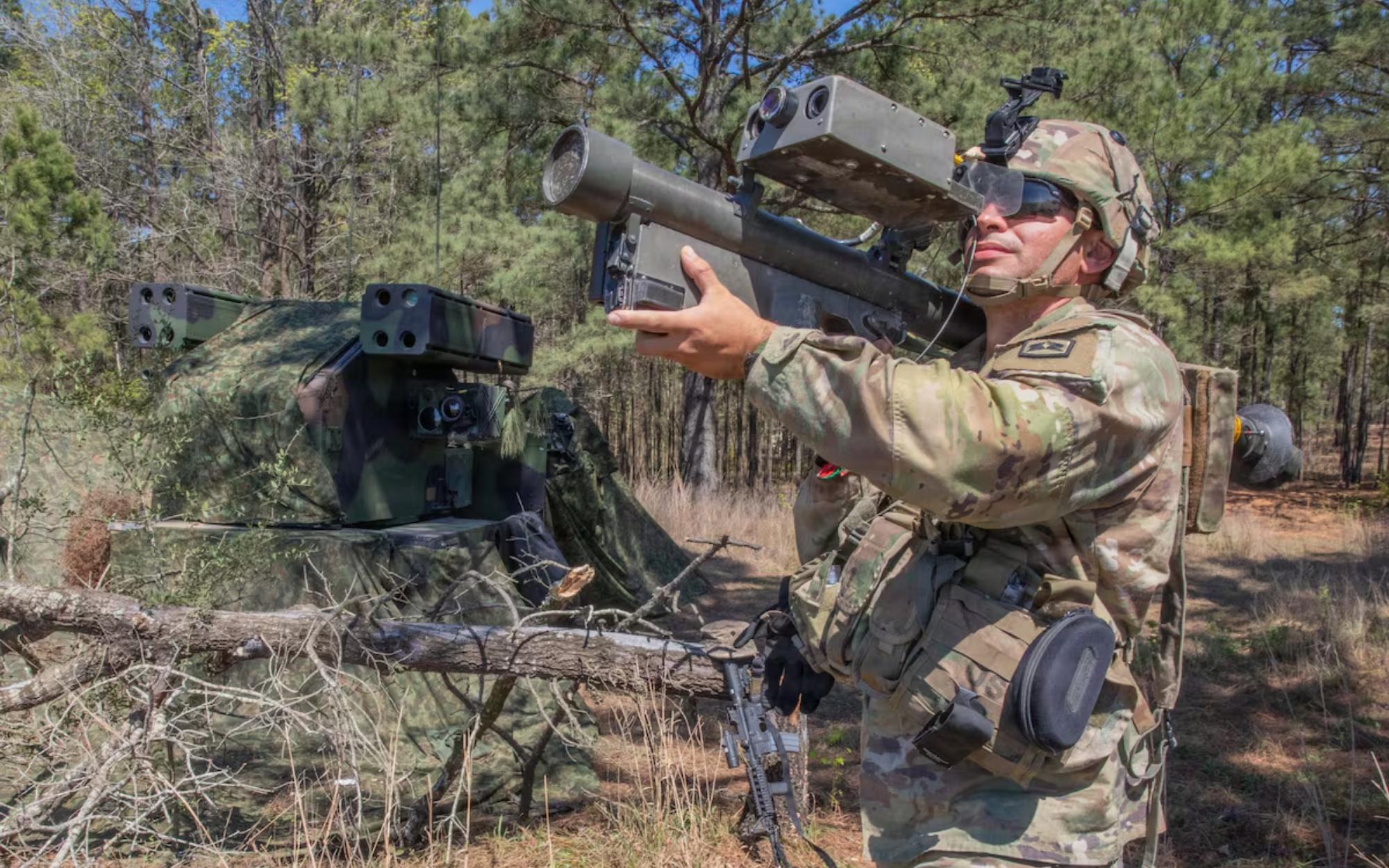
Retired Army Gen. Joseph Votel, former commander of U.S. Central Command, believes capturing the island would require a battalion to brigade-sized force—about 1,200 to 4,000 troops.

The final number would depend on mission specifics, he said, but the force must be self-sustaining and ready to repel counterattacks.

According to Votel, success would hinge not just on the landing, but on maintaining situational control amid Iranian missile and air threats.

“The specific tasks to be accomplished will actually drive the size of the force,” he noted, emphasizing the need for robust logistics, air support, and engineering elements.

Top Military Leaders Urge Expanded Amphibious Reach Marines Push for More ARG MEUs
A Marine with Force Reconnaissance Platoon, 31st MEU, during an exercise in the Philippine Sea, Feb. 4, 2026. (Lance Cpl. Victor Gurrola/U.S. Marine Corps)

Jonathan Schroden, a Marine Corps force design expert with CNA, argued that a Marine Expeditionary Unit (MEU)—roughly 1,200 Marines—could execute the seizure operation.

Amphibious assaults are core Marine capabilities, and Kharg’s size fits the MEU’s operational envelope. However, holding the island would require significantly more manpower to protect against Iran’s rapid retaliation.

“It’s worth noting that a Marine Expeditionary Unit brings with it a reinforced infantry battalion of about 1,200 Marines and amphibious seizure operations are a core capability of that unit,” Schroden said.

“Holding it might require more than that—depending on, for example, how much of a threat the 8,000 Iranian residents might pose—so some amount of follow-on forces might also be required.”

Given Iran’s missile range, any U.S. foothold on the island would be under constant threat. Schroden warned that steady exposure to air and missile attacks would require unparalleled levels of air defense support.

That could mean a mix of onboard assets, ship-based missiles, and aviation cover from the broader Marine and Navy network.

U.S. Navy Scrutinizes Ford-Class Costs as Carrier Plans Face Tight Budgets
The Gerald R. Ford-class aircraft carrier USS Gerald R. Ford, seen here in Souda Bay, Greece, cost roughly $13 billion to manufacture. (MCS3 Hannah Donahue/U.S. Navy)

A retired senior War Department official also agreed that about 1,200 troops would be necessary, likely composed of a Marine battalion landing team or a reinforced Army airborne battalion.

Taking the island, he said, would be the easy part. Holding it would demand engineers, air cover, and a rapid response capacity to suppress Iranian rocket fire.

“Taking the island would be less risky than holding it,” the official said. American troops would have to dig in, harden positions, and sustain supplies under fire if they were to hold the ground for longer than a short-term strike.

Analysts compare the challenge to past special operations missions. Caitlin Talmadge of MIT noted that capturing Kharg Island would be far more complex than the Venezuelan capture mission.

“An airborne landing could be difficult due to the island’s terrain and civilian population, and an amphibious operation so close to the Iranian mainland could leave U.S. forces vulnerable to Iranian attacks,” she explained.

She also emphasized the logistics behind sustaining such an operation. Even assuming a clean insertion, maintaining a continual flow of supplies and reinforcements across waters controlled by Iranian naval assets presents real risk.

1st Armored Brigade Combat Team soldiers fire an M1 Abrams during a rotation at the National Training Center at Fort Irwin, California. This unit will get the new M1E3 Abrams tank prototype in the fall. Army photo by Cpl. Michael McClary.

Despite the operational hazard, the geopolitical and economic impact of taking Kharg would be monumental. Choking off Iran’s oil exports by taking control of its main terminal would strike at the regime’s economic lifeline.

It would send a message that Washington is through tolerating Tehran’s provocations—especially after years of sabotage, maritime harassment, and nuclear defiance.

Military strategists note that a successful Kharg seizure would demonstrate U.S. dominance in the Gulf and could serve as leverage in future negotiations. It could also solidify regional alliances with Arab partners who have grown frustrated by Iran’s intimidation tactics.

The operation would not be without cost or complexity, however. Logistics would need to be flawless, with naval forces controlling maritime lanes and constant air supremacy to prevent Iranian interference.

The U.S. would also need to plan for rapid extraction should circumstances demand it.

In essence, the picture emerging from military experts is clear: a swift strike could be done with 1,200 troops, but staying power would demand far more. The balance between risk and reward would rest entirely on whether President Trump deems the payoff worth the peril.

Trump has never been shy about using strength to force peace. And if the War Department ever receives the green light, the takedown of Kharg Island would prove once again that deterrence works best when backed by American resolve and overwhelming force.

News

Trump Suggests to Taking Iran’s Vital Kharg Island and Crush Tehran’s Oil Lifeline

President Donald Trump has again shaken up the global order, this time by declaring that the United States may seize Kharg Island — the strategic heart of Iran’s oil empire.

His message to Tehran was unmistakable: the gloves are off, and America is ready to choke off the Islamic Republic’s main economic artery.

Posting on Truth Social, Trump wrote that American forces would strike Iran “VERY HARD TONIGHT.” He added that “at some point in the not too distant future, we will be taking Kharg Island, and other oil infrastructure points, and assume total control of their Oil and Gas Markets.”

It was the kind of unapologetic, tough talk that made adversaries nervous and allies pay attention during his first term.

Kharg Island sits in the Persian Gulf and processes roughly 90 percent of Iran’s crude oil exports, making it one of the most valuable pieces of terrain in the Middle East.

A declassified CIA report from 1984 even described the island as “the most vital part of Iran’s oil system.” That’s the kind of leverage Iran cannot afford to lose—and Trump knows it.

But even with the fiery rhetoric, the president tempered expectations of any immediate ground invasion.

Speaking early Thursday to the hosts of “Fox & Friends,” Trump questioned whether Americans still had the “appetite” for a large-scale operation overseas after years of endless wars. “I’m not sure the country has the appetite for it, as good as it is,” he said. “I think they’d like to see us come home.”

Still, Trump made it clear the military options remain on the table, and Washington is far from powerless.

The White House said that all scenarios remain available to the commander in chief, including options involving the seizure of Kharg Island. But Trump indicated he preferred limited, decisive action over protracted campaigns.

“I don’t want to have boots on the ground,” Trump said. “But if I wanted to, we could put a small group of soldiers and take over the whole place. They’re finished.” That statement alone sent tremors through Tehran’s corridors of power — a blunt reminder of what American might can do when unleashed.

The situation has not been helped by internal divisions among Trump’s political coalition. Since the joint U.S.–Israeli attack on Iran in late February, hawks and nationalists have clashed over strategy.

Some call for a full takedown of Iran’s military infrastructure, while others, aligning with Trump’s “America First” ethos, worry that boots on the ground could drag the nation into another quagmire like Iraq or Afghanistan. Trump’s comments seem designed to assure both camps: maximum pressure without endless occupation.

Strategically, the idea of capturing Kharg Island represents a bold escalation beyond the goals of Operation Epic Fury, which aimed to cripple Iran’s missiles, neutralize its naval capability, stall nuclear development, and cut off support for proxy terror groups like Hamas and Hezbollah. Taking Kharg would go beyond containment — it would dismantle Tehran’s financial foundation entirely.

The renewed hostilities come amid what was supposed to be a ceasefire agreement signed in April. American military operations have quietly ramped up as Iran continued to fund aggression in the region.

On Wednesday, the U.S. Marine Corps, Air Force, and Navy launched strikes targeting Iranian surveillance, communications, and air defense systems — a clear message that the U.S. is done playing defense.

Trump later confirmed the strikes in an interview with Fox News, saying America “dropped $250 million worth of bombs on them last night.” That kind of message doesn’t require translation — it’s pure deterrence, Trump-style. When Iran pushes too far, the United States hits back with overwhelming force, not hollow statements.

Unsurprisingly, Tehran responded with its usual bluster. The Iranian government claimed it had already launched retaliatory attacks against U.S. bases in Bahrain, Jordan, and Kuwait — a predictable propaganda move meant to save face.

Iran’s foreign ministry accused Washington of committing “illegal and criminal attacks” that made the ceasefire “practically meaningless.” For a regime steeped in terrorism and deception, that’s a laughable claim.

Behind the theatrics, one reality is undeniable: under President Trump’s leadership, America is once again projecting strength in a region that sorely needs it.

Unlike the passive appeasement of previous administrations, Trump’s approach reasserts the principle that America’s enemies shouldn’t be comfortable anywhere, least of all in the Persian Gulf.

Whether or not Kharg Island is ultimately seized, the message from the War Department is unmistakable: all options remain open, and the days of Iran’s unchecked escalation may soon be over.

Meanwhile, the world is watching to see if Tehran blinks — or if the real consequences of America’s reawakened strength are just beginning.


Scroll to Top