News

News

Markwayne Mullin Goes All The Way Off on Dems’ Ridiculous Protection of Narco-Terrorists

Sen. Markwayne Mullin forcefully defended the use of U.S. military power against drug cartels, arguing that the current controversy ignores years of precedent and understates the scale of violence cartels have inflicted on Americans.

Mullin’s remarks came amid debate over whether the United States should treat powerful drug cartels operating in the Western Hemisphere as terrorist organizations and whether the president has the authority to act militarily against them.

Mullin compared the current backlash to the relative lack of outrage during prior administrations, particularly under former President Barack Obama.

“ridiculous that we’re having this conversation,” Mullin said.

“Because underneath Obama, he had 500 strikes. 3700 different individuals were killed. There wasn’t a big show about this.”

Mullin said critics are focusing on geography rather than substance, arguing that drug cartels meet the same criteria as terrorist organizations the United States has targeted overseas for decades.

“What you guys are all upset about is the hemisphere that’s working in the hemisphere is these are drug terrorist organizations,” Mullin said.

“The same people that Obama went after, some people we’ve been over for the last 24 years were terrorist organizations that were wanting to kill Americans.”

According to Mullin, drug cartels have been operating for decades and are directly responsible for widespread death and destruction inside the United States.

He said the scale of the harm they have caused surpasses historic military conflicts when measured by American lives lost domestically.

“There has been more Americans killed because these terrorist cartels drugging our streets, drugging every one of your all streets, everyone of your all’s towns, everyone that audiences towns, we killed,” Mullin said.

“They killed more people in 2024 on our streets than we lost in the entire Vietnam War. For us personnel.”

Mullin emphasized that the threat posed by cartels is not theoretical or distant, but immediate and ongoing, pointing to the flow of drugs into communities across the country.

He described cartels as organized terrorist entities whose activities directly target Americans through violence and narcotics trafficking.

“these are terrorist organizations that are poison our streets,” Mullin said.

He rejected the argument that proximity to the United States should limit the government’s response, insisting that the president already has the constitutional authority to act against such groups.

“The President has the authority to do so,” Mullin said.

“The argument is, is it’s too close to our shores.”

Mullin pressed critics to explain why similar actions were accepted when carried out overseas but are questioned when the targets operate closer to home.

“Does anybody doubt that these are terrorist organizations?” he asked.

“Does anybody have a question about these being terrorist organizations?”

He framed the debate as one of consistency, questioning why the United States would draw a distinction between terrorist groups based on location rather than threat.

“So what’s the difference between Obama attacking these individuals when they were deemed terrorist organizations in the Middle East, versus the ones that are here right now poison our streets,” Mullin said. “That’s what the whole conversation about.”

WATCH:

News

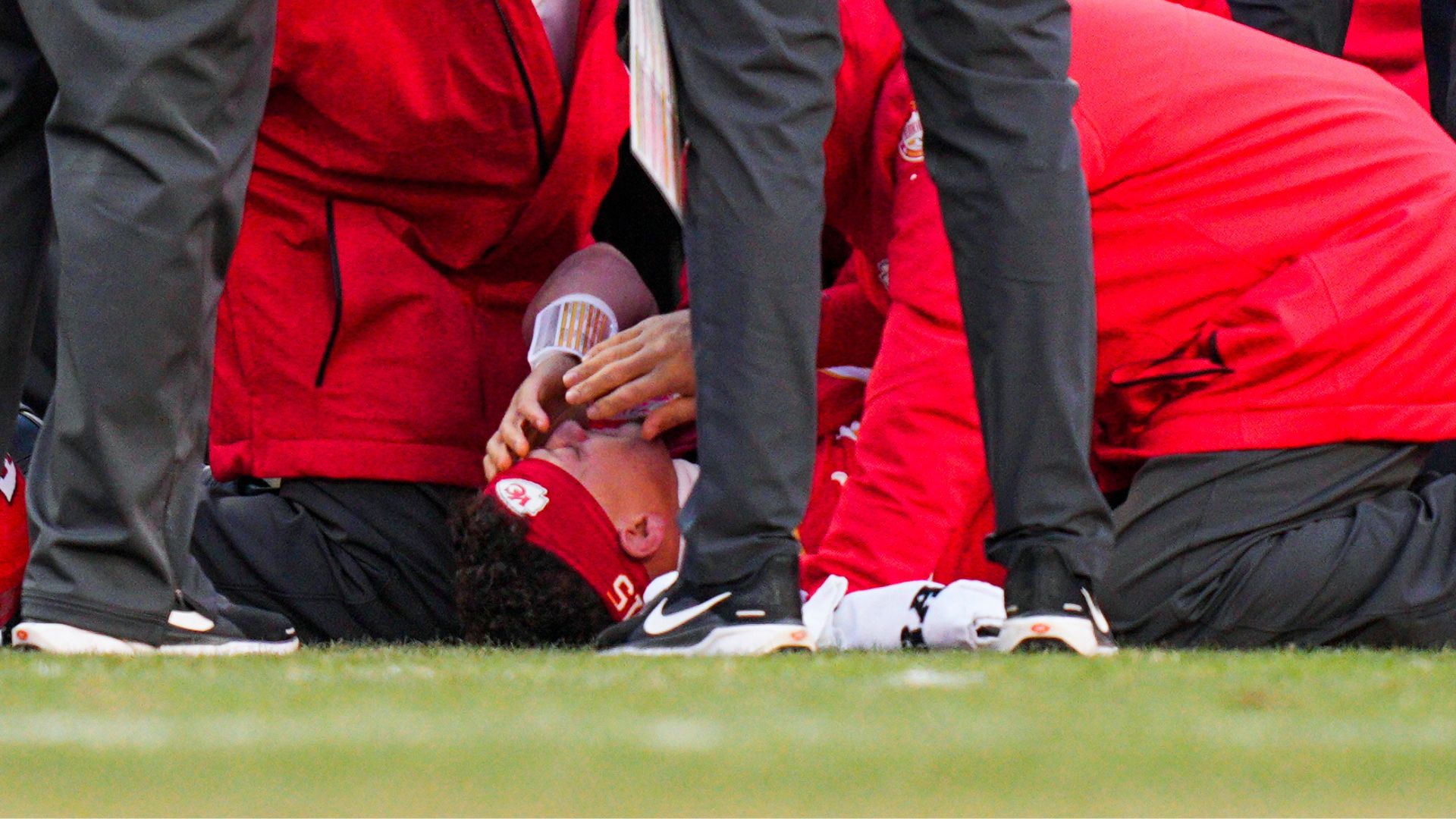
Kansas City Chiefs’ Season Goes From Bad to Worse as Patrick Mahomes Tears ACL

Kansas City Chiefs quarterback Patrick Mahomes’ season came to an abrupt end Sunday after the team confirmed he suffered a torn ACL during a late-game injury against the Los Angeles Chargers.

Mahomes was leading the Chiefs in a tightly contested matchup when the injury occurred late in the fourth quarter with Kansas City trailing 16-13.

Facing pressure, Mahomes rolled out to his right in an attempt to extend the play.

As he moved to avoid a sack, Mahomes threw the ball away to prevent a loss, but his left knee landed awkwardly as he released the pass.

The quarterback immediately went down, his knee giving out underneath him.

Mahomes was visibly in pain on the field, crying out and removing his helmet as play stopped.

Several Chiefs players knelt nearby in a show of support while trainers rushed to attend to him.

Mahomes was helped to his feet by medical staff but was unable to put weight on his left leg.

He was escorted off the field and eventually taken to the locker room for further evaluation, with cameras showing him struggling to walk as trainers assisted him down the sideline.

With Mahomes unable to return, Gardner Minshew entered the game at quarterback.

The Chiefs’ offense stalled in the closing moments, and Minshew ultimately threw an interception deep in Chargers territory that sealed the loss. The defeat officially eliminated Kansas City from playoff contention for the season.

Later Sunday evening, the Chiefs confirmed what many feared.

In a statement released on the team’s official social media account, Kansas City announced that Mahomes had torn his ACL on the play.

“Patrick and the club are currently exploring surgical options,” the statement said.

The injury marks a devastating blow for the Chiefs, who entered the season with championship aspirations built around their franchise quarterback.

Mahomes, a two-time NFL MVP, has been the centerpiece of the team’s offense and one of the league’s most durable stars prior to Sunday’s setback.

The moment Mahomes went down, concern was immediate among teammates, coaches, and fans.

His reaction on the field and the assistance required to get him to the locker room signaled the seriousness of the injury, which was confirmed hours later by the team.

The Chiefs did not provide a timeline for Mahomes’ recovery or specify when surgery might take place.

It also remains unclear how the injury will affect his availability for the 2026 season, as recovery from a torn ACL can vary depending on the procedure and rehabilitation process.

Mahomes’ injury overshadowed the remainder of the game, as Kansas City struggled to regroup offensively without its starting quarterback.

The late interception ended any chance of a comeback and finalized a loss that carried postseason consequences for the franchise.

Kansas City has not announced who will handle quarterback duties moving forward or how the team plans to adjust its roster in the wake of Mahomes’ injury.

Team officials said further updates would be provided as more information becomes available.

For the Chiefs, the injury represents a sudden and significant shift heading into the offseason.

Mahomes had led the team throughout the year and remained central to its offensive identity.

His absence leaves major questions for the organization as it looks ahead to recovery, rehabilitation, and planning for future seasons.

As of Sunday night, the focus remains on Mahomes’ health and next steps.

The team’s confirmation that he tore his ACL ended speculation about the severity of the injury, while raising new uncertainty about the timeline for his return to the field.

News

NYC Mayor-Elect Mamdani Pushes Gun Control Despite Brown Being a Gun-Free Zone

New York City Mayor-elect Zohran Mamdani renewed calls for gun control following a deadly shooting at Brown University, arguing that the United States has the ability to end gun violence if political leaders choose to act.

Mamdani made the comments in an X post after the shooting, which occurred during a final exam review session at the Providence, Rhode Island, campus.

Authorities confirmed that two students were killed and nine others were injured.

Officials said a person of interest had been taken into custody and then released as the investigation continues.

“Two people were killed this evening at Brown University by a gunman who remains at large. Eight others are injured, fighting for their lives in a nearby hospital,” Mamdani wrote.

“This senseless violence—once considered unfathomable—has become nauseatingly normal to all of us across our nation. Tonight, on the eve of the anniversary of the Sandy Hook shooting, we find ourselves in mourning once again.”

Mamdani framed the shooting as part of what he described as a nationwide crisis, saying gun violence affects Americans in everyday settings, including schools, places of worship, and neighborhoods.

“The epidemic of gun violence stretches across America. We reckon with it when we step into our houses of worship and out onto our streets, when we drop our children off at kindergarten and when we fear if those children, now grown, will be safe on campus,” Mamdani wrote.

“But unlike so many other epidemics, we possess the cure. We have the power to eradicate this suffering from our lives if we so choose.”

He added, “I send my deepest condolences to the families of the victims, and to the Brown and Providence communities, who are wrestling with a grief that will feel familiar to far too many others.”

Mamdani concluded his remarks by urging continued focus on gun violence prevention.

“May we never allow ourselves to grow numb to this pain, and let us rededicate ourselves to the enduring work of ending the scourge of gun violence in our nation,” he wrote.

The shooting took place despite Rhode Island maintaining some of the strictest gun laws in the country.

The state prohibits magazines capable of holding more than 10 rounds. Earlier this year, Gov. Dan McKee signed an assault weapons ban that will make firearms meeting the law’s definition illegal to purchase, transfer, or manufacture beginning in July of next year.

Mamdani has been a vocal critic of civilian gun ownership since becoming a U.S. citizen.

In a 2022 post on X, he wrote, “We need to ban all guns.”

His position on firearms became a focal point during his mayoral campaign, drawing criticism from opponents and scrutiny from the media.

During the campaign, Mamdani also faced questions about a lavish wedding in Uganda.

Reports noted that the estate hosting the event was guarded by more than 20 armed security personnel, some of whom were wearing masks, even as Mamdani publicly advocated for sweeping gun bans in the United States.

On Sunday, Mamdani also commented on a separate shooting overseas at a Hanukkah celebration at Bondi Beach in Australia that killed at least 11 people.

In that statement, he characterized the attack as antisemitic and linked his response to public safety concerns in New York City.

He described the shooting as a “vile act of antisemitic terror” and said, “When I am Mayor, I will work every day to keep Jewish New Yorkers safe—on our streets, our subways, at shul, in every moment of every day. Let this be a purpose shared by every New Yorker, and let us banish this horrific violence to the past.”

The Brown University shooting and Mamdani’s response come as gun policy remains a central issue in national and local politics.

While supporters of stricter gun laws argue that legislative action is necessary to prevent mass shootings, critics point to incidents occurring in jurisdictions with existing gun restrictions as evidence that such laws do not prevent violent attacks.

Authorities in Rhode Island have said they will release additional information about the Brown University shooting as the investigation progresses.

Meanwhile, Mamdani’s comments have placed gun control back at the forefront of debate as he prepares to assume office as mayor of the nation’s largest city.

News

Minnesota HS Goes Full 1984, Threatens to Punish Students for ‘Wrongthink’ About ICE

A Minnesota high school principal has warned parents that students could face discipline, including suspension, for comments that praise Immigration and Customs Enforcement agents or reference President Donald Trump’s deportation policies in ways school officials say conflict with the school’s values.

Paul Paetzel, principal of Edina High School, outlined the policy in a letter sent to parents, stating that references to ICE or immigration enforcement that cause fear or humiliation among students would not be tolerated.

Edina High School, located in the Minneapolis suburb of Edina, enrolls more than 2,700 students in grades nine through 12 and is widely regarded as one of the highest-performing public high schools in the country.

In the letter, Paetzel said the school was taking a proactive approach to shaping what he described as its culture and expectations around student behavior and language.

“I want to speak directly and proactively about the culture we are committed to creating at Edina High School,” Paetzel wrote.

“As we continue to grow as a community, it is essential that we are clear about the expectations we hold for language and behavior that honor the dignity of every student.”

Paetzel specifically addressed references to immigration enforcement, warning that such remarks could violate school policy.

“Making light of immigration threats or referencing ICE in ways that cause fear or humiliation is a serious offense and not representative of our core values,” he wrote.

“Behavior of this nature fundamentally violates our commitment to providing a safe and equitable learning environment free from harassment.”

He continued by saying that comments viewed as inconsistent with the district’s mission would result in disciplinary action.

“Such language and behaviors directly contradict Edina Public Schools’ vision and mission, and what we expect of our students,” Paetzel wrote.

“If this type of behavior occurs, we will honor the discipline policy and move forward with consequences up to and including suspension.”

Paetzel concluded the letter by stating that school officials believe they have a responsibility to intervene.

“Our responsibility is to protect every student’s right to feel safe, respected, and valued at school,” he wrote.

The letter has drawn attention as debates over immigration enforcement and deportation policies continue nationally and within Minnesota.

President Trump has made mass deportations and stricter immigration enforcement a central focus of his administration, drawing both support and criticism across the country.

The controversy also comes as Minnesota faces increased scrutiny over immigration-related issues, including investigations into large-scale fraud schemes involving public programs.

Thousands of Somalis, many of whom are reported to be residing in the United States illegally, were recently found to have committed major Social Security fraud in cases tied to state oversight.

The issue has intensified political debate in the state, particularly given Minnesota’s large and concentrated Somali population.

Minnesota Gov. Tim Walz, who was the Democratic vice-presidential nominee in the most recent election cycle, has defended his administration’s approach to immigration and has rejected criticism tied to fraud investigations.

Walz has argued that blame for systemic problems lies elsewhere and has continued to advocate for welcoming additional immigrants.

“We are going to defend our neighbors,” Walz said at a fundraiser last week.

“Instead of demonizing our Somali community, we’re going to do more to welcome more in.”

Walz’s remarks and the broader immigration debate have heightened tensions in communities and institutions across the state, including public schools.

Critics argue that disciplinary policies like the one announced at Edina High School risk suppressing political speech and viewpoints that support federal immigration enforcement.

Supporters of the policy say the school is attempting to prevent intimidation or harassment tied to immigration issues.

Edina Public Schools officials have not released additional guidance clarifying how the policy will be enforced or how administrators will distinguish between prohibited conduct and protected speech.

The district has also not specified whether the policy applies to classroom discussions, informal student conversations, or both.

As immigration enforcement remains a defining political issue nationally and in Minnesota, the situation at Edina High School highlights how those debates are increasingly playing out in local schools, raising questions about student expression, discipline, and the role of public education in addressing controversial political topics.

News

HUD Opens Civil Rights Investigation Into Sanctuary City’s Race-Based Housing Program

The Department of Housing and Urban Development under President Donald Trump has opened a civil rights investigation into a Democratic-led city’s housing strategy, raising questions about whether Boston’s use of federal funds complies with federal anti-discrimination law.

HUD announced Thursday that it is investigating Boston’s housing program over concerns that the city’s diversity, equity, and inclusion practices may “violate civil rights protections under the Fair Housing Act and Title VI.”

The investigation focuses on whether Boston has used federal housing grants to support what HUD described as race-based policies.

According to HUD, the department sent a letter to Boston’s Office of Housing in mid-September outlining its concerns.

The letter stated that HUD had reason to believe the city was using federal funds to advance a housing strategy that prioritizes race in violation of federal law.

The department cited language from the city’s own website describing Boston Housing Strategy 2025 as “provid[ing] tools to … reduce racial disparities through homeownership and development opportunities for BIPOC-led organizations.”

Boston’s housing strategy further states that the city aims to ensure that at least 65 percent of home-buying opportunities are awarded to “BIPOC” households.

HUD officials said those goals prompted the agency to request extensive documentation from the city to determine whether the program unlawfully discriminates on the basis of race.

On Thursday, HUD formally notified Democratic Mayor Michelle Wu’s administration that an investigation had been opened into the city’s housing policies.

In its notification, HUD pointed to specific elements of Boston’s fair housing planning that it said raised legal concerns.

“To further its racialist theory of housing justice, the City’s Fair Housing Assessment promises to ‘target homebuyer outreach’ at ‘Black and Latinx families’ and pressure ‘banks and mortgage lenders to increase their lending in communities of color,’” HUD’s notification to Boston stated.

HUD Secretary Scott Turner said the department believes Boston’s approach reflects an effort to impose race-based outcomes rather than comply with federal civil rights standards.

“HUD is committed to protecting every American’s civil rights and will thoroughly investigate the City’s stated goal of ‘integrating racial equity into every layer of city government,’” Turner said.

“This warped mentality will be fully exposed, and Boston will come into full compliance with federal anti-discrimination law.”

Turner added that the department views the city’s housing strategy as a broader attempt at social engineering that conflicts with federal law.

The investigation comes as the Trump administration has taken steps to review and challenge DEI-driven policies at the federal, state, and local levels, particularly where federal funding is involved.

HUD officials said the Fair Housing Act and Title VI prohibit discrimination on the basis of race in federally funded programs, regardless of whether such discrimination is framed as an effort to address disparities.

Boston officials pushed back against the investigation.

A city spokesperson told Blaze News that the administration of Mayor Wu intends to defend the housing strategy and reject the federal government’s characterization of the program.

“Boston will never abandon our commitment to fair and affordable housing, and we will defend our progress to keep Bostonians in their homes against these unhinged attacks from Washington,” the spokesperson said.

HUD has not announced a timeline for the investigation or said what potential consequences could follow if the city is found to be out of compliance.

The department’s request for documents indicates that federal officials are examining how Boston designed and implemented its housing strategy, as well as how federal grant money was allocated in support of those policies.

The outcome of the investigation could have implications beyond Boston, as other cities and states have adopted housing and development strategies that explicitly incorporate racial targets or preferences.

HUD officials said the inquiry is focused on whether such policies violate longstanding federal civil rights protections tied to the receipt of federal funds.

As the investigation proceeds, Boston officials and federal regulators are expected to continue exchanging information.

HUD has said it will determine next steps after reviewing the requested documents and assessing whether the city’s housing strategy complies with federal law.

News

Bondi Beach Bloodshed Undercuts Left’s Gun Control Narrative

A deadly firearm attack at Sydney’s Bondi Beach on Sunday evening has reignited debate over gun control policies after 11 people were killed despite Australia’s long-standing and stringent national firearms restrictions.

The Jewish community was targeted during the attack, and two gunmen were involved.

One of the attackers was killed as authorities moved to end the assault.

Witnesses at the scene reported that more than 30 shots were fired before the violence was stopped.

Officials later confirmed that several suspicious items were found near a bridge where shots were fired, including an improvised explosive device.

The Daily Mail reported that bomb squad specialists removed the device and transported it away from the area in an armored vehicle.

Authorities have not released additional details about the device or the full scope of the investigation, which remains ongoing.

The shooting occurred in a country frequently cited by Democrats and gun control advocates in the United States as an example of the effectiveness of strict firearms laws.

Australia enacted sweeping gun restrictions following the 1996 Port Arthur massacre, a mass shooting that led to a major overhaul of national firearms policy.

After that attack, Australia implemented the National Firearms Agreement, which introduced a mandatory gun buyback program.

During the buyback period, at least 700,000 firearms were surrendered to the government.

Additional weapons were turned in outside the formal program, bringing the total number of firearms collected and destroyed by the government to approximately one million.

The National Firearms Agreement focused heavily on semiautomatic weapons and imposed universal background checks, licensing requirements, and a national firearms registry.

CNN summarized the policy changes by stating, “Rapid-fire rifles and shotguns were banned, gun owner licensing was tightened and remaining firearms were registered to uniform national standards.”

Despite those measures, Sunday’s attack resulted in one of the deadliest shooting incidents in Australia in years.

U.S. political leaders have previously pointed to Australia’s approach when advocating for stricter gun laws.

During her 2015 presidential campaign, Hillary Clinton said an Australia-style gun ban was “worth looking at” for the United States.

The New York Times later reported that former President Barack Obama described Australia’s gun control framework as a model for America.

The Times went further in its assessment, asserting that “conservative-led Australia ended mass killings.”

Australia’s gun laws have often been contrasted with those in the United States during debates following high-profile shootings.

Advocates of stricter regulation argue that Australia’s policies reduced gun violence overall, while critics contend that such measures do not prevent determined attackers from carrying out mass casualty events.

Sunday’s Bondi Beach attack has added new urgency to that debate.

While Australia maintains some of the strictest firearms laws in the world, the incident demonstrated that mass shootings can still occur, raising questions about the limits of gun control as a tool for preventing violence.

News

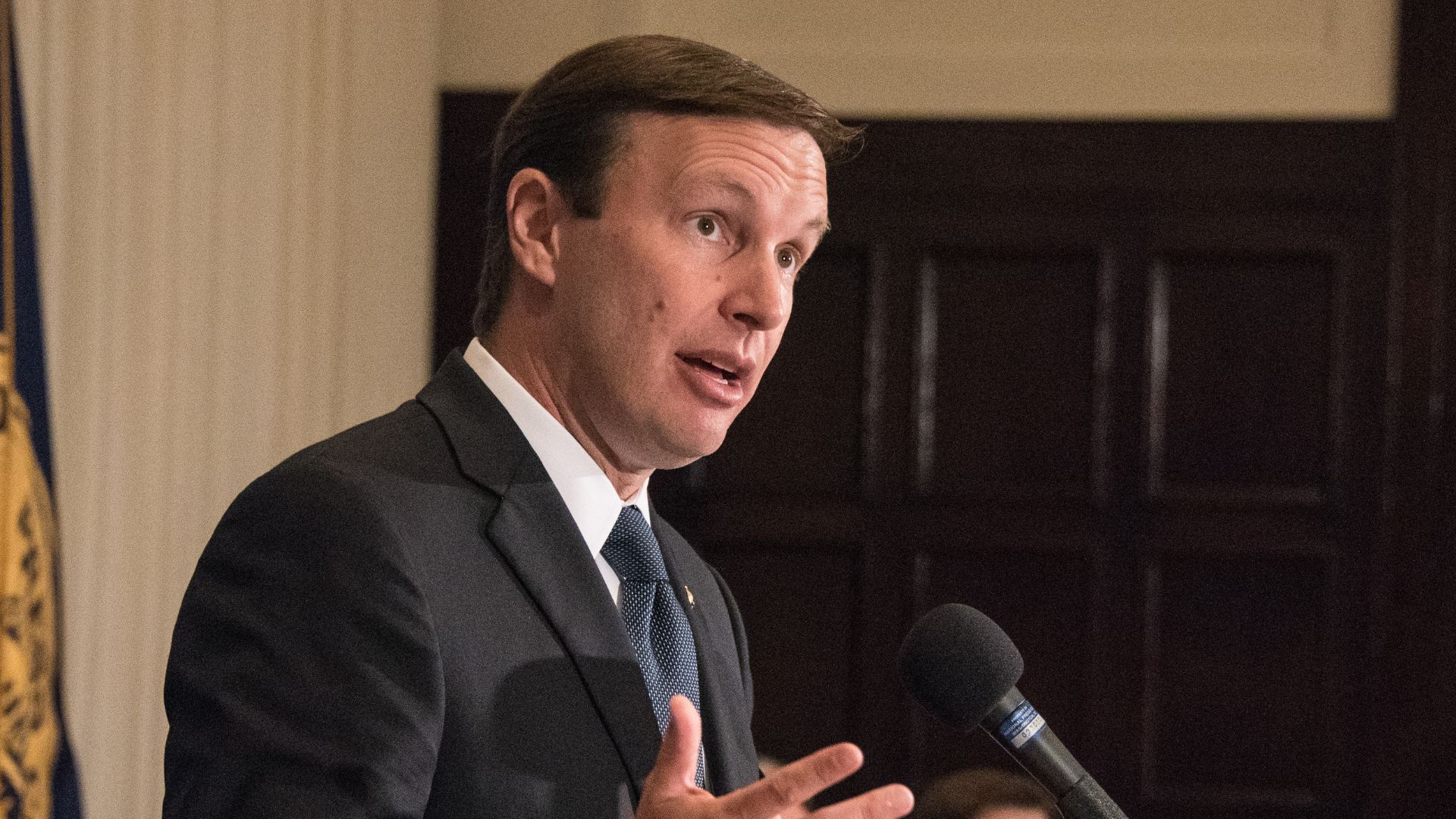
Trump’s ‘Dizzying Campaign To Increase Violence’ to Blame for Brown Shooting: Chris Murphy

In the aftermath of a deadly mass shooting at Brown University, Democratic Connecticut Sen. Chris Murphy used a Sunday appearance on CNN’s “State of the Union” to accuse President Donald Trump of pursuing what he described as a deliberate effort to increase violence in the United States, a claim that prompted visible pushback and follow-up questions from host Dana Bash.

The shooting occurred Saturday evening on Brown University’s campus, where officials confirmed that at least two people were killed and at least nine others were injured.

Authorities launched a manhunt for a suspect reportedly dressed in all black.

By Sunday morning, officials announced that a person of interest in his 30s had been taken into custody. Law enforcement has released few additional details, citing the ongoing nature of the investigation.

During the broadcast, Bash framed the discussion around renewed Democratic calls for congressional action on gun legislation.

She noted that Rhode Island already maintains what she described as relatively strict firearm laws and suggested that the issue extended beyond gun policy alone.

Murphy responded by asserting that legislation directly affects crime outcomes.

He argued that states including Connecticut, Rhode Island, Massachusetts, and California have seen reductions in gun violence, murder, and mass shootings as a result of strict firearm regulations.

After outlining that position, Murphy turned his focus to President Trump, accusing him of taking actions that he said would increase violence nationwide.

“But this is not shocking, because over the last year, President Trump has been engaged in a dizzying campaign to increase violence in this country. He is restoring gun rights to felons and people who have lost their ability to buy guns. He eliminated the White House Office of Gun Violence Protection,” Murphy said.

Murphy continued by alleging that President Trump had cut funding for programs aimed at addressing mental health and community violence, which he said had previously enjoyed bipartisan support.

“He has stopped funding mental health grants and community anti-gun violence grants that Republicans and Democrats supported in that 2022 bill. So, he has been engaged in a pretty deliberate campaign to try to make violence more likely in this country,” Murphy said.

“I think you’re, unfortunately, going to see the results of that on the streets of America.”

Bash then pressed Murphy on the scope of his claim, emphasizing the seriousness of accusing a sitting president of intentionally increasing violence.

“That’s a pretty big statement. He’s in a campaign to make violence more likely?” Bash asked.

Murphy doubled down on the allegation, arguing that policy decisions involving firearm rights and funding levels for mental health and violence interruption programs would inevitably produce negative outcomes.

“Of course,” Murphy said.

“I mean, he’s knowingly restoring gun rights to dangerous people. He is cutting off grants that have bipartisan support to try to interrupt violence in our cities or to try to get necessary mental health resources to families and children in need. The evidence tells you that when you stop funding mental health, when you stop funding community anti-gun violence programs, when you give gun rights back to dangerous people, you are going to have an increase in violence that is knowable and that is foreseeable.”

Democrats have consistently pushed for stricter gun control measures at both the state and federal levels, often pointing to states such as California, which has been under unified Democratic control for roughly 15 years, as examples of aggressive regulation.

Following major shootings, Democratic lawmakers and allied commentators have frequently renewed calls for additional restrictions while criticizing Republicans and President Trump for opposing those proposals.

The debate also unfolded against the backdrop of national firearm mortality data.

According to statistics compiled by the Pew Research Center using information from the Centers for Disease Control and Prevention, 46,728 people died from gun-related causes in 2023.

The data indicates that 58 percent of those deaths were suicides, while 38 percent were homicides.

The remaining deaths involved law enforcement actions, accidents, or cases with undetermined circumstances.

As investigators continue to work through the evidence related to the Brown University shooting, officials have urged the public to await verified findings.

Meanwhile, Murphy’s remarks have intensified an already heated national debate over gun policy, public safety, and the role of federal leadership in addressing violent crime.

News

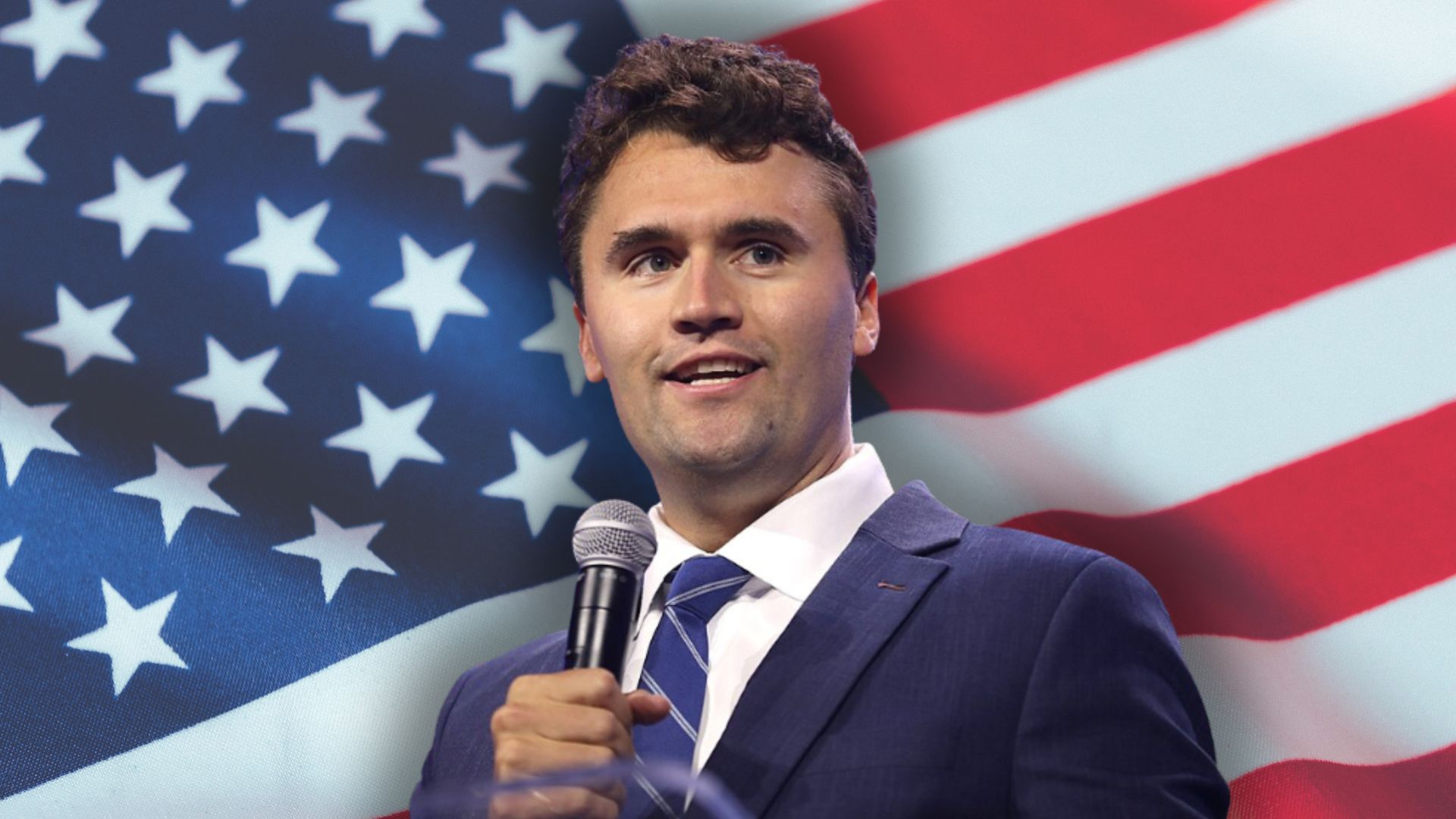
Charlie Kirk Warned Wokeism and Islamism Are Targeting Western Civilization

A resurfaced statement from conservative activist Charlie Kirk is drawing renewed attention after he warned that Western civilization faces what he described as an approaching spiritual conflict targeting the “American way of life.”

In the remarks, Kirk said the threat comes from what he characterized as a combination of ideological forces, including wokeism, Marxism, and Islamism, which he argued are converging to undermine long-standing cultural and religious foundations in the United States and the broader West.

“The spiritual battle is coming to the west, and the enemies are wokeism, or Marxism, combining with Islamism to go after what we call the American way of life,” Kirk said.

Kirk defined the “American way of life” in personal and cultural terms, describing everyday freedoms and family life as central to what he believes is under threat.

He said those freedoms include the ability to marry, own a home, raise children, and live in safe communities without ideological pressure in schools or public life.

“And the American way of life is very simple. I want to be able to get married, buy a home, have kids, allow them to ride their bike till the sun goes down, send them to a good school have a low crime neighborhood not to have my kid be taught the lesbian, gay, transgender garbage in their school, while also, while also not having them have to hear the Muslim call to prayer five times a day,” Kirk said.

Kirk said those concerns are not merely political, but spiritual and civilizational.

He tied what he called the American way of life directly to Christianity and Western history, arguing that modern freedoms are rooted in Christian belief and sacrifice.

“That’s important. We want the American way of life, which is, by the way, Christendom,” Kirk said.

“Christians, our sacrifice, our toil, our vision, the outgrowth of the scriptures gave us Western civilization.”

In the statement, Kirk called on Christians across racial and ethnic backgrounds to recognize what he described as a shared threat and to unite in response.

He said faith, rather than identity or background, is the defining factor in what he sees as the coming struggle.

“And this is where, I think is a great rallying cry, doesn’t matter if you’re Hispanic, doesn’t matter if you’re Asian, doesn’t matter if you’re black or white, everybody if you are Christian and Jesus Christ is your Lord and Savior, these two threats are combining forces to come after us,” Kirk said.

Kirk concluded by urging the Christian church to respond collectively, framing the issue as one that requires action and unity among believers.

“And it’s time that the church stands and rises up against it,” he said.

WATCH:

News

Massive Minnesota Fraud Scandal Investigation Stalled Over Threats of Being Called Racist

Minnesota officials and investigators involved in uncovering the Feeding Our Future fraud scheme say accusations of racism were repeatedly used to deflect scrutiny, intimidate investigators, and delay accountability, allowing one of the largest public assistance fraud cases in state history to grow unchecked for years.

Concerns about fraud within Minnesota’s social service programs, particularly in Minneapolis, circulated for more than a decade before the Feeding Our Future investigation reached the federal level.

During that time, elected Democrats and political activists routinely dismissed criticism as racially motivated, according to policymakers, prosecutors, and analysts who spoke with Fox News Digital.

Bill Glahn, a policy fellow with the Center of the American Experiment, said allegations of racism played a central role in shutting down public discussion of fraud.

“The whole story kind of died under these accusations that people were being racist,” Glahn told Fox News Digital.

“Oh, maybe somebody stole a little bit here, a little bit there, but there’s nothing systemic going on.”

Former assistant U.S. Attorney Joe Teirab, who worked on federal prosecutions tied to Feeding Our Future, said individuals implicated in the scheme explicitly relied on racial accusations as a defense.

Teirab told Fox News Digital that suspects raised those claims during a secretly recorded meeting with Minnesota Attorney General Keith Ellison, asserting investigators were targeting them “only because of race.”

Teirab described the tactic as deliberate.

In one trial connected to the case, a juror was allegedly approached with a $120,000 cash bribe that included messaging portraying the investigation as racially biased.

Teirab said the goal went beyond avoiding prosecution.

“It provided cover,” Teirab told Fox News Digital.

“Fraudsters knew the issue of race and racism was something they could use as a cudgel… It’s disrespectful to use those terms when they’re not appropriate, especially in a case where fraud clearly happened.”

Minnesota Republican State Sen. Mark Koran said the prosecutions followed evidence, not demographics.

He said cases centered on specific communities because that is where investigators uncovered fraud, not because of any targeting based on race.

“The average Minnesotan, average legislator, doesn’t care who’s committing the fraud,” Koran told Fox News Digital.

“All right, the evidence will lead you either to or from the perpetrator. And so, if the evidence leads to the perpetrator, we need to prosecute all of them.”

Koran said public officials and agencies pursuing fraud investigations were frequently accused of racism, which emboldened those involved in the scheme.

He noted that some individuals went so far as to sue the state to force the continuation of payments even after significant red flags had been raised.

According to Koran, federal prosecutions may ultimately account for roughly $2 billion in fraud, but he believes total losses across state programs could be far higher when accounting for both outright fraud and ineffective service delivery.

He also said some families participated indirectly by receiving kickbacks from fraudulent autism service providers, making enforcement more difficult and resource intensive.

“For the average hardworking legal U.S. citizen doing everything right,” Koran said, “it’s a disgusting disservice… knowing there’s such blatant disregard for the value of that dollar.”

Glahn said state agencies were hesitant to act aggressively because of fear associated with racial accusations.

He told Fox News Digital that local politicians viewed such accusations as politically devastating.

A legislative auditor’s report later found that Minnesota Department of Education officials believed they needed to handle Feeding Our Future “carefully” because of concerns over racism allegations and potential negative media coverage.

According to CBS News, those concerns affected which regulatory actions the agency pursued.

Political commentator and Townhall columnist Dustin Grage said media caution also played a role.

Grage told Fox News Digital that conservative reporters encountered resistance from editors who were reluctant to publish stories on the scandal due to fear of backlash.

“In newsrooms, they’re told, ‘We can’t run that because we’re going to be accused of being racist,’” Grage said.

Grage pointed to an early turning point when the Minnesota Department of Education detected signs of fraud and temporarily halted payments.

Minneapolis political figures Omar Fateh and Jamal Osman responded by accusing the state of racial bias and filing a lawsuit, which was later dismissed.

Payments resumed, and Gov. Tim Walz declined to use his subpoena power to obtain Feeding Our Future’s bank records, despite having the authority to do so.

Glahn said political considerations also weighed heavily on decision-making. He noted that the Somali community plays a significant role in Minnesota elections.

“The Somali community is very concentrated in Minnesota and very concentrated in Ilhan Omar’s congressional district,” Glahn told Fox News Digital.

“They provided the difference in statewide elections, and then in local elections… if you don’t have the Somali vote on your side, you’re not making it to the general election.”

Investigators and lawmakers said the result of delayed scrutiny was predictable. Fraud expanded, taxpayers lost billions of dollars, and programs intended to serve vulnerable populations were undermined.

As Minnesota continues to address accountability and reform, those involved in uncovering the scheme say the case demonstrates the consequences of allowing political pressure and intimidation to interfere with enforcement.

According to the officials who spoke to Fox News Digital, combating fraud requires following evidence wherever it leads, even when doing so carries political risk.

News

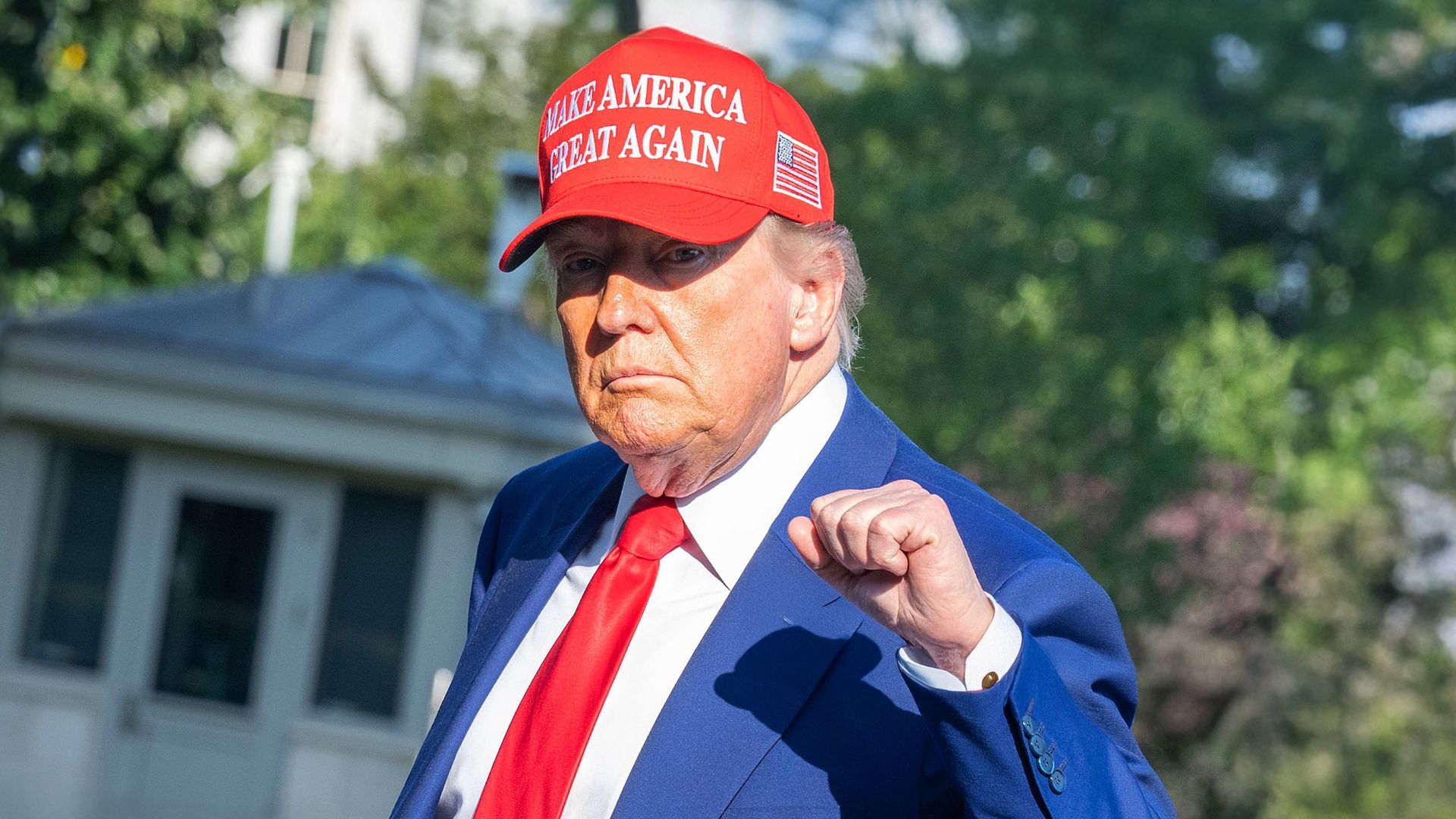
‘Truckloads’ of 2020 Election Rigging Proof is Coming Out: Trump

Donald Trump said his administration is preparing to release what he described as extensive evidence showing the 2020 election was rigged, with a particular focus on California and New York.

Trump said the material would be released publicly and described it as substantial.

“That’s all. They’re good at cheating in elections, very good at cheating. They’re professionals at cheating. Because we won in 2016 by a lot. The election was rigged. In 2020 we have all the ammunition, all the stuff, and you’ll see it come out. It’s coming out in truckloads,” Trump said.

Trump said California stood out as the most problematic state, followed by New York.

He said the election system in California was fundamentally illegitimate and claimed the outcome did not reflect the will of voters.

“And California’s election New York also. But California, more than any other place, is so rigged. It’s such a rigged election,” Trump said.

Trump said claims that Republicans could not win California were contradicted by his performance among Hispanic voters.

He said he carried the Hispanic vote in key areas, including Miami and communities along the Texas border.

“You know, we won the Hispanic vote. So a lot of people say Republican wouldn’t win California, but I won the Hispanic vote. I won in Miami. Think of that. In Miami, I won the Hispanic vote along the Texas border. I won every single city or town touching the Texas border, and they’re 85 to 90% Hispanic,” Trump said.

Trump said that if voting in California had been legitimate, the state would have been winnable for Republicans.

He tied his claim directly to the use of mail-in ballots.

“We won the Hispanic vote if the vote in California was legitimate, which is not their 38 million ballots. Everything is mail in voting. They mail out 38 million ballots, and they come in. Where the hell do they go, and whether they come from it’s a rigged election in California, because we would win California by a lot,” Trump said.

Trump said Democrats continued to believe they maintained an advantage with Hispanic voters despite his claims of strong support in those communities.

“And again, they still feel they have the advantage with Hispanic they don’t,” Trump said.

Trump characterized the alleged election misconduct as deliberate and said the forthcoming material would support his claims regarding the legitimacy of the 2020 election results.

WATCH:


Scroll to Top