News

News

Colombia’s Petro Threatens Armed Resistance After Trump Warns Country May Be Next

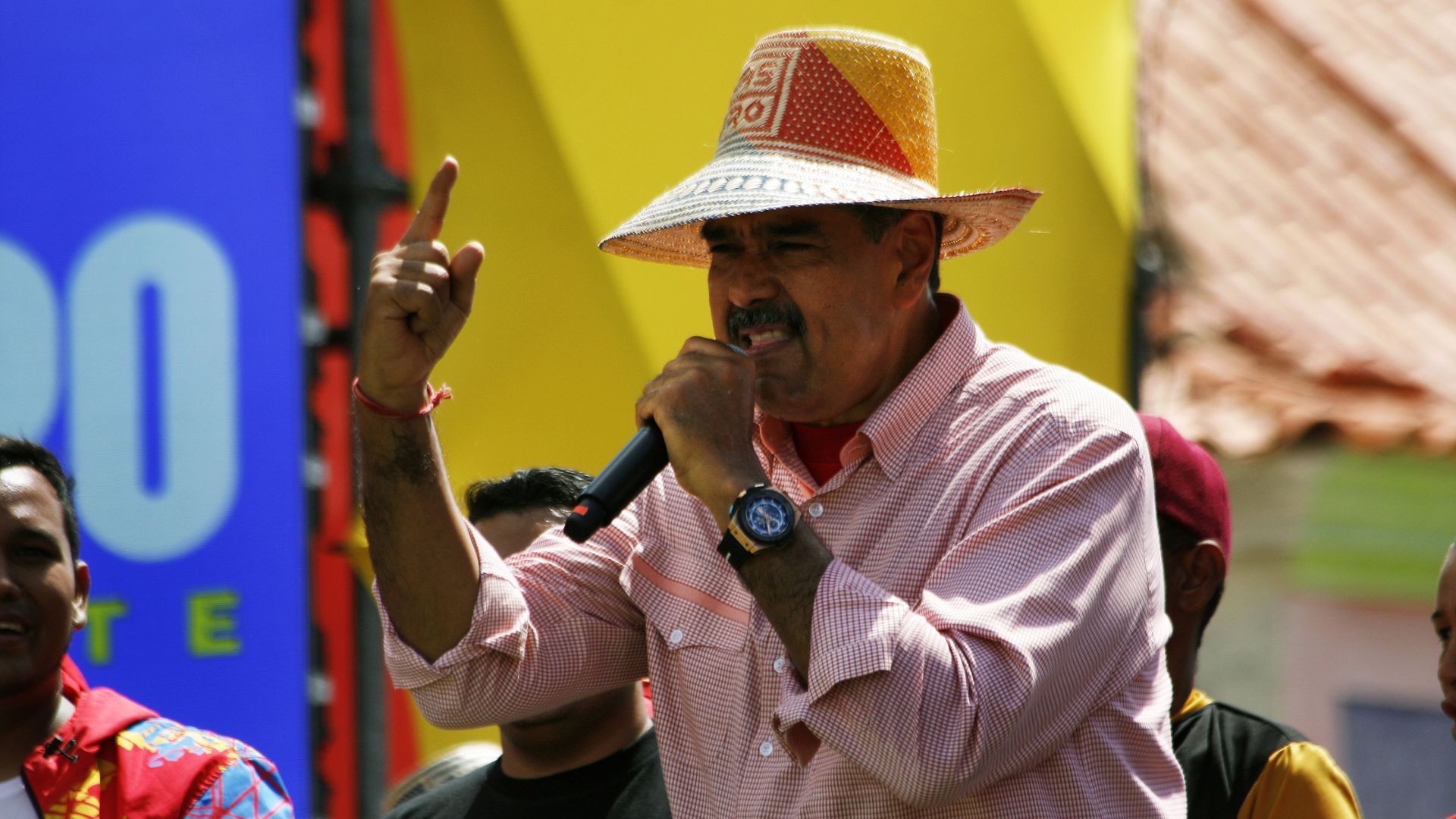
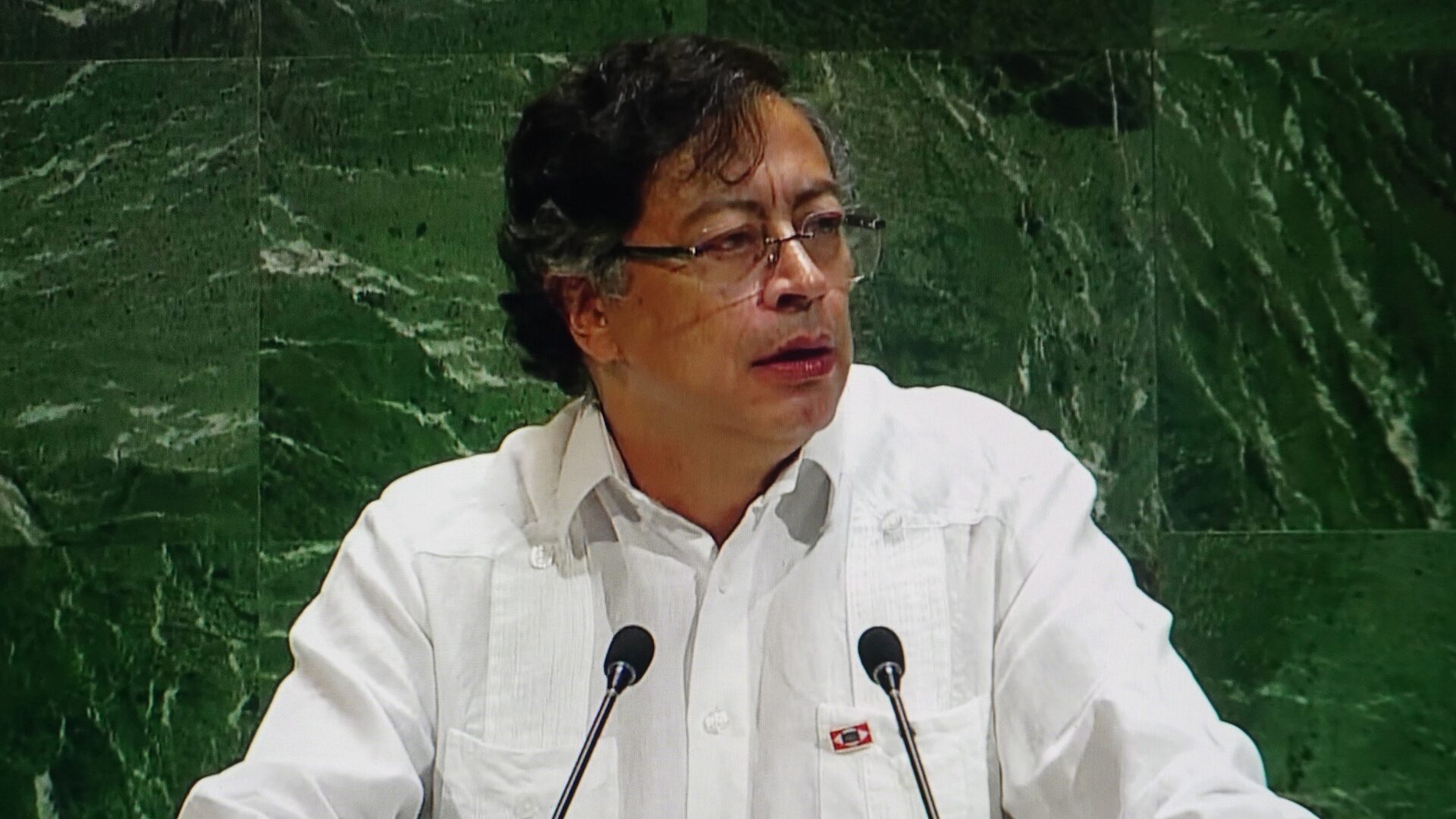
Colombian President Gustavo Petro on Monday threatened an armed response against the United States following comments by President Donald Trump suggesting Colombia could become the next target in Washington’s expanded war on drugs after U.S. military action in Venezuela, as reported by Fox News.

Petro, a former member of the leftist M-19 guerrilla movement that demobilized in the early 1990s, made the remarks in a post on X after Trump spoke to reporters aboard Air Force One on Sunday.

Washington, DC, on June 18, 2025. US President Donald Trump meets Juventus, who will play Emirati club Al-Ain in the 2025 FIFA Club World Cup at Washington’s Audi Field later in the day

Trump’s comments followed the capture and arrest of Venezuelan leader Nicolás Maduro.

“Although I have not been a military man, I know about war and clandestinity,” Petro wrote in a message translated from Spanish.

“I swore not to touch a weapon again since the 1989 Peace Pact, but for the Homeland, I will take up arms again that I do not want.”

Petro also rejected Trump’s accusations that he is connected to drug trafficking.

“I am not illegitimate, nor am I a narco,” Petro wrote.

“I only have as assets my family home, that I still pay for with my salary. My bank statements have been published. No one could say that I have spent more than my salary. I am not greedy.”

Trump’s remarks came as he addressed reporters aboard Air Force One, where he warned that Colombia is “very sick too” and is “run by a sick man who likes making cocaine and selling it to the United States, and he’s not going to be doing it very long.”

Trump also claimed Petro has “cocaine mills and cocaine factories.”

When asked directly whether the United States would carry out an operation in Colombia, Trump replied, “It sounds good to me,” before shifting the discussion to his interest in annexing Greenland.

The comments echoed earlier warnings Trump issued in December, when he told Petro he had “better wise up” or risk becoming the next target.

Trump has previously labeled Petro an “illegal drug dealer” and later referred to him as a “lunatic.”

Petro has emerged as one of Trump’s most vocal critics in Latin America.

He has condemned U.S. strikes on suspected drug-smuggling vessels in the Caribbean, previously claiming that many of those killed were “poor fishermen” forced into the drug trade.

In November, Petro referred to Trump as a “barbarian” and temporarily halted intelligence sharing with Washington.

Colombia’s narcotics trade is largely controlled by illegal armed groups, including the Gulf Clan, the ELN, and dissident factions of the FARC.

Petro has warned that U.S. bombing campaigns would radicalize rural populations, arguing that campesinos would become “thousands of guerrillas in the mountains.”

As previously reported by Fox News Digital, the Trump administration revoked Petro’s U.S. visa over what officials described as reckless actions.

“Earlier today, Colombian president @petrogustavo stood on a NYC street and urged U.S. soldiers to disobey orders and incite violence,” the U.S. State Department said in a post on X at the time.

“We will revoke Petro’s visa due to his reckless and incendiary actions.”

Fox News Digital reported it reached out to the White House for comment following Petro’s latest statements.
News

Texas Police Close State’s Oldest Missing Person Case After 52 Years

Texas law enforcement officials have solved what is believed to be the state’s oldest missing persons case, finally providing answers more than five decades after a Dallas teenager vanished without a trace, as reported by The New York Post.

The Dallas Police Department announced Friday that investigators have positively identified a long-unidentified teenage victim of a 1973 hit-and-run as Norman Prater, who disappeared from Dallas at age 16.

Norman Prater was reported missing on Jan. 16, 1973, after spending a late night with friends in Dallas. He never returned home, and despite years of investigative work, police were unable to generate credible leads.

The case remained unresolved for more than 50 years.

That changed when authorities confirmed that an unidentified teenager killed in a hit-and-run crash on July 9, 1973, along Highway 35 in Rockport, Texas, was in fact Prater.

Rockport is located approximately 380 miles south of Dallas in Aransas County. At the time of the crash, officials were unable to identify the victim, and the case faded into obscurity.

The breakthrough came after Ryan Dalby, a detective assigned to the department’s Missing Persons Unit, was contacted by a medical examiner in Aransas County who had been reviewing decades-old case files.

The examiner flagged similarities between the unidentified crash victim and Prater’s disappearance.

“I pull up the file, and I look at it, I’m like, ‘Are you kidding me?!’” Dalby told NBC Dallas–Fort Worth.

The medical examiner retrieved the original case file, and with assistance from a forensic analyst, investigators examined facial characteristics using recognition software.

Dalby said the analysis revealed “points of reference on the face” that suggested “a high probability of the person that was found down there being Norman Prater.”

“I’m like, I’m looking at the photos by the side by side. I’m like, ‘Yeah, I’m with them. There’s a high probability this could be who we’re looking for,’” Dalby said.

Still, Dalby said he was not willing to risk misidentification after more than five decades. He contacted Norman’s older brother, Isaac Prater, to confirm the findings.

“He answers the phone and is like, ‘Who is this?’ I’m like, ‘It’s Detective Dalby with the Dallas Police Department.’ He goes, ‘I’ve waited 52 years for this phone call. Please tell me you have something’,” Dalby told the outlet.

Isaac Prater traveled to Dallas police headquarters the following day. Dalby showed him the facial recognition images used in the identification process.

“I showed him recognition software that they used, and he just looks at me and he goes, ‘You can close the case, that’s my brother, case is done,’” Dalby said.

“He finally has closure. He has closure after 52 years of wondering where his brother is.”

Dalby told Fox 4 that Isaac Prater was able to identify specific facial scars, including one on Norman’s lip caused by a dog attack and another on his eyebrow from a fight.

Investigators said it remains unclear what Norman was doing during the six months between his disappearance and his death or how he traveled so far from Dallas.

Dalby told Fox 4 that hitchhiking, which was common in the 1970s, may explain how Norman ended up in South Texas.

News

Florida Man Busted in a Lace Bra and a G-String, Legendary Sheriff Grady Judd Breaks It Down

Polk County Sheriff Grady Judd described what he called a highly unusual and potentially dangerous trespassing arrest involving a man discovered on a construction site while armed and wearing unconventional attire.

According to Judd, the suspect was identified as Matthew Zacharino, a 39-year-old from Altamont Springs, who was found alone inside a vehicle on an active construction site when deputies approached to investigate.

“Now, occasionally I bring you stuff that you just can’t believe that you’ll never get over, that may even scar you for life. But I got to introduce you to this guy,” Judd said.

“He’s not from Polk County. Of course, I don’t think we got anybody from Polk County quite like this guy.”

Judd said deputies immediately noticed something out of the ordinary as they made contact with Zacharino.

“This is Matthew Zacharino. He’s 39 he’s from Altamont springs, and he’s on this construction site in a vehicle by himself, and as our deputies approach him to see what’s he doing on this construction site, we see this dude wearing a red lace bra with prosthetic silicone breasteses. Know what I mean?” Judd said.

The sheriff continued by detailing additional observations made by deputies at the scene.

“Well, then we notice he’s wearing a G-string, showing off the boys, you know what I mean,” Judd said.

“And then our two deputies say to themselves, self, this is highly unusual, but you don’t realize how dangerous these situations are, because under a prosthesis, we found a gun.”

Judd said the discovery of the concealed firearm escalated the situation significantly, turning what initially appeared to be a bizarre trespassing incident into a serious public safety concern.

“So he was armed trespassing,” Judd said.

According to Judd, Zacharino attempted to explain his presence and appearance by claiming he was headed to a costume party.

Deputies attempted to verify that explanation.

“He said he was on the way to the costume party,” Judd said.

“We go, Okay, where’s costume party? Well, he couldn’t answer that, and then he sold up on us and quit wanting to talk at all.”

Judd said the suspect became uncooperative when deputies continued asking questions about the situation.

“Can you imagine that he’s mad at us for trying to find out why he’s wearing lace bras with guns and G strings or G somethings or, ooh, it was ugly. It was so ugly,” Judd said.

The encounter ended with Zacharino being taken into custody and transported to jail.

“Anyway, he went to jail,” Judd said.

“Have a good day.”

WATCH:

News

UN Put on Notice as Mike Waltz Details Venezuela’s Narco Terror State

Mike Waltz addressed the United Nations to outline U.S. actions against Venezuela’s leadership, describing the arrest of a narco trafficker and the transfer of Nicolás Maduro and his co-defendant, Celia Flores, to the United States to face criminal charges.

Waltz framed the move as a law-enforcement action taken to protect Americans and confront narco-terrorism in the Western Hemisphere.

“Indictments that have existed for decades the United States arrested a narco trafficker who is now going to stand trial in the United States in accordance with the rule of law for the crimes he has committed against our people for 15 years,” Waltz said.

He compared the operation to a prior U.S. action in Panama, stating, “A similar action was taken in 1989 against Manuel Noriega. He was arrested, indicted, convicted in a court of law, served in prison in the United States and in Panama. And the Panamanian people, the American people, are safer for it, and undeniably, the region was more stable.”

Waltz said the action was carried out under the constitutional authority of the President of the United States.

“This law enforcement action was directed consistent with the President of the United States responsibility as commander in chief to protect Americans at home and abroad against a fugitive who is directly responsible for Narco terrorism that has killed hundreds of 1000s of Americans and created destabilizing violence throughout our hemisphere,” he said.

According to Waltz, Maduro and Flores were transferred to the United States to face charges in federal court.

“Nicholas Maduro and his co defendant Celia Flores, have been transferred here to the United States to stand trial for their crimes,” he said.

“Maduro was indicted by a grand jury in the Southern District of New York, and faces very serious criminal charges for his involvement in a wide ranging conspiracy to conduct Narco terrorism, to traffic cocaine and other drugs, and conducting international weapons trafficking.”

Waltz said evidence against Maduro would be presented publicly.

“The overwhelming evidence of his crimes will be presented openly in US court proceedings, colleagues,” he said.

He rejected claims that Maduro held legitimate authority as Venezuela’s president.

“Maduro is not just an indicted drug trafficker. He was an illegitimate so called president. He was not a head of state,” Waltz said. He accused Maduro and his allies of manipulating elections to retain power. “For years, Maduro and his cronies have manipulated Venezuela’s electoral system to maintain their illegitimate grip on power,” he said.

Waltz cited international findings on Venezuela’s elections. “In fact, just two years ago in 2024 a UN panel of experts report found that the election in that year was absolutely and completely a farce and fell well short of the most basic transparency integrity measures essential to upholding credible elections,” he said.

He questioned the credibility of recognizing Maduro.

“If the UN and the United Nations in this body confers legitimacy on an illegitimate Narco terrorist And the same treatment in this charter of a democratically elected president or head of state. What kind of organization is this?”

He noted that many countries rejected Maduro’s claims to power.

“We should note that over 50 countries, many nations, including the European Union, including a number of Latin American countries in the region, and, of course, the United States, again, over 50 countries rejected the legitimacy of Maduro’s re election following the disputed 2024, elections,” Waltz said.

“And do not, do not recognize him as Venezuela’s legitimately elected president.”

Waltz stated that Maduro refused to leave office after losing the election.

“Maduro unlawfully refused to peacefully cede power after the Venezuelan people voted him out of office in the 2024 election,” he said.

“So therefore Maduro was a fugitive from justice.”

He accused Maduro of leading a criminal organization tied to terrorism.

“He is the head of a vicious foreign terrorist organization, Cartel de los Soles,” Waltz said.

He alleged coordination with other criminal groups.

“This regime sponsored enterprise coordinates with and relies on other vicious criminal organizations, namely trend Aragua, again, among others, to carry out its objective of using illegal narcotics as a weapon against the United States.”

Waltz described Tren de Aragua as a threat inside the United States.

“And for its part, trend Aragua is a designated foreign terrorist organization with 1000s of members, many of whom have unlawfully infiltrated the United States and are conducting irregular warfare and undertaking hostile actions against the American people and against the United States,” he said.

He added, “It’s terrorizing criminals commit brutal crimes, including murders, kidnappings, extortions and human drug and weapons trafficking.”

He cited President Trump’s position on the issue.

“This administration, President Trump will not stand for it,” Waltz said. He referenced a declaration from March 2025, quoting, “Tren de Aragua is undertaking hostile actions and conducting irregular warfare against the territory of the United States, both directly and at the direction clandestine or otherwise of the Maduro regime in Venezuela.”

Waltz accused Maduro of enriching himself through crime.

“Maduro and his cronies have partnered with some of the most violent and prolific drug traffickers and Narco terrorists in the world for decades, facilitating the flood of illegal drugs coming in the United States, estimated to be several 100 tons annually,” he said.

“He has become rich, incredibly wealthy, off the misery of untold numbers of Americans, Venezuelans and others.”

He further alleged ties to foreign adversaries.

“Aiding and abetting international terrorist organizations like Hezbollah, coordinating with corrupt Iranian officials and other malign actors to influence not only the region, but to malignly influence the United States,” Waltz said.

Waltz cited United Nations findings on trafficking routes.

“In fact, in its own 2025 world Drug Report, the United Nations Office on Drugs and Crime identified Venezuela as a key trafficking route In the Western Hemisphere,” he said.

He concluded by emphasizing U.S. objectives.

“Members of this council colleagues the United States wants a better future for Venezuela,” Waltz said.

“We believe a better future for the people of Venezuela and for the people of the region and the world is stabilizing the region and making the neighborhood that we live in a much better and safer place.”

Waltz said Venezuelans worldwide were reacting to the developments.

“This is why millions of Venezuelans that have fled this brutal regime are celebrating and cheering around the world,” he said, referencing those in Florida and elsewhere.

He ended by reiterating U.S. resolve. “The United States will not waver in our actions to protect Americans from the scourge of Narco terrorism and seeks peace, liberty and justice for the great people of Venezuela.”

WATCH:

News

Mayor Says New Haven Police Chief Confessed to Stealing City Money

New Haven Police Chief Karl Jacobson abruptly retired Monday after admitting he stole money from a city fund designated to pay confidential informants, according to city officials, as reported by The New York Post.

New Haven Mayor Justin Elicker announced the development during a press conference, confirming that Jacobson confessed to taking money from a fund used to compensate informants who assist police investigations.

The mayor said the theft was for Jacobson’s personal expenses.

Jacobson, who had served as New Haven’s police chief for more than three years and spent roughly 15 years with the department overall, admitted to the misconduct after city officials identified irregularities in the handling of the informant fund.

According to Elicker, deputies confronted Jacobson about the discrepancies during a meeting Monday morning.

The mayor said Jacobson submitted retirement paperwork effective immediately just before Elicker planned to meet with him and place him on administrative leave.

“To say this news is a shock is an understatement,” Elicker said during the press conference. “No one is above the law … we treat everyone the same. That includes the New Haven Chief of Police.”

Officials have not yet disclosed how much money was taken or over what period the alleged theft occurred. Elicker said there is currently no evidence suggesting that any other individuals were involved in the misuse of the funds.

The stolen money came from a city-controlled account intended specifically to pay confidential informants, a key investigative tool used by police departments to gather information related to criminal activity.

Elicker did not provide details about how the irregularities were discovered but said they prompted immediate action once identified.

Following Jacobson’s departure, Assistant Chief David Zannelli was named acting chief of the New Haven Police Department, according to the mayor.

Elicker said the Connecticut State Police and the state’s attorney’s office are now determining the next steps in the investigation.

Authorities did not announce whether criminal charges have been filed, but confirmed that the matter has been referred for further review.

Jacobson joined the New Haven Police Department approximately 15 years ago and worked his way through the ranks before being appointed chief.

During his tenure, he oversaw policing operations in one of Connecticut’s largest cities. His sudden departure marks a significant leadership change for the department.

City officials said they will cooperate fully with state investigators as the review continues. No timeline has been provided for the completion of the investigation or for any potential legal proceedings related to the alleged theft.

News

Maduro’s Son Calls for People to Take to the Streets After Father’s Arrest

The only son of detained Venezuelan leader Nicolás Maduro publicly called on supporters to take to the streets of Caracas following his father’s arrest, vowing to confront those he accused of betraying his family, as reported by The New York Post.

Despite the call, activity in the capital appeared limited, with reports of armed and masked paramilitaries seen in parts of the city on Monday.

Nicolás Ernesto Maduro Guerra, 35, addressed supporters over the weekend, promising to oppose what he described as U.S.-backed rule in Venezuela and to work toward freeing his parents.

Maduro Guerra, who serves in Venezuela’s National Assembly and is known by supporters as “The Prince,” was indicted by U.S. authorities in 2020 alongside his father and mother.

“You will see us in the streets. You will see a united people. You will see us wave the flags of dignity,” Maduro Guerra said in remarks reported by El Pais.

“They want to see us weak, but they won’t see us that way,” he added. “…I swear on my life, I swear on my dad, I swear on Cilia, that we’re going to get out of this mess.”

He also warned that those responsible for leaking his father’s location would eventually be identified, saying it was only a matter of time before “traitors” were exposed.

U.S. court records unsealed Saturday list multiple charges against Maduro Guerra, including conspiracy to import cocaine and conspiracy to possess machine guns.

The Department of Justice alleges he partnered with narcotics traffickers and narco-terrorist groups that shipped cocaine to the United States.

In 2017 alone, prosecutors allege Maduro Guerra shipped hundreds of pounds of cocaine from Venezuela to Miami, Florida, using shipping containers.

Maduro Guerra was appointed by his father in 2013 as Head of the Corps of Special Inspectors of the Presidency shortly after Maduro took power.

U.S. indictments also name several other senior Venezuelan officials who remain in the country:

Vladimir Padrino López, 62, has served as Venezuela’s minister of defense for more than a decade.

U.S. authorities allege that between 2014 and 2019, he conspired to distribute cocaine aboard U.S.-registered aircraft and accepted bribes from cartel groups in exchange for safe passage through Venezuelan airspace.

Diosdado Cabello Rondón, 62, currently serves as minister of interior, justice, and peace and previously led the National Assembly.

He was charged in 2020 with narco-terrorism conspiracy, conspiring to import cocaine into the United States, and weapons offenses tied to drug trafficking.

Tareck El Aissami, 51, Venezuela’s former vice president for the economy, was placed on ICE’s most-wanted list in 2019.

He is accused of facilitating drug shipments for imprisoned trafficker Walid Makled Garcia and maintaining links to Mexican and Colombian cartel figures.

Maikel José Moreno Pérez, 60, Venezuela’s former chief justice, is accused of laundering millions of dollars and accepting bribes to fix civil and criminal cases.

U.S. allegations include authorizing the seizure and sale of a General Motors auto plant valued at approximately $100 million and dismissing a multibillion-dollar fraud case involving a state oil company.

As Maduro Guerra’s call for protests circulated, there were no reports of large-scale demonstrations in Caracas. Authorities have not announced additional arrests related to the street activity.

News

‘Will Donald Trump’s Drive-By Liberation of Venezuela Give Us $2 Gas?’: Peter St Onge

Economist Peter St Onge argued that President Trump’s intervention in Venezuela could eventually lead to significantly lower gas prices for American consumers, while also reshaping global oil markets. In a detailed statement, St Onge outlined how Venezuela’s collapse under socialism removed millions of barrels of oil from global production and how a potential recovery could reverse that damage.

“Will Donald Trump’s drive by liberation of Venezuela. Give us $2 gas,” St Onge asked, framing the issue around energy prices facing American families.

He described Venezuela’s trajectory over the past quarter century, saying, “In case you blinked, Donald Trump just liberated Venezuela from 25 years of socialism that turned the country from one of the richest in Latin America to one of the poorest in the world, with food shortages, constant blackouts, malnourished children, 1000s of nurses, police, women and school teachers turning to prostitution.”

St Onge characterized the scenes following the regime’s collapse as celebratory.

“Yes, socialism is ugly, and just like that, it is over these streets of Caracas filled with jubilation,” he said.

“Children sang, abuelas gushed thanks to Donald Trump regime bureaucrats remembered they have relatives in Miami.”

While noting the humanitarian and political significance for Venezuela, St Onge shifted focus to how the situation could affect the United States.

“So this is all grand for Venezuela, but what about the American people?” he asked.

“The two keys are, who’s on the hook for rebuilding Venezuela, and what does this do to oil prices, which is historically Venezuela’s biggest export, it’s basically Venezuela’s only export.”

According to St Onge, President Trump has indicated that rebuilding would not rely on U.S. taxpayers.

“So first the nation building. Trump promises Venezuela will be rebuilt with oil company money as international companies rush in to develop Venezuela’s vast oil reserves that were neglected under the socialists,” he said.

He described this approach as realistic given Venezuela’s resource base, stating,

“This is plausible on paper. Venezuela has the largest oil reserves in the world, more than Saudi Arabia. And before socialism, Venezuela was one of the biggest oil exporters in the world.”

St Onge explained that socialist policies devastated production.

“Now under socialism that collapsed 80% removing almost two and a half million barrels from global production, more than Kuwait exports today,” he said.

He added that major energy firms could play a central role in recovery if political stability is established.

“Exxon or Chevron would happily invest 10s of billions if they feel that they can trust the new government, which would allow that new government to rebuild infrastructure so Venezuela can be a free lunch if Washington and its tax funded army of NGOs stay out.”

The potential payoff for Americans, St Onge argued, lies in fuel prices.

“That brings us to the benefit for the American people, gas prices,” he said.

“Two and a half million is enough to knock oil prices five or 10% maybe more, with non linearities that trickles into lower prices at the pump, potentially close to $2 if oil stays below 50.”

He noted that cheaper prices would not depend solely on Venezuelan oil flowing directly to U.S. markets.

“Note, the price impact is not necessarily Venezuelan oil coming to the US. It could be exported anywhere in the world and still lower prices,” St Onge said.

He added, however, that the United States would likely play a major role due to refinery capacity.

“But a lot of it will come to the US, since Venezuelan crude is viscous and the specialized refineries are in Texas and Louisiana.”

St Onge described a scenario in which American refiners benefit economically while consumers see relief at the pump.

“So we take that oil, we re export it to Europe or China, book the profits and the federal taxes while Americans get cheap gas,” he said.

“In fact, everybody on earth gets cheap gas.”

He cautioned that any benefits would take time to materialize. “Cheap Oil will not happen overnight,” St Onge said.

“In fact, oil could surge in the near term, because current Venezuela output could be disrupted. While oil markets do not like drama, and regime change is drama.”

According to St Onge, even with significant investment, recovery will be slow.

“Moreover, even with deep pockets at Exxon and Chevron, it will take years to get Venezuela back to full production,” he said.

“We’re looking at 2027 or 8 at the earliest.”

St Onge also warned that instability remains a major risk.

“And all this assumes Venezuela does not descend back into chaos,” he said.

“For the moment, the regime is decapitated, but the goons are still waiting to see who’s in charge.”

He concluded by framing the stakes of the situation.

“If Venezuela goes the way Trump hopes, it could be the first war in a generation where the American people actually benefit,” St Onge said.

“If not, it could be a brand new basket case that destabilizes the entire region.”

WATCH:

News

Machete-Wielding Suspect Shot Dead by Police at New Jersey Home, Three Victims Found Inside

Police in New Jersey shot and killed a man armed with a machete during a confrontation at a Piscataway home Monday evening, an incident that led authorities to discover three people dead inside the residence, as reported by The New York Post.

According to the Middlesex County Prosecutor’s Office, officers were dispatched to a home on River Road in Piscataway at approximately 5:30 p.m. following a 911 call reporting an individual with a knife.

Law enforcement sources told WABC that when officers arrived, an unidentified man charged toward them while wielding a large blade.

Sources told Fox 5 that the weapon was identified as a machete. Officers attempted to stop the suspect by deploying tasers, but those efforts were unsuccessful, according to WABC.

Authorities said the man continued advancing toward officers with the weapon, prompting police to open fire. The suspect was pronounced dead at the scene.

After the shooting, officers conducted a search of the home and discovered three people dead inside, authorities confirmed.

The victims have not yet been publicly identified. A source told WABC that two of the victims were grandparents.

The identity of the third victim and the relationship between the suspect and the deceased individuals have not been released.

Officials said the causes of death for the three victims were not immediately clear late Monday. Investigators have not disclosed whether the victims were killed prior to police arriving or if they died during the unfolding incident.

The Middlesex County Prosecutor’s Office did not immediately respond to media requests for additional details late Monday evening.

The office, along with the New Jersey Attorney General’s Office, is handling the investigation into both the police-involved shooting and the deaths discovered inside the home.

Piscataway Township Police said the incident appears to be isolated and that there is no ongoing threat to the public. In a statement posted on Facebook, the department said there was no danger to the surrounding community following the incident.

“We are aware of the horrific crime in Middlesex County tonight. All our members that were involved are being evaluated. Thank you to all who have reached [out] to offer support,” New Jersey State PBA President Peter Andreyev said in a statement.

Authorities have not released further information about the suspect, including his age or identity, and have not indicated whether any prior calls for service were associated with the residence.

Investigators also have not announced a timeline for releasing additional details as the case develops.

The investigation remains active as officials work to determine what led up to the confrontation with police and the deaths of the three individuals found inside the home.

News

Trump Can Do to Iran’s Regime What He Just Did to Maduro in Venezuela: Iranian Activist

Ida Turan issued a public appeal arguing that President Trump could apply a strategy similar to his actions in Venezuela to confront Iran’s ruling regime, describing what she characterized as widespread corruption, repression, and violence carried out by Iranian leaders.

Her remarks framed Iran as a global security threat while calling on the United States to take decisive action in support of the Iranian people.

In her statement, Turan directly addressed the possibility of President Trump taking action against Iran’s leadership, citing his prior approach toward Venezuela.

“Can President Trump do something similar to what he did in Venezuela, but this time for Iran? Short answer is, hell yeah,” Turan said.

She argued that Trump previously relied on criminal allegations to justify action against Venezuela’s leadership, stating, “Trump had to use a non political crime to target Venezuela’s top political leader. He declared Madero, the head of the drug cartel and responsible for killing Americans.”

Turan then turned to Iran’s leadership, arguing that Supreme Leader Ali Khamenei holds direct responsibility for military actions carried out by the Islamic Republic.

“Now what would be the legal excuse for Khamenei? Khamenei is not just a supreme leader. He is also the commander in chief and bears direct responsibility for all military operations of the Islamic Republic,” she said.

Turan asserted that Iran’s leadership and the Islamic Revolutionary Guard Corps have been responsible for attacks on Americans, including an alleged assassination attempt on President Trump.

“The Iranian regime and IRGC have been responsible for countless killings of Americans, including the failed plot to assassinate Trump himself,” she said.

According to Turan, President Trump’s stated objectives in Venezuela provide a framework for addressing Iran.

“We all know that Trump’s main goal in Venezuela is to fight corruption and stabilize Venezuela, a true win win for America and the people in Venezuela,” she said, adding that Iran’s situation is “similar, even worse.”

Turan described the Iranian government as “practically a death cult that occupied Iran as made life hell for its own people and made the entire world unsafe with proxy wars funding terrorists and para Palestine networks in the West.”

Turan also criticized the international community, particularly China and Russia, for blocking action against Iran at the United Nations.

She argued that geopolitical and economic interests have prevented accountability.

“So the question is, why can’t this corrupt, repressive terrorist regime be brought down through legal international terminals and the UN because China and Russia block every resolution against it, and we do it,” she said.

Turan pointed to economic and military cooperation between Tehran, Beijing, and Moscow, stating, “The regime sells cheap oil to China and provides Shahi drones to Russia for the war in Ukraine. In return, those two countries keep the regime alive to protect their own interests.”

Referencing President Trump’s 2020 decision to eliminate Iranian General Qassem Soleimani, Turan said the precedent already exists for targeted action.

“In 2020 Trump eliminated Soleimani, a top Iranian general, because he had made Iraq unsafe for American soldiers,” she said.

Turan urged similar decisiveness now, adding, “Yes, President Trump can do this again, and we, the people of Iran, plead with him to do it.”

Turan emphasized that her appeal was not a call for a military invasion.

“We are not asking for invasion. We are asking for protection, support and decisive action, because we cannot fight this repressive regime with empty hands,” she said.

She contrasted President Trump with previous U.S. leadership, saying, “There are very few world leaders that have shown true decisiveness. Obama betrayed us and the world by making deals that kept this regime alive.”

Addressing concerns about instability following regime change, Turan argued that Iran’s national identity sets it apart from other conflict zones.

“Iran’s situation is fundamentally different. We Iranians have a very strong Persian identity. We are not proud Muslims. We are proud Iranian this deep patriotism vaccinate us against those who create chaos, Islamist leftist colonialists and separatists,” she said.

Turan also pointed to Prince Reza bahrabi as a unifying figure for Iranians.

“Our Prince in exile, Reza bahrabi, has shown true interest in stepping in for his people,” she said, stressing that the issue is symbolic rather than a restoration of monarchy. “But no, it is not about restoring the monarchy. It is about having a symbol,” Turan said.

She concluded by calling for U.S. and Israeli support in rebuilding Iran, comparing it to postwar reconstruction efforts.

“We need America’s and our historic ally Israel to help us to reconstruct Iran, just like the Help America gave to France, Germany, Japan to rebuild the ruins after World War Two,” she said.

Turan described President Trump as widely admired among Iranians, stating, “President Trump is extremely popular in Iran. The people of Iran call him the president of hearts.” She ended her remarks with a direct appeal: “We know that Trump will come to our aid, but we plead with him to act soon before this regime kills even more of our young people in the process.”

WATCH:

News

Venezuelan Historian Predicts What’s Next After U.S. Took Down Maduro

Venezuelan lawyer and historian Alex Vzla said the Venezuelan regime is on the verge of collapse following a U.S. military operation earlier this month that targeted key defensive and military infrastructure across the country.

In a detailed statement, Vzla said the January 3 operation fundamentally changed the balance of power inside Venezuela by eliminating the regime’s ability to defend itself from further U.S. action.

He said the strike that captured Venezuelan leader Nicolás Maduro destroyed the country’s aerial defense capabilities and left remaining regime figures exposed.

“The Venezuelan regime is about to fall. You heard it here first,” Vzla said.

“Now you might be wondering, Alex, how could you possibly know this? So let me tell you, when the US struck Venezuela on January 3 to capture Nicolas Maduro, they destroyed essentially all of Venezuela’s aerial defense systems.”

Vzla said the strike hit critical locations across the country, leaving the military unable to respond to future operations.

“Every major airport and major military bases were hit,” he said.

“Venezuela does not have the capacity to fight back anymore. They’re sitting ducks.”

According to Vzla, the loss of air defenses means the United States can now operate freely inside Venezuela.

“The US can ride in on a helicopter or a plane and do whatever they want,” he said.

“They can strike any member of the regime, wherever they are, whenever they want, and they know that Trump is willing to do it now.”

Vzla said that reality has left remaining regime figures facing overwhelming pressure, both militarily and politically, following the operation.

“And that’s the difference between the before and after of January 3,” he said.

“The people who are left within the regime like density, Rodriguez, Jorge, Rodriguez, Vladimir, Putin Lopez, they know they’re surrounded military and political power far superior to anything they control.”

He said those figures no longer have leverage.

“At this moment, they have no room to negotiate,” Vzla said.

“Their hands are tied at this point. Their only option is to cooperate or be eliminated.”

Vzla described the current situation as negotiations centered not on power-sharing but on surrender.

“So the negotiation is really the terms of surrender, and that’s what’s being ironed out right now,” he said.

As evidence of the regime’s weakening position, Vzla pointed to recent behavior by senior security officials, including Diosdado Cabello, who oversees police and intelligence services in Venezuela.

“If I had to guess, if you want proof of this, you could just see the video that was recorded by Diosdado Cabello, the head of all police and Intelligence Services in Venezuela,” Vzla said.

“Just yesterday, he’s seen in a zoom call in a bunker.”

Vzla contrasted that appearance with Cabello’s previous public conduct.

“Usually he’s out of the street surrounded by police,” he said.

“So why is Cabello hiding underground?”

Vzla said the bunker appearance sent a clear signal to both the public and the military.

“And what do you think the rest of the military is going to think when they see this man hiding in the video,” he said, noting that Cabello called for unity against the United States during the appearance.

“The threat is very clear from where he is that he doesn’t believe it’s safe to go out anymore,” Vzla said.

He added that even members of the armed forces recognize the significance of that shift.

“Even those in the military understand this,” Vzla said.

Vzla also referenced Cabello’s past behavior on state television.

“And de la el Cavell was notorious on his weekly TV show that would last hours for amusing himself mocking political prisoners and the torture of Venezuelans,” he said.

According to Vzla, the contrast between that past posture and Cabello’s current actions is telling.

“The fact that this man is hiding in a bunker on a zoom call tells you everything you need to know about where this is heading,” Vzla said.

Vzla concluded by asserting that the regime’s collapse is inevitable.

“I guarantee you that the Venezuelan regime will fall,” he said, “and for all intents and purposes, it already has.”

WATCH:


Scroll to Top