News

News

America’s Youth Are Turning to God and Family Over Wokeness: Benny Johnson

Conservative commentator Benny Johnson said the United States is witnessing a significant cultural and political shift driven by younger generations who are increasingly embracing faith, family, and conservative values, crediting Charlie Kirk with playing a central role in that transformation.

In a statement discussing recent trends among young Americans, Johnson said a unified political movement has emerged alongside what he described as an unprecedented revival of Christianity among the nation’s youth.

“Who put together the most powerful political movement and the most powerful unified movement in American history, and is having incredible results,” Johnson said.

He pointed to personal connections as part of that broader cultural moment, adding, “That woman there is talking about her children, you are a mother. I’m a father.”

Johnson said current data and social trends show younger Americans practicing religion at higher rates than previous generations, a development he said has no historical precedent.

“Right now in America, we are witnessing a miracle,” Johnson said.

“This generation, the young generation, believes in God and is going to church at higher rates than their parents. That’s never happened before in the history of all civilization. That is incredible.”

Johnson also highlighted political changes among young men, saying their ideological leanings and priorities reflect a sharp break from trends seen in prior decades.

“Young men are more right wing than they have ever been measured,” Johnson said.

He said those shifts are especially evident among young men who supported President Donald Trump, noting that their priorities extend beyond politics.

“And most importantly, young men who voted for Trump, their number one priority Kaylee, is starting families and having children,” Johnson said.

Johnson attributed that focus on family and faith to the influence of Charlie Kirk, whom he said consistently emphasized those values.

“That’s what Charlie was always preaching about, because that’s God’s first command to us, go be fruitful and multiply,” Johnson said.

“That’s what God says in the book of Genesis to Adam.”

According to Johnson, Kirk’s message resonated with young men by grounding politics and personal choices in Christian belief and purpose.

“And young men, because they’ve been Christ centered in their life through Charlie Kirk and his legacy,” Johnson said.

Johnson said Kirk’s life and death reinforced the credibility of his message, particularly his emphasis on truth.

“And they saw Charlie lived for and died for the truth,” Johnson said. “No man dies for a lie. Charlie died for the truth.”

Johnson concluded by describing what he said was the core of Kirk’s message to young Americans.

“And that truth was God wants you to be happy,” Johnson said. “God wants you to be joyous. Fall in love, get married, have children, and that’s the legacy of Charlie Kirk.”

WATCH:

News

Senator Mike Lee Explains How the MAGA Agenda Can Be Passed in Congress

Senator Mike Lee said Republicans in the Senate could pass significantly more legislation if they stopped what he described as cloture abuse and returned to enforcing existing Senate rules that allow for extended debate followed by a simple majority vote.

In a statement addressing Senate procedure, Lee said the current approach has resulted in what he called a “perpetual tail chasing model,” even when Republicans hold unified control of government.

He said the insistence on reaching a 60-vote threshold has unnecessarily limited what the party can accomplish.

“The point is this, if we enforce the cloture rule, we could end cloture abuse, and we could end this perpetual tail chasing model in which, even when Republicans control the Senate and the House and the White House, as we currently do, we just take all sorts of things off the table,” Lee said.

Lee said Republicans frequently declare major policy goals unattainable because they lack the votes to overcome cloture, even though Senate rules provide alternative paths. He said this approach has become routine rather than the exception.

“We can’t accomplish this. We can’t accomplish that. Why? Well, because we don’t have 60 votes,” Lee said.

According to Lee, the Senate already has rules that allow the majority to force extended debate, ultimately leading to a vote once senators are no longer able to continue speaking. He said enforcing those rules would shift leverage back to the majority.

“There are other ways that break through this,” Lee said. “You enforce the rules by requiring them to debate.”

Lee explained that Senate rules place limits on how often a senator may speak on the same legislative matter during a legislative day.

He said once those limits are reached, or once senators are physically unable to continue debating, the presiding officer can call for a vote.

“Then the minute they stop debating, either because you’ve physically exhausted them, or because they have exhausted their right to continue speaking,” Lee said, “you can call the vote.”

Lee said the rules governing debate include limits on the number of times a senator may speak on the same issue, and once those limits are reached, the Senate is no longer required to continue debate.

“We have a number of rules about that, including you can only speak twice on the same legislative day on the same discreet legislative matter,” Lee said.

Once debate ends under those conditions, Lee said the Senate can proceed to a vote that requires only a simple majority, rather than the 60 votes typically needed to invoke cloture.

“If they have exhausted either themselves physically or their right to speak that moment, you can call the vote, and that vote is cast as simple majority threshold,” Lee said.

Lee argued that using this process would allow Republicans to advance and pass more legislation without changing Senate rules.

He said the problem is not the rules themselves, but the failure to use them.

“And you can get a lot passed,” Lee said.

Lee said Republicans have moved away from enforcing these rules and have instead accepted procedural gridlock as unavoidable.

He said that decision has limited legislative output even when the party controls both chambers of Congress and the White House.

“We haven’t been doing that,” Lee said.

“We need to get back into that business.”

WATCH:

News

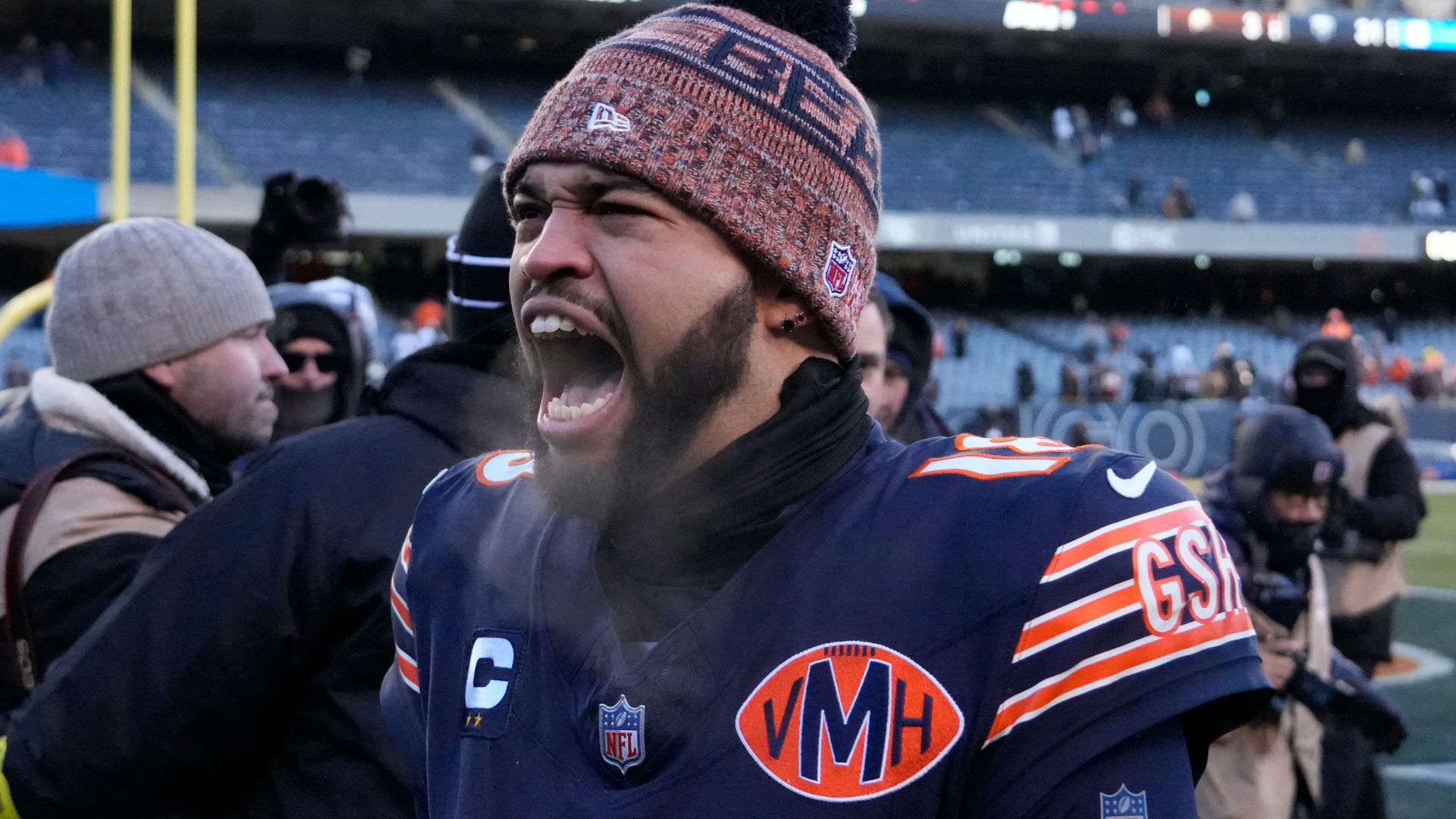
The NFL’s Chicago Bears Are Considering Leaving Illinois If Politicians Keep It Up

The Chicago Bears are increasingly signaling that they may take their search for a new stadium beyond Illinois, citing frustration with state and local political leaders and warning that stalled legislation has jeopardized plans to keep the franchise in the Chicago area.

For several years, the Bears have warned that remaining in downtown Chicago may not be viable without a new stadium and updated infrastructure.

The team has explored relocation options within the region, including a move to nearby suburbs, but negotiations and required government actions have slowed considerably.

State lawmakers in Illinois would need to approve zoning changes, infrastructure funding, and property tax arrangements, but those steps have not materialized.

Last year, Bears President and CEO Kevin Warren said the organization was focused on relocating to suburban Arlington Heights, on the site of the former Arlington Park horse racing track.

That plan, however, has stalled at the state Capitol in Springfield, prompting the team to broaden its search.

According to WGN-TV, Warren has now indicated that the Bears could leave Illinois entirely.

“In addition to Arlington Park, we need to expand our search and critically evaluate opportunities throughout the wider Chicagoland region, including Northwest Indiana,” Warren said in an open letter to fans.

Warren wrote that the Bears had relied on guidance from Illinois leadership but had not received the legislative cooperation needed to move forward.

“We listened to state leadership and relied on their direction and guidance, yet our efforts have been met with no legislative partnership,” he said.

He emphasized that delays and uncertainty have created significant challenges for a project of this scale.

“Stable timelines are critical, as are predictable processes and elected leaders, who share a sense of urgency and appreciation for public partnership that projects with this level of impact require,” Warren wrote.

“We have not received that sense of urgency or appreciation to date.”

Warren also said the team was informed that its stadium project would not be a priority for state lawmakers next year.

“We have been told directly by State leadership that our project will not be a priority in 2026, despite the benefits it will bring to Illinois,” he wrote.

While acknowledging the growing tension, Warren insisted the Bears are not using the possibility of relocation as a negotiating tactic.

“Our goal is clear: build a world-class football team that has a world-class stadium worthy of our world-class fans — a stadium that reflects the future we are building together,” he said.

The Bears’ efforts to secure a new stadium date back to at least 2023, when the organization first asked Chicago officials to assist in identifying a downtown site and to partner on funding.

City leaders did not take formal action, and neither of the city’s two most recent mayors advanced a concrete proposal to keep the team in Chicago.

In 2024, the Bears signed a memorandum of understanding with the City of Arlington Heights to relocate to the former racetrack property.

That agreement was tied to the advancement of a “megaprojects” bill in the Illinois legislature, which a local state senator had pledged to support.

The bill was intended to provide infrastructure funding needed to support a large-scale development such as a new stadium.

Arlington Heights officials have said the legislation is essential before the project can proceed.

The megaprojects bill, however, has stalled in Springfield, where Chicago Democrats have opposed measures that could facilitate the Bears’ departure from the city.

With no movement on the legislation, the Bears’ Arlington Heights plan remains uncertain.

As Illinois lawmakers debate, officials in Indiana have moved to position their state as a potential alternative.

The Indiana General Assembly has passed House Bill 1292, creating a “professional sports development commission” designed to explore options for attracting a major sports franchise to northwest Indiana.

The legislation “authorizes the commission to study various plans and recommendations that are proposed with respect to attracting a professional sports franchise to northwest Indiana.”

Several towns in northwest Indiana have already expressed interest in hosting the Bears, hoping to capitalize on the opportunity should the team decide to cross the state line.

The situation places pressure on Illinois leaders to act if they hope to keep one of the state’s most storied sports franchises.

With no firm timeline in place and political disagreements unresolved, the Bears appear poised to continue exploring all available options as they seek a long-term home for the team.

News

Clinton Camp Responds After Damaging Epstein Files Photos Go Viral

The Justice Department on Friday released long-awaited files connected to the late financier and convicted sex offender Jeffrey Epstein, complying with a congressional deadline that has renewed public scrutiny of high-profile figures linked to Epstein and reignited debate over accountability, transparency, and unresolved allegations.

The release followed a mandate set by Congress requiring the department to turn over records by December 19 under the Epstein Files Transparency Act, which was signed into law by President Donald Trump on November 19.

Deputy Attorney General Todd Blanche announced that the investigation identified more than 1,200 victims and their families, according to reporting earlier Friday.

The document release included thousands of pages of materials, many of them heavily redacted, as well as photographs that quickly drew widespread attention.

Among the most circulated images were multiple photos of former President Bill Clinton appearing with Epstein in various settings, including dinners, travel, and leisure environments.

Some of the photographs show Clinton with unidentified women in pools, a jacuzzi, and at social gatherings.

The images spread rapidly online and across media outlets, prompting a public response from Clinton through a spokesperson later Friday.

In a statement reported by the Daily Mail, the spokesperson criticized the timing and intent of the release.

“The White House hasn’t been hiding these files for months only to dump them late on a Friday to protect Bill Clinton,” the spokesperson said.

“This is about shielding themselves from what comes next, or from what they’ll try and hide forever.”

The spokesperson added that the release was not centered on Clinton.

“So they can release as many grainy 20-plus-year-old photos as they want, but this isn’t about Bill Clinton. Never has, never will be.”

The statement also referenced comments made by Susie Wiles in a recent Vanity Fair interview.

“Even Susie Wiles said Donald Trump was wrong about Bill Clinton,” the spokesperson said, referring to Wiles’ remark that “Trump was wrong” about there being incriminating evidence against Clinton in the files.

The spokesperson further stated, “There are two types of people here. The first group knew nothing and cut Epstein off before his crimes came to light. The second group continued relationships with him after. We’re in the first. No amount of stalling by people in the second group will change that. Everyone, especially MAGA, expects answers, not scapegoats.”

Clinton has previously said he cut off ties with Epstein in 2005, when investigations into Epstein became widely known.

The two had been associated since the early 1990s, and Clinton’s name has appeared in flight logs, photographs, and other records connected to Epstein over the years.

Clinton has denied any wrongdoing and has not been charged with any crime related to Epstein.

The release of the files has also renewed attention on how different administrations handled Epstein-related records.

The Biden White House held the files for several years prior to the passage of the transparency law.

The Friday release occurred on the deadline established by Congress rather than at the discretion of the executive branch.

Epstein died in federal custody in 2019 while awaiting trial on sex trafficking charges.

His death was ruled a suicide, but questions surrounding his activities, associates, and the handling of his case have persisted.

Many victims of Epstein have said they have yet to receive full justice or accountability from those who enabled or ignored his crimes.

The Epstein Files Transparency Act was authored to compel the release of unclassified materials related to Epstein’s network and activities.

Supporters of the law argued that public disclosure was necessary to address lingering questions about who knew what and when.

As of Friday, the release of the files has intensified calls for testimony from individuals named in or connected to Epstein-related records.

Former President Clinton and former Secretary of State Hillary Clinton have previously been scheduled to appear before the House Oversight Committee.

Their appearance has been postponed multiple times and is currently set for January 13, according to congressional scheduling information.

News

Brown University Completely Outsmarted by Homeless Man Who Cracked the Case Wide Open

Authorities searching for answers after a deadly shooting at Brown University say the case only came together after an unexpected tip from a homeless man who noticed details investigators had missed.

For four days following the shooting, law enforcement agencies reviewed hundreds of surveillance cameras and deployed elite investigators, yet were unable to identify a suspect.

Brown University, one of the nation’s wealthiest institutions, became the center of an intensive investigation that yielded few leads until the man, publicly identified only as John, came forward.

State and federal officials now credit John with providing the key information that led investigators to identify Claudio Neves Valente as the suspect in the Brown University shooting, as well as a separate killing of an MIT professor that occurred days later.

According to the New York Post, federal officials say John is likely “entitled” to a $50,000 reward.

“He blew this case right open,” Rhode Island Attorney General Peter Neronha said.

John’s role in the investigation became public after police released his image and asked for help locating him.

By that point, John had already drawn attention online. According to court records, he posted on Reddit after recognizing the suspect from police images circulated following the Brown shooting.

“I’m being dead serious,” the post said.

“The police need to look into a grey Nissan with Florida plates, possibly a rental.”

In the post and later statements to investigators, John described behavior that struck him as suspicious. He said he watched the suspect approach a grey Nissan, unlock it using a key fob, then abruptly back away and relock it.

John said the man then circled the block, prompting him to check the license plate.

At the time, investigators had not confirmed any vehicle connected to the suspect.

Authorities later verified that Valente had been driving a rental car matching the description provided by John.

That information allowed investigators to narrow their focus and connect additional surveillance footage and records to Valente.

Court documents show John also told investigators he had encountered Valente earlier inside a bathroom at Brown’s engineering building. He noted that Valente’s clothing appeared “inappropriate and inadequate for the weather.”

Sources told Fox News that John had been living in the basement of the engineering building at the time, a fact university officials were reportedly unaware of.

That circumstance placed him in proximity to the suspect during critical moments before and after the shooting.

John later described a tense encounter outside the building, according to an affidavit.

He said he followed Valente and confronted him about the vehicle.

“Your car is back there, why are you circling the block?” John yelled, according to court records.

Valente responded angrily, telling John, “I don’t know you from nobody,” and accused him of harassment before walking away.

Federal investigators said the information John provided proved decisive in breaking the case.

FBI Special Agent in Charge Ted Docks said the tip met the criteria for a federal reward.

“It would be logical to think that, absolutely, that individual would be entitled to that,” Docks said.

The case has drawn attention not only for the crimes involved but also for how it unfolded.

Despite extensive institutional resources and days of investigative work, authorities said the critical break came from an individual living on the margins, whose observations filled gaps left by technology and formal investigative efforts.

Officials have not disclosed when or how John may receive the reward, nor have they released further details about his current status.

Law enforcement sources indicated the investigation into Valente’s alleged actions remains ongoing, with prosecutors continuing to review evidence related to both killings.

News

U.S. Pounds ISIS After Terrorists Kill American Troops in Syria

The United States military carried out a large-scale strike against Islamic State targets in Syria on Friday following the deaths of two U.S. service members and a military interpreter, according to Department of War Secretary Pete Hegseth.

The operation came in direct response to a December 13 attack in the Syrian city of Palmyra, where a lone Islamic State gunman ambushed U.S. forces, killing two American troops and an interpreter and wounding three additional U.S. service members.

President Donald Trump vowed “very serious retaliation” following the attack.

According to Fox News, the U.S. operation struck more than 70 targets linked to ISIS.

A senior U.S. official told the network that the targets included “ISIS infrastructure and weapons storage sites.”

Hegseth announced the operation publicly, stating that U.S. forces had initiated a coordinated military response aimed at dismantling Islamic State capabilities in the region.

“Earlier today, U.S. forces commenced OPERATION HAWKEYE STRIKE in Syria to eliminate ISIS fighters, infrastructure, and weapons sites in direct response to the attack on U.S. forces that occurred on December 13th in Palmyra, Syria,” Hegseth wrote on social media.

The United States maintains approximately 900 troops in Syria, primarily tasked with counterterrorism operations and advising allied forces as part of the ongoing mission to prevent an ISIS resurgence.

Hegseth emphasized that the strikes were intended as a targeted response rather than a broader escalation, while underscoring the administration’s posture toward attacks on U.S. personnel.

“This is not the beginning of a war — it is a declaration of vengeance,” Hegseth said.

“The United States of America, under President Trump’s leadership, will never hesitate and never relent to defend our people.”

The December ambush in Palmyra marked the first U.S. combat fatalities in Syria since the collapse of the Assad regime in 2014.

Former Syrian President Bashar al-Assad and his family fled to Russia after Turkish-backed Islamic militants seized control of the government, reshaping the country’s political and security landscape.

U.S. officials have repeatedly warned that despite territorial losses in recent years, ISIS continues to pose a threat through insurgent attacks and targeted violence, particularly against U.S. and allied forces operating in the region.

Hegseth reiterated the administration’s position that any attack on Americans abroad will be met with decisive force.

“As we said directly following the savage attack, if you target Americans — anywhere in the world — you will spend the rest of your brief, anxious life knowing the United States will hunt you, find you, and ruthlessly kill you,” he wrote.

“Today, we hunted and we killed our enemies,” Hegseth added.

“Lots of them. And we will continue.”


News

Stephen Miller Cuts Through the Noise About Somali ‘Pirates’ in Minnesota

White House Deputy Chief of Staff for Policy Stephen Miller sharply criticized U.S. refugee resettlement policies during a televised exchange with Fox News host Jesse Watters, arguing that Democratic-led immigration decisions have imported crime into multiple states and drained American resources.

The exchange occurred as Watters and Miller discussed recent immigration controversies and the broader impact of refugee admissions into the United States. Watters opened the segment by referencing ongoing debates over migrant resettlement and public assistance programs.

“All right, Miller, we got Haitians now on the gravy train, not just eating the dogs and cats anymore,” Watters said.

Miller responded by broadening the focus beyond Haiti, pointing specifically to Somali refugee populations resettled across several Midwestern and Northeastern states.

He argued that Democratic officials were responsible for placing these populations in American communities without adequate consideration of crime or cultural consequences.

“Well, first of all, regarding the situation in Minnesota, by the way, not just Minnesota. We have Somali refugees that were dumped here by Democrats in Ohio and Massachusetts,” Miller said.

Miller went on to argue that crime issues associated with some refugee populations should not come as a surprise, citing Somalia’s history and economic conditions as justification for his claims.

“Let me just say we should not be shocked when you import a population whose primary occupation is pirate, that they are going to come here and steal everything we have,” Miller said.

He continued by describing Somalia’s economic history and linking it directly to what he characterized as criminal behavior carried out in the United States.

“Somalia has this giant coastline, and the only industry they have created after hundreds of years is piracy, stealing what anyone going through who has actually built something has made,” Miller said.

Miller concluded his remarks by asserting that American taxpayers have borne the cost of these policies and that refugees responsible for crime should be returned to their country of origin.

“So yes, the pirates have stolen all of our money, and they have to go home. Jesse, that’s the situation we’re in right now,” Miller said.

WATCH:

News

Disgraced Outgoing D.C. Police Chief Melts Down, Drops F Bomb in Walkout Speech

Outgoing Washington, D.C., Police Chief Pamela Smith ended her tenure Friday with an unexpected and profane address during her final press conference, departing from prepared remarks to confront critics directly and reflect on her time leading the Metropolitan Police Department.

Smith, who announced last week that she would step down as chief, said she “dared not leave” without speaking to what she described as her “haters.”

During the event, she invoked her religious upbringing and church involvement, arguing that criticism of her leadership had not shaken her faith or personal convictions.

“I dare not leave without saying something to my haters. Listen, I know you taught me well. We were raised in the church, Bible study, Sunday school, BTU choir rehearsal, Wednesday night Bible study, Tuesday night Bible study, children’s choir, you name it,” Smith said.

“There’s enough Jesus in me that’s going to get me to heaven if I die tomorrow. But watch this, you’ve taught me well. And I just need you to just follow me with this just for a few moments, mom. Don’t, don’t, because listen, I listen to her even at 50-something years old.”

Smith then escalated her remarks, delivering a profanity-laced message aimed at those who had criticized her during her tenure, before shifting into what she framed as a declaration of forgiveness rooted in Christian teachings.

“So I’m going to the Bible when I say this to my haters. F you. No, it’s not a drop-the-mic moment. Watch me in this space. I forgive you,” Smith said.

“I forgive you. Because the Bible makes it very clear. When Jesus was hanging on the cross, when he said to his father, even in the pit of agony and defeat, he said, ‘Forgive them, for they know not what they do.”

Smith’s remarks came as she prepares to leave her post as chief of the Metropolitan Police Department of the District of Columbia.

She has served in the role since July 2023 and is scheduled to step down at the end of December 2025, bringing her tenure to roughly two and a half years.

Her time as chief unfolded amid heightened scrutiny of crime and public safety in the nation’s capital.

In recent months, tensions escalated between the White House and Washington’s local leadership over law enforcement and crime policy, with President Donald Trump repeatedly criticizing conditions in the city and warning of what he described as a “tragic emergency” involving violent crime.

Those tensions came to a head in August, when Trump briefly moved to assert federal control over the city’s police department.

At that time, he deployed the National Guard and appointed a federal emergency commissioner, a move that placed Smith’s leadership under national attention. Days later, Trump reversed course, allowing Smith to remain in charge of the department.

Throughout her tenure, Smith faced sustained criticism over crime levels, policing strategy, and her handling of public safety concerns, while also receiving support from city officials and allies who defended her leadership.

Her final press conference, however, marked a sharp departure from typical closing remarks for an outgoing police chief, drawing attention not to policy or accomplishments, but to her personal response to critics.

Her resignation will take effect as scheduled at the end of December 2025, concluding a chapter marked by public controversy, federal intervention threats, and an unusually candid farewell address that immediately drew attention for its tone and language.

News

Trump Forces Big Pharma to Slash Prices Under Most Favored Nation Plan

President Donald Trump on Friday announced what the White House described as the “largest development to date” in implementing Most-Favored-Nation (MFN) pricing for prescription drugs in the United States, unveiling new agreements with nine major pharmaceutical manufacturers aimed at significantly lowering drug costs for American patients.

The announcement was made via the White House website and during an Oval Office press conference.

According to a White House fact sheet, the agreements involve Amgen, Bristol Myers Squibb, Boehringer Ingelheim, Genentech, Gilead Sciences, GSK, Merck, Novartis, and Sanofi.

The White House said the agreements will reduce prices on medications that treat “numerous costly and chronic conditions, including type two diabetes, rheumatoid arthritis, multiple sclerosis, asthma, COPD, hepatitis B and C, HIV, and certain cancers.”

Under the terms of the agreements, “every State Medicaid program in the country [will have] access to MFN drug prices on products made by the nine companies,” which the administration said will result in “billions of dollars in savings” for American taxpayers.

During the press conference, Trump highlighted disparities in global drug pricing and pharmaceutical profits.

He said the United States represents approximately 4% of the world’s population but consumes 13% of prescription drugs worldwide, while accounting for 75% of global pharmaceutical profits.

“That ends now,” Trump said, attributing the change in part to tariffs.

The MFN framework requires pharmaceutical companies to sell drugs in the United States at prices no higher than the lowest price they charge in other developed nations.

Trump provided several examples during the announcement, including a Sanofi blood thinner that previously cost $750 and is now priced at less than $16, and an HIV medication from Bristol Myers Squibb that dropped from nearly $1,500 to $217.

He also said a hepatitis B medication would decrease in price from $1,400 to $413, and a hepatitis C medication from Gilead would fall from nearly $25,000 to less than $2,500.

The White House fact sheet listed additional price reductions available to patients purchasing medications directly through TrumpRx.

Amgen will reduce the price of its cholesterol-lowering drug Repatha from $573 to $239.

Bristol Myers Squibb will lower the price of its HIV medication Reyataz from $1,449 to $217.

Boehringer Ingelheim will cut the cost of its type two diabetes medication Jentadeuto from $525 to $55.

Genentech will reduce the price of its flu medication Xofluza from $168 to $50.

Gilead Sciences will reduce the price of its hepatitis C medication Epclusa from $24,920 to $2,425.

GSK will lower prices across its inhaler portfolio, with the asthma inhaler Advair Diskus 500/50 dropping from $265 to $89.

Merck will reduce the price of its diabetes drug Januvia from $330 to $100.

Novartis will cut the price of its multiple sclerosis medication Mayzent from $9,987 to $1,137.

Sanofi will reduce the price of its blood thinner Plavix from $756 to $16 and will list its insulin products on TrumpRx at $35 per month’s supply.

In addition to price reductions, Trump announced that the pharmaceutical companies participating in the agreements will invest more than $150 billion in domestic pharmaceutical manufacturing in the United States. He attributed the shift in investment to tariffs.

The announcement comes as Democrats in Congress continue to focus on the expiration of Affordable Care Act subsidies.

The administration said Trump has taken significant action to reduce health care costs in the United States in less than one year.

News

Bill Clinton is in Hot Water After Epstein Dump Reveals Compromising Pictures

Former President Bill Clinton appears repeatedly in newly released files connected to convicted sex offender Jeffrey Epstein, including photographs showing Clinton reclining nearly naked in a hot tub with an unidentified woman and images of him traveling internationally with Epstein and his associates, according to records made public Friday by the Justice Department.

Clinton, now 79, is featured in numerous photographs contained in the cache of Epstein-related materials released to meet a congressionally mandated deadline.

Among the most widely circulated images is one showing Clinton in a hot tub with a woman positioned at his waist.

The identity of the woman is obscured by redactions in the documents.

Additional photos show Clinton aboard a plane with a young woman, vacationing with Epstein in the United Kingdom, and traveling with him to destinations including Brunei and Thailand.

The files also include images from the 2002 wedding of Moroccan King Mohammed VI, which Clinton attended.

The scope of Clinton’s presence in the materials prompted immediate reaction following the Justice Department’s release, which included thousands of heavily redacted records.

In one image, Clinton is seen swimming with Ghislaine Maxwell, Epstein’s longtime associate who is currently serving a 20-year federal prison sentence for sex trafficking offenses.

“This is his reckoning. I mean, if you turn on CNN, that’s what they are talking about. I’ve gotten a million texts about it,” said a former Clinton aide, speaking about the images’ impact.

“People are like, ‘I can’t believe he was in a hot tub. Who’s the woman in there?’ She’s at, you know, body level. I mean, it’s, like, unbelievable. It’s just shocking.”

The former aide said Clinton’s documented interactions with Epstein are likely to shape public perception after years of speculation about powerful figures linked to the financier.

“[Clinton] is Prince Andrew… He’s kinda done. He was already done before, but now he’s even more so,” the aide said.

“People have to be brought to justice for if they did these things, there’s no question about it.”

The Justice Department’s initial document release drew criticism from Democrats for containing relatively few references to President Donald Trump, who is currently serving as president of the United States.

Trump had social ties to Epstein until about 2004, but the released materials include limited references to him.

One photo in the files shows Epstein and a woman posing with a check that Trump allegedly signed in 1997 for $22,500.

A similar image had previously appeared in a 2003 birthday book for Epstein, accompanied by a note allegedly written by businessman Joel Pashcow stating: “Jeffrey showing early talents with money + women! Sells ‘fully depreciated’ [woman’s name] to Donald Trump for $22,500.”

The Wall Street Journal previously reported that the woman referenced was “a wealthy European then in her 20s” who cut off contact with Epstein around 1997 and had no romantic relationship with either Epstein or Trump, according to her attorney.

Clinton, by contrast, appears prominently throughout the newly released records.

The files show him touring Winston Churchill’s Second World War war room in London, examining maps, documents, and period telephones while surrounded by wax figures representing British military leaders.

Other photographs include Epstein, Maxwell, Clinton, and Rolling Stones frontman Mick Jagger dining together.

In one image, Jagger and Clinton appear next to a woman whose face has been blacked out.

In Brunei, Clinton and Epstein are shown posing together wearing matching silk shirts. Additional images depict them sightseeing in Thailand and traveling through Morocco. One album is labeled “Clinton Trips-NY,LA,London.”

Another photograph shows Clinton aboard a plane with pop star Michael Jackson.

The files remain heavily redacted, obscuring the identities of women and girls appearing alongside Clinton.

The redactions also conceal some details in ways critics described as inconsistent.

In one group photo from a 2002 trip to Morocco, Epstein’s face is obscured while Clinton and Maxwell’s faces are not.

In another image, a black box covers Epstein’s exposed buttocks on a beach.

The New York Post reported, citing two sources, that Clinton surprised his own staff by requesting that Epstein and Maxwell accompany him to the Moroccan royal wedding, a request that was reportedly approved by Moroccan authorities.

Clinton’s office denied any wrongdoing and sought to shift attention toward Trump’s past associations with Epstein.

A Clinton spokesperson told the Daily Mail, “The White House hasn’t been hiding these files for months only to dump them late on a Friday to protect Bill Clinton.”

“This is about shielding themselves from what comes next, or from what they’ll try and hide forever. So they can release as many grainy 20-plus-year-old photos as they want, but this isn’t about Bill Clinton. Never has, never will be. Even Susie Wiles said Donald Trump was wrong about Bill Clinton,” the spokesperson said.

“There are two types of people here,” the spokesman added.

“The first group knew nothing and cut Epstein off before his crimes came to light. The second group continued relationships with him after. We’re in the first. No amount of stalling by people in the second group will change that. Everyone, especially MAGA, expects answers, not scapegoats.”

The document release followed the expiration of a 30-day deadline under a congressional transparency law requiring the Justice Department to turn over unclassified Epstein-related materials.

Authors of the legislation, Reps. Thomas Massie of Kentucky and Ro Khanna of California, said the department failed to comply fully.

“The DOJ’s document dump of hundreds of thousands of pages failed to comply with the law,” Khanna said.


Scroll to Top