News

News

Trump-Endorsed Candidate Claims Historic Victory in Colombia Election Showdown [WATCH]

Right-wing candidate Abelardo de la Espriella won Colombia’s presidential runoff on Sunday, defeating left-wing Senator Iván Cepeda in a closely contested election that signals a political shift away from the government of outgoing President Gustavo Petro, as reported by Trending Politics News.

With nearly all ballots counted, de la Espriella received 49.66 percent of the vote, or approximately 12.96 million votes, compared to Cepeda’s 48.70 percent, or roughly 12.71 million votes. The margin separating the two candidates was fewer than 251,000 votes.

The result made de la Espriella the most-voted presidential candidate in Colombian history.

The runoff followed the first round of voting held on May 31, 2026. In that contest, de la Espriella secured approximately 43.7 percent of the vote while Cepeda received about 40.9 percent.

Because neither candidate reached the 50 percent threshold required for an outright victory, the election advanced to a second round between the top two finishers.

De la Espriella, a lawyer and businessman with no previous elected political experience, campaigned as an independent under the Defenders of the Homeland banner.

His campaign focused heavily on security issues, a major concern for many Colombian voters.

Among his proposals were the construction of mega-prisons modeled after policies implemented in El Salvador, expanded military operations against drug trafficking organizations, and the use of aerial fumigation to combat coca cultivation.

His platform also included fiscal austerity measures, investor-friendly economic policies, and conservative positions on social issues.

De la Espriella holds both U.S. and Italian citizenship and received an endorsement from President Donald Trump during the campaign. His running mate, economist José Manuel Restrepo, previously served as Colombia’s finance minister.

Cepeda, a senator aligned with the Historic Pact coalition led by outgoing President Gustavo Petro, campaigned on continuing the administration’s progressive agenda.

His platform emphasized negotiations with armed groups, expanded social programs, and institutional reforms.

The election unfolded against a backdrop of concerns over crime, economic conditions, and security challenges that became prominent issues during Petro’s presidency.

Petro entered office in 2022 as Colombia’s first leftist president. Under Colombia’s constitution, he was prohibited from seeking another term.

During his presidency, Petro frequently clashed with the Trump administration.

Areas of disagreement included drug interdiction efforts, coca cultivation levels, U.S. deportation policies affecting Colombian nationals, and Trump’s endorsement of de la Espriella during the 2026 campaign.

Petro characterized Trump’s endorsement as outside interference in Colombia’s domestic affairs.

The outgoing president’s political history has also remained a subject of public discussion. Petro joined the 19th of April Movement, commonly known as M-19, at age 17 during the late 1970s.

The organization had Marxist influences and carried out armed actions before demobilizing through peace negotiations in 1990.

Following both the first round of voting and Sunday’s runoff, Petro repeatedly questioned the election results. After the runoff, he publicly suggested outside influences affected the outcome and explicitly blamed “Israeli meddling” for his coalition’s defeat.

The election result continues a broader trend of right-leaning candidates finding success across parts of South America, while marking the end of Petro’s four-year administration and the beginning of a new government under de la Espriella.

News

Retired Army General Sounds Alarm on AI and Quantum Computing Threats to U.S. Security

Retired Army Lt. Gen. Ross Coffman isn’t mincing words when it comes to the next frontier of warfare.

The former commander and now president of Forward Edge-AI warns that America and its allies are standing at a dangerous crossroads — a point where artificial intelligence and quantum computing could rewrite the rules of military dominance and national survival.

Coffman, whose company builds cutting-edge tools at the intersection of AI, cybersecurity, and national defense, told Military.com that we’ve entered a perilous new era.

“We’re in a very dangerous place in the cyber world right now,” he said, underscoring how artificial intelligence has supercharged the pace and power of cyberattacks, many of which now run autonomously 24/7.

The General wasn’t talking about hypothetical sci-fi threats. He was referring to real-world capabilities already in play — AI-powered cyberweapons capable of scanning global networks in milliseconds to find vulnerabilities without a single human involved.

These intelligent viruses don’t sleep, don’t need breaks, and don’t wait for orders. They just hunt.

Coffman’s warning is particularly stark because it connects two fast-advancing technologies — AI and quantum computing — that most Americans only hear about at tech conferences or in science sections of the news. But for him, these aren’t laboratory curiosities.

They’re potential weapons that could cripple entire sectors of national security if the nation doesn’t prepare.

As he explained, “With AI being used in cyberattacks without a human in the loop, that means it doesn’t sleep.

It goes 24/7, 365, looking for vulnerabilities.” That reality, paired with adversaries who know how to exploit it, presents a threat unlike anything the War Department has faced before.

Forward Edge-AI’s work focuses on making sure the United States isn’t caught off guard when this technology leap proves decisive. Among its projects is Isidore Quantum, a platform built for what’s called “post-quantum cryptography.”

The goal: develop encryption strong enough to survive the coming wave of quantum-capable codebreakers.

Quantum computing is not about more powerful laptops—it’s about machines using quantum bits, or qubits, to calculate on a scale that shatters today’s encryption.

Experts warn that when “Q-Day” comes — the moment quantum systems can break public-key cryptography — the world’s digital security as we know it could collapse. Banks, hospitals, power grids, even military communication systems could be at risk.

It’s no wonder the feds are scrambling. The National Institute of Standards and Technology (NIST) recently finalized the first post-quantum cryptography standards and urged immediate migration.

The National Security Agency, through its Commercial National Security Algorithm Suite 2.0, has already established hard deadlines — mandating that key systems become quantum-proof by 2035. Any gear that can’t make the cut will be retired by 2030.

Coffman supports that urgency but warns that implementation is another beast entirely. Transitioning massive, layered federal networks, many built on outdated architectures, to quantum-resistant standards is not a weekend project. “It’s not difficult, but it’s not something you do overnight if you have a large network,” he said.

That statement carries weight. Forward Edge-AI isn’t just talking theory — it is developing the hardware-and-software hybrid solutions to retrofit the systems that run America’s cyber backbone.

Coffman’s team aims to shield sensitive data across military, energy, and financial sectors from a day when traditional encryption could be rendered worthless.

The general’s military mindset informs his approach. He sees the AI and quantum threats as part of the same evolving battlespace, one where lines blur between digital and physical warfare.

Cyberattacks often accompany real-world tensions now, as seen in the Ukraine conflict and China’s global hacking campaigns. America’s adversaries no longer need to build a fleet or occupy territory to inflict damage — they simply need to breach a network.

And they’re getting better at it. Coffman points out that artificial intelligence now makes it easier for state and non-state actors to automate intrusion attempts, tailor phishing campaigns, and exploit human error faster than security teams can respond. “Technology isn’t the biggest vulnerability,” he said, “people are.”

He’s right. The weakest link remains human oversight — from careless users clicking questionable links to bureaucrats delaying critical tech transitions. That’s a gap our adversaries, from Beijing to Tehran, are eager to exploit.

Coffman’s ultimate message is both warning and opportunity. America can either lead in secure, AI-enhanced defense systems or play catch-up to nations with fewer moral limits on how they deploy this technology.

The difference will be leadership and preparation — both hallmarks of the Trump-era approach to national security that emphasized dominance, not dependence.

Secretary of War Pete Hegseth and the Trump administration’s defense vision have already made it clear that keeping America safe in the next generation of combat will require muscle, vigilance, and technological superiority.

Coffman’s words simply drive home the point that this battle has already begun — online, in code, and at the speed of thought.

News

Labour Meltdown Forces Keir Starmer to Quit as British Prime Minister After Crushing Losses [WATCH]

The political world in the United Kingdom was rocked on Monday as Prime Minister Keir Starmer announced his resignation after an internal mutiny inside the Labour Party following disastrous local election results.

It marks the first time in years that Britain’s ruling party has turned on its own leader so swiftly, and it could reset the balance of power across the Atlantic as well.

Starmer appeared outside 10 Downing Street with the usual polished delivery, but his words carried the tone of a leader forced out rather than one timing his own exit.

“Every decision I’ve taken has been about putting the country I love first. That is why I will resign as leader of the Labour Party. I have spoken to his majesty the king this morning to inform him of my decision,” Starmer said.

WATCH:

He will remain in office as caretaker prime minister until a new Labour leader is chosen.

His attempt to take the high road could not disguise the political train wreck that his time in power became.

Labour lost nearly 1,500 local council seats and control of more than 25 local authorities in early May, a collapse even party insiders privately call “catastrophic.”

Those losses were largely driven by an uprising from Nigel Farage’s Reform UK movement, which peeled off working-class voters in areas Labour once dominated.

The local results were just the latest blow in a series of missteps that have haunted Starmer since his early clash with President Donald Trump over foreign policy and the Iran conflict.

In that dispute, Starmer initially refused to allow the United States to use British bases for operations against Iran.

Trump responded bluntly, telling reporters, “This is not Winston Churchill that we’re dealing with.”

The quote went viral among conservatives and even some British tabloids seized on it, calling Starmer “the anti-Churchill.”

Soon after, Starmer caved and approved limited cooperation, angering both sides. Anti-war Labour activists accused him of betrayal, while critics accused him of weakness.

Britons saw enough indecision to draw their own conclusions.

Polling from YouGov confirmed it, with voters calling him “weak,” “indecisive,” and “a man without a plan.”

Labour’s left flank lost patience quickly.

Within days of the local election debacle, two of Starmer’s key ministers resigned.

Jess Phillips, long rumored to harbor leadership ambitions of her own, quit after a heated cabinet exchange, telling reporters that Labour needed a leader with “more gusto.”

Another minister, Miatta Fahnbulleh, stepped down and called for an “orderly transition,” meaning an end to Starmer’s tenure sooner rather than later.

Then came the mass rebellion. More than 80 Labour MPs from across the ideological spectrum publicly demanded that Starmer resign.

Steven Swinford of The Times noted that the revolt crossed every internal party line, uniting centrists and the far left against a common target.

That sort of broad opposition is usually fatal in British politics, and Starmer evidently read the writing on the wall.

John Healey, a loyal cabinet member, had urged restraint just hours before the resignation announcement.

“More instability is not in Britain’s interest. Our full focus must be on security,” he said in a television interview.

His appeal was apparently ignored by his colleagues, who decided that the bigger risk was keeping Starmer in office.

The flames were stoked higher by another scandal Starmer could not shake.

He appointed Peter Mandelson, a figure long associated with the early Blair years, as ambassador to Washington.

That choice reignited scrutiny over Mandelson’s past connection to convicted sex offender Jeffrey Epstein.

The British press had a field day, and public confidence in Starmer’s judgment took yet another hit.

Trump weighed in from Washington, commenting on Starmer’s looming downfall.

The president remarked that he “was not surprised” and wished him well while noting that leadership “takes strength and results, not excuses.”

For many conservatives on both sides of the Atlantic, that blunt assessment summarized Starmer’s political career perfectly.

Attention now shifts to the coming Labour leadership race, a contest likely to expose even deeper divisions within the party.

Centrist Wes Streeting appears poised to make a run, while Greater Manchester’s Andy Burnham, a favorite among the party base, is expected to challenge him.

Deputy Prime Minister Angela Rayner will also hold significant influence and could emerge as a compromise candidate if the factions tear each other apart.

The road back for Labour will be steep. Reform UK has proven it can deliver real electoral damage, the Conservative opposition smells opportunity, and the British public has apparently had enough of the timid technocracy that Starmer represented.

What happens in the next few months will decide whether the Labour Party remains a serious contender for power or becomes just another casualty of its own arrogance.

For now, Keir Starmer’s resignation is not just a political event but a warning. Weak leadership, blurred convictions, and deference to global elites will always collapse under the weight of accountability.

In the end, the British people made their verdict clear, and it came through loud and unmistakable.

News

Tesla On Autopilot Crashes Into Texas Home Killing Grandmother Instantly [WATCH]

A Tesla that the driver said was operating in self-driving mode crashed into a Texas home at high speed on Friday, killing a woman who was inside the residence, as reported by The Gateway Pundit.

According to reports, the crash involved a blue Tesla Model 3 that traveled through a residential neighborhood before slamming into a home.

The collision claimed the life of 76-year-old Martha Avila Mantilla, a grandmother who was inside the house when the vehicle struck the structure.

Doorbell camera footage obtained by Fox captured the moments leading up to the crash. The video shows the Tesla crossing a front yard before crashing into the home.

Additional footage from another nearby residence reportedly shows the vehicle speeding through the neighborhood shortly before impact.

Authorities investigating the incident said the Tesla was traveling at a high rate of speed and failed to make a turn at an intersection. Instead, the vehicle continued straight through the area before crashing into the house.

The circumstances surrounding the crash remain under investigation. Law enforcement officials identified the driver as 44-year-old Michael Butler.

Authorities said Butler showed no signs of intoxication following the incident and has been cooperating with investigators.

At this time, Butler has not been charged in connection with the crash.

Investigators are working to determine exactly what role, if any, the vehicle’s automated driving features may have played in the incident. Reports indicate that Butler told authorities the Tesla was operating in self-driving mode when the crash occurred.

The fatal collision comes as Tesla continues to face federal scrutiny over its automated driving technology.

The company is currently the subject of a federal investigation involving approximately 3 million Tesla vehicles and the performance of self-driving systems.

Federal regulators have also been examining whether additional recalls involving Tesla’s self-driving technology may be necessary.

Tesla’s advanced driver-assistance systems have been the focus of multiple investigations in recent years as regulators evaluate crashes involving vehicles that were reportedly using automated driving features at the time of incidents.

Officials have repeatedly emphasized that drivers are expected to remain attentive and maintain control of their vehicles even when such systems are activated.

Neighbors who witnessed Friday’s crash described the event as unfolding in a matter of seconds.

“It just flew straight into their home,” a neighbor said. “It happened so quick.”

The death of Mantilla has left family members and neighbors mourning the loss of a longtime grandmother and community member while investigators continue examining the cause of the crash.

Authorities have not announced when the investigation will be completed.

Officials are expected to review vehicle data, witness statements, surveillance footage, and other evidence as they work to determine what led the Tesla to leave its intended path and crash into the residence.

News

Zelenskyy Sends Back Poland’s Top Medal After Furious Fallout Over WWII History

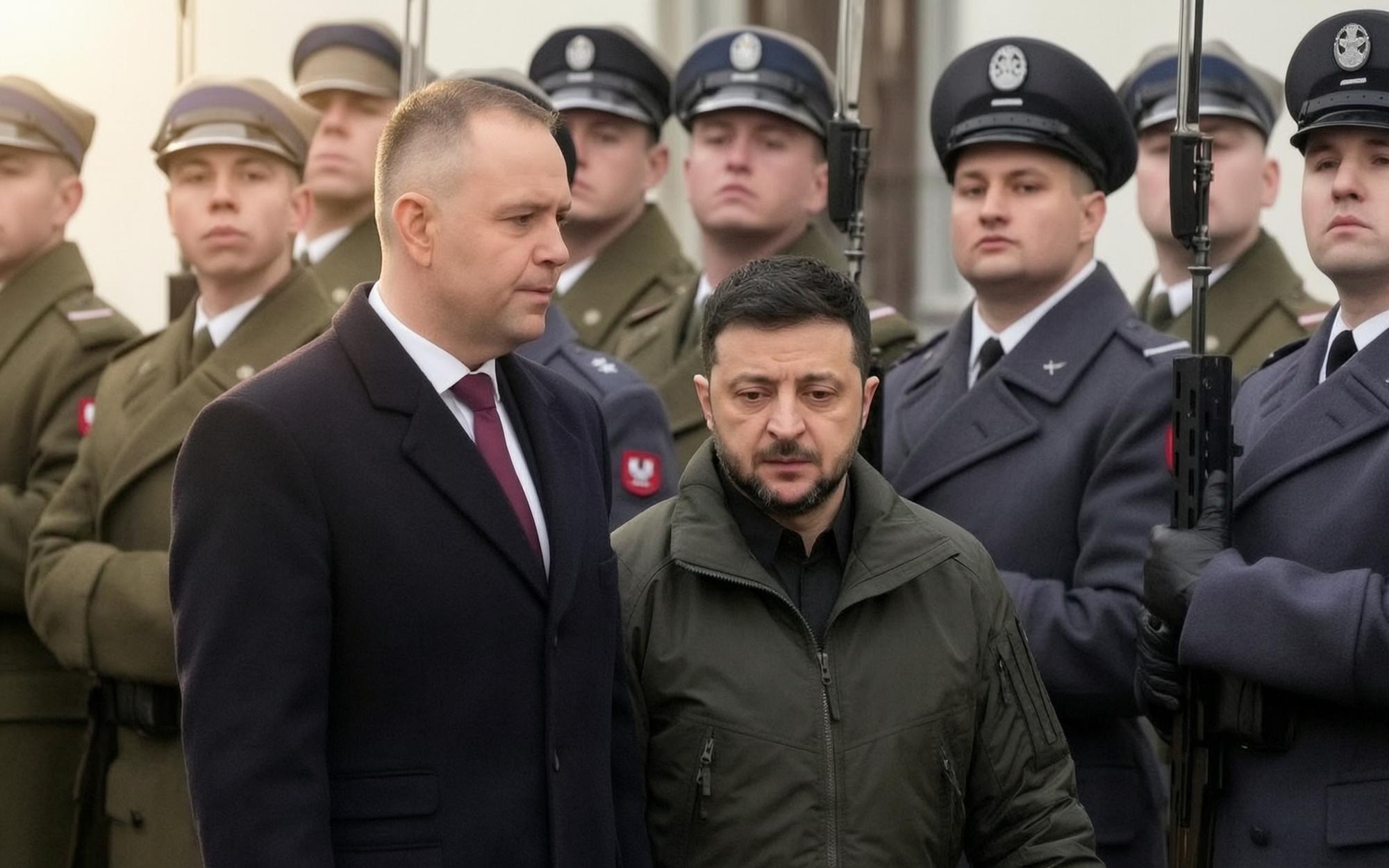
Ukrainian leader Volodymyr Zelenskyy has mailed back Poland’s highest state decoration, the Order of the White Eagle, after the Polish president revoked it in a fiery political skirmish rooted in bitter World War II memories and modern national rivalries.

The spat, which erupted over Zelenskyy’s decision to name a Ukrainian military unit after a controversial wartime formation, spotlights how fragile the alliance between Warsaw and Kyiv has become amid their shared struggle against Russian aggression.

Zelenskyy explained his decision bluntly on X, declaring that the Polish order “was meant for the Ukrainian People and our army” but that he now believes it should be returned.

The post included photos of the medal and a postal receipt addressed to the Polish presidential office, signaling that the Ukrainian leader had formally mailed it back.

The crisis began when Polish President Karol Nawrocki decided to strip Zelenskyy of the prestigious Order of the White Eagle.

His reasoning: Zelenskyy’s late-May decree naming a Special Operations Forces unit after the Ukrainian Insurgent Army, or UPA — a force accused by generations of Poles of massacring Polish civilians during WWII.

“The Ukrainian Insurgent Army remains, for the majority of Polish society, a formation responsible for cruel crimes against the citizens of the Polish Republic during World War II,” Nawrocki declared in a social media speech lasting over a dozen minutes.

Zelenskyy’s decree, however, had been meant to restore historic military traditions, recognizing soldiers who continue to defend Ukraine’s independence in its fight against Russia.

Trump Secures Three-Day Ceasefire Between Russia and Ukraine Amid Prisoner Swap Deal

The UPA’s history is complicated: it fought both Nazi Germany and the Soviet Union, but also committed atrocities against Poles. The Polish Parliament officially labeled those wartime killings as genocide in 2016.

Poland has been one of Ukraine’s staunchest supporters since Russia’s invasion, hosting millions of refugees and supplying weapons.

Yet domestic politics in Warsaw have grown tense, with Nawrocki—a nationalist who thrives on populist energy—seizing the issue to score political points and whip up anti-Ukrainian sentiment ahead of elections.

Ukraine’s presidential office took Nawrocki’s move as an insult to the Ukrainian people and a propaganda victory for Moscow. Kyrylo Budanov, chief of the Ukrainian Presidential Office, claimed the revocation was “an unfriendly act toward our people” and “a gift to the Moscow aggressor.”

He added that the Kremlin would gladly exploit the drama to drive a wedge between two countries that have fought shoulder to shoulder against Putin’s war machine.

In solidarity, several Ukrainian officials, including Budanov, announced they too would return state honors awarded by Poland, viewing the Polish president’s action as a betrayal.

Among them was former Ukrainian Prime Minister Arseniy Yatsenyuk, who warned that “one harmful and incorrect decision by the current president of Poland cannot be corrected by other incorrect decisions of ours.”

This dispute comes at a particularly awkward time. Poland is set to host a major conference on Ukraine’s postwar reconstruction in the coming days—a diplomatic affair Zelenskyy had planned to attend. Now, his participation appears uncertain, with tensions running high between the two leaders.

Trump Strengthens Support for Ukraine, Calls Russia a “Paper Tiger”

Polish Prime Minister Donald Tusk, who remains a political rival of Nawrocki, publicly appealed for calm, urging both presidents to “tone down emotions, not stoke tensions.”

He warned that the current war of words “delights Putin and shocks our allies,” a reminder that internal division within NATO’s Eastern flank benefits only the Kremlin.

Zelenskyy, for his part, maintained a tone of pride and defiance, stating he was “proud of our people and of EVERY Ukrainian warrior.” He reaffirmed Ukraine’s gratitude to Poland for its wartime aid and insisted that his country remains open to constructive dialogue about their shared but painful history.

Yet beneath the diplomacy, this exchange reveals how much friction still simmers under the surface of the Polish-Ukrainian alliance. Historical memory—especially memories written in blood—can be weaponized just as easily as tanks or drones.

In today’s Europe, that history is once again at the center of a fight about identity, patriotism, and loyalty.

The timing could not be worse for the Western coalition backing Kyiv, as divisions over history give Putin new ammunition in his campaign to fracture support for Ukraine.

Many conservatives across Europe now question whether Zelenskyy’s political theatrics help or harm his cause, especially as Western taxpayers grow weary of bankrolling his endless appeals for aid.

For Warsaw and Kyiv alike, the symbolism of medals and names might seem trivial compared to missiles and manpower.

But in the halls of power, symbols matter. They’re about who owns the narrative of heroism—and who gets to define history itself.

One thing is certain: while Zelenskyy and Nawrocki argue over the ghosts of the past, Vladimir Putin is smiling in the present.

News

Keith Ellison Explodes, Walks Out When Confronted Over Minnesota’s Multi Billion Dollar Fraud Scandal [WATCH]

Minnesota Attorney General Keith Ellison is in hot water after storming away from reporters who dared to ask about billions of dollars stolen from taxpayers under his watch.

The moment captured everything voters need to know about how Democrats handle accountability.

When pressed about rampant fraud inside the state’s social programs, Ellison snapped and accused critics of being politically motivated before abruptly walking off.

The question that broke him was simple.

A reporter asked Ellison to address the ballooning fraud totals in Minnesota, which have reached as high as nine billion dollars across various welfare and social service programs.

Ellison’s response was dismissive and defensive.

“If you ask the newspapers for a forensic accounting, the number you mentioned is tightly with people of a very unique political persuasion aligned with the Trump administration. So I’m done talking to you,” he said before cutting off the exchange.

WATCH:

That reaction speaks volumes.

The same party that lectures others about transparency and accountability suddenly hides behind political spin when the subject turns to their own failures.

For Minnesotans struggling with high taxes and an expensive cost of living, seeing billions of their dollars vanish while the attorney general storms off is infuriating.

At the center of this mess is the now infamous Feeding Our Future scandal.

Under Ellison’s leadership, criminals stole roughly 250 million dollars from a program meant to feed children during the pandemic.

Fraudsters claimed to have distributed 125 million meals that never existed through more than 250 fake food sites built on loosened COVID rules.

The mastermind will spend over 40 years in prison, but that does not heal the gaping wound to taxpayers.

Investigators later uncovered that the corruption ran much deeper.

Several reports have alleged that the total amount of fraud connected to Minnesota’s social programs could top nine billion dollars.

The money was meant to help children, families, and the disabled, but instead lined the pockets of crooks who found a gold mine inside government red tape.

The federal government has finally taken notice.

In February, Vice President J.D. Vance announced that the administration would freeze 259 million dollars of Medicaid funding for Minnesota until the state fully cooperates with fraud investigators.

That move sparked outrage among Democrats who insisted everything was fine.

Those same Democrats, however, have fought every attempt to open their books to scrutiny.

Minnesota’s corruption problem is not isolated. It is part of a broader pattern of blue state bureaucracies exploiting or ignoring massive welfare fraud while demonizing oversight.

Several Democrat-governed states, including Minnesota, have resisted Trump-era efforts to track benefits in the Supplemental Nutrition Assistance Program.

Instead of working with the federal government, they sued to keep recipient data hidden from investigators.

Meanwhile, the U.S. Department of Agriculture has already arrested nearly one thousand people nationwide for stealing taxpayers’ money through welfare programs.

Those numbers are only the tip of the iceberg, but Ellison’s deflection shows that political protection often matters more to Democrats than protecting taxpayer cash.

Minnesota’s alleged fraud includes scams that defrauded programs intended for the most vulnerable.

Reports say that some fake nonprofits claimed funding for autistic children’s programs that did not exist.

Others siphoned money from childcare and housing assistance platforms. Every stolen dollar represents a broken promise to real families who truly needed help.

This wave of fraud has become so outrageous that even local officials have started voicing disgust.

Former First U.S. Attorney Joe Thompson, who is widely respected and not politically affiliated, estimated that Minnesota’s high-risk Medicaid fraud totals alone could reach nine billion dollars.

That estimate came not from partisan blogs but from seasoned law enforcement professionals.

Republican legislator Kristin Robbins shared those findings, calling Ellison’s denials “another lie from a Democrat official unwilling to face reality.”

Ellison’s refusal to take responsibility fits a troubling national trend.

Progressive leaders dismiss any criticism as conservative conspiracy even as their own agencies collapse under incompetence and graft.

They treat fraud like a political inconvenience instead of a crime against the public.

It is telling that Ellison’s first instinct when confronted with evidence of government abuse was not to pledge a deeper investigation but to storm off.

That image of him walking away has become symbolic of the modern Democrat playbook: duck, deflect, and move along while citizens foot the bill.

If Ellison thinks taxpayers will forget a nine billion dollar scandal, he is mistaken.

Minnesotans deserve leaders who treat corruption as a crisis, not as a partisan talking point.

Accountability does not belong to one party. It belongs to the people who paid for those stolen programs.

When the attorney general of a state shrugs off that duty, it is not just embarrassing. It is a betrayal.

News

Emmy Winning Anchor Quits Live On Air After Blasting His Own Station [WATCH]

A veteran Iowa TV anchor shocked viewers when he announced his resignation live on air, choking back tears while calling out his own station for pushing what he described as “saturated” and hollow news that leaves audiences uneasy.

Dustin Nolan, who had served as the morning anchor for the NBC affiliate KWQC TV 6 in Davenport, took his farewell moment and turned it into a critique of the modern media culture that prioritizes flash over truth.

As the moment unfolded, Nolan’s voice cracked with emotion while he told viewers, “I have chosen to step away from the news industry.”

He thanked his audience for their trust and loyalty before his tone shifted to frustration at what journalism has become.

“We as a local news station have to be more than trends or sanitized news, because it makes people feel uncomfortable,” he said, echoing the frustration many Americans feel toward the superficial direction of local and national newsrooms alike.

Nolan made it clear he did not step away due to burnout but due to disillusionment.

He emphasized that journalism should be transparent and fact driven, rather than focused on ratings or politically filtered narratives.

His call for honesty struck a nerve with viewers tired of local newscasts that copy national talking points instead of covering what truly matters in their own communities.

Calling what he did a “public service,” Nolan proudly reminded viewers that “the facts matter” and that the role of a journalist is to challenge people to think critically about the world.

That statement cuts deep in an era where too many media outlets choose comfort over courage.

His speech sounded less like a goodbye and more like a rallying cry for a kind of journalism that many Americans fear has been lost.

Nolan also took a moment to honor his wife and co anchor, Jenna, describing her as “the greatest co anchor in life.”

For those who have followed their morning show, the couple’s warmth had been a rare bright spot on a station often bogged down by corporate talking points.

Their chemistry, both personal and professional, had been popular with local audiences since Nolan joined KWQC in late 2022.

His path to becoming a respected anchor was one of discipline and persistence.

After graduating from St. Ambrose University, a Catholic school in Iowa, Nolan began reporting on sports in Wyoming before moving to Illinois to cover local stories.

Eventually, he took on anchoring roles in Illinois before making his way back to Iowa.

His background reflects the kind of old school work ethic not often seen in today’s revolving door of TV personalities chasing bigger markets.

In his farewell, Nolan lamented how local news has lost its authenticity.

“We owe you, the viewers, the best that we can do,” he said, arguing that stations must focus on facts, not feelings.

WATCH:

That sentiment resonates with conservatives and independent viewers alike who have long complained that traditional journalism has become little more than a delivery system for predictable narratives and corporate safe content.

Nolan’s point about avoiding “sanitized news” was especially pointed.

Corporate owned stations like KWQC, a Gray Media property, often follow the parent company’s pattern of producing cautious, neutralized shows that avoid offending politically sensitive viewers.

That approach may protect advertisers, but it erodes public trust.

Local news used to be about truth and accountability, not scripted cliches handed down from corporate headquarters.

His emotional sign off seemed to expose the reality many journalists face behind the camera.

Reporters and anchors across the nation are caught between wanting to serve their communities and the pressure to toe the company line.

Nolan’s decision to walk away rather than conform is rare in the industry. It paints him less as a quitter and more as a man unwilling to trade integrity for comfort.

While his resignation created a stir on social media, the reaction from KWQC itself was tellingly muted.

The station has not issued a formal statement, which only fuels speculation that management was caught off guard by his live remarks.

Some local fans applauded Nolan for his honesty, while others expressed sadness that one of the area’s more genuine voices was walking away.

In many ways, Nolan’s tearful goodbye felt like a small rebellion against a media machine that no longer rewards authenticity.

His speech reminded viewers that journalism, at its best, is supposed to be tough, uncomfortable, and truthful, not glossy and prepackaged.

Americans are desperate for reporters who serve the public, not the advertisers or political interests behind the teleprompter.

Whether Nolan reenters media in some independent capacity or turns completely away from broadcasting remains to be seen.

What is clear is that his departure stands as a symbolic moment for viewers who crave something real in their morning news.

A man simply refused to fake it anymore, and millions who are fed up with mainstream media likely understand exactly how he feels.

News

Trump Issues a Major FAFO Warning to Iran in Regards to the Strait of Hormuz [WATCH]

President Donald Trump left no room for confusion in his latest message to Iran.

As tensions rise once again over the Strait of Hormuz, the president made it crystal clear that any Iranian attempt to close the vital waterway will meet with devastating consequences.

Standing firm as ever, Trump warned Tehran in no uncertain terms that if they make a move, the price will be their country.

Fox News’ foreign correspondent Trey Yingst revealed that Trump spoke directly about the Iranian threat, saying he told officials, “You close it and you won’t have a country.”

The president reportedly added, “You won’t even make it back to your country.”

That’s vintage Trump, direct and unsparing, reminding the rogue regime that the days of American weakness are over.

Trump expanded his remarks by pointing out that the United States might take control of the Strait itself if Iran presses the issue.

“We may take over the Strait if we have to, and collect tolls,” he said.

He even joked that America could play “guardian angel” over the shipping lanes, taking 20 percent of the oil that passes through.

The blunt talk made waves worldwide as Trump once again flexed America’s energy and security dominance.

While the media establishment wrings its hands about “escalation,” Trump seems entirely unfazed.

The president has made clear that his priority is maintaining global trade freedom and ensuring American strength is respected from Tehran to Beijing.

His message aligns perfectly with decades of U.S. understanding that the Strait of Hormuz must remain open, not just for the sake of oil markets, but for the security of America’s allies.

Iran’s aggression has been building for months, and its leaders have made repeated threats to close the Strait in retaliation for Israeli operations against Hezbollah in Lebanon.

Tehran’s loudmouth president, Masoud Pezeshkian, also reignited old nuclear threats, boasting through his interpreter, “We will not give up our right to enrichment.”

That drew a lightning-fast response from Trump. “He’d better watch his mouth, he’d better shape up, or we’ll take over the rest of the country,” the president told Fox News.

WATCH:

The audacity of Iran’s leadership is hardly new, but the confidence of their bluster may be misplaced this time.

Trump’s warning underlines that the administration is prepared to respond with strength, not empty diplomacy.

It is a clear reminder that Washington will not stand by while radical Islamic regimes threaten global energy supply or American interests.

At the same time, Vice President JD Vance is in Switzerland overseeing talks related to a memorandum of understanding with the Iranians.

The cease-fire between Israel and Lebanon is also part of those discussions.

Even as diplomacy continues, Trump’s powerful statements signal that the United States will not be lured into weakness or delay while hostile powers play for time.

Iran has long believed it could stall negotiations, hoping American elections would deliver a friendlier administration.

But Trump’s message destroys any illusion that Iran can outwait him.

The president’s comment that he holds a “60 day option” means every lever of American power remains ready for use, at his discretion.

It is quite the contrast from past presidents who preferred fancy phrases to firm action.

Critics already claim Trump’s bold words might trigger further escalation.

Yet it’s that very fear that kept them sitting on their hands through decades of Iranian menace.

The reality is simple: Tehran only respects power. Every attempt to appease it has ended with more terrorist attacks and more proxy wars across the Middle East.

Trump’s unapologetic tone is precisely what has kept Iran guessing and off balance.

Meanwhile, Iran’s economy is strained beyond breaking.

With sanctions still biting, and now an American president threatening to seize their trade artery if they act up, the Iranian regime finds itself cornered.

Trump’s talk about collecting tolls may not just be bravado; it could represent a future economic strategy where the United States enforces the rules of safe transit and ensures that bad actors pay the price for their threats.

The contrast between Trump’s leadership and the weak-kneed predecessors could not be clearer.

Republican administrations have long talked about peace through strength, and Trump is once again proving to be its most faithful executor.

For too long, Western governments told Iran “nice doggie” while searching for a rock.

Trump isn’t looking, he already has a handful.

The world is watching closely. What comes next depends largely on whether Iran believes Trump means what he says, which by this point should not even be a question.

A strong warning, backed by action, keeps the Strait of Hormuz open and America on top.

And if Tehran’s radicals keep tempting fate, they may soon find out exactly what it means when Trump says, “You close it, and you won’t have a country.”

News

Ro Khanna: Past ‘Shameful’ Behavior Is Fine As Long As You’re a Democrat [WATCH]

Congressman Ro Khanna, a Democrat from California, sat down on Fox News Sunday and managed to embody everything voters have come to expect from the modern Democrat Party.

In one breath, he said he believes the women who have accused Graham Platner of abuse and mistreatment.

In the next, he publicly defended the man and explained why Democrats should still support him.

It was the sort of rhetorical gymnastics that only a career politician could pull off with a straight face.

Platner’s record is not one of minor controversies or youthful mistakes.

The man has collected scandals like trophies.

He has been accused of racist and misogynistic comments, mocked a wounded American soldier, and even sported a Nazi tattoo for nearly twenty years.

Several women have come forward to say that he abused and mistreated them.

Yet Khanna decided this is the guy Democrats should rally behind in Maine.

When the Fox News host asked Khanna if he believed the women, Khanna said plainly that he did.

“Well, I do believe those women,” Khanna declared.

“And I have said that his past conduct was shameful, and I totally condemned it.”

Then came the backpedaling.

Khanna immediately launched into a list of excuses on Platner’s behalf that would make any seasoned spin doctor proud.

“He did two, three tours of duty in Iraq. He came back with PTSD. That’s not an excuse,” Khanna said, before immediately turning PTSD into the centerpiece of his defense.

He argued that Platner’s struggles with alcohol and trauma were part of an “ugly period” and that the man had since been “transformed.”

It was a classic move: condemn, then coddle.

That excuse should infuriate every American veteran.

Countless men and women serve, return home haunted by trauma, and never lash out in violence or hatred.

They do not ink Nazi symbols into their skin or belittle the victims of brutality.

They confront their pain with honor.

To turn PTSD into political cover for a deeply flawed candidate is beyond offensive.

Khanna continued by invoking the will of Maine voters, saying, “And the voters of Maine had a choice and they voted for him by 72%.”

That detail, apparently, absolves the Democratic establishment.

Khanna boasted that “almost the entire Democratic Party is supporting him.”

It was as if the morality of the situation is irrelevant because, in his view, the people have spoken.

Here is the problem. The voters of Maine did not have to choose Platner. Gov. Janet Mills, a seasoned Democrat without a tattoo scandal or abuse accusations, was on the same primary ballot.

Maine Democrats looked at Mills, then at Platner, and chose the man whose record reads like the outline of a scandal documentary.

So when Khanna says the voters chose, what he really means is that Democratic voters chose disgrace over decency.

Khanna wrapped up his television performance with talk of “grace” and “redemption.”

“It is for the voters to decide whether they believe his transformation is sincere,” he said.

“People have to extend grace to folks who own up to past mistakes and believe they are better.”

WATCH:

If that sentiment sounds noble on the surface, it quickly collapses under scrutiny.

This isn’t about grace.

It’s about party survival.

Democrats cannot afford to lose Maine if they want a shot at flipping the Senate.

So they are swallowing their slogans about “believing women” and “accountability” to keep a deeply compromised man in the race.

The hashtag activism disappears when a seat might be at stake.

If Platner had been a Republican, the headlines would already be screaming for his resignation.

Late-night hosts would be choreographing monologues about fascism and toxic masculinity.

Yet because he has a blue label next to his name, the moral rules are suspended.

It is a window into how far the Democratic Party will go to protect its own.

They demand purity tests for conservatives and witch hunts for anyone right of center, but when their own candidate flunks every ethical standard, they twist themselves into apologists.

They call it redemption. Everyone else sees craven politics.

Khanna’s appearance was less an interview and more a lesson in Democratic doublespeak.

Believe women, but support their abuser.

Condemn bigotry, but excuse it as the product of “ugly years.”

Preach about accountability, but rally behind a man whose past is drenched in disgrace.

It is hypocrisy that voters notice, even if the mainstream press pretends not to.

For Republicans and conservatives watching from the sidelines, Khanna’s remarks reinforce what is already clear.

The left’s moral outrage is selective. Its compassion is conditional. And its “values” come with fine print that can be waived whenever political power is on the line.

The American people are smarter than Democrats think. They see through the act.

As the 2026 midterms approach, this episode is a warning shot.

The left has redefined redemption as a political calculation, and Ro Khanna is their willing messenger.

The voters will decide soon enough whether that kind of hypocrisy still sells in the United States of America.

News

Schumer Accidentally Admits SAVE America Act Would Stop Millions of Illegals From Voting [WATCH]

Senate Minority Leader Chuck Schumer managed to do what conservatives have been saying for years without even realizing it.

During an appearance on MS NOW with Lawrence O’Donnell, Schumer accidentally made the perfect case for passing the SAVE America Act, a bill aimed at protecting the integrity of America’s elections by requiring voter ID and confirming that only U.S. citizens can cast a ballot.

President Trump has been calling on the Senate to pass the SAVE America Act, stressing that it is common sense.

As the White House put it, “Requirement for Voter I.D. to vote should be something that NO American should oppose. If you want to register to vote in the United States, you have to be a citizen in the United States.”

It seems straightforward enough, yet Democrats have spent years fighting even the most basic election security measures.

Despite the overwhelming public support, many weak-kneed Republican senators have refused to rally behind the bill.

More than 70 percent of Americans support voter ID, yet some in the GOP still cower at the thought of being called “restrictive” by the media.

Meanwhile, Schumer’s own words show exactly why this legislation is so desperately needed.

During his appearance, Schumer ranted against the SAVE America Act, calling it “one of the worst, most anti-election democracy things that’s ever been proposed.”

He claimed it would reportedly “remove 25 million people off the rolls.”

In his attempt to attack Trump’s effort, he inadvertently revealed the truth that terrifies the left: enforcing citizenship requirements would cut out tens of millions of names that should never have been registered in the first place.

The Senator went on to explain, “Why? Because they’ll require, under this act, which is not going to pass and we’re not going to let it pass. We’ve defeated it in court. I was a lead plaintiff in the decision to do that. We’ve refused to give them the votes that they would want for this.”

WATCH:

In other words, Schumer is bragging about stopping a bill designed to ensure American citizens decide American elections.

Schumer’s statements suggest that cleaning the voter rolls is something Democrats fear.

Perhaps that is because for decades, maintaining bloated or outdated voter rolls has conveniently benefited their side.

Even the mention of the Department of Homeland Security verifying voter eligibility sent Schumer into conspiracy mode, muttering about algorithms and Elon Musk’s supposed influence.

It was the kind of unhinged paranoia that Democrats routinely accuse conservatives of harboring, yet there it was on national television.

Host Lawrence O’Donnell, a loyal left-wing propagandist, gladly piled on.

He mocked Trump for pushing back against mail-in ballots and claimed that California’s all-mail system produced the “highest voter turnout” in the country.

Democrats keep praising turnout numbers as if quantity is more important than legitimacy.

They never mention how universal mail-in voting creates a playground for fraud, ballot harvesting, and abuse.

O’Donnell boasted that voters in California spend “an hour and a half, two hours, filling out their ballot.”

He seemed to think this was proof that mail-in elections are more thoughtful, rather than evidence that the process has become a bureaucratic nightmare littered with confusion and opportunities for manipulation.

Schumer even accused President Trump of attempting to “hijack the post office” to stop mail-in ballots.

He sneered that “we will win” and vowed to fight every effort in court.

“We are going to stop this in its tracks,” he said confidently, little realizing that his tirade revealed exactly why Trump’s call for voter integrity resonates with millions of Americans.

Of course, Schumer could not resist taking a shot at Trump’s legal team, dismissing them and insisting Democrats have beaten him before and will again.

It was a familiar performance filled with empty chest-pounding and partisan spin. Yet beyond the political theater, Schumer’s admission was remarkable.

If the SAVE America Act would truly “remove 25 million to 30 million people” from the rolls, then he has effectively admitted that millions who should not be voting are currently eligible to cast ballots.

That single number says it all. It highlights the scale of the problem and explains why Democrats have fought so rabidly to oppose voter ID laws across the country.

Their entire electoral strategy depends on maintaining a system in which verification is treated as hostility and citizenship proof is considered discrimination.

Meanwhile, conservatives are left shaking their heads. Requiring voter ID is not radical. It is a basic safeguard that every other modern democracy enforces.

You need identification to buy alcohol, open a bank account, or board a plane, yet the left somehow insists that showing ID to vote is voter suppression.

Schumer’s effort to smear the SAVE America Act backfired in spectacular fashion. Instead of discrediting it, he confirmed what voters have long suspected.

The Democrats’ obsessive opposition to election integrity is not rooted in principle, but in fear of losing their advantage once the fraud loopholes are closed.

In a moment that will live in television infamy, Chuck Schumer said the quiet part out loud.

Conservatives everywhere should thank him for it.


Scroll to Top