News

News

AOC Melts Down Over Trump Immigration Wins, Cries ‘Betrayal’ After Supreme Court Ruling [WATCH]

Rep. Alexandria Ocasio-Cortez, D-N.Y., criticized President Donald Trump after the Supreme Court issued two rulings that favored the administration’s immigration policies, including a decision allowing the administration to end Temporary Protected Status (TPS) for Haitian and Syrian migrants, as reported by Fox News.

The Supreme Court ruled Thursday that the Trump administration may end TPS protections that have allowed many Haitians to remain and work in the United States since Haiti’s 2010 earthquake and many Syrians since the country’s civil war prompted a TPS designation in 2012.

The decisions represented two significant immigration victories for the administration, affecting both TPS and asylum-related policies.

Speaking with Fox News Digital, Ocasio-Cortez argued that the TPS ruling affects individuals whom she believes many Trump supporters did not expect would be targeted under the administration’s immigration enforcement agenda.

“I think it’s really sad because these decisions are targeting exactly the kind of people that Republican voters said that they did not want targeted in the Trump administration’s immigration policy,” Ocasio-Cortez said.

The New York congresswoman contended that the ruling departs from what she described as President Trump’s earlier campaign commitments.

She said the decision represented “a reversal of President Trump’s promise to only go after, quote unquote, criminals and rapists.”

Ocasio-Cortez also identified the types of workers she believes will be affected by the Supreme Court’s decision.

“This decision to overturn TPS targets nurses, it targets health care workers, it targets domestic workers, cleaners, people who work in restaurants,” she said, calling it “a real betrayal of President Trump’s promise.”

She further argued that ending TPS protections would have broader economic consequences, saying it would increase prices, make it more difficult to find workers, and disrupt established communities.

House Democratic Caucus Chair Pete Aguilar, D-Calif., also criticized the administration following the court’s asylum ruling. Aguilar said the president has repeatedly challenged a legal process that has existed under U.S. law for decades.

“People are fleeing terrible conditions, and they have a lawful right to declare asylum,” Aguilar said.

The White House defended the Supreme Court’s decisions and the administration’s immigration policies.

“Temporary Protected Status was always meant to be temporary,” White House Deputy Press Secretary Abigail Jackson said Thursday.

“It was never meant to be a pathway to permanent status or citizenship…our asylum system, for years, has been abused and exploited by bad actors…this ruling is a step in the right direction towards clearing up our asylum system and making sure that people can’t enter our country who shouldn’t be here — and that people who are here, who shouldn’t be here, should be deported.”

When asked what congressional Democrats planned to do next regarding TPS, Aguilar pointed to legislation that Democrats advanced through the House using a discharge petition.

“Democrats led legislation in order to bring certainty to that. It’s sitting over in the Senate,” Aguilar said. “We forced a discharge petition, and were successful because we believe in governing.”

Aguilar appeared to be referring to House-passed legislation intended to extend TPS protections for Haitians.

Rep. Shomari Figures, D-Ala., said he had not yet reviewed the court’s full opinions but expressed concern about the outcome.

“I had not yet read the full decisions but was beyond the point of being surprised by almost any decision that comes out of court,” Figures said.

Figures defended maintaining TPS protections for Haiti, citing the country’s ongoing challenges.

“There’s not a country that I think TPS is designed at its core that’s more deserving of that than the situations we currently see in Haiti,” Figures said.

The Supreme Court’s rulings mark another major development in the administration’s immigration agenda and are expected to influence ongoing debates over asylum policy, Temporary Protected Status, and congressional efforts to address immigration through legislation.

News

Venezuela Quakes Leaves Almost 600 Dead, Thousands Missing as Trump Sends Massive U.S. Relief Force [WATCH]

The death toll from the powerful earthquakes that struck northern Venezuela this week has risen to at least 589, while authorities say at least 2,980 people have been injured and thousands remain missing as search and rescue efforts continue across the affected region, as reported by Fox News.

The back-to-back earthquakes, measuring magnitude 7.2 and 7.5, struck approximately 120 miles west of Caracas on Wednesday night.

Officials expect the number of fatalities to increase as emergency crews continue searching collapsed buildings and damaged communities.

The coastal region of La Guaira, located north of Caracas, sustained some of the most extensive damage.

The area is home to Venezuela’s principal airport, which was closed after suffering earthquake damage, complicating efforts to deliver emergency personnel and humanitarian supplies into the region.

Venezuelan state television has aired footage showing rescue crews pulling survivors from collapsed structures. According to The Associated Press, one rescue involved a woman trapped beneath a concrete slab, with only one foot visible before emergency workers were able to free her.

Rescue crews also continued searching damaged buildings throughout the affected areas as emergency responders worked to locate additional survivors.

The Trump administration has activated a government-wide humanitarian response to the disaster, pledging $150 million in assistance and deploying U.S. Navy warships to support rescue and relief operations.

U.S. Southern Command announced that U.S. Marine Corps Maj. Gen. Kevin J. Jarrard arrived in Caracas on Thursday to oversee Department of War support for Venezuela’s earthquake response.

According to SOUTHCOM, Jarrard is coordinating with Venezuelan officials and international partners to facilitate emergency operations following a formal request for assistance from Venezuela’s interim government, led by acting President Delcy Rodríguez.

“Maj. Gen. Jarrard is serving as the senior U.S. Southern Command (SOUTHCOM) official on the ground and is working closely with partners to plan, coordinate, and direct the U.S. military’s unparalleled logistical and operational capabilities to support the rapid, life-saving movement of response personnel, equipment, and humanitarian assistance into affected areas,” SOUTHCOM said in a statement.

The command also outlined how U.S. military assets are expected to assist rescue efforts.

“Assigned U.S. military forces will utilize fixed and rotor wing aircraft to provide specialized mobility services and assist U.S. Government personnel, search and rescue teams, and partners assessing damage and delivering critical life-saving assistance,” SOUTHCOM added.

As rescue operations continue, authorities are concentrating additional resources in La Guaira, where damage has been particularly severe.

Retired schoolteacher Juan Alberto Mendaño described finding a woman trapped beneath debris while moving through the damaged area.

“May God rescue her as quickly as possible,” Mendaño reportedly said.

“When we heard the scream, there was nothing we could do.”

Venezuelan officials have begun shifting rescue teams from other parts of the country into La Guaira to strengthen ongoing search operations.

Acting President Delcy Rodríguez also appealed to private businesses to make heavy construction equipment available to assist emergency crews clearing debris and searching collapsed buildings.

“We hope to rescue as many living people as possible,” Rodríguez added, referring to La Guaira as a “disaster zone.”

Hospitals across the affected region have also been impacted by the earthquakes.

Some patients were moved outside damaged medical facilities as authorities evaluated buildings for structural safety while continuing to treat those injured during the disaster.

Search-and-rescue teams remain active throughout northern Venezuela as authorities continue accounting for missing residents.

Emergency officials have warned that casualty figures are expected to change as crews gain access to additional damaged structures and isolated communities.

International humanitarian assistance continues arriving as Venezuelan officials coordinate relief efforts aimed at providing emergency medical care, transportation, shelter, and logistical support to communities affected by the earthquakes.

News

Fire Erupts Aboard USS Indianapolis, Seven Sailors Hurt During Mayport Blaze

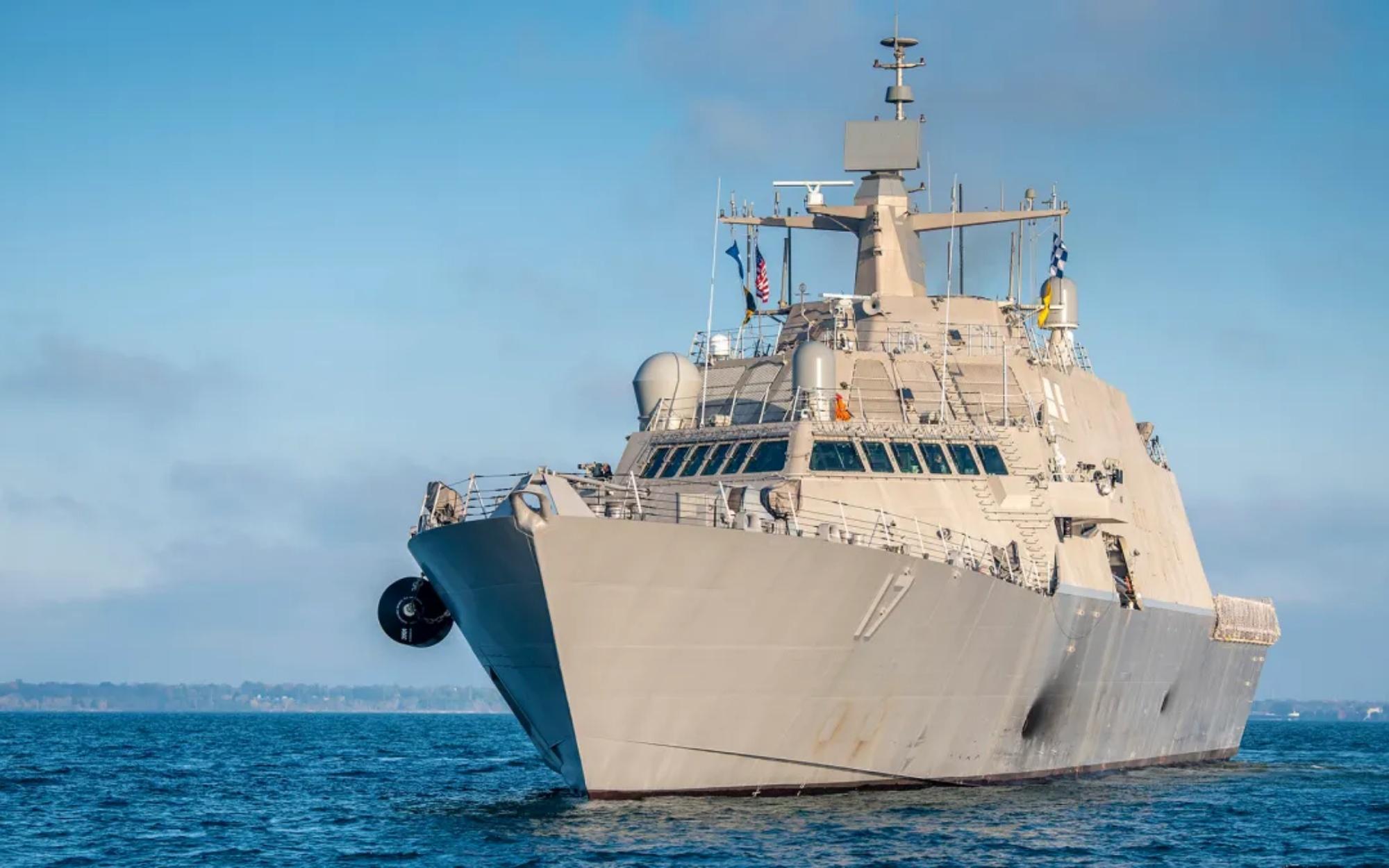
A fire broke out Wednesday morning aboard the Littoral Combat Ship USS Indianapolis while the vessel was moored at Naval Station Mayport, Florida, leaving seven sailors injured though none seriously.

avy officials confirmed that all affected personnel were treated at local hospitals and later cleared to return to duty by afternoon.

The incident began around 11:30 a.m. when smoke was reported coming from a compartment within the ship. Navy Fire and Emergency Services, along with the ship’s crew, acted immediately to contain and extinguish what was described as a “localized fire.”

Their swift response prevented wider damage, though the full scope of the impact to the ship remains under assessment.

This latest fire adds to a troubling pattern aboard U.S. Navy vessels this year. In March, the nuclear-powered aircraft carrier USS Gerald R. Ford suffered a blaze overseas in Souda Bay, Crete, resulting in one sailor’s medical evacuation.

Just months earlier, reports confirmed separate fires aboard the USS Higgins, USS Zumwalt, and USS Dwight D. Eisenhower.

The Navy’s series of onboard fires has raised questions within naval circles and defense oversight committees about maintenance cycles, crew workload, and equipment vulnerabilities.

The War Department has been working to investigate causes ranging from electrical issues to maintenance shortfalls, all while keeping surface fleet readiness at the forefront.

The USS Indianapolis, a Freedom-variant Littoral Combat Ship commissioned in 2019, represents one of the Navy’s modern designs intended for agility in littoral, near-shore operations.

As the latest vessel to bear the historic name, it continues a lineage tied to one of the most storied and tragic names in U.S. naval history—the heavy cruiser USS Indianapolis that was lost during World War II after delivering parts for the “Little Boy” atomic bomb.

That loss led to one of the Navy’s most infamous stories of survival, with hundreds of sailors lost to exposure and shark attacks after the ship was sunk in 1945.

The legacy of the name “Indianapolis” remains both a tribute and a reminder of the price sailors pay in service to America’s maritime security.

While modern Indianapolis returned from an 18-month forward deployment last November, she recently participated in a two-day force protection exercise at her homeport. Wednesday’s fire occurred while the ship was pier-side, which allowed rapid coordination between shore facilities and her crew.

Fire teams at Mayport have earned a reputation for readiness, showing once again why constant training matters.

Every sailor aboard responded according to protocol, a testament to the effectiveness of the Navy’s long-standing emphasis on damage control readiness—a skill forged through hard lessons from past shipboard disasters.

Still, repeated fire incidents aboard naval vessels present a concern. With the Navy balancing an aging fleet, experimental ship classes, and expanding operational demands worldwide, many veterans are urging a return to aggressive shipyard overhauls and tighter maintenance checks before crews set sail again.

Analysts note that quick-response actions like those taken aboard the Indianapolis showcase the professionalism of American sailors.

However, they also caution that repeated lapses, even minor ones, create openings for potentially catastrophic failures under combat conditions.

President Trump’s call for a restored “peace through strength” Navy and War Secretary Pete Hegseth’s push for tougher oversight of fleet preparedness echo this sentiment across defense circles.

The fire investigation will now determine what ignited the blaze, whether mechanical, electrical, or human error contributed, and what safety measures can prevent future outbreaks.

The Navy’s internal safety command will review every step, from detection to response timing, while damage control training across the fleet will likely tighten further.

At a time when America faces renewed maritime competition from China and Russia, ensuring every vessel remains fight-ready is more than bureaucratic talk—it’s national defense.

The sailors aboard USS Indianapolis proved their grit and composure when it mattered, delivering once more the clear message that American warfighters, from the decks of destroyers to littoral combat ships, remain ready to respond when duty calls.

News

Dad of Three Dies After Midair Brawl With Jet2 Crew and Passenger

A 35-year-old father of three died after being restrained by passengers and cabin crew during a disturbance aboard a Jet2 flight traveling from Cyprus to the United Kingdom, prompting an ongoing investigation by Greater Manchester Police and an independent police watchdog, as reported by The New York Post.

The incident occurred aboard a Jet2 flight that departed Larnaca, Cyprus, and landed at Manchester Airport on Monday morning.

Police said they were called to the aircraft after receiving reports that a passenger had assaulted another traveler and a member of the airline’s cabin crew during the flight.

According to Greater Manchester Police, the passenger, identified as Callum Kerr, was allegedly “acting aggressively” toward both airline staff and other passengers before the aircraft landed.

When officers boarded the plane after it arrived in Manchester, they found Kerr restrained by passengers and members of the cabin crew at the rear of the aircraft. Police said he was unresponsive when officers placed him in handcuffs.

Emergency medical personnel transported Kerr to a hospital, where he died the following day.

Authorities have launched an investigation into the circumstances surrounding the incident and the events that unfolded during the flight.

Witnesses who spoke to the Warrington Guardian said Kerr had been arguing with his girlfriend during the trip before flight attendants moved her to a different seat.

The witnesses also claimed that Kerr, who competed as a bare-knuckle fighter, headbutted another passenger before fellow travelers intervened and helped restrain him.

Those witness accounts have not been independently confirmed by investigators.

Greater Manchester Police said detectives are working to establish a complete timeline of events aboard the aircraft.

Because officers had contact with Kerr before his death, the force also made a mandatory referral to the Independent Office for Police Conduct (IOPC), which routinely reviews incidents involving deaths following police contact.

Police emphasized that the referral is required under established procedures whenever officers interact with an individual before a death occurs.

Chief Superintendent Mike Allen said investigators are continuing to gather evidence from those who were on board the aircraft.

“An investigation is now under way to establish what happened during the flight, and our specialist officers have been keeping them updated with all the information we know so far,” Allen said.

The chief superintendent acknowledged that many passengers witnessed the disturbance before officers boarded the aircraft.

“I know there were many people on the flight who witnessed the violence and disruption prior to officers’ arrival,” Allen added.

He also noted that investigators are examining the actions taken by passengers and airline personnel who intervened during the incident.

“We know passengers and aircrew worked to detain the man to bring the incident to an end. Our detectives are investigating this to understand the full circumstances.”

The Independent Office for Police Conduct said the officers who boarded the aircraft are currently being treated as witnesses rather than subjects of its investigation.

Kerr’s family released a statement following his death, remembering him as a devoted father.

“Callum was a family man, father to three beautiful young children, a lover of sport, and with a heart of gold,” the family said.

The investigation remains active as detectives continue interviewing witnesses, reviewing available evidence, and determining the sequence of events that led to Kerr’s death following the midair disturbance.

Neither Greater Manchester Police nor the Independent Office for Police Conduct has announced any findings regarding the cause of Kerr’s death, and authorities have indicated that the investigation is ongoing.

News

Ukraine’s Drone Giant Expands Into Missile Defense in Bid to Dominate Both Air and Strike Wars

Ukraine’s top drone manufacturer, Fire Point, the brains behind the country’s deep-strike drone campaign against Russia, is now setting its sights on ballistic missile defense.

In a move signaling growing ambitions inside Kyiv’s fast-growing weapons industry, Fire Point has teamed up with German defense firm Hensoldt to develop a low-cost interceptor system called “Freyja” — a shift that could reshape Europe’s air defense landscape.

Fire Point isn’t some dusty Soviet-era factory churning out recycled tech. The company was born after Russia’s 2022 invasion and quickly transformed from a film casting agency into one of Ukraine’s biggest war contractors.

Today, its precision-guided drones account for roughly 60 percent of Ukraine’s long-range strikes inside Russia, hitting oil refineries, ammo depots, and supply networks far behind enemy lines.

Those airborne attacks, dubbed “long-range sanctions” by President Volodymyr Zelenskyy, have inflicted real pain on Moscow. Strikes on Russian fuel infrastructure have disrupted refinery production and forced the Kremlin to limit domestic fuel sales — a rare admission of economic vulnerability that Ukraine’s leadership is eager to amplify.

Fire Point’s CEO and chief designer, Denys Shtilerman, didn’t mince words during the Eurosatory weapons expo in France. “These are the drones responsible for what you see burning on your TV screens on the territory of Russia,” he said proudly, confirming what the Kremlin’s censors prefer to hide.

With its growing reputation as a producer of long-range strike drones like the FP-1, FP-2, and FP-5 “Flamingo” cruise missile, Fire Point is now expanding its reach — literally — in both directions.

On one hand, its new FP drones can reportedly fly nearly 1,700 miles while carrying sizable payloads. On the other, the firm plans to shoot down ballistic missiles for less than $1 million per intercept, a fraction of what pricey U.S.-made Patriot systems cost.

Shtilerman told Reuters that the goal is to make interception truly affordable. “If we can decrease it to less than $1 million, it will be a game changer in air defense,” he stated, explaining the company’s plan to intercept its first incoming ballistic missile by late 2027. For perspective, a single Patriot PAC-3 can cost $3.8 million to fire — not counting the launcher or supporting systems.

Trump Strengthens Support for Ukraine, Calls Russia a “Paper Tiger”

The proposed FP-7.X interceptor, which successfully completed a controlled test flight in June, is designed to hit targets at an altitude of 15 miles for about $700,000 per shot.

And while Washington and its European allies argue over aid packages and weapons shipments, Ukraine’s private sector is quietly becoming a weapons supplier in its own right. Shtilerman made this point clear: “Ukraine is now not only a consumer of aid but a provider of security solutions for Europe — and perhaps for the whole world.”

President Zelenskyy has leaned heavily on Fire Point’s innovations as part of his continued push for self-reliance in wartime production. He recently hailed the company’s new long-range drones that can now strike as far as 3,000 kilometers — enough reach to hit deep inside Russia’s industrial backbone.

“I am grateful to the Fire Point engineers,” he said during his June 20 evening address.

But Fire Point’s stunning rise hasn’t escaped scrutiny. The firm’s meteoric growth from a casting agency to a billion-dollar arms maker has landed it in Ukraine’s ongoing anti-corruption dragnet. Investigators have linked it to leaked conversations involving businessman Timur Mindich, a Zelenskyy associate now accused of corruption in the energy sector.

Putin Agrees to Ceasefire on Energy and Infrastructure Targets in Ukraine

Fire Point has denied any ties, maintaining that ownership rests solely with its co-founders. No formal charges have been filed.

Still, the optics are tricky in a country where battles against both Russian missiles and internal graft are fought daily.

Fire Point’s rapid government contracts — reportedly worth more than $1 billion this year — have raised questions among Western partners even as they applaud Ukraine’s newfound industrial prowess.

To help reassure foreign investors, Fire Point added former U.S. Secretary of State Mike Pompeo to its advisory board in November, a move clearly designed to add Western credibility and strategic weight to its growing portfolio.

Pompeo’s involvement signals that major American figures see value in Ukraine becoming a robust European manufacturer of modern warfare technology — not merely a consumer of American handouts.

Beyond weapons, Fire Point’s success also carries a symbolic punch. It represents Ukraine’s determination to move from dependency on NATO donations toward self-sustaining production that matches — or undercuts — leading Western systems in cost and capability. For U.S. policymakers and military observers tracking the global arms race, this is no small shift.

Ukraine “Well Prepared” for Potential Russian Retaliation After Daring Drone Strikes [WATCH]

As of June, Ukraine has carried out nearly 30 long-range strikes on Russian fuel sites, causing visible disruption to Russia’s internal logistics.

With Fire Point preparing to mass-produce its FP-7.X interceptors at a rate of three per day starting in August, the firm is positioning itself to become Europe’s go-to hub for low-cost air and missile defense hardware.

For Ukraine, that combination — a cheap offensive strike capability paired with an affordable missile shield — could change its strategic fortunes. For Moscow, it’s a nightmare scenario: a resourceful neighbor capable of both hitting deep into Russian territory and neutralizing retaliation on a budget.

In the global context, Fire Point’s emergence shows that the future of warfare may belong to smaller, faster, and more flexible innovators rather than sprawling, bureaucratic defense complexes.

With a little Western oversight and less political interference, Ukraine’s new war-tech machine might just outpace the lumbering systems of its supposed allies.

News

House Approves $1.55 Billion Revival for E-7 Wedgetail, Restores Navy’s Hawkeye Funds

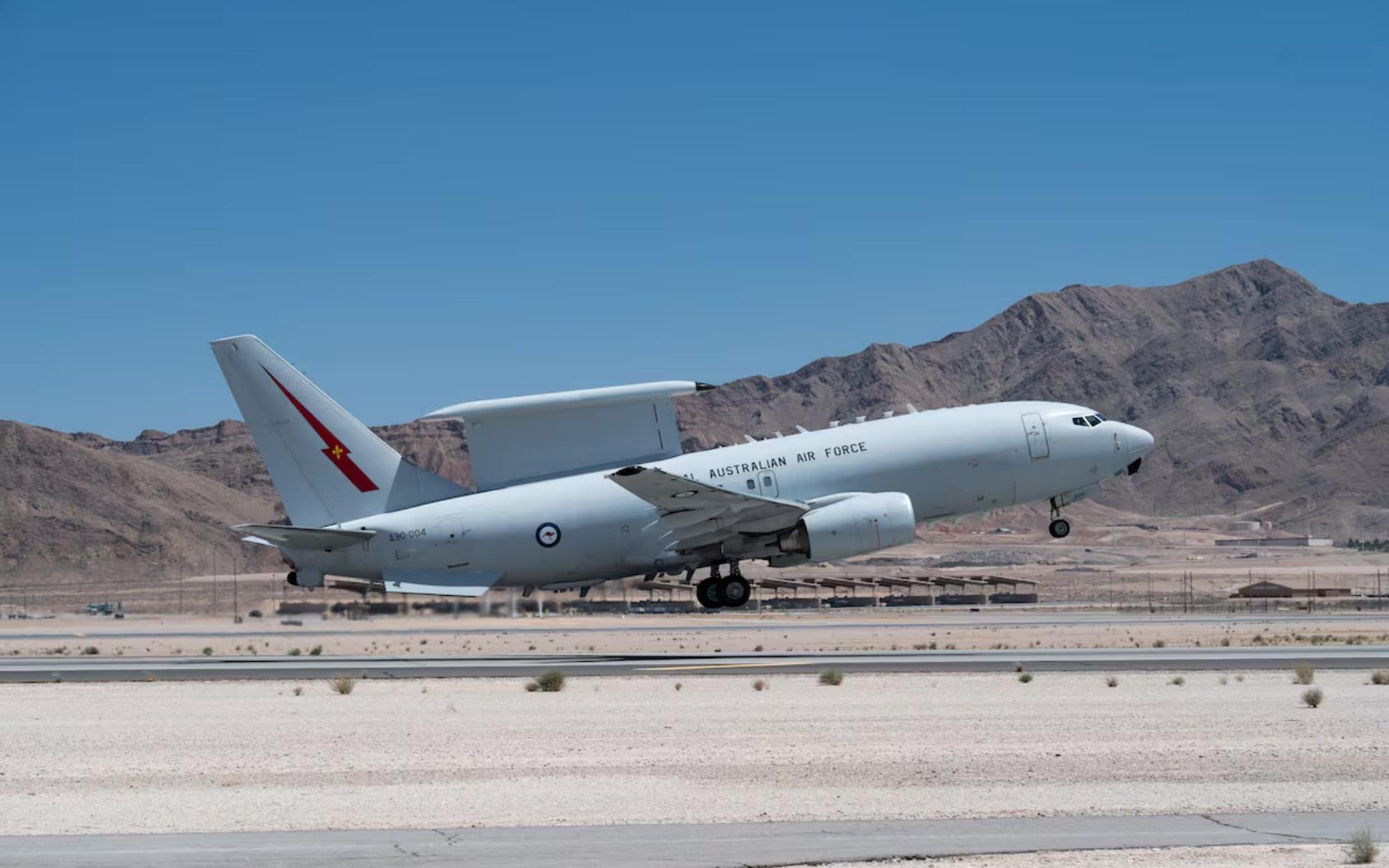
The House of Representatives is giving the Air Force’s E-7 Wedgetail program a second life, approving a $1.55 billion funding shift to pull the airborne battle management aircraft back from the scrap heap.

After bureaucrats at the White House budget office tried to cannibalize the Navy’s E-2D Hawkeye funds to make it happen, lawmakers put their foot down, steering money toward the E-7 while refusing to gut a critical Navy radar platform.

The funding maneuver emerged from the House Appropriations Committee’s fiscal year 2027 War Department bill, which reroutes existing funds but restores vital naval capabilities that the Biden administration had tried to raid.

In a June 17 budget amendment to House Speaker Mike Johnson, R-La., the White House’s Office of Management and Budget asked to push more than $1.55 billion into the Air Force’s R&D coffers to continue development of the E-7.

The program had been shelved by Pentagon leadership just last year, citing rising costs and uncertainty about survivability in contested airspace.

To make it happen, OMB sought to slash $651 million from the Navy’s E-2D Hawkeye radar aircraft account and another $899 million from a classified Air Force program.

The administration’s proposal would have effectively robbed Peter to pay Paul, gutting one critical platform to save another.

House appropriators didn’t take kindly to that kind of gamesmanship. While they approved the E-7 realignment, they rejected the Biden team’s raid on the Navy budget, restoring the $651 million meant for the carrier-based Hawkeye program.

The committee made clear both aircraft are essential to U.S. warfighting readiness—particularly with the war raging in Iran underscoring just how thin America’s airborne command and control capabilities have become.

“The conflict in Iran has reinforced the need for the Air Force to maintain a credible airborne battle management capability,” the report said, pointing out that the aging E-3 AWACS and the Navy’s E-2D Hawkeye remain the backbone of current theater operations. “As the E-3 is set to retire, the E-7 Wedgetail will serve as modern replacement for lost battle management capability.”

The current $1.55 billion will fund two prototype E-7 Wedgetails and continued engineering, manufacturing, and development work. While the Air Force already has seven aircraft on contract—two as rapid prototypes and five more under a modification agreement from March—none are production-ready.

These are developmental assets designed to prove the U.S.-specific configuration before moving to full-scale manufacture.

Lawmakers, however, are not content with rosy PowerPoint timelines. They’ve ordered the Air Force Secretary to brief both House and Senate appropriations subcommittees alongside the fiscal year 2028 request.

That briefing must include full program details: planned quantities, long-term funding requirements, and schedules for both development and eventual production.

The House report shows frustration with what many see as endless bureaucratic flip-flopping from the Pentagon. Just last year, Air Force brass wanted to scrap the Wedgetail entirely, citing ballooning per-aircraft costs from $588 million to $724 million.

The plan was to rely on additional Hawkeyes and theoretical space-based sensors. Then came the war in Iran—an unmistakable reality check exposing serious gaps in America’s airborne command network.

Faced with coalition air coordination demands and depleted AWACS fleets, the Pentagon reversed course this spring, admitting that satellites can’t yet replace a capable airborne battle management system.

The committee’s renewed commitment shows that at least some in Congress recognize the danger of chasing fantasy tech at the expense of real, in-the-sky capability.

The House decision also sends a strong signal to America’s allies. The Wedgetail already serves with U.S. partners including Australia and the United Kingdom, both of whom have made major investments in the aircraft’s proven platform.

Bringing the U.S. version to life strengthens interoperability while reaffirming American air dominance at a time when adversaries are watching every move.

Meanwhile, the Navy’s E-2D Hawkeye program—spared from OMB’s knife—remains a critical component of carrier battle group defense and joint operations. Lawmakers reaffirmed its importance, stating that “more aircraft, not fewer, are necessary to support our warfighters now and in the future.”

That’s a direct rebuke to administration budget planners who continue to treat combat readiness like a spreadsheet exercise.

For now, the restored funding means both services will keep moving forward: the Navy maintaining its eyes in the sky, and the Air Force working to revive a long-delayed, desperately needed command and control aircraft.

It’s a solid win for readiness, common sense, and for maintaining America’s edge in an increasingly volatile world.

If the Pentagon follows through this time, the E-7 Wedgetail could enter U.S. service later this decade—potentially just in time to replace a fleet of aging AWACS aircraft that have been flying since the 1970s.

Until then, Congress remains watchful to ensure the War Department doesn’t try another budget sleight of hand to cover its own strategic whiplash.

News

Pentagon Research Backbone Crumbling as Military Priorities Shift Away from Innovation

A newly released report paints a troubling picture of the War Department’s research backbone, warning that the infrastructure supporting America’s technological edge is rapidly deteriorating.

The assessment, delivered by the Office of the Under Secretary for Research and Engineering, bluntly states that years of diverted funds, bureaucratic obstacles, and organizational decay have left our nation’s defense technology enterprise on shaky ground.

According to the report, money meant for modernization and research has routinely been siphoned off to plug operational shortfalls.

Authorized construction projects to upgrade key research and testing facilities continue to be delayed or canceled outright, as the services scramble to reprioritize limited budgets. In plain terms, the War Department keeps robbing innovation to fund maintenance.

That’s a dangerous game in an age where America’s adversaries, particularly China, are investing nonstop in military research and harnessing commercial technology for warfighting advantage.

Beijing has fused its civilian and military sectors into a hyper-efficient machine—while Washington can’t even agree on how to label its research programs.

Investigators examined 30 government labs and research centers—roughly a third of the total network—in what the report called “unprecedented data collection.”

What they found isn’t exactly confidence-inspiring. The Department’s vast research, development, testing, and evaluation ecosystem remains “fundamentally sound” in structure but seriously outdated in execution.

The bureaucrats’ own words are damning: “The Department’s ability to maintain a technically advanced warfighting capability is weakening.” And ironically, the study isn’t calling for closures or cost-cutting—it’s calling for serious reform and renewed investment.

A major concern is the slow and frustrating hiring process for new researchers. Young scientists and engineers are walking away from government opportunities due to endless paperwork, low flexibility, and backlogged security clearances.

And while commercial firms can onboard talent in weeks, Pentagon labs sometimes take months just to start a background check.

Adding insult to injury, the War Department doesn’t even have a clear inventory of its research facilities.

The report notes that the Pentagon “does not possess a comprehensive, authoritative list” of specialized test sites, meaning billions of dollars’ worth of infrastructure may be underutilized or forgotten. It’s government inefficiency at its finest.

The absurdity runs deeper: research domains are so inconsistently categorized that no one can even tell who is working on what. One lab might label its work as “Human-Machine Teaming,” another “Autonomy and Teaming,” and another “AI Agent Development.” The result is a fragmented maze of disconnected projects and wasted synergy.

Meanwhile, the Department’s own intellectual property—the crown jewels of its innovation portfolio—sits largely unused.

The report blasts the “passive marketing” and lack of a centralized mechanism for industry access, saying startups often abandon projects because Pentagon bureaucracy kills momentum. “Administrative burdens often exceed funding timelines,” it warns. Translation: Washington’s red tape is driving away the very innovators we need most.

Even when breakthroughs are made, getting them from lab benches to battlefield gear has become painfully slow.

The report attributes this to “bureaucratic stovepipes, fragmented funding, and misaligned incentives”—a polite way of saying the bureaucracy is strangling itself. Technologies that should reach warfighters in months are often delayed for years.

Notably, the report praises China’s civil-military fusion approach, acknowledging its success in creating a unified strategy between government, academia, and industry.

The message is clear, even if Washington won’t admit it: our adversaries are outpacing us because they take innovation seriously.

To remedy the decline, the study lists several fixes—use artificial intelligence to speed clearance reviews, loosen funding restrictions for lab renovations, and create a searchable tool for intellectual property.

Each recommendation points to the same underlying truth: the current system is too rigid and too complacent to meet modern threats.

The conclusion is blunt and urgent: without a robust, agile, and properly funded research enterprise, the Department cannot equip warfighters with the advanced capabilities needed to deter or defeat tomorrow’s adversaries.

In an era of geopolitical rivalry, that’s more than a bureaucratic problem—it’s a national security crisis.

News

Ro Khanna is ‘100% Clown’: His Birthright Citizenship ‘Racism’ Attack Blows Up in His Face [WATCH]

It was supposed to be another grandstanding moment for California Democrat Ro Khanna.

Instead, it became an embarrassing demonstration of political immaturity and ignorance broadcast live for the world to see.

During a House Select Committee on China hearing meant to address serious threats from the Chinese Communist Party, Khanna decided to attack a witness personally and accuse him of racism.

Unfortunately for Khanna, the “racist” he targeted turned out to be married to a Chinese woman and the father of four half-Chinese children.

The witness in question, Michael Lucci, is the CEO and founder of State Armor, a group that focuses on protecting national, cyber, and economic security.

Lucci testified before the committee about the risks of Chinese espionage, subnational influence, and the phenomenon known as birth tourism used by CCP-linked individuals.

This issue involves Chinese nationals giving birth in U.S. territories to secure American citizenship for their children.

Instead of discussing policy, Khanna launched into a bizarre, politically charged line of questioning, digging up one of Lucci’s old tweets to claim that criticizing the CCP’s birth tourism scheme was racist.

It was the type of shallow accusation that plays well on MSNBC panels but completely collapses under scrutiny. And collapse it did.

When Lucci pointed out that he is married to a Chinese immigrant who became an American citizen in 2019 and that his four children are half Chinese, Khanna’s race-card crusade came to a screeching halt.

The hearing exposed what happens when identity politics meets the hard facts of reality.

Khanna’s attempt to smear an expert witness backfired spectacularly.

WATCH:

Lucci later explained his response in detail, posting a blistering statement on social media that called Khanna’s behavior “self-immolation in committee.”

He wrote, “Ro Khanna owes the American people an apology. I have testified in 20 state capitols across the country. I have never seen a lawmaker embarrass himself like Ro Khanna did today.”

He further noted that Khanna had ignored real issues of Chinese interference, harassment of lawmakers, and threats against critical infrastructure, all to pursue a cheap headline.

Lucci was right to be frustrated.

The Select Committee on China is one of the most important panels in Congress, dedicated to addressing growing threats from the CCP. Instead of taking those threats seriously, Khanna hijacked the hearing to cry racism over a policy discussion that 75 percent of Americans actually agree with.

Polling shows a vast majority of voters oppose automatic citizenship for children of foreign tourists who come specifically to exploit our birthright laws.

Apparently, by Khanna’s definition, three-quarters of America are racists too.

The absurdity of the moment is amplified by context. Lucci’s testimony warned that Chinese-connected actors have been threatening state officials and targeting military sites.

He detailed specific concerns about birth tourism being exploited by CCP-linked elites as a tool of political warfare.

For Khanna to dismiss those concerns by playing racial politics proves exactly why Americans have lost faith in Democratic leadership on security matters.

It is also worth noting the sheer hypocrisy on display.

Khanna and his party often accuse Republicans of ignoring national security in favor of politics.

Yet here was Khanna, ignoring CCP interference in American life to chase imaginary racist conspiracies.

It was the kind of political theater that Democrats so often mistake for governance.

Lucci summed up the problem perfectly when he said, “Calling someone an anti-Chinese racist for opposing the CCP is like calling someone anti-Italian for opposing the mafia.”

WATCH:

That line resonated because it captured exactly how ridiculous the left’s race obsession has become.

Everything is racism, even opposition to a hostile foreign government that openly seeks to undermine the United States.

Instead of engaging with substance, Khanna chose spectacle.

His angry rant not only insulted Lucci but also cheapened an important discussion about CCP aggression that threatens both Democrats and Republicans alike

. It was an act of self-destruction that could only come from a politician so insulated by media flattery that he thinks every argument can be ended by shouting “racist.”

Thursday’s exchange was proof that when Democrats are faced with real policy experts, their ideological scripts fall apart.

Lucci, who came prepared to talk facts and national security, ended up calmly dismantling Khanna’s talking points while maintaining composure.

Meanwhile, Khanna’s performance will go down as another example of the modern left’s addiction to victimhood politics.

At a time when America’s enemies are getting bolder, voters deserve leaders who focus on results, not cheap moral grandstanding.

The CCP’s economic and ideological war against our country is real, and it demands bipartisan seriousness.

What it does not need are politicians like Ro Khanna who turn every hearing into a circus.

Khanna’s instinct to attack rather than understand, to accuse rather than investigate, is exactly what keeps Washington from tackling the real threats we face.

His meltdown in committee might have earned him a few applause emojis online, but to anyone paying attention, it was an embarrassing display of misplaced priorities.

For once, the insult hurled at him during the hearing fits perfectly.

He behaved like a clown.

And America has seen enough clown shows from the left in Congress to last a lifetime.

News

House Panel Pushes Spending Bill Slashing Air Force Flight Hours and Key Programs

The House Appropriations Committee has advanced a fiscal year 2027 spending bill that trims the Air Force’s budget, dialing back flying hours and several other major programs.

Republican lawmakers say the Pentagon’s request is bloated, while others warn that hamstringing key mission areas could jeopardize readiness at a time when America’s adversaries are on the move.

The Air Force’s Flying Hour Program is at the center of the clash.

The Department of the Air Force had requested roughly $9.9 billion this spring to boost pilot flying hours to over one million – a 22 percent increase aimed at rebuilding readiness levels that suffered during years of budget stagnation.

Lawmakers, however, shaved that down, part of a broader push to hold the Pentagon’s record request for $1.5 trillion in check.

Congressional critics argue that too much of the proposed funding is directed toward the Iran conflict and other foreign operations, diverting resources from domestic stability and fiscal sanity.

For top brass in the War Department, that reasoning rings hollow, since combat readiness can’t be turned on and off like a light switch.

Senator John Kennedy, the sharp-tongued Republican from Louisiana, fired a warning shot at a recent hearing. He noted that partisan gridlock over military funding levels could trigger yet another government shutdown if leadership doesn’t find consensus soon.

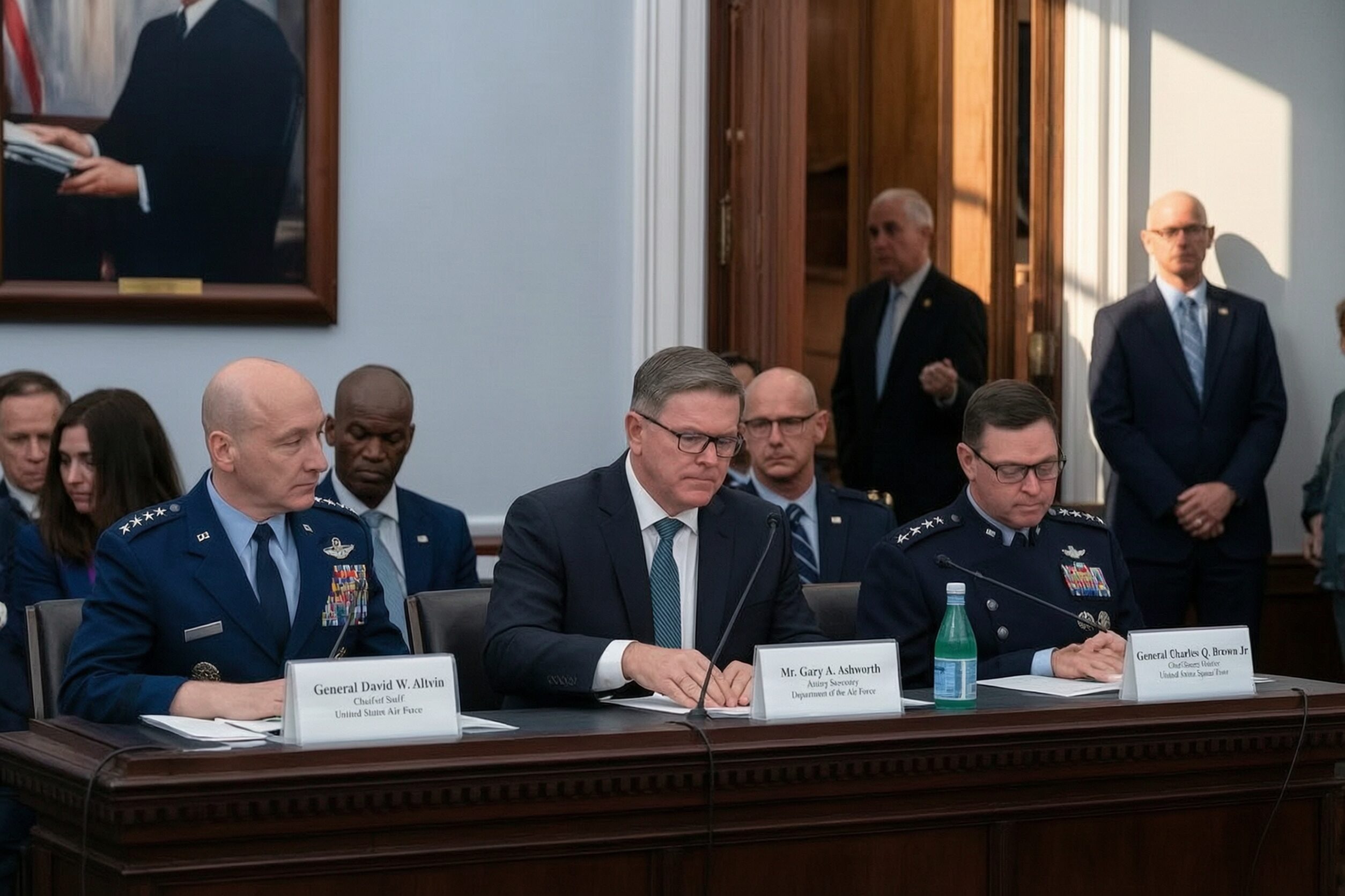
His frustration echoed throughout the room as he pressed Air Force Secretary Troy Meink on contingency plans.

Meanwhile, deep slashes to other Air Force accounts accompanied the flying-hour reductions. The Working Capital Fund – which handles maintenance, logistics, and supply-chain operations across key installations – took the heaviest blow.

Lawmakers cut its budget from $4.4 billion to just $1.7 billion, an eye-popping 60 percent reduction.

Procurement lines didn’t escape either. Funding for aircraft, missiles, and ammunition purchases was reduced by $1.5 billion, leaving the Air Force with just over $72 billion for those critical assets.

For a service already juggling fifth-generation fighters, hypersonics development, and expanding space missions, these cuts could create a lasting ripple effect.

Operations and maintenance funding dropped by another $726 million, bringing that category down to $73 billion. The Space Force, which falls under the Department of the Air Force, didn’t fare much better.

Its budget shrank by $465 million to $8.8 billion. Those numbers are striking when measured against the rhetoric of “strategic modernization” that Washington elites like to throw around while our enemies build arsenals at breakneck speed.

Critics on the right point out that while bureaucrats posture over “fiscal discipline,” the real issue is Congress’s habit of playing politics with national security. Cutting the very programs that generate skilled aviators, maintain equipment, and supply warfighters sends the wrong message to both allies and adversaries.

Supporters of the current bill insist that the Pentagon must learn to do more with less. They argue that U.S. defense operations have become plagued by inefficiency, and that trimming certain accounts will force better prioritization.

Yet, as anyone who’s ever put on a uniform knows, “doing more with less” only works until the next mission failure or aircraft accident hits the headlines.

The bill now moves to the full House floor for debate, where conservative lawmakers are expected to push for adjustments to restore readiness-related funding.

The Senate Appropriations Committee still hasn’t unveiled its counterpart bill, setting the stage for another Capitol Hill standoff.

Inside the War Department, there’s growing unease that all this political jockeying could disrupt planning cycles and readiness efforts intended to prepare for Chinese and Russian aggression.

Restoring flying hours and sustainment funds isn’t pork—it’s essential to keeping the world’s most powerful air force lethal, trained, and ready to win.

If this Congress fails to grasp that basic truth, America’s warfighters will pay the price while bureaucrats pat themselves on the back for “balancing” the budget.

A smart fiscal policy should strengthen deterrence, not second-guess it. The coming months will show whether the House and Senate have the backbone—and the foresight—to deliver on that principle.

News

FBI Touts Massive Crackdown as Thousands of Predators Locked Up and 7200 Kids Rescued [WATCH]

The Federal Bureau of Investigation released a retro crime film-style video on June 25 highlighting recent enforcement efforts targeting child exploitation, human trafficking, and child predators, presenting statistics the bureau says demonstrate increased investigative activity and arrests, as reported by PJ Media.

The video, shared by FBI Director Kash Patel on X, features a narrator describing the agency’s recent enforcement results while comparing them with those of the previous administration.

According to the video, the FBI has rescued approximately 7,200 children and arrested more than 3,500 individuals identified as child predators or human traffickers.

Patel’s post accompanying the video stated:

“7,200 children rescued. A 42% increase from the previous administration.

3,500 predators/traffickers locked up. A 102% increase from the previous administration.

If you mean to bring harm to the most precious and innocent among us (our children), WE WILL FIND YOU!”

The video itself provides slightly different percentage comparisons, describing the increase in rescued children as nearly 50% and the increase in arrests as more than 100% over the previous administration.

Using a narration styled after classic detective films, the video describes the FBI’s strategy of coordinating investigations with federal, state, and local law enforcement agencies.

“The FBI is leading the charge. The monsters preying on our kids have become the prey. By launching massive task forces across federal and local lines, they’re kicking down doors and shattering trafficking networks from the inside out. Thanks to that relentless pressure, they’ve successfully located and rescued over 7,200 child victims. That’s right, 7,200 innocent young lives saved. That’s an absolutely staggering 49% increase.”

The narrator continues by emphasizing the bureau’s arrest totals.

“Such rescues,” the narrator says, mean “fewer broken families and a real wall of protection built around our homes. And they didn’t stop at the rescues. They tracked down and locked up over 3,500 child predators and human traffickers. That’s a 108% spike in arrests on our watch. It means you can sleep soundly at night, knowing the absolute worst of society are off our streets and behind bars.”

The video also highlights progress involving the FBI’s Most Wanted list.

“They’re even hunting the worst of the worst, apprehending eight of the Bureau’s ten most wanted fugitives in a 17-month blitz. That’s twice as many as the previous administration. There’s nowhere left for these predators to hide. People can argue all they want, but the numbers don’t lie.”

In addition to the enforcement statistics, the production credits joint operations involving multiple law enforcement agencies.

The FBI routinely works alongside state, local, tribal, territorial, and international partners during investigations involving child exploitation and human trafficking, with those partnerships assisting in identifying victims, executing search and arrest warrants, and dismantling criminal organizations.

The bureau’s video presents the reported increases in rescues and arrests as the result of expanded investigative efforts and coordinated task forces.

It also underscores the agency’s stated commitment to pursuing offenders involved in crimes against children.

The FBI has not indicated that these operations are complete, and investigations into child exploitation and human trafficking continue nationwide as federal authorities work with law enforcement partners to identify victims and apprehend suspects.


Scroll to Top