News

News

Pelosi Heir Apparent Confronted by Radical Protester in Chaotic Bay Area Showdown [WATCH]

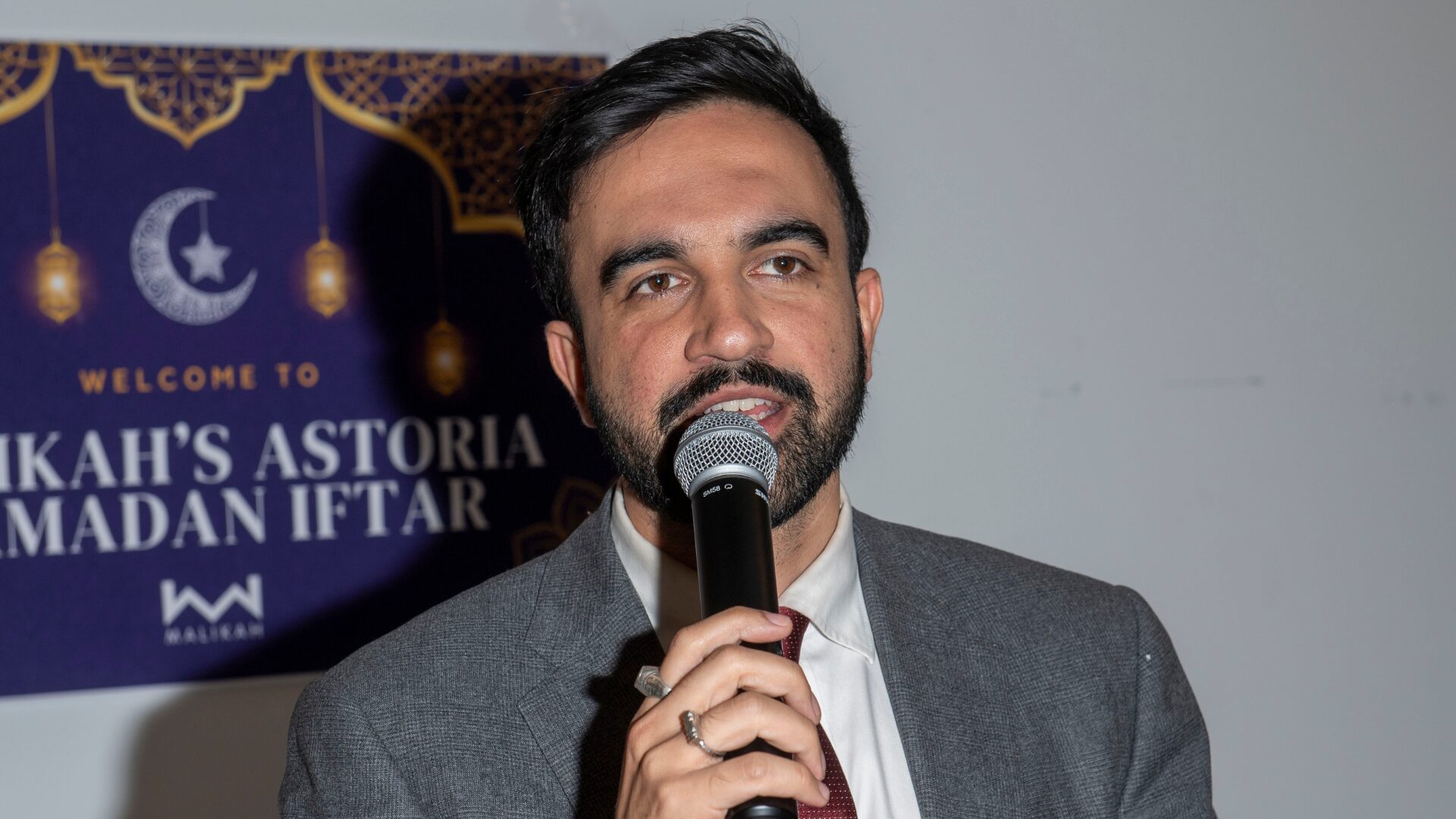
The man seen as Nancy Pelosi’s political heir just got a taste of what life is like on the far edge of San Francisco’s activist crowd.

State Senator Scott Wiener, who is leading the race to replace the 84-year-old congresswoman, faced a fiery confrontation at a Mission District establishment when a pro-Palestinian agitator unleashed a tirade caught on viral video.

The three-minute clip shows the agitator berating Wiener, repeatedly calling him a “Zionist” and demanding he say “Free Palestine.”

The Democrat, who identifies as Jewish, sat frozen in silence as the man shouted at him and accused him of supporting “a genocidal agenda.”

The tense exchange quickly exploded across social media, becoming another flashpoint in the Bay Area’s increasingly feral political scene.

“There’s innocent children being killed in Palestine, and you’re gonna come here like it’s good, but you’re pushing that genocidal agenda as a Zionist bro,” the man yelled, pounding the table for emphasis.

“Free Palestine! Say Free Palestine right now on camera, dog. Say it!”

Wiener, visibly uncomfortable, declined to play along.

His refusal seemed to heighten the activist’s fury, driving home just how no-win these encounters have become for any Democrat seen as even slightly supportive of Israel.

WATCH:

The incident reveals the radical headwinds facing even the most progressive Democrats in the region.

Wiener, a stalwart liberal on virtually every domestic issue, has often championed open borders, gender ideology, and aggressive climate regulations.

But in the new leftist hierarchy, none of that counts if one fails to chant the right slogans about the Middle East.

For a San Francisco Democrat, the standard of purity now includes absolute loyalty to anti-Israel activism.

For months, Wiener tried to walk a careful line on the Israel-Hamas conflict. Early on, he specifically avoided calling Israel’s strikes in Gaza a “genocide.”

But after progressive activists began turning on him during debates, he reversed himself.

“For those of you who saw the debate clip from last week, I want to clarify that I do believe Israel has committed genocide in Gaza,” Wiener said in January.

“To me the Israeli government has tried to destroy Gaza and to push Palestinians out. And that qualifies as genocide.”

It is a stunning political reversal, even by California standards.

The senator’s attempt to appease the activist left is unlikely to satisfy either side.

His statements anger pro-Israel supporters while convincing radicals he is only posturing.

The Mission District video perfectly captured that awkward space, showing Wiener ducking and freezing as his radical base turned on him in person.

Wiener’s top opponent, San Francisco Supervisor Connie Chan, also calls Israel’s actions in Gaza “genocidal.”

Chan is openly embraced by activist groups that blur the line between protest and intimidation.

The November race between the two Democrats will be a contest over who can claim more moral outrage and progressive credibility, not who can deliver results for regular citizens who are tired of crime, homelessness, and collapsing neighborhoods.

This chaotic confrontation could be a worrying preview of the future for Democrats in deep-blue enclaves.

When every issue becomes a moral purity test, even their most loyal operatives eventually get dragged over the coals.

The same activists who used to form the party’s campaign volunteer base are now the ones storming their fundraisers and restaurants.

The party built this culture of grievance, and now it is devouring its own.

For conservatives watching from outside the California bubble, the episode confirms what many already believe about the state of modern progressivism.

It is no longer a movement about tolerance or compassion, but about submission to mob politics.

Scott Wiener’s silence under pressure speaks volumes.

He knows there is no right answer that will please the radical fringe now running the show in San Francisco.

The broader irony is that these same activists, who claim to fight oppression, freely target a Jewish lawmaker for not parroting their preferred chants.

They have embraced a kind of ideological bullying that borders on bigotry.

The fact that this happened in broad daylight in one of America’s most self-consciously “inclusive” cities makes it all the more striking.

As Pelosi prepares to exit the stage, the seat she has held since 1987 is shaping up to be a contest not of policy differences but of identity conformity.

A generation of San Francisco Democrats has spent years nurturing movements obsessed with race and oppression.

Now those movements refuse to be managed, consuming allies as quickly as they do enemies.

For voters outside the Bay Area, the sight of such chaos may serve as a wakeup call.

The Democratic establishment is learning that once you encourage street-level radicalism, you cannot control where it goes.

Scott Wiener may have thought the left was his political home.

That home just turned on him in real time, cameras rolling, while the rest of the country watched with disbelief and a hint of grim satisfaction.

News

U.S. Forces Lead Mission Planning for Venezuela Earthquake Relief

The U.S. military is once again stepping up when the world calls for help — this time leading the charge in planning America’s humanitarian relief mission to earthquake-stricken Venezuela.

The country was slammed on Wednesday by two massive quakes measuring 7.1 and 7.5, leaving widespread devastation and at least 164 people dead. According to U.S. Southern Command (SOUTHCOM), American joint forces are already in motion to deliver lifesaving aid and expertise where it’s needed most.

SOUTHCOM confirmed in a statement that American military planners are coordinating across agencies, utilizing “unmatched airlift, logistics, and lifesaving capabilities” to support Venezuela’s government during the crisis.

While movement on the ground has not yet been confirmed, the command emphasized that rapid planning is underway to bring assistance to one of the Western Hemisphere’s most unstable nations.

At the moment, U.S. troops have not been officially tasked with deployment into Venezuela, but SOUTHCOM’s planning cell is in full swing. The team, operating under direction from the War Department, includes disaster response experts from the Bureau for Humanitarian Assistance.

Their job is to streamline decision-making and mission coordination during this critical window following the disaster.

“The command has established an operational planning team that includes experienced subject matter experts,” SOUTHCOM noted on social media, adding that they are coordinating “closely with regional allies who have pledged to join in international assistance.”

The U.S. often leads such efforts around the world because, frankly, no other nation can match the rapid response capabilities of American forces.

President Donald Trump reaffirmed that the United States “stands ready, willing, and able” to help Venezuela. He directed every relevant agency to prepare for immediate action, emphasizing America’s role as both a humanitarian leader and a stabilizing force in the hemisphere.

“When disaster strikes, America doesn’t hesitate,” the President said in a brief social media statement.

The State Department, led by a newly energized team under Trump’s direction, announced that a task force is up and running to coordinate global and interagency relief action.

Jeremy Lewin, the department’s official overseeing humanitarian affairs, explained that the United States is already lining up search and rescue teams, medical supplies, and relief infrastructure to arrive in the “crucial first days” after the quakes.

Two Troops Killed, One Seriously Injured in Southern Border Vehicle Accident Near Santa Teresa
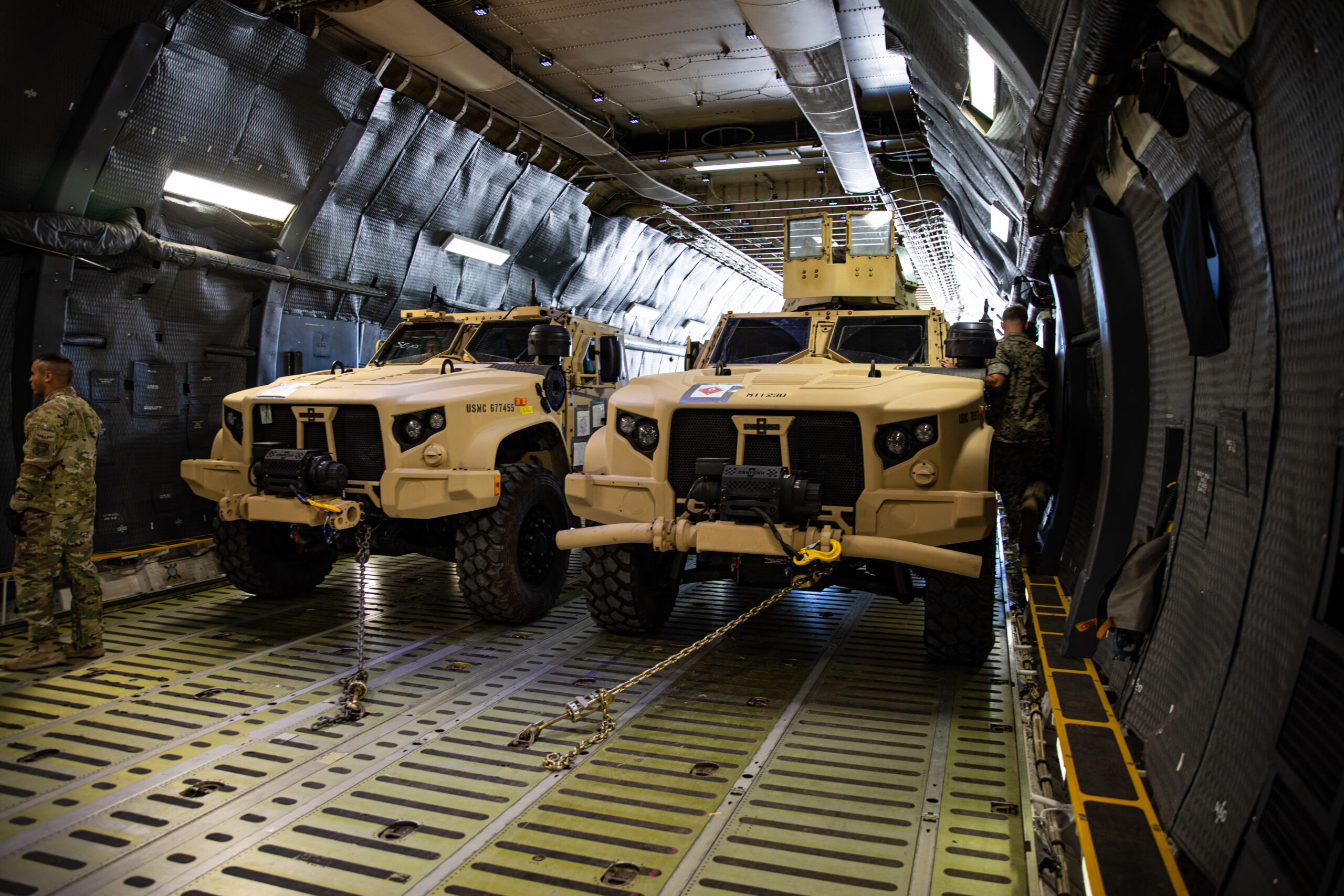
Joint light tactical vehicles are secured to a C-5M Super Galaxy at Marine Corps Air Station Camp Pendleton, California, Oct. 3, 2019. Embarkation Marines from across I Marine Expeditionary Force were given the opportunity to learn about the aircraft, and participate in loading and securing a variety of tactical vehicles. (U.S. Marine Corps photo by Lance Cpl. Roxanna Ortiz)

“Working with our partners in the interim Venezuelan government, the U.S. will be sending search and rescue teams, medical and humanitarian supplies and other resources,” Lewin wrote.

This cooperation with Venezuela’s interim government continues America’s policy of refusing legitimacy to Nicolás Maduro’s now-defunct regime, which was toppled earlier this year after a U.S. special operations mission captured him on drug-trafficking charges.

In Maduro’s absence, acting President Delcy Rodríguez faces the impossible challenge of leading a shattered nation amid political turbulence and catastrophic natural disaster.

The U.S. relief effort represents not only urgent humanitarian outreach but also an opportunity to rebuild a freer, more stable Venezuela in line with democratic values.

Pentagon planners report that the coordination now unfolding under SOUTHCOM’s direction could expand to include temporary staging hubs at U.S. installations in neighboring countries.

Air and sea transport assets, including C-17 Globemaster aircraft and Navy logistics vessels, may play pivotal roles if requests for direct assistance ramp up.

Regional allies have pledged support as well. Nations like Colombia and Brazil are expected to cooperate with American logistics planners.

The U.S. is likely to spearhead airlift corridors and manage security for incoming humanitarian convoys. Such coordination displays the kind of international leadership only possible when American resolve meets U.S. military capability.

This rapid response also serves as a stark contrast to what might have been under previous administrations that allowed crises to linger while debating procedure.

Under President Trump and the firm leadership of Secretary of War Pete Hegseth, the military is operating with clarity of mission and unapologetic purpose. No bureaucratic red tape, no “globalist waiting game” — just action.

Even as humanitarian assistance flows into Venezuela, U.S. strategists remain mindful of the geopolitical implications.

A natural disaster on this scale could either unite the region or invite foreign opportunists like China or Russia to exploit instability.

That’s why Trump’s early directive to move quickly has been seen as both a humanitarian and national security decision.

For the families in Venezuela sifting through rubble and ruin, American support may mean the difference between despair and survival.

And for the U.S. forces organizing behind the scenes, this mission is another reminder of why America maintains the world’s most capable military — not only to win wars, but to deliver mercy when others cannot.

News

Usha Vance Torches New York Times for Mocking Her Maternity Dress With Epic Old Navy Clapback [WATCH]

Second Lady Usha Vance responded on social media after a New York Times fashion column discussed the public image surrounding several pregnant women in the Trump administration, including comments about a maternity dress she wore while promoting her podcast, as reported by The New York Post.

Vance, who is expecting her fourth child with Vice President JD Vance, made history as the first spouse of a U.S. vice president to be pregnant while serving in the role since 1870.

The last vice-presidential spouse to do so was Ellen Colfax, the wife of Vice President Schuyler Colfax.

The exchange followed publication of a New York Times article by fashion critic Vanessa Friedman titled, “The Politics and Power of the Pregnancy Image.”

In the article, Friedman discussed the timing of pregnancy announcements by several prominent women associated with the Trump administration, including Vance, Katie Miller, the wife of White House Deputy Chief of Staff for Policy Stephen Miller, and White House Press Secretary Karoline Leavitt.

Friedman wrote, “That three such prominent women in the MAGA movement were pregnant at pretty much the same time was, indubitably, a coincidence. But for an administration that has such an intuitive and strategic understanding of the power of aesthetics that an unspoken dress code in which men outfit themselves in the image of the president has developed, it has also become a telling one.”

She continued, “Together, the women have created a notably consistent, and somewhat paradigm-shifting, picture of the White House’s family and fertility platform.”

The article also referenced an Instagram Reel promoting a Father’s Day episode of “Storytime with the Second Lady,” noting that Vance was “wearing a stretchy coral dress that hugs her stomach.”

The dress appeared in promotional material for a special Father’s Day edition of the children’s reading program, which featured Vice President JD Vance as a guest.

Vance responded on X by highlighting the cost of the dress and joking about the attention it received.

“Now that we know the political significance of my $8.75 coral maternity dress from Old Navy, can’t wait to hear what the New York Times has to say about my elastic-waistband pants and compression socks!”

She continued, “In the meantime, enjoy my pregnancy fashion (or lack thereof) and a good story with your kids on Storytime with the Second Lady.”

Along with the post, Vance shared what she referred to as the “receipt”—a screenshot from Old Navy’s website showing the maternity dress priced at $8.75.

The post drew numerous responses from supporters.

One commenter wrote, “Brilliant response! Thank you, Second Lady Vance. You are truly a wonderful role model;-) Praying for a healthy pregnancy and delivery.”

Another replied, “You make $8.75 look like a million bucks! Be a you tiful!”

Vance’s post also included a link to the full episode of “Storytime with the Second Lady,” a YouTube series in which she reads children’s books alongside guest readers.

The first episode featured “The Tale of Peter Rabbit” by Beatrix Potter.

According to the YouTube channel description, the program is “Designed to inspire a lifelong love of reading, each episode brings together the second lady and a special guest to share cherished children’s stories in an engaging and accessible format for families.”

The exchange between Vance and the New York Times generated discussion online about public figures, fashion, and media coverage of political families as the Second Lady continues promoting the children’s literacy initiative during her pregnancy.

News

Michelle Obama Claims Barack Is Uncomfortable With Presidential Center Dedicated to Himself and Nobody Believes It [WATCH]

Former First Lady Michelle Obama said during a recent interview that former President Barack Obama was uncomfortable with the amount of attention placed on him at the newly opened Obama Presidential Center in Chicago, as reported by The Gateway Pundit.

The remarks came during an interview with People magazine following the June 19 opening of the Barack Obama Presidential Center.

The facility serves as a museum, library, conference center, and supports initiatives of the Obama Foundation.

Discussing the project, Michelle Obama said her husband preferred that the center place less emphasis on him personally.

“He’s completely uncomfortable with this thing being about him.”

She said the former president had expressed a desire to reduce the amount of attention devoted to him throughout the center.

“He was just telling me, I think there should be a little less of me here.”

According to Michelle Obama, she asked what he thought should receive greater emphasis instead.

She recalled that Barack Obama suggested Mahatma Gandhi.

“When she asked who it should focus more on, she claimed, Barack said Gandhi.”

Michelle Obama responded by explaining why she believed the center should remain focused on the former president.

“I was like, ‘No, no. Gandhi will have his own museum. I think people coming here want to hear about you.'”

Barack Obama was seated beside his wife during the interview and smiled and laughed as she described their exchange.

The comments circulated widely after video clips from the interview were shared on X, generating discussion and reactions from users on the platform.

Several social media users questioned Michelle Obama’s characterization of the former president’s views.

One X user wrote, “Yes, clearly when I hear the name Obama the first word that comes to mind is humility……..I mean it is oozing out of every single, tiny pore…….These two are an affront to Americans every time they utter a word.”

Another user posted, “Correction: Her husband is uncomfortable with anything NOT being about him.”

A third user wrote, “What a joke.”

Additional responses continued the discussion.

“That’s hilarious. The Obama’s have never missed an opportunity to make things about them.”

Another post stated, “Standing on the highest stage they can find, holding the biggest microphone, hooked to the loudest sound system in the world to repeatedly pronounce just how humble they are.”

The Barack Obama Presidential Center officially opened on June 19 in Chicago.

The campus includes museum exhibits, a presidential library, public gathering spaces, and facilities supporting the Obama Foundation’s educational and civic engagement programs.

The interview with People magazine focused in part on the opening of the center and the couple’s reflections on the project.

Michelle Obama said Barack Obama would have preferred less emphasis on himself, while explaining that she believed visitors would expect the center to tell his story.

Following publication of the interview, excerpts and video from the conversation spread across social media, where supporters and critics alike discussed the former first lady’s remarks and the purpose of a presidential center dedicated to the Obama administration.

News

Supreme Court Upholds Trump Immigration Authority Despite Liberal Meltdown [WATCH]

The U.S. Supreme Court ruled Thursday that the Trump administration has the authority to revoke Temporary Protected Status (TPS) for certain Haitian and Syrian nationals, a decision that prompted criticism from immigration advocates and praise from the White House, as reported by Fox News.

In a 6-3 decision in Mullin v. Doe, the Supreme Court determined that the Department of Homeland Security acted within its authority in ending TPS protections for designated countries, reversing lower court rulings that had blocked the administration’s action.

The decision allows the administration to move forward with ending legal protections that have allowed many Haitian migrants to remain and work in the United States since Haiti’s 2010 earthquake.

TPS protections for many Syrians have also been in place since the country’s civil war led to the designation in 2012.

Immigration attorney Allen Orr, who represented Haitian nationals in the case, criticized the ruling during an appearance on “MS NOW Reports,” arguing that ending TPS would have significant consequences for industries that rely on workers currently protected under the program.

“There are going to be a lot of jobs that are left open, and a lot of people in the home healthcare industry who are not going to receive any service, because their providers are going to be removed from the United States,” Orr said. “There are a lot of people who are going to die and suffer because of this. So I wish this court was more of a court of equity rather than what they say they were a court of policy right now.”

Orr also challenged arguments that TPS should end simply because it was created as a temporary designation.

“The concept that people keep repeating — that the problem is its ‘temporary’ status, and it’s been longer than temporary — well, change the word. Don’t put people’s lives in danger because you feel that label arbitrarily moves something,” Orr said.

He argued that individuals currently protected by TPS have legal authorization to work and have undergone government screening.

“As I said before, there are a million-plus TPS individuals who are here legally, working. They’re authorized, they’ve been vetted. There are none of the other concerns you might have with people who come in undocumented. They’re supporting our economy. And when you remove those individuals, you draw down all of those work areas. All those jobs they’re doing, all of these companies that were relying on these TPS workers to work tomorrow are going to have to make decisions about them leaving today.”

The White House defended the Supreme Court’s decision.

In a statement provided to Fox News Digital, White House spokesperson Abigail Jackson described the ruling as a victory for the administration.

“Today, the Supreme Court affirmed what President Trump has always maintained: temporary protected status is, by definition, temporary. It was never intended to be a pathway to permanent status or legal residency, and it is committed to the discretion of the Secretary of Homeland Security. The Trump Administration continues to lawfully end the egregious abuses to our immigration system that have hurt Americans for years,” Jackson said.

President Donald Trump first sought to revoke TPS protections for Haitian nationals during his first term in 2017 after the protections had been established following Haiti’s devastating earthquake in 2010.

Court challenges prevented that effort from taking effect during his first administration. In 2025, Homeland Security Secretary Kristi Noem ended the designation.

The Supreme Court’s opinion also addressed claims raised by challengers regarding the administration’s motivations.

Justice Samuel Alito wrote that a racial explanation for the policy change was unlikely to succeed because, according to the opinion, the respondents themselves suggested that the administration may oppose TPS as a matter of policy rather than because of any particular national or ethnic group.

The ruling represents another significant development in the administration’s immigration agenda and is expected to affect thousands of individuals currently protected under Temporary Protected Status while continuing the broader legal and political debate over the future of the program.

News

President Trump Takes On Germany In Bold Fight To Cut Drug Prices For Americans [WATCH]

The Trump administration has launched an investigation into Germany’s pharmaceutical pricing policies, arguing that the country’s pricing system may contribute to higher prescription drug costs for American consumers while affecting U.S. pharmaceutical innovation, as reported by Fox News.

The investigation was announced June 18 by U.S. Trade Representative Jamieson Greer through a Section 301 inquiry into what the administration describes as Germany’s “persistent underpayment for innovative pharmaceutical products.”

The review is expected to continue through the fall, with a public hearing scheduled for Sept. 22.

According to the administration, the investigation will examine whether Germany’s pharmaceutical pricing practices unfairly disadvantage U.S. companies and contribute to higher drug prices in the United States.

The move follows broader efforts by the Trump administration to address prescription drug costs and what it characterizes as imbalances in international pharmaceutical pricing.

Administration officials contend that Germany, along with several other European countries, requires pharmaceutical companies to sell medications at prices below those paid by American consumers.

They argue that this pricing structure shifts a greater share of research and development costs onto U.S. purchasers.

The administration points to pricing data indicating that Americans pay significantly more for certain medications than consumers in Germany.

According to the figures cited by the administration, Americans pay four times more than Germans for the most expensive drugs developed in the United States.

Administration officials also argue that developing new medicines requires substantial investment.

They cite estimates that bringing a new pharmaceutical product to market costs an average of approximately $2.7 billion, with research expenses ultimately recovered through sales.

The administration maintains that if foreign governments negotiate substantially lower prices for medicines developed by American companies, those costs are more heavily borne by U.S. consumers and the domestic market.

The Section 301 investigation will examine Germany’s pharmaceutical reimbursement system and determine whether it constitutes an unreasonable or discriminatory practice affecting U.S. commerce.

If the investigation concludes that Germany’s policies violate U.S. trade standards, the administration could impose tariffs or pursue other trade remedies.

German officials have expressed concern about the investigation, warning that it could co

News

Army Officer Sentenced to 12 Years for Secretly Killing Unborn Child

A U.S. Army officer who betrayed his uniform, his oath, and the most sacred trust between soldiers has been sentenced to 12 years behind bars after admitting to secretly giving an abortion drug to a pregnant soldier under his command.

Capt. Brandon Jones-Adams, 34, pleaded guilty to intentionally killing an unborn child, domestic violence, fraternization, and conduct unbecoming of an officer in a court-martial held at Joint Base Lewis-McChord, Washington.

The verdict and sentence confirm what many feared — that moral decay is creeping into corners of the U.S. military that were once defined by honor and discipline.

According to the Army Office of Special Trial Counsel, Jones-Adams administered the abortion pill Mifepristone to a junior enlisted soldier with whom he was romantically involved. The soldier was pregnant with their child when Jones-Adams secretly slipped her the drug, causing the abortion without her consent.

Lt. Col. Tyler Heimann, Circuit Chief of the Sixth Circuit Army Office of Special Trial Counsel, condemned the officer’s actions in a statement.

“Capt. Jones-Adams’ actions were deliberate, calculated, and malicious. By committing these crimes, he inflicted profound harm on his victim and betrayed the trust placed in him as an Army officer.”

That word — betrayal — cuts deep in the ranks. Soldiers are taught from day one that trust and loyalty are the backbone of the service. For an officer to violate that foundation so cruelly not only destroys lives but tarnishes the uniform itself.

The court found that under the plea deal, Jones-Adams faced a sentencing range from four to twelve years. The judge chose the maximum penalty, sending a strong message that the U.S. Army still draws the line on moral corruption and criminal abuse.

He was sentenced to 12 years in prison, stripped of all pay and allowances, and dismissed from the service — the officer’s version of a dishonorable discharge.

Jones-Adams served with the 23rd Brigade Engineer Battalion, 1-2 Stryker Brigade Combat Team, 7th Infantry Division, Multi-Domain Command Pacific. The irony of someone entrusted with leadership and discipline committing such a vile, cowardly act is not lost on the men and women who continue to serve honorably.

The convicted officer will carry out his sentence at the Northwestern Joint Correctional Facility, where, for the next 12 years, he will have time to reflect on what he destroyed — not just a life, but a legacy of responsibility and integrity that his rank demanded.

This case raises a grim question often ignored by the politically correct elite: how many moral boundaries have to be crossed before the military brass stops prioritizing social experiments and gets back to teaching right from wrong? When honor becomes optional and personal accountability fades, incidents like this become inevitable.

The Army deserves credit for applying full justice in this case. Too often, high-ranking officers walk away unscathed while enlisted troops face the full hammer of punishment.

Here, the message is clear: wearing bars or brass does not protect someone from the consequences of evil acts.

Still, it’s hard not to see this as part of a broader cultural rot. When the institution itself is steered toward moral relativism and away from faith, family, and duty — the very things that build soldiers with character — the results are predictable. A military that ignores virtue produces leaders without conscience.

There was a time when the U.S. Army stood as an example of courage and righteousness, reflecting the values of a strong nation under God.

Patriots like War Secretary Pete Hegseth and President Trump have called for restoring those values and rebuilding a culture where leadership is about service, not self. Cases like this prove that mission is as urgent as ever.

As this story fades from the headlines, one fact remains: a young soldier lost her child at the hands of the man she trusted most.

No sentence can undo that loss. But the Army’s willingness to hold even an officer accountable is a small but significant reminder — justice, though delayed, is still possible in uniform.

News

Army Plans ‘Heavy’ Infantry Vehicle to Power the Battlefield of the Future

The Army is dusting off its tool kit and designing what it calls the “ISV-Heavy” — a tougher, battery-laden version of the Infantry Squad Vehicle that seems less like a war machine and more like a rolling power plant.

It’s the latest move in the Pentagon’s obsession with electrified equipment, a risky trend that may leave troops lugging lithium instead of lead on battlefields that demand grit, not gadgets.

While the average infantryman would prefer armor and firepower, the ISV-Heavy’s main mission isn’t to fight — it’s to generate electricity.

According to new contracting requirements, the vehicle will serve as a mobile generator that keeps drones, radios, computers, and even directed energy systems alive in the field.

Instead of armor plating, this “Heavy” rides into the next fight carrying circuits, cables, and batteries.

Jesse D. Tolleson Jr., principal deputy assistant secretary of the Army for acquisition, logistics, and technology, told senators last week that the new variant was designed specifically for “power generation at the mobile brigade combat team level.” In other words, the Army admits it doesn’t have enough juice for its high-tech toys.

The ISV-Heavy is meant to fill that “critical capability gap,” as Tolleson put it during a Senate budget hearing. Translated: it’s a battery truck.

The current concept reads like something straight out of Silicon Valley rather than the War Department.

The Army’s planning documents describe a vehicle capable of producing 60 kilowatts of continuous high-voltage DC power — the same output as a commercial charging station you’d find outside a big-box store. It’s supposed to keep up to 100 laptops running or power ten refrigerators in the field. Good news if the next war is fought at an EV dealership.

There’s also a “Sustained Silent Operations” mode, allowing it to run off a 60-kilowatt-hour battery with minimal noise, heat, or electromagnetic signature. Stealthy? Perhaps.

But soldiers still question whether this science-project-on-wheels can handle the brutal conditions of real combat. After all, it’s built on the same soft-skinned frame as the original ISV, which has struggled to live up to expectations.

The original Infantry Squad Vehicle, first fielded in 2019, quickly faced criticism. A 2021 Army report called the buggy “not operationally effective” for combat against a near-peer enemy — bureaucratic speak for “this thing won’t survive a firefight.” The Army’s solution wasn’t to make it tougher, but to change its mission.

By 2023, commanders officially redefined the ISV’s role away from direct combat, turning it into a glorified troop taxi meant to move quickly between objectives, not smash through them.

Now, with about 1,000 ISVs scattered among elite units like the 82nd Airborne, 101st Airborne, 25th Infantry Division, and the 75th Rangers, the Army seems intent on doubling down. The ISV-Heavy is supposed to complement its lighter sibling, giving infantry units a “mobile power node” as they operate in dispersed formations.

The Pentagon’s theory is that speed, mobility, and remote power will make American troops nimbler and deadlier. Reality says that surviving in modern warfare still takes hardened steel and overwhelming firepower.

Even so, the Army’s electrification experiment is spreading. National Guard units in Pennsylvania, Indiana, and Idaho are now transitioning from Strykers and Abrams tanks to lighter ISV configurations as part of the new Mobile Brigade Combat Team structure.

That’s quite the downgrade from 70-ton armor to an open-top “buggy” that would lose a bar fight with a roadside ditch.

Of course, real-world tests haven’t been in battle but in disaster zones. The 101st Airborne deployed over 100 ISVs in 2025 after Hurricane Helene hit the Southeast, navigating through debris and broken roads.

The vehicles proved handy for relief work, but relief efforts aren’t firefights. Using disaster recovery as a model for combat readiness might make sense in a conference room, not on a battlefield.

To its credit, the Army says General Motors has improved reliability issues since those early failures. It also commissioned three companies to deliver autonomous ISVs that could one day move troops and gear without a driver.

This tech-heavy direction might excite corporate contractors, but many veterans remember how the most complex projects tend to stall or break down when the shooting starts.

Army leaders claim their thinking comes from watching modern warfare unfold in Ukraine, where speed and small-unit agility have defined fights against drones, artillery, and missiles.

They may be right — but faster movement only matters when the gear that carries your troops can survive enemy fire. So far, the ISV is a long way from meeting that mark.

The deeper question isn’t just how much power a vehicle can generate, but whether the nation’s fighters are being equipped for power projection or power management.

Soldiers don’t win wars by charging phones. They win by having the strongest, most reliable tools of war at their fingertips.

If the ISV-Heavy is just another overcomplicated gadget to please Washington’s green-energy establishment, it may drain more than batteries when the next real war arrives.

The bottom line: while the War Department tinkers with electric grid experiments in camo paint, America’s infantry deserves machines built to endure the fight, not power the campsite. When push comes to shove, firepower beats voltage every time.

News

Hundreds of Rabbis Slam NYC Mayor Mamdani Over Anti-Jewish AIPAC Remarks [WATCH]

More than 700 rabbis have signed a letter calling on New York City Mayor Zohran Mamdani to apologize for comments he made about the American Israel Public Affairs Committee (AIPAC), arguing that his remarks contribute to concerns about antisemitism at a time when incidents targeting Jewish Americans remain a national issue, as reported by Fox News.

The controversy stems from comments Mamdani made during a June 18 campaign rally ahead of New York City’s Democratic primary elections.

During the event, he referred to AIPAC as “monsters” who use “millions in dark money to accomplish a single goal — to preserve their power, so that they can turn us against one another.”

The remarks prompted criticism from Jewish leaders and organizations, including a letter signed by hundreds of rabbis representing congregations with a range of perspectives on Israel, American politics, and the war in Gaza.

The letter states, “By casting pro-Israel civic participation as monstrous, conspiratorial and anti-democratic, Mr. Mamdani has put a target on the backs of American Jews and their allies.”

The rabbis also wrote, “Mr. Mamdani’s words matter because they were spoken by the leader of the city with the largest Jewish population outside Israel. They matter because antisemitism in America is rising.”

The letter described the comments as “beneath the office he holds” and concluded by urging the mayor to apologize, retract the remarks, and affirm that “Jews and pro-Israel Americans are full participants in our democracy.”

It added, “We can debate policy. We can argue about money in politics. We can disagree passionately about Israel and the Middle East. But no elected leader should demonize Jews or those who stand with the Jewish state. Criticizing Israeli policy is not antisemitic. Treating millions of Zionist Jews as morally suspect, politically illegitimate, or less deserving of equal participation in public life is.”

Mamdani addressed the criticism during an appearance on Monday after signing an executive order. In response to questions about the controversy, he defended his remarks.

“We’re talking about a status quo where children are being killed on a daily basis,” Mamdani said.

“And when I am speaking about AIPAC, I’m speaking about an organization that has been supportive of the status quo, that has fought any attempt to actually deliver safety to people, not just in Palestine, but frankly, through much of the region. And it is a status quo for immorality. It is one that I will not accept,” he added.

Mamdani also responded to questions about his use of the word “monsters,” saying he was referencing the writings of Italian philosopher Antonio Gramsci.

“I used the term to describe all those who are preventing the birth of a new world. Not solely AIPAC, but frankly, super PACs at large, who are spending millions of dollars in deceptive and misleading ads that are blanketing the airwaves,” he said.

His office also pointed to remarks he delivered during a May event addressing antisemitism and public safety.

“Jewish New Yorkers have worked to cultivate a city that is safe and open to all,” Mamdani said at that event. “You should be accorded the same security and the same peace of mind.”

He also said New York City would invest $26 million annually to expand hate crime prevention efforts, adding that responding to antisemitism alone is insufficient and that deterrence should also be a priority.

The mayor’s comments also drew criticism from several national Jewish leaders.

Rep. Josh Gottheimer, D-N.J., wrote on X, “Swap ‘AIPAC’ for ‘Jews’ and it’s the oldest antisemitic conspiracy theory in the books. That’s not criticizing a lobby. That’s laundering antisemitism from your podium as Mayor of a city with more than a million Jews. This bulls— is dangerous.”

Anti-Defamation League CEO Jonathan Greenblatt also criticized the remarks.

“This is the kind of bigoted conspiracy mongering that you expect from unhinged streamers or white supremacists. It’s not the language that we should expect from the mayor whose jurisdiction suffers from the highest levels of antisemitism of any city in America,” Greenblatt wrote.

The exchange has intensified debate over political rhetoric, public criticism of pro-Israel advocacy organizations, and concerns surrounding antisemitism as Jewish leaders continue calling for Mamdani to retract his remarks.

News

Lockheed Martin Lands Massive $35 Billion Deal to Supercharge THAAD Missile Production

Lockheed Martin just secured a jaw-dropping $35 billion contract that will turbocharge America’s top-tier missile interceptor program—and the timing couldn’t be more crucial.

As the nation’s warfighters prepare for an era of renewed great-power competition, the U.S. Missile Defense Agency is handing Lockheed Martin the reins to quadruple production of the Terminal High Altitude Area Defense system, or THAAD.

The seven-year deal represents one of the largest and most consequential investments in missile defense in decades.

Under the contract, Lockheed will ramp up THAAD interceptor production from 96 to a staggering 400 units per year. That’s no small feat, but one that will headline America’s strategic efforts to refill critical war stockpiles and maintain deterrence in an increasingly dangerous world.

After the conflict in Iran and other engagements abroad, the United States saw its precision weapons and air-defense reserves drained at a concerning rate.

Lawmakers on Capitol Hill have been warning that munitions inventories are stretched thin, and unless companies like Lockheed ramp up production, the U.S. could face what experts call a “window of vulnerability.” This new deal is meant to slam that window shut.

A recent report by the Center for Strategic and International Studies backed up those fears, noting that it will take at least three years for American munitions levels to recover to where they were before the Iran war. That timeline leaves a critical gap that adversaries like China could exploit.

Pentagon to Quadruple THAAD Seeker Production with BAE Systems and Lockheed Martin
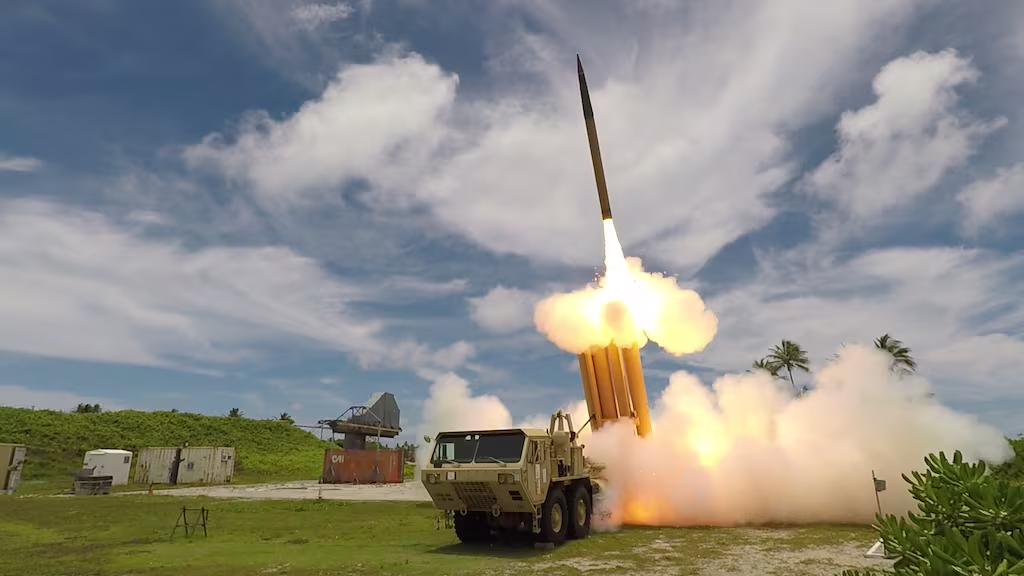
The Terminal High Altitude Area Defense system. (Lockheed Martin)

The new THAAD contract aims to close that gap by speeding up deliveries and ensuring that U.S. missile defense networks remain ready for any scenario, from the Middle East to the Western Pacific.

What makes this contract unique isn’t just its massive price tag—it’s also one of the first major projects under the Pentagon’s new Acquisition Transformation Strategy, a sweeping reform meant to fast-track weapons development and break through bureaucratic gridlock. Translation: the War Department wants results, and it wants them fast.

“This new approach propels our efforts to strengthen the defense industrial base, expand production and deliver capabilities to the American warfighter at unprecedented speed and scale,” said Tim Cahill, president of Lockheed Martin Missiles and Fire Control.

The message from industry and government alike is clear—America’s war machine is back in business.

To make the expanded production possible, Lockheed has already broken ground on new facilities across the South. Earlier this year, the company began construction on a Munitions Production Center in Troy, Alabama, and a Munitions Acceleration Center in Camden, Arkansas.

Both sites are part of a broader $9 million long-term investment program running through 2030, aimed at modernizing the domestic weapons manufacturing base.

THAAD Stays Put in Korea as Pentagon Pushes Back on Withdrawal Rumors
U.S. Terminal High Altitude Area Defense missile launchers point skyward at Naval Support Facility Deveselu, Romania, Sept. 1, 2019.

The sprawling production effort will span facilities in Dallas, Texas; Sunnyvale, California; Troy, Alabama; and Camden, Arkansas.

Lockheed will deliver THAAD missile rounds under fixed-price contracts, ensuring taxpayers have cost certainty while giving the company incentives to meet or exceed production schedules. Work will take place from 2026 through 2032, according to the Pentagon’s announcement.

At the time of award, over $842 million in fiscal year 2026 procurement funds were already obligated, signaling that this isn’t a pie-in-the-sky promise—it’s happening.

For Lockheed, the deal cements its dominance in the field of missile defense manufacturing and ensures steady work for thousands of skilled American workers in critical industries.

The award also builds on a string of recent contracts. Earlier this year, Lockheed inked additional agreements with the War Department to bolster production of the PAC-3 Missile Segment Enhancement and the Precision Strike Missile (PrSM).

Both systems play key roles in U.S. force posture and rapid-strike capabilities, especially as adversaries like China and Russia pour billions into their own missile arsenals.

To America’s men and women in uniform, these contracts are more than corporate deals—they’re a signal that Washington is finally serious about rebuilding military readiness.

Army Builds New Missile Defense MOS to Merge Patriot and THAAD Expertise
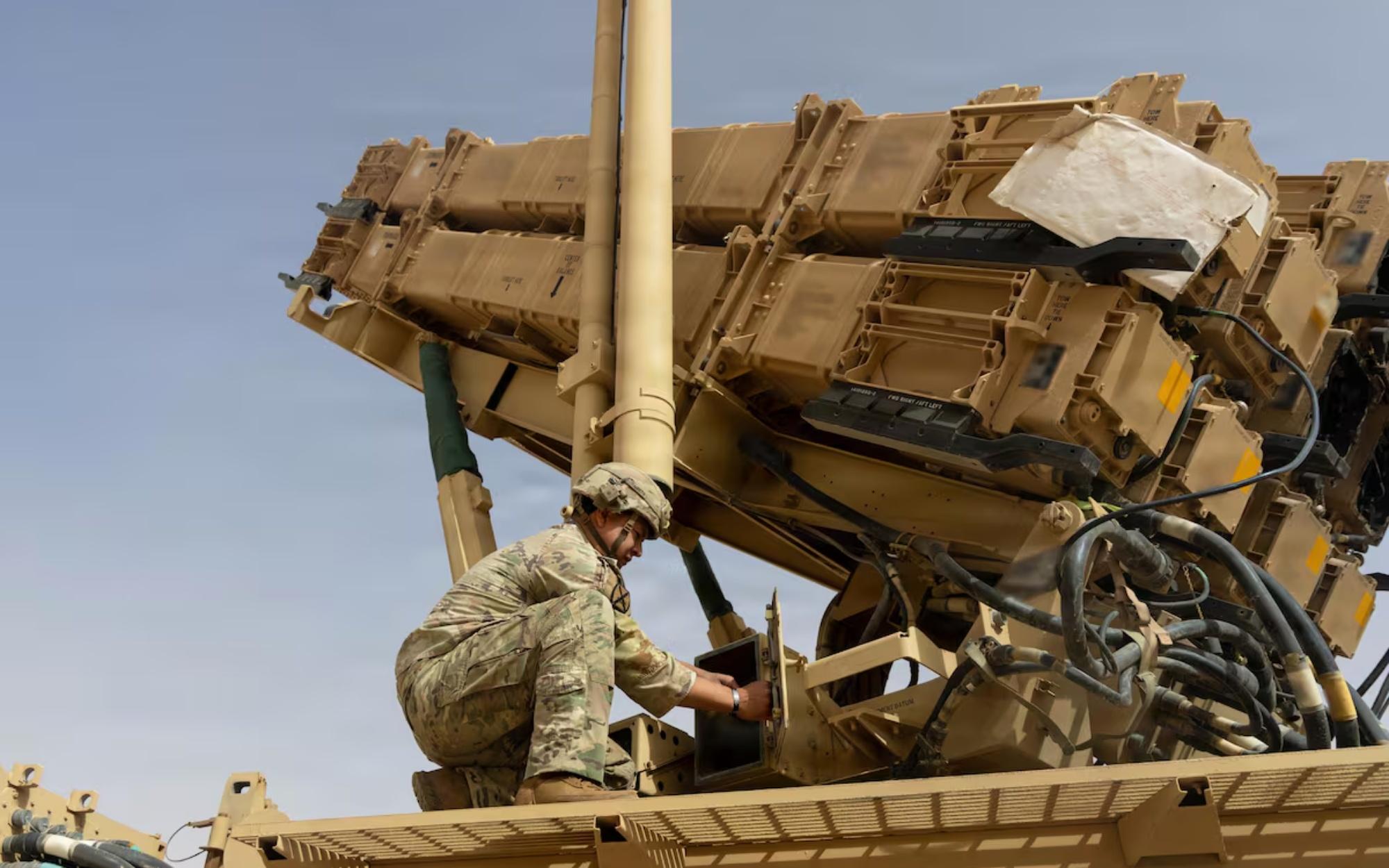
A soldier conducts maintenance on an MIM-104 Patriot missile system in the Middle East. (U.S. Army)

Years of budget politics and underinvestment left the industrial base brittle. Under new leadership and with Trump-era-style prioritization of American strength and self-reliance, the tide appears to be turning.

As Secretary of War Pete Hegseth has emphasized, restoring the capacity to outproduce America’s rivals is essential to keeping peace through strength.

This contract proves that the War Department is listening and acting decisively. With $35 billion fueling renewed production, the message is unmistakable: America’s arsenal isn’t shrinking—it’s expanding aggressively.

In a world where enemies are watching every move, ramping up THAAD production sends the right message—that the United States has both the will and the means to meet any threat head-on. The warfighter deserves nothing less.


Scroll to Top