News

News

Gavin Newsom’s California is Absolutely the Fraud Capital of America: Rep. Kevin Kiley

An exchange between Rep. Kevin Kiley and former Rep. Jason Chaffetz focused on allegations of widespread fraud, waste, and mismanagement in California under Gov. Gavin Newsom, following the release of a nonpartisan state auditor’s report.

Kiley said the findings from the auditor sharply contradict claims that California’s finances are under control.

“Yeah. So this came from the nonpartisan state auditor, which essentially christened California the fraud capital of the United States,” Kiley said.

He explained that the report showed a significant increase in agencies flagged as high risk.

“With the number of agencies classified as high risk, meaning there’s rampant fraud, abuse, mismanagement. It has doubled during Gavin Newsom’s tenure from four agencies to eight agencies,” he said.

Kiley said the audit highlights problems across multiple government programs.

“So we’re talking about all kinds of fraud when it comes to Medicaid, when it comes to SNAP benefits, when it comes to uninsurance benefits,” he said.

He added that those findings come on top of other well-documented failures in state spending.

“And all of this, by the way, comes on top of the incredible fraud and waste and mismanagement that we already knew about the high speed train,” Kiley said.

He pointed to delays and escalating costs tied to the project.

“Where there’s been no track laid in 17 years, spending $18 billion.”

Kiley also referenced pandemic-era spending and canceled technology projects.

“The $32 billion during covid At a minimum of uninsured employment insurance fraud,” he said, along with “the $650 million on a canceled 911, next generation system that was canceled because the technology wasn’t there.”

Based on those figures, Kiley argued that California’s problems are systemic.

“And so California is absolutely under this governor, the fraud capital of the United States,” he said.

He warned that the state’s approach could extend beyond its borders.

“And this is exactly the model that Governor Newsom wants to take to the rest of the country.”

Chaffetz noted that Kiley’s comments drew a direct response from the governor.

“Well, you got the governor’s attention because he responded to you saying, quote, Kylie is wrong,” Chaffetz said.

He summarized Newsom’s statement disputing the claims.

“The auditor’s high risk list does not allege wrongdoing or billions in currency lost it. Lost it is a management tool used to target complex programs for heightened oversight in corrective action.”

Chaffetz continued quoting the response, which rejected Kiley’s interpretation.

“Representative Kylie’s claims are flat out false, and rippers misrepresent both the State Auditor’s report and the facts,” Chaffetz said, before asking, “Quick, your reaction to this?”

Kiley stood by his position and encouraged the public to examine the reports directly. “I’d invite anyone to read the audit,” he said.

He added that additional reviews have raised similar concerns.

“And by the way, there have been other audits, like the one that found that $24 billion was spent on homelessness, and they lost track of the money.”

Chaffetz closed by pointing to California’s broader fiscal condition.

“Yeah, and you know, you can look at the bottom line there, in the state of California, they’re billions of dollars in debt,” he said.

WATCH:

News

Minnesota Fraud: $7.2 Million from a PO Box, Unanimous Jury Decision Overturned

Dustin Grage accused Minnesota state government agencies of failing to carry out basic oversight requirements for years, arguing that the absence of site visits in high-risk programs has allowed large-scale fraud to go unchecked.

Grage said the issue dates back more than a decade and centers on the Child Care Assistance Program.

“This going back to 2013 with CCAP. This is where it started,” Grage said.

He explained that the programs were supposed to include routine verification.

“But you know, there’s at least an annual site visit in there, in these 14 high risk programs right now,” he said.

According to Grage, even those requirements are no longer being enforced.

“Jason, site visits aren’t even required in many cases,” he said.

Grage pointed to a recent criminal case in Minnesota as an example of how the lack of investigation has had legal consequences.

“We actually had a recent jury conviction get overturned by a judge here in Minnesota,” he said.

He said the reversal was tied directly to the state’s inability to verify basic facts.

“And in that case, a DHS investigator stated that, well, we couldn’t go investigate it to find out that this business was just simply run out of a PO Box and was legitimate.”

Grage said the justification given by investigators was a lack of resources.

“We can’t afford to do that,” he said.

He contrasted that explanation with the scale of alleged fraud he says has occurred.

“But for some reason, we can now afford anywhere from eight to $19 billion in fraud, but we can’t afford to do site visits.”

Grage also cited a recent example he said illustrates how little oversight is taking place.

He referenced video footage involving a Minnesota learning center.

“And one of the funny videos you’ll see out there recently is Nick Shirley coming to Minnesota a learning center,” Grage said.

He said the condition of the building itself raised questions about whether inspections had occurred at all.

“Except the problem in this case, and this is how you know these site visits aren’t actually occurring, because on the side of the building it says Learing Center,” he said.

“They couldn’t even spell Learning Center correctly.”

Grage said that detail reflected a broader failure to investigate. “And that just goes to show how deep the fraud is and how people are unwilling to investigate it at all,” he said.

“It’s absurd.”

WATCH:

News

FCC Taking Enforcement Steps Against Robocall Scam Providers After Years of Abuse

Sen. Ted Budd questioned Federal Communications Commission Chairman Brendan Carr about the growing problem of robocalls during a recent exchange, as both men addressed widespread public frustration and the increasing sophistication of phone-based scams affecting Americans nationwide.

Budd said robocalls are one of the most common complaints he hears from constituents across his state.

“At nearly every telephone town hall that I do, and including one last week, the folks always bring up robocalls,” Budd said.

“They feel overwhelmed by them. They feel that they perpetrate real harm. They give examples.”

He said concerns have intensified as new technology has made scams more convincing and easier to deploy.

“As I’m around the state, people talk about robocalls huge concerns, especially as we have things like aI generated personalized voices, and the scans become more and more sophisticated and easier to carry out,” Budd said.

He then asked Carr directly what actions the FCC can take.

“So chairman, again, thank you all for being here. Chairman, what can the FCC do to proactively protect folks, and how can you stay ahead of the curve with these changing criminal tactics?”

Carr responded that robocalls are the top consumer complaint received by the FCC and acknowledged that past enforcement efforts often struggled to keep pace with evolving tactics.

“This is the number one consumer complaint we get at the FCC,” Carr said.

“Historically, it felt like a game of whack, a mole. We put a technology solution in place. We’d go after a single bad actor, but this would just pop up in another way.”

Carr said the agency has shifted to a more comprehensive strategy designed to disrupt robocalls at multiple stages.

“What we’re doing right now is we’re taking an approach. We’re tackling illegal robocalls at every single portion of the call life cycle,” he said.

According to Carr, that includes restricting access to phone numbers and making it more difficult for foreign robocalls to reach U.S. consumers.

“We’re making it harder to get access to telephone numbers, we’re making it more difficult for foreign robocalls to enter the US,” he said.

Carr also described efforts to close regulatory gaps.

“We’re looking at potential loopholes, including ones for non IP networks,” he said.

One initiative under review involves how overseas call centers are identified on caller ID.

“And one issue we’ve recently teed up is taking a look at any robocall, legal or otherwise, that originates from a call center overseas,” Carr said.

He explained that foreign calls can currently appear to originate domestically, misleading consumers.

“Right now, when that comes to your phone, it can show up with a US area code to fool you into thinking the call center or the call is here in America,” Carr said.

He said the FCC is considering requiring accurate disclosure of foreign origins.

“And so we’re looking at changing that so it would accurately display that’s a foreign call center.”

Carr added that transparency could also have broader economic effects.

“If United or any of the business wants to put a call center abroad, then they should be able to disclose that to the consumer,” he said.

“And if this helps with onshoring, then that might be a good thing as well.”

He noted that enforcement actions are already underway.

“We’re taking a real new approach, including kicking out over 1200 providers from our robocall mitigation database, which effectively cuts them off from the systems,” Carr said.

“We’re trying to really tackle this at every portion of the call.”

Budd then asked whether there were limits preventing the FCC from going further.

“Is there any specific limitations that prevent your agency from doing more in this area?” he said.

Carr replied that the FCC already has broad authority but must continue identifying weaknesses exploited by scammers.

“As of right now, we have a fair amount of legal authority in this area,” Carr said. He emphasized cooperation with other enforcement bodies.

“We’re working increasingly with state AGs on this. We are deepening our partnership and collaboration with FTC, the nation’s premier consumer protection agency, and we’re going to keep at this issue.”

WATCH:

News

Trump Doctrine: Nigerian Government Now Sharing Intel to Take Out Muslim Extremists

A Fox News segment featuring Griff Jenkins and former Kansas Gov. Sam Brownback focused on ongoing terrorist violence against Christians in Nigeria and the role of cooperation between the Nigerian government and the United States.

During the exchange, Jenkins highlighted recent reporting indicating increased coordination between Nigerian officials and U.S. authorities.

“Important point, Sam, and that is that the Nigerian government is working with us,” Jenkins said

“As you heard from our reporting, Nigerian officials sharing Intel with the US. Where are these terrorists? Where do you see and we also reported from Secretary of War, hegseth that more to come. He wrote on social media, where do you see this heading?”

Brownback responded by stressing that any meaningful progress depends on achieving long-term stability rather than short-term military or diplomatic pressure.

“Where I see it heading is really us getting to some sort of stable situation long term,” Brownback said.

“And by that I mean where Christians are not attacked.”

He pointed to efforts made during the first Trump administration, noting that direct pressure was applied to Nigerian leadership at the time.

“The first Trump administration, he pushed on the president, then of Nigeria, to respond to these attacks,” Brownback said.

“They did. The attacks went down for a while, but it didn’t change the structure. The structure maintained itself.”

Brownback explained that the violence has remained persistent due to entrenched conditions in specific regions of the country.

“And this is Northwest Nigeria,” he said.

“We’re talking about in the center area. You’ve got the Fulani, radicalized pieces of the Fulani herdsmen that are attacking primarily Christians in that region.”

According to Brownback, those attacks represent a deeper, systemic problem that cannot be solved through temporary measures or outside intervention alone.

“That’s a longer term problem,” he said.

He argued that a sustainable solution must come from within Nigeria itself and involve ongoing protection for vulnerable communities.

“I just think we got to really get at this and provide localized protection that can be there, year in, year out,” Brownback said.

He emphasized that any such approach should not rely indefinitely on American involvement, adding it should be “not dependent upon the United States.”

WATCH:

News

Fraud Allegations Rock Minnesota as Paperwork Tells a Troubling Story

An exchange between commentator Nick Shirley and a Minneapolis-area man identified as David laid out detailed allegations of widespread fraud involving childcare, transportation, and healthcare programs in Minnesota, raising questions about oversight of taxpayer-funded systems.

Shirley opened the discussion by asking, “How deep is this fraud here inside of Minnesota?”

David responded that the scope was extensive, saying, “It is far worse than anybody can imagine. You heard it’s seven to 10 billion, and maybe more. And now the numbers have been revised and put out there publicly that they think it’s more like 8 billion.”

David explained that his involvement began through personal observation.

He said his office is located in Minneapolis “in the heart of all of this fraud,” where he repeatedly noticed licensed childcare centers that appeared to have no children present during normal operating hours.

“I would see these childcare centers,” he said.

“I said, well, there aren’t any kids there. It’s the middle of the day, and all I see are a couple of guys standing out front smoking.”

According to David, similar observations continued as he passed additional daycare locations.

“Then I’d go buy another daycare, and I’d see the same thing,” he said.

“I said, Well, where do these kids play?” David said he began researching the facilities online and found that some were licensed for dozens of children while appearing to have none present.

“This place is licensed for 80 children. They had zero children. Every time I went by there, they never had a single child there.”

David also described noticing transportation companies operating without visible passengers.

“Then I started to see all these transportation companies going around, and it was always a Somali driver,” he said.

“They never had a passenger, never, ever, once.”

He said his research led him to Minnesota’s non-emergency medical transportation program.

“This is going to the dentist’s office, therapy, whatever it might be,” he said.

When David looked into the number of transportation companies involved, he said the findings were significant.

“The research came back that there are 1020 of them, and more than 800 of them are Somali owned,” he said.

David alleged that oversight was minimal, adding, “Nobody from the state of Minnesota ever cross checks to see if any rides were ever actually provided. All they did was write the check.”

As Shirley reviewed documents during the exchange, he asked, “All this paperwork right here. What are we looking at?”

David replied that much of the data he collected related to childcare.

“The areas of fraud that I have numbers for are mostly related to child care,” he said.

“This is massive fraud that is beyond anyone’s imagination the scope.”

David cited a specific example in Minneapolis involving two childcare operations listed at the same address.

“Together they’re licensed, supposedly for 120 children,” he said.

“I have never seen a single child there ever, and I’ve been by that place at least 100 times.”

Shirley summarized the allegation by asking, “These Somalians, these groups, are setting up these daycares, these childcare centers, getting money from the government, but there’s no kids?”

David answered, “No kids. Never had any of them.”

He added that despite violations, the facilities continued operating.

“They’re still getting money, and it’s millions of dollars for every one of them every year.”

When Shirley asked who was receiving the funds, David said the money came from a mix of state and federal sources.

“We have a thing called CCAP. It’s a blend of federal and state money,” he said.

“The bottom line is it’s taxpayer money.”

David alleged that the same individuals and addresses appeared across childcare, adult daycare, healthcare, and transportation businesses.

“There’s one building that has 14 Somali healthcare companies at the same address,” he said, adding that another building in Saint Paul had 22 similar businesses.

Shirley asked whether government officials were aware of the situation.

David replied, “The government knows they’re writing the checks.”

He went on to describe political dynamics he believes play a role, stating that the Somali community “will not speak to anyone outside the community” and “they vote as a block.”

According to David, this has influenced political decision-making in Minnesota, where, he said, officials are reluctant to intervene.

WATCH:

MORE:

News

Younger Voters Driving GOP Away From Old Foreign Policy Playbook: Posobiec and Baris

An exchange between political pollster Rich Baris and commentator Jack Posobiec focused on the growing influence of younger right-wing voters and their strong alignment with the MAGA movement, highlighting how concerns over the American dream and domestic priorities continue to shape conservative politics.

Baris framed the discussion around the future direction of the Republican Party and the preferences of its younger base.

“In 28 who’s going to be the nominee, the direction the party is going to go in?” Baris asked, before arguing that age demographics are a critical factor.

“The fact of the matter is, I think some people have to understand that the age demographics of this younger voters, younger right wing voters, are more mad. They’re not isolationist, but they are more MAGA, and that’s because they feel so deeply the dire threat to their own future and their own ability to live the American dream.”

Baris said polling data shows a clear pattern among younger conservatives, particularly those under middle age.

“You do see this massive aid signal with under 45 under 50, whatever, however, you know, demographic bucket you want to put it in,” he said.

He added that the shift was inevitable.

“So it was bound to happen. Jack. It was going to happen well.”

Posobiec agreed, saying he regularly hears similar views from younger voters who are frustrated with political priorities they believe leave them behind.

“And I see this with younger voters all the time,” Posobiec said.

He pointed to age groups most vocal about these concerns.

“I think we said earlier, what did we say? Under 50? Under 40, crowd is when it comes to a lot of the foreign policy stuff, they’ll say, Yeah, okay, but what about me? What about us? What are you doing for us? What are we getting out of this?”

According to Posobiec, this perspective explains how younger voters interpret the “America First” message.

“And so when they say America first, they don’t necessarily mean that, like you say it does that,” he said.

“You know, we have to recede from the world and be isolation still this, but they would like to see more of a prioritization on issues of Americans, the issues of veterans and rather than this foreign policy push that they feel for so long had been the focus of the Republican Party.”

Posobiec concluded that these attitudes are not new and directly fueled recent political realignments.

“And oh, by the way, those are the same conditions that led to the rise of MAGA, of finalism, of Donald Trump in the first place in 2016.”

WATCH:

News

SWAT Standoff, Two-Day Release, Then Another Shooting in Texas

A 21-year-old Texas man is back in custody after authorities linked him to a series of alleged drive-by shootings in Hays County, including one incident that occurred after he was released from jail just days following a standoff with a SWAT team.

Abraham Herrera, 21, faces multiple charges tied to two drive-by shootings and a barricade incident involving Hays County SWAT officers last month.

The case spans several cities south of Austin, including Kyle, Buda, and Martindale, according to reporting from FOX 7 Austin.

The first shooting occurred on Nov. 3, when Hays County deputies responded to reports of gunfire in the 500 block of Santa Fe Run in Kyle.

Upon arrival, deputies found a homeowner who had been seriously injured after multiple rounds were fired into the residence. Investigators determined the shooting appeared to be a random act of violence, and authorities reported there was no known connection between the suspect and the victim.

Nine days later, on Nov. 12, Hays County SWAT was called to assist deputies responding to another report of shots fired, this time in Buda.

According to FOX 7, officers made contact with Herrera, who then allegedly fled into a wooded area near the scene and refused to surrender.

Authorities said the situation escalated into a standoff, prompting the deployment of the SWAT team. After negotiations, Herrera was taken into custody.

Law enforcement officers recovered an AR-15-style firearm and ammunition at the scene.

Following his arrest, Herrera was charged with evading arrest or detention, unlawful carrying of weapons, disorderly conduct, and tampering or fabricating with evidence, according to court records cited by FOX 7.

Despite the charges and the nature of the standoff, court documents show Herrera was released from jail just two days later.

On Dec. 1, investigators were notified of another drive-by shooting that occurred in Martindale over the Thanksgiving weekend.

Evidence gathered during the investigation allegedly connected Herrera to that incident as well.

After the second shooting was reported, authorities moved to take Herrera back into custody.

He is now facing additional charges related to the alleged shootings and remains jailed as the investigation continues.

Hays County is located roughly 15 miles south of Austin and has experienced rapid population growth in recent years.

The series of incidents has drawn attention due to the short time frame between the alleged shootings, the SWAT standoff, and Herrera’s initial release from custody.

Officials have not publicly detailed why Herrera was released so quickly following the Nov. 12 arrest, and court records do not indicate whether bail conditions were imposed at the time.

FOX 7 reported that the release occurred despite the recovery of a rifle and ammunition and the pending charges.

Law enforcement agencies involved in the case have emphasized that the investigation remains ongoing.

Authorities continue to review ballistic evidence, witness statements, and other materials related to the shootings in Kyle and Martindale.

The homeowner injured in the Nov. 3 shooting survived, and no fatalities have been reported in connection with the incidents.

Officials have not released details about the victim’s current condition.

The case highlights ongoing questions about pretrial release decisions, particularly in cases involving alleged violent offenses and repeat encounters with law enforcement.

News

Commies Rooted in Marxist-Leninism Are in the U.S. Congress: Rep Pat Fallon

During a recent exchange, conservative commentator Tomi Lahren pressed Rep. Pat Fallon on whether Democratic opposition to U.S. strikes on narco terrorists reflects genuine concern or political theater driven by hostility toward President Trump.

Lahren questioned whether Democrats privately express the same outrage they display publicly, given the deadly impact of narco terrorism and fentanyl trafficking.

“Congressman, I want to go back to the Democrats again. I’m sure that in off the record closed door conversations, you’ve got Democrat colleagues that maybe you might feel are a little bit more reasonable,” Lahren said.

“Are they really telling you, behind closed doors, off the record, at a Christmas party, that they’re super upset about the strikes on Narco terrorists, because it’s hard for me as just an American civilian who is looking at the death and destruction of Narco terrorism, of fentanyl, of all of this, and thinking, Boy, we shouldn’t be striking them.”

She continued by questioning whether the public opposition reflects sincere belief or political performance.

“But the Democrats have really they’ve rooted themselves on the floor with this one,” Lahren said.

“Is that a bunch of BS, or are they really saying that to you, off the record, behind closed doors? Are they really that mad about this, or is this just Trump derangement syndrome for the cameras?”

Fallon responded by arguing that Democratic reactions to President Trump are often reflexive and disconnected from policy substance.

“Well, some of these folks, I mean, if there’s a if somebody sneezes, they want to impeach President Trump,” Fallon said.

“If he doesn’t take his own tight you know, and if there’s an eclipse, he’s going to they’re going to blame Donald Trump for blotting out the sun.”

Fallon said he believes some Democrats use criticism of Trump as a political tool rather than a reflection of genuine disagreement with the policy.

“So, yeah, this is just a an excuse that many of them use to say, Oh, look at the dangerous and deranged President Trump,” Fallon said.

He then drew a distinction within the Democratic Party, separating members he described as pragmatic from those he said are ideologically opposed to actions that benefit the United States.

“When the reason was we have actually a name for them, to be candid,” Fallon said.

“And it’s the patriotic Democrats, the ones that are reasonable, the ones that actually have the best interest the United States at heart.”

Fallon contrasted those lawmakers with others he described in far harsher terms.

“And then there’s the commies,” he said.

“I mean, there are people that I believe are truly rooted in Mark So Marxist, Leninism, that are in the United States Congress. I hate to say that, but it is true.”

According to Fallon, that ideological divide explains why some Democrats oppose actions aimed at combating narco terrorism and protecting U.S. interests.

“They really are genuinely concerned anything that actually protects America and American interests they seem to be against,” Fallon said.

He added that some Democrats privately acknowledge support for the strikes but feel pressure to publicly oppose them to satisfy activist voters.

“So yes, there are certainly some Democrats that know that they have no problem with these strikes,” Fallon said.

“But for some of them, have to play to the cameras and really, you know, cater to their hard left base.”

WATCH:

News

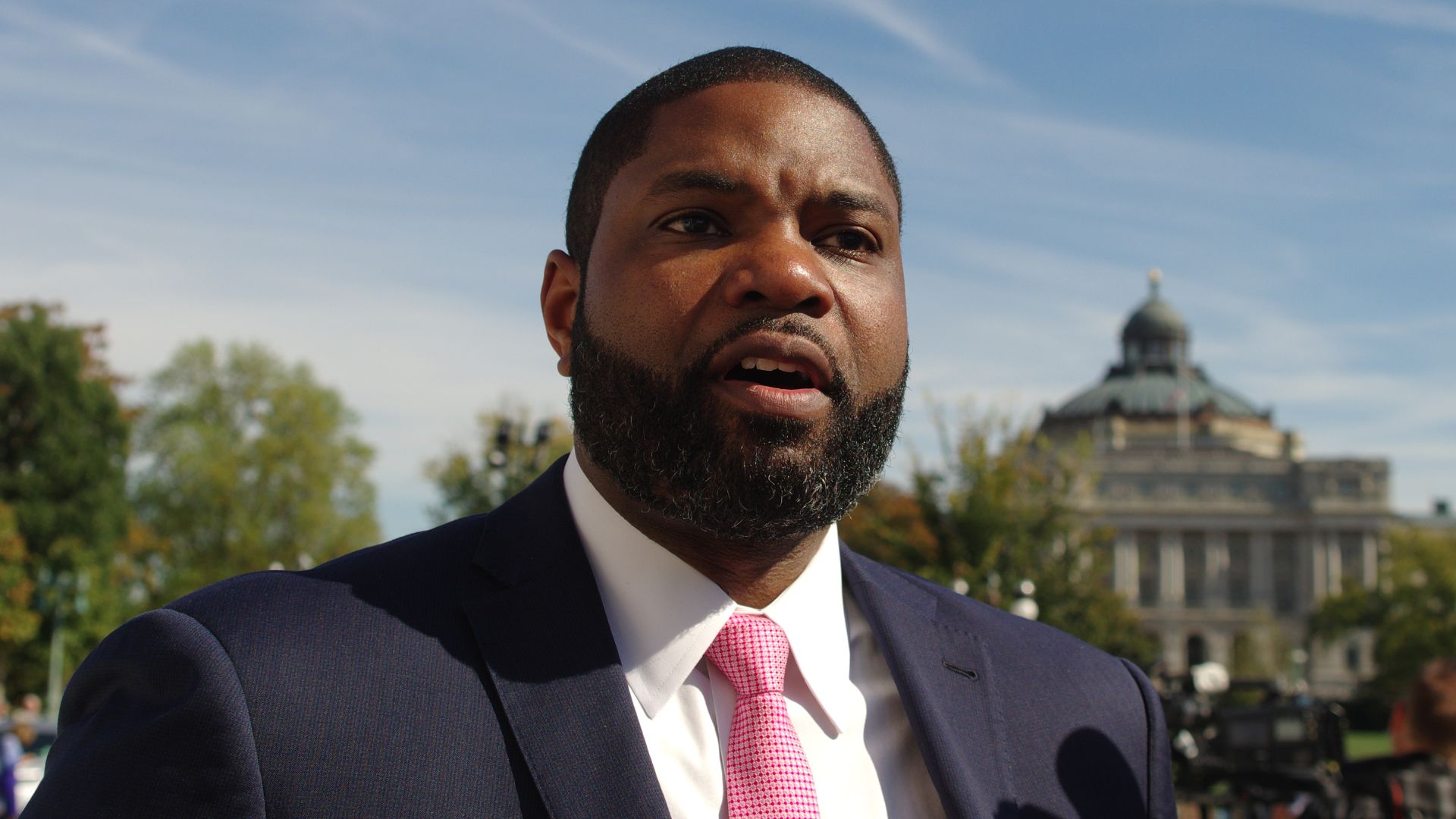
‘Americans Rejected EVERYTHING the Democrats Stand For’: Byron Donalds

Rep. Byron Donalds said the Democratic Party is struggling to redefine itself after voters rejected its positions on immigration, border security, inflation, and social issues, arguing that any attempt at rebranding fails to address what he described as fundamental policy failures.

Speaking about recent Democratic messaging efforts, Donalds questioned whether a meaningful shift is even possible given what he said are the party’s long-standing policy positions.

“Where is the rebrand? Here am I missing it? I have no idea what they’re going to do, because everything that the Democrats stand for is what the American people have soundly rejected,” Donalds said.

Donalds said immigration and border security remain central issues for voters, arguing that Democratic policies have led to chaos at the southern border and empowered criminal organizations.

“They stand for open borders. The American people rejected it. They stand for rampant illegal immigration. They stand for criminal illegals coming into our country. They stand for the drug cartels having control of our southern borders,” he said.

He also pointed to economic concerns, saying Democrats are responsible for inflation that has strained household budgets across the country.

Donalds tied those economic conditions directly to policies supported by Democrats under Joe Biden.

“And last but not least, they stood for the inflation that crippled so many American families,” Donalds said.

“That was Democrats that voted for Joe Biden’s economic plan, which led to higher inflation for the American people, a stagnant economy, wages adjusted for inflation, were down, and they’re going to rebrand themselves.”

Donalds said voters are also paying attention to social policy debates, including those involving transgender issues and athletics, which he described as out of step with public opinion.

“I didn’t even get into the crazy social agendas around transgenderism and boys and women’s sports,” he said.

“That’s what they stand for. Those are the policies they want to go back to.”

He questioned what Democrats could realistically change if they attempt to repackage their message without altering their underlying positions.

“So what’s the rebrand going to do? Are they going to get more crazy?” Donalds asked.

“They’re going to follow Zorhan Mamdani I don’t think that’s going to work for the American people.”

Donalds said voters are focused on practical outcomes rather than messaging, emphasizing economic stability and personal prosperity.

“Americans want sound borders. They want a sound economy. They want prices to be stable and to lower. They want more money in their pocket,” he said. “They really want to thrive. They want the American dream.”

According to Donalds, Democrats have consistently opposed or undermined those priorities through their policy choices.

“Democrats don’t stand for that,” he said.

“Look at the policy sets.”

He argued that changes in party leadership or public-facing figures would not alter the results if the policies remain the same.

“You could put AOC or somebody else out in front, but it’s the same policies,” Donalds said.

“Which means it’s going to be destructive of America.”

WATCH:

News

Minnesota’s Welfare Data Tells a Different Story Than the Democrat Narrative

House Oversight Committee Chairman James Comer said new information suggests a large majority of Somalis living in Minnesota are dependent on government assistance, raising renewed questions about the impact of Democratic immigration policies and the scope of public benefit usage by illegal aliens.

Comer said the issue is politically sensitive and often avoided by Democrats, despite what he described as troubling data about welfare dependency in the state.

“Because they don’t want to offend that population,” Comer said.

“And the early numbers that I’m getting in on the Somalis in Minnesota is 75% of the Somalis in Minnesota are on full government assistance. That’s full welfare.”

Comer linked the situation to immigration policies under the Biden-Harris administration, arguing that Democrats deliberately kept the border open under the premise of addressing labor shortages but failed to acknowledge the fiscal consequences.

“The whole reason that the Democrats left the border open during the Biden administration was to allow people to come in, and what they said would provide jobs, you know, because there’s a shortage of workers,” Comer said.

“And I agree there’s workers.”

He said the reality in Minnesota does not align with those claims, pointing to what he described as widespread reliance on taxpayer-funded programs.

“But you got a massive population in that one state, and the overwhelming majority of that population is on Medicaid and then and other types of government programs,” Comer said.

Comer also disputed Democratic assertions that illegal aliens are not receiving Medicaid benefits, suggesting the true scale of enrollment may be understated and could soon be exposed through further review.

“Even when Democrats say there are no illegals on Medicaid,” he said.

“I think that’s that that’s going to be proven to be booked in Minnesota.”

WATCH:


Scroll to Top