Author name: RVM News

News

Socialist Mayor Responds After Spencer Pratt Targets Seattle Homeless Policies [WATCH]

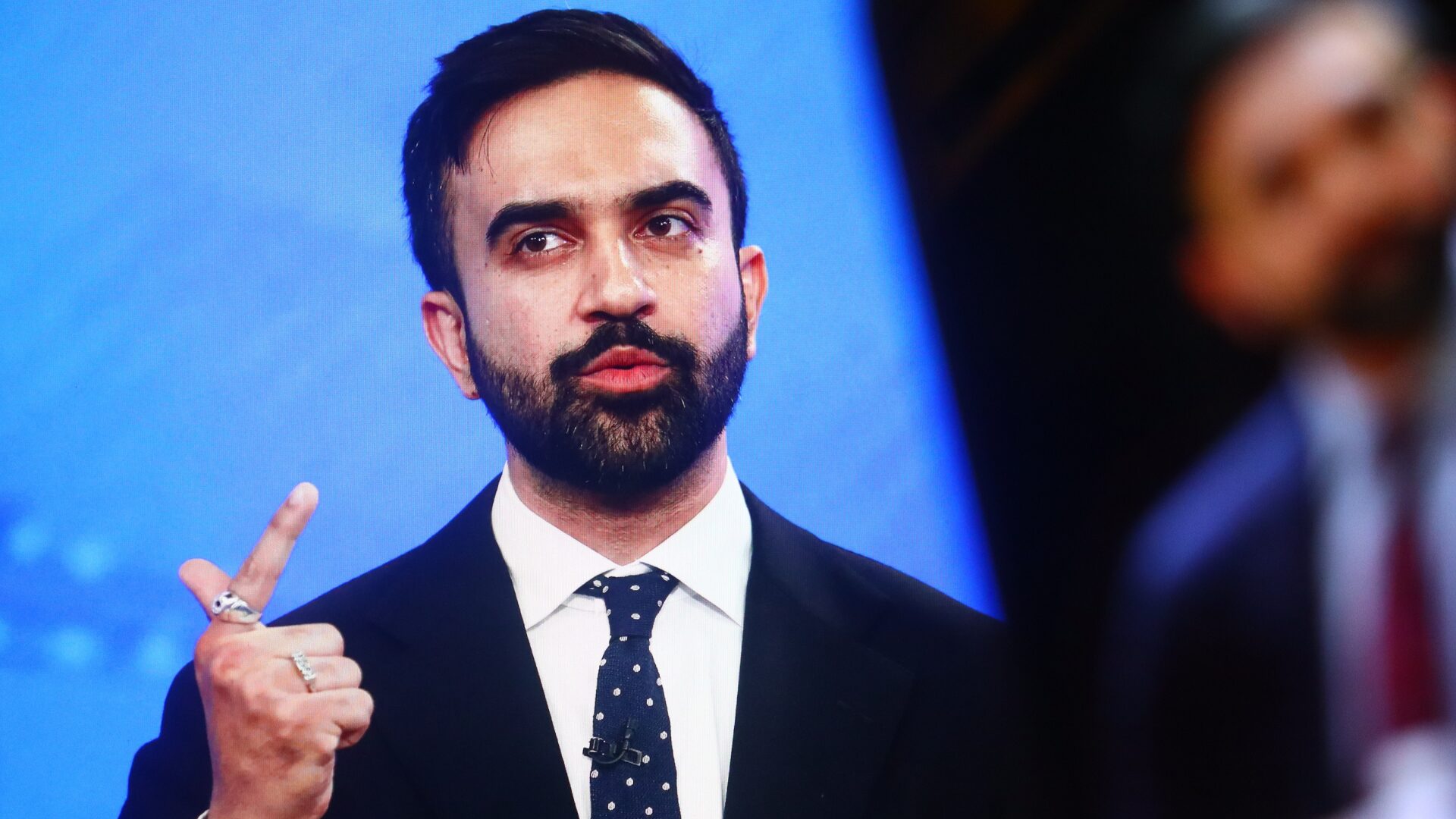
Seattle Mayor Katie Wilson addressed comments from Los Angeles mayoral candidate Spencer Pratt this week, acknowledging that drug addiction plays a significant role in homelessness even as she argued that housing costs remain the primary cause of the crisis, as reported by The New York Post.

The exchange began after Pratt, who is running in Los Angeles’ mayoral race, discussed homelessness during an interview several weeks ago. Pratt argued that many individuals living on the streets in Los Angeles are not originally from the city and suggested that changes to local funding policies would encourage many to leave.

“People have been bused in by scam rehabs, scam NGOs, scam homeless nonprofits,” Pratt said. “These people, when I unplug them and say, ‘We’re not taking our taxpayer money anymore,’ they’re all going to Seattle, where the mayor will welcome them.”

Pratt’s Meteoric Rise Shocks Los Angeles Mayor Race as Odds Surge Dramatically

Pratt also challenged common descriptions of the homeless population.

“Well, they’re not homeless. They’re drug addicts,” he said.

Wilson’s office did not respond to a request for comment from The California Post, but the Seattle mayor was asked about Pratt’s remarks during a Wednesday interview with FOX13 Seattle.

The exchange began with a light moment as the reporter referenced Pratt and noted that he may survive California’s primary election. An audience member could be heard cheering when Pratt’s name was mentioned.

“Yeah, golly, was that a cheer?” Wilson asked before laughing.

While declining to directly engage with Pratt’s criticism, Wilson responded to the broader issues raised by the discussion.

“I’m not going to respond to him, but I will respond to you all,” Wilson said.

The mayor reiterated her view that housing affordability remains the central factor behind homelessness.

“What is driving homelessness is housing costs. There is a very, very clear correlation between housing costs and homelessness,” she said.

Later in the interview, however, Wilson acknowledged that substance abuse cannot be separated from the conversation. Seattle has faced ongoing challenges involving open-air drug use and addiction issues in several parts of the city, and the topic was raised again by the interviewer.

“That does not mean that drugs are not a factor. They absolutely are a factor,” Wilson said.

She expanded on that point by describing how addiction and homelessness can reinforce one another.

“Drugs make everything worse. If you fall into homelessness, very often people become addicted to drugs once they’ve become homeless. There are a lot of reasons for that. Or if they have a light substance use disorder, that becomes a severe substance use disorder.”

Wilson also discussed Seattle’s approach to addressing homelessness, saying the city is focused on connecting shelter services with behavioral health programs, substance abuse treatment, and other support services designed to help people leave the streets.

Despite acknowledging the role of addiction, Wilson maintained that rising housing costs remain what she described as the underlying driver of homelessness.

Notably, Wilson did not directly address Pratt’s claim that Seattle would welcome homeless individuals leaving Los Angeles, nor did she respond to his suggestion that many homeless residents in Los Angeles originate from outside the area.

Pratt has pointed to findings cited by City Journal indicating that approximately 64 percent of people living on Los Angeles streets reported being from outside the City of Los Angeles. According to the report, 53 percent said they were from outside Los Angeles County, while nearly 40 percent reported coming from outside California.

The Los Angeles candidate has also proposed establishing rehabilitation facilities on federal land as part of his homelessness strategy. Pratt previously told CNN that the concept is already “in the works” and said he has met with 30 “literal billionaires” regarding funding for the project.

Pratt remains one of three major candidates seeking to advance from California’s primary election as vote counting continues.

News

Marine Veteran Takes Down Armed Teen Mob During Failed Maryland Carjacking [WATCH]

A Marine Corps veteran in Maryland is being credited with helping stop an attempted armed carjacking after surveillance video showed him fighting back against four hooded teenagers who allegedly targeted him while he was working on his truck, as reported by The New York Post.

The incident occurred around 4:45 p.m. Tuesday in Oxon Hill, Maryland, roughly 10 miles outside Washington, D.C. The confrontation was captured on surveillance footage later shared online by the victim, Jheyco Borda.

According to the video, Borda was standing near the bed of his truck when four teenagers approached him. The group quickly surrounded him, and one suspect, described as wearing a red, white, and blue sweatshirt, allegedly pulled out a handgun and demanded Borda’s truck keys and cellphone.

What appeared to be a routine criminal encounter quickly turned into a struggle when Borda seized what he later described as a split-second opportunity to act.

Surveillance footage shows Borda grabbing the armed suspect and wrestling for control of the weapon. As the confrontation intensified, two of the suspects fled down the street while another remained near the truck.

The situation changed further when Borda’s brother ran from a nearby home to assist.

During the struggle, a gunshot was fired. No injuries were reported.

Working together, the brothers managed to gain control of the situation. Borda continued grappling with the armed suspect while his brother pursued another member of the group. Within moments, the pair had subdued the suspects and held them until officers with the Prince George’s County Police Department arrived on the scene.

Authorities ultimately took all four suspects into custody.

After the incident, Borda credited his military background for helping him remain calm and react decisively under pressure.

“Once a Marine, always a Marine,” Borda told Fox 5.

“It took me just one split second. We went to training for the Marines, and that came out right at the moment.”

The veteran said he was thankful the situation did not end more tragically. He noted that several loved ones who are frequently around the truck were not present during the attempted carjacking.

According to Borda, his children were not in the vehicle, nor was his dog Sky, who often rides in the truck. He also expressed relief that no members of his family were injured during the confrontation.

Although no one was hurt, the truck sustained damage during the struggle. Borda said the round fired during the altercation passed through the bed of the vehicle, leaving behind damage he estimates will cost approximately $2,000 to repair.

He added that his insurance provider will not cover the repairs.

Following the arrests, Borda said accountability should extend beyond those directly involved in the attempted robbery.

He told Fox 5 that both the teenagers and their parents should be held responsible for what occurred.

Alongside the surveillance footage posted to social media, Borda also issued a warning to others in the community.

“Be careful and be aware of your surroundings,” he wrote.

The incident comes amid ongoing concerns about violent vehicle thefts and armed robberies in communities surrounding the Washington metropolitan area. In this case, however, police say the suspects encountered a Marine veteran who relied on his training, instincts, and assistance from his brother to prevent the alleged carjacking from succeeding.

Prince George’s County police have not publicly released the identities of the four suspects.

News

Cornell Boots Radical Student After President Cornered Over Israel Debate [WATCH]

A Cornell University activist has been banned from campus events for one year after university officials concluded that he participated in a confrontation that followed the school’s president to his vehicle after an Israel-Palestinian debate on campus, as reported by The New York Post.

Aiden Vallecillo, who graduated from Cornell in May, was designated persona non grata by university police on May 28, according to reports from WBNG. The sanction stems from an April 30 incident in Ithaca, New York, when a group of students surrounded Cornell President Michael Kotlikoff in a parking lot following a debate hosted by the Cornell Political Union.

The event had been co-sponsored by Cornell Progressives, Cornellians for Israel, and Students for Justice in Palestine.

According to the university, Vallecillo was among a group of students who followed Kotlikoff as he left the debate and walked toward his vehicle. Video of the incident circulated online and showed students filming the university president while demanding answers to questions about campus policies and free speech issues.

Vallecillo was notified of the restriction five days after graduation while at his off-campus apartment.

“I think that they deliberately timed this to be at a point where students are off campus, where people are thinking about recent graduation, about post-grad plans and not about kind of how to support their fellow students,” Vallecillo told WBNG. “They’ve done it at a time when national media attention has also died off.”

Vallecillo argued that the university was punishing him for exercising free speech after Kotlikoff declined to answer questions from students following the event.

Cornell officials, however, reached a different conclusion after reviewing the incident.

“The Committee has found that the actions taken by these individuals on April 30th, which included following President Kotlikoff from an evening event into a parking lot and impeding his ability to leave, are inconsistent with university policies governing expressive activity and our standards for respectful conduct, safety, and the prohibition of intimidation,” Cornell’s Board of Trustees said in its findings.

The confrontation occurred after what Kotlikoff later described as a productive and respectful debate.

Kotlikoff, who became Cornell’s president in March 2025, praised the debate itself in comments issued May 15.

“Speech only carries meaning when one can speak, and another can listen. In a community and in a democracy, any exercise of that freedom carries the responsibility to respect the same rights for others,” Kotlikoff said.

“That is why we have policies and guidelines around free expression at Cornell: to ensure that everyone’s rights are protected and that no one can shout down or silence other views. I will continue to defend those policies with every means at my disposal.”

Following the event, several students, including Vallecillo, alleged that Kotlikoff struck them with his vehicle while attempting to leave the parking lot.

Video footage from a nearby security camera and cellphone recordings showed students moving behind the president’s vehicle as he backed out of the parking space.

“Ah, you just ran over my f*cking foot,” Vallecillo shouted during one recording while pointing a camera toward the ground.

According to reports, students who claimed they were struck declined medical treatment and repeatedly refused to provide sworn statements to police investigators.

No criminal charges were filed against either the students or Kotlikoff.

Kotlikoff later said he did not realize students had positioned themselves behind his vehicle as he attempted to leave. He acknowledged that, in hindsight, he should have remained inside the vehicle and contacted law enforcement.

“Only the following afternoon did I understand that my experience would look very different in the selected video clips posted on social media and be framed in ways that I found genuinely shocking. In the moment, my goal was extricating myself from the situation safely without escalating it. In retrospect, I certainly should have remained in my car, locked it, and called the police,” Kotlikoff said.

The university’s decision closes one chapter of a controversy that drew significant attention on campus and renewed debate over free speech, protest tactics, and student conduct at one of the nation’s most prominent Ivy League institutions.

News

Senate Approves Massive $70 Billion Immigration Enforcement Bill After All-Night Battle Over Trump Fund

The Senate approved a $70 billion immigration enforcement package early Friday morning, sending legislation that would fund Immigration and Customs Enforcement and the Border Patrol through the remainder of President Donald Trump’s term to the House for consideration.

The measure passed by a 52-47 vote shortly before 5 a.m. after senators spent the night working through a lengthy series of amendment votes known as a “vote-a-rama.” The legislation now heads to the House, where lawmakers are expected to take it up early next week.

While Republicans broadly support increased immigration enforcement funding, debate over a separate $1.776 billion settlement fund tied to a legal agreement involving Trump and the Internal Revenue Service delayed final passage for weeks and consumed much of Thursday’s floor action, as reported by The New York Post.

The settlement fund stems from an agreement resolving Trump’s lawsuit against the IRS over the disclosure of his tax returns, which were later published by The New York Times as part of a report on his finances in September 2020.

Senate Majority Leader John Thune, Republican of South Dakota, said the dispute over the settlement fund significantly slowed progress on legislation that GOP leaders had hoped would remain focused on border security.

“This would have been done several hours ago if we weren’t having to deal with some of the issues around the fund,” Thune told reporters shortly before midnight Thursday.

Although Thune has criticized the settlement fund, he spent weeks encouraging Republican senators to keep the bill centered on immigration enforcement rather than attaching additional provisions that could complicate its path through the House.

The issue intensified after acting Attorney General Todd Blanche told lawmakers Tuesday that the settlement fund would not move forward. Even so, several Republican senators sought legislative language that would formally prevent any future payouts.

On Wednesday, Trump added uncertainty about the settlement’s future when he told reporters the settlement was “very important” and said, “I don’t know” when asked whether it was dead or merely on hold.

“I’d have to ask the lawyers,” the president added.

One of the first major amendment votes came from Senate Minority Leader Chuck Schumer, a Democrat of New York, who proposed banning the settlement fund.

That amendment failed by a 50-49 vote after remaining open for several hours. Republican Sens. Susan Collins of Maine, Jon Husted of Ohio, and Dan Sullivan of Alaska joined Democrats in supporting the proposal.

Senators later rejected an amendment from Sen. Thom Tillis, Republican of North Carolina, that would have blocked the settlement fund and transferred the money to a Justice Department anti-fraud account.

“If Blanche says this is largely inoperative, why not use this moment to codify that?” Tillis asked. “Otherwise, you’re exposing every one of our members who are in cycle to having to deal with this between today and Election Day, and that makes no sense for something that the DOJ says they’re not moving forward with.”

Another closely watched amendment came from Sen. Bill Cassidy, a Republican of Louisiana. Cassidy proposed redirecting settlement-related funds to law enforcement officers injured during the Jan. 6, 2021, Capitol riot. The amendment failed by a 52-47 vote.

Cassidy argued that despite Blanche’s comments, the settlement remained active and “absolutely can be used.”

The Senate also rejected amendments that would have prohibited payments to Capitol riot defendants who injured police officers.

Schumer criticized Republicans for rejecting the proposals.

“Leaving taxpayers to rely on nothing more than a promise from Donald Trump’s personal fixer. That is not accountability. That is a permission slip,” Schumer said.

Passage of the legislation ends months of uncertainty surrounding funding for federal immigration enforcement agencies. Democrats had blocked additional funding after the January fatal shootings of two anti-ICE protesters in Minnesota by federal agents, arguing that any new money should be paired with policy changes governing immigration enforcement operations.

Among the changes sought by Democrats were stricter identification requirements for federal officers and expanded use of judicial warrants.

After the Minnesota incident, Trump agreed to separate immigration funding from a broader spending package. Negotiations between the parties failed to produce an agreement, and funding for ICE and Border Patrol lapsed in mid-February.

While Congress later approved funding for the remainder of the Department of Homeland Security at the end of April, ICE and Border Patrol continued operating without regular appropriations. The Senate’s passage of the $70 billion package now moves the issue to the House, where lawmakers will decide whether to send the measure to the president’s desk.

News

Trump Gives Hunter Biden’s Presidential Chances a Hilarious Review [WATCH]

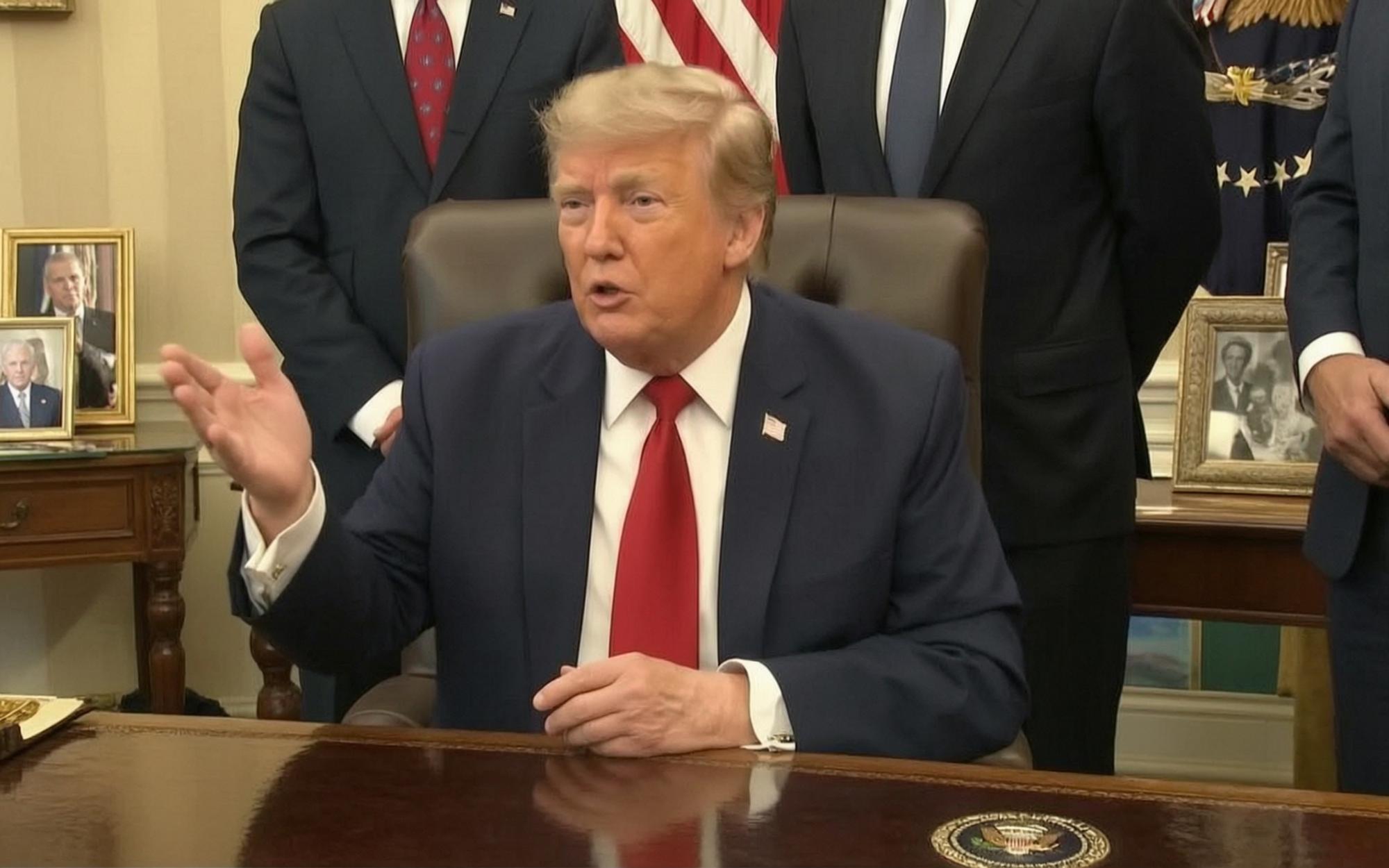
President Donald Trump took aim at several Democratic figures during an Oval Office event on Thursday, using a question about Hunter Biden’s potential political future to criticize both the president’s son and a pair of Democratic Senate candidates, as reported by Red State.

Trump was speaking with reporters during an event highlighting the administration’s new coal-energy initiative when Fox News correspondent Peter Doocy asked about Hunter Biden’s recent social media activity and comments suggesting he could consider a presidential run in 2028.

“Hunter Biden. He’s on social media now, and he has suggested ­— maybe joking, I don’t know — that he could run for president in 2028. How would he do, Hunter Biden, in a 2028 Democratic primary?” Doocy asked.

Trump responded by questioning whether past conduct still matters in Democratic politics.

“You would think that, you know, past is something to do with winning an election, and I would say his past is not the greatest,” Trump said.

The president then compared Hunter Biden to other Democrats who have recently drawn attention on the campaign trail.

“Um, I’m not gonna say bad [things],” Trump said.

“I’m sure, you know, hey, if the guy from Maine can do well, I guess Hunter could do well, too, ’cause the guy from Maine is a basket case, and I would say worse than him is the one from Texas, that looks like Alfred E. Neuman.”

“I would say that if he can do, well, maybe Hunter can do well. I’m not sure, It would be pretty close as far as I’m concerned.”

Trump’s comments appeared to reference Maine Democratic Senate nominee Graham Platner and Texas Democratic Senate nominee James Talarico.

The exchange came as Hunter Biden has become increasingly active on social media, where he has posted commentary about current political events and members of the Trump administration.

On June 3, Hunter Biden posted a message on X questioning Trump’s public schedule and referencing media coverage of former First Lady Jill Biden.

“Trump hasn’t made a public appearance in 8 days. This after an unscheduled visit to the hospital- because he ‘likes getting check-ups.’ Thank God Jake Tapper (or as I like to call him- the Brick Tamland of his generation) is on the case, hunting down clues in a book about my mom’s experience as First Lady four years ago.”

The post echoed claims circulating online about Trump’s public appearances. However, Trump continued making public appearances, participating in events, and speaking with reporters during the period in question.

Later in the Oval Office session, another reporter asked Trump whether he observed any signs of cognitive decline when he met with former President Joe Biden at the White House on Nov. 13, 2024.

“When you met with Joe Biden, President Joe Biden, right here in the Oval Office on November the 13th of 2024, could you detect any cognitive decline in President Biden at that time?” the reporter asked.

Trump replied that Biden appeared much the same as he had for years.

“No, not really. I mean, he was the same guy I’ve been watching for a long time,” Trump said.

“He was fine as far as I was concerned. I don’t know, something happened to him during the debate. It could have been me.”

Trump then added another remark about Biden’s political career.

“He was never the sharpest guy, you do know that, right?”

“It wasn’t like he was sharp as a tack.”

The comments marked another instance of Trump using an unrelated policy event to weigh in on political opponents and potential future rivals as attention begins to shift toward the 2028 election cycle.

News

Army Veteran And Sheriff Candidate Walks Free After Judge Dismisses Murder Charge In Shooting Of Daughter’s Alleged Predator [WATCH]

An Arkansas judge has dismissed murder charges against an Army veteran and Republican sheriff candidate who was accused of fatally shooting a man charged with multiple sexual offenses involving his teenage daughter, as reported by Fox News.

Aaron Spencer, who is running for sheriff in Lonoke County, had been charged with second-degree murder in the October 2024 shooting death of 67-year-old Michael Fosler. On Thursday, Special Circuit Court Judge Ralph Wilson Jr. dismissed the case, citing what he described as serious misconduct involving the handling of key evidence by law enforcement.

According to court records obtained by Fox News Digital, Wilson concluded that the circumstances surrounding the disappearance of evidence from Spencer’s truck were severe enough to warrant dismissal of the criminal case.

“The Court finds that conduct by law enforcement was so egregious that dismissal of this case is warranted,” Wilson wrote in his order.

The judge acknowledged that dismissing criminal charges is rarely appropriate, describing it as “an extraordinary and extreme remedy.” However, he determined that the facts of the case justified that outcome.

The case stemmed from an incident that occurred during the early morning hours of Oct. 8, 2024, in Lonoke County. Prosecutors alleged that Spencer discovered Fosler alone with his teenage daughter inside Fosler’s pickup truck. Authorities claimed Spencer then forced the vehicle off the road before calling 911 and reporting that he had shot Fosler.

Fosler had previously been charged with numerous sexual offenses involving Spencer’s daughter and was reportedly out on bond when the shooting occurred, according to court records.

A central issue in the case involved a dash camera installed in Spencer’s truck. Defense attorneys argued that law enforcement lost an SD memory card that may have contained video footage relevant to the encounter. They further contended that authorities failed to provide documentation showing when the card disappeared or explaining the circumstances surrounding its loss.

Wilson agreed that the missing evidence significantly affected Spencer’s ability to defend himself in court.

“The loss or destruction of the internal SD memory card of the dash camera has adversely impaired the Defendant’s ability to defend himself pursuant to these defenses, and thus his right to a fair trial,” the judge wrote.

Spencer admitted to shooting Fosler but pleaded not guilty to the murder charge. His trial had been scheduled to begin on June 22.

The dismissal marks a major development in a case that has drawn significant attention across Arkansas. Earlier this year, Spencer emerged victorious in the Republican primary race for Lonoke County sheriff, defeating the incumbent officeholder.

Throughout his campaign, Spencer argued that his personal experience with the criminal justice system exposed weaknesses within local law enforcement and the courts.

“Through my own fight for justice, I have seen firsthand the failures in law enforcement and in our circuit court,” Spencer said in a campaign video. “And I refuse to stand by while others face these same failures.”

It remains unclear how the dismissal will affect Spencer’s campaign for sheriff. No immediate announcements regarding his candidacy were released following the court’s ruling.

Fox News Digital reported that requests for comment were sent to the Lonoke County Prosecuting Attorney’s Office, the Lonoke County Sheriff’s Office, and Spencer’s defense team. No responses had been reported at the time of publication.

News

New Evidence Shakes Carnival Cruise Murder Case as DNA From Unknown Minor Adds Twist [WATCH]

Federal prosecutors handling the murder of 18-year-old Anna Kepner aboard a Carnival cruise ship now face a wild new complication.

Investigators recently revealed that DNA from an unidentified male minor was also recovered during the probe, igniting renewed debate and speculation about what really happened aboard the Carnival Horizon last November.

According to a newly unsealed transcript of a 145-page detention hearing, the FBI obtained DNA from this mystery boy, who allegedly had sex with Kepner during the voyage.

The revelation came as prosecutors continued building their case against Kepner’s stepbrother, 16-year-old Timothy Hudson, accused of sexually assaulting and murdering her during the cruise.

Kepner was discovered dead in the cabin she shared with Hudson and her younger brother as the ship sailed from Cozumel to Miami.

Officials claim that key forensic evidence points directly to Hudson, but this new DNA twist threatens to muddy the waters.

It presents the defense with a potential avenue to challenge the government’s timeline and evidence handling.

Prosecutors asserted that two separate vaginal swabs collected from Kepner’s autopsy contained male DNA, one testing positive for sperm.

That prompted federal authorities to order DNA samples from both Hudson and the second minor who reportedly had intercourse with the victim.

Forensics later concluded that Hudson’s DNA was overwhelmingly consistent with the genetic material found, while the other boy was excluded as a possible contributor.

Prosecutors told the court that one DNA sample was calculated to be one hundred twenty sextillion times more likely to have come from Hudson rather than an unknown man.

Another swab, without sperm but positive for male DNA, was said to be 1.2 septillion times more likely to include Hudson.

Those astronomical figures, investigators said, left very little room for coincidence.

Still, Hudson’s defense did not back down.

His lawyer pushed the FBI agent on whether the medical examiner could determine the time between intercourse and death or prove the same person was responsible for both acts.

The agent admitted he did not believe such a clear determination had been made.

That response gave the defense ammunition to argue that prosecutors may be making leaps without direct proof.

WATCH:

The defense also hinted that the sexual contact involving the out-of-state teenager could become a central question for the jury, especially if it shows other interactions with Kepner shortly before her death.

They emphasized that proximity and DNA alone do not prove murder, and that investigators must fully account for every contact she had while aboard the ship.

Federal prosecutors countered that all evidence continues to indicate Hudson played a central role.

They presented a collection of surveillance footage, digital data, and cabin access records that together paint a troubling picture.

According to the government, Kepner was last seen entering her cabin around 7:38 p.m. on November 6 and was never spotted leaving.

Video later showed Hudson exiting at intervals consistent with when she likely died.

Investigators said Hudson’s phone data revealed movements consistent with the time frame of the murder and destruction of evidence.

Kepner’s own phone was later found smashed and discarded in a trash bin along what prosecutors described as Hudson’s trail through the ship.

The government is also said to possess footage that helped pin down that sequence of events.

Despite the evidence, the presiding judge stated that while probable cause existed for the charges, he would not go so far as to call the case overwhelming.

He said the evidence made for “a much closer call” and left open the possibility that multiple defenses could be raised once the trial begins.

That cautious statement has fueled talk that the prosecution may face a tougher fight than first assumed.

Outrage spread on social media when Hudson was allowed to remain free pending trial, with critics arguing that someone accused of such heinous acts should not be walking the streets.

Friends and relatives of Kepner voiced their frustration, saying their family has been through a nightmare that only keeps getting worse.

Kepner’s father previously told reporters that he found his daughter’s body shoved under the bed inside their cabin, calling the memory “too painful to relive again.”

The case has gained national attention, not only for its grotesque details but also for how it exposes the chaotic inner workings of cruise ship investigations.

Federal authorities have jurisdiction, but the setting complicates every step of evidence gathering, jurisdiction, and chain of custody.

The result is often an investigative maze that leaves families devastated and the public demanding answers.

Hudson faces the possibility of life imprisonment if convicted.

His defense team continues to challenge the validity and timing of the evidence, seeking to build reasonable doubt around when and how the fatal assault occurred.

Prosecutors, for their part, remain confident that the combination of DNA, video evidence, and digital tracking will hold firm in court.

The trial is expected to begin in September, and all sides are bracing for a sensational courtroom battle.

For now, the headline-grabbing revelation of another male’s DNA on the victim has only deepened the mystery of what truly happened aboard the Carnival Horizon.

The government may think it has its suspect, but the defense appears ready to fight every inch of the way as this disturbing case pushes forward.

News

Scientists Accused of Smuggling Monkeypox Samples Into US and Lying to Investigators [WATCH]

Two government scientists are facing federal charges after authorities say they smuggled biological samples of the mpox virus into the United States and lied about it to investigators.

The case shines an uncomfortable light on lax oversight within taxpayer-funded research institutions and raises fresh concerns about how potentially dangerous materials are handled by those entrusted to protect public health.

Vincent Munster, the chief of the virus ecology section at Rocky Mountain Laboratories in Montana, and fellow researcher Claude Kwe were detained at Detroit Metropolitan Airport in January after arriving from Paris following a nine-day trip to the Republic of Congo.

Federal court documents reveal that agents discovered the pair attempting to carry undeclared vials of deactivated mpox virus into the country.

At first, Munster “adamantly denied” having any biological materials with him, according to an FBI affidavit.

But subsequent testing showed that both men did in fact possess samples, and neither had secured the necessary permits or approvals for transporting the materials.

For scientists who operate in secure federal laboratories, that level of negligence or deception is alarming.

Marcus Sykes of the Office of Inspector General at the Department of Health and Human Services made clear how serious the offense is.

“Any deliberate effort to conceal and smuggle biological materials into the United States without proper authorization is a breach of the public’s trust and could have placed the public at risk,” he said in a statement.

It is rare to hear a government official use such direct language about a scandal involving his own side of the bureaucracy.

The criminal complaint, unsealed in Detroit federal court, lays out a troubling pattern of deception.

Investigators say Munster told customs officers that he had “all the documents on my laptop, but you don’t need them, I do this all the time.”

The FBI noted in its report that such statements were “materially false.” In plain English, the scientist appears to have lied to federal agents.

The pair’s home agency, the National Institutes of Health, issued a cautious response, calling it “an ongoing investigation and personnel matter.”

Officials claimed the NIH is cooperating fully with law enforcement.

That kind of boilerplate language has become all too familiar in Washington whenever a scandal touches its own institutions.

Munster and Kwe are both established virologists who have studied mpox extensively.

WATCH:

Federal documents do not say why they felt the need to bring deactivated vials into the United States, or why they circumvented the required reporting.

Some who have worked with similar research suggest that “deactivated” material still presents logistical and ethical obligations for transport that must be closely monitored.

The Republic of Congo, where the scientists had recently been working, has seen over two thousand confirmed deaths tied to mpox outbreaks.

Even if the virus samples were noninfectious, the symbolism of sneaking them through customs at a major American airport could not be worse.

It evokes memories of the Wuhan laboratory controversy that haunted public trust during the pandemic years.

Americans have a right to demand accountability when publicly funded scientists act with such disregard.

Mpox, once known as monkeypox, has a long and complicated history. First identified in monkeys in 1958, it remained largely confined to central and western Africa for decades.

In 2022, the world learned the virus could spread through human sexual contact, sparking outbreaks across more than seventy countries.

It is not a virus any rational person would want smuggled, deactivated or not.

Though the FBI made no mention of deliberate malicious intent, their language leaves open questions about motive.

Was this simple arrogance, routine misconduct, or something more sinister?

The fact that federal scientists thought they could brush past customs officers by claiming “I do this all the time” should alarm anyone who thinks accountability applies equally to all.

Both men are expected to appear in federal court in Missoula, Montana.

Observers inside and outside the science community are waiting to see whether the Department of Justice will pursue prison time or rely on the all too common government practice of quietly settling matters behind laboratory doors.

Many taxpayers are tired of watching the bureaucratic circle close ranks when insiders break rules that would land any private citizen in jail.

Public reaction has been swift on social media, with users questioning how often similar violations might occur undetected.

With billions flowing annually to health research, Americans are owed transparency.

When government scientists act as if the law does not apply to them, it does more than erode trust.

It feeds the growing belief that our ruling class plays by its own rules while preaching safety and compliance to everyone else.

The details still unfolding in this case are a reminder that accountability in science is only meaningful if it applies equally, from the smallest private lab to the grand halls of Washington.

A system that cannot police its own ranks invites even deeper suspicion.

After the upheaval of recent years, that is the last thing public health can afford.

News

Mamdani Scrambles to Fix Puerto Rican Day Debacle After Backlash From Angry Latino Leaders [WATCH]

New York City’s far-left Mayor Zohran Mamdani is once again knee deep in political damage control after his administration stumbled into yet another avoidable controversy.

This time, the outrage came from none other than the city’s Latino community, furious over the mayor’s decision to scrap the long-held tradition of hosting a pre-Puerto Rican Day Parade reception at Gracie Mansion.

According to an internal email obtained by The Post, Mamdani’s team informed community leaders that the mayor would prioritize attending the parade rather than holding the customary celebration at his official residence.

The explanation sounded like something straight from a socialist press release about “working class New Yorkers,” not a mayor addressing one of the city’s most proud and historic cultural groups.

Alvaro Lopez, identified as the Brooklyn borough director within Mamdani’s so-called “Office of Mass Engagement,” told community leaders, “We will not be hosting a reception at Gracie Mansion.”

Lopez justified the move by claiming the mayor wanted to celebrate the day “in the company of as many working-class New Yorkers as possible” instead of an “invitation-only reception.” The spin did little to calm the outrage that immediately erupted.

Puerto Rican civic leaders, who have attended the annual Gracie Mansion celebration dating back to the Koch administration, were not amused by Mamdani’s tone deaf decision.

One advocate fumed to The Post, “If this mayor chooses to end that tradition, it’s a real slap in the face to our community.”

They reminded City Hall that the event has brought together Puerto Rican leaders from across the city and the island itself for decades.

The mayor’s office scrambled to reverse course as criticism poured in.

Within hours of the backlash hitting the press, a spokesperson claimed that the Puerto Rican Heritage reception would, in fact, be held after all, with a tentative date set for Saturday, June 13, right before the parade. Convenient timing, to say the least.

A City Hall insider tried to blame the fiasco on what they described as a “junior staffer who spoke out of turn,” suggesting that Mamdani had always intended to host the event.

That explanation, however, seemed thin, given the detailed email already circulated to community leaders.

Damage control mode had clearly been activated.

Mamdani’s spokesman issued a carefully crafted statement declaring, “We are excited to welcome community members and leaders to Gracie Mansion for a reception celebrating Puerto Rican Day and the generations of Puerto Ricans whose organizing, culture, and contributions continue to strengthen New York City.”

The statement read as classic political cleanup language after a self-inflicted blow.

Political insiders say the blunder is yet another example of Mamdani’s increasingly strained relationship with New York’s Latino political establishment.

Many within that community view the mayor as an outsider who is more interested in pushing socialist talking points than preserving long-held city traditions.

The growing distrust runs deep.

WATCH:

This latest episode comes on the heels of Mamdani inserting himself into several Democratic primaries, choosing to back other Democratic Socialists over respected Latino incumbents.

His endorsement of fellow DSA member Darializa Avila Chevalier over veteran Congressman Adriano Espaillat in Harlem and the Bronx ruffled plenty of feathers.

Then came his opposition to the retiring Rep. Nydia Velázquez’s plan to back Brooklyn Borough President Antonio Reynoso as her successor.

Mamdani instead endorsed Queens Assemblywoman Claire Valdez, another DSA ally. The pattern is not lost on anyone watching city politics.

As if Mamdani’s political instincts were not already being questioned, the controversy also revived scrutiny of Alvaro Lopez, the aide whose email ignited the dust-up.

Lopez was previously exposed for celebrating the tearing down of posters calling for the release of Israeli hostages.

His very presence inside the administration had already drawn strong criticism from Jewish leaders.

Now his email has caused an entirely different community to question City Hall’s sincerity.

For many long-time observers, this is just another example of how ideology-driven politics collide with the real world of governance.

Mamdani has made a name for himself standing alongside far-left activists, but running a city requires something more than lofty rhetoric.

Respecting traditions and communicating with communities that make up the fabric of New York is part of the job.

Critics of the mayor say the episode shows a lack of maturity and political awareness that continues to define much of his administration.

While Mamdani’s team tries to frame the situation as a misunderstanding, the damage has been done.

The narrative that he cares more about promoting socialist allies than honoring cultural traditions has now hardened further.

Even with the reception reinstated, the Latino community has made it clear they are not impressed by the mayor’s backpedaling.

The Gracie Mansion event may go forward, but it will likely be remembered not as a celebration of heritage, but as a reminder of how quickly political arrogance can alienate even the most loyal voter blocs in America’s largest city.

As Mamdani tries to juggle competing factions within his own left-wing coalition, it is becoming increasingly evident that grandstanding and ideological posturing have real consequences.

The question now is whether the damage will fade after another round of photo ops, or if the city’s Latino leaders will remember this insult the next time ballots are cast.

News

Scandal-Plagued Democrat Graham Platner Bolts DC After Reporters Dig Into His Shady Past [WATCH]

Democratic Senate hopeful Graham Platner is learning that Washington scrutiny is a lot tougher than oyster farming in Maine.

His quick DC escape this week has all the signs of a candidate trying to outrun a scandal that refuses to die.

Platner abruptly called off his Capitol Hill fundraising tour once The Post began digging into reports of multiple sexting incidents involving him.

By Tuesday evening, the once-celebrated progressive from Maine had abandoned Democrat Central and fled back to his coastal hometown.

So much for standing up to the political heat.

The scandal started when revelations surfaced of Platner allegedly sending explicit messages to six different women while married.

His wife reportedly shared details of the behavior with a campaign aide in August 2025.

That raised questions not only about Platner’s character but also about whether the Democratic establishment knew about his behavior before putting their support behind him.

As The Post turned up at his old stomping grounds this week, Platner’s family members tried to run interference.

His mother-in-law, Elaine Crabtree, dismissed the allegations as “all bull” and declared the entire controversy fabricated.

But her dismissive tone does little to erase the cloud hanging over Platner’s campaign. The spectacle of relatives arguing with reporters only magnified the public embarrassment.

At Ironbound Restaurant and Inn, owned by Platner’s mother, some loyal locals tried to defend him.

Regulars described him as an honest man whose only fault is being “too good for Washington.”

Others shrugged off the allegations by comparing them to what they see as the Senate’s already “low moral bar.”

That is hardly a ringing endorsement of integrity from supporters who are forced to measure him against the political swamp.

Platner’s DC itinerary had included meetings with the Democratic elite, including top party figures like Bernie Sanders, Elizabeth Warren, Peter Welch, and Kirsten Gillibrand.

Ironically, while their staff tried to paint him as a victim of big-money Republicans, Platner was literally in Washington raising those same big-money contributions the left loves to criticize. The hypocrisy could not be clearer.

Sanders, visibly irritated by questions, lashed out at reporters, accusing “the billionaires” of conspiring against Platner.

That accusation might play well in activist circles, but it does nothing to refute the specific, credible allegations dogging Platner’s campaign.

When a candidate’s defense is reduced to blaming shadowy oligarchs, voters can smell desperation.

Meanwhile, Platner’s allies in Washington scrambled to contain the fallout.

A VoteVets spokesperson confirmed that Platner canceled a planned appearance after hearing that reporters had reached his family.

His campaign manager insisted that the swift exit from Washington was because of “growing media presence outside their home and restaurant.”

That convenient excuse might have been more believable if Platner had not been in town courting wealthy donors and party insiders.

Even as the controversy swelled, top Democratic leaders circled the wagons.

Chuck Schumer doubled down on his endorsement of Platner, refusing to comment on the sexting reports and instead repeating talking points about beating Senator Susan Collins.

It was an evasive performance typical of a party that claims to champion “accountability” while protecting its own.

Platner’s campaign is trying to power through the scandal with optimism.

Gillibrand told reporters she was “very optimistic” about winning Maine, a comment that seems detached from reality, given the growing storm.

The situation leaves Democrats in Maine stuck between an embattled candidate and a primary ballot still listing former Governor Janet Mills, who suspended her campaign but reminded voters she remains an option.

Back home in Maine, the National Republican Senatorial Committee seized the moment with a biting protest outside Platner’s DC meetings, featuring men wrapped in towels, a jab at Platner’s rumored messaging app escapades.

The stunt drove home what Republicans intend to make a defining theme of the race: hypocrisy and weakness among Democrats who lecture others on morality while defending their own scandals.

Platner’s attempt to spin the scandal as media unfairness has not helped either.

Every move he makes seems to reinforce the image of a man more interested in self-preservation than transparency.

For a candidate who claims to represent accountability and honor, disappearing from Washington in the middle of a controversy is not a good look.

Democrats might frame this as a smear campaign, but Platner’s actions tell the story.

When a Senate hopeful cancels a fundraiser, dodges questions, and runs home to Maine as reporters ask about sexting and a secret Kik account, voters can draw their own conclusions. The old saying still stands, if you have nothing to hide, you do not run.

The longer Platner hides behind his handlers and the DNC’s talking points, the harder it becomes for Democrats to spin this mess.


Family denials and hometown defenses may soothe a few local supporters, but the national headlines are what will define him.

His campaign wanted to “bring positive change,” but as it stands, the only thing Graham Platner seems to be changing is his travel plans.


Scroll to Top