Author name: LifeZette

News

Feminist Meltdown Explodes as Former Obama Adviser Storms Off Live TV [WATCH]

A live television clash over the Lindsay Clancy murder trial erupted into a spectacle when Democrat strategist and former Obama adviser Laurie Watkins grew emotional and walked away from the discussion.

The confrontation came after commentator Thomas Corbett Dillon condemned women publicly rallying around Clancy outside a Massachusetts courthouse.

Clancy, 36, is standing trial for the deaths of her three young children inside the family home in Duxbury on January 24, 2023. The victims were Cora, 5, Dawson, 3, and Callan, who was just eight months old.

Her attorneys do not dispute that Clancy strangled the children with exercise bands.

She pleaded not guilty to three counts of first degree murder, arguing that postpartum psychosis left her unable to bear criminal responsibility.

Prosecutors offer a very different account, contending that Clancy knew her actions were wrong and deliberately sent her husband, Patrick, away for food and medication.

After killing the children, she jumped from a second story window and was left paralyzed.

The case has drawn a crowd of women dressed in pink outside Plymouth County Courthouse.

Carrying signs declaring “She Needed Help,” the demonstrators have presented Clancy as the central victim in a tragedy that left three innocent children dead.

Corbett Dillon argued that this public display has pushed the children and their grieving father into the background.

In his telling, the activists have become so consumed by ideology and crime dramas that basic moral clarity has gone missing.

He also pointed to the substantial assistance available to Clancy before the killings, including doctors, psychiatric treatment, medication, family support, and a nanny.

That hardly resembles the portrait of total abandonment being marketed outside the courthouse.

Corbett Dillon was blunt about her circumstances, saying, “This was an incredibly privileged woman, incredibly wealthy.

She had a nanny, and she’s still complaining that she needed help.” He added, “She could not have gotten more help from the system than she already received.”

Watkins tried to interrupt and insisted that sympathy for Clancy did not amount to defending the deaths.

“I don’t think anybody’s defending what she did, but you can have empathy for what she went through,” she said.

That distinction did not impress Corbett Dillon, who saw the courthouse demonstrations as an unmistakable defense of Clancy.

“What are they thinking? They’re defending this woman,” he responded as the exchange became increasingly heated.

Watkins then attacked his comments rather than answering the central criticism about the forgotten victims.

“What you just said was absolutely disgusting. You should be ashamed of yourself.”

She followed that outburst with another sharp command, declaring, “You clearly don’t care, so pipe down.”

By then, the discussion had moved well beyond a standard television disagreement and into full liberal meltdown territory.

Corbett Dillon then directed a warning toward men watching the program.

“Men watching this, if you have a woman sitting next to you on the sofa who is defending this murderer, you’ve got to think deeply about this,” he said.

That warning proved to be the breaking point for Watkins.

“I’ve had it with you!” she declared before leaving the discussion, apparently deciding that storming away was easier than continuing to defend the supposed empathy campaign surrounding Clancy.

WATCH:

The trial itself remains focused on whether Clancy understood the nature and wrongfulness of her actions.

Defense psychiatrist Dr. Phillip Resnick testified that she experienced command hallucinations, was “frankly psychotic,” and believed she was being controlled like a “puppet.”

Prosecution expert Dr. Kirk Heilbrun reached the opposite conclusion, testifying that Clancy retained “moral awareness” and understood that her conduct was illegal.

Prosecutors were presenting final rebuttal witnesses, with closing arguments expected to follow.

Online activists have also circulated allegations against Patrick Clancy, despite surveillance footage, telephone records, and testimony supporting his account that he was away when the children were killed.

The rush to redirect blame appears to serve the same narrative being promoted outside the courthouse.

If convicted of first degree murder, Clancy faces life in prison without parole.

If jurors find her not criminally responsible, she would instead be committed to a Massachusetts psychiatric facility for treatment.

The jury will decide the difficult legal question surrounding Clancy’s mental condition.

What no activist campaign can change is that Cora, Dawson, and Callan are dead, while a loud collection of feminist supporters has somehow made their mother the face of the tragedy.


News

Truth, Compassion, and the Power of Redemption: A Lesson from One Man’s Thirty-Year Journey

The latest uproar over the WNBA and questions surrounding transgender participation should serve as both a warning and a lesson for our society. Can you imagine a meeting of WNBA executives and owners being convened simply to define the “W” in Women’s National Basketball Association? The very need for such a conversation reveals how far we have drifted. We have become too quick to defend a confused person who believes they are the opposite sex from how they were born, treating feelings as ultimate authority while sidelining biological reality.

Society has lost much of its common sense. Yet voices exist that tell a different story about the transgender movement—voices shaped by lived experience rather than ideology. America is fighting a battle larger than politics. It is a battle for hearts, minds, and the truth about who we are as human beings. Too often we try to patch spiritual and psychological wounds with laws, slogans, and medical interventions, only to be surprised when the culture continues to spin further out of control.

That is why stories of repentance matter so deeply. They cut through the noise of headlines and hashtags. They remind us that people are not mere symbols or political props, and that broken lives can still be redeemed. William Allen spent thirty years living as a woman. He has now shared a story that should make every American pause. In his book NOT MAN ENOUGH TO BE A WOMAN®: Transgendered For 30 Years No Lie Lives Forever, he recounts a journey marked by deep struggle, prolonged self-reinvention, and ultimately profound transformation.

Allen did not find lasting peace in reinvention. He found it in conviction, Scripture, and the mercy of God. His journey is painful and honest. As a child, he wanted to be a girl. The desire persisted into adulthood. As a young man he married, burying the struggle for a time, only to watch it return with greater force. In 1993, after the compulsion had ruined his marriage, brought him near suicide, and estranged him from family, he transitioned. He passed as a woman, built a comfortable life and career, and blended into society for decades. Only those who had known him before, or those he chose to tell, were aware of his history. Yet emptiness remained.

He had believed for much of his life that his lifestyle was somehow compatible with Christianity. Then, attending a new church in the late 2010s, he encountered the true biblical Gospel for the first time. It was not what he wanted to hear, but its clarity carried weight. After study, research, and prayer, he realized he had never truly been a Christian. He saw his sin and his lifestyle in a new light. He cried out to God, confessed, repented, and placed his faith in Jesus Christ. A dramatic change followed. Wanting to glorify God, he began a detransition that took nearly three years, overcoming significant obstacles along the way.

By October 2023 he had completed the major steps and returned to living as a man—the identity he had once tried so hard to leave behind. The story does not erase the damage done. It does not pretend that every wound heals cleanly or that decades of chemical and social intervention leave no lasting marks. Family relationships suffered; a twenty-three-year estrangement from his father ended only in a deathbed reconciliation. The physical and emotional costs remain real.

Yet Allen’s account shows something essential: truth is not hateful, and compassion is not surrender. We can love people without lying to them. We can acknowledge the genuine anguish of gender dysphoria while refusing to affirm a falsehood about the human body and the created order of male and female. Compassion requires understanding the weight of the struggle. Many who experience gender dysphoria feel trapped, isolated, and desperate for relief.

Allen’s childhood sense that he was the only one in the world with such desires, his later depression, and the temporary relief he sought through transition are not unique. Genuine empathy listens to that pain without romanticizing the solution that ultimately failed to deliver peace. At the same time, true compassion refuses to abandon people to a path that deepens the wound. Surgical and chemical interventions, especially irreversible ones performed on minors, carry serious costs. Hormones, surgeries, and social reinforcement do not change chromosomes or create the opposite sex.

They alter appearance and suppress natural function, often at the price of fertility, sexual function, and long-term health. When children are involved, the stakes rise dramatically. A culture that tells confused kids to chase feelings rather than root themselves in biological and spiritual truth is not helping them. It is abandoning them to lifelong medical dependence and deeper identity confusion.

Parents deserve a voice in these matters. Children deserve protection from experimental medical pathways whose long-term outcomes are still poorly understood and increasingly contested by detransition and clinicians. Every American deserves the freedom to speak honestly about what is happening in sports, schools, medicine, and public life without fear of professional or social destruction. The insistence that “trans women are women” or that sex is a spectrum rather than rooted in reproductive biology collapses under scrutiny, under truth.  It also erases the hard-won spaces and opportunities that women have fought for generations to secure.

Allen’s life illustrates the possibility of redemption. His book is, in his own words, a love story and an apology to his family. It is a father-son narrative of conflict, distance, and eventual reconciliation. It is the story of lifelong gender dysphoria met by the greater reality of repentance and new life in Christ. The transformation he describes is not self-help or mere willpower; it is the result of encountering grace that exposes sin, offers forgiveness, and reorders identity around something more solid than fleeting feelings.

In a society that often equates affirmation with kindness, Allen’s testimony challenges that equation. Kindness that withholds truth is not kindness at all. It is a form of abandonment dressed in progressive language. Real compassion walks alongside the suffering person while pointing toward reality—biological, psychological, and spiritual. Real understanding recognizes that the human heart is capable of profound self-deception, yet also capable of profound restoration when confronted by truth and mercy.

The larger warning remains simple and urgent. When a culture prioritizes subjective identity over objective reality, it leaves its most vulnerable members without a firm foundation. When institutions, from sports leagues to medical associations to schools, treat gender as malleable, they invite confusion and injustice. Yet the story does not end in despair. Broken lives can be redeemed. People who have lived for decades in one identity can return to the truth of who they are.

Grace is available. Conviction can lead to freedom rather than condemnation. Truth matters, so does grace. We need both now more than ever. William Allen’s journey—from childhood longing, through thirty years of living as a woman, through emptiness, repentance, and restoration—offers a living demonstration of that dual necessity. It calls us to reject the false choice between cruelty and affirmation of falsehood.

Instead we can hold compassion and clarity together: loving the person while refusing to lie about the body, protecting children while extending hope to adults who have already walked a difficult road, and remembering that no lie lives forever when the truth of God and the possibility of repentance remain open.

News

Spencer Pratt Unleashes Savage Rebuke of Leftist Defense of Lindsay Clancy [WATCH]

Spencer Pratt may be finished with his campaign for mayor of Los Angeles, but he clearly has no intention of fading politely into the background.

After building an audience with hard hitting videos created through artificial intelligence, Pratt returned Sunday with a ten minute social media monologue aimed squarely at America’s decaying moral compass.

Pratt opened with a blunt assessment rather than a polite warning.

“We’ve lost our damn minds,” he said, setting the tone for an argument about crime, propaganda, institutional failure, and the disturbing celebration of villains.

His central example was the trial of Lindsay Clancy, the Massachusetts mother accused of killing her three young children in the family basement before trying to take her own life.

Pratt was especially appalled by internet users who rushed to defend Clancy while directing blame toward her husband, who returned home to discover the horror.

“The Lindsay Clancy mass psychosis proves that a lot of people need to have their WiFi taken away. But this psychosis started many years before TikTok,” Pratt said.

He estimated that hundreds of accounts were participating in this warped campaign to redirect sympathy away from the dead children and toward the person accused of killing them.

Pratt argued that this collapse in basic judgment began long before social media algorithms took control of public debate.

He traced much of the damage to the COVID era, when powerful officials imposed sweeping restrictions on ordinary Americans while repeatedly finding excuses for their own conduct.

“Our institutions completely eviscerated their own reputation and dignity,” Pratt said.

He cited California Gov. Gavin Newsom, who enforced lockdown rules while attending an unmasked dinner with lobbyists at the French Laundry.

“If you went paddleboarding, alone in the middle of the ocean, you needed to be arrested for killing Grandma. But of course, if you riot with 500,000 people, that’s totally fine, because viruses take a timeout when it comes to social justice,” Pratt said.

That hypocrisy did more than generate anger, since it taught millions of Americans that official rules were flexible whenever the political class wanted them to be.

Once institutions destroy their credibility, people begin treating every event as another manufactured narrative.

Pratt contended that this habit has left many Americans eager to excuse criminals, provided those criminals can be squeezed into the preferred ideological script.

“Luigi Mangione shot a healthcare CEO in the back, and communists celebrated him,” Pratt said.

He also noted that women continued sending Mangione love letters in prison even after his guilty plea, another grim sign that notoriety now carries more cultural value than decency.

Pratt connected that impulse directly to the sympathy surrounding Clancy.

He argued that maternal instinct has been hijacked and “reallocated towards whatever group the algorithm has designated as the vulnerable class.”

In Pratt’s telling, the problem did not begin with TikTok or any other single platform.

Movies and television spent decades conditioning audiences to sympathize with villains, question obvious victims, and view moral clarity as simplistic or uncool.

He pointed to Dead Man Walking, which he said “planted the seed that vile criminals deserve her heartfelt tears,” before arguing that Dexter “injected it with steroids.”

Entertainment may call that complexity, but Pratt sees a culture teaching itself to admire evil as long as the villain receives a compelling backstory.

” Breaking Bad was so brilliant, but it made us cheer on a narcissistic, murderous criminal drug kingpin who destroyed his family over money,” Pratt said.

He also contrasted the plainly deranged Joker in Tim Burton’s Batman with the sympathetic figure presented decades later in Todd Phillips’ Joker.

Pratt then turned to the assassination of Charlie Kirk, which he learned about during an interagency meeting in Washington concerning Palisades recovery efforts.

People in the room had known Kirk personally, and Pratt said their devastation stood in stark contrast to the ghoulish celebration that quickly emerged from figures on the Left.

“The reactions that followed were far more grotesque and reveal a sad report on where we are as a country,” he said.

Pratt refused to hide behind partisan excuses, adding, “What have you become when you celebrate an assassination like this? I don’t care what your politics are. This was a father, a loving husband,” he said.

His message was larger than one criminal case, one app, or one political assassination.

America is losing the ability to distinguish victims from villains, while ideological mobs treat cruelty as virtue whenever the target has been declared politically acceptable.

Pratt ended with a bleak observation that captured the entire argument.

“We have no dignity anymore, and I don’t know how we get it back,” he said.

WATCH:

News

Communist Party USA Touts Membership Surge as Young Radicals Stoke Revolutionary Ambitions [WATCH]

The Communist Party USA is claiming a membership surge during the past decade, with a spokesperson pointing to younger Americans as the driving force behind renewed interest in the revolutionary organization.

The claim offers a revealing look at how radical politics continues seeking recruits among a generation raised amid cultural and political turmoil.

The spokesperson placed young people at the center of the party’s organizing strategy, portraying them as the fuel for revolutionary change.

“We’ve always seen the young generation as the spark of the revolutionary movement, and that’s where the energy comes from.”

WATCH:

That statement leaves little doubt about the organization’s ambitions or its preferred recruiting pool.

This is not merely a discussion club for dusty political theories, but a movement that openly views young Americans as instruments for advancing a revolutionary cause.

The report did not provide membership totals, independent verification, or detailed figures showing the size of the claimed increase.

A surge could represent substantial growth, or it could be clever marketing from an organization eager to appear more relevant than its actual reach would suggest.

Even so, the claim should not be dismissed without thought.

Radical organizations often gain influence through cultural institutions, activist networks, political campaigns, and campus groups long before their formal membership becomes large enough to command national attention.

The focus on youth is hardly surprising.

Younger citizens are more likely to be frustrated with economic uncertainty, distrustful of established institutions, and receptive to sweeping promises that blame capitalism for every personal or social disappointment.

Communist organizers understand that frustration can be converted into political energy.

The sales pitch usually offers equality, justice, and liberation, while giving far less attention to the coercion, economic ruin, and political repression that have accompanied communist rule throughout history.

There is also a reason revolutionary movements prefer emotional urgency over sober examination.

Once a political cause convinces supporters that the existing system is irredeemably corrupt, nearly any demand can be presented as necessary, moral, and too important to question.

The spokesperson’s language about a spark reflects that familiar revolutionary mindset.

It treats discontent not as a problem to solve through constitutional government and open debate, but as combustible material waiting to be directed toward a broader ideological project.

America’s universities, media culture, and activist class have spent years making socialism and communism sound fashionable, compassionate, and intellectually daring.

Meanwhile, defenders of free enterprise are routinely caricatured as selfish or cruel, which makes the radical recruiting job considerably easier.

That cultural imbalance matters because young people cannot evaluate communism honestly if they are taught only its slogans.

WATCH:

A fair historical education would examine not just promises of equality, but also the concentration of power required to enforce those promises against unwilling citizens.

The claimed growth also comes during a period when political labels have become increasingly flexible.

Some activists may avoid calling themselves communists while supporting government control, confiscatory taxation, restrictions on private enterprise, and sweeping limits on individual choice.

Others may embrace the label precisely because it shocks parents, professors, employers, or political opponents.

For organizers, however, even performative radicalism can become useful if it pulls young people into meetings, campaigns, demonstrations, and ideological communities.

Conservatives should resist both panic and complacency.

There is no evidence in the limited report that the Communist Party USA is suddenly becoming a dominant national force, but its message can still influence broader left wing politics and normalize ideas once considered politically toxic.

The answer is not censorship or government suppression, tactics that would betray the constitutional system communists seek to displace.

The better response is confident advocacy for ordered liberty, private property, limited government, strong families, and an honest account of communism’s historical record.

If the party truly is enjoying new energy, Americans deserve clear numbers and serious scrutiny rather than vague boasting.

Until that evidence appears, the membership surge remains a claim, but the revolutionary intent behind the recruitment message is already plain enough.

News

Scott Bessent Unveils Trump’s Full-Throttle Economic Assault on the Iranian Regime [WATCH]

The Trump administration is launching a sweeping campaign to isolate Iran from the global economy, putting foreign governments, banks, shipping interests, and businesses on notice.

Treasury Secretary Scott Bessent said Monday that any economic relationship with Tehran could trigger the full force of American sanctions.

Bessent announced the initiative during a press conference at the Treasury Department, where he described an aggressive effort to sever the financial arteries sustaining the Iranian regime.

The message was unmistakable: doing business with Tehran now means risking access to the American financial system.

“Let there be no ambiguity as to the position of the United States: An economic engagement of any kind with this murderous regime will expose those responsible to the full reach of American power,” Bessent told reporters.

Treasury officials are imposing sanctions on more than 60 individuals, vessels, and entities around the world.

The administration believes those targets have helped Iran sell oil, obtain nuclear and missile technology, evade existing restrictions, and conduct cyber attacks against foreign targets.

The new campaign is not limited to Iranian officials or companies operating directly inside the country.

It reaches the international facilitators, financial institutions, shipping networks, and commercial partners that allow Tehran to keep collecting revenue despite years of American pressure.

Bessent said President Donald Trump is personally contacting world leaders with “specific requests to cease their interactions with the regime.”

Those governments will receive a defined period to comply with Washington’s demands, though Bessent declined to reveal the precise deadline.

That silence appears deliberate, giving American diplomats room to secure cooperation before Treasury begins publicly naming holdouts.

Countries that ignore the warning could discover that access to Iranian business is a poor substitute for access to dollars and American markets.

Bessent called the effort an “economic onslaught” aimed at crushing the regime’s ability to finance its operations.

“This is economic asphyxiation of the regime,” he said, offering a blunt description that leaves little room for diplomatic spin or bureaucratic fog.

The administration has named the campaign “Operation Economic Outcast,” a title reflecting its goal of turning Iran into a financial pariah.

Rather than merely adding another layer of paperwork, the White House intends to make Tehran commercially radioactive across the global economy.

According to Bessent, the federal government has “mapped every node, every facilitator and every network that Iran has used to smuggle oil and evade sanctions.”

WATCH:

That suggests Treasury has spent considerable time identifying the middlemen and financial channels that help Iran conceal transactions and move money.

Iran has long relied on oil sales and complicated shipping arrangements to blunt the effects of sanctions.

The Trump administration now appears determined to squeeze those channels simultaneously, forcing foreign partners to choose between Iran’s isolated market and the immense reach of the United States.

Bessent did not identify the countries or companies currently facing American demands.

He said the administration prefers quiet diplomacy for now, but warned that a major financial institution is expected to be sanctioned later this week.

That looming action could serve as an example for banks still calculating whether Iranian commerce is worth the danger.

Once Treasury cuts an institution off from dollar access, even the most enthusiastic sanctions evader may suddenly rediscover a healthy respect for American law.

China is an obvious concern because Chinese banks and companies are widely believed to facilitate trade with Iran.

When reporters asked Bessent specifically about Beijing and its financial institutions, he replied that “no one is above the reach of US sanctions.”

The warning represents classic Trump leverage, backed by control over the world’s dominant reserve currency and access to American consumers.

Tehran may still find willing partners, but Operation Economic Outcast is designed to make every transaction costlier, riskier, and potentially ruinous for everyone involved.

For governments tempted to test Washington’s resolve, the administration is providing both a private warning and a public preview.

Cooperate within the allotted timeline, or face sanctions that could shut businesses and financial institutions out of the dollar system.

The strategy also places responsibility squarely on those helping Iran fund its nuclear ambitions, missile programs, and cyber operations.

There will be fewer excuses for banks, shipping operators, and foreign officials who claim they did not understand where the money was going.

Trump and Bessent are betting that sustained economic pressure can deny Tehran the resources it needs while compelling other nations to fall in line.

For the Iranian regime and its overseas enablers, the era of profitable ambiguity is rapidly closing.

WATCH:

News

Clarence Thomas Drops the Mic, Eviscerates Leftist Racial Loyalty Test as Indentured Servitude [WATCH]

Supreme Court Justice Clarence Thomas is rejecting one of the left’s most stubborn demands, the notion that Black Americans owe their political loyalty to liberalism.

The conservative jurist says his life and career stand as a direct rebuke to that racial pressure.

Thomas, 78, described himself as a “walking contradiction” to critics who insist his race should determine his politics.

As one of the most prominent Black conservatives in American public life, he has endured decades of attacks for refusing to follow the ideological script prepared for him.

“When I came to this town, one of the greatest difficulties, if you think about it, was that there were those who thought that I should think a certain way,” Thomas said during an appearance on the “Verdict with Ted Cruz” podcast.

The justice made clear that he was never confused about his principles, despite what his liberal critics claimed.

“Well, I’m not confused. You’re confused.”

Thomas then delivered the line likely to send the racial identity police scrambling for their fainting couches.

“You confuse me with someone who’s been in indentured servitude or something,” he said, rejecting the idea that skin color creates a political obligation.

He also challenged the deterministic thinking that has become routine among progressive activists, politicians, and academics.

“But at any rate, they think that here’s the way you’re supposed to think again … [because of] your skin color.”

WATCH:

Thomas, the second Black justice to serve on the Supreme Court, spoke with Texas Republican Sen. Ted Cruz as the senator promoted his book, “Going Further: The Incomparable Clarence Thomas.”

Cruz wrote the book after conducting roughly nine hours of private interviews with Thomas.

Cruz previously served as solicitor general of Texas and argued cases before the Supreme Court during the early 2000s.

His conversations with Thomas offered a more personal account of the justice’s family, faith, political development, and long resistance to ideological conformity.

During the podcast, Thomas thanked Cruz for defending him amid attacks involving his wife, Ginni Thomas, her connections to conservative organizations, and gifts the justice received from wealthy associates.

Thomas identified Cruz and Utah Republican Sen. Mike Lee as friends who stood beside the couple when political attacks intensified.

Much of Thomas’s conservatism was shaped by his grandfather, a disciplined man whose life left little room for fashionable excuses.

Thomas recalled his grandfather challenging his complaints about America by asking, “What country is better than this country with all its problems?”

Thomas admitted he could not provide an answer.

His grandfather had received no formal education and had been raised by a freed slave, yet Thomas remembered that he refused to spend his life complaining about hardship or blaming the country for every obstacle.

That example stayed with Thomas long after his grandparents died suddenly in 1983.

He later explained that “the decision I made was to live the rest of my life as a memorial to theirs.”

Thomas did not begin his adult life as a conservative icon.

During law school, he initially bristled when someone gave him Thomas Sowell’s “Black Education: Myths and Tragedies,” but he later returned to the conservative scholar’s arguments with a more open and appreciative mind.

As a young man, Thomas embraced radical leftist politics and participated in a protest against the Vietnam War at Harvard Square in April 1970.

The demonstration descended into an angry riot, forcing him to confront where rage and political resentment were leading him.

“I think that was the Road to Damascus moment. That’s the moment where you look into the abyss, and it looks back,” Thomas said.

He admitted that he “couldn’t answer why” he had behaved as he did during the chaos.

Exhausted and unable to sleep afterward, Thomas walked to a chapel and prayed for God to remove the hatred from his heart.

“And that was the moment for me, when I began to move in a more positive direction.”

That transformation eventually helped produce one of the Supreme Court’s most steadfast constitutional conservatives.

It also explains why Thomas remains such an infuriating figure to a political left that celebrates diversity only when every diverse voice repeats the same approved opinions.

Thomas’s message is blunt, freedom of thought belongs to every American, regardless of race.

The left may demand obedience in the name of identity, but Clarence Thomas has spent his career proving that no political party owns a person’s conscience.

News

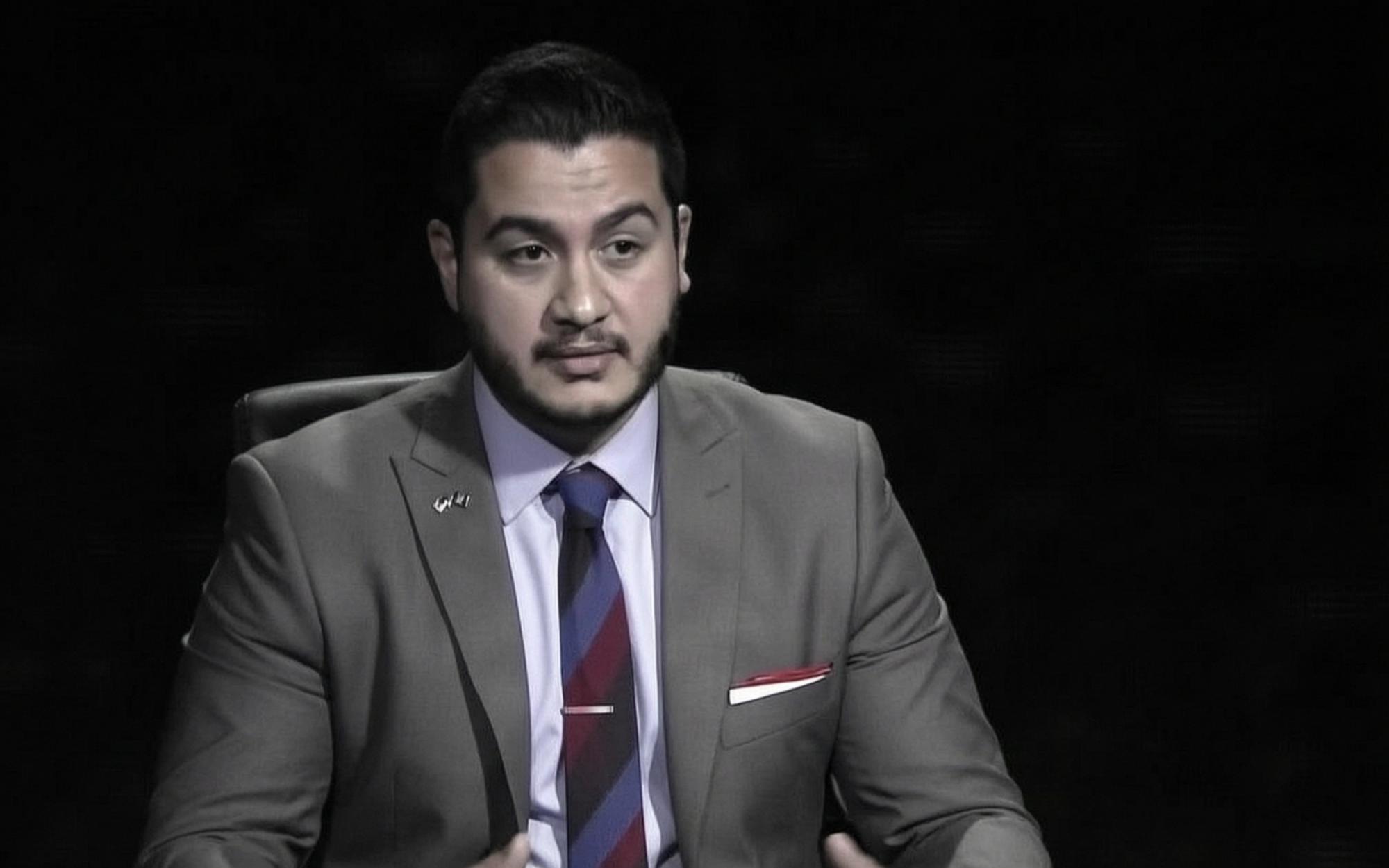
El-Sayed Campaign Backer Was Sentenced to Life in Egyptian Muslim Brotherhood Case

An Egyptian American activist who was sentenced to life in prison in absentia by an Egyptian court over his support for the Muslim Brotherhood has emerged as a financial supporter of Abdul El-Sayed’s campaign for U.S. Senate in Michigan.

Mohamed Soltan, 38, president of the American Committee for Middle East Rights, has contributed to El-Sayed’s Abdul for U.S. Senate candidate committee, while ACMER has also contributed to Fighting for Michigan PAC, the super PAC supporting the former Wayne County health official.

Federal Election Commission reports show ACMER contributed $25,000 to Fighting for Michigan PAC on June 12.

The contribution followed two donations from Soltan to Abdul for U.S. Senate on April 15. The individual contribution amounted to the maximum permitted under federal election law.

Soltan was sentenced to life in prison by an Egyptian court in 2015 after spending two years behind bars with his father, Salah Soltan, a leading Muslim Brotherhood figure who served as deputy minister of endowments under former Egyptian President Mohamed Morsi.

Mohamed Soltan faced charges related to protests against the military coup that removed Morsi from power, including allegations involving funding for and membership in the Muslim Brotherhood. He launched a hunger strike while imprisoned.

In April 2015, an Egyptian court sentenced Soltan, then 27, to life in prison following proceedings he described as unjust.

The Obama administration pushed for his release, and Soltan was freed in May 2015 before returning to the United States.

He later worked as an international investment adviser and human rights activist.

His father, Salah Soltan, was sentenced to death and life imprisonment in separate cases involving allegations that more than 50 leading Muslim Brotherhood members established a “control room” to direct “violence and chaos” during the 2013 military coup.

Other ACMER officials have also financially supported El-Sayed.

ACMER Treasurer Muna Jondy contributed $15,000 to Fighting for Michigan PAC on June 7 and $7,000 to Abdul for U.S. Senate on June 24.

ACMER Executive Director Kristina Blyad contributed $1,000 to El-Sayed’s campaign on February 13.

Blyad also serves as treasurer of ACMER’s Separate Segregated Fund, MERIT PAC, which contributed $1,500 to Abdul for U.S. Senate on June 3.

The contributions come as El-Sayed’s past statements concerning the Muslim Brotherhood in Egypt have received renewed attention.

In January 2011, El-Sayed wrote a Huffington Post column titled “Why the U.S. Should Support the Protestors in Egypt,” arguing that Americans should support the uprising that ultimately preceded the Muslim Brotherhood’s rise to power and Morsi’s presidency.

El-Sayed addressed concerns about what a Muslim Brotherhood government might resemble.

“Second, as it stands, the Muslim Brotherhood lacks a popular leader akin to the Ayatollah Khomeini in Iran,” El-Sayed wrote under the name Abdulrahman El-Sayed while serving as an assistant professor at Columbia University.

“Thus, the movement will not be able to consolidate power as readily in these turbulent times as their counterparts did in Iran, and will therefore have limited input in shaping legislative procedure (it is this vital input on procedure which ultimately crated the Iranian ‘Islamic Republic’ as we know it today, rather than a liberal democracy run by an Islamic party, a la Turkey),” he continued.

El-Sayed concluded by arguing that supporting the protesters was in America’s interest.

“Ultimately, it is in America’s interests to support Egyptian protestors’ efforts to achieve ‘the ability to speak [their] mind and have a say in how [they] are governed; confidence in the rule of law and the equal administration of justice; government that is transparent and doesn’t steal from the people; the freedom to live as [they] choose’ (as President Obama said in Cairo only months ago),” El-Sayed wrote.

Former Egyptian President Hosni Mubarak resigned weeks after the column was published. Morsi became president in June 2012.

By November 2012, Morsi had issued a declaration expanding presidential authority, ending judicial review of presidential decisions and dismissing the attorney general.

A November 25, 2012, Bawabat Al-Ahram statement signed by 46 Egyptian Americans endorsed what the signatories called the “revolutionary decisions” they had “long called for.” According to a Grok translation of the Arabic statement, it described the previous judicial structure as containing “remnants of the previous regime.”

The statement called on Morsi to “purge the media and the police as soon as possible,” and said the signatories “strongly reject these voices that appeal to America and Europe to take a position against the Egyptian regime.”

“Dr. Abdul Rahman El-Sayed – New York” appeared as the 33rd of the 46 listed signatories.

El-Sayed’s campaign has received support from several other figures whose political activities have drawn attention.

Streamer Hasan Piker, who has supported El-Sayed’s progressive politics, previously argued “[America deserved 9/11].”

Iraqi American activist Anas Shallal held a fundraiser for El-Sayed in April, according to Fox News.

Shallal’s Instagram account contains posts supporting Cuba, Fidel Castro, the Free Palestine movement, Colin Kaepernick, Zohran Mamdani and Black Panther Assata Shakur, who was convicted in the 1973 killing of a New Jersey state trooper before later fleeing to Cuba.

El-Sayed has also been associated with Imam Mohammad Ali Elahi, spiritual leader of the Islamic House of Wisdom in Dearborn Heights. El-Sayed received $800 in campaign contributions from Ali Elahi in 2017 and has appeared with the imam in photographs published online, according to Fox News.

Ali Elahi held memorial services in March for Ayatollah Khamenei following U.S. military strikes that killed the Iranian supreme leader on Feb. 28. He described the military attack on “our leader” as “evil,” carried out by “the most wretched hands on Earth.”

Audio from a private El-Sayed campaign strategy call published by The Washington Free Beacon featured El-Sayed advising staff not to comment on Khamenei’s death.

“I … want to remind you guys that there are a lot of people in Dearborn who are sad today,” El-Sayed said. “So, like, I just don’t want to comment on Khamenei at all. Like, I don’t think it’s worth even touching that.”

Religious appeals also surfaced before Michigan’s Aug. 4 primary.

At an American Muslim Diversity Association Masjid mosque in Sterling Heights on July 17, an imam encouraged political participation while discussing El-Sayed and Rep. Rashida Tlaib.

“When Allah will help you with your intention, the change will come,” the imam said in video highlighted by the Middle East Media Research Institute. “We know that Rashida Tlaib – she is a sister … she’s representing us in Congress.”

“So we have a lot of things coming in our side, the tide is changing, we need to take advantage of that and get involved,” the imam continued. “Abdul El-Sayed, if he gets elected, he’s going to be the first (Muslim) U.S. senator in the history of the United States.”

The imam cited the Assembly of Muslim Jurists of America and said “they recommend to vote to serve a legitimate Islamic objective.”

“This is the fatwa from AMJA,” he said.

After El-Sayed defeated Rep. Haley Stevens, D-Birmingham, in the primary, the Muslim Brotherhood’s official website celebrated the result with an article titled “Abdul Rahman al-Sayyid conquers the Zionists and runs for the Senate,” according to a Google translation.

“During his election campaign, (El-Sayed) focused on calling for the cessation of unconditional U.S. military aid to the Zionist occupation, criticizing the continued U.S. support in the war on the Gaza Strip and demanding that taxpayers’ money be redirected to domestic issues,” the translation read.

“The primary elections highlighted the escalation of the division within the Democratic Party on the US policy towards the occupation, in light of the growing influence of the Progressive Current, which demands a reconsideration of US military support, in exchange for the continuation of the traditional current in adopting positions in support of the occupation,” the Muslim Brotherhood wrote.

News

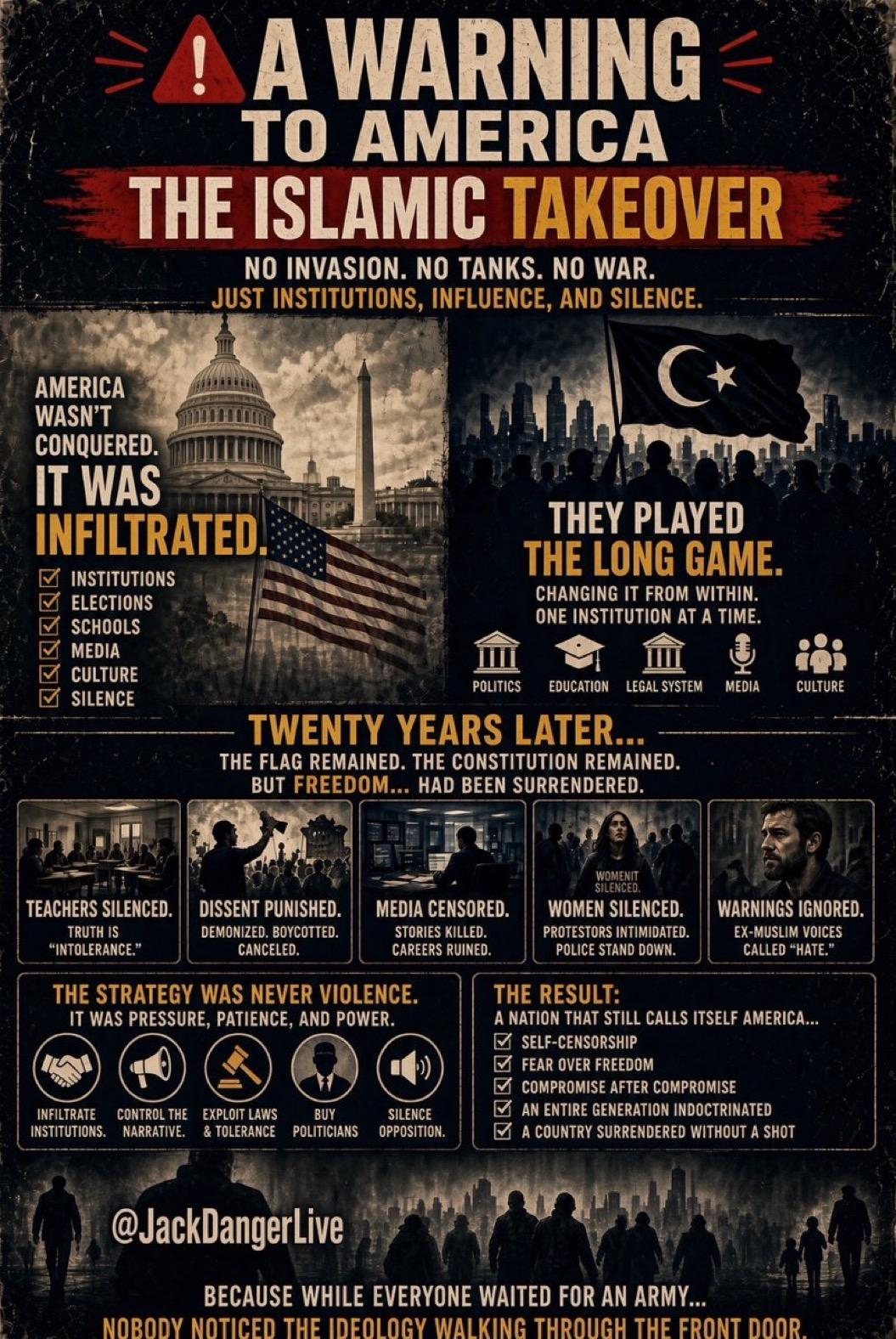
A WARNING TO AMERICA: THE ISLAMIC TAKEOVER

The show Secret America is built around a simple idea: exposing people to the evidence they didn’t know existed behind the stories they didn’t know happened. That’s where the name Secret America comes from. We explore the side of America, and the forces shaping it, that most people never hear about.

One subject we routinely investigate is the advancement of radical Islamist ideology in America.

America wasn’t conquered by an invading army.

There were no tanks rolling through Washington.

No soldiers parachuting into American cities.

No declaration of war.

By the time Americans realized they were losing their country, nobody needed to invade it.

In this America, a radical Islamist political movement had discovered something far more powerful than bullets:

Institutions.

Its leaders understood that defeating the United States militarily was nearly impossible.

Changing it from within was different.

So, they played the long game.

They built political organizations. They recruited activists. They accumulated money and influence. They learned the language of American politics and carefully disguised authoritarian objectives as ordinary political reforms.

They didn’t demand everything immediately.

That would frighten people.

Instead, every victory moved the line slightly.

First came influence over local elections.

Then school boards.

City councils.

Prosecutors.

State legislatures.

Congress.

Critics weren’t dragged from their homes.

Not yet.

Instead, employers received complaints. Businesses faced boycotts. Demonstrations appeared outside people’s workplaces. Politicians were accused of hatred. Journalists discovered that investigating certain organizations could destroy their careers.

Eventually, people simply stopped asking questions.

That silence became the movement’s greatest weapon.

And politicians helped create it.

Some genuinely believed accommodation represented tolerance.

Others wanted votes.

Some wanted campaign donations.

Some feared being branded bigots.

Others wanted power and calculated that another disciplined political constituency could help them obtain it.

Nobody believed they were surrendering America.

Every politician told themselves they were making one harmless compromise.

Then another.

Then another.

TWENTY YEARS LATER…

America still existed.

There was still a flag.

There were still elections.

There was still a constitution sitting underneath glass in Washington.

But everyday life had become almost unrecognizable.

A teacher was suspended after refusing to remove material that offended the movement’s religious leadership.

A comedian discovered that certain religious jokes could bring demonstrations outside the theater, and the venue canceled rather than risk unrest.

A newspaper editor killed an investigation because his attorneys warned that publishing it could create a “community safety crisis.”

A woman protesting religious authoritarianism was surrounded and screamed at while police were instructed to avoid escalating the situation.

A Muslim immigrant who had escaped extremists overseas tried warning Americans about what was happening.

He was called hateful.

Nobody found that irony funny anymore.

Local governments began adopting rules designed to accommodate religious pressure. Politicians insisted each change was insignificant.

Businesses quietly changed policies.

Universities established unofficial boundaries around what professors could discuss.

Publishers rejected books they once would have printed.

People learned which subjects shouldn’t be discussed at work.

Parents discovered their children were being taught that questioning certain religious-political doctrines was intolerance.

And every time somebody objected, politicians repeated the same words:

“This isn’t happening.”

Then: “It’s only happening in a few places.”

Then: “Why does it bother you?”

And finally: “This is simply how America works now.”

The most disturbing changes weren’t written into law.

They happened inside people’s heads.

Americans began censoring themselves.

A father lowered his voice before discussing religion inside a restaurant.

A college student deleted a post because she worried it could destroy her career five years later.

A journalist abandoned a story because his family begged him not to become a target.

A politician privately admitted that he opposed the movement’s demands, and then publicly voted for them anyway.

Fear had accomplished what legislation couldn’t.

Meanwhile, peaceful Muslims who rejected the extremists were trapped in the middle.

Many had immigrated to America precisely because they wanted freedom from religious authoritarianism.

They watched in disbelief as Americans voluntarily surrendered protections that people elsewhere had risked their lives trying to obtain.

Some became among the movement’s fiercest opponents.

They understood something Americans had forgotten; opposing religious authoritarianism isn’t the same thing as opposing a religion’s followers.

By the twentieth year, the extremists didn’t need majority support.

They needed influence.

They needed frightened institutions.

They needed ambitious politicians.

And most importantly, they needed everyone else to remain silent.

America hadn’t become a theocracy overnight.

It had simply surrendered a thousand tiny battles that nobody thought were important enough to fight.

One institution.

One election.

One frightened politician.

One silenced dissident.

One compromised freedom at a time.

There was never an invasion.

There didn’t need to be.

Because the movement understood the weakness of a free society:

If enough people become afraid to defend their freedoms, eventually nobody has to physically take those freedoms away.

The country still called itself America.

But twenty years later, an entire generation had grown up never knowing the America their parents remembered.

And the question their parents were finally asking was devastating:

“Why didn’t we stop this when we still could?”

Because while everyone was waiting for an army…

Nobody noticed the ideology walking through the front door.

News

Blue State Governor Signs Law Critics Warn Could Criminalize Prayer Outside Abortion Clinics [WATCH]

New Jersey Governor Mikie Sherrill has signed a sweeping law creating new criminal and civil penalties for interference with abortion providers and facilities offering gender affirming procedures.

Critics warn the broad language could expose peaceful Christians and abortion opponents to prosecution merely for praying, counseling, or holding signs outside covered facilities.

The measure, designated S2260/A2218 and enacted as P.L.2026, c.74, expands New Jersey protections for abortion and gender related medical services.

It creates a new offense called “interference with reproductive health care services,” giving state officials another legal tool that critics fear could be aimed at peaceful dissent.

The statute covers anyone who purposely or knowingly inflicts or attempts to inflict bodily injury to restrict access to covered services.

It also prohibits conduct intended to intimidate patients, providers, volunteers, or assistants from receiving or participating in those services.

Physical obstruction of people entering or leaving a health care facility is also prohibited when done for the specified purpose.

The law defines physical obstruction as making entry or exit impassable, unreasonably difficult, or hazardous.

The measure further targets force, threats of force, intimidation, coercion, and attempts at such conduct.

Property damage, defacement, destruction, and attempted damage against patients, providers, entities, or facilities are covered as well.

Violence, threats, and vandalism are already serious matters, but critics are focused on how officials may interpret the more elastic terms.

Words such as intimidation and coercion can become dangerously flexible when enforcement is placed in the hands of politicians determined to shield the abortion industry from public opposition.

Under the law, interference is generally classified as a fourth degree crime.

A conviction can bring up to 18 months in prison, a fine of up to $10,000, or both, which is hardly a minor consequence for conduct swept into an aggressively interpreted statute.

The charge rises to a third degree crime when a victim suffers bodily injury.

It becomes a second degree crime when the alleged victim suffers significant or serious bodily injury, placing the most severe conduct under substantially stronger penalties.

WATCH:

The statute also opens the courthouse doors to civil litigation against alleged violators.

Aggrieved individuals may seek injunctions, compensatory damages of at least $1,000 for each violation, punitive damages in qualifying cases, attorney fees, and other equitable relief.

The state attorney general and county or municipal prosecutors may also bring civil actions.

Those cases can seek injunctions, compensatory damages, and penalties reaching $10,000 for a first violation and $25,000 for later violations.

Beyond abortion facility access, the legislation expands New Jersey shield law protections to include gender affirming care.

State entities are restricted from helping with certain investigations or legal proceedings from other states when the underlying services are considered lawful in New Jersey.

The law also protects patient information from unauthorized disclosure and limits actions by professional licensing boards and malpractice insurers.

Those entities generally cannot punish providers solely because they delivered covered services that New Jersey permits, even when another state is investigating the conduct.

Sherrill framed the legislation as a defense against the Trump administration and states seeking stronger restrictions on abortion and gender procedures.

“With this legislation, we are making clear that New Jersey will protect patients, providers, and the fundamental freedom to make personal healthcare decisions.”

Abortion opponents argue that peaceful prayer and sidewalk counseling could become targets if someone merely claims to feel intimidated.

New Jersey Right to Life Executive Director Marie Tasy warned, “Because terms such as ‘threat,’ ‘intimidate,’ and ‘coerce’ are inherently subjective and rest on individual feelings, this language poses a serious danger to free speech.”

That concern cuts directly to the First Amendment problem surrounding the measure.

A quiet prayer, a sign offering alternatives, or a conversation on a public sidewalk is not violence, yet vague enforcement standards can chill lawful expression before any prosecutor even files charges.

The law took effect immediately after Sherrill signed it, expanding the power of New Jersey officials while leaving peaceful advocates to wonder where the state will draw the line.

In deep blue Trenton, trusting progressive officials to respect that line may require more faith than the governor wants displayed outside an abortion clinic.

News

Gutfeld Obliterates Democrats’ Phony Big Tent Fantasy [WATCH]

Greg Gutfeld delivered a blunt diagnosis of the Democratic Party’s growing coalition problem Friday on The Five.

Party leaders keep welcoming radicals while pretending ordinary voters will remain inside a political tent that increasingly mocks their values, concerns, and common sense.

The equation is not complicated.

Democrats gain a relatively small collection of loud activists, but they risk driving away a far larger group of traditional voters who simply wanted a normal political party rather than a permanent ideological circus.

Gutfeld contrasted that disorder with the coalition Donald Trump assembled.

“He had a lot of weird and odd people who backed him, and we called it a pirate ship,” Gutfeld said.

“Because even though everybody was different, they all rode in the same direction.”

Trump’s supporters did not need identical backgrounds, personalities, or priorities.

They were united by broad ideas involving secure borders, economic strength, public safety, national sovereignty, and resistance to the entrenched political establishment.

Democrats, Gutfeld argued, have built something fundamentally different.

“They aren’t rowing in the same direction at all because they don’t have ideas. They just have identities.”

That distinction explains much of the party’s current dysfunction.

A movement organized around ideas can tolerate disagreement, but a movement divided into competing identity factions must constantly determine which group receives attention and which group is expected to stay quiet.

The activist faction also demands increasingly radical concessions from everyone else.

When party officials embrace those demands, regular Democrats are left wondering why their concerns about crime, schools, sports, borders, and religious liberty are treated as embarrassing relics.

“So if you welcome the radicals into your tent, some will join, but then some normies, they’re going to leave,” Gutfeld said.

That political trade makes little mathematical sense because ordinary voters vastly outnumber the activists dominating social media feeds, campus demonstrations, and progressive organizations.

Losing even a modest portion of mainstream voters can produce serious consequences at the ballot box.

“Even a small percentage who leave, the party’s going to end up smaller,” Gutfeld said.

“And it will end up smaller. Trust me.”

Women’s sports provide one of the clearest examples.

Democrats allowed activists to redefine fairness and biological reality, leaving female athletes and concerned parents to bear the consequences while party leaders acted as though objections were evidence of intolerance.

A similar pattern has emerged in churches and other traditional institutions.

Organizations that abandoned their founding principles to chase fashionable leftist causes often watched participation decline, while congregations that retained clear beliefs continued attracting people seeking stability rather than another political lecture.

Mainstream institutions survive because they maintain standards and boundaries.

Once those boundaries are erased to satisfy ideological outliers, the people who sustained the institution begin looking elsewhere, and no amount of progressive branding can replace them.

Democratic leaders nevertheless insist socialism and other radical movements merely demonstrate the party’s impressive diversity.

Their supposed tolerance becomes noticeably less generous when a Democrat questions the activist line on Israel, Iran, border security, or government control of the economy.

Senator John Fetterman of Pennsylvania has experienced that selective tolerance despite voting with Democrats on the overwhelming majority of issues.

His real violation was disagreeing with the party’s loudest activists on several matters they have declared beyond debate.

“The Big Tent pretends to be this enrichment when it’s actually an erosion,” Gutfeld added.

“The inclusion benefits only the outliers, but in the end, it destroys the institutions.”

WATCH:

The warning signs have been visible for years, but Democratic leaders keep mistaking activist noise for popular support.

If they continue replacing shared principles with identity demands and socialist experiments, their celebrated big tent may soon have plenty of slogans, plenty of consultants, and very few normal voters left inside.


Scroll to Top