Author name: Common Defense

News

Naval Academy Reinstates Mandatory Short Haircuts for Female Plebes

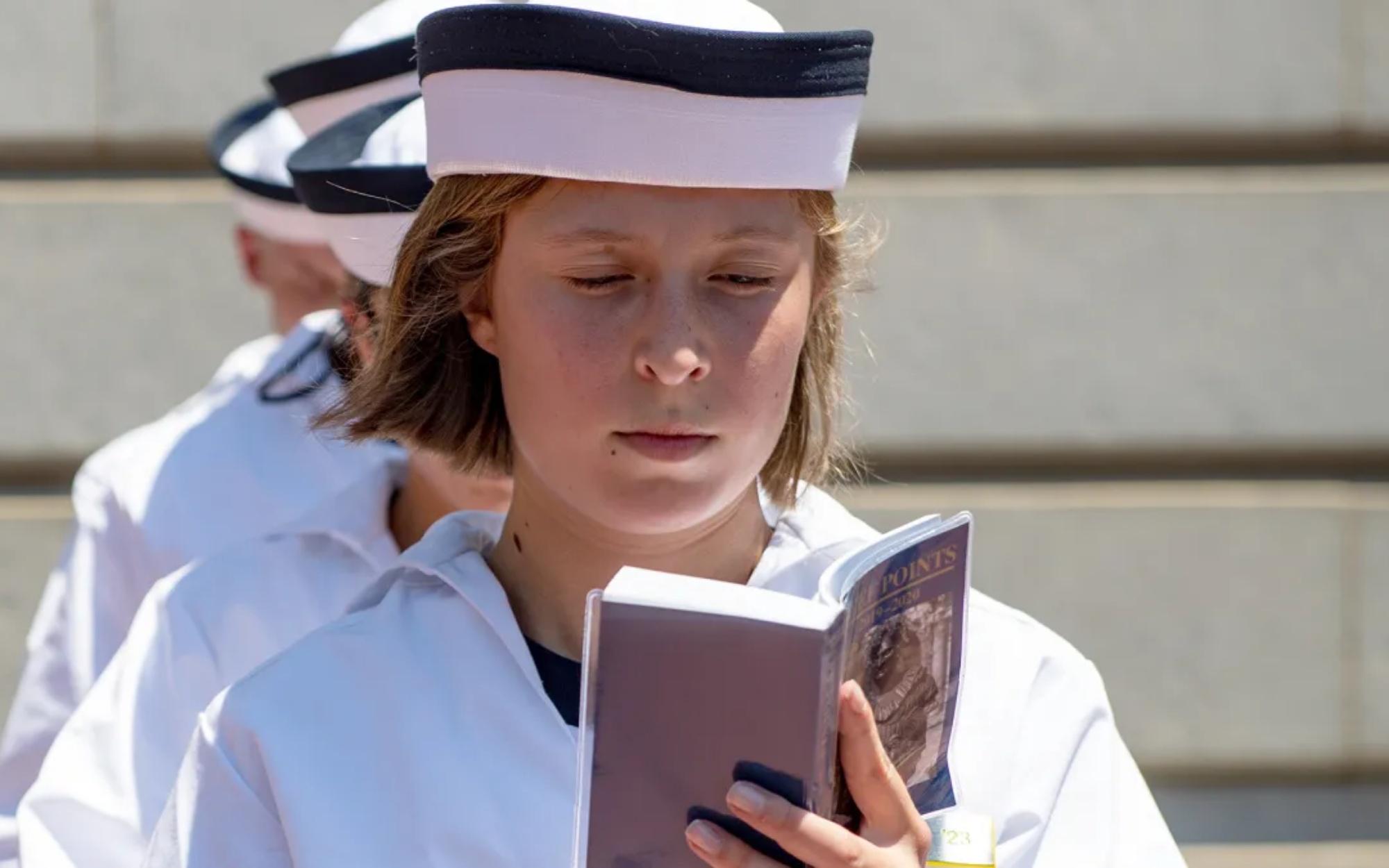
The U.S. Naval Academy is turning back the clock to restore one of its oldest and most symbolic traditions—short hair for incoming female midshipmen.

In an age where the military has been pressured to bend to every passing trend, the academy is reminding future officers that uniform discipline, not personal preference, is the heart of service.

Starting again this summer in Annapolis, all incoming women reporting for Induction Day must have their hair cut to the chin.

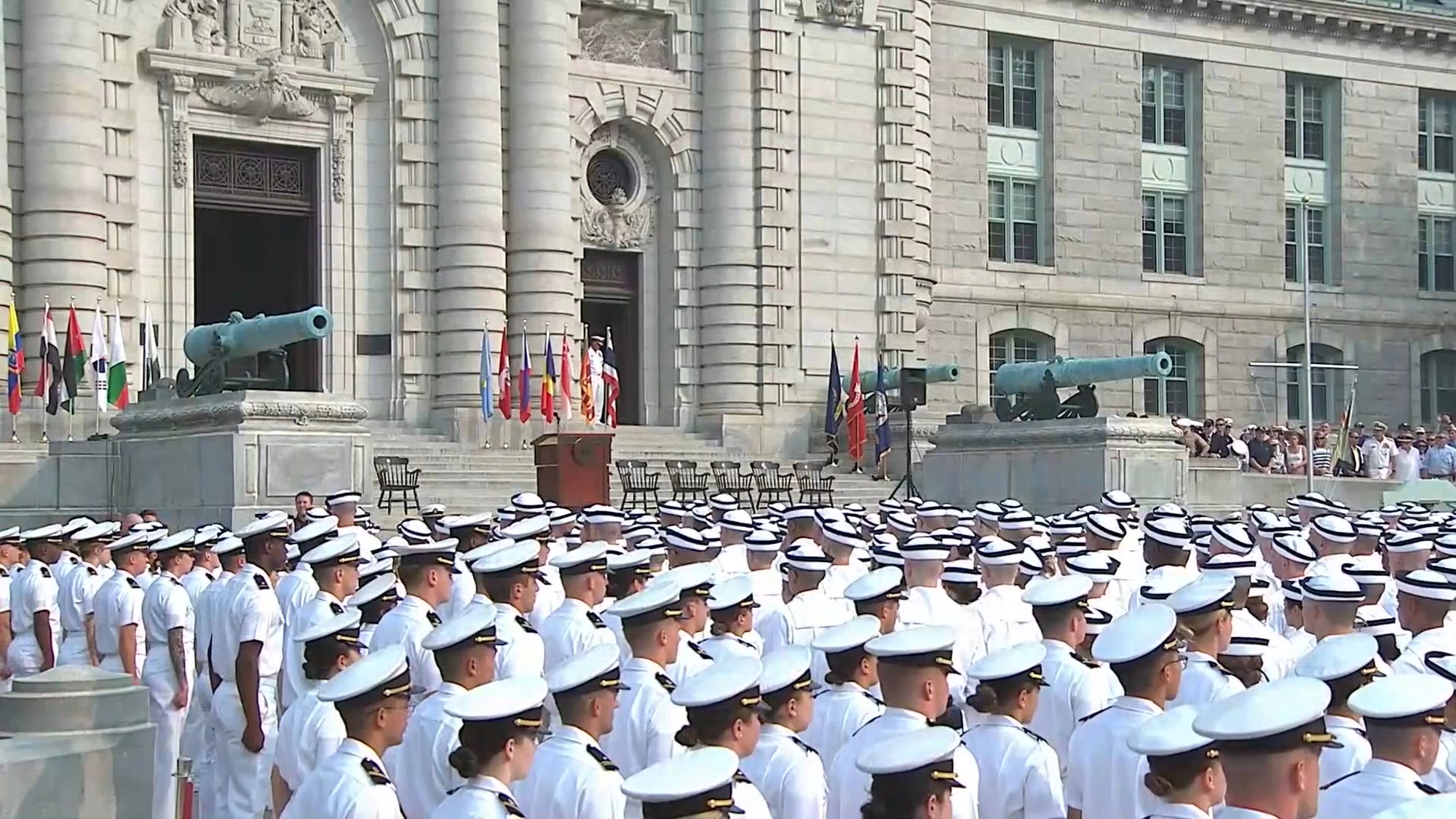
The academy leadership described it as a “visible symbol” of transition from civilian to military life, where incoming “plebes” learn that joining the Navy or Marine Corps means putting the team above self.

The policy isn’t new. In fact, it dates all the way back to 1976, when the first women entered the Naval Academy. Back then, the haircut rule wasn’t about appearance—it was about equality, unity, and a shared standard.

For over forty years it stood as a powerful tradition until 2019, when it was scrapped under the guise of “modernization.”

Now, under restored leadership and renewed focus on readiness and professionalism, the rule is back.

Officials say this decision reinstates a common standard across gender lines. “The haircut marks the moment when civilians begin setting aside individual preferences and start embracing the responsibilities, expectations, and identity of future Navy and Marine Corps officers,” the academy stated.
United States Naval Academy Lockdown After Threats, One Person Injured and Airlifted

In short, it’s not about hair—it’s about discipline and the beginning of transformation.

Predictably, the change has sparked some online chatter. A few commenters were “shocked” and complained that the return to short haircuts symbolized a backward step.

But others, including many seasoned officers and alumni, applauded the decision as a long-overdue reset to the institution’s roots.

After years of political correctness creeping into military culture, this move signals that the naval service is once again placing unity and standards above fashion trends.

Navy Lieutenant Commander Kellie Sbrocchi, an academy graduate and active-duty officer, put the moment in perspective for new midshipmen.

“This is your first test, not because the Naval Academy wants you to hate your haircut, but because it’s about learning that you are more than your comfort zone and more than your appearance,” Sbrocchi said.

Her words reflect the purpose behind the policy: the military’s job isn’t to make recruits feel good about their individuality—it’s to mold leaders who can serve under pressure.

Julie Kubal, a 1996 graduate, echoed those sentiments, recalling that when she entered the academy, the haircut was simply an expectation. “It didn’t seem like that big of a deal in the grand scheme of all the things I had to worry about,” she said.

Like any rite of passage, she explained, the haircut marked a transition from civilian life to military readiness.

Only after months of plebe summer did growing hair back feel like a genuine reward for enduring the process and coming out stronger.

Critics, of course, frame this as some kind of regression. Kubal herself noted that in today’s environment, “where standards are being questioned,” such reversals may seem “punitive.”
A Marine General Will Command the Naval Academy for the First Time in 180-Year History
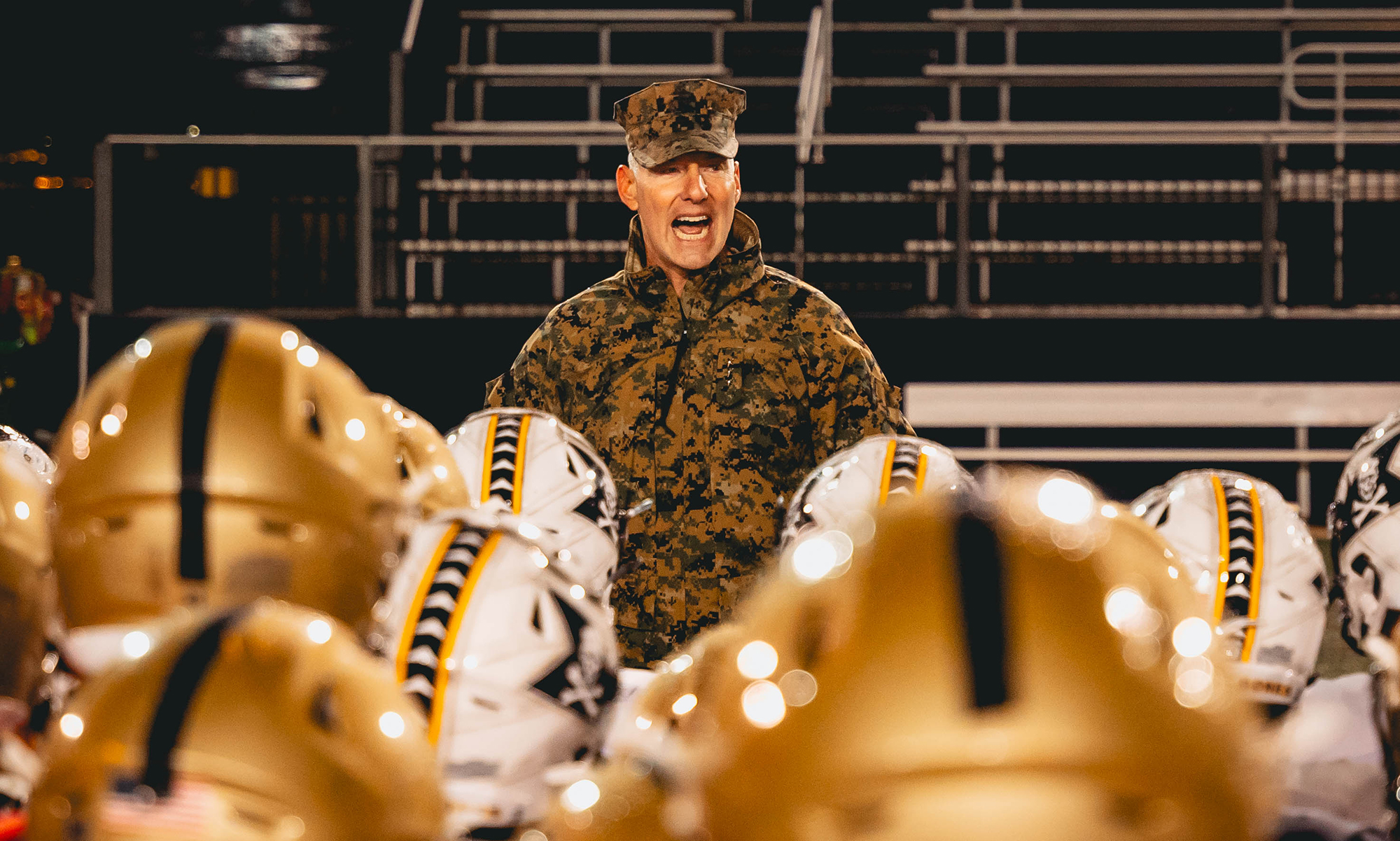
Lt. Gen. Michael J. Borgschulte, who lettered as a linebacker at the Naval Academy in 1990, gave a pep talk to the team in Annapolis, Maryland, days before their annual game against the U.S. Military Academy at West Point in December 2024. Navy photo by Ronnie Gillis.

But in reality, bringing back short hair isn’t punitive—it’s restorative. It reinforces that men and women at the Naval Academy are held to the same expectations and that military training is about shared sacrifice, not personal expression.

For far too long, parts of the military establishment have been distracted by social engineering experiments and media optics over combat readiness.

The decision to restore the short-hair requirement suggests a quiet revolt against that mindset—a reassertion that America’s officer corps begins with discipline, tradition, and the humility to follow orders before giving them.

Historically, grooming standards have never existed to please the mirror. They exist because they represent uniformity, practicality, and the willingness to conform to mission before self. Every Marine knows that lesson by heart.

Every sailor who’s seen action at sea knows personal comfort comes last. The Naval Academy’s call to return to its core symbols of unity is a small but meaningful step back in that direction.

There’s also an unmistakable message here about identity. The academy’s leadership is telling future officers that military identity is not defined by hairstyle or external appearance—it’s measured by character, commitment, and the ability to lead under pressure.

That’s the foundation our War Department, under strong leadership like Secretary of War Pete Hegseth, continues to stand on.

For new plebes walking through the gates of Annapolis this summer, that first haircut will be more than just a trim—it’s their first lesson in humility and service.

The Navy’s officer pipeline doesn’t need influencers or activists. It needs warriors who understand that real equality is forged in shared sacrifice, not special exceptions.

Tradition is what keeps the force disciplined and lethal.

The Naval Academy’s move to revive its standard haircut isn’t nostalgia—it’s leadership. It’s the kind of quiet correction that signals America’s military academies just might be finding their way back to the fundamentals of strength, order, and purpose.
News

Recruits Ordered Back to the Needle as Pentagon Reverses Course on Flu Shots

The Pentagon has quietly pulled back its promise of vaccine choice, walking back War Secretary Pete Hegseth’s earlier move that allowed troops to make their own decision about flu shots.

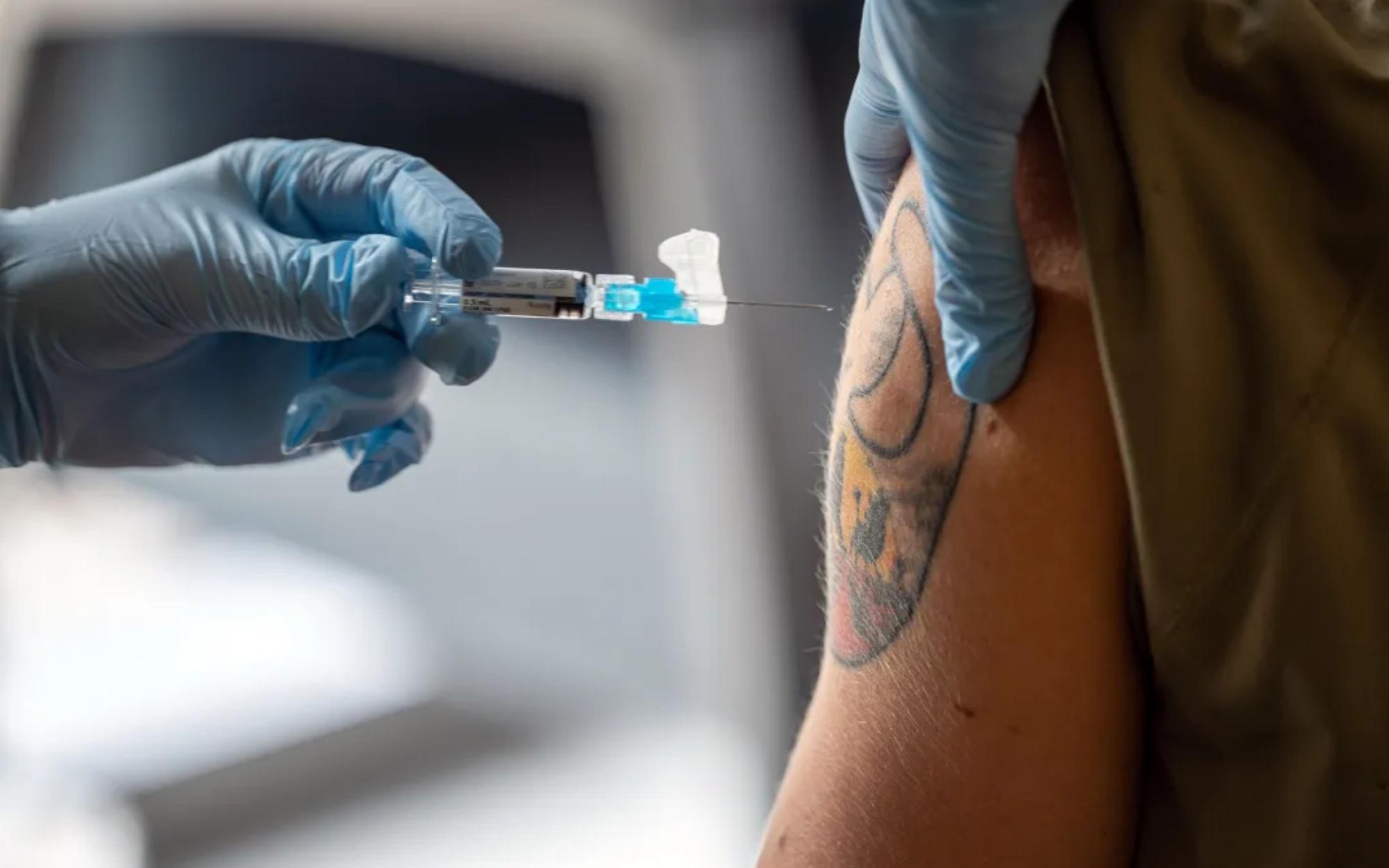
Despite April’s announcement that flu vaccination would be voluntary across all branches, the War Department has now reinstated the requirement for all new recruits entering basic training.

A Pentagon official confirmed that this reversal falls under an “exception to policy” granted to the military services, meaning that every recruit will once again have to roll up their sleeve before taking their oath.

The move has sparked confusion within the ranks and some frustration among those who saw Hegseth’s original decision as a return to personal liberty in the armed forces.

According to Pentagon spokesman Sean Parnell, all four services received exemptions allowing them to reimpose the requirement at boot camps. This means the Army, Navy, Air Force, and Marine Corps will all demand flu shots for incoming trainees.

The Navy was first to publicly confirm the decision, stating that the requirement was approved by the Under Secretary of War.

“Navy recruit training currently includes the Influenza vaccine as an exception to policy approved by the Under Secretary of War,” a Navy official told Task & Purpose. That’s bureaucratic language for: the Pentagon says it’s optional—unless you’re new.

The shift comes after reports of flu outbreaks among Air Force trainees. On June 16, one Air Force basic trainee died of flu-like symptoms at Lackland Air Force Base in San Antonio, Texas.

A Congressman later claimed that over 200 recruits were sick at the same installation. When the policy had been voluntary, only about 40 percent of trainees at Lackland had decided to take the shot.

An Air Force spokesperson admitted that medical teams have been scrambling to contain the outbreak.

“Over the last three weeks, the 37th Training Wing, in close coordination with the 59th Medical Wing, has been managing a localized influenza outbreak among trainees at Basic Military Training,” the spokesperson said. The base has reportedly implemented isolation and treatment measures for those showing symptoms.

Military Branches Push Back with 'Robust Exceptions' on Hegseth's Freedom-Based Flu Shot Policy
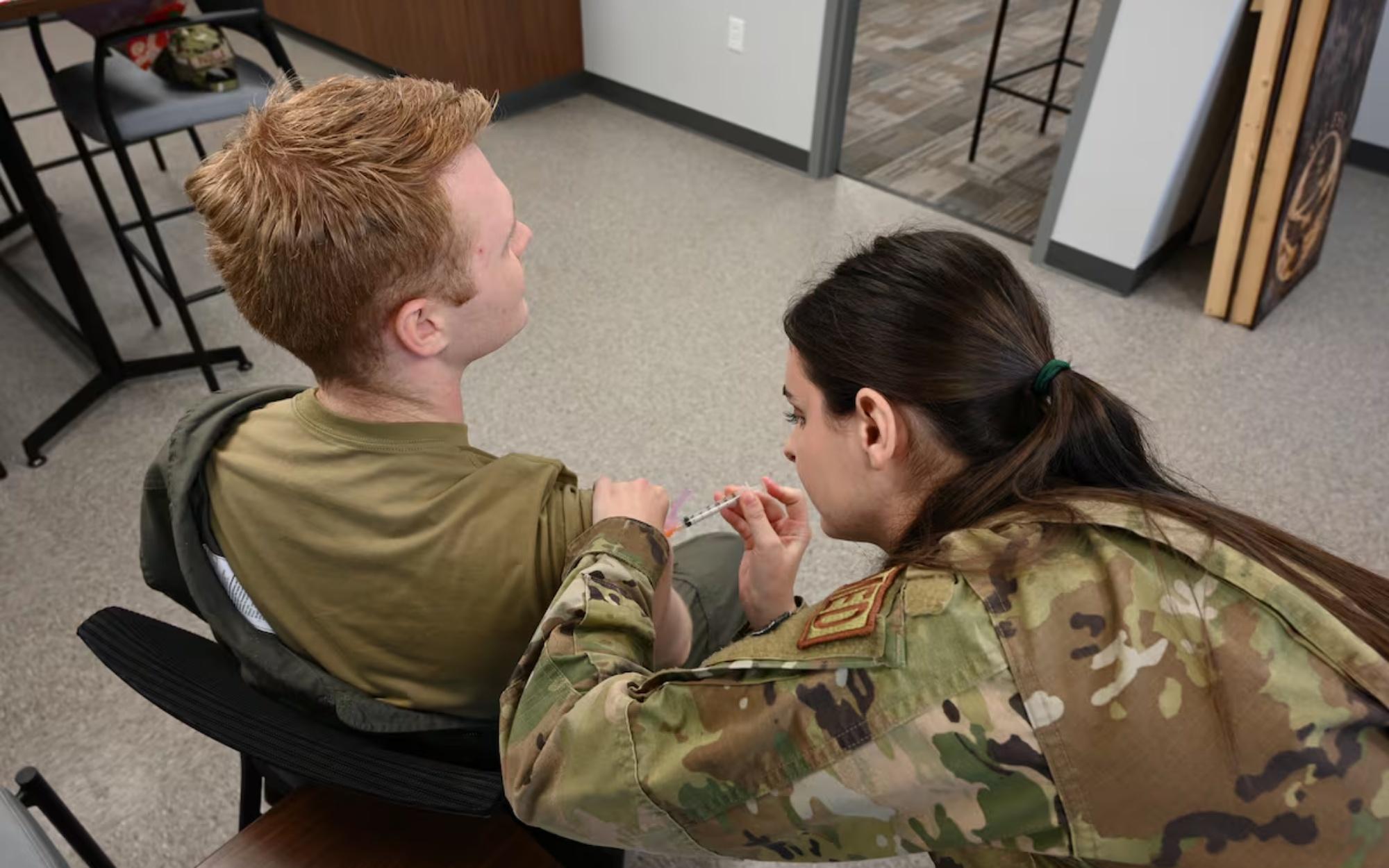
A 507th Medical Group technician administers a flu vaccine to a member of the 507th Air Refueling Wing at Tinker Air Force Base, Oklahoma, on Dec. 3, 2022. (Master Sgt. Grady Epperly/U.S. Air Force)

Even so, this explanation raises more questions than it answers. Were the outbreaks significant enough to justify a complete reversal of policy? Many in the ranks suspect that risk aversion, not readiness, drove this swift change in direction.

Undersecretary of Personnel and Readiness Anthony Tata reportedly signed off on the exceptions for multiple departments, including the Army, Navy, Air Force, Space Force, NSA, and War Health Agency. According to Parnell, those decisions were made after “thorough risk assessments” meant to safeguard “operational readiness, lethality, and force generation.”

In short, it’s the standard Washington language that always appears before another mandate.

Hegseth’s initial directive in April had been celebrated by many troops who saw it as a long-overdue correction to years of heavy-handed vaccine orders.

After all, in the Biden-era Pentagon, vaccine mandates became a political flashpoint, creating tension between civilian leadership and the rank-and-file warriors tasked with defending the nation.

Hegseth’s new policy had symbolized a cultural restoration—a belief that America’s fighting men and women could be trusted with their own health decisions.

Now, however, the War Department seems intent on sending the opposite message to new recruits. Instead of treating them as responsible adults preparing for service, the bureaucracy appears to view them as liabilities needing constant government supervision. It’s a sharp contrast to Hegseth’s philosophy of building tough, self-reliant warriors.

Medical personnel at Lackland did confirm they are treating affected trainees with Tamiflu, an antiviral medication used to ease flu symptoms. But even as they do, questions remain about whether the War Department’s response is proportionate.

Military Drops Flu Shot Mandate 'Effective Immediately', Citing Restored Freedom
The flu vaccine has been required annually for U.S. military personnel since the 1950s. (Senior Airman Andrew Garavito/U.S. Air Force)

Mandating a medical procedure for tens of thousands of recruits because of one tragic death may show more concern for political optics than genuine operational necessity.

Ironically, this episode also places the Pentagon at odds with its own stated goal of empowering the services to manage health decisions locally.

The fact that the services are rushing to comply with “exceptions to policy” granted from Washington proves that the centralized reflex remains alive and well.

Many in the military community see Hegseth’s broader effort—to restore freedom, strengthen morale, and end unnecessary mandates—as a fight worth having. Internal pushback like this only shows how deeply rooted Washington’s bureaucratic instincts remain.

The War Department can insist that this is about readiness, but every soldier, sailor, and airman watching knows what it truly is: another reminder that the Pentagon struggles to let go of control once it’s had a taste of it.

News

AI Supercharges the Kill Chain, But Humans Still Pull the Trigger

U.S. military leaders are making it clear that artificial intelligence is meant to be a powerful force multiplier—not a replacement for human judgment on the battlefield.

Even as the American war machine becomes more digital, generals and strategists emphasize that humans remain firmly in charge when it comes to pulling the trigger.

During the most recent operations against Iran, AI played a critical role in speeding up how fast targets were identified and hit. According to a sworn declaration from Cameron Stanley, the Pentagon’s chief digital and AI officer, the United States deployed over 2,000 munitions to 2,000 distinct targets in just 96 hours.

That kind of precision and speed would’ve been unthinkable without AI’s analytical muscle behind the scenes.

But the revelation raised eyebrows about just how deeply AI is embedded in what the military calls the “kill chain”—the process of finding, fixing, tracking, targeting, engaging, and assessing enemies. While skeptics worry about robots making life-and-death calls, commanders insist it’s still the men and women in uniform who make those choices.

Retired Army Gen. Joseph Votel, who led U.S. Central Command from 2016 to 2019, said this technology helps process information at speeds no human staff could match.

“We oftentimes were leaving a lot of information on the floor because we just didn’t have the processing capability,” Votel noted. “AI can sift through mountains of data faster than a room full of analysts.”

That kind of processing power means faster decisions and a far more lethal and effective strike capability. Still, the question remains whether an AI-assisted future could slip toward autonomy.

Retired Air Force Lt. Gen. David Deptula, now dean of the Air Force Association’s Mitchell Institute, draws a hard line. “The critical distinction is between AI supporting the kill chain and AI controlling the kill chain,” he warned.

Deptula, who masterminded the 1991 Gulf War air campaign, argued that retaining “appropriate human judgment over the use of force” is the cornerstone of both ethics and U.S. policy.

America’s rules of engagement, he emphasized, rest on commanders having full moral authority and accountability—something no algorithm can replace.

The U.S. military has always used automation to some degree. Retired Air Force Lt. Col. Dean Korsak pointed out that even landmines are semi-autonomous weapons.

“Once emplaced, [a landmine] cannot distinguish friend from foe,” he said. The early tech may have been crude, but it revealed the enduring challenge of balancing autonomy with control.

That’s why today’s military technologists are doubling down on data quality, validation processes, and oversight.

Korsak underscored that “appropriate human oversight” is non-negotiable when autonomous systems enter the field. The more complex the system, the tighter that human leash has to be.

Meanwhile, rivals like China, Russia, North Korea, and Iran are sprinting in the opposite direction. Retired Lt. Gen. Ross Coffman, who helped lead U.S. Army Futures Command, says America’s adversaries are actively working on systems where AI doesn’t just assist but decides when to shoot.

“An example would be a weapon system with a sensor enabled with artificial intelligence that can detect movement and the weapon would automatically fire,” Coffman explained. “That’s what our adversaries are developing.”

That kind of thinking makes American commanders bristle. Giving machines the power to decide who lives or dies removes moral and tactical command—the essence of warfighting leadership. The U.S. military sees AI as a way to compress the time from intel to action, but never to surrender human agency.

The conversation speaks to a broader tension in modern warfare. On one hand, AI can cut through layers of bureaucracy and speed up decision-making so America can strike first and hard.

On the other, the use of algorithms in lethal operations raises questions of ethics, accountability, and international law.

Yet, as every warfighter knows, ethical warfare doesn’t mean sluggish warfare.

In fact, President Trump and War Secretary Pete Hegseth have long emphasized that American dominance comes from combining human willpower with the best tools technology can produce. AI is simply the next evolution of that doctrine.

Commanders want the world to know: America is not building Skynet or replacing warriors with robots.

It’s building smarter fighters who can make decisions faster while maintaining the moral compass that defines our military.

As AI continues its march onto the battlefield, one thing seems certain. Machines may speed up the kill chain—but Americans, not artificial code, will always call the shots.

News

Marines Roll Out AI Combat Reporting with ODIN to Supercharge Battlefield Awareness

The Marine Corps is diving headfirst into the artificial intelligence battlespace, tossing aside the old clipboard method and stepping into the data-driven era.

Starting July 7, every Marine unit will shift to the new Operational Data Integration Nexus, or ODIN—a cutting-edge AI reporting tool built within the Pentagon’s Maven Smart System platform.

The goal: to deliver commanders real-time battlefield awareness faster than any adversary can blink.

ODIN represents a massive leap from the manual process Marines have used for decades. No more piecing together handwritten or manual SITREPs—the tired system that slowed decisions and kept commanders waiting.

Now, structured data inputs will automatically funnel into a centralized dashboard that instantly shows the status of operations across the force.

Lt. Gen. Jay Bargeron, deputy commandant for plans, policies, and operations, made it clear this isn’t just a tech upgrade—it’s a transformation.

“By automating the flow of data from the tactical edge to strategic decision makers, we are equipping our Marines with the near real-time information required to outpace our adversaries and fight effectively in a distributed environment,” Bargeron said.

$10 Billion Price Tag and Bureaucratic Battles Loom Over Plans for Separate U.S. Cyber Force
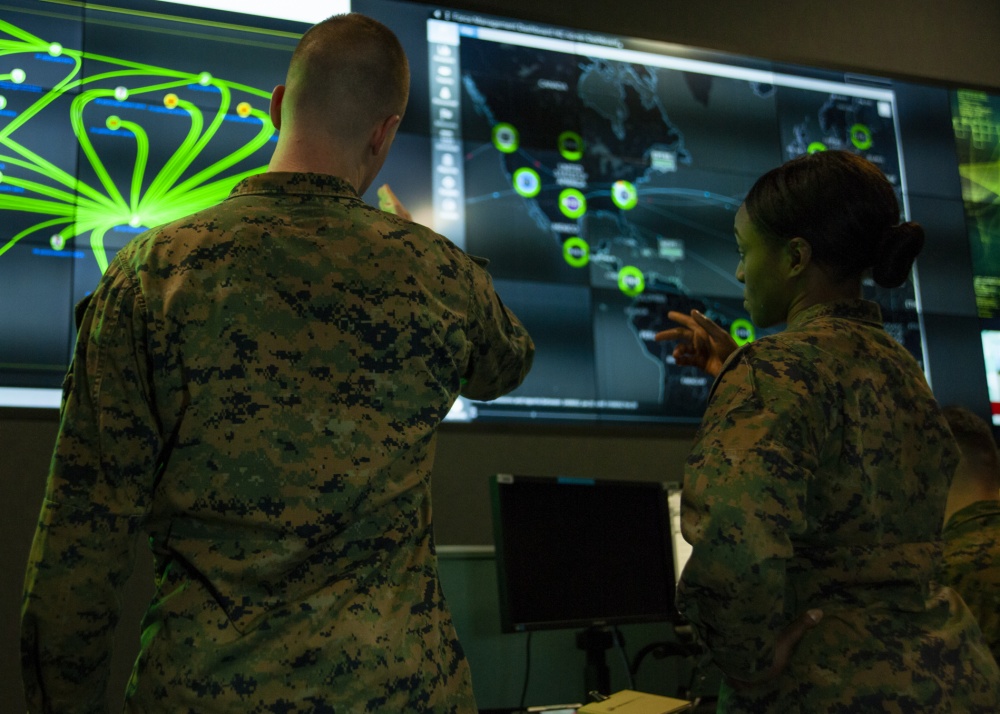
Marines with Marine Corps Forces Cyberspace Command in the cyber operations center in Lasswell Hall at Fort Meade, Md., Feb. 5, 2020.

This shift means the Marines will finally ditch the lag time and administrative bloat that used to come with compiling and sharing situational reports.

Every data point will feed directly into the Maven Smart System, or MSS, which the Department of War now touts as its primary brain for aggregating and analyzing operational information across the services.

The backbone of this system is Maven itself, originally launched as Project Maven years ago to help the military make sense of complex data streams.

The Center for Strategic and International Studies explained that it “can speed up targeting decisions without sacrificing analytical rigor or judgment quality.” In operational terms, that’s a big deal—it trims decision cycles without cutting corners.

The new ODIN system sits on top of that capability, giving Marine commanders not just reports but intelligence that updates continuously. Picture it as a live tactical feed of everything happening across the battlespace, pulled straight into one digital command post.

For years, the Marine Corps has prided itself on adaptability and decentralized command, but information lag remained a sticking point. Now, with ODIN’s AI integration, that bottleneck could finally disappear.

Elite Army Divisions Roll South As Border Crisis Escalates Under Trump’s National Emergency
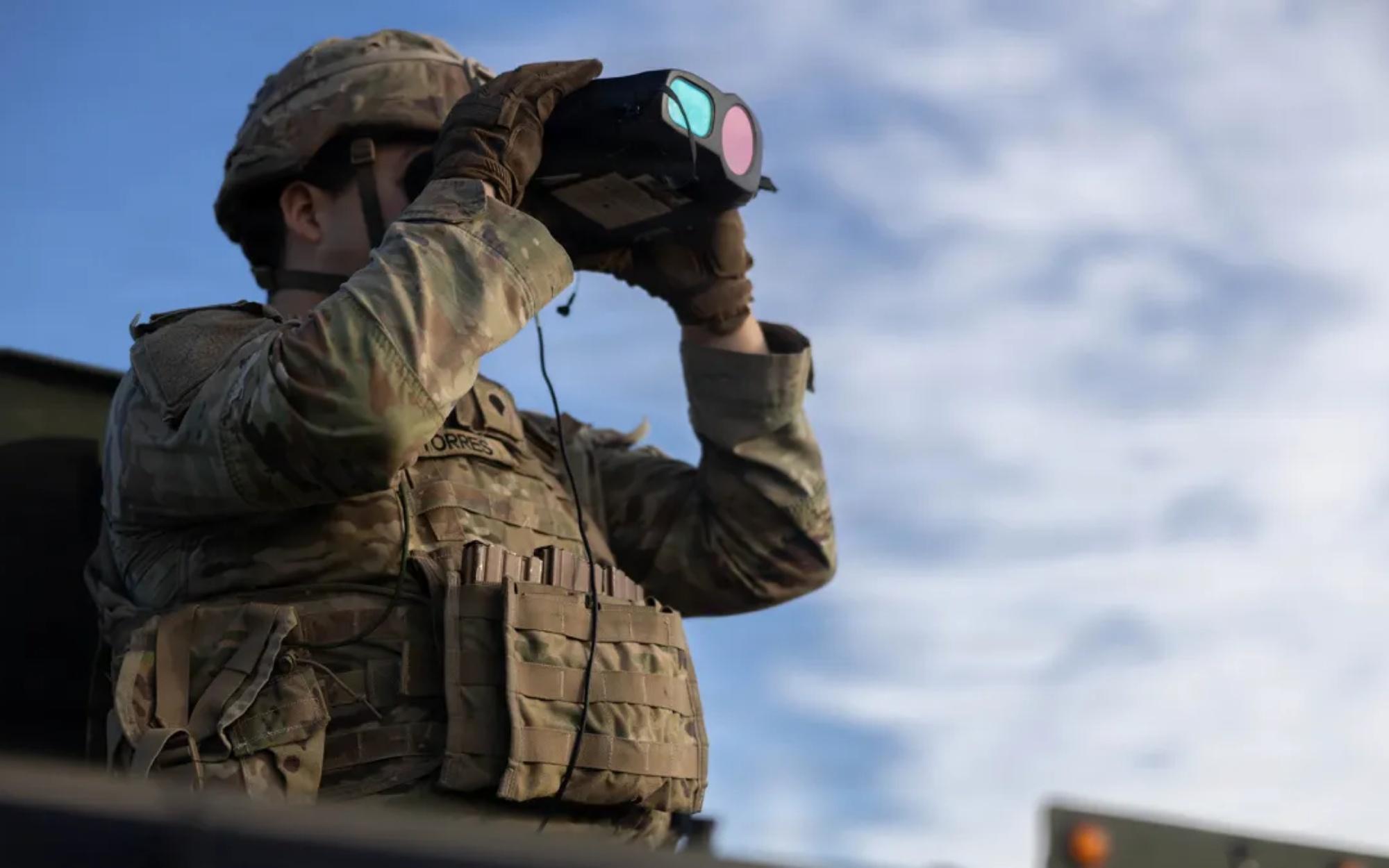
A soldier with the 101st Airborne Division monitors the southern border through binoculars during a patrol in Yuma, Arizona on Jan. 5, 2026. Marine Corps photo by Cpl. Sawyer Carleton.

Marines in the field can input structured data, and the system’s AI tools aggregate it automatically—no waiting on multiple layers of staff to compile and send documents.

Marine leaders also say this new AI-linked system enhances unit interoperability. Data sharing across commands will happen automatically, aligning Marine reporting with Joint Staff requirements and reducing noise between services.

That interoperability not only increases combat efficiency but bolsters the force’s ability to operate alongside allies in complex, multi-domain operations.

The partnership behind this technology isn’t new. Last August, the Marines finalized their collaboration with Palantir Technologies for Maven—a company long recognized for helping the military and intelligence community manage massive datasets for mission-critical tasks.

Palantir’s involvement follows the Department of War’s billion-dollar contracts awarded to expand Maven throughout the armed forces.

The Army has already begun weaving Maven into its training fabric, ensuring that field-grade officers learn to use AI analytics as part of command and control decision-making.

The Army’s Command and General Staff College now incorporates Maven directly into its coursework, while additional training programs—both in person and virtual—are being developed for broader use.

Marines Expand Footprint in Philippines Amid Steady Rotations
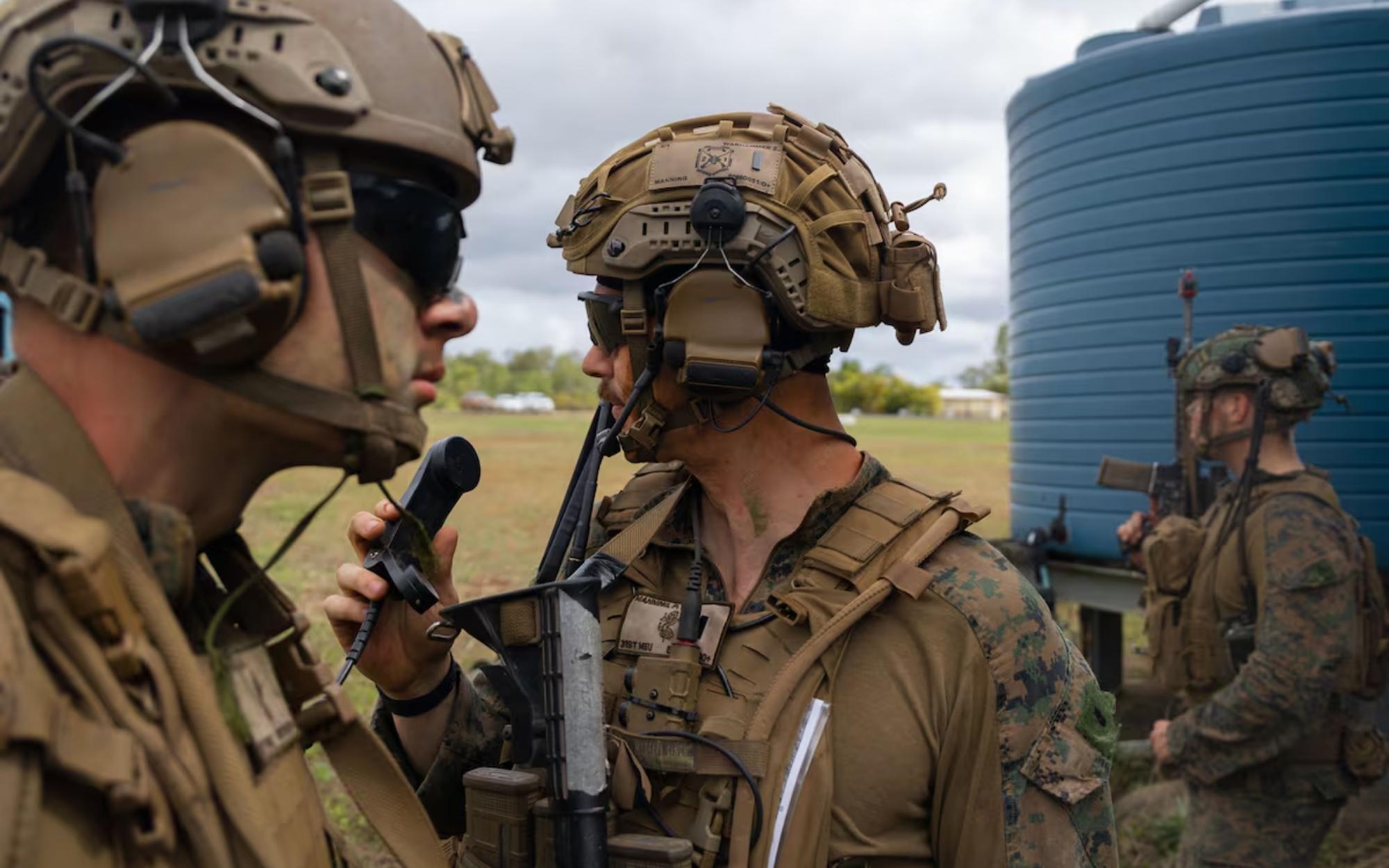
Marines assigned to Maritime Raid Force, 31st Marine Expeditionary Unit, secure the flight deck during a simulated visit, board, search and seizure exercise in the Philippine Sea, Feb. 4, 2026.

In the Marines’ case, official guidance states that all units will receive access instructions before ODIN’s launch date.

Commanders are required to activate their MSS licenses, making sure that key personnel are equipped and trained to navigate the new platform from day one. That’s not just a formality—ODIN’s data visibility is only as good as the participation across the force.

AI, of course, comes with its skeptics. Some worry about overreliance on algorithms or data-driven decision loops in combat conditions.

But within the Trump-era framework that prioritized technological supremacy and streamlined military readiness, the argument is simple: if America doesn’t lead the AI battlefield, someone else will. And that someone isn’t exactly friendly to our interests.

For Marines who’ve spent a lifetime trading paperwork for decisive action, ODIN may prove to be one of the most practical advancements of the decade.

The bureaucracy gets trimmed, the data gets smarter, and the Corps moves closer to fighting with 21st-century speed. As Lt. Gen. Bargeron said, this isn’t just about modernizing—it’s about dominating.

News

Senate Backs Bid to Undercut Trump’s Iran Strategy in Political Power Play

The U.S. Senate has once again taken aim at President Donald Trump’s authority as commander in chief, voting 50–48 to back a War Powers Resolution demanding he halt military operations against Iran.

It’s the latest attempt by an increasingly nervous Congress to rein in Trump’s decisive foreign policy and reclaim some relevance on the world stage.

The House narrowly passed its own version earlier this month, showing deep division even among Republicans.

Despite the optics, the resolution remains more symbolism than substance, given that it carries no legal force under the Constitution and isn’t even subject to presidential approval.

Still, it’s another polished weapon in the left’s ongoing political campaign to chip away at Trump’s control of military decisions.

The move comes as the administration continues its delicate pursuit of a peace agreement with Tehran following the conflict that began on February 28, when U.S. and Israeli strikes targeted key Iranian military assets.

By directing Trump to refrain from resuming hostilities, Congress is effectively trying to handcuff the White House’s negotiating position.

Trump’s allies in the War Department have made it clear that the War Powers Act, passed in 1973 during the Vietnam era, remains legally dubious.

The White House dismissed the Senate vote outright, pointing to the constitutional flaws in the resolution and reminding Congress that the hostilities in question had already ended with a ceasefire on April 7.

Iran Pounds Kuwait As U.S. Forces Hit Back Near Hormuz In Escalating Gulf Clash

“This is a meaningless show vote. The resolution has no force of law and passed only because two Republican senators were absent,” said one White House official. That blunt reality hasn’t stopped Democrats and a handful of grandstanding Republicans from pretending they’ve made history.

The small pack of GOP defectors included Senators Susan Collins, Rand Paul, Lisa Murkowski, and Bill Cassidy—names familiar to anyone tracking soft conservatives who cave under media pressure.

Meanwhile, nearly every Democrat voted in lockstep, determined to paint Trump as reckless, even as his administration works toward a stable peace with Iran.

Senator Tim Kaine, the Virginia Democrat who fronted the resolution, claimed Congress must “own this responsibility,” as if his party has a track record of strength in foreign affairs.

Trump, for his part, fired back in his signature style, calling the vote “poorly timed and meaningless” and accusing its supporters of giving “comfort” to Iran—a charge that hits close to home considering the Obama-era Iran deal fiasco still fresh in Americans’ memories.

Congressional Report Reveals 42 U.S. Aircraft Lost or Damaged During Epic Fury Campaign Against Iran
A U.S. Air Force F-15E Strike Eagle assigned to the 494th Expeditionary Fighter Squadron lands at a base in the Middle East, Jan. 18, 2026. (Air Force)

The timing of this congressional posturing is telling. Mid-term elections are approaching, and many lawmakers are scrambling to create the illusion of independence from the president, even while enjoying the prosperity and global stability fostered by his strong leadership.

Their sudden rediscovery of “war powers” conveniently aligns with polling data showing general war fatigue among Americans who have endured two decades of endless foreign conflicts.

According to a Reuters/Ipsos poll, only one in four Americans think the cost of the Iran war effort was worth it. However, those figures reflect frustration not with Trump’s policies but with decades of half-hearted military engagements overseen by career politicians.

Trump’s doctrine—decisive engagement followed by negotiation—runs counter to the globalist status quo that built those endless wars in the first place.

Still, opportunists on Capitol Hill see political advantage in framing Trump’s assertive foreign policy as reckless or unlawful.

Representative Gregory Meeks of New York, one of the resolution’s sponsors, declared he would “pursue all legal avenues” to ensure compliance. That’s not governing—it’s partisan performance art.

The irony is that under the very law Congress cites, the president is explicitly granted the authority to act in national defense pending formal approval for extended conflict.

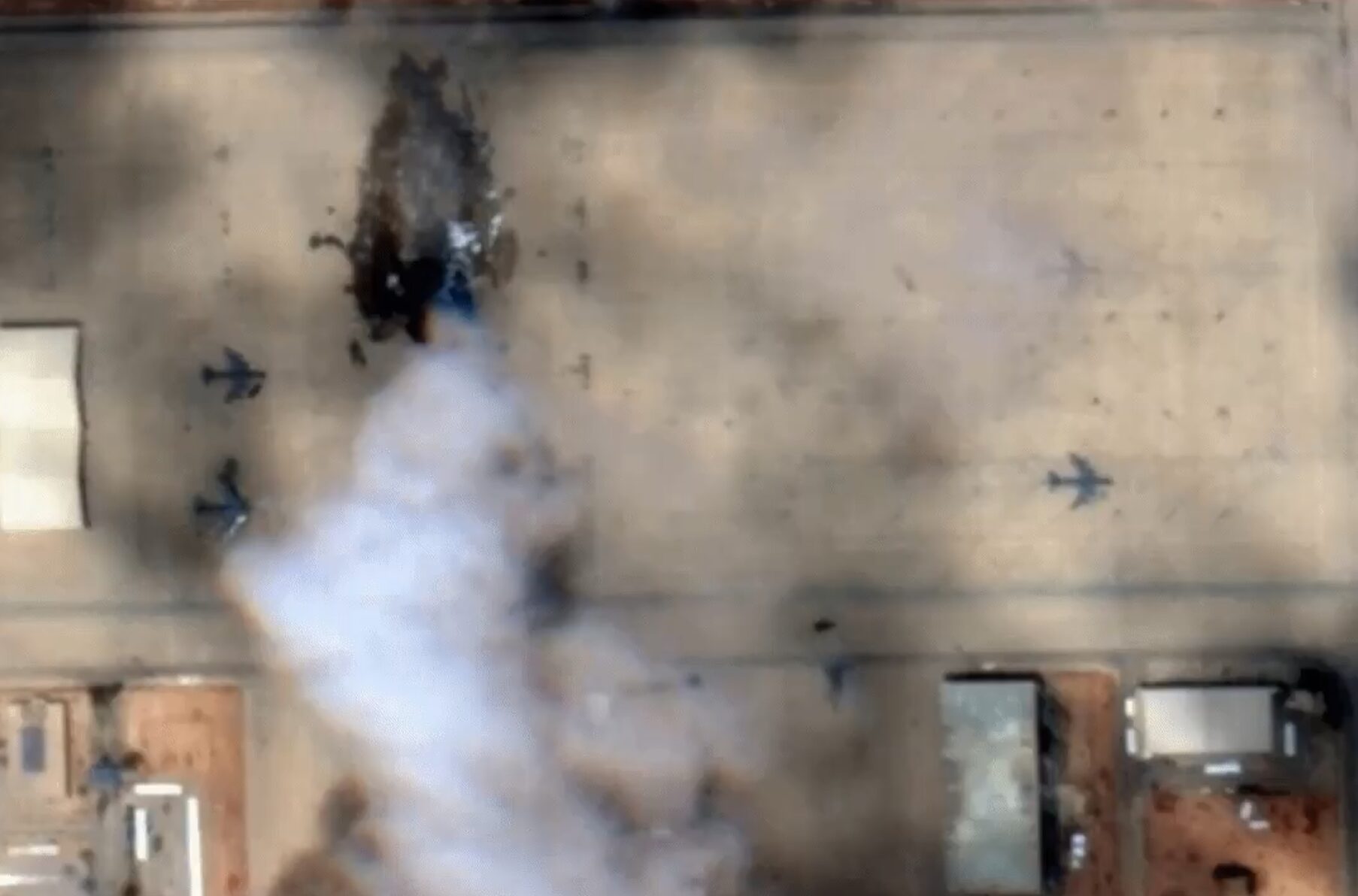
Iranian Strikes Hit Core Infrastructure Behind U.S. Airpower

Legal experts have long questioned the War Powers Act’s constitutionality, and no resolution under it has ever successfully constrained a president’s military decision-making. In practice, such measures become academic exercises that satisfy politicians eager for cable news sound bites.

Meanwhile, the War Department and Strategic Command remain focused on stabilizing conditions in the Persian Gulf and maintaining readiness against Iranian aggression.

Trump’s alignment with Israel and the broader coalition effort in the region continues to rebuild the deterrence squandered under the previous administration.

The small number of Republican dissenters aside, this vote will do little to alter U.S. posture.

The commander in chief retains constitutional control over military action, backed by allies in the War Department who understand that peace through strength does not come from congressional resolutions but from deterrence and decisiveness.

The Senate’s gesture plays well on MSNBC panels but does nothing for national security. It’s the perfect example of Washington theater: an anti-Trump outrage exercise dressed up as a civics lesson.

When the dust settles, the real work—defending American interests and keeping Iran in check—will still rest squarely on the president’s shoulders.

In short, Congress can posture all it wants. The Constitution, the military chain of command, and reality itself remain firmly behind the commander in chief. The rest is noise, and the enemy is watching.

News

U.N. Clears North Korea’s DMZ Fences As ‘Defensive’ Despite Seoul’s Objections

The United Nations Command says North Korea’s construction of fences within the demilitarized zone separating the two Koreas does not break the Korean Armistice—at least not yet.

As long as Pyongyang keeps its activity “defensive,” the Command claims, the building spree stays within bounds.

Seoul, however, isn’t convinced, warning that barbed wire, barriers, and cleared minefields dangerously tilt the fragile balance along one of the most volatile borders on Earth.

At a recent press briefing, a senior UN Command official speaking anonymously explained that the North’s latest fence work has not yet introduced “offensive capabilities” into the zone.

He said the projects remain on the defensive side of the line, echoing the Command’s long-standing practice of maintaining neutrality. That explanation likely did little to soothe South Korean officials who see a creeping pattern of provocation.

JoongAng Ilbo, a major newspaper in Seoul, reported that North Korea had erected fences within roughly 262 feet of the Military Demarcation Line, cutting dangerously close to the official boundary.

The paper also indicated that the North had cleared stretches likely intended for new minefields—a chilling move, considering the DMZ is already one of the most heavily mined places on the planet.

A Stronger, Smarter Presence: Trump-Era Vision Strengthens South Korea Force with Longer Deployments
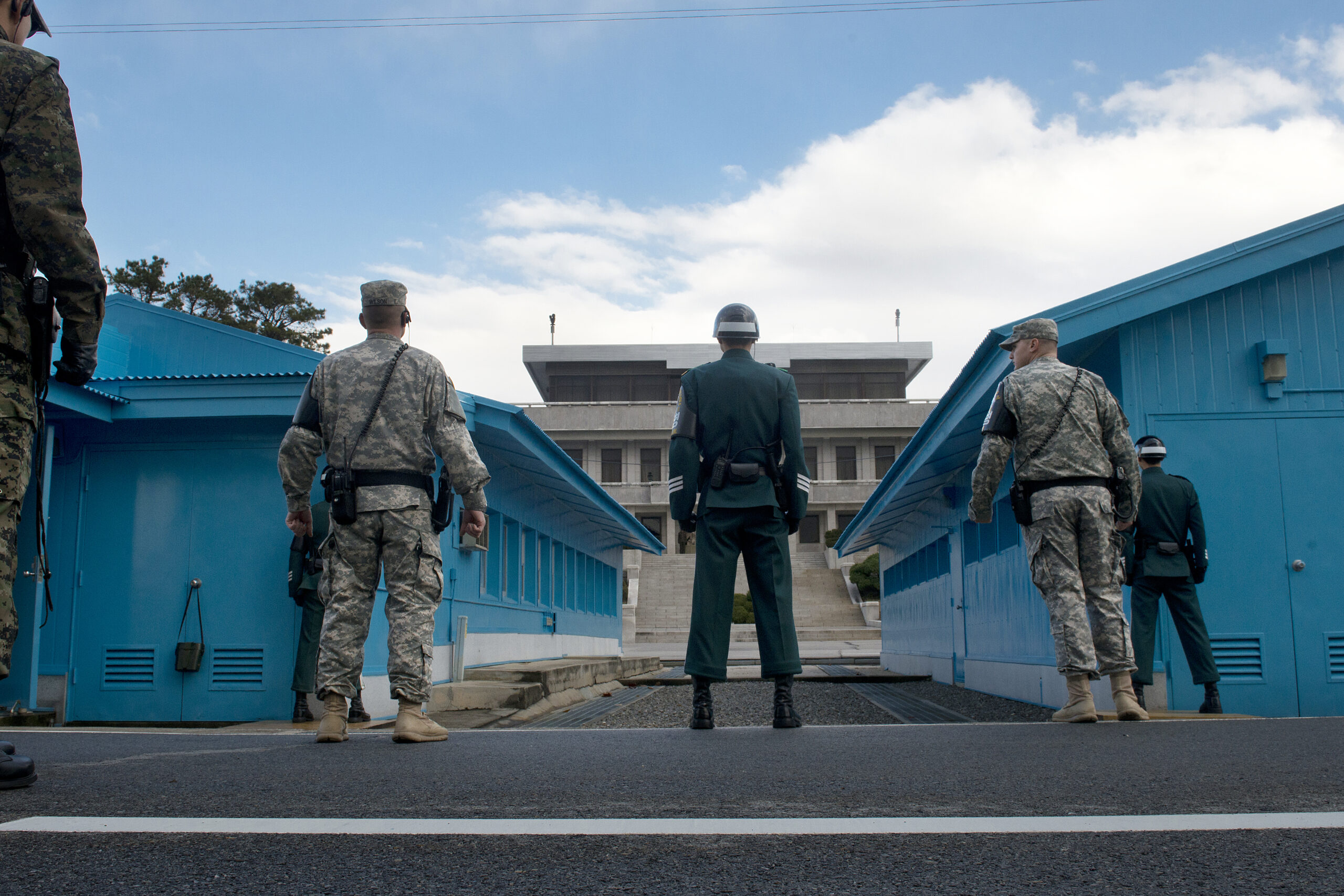
Republic of Korea and U.S. Soldiers at the demilitarized zone in South Korea facing North Korea on Nov. 11, 2012. DoW photo by D. Myles Cullen

The 1953 Armistice Agreement, which silenced active combat but never achieved formal peace, designated the DMZ as a 2.48-mile-wide buffer zone. Each side controls a 1.24-mile strip from the center line.

The point was to make a resumption of hostilities harder. South Korea’s War Ministry says North Korea’s recent construction directly undermines that mission.

Chung Binna, a spokeswoman for the Ministry, called the barrier-building a “clear violation” of the Armistice, warning that such moves raise military tension and erode trust.

Seoul officials have repeatedly urged the UN Command to recognize that continual “defensive” work from Pyongyang often masks forward preparations. They say it’s a dangerous habit to take Kim Jong Un at his word.

The Ministry emphasized that South Korean forces remain vigilant, monitoring every bulldozer, soldier, and spade working north of the line. The official stance from Seoul is clear: ditch the excuses and call a violation a violation.

A Stronger, Smarter Presence: Trump-Era Vision Strengthens South Korea Force with Longer Deployments
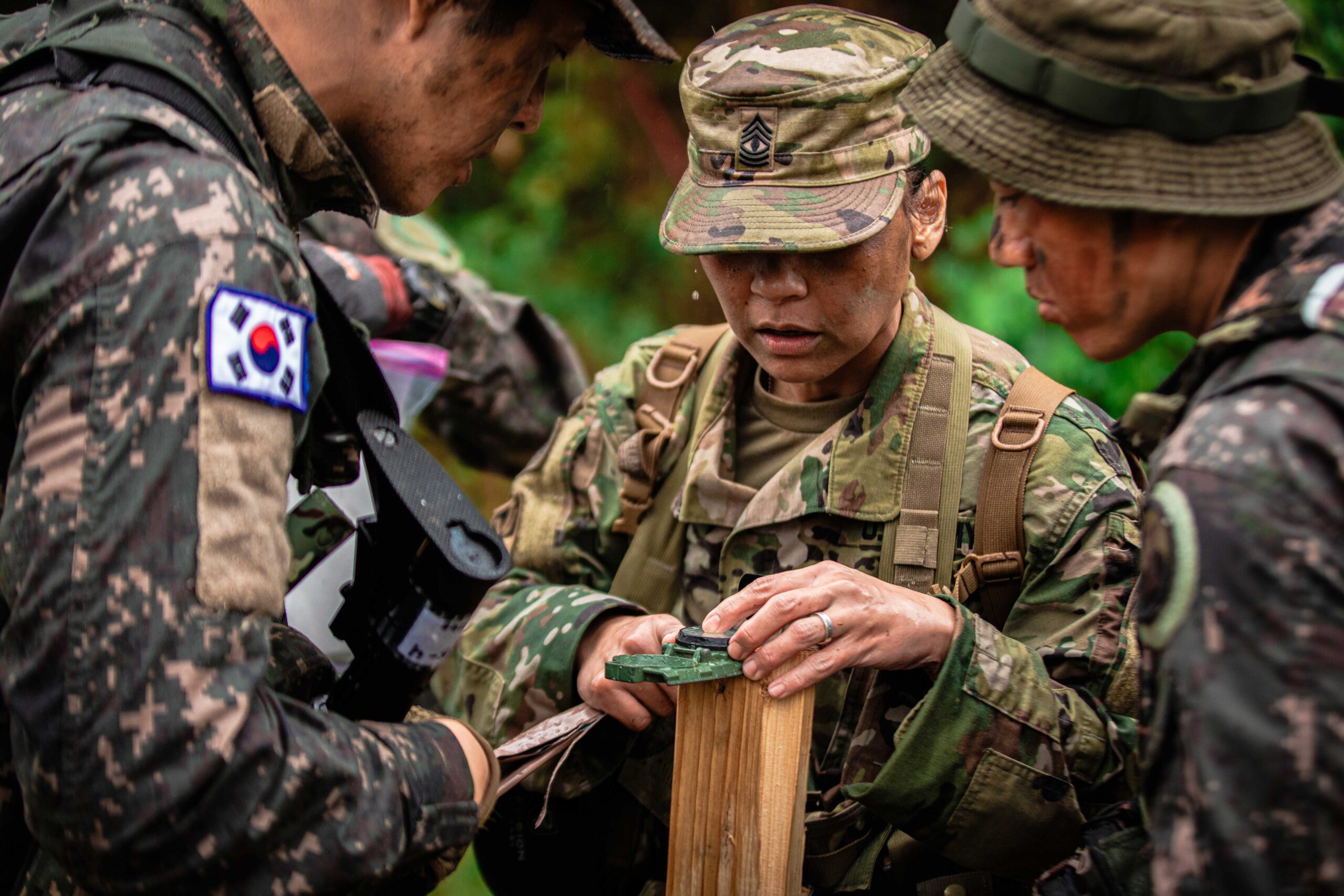
ROK and U.S. noncommissioned officers work together during land navigation exercises as part of the Mangudai Challenge at Story Live Fire Complex, South Korea, Oct. 22, 2024. The challenge highlights shared leadership and capability within the ROK-U.S. alliance.

But the UN Command remains adamant that its interpretation must be based on strictly military criteria—which, in its view, means assessing whether the North is positioning offensive weapons or troops in the DMZ.

So far, the Command says, there’s no sign of heavy artillery, drones, or missile systems inside the zone. “What we are seeing is construction, granted at a heavier rate,” the official said flatly.

In essence, the Command is saying that as long as Pyongyang isn’t pointing rockets at the South, all the barbed wire and land reshaping is permissible.

That stance, while technically consistent with armistice rules, can sound dangerously naïve to anyone who has watched Kim’s regime for more than five minutes. Kim’s entire strategy, after all, is built on exploiting gray zones—pushing the limits until someone blinks.

The official did acknowledge that mining the demarcation line itself would amount to a direct Armistice violation.

A Stronger, Smarter Presence: Trump-Era Vision Strengthens South Korea Force with Longer Deployments

Still, he seemed confident that current mine placement remains “defensive in nature,” intended to prevent infiltration rather than aggression.

That defense conveniently ignores how easy it is to reclassify “defensive” positions when the order to go offensive arrives.

Adding a layer of irony, the UN Command pointed out that South Korea currently has dozens of its own construction projects underway south of the line, including road work and vegetation clearing.

The insinuation seemed clear: both sides reshape the terrain, so let’s not overreact. It’s a bureaucratic way of keeping everyone calm while avoiding accountability.

The Command also revealed that North Korea notified it last year of plans for both fence-building and road repairs within the DMZ.

That notification was communicated to Seoul “to maintain discipline on our side of the line,” the official noted.

While that may sound diplomatic, it also shows Pyongyang’s confidence that announcing its actions will buy immunity from condemnation.

Kim Jong Un Orders North Korean Army To Fortify Border Into ‘Warproof Wall’

Pyongyang’s new fences come amid rising regional tension and its stated intention to expand nuclear assets and warship production.

Kim’s regime thrives on testing boundaries, literally and figuratively. Every “defensive” measure serves as another stone in the wall separating dialogue from confrontation.

In the end, the UN Command is doing what the UN always does—splitting hairs over intent rather than outcome. Seoul’s military reads the situation through a harder lens, shaped by decades of deception from the North.

As long as the UN insists that barbed wire and minefields are no big deal, Kim Jong Un gets another inch closer to normalizing militarization within a supposedly neutral zone.

News

Air Force Presses On with B-52 Modernization After Fatal Edwards AFB Crash

The U.S. Air Force is refusing to let tragedy derail its mission.

Despite the devastating June 16 crash of the first modernized B-52 Stratofortress at Edwards Air Force Base that claimed eight lives, the service announced it will continue pushing ahead with the aircraft’s extensive modernization program.

The move underscores a hardened commitment to ensuring America’s air dominance endures well into the mid-21st century.

Officials confirmed late Monday that the Air Force Safety Investigation Board has already begun its work to determine the cause of the crash.

The Radar Modernization Program (RMP) office will assist investigators throughout the process, but leadership made it clear that the radar upgrade effort will continue moving forward even as the investigation unfolds.

According to the Air Force, a second B-52H equipped with the new radar system will arrive at Edwards later this year to resume testing once the 412th Test Wing gives approval.

The decision reflects a determination to stay on schedule for modernization milestones, even while honoring those lost in the tragic accident.

The aircraft that went down had completed a ferry flight from Boeing’s San Antonio facility after receiving its new Active Electronically Scanned Array (AESA) radar built by Raytheon Technologies.

U.S. Air Force Probes B-52 Near Miss with SkyWest Passenger Jet in North Dakota [WATCH]

The AESA replaces the bomber’s outdated radar, vastly improving navigation, targeting precision, and situational awareness in all weather conditions. Similar radar technology has already proven itself on the Air Force’s F-15 Eagle and the Navy’s F/A-18 Hornet.

“The B-52 radar modernization ensures this aircraft remains the cornerstone of American airpower,” said Secretary of the Air Force Troy Meink prior to the crash. “We are committed to extending the life of this vital platform to operate alongside next-generation aircraft.”

Testing of the upgraded bomber was slated to continue through 2026, leading up to a full production decision later that year.

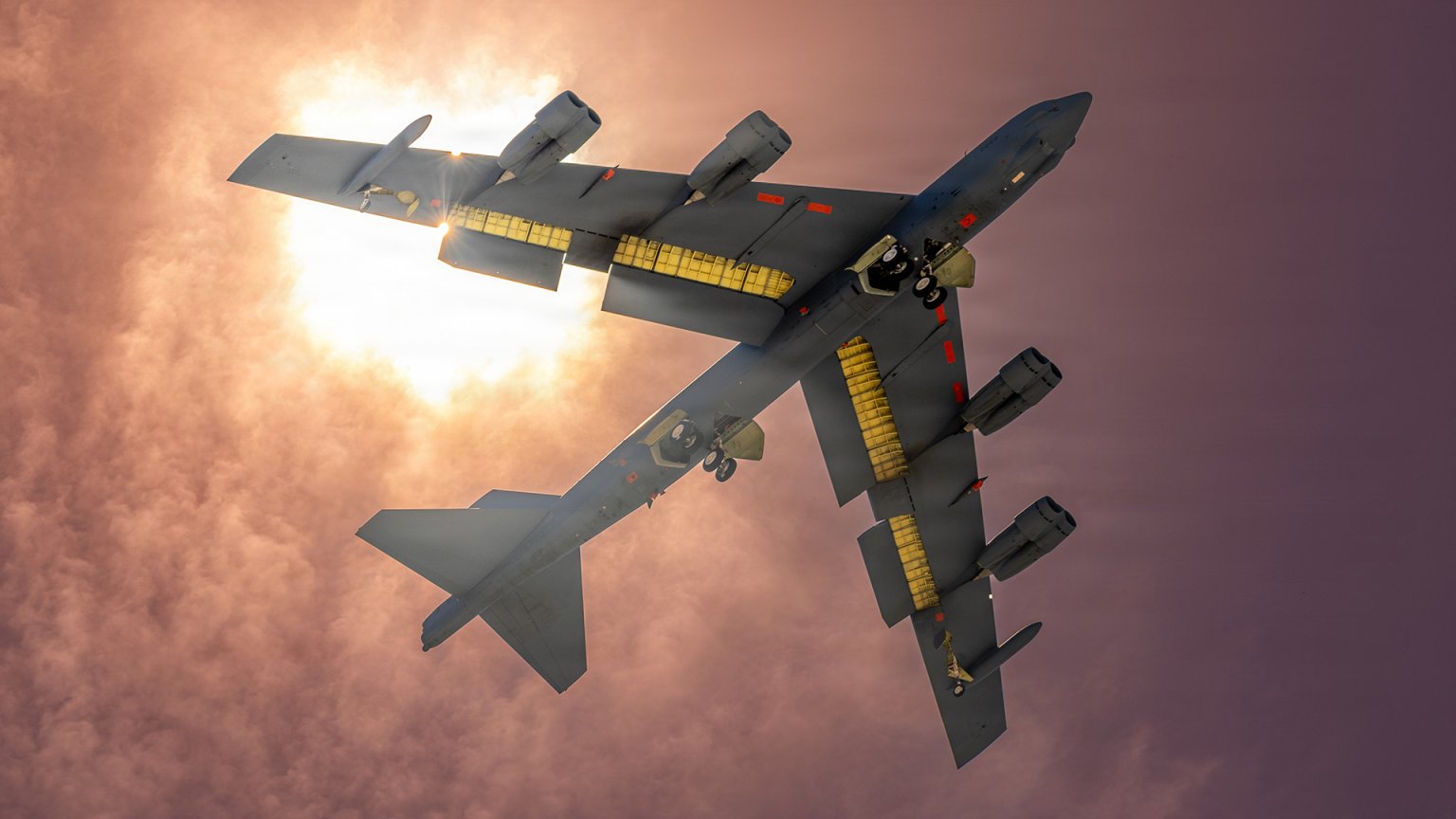
The radar modification marks the first major milestone in a sweeping program to transform the B-52H into what will eventually be designated the B-52J model—a revitalized powerhouse ready to serve for decades longer.

The modernization program is part of the Air Force’s strategic plan to condense its bomber fleet down to two airframes: the advanced stealth B-21 Raider and the new B-52J.

As those programs advance, legacy B-1B and B-2 bombers will be gradually phased out, concentrating resources on the platforms deemed most capable of meeting tomorrow’s threats.

Eight Tragically Killed in Fiery B-52 Crash at Edwards Air Force Base
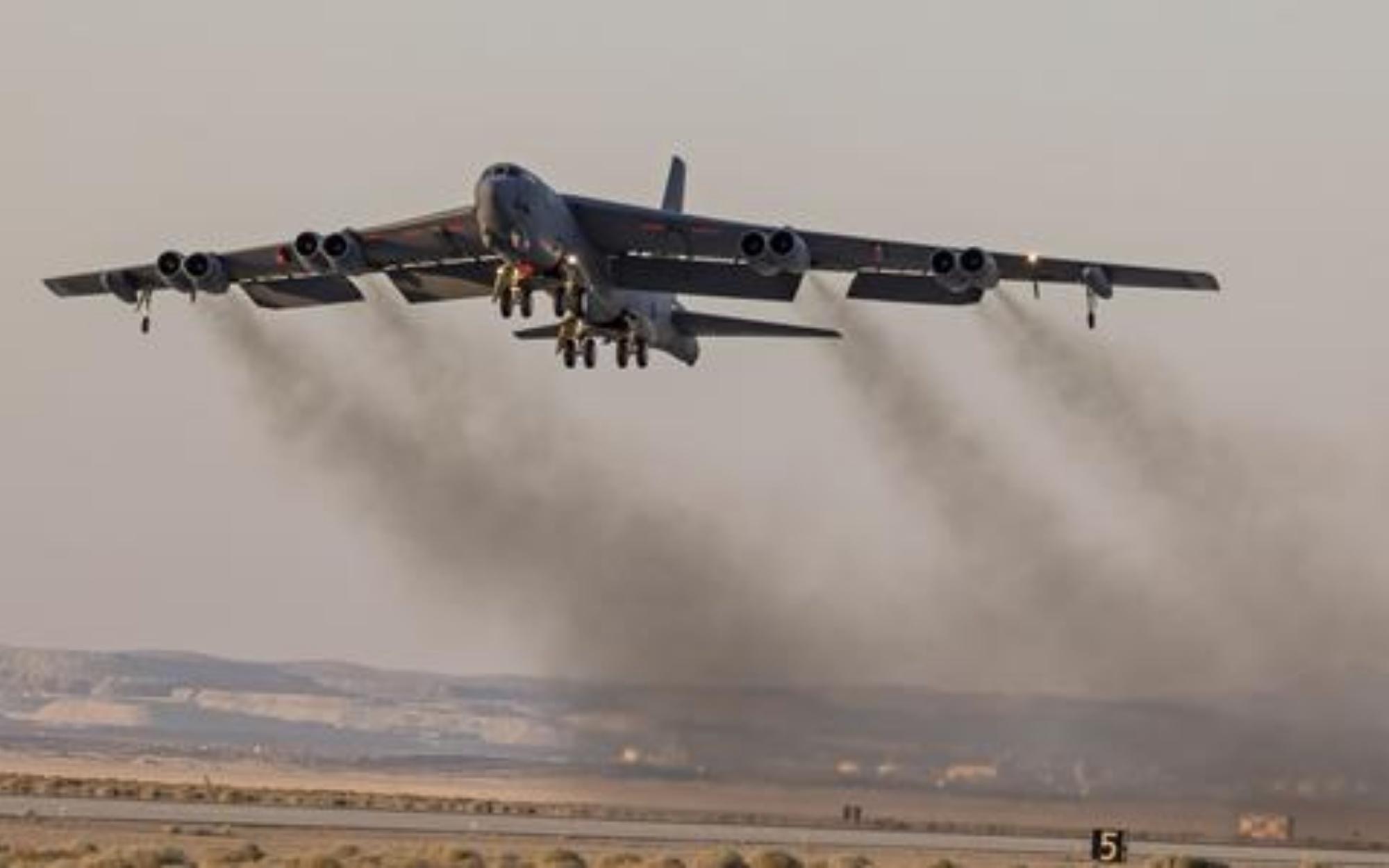
A B-52H Stratofortress from Edwards Air Force Base, California, departs for an evening test mission on Aug. 7, 2025. Air Force photo by Todd Schannuth.

The B-52 program’s scope stretches far beyond radar. Alongside the upgrade comes the Commercial Engine Replacement Program, which will finally replace the bomber’s eight aging 1960s Pratt & Whitney TF33 engines with modern Rolls-Royce F130s.

The result will be improved fuel efficiency, range, and reliability, effectively giving these Cold War-era giants new life.

Beyond new engines, the Stratofortress fleet is also slated for sweeping avionics, communications, and weapons upgrades, allowing it to maintain nuclear and conventional strike capabilities across global theaters.

The Air Force has described the B-52 as a continuing symbol of deterrence—one capable of responding decisively to any threat.

Air Force Chief of Staff Gen. Kenneth Wilsbach reaffirmed that sentiment, stating, “The B-52 will continue to serve as an unmatched symbol of U.S. airpower. With these upgrades, the aircraft remains ready to execute deterrence and strike missions for decades.”

It’s hard to argue with that assessment. The B-52 first flew in April 1952, and even now, more than 70 years later, it is still flying stronger than most aircraft designed half a century later.

U.S. Jet Downed in Iran Sparks Swift War Policy Debate
A U.S. Air Force B-52 Stratofortress aircraft refuels from a KC-135 Stratotanker aircraft over the U.S. Central Command area of responsibility, during Operation Epic Fury, March 26, 2026. (U.S. Air Force photo)

Of the 744 Stratofortresses built between 1952 and 1962, roughly 75 B-52H models remain in service today. Each continues to serve as a testament to American engineering and the unmatched dedication of those who fly and maintain them.

The loss of eight airmen at Edwards was a painful reminder of the risks that come with progress.

But within the Air Force, the prevailing tone is one of resolve. The crash investigation will proceed meticulously, but the mission continues because the future of U.S. strategic airpower depends on it.

As tragic as the accident was, halting modernization now would risk far more than a schedule delay.

It would jeopardize the backbone of the Air Force’s long-range strike capability—a platform that still intimidates adversaries from Moscow to Beijing.

The message is clear: mourning does not mean surrendering forward momentum.

For a nation that depends on technological superiority and readiness, the decision to move forward isn’t just prudent—it’s imperative.

The B-52 may have been conceived in the early days of the Cold War, but under new leadership and modern systems, it’s poised to remain America’s airborne workhorse for the 21st century and beyond.

News

Last Soldier Out of Afghanistan is the Latest General to Exit Under Hegseth’s Overhaul

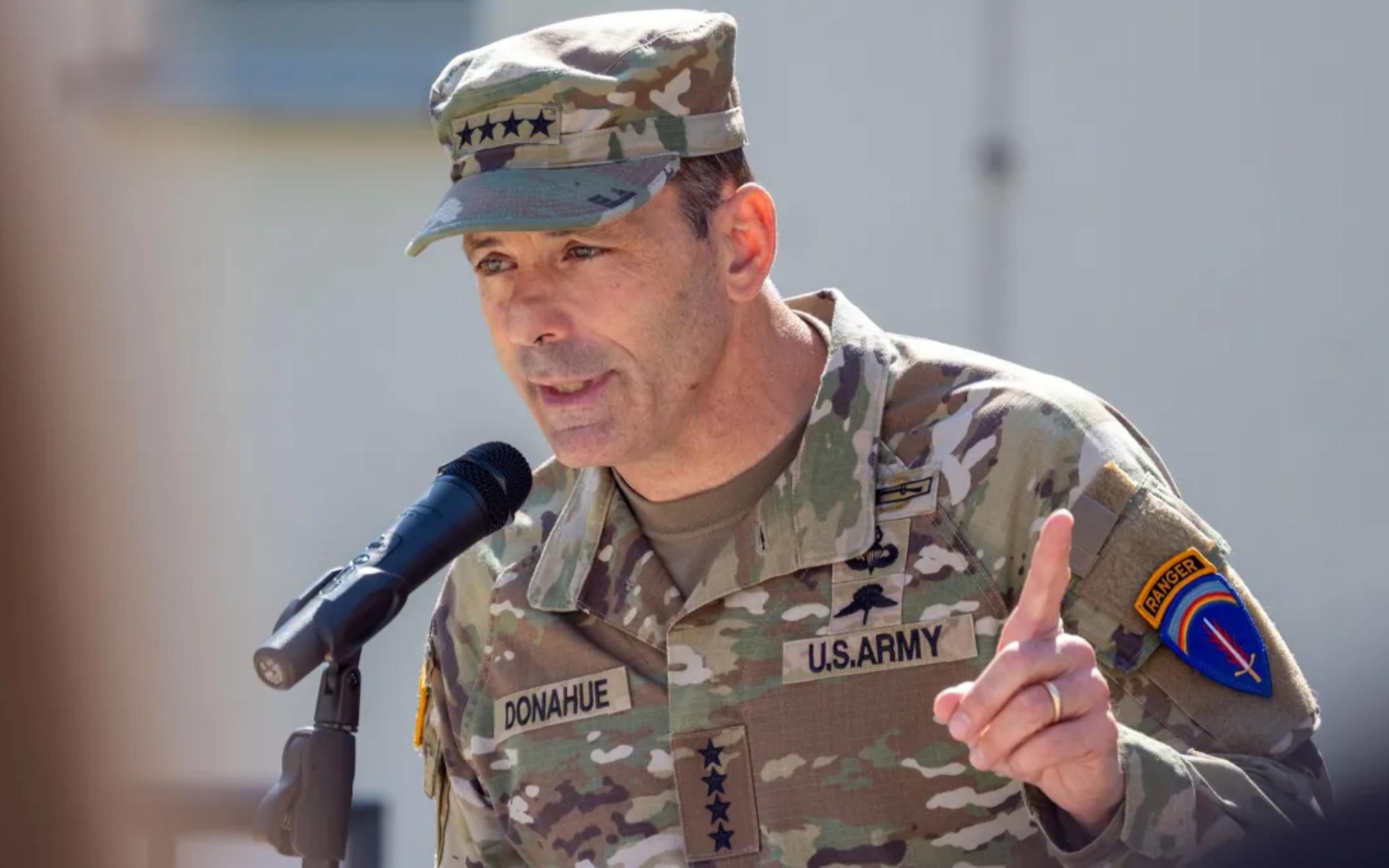
Gen. Christopher Donahue, the Army officer immortalized in the photo as the last U.S. soldier to leave Afghanistan, is stepping away from his post leading U.S. Army Europe and Africa, continuing a streak of high-profile changes spearheaded by War Secretary Pete Hegseth’s aggressive reshaping of military leadership.

Sources confirmed that Donahue will soon relinquish his command, with the official announcement expected from U.S. Army Europe and Africa. He assumed the position in December 2024 after decades of service in combat and leadership roles.

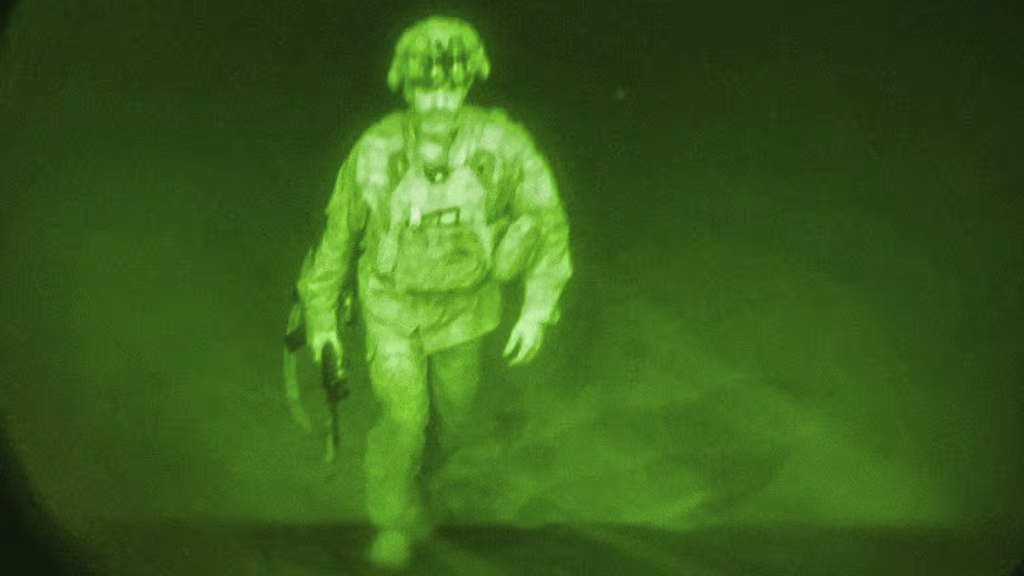
Donahue’s career spans multiple wars, and his photo boarding the final C-17 out of Kabul became one of the enduring images of America’s chaotic departure from Afghanistan in 2021.

While the timing may have surprised some observers, this move fits into a broader pattern since Secretary Hegseth took over the War Department in early 2025.

A number of senior generals and admirals have either been fired, retired, or pushed out in a sweeping effort to redirect the Pentagon’s focus and leadership culture away from politically correct stagnation and toward combat readiness and accountability.

Last Soldier Out of Afghanistan is the Latest General to Exit Under Hegseth's Overhaul
Maj. Gen. Chris Donahue is photographed on Aug. 30, 2021, as the last American service member to depart Afghanistan. (U.S. Central Command)

Among those shown the door or ushered into retirement are several Pentagon heavyweights: former Army Chief of Staff Gen. Randy George, former Joint Chiefs Chairman Gen. Charles “CQ” Brown Jr., Adm. Lisa Franchetti, Air Force Gen. James Slife, Lt. Gen. Jeffrey Kruse of the Defense Intelligence Agency, and Vice Adm. Shoshana Chatfield, who had been serving as the U.S. liaison to NATO’s military leadership.

Even Navy Secretary John Phelan recently departed under abrupt circumstances in April, further highlighting the extent of Hegseth’s ongoing restructure of the War Department.

Hegseth, a decorated combat veteran and longtime advocate for reforming Pentagon bureaucracy, has made no secret of his desire to rebuild America’s warfighting ethos and strip the institution of deadweight leadership.

The War Secretary has reportedly taken direct action against leaders he views as part of the “status quo club”—those who, in his view, presided over decades of decline, woke policies, and dangerous indecision in America’s global posture.

Donahue’s departure, however, drew some concern from those who see him as one of the few modern generals deeply experienced in actual combat and special operations.

Sen. Thom Tillis voiced hesitation over the potential change, warning that if rumors were true about a downgrade of U.S. Army Europe-Africa to a three-star command, it would represent “a dangerous path.”

His comments, delivered over social media, reflected a broader unease over what some on Capitol Hill perceive as overreach by Hegseth.

Still, the War Department’s new leadership has insisted that these changes are part of a deliberate realignment focused on mission readiness rather than politics.

Last Soldier Out of Afghanistan is the Latest General to Exit Under Hegseth's Overhaul
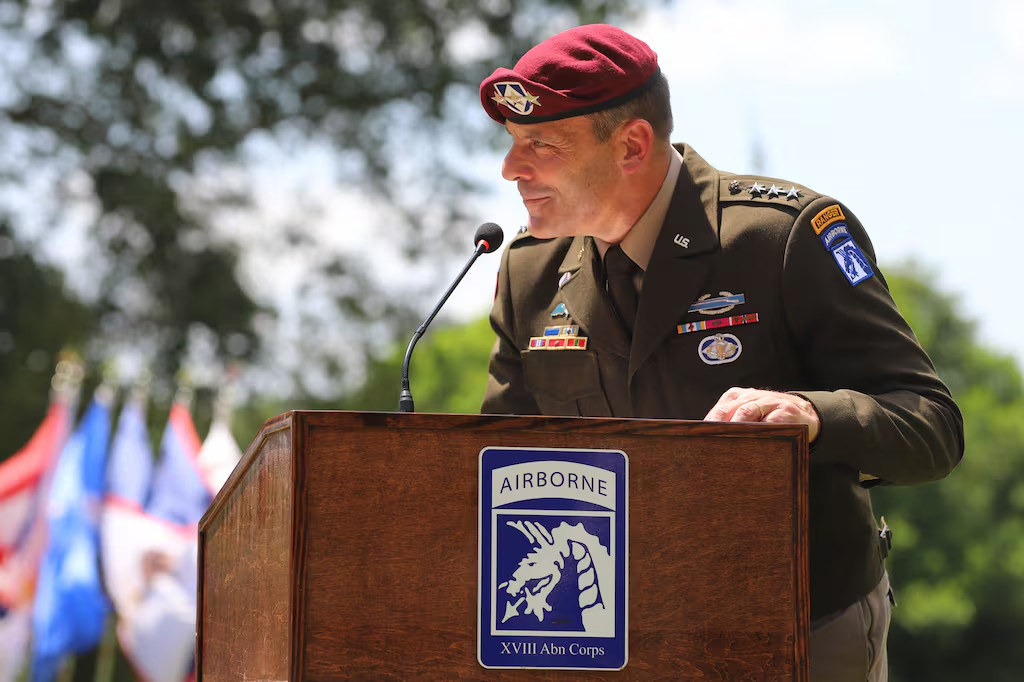
Lt. Gen. Christopher Donahue speaks at a 2023 retirement ceremony. (Pfc. Alexcia Rupert/Army)

Hegseth’s team maintains that many high-ranking officers are being evaluated through a performance-based lens after decades of bureaucratic complacency during the wars in Iraq and Afghanistan. The current administration, aligned with President Trump’s “America First” defense doctrine, is intent on placing warriors—rather than administrators—back in charge.

Donahue’s storied career stands as a testament to the kind of gritty, hands-on leadership that emerged from the post-9/11 wars. Commissioned in 1992, he rose through the ranks leading Airborne and special operations troops across multiple theaters.

His reputation as a warfighter came not from press conferences or panels, but from the frontlines of America’s longest conflicts.

For many within the ranks, his stepping down carries an emotional weight. Donahue represented a bridge between the combat-tested generation and today’s emerging officer corps.

Yet even among his supporters, there’s recognition that Hegseth’s push to streamline and modernize command structures may inevitably mean further changes, even for those with distinguished service records.

While establishment critics describe Hegseth’s tenure as a purge, supporters see it as long-overdue housecleaning. The War Department is refocusing its mission around winning wars, not maintaining media-friendly optics or endless diversity initiatives.

In that sense, the departure of figures like Donahue is less an indictment and more an indicator of a culture recalibration inside the upper echelons of America’s military machine.

As U.S. interests remain stretched across Europe, Africa, and the Middle East, fresh leadership under Hegseth’s watch seeks to reassert the strategic boldness that once defined American power projection.

Hegseth Orders Immediate Overhaul of Military Moving System Amid Mounting Complaints

The goal isn’t merely to replace generals but to reset priorities—away from managerial mediocrity and back toward operational dominance.

Donahue’s legacy, encapsulated in that haunting image of the final soldier out of Afghanistan, will remain a symbol of both service and sacrifice.

His departure, on the other hand, fits neatly into a broader transformation—a rebirth of the warrior culture that Hegseth and President Trump have long argued is vital to America’s national security.

With the War Department’s leadership slate undergoing continuous reconfiguration, one thing is certain: the old guard’s era of comfortable command is over.

In its place stands a new generation of war-minded leadership, unafraid to challenge norms and willing to do what’s necessary to ensure the U.S. military remains unbeatable.

Under Hegseth’s direction, loyalty to mission and country—not careerism—has become the new measure of command. For those who can’t adapt, retirement might come sooner than expected.

News

Pentagon Seeks Massive $80 Billion Boost to Cover Iran War Costs

Reports this week revealed that the War Department is seeking a staggering $80 billion in supplemental funding to sustain operations and recovery efforts from the ongoing war with Iran.

The amount, while lower than the Pentagon’s original $200 billion projection, is nearly triple the figure presented to Congress just last month—putting new pressure on lawmakers as America pushes through its latest overseas fight.

Deputy War Secretary Stephen Feinberg reportedly made a round of personal calls to lawmakers last week, laying out the size and urgency of the funding request.

The Wall Street Journal reported the outreach came just as Secretary of War Pete Hegseth made the case in person on Capitol Hill, working to drum up support for what could become one of the most important wartime supplementals in recent memory.

According to reports from The Associated Press, Hegseth’s Capitol Hill meetings set the tone for an intense debate.

The administration knows Democrats in Congress will seize any excuse to drag their feet on the cash infusion that keeps America’s military edge sharp.

Meanwhile, cooler heads recognize the obvious: wars cost money, and under President Donald Trump, the United States isn’t going to run its troops or its bases on empty.

During testimony last month, Hegseth pegged the total costs of the Iran war so far at roughly $29 billion, mostly operational expenses from deployed forces.

US Navy Takes Out Two Iranian Tankers Defying Blockade in Strait of Hormuz
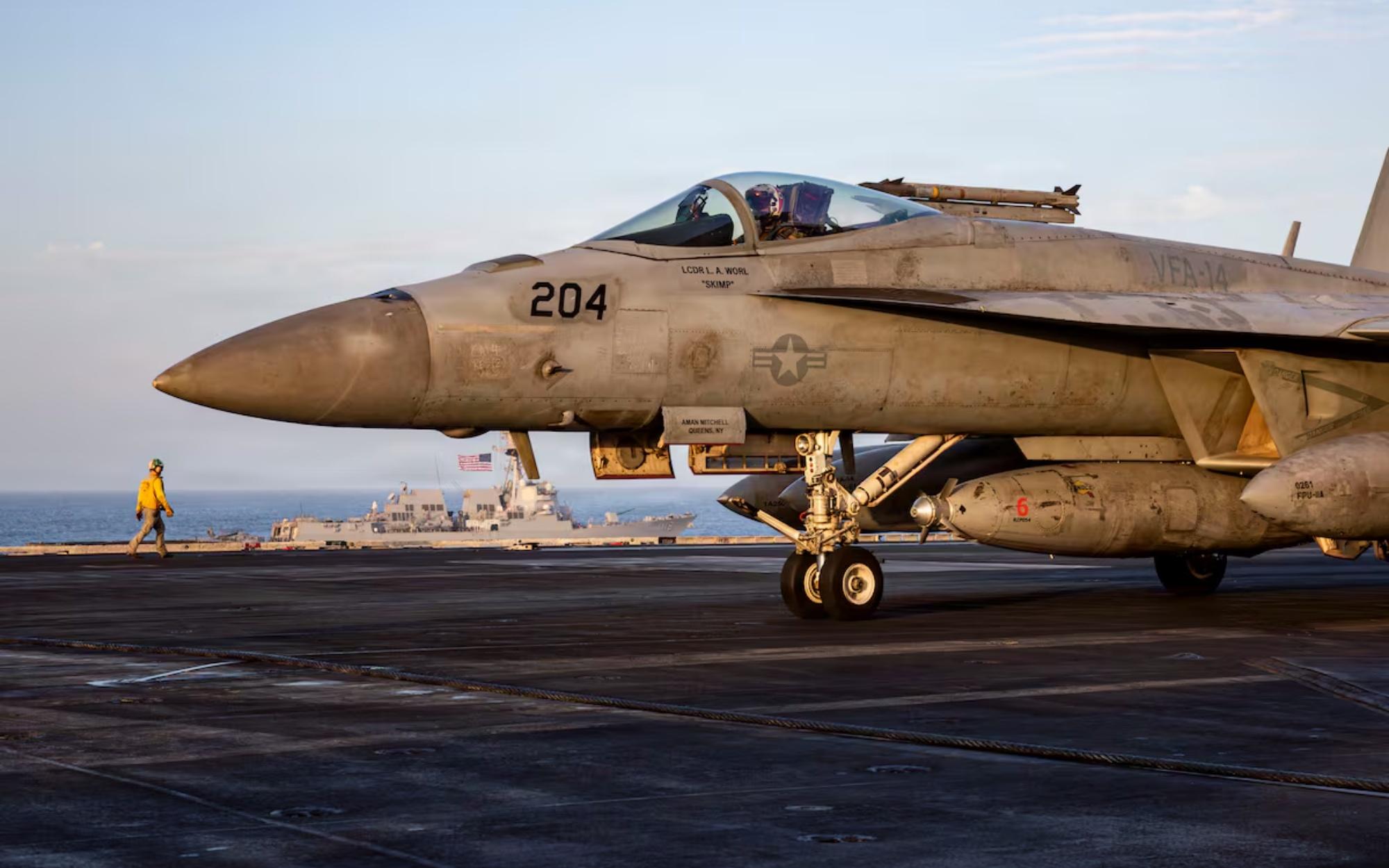
An F/A-18E Super Hornet taxis on the flight deck of Nimitz-class aircraft carrier USS Abraham Lincoln on April 16, 2026. (U.S. Navy)

That figure did not include repairs or reconstruction for the American bases hit during Tehran’s early strikes—a reminder that rebuilding capability is as vital as battlefield success.

The new number, $80 billion, not only replenishes the ammunition stockpiles essential for ongoing operations but also ensures readiness in other global hotspots. After all, the United States cannot afford to deplete munitions in one theater only to appear weak in another.

For a war that’s still in delicate negotiations, preparedness remains priority one.

Democrats on the Hill have already started questioning the legal basis of the conflict, despite the Senate’s repeated failure—nine attempts and counting—to pass an anti-war powers resolution aimed at tying the administration’s hands.

These same senators, eager for political points, seem willfully blind to Iran’s aggression and America’s right to defend its interests.

Trump Declares Iran Fight ‘Not Done’ While Left Sounds Alarms Over Ammo Shortfalls

Last week, Washington and Tehran struck a tentative memorandum to pause hostilities and start a 60-day round of talks. Those talks are expected to focus on Iran’s nuclear program and potential easing of sanctions, but officials close to the situation doubt Tehran’s sincerity.

History shows that appeasement gets results when the United States speaks softly but carries a big stick; this time, that stick is built on Hegseth’s warfighter-first philosophy.

Senate Majority Leader John Thune confirmed to reporters that he expects the administration’s formal supplemental proposal soon and pledged to “work through it” quickly. Thune also emphasized that restocking weapon caches remains critical.

With global instability rising, no sane military planner would underfund ammunition replenishment now—and Hegseth’s War Department agrees.

Marines Seize Iranian Tanker Defying U.S. Blockade in Gulf Tensions Surge
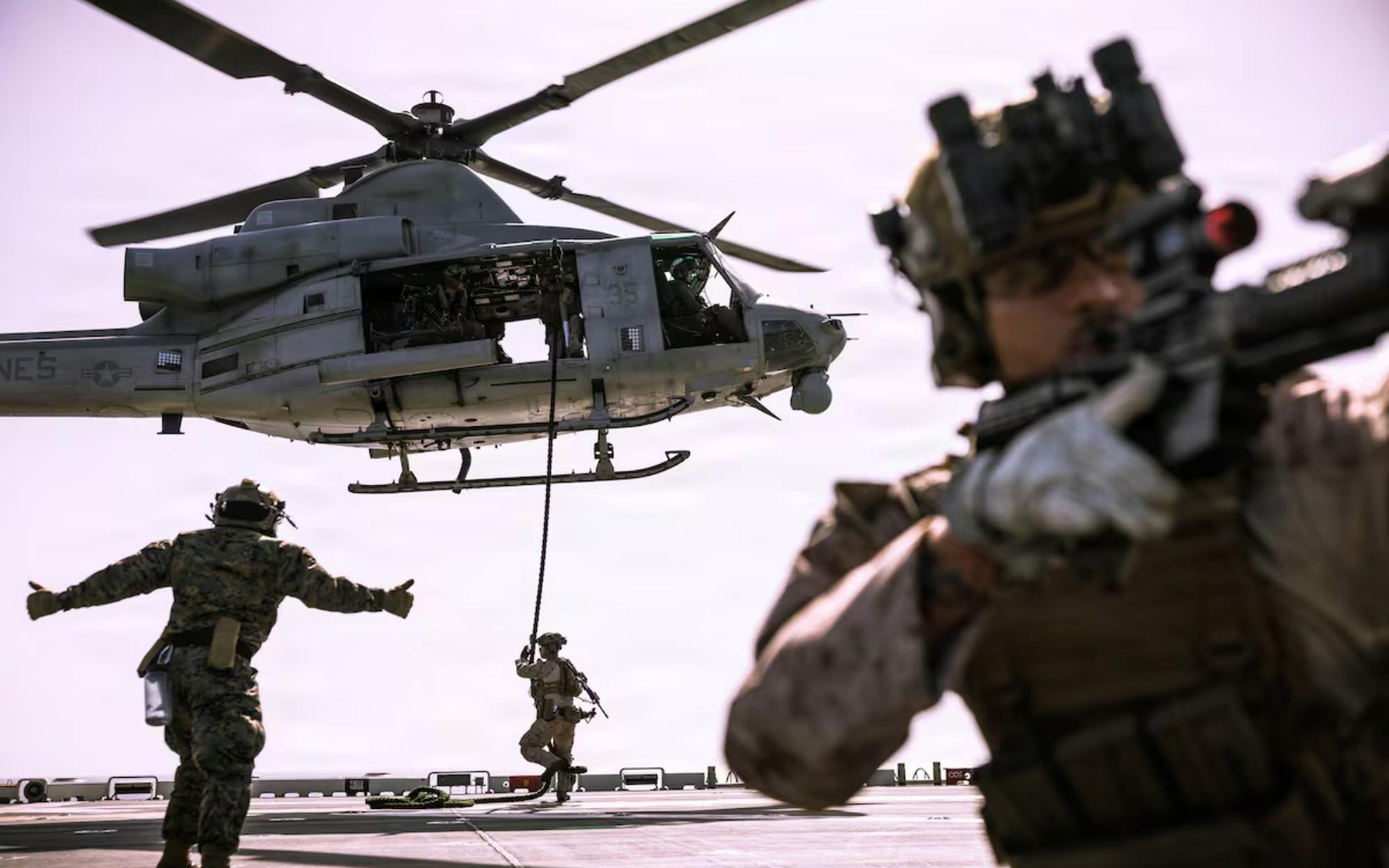
U.S. Marines from the 31st Marine Expeditionary Unit conduct fast rope training aboard the amphibious assault ship USS Tripoli in the U.S. Central Command area of responsibility on April 14, 2026. (U.S. Marine Corps)

Earlier warnings from naval leadership underscore that urgency. Adm. Daryl Caudle, the Navy’s top officer, told Congress that training cycles or certifications might face scaling back if the money runs dry.

In short, without a swift infusion of funds, the world’s most powerful military could face operational slowdowns—not due to lack of capability or will, but from bureaucratic foot-dragging on Capitol Hill.

The supplemental must still clear the White House’s Office of Management and Budget before being sent to Congress.

With the Pentagon’s current budget already approaching $1 trillion, and President Trump’s 2027 request topping $1.5 trillion, the administration has made clear that strong defense spending is not waste—it’s insurance.

Iran Conflict Won’t Slow Taiwan Arms Shipments, Officials Assert
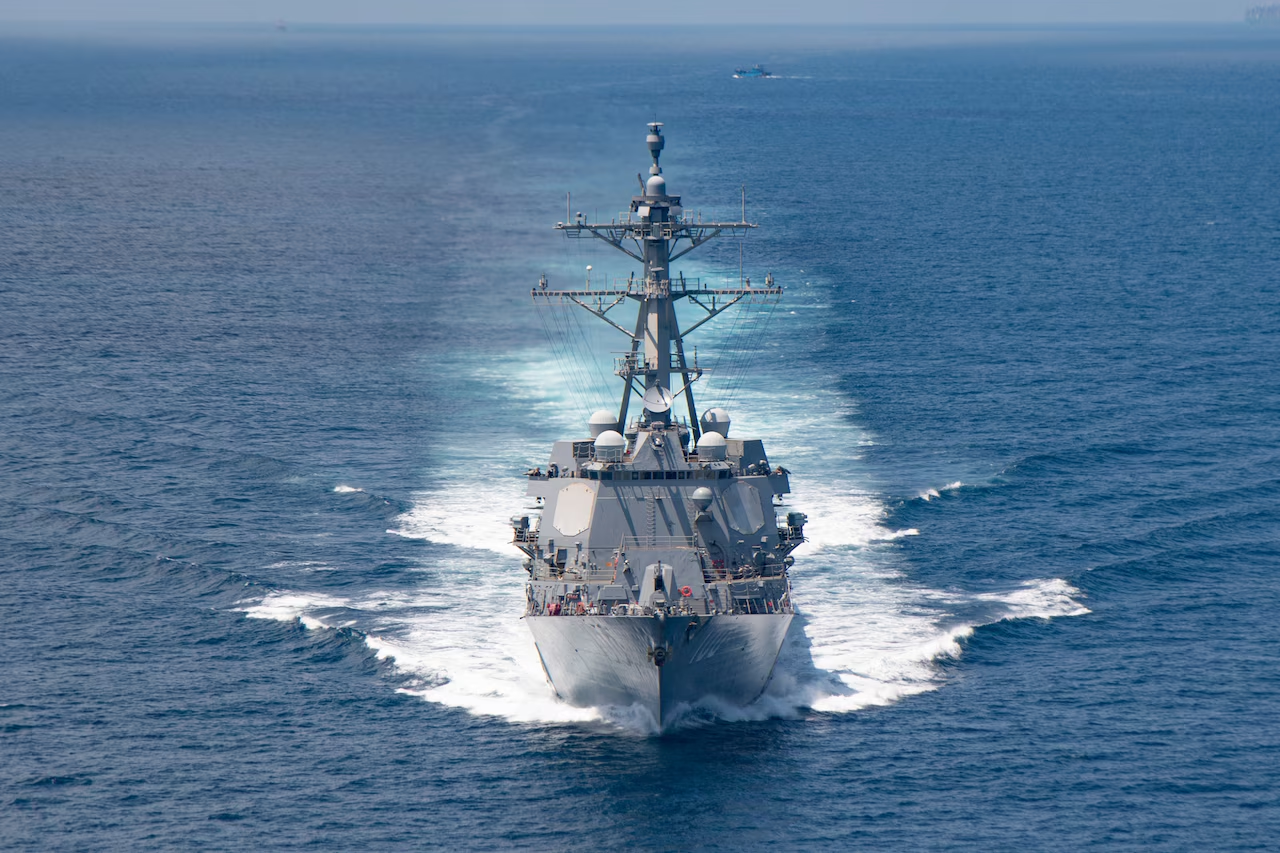
Arleigh-burke class guided-missile destroyer USS Kidd transits the Taiwan Strait during a routine transit, Aug. 27, 2021.

Hegseth reinforced that message this week in an op-ed for the New York Post, reminding Americans that underinvestment in the military is the single greatest threat to national security.

In his words, when America is militarily unchallenged, prosperity follows. “We borrow cheaply, transact freely and set the terms of global trade,” he wrote.

“Without that military power, all this becomes uncertain—because instability and volatility do vast damage to markets, investments and ultimately American jobs.”

For a War Secretary who has long preached that peace comes through strength, the $80 billion figure isn’t excess—it’s strategy.

Hegseth Defends War Coverage, Urges Honest Reporting Amid Iran Conflict

Hegseth is betting on readiness, deterrence, and the projection of unmistakable American muscle. The price tag may startle some, but history shows weakness always costs more.

In the months ahead, the debate over this funding will reveal who truly backs the troops and who’s just playing politics.

One thing’s certain: Pete Hegseth and President Trump aren’t about to let America shortchange its warriors or its security.

News

U.S. Unleashes Wave of Airstrikes in Somalia After Month-long Lull

After a rare break in operations, the United States has roared back into action in Somalia, unleashing a series of airstrikes that once again remind al-Shabab and its terror affiliates that American military power doesn’t take permanent vacations.

Between June 14 and June 19, U.S. forces executed four separate strikes aimed squarely at the al-Qaeda-linked al-Shabab network in southern Somalia.

These actions mark the first time since early May that U.S. airpower has engaged targets in the region — a clear signal that the war effort against Islamist extremism remains alive, well, and ready to escalate when necessary.

Each of the statements released by U.S. Africa Command (AFRICOM) sounded a familiar note: cooperation with the Federal Government of Somalia and its Armed Forces, all in the name of degrading al-Shabab’s ability to attack U.S. interests and allies.

And as is standard practice with these kinds of direct operations, AFRICOM kept classified any mention of which assets or units carried them out. That’s operational security 101.

What little is known points to strikes in the southern reaches of the country, specifically around the lower Juba region and the city of Kismayo — familiar haunts for al-Shabab’s entrenched networks of fighters and supply routes.

Somali media sources have reported that these targets included militant bases and supply depots, with some even mentioning coordinated ground operations backed by American airpower. One report from Hiraan said that 14 militants were killed, though that figure was attributed to the elite, U.S.-trained Somali Danab special operations unit.

The last month’s pause in air operations was a notable deviation. Over the past year, airstrikes have become a steady drumbeat in the background of Somalia’s fight against jihadist forces.

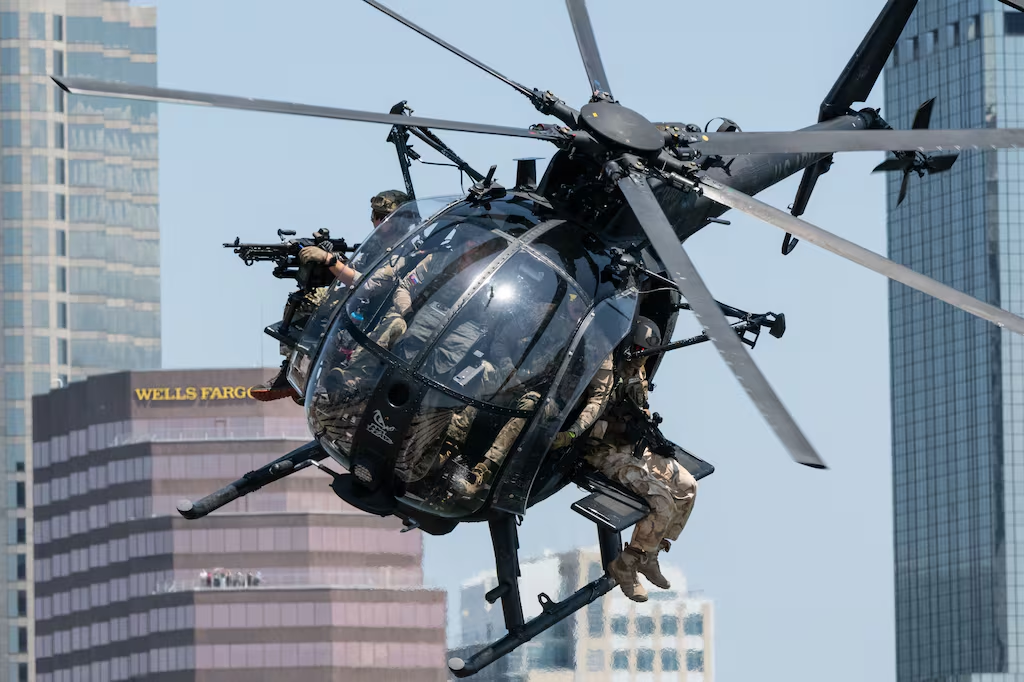
Special Operations Helicopters Undergo Major Upgrades as Forces Look to the Future

The U.S. typically carries out several operations each month. The reasons for the brief slowdown aren’t clear, but given the fresh tempo of strikes, it appears the War Department is ready to reset the pace.

AFRICOM’s numbers reveal the broader trend: before these latest strikes, 63 had already been conducted in Somalia this year.

With four added in quick succession, the total has blasted past the half-year mark, now roughly matching the tempo reestablished after President Trump’s administration revitalized America’s offensive posture that had lagged under Biden’s watch.

For comparison, during the Trump years, U.S. operations in Somalia were methodical, direct, and unflinching.

In 2025, for example, 126 air operations took place — a level of intensity that had dropped to just 11 the previous year when Biden’s “strategic restraint” meant sitting back while terror groups regrouped. Now, under renewed command, the gloves are coming off once again.

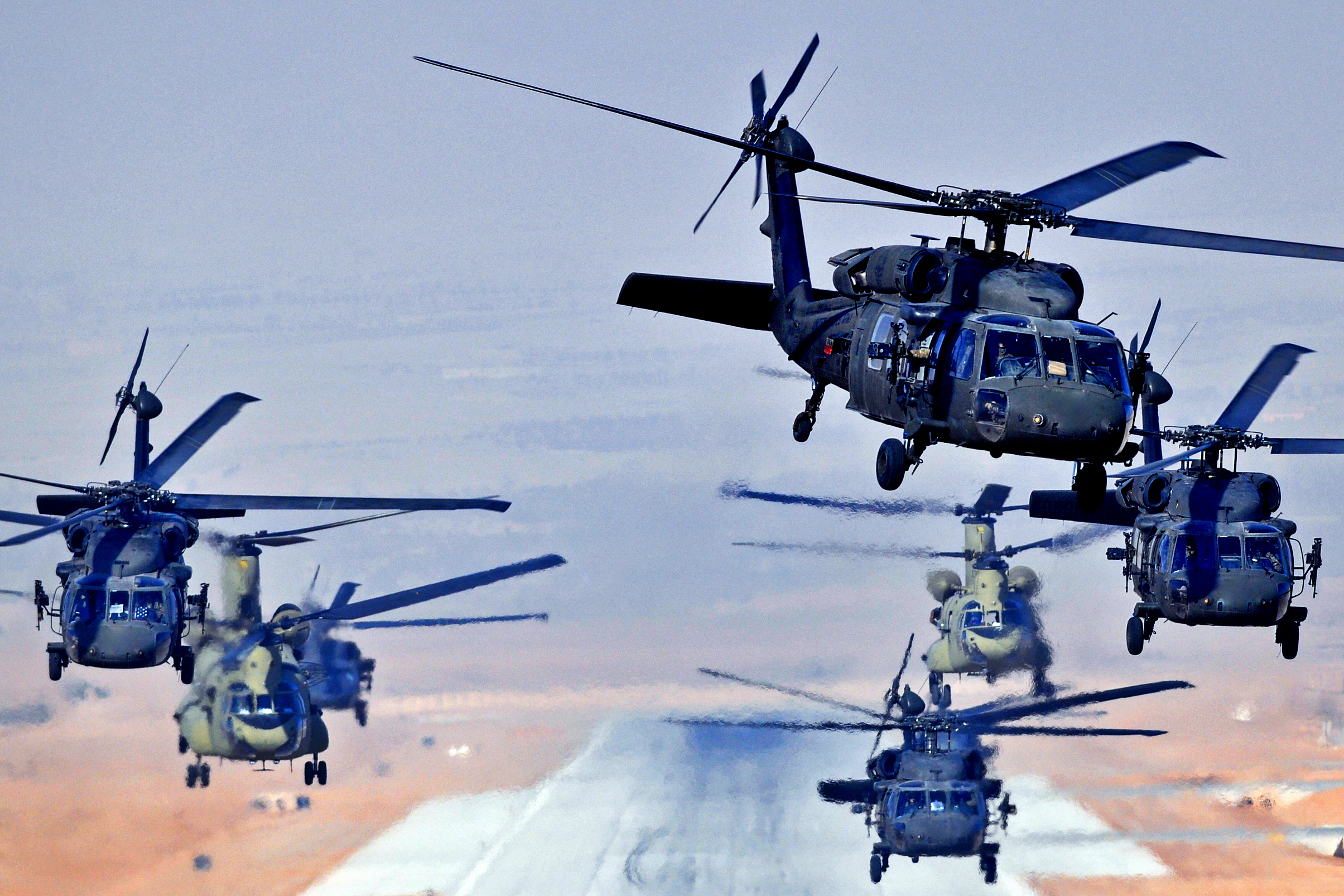
Special Operations Helicopters Undergo Major Upgrades as Forces Look to the Future
Six UH-60L Black Hawks and two CH-47F Chinooks, assigned to Task Force Brawler, 4th Battalion, 3rd Aviation Regiment, Task Force Falcon, simultaneously launch a daytime mission Jan. 18 from Multinational Base Tarin Kowt.

Washington’s air campaign isn’t the only lever being pulled. The Pentagon’s warfighting infrastructure across East Africa is being modernized as well. Earlier this year, the U.S. launched a significant upgrade of the Manda Bay Air Base in Kenya — a strategically critical hub for American operations against al-Shabab and ISIS affiliates.

That airfield, attacked by Shabab in a deadly 2020 raid, has since been fortified and expanded to handle a much heavier operational tempo.

Meanwhile, inside Somalia, AFRICOM isn’t just relying on firepower. It’s investing in long-term intelligence and engagement capabilities.

According to reports, the Joint Special Operations Task Force – Somalia is recruiting cultural and political advisers to improve ground-level coordination with Somali officials and tribal leaders.

These advisers will help ensure that America’s campaign doesn’t just target terrorists but also strengthens societal bonds that prevent future extremism.

That’s the kind of layered strategy that can actually win over the terrain — militarily, politically, and mentally.

After all, even advanced weapons systems require local insights to achieve precision in complex operations.

U.S. Army Issues Terror Threat Warning to Special Operations Veterans Living in Florida
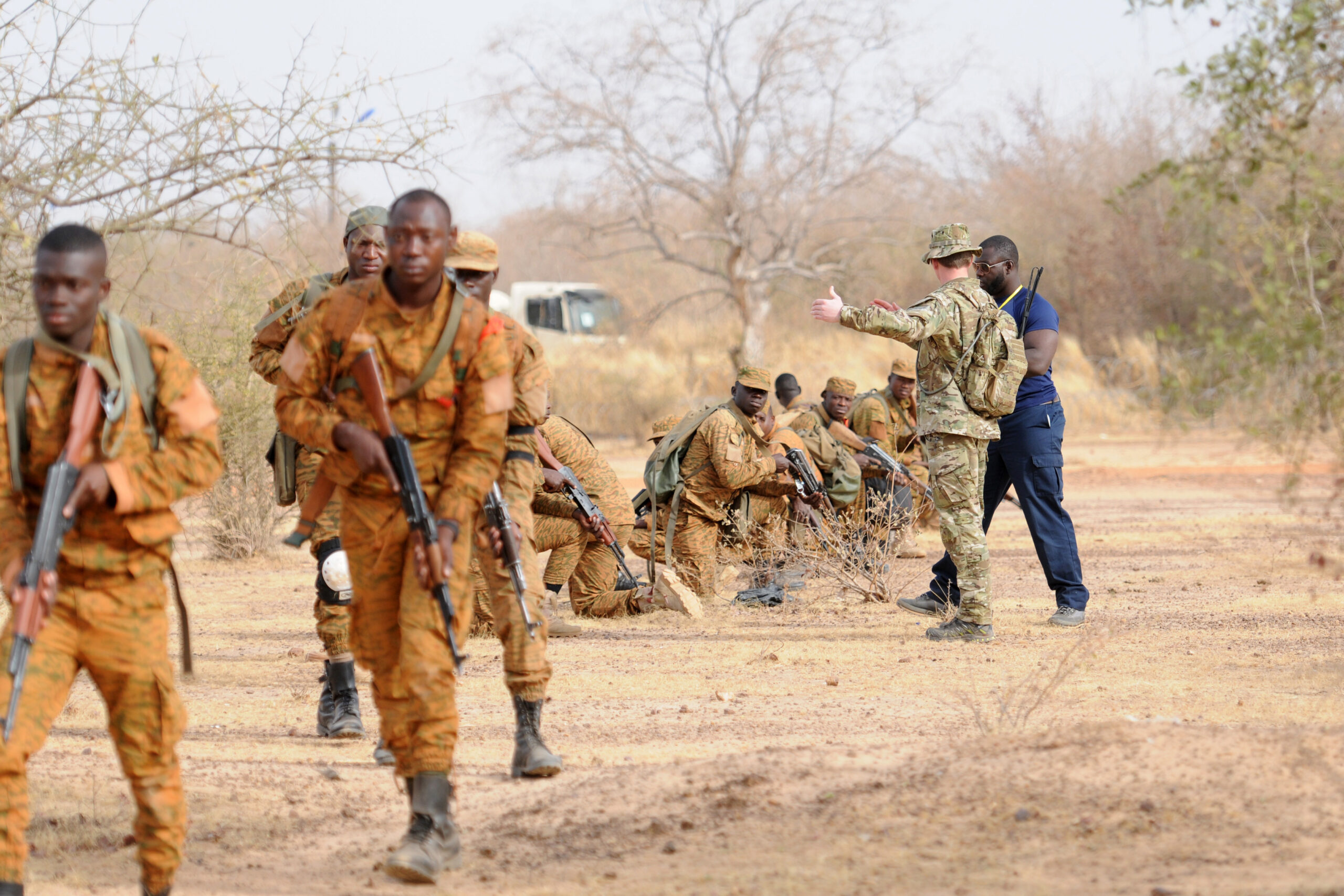
A Special Forces Soldier provides instructions to a translator for training on small unit tactics to Burkina Faso Soldiers, February 28, 2017 at Camp Zagre, Burkina Faso. Flintlock 2017 is designed to build the capacity of key partners to provide better security for the civilian population. (Photo by Spc Britany Slessman 3rd Special Forces Group (Airborne) Multimedia Illustrator/released)

Despite limited official details, the pattern is unmistakable. After a monthlong pause, the U.S. is recalibrating and reasserting its dominance across East Africa.

The timing likely ties to intelligence developments or opportunities presented by shifting enemy movements. Either way, al-Shabab and ISIS franchises operating in the Horn of Africa have once again been reminded that American might doesn’t fade away — it reloads.

These latest strikes may be just the opening salvo of an intensified counterterrorism push designed to cripple al-Shabab’s logistical backbone.

The warfighting posture seems to be moving from defensive stability to proactive offensive pursuit, a clear sign that the Trump-Hegseth vision of restoring American military strength is taking deeper hold.

It’s also an unmistakable message to adversaries everywhere — America’s War Department isn’t in the business of appeasement.

Whether in Somalia, Nigeria, or beyond, U.S. warfighters will continue to strike fast, strike hard, and remind hostile actors that peace comes only after victory, not negotiation.


Scroll to Top