Author name: Common Defense

News

Ukraine’s Drone Giant Expands Into Missile Defense in Bid to Dominate Both Air and Strike Wars

Ukraine’s top drone manufacturer, Fire Point, the brains behind the country’s deep-strike drone campaign against Russia, is now setting its sights on ballistic missile defense.

In a move signaling growing ambitions inside Kyiv’s fast-growing weapons industry, Fire Point has teamed up with German defense firm Hensoldt to develop a low-cost interceptor system called “Freyja” — a shift that could reshape Europe’s air defense landscape.

Fire Point isn’t some dusty Soviet-era factory churning out recycled tech. The company was born after Russia’s 2022 invasion and quickly transformed from a film casting agency into one of Ukraine’s biggest war contractors.

Today, its precision-guided drones account for roughly 60 percent of Ukraine’s long-range strikes inside Russia, hitting oil refineries, ammo depots, and supply networks far behind enemy lines.

Those airborne attacks, dubbed “long-range sanctions” by President Volodymyr Zelenskyy, have inflicted real pain on Moscow. Strikes on Russian fuel infrastructure have disrupted refinery production and forced the Kremlin to limit domestic fuel sales — a rare admission of economic vulnerability that Ukraine’s leadership is eager to amplify.

Fire Point’s CEO and chief designer, Denys Shtilerman, didn’t mince words during the Eurosatory weapons expo in France. “These are the drones responsible for what you see burning on your TV screens on the territory of Russia,” he said proudly, confirming what the Kremlin’s censors prefer to hide.

With its growing reputation as a producer of long-range strike drones like the FP-1, FP-2, and FP-5 “Flamingo” cruise missile, Fire Point is now expanding its reach — literally — in both directions.

On one hand, its new FP drones can reportedly fly nearly 1,700 miles while carrying sizable payloads. On the other, the firm plans to shoot down ballistic missiles for less than $1 million per intercept, a fraction of what pricey U.S.-made Patriot systems cost.

Shtilerman told Reuters that the goal is to make interception truly affordable. “If we can decrease it to less than $1 million, it will be a game changer in air defense,” he stated, explaining the company’s plan to intercept its first incoming ballistic missile by late 2027. For perspective, a single Patriot PAC-3 can cost $3.8 million to fire — not counting the launcher or supporting systems.

Trump Strengthens Support for Ukraine, Calls Russia a “Paper Tiger”

The proposed FP-7.X interceptor, which successfully completed a controlled test flight in June, is designed to hit targets at an altitude of 15 miles for about $700,000 per shot.

And while Washington and its European allies argue over aid packages and weapons shipments, Ukraine’s private sector is quietly becoming a weapons supplier in its own right. Shtilerman made this point clear: “Ukraine is now not only a consumer of aid but a provider of security solutions for Europe — and perhaps for the whole world.”

President Zelenskyy has leaned heavily on Fire Point’s innovations as part of his continued push for self-reliance in wartime production. He recently hailed the company’s new long-range drones that can now strike as far as 3,000 kilometers — enough reach to hit deep inside Russia’s industrial backbone.

“I am grateful to the Fire Point engineers,” he said during his June 20 evening address.

But Fire Point’s stunning rise hasn’t escaped scrutiny. The firm’s meteoric growth from a casting agency to a billion-dollar arms maker has landed it in Ukraine’s ongoing anti-corruption dragnet. Investigators have linked it to leaked conversations involving businessman Timur Mindich, a Zelenskyy associate now accused of corruption in the energy sector.

Putin Agrees to Ceasefire on Energy and Infrastructure Targets in Ukraine

Fire Point has denied any ties, maintaining that ownership rests solely with its co-founders. No formal charges have been filed.

Still, the optics are tricky in a country where battles against both Russian missiles and internal graft are fought daily.

Fire Point’s rapid government contracts — reportedly worth more than $1 billion this year — have raised questions among Western partners even as they applaud Ukraine’s newfound industrial prowess.

To help reassure foreign investors, Fire Point added former U.S. Secretary of State Mike Pompeo to its advisory board in November, a move clearly designed to add Western credibility and strategic weight to its growing portfolio.

Pompeo’s involvement signals that major American figures see value in Ukraine becoming a robust European manufacturer of modern warfare technology — not merely a consumer of American handouts.

Beyond weapons, Fire Point’s success also carries a symbolic punch. It represents Ukraine’s determination to move from dependency on NATO donations toward self-sustaining production that matches — or undercuts — leading Western systems in cost and capability. For U.S. policymakers and military observers tracking the global arms race, this is no small shift.

Ukraine “Well Prepared” for Potential Russian Retaliation After Daring Drone Strikes [WATCH]

As of June, Ukraine has carried out nearly 30 long-range strikes on Russian fuel sites, causing visible disruption to Russia’s internal logistics.

With Fire Point preparing to mass-produce its FP-7.X interceptors at a rate of three per day starting in August, the firm is positioning itself to become Europe’s go-to hub for low-cost air and missile defense hardware.

For Ukraine, that combination — a cheap offensive strike capability paired with an affordable missile shield — could change its strategic fortunes. For Moscow, it’s a nightmare scenario: a resourceful neighbor capable of both hitting deep into Russian territory and neutralizing retaliation on a budget.

In the global context, Fire Point’s emergence shows that the future of warfare may belong to smaller, faster, and more flexible innovators rather than sprawling, bureaucratic defense complexes.

With a little Western oversight and less political interference, Ukraine’s new war-tech machine might just outpace the lumbering systems of its supposed allies.

News

House Approves $1.55 Billion Revival for E-7 Wedgetail, Restores Navy’s Hawkeye Funds

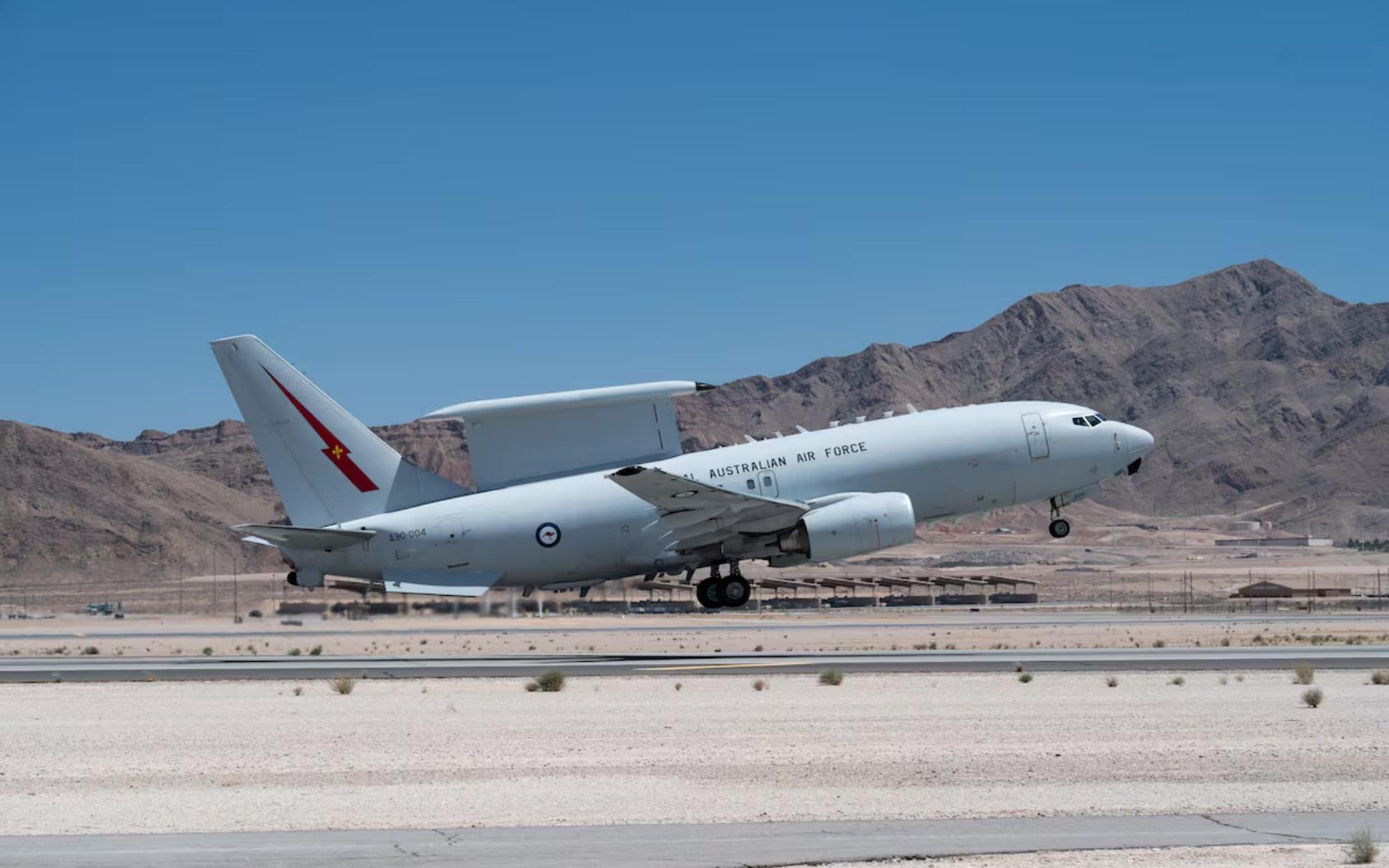
The House of Representatives is giving the Air Force’s E-7 Wedgetail program a second life, approving a $1.55 billion funding shift to pull the airborne battle management aircraft back from the scrap heap.

After bureaucrats at the White House budget office tried to cannibalize the Navy’s E-2D Hawkeye funds to make it happen, lawmakers put their foot down, steering money toward the E-7 while refusing to gut a critical Navy radar platform.

The funding maneuver emerged from the House Appropriations Committee’s fiscal year 2027 War Department bill, which reroutes existing funds but restores vital naval capabilities that the Biden administration had tried to raid.

In a June 17 budget amendment to House Speaker Mike Johnson, R-La., the White House’s Office of Management and Budget asked to push more than $1.55 billion into the Air Force’s R&D coffers to continue development of the E-7.

The program had been shelved by Pentagon leadership just last year, citing rising costs and uncertainty about survivability in contested airspace.

To make it happen, OMB sought to slash $651 million from the Navy’s E-2D Hawkeye radar aircraft account and another $899 million from a classified Air Force program.

The administration’s proposal would have effectively robbed Peter to pay Paul, gutting one critical platform to save another.

House appropriators didn’t take kindly to that kind of gamesmanship. While they approved the E-7 realignment, they rejected the Biden team’s raid on the Navy budget, restoring the $651 million meant for the carrier-based Hawkeye program.

The committee made clear both aircraft are essential to U.S. warfighting readiness—particularly with the war raging in Iran underscoring just how thin America’s airborne command and control capabilities have become.

“The conflict in Iran has reinforced the need for the Air Force to maintain a credible airborne battle management capability,” the report said, pointing out that the aging E-3 AWACS and the Navy’s E-2D Hawkeye remain the backbone of current theater operations. “As the E-3 is set to retire, the E-7 Wedgetail will serve as modern replacement for lost battle management capability.”

The current $1.55 billion will fund two prototype E-7 Wedgetails and continued engineering, manufacturing, and development work. While the Air Force already has seven aircraft on contract—two as rapid prototypes and five more under a modification agreement from March—none are production-ready.

These are developmental assets designed to prove the U.S.-specific configuration before moving to full-scale manufacture.

Lawmakers, however, are not content with rosy PowerPoint timelines. They’ve ordered the Air Force Secretary to brief both House and Senate appropriations subcommittees alongside the fiscal year 2028 request.

That briefing must include full program details: planned quantities, long-term funding requirements, and schedules for both development and eventual production.

The House report shows frustration with what many see as endless bureaucratic flip-flopping from the Pentagon. Just last year, Air Force brass wanted to scrap the Wedgetail entirely, citing ballooning per-aircraft costs from $588 million to $724 million.

The plan was to rely on additional Hawkeyes and theoretical space-based sensors. Then came the war in Iran—an unmistakable reality check exposing serious gaps in America’s airborne command network.

Faced with coalition air coordination demands and depleted AWACS fleets, the Pentagon reversed course this spring, admitting that satellites can’t yet replace a capable airborne battle management system.

The committee’s renewed commitment shows that at least some in Congress recognize the danger of chasing fantasy tech at the expense of real, in-the-sky capability.

The House decision also sends a strong signal to America’s allies. The Wedgetail already serves with U.S. partners including Australia and the United Kingdom, both of whom have made major investments in the aircraft’s proven platform.

Bringing the U.S. version to life strengthens interoperability while reaffirming American air dominance at a time when adversaries are watching every move.

Meanwhile, the Navy’s E-2D Hawkeye program—spared from OMB’s knife—remains a critical component of carrier battle group defense and joint operations. Lawmakers reaffirmed its importance, stating that “more aircraft, not fewer, are necessary to support our warfighters now and in the future.”

That’s a direct rebuke to administration budget planners who continue to treat combat readiness like a spreadsheet exercise.

For now, the restored funding means both services will keep moving forward: the Navy maintaining its eyes in the sky, and the Air Force working to revive a long-delayed, desperately needed command and control aircraft.

It’s a solid win for readiness, common sense, and for maintaining America’s edge in an increasingly volatile world.

If the Pentagon follows through this time, the E-7 Wedgetail could enter U.S. service later this decade—potentially just in time to replace a fleet of aging AWACS aircraft that have been flying since the 1970s.

Until then, Congress remains watchful to ensure the War Department doesn’t try another budget sleight of hand to cover its own strategic whiplash.

News

Pentagon Research Backbone Crumbling as Military Priorities Shift Away from Innovation

A newly released report paints a troubling picture of the War Department’s research backbone, warning that the infrastructure supporting America’s technological edge is rapidly deteriorating.

The assessment, delivered by the Office of the Under Secretary for Research and Engineering, bluntly states that years of diverted funds, bureaucratic obstacles, and organizational decay have left our nation’s defense technology enterprise on shaky ground.

According to the report, money meant for modernization and research has routinely been siphoned off to plug operational shortfalls.

Authorized construction projects to upgrade key research and testing facilities continue to be delayed or canceled outright, as the services scramble to reprioritize limited budgets. In plain terms, the War Department keeps robbing innovation to fund maintenance.

That’s a dangerous game in an age where America’s adversaries, particularly China, are investing nonstop in military research and harnessing commercial technology for warfighting advantage.

Beijing has fused its civilian and military sectors into a hyper-efficient machine—while Washington can’t even agree on how to label its research programs.

Investigators examined 30 government labs and research centers—roughly a third of the total network—in what the report called “unprecedented data collection.”

What they found isn’t exactly confidence-inspiring. The Department’s vast research, development, testing, and evaluation ecosystem remains “fundamentally sound” in structure but seriously outdated in execution.

The bureaucrats’ own words are damning: “The Department’s ability to maintain a technically advanced warfighting capability is weakening.” And ironically, the study isn’t calling for closures or cost-cutting—it’s calling for serious reform and renewed investment.

A major concern is the slow and frustrating hiring process for new researchers. Young scientists and engineers are walking away from government opportunities due to endless paperwork, low flexibility, and backlogged security clearances.

And while commercial firms can onboard talent in weeks, Pentagon labs sometimes take months just to start a background check.

Adding insult to injury, the War Department doesn’t even have a clear inventory of its research facilities.

The report notes that the Pentagon “does not possess a comprehensive, authoritative list” of specialized test sites, meaning billions of dollars’ worth of infrastructure may be underutilized or forgotten. It’s government inefficiency at its finest.

The absurdity runs deeper: research domains are so inconsistently categorized that no one can even tell who is working on what. One lab might label its work as “Human-Machine Teaming,” another “Autonomy and Teaming,” and another “AI Agent Development.” The result is a fragmented maze of disconnected projects and wasted synergy.

Meanwhile, the Department’s own intellectual property—the crown jewels of its innovation portfolio—sits largely unused.

The report blasts the “passive marketing” and lack of a centralized mechanism for industry access, saying startups often abandon projects because Pentagon bureaucracy kills momentum. “Administrative burdens often exceed funding timelines,” it warns. Translation: Washington’s red tape is driving away the very innovators we need most.

Even when breakthroughs are made, getting them from lab benches to battlefield gear has become painfully slow.

The report attributes this to “bureaucratic stovepipes, fragmented funding, and misaligned incentives”—a polite way of saying the bureaucracy is strangling itself. Technologies that should reach warfighters in months are often delayed for years.

Notably, the report praises China’s civil-military fusion approach, acknowledging its success in creating a unified strategy between government, academia, and industry.

The message is clear, even if Washington won’t admit it: our adversaries are outpacing us because they take innovation seriously.

To remedy the decline, the study lists several fixes—use artificial intelligence to speed clearance reviews, loosen funding restrictions for lab renovations, and create a searchable tool for intellectual property.

Each recommendation points to the same underlying truth: the current system is too rigid and too complacent to meet modern threats.

The conclusion is blunt and urgent: without a robust, agile, and properly funded research enterprise, the Department cannot equip warfighters with the advanced capabilities needed to deter or defeat tomorrow’s adversaries.

In an era of geopolitical rivalry, that’s more than a bureaucratic problem—it’s a national security crisis.

News

House Panel Pushes Spending Bill Slashing Air Force Flight Hours and Key Programs

The House Appropriations Committee has advanced a fiscal year 2027 spending bill that trims the Air Force’s budget, dialing back flying hours and several other major programs.

Republican lawmakers say the Pentagon’s request is bloated, while others warn that hamstringing key mission areas could jeopardize readiness at a time when America’s adversaries are on the move.

The Air Force’s Flying Hour Program is at the center of the clash.

The Department of the Air Force had requested roughly $9.9 billion this spring to boost pilot flying hours to over one million – a 22 percent increase aimed at rebuilding readiness levels that suffered during years of budget stagnation.

Lawmakers, however, shaved that down, part of a broader push to hold the Pentagon’s record request for $1.5 trillion in check.

Congressional critics argue that too much of the proposed funding is directed toward the Iran conflict and other foreign operations, diverting resources from domestic stability and fiscal sanity.

For top brass in the War Department, that reasoning rings hollow, since combat readiness can’t be turned on and off like a light switch.

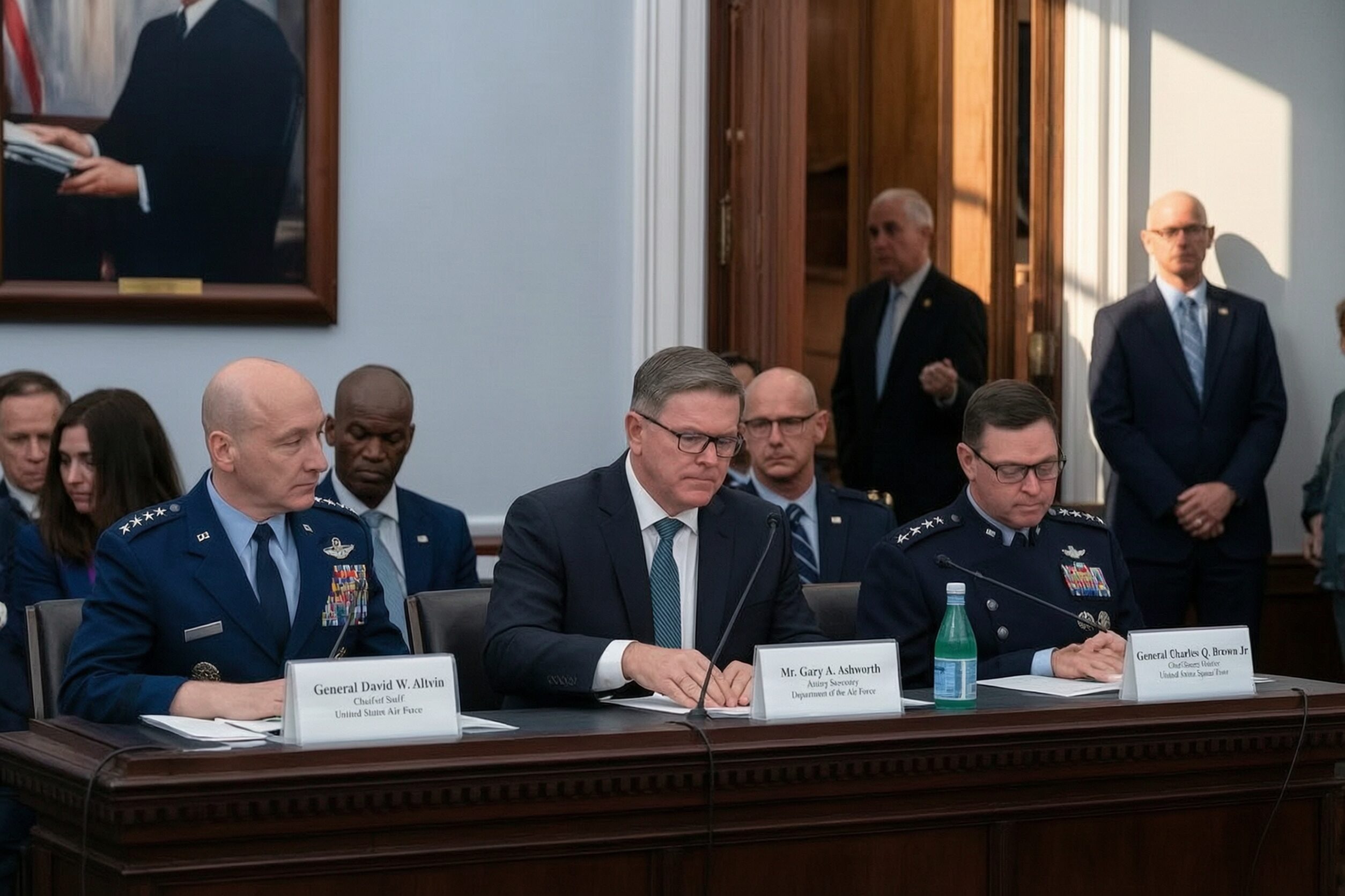
Senator John Kennedy, the sharp-tongued Republican from Louisiana, fired a warning shot at a recent hearing. He noted that partisan gridlock over military funding levels could trigger yet another government shutdown if leadership doesn’t find consensus soon.

His frustration echoed throughout the room as he pressed Air Force Secretary Troy Meink on contingency plans.

Meanwhile, deep slashes to other Air Force accounts accompanied the flying-hour reductions. The Working Capital Fund – which handles maintenance, logistics, and supply-chain operations across key installations – took the heaviest blow.

Lawmakers cut its budget from $4.4 billion to just $1.7 billion, an eye-popping 60 percent reduction.

Procurement lines didn’t escape either. Funding for aircraft, missiles, and ammunition purchases was reduced by $1.5 billion, leaving the Air Force with just over $72 billion for those critical assets.

For a service already juggling fifth-generation fighters, hypersonics development, and expanding space missions, these cuts could create a lasting ripple effect.

Operations and maintenance funding dropped by another $726 million, bringing that category down to $73 billion. The Space Force, which falls under the Department of the Air Force, didn’t fare much better.

Its budget shrank by $465 million to $8.8 billion. Those numbers are striking when measured against the rhetoric of “strategic modernization” that Washington elites like to throw around while our enemies build arsenals at breakneck speed.

Critics on the right point out that while bureaucrats posture over “fiscal discipline,” the real issue is Congress’s habit of playing politics with national security. Cutting the very programs that generate skilled aviators, maintain equipment, and supply warfighters sends the wrong message to both allies and adversaries.

Supporters of the current bill insist that the Pentagon must learn to do more with less. They argue that U.S. defense operations have become plagued by inefficiency, and that trimming certain accounts will force better prioritization.

Yet, as anyone who’s ever put on a uniform knows, “doing more with less” only works until the next mission failure or aircraft accident hits the headlines.

The bill now moves to the full House floor for debate, where conservative lawmakers are expected to push for adjustments to restore readiness-related funding.

The Senate Appropriations Committee still hasn’t unveiled its counterpart bill, setting the stage for another Capitol Hill standoff.

Inside the War Department, there’s growing unease that all this political jockeying could disrupt planning cycles and readiness efforts intended to prepare for Chinese and Russian aggression.

Restoring flying hours and sustainment funds isn’t pork—it’s essential to keeping the world’s most powerful air force lethal, trained, and ready to win.

If this Congress fails to grasp that basic truth, America’s warfighters will pay the price while bureaucrats pat themselves on the back for “balancing” the budget.

A smart fiscal policy should strengthen deterrence, not second-guess it. The coming months will show whether the House and Senate have the backbone—and the foresight—to deliver on that principle.

News

Ukraine’s Balloon-Launched Missile Floats Deep Into Russia’s Backyard

Ukraine’s military engineers have unveiled yet another creative way to punch through Russian defenses — and this time, it’s literally riding on the wind.

A new weapon, dubbed DART, is the first missile designed to launch from a high-altitude balloon and strike targets deep inside Russia.

The concept comes from the Kyiv-based Center of Innovative Technologies Program, which has developed this balloon-borne missile to bypass Russian jamming and deliver devastating effects at long range.

The launch platform floats quietly at altitudes between 7 and 11 miles before releasing its payload. The missile then follows satellite guidance until it reaches about 4 miles high, where the solid-fuel engine ignites and drives it toward its target.

Developers claim that once the missile drops below guidance level, it’s immune to Russian electronic warfare interference — meaning Moscow’s extensive jamming systems can’t pull it off course.

It’s a novel way to outsmart the Kremlin’s ground-based defenses while saving Ukraine’s limited stockpiles of conventional long-range rockets.

Equipped with a roughly 22-pound warhead filled with conductive graphite filaments, the DART is reportedly intended to short-circuit Russian power infrastructure — a weapon meant to darken the lights rather than explode them. The design still awaits full military codification by Ukraine’s armed forces, but experts see enormous potential in this low-cost system.

Retired Ukrainian Army Colonel Viktor Kevliuk, a veteran of 35 years, said balloons have become a surprisingly important part of Ukraine’s war toolkit.

“They are inexpensive, inconspicuous on radars, can hang in the air for a long time and carry a payload,” he told Euromaidan Press.

He added that Ukraine has already launched more than a thousand balloons into Russian airspace — often to confuse or deplete Russian air defenses.

What makes DART special is its transition from a decoy to a delivery system. Instead of floating harmlessly, these balloons can now carry guided weapons that ride prevailing west-to-east winds directly over Russian territory.

In some strikes, Ukrainian balloons have reached as far as Moscow itself, tracked by Russian radar at roughly six miles high.

This new phase of the war coincides with a broader shift on the battlefield. For the first time since its faltering 2023 counteroffensive, Ukraine has started to regain more ground than it loses.

Analysts at the Institute for the Study of War credit Ukraine’s breakthrough to its growing dominance in drones and electronic warfare — an area where Russian forces have struggled to keep pace.

President Volodymyr Zelenskyy calls his long-range strike strategy Ukraine’s “long-range sanctions” — high-tech attacks that target the Kremlin’s war economy hundreds of miles inside Russia.

Balloons fit perfectly into that effort. They can release drones or missiles after floating deep into enemy airspace, combining altitudes and ranges to hit targets traditional systems cannot reach.

Ukraine’s military has regularly used balloons as lures, drawing Russian air defenses into wasting million-dollar S-300 and S-400 interceptors on targets that cost only a few hundred dollars. Each decoy balloon that absorbs a missile saves Ukrainian lives and drains the Kremlin’s already stretched missile stockpile.

In September, Ukrainian forces floated several balloons over Moscow and Tatarstan in a coordinated nighttime strike, apparently to confuse Russian radar systems.

That same tactic surfaced again when footage appeared online showing a U.S.-made Hornet drone released from a Ukrainian balloon. This American-built AI-guided drone, produced by Perennial Autonomy, can travel roughly 93 miles on its own power — but launching it from a balloon doubles its reach, according to The Defence Blog.

Perennial Autonomy’s founder, Eric Schmidt — former CEO of Google — has played a key role in advancing Ukraine’s high-tech air capabilities.

His firm recently earned the U.S. military’s largest counter-drone contract ever, valued at $500 million. Brigadier General Matt Ross, who oversaw the award, said it’s part of building a “layered defense” that relies on low-cost interceptors and adaptable platforms — the same logic behind Ukraine’s DART system.

Interestingly, the U.S. Army has also been testing similar balloon systems known as aerostats, experimenting with tethered units to detect drones and even launch small swarms. The technology could easily cross over into the Ukraine theater, and both American and Ukrainian strategists are watching those tests closely.

Russia, for its part, has tried to mimic the idea but hasn’t found much success. The wind patterns along the front line typically blow west to east — meaning any Russian balloon launched toward Ukraine would just drift back toward Russian territory. That natural advantage makes Ukraine’s new approach even more effective.

Following SpaceX’s restrictions on Russian use of Starlink systems, Moscow began developing its own high-altitude relay balloon called Barrazh-1, which carries communications gear.

However, its technical limitations and dependence on domestically built components show just how far behind the Kremlin remains in this new frontier of warfare.

In short, Ukraine’s balloon-launched missile program represents a remarkable twist in modern military innovation — proof that sometimes, the simplest ideas can blow straight past the enemy’s most expensive defenses.

News

Senior ISIS Commander Eliminated in Precision U.S. Airstrike, CENTCOM Confirms

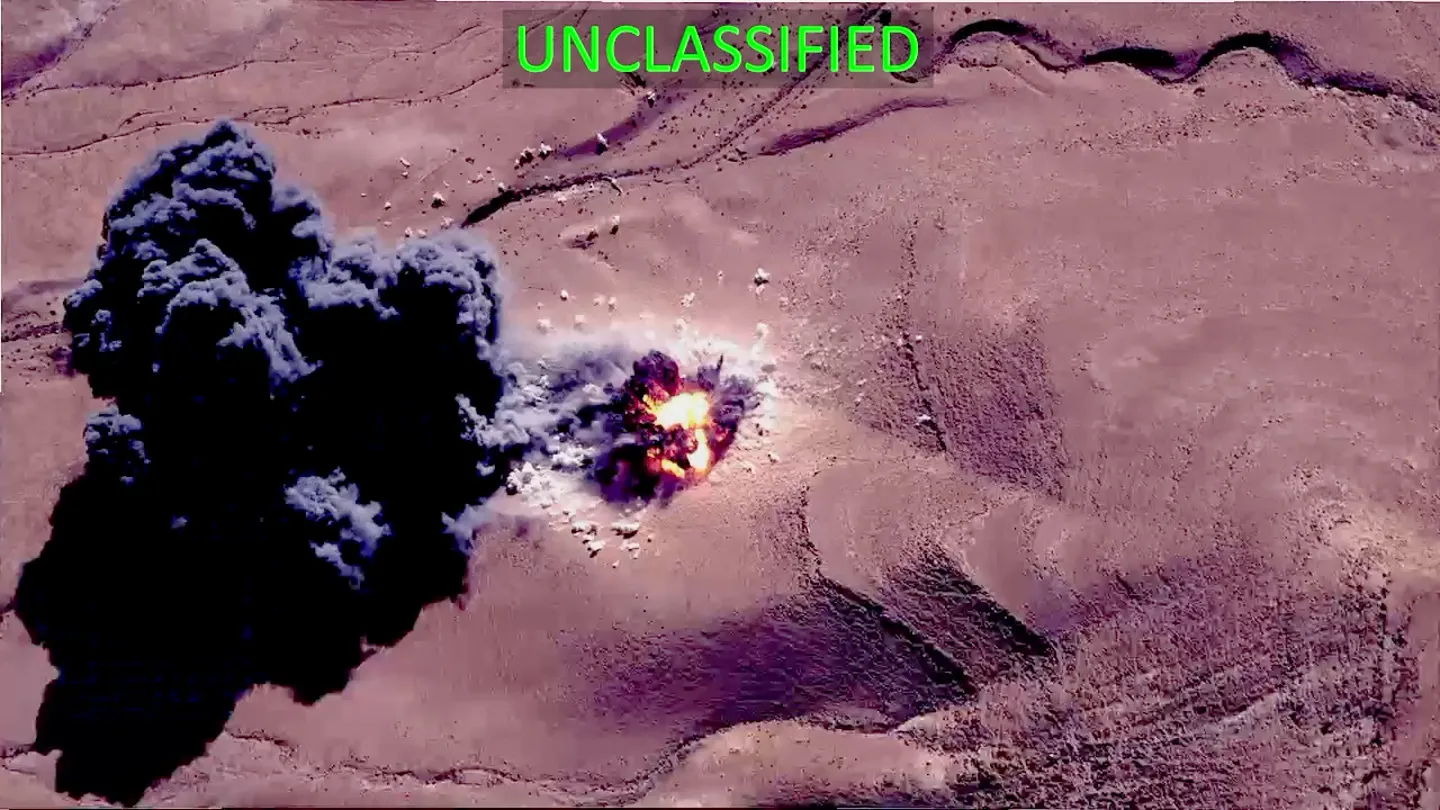
A senior Islamic State commander met his end last week when a precision U.S. airstrike in Syria struck its mark, Central Command confirmed Wednesday.

The strike, carried out on June 19, eliminated Ali Husayn al-Ulaywi, a major ISIS figure responsible for orchestrating operations across Eastern Syria.

The announcement comes at a critical moment, as American and allied forces continue hammering the remnants of ISIS while navigating the chaos of a fractured post-Assad Syria.

According to Adm. Brad Cooper, the CENTCOM commander, the mission underscores the unwavering U.S. resolve to root out the terrorist threat.

“CENTCOM and our partners remain committed to rooting out remaining remnants of ISIS to ensure its enduring defeat,” Cooper said.

“We will continue to defend the U.S. homeland, our service members, and allies and partners across the region.” His statement signals that, even amid shifting regional politics, America’s warfighters continue to keep their boots firmly on the neck of terrorists wherever they hide.

The successful strike also comes amid growing instability in Syria following the December 2024 downfall of longtime dictator Bashar al-Assad.

With Assad gone, a scramble has erupted among dozens of rival militias, warlords, and foreign-backed factions seeking control. This power vacuum opened new opportunities for ISIS fighters to reemerge, prompting a renewed push by CENTCOM to maintain order and eliminate threats before they can regroup.

Trump Announces Death of ISIS No. 2 in Bold U.S.-Nigerian Operation
The U.S. military carried out ten strikes against more than 30 ISIS targets in Syria following a December ambush that killed U.S. troops. (CENTCOM)

Earlier this year, chaos along the front lines led to the escape of approximately 150 ISIS prisoners from Syrian custody, according to a recent Inspector General report. Many of those escapees were battle-hardened jihadists.

Their reappearance in the region raised alarm bells at the Pentagon and among allied intelligence services, who warned that released extremists could fuel another insurgent surge.

American and coalition forces quickly responded by securing the Panorama detention facility in northeastern Syria. In the weeks that followed, more than 5,000 ISIS detainees were transferred from Syrian compounds to Iraqi-run prisons.

The transfer was an enormous logistical achievement—one that showcased the continued coordination between CENTCOM, Iraqi partners, and local security forces in Kurdistan.

Tensions Flare as Venezuela Accuses U.S. Navy of Raiding Tuna Boat in Caribbean
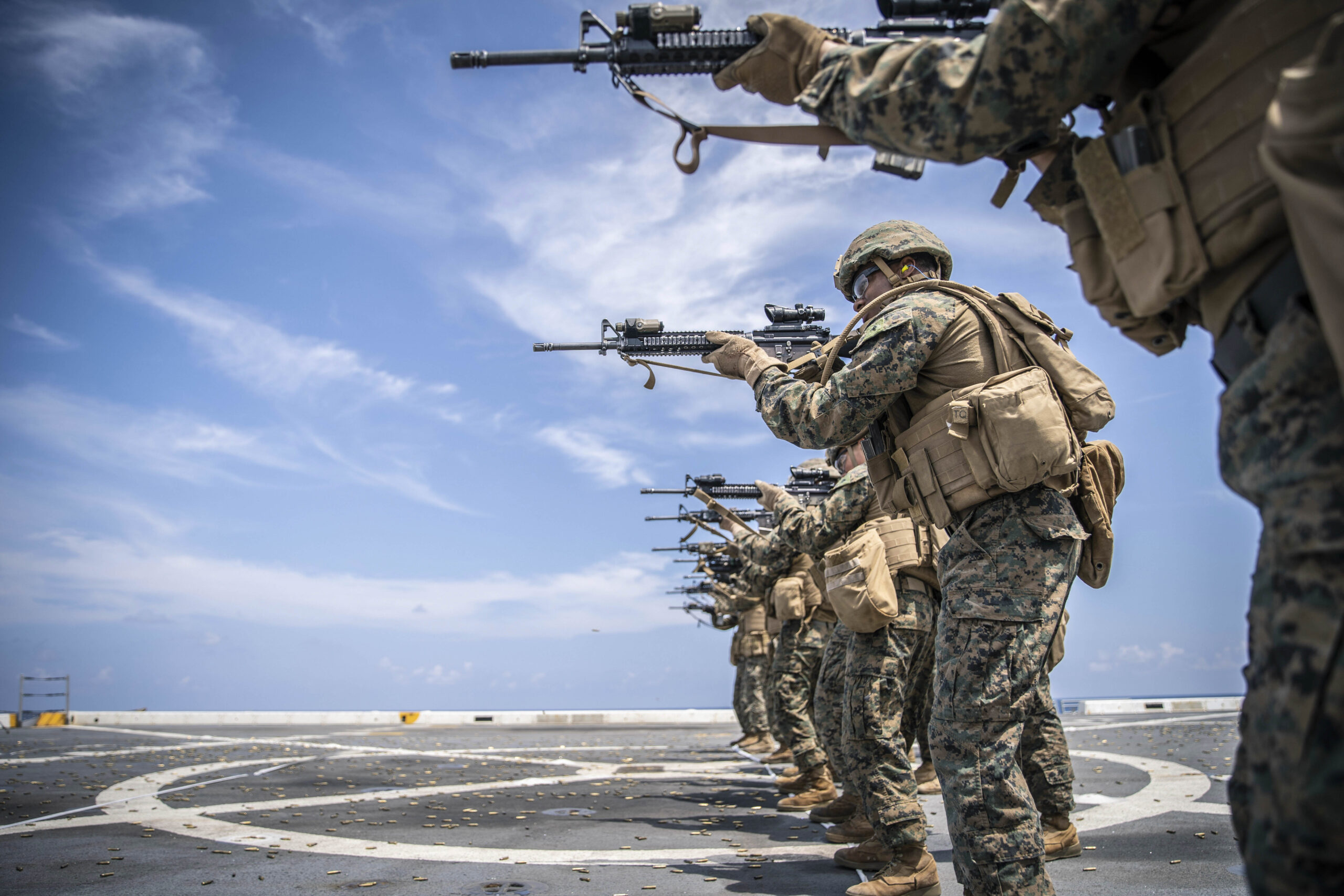
U.S. Marines with Alpha Battery, Battalion Landing Team 3/5, 11th Marine Expeditionary Unit (MEU), fire at targets during a combat marksmanship practice range aboard the San Antonio-class amphibious transport dock ship USS John P. Murtha (LPD 26). The Marines and Sailors of the 11th MEU are deployed to the U.S. 7th Fleet area of operations to support regional stability, reassure partners and allies, and maintain a presence postured to respond to any crisis ranging from humanitarian assistance to contingency operations. (U.S. Marine Corps photo by Sgt. Adam Dublinske)

Despite these efforts, the same Inspector General report revealed that up to 20,000 residents walked out of the al-Hol displacement camp, a sprawling complex that once held ISIS family members and sympathizers.

Many vanished without surveillance, underscoring how fragile the situation remains. The exodus of known ISIS affiliates, combined with the escape of hardened fighters, has reignited fears that ISIS cells could attempt to regroup in rural Syria or along Iraq’s porous border.

Complicating matters further, CENTCOM recently confirmed that U.S. forces completed a long-planned withdrawal from their remaining Syrian bases in April.

After a decade of front-line deployments under Operation Inherent Resolve, American troops officially shuttered the last outposts, marking a new operational chapter. However, Washington has made it clear that precision strikes—like the one that killed al-Ulaywi—will continue as needed, no matter where terrorists scatter.

CENTCOM Strike Eliminates Senior ISIS Leader in Syria Amid U.S. Troop Drawdown
U.S. soldiers and Syrian fighters patrol the Deconfliction Zone in Syria on June 11. (Sgt. Trenton Pallone/Army)

While some criticize the United States for closing its footprint in Syria, military leaders argue that leaner, more agile strike capabilities reduce risk while maintaining dominance from the skies.

CENTCOM’s targeting network remains unmatched, utilizing intelligence from drones, satellites, and special operations forces embedded with regional allies. The elimination of al-Ulaywi proves that the reach and lethality of American airpower remains as formidable as ever.

The strategic picture appears to be growing more complex by the day. The war’s shifting dynamics have produced fresh challenges, including the discovery of hidden chemical weapons caches left behind by Assad’s forces and various militia groups.

Those discoveries have fueled new fears that extremists could attempt to seize or sell dangerous materials on the black market if Western vigilance falters.

US Forces Kill ISIS’s Second in Command in Iraq Strike

Even so, CENTCOM’s message is clear: the fight is far from over, and America will not allow terrorism to fester anew in the Middle East. Every successful strike like the one on June 19 reinforces that message.

The U.S. military remains the backbone of stability, a deterrent to chaos, and the shield protecting America’s homeland from ideologies that thrive on destruction.

For now, ISIS’s once grandiose dream of resurrecting a caliphate has been reduced to dust by U.S. precision strikes and persistent intelligence operations.

Al-Ulaywi’s death is another nail in that coffin, another sign that no matter how far terrorists run, the eyes of CENTCOM will always find them.

News

Marines Engage in Multiple Firefights Defending U.S. Embassy in Haiti

The Marines once again proved why they are the backbone of American resolve overseas.

According to Col. Tom “Banshee” Trimble, commanding officer of the 22nd Marine Expeditionary Unit (Special Operations Capable), U.S. Marines deployed to Haiti were repeatedly engaged in firefights while defending the U.S. Embassy in Port-au-Prince from violent gangs that have turned the capital city into a warzone.

Trimble told reporters that the Marines were fired upon multiple times and returned fire “on several occasions” during their 10-month deployment.

“There were multiple engagements at the embassy in Haiti, in which we received and returned fire,” he stated, making it very clear that the Marines didn’t back down for a second.

From August to December 2025, the 22nd MEU was positioned in Haiti to secure the embassy as gangs overran nearly 90 percent of the capital.

Port-au-Prince is now in the grip of organized crime and chaos, but American Marines stood their ground under pressure, protecting U.S. diplomats and personnel in one of the most volatile environments in the Western Hemisphere.

Trimble emphasized that while the engagements were intense, no Marines were injured or killed — a testament, he said, to their training, discipline, and clear understanding of the rules of engagement.

Marines Plot Bold Airpower Upgrade To Smash Enemy Chokepoints At Sea
Low altitude air defense gunners aboard the USS Portland in the Balabac Strait, May 4, 2026. (MCS Adam Bishop/U.S. Navy)

“The Marines went unscathed because we went in there, we reinforced positions, and we were well trained to understand what the ROE was,” Trimble explained.

A Marine Corps spokesperson confirmed reports in November that the Marines exchanged fire with “suspected gang members” as part of their embassy security operation.

These weren’t isolated incidents but part of what Trimble called a “consistent basis” of attacks throughout the deployment.

Marines Expand Footprint in Philippines Amid Steady Rotations
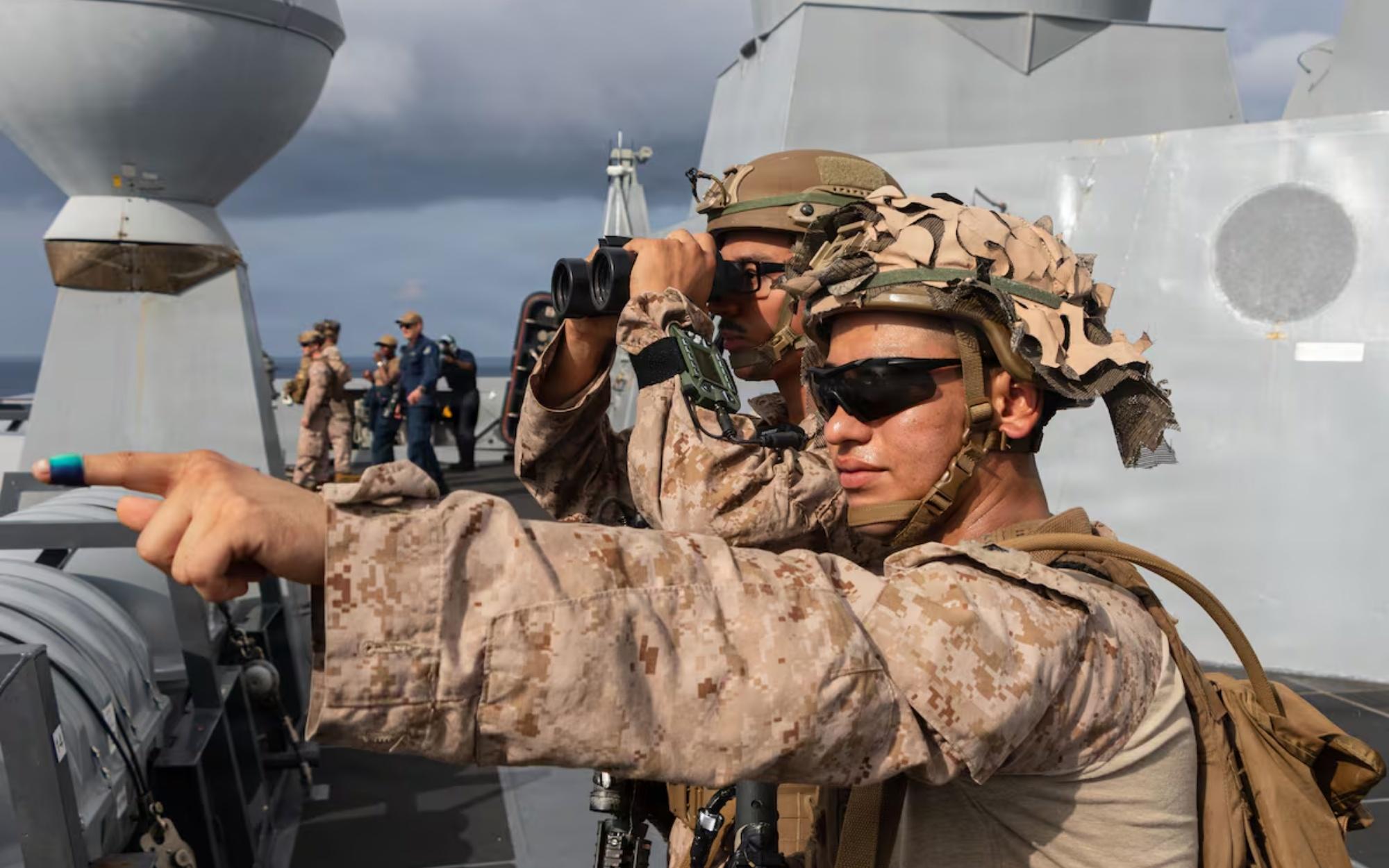
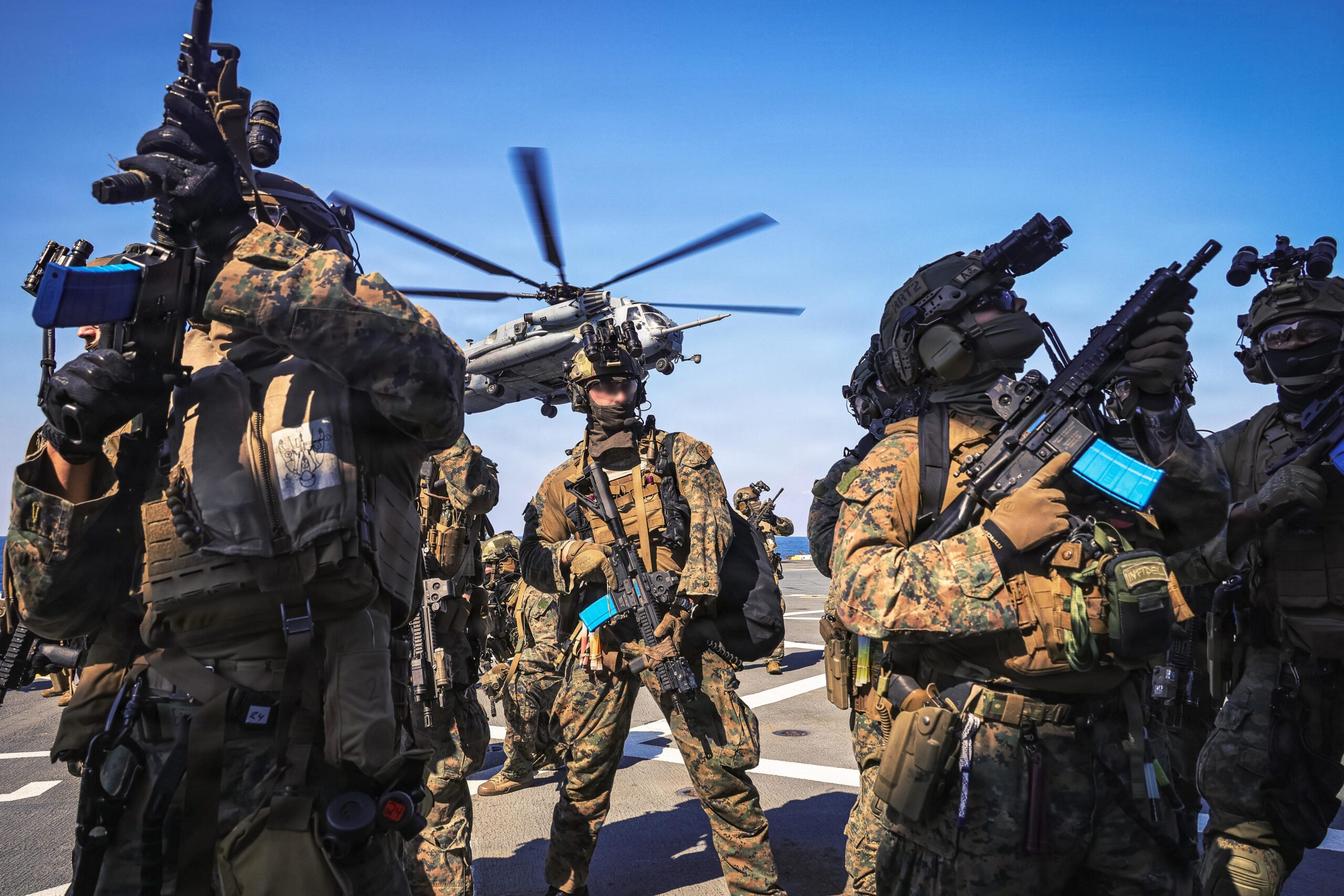
Marines assigned to Maritime Raid Force, 31st Marine Expeditionary Unit, secure the flight deck during a simulated visit, board, search and seizure exercise in the Philippine Sea, Feb. 4, 2026.

Yet, despite the hail of gunfire, the Marines remained disciplined — returning fire only when appropriate and in strict accordance with the rules of engagement.

Trimble described the troops’ conduct as “by the book,” stating, “When we received these engagements, we had a clear depiction of what the rules of engagement were.

We followed the ROE to a T and did exactly what the Department of State wanted us to do in order to defend the embassy in Haiti.”

It remains unclear whether any of the attackers were killed in these shootouts.

When pressed, Trimble responded: “I cannot disclose that, but unknown.” That’s a polite Marine way of saying: we held the line, and the bad guys learned a hard lesson in what happens when you shoot at Americans.

After months of tension and sporadic combat, the 22nd MEU rotated out and was replaced by a Fleet-Anti-terrorism Security Team (FAST Company) — another elite group trained specifically for high-threat embassy protection.

The mission continues to ensure that U.S. personnel remain safe in a region that has slipped deeper into lawlessness under weak leadership and decades of corruption.

Marines Allow Red Dot Optics for Pistol Qualification, Under One Condition
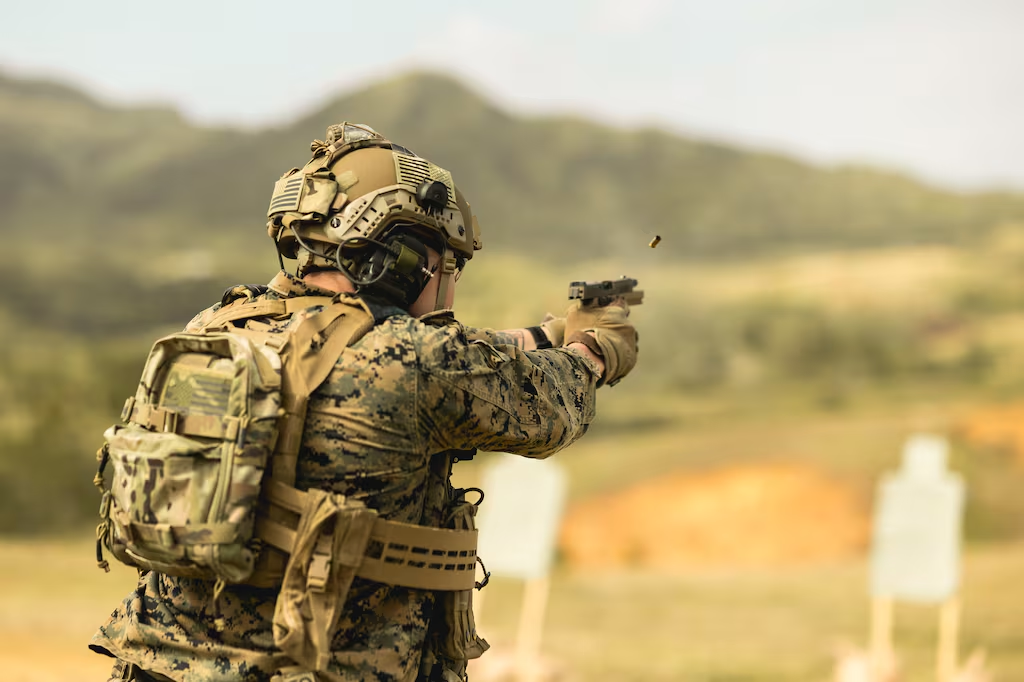
A Marine assigned to 5th ANGLICO fires an M18 service pistol during an exercise in Okinawa. (Staff Sgt. Manuel A. Serrano/Marine Corps)

During the rest of the 22nd MEU’s deployment, the Marines supported other bold missions — including operations related to the capture of Venezuelan dictator Nicolás Maduro and high-level exercises around the U.S. Embassy in Caracas.

Say what you will about global instability — America still sends in the best when the job needs to get done.

Regarding awards for combat action, Trimble confirmed that recognition for the Haiti engagement is under review.

“The award process was still being worked out, but anything that was in accordance with the awards pub or the manuals, we did put the brief up for those awards,” he said. Those awards are well deserved — these Marines didn’t just stand guard, they stood in the fight.

The Haiti firefights throw a sharp light on the chaos brewing in the Caribbean, where gangs have eclipsed the government in control and influence.

The U.S. embassy has become one of the few bastions of order. It also highlights the increasing need for strong, well-trained forces capable of acting decisively under pressure — something this administration should prioritize rather than cut funding to.

Navy Amphibious Readiness Declines as Marines and Sailors Deploy to the Caribbean
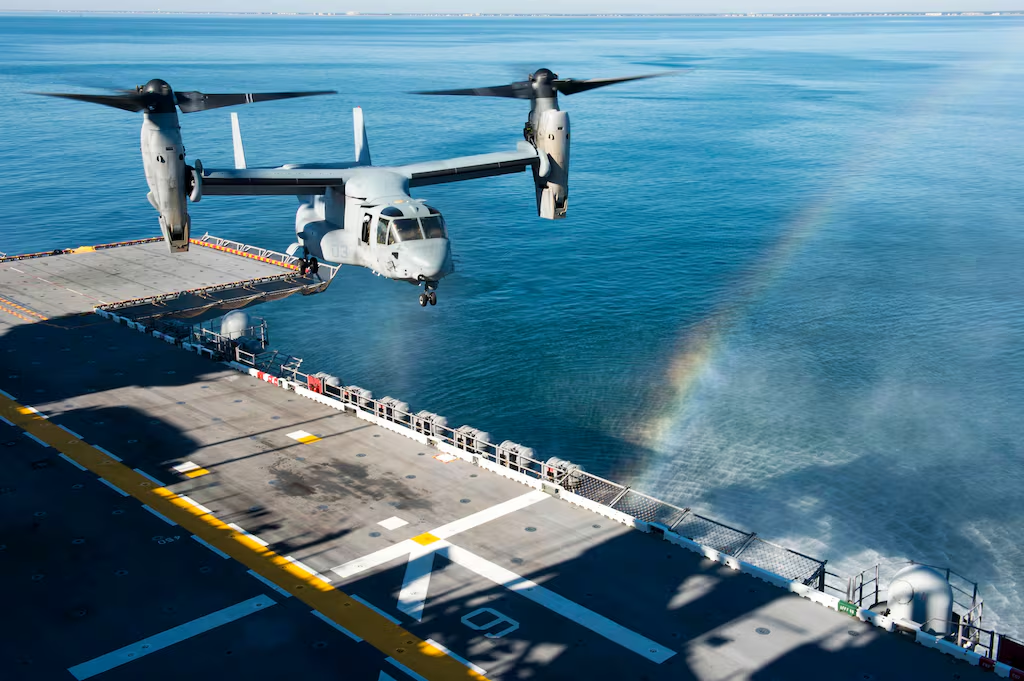
An MV-22B Osprey from Marine Medium Tiltrotor Squadron 365 (Reinforced) lands aboard the Wasp-class amphibious assault ship Iwo Jima (LHD 7) to embark Marines aboard the ship. Iwo Jima deployed as part of the Iwo Jima Amphibious Ready Group to support maritime security operations and theater security cooperation efforts in the U.S. 5th and 6th Fleet areas of responsibility. (Mass Communication Specialist Seaman Shelby M. Tucker/Navy)

While much of the mainstream press yawns its way through the story, this is one of those moments that show the price of maintaining American presence and credibility abroad. The men and women of the Marine Corps aren’t idle observers.

They’re on the front line, holding the line, no matter where the world unravels next.

President Trump has been clear about his intention to restore strength and accountability to every corner of the War Department.

If anything, what these Marines did in Haiti serves as a textbook case in combat readiness and leadership — exactly the kind of discipline and grit War Secretary Pete Hegseth has been pushing for across all branches.

As Trimble put it plainly, “We were ready, we were professional, and we did the mission.” That statement sums it up perfectly — American Marines doing what they’ve always done best: defend, fight, and win.

News

Army Sergeant Gets Six Life Sentences After Georgia Base Shooting Rampage

A U.S. Army sergeant found guilty of unleashing a terrifying shooting spree at Fort Stewart has been sentenced to six life terms, capping off one of the most disturbing cases of betrayal inside the ranks in recent memory.

Sgt. Quornelius S. Radford, 29, faced military justice and was convicted of several counts of attempted murder after attacking his own unit and wounding five fellow soldiers, including his fiancé, during an August 2025 rampage.

According to the Army’s Office of Special Trial Counsel, Radford’s actions were nothing short of deliberate and cold-blooded.

On that violent day, the former automated logistics sergeant with A Company, 703rd Brigade Support Battalion, 2nd Armored Brigade Combat Team, 3rd Infantry Division, arrived at his unit headquarters armed and angry.

His target? The same soldiers he was sworn to fight beside.

The chaos began after an argument with his fiancé spiraled out of control, prompting Radford to drive to the installation with a loaded pistol.

His fiancé, reportedly worried that the soldier was suicidal, followed him onto the post in a desperate attempt to intervene.

Instead, Radford turned his weapon on him, firing before storming into his unit’s office to attack others in cold blood.

Inside, Radford shot four additional soldiers before attempting to fire on a fifth, missing only by chance. It was only because of the bravery and quick action of those in the building that more lives weren’t lost.

Fellow troops tackled the gunman, disarmed him, and immediately began administering lifesaving first aid to the wounded — true warriors even in the face of unimaginable chaos.

The Army confirmed that Radford was found guilty on two counts of attempted premeditated murder and four counts of attempted unpremeditated murder.

Army Sergeant Accused of Shooting Five Soldiers at Fort Stewart
Soldiers assigned to the 3rd Infantry Division represent Soldiers from each era of the division’s history during the Salute to Summer Twilight Tattoo at Fort Stewart, Georgia, June 23, 2025. Salute to Summer is an annual multi-day celebration thanking Marne Soldiers and Families for their Service and sacrifice. (U.S. Army photo by Pfc. Darnell Howard).

Combined with additional convictions for domestic violence and aggravated assault with a dangerous weapon, the judge handed down six consecutive life sentences with the possibility of parole, alongside a dishonorable discharge, pay forfeiture, and reduction in rank.

Military prosecutors left no doubt about how deeply this act of violence struck the heart of the force. “Sgt. Radford turned his weapon on his own unit, shooting fellow soldiers, including members of his leadership, shattering the trust that is essential to every military organization.

His actions left victims with devastating physical injuries, emotional trauma and scars that will endure for a lifetime,” Maj. Matthew Fields stated.

Radford confessed fully to the shooting spree, and his road from uniformed soldier to convicted criminal will end at the United States Disciplinary Barracks at Fort Leavenworth, Kansas, where he’ll spend the rest of his life serving his sentence. While the court allowed for the technical possibility of parole, his chances of ever walking free again are slim.

Each of the six victims took the stand during the trial, sharing their firsthand accounts of the horror that unfolded that day. The Army reported that every one of them insisted Radford should face the maximum punishment available — a sentiment shared widely throughout his command and across the Fort Stewart community.

What happened next was a testament to the courage and professionalism the American military still stands for. Secretary of War Pete Hegseth has consistently emphasized the warrior ethos and moral integrity expected of every uniformed service member, and the soldiers who subdued Radford embodied those ideals when it mattered most.

Army Secretary Dan Driscoll presented the six who stepped up under fire with the Meritorious Service Medal, honoring their quick thinking and valor.

Fort Stewart’s 3rd Infantry Division has long been a proud symbol of discipline and resolve, and while this tragic event tested its spirit, it also revealed the strength within its ranks.

Soldiers came together to protect one another under extreme duress, proving once again that the American warrior tradition survives even the darkest moments.

The incident also reignited discussion on base security and mental stability within the ranks. Despite the military’s ongoing focus on mental health, no program can fully prevent an individual from committing acts of evil when driven by rage or instability.

This case serves as yet another reminder that personal accountability and vigilance remain critical components of unit readiness and resilience.

Radford’s sentencing made clear that the military justice system still has teeth when it comes to defending its own.

There was no leniency, no excuses, and no “understanding” of his crimes — just righteous punishment for turning a personal grievance into an act of violence against America’s own soldiers.

At its core, this tragedy is both a story of betrayal and of heroism — betrayal by one soldier who chose chaos, and heroism by those who refused to let it consume their brothers and sisters in arms.

While Radford spends his life in confinement, the warriors he wounded have already shown what true strength looks like: standing tall, refusing to back down, and keeping faith with each other even when one of their own broke that bond beyond repair.

News

US, UK, France, and Germany Sound Alarm Over Aggressive Chinese Maritime Patrols Near Taiwan

Tensions in the Pacific are heating up again as China ramped up maritime patrols off Taiwan’s eastern coast, prompting the United States, Britain, France, and Germany to jointly express serious alarm.

The coordinated message from major Western powers came after Beijing stepped up Coast Guard patrols and so-called “law enforcement operations” in waters well beyond what the international community recognizes as China’s authority.

For months, China has been incrementally testing limits in the Taiwan Strait and now the open waters to the island’s east.

In early June, Chinese Coast Guard vessels entered those strategic waters under the guise of a “special maritime traffic law-enforcement operation.”

Taiwan’s government immediately condemned the move as a coercive and dangerous show of force designed to intimidate both Taipei and its foreign partners.

According to Chinese state media, the recent patrols were supposedly triggered by an announcement that Japan and the Philippines plan to hold negotiations to delineate maritime boundaries.

Beijing, quick to insert itself, claimed those talks infringed upon Chinese waters—an assertion that, as usual, does not hold up to scrutiny under international maritime law.

Beijing’s Coast Guard and survey ships weren’t idly floating around either. Reports confirmed Chinese vessels have been inspecting hundreds of ships passing through the area, demanding origin and destination information, and allegedly “rectifying violations.”

That’s Beijing’s code for harassment. Taiwan’s Defense Ministry and maritime authorities said at least three commercial vessels were directly confronted and intimidated by Chinese Coast Guard ships.

China's Shipbuilding Dominance a National Security Risk for US: Report

A spokesperson for the U.S. State Department minced no words about the Chinese operations, calling them “deeply destabilizing.”

The official reiterated that the U.S. “rejects any assertion by China of authority to interfere with freedoms of navigation or overflight, the freedom to lay cables, or other lawful uses of the sea.”

Washington made clear that these aggressive actions directly undermine the so-called peaceful resolution Beijing frequently claims to favor.

London, Paris, and Berlin didn’t stay silent either. Their representatives in Taipei issued a rare joint statement—a diplomatic maneuver that signals rising Western unity against Beijing’s bullying tactics.

They noted that the Chinese actions “threaten regional stability and the freedom of navigation and safety of international shipping,” adding a pointed reminder that “it is fundamental that all navigational rights and freedoms and the safety of seafarers and vessels are guaranteed and respected.”

That statement, in diplomatic language, translates to: “Back off.” The West sees this behavior for what it is—another creeping attempt by the Chinese Communist Party to normalize its naval harassment around Taiwan while testing how far it can go without sparking a direct confrontation.

So far, there’s been no official response from China’s foreign ministry to these international warnings.

U.S. Commander Says China’s Bullying in South China Sea Has Failed, Allies Poised to Bolster Deterrence
190116-N-ES994-0043 BEIJING (Jan. 14, 2019) Chief of Naval Operations (CNO) Adm. John Richardson visits the People’s Liberation Army (Navy) (PLA(N)) headquarters in Beijing. Richardson is on a three-day visit to Beijing and Nanjing to continue the ongoing dialog between the two heads of navy and encourage professional interactions at sea, specifically addressing risk reduction and operational safety measures to prevent unwanted and unnecessary escalation. (U.S. Navy Photo by Chief Mass Communication Specialist Elliott Fabrizio/Released)

But internal Chinese platforms were quick to repeat spokesperson Zhang Han’s claim that Beijing’s operations were “lawful, legitimate and necessary” and designed to “safeguard national sovereignty and maritime rights.”

In CCP-speak, that’s cover language for advancing control over waters that simply don’t belong to them.

The Chinese Communist Party has long declared that Taiwan is part of its territory—a claim flatly rejected by the island’s democratically elected government and almost universally dismissed by the free world.

Yet each new patrol, air incursion, or missile test by Beijing pushes the region closer to a flashpoint that could draw in the United States and its allies.

From the perspective of strategic deterrence, this latest move off Taiwan’s east coast matters deeply. That water corridor is essential for both shipping lanes and undersea internet cables critical to global communications.

If Beijing begins to assert “jurisdiction” there, it could threaten not just regional security but the economic stability of the broader Indo-Pacific.

American military analysts have been clear: the Chinese regime is testing boundaries not only around Taiwan but across contested zones in the South China Sea and toward the western Pacific approaches.

China, Iran and Russia Hold Joint Naval Drills in Mideast

Each move chips away at established norms, daring the West to either respond decisively or risk normalizing China’s creeping expansion.

It’s no secret that under President Trump’s previous leadership, Beijing thought twice before flexing in these waters. Strong responses backed by a credible American deterrent kept these provocations contained.

With allies now uniting in alarm, the message should be unmistakable—freedom of navigation won’t be surrendered to authoritarian intimidation.

The Joint Western warning this week marks a rare alignment among key powers, affirming that the international community does not buy into Beijing’s maritime propaganda.

As China’s coast guard continues poking at Taiwan’s borders, one thing is certain: the free world is watching—closely, deliberately, and with the means to respond should this “law-enforcement operation” become something far more dangerous.

News

F-35 Boss Admits Jet Fleet Has Outrun Its Own Support System as Readiness Tanks to Record Lows

The man running America’s most expensive fighter jet program just admitted what warfighters already know: the F-35 fleet has grown faster than Washington’s ability to maintain it.

Marine Corps Lt. Gen. Gregory Masiello, who heads the F-35 Joint Program Office, told senators this week that the world’s most advanced stealth jet has “outgrown” the system designed to support it.

That confession comes on the heels of a stinging Government Accountability Office (GAO) report showing the jet’s readiness has sunk to an all-time low.

Appearing before the Senate Airland Subcommittee, Masiello defended a massive $13 billion budget request for fiscal year 2027 — including 85 new jets and full funding for upgrades and modernization.

But while the Pentagon continues to pour billions into expanding the F-35 fleet, about three-quarters of the aircraft can’t perform all of their assigned missions.

According to GAO, only one in four jets are fully mission capable. Even Masiello, while disputing the methodology, admitted that roughly half the fleet can only fly limited sorties.

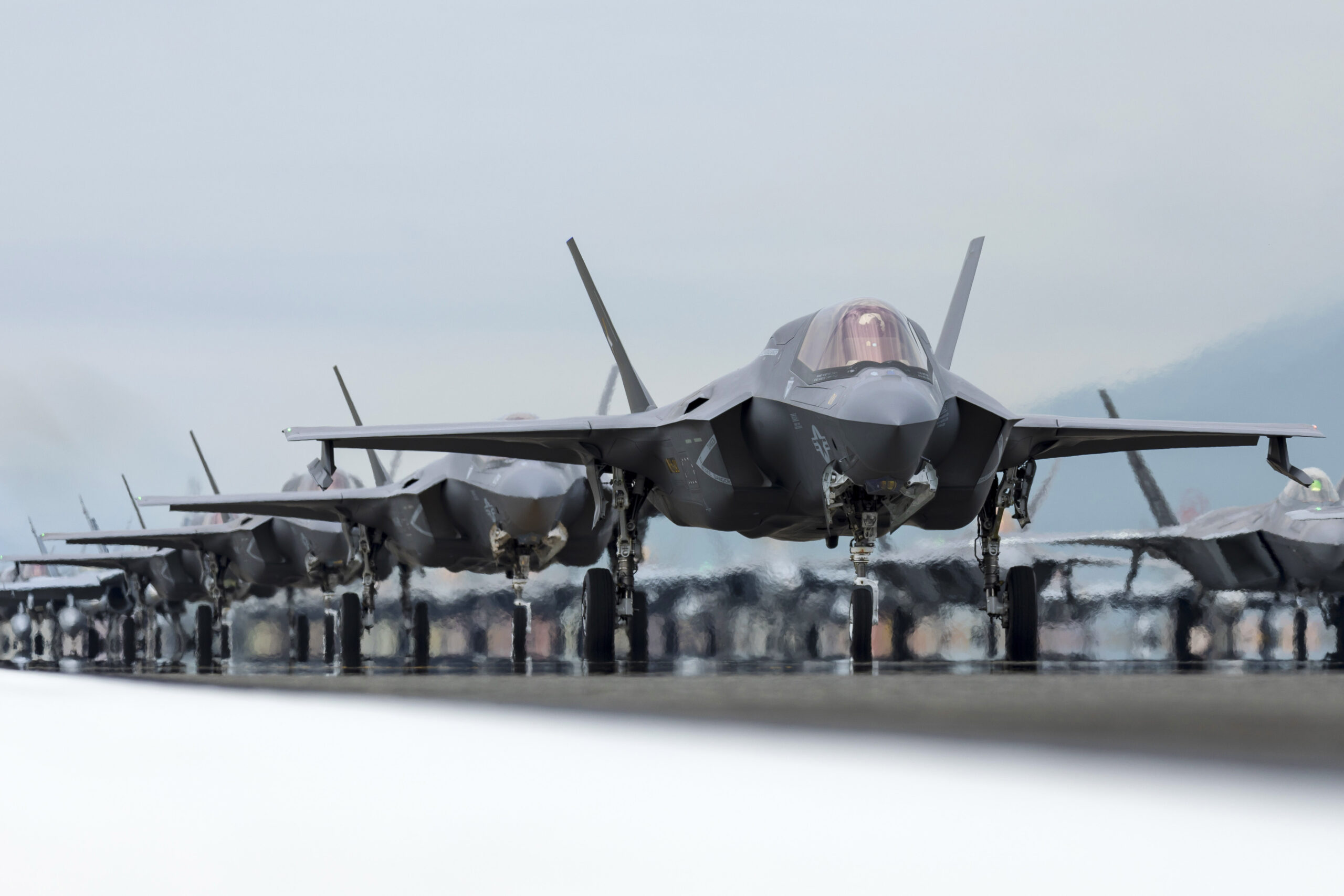
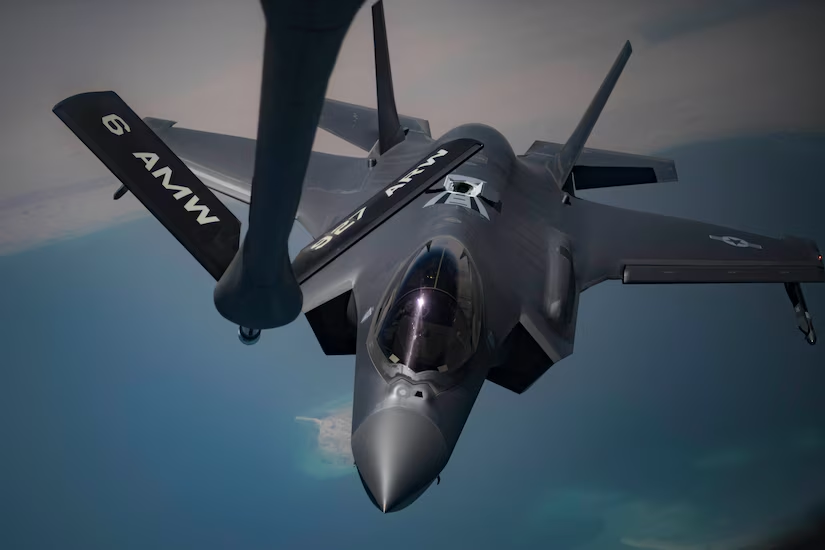
That’s a staggering statistic when considering the F-35 was sold as the ultimate answer to American air dominance. Back in 2016, the U.S. had 170 aircraft. Now there are over 1,300 operational jets across the world.

Marine F-35B Stealth Fighter Squadron Joins Indo-Pacific Force Posture in Japan
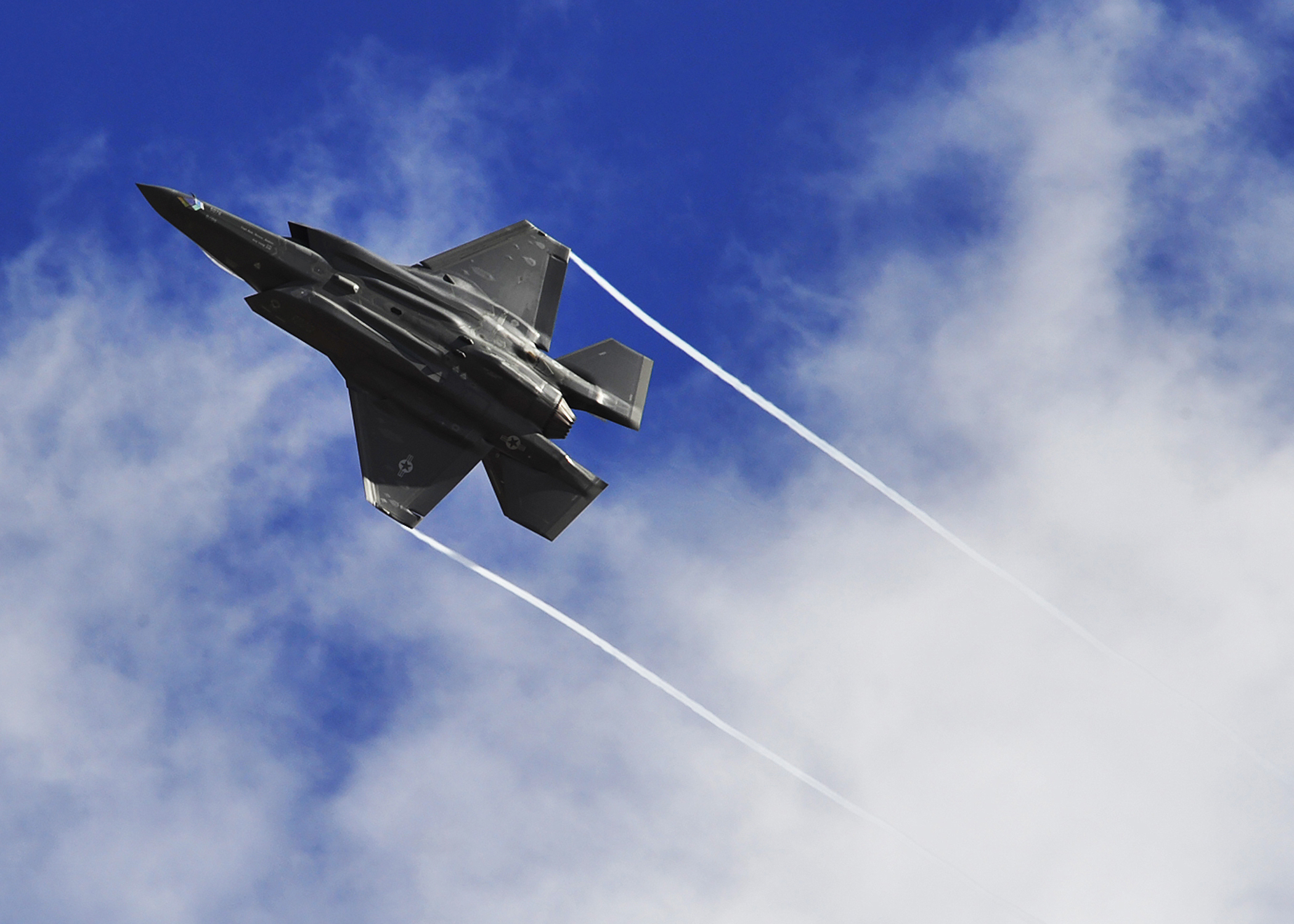
An F-35 Lightning II performs a maneuver Sept. 12, 2016 at Luke Air Force Base, Ariz. This sortie marks the 10,000th hour for the F-35 at Luke. (U.S. Air Force photo by Senior Airman Devante Williams)

But the supply chain, maintenance capability, and parts inventory have lagged far behind that explosive growth — a classic example of bureaucratic planning failing to keep pace with reality.

The general was candid about the shortfall. “If I have over 1,300 operational aircraft out there, I believe we have set and enabled a sustainment system for about 7 to 800,” Masiello told lawmakers.

That means America’s fifth-generation fleet is flying almost twice as many aircraft as the system was designed to handle. No wonder more jets are grounded than ready.

As readiness rates continue to crash, even the Marine Corps has been forced to accept incomplete aircraft.

Masiello confirmed that six F-35Bs were delivered without radars, with hopes of retrofitting new APG-85 units later. When pressed on whether a radar-less aircraft could be considered fully mission capable, he conceded it could not.

In other words, the Marines are taking jets that can’t fight and claiming progress. That may work in a PowerPoint presentation, but not in a real war.

Marine F-35B Stealth Fighter Squadron Joins Indo-Pacific Force Posture in Japan
The U.S. Air Force 354th Air Expeditionary Wing and Marine Aircraft Group 12 performed a capabilities demonstration during a pre-planned readiness exercise at Marine Corps Air Station Iwakuni, Japan, July 7, 2022. The demonstration included U.S. Marine Corps F/A-18 Hornets, F-35B Lighting IIs, KC-130J Super Hercules aircraft, and U.S. Air Force F-22 Raptors and F-35A Lighting II aircraft, showcasing a high level of readiness and joint service capability in support of a free and open Indo-Pacific. (U.S. Marine Corps photo by Sgt. Jackson Ricker)

Masiello minimized the problem as a matter of supply rather than a broken system. The program, he claimed, simply underbought spare parts during years of rapid growth.

To counter that, he touted a new “Global Support Solution Reset” — a $13.7 billion sustainment push aimed at restoring basic readiness through 2031. But critics note that’s yet another billion-dollar fix-it plan following years of avoidable neglect.

Software glitches, canopy durability and the aging maintenance system are also major drags on the fleet’s performance. Each jet’s stealthy skin and intricate electronics demand high upkeep, but depot capacity and engineering support have lagged.

Masiello admitted that the jets’ unique canopies have a short lifespan, which is a particularly acute issue on stealth fighters where surface integrity determines survival.

The Pentagon’s modernization effort isn’t faring much better. The Block 4 update — a critical technology package meant to upgrade sensors, radar, and electronic warfare systems — is years behind schedule. Only 22 of 55 planned enhancements have been delivered.

Power and cooling shortfalls have delayed integration of new systems, and the engine upgrade needed to handle that load won’t arrive until 2031.

The longer these delays drag on, the harder it becomes to keep the F-35 ahead of emerging Chinese and Russian air threats.

GAO has been waving red flags for a decade, issuing 46 sustainment-related recommendations since 2014 and repeating calls for performance accountability in F-35 contracts.

F-35A Lightning II 'Frankenjet' Returns to the Skies After Years-Long Repair

Yet only 14 of those have been implemented. Lawmakers pressed Masiello on why so many fixes remain “in process.” He ducked the question, offering no specific tally of completed reforms. Washington has become skilled at promising transformations that never seem to materialize once the cameras are off.

Even as the oversight watchdogs sound alarms, members of Congress across party lines still praise the F-35’s unmatched stealth and combat capability. Former Navy pilot Sen. Mark Kelly, the Arizona Democrat, said after flying against an F-35 in an F-16, he “could not see it on radar even when I’m looking right at it.” That raw capability keeps the jet indispensable to U.S. air power — even if it’s too often sitting in maintenance bays instead of on the flight line.

The global dimension only complicates matters further. U.S. allies in Europe and the Pacific are buying F-35s faster than the logistics network can handle, pulling from the same strained spares pool.

Masiello disclosed that Poland plans to double its current 32-jet buy. That’s good news for deterrence against Vladimir Putin, but bad news for the parts pipeline already stretched to the breaking point.

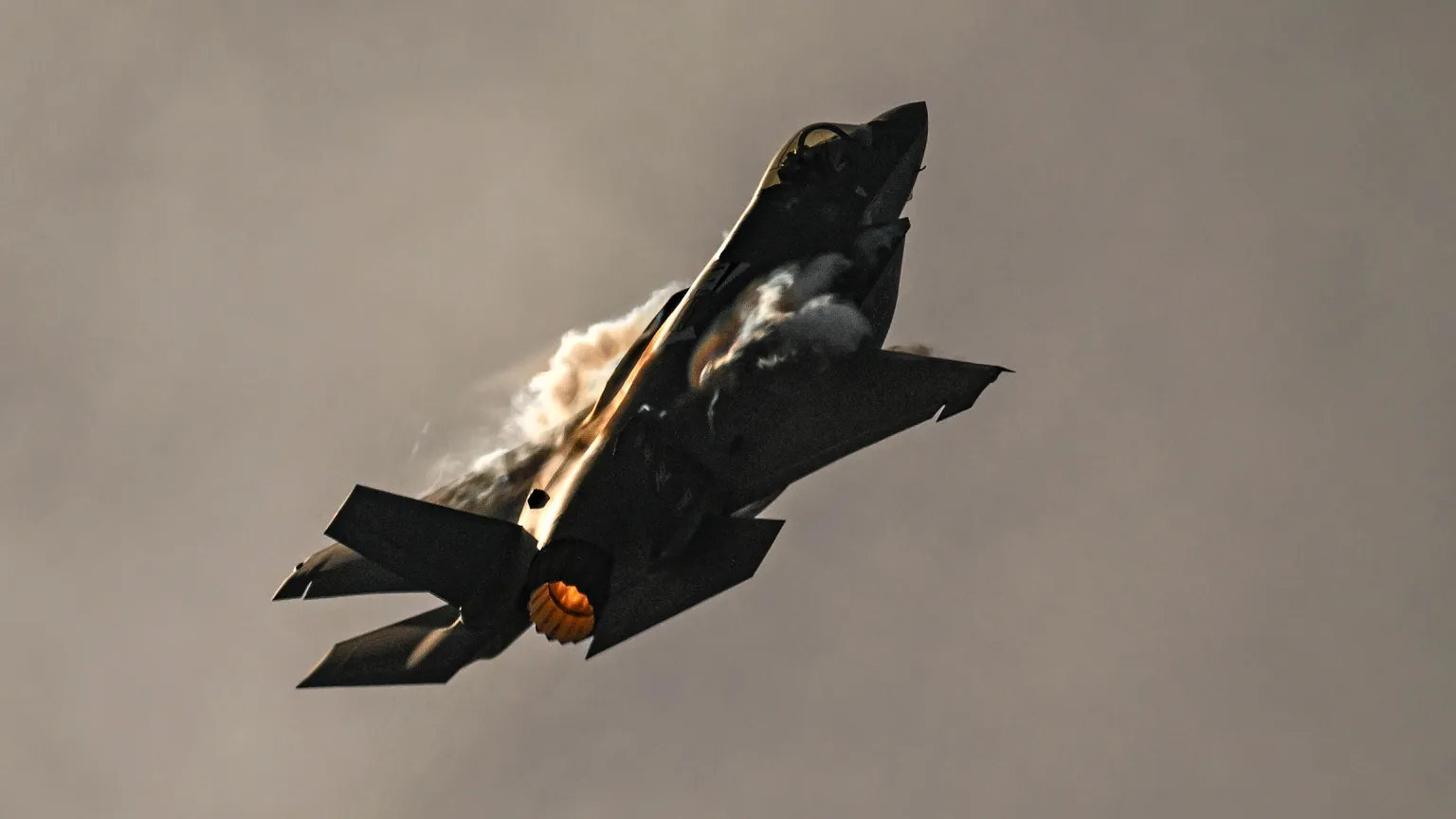
Despite its problems, the F-35 remains the cornerstone of allied airpower and the most lethal strike platform in the sky. Masiello reminded senators that in recent combat operations against Iranian targets, the jet was “the only aircraft that can hit some of the targets” and “act as a quarterback of the joint force.”

F-35’s Near Miss Over Yemen Raises Questions About U.S. Strategy and Stealth Jet’s Role

That’s why America can’t afford to let bureaucracy and budget infighting cripple this essential tool of deterrence.

The reality is simple: the F-35 works when it works. But the system supporting it is barely keeping the wings attached. Until Congress fully funds sustainment, modernization, and spare parts production — and until the War Department fixes its contracting culture — pilots will remain grounded while America’s adversaries close the technological gap.

President Trump and Secretary of War Pete Hegseth have pushed for stronger accountability in military programs like this, and that’s exactly what it will take to get America’s premiere jet back into fighting shape.


Scroll to Top