Author name: Common Defense

News

Army Readies ‘Operation Resolute Justice’ to Resume Military Death Row Executions Under Trump

The U.S. Army has a fully developed plan to execute military prisoners on death row if President Donald Trump authorizes it, marking the first coordinated federal military execution operation in decades.

Known as “Operation Resolute Justice,” the mission underscores the seriousness of restoring accountability through capital punishment after years of hesitation and political cowardice in Washington.

Army officials confirmed that the operational blueprint is ready to move.

The plan would involve coordination between the Army and the Federal Bureau of Prisons to transfer convicted inmates from Fort Leavenworth, Kansas, to the Federal Correctional Institution in Terre Haute, Indiana—the nation’s designated site for carrying out federal executions.

The operation would also include arrangements for witness viewing stations, standard protocols under federal law for executions.

An Army spokesperson said this plan has been exercised for two decades as part of regular readiness drills. “Exercises regarding this operation have been conducted regularly for the past twenty years,” said Cynthia Smith.

“These drills are a standard component of our continued planning and preparation if the president approves a death sentence.” But now, with a commander-in-chief willing to make tough calls, those preparations could finally mean something.

Under the Uniform Code of Military Justice, only the president can approve a military execution. Past administrations have avoided that responsibility, leaving justice unfinished for victims and their families.

The last U.S. military execution took place in 1961, and since then, legal delays and presidential inaction have kept even the most heinous crimes unpunished at the ultimate level.

Currently, four former soldiers occupy military death row at Fort Leavenworth: Timothy Hennis, Nidal Hasan, Ronald Gray, and Hasan Akbar. Their cases represent some of the most brutal betrayals of uniformed service in modern times.

Each was court-martialed and sentenced to death for murder—including mass killings on American soil and in combat zones.

In January 2025, President Trump signed an executive order reinstating the death penalty and abolishing the moratorium imposed under earlier administrations.

That same order directed the Department of Justice to resume active pursuit of death sentences in eligible cases, signaling a broader commitment to restoring justice and deterrence.

According to War Department insiders, Secretary of War Pete Hegseth has worked closely with the White House to ensure readiness for these long-overdue executions.

Of particular note is former Army Maj. Nidal Hasan, the radicalized shooter who murdered 13 people and wounded dozens more at Fort Hood in 2009.

Hasan’s attack, inspired by jihadist ideology, was a glaring example of how political correctness allowed dangerous individuals to remain within the ranks.

Fort Hood Doctor Under Pretrial Confinement as Accusations of Hidden Recordings Surface
The main gate at the Fort Hood Army Base is seen on South Fort Hood Street in Killeen, Texas on November 7, 2009. Maj. Nidal Malik Hasan is charged with the deaths of 13 and 29 others wounded after a shooting spree at the Fort Hood army base on November 5. UPI/Robert Hughes

During his trial, Hasan admitted guilt and declared loyalty to the enemy, calling himself a soldier for Islam. He later said the death penalty would make him a “martyr.”

The notion disgusts most servicemembers, and Hegseth has made clear that true justice means ensuring terrorists in uniform face the ultimate sanction.

Another case is that of Ronald Gray, convicted in 1988 of multiple murders and rapes, including attacks against fellow soldiers. Although President George W. Bush approved his execution in 2008, years of endless appeals stalled the process.

Courts have since lifted the holds on his sentence, clearing the way for final action pending presidential approval.

Army Sgt. Hasan Akbar, another death row inmate, was convicted of murdering fellow American troops in a 2003 hand grenade and rifle assault at Camp Pennsylvania in Kuwait, an act committed against his own unit on the eve of war.

His cowardly ambush killed two officers and wounded 14 others. Secretary Hegseth recently awarded Purple Hearts to the soldiers injured in that attack, reflecting a renewed focus on justice for the victims.

Timothy Hennis’s story stretches back nearly four decades. A former master sergeant, Hennis was linked through DNA evidence to the 1985 triple murder of a woman and her two children.

Although his original conviction was overturned, the military retried him in 2010, resulting in a death sentence that has withstood appeal after appeal. He remains on death row awaiting presidential review.

Deadly Shootout Erupts Between Military Police and Civilians at Fort Hood Recreation Area
Military Police members with 89th Military Police at Fort Hood, Texas. Army photo by Sgt. Melissa N. Lessard.

Between 1916 and 1961, the U.S. military executed 135 criminals—proof that the system once worked swiftly and effectively.

But for too long, political leaders lacked the fortitude to enforce justice within the ranks. As Frank Rosenblatt, president of the National Institute of Military Justice, admitted, “It takes some political will to do this.”

That will has returned under President Trump and Secretary Hegseth, who have emphasized law, order, and moral clarity over excuses and delay.

Military families, victims, and many veterans view “Operation Resolute Justice” as not just a plan, but a promise—that crimes committed by those who betray their oath in the most despicable ways will not go unanswered.

The military’s role is to defend the nation, not to serve as a refuge for killers and traitors hiding under a uniform.

If the President gives the go-ahead, these long-pending cases will move from the dusty archives of indecision to the final pages of military history, proving that when it comes to protecting America’s honor, justice delayed will no longer be justice denied.

News

Iran Pounds Kuwait as U.S. Forces Hit Back Near Hormuz in Escalating Gulf Clash

The Gulf is boiling again, and this time the stakes are higher than ever.

Iranian forces launched a massive drone and missile attack on Kuwait, striking its airport and diplomatic sites, while the U.S. military answered with precision strikes near the Strait of Hormuz.

The war drums in the region are pounding louder by the day, and after months of friction, it’s clear Iran is probing for weakness — and not finding much patience from Washington’s new War Department leadership.

Kuwaiti officials confirmed that flights were grounded and dozens were injured after Iranian weapons hit their capital’s airport. One death was reported, along with significant property damage.

By Wednesday night, Kuwait Airways and Jazeera Airways were scrambling to restore limited operations after emergency checks ensured skies were momentarily clear of Iranian drones.

Meanwhile, Tehran bragged to its state-run media that its Revolutionary Guards had attacked the U.S. Fifth Fleet headquarters in Bahrain and hit an American airbase. But that narrative didn’t make it past the facts.

U.S. Central Command shot back quickly, confirming that none of its bases were hit and that Iran’s so-called “precision” missiles didn’t even reach their targets.

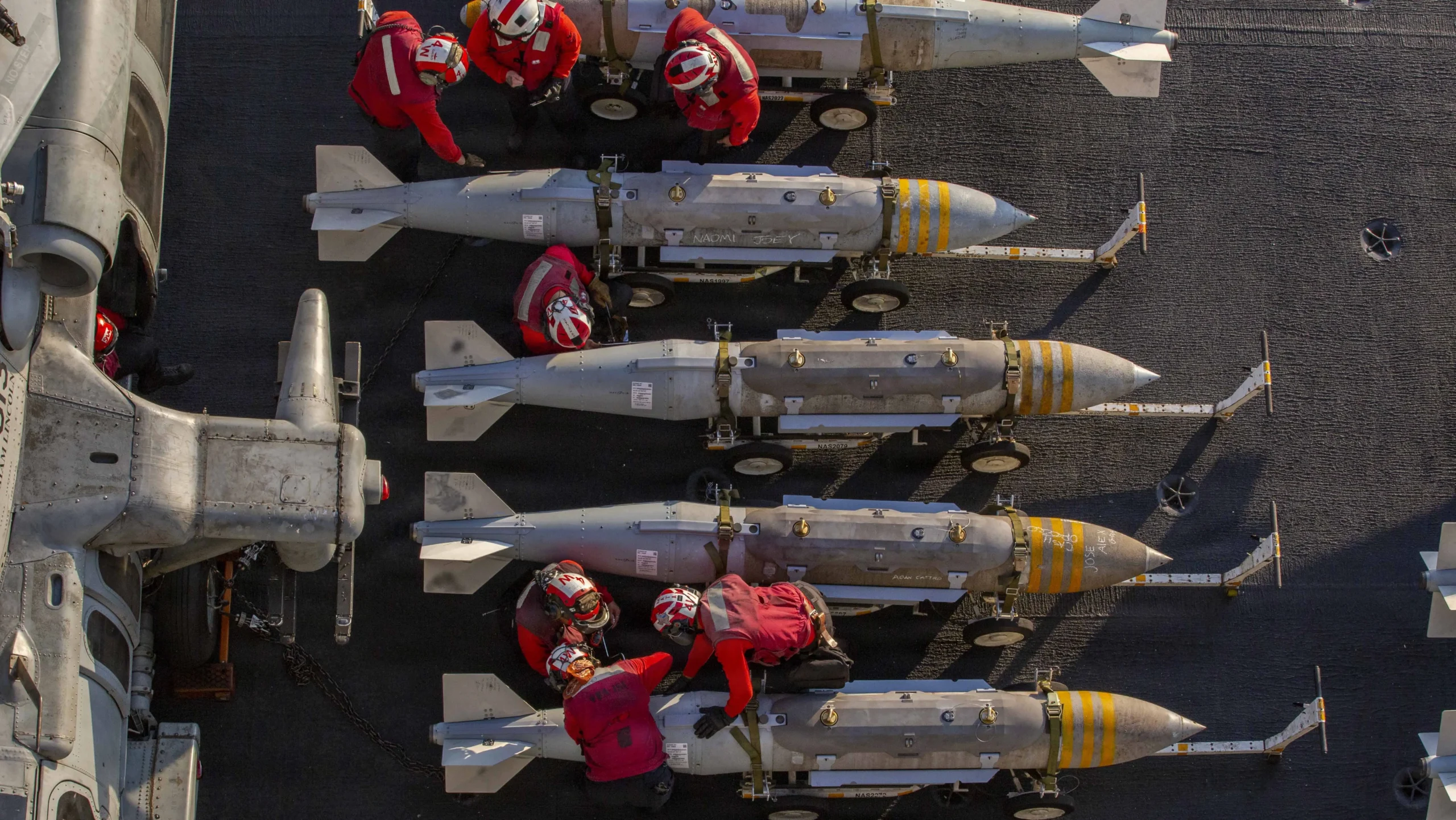
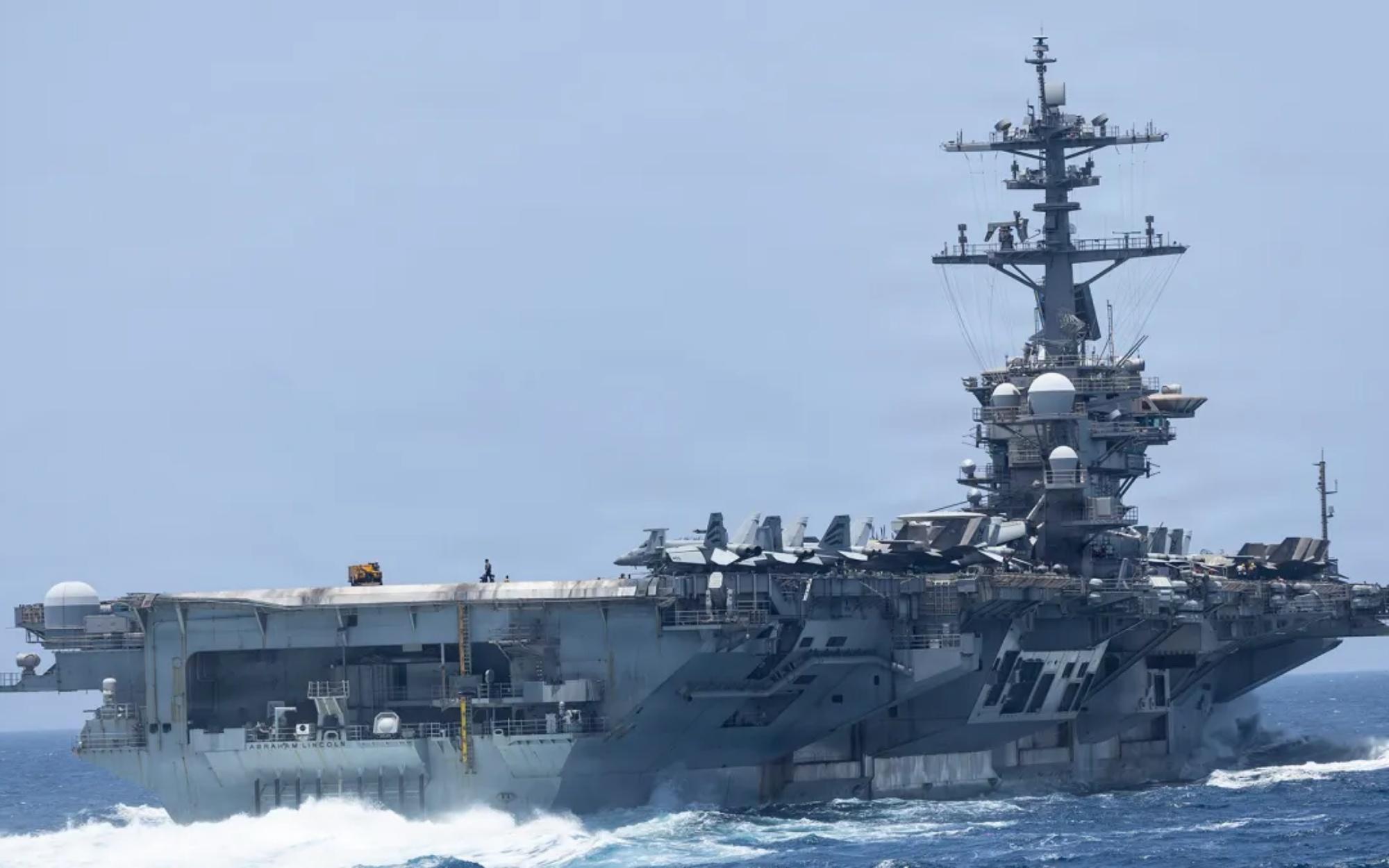
Sailors prepare to stage ordnance on the flight deck of Nimitz-class aircraft carrier USS Abraham Lincoln in support of Operation Epic Fury, Feb. 28, 2026. Navy photo.

CENTCOM officials said American forces carried out a new wave of “defensive strikes” on Iranian missile platforms and mine-laying boats operating near the southern coast.

Targets included Qeshm Island, just off the vital Strait of Hormuz — a waterway through which roughly one-fifth of the planet’s oil once flowed freely before Tehran’s terror games closed it nearly three months ago.

This aggressive exchange highlights how fragile the region’s tenuous ceasefire truly is. Iran has spent months targeting both U.S. military sites and civilian infrastructure throughout the Gulf, fueling instability and sending energy costs soaring worldwide.

With oil prices jumping over two percent after this latest attack, the global markets are already reacting to Iran’s recklessness.

Trump Backed U.S. Retaliation After Iranian Drone Attack Kills Four Reserve Soldiers
The guided-missile destroyer USS Delbert D. Black fires a Tomahawk land attack missile in support of Operation Epic Fury in an undisclosed location, Feb. 28, 2026.

President Donald Trump, working to close a deal to end the hostilities without rewarding Iranian blackmail, has said repeatedly that Tehran would never be allowed to build a nuclear weapon.

His message remains clear: peace is possible, but not at the price of American credibility. In an interview released Wednesday, Trump revealed that Iran had already agreed to that core condition.

“They’ve already agreed they’re not going to have a nuclear weapon,” he said, adding that even Iran’s Supreme Leader Ayatollah Khamenei has been directly involved in those negotiations.

Tehran, however, is dragging its feet. Iran’s semi-official Tasnim news agency admitted that talks had been paused, blaming Washington for refusing to end the fighting in Lebanon. The regime is seeking to link every negotiation to its regional proxies — Hezbollah, the Houthis, and others — as part of its endless leverage game. Trump’s camp isn’t buying it.

At the same time, an Iranian military adviser close to Khamenei, Mohsen Rezaei, warned publicly that Tehran would answer any “aggression” with “a barrage of missiles and drones.” For decades, the Iranian playbook has relied on just that kind of posturing.

U.S. Forces Rescue Downed F-15E Crew in Iran as Search for Second Member Persists
A U.S. Air Force F-15E Strike Eagle takes off for a mission during Operation Epic Fury on March 14, 2026. (U.S. Air Force)

Now, as pressure mounts, their bluff is being tested by a resurgent U.S. posture under Secretary of War Pete Hegseth and a commander-in-chief who has no interest in appeasement.

Regional partners are now calling for unity against the Tehran threat. Anwar Gargash, senior adviser to the UAE president, declared that the repeated missile attacks on Kuwait and Bahrain were attacks on the entire Gulf.

“The aggression does not target one country alone, but all of us,” he wrote. The message is spreading fast — and so is the need for a coordinated regional defense strategy capable of countering Iranian terror.

While the military conflict continues, Israel remains engaged on its northern front with Hezbollah, the Iranian-backed militants using Lebanon as their launchpad.

Israeli drones struck multiple Hezbollah positions on Wednesday, killing six and even hitting a vehicle near Beirut — their closest strike to the Lebanese capital since a Trump-mediated ceasefire took effect earlier in the week.

Allied Partnerships Urged to Rebuild U.S. Naval Industrial Base
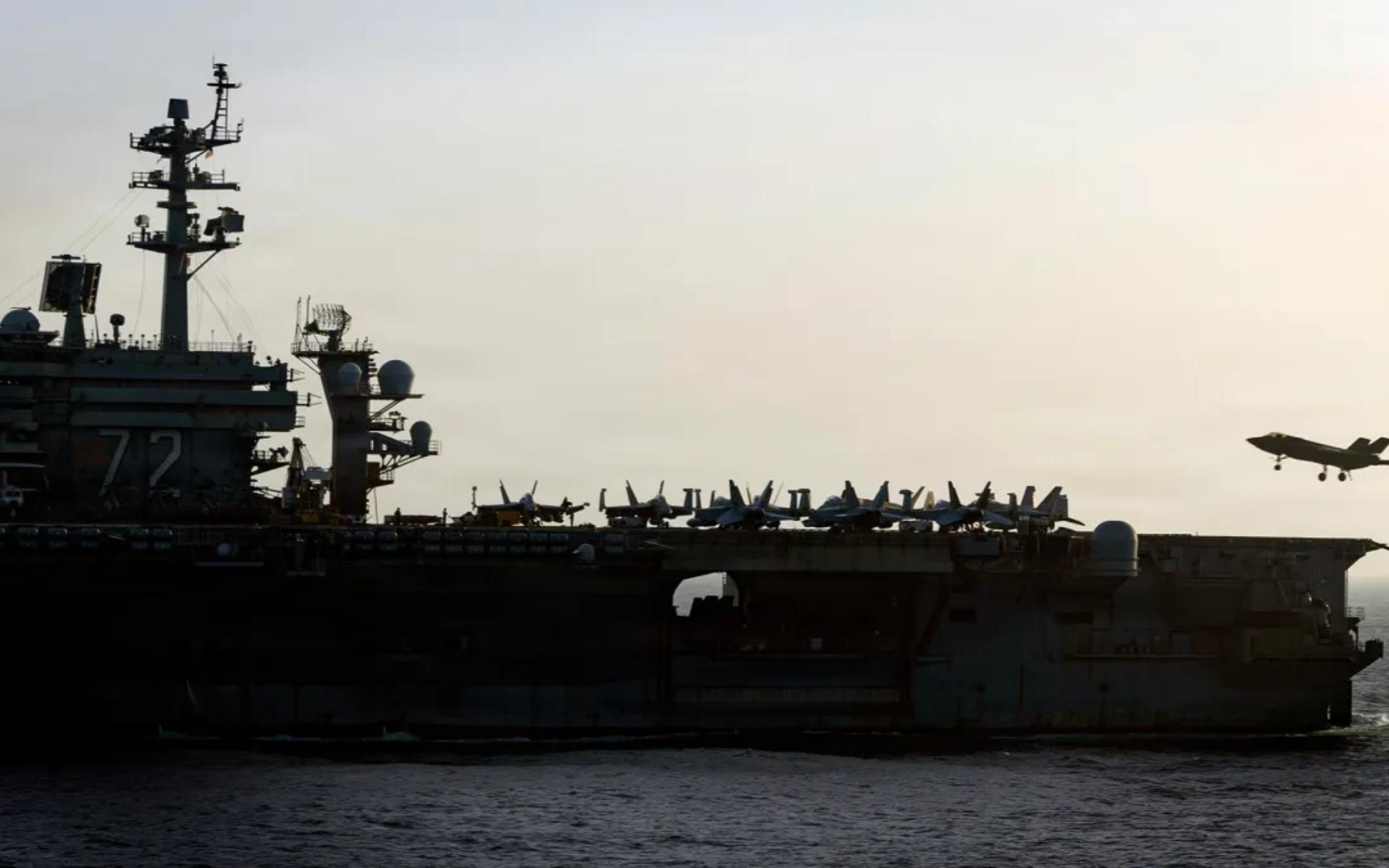
Two F/A-18 Super Hornets launch from the aircraft carrier USS Abraham Lincoln in support of the Operation Epic Fury on March 3, 2026. (U.S. Navy)

Behind closed doors, tensions are just as high. Trump reportedly had a colorful exchange with Israeli Prime Minister Benjamin Netanyahu, urging restraint as he sought a broader regional deal to restore order and reopen the Strait of Hormuz.

“At some point I said, Bibi, we got to stop this,” Trump recounted. It’s a sign that the former president intends to keep America as the decisive voice in ending the chaos — on U.S. terms, not Tehran’s.

For now, thousands are dead, millions impacted, and the global economy continues to feel the shock. The War Department’s intelligence analysts expect Iran to keep pushing its luck, betting that the U.S. won’t risk a broader war.

But Iran’s growing boldness could be its undoing. With American naval power already active in the Gulf and Trump personally managing the diplomatic levers, patience in Washington is running thin.

The Gulf is once again at a crossroads. Iran’s missiles and bluster are running into hard American steel, and the message coming out of the Trump camp is unmistakable: the days of bowing to Tehran’s tantrums are finished.

If Iran keeps escalating, it will learn — again — that in the modern era, American strength still rules the sea.

News

Lawmakers Clash Over Plan to Tighten U.S.-Israel War Tech Alliance

A new push in Congress to deepen cooperation between the United States and Israel on weapons and defense technology is causing plenty of sparks on Capitol Hill, even among Republicans.

The dispute centers on a measure buried in the House version of the fiscal 2027 National Defense Authorization Act, which would tie the two nations’ defense research and industrial cooperation even tighter than before.

The United States-Israel Defense Technology Cooperation Initiative proposes to “expand and accelerate bilateral defense technology research, development, testing, evaluation, integration, and industrial cooperation.”

In practice, this means a stronger link between American and Israeli military innovation and manufacturing pipelines — a prospect that some lawmakers call essential to counter threats from Iran and its regional proxies, while others see a potential risk to U.S. sovereignty.

The measure was introduced by Rep. Mike Rogers of Alabama, a Republican and chairman of the House Armed Services Committee, and ranking Democrat Adam Smith of Washington. The two rarely agree on much, but when it comes to tightening defense cooperation with Israel, they’ve found common ground.

The bill instructs the Secretary of War to designate an executive agent to coordinate efforts between the two countries.

That might sound bureaucratic, but in warfighting terms, it’s a big move.

Coordinating cyber operations, missile defense, machine learning systems, and unmanned platforms between two militaries aligns capabilities in a way that builds mutual strength — a move directly aimed at Iranian aggression and the ongoing regional instability that Biden officials have seemed weak to deter.

Netanyahu Says He Wants to Move Israel Off US Military Support in CBS Interview

Congress has a record of bipartisan backing for Israel, only reinforced since Hamas’ bloody October 7, 2023 attack that left Israel—and the world—stunned. Following that attack, Washington authorized $13.4 billion in military aid to Israel.

U.S. firms like RTX continue joint development with Israeli partners such as Rafael Systems on programs like the Iron Dome missile defense system, which has saved untold lives from terrorist rocket fire.

But not everyone on the Hill is cheering the measure. Rep. Thomas Massie of Kentucky, a Republican who recently lost his primary to a Trump-aligned challenger, blasted the effort on social media, citing concerns that it could blur lines of command and infringe on American independence.

He pledged to introduce an amendment to strip the provision from the final House bill if it survives committee.

Massie’s opposition found an unlikely ally in Rep. Ro Khanna, a Democrat from California. Khanna also serves on the Armed Services Committee and echoed Massie’s call to scrap the section entirely.

The two previously teamed up on the Iran War Powers Resolution, another move that signaled discomfort with long-term U.S. involvement in Middle Eastern conflicts.

Supporters of the new initiative call such criticism overblown. Rogers responded Tuesday that the proposal “simply adds transparency and improves efficiency by designating a single official to coordinate existing initiatives.” He added, “In no way does it give away command and control of our military operations, personnel, or equipment.”

Netanyahu Pushes Trump Toward Iran Decapitation Strike
President Donald Trump and Israeli Prime Minister Benjamin Netanyahu hold a joint press conference announcing the U.S. peace plan for Gaza

That clarification comes as many voters, particularly those weary of endless foreign entanglements, remain skeptical of deepening U.S. military ties abroad. Polls suggest the ongoing shadow war with Iran is increasingly unpopular.

Yet backers argue the cooperation isn’t foreign entanglement — it’s smart deterrence, keeping American and ally technologies out ahead of Tehran’s ambitions.

Critics, usually from the far left and libertarian wings, warn about “mission creep.” But the reality is that Israel and the U.S. already cooperate on multiple defense fronts.

Much of the tech that protects American soldiers in the field, from drone interceptors to radar tracking systems, roots back to joint work with Israeli engineers. Cutting that integration would hand a gift to adversaries like Iran, Russia, and China.

Meanwhile, the House Armed Services Committee is set to debate the measure as part of this week’s markup. That debate is expected to be heated, as ideological factions clash over America’s role as both defender of the free world and protector of its own autonomy.

Netanyahu Pushes Trump Toward Iran Decapitation Strike
President Donald Trump and Israeli Prime Minister Benjamin Netanyahu hold a joint press conference announcing the U.S. peace plan for Gaza

With bipartisan leadership behind it, however, insiders expect the provision to survive and make its way into the final House draft for a floor vote.

The larger NDAA remains the crown jewel of national security legislation, and every line in it signals a strategic priority. Expanding joint research and weapons development with Israel demonstrates that serious lawmakers on both sides still recognize what real deterrence looks like.

While Rep. Massie’s isolationist streak appeals to a narrow slice of the Republican base, most of his colleagues recall that strength through alliance—not retreat—keeps the bad guys at bay.

And in a world where Iran pushes closer to a nuclear breakout, the last thing the United States should do is weaken its technological edge or distrust a proven ally like Israel.

This debate, at its core, reveals the two paths ahead: building strategic depth with trusted friends, or pretending isolation will somehow keep us safe.

The former is how peace through strength works. The latter is a fantasy the American people can no longer afford.

News

$10 Billion Price Tag and Bureaucratic Battles Loom Over Plans for Separate U.S. Cyber Force

A new bipartisan report fires a warning shot across Washington’s bow, revealing that creating a separate U.S. Cyber Force would chew through roughly $10 billion and take more than a year just to get off the ground.

Supporters call it a necessary evolution to match America’s growing exposure to cyber warfare, while critics see yet another costly Pentagon bureaucracy in the making.

The study, conducted by the Center for Strategic and International Studies and the Foundation for Defense of Democracies, did not mince words: current cyber forces are “insufficient” to meet the challenges posed by increasingly aggressive digital adversaries like China, Russia, and Iran.

Their findings highlight the structural flaw that’s been obvious for years—cyber responsibilities are now splintered across the Army, Navy, Air Force, Marines, and U.S. Cyber Command (CYBERCOM), leaving accountability and capability clouded by endless overlap and red tape.

The idea of carving out a fifth standalone branch focused entirely on cyberspace has been floating around Capitol Hill for over a decade.

Now, thanks to Sen. Kirsten Gillibrand, D-NY, it’s back in the headlines as part of the fiscal 2027 National Defense Authorization Act debate.

The proposal envisions a Cyber Force designed to organize, train, and equip cyber warriors similarly to how the Space Force took shape under the Department of the Air Force. But according to the study, standing up this new digital force will not be cheap—or easy.

$10 Billion Price Tag and Bureaucratic Battles Loom Over Plans for Separate U.S. Cyber Force
U.S. service members and civilians, as well as partner nation military personnel, participated in the Cyber Flag 19-1 exercise, June 21-28, in Suffolk, Virginia. The tactical-level exercise focused on the continued building of a community of defensive cyber operators and the improvement of the overall capability of the U.S. and partner nations.

The estimated $10 to $11 billion price tag is just for launch, and the think tanks noted that this money is already absorbed into existing service budgets. That means the real cost would come from redistribution of military resources—or new spending altogether.

For perspective, the current War Department budget for cyberspace operations this year is $7.7 billion, with $4.1 billion flowing to CYBERCOM and the rest divided among the National Security Agency and the Defense Intelligence Agency.

The Pentagon has also requested an additional $20.5 billion for broader cyberspace activities and $12.1 billion for strengthening cybersecurity.

Still, even with those investments, many experts inside and outside the military believe America remains exposed. They argue that without a dedicated organization responsible for “force generation” in cyberspace, the military is fighting a digital war with one hand tied behind its back.

The proposed Cyber Force would ultimately become the military’s training and recruiting hub for digital operations, providing structure and professional identity for America’s cyber operators.

The report projects roughly 20,000 active-duty personnel, backed by up to 5,000 National Guard members and a 6,000-member civilian workforce.

Structurally, two routes are being explored: embedding the Cyber Force within the War Department under the Army, or making it a fully independent branch. The first option could speed up bureaucratic setup, but would leave it buried under existing command priorities.

The second would guarantee cyber warfare remains front and center, but would take even longer and consume more of that familiar Washington commodity—money.

Either way, experts estimate it would take 12 to 18 months to bring the new force to initial operational capacity. And that’s if everything goes smoothly—a generous assumption given the Pentagon’s track record of “rapid” innovation.

$10 Billion Price Tag and Bureaucratic Battles Loom Over Plans for Separate U.S. Cyber Force
Air Force cyber specialists assigned to the Ohio National Guard’s 180th Fighter Wing troubleshoot phone system connections at the unit’s headquarters in Swanton, Ohio, Dec. 2, 2023.

Critics of the plan worry it will create yet another bloated nexus of bureaucracy rather than fix what’s broken.

They argue that CYBERCOM already holds much of the authority and manpower to fight digital battles, but its dual mission—acting as both a combatant command and a quasi-service branch—has stretched it too thin.

What policymakers are wrestling with is not just structure, but speed. Cyber operations evolve on a timescale of seconds, not years, and anyone who has watched the War Department debate over Space Force knows just how glacial bureaucratic progress can be.

Supporters of the Cyber Force argue that a separate branch could finally give America a unified command culture focused solely on cyberspace dominance rather than treating it as a supporting function for conventional forces.

They see it as a logical and overdue step toward securing the digital front lines where enemies are already in the fight.

Either through the Army or as its own entity, the concept represents one of the most significant potential reorganizations of the U.S. military since the creation of the Space Force.

But it also asks taxpayers to buy another multi-billion-dollar promise that Washington will finally take cyber warfare seriously.

With adversaries probing American networks daily, the clock is ticking. Whether Congress creates a Cyber Force or not, the nation’s enemies aren’t waiting for bureaucracy to keep up.

As always, the real test will come on the digital battlefield—and America can’t afford to lose.

News

Navy Axes Entire Leadership Team at Japan Ship Repair Hub After ‘Loss of Confidence’

A stunning leadership purge has hit the U.S. Navy’s ship repair facility in Yokosuka, Japan, where the commanding officer, executive officer, and senior enlisted leader were all relieved of duty this week.

According to Navy officials, Capt. Wendel Penetrante, Capt. Edwin Catubig, and Master Chief Petty Officer Thomas Dean Howell were fired due to a so-called “loss of confidence in their ability to command.”

Naturally, the brass offered little more than that overused bureaucratic phrase.

The trio headed the U.S. Naval Ship Repair Facility and Japan Regional Maintenance Center, the outfit responsible for keeping the 7th Fleet’s warships ready for action.

In other words, they managed one of the Navy’s most critical ship maintenance operations in the Indo-Pacific—a job that leaves no margin for incompetence.

The Navy’s public statement carefully avoided specifics, leaving sailors and analysts alike to guess what actually led to the removal of all three top leaders.

The military’s “loss of confidence” label is often code for any number of issues—ranging from leadership failures to personal misconduct that command doesn’t want aired publicly.

Navy Axes Entire Leadership Team at Japan Ship Repair Hub After ‘Loss of Confidence’
U.S. Naval Ship Repair Facility and Japan Regional Maintenance Center keeping the
SEVENTH Fleet mission ready from Yokosuka & Sasebo, Japan and Singapore

What makes this case stand out is that the entire chain of command was dismissed—an exceedingly rare move in naval circles. Usually, one officer gets relieved while the rest of the team keeps the ship or facility afloat.

Taking out all three suggests the Navy saw serious, systemic failures, not minor lapses.

Less than two weeks before the firings, the Navy was actually praising the same Yokosuka facility for its efficiency.

A May 12 press release commended the command for completing seven ship repairs—two mine countermeasures ships, three destroyers, and one amphibious transport dock—on time or early. Talk about a public relations 180.

Capt. Penetrante, who took over in February 2025, is no rookie. A career engineering duty officer since 2012, he previously served aboard submarines and an aircraft carrier.

His resume was seen as the very model of technical expertise and steady leadership. That makes his abrupt dismissal all the more puzzling.

Capt. Catubig came up through the ranks, first as an enlisted sailor and then as an officer after being commissioned in 2003. His experience aboard amphibious assault vessels and an aircraft carrier was supposed to bring a practical, deck-plate perspective to upper management. Now, he’s out the door with little explanation.

Master Chief Howell, the senior enlisted leader, has been in the Navy since 2001, serving on destroyers and an amphibious assault ship. The command master chief’s removal signals problems that may have extended deep into the enlisted ranks, perhaps even affecting morale or discipline.

Navy Axes Entire Leadership Team at Japan Ship Repair Hub After ‘Loss of Confidence’
U.S. Naval Ship Repair Facility and Japan Regional Maintenance Center keeping the
SEVENTH Fleet mission ready from Yokosuka & Sasebo, Japan and Singapore

The Navy’s silence on what precisely prompted this move leaves the field open for speculation. Was it a personnel matter? A failed inspection? Problems meeting readiness goals? A breakdown in command climate? The official line doesn’t say—but the simultaneous firing of all three senior leaders suggests something more substantial than paperwork errors.

At a time when America’s naval power faces increasing challenges in the Pacific—particularly from China’s rapidly expanding fleet—this type of internal failure is especially troubling. Washington relies on forward-deployed facilities in Japan to keep warships battle-ready.

If the leadership at one of those critical hubs faltered, it could ripple across the entire 7th Fleet’s operational tempo.

Sailors stationed in Yokosuka reportedly were caught off guard by the announcement. One source told us the news “hit like a thunderclap” and left many wondering what could cause such a sudden and sweeping change.

The Navy said interim leaders are already in place to maintain operations, but rebuilding trust within the ranks won’t happen overnight.

Navy Axes Entire Leadership Team at Japan Ship Repair Hub After ‘Loss of Confidence’
U.S. Naval Ship Repair Facility and Japan Regional Maintenance Center keeping the
SEVENTH Fleet mission ready from Yokosuka & Sasebo, Japan and Singapore

Veteran observers note that mass firings like this typically follow long internal investigations. The War Department tends to move carefully before removing multiple senior leaders simultaneously. Whatever the findings were, they must have painted an unsalvageable picture of command performance.

There’s also the question of accountability beyond Yokosuka. If this maintenance hub had systemic issues, how many senior officers back in Washington looked the other way until it became a full-blown problem?

The Navy has been under scrutiny for years over ship maintenance delays, crew fatigue, and leadership burnout—symptoms of deeper cultural problems that no amount of “diversity training” or “climate reviews” can fix.

Still, the Navy’s handling of this situation shows at least one positive sign: someone finally drew the line. Commands that fail to meet expectations, whether from poor leadership or complacency, shouldn’t get a pass. Firing an entire leadership team sends a loud, if opaque, message that accountability is back on the table.

If this shakeup sparks genuine reform in Yokosuka, it could mean future victories for readiness.

But if it’s just another quiet purge swept under bureaucratic language and protected by “loss of confidence” jargon, then the same problems will resurface elsewhere.

Either way, sailors on the front lines deserve leaders who can command without question—and who can keep the fleet ready for the fight President Trump and War Secretary Pete Hegseth have vowed to win.

News

43-Year-Old Sergeant Major Defies Odds, Crushes Grueling Army Sapper Course

At 43, most soldiers with more than two decades under their belt would be forgiven for avoiding a 28-day boot-camp-style gauntlet meant to push the youngest and toughest to the edge. Not Sgt. Maj. Russell Hull.

The seasoned warrior decided that comfort was overrated and pain was the price of purpose — and he walked straight into one of the Army’s most notorious crucibles: the Sapper Leader Course.

Face down in the Missouri mud, with his hands behind his back, Hull’s only company was the dirt beneath him and the voice in his head asking if he’d lost it. “That was miserable,” Hull recalled.

“There were a few minutes where I wanted to quit, because I was just like, ‘What am I doing? I’m 43 years old. I’ve been in the Army over 20 years. Why am I POW crawling up this hill right now?’”

The Sapper Course at Fort Leonard Wood isn’t for the faint of heart. It’s one of the Army’s toughest tests of mind and muscle, typically reserved for soldiers trying to advance their careers through high-performance schools.

When Hull graduated on March 20, he became the first sergeant major in over 15 years to earn the coveted Sapper tab — a distinction that underscores just how rare it is for someone his age and seniority to even attempt it.

The program is infamously brutal. Soldiers are jolted awake at 4 a.m. for grueling physical challenges, technical engineering drills, and tactical missions that barely allow time to breathe, much less sleep.

43-Year-Old Sergeant Major Defies Odds, Crushes Grueling Army Sapper Course
U.S. Army Soldier dawns his protective mask before engaging targets with an M2A1 machine gun, as part of a stress shoot on day 3 of the 2024 Best Sapper Competition, at Ft. Leonard Wood, Mo, April 21st 2024. Sappers are the most elite of the Combat Engineers, and this competition brings the best from across the Army to test their skills and physical endurance over a grueling three days of continuous events. (U.S. Army Photo by Lekendrick Stallworth)

Their rucksacks and gear weigh as much as small people, packed with weapons, breaching tools, armor, water, and rations. It’s no surprise that of the 60 soldiers who started in Hull’s class, only 13 made it to the finish line.

Hull’s military résumé already reads like a lifetime achievement award — five years in the Reserve and 18 on active duty, now serving as the senior enlisted leader for the 9th Engineer Battalion, 2nd Armor Brigade, 3rd Infantry Division.

But even with 23 years of experience, he quickly realized the Sapper Course didn’t care about rank or service ribbons. “You get in your head,” he admitted.

“Why am I here doing this? Why am I beating myself up?”

He could have chosen easier routes earlier in his career but missed the chance due to medical disqualification or shifting priorities. This time, when a fellow soldier joked that he ought to give it a shot, Hull took it seriously. After all, a real soldier doesn’t back down from a challenge.

“I said if I can get medically cleared, I’ll go for it,” Hull recalled.

“And that’s kind of where it started.” It took a rank waiver and a clean bill of health, but once approved, he filled an empty slot and prepared himself for the storm.

And what a storm it was. Hull described one day that seemed to last forever — a brutal march that lasted about six hours across Missouri’s unpredictable terrain. Rain turned to snow, sleet whipped through the air, and subzero wind made misery complete.

“We got all four seasons in that 18-hour period,” he said.

The final phase of the course forced soldiers to prove every skill they’d crammed into their exhausted minds.

43-Year-Old Sergeant Major Defies Odds, Crushes Grueling Army Sapper Course
Soldiers with 65th Brigade Engineer Battalion, 2nd Infantry Brigade Combat Team, 25th Infantry Division, ignite detcord during a Bangalore wire breach range August 30, 2019 at Schofield Barracks, Hawaii. The breach range was held as part of a full-scale unit demolitions range, which included concrete and rebar charges, bangalore breaches, and nighttime urban door breaches. This practical familiarization and realistic training enhances the Army’s total combat efficiency and lethality.

Dropped into the woods, they operated under field conditions with minimal rest, executing missions under extreme pressure. To make matters even tougher, Hull’s class was the first to face simulated drone threats from above.

“While we were doing dismounted movements they would go overhead, we had to react to those,” he explained. “Then, some of the objective was getting to where some drones were stored.”

During one exercise, Hull led a platoon raid through a mock village, hunting enemy drones and their operators.

They breached tunnels, cut through wired barriers with saws, and burned through gates with torches — a test of both combat engineering and leadership under stress.

As part of the Sapper tradition, every student leaves rank at the gate. Even Hull, a sergeant major, was just “Sapper Hull.”

Still, the cadre occasionally leaned on his experience to help younger soldiers struggling to keep up. He didn’t mind — he’s the kind of leader who believes you lead by doing, not by talking.

Completing the course wasn’t just about physical strength for Hull. It was a message to every battle-hardened veteran who thinks their days of pushing limits are behind them.

“We have lots of aches and pains, but the mental strength that a lot of us have from doing this for so long — if you want something, you can do it,” he said. “It’s just a matter of taking the time to commit.”

For Hull, the Sapper tab wasn’t a trophy. It was proof that age doesn’t define grit, and that commitment outlasts fatigue. His achievement is a reminder that the warrior spirit doesn’t fade — it sharpens with time.

And as the Army recruits face a generation more focused on social media than service, Hull’s example is a clear message: the American soldier still lives, bleeds, and wins through perseverance.

That’s the kind of fight the War Department needs — men who won’t quit, no matter what hill they’re clawing up.

News

House Bill Moves to Block Military Hospital Cuts and Closures

House lawmakers are finally stepping in to stop the slow bleed of military healthcare under the War Department’s latest restructuring schemes.

A draft defense bill currently under review would halt all closures and service reductions at military hospitals and clinics — a move that couldn’t come soon enough for troops and their families tired of Washington’s bureaucratic reshuffling.

The House Armed Services Committee’s personnel subcommittee has proposed language that would prevent the Department of War from carrying through with its years-long plan to downsize dozens of treatment facilities.

The draft version of the Fiscal 2027 National Defense Authorization Act (NDAA) would even compel the War Department to reverse changes already implemented at 41 sites.

In short, lawmakers are telling the Pentagon brass to pump the brakes and hand over transparency.

The bill would force the Defense Health Agency (DHA) to submit quarterly updates to Congress, giving lawmakers a clear window into any prospective cuts, realignments, or closures that could gut the quality of care for military personnel and their dependents.

Wartime Doctors Without War Wounds? Alarming New Report Exposes Military Medical Readiness Crisis
Trauma surgeons and nurses perform a mock surgery on a simulated casualty at Schofield Barracks, Hawaii, Feb. 27, 2020. Army photo by Sgt. 1st Class Thomas Duval.

The pushback comes seven years after a major reorganization of the military health system was enacted through the Fiscal 2017 NDAA.

The original goal was bureaucratic efficiency — transferring hospital operations to the DHA, reducing administrative overlap, and focusing more resources on preparing combat medics and surgeons for war. It sounded good on paper.

But in practice, those reforms produced exactly what many critics feared: empty waiting rooms, fewer patients, and doctors losing hands-on experience.

Senior enlisted leaders have repeatedly sounded the alarm that the stripped-down model has left military physicians without enough case volume to maintain readiness-level proficiency.

By 2020, the plan had already cut or consolidated 48 facilities, with some hospitals stripped down to basic ambulatory centers that no longer served retirees or dependents.

VA Reverts to Pre-2022 Policy, Halting Onsite Abortions at Veterans Hospitals
Army Lt. Col. Charles Foley, right, performs a surgical procedure with a Chadian armed forces surgeon during the Medical Readiness Exercise in N’Djamena, Chad, June 17, 2024. The exercise allows military health professionals from the U.S. and Africa to exchange medical techniques.

The intent was to push non-active-duty patients into the private sector with government-paid coverage, but that scheme imploded as private networks grew overstretched and military families faced longer drives for basic care.

Even the War Department ultimately admitted the strategy wasn’t working. Late last year, it reversed course, promising to bring 7 percent of patients back under military care by 2026. Officials also paired up with local hospital systems to make sure that military doctors maintain sharp trauma and surgical skills through civilian rotation programs.

Still, members of Congress from both parties have grown frustrated by the Department’s evasive communication.

Lawmakers say they’ve been kept in the dark about facility downsizing and patient transfer plans at major installations, including West Point’s Keller Army Community Hospital and Fort Leonard Wood’s new “hospital” that was opened as a glorified clinic.

Wartime Doctors Without War Wounds? Alarming New Report Exposes Military Medical Readiness Crisis
Army medical personnel inspect a patient used to simulate a combat casualty before performing a mock surgery on June 1, 2025, at Fort Irwin, California. Army photo by Staff Sgt. Ian Valley.

That sort of quiet transformation by bureaucratic decree didn’t fly with the subcommittee.

The new draft measure specifically prohibits carrying through with the 41 targeted reductions and obliges the DHA to restore staffing and services to their March 2026 levels. It’s an institutional reset — and a warning shot to the top brass.

Among the targeted sites are key facilities across the Army, Navy, and Air Force, including the Eisenhower Army Medical Center at Fort Gordon and Naval Hospital Beaufort in South Carolina.

Others on the chopping block include Air Force medical groups from Georgia to California that, under the War Department’s original plan, would have scrapped nutrition, chiropractic, or pediatric services altogether.

The proposal also protects the Desert Sage Community-Based Medical Home at Fort Bliss, previously earmarked for shutdown, which would have cut care for an already-overburdened soldier population. Under this bill, that plan is officially on hold.

Notably, even some War Department officials are trying to downplay the chaos. Dr. Stephen Ferrara, formerly the acting Assistant Secretary for Health Affairs, said last fall that “no list” of closures existed, calling the review process nothing more than “good governance.”

DoW Fraud Scandal at Davis-Monthan: Airman and Spouse Accused of Looting Military Medical Supplies Worth Millions
An Air Force pharmacy technician is accused of stealing millions in medical gear and supplies meant for his base’s pharmacy. Air Force photo by Airman 1st Class Karina Lopez.

Lawmakers didn’t buy it, and neither should the military families who’ve watched base hospitals shrink while bureaucrats talk about “supply and demand mismatches.”

Groups representing troops and veterans have also been pressing Congress to ensure that data, not red tape, guide the reforms.

Karen Ruedisueli of the Military Officers Association of America said the organization wants “rigorous, data-based analysis and mitigation planning” before any further shifts to civilian care take place. Translation: stop experimenting on the military’s medical system.

The House Armed Services Committee plans to finalize the NDAA markup later this week, sending it to the full House floor for debate. The Senate will tackle its version next week, though that chamber has kept its draft language under wraps.

If this bill clears committee and becomes law, it would mark a rare and long-overdue course correction — one that prioritizes readiness and troop care over bureaucratic “efficiency.” For once, the Capitol might actually be saving something worth protecting.

And at a time when America’s fighting forces need every bit of strength and preparation possible, halting the health care cut parade is not just smart policy, it’s mission essential.

News

Army Launches Push to Bring Boot Manufacturing Back to U.S. Soil

The U.S. Army is putting its foot down—literally—on foreign-made gear. After decades of outsourcing, the service is calling on American manufacturers to step up and make better boots that are entirely produced on U.S. soil.

The Army’s goal is to both upgrade the quality of footwear for America’s warfighters and reignite an American manufacturing base that globalist trade policies and corporate outsourcing have nearly dismantled.

According to the Army’s newly released Request for Information (RFI), the mission is clear: “Support re-shoring of the domestic footwear industry, improve capabilities for the domestic military footwear industrial base, and ultimately provide the best performing footwear technology to the warfighter.”

That’s a tall order, especially considering that 99% of all footwear sold in the U.S. in 2020 was imported, largely from factories in Asia.

After years of watching Chinese factories pump out cheap shoes—including those marketed directly to service members—some in the Pentagon finally seem ready to reclaim American production capability.

The RFI outlines several key areas where companies must prove their worth. The Army wants to see real strategies for increasing domestic output, adopting high-tech and automated manufacturing methods, and demonstrating flexibility to produce different types of military boots.

Companies must also show how they’ll make U.S.-made boots more cost-effective, durable, and high-performing compared with their foreign counterparts.

There’s one major requirement that separates contenders from pretenders—manufacturers must already operate in the U.S. and comply with the longstanding Berry Amendment. That 1941 law bars the War Department from using taxpayer funds for uniforms, gear, or textiles produced overseas.

U.S. Air Force Updates Uniform Standards: New Boot Requirements, Eyelash Ban, and OCP Rules
The Air Force updated uniform rules to require all combat boots to be between 8 and 12 inches tall. Above, Tech Sgt. Erick Sowinski, 911th Security Forces, practices a rope climb at the Pittsburgh International Airport Air Reserve Station, Pennsylvania, May 1, 2021. Air Force photo by Tech. Sgt. Richard Kaulfers

Unfortunately, Congress and prior administrations have looked the other way as more and more dollars flowed to Chinese manufacturers under the guise of “choice” for service members.

The Army now wants to rein that in, asking companies to show hard numbers on how they plan to expand annual output, reduce costs, and improve defect rates. On top of that, prototype boots demonstrating performance improvements will earn bonus points.

This initiative comes through the Supporting Warfighters through Innovative Footwear Technologies (SWIFT) program, established by Congress in 2024. SWIFT’s goal is to connect manufacturers, suppliers, and research universities to develop better gear and restore enduring American capability in military-grade footwear production.

Interestingly, this renewed focus aligns with a legislative effort being pushed in Congress. The Better Outfitting Our Troops Act—appropriately shortened to the BOOTS Act—was introduced for fiscal year 2025 by Senator Tammy Duckworth of Illinois.

It would require that any combat boots sold to or used by troops, whether issued or voluntarily purchased with uniform allowances, must be made entirely in America.

While the Berry Amendment already requires issued uniforms to come from U.S. sources, it’s been widely ignored in the optional boot market. Many service members use their allowances to buy imported boots online or at military exchanges, where foreign-made footwear—including Chinese-manufactured pairs—line the shelves.

As William McCann, executive director of the United States Footwear Manufacturers Association, bluntly put it, “Foreign-made boots manufactured in China and other Asian factories are openly sold through official military exchanges, online storefronts, and retail channels targeting military personnel, sending taxpayer dollars to support foreign manufacturers.”

That “optional boot” market represents a staggering $250 million in annual commercial sales—most of it heading straight overseas. McCann and other advocates say that American manufacturers have the know-how and technology to bring all that production back home.

What they’ve lacked is the institutional willpower and procurement consistency from Washington to make it feasible again.

Now, with the SWIFT program funded and the BOOTS Act gaining traction, there’s a path to not only rebuild this capability but also to give American troops the top-quality footwear they deserve.

After all, if we expect soldiers to depend on their boots for miles of rough terrain, harsh climates, and battlefield conditions, they shouldn’t be made in a foreign factory that doesn’t share America’s interests.

Restoring American supply chains strengthens both national security and industrial readiness—two priorities that pro-Trump conservatives like War Secretary Pete Hegseth and patriotic lawmakers have long championed. Rebuilding our warfighting base starts with producing exactly what our troops wear and use.

The Army’s call to restore domestic boot production is long overdue but undeniably welcome.

Reviving this sector isn’t just about stitching leather and rubber; it’s about reclaiming control of a strategic manufacturing capability that belongs in American hands.

No warfighter should ever have to depend on China for battlefield essentials.

America built the boots that won two world wars. It’s past time we lace up that legacy again.

News

Medal of Honor Legend Bruce Crandall, Hero of Ia Drang, Passes Away at 93

Retired Colonel Bruce P. Crandall, a name etched permanently in the chronicles of American military heroism, has passed away at the age of 93.

The Medal of Honor recipient and Vietnam War legend died on May 31, leaving behind a legacy of extraordinary courage, loyalty, and leadership that defined an entire generation of warriors.

Crandall was more than a pilot. He was an icon of grit and self-sacrifice, flying headfirst into the most dangerous battles of Vietnam to save his comrades when others had been ordered to stand down.

His heroic actions during the 1965 Battle of Ia Drang, chronicled in the acclaimed book and film “We Were Soldiers Once … and Young,” immortalized him among America’s bravest.

Born in February 1933 in Olympia, Washington, Crandall was an athlete with dreams of joining the New York Yankees before destiny called him elsewhere.

Drafted into the Army in 1953, he traded a baseball mitt for helicopter controls — and soon proved he was born to lead men through fire.

During the Battle of Ia Drang in November 1965, Crandall commanded a fleet of helicopters delivering troops into Landing Zone X-Ray, deep in enemy territory. When orders came down for medical evacuation missions to stop due to heavy enemy fire, Crandall refused to accept defeat.

The men on the ground — the soldiers of the 1st Battalion, 7th Cavalry — were pinned down, running out of ammunition and bleeding badly. To Crandall, that was all that mattered.

Medal of Honor Legend Bruce Crandall, Hero of Ia Drang, Passes Away at 93
Ret. Col. Bruce Crandall poses with a UH-60 Black Hawk helicopter from Task Force Lobos, 1st Air Cavalry Brigade, in Afghanistan on March 28, 2012. (U.S. Army)

As Col. “Tony” Nadal radioed in desperation for help, Crandall didn’t wait for permission. He lightened his helicopter by removing his door gunner and equipment, saying simply, “If you have infantry on the ground, you can’t shoot up their backside.”

Then, alongside his friend Major Ed Freeman, he launched into history.

Despite hailstorms of enemy fire, Crandall and Freeman flew 22 separate missions into the inferno. They brought in ammo, pulled out the wounded, and refused to stand down until over 70 soldiers were saved.

For those trapped on the ground, his Huey became a lifeline of courage and faith.

His Medal of Honor citation captures the essence of that day: “Major Crandall’s voluntary decision to land under the most extreme fire instilled in the other pilots the will and spirit to continue to land their own aircraft, and in the ground forces the realization that they would be resupplied and that friendly wounded would be promptly evacuated.”

That courage transformed the course of the battle and inspired every man within earshot of his radio. Crandall’s bravery wasn’t limited to one day — throughout his two tours in Vietnam, he completed nearly 1,000 combat missions.

In one 1966 operation, he personally rescued 12 wounded soldiers from dense jungle terrain, further solidifying his reputation as a relentless warrior and compassionate leader.

Medal of Honor Legend Bruce Crandall, Hero of Ia Drang, Passes Away at 93
Crandall’s UH-1D Iroquois helicopter climbs skyward after discharging a load of infantrymen on a search-and-destroy mission in Vietnam. (U.S. Army)

Crandall’s second tour ended tragically in 1968 when his helicopter crashed, leaving him with a broken back and multiple serious injuries.

True to his spirit, he fought through five months of recovery and continued to serve until a stroke eventually grounded him permanently in the early 1970s. He retired from active Army service in 1977.

Originally awarded the Distinguished Service Cross for his heroism at Ia Drang, Crandall’s recognition was later upgraded to the Medal of Honor, presented by President George W. Bush in 2007 — a moment that brought overdue appreciation for his unmatched valor.

For those who knew him, though, Crandall’s greatness wasn’t limited to medals or citations. Friends, soldiers, and fellow veterans recalled a man of deep humility, quick humor, and unwavering loyalty.

According to the Congressional Medal of Honor Society, “He will be remembered for the warmth of his wit, the depth of his humility, and the fierce loyalty he gave to the people and communities he loved.”

His story stands as a stark reminder of a time when American soldiers were cut from tougher cloth. While bureaucrats debated in Washington, warriors like Crandall took matters into their own hands — risking everything for the men beside them.

As modern America continues to grapple with the meaning of courage and service, Crandall’s life is a powerful lesson in both. He didn’t need permission to do what was right. He saw his brothers in arms bleeding in the dirt of Vietnam and chose action while others hesitated.

With his passing, the roll of living Medal of Honor recipients now stands at 63 — a somber reminder that the great generation of warriors who carried the torch through our hardest wars is dwindling.

Bruce Crandall embodied the creed of fighting for liberty, faith, and honor, and his story will continue to light the way for those who wear the uniform today.

America salutes you, Colonel Crandall. Mission accomplished.

News

Hackers Hijack Senior Space Force Official’s Instagram with Anti-American Propaganda

Hackers managed to seize control of a top U.S. Space Force official’s Instagram account over the weekend, filling it with anti-American propaganda and pro-Iranian imagery in a disturbing display of digital warfare against a senior military leader.

The account, belonging to Chief Master Sergeant of the Space Force John Bentivegna, was compromised for several hours on Sunday before the malicious posts were taken down early Monday morning.

The hacked posts, according to military officials and online observers, were not subtle.

They included Islamic revolutionary imagery, anti-U.S. captions, and historical references crafted to demoralize Americans and embarrass the U.S. military.

The hackers clearly aimed to blend information warfare with social media manipulation—a tactic that hostile regimes have used for years against the United States.

By early Monday, the unauthorized content was removed thanks to assistance from Meta, Instagram’s parent company.

A Space Force spokesperson confirmed the breach but gave few details on how long the hackers held the account or who was behind it.

“This incident serves as a good reminder that online threats are constantly evolving, and users must remain alert to suspicious activity while exercising strong cybersecurity practices,” the spokesperson said.

That sanitized statement aside, the attack was more than an embarrassing inconvenience—it was a shot across the bow of America’s newest military branch and a bold propaganda play by adversaries looking for any opportunity to humiliate U.S. leadership.

Even the slightest lapse in cyber hygiene becomes a weapon for those determined to undermine American power online.

Before the content was scrubbed, screenshots of the posts circulated across unofficial military pages including Reddit’s r/AirForce and the widely followed Facebook group Air Force amn/nco/snco. One of the most widely shared images depicted Imam Ali holding the Sword of Zulfiqar, a symbol of justice in Islamic tradition. Another image showed Husayn ibn Ali, a figure revered in Shia Islam.

But the hackers didn’t stop there. They also uploaded an audio clip of “Hanoi Hannah,” a notorious Vietnamese propagandist who broadcast messages aimed at demoralizing American troops during the Vietnam War.

The audio included Arabic text that roughly translated to, “This is your fate if you get close to the Middle East.” The message was clear: enemies of the U.S. were drawing historical parallels to America’s lowest military moments and gloating about them.

Following that unsettling clip, another story featured a distorted image of Ali Larijani, an Iranian national security figure, with a caption reading “I set foot in America.”

The timing was intentional—Larijani’s recent death during an Israeli airstrike only further fueled Tehran’s martyrdom narrative. When hackers appropriate those figures into their propaganda, it’s a reminder that the digital battlespace is just as real as any ground fight.

Bentivegna’s account also featured a bizarre image from the TV series *Game of Thrones* showing Jon Snow in a battle scene, emblazoned with Arabic text translating to “Army of the Red One.”

The post included a message urging followers to “ban the accounts of the haters,” a likely reference to suppressing critics of their ideology.

This cocktail of pop culture, Islamic symbolism, and anti-American rhetoric shows how adversarial information warfare has evolved into something deliberately viral.

Bentivegna himself addressed the issue on Facebook late Sunday night, writing that “appropriate teams” were working to recover the compromised account.

He urged followers not to interact with suspicious messages, adding that the situation serves as a reminder of how cybersecurity affects everyone.

That’s a fair point, but make no mistake—this wasn’t a random case of spam. It was a pointed act of digital hostility aimed squarely at a high-ranking member of the U.S. military.

Even more telling, the same hacker group reportedly infiltrated the Instagram page of former President Barack Obama’s White House archive account, posting similar pro-Iranian symbols and a photograph of slain Iranian commander Qasem Soleimani.

One caption crowed, “The White House is under Shiites’ control.” It wasn’t true, of course, but in the world of psychological operations, perception is the battlefield.

The broader implications are chilling. U.S. lawmakers have already warned the Pentagon that adversaries are exploiting military members’ digital footprints and location data to track deployments and identify troop positions.

When personal accounts of senior leaders are breached, it sends a message of vulnerability that enemies are keen to exploit.

Meanwhile, credible threats targeting U.S. service members have been increasingly routed through digital channels linked to the Islamic Revolutionary Guard Corps.

Emails, texts, and fake social media messages often target troops both deployed and at home with manipulation tactics. The Bentivegna breach fits right into that pattern—an operation meant to erode morale, sow confusion, and dent public confidence in the U.S. military establishment.

This latest incident should serve as a wake-up call for every member of the armed forces and for the War Department itself.

America’s adversaries aren’t just fighting on the ground or in the skies anymore—they’re battling for influence, perception, and chaos online.

And if they can take over even one senior officer’s social media account to spread their propaganda, they’ll consider it a minor victory in the ongoing cyber war against the United States.


Scroll to Top