
Lithuania’s defense minister confirmed this week that the future presence of U.S. troops in his country is currently “under review,” signaling yet another shift as Washington adjusts its military posture in Europe amid larger global realignments.
While the Biden administration continues to fumble its foreign policy credibility, Eastern European allies are left wondering when the next U.S. rotation will arrive—and with what firepower.
Robertas Kaunas, Lithuania’s defense minister, told reporters in Vilnius that although Washington has provided assurances that a new group of American troops will deploy to Lithuania, no firm details have been shared.
“The next rotation is currently under review because the number of U.S. troops in Europe is changing, this naturally leads to a review of the regional stance,” Kaunas said, reflecting the uncertainty felt across NATO’s eastern flank.
For the first time since 2020, Lithuania may be left without a U.S. armored battalion of about 1,000 troops on its soil.
That’s no small concern for a nation sharing a border with Russia and Belarus—two regimes ever eager to test NATO’s resolve. America’s troops currently stationed there are completing their expected rotation, yet the next group, initially scheduled to arrive shortly after, has not been announced.
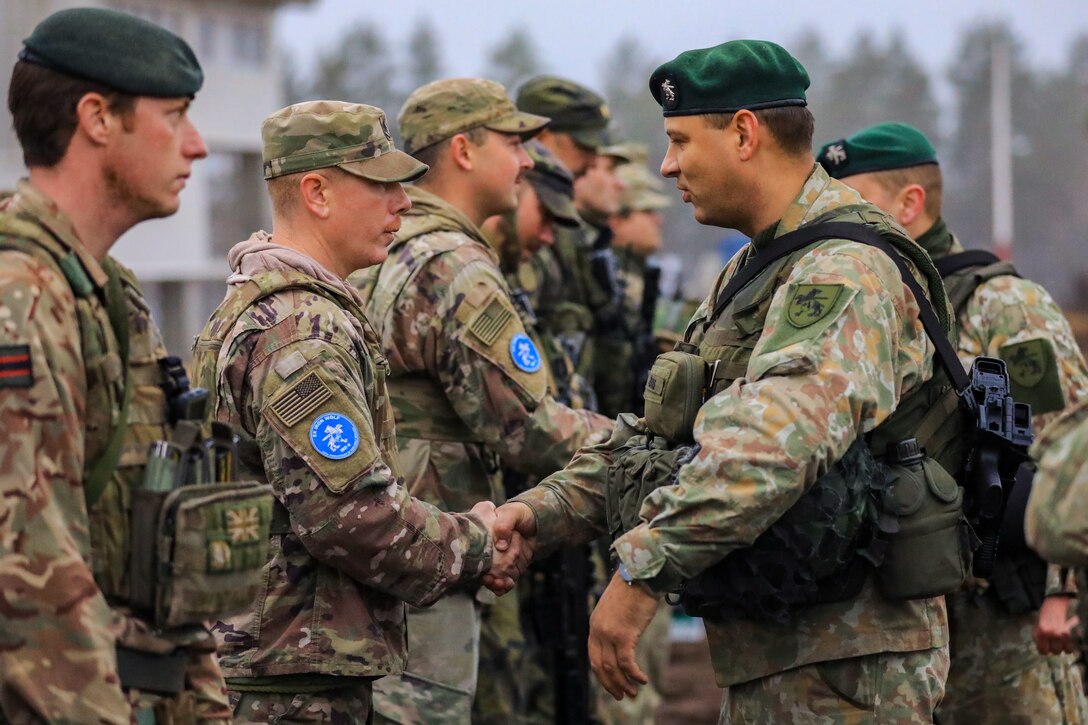
Kaunas said he raised the issue with U.S. War Secretary Pete Hegseth during the Shangri-La Dialogue in Singapore last week.
“We have assurance that the next rotation in Lithuania will arrive, but when exactly, and with which capabilities, and at what size—this is due to be announced,” he told reporters. In other words, all reassurance, but no schedule.
While the bureaucrats in Washington debate force posture, Lithuania continues to pull its weight. The small Baltic nation has tripled its defense budget since 2022, now spending a remarkable 5.4% of its GDP on national defense—well above NATO’s basic 2 percent requirement.
That commitment demonstrates not just seriousness, but also how smaller U.S. allies are stepping up even when political leadership in Washington wobbles.
According to Kaunas, U.S. officials have said that the Baltic region remains of “critical importance” to both NATO and the United States, acknowledging Lithuania’s significant defense investments.
Yet the math on troop commitments continues to fluctuate, suggesting a recalibration of priorities as Washington balances deterrence in Europe with commitments to the Middle East and Pacific.
Currently, the U.S. forces in Lithuania consist of two battalions from the Texas-based 1st Cavalry Division, including Abrams tanks, Bradley fighting vehicles, and Paladin self-propelled howitzers.
These units were the first to operate from Lithuania’s new purpose-built facilities at the Pabrade military base, just miles from the Belarusian border. It’s a modern site built precisely to accommodate U.S. armor and long-term rotational deployments.
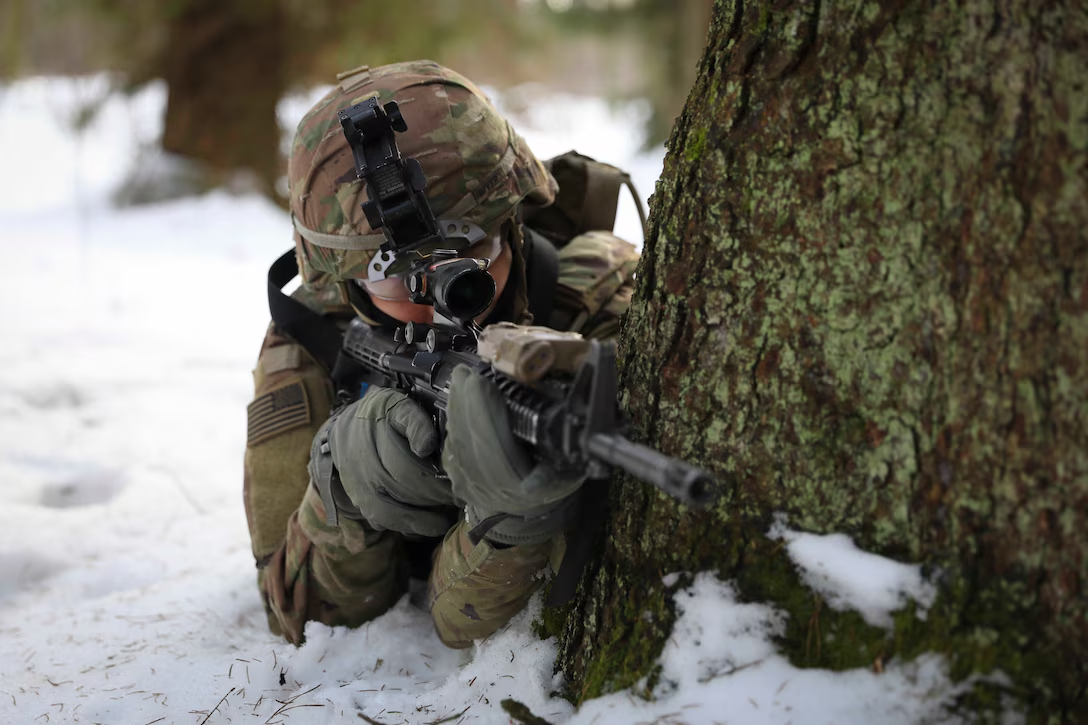
If the next rotation is delayed or downsized, that modernization will stand silent, a symbol of Lithuania’s readiness but Washington’s hesitation.
The minister’s diplomatic phrasing—“under review”—suggests decisions are being made at higher political levels rather than through military necessity on the ground.
It’s no secret that the Biden administration’s posture toward Europe has been confused at best. Pulling troops here, adding them there, talking tough but acting softly—it’s a pattern repeating across multiple global theaters.
It’s the exact opposite of the doctrine of peace through strength once emphasized by President Trump and now echoed by War Secretary Hegseth.
In Trump’s years, clarity mattered. Allies knew America was serious about deterrence, and adversaries—especially Moscow—knew better than to test U.S. resolve.
Under Biden, vague statements about “reviews” and “regional adjustments” have only emboldened adversaries and unsettled partners who depend on clear U.S. backing.
Still, Lithuania remains optimistic, if only out of strategic necessity. It must publicly trust that U.S. promises hold weight, while privately preparing for cases where they might not.
Given its proximity to both Russia and Belarus, maintaining even a small but steady U.S. presence is critical for deterrence.
For all the talk of NATO unity, it is Lithuania and its Baltic neighbors that continue to live with the daily reality of Russian intimidation, cyber intrusions, and hybrid threats. While Western Europe debates budgets, countries like Lithuania act.
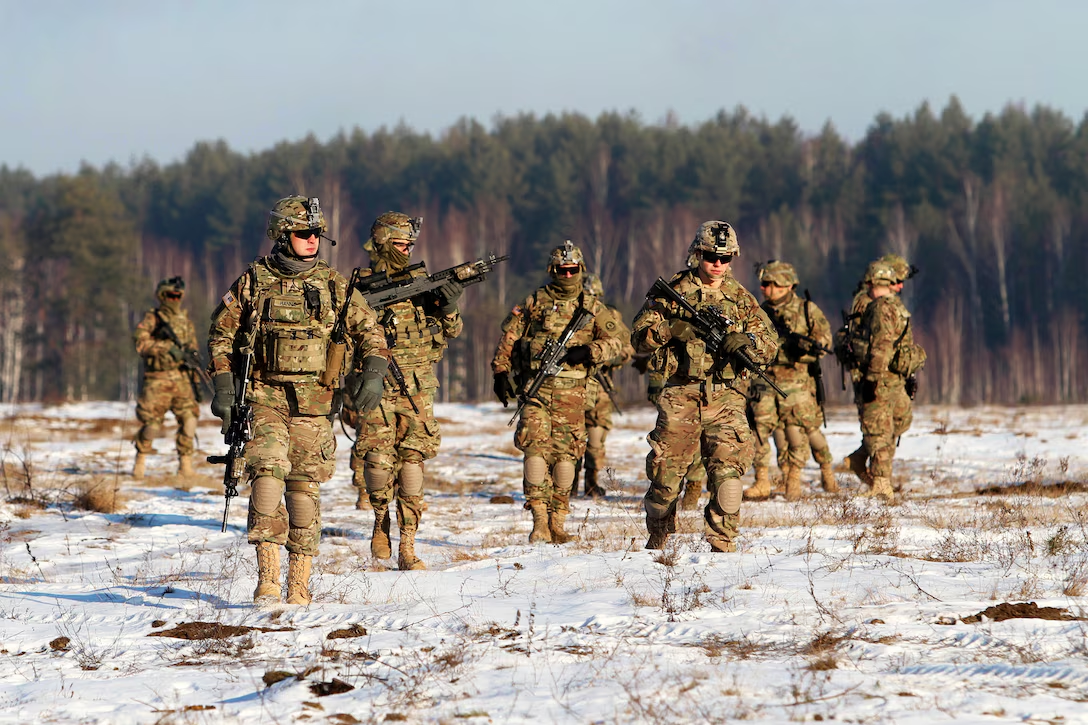
The problem, as Kaunas subtly hinted, is whether Washington’s “review” will keep pace with that reality.
The next steps will likely depend on the broader global posture being pieced together by Hegseth and his team.
Balancing multiple hotspots—Middle East tensions, Pacific deterrence, and NATO’s eastern frontier—requires more than political talking points. It demands decisive military leadership and the will to keep America’s word abroad.
Lithuania has done its part by building infrastructure, committing funding, and standing shoulder-to-shoulder with American forces. Now it waits for action, not adjectives, from Washington.
In an era where strength deters chaos, the words “under review” shouldn’t describe America’s commitment to its allies living on the edge of tyranny.
