News

News

Federal Judge Says Trump Can’t Federalize National Guard Despite Ongoing Portland Chaos

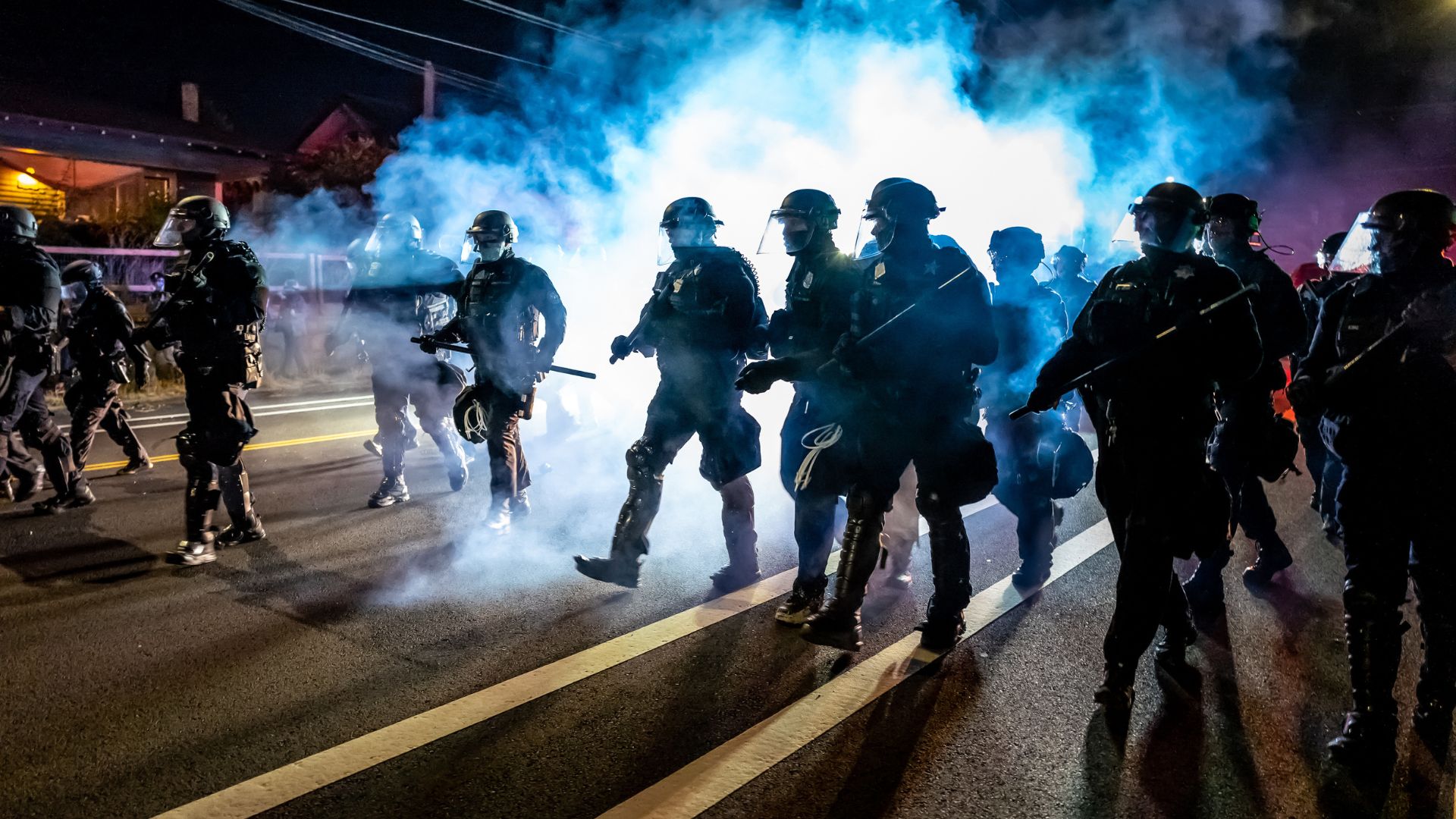
A federal judge in Oregon ruled Sunday that President Donald Trump likely lacked the authority to federalize the Oregon National Guard to assist federal agents protecting the U.S. Immigration and Customs Enforcement (ICE) facility in Portland, which has faced near-daily unlawful demonstrations since early June.

U.S. District Court Judge Karin J. Immergut, who was appointed by President Trump, issued an order extending a preliminary injunction that temporarily prevents the federalization of the state’s National Guard.

In her ruling, Immergut determined that the administration had not met the necessary legal threshold under Title 10, Section 12406 of the U.S. Code, which allows for federalization under specific conditions such as invasion, rebellion, or when the enforcement of federal laws becomes impossible.

“This Court determines based on the trial testimony, and the exhibits it has reviewed so far, that Plaintiffs are entitled to a preliminary injunction on their claims that Defendants’ federalization and deployment of the National Guard to Oregon violates 10 section 12406 of the Tenth Amendment,” Judge Immergut wrote.

A final ruling on the injunction is expected on November 7.

The case, Oregon v. Trump et al., was filed by the state of Oregon and the City of Portland.

Plaintiffs argued that the president’s move constituted an unlawful intrusion into state and local authority.

They maintained that federal law enforcement agencies, including the Department of Homeland Security (DHS) and Federal Protective Service (FPS), already have the ability to protect federal property without mobilizing the National Guard.

Attorneys from the Department of Justice, representing President Trump, countered that deploying the National Guard was necessary due to escalating violence directed at the ICE facility and federal agents stationed there.

Deputy Assistant Attorney Eric Hamilton argued that the president’s decision fell within his constitutional powers and was not subject to judicial review.

The Justice Department also noted that federal agencies were facing significant operational strain as a result of diverting personnel from their normal duties, including immigration enforcement under Title 8.

The three-day hearing took place at the Mark O. Hatfield U.S. Courthouse in downtown Portland. Judge Immergut heard testimony from multiple federal officials with firsthand knowledge of the protests at the ICE facility on Macadam Avenue.

These included incident commanders from FPS and ICE officials who described the events as sustained and violent demonstrations linked to Antifa-affiliated groups.

FPS commanders testified that more than 100 federal law enforcement officers from various agencies have been deployed to the ICE facility but that current staffing levels remain “inadequate” to ensure safety.

They said the addition of 200 National Guard members would allow federal officers temporarily assigned to Portland to return to their regular duties elsewhere.

The commanders also criticized the Portland Police Bureau for its limited involvement during the unrest, attributing the lack of support to state and local policies governing use of force and sanctuary enforcement.

According to testimony, Portland police officers were often instructed not to intervene directly in incidents around the ICE facility.

ICE Seattle Field Office Director Camilla Walmsley also testified in support of National Guard deployment.

She described multiple incidents of violence that led to injuries among federal personnel and temporary suspension of ICE operations at the Portland facility.

Walmsley stated that ICE lacks sufficient resources to continue assisting FPS and that its Special Response Team members need to return to their assignments involving high-risk immigration enforcement operations.

The plaintiffs argued that deploying the National Guard would worsen tensions and “inflame” the protests, potentially leading to further violence.

However, Major General Timothy Rieger of the Oregon National Guard testified that his experience over more than 30 years has shown the opposite effect.

“In my experience, I have only seen Guardsmen provide a calming effect when deployed to assist with civil disturbances,” he told the court.

The ongoing protests at the ICE facility began on June 7 and have involved daily clashes with federal officers.

Testimony during the hearing described demonstrators as “highly organized” and equipped with radios, riot gear, helmets, ballistic vests, shields, and firearms.

Federal officials said the protests have included attempts to breach the facility, impede government vehicles, and harass officers outside of work.

The preliminary injunction will remain in effect until at least November 7, when Judge Immergut is expected to issue a final decision on whether the president’s order to federalize the Oregon National Guard was lawful under federal statute.
News

Trump Trolls Democrats With Hilarious New ‘MySafeSpace’ Page on White House Site

The White House added a satirical “MySafeSpace” page to its official website this week, featuring comedic content directed at congressional Democrats, particularly House Minority Leader Hakeem Jeffries (D-NY) and Senate Majority Leader Chuck Schumer (D-NY).

The parody page appeared as negotiations over the ongoing government shutdown entered another week without resolution.

The “MySafeSpace” page, accessible through the White House website, appears designed as political satire targeting Democrats’ handling of the budget impasse.

The page opens with bright imagery, including caricature-style sombreros, and contains sections titled “The Democrats,” “Pics,” “Videos,” and “Voting Record.”

Each link redirects users to humorous or symbolic content related to the current standoff in Washington.

Under “The Democrats,” the page displays a photo of Senator Schumer standing next to Representative Jeffries, both edited to appear in sombreros and fake handlebar mustaches.

The “Pics” link opens an enlarged version of the same image, while the “Videos” link leads to footage of President Donald Trump and First Lady Melania Trump handing out Halloween candy at the White House.

White House My Safe Space Screenshot

Another link titled “Voting Record” directs visitors to a Hill article detailing Democrats’ continued refusal to advance the 13th vote to reopen the government.

An “About Me” section on the parody page appears written from the perspective of Democratic leaders, satirizing the party’s priorities and positions.

It reads: “Hey we’re Democrats in the House and Senate. We love DEI, transgender for everyone, and handing out taxpayer benefits to illegal immigrants. We couldn’t care less if our men and women in uniform get paid or if our neighborhoods are safe — we just love playing politic with people’s livelihoods!”

The “Heroes” section continues in the same tone, listing “Anyone who identifies as a radical leftist. Transnational gangs, illegal immigrants.”

White House My Safe Space Screenshot

The page uses exaggerated humor to criticize the Democratic leadership’s stance on immigration, diversity programs, and government spending during the shutdown.

The release of the “MySafeSpace” page follows weeks of tension between the White House and congressional Democrats over temporary funding measures.

Democrats have repeatedly voted against short-term continuing resolutions, arguing that President Trump’s spending proposals unfairly prioritize border security funding and cuts to administrative agencies.

Republicans have countered that Democrats are deliberately prolonging the shutdown for political advantage.

The White House has not issued a formal statement about the “MySafeSpace” page, and it remains unclear whether it is intended as a permanent feature or a temporary piece of satire tied to the ongoing negotiations.

The addition, however, has already sparked widespread attention online, with supporters and critics debating the appropriateness of hosting satirical political content on an official government website.

Political analysts have noted that President Trump frequently uses humor and trolling as communication tools in his broader political strategy, often blending satire with criticism to highlight policy disputes.

The “MySafeSpace” page aligns with this approach, serving as a digital extension of the President’s social media style, which frequently combines humor with pointed commentary about political opponents.

Democrats, including Senator Schumer and Representative Jeffries, have not publicly commented on the parody page as of Saturday.

The ongoing government shutdown, now stretching through multiple weeks, has kept negotiations between congressional leaders and the White House at a standstill.

Republicans have continued to push for targeted funding bills, while Democrats have refused to approve measures without broader agreements on spending priorities.

As the standoff continues, the “MySafeSpace” page stands as an unconventional addition to the White House’s digital messaging, offering a satirical take on partisan conflict during a contentious budget impasse.

News

Democrats Scramble as Fetterman Breaks Ranks on Shutdown SNAP Fallout

Senator John Fetterman of Pennsylvania urged Democrats to take responsibility for the ongoing federal government shutdown, which is on track to become the longest since 1981.

The comments came as millions of Americans face disruptions to federal programs, including the Supplemental Nutrition Assistance Program (SNAP), which serves more than 42 million people nationwide.

In an interview with CNN, Fetterman expressed concern over the widespread impact of the shutdown, particularly on food assistance and working families.

“It is deeply distressing to know that 42 million Americans will lose their SNAP benefits, and that’s one of the big reasons why I’m [opposed] to shutting our government down,” Fetterman said.

His remarks mark a rare public call from within the Democratic Party to reassess its strategy as the shutdown stretches into its fifth week.

The impasse began after negotiations over a short-term funding measure broke down in Congress. Democrats in both chambers have continued to block a continuing resolution that would temporarily fund government operations, citing demands for additional provisions, including extended Medicaid and Obamacare premium subsidies.

Republicans have pushed for a clean funding bill to reopen the government immediately while broader budget issues are debated separately.

On CNN’s weekend program, House Minority Leader Hakeem Jeffries struggled to explain why Democrats remain opposed to a temporary deal to reopen the government despite growing pressure from within their own ranks.

When asked about the administration’s use of emergency funds to keep food assistance flowing, Jeffries acknowledged that the available contingency funding could sustain SNAP benefits for only two to three weeks.

CNN’s Jake Tapper asked Jeffries: “Even these emergency supplemental funds for SNAP, even if the Trump administration ultimately uses them, it’s only enough to keep food stamps benefits going for two to three weeks, which is significant, but obviously not a long-term solution. I understand why Democrats are voting against the continuing resolution to fund the government. You’re fighting for the extension of the Obamacare premiums. You’re fighting to restore Medicaid funds. But I wonder when these SNAP funds are gone, whether this week or three weeks from now, if the contingency funds are used, are you worried at all that that pressure point will cause more Democrats to rethink the strategy and maybe ultimately vote for the government funding bill?”

Jeffries responded: “We’re continuing to make life better for the American people. We want to reopen the government. We want to enact a bipartisan spending bill that actually makes life better for everyday Americans. And of course, we want to make sure that we can decisively address the Republican health care crisis, which is crushing people all across the country, including working class Americans, rural America, urban America, small-town America, the heartland of America, and black and brown communities throughout America.”

Jeffries added that Republicans were to blame for the lapse in government operations, stating, “It’s very unfortunate that Donald Trump and Republicans have decided to weaponize hunger and withhold SNAP benefits, even in contravention of two federal courts, which have made clear that not a single person in this country should go without their nutritional assistance, and of course, that the funds exist to make sure that those SNAP benefits are paid through November.”

Meanwhile, former President Barack Obama entered the discussion at a campaign rally in Virginia, where he urged voters to support Democratic candidate Abigail Spanberger over Republican Winsome Sears in the upcoming gubernatorial election on November 4.

During his remarks, Obama criticized congressional Republicans, claiming they were responsible for the shutdown.

“Meanwhile, the government is shut down, and the Republicans who currently are in charge of Congress, they’re not even pretending to solve the problem. They haven’t even been showing up for work,” Obama said, according to Townhall.

The U.S. Senate had been scheduled to vote Monday on a measure to reopen the government but postponed the vote to Tuesday.

That date will mark the 35th day of the federal government shutdown, the longest since 1981.

Negotiations remain stalled as both parties trade blame, with millions of Americans waiting to see whether lawmakers can reach a deal to restore federal services and assistance programs.

News

Bondi Could Arrest Judge Boasberg Immediately for These Three Things: Mike Benz

Two Republican senators have accused Special Counsel Jack Smith and U.S. District Court Chief Judge James Boasberg of authorizing an unlawful surveillance operation targeting elected officials, escalating what has become known as the “Arctic Frost Scandal.”

The allegations surfaced after it was revealed that the Department of Justice secretly subpoenaed the phone records of at least ten Republican senators, including Lindsey Graham of South Carolina and Ted Cruz of Texas.

Both senators confirmed this week that their official and campaign phone data had been obtained through sealed court orders signed by Judge Boasberg, who also imposed a gag order preventing them from being informed for more than a year.

The subpoenas were issued to multiple telecommunications companies, including Verizon, as part of Special Counsel Jack Smith’s investigation into political communications related to the 2020 election and the early stages of the 2024 campaign.

Senator Graham released a statement on X, criticizing both Smith and Boasberg for what he described as a serious constitutional violation.

“It is now clear that my official and campaign phone records were subpoenaed by Special Counsel Jack Smith,” Graham wrote.

“Worse, a judicial gag order was issued prohibiting me from being informed of the subpoena for at least a year because Judge Boasberg believed that if I were informed, it would lead to witness tampering and destruction of evidence. That is legal slander.”

Graham accused Verizon of “extremely irresponsible” conduct for complying with the subpoena and said the company should have refused to turn over the records.

“They should have followed AT&T’s example and declined to turn over the records because it is a violation of the Speech and Debate Clause of the U.S. Constitution,” Graham said.

“The misconduct here is worthy of a Watergate-style investigation.”

Graham also called for the formation of a Senate Select Committee to investigate the matter.

“This fishing expedition against at least ten Republican U.S. Senators by Special Counsel Jack Smith is the biggest violation of separation of powers in our nation’s history,” he added.

“The driver of this outrageous conduct was a desire to stop President Trump’s 2024 campaign for president.”

At a separate press conference, Senator Cruz called for immediate congressional action, including impeachment proceedings against Judge Boasberg.

“I am right now calling on the House of Representatives to impeach Judge Boasberg,” Cruz said.

“Judge Boasberg put his robe down, stood up, and said, ‘Sign me up to be part of the partisan vendetta against 20% of the Republicans in the Senate.’ That is a dereliction of duty and a violation of the judicial oath.”

Cruz thanked Senators Chuck Grassley and Ron Johnson for investigating the matter, pledging that the Senate would pursue accountability.

“We are going to get the answers of every person who signed off on this abuse of power — and mark my words, there will be accountability for these zealots who wanted to corrupt the Department of Justice and corrupt the judiciary in order to try to attack their enemies list,” Cruz said.

Legal analyst Mike Benz outlined three potential criminal charges that Attorney General Pam Bondi could bring against Judge Boasberg in connection with the Arctic Frost investigation.

In a post shared on X, Benz cited the following statutes:

  • Deprivation of Rights Under Color of Law (18 U.S.C. § 242) — for allegedly depriving senators of their right to be notified of legal actions involving their official communications.
  • Obstruction of Proceedings Before Congress (18 U.S.C. § 1505) — for allegedly preventing the Senate from exercising oversight or intervening in the subpoenas.
  • Conspiracy Against Rights (18 U.S.C. § 241) — for allegedly conspiring with the special counsel’s office to conceal the subpoenas and avoid Senate challenge.

Benz said these charges could apply based on evidence that Boasberg knowingly concealed the subpoenas’ existence from the senators affected.

The case has drawn renewed scrutiny because Judge Boasberg previously presided over high-profile matters involving January 6 defendants and Foreign Intelligence Surveillance Court actions related to political investigations.

Former federal prosecutor Mike Davis also criticized Boasberg, claiming the judge “allowed Team Biden to illegally spy on Trump allies,” including sitting senators.

Davis said the House should move to impeach Boasberg, describing the conduct as “a grave breach of judicial ethics and constitutional limits.”

The Department of Justice and Special Counsel Jack Smith have not commented publicly on the reported subpoenas.

The House Judiciary and Senate Judiciary Committees are expected to seek further information regarding the scope of the surveillance orders and the reasoning behind the gag orders signed by Judge Boasberg.

News

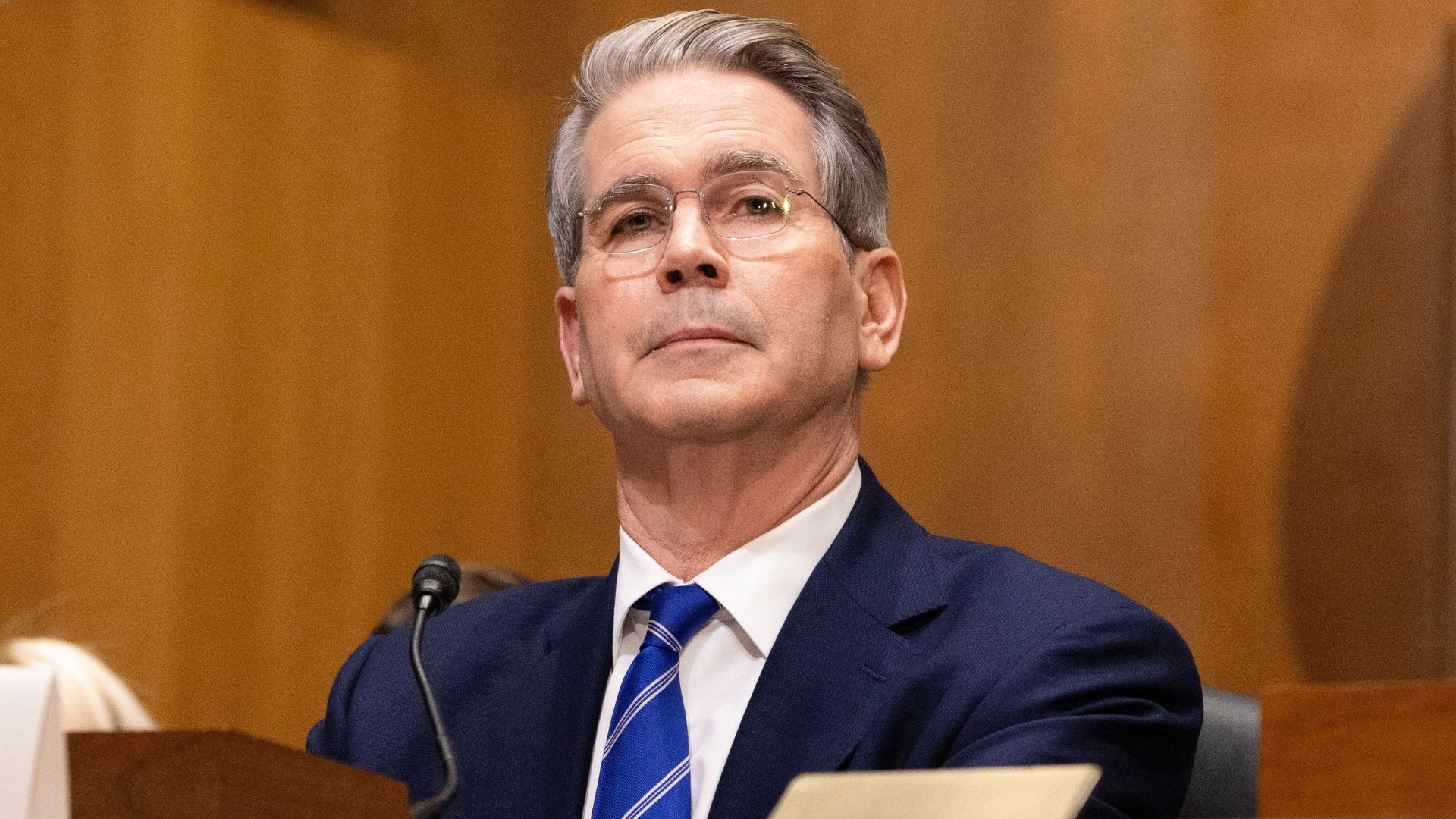
Scott Bessent Explains The Big Picture Everyone is Missing During the Shutdown

Treasury Secretary Scott Bessent said Sunday that the Trump administration’s reduction in government spending has gone largely unnoticed during the ongoing shutdown but has played a key role in helping the United States avoid a recession.

Bessent made the remarks during an appearance on CNN’s “State of the Union,” where he discussed the administration’s fiscal policies and the Federal Reserve’s recent rate cuts.

The Federal Reserve announced Wednesday that it would lower its benchmark interest rate by a quarter-point, bringing the range to between 3.75% and 4.00%.

During the interview, CNN host Jake Tapper asked Bessent whether the U.S. risked entering a recession if the Fed continued cutting rates too aggressively.

“I believe that we are in a transition period here as we are seeing the Trump administration has cut back on government spending,” Bessent said.

“What has gone unnoticed during the shutdown is, for the fiscal year that ended September 30, the government spent less than it did the year before. And because the GDP grew — the deficit-to-GDP which had been 6.4%, 6.5% deficit, the highest when we weren’t at war — we weren’t in a recession ever. We were able to bring it down to 5.9%.”

Bessent continued, “So we are bringing down government spending and I would think that the Fed would want to assist with that. Because if we go back and look, MIT just published a study that said 42% of the great inflation of 2022 came from excess government spending. So if we are contracting spending then I would think inflation would be dropping. [If] inflation is dropping then the Fed should be cutting rates.”

The Trump administration began implementing major spending cuts earlier in 2025, targeting what officials described as “inefficient or duplicative” programs across multiple agencies.

According to an October 4 update from the Department of Government Efficiency (DOGE), the administration’s cost-reduction initiatives saved an estimated $214 billion for taxpayers — roughly $1,329 per taxpayer.

The spending reductions coincided with a broader effort to rein in the federal deficit while addressing the shutdown’s fiscal impact.

Administration officials have argued that reduced government outlays are helping to stabilize inflation and ease pressure on working families despite temporary disruptions caused by the shutdown.

Federal Reserve Chairman Jerome Powell had previously warned that continued rate cuts could increase inflationary risks if not balanced by sound fiscal management.

However, tensions between Powell and President Donald Trump over rate policy have been ongoing for months.

Trump has repeatedly called for the central bank to lower rates more aggressively to support growth, arguing that high interest rates are hindering small business expansion and homeownership.

Powell said earlier this year that the Fed would have cut rates sooner if not for the trade and tariff policies enacted by the administration.

The Fed’s first rate cut came on September 17, when it lowered the benchmark by a quarter-point to a range of 4.00% to 4.25%.

A second cut followed in October, bringing the rate to its current level.

Because of the shutdown, most federal economic data releases have been delayed, leaving analysts without recent updates on job growth, consumer spending, or inflation trends.

Tapper pressed Bessent on whether he believed the economy could slip into a broader recession if the Fed halts rate cuts.

“I think that we are in good shape, but I think that there are sectors of the economy that are in recession and the Fed has caused a lot of distributional problems there with their policies,” Bessent said.

“I wrote a 7,000-word essay on that. We’ve seen the biggest hindrance for housing here is our mortgage rates. So if the Fed brings down mortgage rates then they can end this housing recession. Low-end consumers who have gotten killed under President Biden, these high rates are hurting them because they have debt not assets. So I think that there are sections of the economy that could go into recession.”

Bessent reiterated his belief that the economy is in a “transition period,” contrasting his outlook with that of former Treasury Secretary Janet Yellen.

Yellen, under the Biden-Harris administration, had characterized inflation as “transitory,” a view that later proved incorrect as consumer prices surged during her tenure.

Bessent said his use of “transition” referred instead to a short-term shift in economic conditions as the administration reduces spending and stabilizes long-term growth.

WATCH:

News

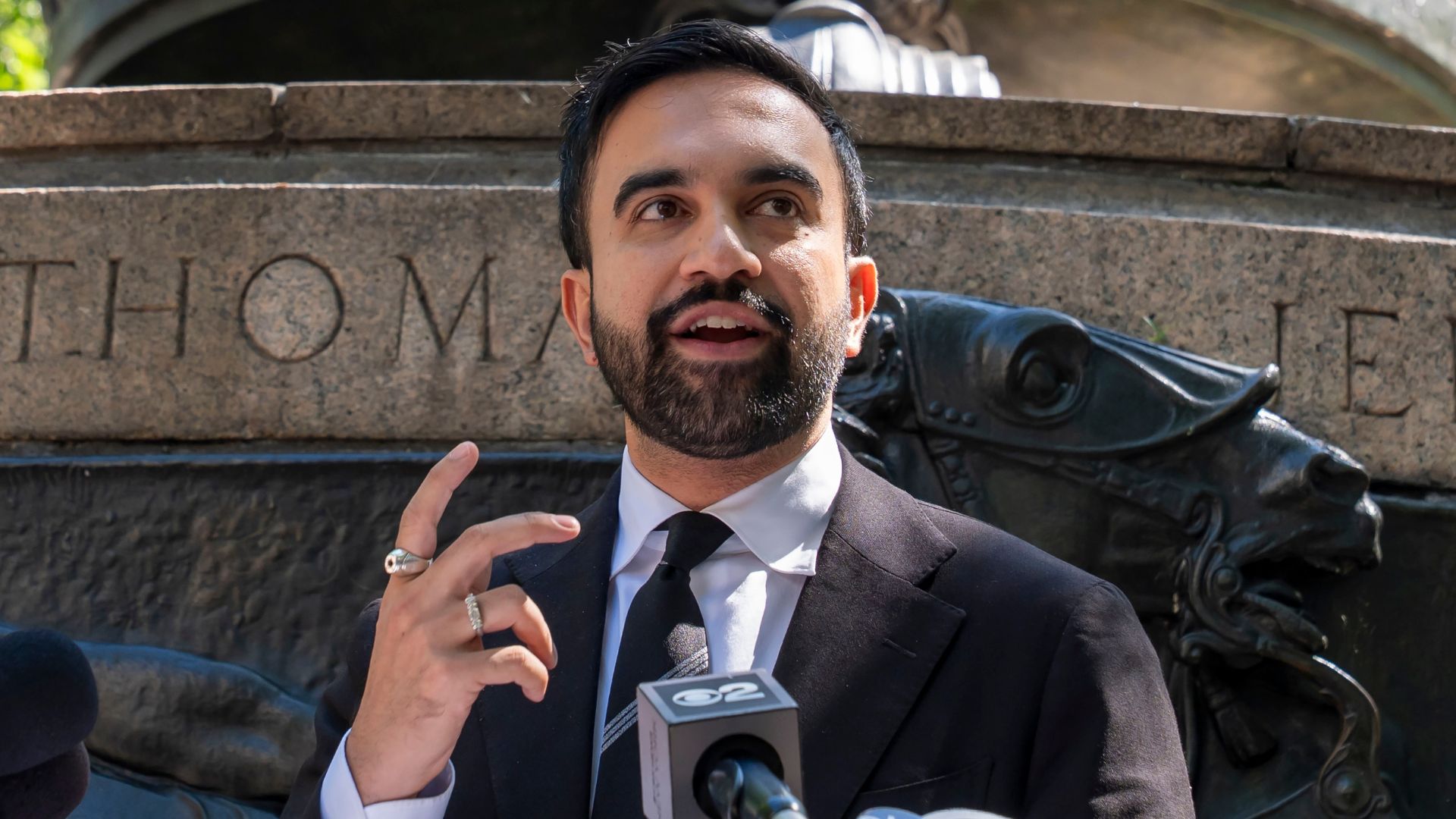
Socialist NYC Mayoral Candidate Mamdani Faces Two Criminal Investigations

New York City mayoral candidate Zohran Mamdani is facing two criminal referrals following allegations that his campaign accepted nearly $13,000 in contributions from donors with foreign addresses, in potential violation of federal and local election laws.

The complaints were filed on October 28, 2025, by the Coolidge Reagan Foundation (CRF), a conservative campaign finance watchdog.

The group submitted referrals to the U.S. Department of Justice’s Criminal Division and to Manhattan District Attorney Alvin Bragg, according to a report from Fox News.

The filings accuse Mamdani’s campaign of accepting prohibited foreign donations during the current election cycle.

A review of records from the New York City Campaign Finance Board (CFB) shows that Mamdani’s campaign received at least 170 donations totaling about $13,000 from contributors listing addresses outside the United States.

Those addresses included locations in Australia, Canada, Dubai, France, Germany, and Turkey.

One of the flagged donations was a $500 contribution from Mamdani’s mother-in-law, a pediatrician based in Dubai, which was refunded four days after it was made in January 2025.

Another involved a $2,100 donation in September 2025 from an investor also located in Dubai.

CRF President Dan Backer said the data revealed a “sustained pattern” of questionable contributions.

“This was a sustained pattern of foreign money flowing into a New York City mayoral race which is a clear violation of both federal law and New York City campaign finance rules,” Backer stated.

He added that refunds issued after the donations were received do not eliminate potential violations.

“The totality of the circumstances indicates likely illegal contributions, even if some donors might be U.S. citizens or green-card holders living abroad,” Backer said.

Federal law under the Federal Election Campaign Act (FECA) prohibits foreign nationals — defined as individuals who are not U.S. citizens or lawful permanent residents — from contributing to any U.S. election.

The same restrictions apply to state and local races.

Knowingly accepting or soliciting such donations can carry penalties including fines or imprisonment.

CRF’s referral to the Department of Justice asserts that Mamdani’s campaign failed to properly vet donors and that the volume of foreign-linked contributions warranted criminal investigation.

As of mid-October 2025, campaign finance records showed that Mamdani’s team refunded 91 contributions totaling $5,723.50.

However, at the time of reporting, 88 additional donations amounting to about $7,190 had not yet been returned.

CRF Chairman Shaun McCutcheon called the donations a “threat to self-government” and urged immediate prosecution, saying that foreign money in U.S. elections “undermines public confidence in the democratic process.”

The Mamdani campaign acknowledged the donations but denied any wrongdoing.

Campaign spokesperson Dora Pekec said all contributions were reviewed through “a rigorous compliance process.”

She emphasized that federal, state, and city laws allow U.S. citizens and lawful permanent residents living abroad to donate.

“The Campaign has a rigorous compliance process in place,” Pekec said.

“Refunds have and will be made.”

According to the campaign, 31 of the 170 questioned donors provided documentation proving U.S. citizenship or permanent residency, and the CFB determined that their contributions were permissible. The remaining 139 donations were refunded.

“Any issue regarding financial contributions has been resolved,” the campaign said in a written statement.

“We will of course return any donations that are not in compliance with CFB law.”

The allegations come just days before Tuesday’s mayoral election, where Mamdani, a self-described socialist and state assemblyman from Queens, is heavily favored to win.

His campaign has reported raising $4 million in private donations and qualifying for $12.7 million in public matching funds under New York City’s campaign finance program.

Mamdani’s opponents include Republican nominee Curtis Sliwa and former New York Governor Andrew Cuomo, who is running as an independent after losing to Mamdani in the Democratic primary earlier this year.

Both challengers have called for greater scrutiny of campaign fundraising practices and transparency in donor reporting.

News

Trump Seeks Legal Path to Fund SNAP as ‘Radical Democrats’ Hold Americans Hostage

President Donald Trump announced Friday that his administration is seeking immediate legal clarification to allow funding for the Supplemental Nutrition Assistance Program (SNAP), which serves millions of Americans, as the federal shutdown nears its one-month mark.

The shutdown has halted funding for several federal programs, leaving approximately 42 million people at risk of losing access to food benefits.

President Trump said he has directed White House legal counsel to petition the courts to determine whether existing funds can be lawfully released to states so that benefits can continue without congressional action.

“Our Government lawyers do not think we have the legal authority to pay SNAP with certain monies we have available, and now two Courts have issued conflicting opinions on what we can and cannot do. I do NOT want Americans to go hungry just because the Radical Democrats refuse to do the right thing and REOPEN THE GOVERNMENT,” President Trump wrote in a statement released Friday.

The president said the administration’s legal team will move quickly to obtain judicial guidance.

“I have instructed our lawyers to ask the Court to clarify how we can legally fund SNAP as soon as possible. It is already delayed enough due to the Democrats keeping the Government closed through the monthly payment date and, even if we get immediate guidance, it will unfortunately be delayed while States get the money out. If we are given the appropriate legal direction by the Court, it will BE MY HONOR to provide the funding, just like I did with Military and Law Enforcement Pay,” he continued.

The statement marks one of the administration’s most direct responses to growing public concern over the shutdown’s effect on essential services.

While other funding measures—such as those protecting pay for military and law enforcement personnel—have been addressed, SNAP remains tied to the broader budget dispute in Congress.

President Trump blamed Senate Democrats for obstructing short-term funding proposals, accusing them of using the standoff for political advantage.

“Democrats should quit this charade where they hurt people for their own political reasons, and immediately REOPEN THE GOVERNMENT. If you use SNAP benefits, call the Senate Democrats, and tell them to reopen the Government, NOW! Here is Cryin’ Chuck Schumer’s Office Number: (202) 224-6542,” Trump said.

According to administration officials, two federal courts have issued differing opinions regarding the government’s authority to redirect certain funds during a shutdown.

That legal uncertainty has complicated efforts to resume SNAP payments at the state level. Without court approval or new congressional appropriations, the Department of Agriculture—which administers the program—cannot guarantee continued benefits.

The SNAP program, created to assist low-income families and individuals with food purchases, typically distributes benefits on a monthly schedule.

Several states have warned that they may be unable to issue February payments without new guidance or authorization.

The president’s move to seek judicial intervention reflects ongoing efforts to mitigate the shutdown’s impact while maintaining pressure on Congress to approve a funding bill.

The White House has maintained that Democrats are preventing a temporary funding solution that would reopen government agencies while broader negotiations continue.

As legal teams prepare to file motions for clarification, federal and state agencies remain in limbo, awaiting direction on how to manage the lapse in appropriations.

Administration officials said they hope to have preliminary guidance from the courts within days, but no formal timeline has been established.

President Trump’s call for legal action follows his earlier decisions to ensure that members of the military and federal law enforcement continued to receive pay during the shutdown.

He has framed those moves as necessary steps to protect Americans from political gridlock in Washington.

If the courts grant authorization, the administration is expected to release emergency funds to maintain SNAP benefits until a budget agreement is reached.

For now, however, the continuation of food assistance for millions of families remains tied to the outcome of both the legal process and the ongoing political impasse.

News

DHS Agents’ Sworn Testimony: Portland Police Failed as Antifa Riots Raged

On the second day of testimony in Oregon v. Trump, et al., Department of Homeland Security officials defended the decision to deploy National Guard troops to assist federal agents at the Immigration and Customs Enforcement (ICE) facility in Portland, Oregon.

The case centers on whether the federal government acted lawfully when it ordered Guard troops to respond to escalating violence and unrest outside the ICE building on Macadam Avenue.

The federal trial, held in U.S. District Court, began earlier this week.

Oregon state and city officials are challenging the legality of the deployment, arguing that sending National Guard troops into Portland constitutes governmental overreach and risks worsening tensions between demonstrators and law enforcement.

The Department of Justice (DOJ) maintains that the move was necessary to protect federal property and personnel following months of attacks by organized protesters, many associated with Antifa-linked groups.

Two witnesses from the Department of Homeland Security’s Federal Protective Service (FPS) testified Thursday, describing the ICE facility as a target of ongoing violence since early June.

Both witnesses criticized the Portland Police Bureau (PPB) for failing to respond to repeated calls for assistance during critical incidents.

The first witness, identified in court as “R.C.,” serves as the FPS Deputy Regional Director for Region 10 and has acted as incident commander at the ICE site multiple times since June.

R.C. testified that the facility has been under “sustained attack” by organized groups engaging in criminal conduct, including assaults on federal agents, blocking government vehicles, and attempting to breach the facility with improvised battering rams.

R.C. estimated that at least 180 law enforcement officers are required to properly secure the property each night.

He said the roughly 200 Oregon National Guardsmen federalized under President Donald Trump’s order would provide necessary relief to overextended federal personnel.

“National Guard troops would alleviate the strain on resources across all federal agencies currently deployed to the facility,” he told the court.

According to his testimony, federal officers from multiple agencies — including FPS, ICE Special Response Team (SRT), Customs and Border Protection (CBP), Border Patrol, and the Bureau of Prisons — have been diverted from their normal duties to respond to the Portland unrest.

R.C. said many of these officers would otherwise be conducting operations against high-priority criminal targets.

He also described the emotional toll on federal personnel, saying agents are routinely subjected to verbal abuse and physical threats.

“Protesters hurl vile, racist, and other harmful rhetoric at agents around the clock,” R.C. said, explaining that staff rotations were shortened from 30 days to 20 days to mitigate burnout and mental health strain.

R.C. testified that repeated requests for support from the Portland Police Bureau went unanswered.

He referenced a meeting earlier this year with PPB Chief Bob Day, where cooperation protocols were discussed.

When asked whether those expectations were met, R.C. replied, “No.” He described the local department’s withdrawal as “a repeated pattern of abandonment,” leaving federal agencies to handle both crowd control and criminal incidents occurring within PPB’s jurisdiction.

The second FPS witness, identified as Commander “W.T.,” served as an incident commander biweekly from July through late September.

His testimony corroborated R.C.’s account, detailing how nightly protests continued without police intervention.

“Unlawful protests occurred every night,” W.T. said, recalling that PPB had withdrawn its officers from the area in late June.

W.T. cited multiple examples of vandalism, verbal harassment, and attacks on officers.

He said agitators regularly used shields, ballistic vests, high-powered flashlights, and lasers to interfere with law enforcement operations.

“They’ve even urged officers to ‘kill themselves,’” he told the court.

One documented event, referred to as the “guillotine incident,” occurred on September 1.

Demonstrators reportedly placed a mock guillotine in the roadway outside the ICE facility and formed a human chain with shields to block the driveway, trapping personnel inside.

“It was an extreme threat,” W.T. testified.

During cross-examination, a City of Portland attorney suggested that carrying shields or similar items might not be illegal.

W.T. responded that the combination of such gear and actions — including the guillotine blockade — amounted to disorderly conduct and indicated the gatherings were not peaceful.

Both FPS witnesses agreed that National Guard deployment would be beneficial given the “24-hour unlawful protest activity” and severe staffing shortages among federal officers.

The Department of Justice is expected to call additional witnesses from ICE and the Department of War before the trial concludes Friday.

The court’s decision will determine whether the federal government’s deployment of National Guard troops in Portland was justified under federal law and necessary for the protection of federal property.

News

Dem Rep Bynum Doesn’t Seem to Know Why She Voted to Shut Down the Government

Democratic Representative Janelle Bynum of Oregon’s 5th Congressional District faced scrutiny on Friday after appearing unable to explain her vote against a short-term spending measure to reopen the government or acknowledge her party’s role in the ongoing shutdown that threatens to halt Supplemental Nutrition Assistance Program (SNAP) benefits.

The exchange occurred during a C-SPAN interview, a clip of which was later shared on X by House Speaker Mike Johnson of Louisiana.

In his post, Johnson highlighted Bynum’s remarks as an example of confusion among House Democrats regarding the continuing resolution (CR) that would have temporarily funded the government through the existing budget levels.

“Everyone should watch this incredible clip. Many House Democrats literally DON’T EVEN KNOW what they voted against when they closed the government! (Remember: Our CR was totally clean and nonpartisan, and only 24 short pages in length),” Johnson wrote.

The current shutdown, now in its 31st day, began after Senate Majority Leader Chuck Schumer and Democratic leadership refused to advance the Republican-backed clean CR.

The measure would have extended funding without additional policy riders or spending cuts, mirroring the same resolution Democrats supported earlier in March.

As the November 1 deadline approaches, funding for SNAP benefits is set to lapse, potentially affecting millions of low-income families.

Republican leaders have introduced a standalone bill to extend SNAP funding temporarily, but Democrats have resisted separate funding efforts while negotiations over the broader budget continue.

During her C-SPAN appearance, Bynum was asked directly whether Democrats should approve the GOP-led standalone measure to protect SNAP benefits from interruption.

Rather than answering directly, she said Republicans control “the White House, House, and Senate,” adding that they have “the control to make sure Americans get what they need.”

Her statement was inaccurate, as Democrats currently hold the majority in the Senate and have used procedural control there to block the House’s continuing resolution.

Pressed again by the host, Bynum declined to take a firm position on the SNAP bill.

“I just got here. I don’t play politics. I want a clean bill that focuses on the American people. That makes sure kids have a full belly,” she said.

“All of the clean this, clean that, Americans don’t understand that. They know if they have their benefits or not.”

She continued, “So put a bill on the table. Make sure it’s very pure and clean, as they like to say. And it doesn’t have a whole lot of fluff in it.”

The interviewer then reminded her that Republicans had already voted on a clean CR on September 19.

When asked if she had voted on that bill, Bynum replied that she “disagrees with” the characterization of the measure, insisting that Republican proposals contain “poison pills.”

When pressed for specifics about what provisions she was referring to, Bynum did not identify any and shifted away from the question.

The remarks drew attention online as the shutdown’s economic and social consequences grow more severe.

Critics noted that the continuing resolution Bynum opposed was nearly identical to the one Democrats themselves passed earlier this year.

The standoff has left key federal programs, including SNAP, in jeopardy as states prepare for potential disruptions to benefits next week.

The Department of Agriculture has warned that without new appropriations, funds for the food assistance program could run out after the start of November.

Speaker Johnson and House Republicans continue to urge Democrats to return to the negotiating table and pass a short-term funding measure.

The House-approved CR, described by Johnson as “clean and nonpartisan,” remains stalled in the Senate as leadership continues to link broader spending priorities to the reopening of the government.

With the shutdown entering its fifth week, the political impasse shows no immediate signs of resolution.

Millions of Americans who rely on federal nutrition assistance now await congressional action to restore funding before the November 1 deadline.

News

VA Dem Gov Candidate Admits Politics Are More Important Than Virginians’ Jobs

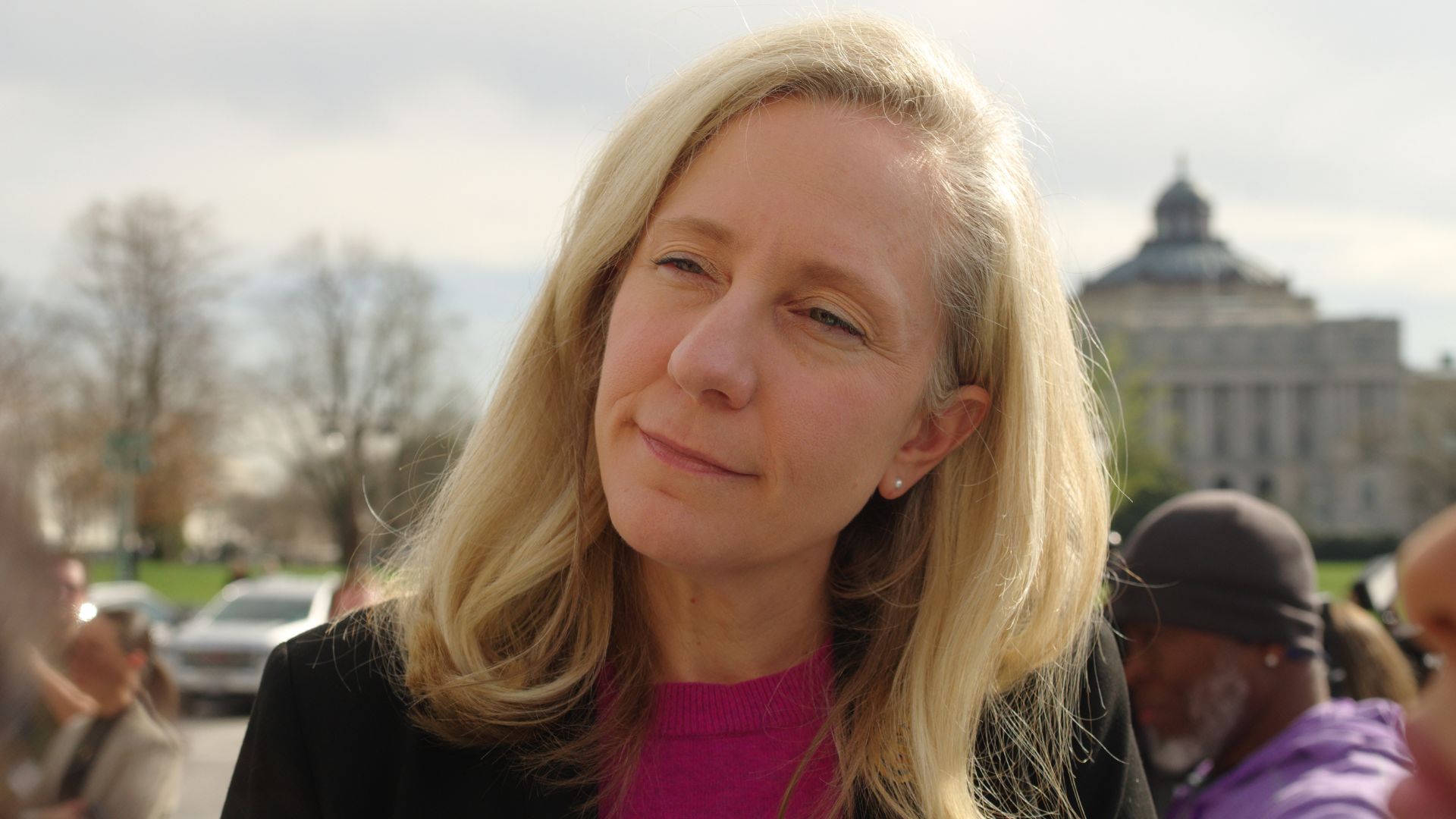
Rep. Abigail Spanberger of Virginia said she would not work with President Donald Trump on job creation efforts if she were elected governor, according to comments made during a PBS NewsHour interview this week.

Spanberger, who represents Virginia’s 7th Congressional District and is considered a leading Democratic contender in the 2025 gubernatorial race, made the remarks when asked whether she would collaborate with the White House on policies aimed at boosting employment and economic growth in the state.

When pressed by the interviewer about whether she would coordinate with President Trump to expand job opportunities in Virginia, Spanberger said she would not, comparing cooperation with the administration to “working with the arsonist who burns down the house.”

The exchange drew attention online and from political observers in Richmond, with critics noting that Spanberger’s comments come as the national economy continues to show improvement under the Trump administration.

Major stock indexes have remained strong, inflation has eased from highs earlier in the decade, and interest rates have been reduced following Federal Reserve action to stabilize the lending market.

Spanberger’s statement was interpreted by analysts as a signal that she intends to distance herself from the Trump administration entirely if she wins the governor’s office, even in areas of potential bipartisan cooperation such as workforce development, infrastructure investment, and manufacturing.

The Virginia Democrat has kept a relatively low profile during the early stages of the gubernatorial race, declining numerous press opportunities while focusing on fundraising and regional campaign appearances.

Her campaign platform has centered on public education, clean energy investment, and expanding health care access, while largely avoiding detailed policy discussions involving the White House or federal partnerships.

President Trump’s administration has credited its trade and fiscal policies with helping to sustain U.S. job growth and stabilize consumer markets.

Recent agreements between the United States and Asian trading partners have been framed by the White House as key to strengthening American manufacturing and export competitiveness.

The administration has also cited the expansion of small business incentives and infrastructure grants as evidence of continued economic progress.

Spanberger’s decision to reject cooperation with the president on job creation marks a sharp contrast with previous Virginia governors, both Republican and Democratic, who have traditionally worked with federal agencies and the White House on economic initiatives.

Her comments have also reignited discussion about the Democratic Party’s broader posture toward the Trump administration.

Spanberger, a former CIA officer first elected to Congress in 2018, has positioned herself as a centrist within her party but has often aligned with national Democratic leadership on key votes.

The interview also addressed social policy issues, including Spanberger’s past comments on gender and public accommodations.

During an press conference in September, she was asked about her stance on policies allowing biological males to access women’s locker rooms and restrooms.

Her response drew scrutiny online after she appeared to avoid directly answering whether she supports such measures.

Spanberger’s remarks come as the Virginia gubernatorial race continues to take shape ahead of the state’s 2025 election.

She is expected to formally launch her campaign later this year, joining a growing field of Democratic contenders.

Republicans are expected to highlight her unwillingness to collaborate with the Trump administration as evidence of partisanship heading into what is anticipated to be one of the most closely watched state races in the country.


Scroll to Top