News

News

Democrat House Hopeful’s Campaign Rocked by Sex Offender Brother-in-Law Scandal

Democratic congressional candidate Aaron Gies is facing criticism after acknowledging that his brother-in-law, Christopher Nathan White, attended and helped film a campaign event despite being listed as a registered Level 2 sex offender in New York, as reported by The New York Post.

Gies, a theology professor at St. Bonaventure University, is seeking to unseat two-term Republican Rep.

Nick Langworthy in New York’s 23rd Congressional District. The controversy centers on a Dec. 26, 2025, “Polar Plunge” campaign event where participants wearing bathing suits jumped into a cold pond at a private residence.

According to Gies, White attended the event and assisted with filming video footage.

“He was there,” Gies told The Post Sunday when asked about the campaign event.

Gies maintained that White has no formal role in his congressional campaign.

“Chris is not part of my campaign,” he said, while adding that White “did his time” for his crimes.

Gies described the issue as a “distraction” from his campaign platform, which focuses on expanding health care and housing opportunities.

The Democratic candidate also defended himself by stating, “I have not been accused of any criminal wrongdoing and have not covered up criminal wrongdoing on the part of others.”

The issue has drawn attention because Gies recently criticized other political figures over allegations involving sexual misconduct.

Last week, he called on Maine Senate candidate Graham Platner to end his campaign over claims of sexual assault.

He also criticized Langworthy, alleging the congressman had used his position on the House Oversight Committee to block “accountability for people in the Epstein files.”

Those statements came after White had appeared at Gies’ own campaign event.

White previously worked as a teacher in North Carolina before being convicted of one count of second-degree sexual offense and two counts of sex offense involving two teenage students, ages 15 and 17. He served five years in prison before relocating to New York.

Following his release, White moved to Olean, where he now works at a veterinary clinic operated by Gies’ wife and White’s sister.

He is listed as a Level 2 Sex Offender in the New York State Division of Criminal Justice Services Sex Offender Registry.

Retired Marine Chris Hahn, who attended the Polar Plunge fundraiser with his 15-year-old daughter, said he was surprised after learning who had filmed video during the event.

“I was shocked to see someone like that would be on the campaign trail — brother-in-law or not,” Hahn said.

“Wow. Do people who want to vote for Geis know this?” Hahn told The Post. “You don’t have a leg to stand on. You’re not setting a good example.”

Langworthy also criticized his opponent’s decision to allow White to attend the campaign event.

“To bring a convicted sex offender and someone guilty of 2nd degree rape of a minor to campaign events is deeply, deeply disturbing and shows an alarming lack of judgment for any adult, let alone someone seeking public office,” Langworthy told The Post.

“As members of Congress, we have an enormous responsibility to put in place laws that protect victims and children, not put them at risk.”

Gies is challenging Langworthy in New York’s 23rd Congressional District, which covers a large portion of western New York outside the Buffalo metropolitan area.

According to the latest enrollment figures from the New York State Board of Elections, the district has 209,390 active registered Republicans, 144,342 active registered Democrats, and 132,176 voters who are not affiliated with either major party.

News

Israeli Ambassador Obliterates Rep Ro Khanna Over False Detention Tale [WATCH]

Democratic Congressman Ro Khanna managed to find himself in another embarrassing tangle after spinning a story about being “detained” in the West Bank, as reported by Red State.

The problem for Khanna is that Israel, including its own Defense Force and now its top diplomat in Washington, says that is not what happened at all.

The Israeli Ambassador to the United States, Michael Leiter, has now publicly dismantled Khanna’s account, exposing what appears to be an attempt at political theater dressed up as a victim narrative.

According to Khanna’s version, he and his group were “detained” by the Israeli military while traveling near a Palestinian area. But when the Israeli Defense Force responded to his claims, they made it clear they were not responsible for any detention.

In fact, they said they arrived to help resolve a situation in a restricted zone. Israeli police added that the location in question was a closed military zone, meaning civilians had no business being there to begin with.

Leiter did not hold back after hearing Khanna’s statements circulate through sympathetic media.

He revealed that Israel reached out to Khanna’s office upon learning of his trip, offering briefings, a chance to meet survivors of the October 7 terror attack, and opportunities to understand the nation’s ongoing security challenges.

Khanna, apparently uninterested in that side of the story, “ignored that” and instead toured around the region with Palestinian activists.

“Maybe this would not have happened if he had coordinated properly,” Leiter stated.

According to the ambassador, Khanna’s office did not coordinate anything meaningful with the Israeli government.

All they did was ask a question about visas, which Leiter described as being far from genuine coordination.

Leiter’s criticism quickly took a sharper edge as he pointed out the suspicious timing of Khanna’s “detention” story.

The incident reportedly occurred on a Wednesday, but Khanna did not go public with it until Saturday.

“Maybe this had more something to do with his support of Graham Platner beforehand, and the difficulties he had with that,” Leiter speculated.

“Trying to shift the focus to something else, perhaps? I’m asking a question.” The point was clear, and it hit home.

Adding even more mockery to the mess, Leiter implied that Khanna was using this media moment as a way to test the waters for a possible presidential campaign.

“You know, to declare a presidential run,” Leiter joked, drawing laughter even from CBS host Margaret Brennan.

That idea has been floating around elite Democrat circles recently, with Khanna seemingly hinting at a 2028 run. It looks like Israel is not taking that “threat” particularly seriously.

Khanna had also claimed that “it wasn’t a good idea to detain long-shot presidential candidates” and warned Israel that this was “not how you’re going to build goodwill with the next American president, whoever that is.”

If he was trying to sound presidential, it did not work. Leiter did not flinch and seemed more amused than alarmed.

Instead of letting the story fade quietly into the background, Khanna doubled down.

In response to Leiter’s interview, he posted on social media, insisting that if American officials were “detained illegally by settlers and the military of any other nation, the Ambassador would beg the American people for forgiveness.”

Khanna then called Leiter’s approach “the height of arrogance.” That line only added to the perception that the Congressman is trying much too hard to pick a fight for attention.

The truth is, if what the Israelis are saying is accurate, Khanna and his group wandered into a restricted area without proper coordination, in a nation still on high alert after the horrors of October 7.

For a member of Congress who should know better, that kind of misstep is more reckless than brave. To then play the victim card afterward only makes the situation worse.

Republicans are already pointing out the hypocrisy. Imagine the outrage from Democrats and media pundits if a GOP lawmaker pulled a stunt like this.

But because Khanna belongs to the progressive crowd that loves scolding Israel whenever possible, he gets front-page sympathy coverage from outlets eager to amplify his version of events.

“The height of arrogance” might not describe Israel’s actions here, but it perfectly sums up Khanna’s own behavior.

Praising himself as a “long-shot presidential candidate” while taking shots at an ally fighting to survive in one of the most dangerous parts of the world makes him look less like a leader and more like a headline chaser.

The arrogance is layered thicker than talking points in a CNN green room.

For a man hoping to be seen as a future statesman, Khanna is instead reminding American voters why so many are tired of political posturing and selective outrage.

His version of events has collapsed under scrutiny, and once again, Israel’s own officials had to clean up the mess. The attempt to score political points at Israel’s expense fell completely flat.

Given how poorly this latest play has unfolded, maybe Khanna should spend less time pretending to be an international victim and more time understanding basic rules of diplomacy.

If nothing else, this fiasco serves as a lesson in how not to handle foreign relations, especially when dealing with one of America’s closest allies.

News

Two Teens Arrested After Five Family Members Gunned Down in Illinois [WATCH]

Five members of the same family were killed Sunday in a series of shootings across East St. Louis, Illinois, prompting a multi-agency investigation led by the Illinois State Police and local law enforcement authorities, as reported by Fox 2 Now.

Illinois State Police confirmed that two juvenile suspects, ages 15 and 16, are in custody in connection with the killings.

Authorities initially reported earlier in the day that both suspects were 16 years old, but later clarified their ages in an updated statement.

The two teens were arrested in Frank Holten State Park. Illinois State Police said they are seeking criminal charges through the St. Clair County State’s Attorney’s Office.

According to investigators, the shootings occurred at multiple locations throughout East St. Louis.

One person was killed near the intersection of North 39th Street and Summit Avenue, while three additional victims were found dead at the Samuel Gompers Housing Development.

Another shooting occurred at Jones Park, located across the street from the Jackie Joyner-Kersee Foundation.

Three people were shot there, with one victim later dying. The two surviving victims were transported to a hospital for treatment.

Authorities identified the five people killed as Quentin L. Thompson, 21; Devin D. May, 24; Shania W. Thompson, 25; Cherie L. May, 49; and Patricia A. May, 74.

Illinois State Police also confirmed that one of the juvenile suspects is related to at least one of the victims.

Investigators have not publicly disclosed a motive for the shootings, though officials indicated that the investigation has begun to provide a clearer understanding of what occurred.

Kelly, speaking during a news conference, said the investigation remains active but emphasized there is no ongoing threat to the general public.

“We have Illinois State Police special agents, troopers, and officers from our local partners investigating those questions, and I think that will become apparent over time,” Kelly said.

While describing the violence as unprecedented for the area, Kelly stressed that the attacks should not define the city or overshadow recent progress within the community.

“It will not keep this city down. The progress we have made will not be lost as a result of these terrible acts of violence that have occurred in this community today,” he said.

Kelly also characterized the killings as “terrible” and “evil.”

Residents who live near the crime scenes said the violence came as a shock to a neighborhood they consider close-knit.

“This feels like something that would happen on ‘The First 48’, not right across from you,” Gompers Public Housing resident Keveon Johnson said.

Neighbor Samuel McClain Jr. said the shootings were unlike anything the community typically experiences.

“It’s a peaceful neighborhood, so when everybody got woke up and heard that a female was deceased, that’s a lot because we’re not used to it,” McClain said.

East St. Louis City Councilman Courtney Hoffman also urged residents not to view the incident as a random attack against the broader public.

“This is not a mass shooting where you have to worry about going to the grocery store and someone opening fire,” Hoffman said.

“This is a one-off in a sense, so it’s not something for the whole community to be afraid of.”

Neighbors described the Samuel Gompers Housing Development as a community where residents know one another and regularly look out for each other.

Johnson said the killings have had a profound impact on those who live there.

“We’re brothers and sisters,” Johnson said.

“I don’t like to see my women lose their lives. I don’t like to see anybody lose their lives, especially here. I see connection, brotherhood, and sisterhood. So, to see anything like this, it’s hard for me.”

Authorities have not released additional details regarding the relationship between the suspects and the victims or what investigators believe led to the series of shootings.

The Illinois State Police continues to work alongside local law enforcement agencies as the investigation proceeds.

Officials said the St. Clair County State’s Attorney’s Office will review the case as investigators seek formal charges against the two juvenile suspects. The investigation remains ongoing.

News

Bystanders Rescue 7-Year-Old Girl After Naked Man Tries to Kidnap Her in Portland Park [WATCH]

A shocking scene unfolded in Portland, Oregon, over the weekend as a naked man attempted to abduct a 7-year-old tourist from her mother at a public park while bystanders rushed in to save the child, as reported by the New York Post.

The disturbing episode added yet another chapter to Portland’s ongoing collapse into disorder and lawlessness.

Police said the incident began shortly before 7 p.m. Saturday when calls came in to report a nude man running around Tom McCall Waterfront Park.

One caller claimed the man tried to punch them in the head, but with officers tied up on other calls, no one was immediately available to respond.

Even as people pleaded for help, Portland’s thinly stretched police force, decimated by political defunding and years of anti-police rhetoric, could not arrive in time.

Just twelve minutes later, a second call came in. The situation had escalated into something every parent dreads.

The suspect had grabbed a young girl and was trying to pull her away from her mother. According to witnesses, the frantic struggle became a tug-of-war over the child’s body as her mother and father fought the attacker with the help of brave passersby.

When police finally arrived, the man was found naked and splashing in the Willamette River, apparently trying to get away.

Officers arrested 31-year-old Daniel Vasey, hauling him to the Multnomah County Detention Center, where he was booked on several serious charges.

Those included first and second degree attempted kidnapping, first degree custodial interference, third degree assault, and harassment.

The young girl was fortunate not to have been seriously hurt. Paramedics treated her at the scene for scratches, and she did not require hospitalization.

That small mercy was owed entirely to her parents’ determination and the courage of ordinary citizens who intervened without hesitation while authorities were nowhere to be found.

Investigators said the man grabbed the child by her arm before the girl’s mother seized her other arm to fight him off.

The struggle was so intense that the girl was lifted off the ground between the two adults.

Her father and bystanders quickly stepped in, punching and slapping the suspect until he let go. One witness deployed pepper spray to prevent him from lunging at anyone else.

The family, visiting Portland from out of state, must have imagined they were taking a simple sightseeing trip near the city’s waterfront.

Instead, they witnessed firsthand what too many locals already know.

Portland’s streets have become a dangerous playground for criminals, vagrants, and the mentally unstable, while law enforcement resources remain stretched to the breaking point under progressive leadership.

The fact that officers did not respond to the first emergency call underscores how much the city’s policing capacity has suffered.

Politicians who once sneered at traditional law enforcement are now presiding over a city where a naked man can run wild in a public park for more than ten minutes before help arrives. The promise of “reimagined” public safety has turned into a grim farce.

Even worse, the spectacle unfolded in a place intended for families and tourists. Tom McCall Waterfront Park is often touted as a crown jewel of downtown, but like much of Portland, it has become a magnet for bizarre displays of disorder that city leaders often try to downplay or excuse.

Visitors rarely hear about the constant stream of disturbances, drug use, and violent outbursts that local residents endure.

It took the instincts of bystanders and a father’s rage to stop the attempted kidnapping before it turned tragic. Their quick thinking saved that little girl’s life.

It is not an exaggeration to say that without them, Portland’s weekend could have ended with an unspeakable headline about a missing child instead of an arrest report.

Daniel Vasey’s motives remain unclear, though the details — naked, violent, unprovoked — suggest serious instability.

Too often, such offenders are quickly released or shuffled through the revolving door of what progressive prosecutors call “restorative justice.”

Portlanders have little faith that real accountability will follow.

For many residents and visitors alike, the story will only deepen doubts about the safety of Portland’s parks and public spaces.

It reflects a city in crisis, one where ordinary families have to rely on their own strength and the courage of strangers because city leadership has rendered law enforcement impotent.

While the immediate danger was stopped, the larger problem remains. Portland’s permissive approach to crime and mental illness has created a breeding ground for chaos.

Until the city admits that reality and fully restores order, parents will continue to look over their shoulders, wondering when the next horror might show up in what used to be a family-friendly park on the river.

News

Deep Blue NYC: Rent Crisis Hits New Record as Apartments Slip Further Out of Reach [WATCH]

Rental prices across New York City have reached new record highs, with Manhattan and Brooklyn posting their highest median rents on record as housing inventory continues to tighten across the five boroughs, as reported by Pix11.

New data released by the real estate firm Corcoran found that the median monthly rent in Manhattan reached $5,295 in June, the highest level ever recorded for the borough.

Brooklyn also set a new record, with median rents climbing to $4,350 per month. Both figures represent an 8% increase compared to June of last year.

The increases are also spreading beyond Manhattan and Brooklyn into other parts of the city.

According to a separate report from real estate firm MNS, rental prices have continued rising in Queens and the Bronx, with several neighborhoods seeing significant year-over-year increases.

Rego Park experienced some of the sharpest increases.

Average rents for one-bedroom apartments rose 12% between May 2025 and May 2026, while studio apartment rents increased by more than 20% during the same period. Two-bedroom apartments provided the only relief, with average rents declining by about 3%.

The higher prices are affecting new residents relocating to New York from less expensive housing markets.

Almo Regazi recently moved from Tampa, Florida, to Rego Park to attend medical school and said the difference in housing costs was immediately noticeable.

“It’s pretty expensive. It’s definitely a premium to live in New York, but it is a very nice city,” Regazi told PIX11 News.

He said his monthly rent increased substantially after relocating.

“It’s probably about a grand more a month. Back in Tampa, it was about $ 1,300; here it’s about $2,300.”

New York City Comptroller Mark Levine said the continued rise in rents comes down to a basic imbalance between supply and demand.

“Rents are going up everywhere for one simple reason: we don’t have enough housing,” Levine said.

“Especially affordable housing. We’re probably short, Derick, by half a million units, so that means we’re seeing bidding wars even on rental apartments.”

Levine said increasing the city’s housing inventory will require additional residential construction as well as continued efforts to convert older commercial buildings into apartments.

His comments came after a construction incident last week at the former Pfizer Building in Midtown Manhattan prompted evacuations and road closures while crews worked to stabilize a leaning structure during an office-to-residential conversion project.

Levine said the incident should be fully investigated, but warned against allowing it to halt similar redevelopment efforts.

“It would be a terrible mistake because of this horrible construction accident, which is serious, which does need to be investigated; we have to look at all the inspections and engineering strategies, etc,” Levine said.

“But if we let this one construction accident stop this very successful conversion strategy to housing, it would be a terrible mistake.”

Supporters of office-to-residential conversions have argued that repurposing vacant commercial buildings could help expand the city’s housing supply at a time when available rental units remain scarce.

Corcoran’s June report underscores that shortage.

The firm found that Manhattan’s vacancy rate continues to decline, with only 1.49% of apartments in the borough currently available for rent.

Such a limited supply has contributed to increased competition among renters, with prospective tenants often facing bidding wars for available units.

The combination of historically low vacancy rates and continued demand has placed additional pressure on renters throughout New York City, extending price increases beyond traditionally expensive neighborhoods into surrounding boroughs.

While Manhattan and Brooklyn continue to command the city’s highest rents, the latest data indicate that rising housing costs are becoming increasingly widespread, affecting neighborhoods throughout Queens and the Bronx as well.

Real estate analysts and city officials continue to point to the lack of available housing as a primary factor behind the city’s record rental prices, with discussions ongoing over expanding housing development and accelerating office-to-residential conversion projects in an effort to increase inventory and ease pressure on renters.

News

FBI Floods Fulton County With Hundreds of Agents in Deep Dive on 2020 Election Fraud [WATCH]

More than 200 FBI agents have poured into Fulton County, Georgia, in what the bureau is calling a top-priority probe into alleged fraud tied to the 2020 presidential election, as reported by PJ Media.

The agency’s memo described the deployment as a high-level investigation involving 260 agents who are now combing through troves of evidence, raising eyebrows and questions about what exactly has been uncovered in Georgia’s most controversial county.

According to several reports, this massive federal presence is focused on reexamining ballots, machines, and voter rolls from the 2020 election, which have been locked away in storage since last January.

Pararescue Heroes Leap 700 Miles Out to Save Fisherman’s Life at Sea

The Department of Justice made an earlier attempt to obtain personal contact information for every election worker from that year, only to have that subpoena struck down by a judge.

That setback did not stop the swarm of federal agents from rushing in.

A pair of FBI employees, a married couple, was allegedly fired after refusing to take part in the Fulton County assignment.

That revelation has fueled speculation among conservative observers that even within the bureau, there are concerns about the political overtones surrounding the investigation.

The operation comes as frustration continues to mount among voters who never believed the official narrative that Georgia’s 2020 vote was conducted fairly.

An audit performed earlier this year found a measurable difference between hand-marked and machine-marked ballots.

Georgia’s secretary of state admitted that such discrepancies could translate into thousands of mismatched votes in a statewide contest.

That small but significant error rate was enough to restore doubts among those who have long questioned the voting systems used during the last presidential election.

Fulton County officials themselves seemed taken aback by the extent of the new probe. They called the influx of agents one of the clearest signs yet of how serious this investigation has become.

Agents reportedly have until mid-July to conclude their review and issue findings. Even so, the fast-moving nature of the operation suggests that something beyond routine scrutiny may be at play.

Predictably, the corporate media has already dismissed the operation. Outlets such as the Associated Press continue insisting there was nothing to see in 2020 and that all three counts of Georgia’s presidential votes, including the hand recount, confirmed Joe Biden’s win.

However, the same voices refuse to address inconvenient data like duplicate ballots, irregular vote batches, and tens of thousands of unexplained votes.

Much of this renewed interest stems from earlier complaints filed against local prosecutors, particularly District Attorney Fani Willis.

The same Fani Willis, often described as Soros-backed, tried to launch a racketeering case against President Donald Trump and his allies for simply questioning the 2020 outcome.

That case collapsed, and Willis was later fined for violating her state’s open records law while attempting to keep certain communications secret.

The timing of the FBI’s surge into the county is drawing skepticism from several directions. Conservatives see it as a delayed effort to sanitize or redirect public scrutiny before more facts surface about what truly happened four years ago.

Others suspect this may be an internal house cleaning after media narratives about perfect elections have lost credibility. The truth might lie somewhere deeper within the piles of confiscated ballots and machines now under federal guard.

Evidence details released so far show records of duplicate ballots and large numbers of votes with no physical paper trail. Reports have even highlighted unreported tabulator results that allegedly accounted for over twenty thousand votes of uncertain origin.

Those gaps do not sound like trivial clerical mistakes. They look more like system-wide breakdowns in oversight and accountability.

The addition of sixteen thousand new votes to official reports during the certification period only added more fuel to an already raging fire.

How that chain of events unfolded remains in question, though these are precisely the sorts of inconsistencies that have led to growing public distrust.

After all, a government that claims to protect democracy should never bristle at basic transparency when millions of citizens are demanding answers.

As the agents work in Georgia, Republican leaders across Capitol Hill are watching closely. Many believe the political establishment that once mocked election integrity concerns is now quietly backpedaling.

If even a fraction of the irregularities being examined turn out to be credible, the credibility of past investigations could crumble.

For grassroots conservatives, this operation is the long-awaited test of whether Washington still has any commitment to accountability.

If the bureau does the job that Americans expect, there will be nowhere left for local politicians and their enablers in the media to hide.

If not, it only deepens the suspicion that justice has one set of rules for Democrats and another for everyone else.

Either way, this story is far from over. The American people are watching. And for once, it looks like the FBI might be forced to produce more than press releases.

News

U.S. Hammers Iran, Declares Strait of Hormuz Off Limits to Tehran’s Control

The United States is making it crystal clear: Iran does not own the Strait of Hormuz, and American firepower will enforce that fact as often as necessary.

U.S. Central Command announced another decisive wave of strikes targeting Iranian military assets after Tehran’s latest attempt to intimidate global shipping lanes.

CENTCOM confirmed Monday that it struck Iranian radar installations, coastal defense systems, missile launchers, and drone sites across strategic areas near the Persian Gulf.

The U.S. operation, executed with precision from fighter jets, naval warships, and advanced sea and air drones, is part of a sustained campaign to strip Tehran of its ability to disrupt vital maritime routes.

“The Strait of Hormuz is a vital maritime corridor for global trade. Iran does not control it,” the command declared bluntly, signaling that America’s posture is neither defensive nor diplomatic—it’s deterrence with teeth.

Nearly one-fifth of the world’s oil passes through this narrow waterway, and President Trump’s administration refuses to let the Iranian regime choke global commerce with threats and rockets.

U.S. Forces Seize Sanctioned Iranian-Linked Tanker In The Indian Ocean
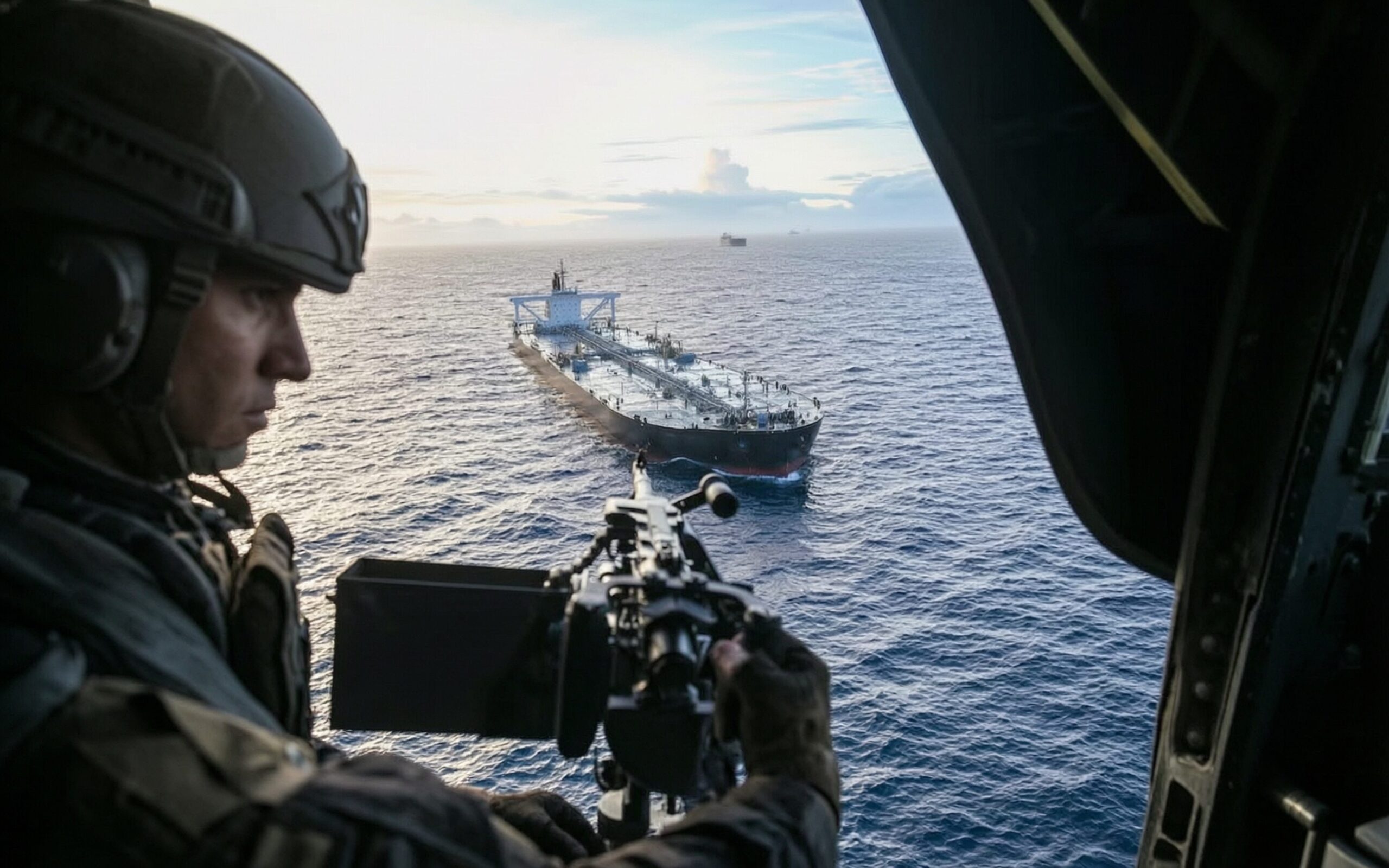
U.S. forces carry out a maritime interdiction and right-of-visit boarding of the MT DAVINA.

The strikes followed Tehran’s weekend barrage of drones and missiles aimed at U.S. allies across the Middle East, including Kuwait, Jordan, and Qatar. The attacks caused minimal damage and no reported casualties, but they revealed Iran’s reckless obsession with testing American resolve.

Sirens blared across Gulf states hosting U.S. troops, from Bahrain to the United Arab Emirates, reminding everyone that American service members remain in harm’s way because of Iran’s provocations.

Washington responded with the only language bullies understand—overwhelming power. CENTCOM had already pummeled approximately 140 Iranian military targets on Saturday, hitting drone launch sites, missile factories, naval capabilities, and key communication centers.

US Forces Hammer Iranian Targets After Drone Shootdown, Intercept Missiles Over Kuwait
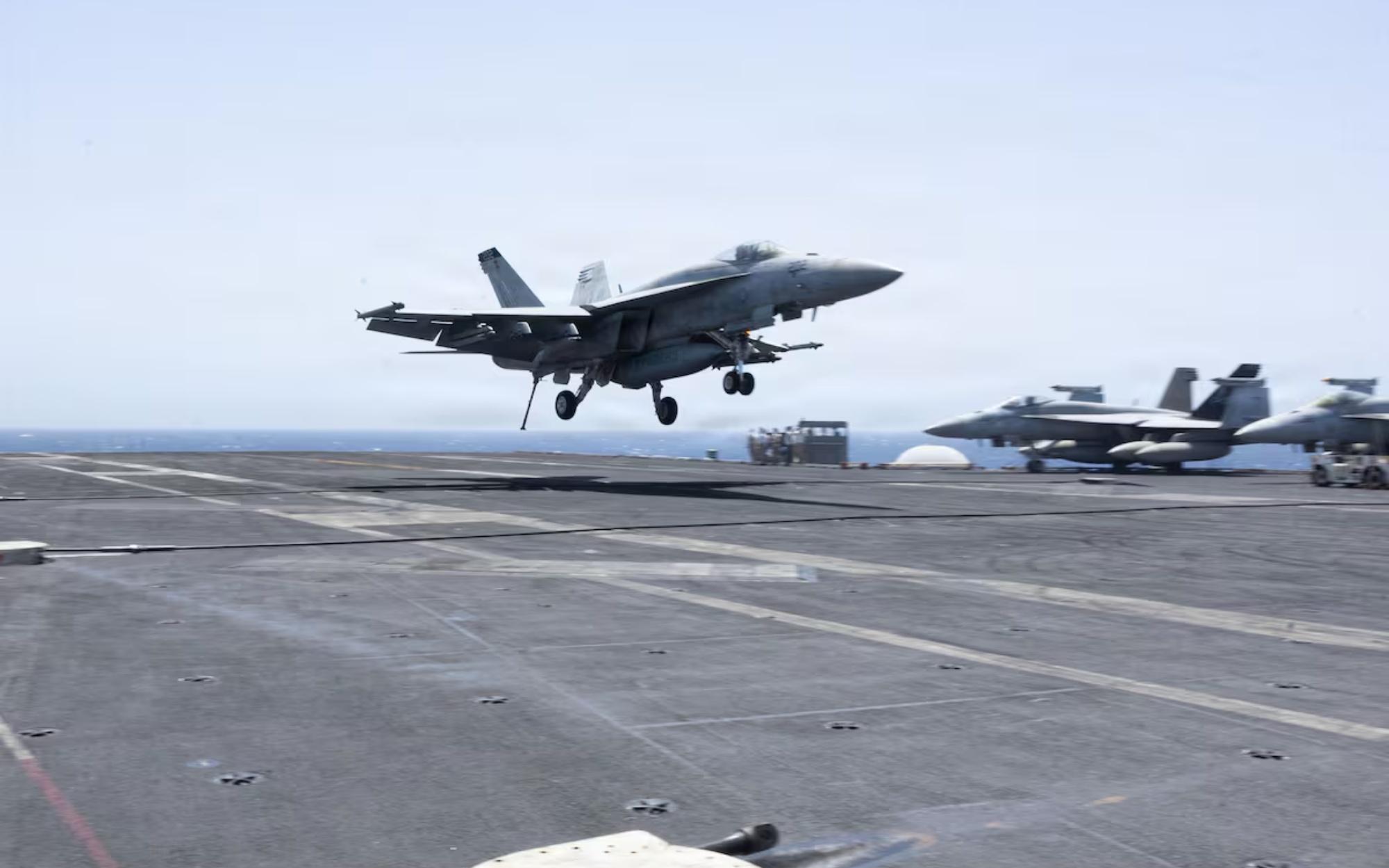
An F/A-18F Super Hornet lands on the flight deck of Nimitz-class aircraft carrier USS George H.W. Bush while sailing in the Arabian Sea, May 26, 2026. (U.S. Navy)

By Monday morning, additional salvos had taken out more of Iran’s coastal radar and anti-ship networks, effectively blinding Tehran’s attempt to monitor traffic through the Strait.

Iran’s state outlets predictably boasted that they had struck U.S. facilities in retaliation, claiming hits on surface-to-air defenses and logistics centers across the region.

CENTCOM quickly dismissed the propaganda, offering no evidence that any American base had sustained damage. The truth is simple: the Iranian military is bleeding capability faster than it can replace it.

US Navy Takes Out Two Iranian Tankers Defying Blockade in Strait of Hormuz
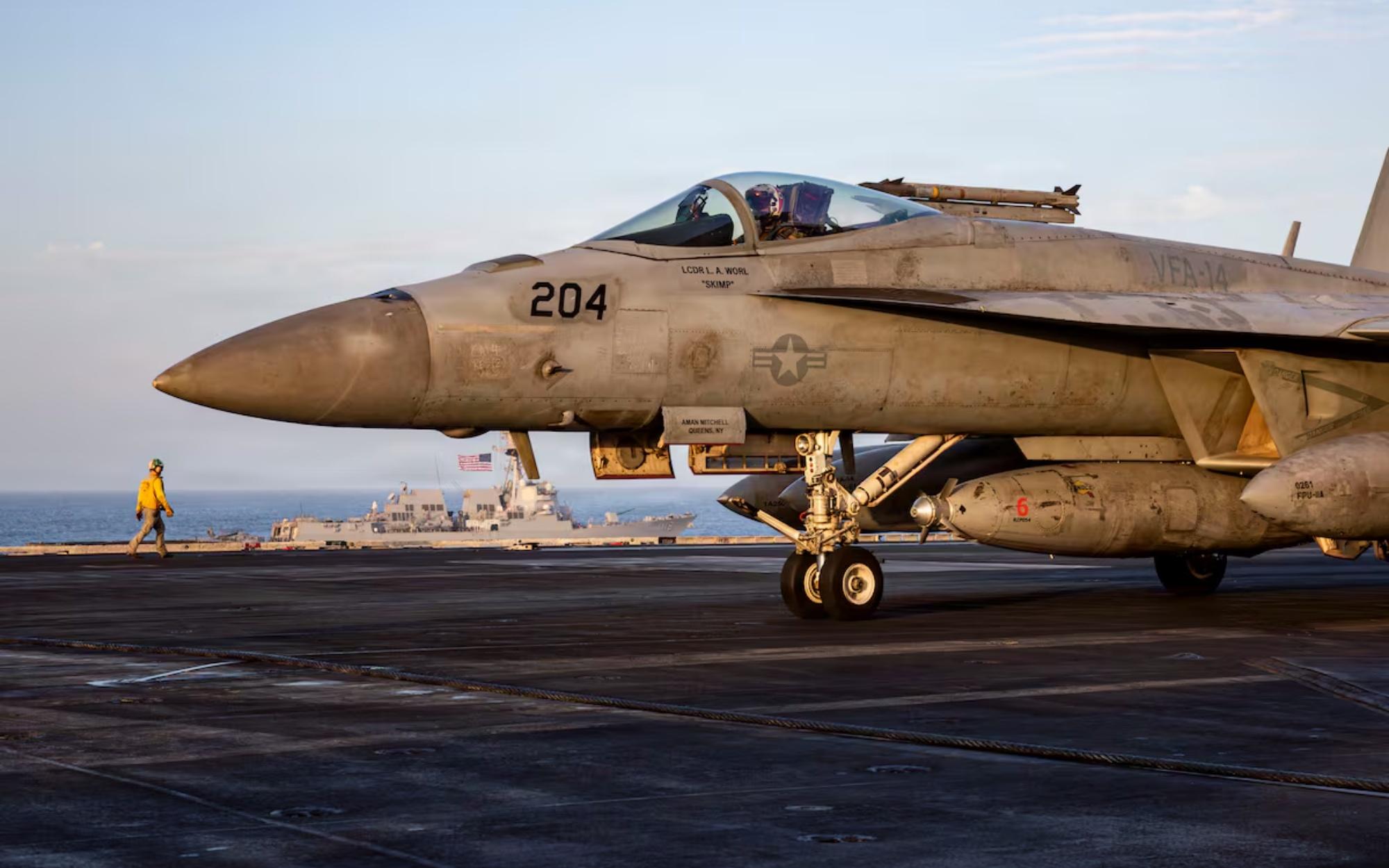
An F/A-18E Super Hornet taxis on the flight deck of Nimitz-class aircraft carrier USS Abraham Lincoln on April 16, 2026. (U.S. Navy)

In Bahrain, home to the U.S. 5th Fleet and CENTRALCOM’s maritime nerve center, military leadership maintained high alert even as operations continued smoothly. In Kuwait, the army reported intercepting several “hostile aerial targets,” confirming the Iranian aggression.

Meanwhile, Jordan’s forces shot down four inbound missiles before they could cause any harm. These responses demonstrate not only the strength of America’s regional partnerships but also the futility of Tehran’s scattershot offensives.

President Trump didn’t mince words in his Sunday interview on NBC. “We bombed the hell out of them last night,” he said, a clear message that the United States would not tolerate Iran’s interference with the flow of international trade.

Pentagon Confirms Safe Passage Through Strait of Hormuz as U.S. Counters Iranian Mine Threat
Independence-class littoral combat ship USS Santa Barbara, equipped with a mine countermeasures mission package, participates in a training exercise in the Arabian Gulf on Feb. 2, 2026. (MCS2 Iain Page/U.S. Navy)

His statement left no doubt that America’s deterrence strategy under his leadership is back—precise, unapologetic, and focused on winning.

Despite the chaos, the Joint Maritime Information Center confirmed that vessel traffic through the southern route of the Strait of Hormuz remains open.

In real terms, global commerce continues, safeguarded by U.S. naval dominance and the confidence of allied forces. That operational reality undermines Tehran’s narrative and reinforces that it cannot strangle the global economy by threatening a single choke point.

Tensions remain high, however. The White House says it still supports diplomatic options tied to the temporary June agreement that paused earlier fighting. But after this weekend’s attacks, any talk of peace seems fragile.

Iran’s repeated violations of the deal—especially its continued targeting of U.S. allies—may well have ended any hope of serious negotiation.

Trump Ends Hormuz Blockade After Securing Peace Deal With Iran
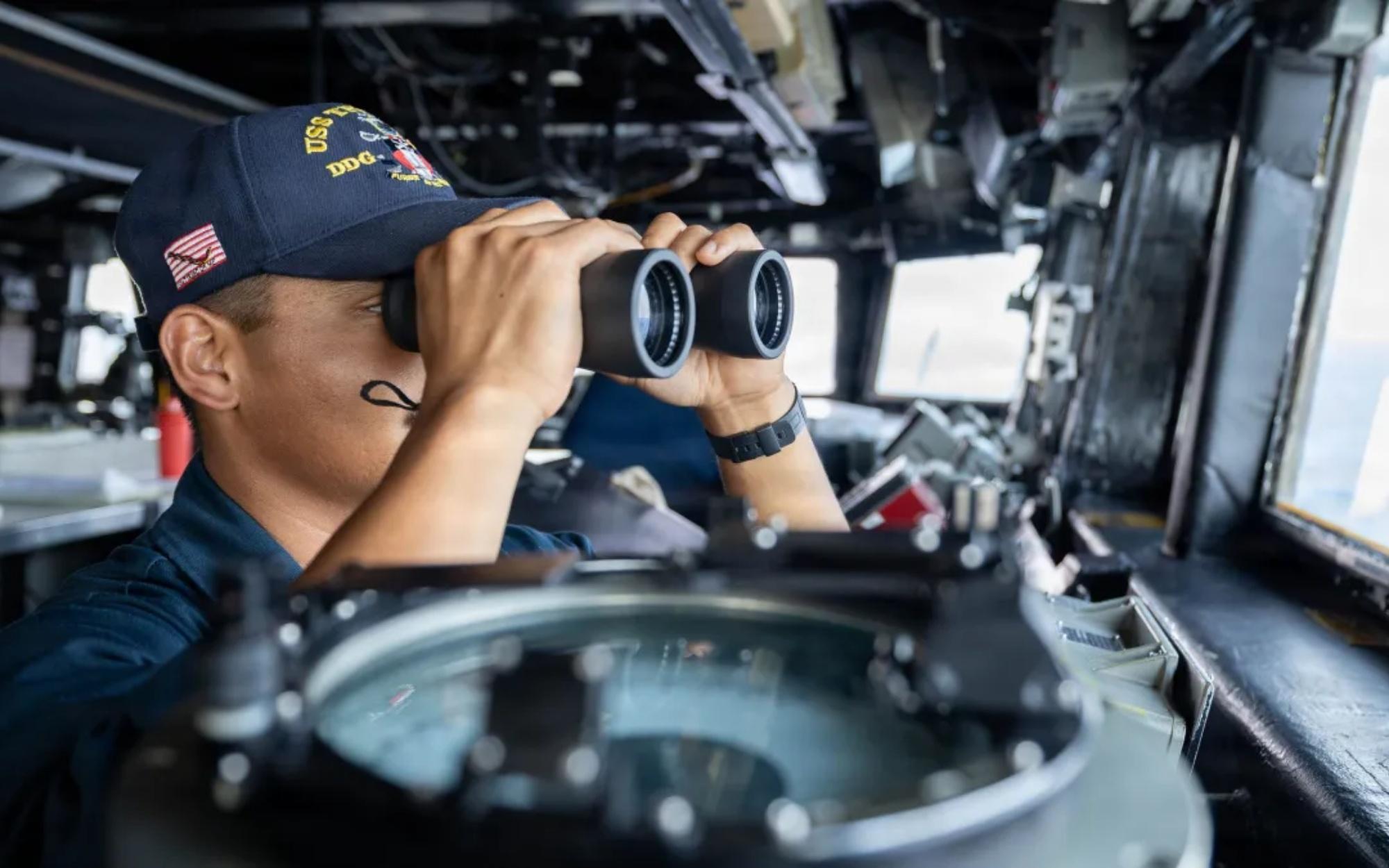
A sailor stands watch on the USS Truxtun, a destroyer participating in the blockade of the Strait of Hormuz. Navy photo.

Even the United Nations, usually timid in its condemnation of Tehran, urged restraint. Secretary-General Antonio Guterres called for both sides to halt attacks, warning of “catastrophic consequences.”

Yet the blame lies squarely with Tehran’s mullahs, who continue to provoke conflict while crying victimhood in global forums. The UN’s words carry little weight when American sailors are dodging drones because of Iranian belligerence.

The reality on the ground is this: the United States and its allies control the Strait of Hormuz through superior technology, coordination, and willpower. Iran controls only its bluster.

Every missile launch from Tehran invites another series of U.S. strikes that degrade its capacity further. The message could not be clearer—freedom of navigation will be protected by force if necessary.

The war that began in late February after U.S. and Israeli operations killed several Iranian commanders now hangs in a delicate balance.

Talks aimed at fully reopening the Strait and dismantling Tehran’s nuclear ambitions are stalled, largely because Iran keeps violating its commitments. Across American bases in the region, from Qatar to Kuwait, morale remains strong, sustained by the knowledge that the world’s most advanced military has their back.

America has no intention of ceding ground—or sea—to Iran’s crumbling regime.

The Strait of Hormuz will remain open, not because Tehran allows it, but because U.S. power ensures it. That’s not up for negotiation.

News

Army Unveils $130 Million Barracks Upgrade at Camp Humphreys

The U.S. Army just received the keys to its latest investment in troop living quarters overseas — a high-end $130 million barracks complex at Camp Humphreys, South Korea.

The sprawling base, already known as America’s largest military hub outside the homeland, continues to expand its infrastructure as tensions with North Korea persist and Washington strengthens its readiness posture in East Asia.

The three new eight-story barracks buildings will house more than 900 unaccompanied enlisted soldiers stationed at Humphreys.

This milestone, confirmed by the U.S. Army Corps of Engineers on July 8, 2026, marks another major improvement in living conditions for American warfighters forward-deployed in the region.

According to an Army announcement, each of the three state-of-the-art buildings can accommodate over 300 troops.

The project was designed to balance comfort, practicality, and security — essential qualities for service members enduring extended tours away from family.

Although the construction phase is complete, soldiers will not start moving in until fall, once the Army finishes furnishing the buildings.

Rachel Napolitan, spokeswoman for the Army Corps of Engineers’ Far East District, confirmed the final outfitting stage will include furniture, upgraded locks, and essential living items to ensure the barracks are fully operational before occupancy.

A Stronger, Smarter Presence: Trump-Era Vision Strengthens South Korea Force with Longer Deployments
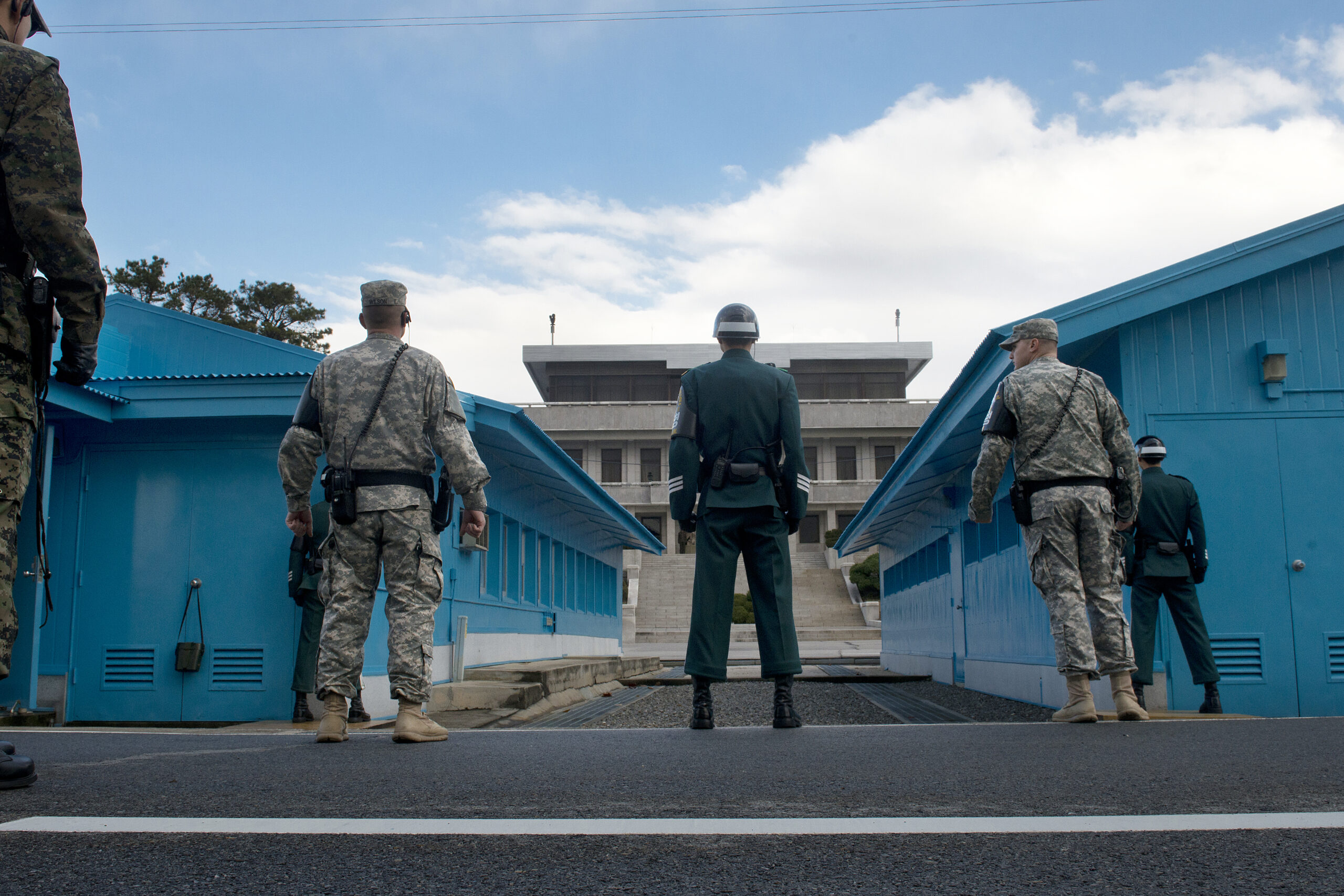
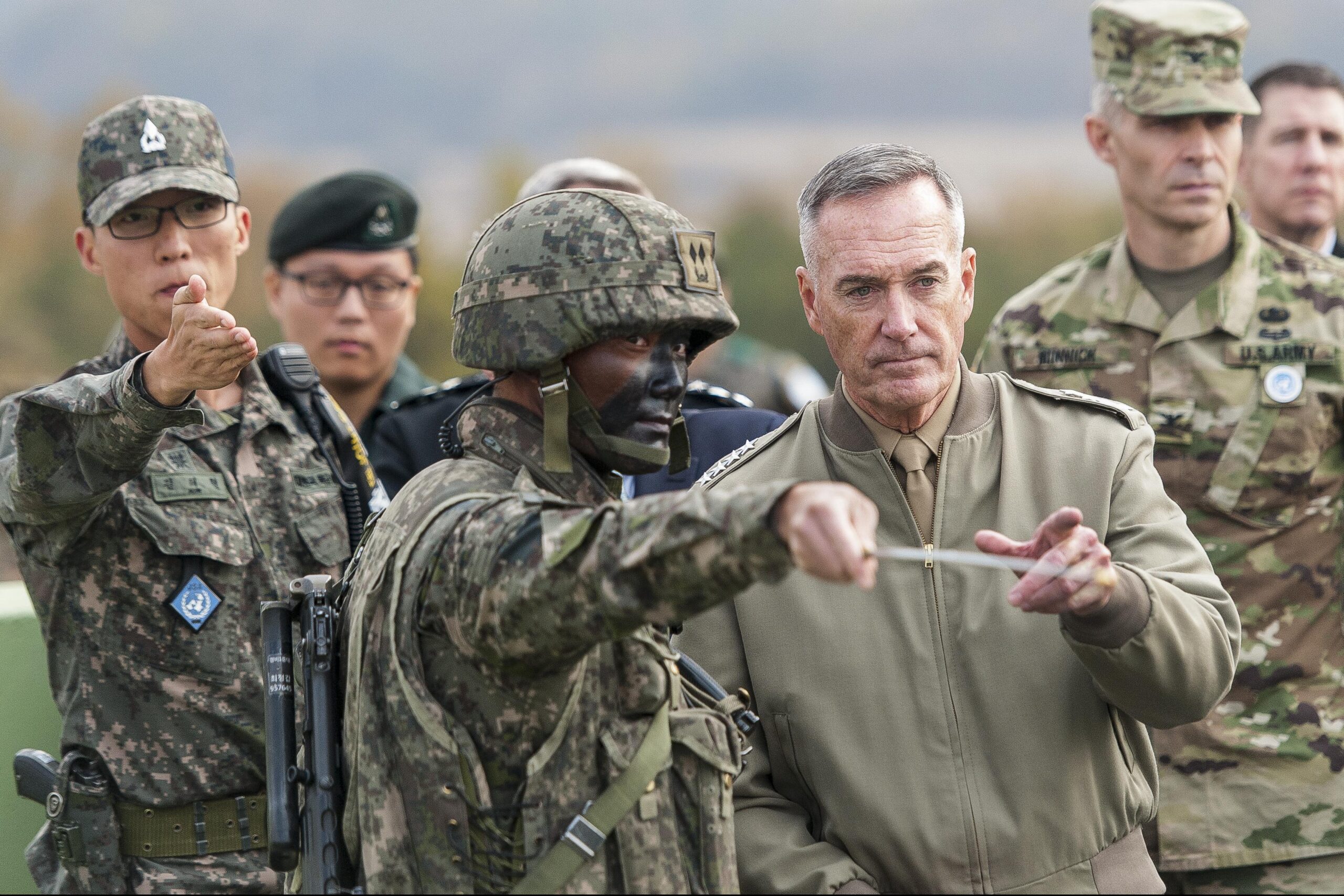
Republic of Korea and U.S. Soldiers at the demilitarized zone in South Korea facing North Korea on Nov. 11, 2012. DoW photo by D. Myles Cullen

Each two-bedroom suite is paired with a shared bathroom and kitchenette. Laundry facilities are available on each floor, and common areas near elevators allow soldiers to create their own social spaces.

Outdoor features include multipurpose recreation courts, gazebos, barbecue areas, and secure bike racks — amenities that speak to both functionality and morale.

While the barracks adhere to the Army’s standard design blueprint, the Far East District added several enhancements following years of feedback from residents of previous housing complexes.

A Stronger, Smarter Presence: Trump-Era Vision Strengthens South Korea Force with Longer Deployments
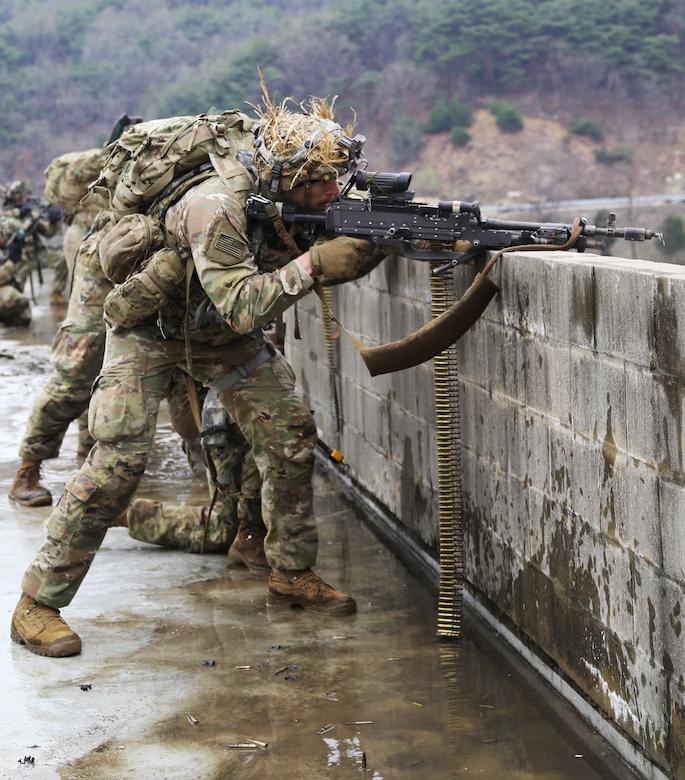
ROK and U.S. noncommissioned officers work together during land navigation exercises as part of the Mangudai Challenge at Story Live Fire Complex, South Korea, Oct. 22, 2024. The challenge highlights shared leadership and capability within the ROK-U.S. alliance.

Resident engineer Nathan Han explained that troops’ input was valuable in improving air circulation, increasing the ratio of dryers to washers, upgrading outdoor gear, and solving recurring maintenance problems.

Samuel Brooks, Camp Humphreys’ housing chief, said the improvements reflect the Army’s commitment to delivering “the high quality of life soldiers deserve.” The upgrades are part of a broader modernization drive that matches America’s growing military presence on the Korean Peninsula — one that continues to serve as a crucial deterrent against North Korean aggression.

Located across from the installation’s golf course, the new barracks sit adjacent to another complex that opened in June 2024. That earlier $67 million project added 151 suites, providing housing for over 600 single troops.

A Stronger, Smarter Presence: Trump-Era Vision Strengthens South Korea Force with Longer Deployments

Together, the developments strengthen Humphreys’ role as a model U.S. Army facility abroad, combining military efficiency with modern living standards.

Funding for this latest $130 million project came from South Korea under the Special Measures Agreement, a cost-sharing deal reflecting Seoul’s contribution toward stationing roughly 28,500 U.S. troops across the peninsula.

The current five-year agreement, which began this year and will run through 2030, outlines a South Korean contribution of around $1.1 billion in 2026, with annual increases tied to inflation.

More barracks construction is already underway at Camp Humphreys. Another four buildings are scheduled for completion later this year, further expanding the installation’s housing capacity.

A Stronger, Smarter Presence: Trump-Era Vision Strengthens South Korea Force with Longer Deployments

These projects demonstrate Washington’s long-term commitment to maintaining a stable, secure presence under the U.S.-South Korea alliance — one that remains vital to countering threats from Pyongyang.

Camp Humphreys sits about 40 miles south of Seoul and functions as the headquarters for U.S. Forces Korea, U.N. Command, Combined Forces Command, the Eighth Army, and the 2nd Infantry Division.

The facility represents a powerful symbol of U.S. resolve and readiness in Asia, serving not only as a deterrent hub but also as an enduring signal to both allies and adversaries that American forces are here to stay.

USFK Commander Reaffirms Importance of Troop Presence in South Korea Amid Speculation of Reductions

At a time when many focus on Washington politics or bureaucratic distractions, this project is a reminder of real priorities — ensuring U.S. soldiers have what they need to live, train, and serve effectively.

With strong leadership under President Trump and War Secretary Pete Hegseth’s vision for a revitalized War Department, initiatives like this reinforce the core mission: making sure the U.S. military remains the best-trained and best-supported fighting force in the world.

For the hundreds of American men and women who will soon call these new barracks home, the project is more than just new buildings.

It’s a message of commitment from the nation they serve, a sign that their sacrifices are matched with modern comforts and respect for their daily lives on the frontlines of freedom.

News

President Trump Orders Fierce U.S. Airstrikes To Crush Iran’s Military Aggression [WATCH]

President Donald Trump unleashed another forceful wave of U.S. military strikes on Iran Sunday evening, intensifying an already explosive confrontation in the Persian Gulf, as reported by The New York Post.

The action followed days of escalating Iranian hostility against commercial shipping and a dangerous attempt by Tehran to choke off the Strait of Hormuz, one of the world’s most critical oil routes.

According to U.S. Central Command, the strikes began around 5 p.m. Eastern Time under direct orders from President Trump.

The declared goal was clear: to hold Iranian forces accountable and dismantle their ability to target international vessels with impunity.

American forces hit dozens of carefully selected military installations throughout Iran using precision weaponry.

Among the primary targets were Iranian air defense systems, missile and drone launch sites, radar systems, and small naval craft used to harass commercial ships.

The operation demonstrated not only military precision but also America’s readiness to defend freedom of navigation despite Tehran’s repeated threats and provocations.

Central Command confirmed that the operation utilized a powerful mix of U.S. fighter aircraft, naval assets, and both aerial and sea-based drones.

This marked the first use of one-way attack sea drones, signaling a shift in military tactics that put Iran’s aggressors on notice.

Iranian officials quickly admitted the strikes caused damage in several provinces and acknowledged at least one fatality and multiple injuries.

Their official media outlets framed the events as American aggression, even as they continued to boast of their own retaliatory moves across the region.

Iran’s Revolutionary Guard Corps quickly attempted to retaliate by shelling U.S. military locations in Kuwait and Bahrain.

Reports from Iranian state media claimed they damaged fuel storage facilities and air defense installations in Kuwait while striking hangars and maintenance centers in Bahrain.

Those claims have not been independently verified, though Iran’s habit of propaganda exaggeration is well known.

This latest escalation followed an intense bombing campaign over the weekend when U.S. forces hit more than 140 Iranian military targets.

That initial strike came hours after the Islamic Republic fired on a commercial vessel and falsely declared the Strait of Hormuz closed. It was a direct challenge to international order and global commerce.

President Trump responded bluntly. When asked by NBC whether the strategic waterway remained open, he simply replied:

“Yeah, it’s open. We bombed the hell out of them last night.”

That unfiltered confidence has become a defining feature of his foreign policy stance: peace through unmistakable strength.

Iran’s retaliatory actions only deepened its isolation. Its forces took aim at American installations in Jordan, Oman, Kuwait, Qatar, and even the United Arab Emirates, damaging radar and drone coordination centers while also provoking international condemnation.

Several missiles were intercepted before impact, avoiding what could have been significant American and allied casualties.

The tension comes at a delicate time in what was supposed to be a 60-day interim deal between Washington and Tehran, an agreement aimed at winding down hostilities that began late February.

Yet Iran’s leadership seems more interested in posturing than peace. Tehran’s chief negotiator, Mohammad Bagher Ghalibaf, threatened that attacks would continue if Washington interfered with Iran’s dominance in the region’s vital waterway.

He boasted online, “The era of one-sided deals is OVER. We told you: keep your word or pay the price. Reality is knocking.”

Such rhetoric reveals the true mindset inside Iran’s regime. It is not the language of diplomacy but of defiance by a government accustomed to challenging the West without consequence.

What they did not anticipate was the new reality under President Trump: the United States will not sit idle while rogue nations bully the free world.

Behind the high-tech military displays lies a broader strategic message. America can, and will, defend its interests wherever they are threatened.

The longevity of Iran’s regime now faces a pressure test it has not encountered in decades. This was not a symbolic strike or a political gesture.

It was a calculated response reminding Tehran that reckless aggression will be met with overwhelming power.

The White House and Pentagon appear aligned on a singular objective: to deter further Iranian boldness through visible action rather than hollow words.

The message is unmistakable across the Middle East. America’s might remains unmatched, and those who gamble against it risk heavy consequences.

In an era where weakness invites chaos, Trump’s decision signaled the return of resolve. His actions reaffirm that freedom of navigation, international trade, and American credibility will not be dictated by Islamic hardliners in Tehran.

While the Iranian regime may wish to frame itself as a victim, the truth remains that it provoked this confrontation and now faces the repercussions of its own aggression.

For now, tension remains high across the region, but the balance of power is clearer than ever. The United States is acting as the guardian of global stability, punishing bad actors who mistake diplomacy for an opportunity to deceive.

Iran has tested the limits, and President Trump has made it clear that those limits are no longer flexible. The world is watching who blinks first, and this time, it will not be America.

News

Sen. Lindsey Graham, Air Force Colonel and Staunch Patriot, Dies Unexpectedly at 71

Senator Lindsey Graham, an American patriot, Air Force veteran, and steadfast conservative voice, passed away suddenly at the age of 71 after what his office described as a brief and unexpected illness.

The longtime South Carolina senator and retired Air Force colonel leaves behind a legacy of service, strength, and unapologetic defense of America’s role as a force for good around the world.

His office released an early Sunday statement asking for prayers and privacy for the Graham family during “this incredibly difficult period.”

Later, according to the Medical Examiner of the District of Columbia, preliminary findings indicated that Graham died of an aortic dissection caused by arteriosclerotic cardiovascular disease—an aortic rupture related to hardened arteries.

Graham’s passing caught Washington and the nation by surprise.

Emergency responders had rushed to his D.C. residence late Saturday night after reports of cardiac arrest, according to NBC News. There had been no public signs of poor health, and Graham had even been scheduled to appear on “Meet the Press” Sunday morning.

Just days before his death, Graham had returned from Kyiv, his tenth trip to the war-torn nation since Russia’s 2022 invasion.

Ukrainian President Volodymyr Zelenskyy posted that Graham had been “a true defender of freedom” and a voice for global stability. The senator had pressed Washington to continue supporting Ukraine against Moscow’s aggression.

President Donald Trump, with whom Graham shared both a fierce rivalry and deep later friendship, described him on Truth Social as “one of the greatest people and Senators I have ever known.”

Sen. Lindsey Graham, Air Force Colonel and Staunch Patriot, Dies Unexpectedly at 71
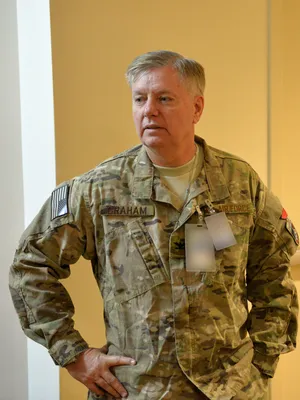
U.S. Sen. Lindsey Graham, a retired Air Force Reserve colonel, is shown in his military uniform during a visit to Afghanistan.

Trump praised Graham’s relentless work ethic and patriotic heart, writing, “He was always working, and was a true American Patriot. Lindsey will be greatly missed!!!”

Tributes poured in from allies and adversaries alike. Israeli Prime Minister Benjamin Netanyahu mourned the loss, declaring that both America and Israel had lost a great friend.

“America has lost a great patriot. I have lost a beloved friend,” he said. Even Democrat Rep. Jim Clyburn, a fellow South Carolinian, wrote that he and Graham had maintained “mutual respect” despite their political divides.

Graham’s career spanned decades, with service to both his state and his country in uniform. A native of South Carolina, he served for 33 years in the Air Force and Air Force Reserve, retiring in 2015 as a colonel.

His time in the Air Force began as a lawyer stationed in Germany, but his passion for national defense and military justice kept him connected to America’s fighting men and women throughout his long political career.

Sen. Lindsey Graham, Air Force Colonel and Staunch Patriot, Dies Unexpectedly at 71
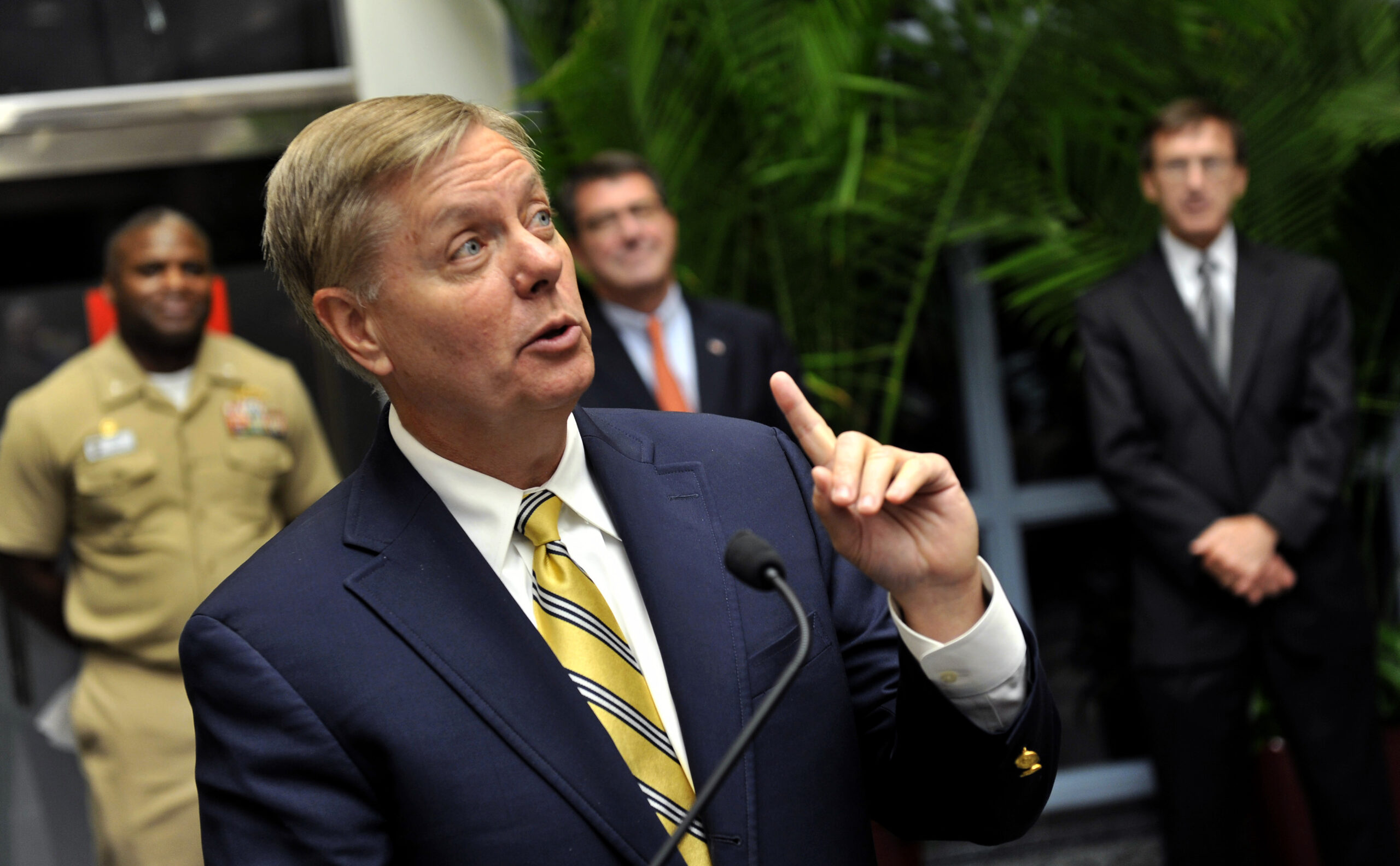
Senator Lindsey Graham addresses SPAWAR employees at SPAWAR Headquarters during a visit to Joint Base Charleston for briefings on space and naval warfare systems in Charleston, S.C., June 18, 2012. (DoD Photo By Glenn Fawcett) (Released)

When America went to war in Iraq and Afghanistan, Graham volunteered for short tours during congressional breaks, serving on the ground as a military lawyer.

His office biography said he spent numerous congressional recesses working among troops in combat zones, believing firmly that lawmakers should not just vote for war—they should understand it.

Elected first to the House of Representatives in 1994 and then to the Senate in 2002, Graham became a fixture on the Senate Armed Services Committee. He pushed for a strong War Department, better care for veterans, and a renewed sense of moral purpose in American global leadership.

He was re-elected three times, securing one of the longest tenures ever for a South Carolina Republican in the Senate.

Throughout his career, Graham consistently advocated for a tougher approach toward enemies like Iran and North Korea.

He applauded President Trump’s decisive, no-nonsense war policies, saying that Trump “deserved a Nobel Peace Prize” for his strength in foreign affairs. Graham once described Trump as “the gold standard for Republicans, maybe any president, when it comes to foreign policy.”

Although the pair had once been sharp rivals during the 2016 GOP primary—when Graham was critical of Trump’s rhetoric on alliances and immigration—the two later forged a resilient partnership centered on rebuilding America’s strength, security, and respect on the world stage.

Sen. Lindsey Graham, Air Force Colonel and Staunch Patriot, Dies Unexpectedly at 71
Col. Lindsey Graham, a senior Senator from South Carolina, is presented a 386th Expeditionary Medical Group coin by Col. Andrew Montiero in the Contingency Air Medical Staging Facility on the Rock on April 9.

It was one of the most unpredictable but ultimately influential alliances in modern conservatism.

In addition to his policy work, Graham was a regular presence among service members at home and overseas.

Photos from recent trips show him chatting with U.S. troops in Saudi Arabia, meeting Air Expeditionary Wing personnel, and thanking them for their service. Those who served alongside him, both in and out of uniform, say he connected with the military not as a distant lawmaker but as a fellow warrior.

For those who knew him, Graham was more than a senator—he was a commanding presence who believed deeply in duty, discipline, and destiny.

Conservatives and military veterans across the country see his death as the passing of an era, one defined by firm American conviction and defense of liberty abroad.

As flags fly half-staff across South Carolina, Washington loses one of its toughest and most seasoned defenders of the American mission. Whether sparring in hearings or visiting troops overseas, Lindsey Graham never forgot the nation he served.

At 71, the colonel, senator, and patriot’s watch has ended—but his mission will not be forgotten.


Scroll to Top