News

News

DSA Leader Delivers Laughable Take On Socialism That Sounds More Like A Coffee Club [WATCH]

A street interview circulating on social media has drawn widespread attention after a local leader with the Democratic Socialists of America (DSA) offered an unconventional explanation of socialism during a conversation with independent journalist Nate Friedman, as reported by Towbnhall.

The interview, which gained traction online after being shared by multiple social media users, centered on a question asking the DSA representative to summarize why socialism is preferable to capitalism in approximately 30 seconds.

Friedman asked, “If you can look into the camera and give a 30-second elevator pitch on why socialism is better than capitalism.”

Rather than focusing on economic policy or government, the interviewee described socialism primarily in terms of community and social interaction.

“Community, are you tired of sitting alone and being by yourself and having no one to talk to? Being a socialist is all about community; it’s about literally sitting down and having coffee with random strangers and talking to them, talking about the game,” the organizer said.

“Hell, I have hugged more strangers in this past summer because of the Knicks game, because of the World Cup, because socialism works.”

The speaker continued by describing events hosted by New York City mayoral candidate Zohran Mamdani and other community gatherings.
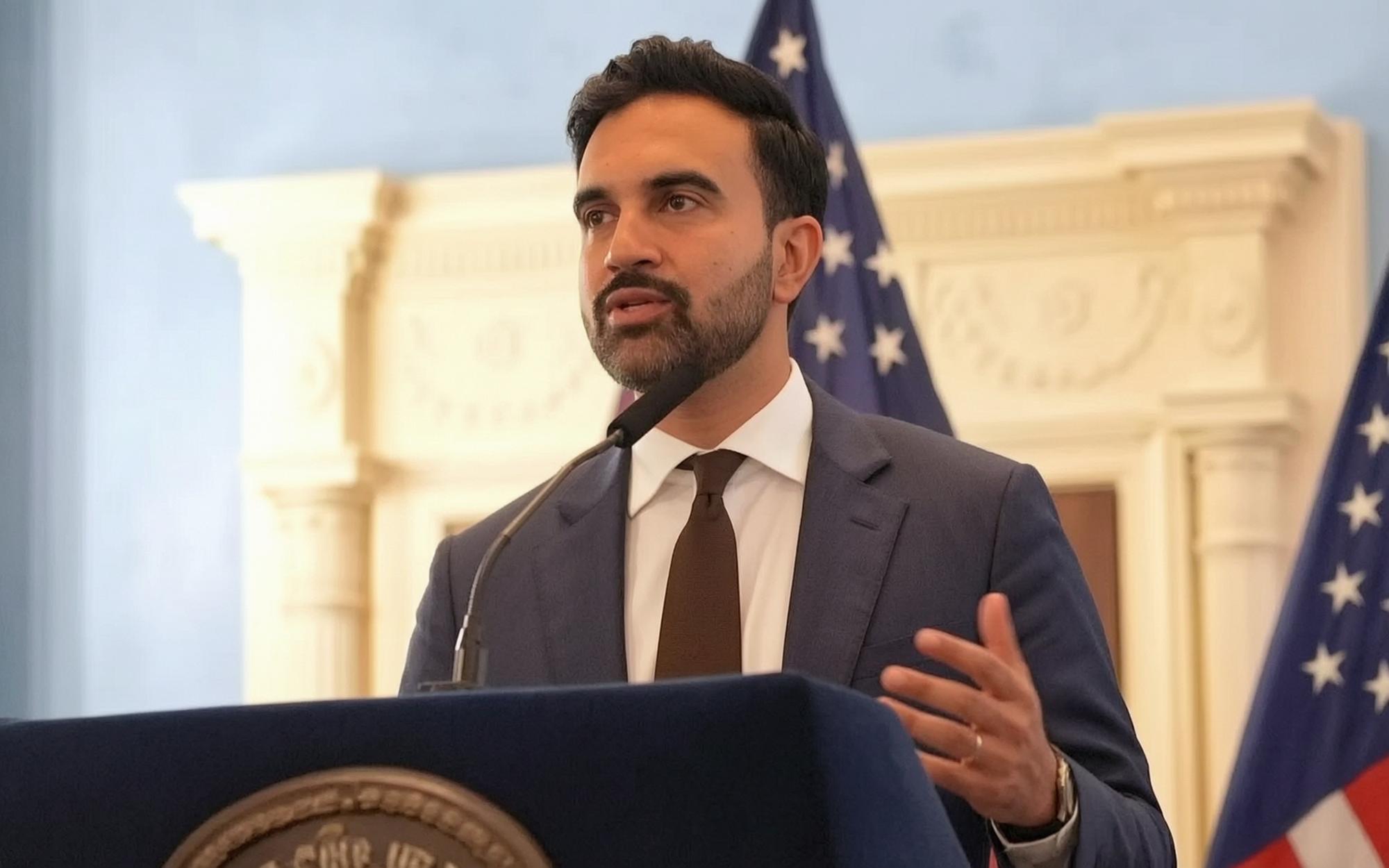
Mayor Mamdani Mocked for Telling Seniors to Limit AC During Dangerous NYC Heat Wave

“It’s the watch parties that Zohran hosts; it’s about the parties that we allow, we don’t have cops hogging every single site and saying, oh, you can’t be here because there’s too many people. Instead of allowing people just being in their nature, a natural element of talking to each other, to bond over things we love and share,” he continued.

“So that’s what socialism is, it ain’t a scary word, it ain’t me taking your house, it’s about me making sure your house remains in your hands, and some millionaire doesn’t take it from you.”

The interview quickly spread across social media platforms, generating thousands of reactions and prompting discussion among supporters and critics of democratic socialism.

Some users argued that the comments reflected an emphasis on community organizing rather than economic theory, while others questioned whether the explanation accurately described socialism as a political and economic system.

The Democratic Socialists of America is a political organization that supports a range of progressive policies and has endorsed candidates for local, state, and federal office across the United States.

The organization has gained greater visibility in recent years through campaigns involving several high-profile elected officials and candidates.

Mamdani, referenced during the interview, has become one of the organization’s most recognizable figures in New York politics.

His campaign has included public events, neighborhood gatherings, and community outreach efforts that supporters say are intended to encourage civic engagement.

The exchange also highlighted the growing role of short-form online interviews in shaping political conversations.

Street interviews posted on social media have become a common format for discussing current events and political issues, with brief video clips often generating extensive debate beyond their original audience.

The interview did not include additional discussion of socialism’s economic principles, historical development, or policy proposals beyond the organizer’s comments regarding community, social gatherings, and housing.

Instead, the exchange focused primarily on the organizer’s personal description of what participation in the movement means to him.

As the clip continued to circulate, it became another example of how social media can amplify brief political exchanges and spark broader conversations about ideology, public messaging and political organizing.

Whether viewed as an effective explanation or an incomplete one, the interview prompted renewed discussion about how political movements present themselves to voters and supporters in online spaces.

News

Boeing’s MQ-28 Ghost Bat Takes Flight at Farnborough, Signaling a New Era of Combat Air Power

In the bright summer air over Farnborough, the latest symbol of tomorrow’s warfighting edge gleamed like something out of a science fiction movie.

Boeing’s MQ-28 Ghost Bat, an unmanned combat aircraft born out of Australia’s collaboration with American defense power, made its long-awaited debut at the renowned airshow — and it didn’t disappoint.

The Ghost Bat is sleek, swift, and most importantly, uncrewed. To the casual onlooker, it may resemble a compact fighter jet, but no pilot will ever climb into this cockpit.

This aircraft represents the future of air dominance: smart, autonomous, and lethal.

Its debut appearance comes after a stunning operational milestone — the Ghost Bat joined live training alongside manned aircraft in the massive Valiant Shield 2026 exercise around the Marinas Island Range Complex in the Western Pacific.

There, it integrated directly with U.S. Pacific Command forces in support of the War Department’s Experimental Operations Unit.

Boeing proudly confirmed that the Ghost Bat teamed up with America’s best — F-35As, F-35Bs, and allied coalition aircraft — to refine tactics focused on manned-unmanned teaming.

The company calls it a Collaborative Combat Aircraft, or CCA, and it’s the first of its kind to fly in a multinational, joint operational exercise.

“Having MQ-28 participate in such a significant military training exercise is a first, and this is just the start of demonstrating how advanced human-machine teaming extends the reach and awareness of crewed platforms and enhances joint force operations,” said Steve Parker, president and CEO of Boeing Defense, Space and Security.

“We’ve proven that it’s combat capable.”

That “combat capable” claim isn’t just marketing hype. The Ghost Bat recently completed a successful live-fire demonstration, where it launched an AIM-120 AMRAAM missile and nailed a drone target out of the sky.

The message: this isn’t just a drone — it’s a hunter built for high-end warfare.

With a range of over 2,000 nautical miles, the Ghost Bat is engineered to complement crewed fighters in the thick of battle, taking on roles from electronic warfare to intelligence, surveillance, and reconnaissance.

Its design merges a trainer-sized fuselage with the wingspan of a modern stealth fighter, reaching altitudes over 40,000 feet.

Boeing’s vision is clear: expand the reach and lethality of crewed aircraft while reducing risk to human pilots.

As China pushes hard to dominate the skies of the Indo-Pacific, this pairing of man and machine could prove decisive in a fight future U.S. war planners are not taking lightly.

Industry experts have been hailing this shift toward autonomy for years, but now it’s tangible. The Ghost Bat’s debut signals that the era of human-drone combat teams isn’t coming — it’s already here. That should send chills down the spine of any adversary betting on old-school air tactics.

Other industry powerhouses are joining the race. BAE Systems revealed a next-generation pilot helmet capable of handling the massive data flow required to control multiple unmanned wingmen simultaneously.

The U.S. Air Force, clearly serious about accelerating the program, awarded contracts in June to Anduril and General Atomics for their own CCA designs, nicknamed “Fury” and “FQ-42A.” Both concepts were showcased at Farnborough alongside Boeing’s Ghost Bat, underscoring a new phase of competition and innovation in combat aviation.

Across the airfield, observers could feel the strategic weight of what they were witnessing.

The future battlespace won’t be defined by pilots alone but by seamless swarms of intelligent machines guided by human command — a pairing that magnifies awareness, coordination, and lethality.

For conservatives focused on building strength through American innovation and partnership, Boeing’s MQ-28 represents the right kind of investment — one that aligns with President Trump’s emphasis on deterrence through undeniable power and Secretary of War Pete Hegseth’s focus on operational readiness. No bureaucratic hand-wringing, just results.

The message at Farnborough is loud and clear. The free world’s firepower is evolving fast, and America and her allies are leading the charge.

The Ghost Bat isn’t just another airshow attraction — it’s an unmistakable sign that the arsenal of democracy is preparing for the high-tech wars of tomorrow, shoulder to shoulder with machines that think, fly, and fight for victory.

News

President Trump Warns Iran Strike on Pickaxe Mountain Coming Soon, Says U.S. Campaign Far From Over [WATCH]

President Donald Trump said Tuesday that the United States intends to maintain military pressure on Iran and indicated that American forces could target the country’s heavily fortified Pickaxe Mountain nuclear site as concerns continue over Tehran’s nuclear program, as reported by Breitbart.

Trump made the remarks during a meeting with Lebanese President Joseph Aoun at the White House after being asked about a report from The Wall Street Journal stating that Israeli intelligence believes Iran moved thousands of advanced centrifuges to the underground Pickaxe Mountain facility near Natanz last fall.

Trump Warns Iran as 60 Day Deal Begins, Says He Will Act if Tehran Breaks Promises

“I think that they may have,” Trump said when asked about the reported transfer.

The president added that the reported movement of centrifuges alone would not enable Iran to restore its nuclear capabilities.

“It doesn’t mean anything unless they have the material. They don’t have it. We follow the material. That’s where the action is.”

Trump also suggested the United States was prepared to strike the facility if necessary.

“We’ll be hitting that area probably pretty soon. There’s not a thing they can do about it,” he said.

“Normally, I wouldn’t say that. If I thought they could do something about it, I would never say that. But we’ll be hitting that area pretty soon, and very heavily.”

Pickaxe Mountain, located near Iran’s Natanz nuclear complex, has drawn increasing attention from U.S. and Israeli officials because of its underground fortifications.

According to the report referenced during the exchange, Israeli intelligence believes Iran transferred advanced centrifuges to the site.

International inspectors have also sought additional access to the location amid questions about possible undeclared nuclear activities.

Trump said any attempt by Iran to rebuild its nuclear infrastructure would prompt additional military action.

“How about these people? They’re in this because of nuclear weapons, and they’re trying to possibly reconstitute a site? We’ll hit that site,” Trump said.

“Any site where they’re even thinking about nuclear, we’ll be hitting it very, very powerfully.”

The president also indicated that the administration does not believe its military campaign against Iran is complete.

“If we left right now, it would take Iran 20 to 25 years to rebuild,” Trump said.

“We’re not finished at all… we’re not leaving right now.”

Trump was also asked about the possibility of renewed diplomatic discussions with Tehran.

He said Iran is seeking negotiations because of continued military pressure but indicated the administration is not prepared to return to talks at this time.

“They want to desperately meet because they’re getting decimated,” Trump said. “Until they’re ready to meet in a meaningful way, we have no interest.”

His comments came as U.S. military operations targeting Iranian military infrastructure continued.

According to U.S. Central Command, recent operations have targeted missile and drone capabilities, military command facilities, maritime assets, air defense systems and other infrastructure associated with Iran’s military operations and its ability to threaten commercial shipping through the Strait of Hormuz.

Trump said the administration believes those operations have significantly reduced Iran’s capabilities.

“We’re degrading them at levels that nobody thought was possible,” he said, adding that U.S. officials continue monitoring Iran’s nuclear material in addition to its centrifuges and related facilities.

The president concluded by reiterating that additional military action remains an option if Iran attempts to restore its nuclear program.

“If we left today, it would take them decades to rebuild. I don’t believe they could ever rebuild,” Trump said.

“Honestly, they haven’t seen anything yet. We’ve been nice.”

The administration has maintained that its strategy is intended to prevent Iran from rebuilding its nuclear program while limiting the country’s military capabilities through continued economic and military pressure.

Trump’s latest remarks underscore that the White House continues to view military action as an available option while closely monitoring developments involving Iran’s nuclear infrastructure.

News

Treasury Hunts Down Ayatollah Financier As Trump Team Moves To Expose Iranian Assets [WATCH]

Treasury Secretary Scott Bessent said Tuesday that the Trump administration has identified an individual he described as the ayatollah’s “money man” and is working to identify and publicly disclose properties linked to Iran’s supreme leader as part of a broader sanctions campaign.

During an appearance on FOX Business’ Mornings With Maria, Bessent outlined what he said is an ongoing effort by the Treasury Department to locate overseas assets connected to Iran’s leadership and increase economic pressure on the Iranian government.

“We have found the money man for the ayatollah. We are tracking the ayatollah’s properties around the world,” Bessent said.

“We hope to soon be able to print his $100 million-plus properties and show the addresses, and we’re preserving this money for the American people.”

According to Bessent, the initiative is part of the administration’s broader “Economic Fury” campaign, which he described as complementing recent military operations referred to as “Epic Fury.”

He said the Treasury Department’s strategy focuses on identifying financial assets, freezing accounts where possible, and disrupting the financial networks that support Iran’s government.

Bessent argued that the campaign has already contributed to increased economic pressure inside Iran.

He pointed to the value of the Iranian currency against the U.S. dollar and the country’s inflation rate as indicators of that pressure.

“[Their currency] is at an all-time low versus the dollar. It’s in freefall, and we think the inflation rate is upwards of 180% in Iran,” he said.

“So, the government is causing the people to suffer, and we’re going to keep pressing, but we’re also going to marshal the resources and save the resources that we recover for the Iranian people when we get on the other side of this.”

The Treasury secretary said officials are continuing to pursue Iranian assets located outside the country while working to reduce the government’s access to revenue streams.

A significant focus of the effort, according to Bessent, is Iran’s oil industry. He said the administration has imposed sanctions on Chinese “teapot” refineries, referring to smaller independent refining companies that have been identified as purchasers of Iranian crude oil.

Bessent stated that the sanctions campaign has contributed to a decline in China’s purchases of Iranian oil.

According to the Treasury secretary, Chinese purchases of Iranian crude have fallen by approximately 40% in recent months as economic pressure has increased.

The remarks come as the Trump administration continues to pursue sanctions and other economic measures targeting Iran following heightened tensions in the region.

Administration officials have argued that limiting the Iranian government’s financial resources is intended to reduce its ability to fund military operations and other activities.

Bessent characterized the Treasury Department’s role as central to that strategy, saying the department is focused on locating assets connected to Iran’s leadership while restricting access to international financial markets.

His comments also follow continued debate over U.S. policy toward Iran, including sanctions, diplomatic negotiations and military operations.

The administration has maintained that economic measures remain a key component of its broader approach to Tehran.

The Treasury Department has not yet released additional details regarding the properties Bessent referenced or identified the individual he described as the ayatollah’s “money man.”

Bessent indicated that more information about the properties could be made public as the effort continues.

The administration has also continued expanding sanctions against entities it says facilitate Iranian oil exports, with officials maintaining that reducing energy revenue is an important element of the overall pressure campaign.

News

Jasmine Crockett Melts Down in Screaming Racist Tirade Against Whites and ICE During Border Hearing [WATCH]

Rep. Jasmine Crockett, D-Texas, delivered a forceful speech during a House Judiciary Committee hearing Tuesday, criticizing the Trump administration’s immigration policies, U.S. Immigration and Customs Enforcement (ICE), and what she described as racial motivations behind the administration’s approach to immigration, as reported by The Gateway Pundit.

The hearing focused on the “Permanent Trump Secure Border Act,” legislation that would codify President Donald Trump’s immigration policies ahead of the upcoming midterm elections.

During her remarks, Crockett argued that the administration’s immigration policies extend beyond border security and are rooted in racial issues.

“But let’s talk about what this is really about,” Crockett said.

“And I know y’all knew it was coming, especially once I showed up: It’s racist. It’s just racist, racist, racist!”

She continued by explaining why she believes race is central to the administration’s immigration agenda.

“Okay, now let me tell you why it is racist. All right, this ain’t about whether or not you’re concerned that the immigrant is coming in and the immigrant is gonna kill everybody. That is not what it is. It’s not,” Crockett said.

“It’s the things like what your fearless leader said when he said they’re poisoning the blood, okay? What this is about is racism!”

Crockett also criticized President Trump over his administration’s refugee policy regarding White South Africans.

“Let me just be clear: your president, he is the one that said white South African refugees needed their own program, and so therefore he decided that he would raise the cap on how many refugees could come into the United States, but it was only raised for white South Africans. The administration set a limit of 17,500 slots planned to admit more white South Africans as refugees this year,” she said.

The Texas Democrat also criticized ICE, alleging that the agency improperly targets individuals based on appearance and questioning its performance.

According to Crockett, ICE agents are “completely incompetent” and do not “know how to do the daggone job,” while accusing the agency of “specifically targeting people because of how they look.”

Later in her remarks, Crockett discussed indigenous communities and immigration enforcement.

“The people that were here are the indigenous folk, and you know who ICE been rounding up? They’ve been rounding up indigenous people, the people that originally came, not the colonizers, but the original people,” Crockett said.

She then argued that the administration’s broader agenda is tied to race.

“So, what this is about is whiteness. Everything that this administration has pushed has been about white supremacy, your fear. In fact, you say things like, ‘Oh, you just want them to come in so that they will vote for you,’ because we know that when you look at the numbers, I mean, I’m just being real with this, but white people, they not the ones that carry the Democrats. They aren’t. And so this is literally about you say things, you tell on yourselves, you believe that somehow they will become citizens and they will start voting in the interest of equity. Those are the things you fight against when you say no diversity, equity, and inclusion.”

Crockett also addressed crime statistics during the hearing, arguing against claims that crime is primarily committed by racial minorities.

“You want to sit up here and act like the crime is being perpetrated by people of color, but the statistics say otherwise. If you look at the real numbers… anybody can commit a crime on any given day.”

She concluded that portion of her remarks by accusing political opponents of promoting misinformation.

“I know that y’all believe in propaganda, and y’all don’t want people to know the truth, and y’all definitely don’t want them to know history, because then you gotta again acknowledge colonizing,” she said.

The exchange occurred as lawmakers debated legislation aimed at making Trump’s border and immigration policies permanent.

Immigration remains one of the most closely watched issues in Congress, with Republicans arguing for stricter enforcement measures while many Democrats continue to advocate for changes to federal immigration policy and ICE operations.

Video clips of Crockett’s remarks circulated widely on social media following the hearing, drawing reactions from supporters and critics as debate over immigration enforcement and border security continues.

News

Don Lemon Melts Down, Calls MAGA the Modern Nazi Party Without Understanding What Nazis Were [WATCH]

Former CNN anchor Don Lemon drew criticism after comparing the Make America Great Again (MAGA) movement to the Nazi Party during a recent online commentary, arguing that supporters of President Donald Trump share what he described as a similar mindset, as reported by The Post Millennial.

Lemon made the remarks while discussing Trump, his supporters and the current political climate in the United States.

“MAGA is the closest thing to the modern version of the Nazi Party,” Lemon said.

“This is America’s version. It’s the closest thing without the Holocaust and all that stuff, that sort of mindset.”

Lemon’s comments came during a broader discussion in which he argued that many Trump supporters continue backing the president regardless of criticism directed at his administration or its policies.

“That’s what MAGA is,” Lemon continued, “because most intelligent people or logical people, when they get new information, and if that information is negative or not factual, then they change their minds. When they go, ‘oh well, I wish I had known better, and now that I have this information, then I can readjust.’ No matter what you, no matter how many facts and how much information you give them about this presidency, about the policies, they don’t change their minds because they’re really not voting for the price of eggs.”

Lemon went on to argue that other motivations drive support for the MAGA movement.

“They’re voting for white supremacy,” he said.

“They’re voting for power. They’re voting to have a preeminent voice. They don’t; they’re afraid of- they’ve been co-opted by many people in the Republican Party and Donald Trump to think that their failures are due to something else–the other, the black person, the woman, the Latino, the immigrant, the migrant–that person is taking your job. That person is the reason that you don’t have the financial or career success that you think that you should have. It’s because of them. We want to take our country back. That’s what MAGA is.”

The remarks quickly circulated online, adding to the ongoing debate over political rhetoric in the United States.

Comparisons involving fascism and Nazism have become increasingly common in political discourse, particularly during discussions surrounding President Trump and his supporters.

During his commentary, Lemon also described Trump as “a fascist.”

He later referenced several examples that he argued supported his position, including the condition of the Reflecting Pool, the acceptance of a Qatari-gifted replacement for Air Force One, and renovations to the White House East Wing.

The discussion follows years of increasingly heated political language used by public figures across the political spectrum.

Critics of Trump have frequently characterized his policies and leadership style using terms such as “fascist,” while Trump supporters have rejected those descriptions as inaccurate and politically motivated.

Lemon, who formerly hosted programs on CNN, has remained active in political commentary since leaving the network. He has also previously said that he has considered the possibility of running for president.

His latest comments generated renewed discussion on social media, where users debated both the comparison itself and the broader use of historical references in modern American politics.

The exchange comes as the nation’s political divisions remain sharply defined ahead of future elections.

Public figures, commentators and elected officials continue to clash over immigration, the economy, foreign policy and the direction of the country, with political rhetoric often drawing widespread attention online.

Lemon’s comparison of the MAGA movement to the Nazi Party is among the latest examples of political language that has sparked national debate and prompted strong reactions from supporters and critics alike.

News

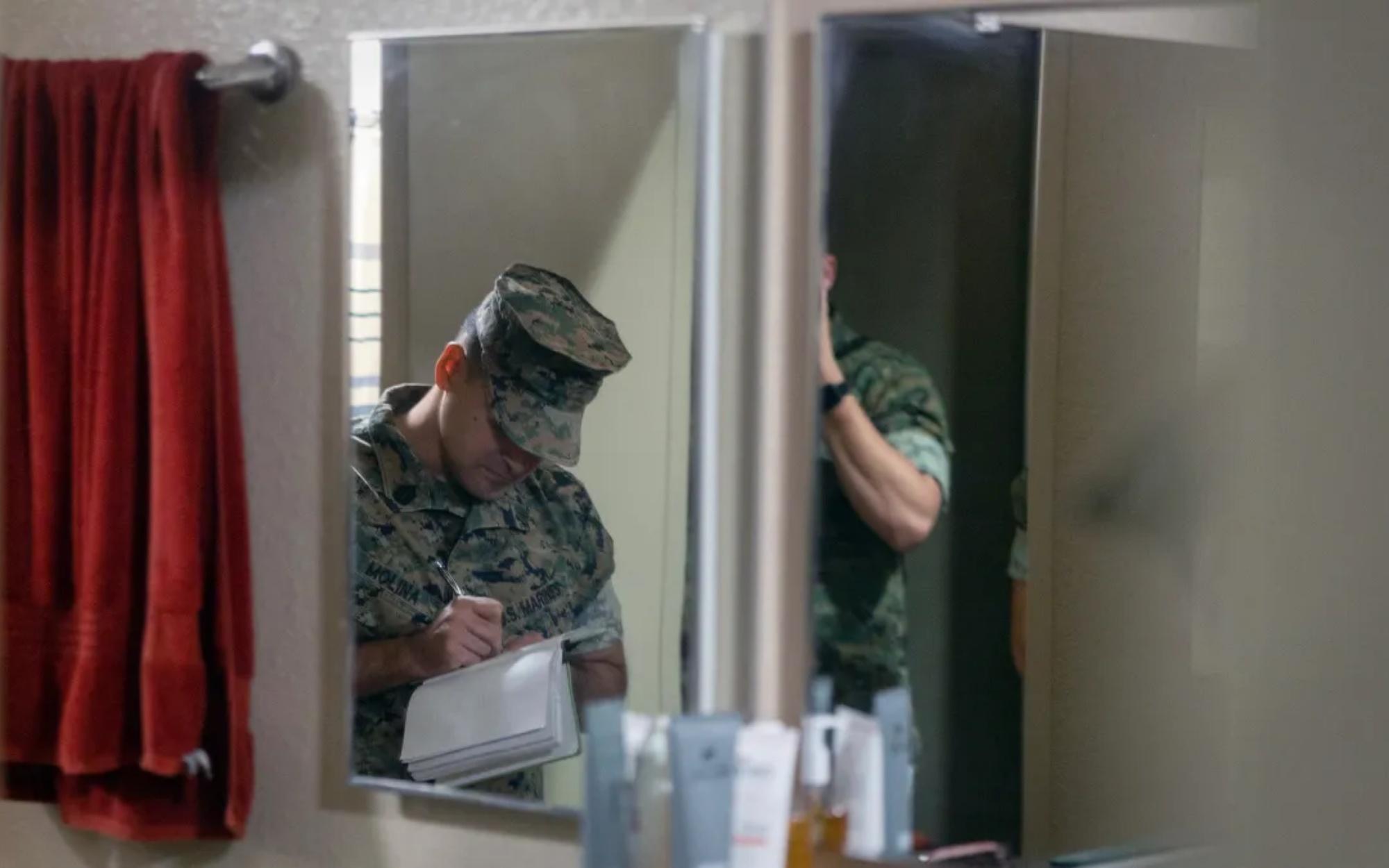
Marines Stateside Won’t Get Single Barracks Rooms as Japan Facilities Go Private

Enlisted Marines across the U.S. shouldn’t start planning to stretch out in their own private rooms anytime soon.

While the Corps is building new, state-of-the-art facilities with individual bedrooms for Marines stationed in Japan, there are no such plans for Marines living stateside.

Marine officials confirmed that only the new barracks in Okinawa and on mainland Japan will feature private rooms for corporals and below.

For everyone serving at home, the Corps is sticking to its long-standing “shared-room” model — what most Marines know all too well as the two-to-a-room setup that’s about as old as the rifleman creed.

A Marine Corps official said that the current policy “promotes camaraderie and small-unit leadership, which are foundational to the Marine Corps ethos.”

In other words, sharing a room continues to be seen as an essential part of forging discipline, teamwork, and a sense of brotherhood.

The Marine Corps also claims this model allows for “efficient and optimal use of available installation space and resources,” ensuring that every barracks bed counts.

Marines begin the roommate experience right out of boot camp, where they live in open squad bays with dozens of others.

Once they graduate and join the fleet, younger enlisted personnel typically move into barracks unless they have special permission to live off base. For those in the ranks of private through corporal — paygrades E1 through E4 — the rule is simple: you share a room.

In Japan, however, the standards are getting an upgrade. The Japanese government has funded new barracks featuring private rooms for U.S. Marines stationed on Okinawa, part of the broader U.S.-Japan Defense Policy Review Initiative.

The new facilities are located at Camp Butler, which includes Camp Hansen, as well as Marine Corps Air Station Iwakuni.

These next-generation barracks aren’t completely luxury apartments, but they are a big step up from standard U.S. rooms.

Each Marine will have a personal bedroom and bathroom while sharing a living room and kitchen with one other Marine, creating something closer to a small apartment layout.

The new barracks at Camp Hansen were officially unveiled with a ribbon-cutting ceremony on June 5.

According to reports, each private bedroom measures a relatively spacious 155 square feet — no small perk in military housing terms. About 1,100 Marines will move into the three new buildings built between 2022 and 2026.

Maj. Gen. Brian N. Wolford, former head of Marine Corps Installations Pacific, described the project as a major upgrade.

“This state-of-the-art facility will be replacing six other facilities on Camp Hansen,” Wolford said, calling it “the first domino that is starting the rest of the construction on Camp Hansen.”

In other words, these barracks are just the beginning of a larger modernization push across Marine camps on the island.

Even with the new barracks overseas, there’s no plan to roll out the same kind of housing for Marines stationed in the continental U.S. The official line remains firm: camaraderie comes first.

While Japan’s upgrades are bound by international agreements and partially funded by their government, U.S. installations will continue to prioritize shared spaces over private comfort.

The new barracks construction also ties into a bigger strategic shift across the Pacific. Under the U.S.-Japan agreement, about 9,000 Marines will be relocated from Okinawa to Guam, Hawaii, and other Pacific islands, while roughly 10,000 will remain based on Okinawa.

These moves are designed to distribute U.S. forces across the region for greater flexibility and faster response capabilities.

For now, the lucky few headed to Okinawa or Iwakuni will soon enjoy a rare slice of privacy in the Corps — complete with their own bathroom.

But back home, most Marines in the lower ranks will continue to share their living space with a fellow Devil Dog, just as generations before them have done.

If there’s one thing the Corps values even more than comfort, it’s tradition. As much as Marines might groan about cramped quarters and noisy roommates, the brass firmly believes this old-school method builds stronger units.

And according to the Corps, that’s a tradeoff worth keeping.

So while the Marines in Japan kick back in their new 155-square-foot single rooms, their stateside brothers and sisters can take pride in knowing they’re upholding a tradition as old as the Service itself — embracing the motto that comfort is optional, mission always comes first.

News

Dem Governor Admits Foreign Nationals Illegally Registered To Vote In New Jersey Election Scandal [WATCH]

New Jersey Gov. Mikie Sherrill said Tuesday that a software error in the state’s Motor Vehicle Commission system resulted in thousands of non-citizens being registered to vote between June 2023 and June 2024, prompting an investigation and efforts to remove those registrations from the voter rolls, as reported by The Gateway Pundit.

Sherrill disclosed the issue in a post on X, saying she learned of what she described as a “serious software error” that affected approximately 6,600 people who had indicated they were not U.S. citizens while applying for driver’s licenses or identification cards.

According to the governor, the problem occurred before she took office and involved applicants who answered “no” when asked on a keypad whether they were U.S. citizens.

Despite those responses, the system registered them to vote.

“Last week I learned that a serious software error in New Jersey’s Motor Vehicle System led to the registration of roughly 6,600 people who indicated that they were not U.S. citizens between June 2023 and June 2024, almost three years prior to my taking office,” Sherrill wrote.

She added, “These individuals answered “no” when asked on a keypad whether they were a U.S. citizen when applying for drivers’ licenses and identification cards, but through no fault of their own, the system registered them anyway.”

Sherrill also said the state’s preliminary review found that fewer than 400 of the individuals who were newly registered because of the error ultimately cast ballots.

“Our preliminary analysis shows fewer than 400 individuals who were newly registered for the first time because of the error voted,” she wrote.

“They were registered as Democrats, Republicans, and Unaffiliated voters and were scattered across the state.”

The governor said she immediately directed her administration to investigate the matter after learning about the issue and ordered the removal of those who had been mistakenly added to the voter rolls during the affected period.

“Upon learning this information, I immediately ordered my chief counsel to launch an investigation to get to the bottom of what occurred. I also ordered the removal of any residents from our voter rolls who were erroneously added between June 2023 and June 2024.”

Sherrill also announced changes involving the state’s motor vehicle system vendor.

“The new MVC Administrator that I appointed has begun the process of replacing the vendor responsible for administering the system.”

While discussing the issue, the governor criticized President Donald Trump and rejected his past claims regarding election integrity.

“As the Trump Administration tries to weaponize elections for political gain, I am ensuring we protect our elections. Let me be clear: Donald Trump has zero credibility on the issue of election integrity.”

She continued:

“For more than ten years, he has worked to undermine Americans’ faith in our elections by spreading lies about legitimate election results, attempting to overturn a free and fair election, encouraging an attack on our Capitol when he couldn’t accept the will of the voters, and defunding election security at the federal level.”

The disclosure has renewed debate over election security and voter registration safeguards.

Republicans have argued that the incident demonstrates the need for stronger verification measures to prevent non-citizens from being added to voter rolls.

The issue has also drawn attention to proposals such as the SAVE America Act, which supporters say would strengthen citizenship verification requirements during voter registration.

Sherrill maintained that the state is taking corrective action by investigating the software failure, replacing the vendor responsible for the system, and removing erroneous registrations.

Her office’s preliminary analysis indicated that the affected individuals included Democrats, Republicans, and unaffiliated voters and were located throughout New Jersey.

The investigation into the software error remains ongoing as state officials continue reviewing the voter registrations created during the June 2023 through June 2024 period.

News

Democrats Go All In On ‘Abolish ICE’ Push As Socialist Wing Tightens Grip [WATCH]

More than 100 liberal Democratic elected officials, including several members of the Democratic Socialists of America (DSA), are urging Senate Minority Leader Chuck Schumer and House Minority Leader Hakeem Jeffries to publicly support abolishing U.S. Immigration and Customs Enforcement (ICE), as reported by the New York Post.

The letter, sent Monday and first obtained by City & State, was signed by more than 100 state lawmakers, New York City Council members and other local elected officials.

Among the signatories were DSA members state Sen. Julia Salazar, D-Brooklyn, Assemblymember Diana Moreno, D-Queens, and New York City Councilmember Shahana Hanif.

The group called on Schumer and Jeffries to use their leadership positions to support dismantling the federal immigration enforcement agency.

“Leverage your positions to defund and dismantle this rogue federal agency,” the letter stated.

The lawmakers also acknowledged recent efforts by congressional Democrats to oppose funding for immigration enforcement but argued those actions do not go far enough.

“We applaud recent efforts by congressional Democrats to block funding to Trump’s ICE and Border Patrol, but we must go further. We can no longer ignore the threat that ICE, which has only existed since 2002, poses to our communities and to our democracy,” the letter added.

According to the organizers, the renewed campaign to abolish ICE follows two recent deaths involving ICE officers.

The signatories cited those incidents as the reason for intensifying their push to eliminate the agency altogether.

The latest effort places additional pressure on Democratic leadership as immigration enforcement continues to divide the party.

While progressive activists have increasingly embraced the “Abolish ICE” slogan, top congressional Democrats have generally stopped short of publicly endorsing the complete elimination of the agency.

Jeffries has not adopted the “Abolish ICE” position.

However, he has supported other proposals aimed at limiting ICE operations, including legislation requiring ICE agents to remove face coverings while operating in Congress.

Last week, Jeffries also discussed immigration enforcement during an interview with TikTok creator Aaron Parnas, where he highlighted Democratic opposition to funding additional immigration enforcement initiatives.

“ICE has to be dramatically reformed. Immigration enforcement in this country should be fair, just, and humane. ICE is currently out of control. And perhaps most importantly, we’re not giving a dime to Donald Trump’s violent mass deportation machine,” Jeffries said.

Jeffries also pointed to Democratic willingness to oppose government funding measures tied to immigration enforcement, saying the party was prepared to shut down the government rather than approve additional funding for those efforts.

Schumer likewise has not publicly endorsed abolishing ICE, though his office emphasized the senator’s past opposition to the agency’s actions.

James Martin, a spokesperson for Schumer, referenced a previous government shutdown during President Donald Trump’s administration that centered in part on immigration issues.

“Senator Schumer led the longest shutdown in history to stop ICE’s abuses, and that fight is not over,” Martin said in a statement.

“Democrats will not let up until we stop the killings, cruelty, and end the impunity.”

Despite those comments, Schumer’s office did not indicate support for eliminating ICE as requested in the letter from the progressive lawmakers.

The campaign illustrates the continued pressure Democratic Socialists of America members and other progressive officials are placing on congressional Democratic leadership to move further left on immigration policy.

While many Democrats have supported reforms to immigration enforcement, the proposal to abolish ICE remains one of the most divisive issues within the party.

The letter represents one of the largest coordinated efforts by elected Democratic officials in New York to encourage Schumer and Jeffries to publicly join the “Abolish ICE” movement and advocate for dismantling the federal agency responsible for enforcing immigration laws in the United States.

News

Two Wyoming Air National Guard Commanders Fired Amid ‘Loss of Confidence’ Shake-Up

The Wyoming Air National Guard has removed two of its top officers in a move that raised eyebrows across the military ranks this week.

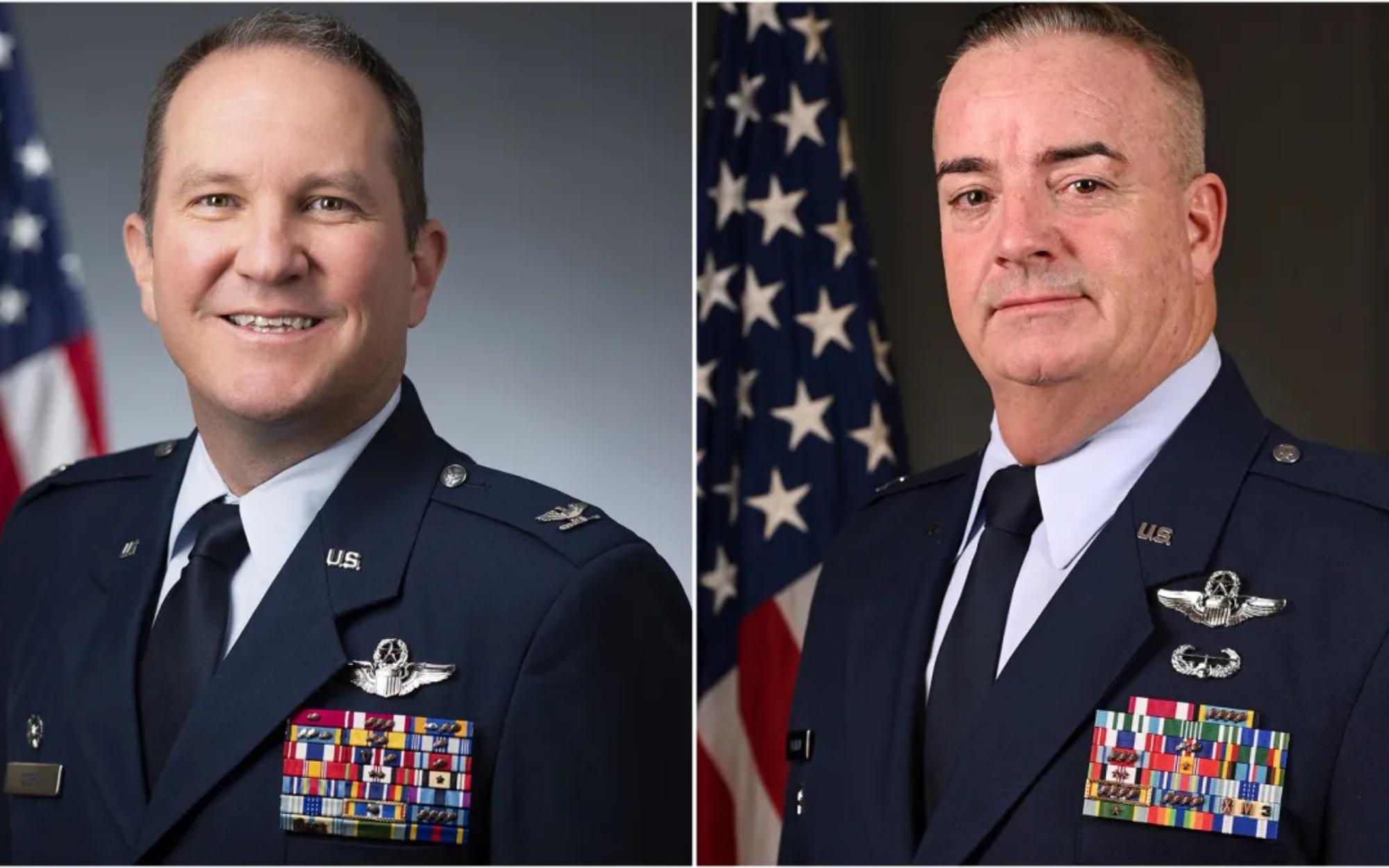
Both Col. Brian Diehl and Col. Lawrence Sullivan were fired on July 17 for what officials described as a “loss of confidence and trust” in their ability to lead.

While the phrase is standard issue in military bureaucracy, it almost always hints at deeper issues behind the scenes.

Diehl had been commanding the 153rd Airlift Wing, Wyoming’s only flying wing, while Sullivan oversaw the 153rd Operations Group, which runs the day-to-day flight operations and training.

Their reliefs came simultaneously, a sign that leadership concerns extended up and down the chain of command.

Brig. Gen. Barry Deibert, the Wyoming Air Guard’s commanding general, didn’t mince words in his short public statement.

He said that Air National Guard officers “are held to the highest standards of professional conduct, responsibility and reliability,” and when that trust is broken, “we must take appropriate action to uphold our core values.”

The “core values” phrase usually signals something serious, even if the official explanation stays vague.

Col. Diehl’s flight credentials are as deep as they come. His resume shows a long career as a C-130 airlift pilot, logging missions from firefighting runs across the American West to Antarctic supply flights.

He even spent part of his career with Air Force special operations, including command of an MQ-9A Reaper drone squadron before returning to Wyoming in 2023.

Sullivan, on the other hand, followed a very different route to the same command structure.

A former Army enlistee turned helicopter pilot, he commissioned in 1991, flew search-and-rescue for the Air Force, and later transferred to the Air National Guard.

Before joining the Wyoming unit in 2024, Sullivan had nearly two decades flying rescue missions with the New York Air National Guard. That blend of joint-service experience made his removal all the more surprising.

The timing of their firings was notable but not unprecedented. Double-command reliefs happen occasionally, though usually when there’s a pattern of problems that leadership wants to clean up quickly.

Whether this situation involves performance, discipline, or unit culture, state officials aren’t saying. The two men have not released public statements.

Inside the Wyoming Guard, Diehl’s wing directed several squadrons, including the 187th Airlift Squadron, which flies the iconic C-130H cargo aircraft.

The wing’s capabilities stretch from combat airlift to disaster response and aeromedical evacuation, missions essential to both homeland defense and international support.

Losing both its top officers at once is sure to shake internal morale and raise questions about leadership continuity.

Sullivan’s command of the Operations Group put him directly over flight operations, an aeromedical squadron, and air traffic control.

Those roles are at the heart of a wing’s mission readiness, meaning any disruption to command can have real-world operational consequences. The wing’s next moves will likely include temporary leadership appointments until permanent replacements are confirmed.

Veteran military insiders recognize the term “loss of confidence” as a catch-all that can cover everything from ethical lapses to poor team cohesion. In today’s environment, where perception often drives personnel decisions, it can also signal a preemptive move to avoid embarrassment or larger fallout.

That possibility is why many in uniform view such reliefs with caution. Over the past several years, the military has seen a growing number of command removals tied more to internal politics and image management than outright misconduct.

Some critics see that pattern as a symptom of a risk-averse leadership culture that punishes initiative or minor missteps more harshly than before.

It’s also worth noting that this shake-up comes during a period of heightened scrutiny across the War Department, with Secretary of War Pete Hegseth pushing for tougher accountability and sharper warfighting focus.

Hegseth’s emphasis on restoring warrior ethos and weeding out complacency has created ripple effects across every service component, including the Guard units that often balance civilian leadership with military readiness.

The Wyoming Air Guard’s mission continues unaffected for now, but swift changes at the top can always cause turbulence.

Units flying critical C-130 operations are vital for national security and crisis response, and leadership gaps can affect everything from training tempo to operational performance.

In Wyoming’s case, without clear explanation, speculation is inevitable. Still, the Guard’s public justification—lost confidence in leadership—suggests an unwillingness to tolerate anything that risks operational integrity.

That aligns perfectly with the renewed push for competence and character across the force that many in the ranks have long called for.

Whether this was about command chemistry, leadership ethics, or failed trust remains undisclosed.

What’s certain is that in a service built on discipline and accountability, once that “confidence” phrase appears, the careers in question are officially grounded.


Scroll to Top