News

News

Defense Scrambles in Teen Stabbing Trial: ‘We Don’t Know Yet’ Is Not Exactly a Winning Strategy [WATCH]

A Texas courtroom was rocked when jurors were shown horrifying autopsy photos of slain teen Austin Metcalf during the murder trial of 19-year-old Karmelo Anthony.

The images revealed Metcalf’s chest torn open and his heart pierced, leaving jurors visibly shaken as the accused sat motionless, refusing to look up.

Several jurors gasped aloud as the gruesome visuals played across courtroom monitors.

One woman shielded her mouth, unable to watch as prosecutors described the deep stab wound inflicted on the 17-year-old athlete.

According to reports, Metcalf’s family was so distraught they quietly left the Collin County courtroom during the chilling medical testimony.

Dr. Elizabeth Ventura, the medical examiner, took the stand to explain the extent of the knife wound.

She said the blade cut through Metcalf’s chest bone, puncturing his heart’s right side.

The wound was so severe that she described it as “gaping,” evidence of a violent and forceful thrust.

Anthony, at the time a high school student in nearby Frisco, Texas, has claimed he acted in self-defense.

Prosecutors allege otherwise, painting a picture of deliberate provocation that left a talented teen athlete dead in front of his teammates and family.

According to witness statements, the confrontation began over something almost absurd—a dispute about a tent at a school track meet.

The argument erupted when Metcalf, a proud Frisco Memorial High School runner, asked Anthony to move from under a tent assigned to Memorial team members.

Witnesses said multiple students politely repeated the request, but Anthony refused.

The situation escalated when Anthony, sitting calmly with his hand inside his backpack, fired back with a chilling remark: “Touch me and find out.”

Metcalf finally pushed Anthony in frustration. It was then, prosecutors say, that Anthony pulled a folding knife from his bag and stabbed Metcalf once in the chest.

The wound instantly became fatal.

Several witnesses described the horror as Metcalf’s twin brother, Hunter, tried frantically to save him while others screamed for help.

As the stadium erupted in chaos, Anthony allegedly tossed the knife and tried to run, but was detained by coaches before police arrived.

Witnesses described him as pale and “shaking,” not showing remorse but seemingly worried about what would happen next.

Despite the overwhelming evidence, Anthony pleaded not guilty, insisting that he feared for his life.

His defense attorneys have argued that Metcalf was the aggressor.

They maintain that Anthony, smaller in stature, pulled the knife out of fear after being cornered.

Prosecutors, however, have dismantled that narrative brick by brick, pointing to Anthony’s threats, refusal to move, and the precision of the single fatal blow.

The intense courtroom drama reached its emotional peak as jurors viewed the medical photos that told a story no cross-examination could undo.

The gallery was silent except for muted sobs from family members.

Prosecutors closed their case this past weekend, calling their final witness to detail the final seconds of Metcalf’s life.

Defense attorneys began presenting their case on Monday, trying to shift focus onto Metcalf’s supposed aggression.

But given the witness testimony and physical evidence, that argument is rapidly losing oxygen.

The prosecution’s timeline of events showed that Anthony instigated the confrontation and delivered the deadly strike when it became clear he refused to move.

WATCH:

Metcalf’s death hit the local community hard.

The Frisco Memorial High School track team held a candlelight vigil days after the tragedy.

Students described their fallen teammate as upbeat and hardworking, a “big personality with an even bigger heart,” one classmate said.

Meanwhile, parents across Texas are furious that a petty disagreement led to such violence in what should have been a normal spring sports meet.

The trial of Karmelo Anthony has drawn widespread attention across Texas, both for the senseless nature of the killing and the disturbing claim of self-defense.

If convicted, Anthony could spend the rest of his life in prison. His family has been mostly silent, showing little emotion throughout the proceedings.

For the jurors, the images shown in court will likely remain burned into memory forever.

The prosecution hopes they will serve as a reminder of what happened to a 17-year-old who never made it home that day.

The defense, however, faces an uphill battle to convince anyone that a knife in a school bag was an act of protection rather than a deadly premeditated choice.

As the defense continues, the memory of those photos lingers.

Twelve jurors now carry the weight of the evidence, the testimony, and the silence that filled that courtroom when the truth of Austin Metcalf’s death was laid bare before them.

News

Fraudster’s Paradise: California Now Accepts Gym Memberships as Voter ID [WATCH]

California has once again taken a big step toward erasing the concept of voter integrity, according to US Attorney for California Bill Essayli.

His latest warning centers around new state policies that allow voters to register using documents like gym membership cards, insurance cards, or employer IDs.

None of these documents verify either identity or citizenship, which makes the entire voting process ripe for abuse.

In a statement, Essayli said this “policy deserves a closer look.”

WATCH:

That is an understatement.

The move effectively invites anyone with a piece of plastic bearing a name to jump in and shape California elections with zero proof of eligibility.

It is the latest symptom of Sacramento’s obsession with making the voting process as loose and unaccountable as possible.

California Democrats have long paraded their so-called efforts at “expanding access to the ballot” even as critics have documented serious flaws in record-keeping, mail-in voting, and verification of voters’ legal status.

Allowing registration with a gym card is just the latest episode in a pattern that prioritizes convenience over credibility.

Essayli’s background as a former federal prosecutor makes his warning even more alarming.

He knows firsthand what happens when systems depend on trust instead of verification.

His questioning of this policy points to a deeper problem in a state government that would rather boast about inclusivity than ensure elections are legitimate.

What makes this new twist particularly outrageous is that it seems to strip voter registration of any real meaning.

Identification is supposed to confirm that the person filling out the form is who they say they are.

Citizenship verification is supposed to ensure that only Americans decide who leads the country.

California’s new approach erases both of those requirements.

WATCH:

Supporters of the policy claim it makes voting simpler and more “accessible,” using buzzwords to mask negligence.

But what they are really doing is lowering the bar so far that even noncitizens and unverified individuals could slide right in.

No other serious democracy on earth would tolerate this level of recklessness in maintaining voter rolls.

WATCH:

California officials justify their position by insisting that there are federal and state-level checks in place to safeguard against fraud.

That kind of assurance has been offered before, and yet the state’s election oversight keeps producing scandals and inconsistencies.

In 2020 and 2022, numerous reports surfaced of ballots sent to the wrong addresses or to individuals who had moved or died. Lowering ID standards will only worsen that chaos.

It is worth noting that this decision comes at a time when California’s leadership continues to resist any form of voter ID law.

Governor Gavin Newsom and his allies have mocked calls for basic identification as voter suppression.

Yet now, by reducing ID standards to something as trivial as a gym membership, they have essentially dismantled the integrity of the system altogether.

Essayli’s call for scrutiny echoes what millions of Americans have been saying for years: that elections must be secure if we want trust in the results.

Without verification, nobody can know whether the outcome reflects legitimate voters or simply whoever found the easiest way to register.

California appears uninterested in that question, which feeds the perception that Democrats benefit from the confusion.

Critics argue that the new policy opens the door for foreign nationals, illegal aliens, or simply dishonest actors to cast ballots with no fear of detection.

Considering California already provides certain governmental benefits to noncitizens, the idea that voting could be manipulated seems far from farfetched.

This is not a hypothetical problem; it is an administrative green light for fraud.

The practice also raises constitutional questions about equal protection.

WATCH:

Citizens in states with stricter ID rules must follow basic verification processes, while Californians get a free pass to join the voter rolls with minimal proof of identity.

If that imbalance grows nationwide, it could distort the political landscape and dilute the meaning of citizenship itself.

California’s defiance of voter integrity norms is part of a broader political strategy.

When rules are relaxed to the point of absurdity, accountability disappears, and those in power stay there.

Essayli’s warning serves as an invitation to every patriotic Californian to push back before the privilege of voting becomes just another broken promise.

The state has turned what should be a sacred civic duty into a game of trust with no guardrails.

That will not just affect California but the entire nation, as its electoral votes play a crucial role in national elections.

WATCH:

The real question is how far Sacramento will go before voters demand a system that values verification over pandering.

News

Jeffries Ducks and Weaves When Asked About Scandal Riddled Democrat Graham Platner [WATCH]

House Minority Leader Hakeem Jeffries declined to directly defend Maine Democratic Senate candidate Graham Platner during a television interview Sunday, saying the candidate would need to address the growing number of controversies surrounding his campaign on his own, as reported by the New York Post.

Jeffries made the comments during an appearance on Fox News’ “The Sunday Briefing,” where he was asked about allegations and past conduct that have generated national attention ahead of Maine’s Democratic Senate primary.

Platner, a Marine veteran and oyster farmer seeking a U.S. Senate seat in Maine, has faced scrutiny in recent months over a series of controversies, including reports involving explicit messages, allegations from former partners, a tattoo critics have linked to a Nazi-era symbol, and past online comments that resurfaced during the campaign.

Asked about allegations involving former girlfriends, Jeffries indicated he had not closely followed all of the details but stressed that violence against women should not be tolerated.

“I haven’t followed these allegations closely, but what I have said is that violence against women in any way, shape or form is unacceptable,” Jeffries said.

“It’s a red line, and nobody should cross that.”

Jeffries added, “Any accuser who comes forward has to be treated with dignity and respect.”

When pressed about other controversies involving Platner, the New York Democrat declined to offer a detailed defense of the candidate.

“He’s going to have to speak for himself, and that’s what any candidate, particularly in a high-profile race, is going to be called upon to do,” Jeffries said.

The latest attention surrounding Platner follows a New York Times report that included allegations from several former girlfriends regarding his behavior during past relationships.

One former girlfriend, Lyndsey Fifield, alleged that Platner made repeated comments about what he would do to a hypothetical home intruder. The Times also reported claims involving arguments and other incidents during their relationship.

Platner has denied allegations made against him in previous reporting.

The candidate has also faced questions about a tattoo he once had on his chest that resembled a Totenkopf, or “death’s head,” symbol associated with Nazi SS units.

Platner has maintained that he received the tattoo while intoxicated during a trip to Croatia, was unaware of its historical significance at the time, and later covered it with a different design.

Platner Melts Down After Fetterman Dares Him To Release His Own Texts

Additional scrutiny has come from resurfaced social media and Reddit posts attributed to Platner.

According to reports, those posts included criticism of police officers, comments about rural white Americans, remarks about a Purple Heart veteran, and statements defending the urination of Taliban corpses by U.S. service members.

Jeffries was also asked about comments Platner recently made regarding Sen. Susan Collins and the American Israel Public Affairs Committee, commonly known as AIPAC.

Rather than directly addressing the campaign dispute, Jeffries focused on the broader issue of antisemitism.

“Listen, the effort to crush anti-Semitism in America shouldn’t be a partisan issue,” Jeffries said.

“It can’t be a red or blue issue. It’s a red, white, and blue issue.”

“It’s an American issue, and we should all be committed to crushing anti-Semitism and all other forms of hatred into the ground, bury it and make sure it can never rise again,” Jeffries said.

Despite the controversies, Platner has maintained an advantage in public polling. According to the latest RealClearPolitics polling average, he holds a 7.4-point lead over Collins.

However, Collins has historically outperformed polling expectations in previous Senate campaigns, making the race one of the most closely watched contests of the 2026 election cycle as voters prepare to head to the polls.

News

Chaos Erupts At Penn Station As Six Stabbed Hours Before Trump’s New York Visit [WATCH]

Chaos broke out in the heart of New York City as a stabbing spree left six people injured inside the usually packed Penn Station on Friday evening.

The attack occurred shortly after 7 p.m., sending commuters into a panic just a day before President Donald Trump is expected to attend the NBA Finals in the city.

According to authorities, the suspect was quickly taken into custody after the violent outburst.

Witnesses described a terrifying scene as screams echoed through the station while bystanders scrambled for safety amid pools of blood and commuters frozen in shock.

Officials have not released the identity of the attacker or the victims at this time.

Police have confirmed that all six victims were transported to local hospitals, and their conditions remain unclear.

Investigators are working to determine whether the assault was random, gang-related, or part of a domestic dispute.

New York City police officers were seen flooding the station in the aftermath, securing entrances and reviewing surveillance footage for clues.

One officer at the scene reportedly said that the situation could have been even worse if transit police had not responded so quickly.

Penn Station, often described as the city’s artery of commuter life, has been a growing symbol of urban decline in recent years.

Once a proud hub of mobility, it now reflects the failures of New York’s leadership in dealing with crime and public safety.

The stabbing incident will undoubtedly renew concerns about how badly the city’s leadership has let basic order slip away.

This tragedy also comes as Democrats running New York City and state continue to insist that crime is “down.”

But the experiences of everyday citizens say otherwise.

The surge in violent incidents across public spaces, especially transit centers, shows that reality looks nothing like the talking points coming out of City Hall or Albany.

Penn Station itself has seen a disturbing rise in violent encounters.

Just this year, police have logged numerous assaults, thefts, and attacks involving bladed weapons across the transit system.

Despite increased police presence, the situation only appears to be worsening, leaving commuters vulnerable and uneasy.

The timing of this latest attack is fueling widespread attention since President Trump is scheduled to appear in the city the following day for the NBA Finals.

His visit will bring major security coordination, drawing federal and local forces together.

WATCH:

It also highlights the stark contrast between the chaos playing out on the streets and the law-and-order message that Trump continues to stress to his supporters.

Residents and visitors alike are voicing frustration with what feels like a city spinning out of control.

“This isn’t the New York I grew up with,” one commuter told local outlets after being locked inside a nearby store during the panic.

“No one feels safe anymore. Every day it’s another stabbing, another attack, and the politicians keep saying everything’s fine.”

Meanwhile, progressive city officials appear unwilling to confront the facts. Instead of strengthening law enforcement, their focus remains on social initiatives, “community investments,” and budget cuts that weaken police departments.

The result has been predictable: a continuing slide toward disorder that ordinary citizens must pay for with their safety.

The incident at Penn Station will likely add to the growing calls for tougher leadership in city government.

Conservatives have long warned that the soft-on-crime approach embraced by the left would lead to bloodier streets, and Friday night’s chaos seems to prove their point.

Security experts argue that until New York leaders take violent crime seriously and stop treating offenders as victims, the headlines from places like Penn Station will only grow more alarming.

There are limits to how much abstraction and social theory can paper over failure, and now those failures are on full display in the center of America’s largest city.

For Republicans, especially those pushing back against the lawlessness tolerated by progressive policies, this attack is more than another isolated case.

It is proof of what happens when ideology replaces accountability, and when city leadership turns away from the basic duty to protect the public.

The liberal model of criminal justice reform has created an environment where chaos thrives and citizens suffer.

While details continue to emerge, what remains certain is that New Yorkers are fed up.

They have watched their city deteriorate under the weight of lenient policies, activist prosecutors, and hollow assurances from their leaders.

The question now is not whether people will take notice, but whether they will demand real change before the city’s decline sinks even further.

News

U.S. Pounds Iranian Targets After Tehran Fires Drones In Gulf Escalation

The U.S. military hit Iranian radar and surveillance sites on Saturday, unleashing precision strikes after Iranian forces launched multiple attack drones toward the Strait of Hormuz.

The confrontation marked another escalation in the tense war that has gripped the Gulf, putting global oil flows and U.S. personnel in the crosshairs of Iran’s aggression.

According to U.S. Central Command, the Iranian drones appeared aimed at maritime activity in one of the world’s most vital shipping lanes.

American forces downed the drones before they could cause harm, then swiftly retaliated by targeting radar installations in Goruk and Qeshm Island. The clear message to Tehran: when you poke the American eagle, expect the talons.

Iran’s foreign ministry responded with its usual bluster, accusing Washington of breaking an April ceasefire and leaking the same tired threats about “illegal actions” and “responsibility for consequences.”

For a regime that’s been bankrolling terror and harassing ships for years, that lecture rings hollow. Iran’s defiance only reinforces why the Trump administration has refused to let the ayatollahs dictate terms in the Gulf.

Tehran’s Revolutionary Guard Corps then claimed to have fired ballistic missiles at U.S. bases in Kuwait and Bahrain, along with attacks on four tankers that it falsely claimed lacked “permission” to pass through the Strait. The fantasy of Iranian maritime control didn’t end well.

Kuwait’s army reported intercepting seven missiles and confirmed only limited damage with no casualties. Bahrain sounded air raid sirens and urged residents to find shelter—another reminder of how Iran’s belligerence destabilizes the entire region.

Both Kuwait and Bahrain blasted Tehran’s aggression. Kuwait’s foreign ministry condemned the assault as a “blatant” act threatening citizens and regional stability. Their message echoed across the Gulf: Iran’s recklessness isn’t resistance—it’s desperation.

US Forces Hammer Iranian Targets After Drone Shootdown, Intercept Missiles Over Kuwait
An F/A-18F Super Hornet lands on the flight deck of Nimitz-class aircraft carrier USS George H.W. Bush while sailing in the Arabian Sea, May 26, 2026. (U.S. Navy)

The U.S. military confirmed that six of Iran’s missiles were intercepted and a seventh fell short. American defense systems, bolstered under President Trump’s leadership, once again proved why strength—not appeasement—keeps U.S. interests safe abroad.

Behind the weapons fire lies a diplomatic deadlock. Washington and Tehran have been locked in indirect talks to end the three-month-old conflict, but Iran has stonewalled progress.

The regime demands access to frozen oil money, relief from sanctions, and unfettered leverage over the Strait of Hormuz—a choke point for roughly 20 percent of global oil traffic before the war.

Iran’s manipulation of the waterway has strained supply lines worldwide. For regimes like Tehran, chaos at sea equals cash, as rising fuel prices pressure Western economies.

Even humanitarian programs like the U.N. World Food Programme now warn that rising costs are pushing millions toward hunger. It’s the predictable fallout when tyrants weaponize energy markets.

Meanwhile, Pakistan has tried to act as a go-between, sending its interior minister, Mohsin Naqvi, to Tehran with a message for Supreme Leader Mojtaba Khamenei.

USS Nimitz Steams Into Caribbean As U.S.-Cuba Tensions Reach Boiling Point
USS Nimitz traveling with its strike group. Michael D. Cole/US Navy

It’s unclear whether Islamabad can shift anything—especially when Iran’s conditions resemble extortion more than negotiation.

President Trump, speaking on NBC’s “Meet the Press,” was candid about the battlefield reality. He said most of Iran’s drone and missile factories have been destroyed, though the regime still possesses roughly 21 to 22 percent of its arsenal.

“It’s a lot of missiles, but it’s not what it was when we first attacked,” Trump said. That’s the kind of blunt assessment that Americans have come to expect from a leader who doesn’t sugarcoat the truth.

Asked why Iran hasn’t accepted peace talks given its weakened state, Trump noted that Iranian leaders are “strong” and “proud”—but also cornered.

“They’ve got no choice,” he said, predicting that pressure will eventually force Tehran’s hand. He’s right: Only firm power, not polite negotiation, will bring the mullahs to heel.

Iran’s latest threats include warnings from adviser Mohsen Rezaei, who told CNN that any further attacks could push America into a “dark corridor” unless Washington unfreezes $24 billion in Iranian assets. That kind of language only underscores who’s really desperate for cash and leverage.

While the Gulf sparred, tensions in Lebanon also escalated. Israel struck a Lebanese army vehicle, killing two officers and a soldier, after identifying what it said was a Hezbollah staging area.

Hezbollah, ever the Iranian proxy, accused Israel of “continued aggression” while rejecting a U.S.-brokered ceasefire proposal that didn’t meet its demands. Iran, as expected, made halting the Israel-Hezbollah fight a condition for any broader truce with Washington.

Michael Bay to Bring Heroic F-15 Rescue in Iran to the Big Screen
A U.S. Air Force F-15E Strike Eagle receives fuel over U.S. Central Command, April 20, 2024. (U.S. Air Force)

The reality is that Iran wants to control not just its own territory, but the post-war map of the region—from the Strait of Hormuz to Lebanon.

But President Trump’s posture leaves no doubt: the U.S. will not bow to Tehran, will not surrender control of international waters, and will strike back decisively whenever America’s enemies test its resolve.

This weekend’s exchange made that policy abundantly clear. America acted not out of impulse but strength.

Tehran gambled, and once again, it lost ground both militarily and diplomatically.

For the Iranian regime, the message is simple—the United States under Trump and War Secretary Pete Hegseth doesn’t wait to be hit twice. It hits back harder.

News

Massive Earthquake Devastates Southern Philippines as Tsunami Fears Spread Across Pacific [WATCH]

A powerful earthquake struck off the southern coast of the Philippines early Monday morning local time, causing widespread shaking, triggering tsunami warnings in parts of the Pacific region, and prompting emergency response efforts across affected communities, as reported by The Gateway Pundit.

The earthquake occurred at approximately 7:37 a.m. Philippine Standard Time on Monday near the island of Mindanao.

According to monitoring agencies, the epicenter was located about eight miles southwest of General Santos City, off the coast of Sarangani province in the Soccsksargen region.

Initial reports from the German Research Centre for Geosciences (GFZ) placed the earthquake at a magnitude of 8.2 before the estimate was revised downward to approximately 7.8.

Multiple monitoring agencies later confirmed a magnitude of 7.8, making it one of the strongest earthquakes to strike the Philippines in recent years.

Seismologists said the earthquake originated from thrust faulting along the Cotabato Trench subduction zone, an area known for significant seismic activity.

The event was reported as the strongest earthquake to impact the Philippines since the devastating Luzon earthquake of 1990.

The powerful shaking was felt across General Santos City and the surrounding provinces. Authorities reported structural damage in several areas, while emergency personnel began assessing the extent of the impact shortly after the quake.

Following the earthquake, tsunami warnings and advisories were issued for portions of the Philippines, Indonesia, and other nearby areas.

Officials urged residents in vulnerable coastal communities to move to higher ground as a precaution while tsunami monitoring continued.

Small tsunami waves were reported in some locations, prompting evacuations in several coastal areas as authorities monitored changing conditions.

While some Pacific regions remained under advisories, officials said Hawaii was not at risk from the event.

According to the Pacific Tsunami Warning Center, “The PTWC said a tsunami threat existed for parts of the Pacific closer to the earthquake, but based on all available data, there was no tsunami threat to Hawaii.”

The center also noted that advisories had been issued for Guam and the Mariana Islands while additional data was being collected.

“The PTWC said it was not expecting a tsunami threat for those areas, but was awaiting further data.”

Officials further emphasized, “Again, there is NO tsunami threat to Hawaii from this earthquake.”

Authorities reported at least one fatality and four injuries in the aftermath of the quake. Emergency officials also received reports of people trapped in damaged structures, while others required medical attention following the intense shaking.

The earthquake reached Intensity VIII, classified as “Very Destructive,” in parts of Sarangani province on the Philippine seismic intensity scale.

Rescue crews faced additional challenges as strong aftershocks continued throughout the day. One aftershock measured magnitude 6.5, adding to concerns about weakened structures and slowing damage assessments in affected areas.

Emergency responders remained on the scene Monday, conducting search operations, assisting displaced residents, and evaluating infrastructure damage.

Government agencies continue to assess the full impact of the earthquake while monitoring aftershocks and coastal conditions. Officials have urged residents in affected regions to remain alert as response and recovery efforts continue.

News

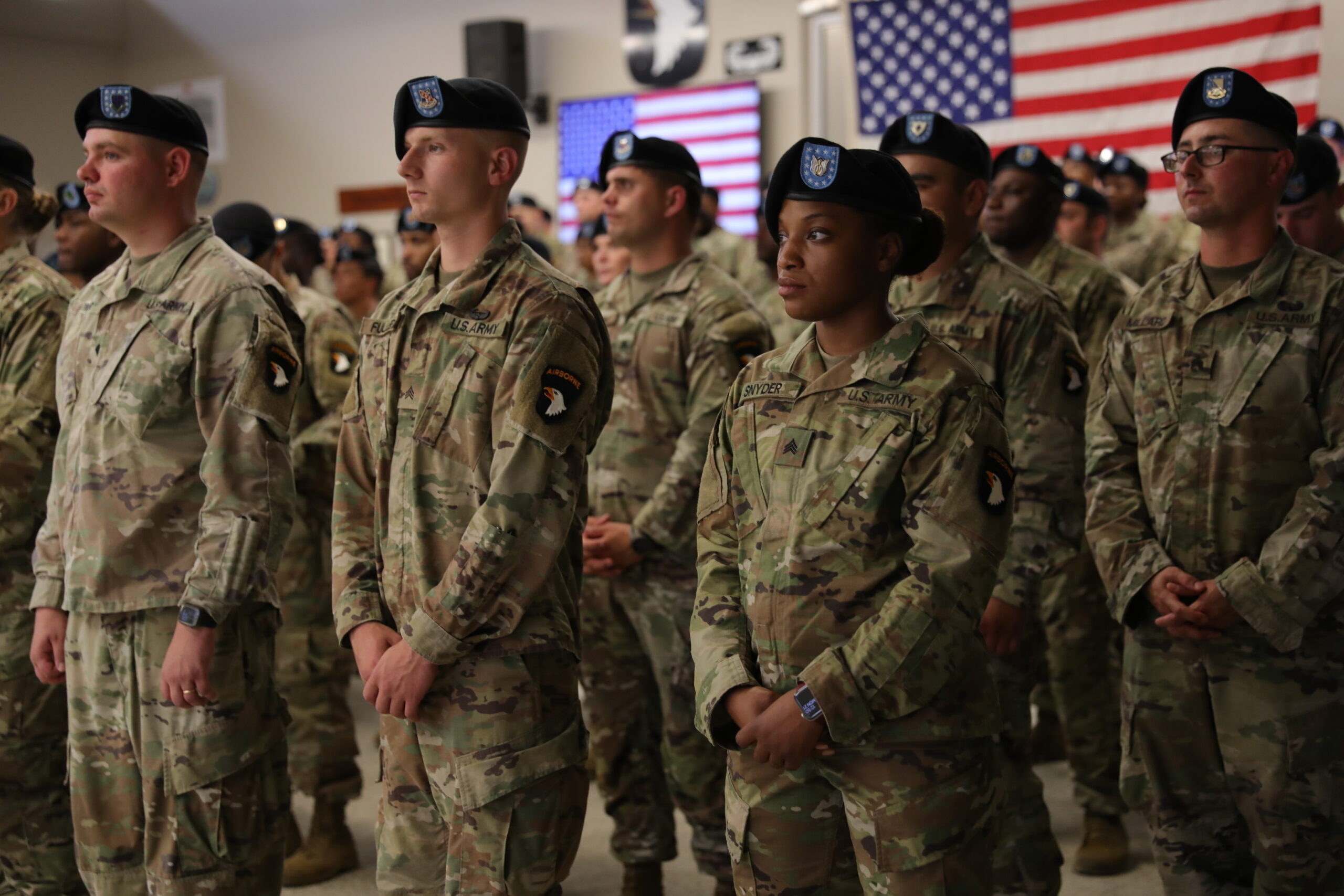
U.S. Troops and Families Grapple with Relentless Strain of Iran War Stalemate

Fourteen weeks since President Trump’s decisive strike on Iran, the U.S. military finds itself fighting a war that’s neither all-out nor over — a drawn-out stalemate testing the grit of America’s warriors and their families like never before.

It isn’t “peace time” by any stretch, yet it isn’t an all-consuming battle either.

It’s a tense holding pattern where something could explode any moment.

Across American ships and bases scattered in the Middle East, troops continue to face sporadic Iranian attacks.

Naval forces remain on high alert, maintaining an iron blockade on Iranian ports as Tehran lashes out with drones and missiles at U.S. allies like Bahrain and Kuwait. Even with a declared ceasefire on paper, the battlefield has hardly cooled.

The War Department has had to pivot from fast, high-intensity operations to a grinding war posture requiring constant readiness.

Munitions stockpiles have been severely depleted, forcing production surges back home. Every factory, every supplier in the chain is under pressure. Just as the Trump administration warned, America can’t afford complacency in deterrence.

The Iranian regime continues its trademark belligerence, firing missiles across the Gulf and boasting of phantom victories in its captive media.

Whether it’s a real attack or propaganda stunt, Iran’s tactics keep U.S. troops in constant danger. For America’s military families, it’s a state of perpetual suspense, wondering when another headline or text message will upend their world.

U.S. officials have described this “persistent high alert” as one of the most taxing missions ever undertaken.

Allied Partnerships Urged to Rebuild U.S. Naval Industrial Base
Two F/A-18 Super Hornets launch from the aircraft carrier USS Abraham Lincoln in support of the Operation Epic Fury on March 3, 2026. (U.S. Navy)

“To maintain this constant state of ‘Level 10’ alert vigilance, to be ready to go at the drop of a hat, is a very stressful and difficult operational mission,” said one U.S. military official. Few would argue that point.

Former Central Command leader Joseph Votel went further, calling this a “very, very dangerous period” — a strategic purgatory where both sides sit ready for war but the first mistake could ignite a regional inferno.

“It puts a lot of pressure on leaders to make sure people are still at their edge,” Votel said, acknowledging the heavy burden on commanders and troops alike.

War Secretary Pete Hegseth and the War Department have been quick to praise the troops carrying that burden.

Top spokesman Sean Parnell hailed the armed forces’ “courage, readiness, grit, and unmatched professionalism” — qualities, he said, that make them “the greatest fighting force in human history.” The sentiment has resonated deeply across bases and barracks as Americans brace for what could become a multi-year standoff.

Army Expands Reenlistment Window for Epic Fury Troops Two Years Early
Army soldiers fire M142 High Mobility Artillery Rocket Systems (HIMARS) as part of Operation Epic Fury. Army photo.

For many wounded warriors, the battle’s aftermath lingers long after the explosions have faded.

Army Reserve Sgt. 1st Class Cory Hicks, hit by an Iranian drone blast early in the conflict, flatlined before medics revived him. Shrapnel tore through his body, fracturing his jaw and cutting an artery. He now faces a lifetime of challenges from traumatic brain injury. His story captures the cost of Iran’s cowardly attacks and the resilience of those who survive them.

Speaking from Walter Reed Medical Center, Hicks recounted how the drone’s approach sounded “like a small prop plane coming in quick” before turning the building into fire and metal.

Walter Reed, long quiet since Iraq and Afghanistan, is now bustling again — proof that America’s servicemembers are once again carrying the load of global freedom.

Roughly 400 Americans have been injured since hostilities erupted, many suffering brain trauma, but over 90% have already returned to duty. Thirteen have made the ultimate sacrifice. That kind of courage should humble every politician enjoying freedom at home while these heroes endure the line of fire.

Meanwhile, families on U.S. soil adjust to uncertainty. Iranian propaganda brags about attacking American ships, and though those claims are mostly fiction, the unease they cause is real.

Trump Administration Stands Firm as Casualties Mount in Epic Fury Offensive

“It’s just really scary not to know details of what exactly is going on,” said Yadira Dessaint, mother of a deployed Army Reserve sergeant. Like so many parents, she clings to short text exchanges that remind her son is still alive.

Despite a vocal few calling for retreat, more Americans are beginning to understand that firm resolve — not withdrawal — keeps Tehran’s extremists in check.

Iran’s regime is watching for weakness, and President Trump’s steady hand is the reason the ceasefire hasn’t completely collapsed. The threat remains, but America’s strength is still unmatched.

Negotiations to reopen the Strait of Hormuz could prolong the fragile peace, yet experts warn the mullahs will never play fair. Tehran’s nuclear ambitions still loom large, and any pause in fighting could simply buy them time. For U.S. troops, the grind continues with no clear end in sight.

War Secretary Hegseth acknowledged the challenge of this prolonged fight, warning it could take years to rebuild weapons inventories exhausted by the pace of operations.

Analysts like Tom Karako note that “wars are expensive” in both machinery and morale. America’s warfighters are enduring both costs with stoic professionalism.

Sailors prepare to stage ordnance on the flight deck of Nimitz-class aircraft carrier USS Abraham Lincoln in support of Operation Epic Fury, Feb. 28, 2026. Navy photo.

For soldiers like Hicks, living with scars both visible and unseen, the mission continues through camaraderie and memory.

“They’re doing a lot better now than they were,” he said of his deployed comrades, though he will forever carry the loss of those who didn’t survive the drone strike beside him.

As America’s enemies test our resolve, one truth stands fixed: the U.S. military doesn’t break. It adapts, endures, and prevails.

The same can be said of the families waiting back home — resilient, patient, and faithful that their warriors will return under the flag they serve.

News

Walz Accused of Turning Blind Eye as Massive Fraud Engulfed Minnesota Programs

A Republican-led congressional investigation alleges that senior Minnesota officials, including Gov. Tim Walz, failed to act on repeated warnings about fraud in state-administered social services programs, allowing hundreds of millions of dollars in confirmed or alleged losses while exposing billions more in taxpayer funds to potential abuse, as reported by Fox News.

The allegations are detailed in a 205-page final staff report released Monday by the House Oversight Committee following a months-long investigation into Minnesota’s handling of federal nutrition and Medicaid funds.

According to the report, state officials had the authority to halt payments to organizations identified as high-risk recipients of federal funding but repeatedly failed to take action after concerns were raised.

“Fraud warnings were elevated to the most senior levels of the Minnesota state government, meaningful corrective action was delayed or avoided, and payments continued long after credible signs of fraud emerged,” the report states.

The committee interviewed nearly 30 whistleblowers during its investigation. Some accused state officials of retaliating against employees who attempted to raise concerns about suspected fraud.

Investigators also concluded that fears of potential racial discrimination claims may have influenced decisions to continue payments to organizations under scrutiny, rather than legal barriers preventing intervention.

Among the findings cited in the report is an estimate that Minnesota lost approximately $300 million in federal nutrition funding intended to feed children during the COVID-19 pandemic.

The report also references allegations that as much as $9 billion in Medicaid billings may have been fraudulent, a figure attributed to a federal prosecutor and disputed by officials in the Walz administration.

A significant portion of the investigation focused on the now-defunct Feeding Our Future nonprofit organization.

According to the report, Walz was aware of concerns surrounding the organization as early as 2020, yet payments allegedly continued for nearly two additional years.

Congressional investigators also stated that Walz provided conflicting accounts regarding when he first learned of the fraud allegations.

The report further examines the actions of Minnesota Attorney General Keith Ellison. Investigators obtained a December 2021 audio recording in which individuals later convicted in the Feeding Our Future case reportedly met with Ellison regarding payment disputes involving the Minnesota Department of Education.

“The fraudsters pledged the Somali community’s political and financial support to Ellison if he were to intervene on their behalf,” the report states. “Ellison said he would help ‘fight these people.’”

The report also notes that Ellison later received campaign donations from several individuals connected to the case, though his office has stated those contributions were ultimately returned.

Representatives for Walz and Ellison did not immediately respond to requests for comment.

Federal prosecutors have charged more than 110 individuals in connection with various fraud schemes linked to Minnesota programs.

Authorities have alleged that stolen funds were used for luxury purchases, while state investigators have also examined whether portions of the money were transferred overseas to support terrorist groups operating in Somalia and the Middle East.

House Oversight Committee Chairman James Comer sharply criticized Minnesota leadership following publication of the report.

“Minnesota Governor Tim Walz and Attorney General Keith Ellison are responsible for one of the most stunning oversight failures this Committee has ever examined,” Comer said.

“It is now clear the Walz Administration chose to protect the system rather than protect the taxpayer.”

The investigation began in late 2025 and included testimony from Walz, Ellison, members of Minnesota’s legislative fraud committee, and nine current or former state officials.

Following the report’s release, Comer sent a letter to Vice President JD Vance urging a comprehensive review of Minnesota’s social services programs for additional fraud vulnerabilities.

Vance Freezes Billions in Medicaid Cash Over Rampant California Fraud

Vance’s anti-fraud task force has already resulted in the arrest of at least eight individuals accused of participating in health care fraud schemes and has frozen approximately $1.3 billion in payments to providers suspected of defrauding federal programs.

Earlier this year, the Trump administration suspended nearly $260 million in federal Medicaid funding to Minnesota, citing allegations that state officials failed to adequately address fraud concerns.

The report arrives as House lawmakers prepare to consider several anti-fraud measures this week. Supporters argue additional federal safeguards are necessary to help prevent abuse of taxpayer-funded programs.

According to a 2024 report from the Government Accountability Office, fraud costs the federal government an estimated $233 billion to $521 billion annually.

News

Texas Democrat Says Stopping Susan Collins Matters More Than Allegations Against Graham Platner [WATCH]

Rep. Veronica Escobar said Sunday that the prospect of Sen. Susan Collins winning reelection concerns her more than the controversies surrounding Maine Democratic Senate candidate Graham Platner, as reported by Fox News.

Escobar made the remarks during an appearance on CNN’s “State of the Union,” where panelists discussed recent allegations reported by The New York Times involving Platner.

According to the report, former girlfriends accused Platner of troubling behavior, including allegations involving violent episodes and heavy drinking.

Platner Melts Down After Fetterman Dares Him To Release His Own Texts

Platner has denied allegations made against him and has described claims in previous reports as untrue.

During the CNN discussion, Escobar acknowledged concerns about the allegations but quickly shifted attention to Collins and the upcoming Maine Senate race.

“Of course it concerns me,” Escobar said.

“But I will also say what concerns me, even at an even greater level, is Susan Collins getting reelected. She has given cover and comfort to the most corrupt, incompetent president we’ve ever had. And, hopefully, the people of Maine will take away the seat from her, whoever the nominee is.”

Escobar also used the discussion to criticize Texas Attorney General and Republican Senate candidate Ken Paxton.

“And if folks are concerned about Mr. Platner, wait until they hear about the Senate candidate in my state, Ken Paxton. He is someone who I hope gets as much coverage as the Maine candidate is getting, because what we know in Texas about Ken Paxton is pretty horrifying, even people within his own party,” Escobar said.

Fox News Digital reported that it contacted the offices of both Collins and Paxton seeking comment.

The controversy surrounding Platner has continued to grow in recent weeks.

In addition to the allegations discussed during the CNN segment, the candidate has faced scrutiny over a tattoo that critics have compared to a Nazi symbol, controversial Reddit posts criticizing soldiers, and reports regarding explicit messages allegedly sent to women while he was married.

Despite the mounting controversies, several Democrats have continued supporting Platner as he moves toward becoming the party’s likely nominee in Maine’s Senate race.

One of the most prominent Democratic voices backing Platner has been Rep. Ro Khanna of California.

Khanna argued that Platner changed after returning to Maine and working as an oyster farmer.

“[H]e really grew as a person when he came back to Maine, and he was an oyster farmer,” Khanna said in an interview with Fox News Digital.

“And he found peace, and he is ashamed of that period. To me, that suggests someone taking accountability and improving their lives, and we need that redemption in this country.”

Khanna also expressed support for Platner’s economic platform.

“And I agree with a lot of his economic policies, that we should be taxing the billionaires, we should be focusing on the working class,” he added.

The Maine Senate race has attracted increasing national attention as Democrats and Republicans battle for control of a key Senate seat.

While Platner continues to face questions about his past conduct and personal controversies, several Democratic leaders have signaled they remain focused on defeating Collins in November.

As the primary season continues, the race is expected to remain under intense scrutiny from both parties and national political observers.


Scroll to Top