News

News

Smoking Gun: James Comey Appears to be Caught Red-Handed, New Documents Reveal

Former FBI Director James Comey has been indicted by the Department of Justice on federal charges of making a false statement to Congress and obstructing a congressional investigation connected to his 2020 Senate testimony regarding the FBI’s handling of classified information and media leaks.

The indictment, filed in federal court, alleges that Comey falsely denied authorizing leaks to the press about the Hillary Clinton email investigation and the FBI’s 2016–2017 inquiry into alleged ties between the Trump campaign and Russian officials.

The DOJ contends that newly recovered email correspondence shows Comey was both aware of and involved in sharing information with members of the media, contradicting his sworn testimony.

According to documents reported by Just the News, prosecutors uncovered a collection of personal emails in which Comey and senior FBI aides discussed providing information to reporters anonymously in the days leading up to the 2016 presidential election.

The emails also included conversations in which Comey expressed confidence that he would soon be working for “President-elect Hillary Clinton.”

Federal prosecutors cited this correspondence as evidence that Comey’s testimony before Congress was knowingly false.

“Consistent with the above-described correspondence, Richman corresponded extensively with members of the media regarding or on behalf of the defendant, including in an anonymous capacity,” the DOJ filing stated.

The reference was to Daniel Richman, a longtime Comey associate who has previously been identified as an intermediary used to share information with journalists during the FBI’s investigation of then-candidate Donald Trump.

Assistant U.S. Attorney Katherine Halligan, who is leading the prosecution, wrote that the emails “demonstrate that the defendant was aware of and encouraged” Richman’s media outreach, even as he later told lawmakers under oath that he had not authorized any such leaks.

The filing also addressed Comey’s motion to dismiss the case, in which he alleged that he was being subjected to a “vindictive” prosecution at the direction of President Donald Trump.

Prosecutors rejected that claim outright, stating that the evidence against Comey was based on documentary proof, not political motivation.

“Through a mix of news reports, social media posts, and speculation, the defendant weaves a tale of what he calls ‘glaring constitutional violations’ that resulted in his indictment for making a false statement to Congress and obstructing a congressional investigation,” prosecutors wrote.

“When the rigorous legal standard is applied to the facts here, it is clear that the defendant has failed to show the Constitution requires the Court to take the extraordinary step of dismissing this case.”

One of the government’s exhibits reportedly includes a handwritten note by Comey on official FBI letterhead referencing internal discussions about the so-called Russia collusion narrative that dominated the early months of the Trump administration.

Prosecutors described the note as direct evidence of Comey’s knowledge of the media coordination surrounding the FBI’s activities.

The indictment follows years of controversy surrounding Comey’s role in the FBI’s investigations into both Hillary Clinton’s handling of classified emails and the Trump campaign’s alleged connections to Russian officials—claims that were later discredited by the Justice Department’s own inspector general and by Special Counsel John Durham’s findings.

News

Elon Musk Warns New Yorkers About the ‘Charismatic Swindler’ That is Zohran Mamdani

Billionaire entrepreneur Elon Musk has issued a warning about the potential economic fallout of New York City mayoral candidate Zohran Mamdani’s platform, describing the democratic socialist’s proposals as a threat to the city’s standard of living.

Musk, the CEO of Tesla and SpaceX, discussed the upcoming mayoral race during an appearance on “The Joe Rogan Experience,” where he addressed Mamdani’s rise as the frontrunner.

While acknowledging Mamdani’s appeal to some voters, Musk said his policies would severely damage New York’s economy if implemented.

“Mamdani is a charismatic swindler,” Musk said.

“I mean you gotta hand it to him, like, he can light up a stage, but he has just been a swindler his entire life.”

Musk continued, warning of broad economic consequences: “If Mamdani’s policies are put into place, especially at scale, it would be a catastrophic decline in living standards, not just for the rich, but for everyone. As has been the case with every socialist experiment.”

Mamdani, currently a member of the New York State Assembly, has based his campaign on implementing a range of democratic socialist policies if elected mayor.

His platform includes major wage increases, expanded government services, and broad public housing initiatives.

Among his proposals is a plan to raise New York City’s minimum wage to $30 an hour by 2030.

Mamdani also supports increasing the city’s corporate tax rate to 11.5 percent, matching that of neighboring New Jersey.

In addition, he has called for eliminating bus fares, creating a universal childcare system, and freezing rents for tenants in rent-stabilized housing.

Mamdani has said he intends to build 200,000 new units of “permanently affordable, union-built, rent-stabilized homes” over the next decade.

His platform also calls for establishing city-owned grocery stores that would operate rent-free and without property taxes, selling products at wholesale prices to provide what he calls a “public option” in the grocery market.

During an interview last month with Martha MacCallum on Fox News’ The Story, Mamdani defended his tax and spending proposals, saying they represent a fair way to pay for expanded public programs.

“I’ve said time and time again that I believe these are the most straightforward ways that we can actually fund universal childcare, making buses fast and free, and I’ve said that the two clear ways to do so: raising personal income taxes on the top 1% by 2% and raising the corporate tax to match that of New Jersey’s corporate tax of 11.5%,” Mamdani said. “Now, if there are other ways to raise this money to fund this agenda, the most important thing is that we fund the agenda.”

Pressed on whether his plan would require budget cuts elsewhere, Mamdani rejected the idea, insisting that higher taxes on wealthier New Yorkers could support his priorities without reducing existing programs.

“I don’t think we have to cut,” Mamdani said.

“I’ve spoken about raising taxes on the wealthiest. And frankly, this is an issue that we have here in New York City, and frankly, even across this country. When I’ve spoken to Trump voters right here in New York City – Hillside Avenue in Queens, Fordham Road in the Bronx – they’ve told me it was the cost of living that drove them to vote for Donald Trump.”

News

Dick Cheney Dies at 84, Sparking Fierce Reckoning Over War Powers and Legacy

Richard B. Cheney, the towering and divisive figure who reshaped the vice presidency and steered American foreign policy for decades, has died at 84.

His family said he died Monday from complications of pneumonia and cardiac and vascular disease, and they announced his passing the following day.

Cheney rose from Wyoming roots to become defense secretary under President George H.W. Bush and then the vice president who acted as the chief operating officer of George W. Bush’s administration.

Because of that trajectory, he left an imprint on national security institutions that conservatives and critics still argue over today.

President Bush offered a measured tribute and underscored the complexity of Cheney’s service. Bush called Cheney a “decent, honorable man” and said his death was “a loss to the nation.”

The former president went further to frame Cheney’s place in history. “History will remember him as among the finest public servants of his generation — a patriot who brought integrity, high intelligence, and seriousness of purpose to every position he held,” Bush said in a statement.

Cheney’s career was unsparing and unapologetic, and he embraced the levers of power with relish.

As he once explained, “I made the decision when I signed on with the president that the only agenda I would have would be his agenda, that I was not going to be like most vice presidents — and that was angling, trying to figure out how I was going to be elected president when his term was over with.”

Dick Cheney Dies at 84, Sparking Fierce Reckoning Over War Powers and Legacy
Secretary of Defense Dick Cheney and Army Gen. Colin L. Powell, chairman of the Joint Chiefs of Staff, meet with reporters in the Pentagon Briefing Room to discuss the air attacks by coalition forces undertaken as the first phase of the effort to dislodge Iraqi forces from Kuwait. The secretary and chairman spoke with the press approximately 2 and a half hours after the commencement of hostilities, Jan. 16, 1991. It was announced the operation would be called Desert Storm.

That loyalty to the president made Cheney indispensable because he could move policy through the bureaucracy and settle fights that might otherwise have stalled. At the same time it made him a target for critics who saw backroom influence where others saw efficient governance.

His tenure was defined by bold decisions and controversial judgments, most notably the case for invading Iraq. He argued for the necessity of robust tools to combat terrorism and defended aggressive surveillance and detention measures that many would later challenge in courts.

Cheney’s certainty about Iraq did not, however, play out as he expected and critics have long hammered him for intelligence and tactical failures. He pressed claims about ties between Iraq and 9/11 that were later discredited, and he misread how American forces would be received.

Admirers have countered that Cheney held faith in difficult times and sought stability in a chaotic era. Critics point to the insurgency and the human cost of the war as evidence that a different course should have been charted.

He also cultivated an image that some found charming and others found sinister. “Am I the evil genius in the corner that nobody ever sees come out of his hole?” he asked. “It’s a nice way to operate, actually.”

Personal adversity followed him through life because of severe heart disease and a transplant, yet he kept a public face of stoic determination.

He once called a hunting accident that injured a friend “one of the worst days of my life,” and the episode only added to his mythos in the public imagination.

In recent years Cheney’s standing within the Republican fold frayed, in large part because he openly broke with President Donald Trump.

“In our nation’s 246-year history, there has never been an individual who was a greater threat to our republic than Donald Trump,” Cheney said in a television ad for his daughter.

Dick Cheney Dies at 84, Sparking Fierce Reckoning Over War Powers and Legacy
Vice President Dick Cheney waves to the audience after speaking to military personnel, family members and Department of Defense civilian employees during a visit to the USS Kitty Hawk, Yokosuka, Japan, Feb. 21, 2007. Cheney is in Japan during a week-long tour of the Pacific.

He did not stop there in his criticism. “He tried to steal the last election using lies and violence to keep himself in power after the voters had rejected him. He is a coward.”

Cheney’s fierce denunciations extended to private choices, including declaring last year he would vote for the Democratic ticket rather than support Mr. Trump. Those moves widened the rift between traditional conservative national security hawks and the populist movement that now dominates the GOP.

For supporters of President Trump and for conservatives who favor a robust but accountable national defense, Cheney’s death is a moment to reflect on both lessons and ambitions.

Many will argue that preserving national strength requires adapting the principles Cheney championed while learning from strategic missteps.

At the same time advocates such as Secretary of War Pete Hegseth have emphasized unity and forward motion, pointing to the need for clear leadership at home and decisive posture abroad.

Those voices will likely shape the conversation about how to honor aspects of Cheney’s approach without repeating failures from the past.

Cheney’s life was a reminder that power is both potent and perilous, and it will be debated in public and private for years to come.

He leaves a legacy of service, controversy and a model of governance that challenged the boundaries of executive authority.

News

Air Force Enforces Stricter Grooming Rules Aligned with SecWar Hegseth’s Vision

The U.S. Air Force has issued detailed new grooming guidance that tightens standards for mustaches and sideburns, and it does so in a way that underscores accountability and readiness.

The October 29 memorandum provides specific measurements and expectations so commanders and airmen share a clear standard to follow.

“The new guidance mandates that sideburns must be above the ear opening and mustaches are prohibited from going beyond the corners of the mouth or into a respirator seal zone,” the spokesperson added.

That line captures two key priorities behind the order: a crisp, uniform appearance and safety when wearing protective equipment.

The memo stresses the relationship between appearance and performance, and it makes clear that good order is not cosmetic but operational.

“Pride in an Airman’s personal appearance and uniform wear greatly enhances the discipline essential to an effective military force,” the memo says. “Therefore, Airmen must maintain a high standard of dress and personal appearance through adherence to the five elements of this standard: neatness, cleanliness, safety, uniformity, and military image.”

Those five elements read like a blueprint for a military that wants to be taken seriously at home and abroad.

Rules on sideburns require a straight, even width above the ear opening and a clean horizontal line at the lower edge, which removes ambiguity for both service members and supervisors.

Mustaches must be neatly trimmed and match natural head hair color, and more flamboyant facial styles such as handlebar or curled mustaches are not permitted.

The guidance is also specific about waivers, limiting shaving waivers to temporary medical needs and ensuring unit commanders review and approve exceptions so standards remain consistent across the force.

“At the start of each duty day, male Airmen must be clean shaven,” the memo states. “Beards are not authorized unless for medical reasons, when recommended by a medical official, and approved by applicable unit commander or as authorized pursuant to a request for a religious accommodation.”

These provisions make clear that personal accommodation remains possible, but only through proper channels and with command oversight.

Secretary of Defense Pete Hegseth has made grooming and fitness standards a priority since August, pushing a broader cultural reset that many conservatives have supported because it reinforces discipline and cohesion.

“As I stated when directing the Rapid Force-Wide Review of Military Standards, the strength of the military is our unity and our shared purpose,” states an Aug. 20 memo from Hegseth to senior Pentagon leadership. “The Department must remain vigilant in maintaining the grooming standards which underpin the warrior ethos.”

That direct language from Hegseth signals a top down commitment to restoring predictable standards that reflect a fighting force, not a fashion show.

Supporters say the reforms are practical and necessary, since a clear standard removes inconsistent enforcement that can harm morale and mission focus.

At the same time critics argue the rules are too prescriptive, yet many senior leaders believe uniformity in appearance translates into reliable behavior under stress.

The rules also emphasize safety, especially when facial hair might interfere with respirator seals or other lifesaving gear, and this practical justification resonates with commanders who worry about readiness.

By clarifying expectations and centralizing approval for exceptions, the Air Force aims to reduce local variation and ensure every unit projects the same professional image.

For servicemembers who value order and predictability, the new guidance will be welcome because it makes expectations explicit and enforceable.

Implementation will require leaders at every level to communicate the standard respectfully and consistently, and to process waivers under the outlined criteria.

In the end this is about preserving the warrior ethos and the trust the public places in its military, and the updated rules are a straightforward step toward that goal.

News

Air Traffic Controllers Union Chief Blasts Schumer for Playing Politics With Nation’s Safety

The National Air Traffic Controllers Association (NATCA) is sounding the alarm over worsening safety conditions in U.S. airspace as the ongoing government shutdown enters record territory.

Union President Nick Daniels said the crisis has pushed controllers to the breaking point and placed the flying public at greater risk, while criticizing Senate Minority Leader Chuck Schumer and Democrats for blocking a clean continuing resolution that would reopen the government.

NATCA represents more than 10,800 certified air traffic controllers nationwide.

The union has repeatedly called on Congress to pass a clean continuing resolution (CR) with no policy riders or partisan amendments.

The U.S. House of Representatives passed such a measure a month ago, but Senate Democrats have voted against it multiple times, demanding unrelated legislative priorities be included.

Daniels, in an interview with Fox News, said controllers are being forced to endure exhausting six-day, 10-hour workweeks amid an already critical staffing shortage of approximately 3,800 positions.

“These American patriots, they are the unsung heroes that Secretary Duffy speaks about so often. They are the ones that have been thrust into the spotlight, into center focus of a shutdown. And air traffic controllers, we don’t start shutdowns, we’re not responsible for ending shutdowns. Who does? Congress,” Daniels said.

He added that thousands of controllers classified as “essential workers” are continuing to work without pay.

“And that’s why we’re saying, end the shutdown immediately. It’s not like we’re sitting here talking about an aviation issue. We’re talking, I understand the fears, the frustrations of the American people. We want to do an amazing job on their behalf, and we are. We’re showing up to work every day, the best way that we can to get through this crisis. But this isn’t something that we asked for. We didn’t want to put ourselves in the middle of it.”

Daniels described the situation as a political standoff in which controllers have become collateral damage.

“Yet here we are, the rope in the tug of war game that we didn’t ask for at all. And we should not be used as political pawns in any way, shape or form for these shutdowns.”

According to NATCA, the shutdown has led to severe operational consequences: 2,350 support staff—including engineers and technicians—have been furloughed, halting maintenance and modernization efforts across the National Airspace System.

Hiring and training of new controllers have been suspended indefinitely.

The financial toll on employees has also been significant. Most controllers have now missed more than 120 hours of pay, with their last partial paycheck covering pre-shutdown work on October 14.

Subsequent pay periods on October 28 and beyond produced $0 paychecks for many workers, forcing hundreds to take temporary second jobs.

Safety reports from the Federal Aviation Administration (FAA) indicate the impact is growing.

Between October 31 and November 2, the agency recorded 98 “staffing triggers,” events that forced ground stops, rerouting, and reduced arrival rates at major airports.

More than half of the nation’s 30 busiest facilities reported shortages, and New York-area control centers experienced up to 80 percent absenteeism during peak periods.

Aviation experts and union officials warn that prolonged shortages “erode essential layers of safety” within the air traffic control system and make the National Airspace System “less safe with each passing day.”

Meanwhile, Schumer has publicly acknowledged that Democrats see political advantage in prolonging the shutdown.

In an October 9 interview with Punchbowl News, he said, “Every day gets better for us,” referencing polling that he claimed shows voters blaming Republicans for the standoff.

Schumer added that Republicans “control everything,” despite the fact that the Senate’s 60-vote threshold prevents passage of any measure without Democratic cooperation.

As the shutdown continues, flight delays and cancellations are mounting across more than 20 major U.S. airports.

NATCA leaders say that without immediate congressional action, the strain on the nation’s air traffic system will worsen, increasing risks for travelers and deepening the financial hardship faced by the men and women who keep the skies safe.

News

Key War on Terror Architect and Former VP Dick Cheney Passes Away at 84

Former Vice President Dick Cheney, who served under President George W. Bush and played a defining role in shaping U.S. foreign and defense policy for decades, has died at the age of 84, his family announced Tuesday.

“His beloved wife of 61 years, Lynne, his daughters, Liz and Mary, and other family members were with him as he passed,” the Cheney family said in a statement.

Cheney had a long history of heart disease, having suffered multiple heart attacks throughout his life. His health challenges spanned decades, including a heart transplant in 2012.

Cheney’s political career began during the Nixon administration, where he worked in the Office of Economic Opportunity and the Cost of Living Council.

He later became White House Chief of Staff under President Gerald Ford, making him one of the youngest to hold the position.

From 1979 to 1989, Cheney represented Wyoming in the U.S. House of Representatives, where he served as a member of the House Intelligence Committee and became known as a staunch conservative voice during the Reagan era.

During the administration of President George H. W. Bush, Cheney served as Secretary of Defense from 1989 to 1993.

In that role, he oversaw Operation Desert Storm, the successful U.S.-led military campaign to expel Iraqi forces from Kuwait in 1991.

He worked closely with Gen. Colin Powell and Joint Chiefs of Staff leadership in coordinating the conflict, earning recognition for his decisive handling of the first Gulf War.

Cheney returned to government as Vice President under President George W. Bush, serving from 2001 to 2009.

Following the terrorist attacks of September 11, 2001, Cheney became one of the leading architects of the U.S. response, including the invasion of Afghanistan and the formation of the Department of Homeland Security.

He was widely regarded as one of the most influential vice presidents in American history, exerting significant influence over national security policy and military decisions.

Cheney’s tenure also brought controversy.

His advocacy for the Iraq War in 2003, based on intelligence later shown to be inaccurate regarding weapons of mass destruction, drew heavy criticism.

The use of enhanced interrogation techniques by U.S. intelligence agencies also sparked national debate over legality and ethics.

By the time Cheney left office in 2009, his approval rating had dropped to 31%, reflecting widespread public fatigue with the wars in Iraq and Afghanistan.

In the years following his vice presidency, Cheney’s relationship with many within the Republican Party shifted, particularly as the party’s direction changed under President Donald Trump.

Cheney publicly criticized Trump on several occasions and ultimately voted for Democrat Kamala Harris in the 2024 presidential election.

His daughter Liz Cheney, who represented Wyoming’s at-large congressional district from 2017 to 2023, initially supported many of President Trump’s policies but later broke with the party over her criticism of his conduct following the January 6, 2021, Capitol riot.

Her involvement in the House Select Committee investigating the incident led to her censure by the Republican National Committee and removal from Wyoming’s GOP membership rolls. She lost her 2022 reelection bid and later endorsed Harris for president.

During her campaign, Dick Cheney voiced his disapproval of President Trump in a 60-second ad, saying, “In our nation’s 246-year history, there has never been an individual who is a greater threat to our republic than Donald Trump.”

He also called Trump a “coward” over his reaction to losing the 2020 election.

Cheney’s public career spanned more than four decades and included service under five U.S. presidents.

Despite his later political isolation, he remained one of the most consequential and polarizing figures in modern American politics, known for his influence on U.S. foreign policy and national defense.

News

ICE Arrests Over Two Dozen Illegal Aliens in Louisiana Shipyard Workplace Raid

Federal immigration authorities conducted a worksite enforcement operation outside New Orleans last week, arresting more than two dozen illegal aliens employed at a Louisiana shipyard following months of noncompliance by the company’s owner.

Immigration and Customs Enforcement (ICE) confirmed that agents carried out the raid on October 30 at Barrois Welding Services, located in Harvey, Louisiana.

The enforcement action came after company owner Russel E. Barrois allegedly failed to provide requested employment authorization records and documentation despite repeated requests dating back to March.

ICE officials said the missing materials included Form I-9 employment verification forms, identification records, and a current list of active employees.

Under federal law, all employers are required to maintain I-9 documentation verifying each employee’s legal authorization to work in the United States.

“This operation demonstrates our commitment to enforcing immigration laws and holding employers accountable,” ICE spokesperson Matt Wright said in a statement.

During the operation, agents arrested 25 illegal aliens working at the site.

All of those detained were citizens of Honduras, according to ICE.

The agency reported that several of the individuals taken into custody had criminal records that included prior charges for driving under the influence, illegal reentry into the United States, resisting a police officer by providing a false statement, and discharging a firearm.

The arrests are part of a broader effort by federal authorities to enforce immigration and labor laws through targeted worksite inspections.

Officials said investigations into employer practices at Barrois Welding Services began earlier this year after the company failed to comply with formal requests from ICE’s Homeland Security Investigations (HSI) division.

Under federal procedure, employers who do not respond to I-9 audits or document requests may be subject to civil penalties, criminal prosecution, or both.

ICE officials said that in addition to the arrests, investigators will continue reviewing records related to the company’s hiring practices to determine whether Barrois or other management personnel knowingly employed unauthorized workers.

“We will continue to investigate and take action against those who fail to comply with the law,” Wright said.

The agency did not specify whether the detained individuals would face criminal prosecution or expedited removal.

According to ICE policy, individuals arrested during worksite operations undergo processing that includes criminal background checks, immigration history reviews, and verification of prior removal orders before a final determination on their status is made.

The operation marks the latest in a series of workplace enforcement efforts under President Donald Trump’s administration, which has emphasized compliance among employers and the identification of unauthorized workers.

Federal data show that ICE has expanded workplace audits and inspections nationwide in recent months, focusing on industries that historically employ large numbers of foreign laborers, including construction, manufacturing, and ship repair.

Barrois Welding Services has not publicly commented on the arrests or the ongoing investigation.

ICE officials said that additional enforcement actions may follow if investigators uncover further evidence of unlawful hiring or document fraud.

The agency confirmed that all 25 individuals taken into custody in the Louisiana operation are being held pending removal proceedings or prosecution for prior immigration-related offenses.

News

California Set to Spend 28 Times More on Health Benefits for Illegal Aliens Than State Police Funding

California is projected to spend nearly $10 billion on health benefits for illegal aliens during the 2025–2026 budget period, an amount 28 times greater than what the state plans to allocate for its own law enforcement agencies, according to a new report from the Legislative Analyst’s Office (LAO).

Governor Gavin Newsom’s finalized state budget sets aside $348 million for law enforcement while designating billions in Medi-Cal funding for illegal immigrants.

The LAO’s findings, released in October, show the cost of providing full health benefits to illegal aliens has surged 35% higher than the $7.4 billion figure Newsom cited in his January 2025 budget proposal.

The report estimates that 1.7 million illegal immigrants are enrolled in Medi-Cal, California’s joint state-federal Medicaid program, representing about 11% of total participants.

These enrollees receive full medical, dental, vision, and prescription coverage.

Illegal aliens’ health care benefits now account for roughly one-fourth of all state Medi-Cal spending.

Diana Crofts-Pelayo, a spokesperson for Governor Newsom, defended the administration’s spending priorities in a statement to the Daily Caller News Foundation, saying, “The Governor is committed to effective crime reduction, which is why California’s crime rate has been rapidly declining in recent years.”

She added that most law enforcement budgets are “funded primarily through local funding,” citing a February 2025 report that detailed city and county spending on police.

The new figures arrive amid ongoing national debates over taxpayer-funded health care for illegal immigrants and heightened legal disputes surrounding President Donald Trump’s decision to deploy National Guard units to major U.S. cities, including Los Angeles, to protect Immigration and Customs Enforcement (ICE) facilities from escalating threats.

Governor Newsom, a vocal critic of President Trump, has long promoted California’s expansive Medicaid policies.

In 2022, he made California the first state to extend full-scope Medicaid coverage to all immigrants meeting income requirements, regardless of legal status.

At the time, Newsom described the move as achieving “universal access to health coverage.”

However, the LAO report indicates that the state’s expansion of Medi-Cal to illegal aliens of all ages has caused program costs to more than double from earlier projections.

While the state is legally required to fund these benefits using state dollars, California has reportedly leveraged complex federal reimbursement mechanisms to secure additional Medicaid funding.

Policy analyst Niklas Kleinworth of the Paragon Health Institute told the Daily Caller News Foundation that the state took advantage of loopholes in federal rules to draw extra Medicaid matching funds.

“What they did was technically legal, so you can’t call it defrauding the government, but it really was an abuse of the intent of the policy,” Kleinworth said.

“They got very crafty.”

Paragon Health Institute, a non-partisan policy organization founded by Brian Blase, a former economic policy adviser to President Trump, reported that even the Biden-Haris administration’s Centers for Medicare and Medicaid Services (CMS) had warned California that its policy was inconsistent with the “intended design” of federal rules.

President Trump’s One Big Beautiful Bill, signed into law in July 2024, placed new limits on states’ ability to obtain federal Medicaid dollars through such accounting methods, forcing California to find new revenue sources.

The LAO report notes that Newsom and legislative Democrats spent months negotiating budget adjustments to contain rising costs.

By June 2025, Democrats finalized a plan to freeze new Medi-Cal enrollments for illegal adult residents starting in January 2026.

The plan will also eliminate dental coverage and reduce payments to certain medical clinics. Beginning in July 2027, California will impose a $30 monthly premium for illegal immigrant enrollees — a figure that analysts say remains heavily subsidized compared to the average $650 monthly cost for Californians with employer-sponsored health insurance.

To maintain funding for the expanded Medi-Cal program, the LAO suggested imposing a new tax on uninsured residents, estimated at $900 or more per person annually.

Kleinworth described the proposed premium structure as unrealistic for the broader population.

“The only way a $30 premium exists is through the heavily subsidized Obamacare plans,” he said.

In an interview with Bloomberg in October, Governor Newsom dismissed mounting criticism of the state’s budget priorities, describing it as “California derangement syndrome.”

California’s final 2025–2026 budget underscores a continued divide between the state’s healthcare ambitions and its public safety allocations, as policymakers weigh how to sustain rising costs tied to programs covering noncitizens while facing growing fiscal strain.

News

Schumer’s Shutdown Breaks Record as Dems Vote 14th Time to Keep Government Closed

The U.S. Senate failed once again Tuesday to advance a Republican-backed continuing resolution that would have reopened the federal government, marking the 14th unsuccessful attempt to end the shutdown that has now become the longest in American history.

The vote came as the shutdown tied the 35-day record set in 2019 and officially surpassed it by the evening.

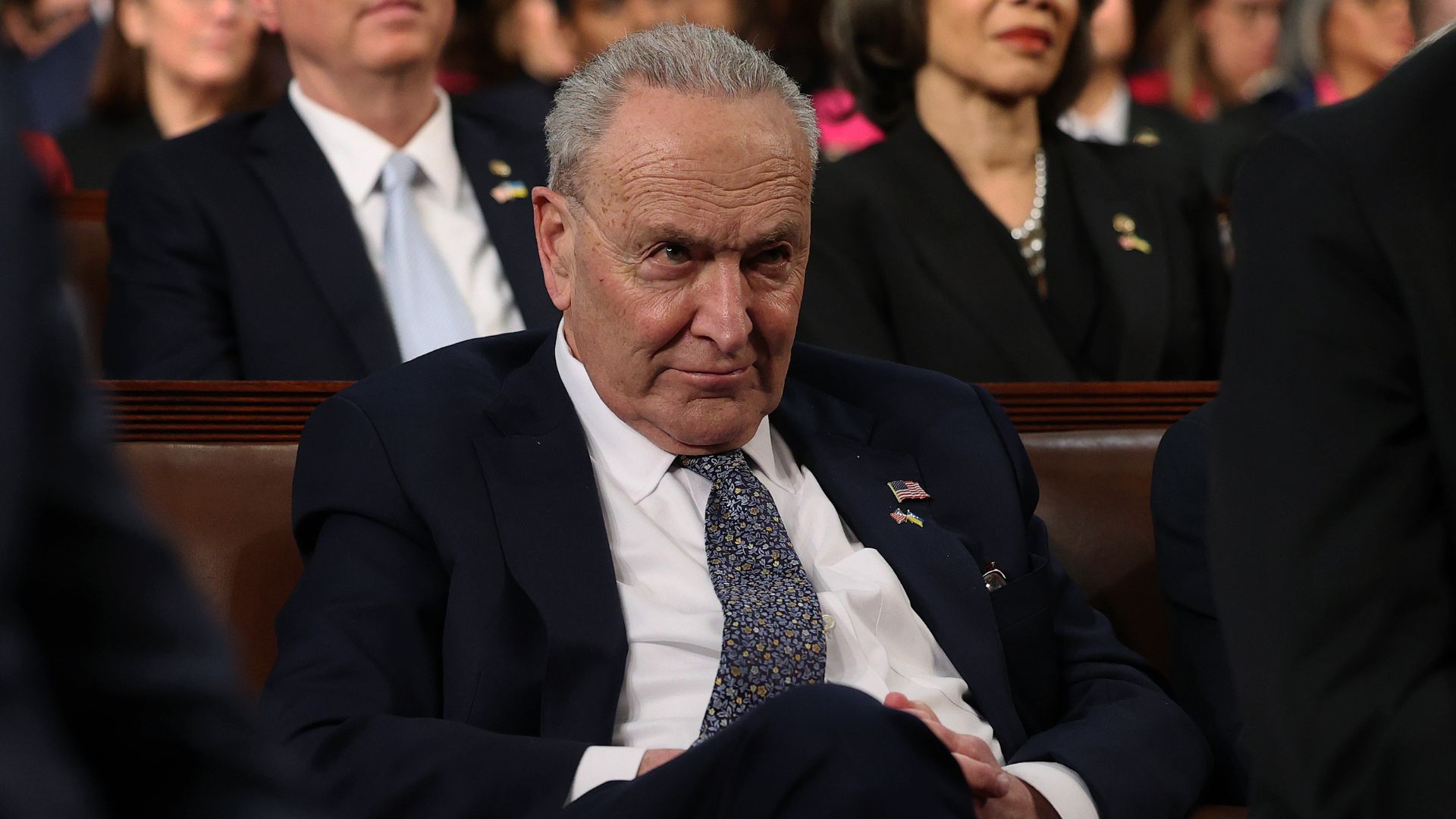
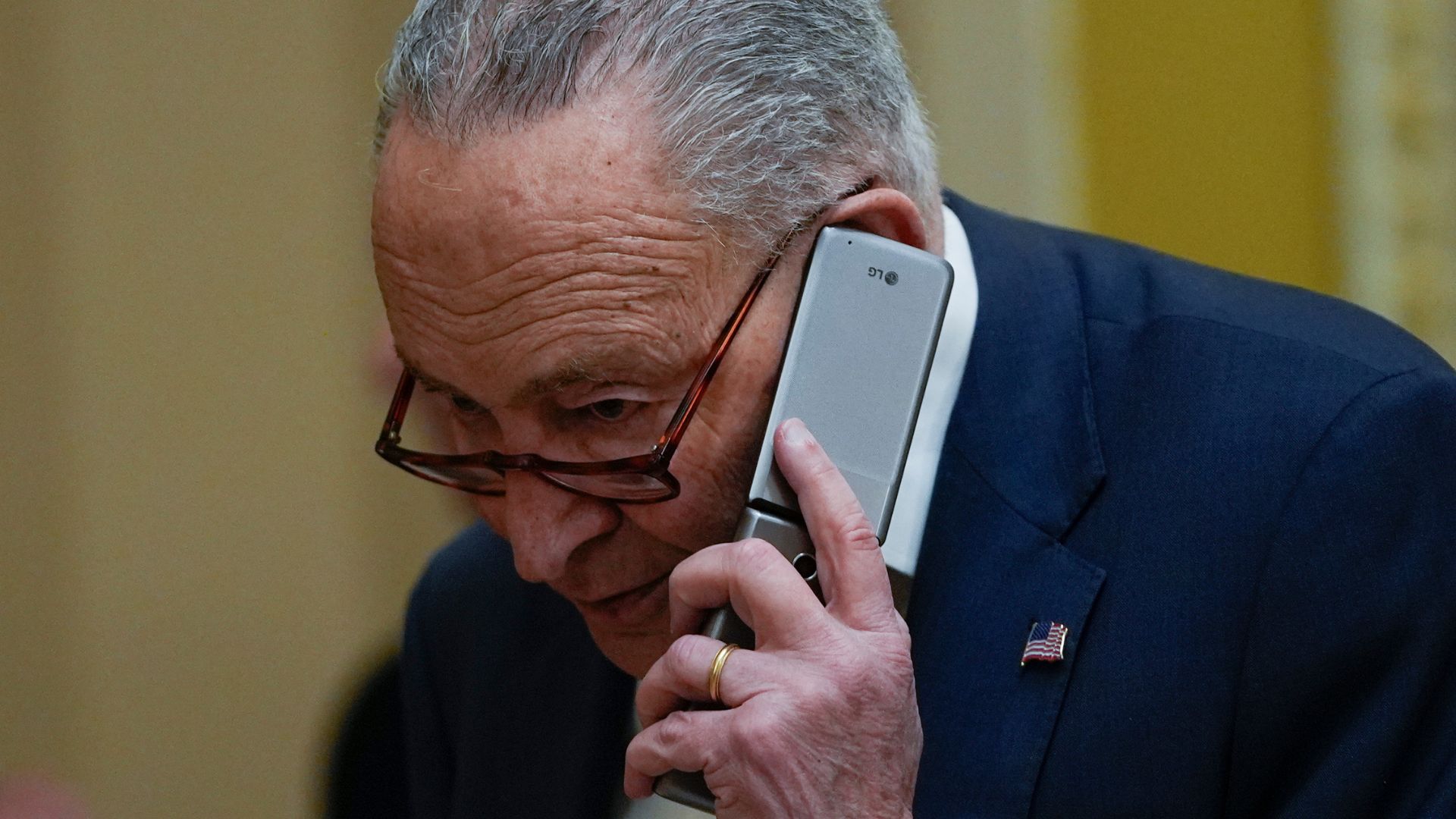
Despite a growing sense of fatigue across party lines, Senate Democrats led by Minority Leader Chuck Schumer, D-N.Y., refused to advance the House-passed resolution, holding firm to their demands for an agreement that includes an extension of expiring Obamacare subsidies.

During remarks on the Senate floor, Schumer blamed Republicans and President Donald Trump for rising healthcare costs that Americans are facing this year.

“The only plan Republicans have for healthcare seems to be to eliminate it, and then to tell working people to go figure it out on their own,” Schumer said.

“That’s not a healthcare plan. That’s cruel.”

While Schumer’s caucus remains largely united, signs of strain have emerged.

Nearly a dozen Senate Democrats met privately Monday to discuss possible exit strategies to end the standoff, reflecting growing concern among lawmakers about the impact of the prolonged shutdown.

Senate Majority Leader John Thune, R-S.D., said Republicans remain willing to negotiate but criticized Democrats for refusing to separate the healthcare issue from the effort to reopen the government.

“Republicans have offered multiple options, including guaranteeing a vote on the expiring subsidies, or whatever their Obamacare bill is, after the government reopens,” Thune said.

When asked if a deal was close, he replied, “I hope close.”

Thune acknowledged that both parties face increasing pressure as the shutdown drags on.

“The pressures, the cross pressures that everybody’s feeling, are great,” he said.

“But I think there are people who realize this has gone on long enough and that there’s been enough pain inflicted on the American people, and it’s time to end it.”

The current House-passed continuing resolution funds the government through November 21, but many lawmakers say that timeline is too short to complete the necessary appropriations work.

Some members are considering an amended version of the resolution to extend funding further, possibly into December or January, to allow time to finalize spending bills and avoid another closure.

Others have floated a smaller “minibus” spending package that could be paired with an extension.

Sen. Mike Rounds, R-S.D., who has participated in bipartisan negotiations since the shutdown began, said he remains hopeful that progress can be made.

“I don’t know, I hope so,” Rounds said when asked if the shutdown could end this week.

“Bottom line is they can stop all this with one vote and get back into it and get back to work on a bipartisan basis. Again, that’s what we’re hoping.”

Sen. Lisa Murkowski, R-Alaska, has also been active in bipartisan talks and presented a proposal to extend Obamacare subsidies for two years.

She noted that because insurers have already finalized rates for open enrollment, “it would be really, really hard to do any reforms right now.” Murkowski said her plan is one of several being discussed, focusing on adjustments to income thresholds and premium contributions.

“There’s no highly brand-new thing that anybody’s really talking about,” she said.

“It’s just what’s the right concoction?”

Several Senate Democrats, however, have expressed frustration with President Trump’s limited engagement in negotiations.

Trump has stated he will not meet with Schumer or House Minority Leader Hakeem Jeffries, D-N.Y., until the government reopens.

Over the weekend, the President urged Senate Republicans to eliminate the 60-vote filibuster rule, a proposal unlikely to gain traction.

“At no point since Oct. 1 has Donald Trump agreed to sit down with Democratic leaders,” Sen. Andy Kim, D-N.J., said.

“So, he can talk all he wants about the filibuster, but until he actually puts some skin in the game and sits down and talks to us, that is all meaningless to me. And I honestly don’t care about him pontificating this stuff on social media. Like, if he’s got time to tweet, he’s got time to just come and talk to us.”

With negotiations continuing and partisan divisions still deep, lawmakers from both sides acknowledge the need to find a solution soon to end the historic shutdown and restore government operations.

News

Wall Street Heading Out of New York City as Democratic Socialist Mamdani Wins Election

Several of the nation’s largest financial institutions have expanded their operations in Texas in recent years, marking a significant shift in the financial sector’s traditional concentration around New York City’s Wall Street.

The movement reflects a broader trend of businesses and workers relocating from high-tax states such as New York and California to regions with lower taxes and fewer regulatory constraints.

The influx began during the COVID-19 pandemic, when corporations sought to diversify their geographic presence and employees increasingly opted for states offering a lower cost of living and more favorable tax environments.

Texas, with its business-friendly climate and central location, has become a key destination for major banks and investment firms.

The New York City mayoral election of Zohran Mamdani could influence the next wave of corporate decisions.

Mamdani, who identifies as a democratic socialist, has proposed tax increases and expanded social programs that critics say could further drive businesses to move operations elsewhere.

Here is a look at several of the largest financial firms that have significantly increased their presence in Texas, particularly in the Dallas-Fort Worth metropolitan area, which has emerged as one of the state’s financial hubs.

Goldman Sachs

Goldman Sachs is constructing a new 800,000-square-foot campus in Dallas that will accommodate more than 5,000 employees once completed.

The firm currently employs about 4,500 workers in the Dallas-Fort Worth area, making the region its second-largest U.S. location after New York City, which has approximately 7,800 employees.

The Dallas campus will consolidate employees from across the company’s divisions, including investment banking, asset management, and consumer operations.

Construction is underway, with the facility expected to open in 2028 after the completion of the building, interiors, and relocation of personnel.

JPMorgan Chase

JPMorgan Chase, the largest bank in the United States, employs roughly 31,000 workers across Texas, including about 18,000 in the Dallas-Fort Worth area.

That figure surpasses the company’s 24,000 employees in New York City.

The firm’s largest Texas campus is in Plano, a Dallas suburb, where more than 12,000 of its employees are based.

The Dallas Chamber of Commerce lists JPMorgan Chase among the region’s top employers, noting that it employs more than 10,000 workers across the metroplex.

Wells Fargo

In late October, Wells Fargo officially opened its new 22-acre campus in the Dallas area, which includes two 10-story office towers designed to house 4,500 employees.

The company’s investment in the area reflects its growing commitment to Texas as a strategic operations center. The Dallas Chamber reports that Wells Fargo employs between 5,000 and 9,999 workers in the region.

Charles Schwab

Charles Schwab moved its corporate headquarters from California to Westlake, Texas, nearly five years ago, marking one of the most significant financial relocations to the state.

The firm’s decision coincided with a broader corporate migration out of California, where taxes and regulatory costs have driven companies to seek more business-friendly environments.

Schwab currently employs between 5,000 and 9,999 workers in the Dallas-Fort Worth area, according to data from the Dallas Chamber.

The Westlake campus serves as the company’s main operational and administrative hub.

Bank of America

Bank of America is constructing a new 30-story office tower in downtown Dallas as part of its plan to expand operations in the region.

While the company’s corporate headquarters will remain in Charlotte, North Carolina, the Dallas development will add to its growing presence in Texas.

The building is scheduled for completion in 2027.

The Dallas Chamber reports that Bank of America employs more than 10,000 people in the metro area, with additional offices spread across Houston and Austin.


As more financial firms expand or relocate to Texas, the state continues to position itself as a major center for banking, investment, and financial services.

The combination of a skilled workforce, favorable tax structure, and lower cost of operations has made Texas an increasingly attractive alternative to the nation’s traditional financial capitals.


Scroll to Top