News

News

Japan’s Prime Minister Resigns After Uproar Over African Migration Plan

Japan’s Prime Minister Shigeru Ishiba announced Sunday that he will step down following months of internal party pressure and public uproar over his government’s controversial “African Hometown” program.
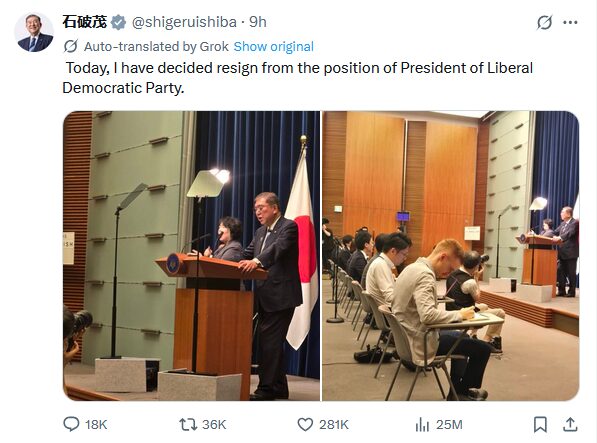
X Screenshot – Shigeru Ishiba

The decision comes as his ruling Liberal Democratic Party (LDP) faces falling poll numbers and rising criticism from both political opponents and the Japanese public.

Ishiba, 68, took office in October and has faced calls to resign for more than a month.

He argued that stepping down would create a political vacuum during a time when Japan is grappling with significant domestic and international challenges.

However, with the LDP scheduled to meet Monday to decide whether to hold an early leadership election, Ishiba’s announcement preempted what was widely viewed as a looming no-confidence vote.

The resignation follows mounting controversy surrounding the African Hometown program, which was promoted under the Japan International Cooperation Agency (JICA).

The initiative designated four Japanese cities—Kisarazu, Sanjo, Nagai, and Imabari—to partner with cities in Mozambique, Nigeria, Ghana, and Tanzania.

The program quickly sparked outrage after the Nigerian government announced that Japan would create “a special visa category for highly skilled, innovative, and talented young Nigerians who want to move to Kisarazu to live and work.”

Nigerian officials also said that “artisans and other blue-collar workers from Nigeria who are ready to upskill will also benefit from the special dispensation visa to work in Japan.”

The announcement set off a wave of anger among Japanese citizens, particularly in Kisarazu, where residents discovered that Google Maps had briefly labeled the city office as the “Nigerian city office.”

News of the Nigerian statement spread rapidly, leading residents in Sanjo, Nagai, and Imabari to flood their municipal offices with inquiries about the implications of the program.

Critics accused Ishiba’s administration of using the African Hometown program as a backdoor to introduce large-scale migration, a move many said contradicted longstanding government policies designed to limit immigration.

The controversy added fuel to Japan’s growing anti-immigration sentiment, which has been reflected in recent political gains by the right-wing Sanseito party.

The party campaigned on a “Japanese First” message and won significant victories in parliamentary elections earlier this year.

Japan has one of the fastest-shrinking populations in the world, with birth rates far below replacement levels.

The government has identified population decline as one of the most pressing crises facing the country, with projections showing significant impacts on the workforce and overall economic stability in the coming decades.

While some policymakers have argued that immigration is necessary to offset labor shortages, many in Japan remain opposed to policies that would significantly increase the number of foreign residents.

Ishiba’s resignation signals the end of a brief tenure that began less than a year ago.

His successor will inherit the dual challenges of managing Japan’s demographic decline while navigating public resistance to migration programs.

The LDP leadership election will determine the direction of the party and government as Japan faces growing domestic pressures and international scrutiny.

The controversy over the African Hometown program is expected to remain a central issue in the leadership race, as candidates seek to distance themselves from Ishiba’s policies and respond to voter demands for stricter immigration controls.


News

DHS Rips New York Times for “Disgusting” Sob Story on Deported Murderer

The Department of Homeland Security (DHS) criticized The New York Times this week for publishing a story it described as a “sob story” about a deported illegal alien convicted of murder, questioning why the paper ignored the victims of his crimes.

“The New York Times ran a sob story of Orville Etoria, an illegal alien from Jamaica and a convicted MURDERER,” DHS said in its news release.

“In addition to murder, this serial criminal’s rap sheet includes criminal possession of a weapon, armed robbery, and forcible theft with a deadly weapon.”

Etoria’s immigration case stretches back more than a decade. “Following his criminal convictions, Etoria’s green card was revoked,” the DHS release stated.

“Etoria was issued a final order of removal by an immigration judge in 2009. Sixteen years later, this dangerous individual is finally off our streets and out of the country thanks to President Trump and Secretary Noem. On July 17, he was deported.”

A DHS spokesperson asked, “Why does the New York Times continue to peddle sob stories of criminal illegal aliens? When will they finally shed light on their victims?” The agency added, “Every single day President Trump and Secretary Noem fight for justice for American victims of illegal alien crime and nearly every single day the media ignores these victims and their families.”

The New York Times article in question, published Tuesday and co-authored by reporters in Washington and South Africa, attempted to frame Etoria as someone who had rehabilitated after decades in prison.

The piece noted that he earned academic degrees while incarcerated and found work at a shelter after being granted parole in 2021.

However, the article acknowledged that Etoria had been convicted of murder for fatally shooting a man in the head in Brooklyn in 1996 and had a long history of violence and criminal activity.

Court records detailed in the article indicated Etoria struggled with drug abuse, mental illness, hallucinations, and paranoia, and that he had previously been arrested in 1981 on charges of attempted murder, robbery, and kidnapping.

He pleaded guilty in that case and served three years in prison.

The Times story reported that in the 1996 murder case, Etoria entered a leather goods shop and shot the victim three times in the head.

Prosecutors said the motive was never determined and that there was no indication the crime was gang-related.

Etoria claimed he had no memory of the attack because of drug use and hallucinations at the time.

Despite the severity of his criminal record, the article emphasized Etoria’s treatment following deportation to Eswatini, formerly known as Swaziland.

It highlighted complaints that he was not given an attorney and quoted a relative describing his deportation as “inhumane.”

DHS officials contrasted that narrative with the absence of commentary from the victims’ families.

They noted that Etoria’s violent history had left lasting harm on Americans and that his deportation closed a long-running case that should have been resolved years earlier.

According to DHS, the decision to deport Etoria fulfills a commitment to enforce immigration laws against individuals convicted of serious crimes.

Officials said the department will continue to prioritize removals of those who pose a threat to public safety.

The deportation of Orville Etoria underscores the administration’s policy of targeting convicted criminals for removal.

DHS said its focus remains on ensuring that American communities are protected from individuals with extensive records of violence.”

News

Jasmine Crockett: Not All Criminals Are Criminals

Rep. Jasmine Crockett (D-TX) said this week that poverty can drive people to commit certain crimes and suggested that not all offenses should result in prosecution if they involve basic survival needs.

Speaking on the Grounded podcast, Crockett, who previously worked as a public defender, drew a connection between economic hardship and criminal activity.

“There is a direct link between poverty and susceptibility to having to engage in certain things,” she said.

While acknowledging that not everyone in poverty resorts to crime, Crockett argued that financial circumstances often push individuals toward unlawful behavior.

“There are crimes that are committed, not because people are criminals, but because they literally are trying to survive,” she stated.

Crockett cited comments made by Dallas County District Attorney John Creuzot, who in the past indicated his office would not prosecute theft cases involving small amounts of essential goods such as food or diapers.

Crockett said Creuzot “probably shouldn’t have said it out loud,” but agreed with the underlying policy, adding that “there is no good point in doing it because a decent defense attorney would have a defense.”

Watch the cued-up clip here.

Her remarks add to a growing record of controversial statements on crime and politics.

On the same day the podcast episode was released, Crockett appeared on MSNBC and accused President Donald Trump of “unlawfully going into various minority controlled cities” with the National Guard.

The Texas congresswoman has also attracted attention for previous comments about political violence and Republican policies.

In July, she told The Atlantic that her large social media following made her the strongest choice to lead Democrats on the House Oversight Committee.

The position ultimately went to Rep. Robert Garcia (D-CA).

That same month, Crockett said in an interview that “all violence” in American politics comes from Trump supporters, despite multiple recent high-profile attacks linked to left-wing actors.

Earlier this year, Crockett clashed with Republicans in a committee hearing over legislation related to women’s sports.

During the exchange, she accused GOP lawmakers of pushing “demonic” policies in their efforts to keep men out of women’s athletics.

Crockett, first elected to Congress in 2022, has been promoted by several Democratic activists since her arrival in Washington.

In May, then-DNC vice chair David Hogg praised her publicly, saying she represented “the type of leader we’re looking to support.”

Her recent comments on poverty and crime add to an ongoing debate over prosecutorial discretion and how law enforcement should respond to thefts involving basic necessities.

Supporters of policies like those cited by Crockett argue that such measures prioritize limited resources and address root causes of crime.

Critics maintain that they risk excusing unlawful behavior and undermining enforcement of the law.

News

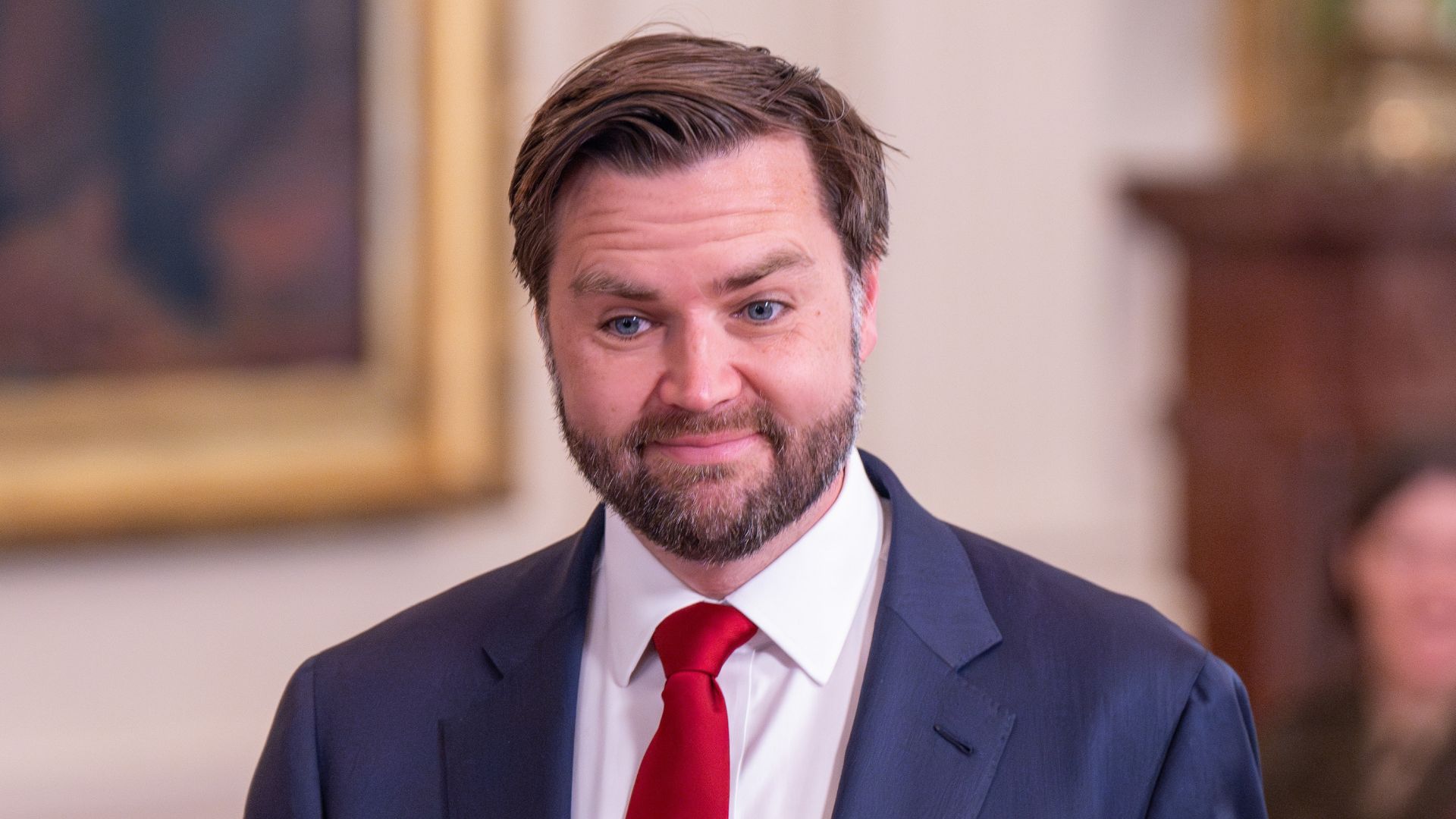
JD Vance Completely Cooks Liberal Troll Defending Drug Trafficking Cartel Members

Vice President J.D. Vance sparred with anti-Trump commentator Brian Krassenstein on Saturday after defending the U.S. military strike that killed 11 suspected narco-terrorists in the southern Caribbean.

The exchange began when Vance posted on X following the strike against a Venezuelan vessel allegedly carrying narcotics. “Killing cartel members who poison our fellow citizens is the highest and best use of our military,” Vance wrote.

His comment came after U.S. officials confirmed that 11 suspected members of the Venezuelan gang Tren de Aragua were killed during the operation on Tuesday.

Krassenstein, a frequent critic of the Trump administration, responded to Vance’s statement by accusing him of endorsing war crimes.

“Killing the citizens of another nation who are civilians without any due process is called a war crime,” Krassenstein wrote.

Vance rejected the criticism outright. “I don’t give a s— what you call it,” the vice president replied.

Krassenstein later escalated his remarks, claiming that Vance “should face impeachment,” over the tweet.

The dispute unfolded as the administration continued to highlight its campaign against international drug traffickers.

Secretary of War Pete Hegseth addressed the strike during an appearance on “Fox & Friends” Wednesday, framing it as part of a broader effort to defend U.S. interests in the hemisphere.

“It’s a new day. It’s a different day, and … this is an activity the United States is not going to tolerate in our hemisphere,” Hegseth said.

Hegseth emphasized that the operation targeted a “narco-terrorist organization” that has sought to transport drugs into the United States.

He said the strike delivered a decisive message that such activities would be met with force.

“It won’t stop with just this strike. Anyone else trafficking in those waters, who we know is a designated narco-terrorist, will face the same fate, and it’s important for the American people to protect our homeland and protect our hemisphere,” Hegseth stated.

President Donald Trump also weighed in after the strike, releasing footage of the fiery explosion. He praised the operation and said it should serve as a warning to drug traffickers attempting to target the United States.

The president underscored that no American forces were injured during the action.

Trump further confirmed that the strike took place within the U.S. Southern Command (SOUTHCOM) area of responsibility.

He said the suspected traffickers were in international waters transporting narcotics bound for the United States when the strike occurred.

The operation marks one of the latest moves in the administration’s efforts to confront cross-border drug trafficking networks, which officials have described as a direct threat to U.S. security.

The Tren de Aragua, the group targeted in Tuesday’s strike, has been linked by U.S. authorities to violent operations across South America and attempts to smuggle narcotics northward.

The clash between Vance and Krassenstein underscored the political divides over the administration’s tactics.

While officials defended the strike as a lawful and necessary response to international drug trafficking, critics continued to raise questions about the use of military force against foreign nationals in international waters.

For the administration, the operation was presented as part of a clear policy shift.

Hegseth and other officials framed it as a direct warning that future attempts to smuggle narcotics into the United States will be met with military action, reinforcing the administration’s message of deterrence against transnational criminal organizations.

News

Durham, NC, Takes “Sanctuary City” to the Next Level, Makes Move to Protect Illegal Aliens

Durham, North Carolina, has officially declared itself a “Fourth Amendment Workplace” after city leaders approved a measure aimed at restricting cooperation with U.S. Immigration and Customs Enforcement (ICE) and increasing protections for illegal immigrant workers.

The Durham City Council unanimously passed the resolution on Tuesday, according to The Duke Chronicle.

The measure directs city staff to “uphold the 4th Amendment at their workplace and city agencies and report back to Council any barriers to effective training on the 4th Amendment for any departments.”

The Fourth Amendment to the U.S. Constitution protects individuals against unreasonable searches and seizures and requires warrants supported by probable cause before an arrest or property seizure can take place.

Durham’s resolution states that the city has “historically pursued equity and safety for all residents,” and that trust between residents and local government is essential for city operations.

The measure emphasizes that fear of “unconstitutional seizure” has prevented migrants in the city from “safely engaging in public life, including pursuing employment and education.”

The action comes weeks after an incident at the Durham County Courthouse in July, when four plainclothes ICE agents arrived to detain an illegal immigrant who faced a felony domestic violence charge.

The individual never appeared for his scheduled court hearing, and no arrests were made, according to WRAL.

“Our residents witnessed ICE agents in our community, instilling widespread fear and uncertainty,” Durham Mayor Leo Williams said after the incident.

“While local leaders cannot legally override the federal government’s use and weaponization of ICE, we can and must stand in strategic solidarity with our neighbors.”

That same day, residents organized a demonstration outside the courthouse to protest ICE’s presence.

Durham County Board of Commissioners Chair Nida Allam participated in the protest, saying, “This is a direct threat to the safety and dignity of our communities. The Courthouse should be a place where people can seek justice, not where they’re hunted down by federal agents.”

During Tuesday’s council meeting, migrants and their families voiced support for the resolution, citing daily fears of enforcement actions.

Local activists and residents urged the council to expand training for city employees to enforce the new policy.

Elise Ballan, chair of the Durham Workers’ Rights Commission, argued that the resolution was necessary to counter what she described as the Trump administration’s immigration enforcement measures.

“Durham celebrates a rich diversity of residents, and we understand that the Trump administration’s mass deportation targets a completely manufactured panic surrounding immigrants, puts anyone who does not appear White, anyone who does not speak English or has an accent, anyone regardless of papers or immigration status, at risk of abuse, abduction and even deportation to [a] country they have no ties to,” Ballan said.

Durham is the second city in North Carolina to adopt such a policy, following Carrboro, which passed a similar “Fourth Amendment Workplace” measure in May.

Earlier this year, ICE conducted operations in Durham, arresting 11 individuals living illegally in the United States.

The arrests raised concerns among some residents about the safety of their families.

In April, the federal government accused Durham of functioning as a “sanctuary” city for allegedly refusing to cooperate with ICE.

Durham officials rejected the claim, stating the label had “no legal or factual basis.”

The resolution also comes against the backdrop of a statewide political battle over immigration enforcement.

In 2023, the North Carolina General Assembly overrode a veto by Democrat Gov. Josh Stein to enact a law requiring sheriffs to cooperate with federal immigration authorities.

Despite the state mandate, Durham leaders have maintained their opposition to cooperation with ICE.

Mayor Pro Tempore Mark Anthony Middleton reiterated that position at a candidate forum earlier this week, saying he would “never back collaboration” between Durham police and ICE, according to The Chronicle.

The new resolution reinforces Durham’s stance on immigration enforcement, setting up continued conflict between city officials, state lawmakers, and federal authorities.

News

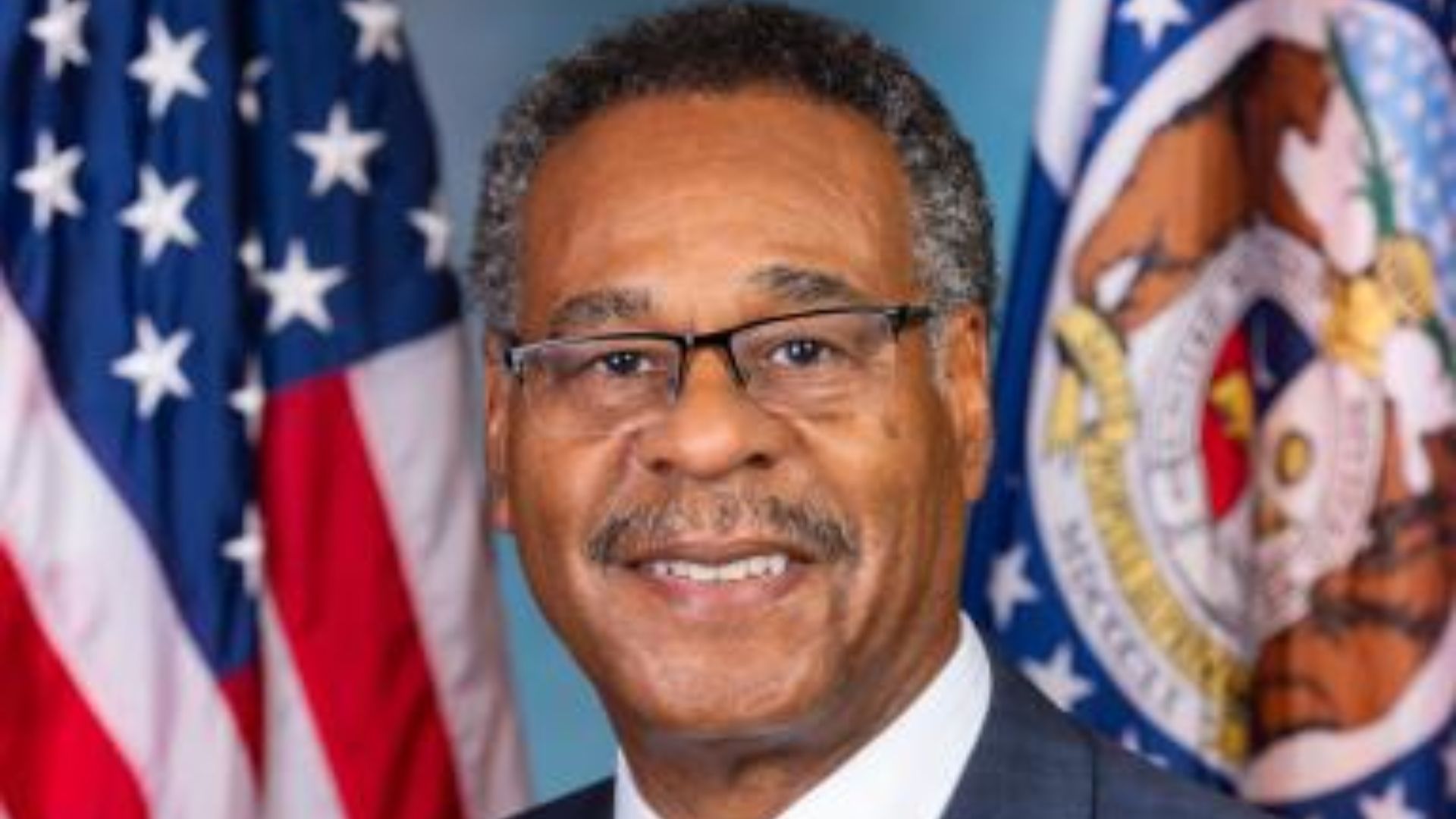
Eleven-Term Democrat’s Seat in Jeopardy as Missouri Redistricting Gets Heated

Missouri lawmakers opened a special legislative session this week to consider a new congressional map that could eliminate the seat of Democratic Rep. Emanuel Cleaver, who has represented the Kansas City area for more than two decades.

The proposal, pushed by the Republican majority, would shift Missouri’s congressional delegation from its current 6-2 GOP advantage to a 7-1 split.

Cleaver, an 11-term lawmaker, faces the greatest threat under the new lines, which carve portions of his Kansas City district into Republican-held areas.

On Thursday, the Missouri House special committee on redistricting approved the plan by a 10-4 party-line vote.

The bill would divide parts of Kansas City between the districts of Reps. Mark Alford (R-MO) and Sam Graves (R-MO), while also reshaping districts represented by Reps. Bob Onder (R-MO) and Ann Wagner (R-MO) in the St. Louis area.

The full House is expected to begin debate early next week.

President Donald Trump has endorsed the effort, calling it a chance for Missouri voters to elect another Republican.

“The tremendous opportunity to elect an additional MAGA Republican in the 2026 Midterm Elections,” Trump said in a statement.

Cleaver criticized the plan in an interview with Politico, describing it as “as stinky a plan as you could have.”

Speaking to KBIA, he argued that “someone over at the White House is seemingly committed to fomenting what I call national nastiness as a way of establishing a one-party rule in our country.… And I think it is very dangerous.”

The redistricting fight in Missouri mirrors efforts across the country, where both parties are attempting to secure advantages ahead of the 2026 midterm elections.

Texas Republicans recently enacted a map adding five GOP seats, while California Democrats are working on plans to counter with five new Democratic districts.

Democrats have warned that they cannot offset Republican gains if multiple red states adopt new maps.

Missouri Democrats, who hold a super-minority in the state legislature, acknowledge they have few tools to block the GOP’s proposal.

“We can’t do what Texas did,” Missouri House Minority Leader Ashley Aune told NBC News, referring to the 2021 walkout by Texas Democrats.

“There’s literally nothing procedurally, there’s nothing strategically that we can do as Democrats in the super minority to prevent these maps from passing.”

Doug Beck, Democratic leader in the state Senate, agreed.

“They can have session without us if we’re not there,” he told reporters.

Rep. Wesley Bell (D-MO), who won his seat after defeating Cori Bush in a primary, said the effort to remove Cleaver is deeply unfair.

“It’s disappointing because we’re seeing legislators picking their voters instead of voters picking their legislators,” Bell said.

He praised Cleaver as “a friend and an ally and a mentor” and added, “He served not only his state, but his country, with dignity and class and honor, and we’re going to fight in every way that we can because we know what they’re doing is wrong.”

Cleaver, a former Kansas City mayor, has represented Missouri’s 5th Congressional District since 2005.

His seat covers much of Kansas City and surrounding suburbs, long considered a Democratic stronghold.

Some Republicans expressed personal respect for Cleaver even while backing the redistricting plan.

Rep. Eric Burlison (R-MO) said, “There’s a lot of Democrats I don’t agree with whatsoever, and that I think should be removed. But I have a lot of healthy respect for Emanuel Cleaver.”

Others framed the fight as part of a broader national struggle over political maps.

“The Democrats have been playing this game for a very, very long time,” Sen. Eric Schmitt (R-MO) said.

“I’m glad Republicans are moving forward on redistricting in a way that comports with their own state constitutions. That’s what Missouri is doing.”

Schmitt argued that Democrats have already exhausted their opportunities to gain seats through redistricting.

“I think we’ve got a lot more to gain [nationwide] than they do, because they’ve already squeezed all the juice out of the lemon they can,” he said.

Rep. Alford added that Republicans intend to “advance the America First agenda, while providing top-notch service to ALL constituents no matter their political affiliations.”

He stressed that the redistricting effort was coordinated between Gov. Mike Kehoe, the legislature, and the White House.

Burlison, who has long supported a 7-1 GOP map, noted that the change was delayed by internal party disputes.

“The only reason why it didn’t happen [sooner] is because of politics,” he said.

“So it’s ironic now that here we are, four years later, and the people who were the key decision leaders, Republicans, back then that played politics and drew a 6-2 map, are having to eat crow and draw a 7-1 map.”

The Missouri House is expected to take up the redistricting bill in the coming days, with passage considered likely given the GOP’s supermajority.

If approved, the map would likely end Cleaver’s tenure in Congress, further strengthening Republican control of Missouri’s congressional delegation.

News

Communist Student Challenged to Live in Cuba, Venezuela, or North Korea

A recent episode of Jubilee Media’s “Surrounded” series has drawn attention after podcast host Patrick Bet-David confronted a student who openly expressed support for communism while dismissing the advantages of capitalism.

The debate-style program places one individual against a group of opposing voices.

In this episode, Bet-David, known for hosting the “PBD Podcast,” debated a group of self-identified socialists and communists.

Among them was a young woman named Allannah, whose arguments against capitalism and in favor of communism quickly gained traction online.

Early in the discussion, Bet-David attempted to ground the debate in economic comparisons.

He cited the gross domestic product (GDP) of North Korea versus South Korea to highlight the stark difference in prosperity between the two countries.

Allannah responded, “Are we judging countries based on GDP and not what they value for our humans…” before trailing off.

Bet-David countered, “If you lived in North Korea, you wouldn’t be able to do what you are doing right now. You wouldn’t have a voice.”

He again referenced GDP statistics, but Allannah shifted the focus, claiming South Korea’s economy is dominated by a handful of large corporations.

“…owned by like five companies, in total, the entire country. You think that’s something to live by? If you aren’t employed by the top five companies, you are practically unemployed in that country. I’m not going to be free in a country like South Korea, where I’m only employed in five companies, or no job,” she said.

Bet-David pressed further, asking if she valued the freedoms she was exercising in that moment.

“Do you like to be free where you can call somebody out like me? Do you like to be free, where you have a strong opinion? Do you like to be free to have your dreams…” he asked, before being interrupted again.

Allannah replied, “I like to be free, but that’s why I’m anti-capitalist, because capitalism removes that choice. There is no real incentive in capitalism because the incentive is survival. When you get into communism, the incentive is for the common good.”

As the debate continued, Bet-David made her an offer: he would pay the $2,350 fee to renounce her U.S. citizenship and cover the costs of a one-way trip to the communist country of her choice. He listed Cuba, Venezuela, and North Korea as options.

Allannah dismissed the suggestion, responding, “Those aren’t communist countries.”

The exchange highlighted a growing generational divide in how capitalism and communism are perceived.

While Bet-David emphasized freedoms and economic outcomes in capitalist nations, Allannah described communism as a system designed for the collective good, despite its historical associations with repression and economic hardship in the countries mentioned.

The debate concluded with the broader question of how younger Americans are being educated about economic systems and governance.

Bet-David’s exchange with Allannah drew significant online reaction, with many viewers pointing to it as an example of differing understandings of capitalism, communism, and the realities of life under each system.

The “Surrounded” series continues to generate debate by placing contrasting perspectives in direct conversation, with this episode standing out for its clash over ideologies that have defined much of the global political and economic landscape for the last century.

News

AZ Dem Rep Doubles Down on Representing Illegal Aliens, ‘Had to “Google” ‘Constituent’

Democratic Rep. Yassamin Ansari of Arizona is facing criticism after declaring that illegal immigrants held in Immigration and Customs Enforcement (ICE) custody are her “constituents.”

The freshman lawmaker made the remarks during a press conference Thursday and defended her position in comments to the Daily Caller News Foundation (DCNF).

Ansari, who represents a Phoenix-based district, said she considers all individuals living within her district to be her constituents regardless of immigration status.

“I didn’t realize this was such a controversy until the right-wing media started attacking me for using the word,” Ansari told reporters when asked about her comments.

“The definition of constituent is somebody who is part of a community. It doesn’t matter what their legal status is — if somebody is an asylum seeker, if somebody has a heart, if somebody is a U.S. citizen, if somebody lives in the community, I represent them.”

Ansari went further, stating that the ability to vote was not a factor in her definition.

“Constituent does not mean voter,” she continued.

“I don’t care if these, if none of these individuals can vote for me. I don’t give a shit.”

Her remarks came as she has drawn attention for her advocacy on behalf of Kilmar Abrego Garcia, an El Salvador national and reputed MS-13 member facing human trafficking charges in Tennessee. Ansari has joined several Democratic lawmakers in urging his release.

In April, she traveled with Democratic Reps. Robert Garcia of California, Maxine Dexter of Oregon, and Maxwell Frost of Florida to push for Abrego Garcia’s release from custody.

Republican lawmakers quickly pushed back on Ansari’s statements.

Rep. Pat Harrigan of North Carolina criticized her comments in a post on X Thursday afternoon.

“A Member of Congress who brags she had to ‘Google’ the word constituent has no business writing laws,” Harrigan wrote.

“Constituents are hardworking American citizens, the people who elect you. Not illegal aliens. Not asylum shoppers.”

Harrigan continued, saying Ansari’s own comments revealed her priorities.

“When you say ‘I don’t care if they can’t vote for me,’ you admit it. You don’t represent Americans, you represent everyone but them,” he said.

Ansari is not the only Democrat to refer to illegal immigrants as “constituents.”

In July, Rep. Sarah Elfreth of Maryland used the same term while participating in a sit-in at a Baltimore ICE facility.

The controversy surrounding Ansari’s remarks comes as polls show immigration remains a key issue for voters.

An August Wall Street Journal survey found that voters trust Republicans over Democrats to handle immigration by a 17-point margin.

Questions remain about the scope of Ansari’s definition of “constituent.”

The DCNF reported that her office did not respond to a request for clarification on whether the congresswoman also includes illegal immigrants with criminal records in her definition.

The debate adds to growing divisions in Congress over immigration policy, enforcement, and representation.

Ansari has continued to defend her remarks, while Republican lawmakers argue her comments highlight a broader disconnect between Democratic leaders and American voters.

News

Newark Dem Mayor’s Senior Aide Pleads Guilty in Pay-to-Play Corruption Scheme

A senior aide to Newark Mayor Ras Baraka has pled guilty to conspiracy to commit honest services fraud in connection with a pay-to-play corruption scheme, federal prosecutors announced this week.

The aide admitted to participating in a scheme that exchanged government favors for bribes, a violation carrying a maximum penalty of 20 years in prison and a $250,000 fine.

Acting U.S. Attorney for the District of New Jersey Alina Habba released a statement on X confirming the plea and stressing her office’s stance against public corruption.

“Today a former Senior Aide to the Mayor of Newark plead guilty to conspiracy to commit honest services fraud,” Habba stated.

She added, “This is a clear example of a pay-to-play scheme, where public officials exploit their positions of power to obtain bribes in exchange for doing their jobs. This betrays the trust of the very community members they claim to serve. I will not stand for public corruption anywhere in New Jersey. These charges have a maximum penalty of 20 years in prison and a $250,000 fine. This is what accountability looks like — and I will continue to fight for the people of New Jersey.”

The case adds to the scrutiny surrounding Newark’s leadership after Mayor Baraka himself was arrested last month for trespassing at Delaney Hall, an Immigration and Customs Enforcement detention facility.

According to authorities, Baraka entered the facility without authorization in what was described as a political demonstration.

He was charged with criminal trespass, though the misdemeanor case was later dropped by Habba’s office.

Instead of letting the matter end there, Baraka filed a lawsuit against Acting U.S. Attorney Habba and Homeland Security Special Agent Ricky Patel.

In a 17-page complaint, Baraka alleged false arrest and malicious prosecution. The lawsuit characterized Habba as a “political operative,” language that drew criticism from federal officials.

Habba responded to the lawsuit directly, urging the mayor to turn his focus to public safety.

“My advice to the mayor – feel free to join me in prioritizing violent crime and public safety. Far better use of time for the great citizens of New Jersey,” Habba said.

The guilty plea by Baraka’s aide underscores a growing wave of corruption cases being pursued in the state.

Federal investigators have made clear that they will continue to target public officials who use their positions for personal gain.

The court has not yet set a sentencing date for the aide, but the individual faces the possibility of significant prison time if the maximum penalties are imposed.

Mayor Baraka has not been charged in the aide’s case and continues to serve as mayor of Newark while pursuing his lawsuit against federal officials.

The outcome of that lawsuit remains pending.

Federal prosecutors in New Jersey have reiterated that their priority is ensuring accountability at all levels of government, emphasizing that public service must not be abused for private benefit.

The aide’s guilty plea marks the latest development in a series of high-profile cases focused on rooting out corruption among elected officials and their staff in the state.

News

Florida AG Subpoenas Employer of Illegal Alien Trucker After Deadly Crash

Florida Attorney General James Uthmeier announced Thursday that his office will issue both civil and criminal subpoenas to the employer of Harjinder Singh, a truck driver accused of causing a crash that left three people dead on the Florida Turnpike in Fort Pierce.

Authorities said the incident occurred on August 12 when Singh, while operating a commercial tractor-trailer, attempted to make a U-turn in an unauthorized area.

The trailer jackknifed and was struck by a minivan, resulting in the deaths of all three people inside the vehicle. Singh was later charged with three counts of vehicular homicide.

Investigators stated that Singh had entered the United States illegally in 2018 by crossing the U.S.-Mexico border.

He later obtained a commercial driver’s license (CDL) in California, despite not being proficient in English.

Uthmeier emphasized that Singh’s lack of language skills and driving qualifications were critical factors that raised concerns about how he was licensed.

“This guy did not know how to speak English. He could not read road signs. He never should have received that CDL license in the first place,” Uthmeier said during a press conference.

“Not only was he illegally here in the country, but he also did not have the competency, the skillset. There’s no way he went through the proper training in order to get this license.”

Singh was arrested in Stockton, California, and extradited to Florida to face the charges.

Following his arrest, Immigration and Customs Enforcement (ICE) issued a detainer in August, ensuring he remains in custody while legal proceedings move forward.

The Attorney General identified Singh’s employer as White Hawk Carriers.

Uthmeier said his office is pursuing subpoenas to hold the company accountable for its role in hiring Singh.

“We’re gonna use every tool, every legal tool at our disposal to fight back and protect our citizens. So today we’ll be issuing these subpoenas against the employer of this individual,” Uthmeier stated.

In addition to targeting the employer, Uthmeier said his office has sent legal demands to both California and Washington for records related to Singh’s licensing.

“We want to get as much information as possible in how this individual obtained these licenses,” he explained.

The case has drawn attention to California’s 2013 law allowing residents to obtain driver’s licenses regardless of immigration status.

That legislation has been cited by critics as a contributing factor to the current situation, as Singh was able to secure a CDL despite being in the country illegally.

Officials reiterated that Singh’s actions on the Florida Turnpike not only violated traffic laws but also resulted in the deaths of three individuals whose names have not yet been released.

The Florida Highway Patrol continues to investigate the details of the crash.

Singh remains in custody in Florida pending trial.

The Attorney General’s office has not yet released further details on the subpoenas issued to White Hawk Carriers, but Uthmeier made clear that the state intends to hold all responsible parties accountable for the events leading to the deadly collision.


Scroll to Top