News

News

Trump Torches Italian PM Giorgia Meloni After Her Meltdown Over Photo Snub [WATCH]

President Donald Trump is once again proving that when it comes to dealing with fair weather friends, he does not hold back.

The Commander in Chief ignited an international firestorm this weekend after blasting Italian Prime Minister Giorgia Meloni for her behavior during and after the G7 meeting.

Trump revealed that Meloni had “asked, over and over, for a picture” with him, and then turned around to attack him publicly when the request did not go as planned.

According to Trump, Meloni’s troubles at home are the real reason for her sudden outburst.

Her popularity in Italy has plummeted, and Trump suggested that her refusal to stand with the United States in its confrontation with Iran exposed her weakness.

In his trademark Truth Social post, Trump reminded everyone that America contributes hundreds of billions of dollars every year to defend countries like Italy through NATO, yet Meloni and other European leaders refused even minimal cooperation when called upon.

“She is doing poorly in Italy with her level of popularity, possibly because she turned down the United States of America,” Trump stated.

The President’s post carried the same blunt tone that his supporters have come to expect, declaring that after the U.S. defeated Iran militarily, “she wants to be friends again in order to get her numbers up. No thanks!”

The skirmish began after Meloni recorded a fiery video Friday claiming Trump’s comments were false and “completely invented.”

She seemed visibly angry that Trump told an Italian outlet she had “begged” him for a photograph during the G7 summit.

Meloni insisted that “neither I nor Italy ever beg,” attempting to reclaim her dignity online, though her response only amplified the story worldwide.

“What a shame,” she added in the tense message. “It is not the first time the President of the United States behaves this way with his allies.”

She accused Trump of showing more flexibility toward America’s “enemies” than its friends, an accusation that fell flat given her own refusal to help the U.S. stand up to Iran’s aggressive nuclear program.

WATCH:


Trump’s team and MAGA supporters were quick to dismiss Meloni’s outburst as the tantrum of a leader who suddenly realized just how badly she misjudged the President.

During his time on the world stage, Trump consistently demanded that NATO allies shoulder more of their own defense expenses and follow through on commitments.

When politely asking did not work, he resorted to public shaming that proved remarkably effective in getting results.

The latest spat is reminiscent of Trump’s past clashes with European leaders who preferred photo ops and panel discussions over real military action.

Meloni’s request for a personal picture with Trump seems to have been exactly the type of superficial gesture he has long criticized.

When he declined to play along, her reaction looked like classic political theater.

Trump reportedly told the Italian interviewer, “She’s probably happy I talked to her. I didn’t have to talk to her. She begged me to take a picture with her.”

Whether she begged or not, the damage to Meloni’s public image was done.

Her furious denial only served to validate Trump’s claim in the eyes of millions of skeptical viewers who have watched this script before whenever a global figure becomes offended that Donald Trump refuses to play politics as usual.

Italy’s Deputy Prime Minister Antonio Tajani poured a bit of fuel on the fire by labeling Trump’s remarks “serious and offensive” and abruptly canceling a scheduled trip to the United States.

To most Americans, however, the decision just confirmed that the Italian government is more preoccupied with bruised egos than practical alliances.

Trump’s team, unsurprisingly, shrugged it off as irrelevant.

Critics of NATO and its perpetual underperformance point out that Trump’s frustration with European partners has been both consistent and justified.

When American soldiers face danger and sacrifice on behalf of others, it is entirely reasonable to expect solidarity in return.

Trump, unlike career politicians, has been willing to call out betrayal openly even if it upsets fragile feelings abroad.

The political class in Europe may find Trump’s bluntness distasteful, but millions of Americans find it refreshing.

It cuts through the carefully curated diplomacy that too often allows allied nations to freeload on U.S. strength while complaining about American power.

For Meloni, her outburst might play well to an Italian press desperate to pin her government’s domestic problems on someone else, but to Trump’s supporters, it merely confirms that their candidate still knows how to expose weakness when he sees it.

In the end, the episode reflects the continuing divide between world leaders who pretend diplomacy is about smiling for cameras and those who treat alliances as matters of national interest.

Trump made clear which side he is on.

Giorgia Meloni may not appreciate his refusal to engage in polite fiction, but Trump’s message could not be more direct: the days of America being taken for granted are over.

For Meloni, that means no photo, no photo op friendship, and absolutely no thanks.

News

FBI Captures Fugitive Behind 1.2 Billion Dollar Medicare Fraud Scheme [WATCH]

A notorious American fugitive wanted for one of the largest Medicare fraud cases in history has finally been captured.

Authorities confirmed that Herbert Leon Kimble, age 60, who managed to dodge law enforcement for almost two years, was arrested in the Philippines and is now in custody awaiting extradition to the United States.

Kimble, who prosecutors say masterminded a staggering 1.2 billion dollar fraud operation, had been on the FBI’s Most Wanted list for crimes involving healthcare fraud, conspiracy, and money laundering.

The arrest marks a significant victory for federal investigators who have spent years tracking down those who exploit the nation’s healthcare programs for personal gain.

For years, Kimble allegedly used a complex web of shell companies to siphon off massive sums from Medicare through fake claims, inflated prices, and nonexistent medical services.

Investigators believe he funneled millions of taxpayer dollars out of the country while living a life of luxury abroad.

It is the kind of corruption that thrives when bureaucratic systems invite waste and abuse without proper oversight.

The FBI confirmed that Kimble’s capture came after close cooperation between U.S. law enforcement and Philippine authorities.

Details of his movements suggest he had been living under false identities and moving from one remote area to another, hoping to avoid detection.

Investigators say he may have been receiving help from accomplices who provided him shelter and financial resources to remain hidden.

His arrest brings closure to an extensive international pursuit and serves as a warning to other fugitives who believe they can outrun the long arm of American justice.

“We will continue to pursue every lead and every fugitive who steals from the American people,” an FBI spokesperson stated following the arrest.

The massive fraud scheme highlights the ongoing vulnerability of large government programs like Medicare.

While Washington politicians love to talk about “expanding access” to federal healthcare systems, the Kimble case reminds taxpayers that these programs remain ripe targets for fraudsters who exploit unreliable oversight and political neglect.

According to court filings, Kimble and his conspirators submitted thousands of fraudulent claims for medical equipment and services that were never actually delivered or performed.

The result was an enormous windfall of stolen taxpayer dollars that funded lavish lifestyles while patients went untreated and honest healthcare providers struggled under layers of red tape.

This arrest is being hailed by agents as one of the biggest Medicare fraud takedowns in recent memory.

While Kimble’s capture is a step in the right direction, it also highlights how easily abuse can occur in bloated government operations where accountability takes a back seat to bureaucracy.

Conservative watchdogs have been warning for years that massive entitlement programs like Medicare are ripe for corruption and inefficiency, and sadly this case proves them right.

The Medicare system, originally designed to support America’s most vulnerable citizens, now faces rampant abuse that drains funds from those who truly need help.

Critics argue that this kind of large-scale fraud is not just an economic issue but a moral one.

Stealing from taxpayers and patients alike represents the worst kind of exploitation.

It reflects a growing culture of entitlement among criminal enterprises that thrive under government complacency.

The case also raises questions about how many more fraudsters may be hiding abroad, enjoying stolen American tax dollars.

The FBI continues to track multiple fugitives linked to healthcare-related crimes, and officials hope Kimble’s capture will send a message to those thinking they can escape justice.

Federal agents have expressed confidence that Kimble will soon be extradited back to the United States where he faces lengthy prison time and restitution orders.

While his arrest closes one chapter, it exposes the ongoing need for structural reform in the way Medicare fraud is detected and prosecuted.

For now, taxpayers can at least breathe a sigh of relief knowing that another criminal who profited at their expense is finally off the streets.

The capture of Herbert Leon Kimble should stand as both a triumph for law enforcement and a wake-up call for Washington lawmakers who prefer to throw money at problems instead of fixing them.

The message is clear: when government lacks accountability, criminals thrive.

News

Iran Threatens Strait of Hormuz Shutdown as U.S. Calls Bluff and Oil Flow Soars [WATCH]

Iran’s Revolutionary Guard Corps kicked up global tensions once again after claiming over the weekend that it had shut down the Strait of Hormuz.

The announcement came even as the U.S. Central Command confirmed that ship traffic and oil movement through the critical waterway had actually surged, contradicting Tehran’s bluster.

According to CENTCOM, roughly 55 merchant vessels navigated safely through the strait on Saturday, carrying billions of barrels of oil and other goods.

The American assessment painted a very different picture from that of the Iranian regime, which continues to posture and issue empty threats meant to score political points back home and intimidate the West.

“U.S. forces remain present and vigilant to ensure all aspects of the agreement with Iran are adhered to, obeyed, and in full force and effect,” CENTCOM stated, referring to the recently signed Memorandum of Understanding between Washington and Tehran.

The memo promised the reopening of the strait in exchange for the U.S. lifting certain port restrictions that had crippled Iran’s export capabilities.

Hours before that update, Iranian state media declared the strategic corridor closed, naming the move a response to renewed fighting in Lebanon between Israel and the Iran-backed terror group Hezbollah.

The supposed closure, according to the IRGC, was punishment for what it claimed were “enemy breaches of promises.”

“It is hereby announced that the Strait of Hormuz will be closed to vessel traffic,” an IRGC spokesman warned.

The message continued with threats to “take further steps” if the confrontation escalated, a routine line that the regime uses whenever its influence begins to wane or internal problems surface.

Even with that attempt at intimidation, U.S. officials and shipping data confirmed that traffic continued largely unhindered.

WATCH:

On Thursday alone, 25 commercial ships passed through the waterway, marking a record since April but still well below prewar averages of 120 ships.

The movement continued into Friday, right up to the point when fighting flared again in Lebanon.

The IRGC’s Friday afternoon warning to mariners claimed that U.S. forces had violated Wednesday’s agreement between President Trump and Iranian President Masoud Pezeshkian.

Still, the ships kept sailing, showing once again that when Tehran rattles its sabers, the world often shrugs and keeps business moving.

In Lebanon, the situation grew worse as Israeli airstrikes targeted Hezbollah installations following incoming projectiles from the terror group.

Lebanese Civil Defense said at least 16 people were killed, including women and children.

Israel later reported that four of its soldiers were killed and five others wounded in attacks by Hezbollah fighters in southern Lebanon.

The U.S. played a key role in brokering the fragile cease-fire between Israel and Hezbollah, though that truce appears to be in jeopardy.

President Trump said he told Prime Minister Benjamin Netanyahu to hold the line and use restraint.

“You just gotta calm down sometimes and use your head,” Trump told NBC News, emphasizing that diplomacy was still the preferred route, at least for now.

The new understanding between Trump and Iran called for reopening the strait, which had been closed since February, in exchange for lifting the U.S. blockade on Iranian ports.

The deal was viewed by critics as risky, but the Trump team argues it has put America squarely in control of the situation.

Vice President JD Vance, speaking on Fox & Friends, brushed aside Iran’s threats. “We actually got 16 million barrels of oil out of the Strait of Hormuz yesterday. That is a record,” Vance said confidently. “So you’re seeing those ships move.”

His remarks echoed the administration’s stance that Tehran’s declarations are more for local consumption than actual military policy.

Vance confirmed that U.S. envoy Steve Witkoff and Trump’s son-in-law Jared Kushner were stationed in Switzerland, leading talks with Iranian Foreign Minister Abbas Araqchi.

The next phase of negotiations is expected to begin soon in Geneva as both sides navigate the terms of this new regional framework.

WATCH:

Pakistani Interior Minister Mohsin Naqvi and Qatar’s Prime Minister Mohammed Bin Abdul Rahman al Thani, who has long acted as a go-between, were also reportedly at the talks in Switzerland.

The Swiss foreign ministry described the serene Burgenstock resort above Lake Lucerne as a “discreet and reliable setting” for sensitive diplomacy.

Back in the United States, President Trump used Truth Social to remind his critics what leadership actually looks like. He blasted the “radical Left fools and Dumocrats” and ripped into Barack “Obuma” and “Sleepy Joe Biden” for decades of weakness toward Iran.

With trademark humor and bluntness, Trump wrote, “Iran got away with murder for 47 years, until I came along. Then it all changed.”

The spectacle over the Strait of Hormuz may turn out to be more talk than action from Tehran, but the episode emphasizes a familiar pattern.

The Iranian regime blusters, Israel defends itself, and the United States ends up managing the fallout.

For now, CENTCOM’s message is clear, ships are moving, oil is flowing, and America is watching every inch of that waterway.

News

Sheriff Sounds Off: Democrat Immigration Policies Nearly Turned UFC 250 Into a War Zone [WATCH]

A Nebraska sheriff has revealed chilling details about the so called mastermind behind a terror plot targeting the White House.

The suspect, Abraham Alvarez, should never have been in the United States.

Yet thanks to a well-known loophole in the Obama and Biden-era DACA program, he remained shielded from deportation until his arrest.

Sheriff Aaron Hanson spoke frankly on Fox and Friends, saying “Alvarez never should have been here to begin with.”

According to Hanson, the man originally entered the country with a temporary visa in 2001 and overstayed it.

Rather than being removed, he benefited from President Barack Obama’s Deferred Action for Childhood Arrivals plan, the same program conservatives have long warned was ripe for abuse.

Investigators say Alvarez, using the online alias “Shepard,” built an elaborate scheme involving drones rigged with explosives and trained sniper teams that could have created mass casualties.

Authorities report that one drone was already armed with explosives and another was in progress.

Federal agents also discovered a safe house Alvarez had prepared inside an abandoned Nebraska church.

It is chilling to realize how far this individual got while staying under legal protection from deportation.

In 2014, the DACA program shielded him from removal and effectively granted him a free pass to remain, despite his expired visa.

The result, according to Sheriff Hanson, was a direct threat to the safety of every American.

During President Donald Trump’s first term, his administration sought to dismantle DACA, calling it unconstitutional.

But federal courts blocked that effort, keeping the program alive.

When Joe Biden took office, he doubled down, expanding protections and promising that no DACA recipient would be deported.

WATCH:

That decision, critics say, has made America less secure by keeping dangerous individuals inside the country.

The failed attack plan has reignited concerns over Biden’s open border and lenient immigration policies.

Conservative lawmakers are pointing to Alvarez’s case as Exhibit A for what happens when ideology trumps national security.

They argue that Democrats’ obsession with political correctness has blinded them to the real dangers of unrestricted immigration.

Alvarez was not operating alone. Four others have been charged as co conspirators, facing serious federal charges of conspiracy to commit murder and conspiracy to commit violence on White House grounds.

Authorities believe the group intended to target the White House during a public event that would have drawn thousands of spectators.

Thankfully, the plan was interrupted before they could act.

WATCH:

Federal officials have continued to downplay the immigration angle in public briefings, focusing instead on the technical details of the plot.

That omission has not gone unnoticed.

Conservative analysts say it is one more example of the administration trying to bury anything that reflects poorly on its immigration record.

The fact remains that Alvarez’s ability to remain in this country was a direct result of left wing immigration leniency.

This episode serves as yet another reminder that national security and border control are inseparable.

When policy makers choose politics over safety, they gamble with American lives.

The border crisis is no longer a problem isolated to Texas or Arizona.

It is a nationwide security threat that reaches right into the heart of the country, as Nebraska has now learned firsthand.

Had Trump’s efforts to wind down DACA not been blocked, Alvarez would have been deported years ago, long before he could assemble a cache of explosives.

Instead, the Biden administration’s policies have kept the door open for countless others who may not have America’s best interests at heart.

The White House has refused to comment on the security failure, though officials have quietly emphasized that DACA recipients undergo background checks.

Conservatives find that claim laughable after this incident.

If Alvarez slipped through with such ease, what confidence can anyone have in those so called vetting procedures?

Sheriff Hanson has warned that his community and others like it remain vulnerable.

“We cannot protect our nation if we keep inviting danger into our neighborhoods,” he said.

His words echo the frustrations of countless Americans who feel Washington’s priorities have been reversed, putting foreign nationals ahead of citizens.

This latest revelation adds urgency to Republican efforts to reestablish enforcement first immigration policies.

Until lawmakers restore serious border control and end programs that protect illegal residents, America’s safety remains at risk.

A terror plot from the heartland should be the final wake up call.

News

Fauci Begged Biden for His Pardon Just Hours Before Trump’s Inauguration on January 20th [WATCH]

It seems the smoke swirling around Dr. Anthony Fauci just keeps getting thicker.

Every time the former government health czar slips out of sight, another revelation pops up about his questionable decisions, his political maneuvering, or his desperate attempts to protect himself from accountability.

The latest twist came from a bombshell conversation shared by independent journalist Nick Shirley, who claims Fauci was frantically seeking a presidential pardon on the very morning Joe Biden shuffled out of the White House.

According to Shirley’s interview with Pardon Attorney Edward R. Martin Jr., Fauci’s lawyers were emailing feverishly to ensure their client secured official forgiveness before Donald Trump could return to power.

That is quite the image for the man once portrayed as America’s scientific hero.

By Inauguration Day morning, Fauci and his legal team reportedly had their eyes locked on one goal: getting that pardon signed, sealed, and safely accepted.

Martin confirmed that the pardons were being pumped out by autopen rather than Joe Biden himself.

He explained that, legally speaking, the presidential pardon power is near absolute.

The Constitution grants it without need for procedure or justification.

In other words, Biden or his staff could push through a pardon for anyone they pleased, with or without the President actually lifting a pen.

The troubling part, Martin noted, was that all these last minute pardons were robotic signatures, not real ink.

WATCH:

That revelation raises a glaring question: did Joe Biden even know what was being pushed through under his name in those final chaotic hours?

Given the state of his administration, that may not surprise anyone.

Several reports have already made it clear Biden often left critical decisions to faceless staffers.

Using an autopen for something as serious as presidential pardons takes that problem to an entirely new level.

The credibility issue here is obvious.

Traditionally, autopen signatures are used for ceremonial certificates or mass letters of congratulations.

They are not typically seen on legally binding executive actions.

Attorneys familiar with pardon procedures have said that such robotic signatures could create a gray area about their legitimacy, though courts are unlikely to challenge them due to the broad constitutional scope of the pardon power.

For Fauci, that gray area might have been the only path to peace of mind.

Martin stated that Fauci’s lawyers sent their acceptance almost immediately after the pardon was issued.

Under American law, a pardon must be formally accepted to take legal effect.

That small action, hastily signing off in the early hours of January 20, suggests deep anxiety about what could come next.

It looks very much like Fauci and his team feared that a returning Trump administration would waste no time putting the pandemic architect under a microscope.

The optics here are devastating for a man who spent years demanding trust as the supposed voice of science.

From funding questionable research overseas to dodging blame for the policies that crippled small businesses and divided families, Fauci’s record has already been battered.

This newly revealed panic over a pardon only deepens doubts about his integrity and the honesty of the bureaucratic machine that sheltered him.

Tulsi Gabbard, who recently stepped down as Director of National Intelligence, had already stated that Fauci played a central role in covering up information about the origins of COVID and the dangerous research that led to it.

Gabbard said her goal was to push for transparency, even as evidence continued to surface showing how select agencies and officials worked to bury inconvenient facts.

Her statements now seem even more potent given that Fauci was allegedly racing to collect a pardon behind closed doors.

WATCH:

There is another level of irony here.

Democrats spent years preaching about accountability and “protecting democracy,” yet when one of their own faced questions about ethics, the system appeared to warp itself into a shield.

If confirmed, Biden’s pardon for Fauci could become one of the more damaging symbols of quiet Washington corruption, a reminder that insider privilege remains alive and well under the pretense of public service.

Legally, there may be no undoing what was done. Presidential pardons, validly accepted, are as final as it gets.

Unless Biden somehow steps forward to disown them, which seems laughably unlikely, they stand.

But even if the piece of paper holds legal protection, no pardon can erase the stench of panic from this story.

The image of Fauci’s legal team scrambling on Inauguration morning does more damage to his reputation than any congressional hearing ever could.

For ordinary Americans who endured lockdowns, censorship, and economic fallout under Fauci’s guidance, learning that he might have asked for preemptive forgiveness is a gut punch.

It reinforces what many suspected all along: the so-called experts never played by the same rules as the people they lectured.

They guarded their power, bent the truth, and when the walls began to close in, they begged for political salvation.

And through it all, Biden’s team quietly let the autopen do the dirty work.

It is a snapshot of Washington at its least accountable, an administration asleep at the wheel, a bureaucrat clinging to his lifeline, and a justice system twisted by politics.

Fauci may have managed to get his pardon, but he will never get back what he once had: the public’s trust.

That damage, unlike a signature on White House stationery, cannot be automated away.

News

Declassified COVID Files Tie Xavier Becerra to Fauci Cover Up and Spark Legal Panic in California

Tulsi Gabbard made sure to leave Washington with fireworks.

Just before stepping down as Director of National Intelligence, she dropped a stack of newly declassified documents that suggest the Biden administration buried the truth about COVID’s origins.

Those documents also shine a harsh light on Xavier Becerra, Joe Biden’s Health and Human Services secretary at the time and now the Democrat pick for California governor.

According to the evidence, Becerra played an essential role in censoring whistleblowers who were ready to expose Fauci’s misleading statements to Congress about gain-of-function research.

The documents reveal a tangled web of bureaucratic coordination aimed at saving Fauci from public embarrassment and keeping the lab leak theory out of mainstream debate.

Gabbard’s release points to a deliberate effort by senior officials to reroute and suppress a whistleblower complaint that could have dismantled the official narrative about COVID’s “natural origins.”

It all happened as Americans were locked down, businesses were dying, and honest scientists were being smeared for questioning Washington’s preferred storyline.

In the third batch of documents made public on June 18, Gabbard included a letter from DNI General Counsel Chris Fonzone.

That letter detailed how intelligence officials manipulated an investigation into a whistleblower’s report.

The whistleblower claimed that the intelligence community believed COVID came from a leak at the Wuhan Institute of Virology and that Dr. Anthony Fauci lied about it to Congress.

Instead of pursuing the truth, the matter was sent straight to Becerra, whose office promptly buried it.

The paper trail points directly to the infamous Senate exchanges between Fauci and Senator Rand Paul in May and July of 2021. Everyone remembers those hearings.

Fauci angrily declared, “The NIH has not ever and does not now fund gain-of-function research in the Wuhan Institute.”

Paul called him out months later, asking if he wanted to retract that statement. Fauci doubled down.

It turns out the whistleblower was ready to testify that Fauci’s answers were false.

But his testimony was killed on Becerra’s desk.

That suppression allowed Fauci’s story to stand unchallenged, shielding the administration from accountability.

Instead of transparency, Becerra’s office launched a watered-down “alternative investigation” that accomplished little more than cutting off funding to EcoHealth Alliance and its president, Peter Daszak, the same group that had funneled U.S. taxpayer dollars to Wuhan.

The move looked impressive on paper, but it let every powerful player walk away untouched.

Meanwhile, Fauci faced no repercussions for misleading Congress or the public.

Documents confirm that he even received a pardon signed by Biden, insulating him from any future legal liability tied to his COVID-era actions.

Gabbard’s release suggests this protective circle was deliberate, coordinated through agencies that should have been hunting for the truth but instead acted as political shields.

Now Xavier Becerra finds his own name stamped all over the latest scandal, and not just related to COVID.

His longtime chief of staff, Sean McCluskie, is already facing federal charges for allegedly conspiring with California Governor Gavin Newsom’s former political adviser to funnel money from Becerra’s dormant campaign fund.

Although Becerra claims ignorance, the optics are horrible for a man running for governor in a state struggling under decades of Democrat corruption.

The irony is thick. California Democrats have spent years preaching about “integrity in government” while their leaders appear to operate by backroom deals.

The same Xavier Becerra who cut off Americans’ access to critical information about COVID origins now wants to run a state that saw some of the harshest pandemic lockdowns in the country.

If Becerra helped kill a whistleblower complaint to protect Fauci, Californians deserve to know before they hand him the keys to Sacramento.

Larry Sanger, cofounder of Wikipedia, first flagged the troubling connections buried in the declassified memos.

His independent research aligned perfectly with Gabbard’s claims that senior Biden officials went to great lengths to stamp out dissent within the intelligence community.

Sanger, no right-wing ideologue, simply found what the legacy media refused to touch.

The documents he examined paint a devastating picture of a government more concerned with managing optics than acknowledging the possibility that a U.S.-funded project in Wuhan may have created a global disaster.

Ordinary Americans who were ridiculed online for doubting the official story now have more reason than ever to feel vindicated.

So far, Becerra has stayed silent while the story explodes online.

Silence may not save him this time.

The notion that a sitting cabinet member rerouted a whistleblower’s testimony to protect Fauci would send shockwaves through any honest government.

For Democrats, it is just one more scandal stacked on a mountain of others they hope voters forget by November.

The situation also exposes how far the White House went to coordinate censorship.

By controlling which theories were “acceptable” and which officials would investigate, Biden’s team successfully hid key evidence from Congress and the public.

The result was years of confusion, mistrust, and scientific gaslighting that damaged America’s credibility abroad and freedom at home.

Now with these declassified papers out in the open, the political fallout is only beginning.

Gabbard’s release confirms what many have long suspected, that the COVID narrative was polished and protected by the same people who claimed to “follow the science.”

As one scandal merges into another, Xavier Becerra’s campaign dreams could turn into a legal nightmare.

And if justice still matters in America, he will be looking for a lot more lawyers very soon.

WATCH:

News

EU President Costa Under Fire for Secret Talks With Putin as Bloc Splits Over Russia [WATCH]

For months, there has been sharp division among the European Union elite over how to engage with Russia.

Some EU figures quietly floated the idea of reviving communications with Moscow, using names like Angela Merkel and Helmut Schroeder as potential intermediaries.

Yet, instead of uniting the bloc, the debate has further exposed the deep rift between Western Europe’s globalist leaders and those frustrated with their endless hostility toward Russia.

In an unexpected twist, European Council President Antonio Costa decided to open a line of dialogue with the Kremlin.

The move instantly triggered outrage from the EU establishment, particularly France’s Emmanuel Macron and Germany’s Friedrich Merz.

According to several EU diplomats, the two wasted no time blasting Costa for daring to speak with Moscow without the bloc’s full approval.

The resulting clash reportedly turned into one of the most contentious meetings in Brussels in recent memory.

Ironically, it was the first major summit since 2010 without Hungary’s Viktor Orban, the leader who used to be framed as the EU’s lone contrarian.

The absence of Orban revealed that resistance to the globalist narrative is now growing across the continent.

Multiple European leaders, particularly those from smaller countries tired of Brussels’ heavy-handed approach, threw their support behind Costa.

Diplomatic insiders described the late-night gathering as “discordant” and rattled by unexpected alliances forming against the dominant Franco-German axis.

At the heart of the dispute lies a fundamental question about the EU’s foreign policy direction.

Should the European Union remain locked in its anti-Russia stance driven by Washington and NATO interests, or should it reclaim its independence and seek a functioning relationship with Moscow?

Costa’s move, though criticized, may signal a new willingness to test diplomatic waters rather than cling to the same failed isolation strategy.

Reports suggest that Costa’s chief of staff, Pedro Lourtie, made contact with Russian counterparts on two occasions in recent weeks.

His calls, reportedly placed to senior aide Yuri Ushakov, aimed to gauge Russia’s openness toward peace talks.

Though Costa’s team concluded that “conditions are not currently viable,” the mere fact that the European Council president explored the possibility angered the globalist establishment.

Macron and Merz doubled down on their outrage, arguing that Costa exceeded his mandate.

Yet their fury has backfired, making them look increasingly isolated as other European leaders grow weary of endless confrontation.

Brussels insiders told reporters that several nations, including Denmark and the Netherlands, joined the criticism of Costa, but there was notable skepticism within the room about continuing Europe’s inflexible hostile stance.

Costa, for his part, defended his actions as a logical attempt to assess the feasibility of peace.

He reminded his critics that his role requires speaking on behalf of all 27 members, not merely parroting the hardline faction in Paris or Berlin.

“It is my duty to explore every path toward European unity, including communication when necessary,” Costa reportedly told his colleagues.

WATCH:

Even former German Chancellor Angela Merkel weighed in from the sidelines.

Having long criticized the EU for abandoning dialogue with Russia, Merkel reaffirmed that refusing to talk accomplishes nothing.

While she denied any interest in serving as an envoy, her remarks have emboldened those in Europe who believe that constant moral posturing against the Kremlin has produced only division and economic strain.

The political fallout reveals just how fragile unity inside the EU has become.

From energy policy to sanctions fatigue, many member states see no tangible benefits from prolonging the stalemate with Russia.

Ordinary Europeans are paying the price through inflation, energy shortages, and weakened industry, while leaders in Brussels focus on political theatrics and signaling virtue to Washington.

Costa’s tentative outreach, if anything, highlights the quiet but growing impatience within Europe.

Governments in Southern Europe, already facing domestic backlash over energy costs and unending Ukraine aid commitments, are eager for a shift in strategy.

Meanwhile, Macron and Merz appear determined to double down, unwilling to admit that two years of aggression and posturing have yielded little progress.

It is hard to miss the irony that the European Union, once proud of its claim to moral superiority and diplomatic skill, now cannot even tolerate private phone calls that might lead toward peace.

As the establishment lashes out at Costa for speaking with Moscow, it becomes ever clearer that Europe’s ruling class is more interested in control than resolution.

If Costa’s minor act of diplomacy causes this level of hysteria among the globalist elite, one can only imagine the panic that would ensue if the European public begins to demand real change.

News

Men Without Chests: Why C.S. Lewis’s 1943 Warning Matters Today

“We make men without chests and expect of them virtue and enterprise.”

C.S. Lewis wrote these words in 1943 warning us of one of civilization’s greatest flaws. Lewis believed that the education system was producing knowledgeable individuals but neglected to cultivate wise ones. Students were taught to think critically about everything but themselves: they developed intellect, but not character. And so Lewis identifies this quality by calling them “men without chests”—people whose minds were developed, but whose morals and virtues had taken a backseat.

Today, more than eighty years later, this warning remains just as relevant.

Our present-day society has access to more information than ever before. We can instantly look up the answers to nearly every question, watch lectures from across the world, and learn more facts in a single afternoon than previous generations might have been able to do in months. Yet despite this abundance of knowledge, our society remains in a polarized state: discourse has become increasingly hostile, purpose feels elusive, and trust in institutions is waning.

Many could point to various reasons as to why this is the case, but like Lewis, I’d argue the problem is simply that we have mistaken information—knowledge—for wisdom. True wisdom, as Lewis argued, requires an alignment with the “Tao”—the external, objective reality of universal moral law. While knowledge is the accumulation of facts in the “head,” wisdom is the application of such facts in the “chest” that aid in loving what is objectively good and rejecting what is bad. Knowledge tells us what can be done, while wisdom asks us whether it should be done.

A society can possess an extraordinary amount of knowledge and still lack wisdom. History provides countless examples, of which includes Nazi Germany. Hitler and his regime demonstrated a profound understanding of power, persuasion, and psychology. He knew how to manipulate an entire nation, how to mobilize fear, and how to surround himself with individuals whose skills became his greatest assets. Yet what he lacked was a chest. He lacked wisdom, morals, and the recognition of objective good. This tragedy perfectly elucidates why intelligence alone, by default, cannot guarantee good judgment and why knowledge, itself, will never produce virtue.

Lewis feared an education system that prioritized technical skills over the formation of character. He worried students would learn to analyze arguments without learning how to pursue truth, how to acquire power without learning how to use it responsibly.

Now, we are living in an age where information may be constant, but reflection still rare. We are encouraged to react instantly on social media, to form opinions with peer bias, and define ourselves by what we consume rather than what we understand. Ideas are treated like sides to take, as though some form of a popularity contest.

In an environment such as this, it is awfully easier to be informed than it is to be wise.

Wisdom, as it always has, requires humility—the recognition that just because we can look something up does not equate to having an answer. It requires patience—the willingness to think before we speak. And most of all, it requires character—the ability to hold fast to what is true even when inconvenient.

Lewis’s concern was not only about education but about human formation… about what kind of people we become when knowledge overcomes judgement. We continue to build minds without asking whether we are also building chests. For what good is knowledge if it produces a capable mind but an empty heart? And what good is information if we lack the wisdom to understand it?

News

Trump Heads to Camp David as High-Stakes Iran Questions Mount

President Trump is heading to Camp David this weekend, taking a rare break from Washington, but make no mistake — this is no vacation.

The Commander in Chief is using the historic presidential retreat as a policy war room, preparing to face the next crucial stage of negotiations with Iran after signing a historic memorandum of understanding earlier this week.

The 14-point MOU, signed at the Palace of Versailles and co-signed by Iranian President Masoud Pezeshkian, set a sixty-day timeline to hammer out final terms aimed at stabilizing the Gulf region and reopening the vital Strait of Hormuz.

For Trump, the deal signals peace through strength — a strategy his critics never seem to understand.

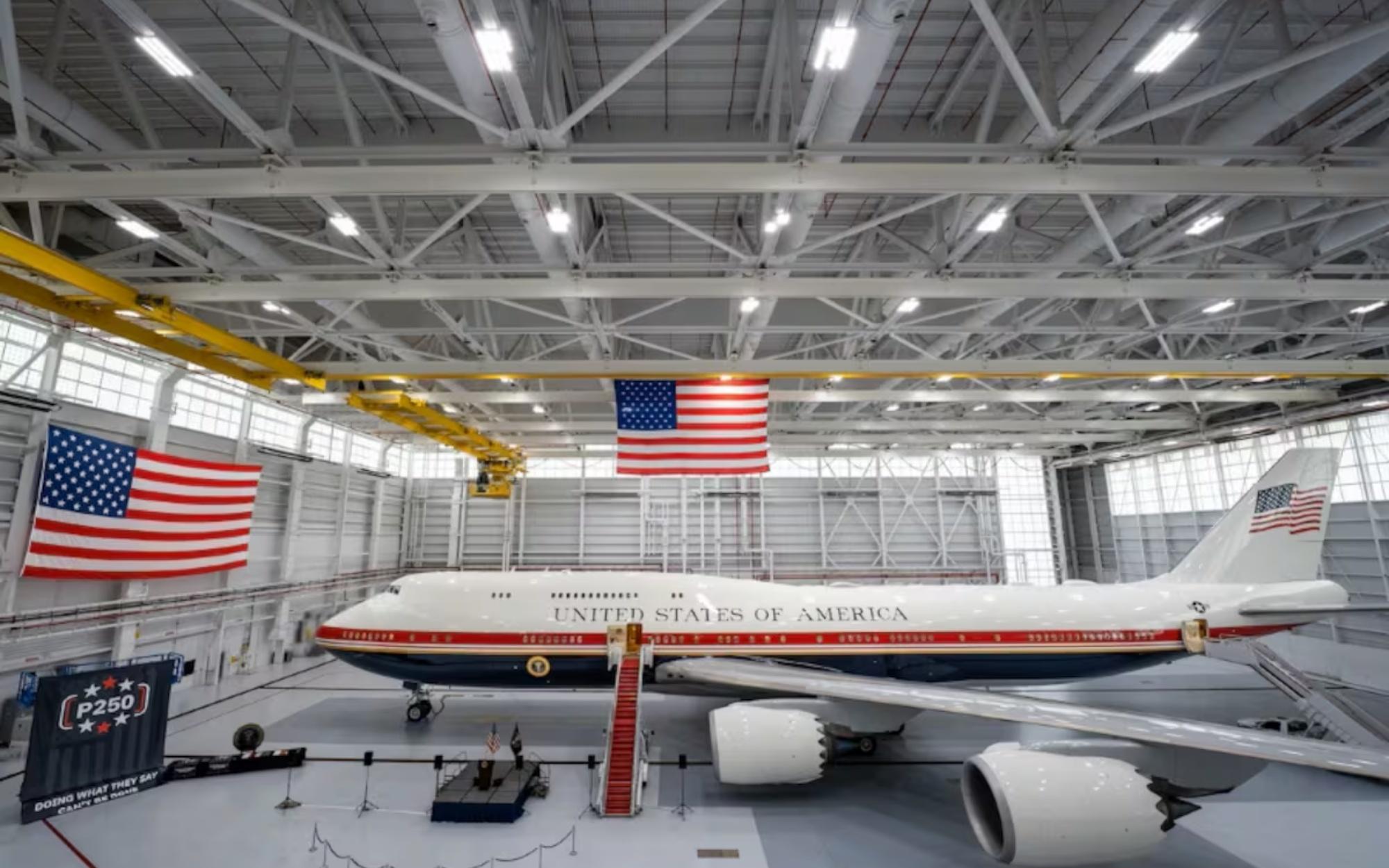
Speaking at the unveiling of the new Air Force One, Trump struck an unmistakably confident tone. “If Tehran fails to agree to a final deal within sixty days,” he said, “we will do things that won’t make them happy.”

But the President also added, “I don’t think it’s going to get to that. I think it’s going to be very good.” That’s Trump-style diplomacy — measured calm with a hint of firepower behind every syllable.

The deal’s announcement sparked an immediate uptick on Wall Street, a signal that America’s economy still follows confidence in its leadership.

Investors and allies alike understand that a steady White House hand can push peace forward without surrendering strength. For Trump, that balance is his signature approach: peace pursued through unmistakable leverage.

Of course, the critics are circling. Some Republican lawmakers — never missing a chance to doubt Trump’s moves — are suggesting the agreement gives too much breathing room to Tehran.

And, as expected, Iran’s Supreme Leader Mojtaba Khamenei wasted no time twisting the optics, claiming Trump acted out of “desperation.” The irony of that claim is obvious — it’s Tehran that’s desperate, not Washington.

Trump Declares Iran Fight ‘Not Done’ While Left Sounds Alarms Over Ammo Shortfalls

Meanwhile, the situation in the Middle East remains volatile. Vice President JD Vance was scheduled to lead an American delegation to talks in Switzerland, but the White House confirmed Thursday that his trip was temporarily postponed.

That move raised eyebrows and questions, though insiders insist it’s a strategic pause, not a setback.

Iran continues to stress it wants guarantees regarding Lebanon, where Israeli forces have been striking at Hezbollah targets for months.

The Lebanese Health Ministry has reported nearly 4,000 deaths since early March, underscoring how deep and dangerous Iran’s reach into the region truly runs. The MOU Trump signed called for a suspension of hostilities everywhere, Lebanon included.

But Friday night brought yet another grim scene — the second deadliest round since the escalation began. Israeli strikes killed 47 militants in Lebanon, while Israel mourned four of its own soldiers lost.

Hours later, U.S. officials announced a truce between Israel and Hezbollah that had been quickly brokered, a quiet but clear sign that American influence still carries heavy weight.

Still, Lebanon remains a thorny problem. For Trump, any lasting peace requires a recalibrated balance of power across the Middle East, not just empty promises from clerics in Tehran.

Israel’s Prime Minister Benjamin Netanyahu, America’s most resolute ally in the region, has voiced skepticism about the MOU, calling it too lenient. But no one doubts Netanyahu’s resolve — or Trump’s backing for Israel’s right to defend itself.

Trump Seeks Rapid Weapons Replenishment As Defense Leaders Convene for Iran Campaign Push

Iran, predictably, is already posturing, signaling that it could abandon talks if Washington doesn’t keep Netanyahu “in check.”

That kind of manipulation is vintage Tehran — using peace as leverage for chaos. But Trump’s team has made it clear: America’s allies don’t answer to Iran’s threats, and Israel will always defend its borders as it sees fit.

At Camp David, Trump will be surrounded by both his senior advisors and family members, turning the scenic Catoctin retreat into both a command center and a Father’s Day gathering spot.

A White House official confirmed the weekend would blend policy meetings with “private time,” but those close to the President know he never truly clocks out.

This marks only Trump’s second return to Camp David since retaking office in January 2025, a symbolic gesture underscoring his preference for direct, focused engagement over bureaucratic routine.

As questions swirl about Iran, Lebanon, and Israel, Trump’s presence there sends a message — the Commander in Chief is in control, sharpening strategy, and keeping both friends and foes guessing.

At this inflection point, with diplomacy and deterrence walking hand in hand, Trump once again stands where he thrives: right at the intersection of strength and history.

The Iran deal might be complex, but one thing isn’t — America now has a leader willing to make the hard calls and back them with steel.

News

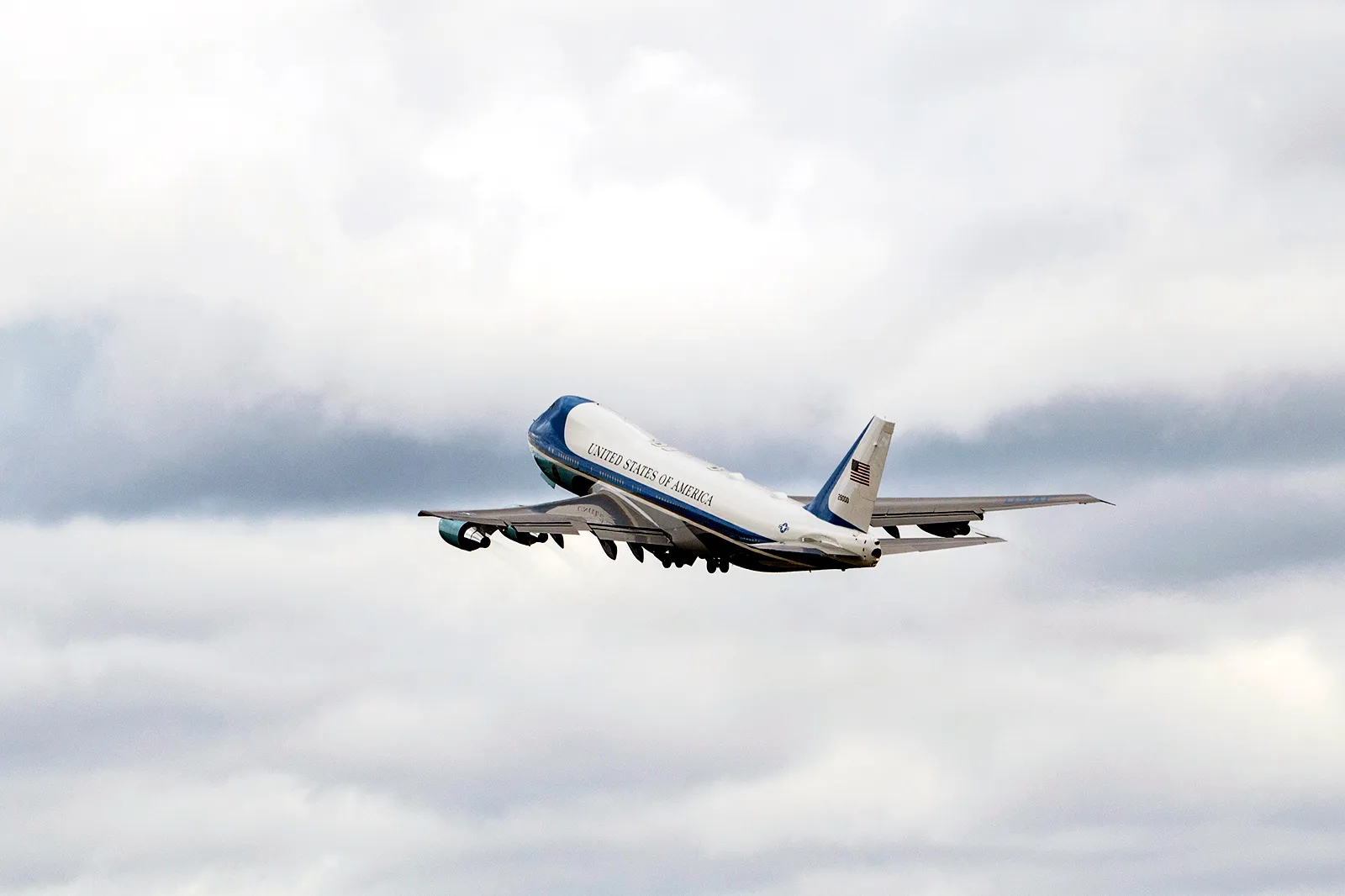
New Air Force One Takes Flight in Final Tests Before Serving President Trump

The U.S. Air Force has kicked off commissioning flights for the newly delivered Air Force One, a major milestone that marks the final step before President Trump takes command of the aircraft.

The sleek red, white, and blue Boeing VC-25B “Bridge” aircraft arrived at Joint Base Andrews, Maryland, signaling that America’s presidential fleet is getting the upgrade many thought might never arrive.

Nearly two weeks after its patriotic paint scheme was unveiled, the aircraft entered service with the Presidential Airlift Group.

According to the Air Force, the aircraft represents a “secure continuity platform for the commander in chief,” one built to ensure the president’s ability to operate anywhere in the world without pause.

The journey to get this jet airborne wasn’t easy. The effort to replace the aging VC-25A planes had been plagued with delays and bureaucracy that tested both Washington’s patience and Trump’s own persistence.

Determined to override sluggish progress from Boeing, President Trump accepted a donation from Qatar of a Boeing 747-8i, which the U.S. modified extensively to meet the most stringent security demands.

Initially, the plan was for Boeing’s new VC-25Bs to be ready by 2024. Predictably, federal bottlenecks, a shortage of cleared workers, and supply chain breakdowns pushed that target to a ridiculous 2028.

Rather than sit idle, Trump pushed for a practical interim solution—and that’s exactly what the “Bridge” aircraft has become.

War Secretary Pete Hegseth and Air Force leadership worked in concert to accelerate modifications and testing. Officials confirmed that the cost to bring the aircraft up to presidential grade would stay under $400 million, far less than many inside-the-Beltway critics expected.

Qatari Gifted Air Force One Decked Out in Patriotic Red, White and Blue
This February 2026 artist rendering depicts the VC-25B in its new red, white and blue livery. (DVIDS)

“This jet is built for strength, reliability, and national command,” said one senior official familiar with the project.

The current commissioning flights are effectively the aircraft’s final examination.

Each sortie allows White House and military officials to validate mission readiness, test communications and defense systems, and finalize security protocols that guarantee safe transit for the president under any circumstance.

Once finished, the aircraft will be formally commissioned into the executive airlift fleet alongside the existing VC-25A and C-32 aircraft.

The Air Force has kept the exact number of test flights classified. However, sources within the Presidential Airlift Group indicate that the aircraft’s commissioning will be completed within weeks.

Trump’s first official flight aboard the new Air Force One could come soon after, closing the chapter on the aging VC-25A fleet that carried him through much of his presidency.

The engineering effort behind the aircraft’s transformation has been intense. While few details are public for operational security reasons, the Air Force confirmed the project followed a “disciplined engineering approach” ensuring the highest safety and mission standards.

Insiders have hinted that everything from secure communications networks to missile countermeasures has been overhauled.

Qatar-Gifted 747 Sparks Security, Ethics Concerns as U.S. Military Weighs Air Force One Conversion

Meanwhile, the Air Force began pilot and crew training last October using a leased Atlas Air 747-8F and later a Lufthansa 747-8i, both designed to replicate the systems used aboard the Bridge aircraft.

Crews logged extensive simulator hours as well, ensuring precise familiarity with executive airlift operations before President Trump’s team ever steps aboard.

A three-dimensional mock-up of the aircraft’s interior was even installed in the White House this past January.

This simulation allowed presidential staffers to familiarize themselves with the new layout and operational flow long before the aircraft took its first commissioning flight. It’s a reflection of the same meticulous planning that has long characterized the Trump administration’s approach to military and executive readiness.

“Many thought it could not be done,” said Air Force Chief of Staff Gen. Ken Wilsbach, praising the project.

“But the United States Air Force was able to execute and provide a secure, reliable airborne command post on an accelerated timeline.”

That “accelerated timeline” is no small feat in an era where most major aircraft programs drown in red tape and political infighting. Instead, this presidential bird came together in large part thanks to Trump’s impatience with bureaucratic excuses. He demanded results—and the War Department delivered.

Qatar-Gifted 747 Sparks Security, Ethics Concerns as U.S. Military Weighs Air Force One Conversion

The VC-25A, which faithfully served but has aged past its technical prime, reportedly made its final flight last Thursday.

According to a social media post from a Trump administration official, the event marked the end of an era and the beginning of a new chapter in executive air power.

At a time when America’s global posture demands a president who can command securely from anywhere on Earth, this aircraft is more than just a symbol. It’s a critical flying headquarters, engineered for the 21st century battlefield and shaped by Trump’s no-nonsense leadership ethos.

In a world full of threats, America’s greatest symbol of strength is once again aloft—and this time, built on Trump’s timetable, not the swamp’s.


Scroll to Top