News

News

Mayor Mamdani’s Pool Stunt Splash Drowned Out by GOP Showdown Over Fiery Attack [WATCH]

New York City Mayor Zohran Mamdani tried to make a lighthearted splash to open the summer season, but his fully suited jump into a public pool quickly turned into a political cannonball.

What was meant to be a community celebration in East Harlem ended up showcasing the Democrat mayor’s knack for controversy and confrontation rather than unity or joy.

The mayor, who has built a reputation for combining socialist rhetoric with performative political stunts, jumped into the Thomas Jefferson Pool wearing a full business suit.

The bizarre dive came during an event marking the 90th anniversary of the city’s Works Progress Administration era pools and the launch of expanded free swim programs.

Cameras captured Mamdani wading through the water alongside children while maintaining his polished grin, a scene that looked more like a campaign ad than community outreach.

WATCH:

Things took a sharp turn when Mamdani used the event as a platform to wage a political fight against Nassau County Executive Bruce Blakeman, the Republican candidate for New York governor.

Instead of keeping the focus on families and summer fun, Mamdani demanded that Blakeman apologize for recent remarks criticizing a Democratic congressional candidate who is backed by the Democratic Socialists of America.

Blakeman had said in a Newsmax interview that Brad Lander, now the Democratic nominee in New York’s Tenth Congressional District, “would be a camp guard in a concentration camp if he could.”

The blunt comment was made in reference to what Blakeman considers Lander’s tolerance for extremist leftist movements that fuel anti Israel sentiment.

Mamdani wasted no time taking offense on Lander’s behalf. Speaking to reporters beside the pool, the mayor declared Blakeman’s words “unacceptable and unconscionable” and called Lander a “proud Jewish New Yorker.”

The spectacle felt more scripted political theater than genuine outrage, and it pulled attention away from the event’s supposed purpose.

The mayor doubled down by saying that comparing Lander to “a Nazi prison guard” was “disgusting” and accused the Republican Party of trying to “dehumanize anyone they disagree with.”

It was hardly a surprise that Mamdani turned a backyard-style community event into another progressive soapbox moment.

Blakeman, who has been endorsed by President Donald Trump, fired back before the pool water had even drained.

He reminded everyone of Mamdani’s own controversial past, saying, “This is coming from the same guy who wouldn’t march in the Israel Day Parade, called AIPAC members ‘monsters,’ and canceled the Puerto Rican Day Breakfast.”

The Republican candidate then went straight for the jugular, calling Mamdani “a bigot, an antisemite, and anti-American.”

To Blakeman, the mayor’s sudden moral outrage looked like the height of hypocrisy.

Mamdani’s office did not respond to Fox News Digital’s request for comment, perhaps preferring to let the splash stunt do the talking.

That silence has only fueled the perception that Mamdani is more interested in performance than leadership.

Many New Yorkers watching the video of the suited dive online seemed more puzzled than impressed.

Some cheered his youthful energy, but others called it a “publicity gimmick” at a time when the city faces real problems, rising crime, deteriorating infrastructure, and expensive living costs.

It was hard to miss the symbolism of a mayor literally diving into deep water while his administration struggles to stay afloat.

The episode also reinforced the growing division within New York politics, where establishment Democrats are being challenged by open socialists and far-left figures like Mamdani and Lander.

Rather than cooling tensions, the mayor poured fuel on them, illustrating how the city’s political scene has shifted dramatically away from moderation.

Blakeman, for his part, used the opportunity to sharpen his campaign message, stressing that Democrats like Mamdani are out of touch with common New Yorkers.

His bluntness, while controversial, resonates with voters tired of politicians who seem more devoted to ideological posturing than practical governance.

In the end, what could have been a carefree kickoff to summer became yet another chapter in New York’s endless political circus.

The image of a mayor in a soaked suit, wagging his finger about morality while being accused of bigotry himself, may be the most fitting metaphor for how far left politics have dragged the city’s leadership.

A simple pool day turned into a reflection of how progressive theatrics often drown out common sense in the name of making a statement.

Mamdani may have made waves, but it was Blakeman’s sharp rebuttal that stayed afloat long after the ripples settled.

News

Major Supreme Court Ruling Deals Devastating Blow to the Left’s War on Objective Truth: Bongino [WATCH]

Dan Bongino argued that several recent Supreme Court decisions involving immigration and constitutional issues reflected the plain meaning of federal law, while accusing Democrats and their allies in the media of attempting to redefine language to achieve political objectives.

Bongino discussed the Court’s recent rulings involving asylum, Temporary Protected Status, and the Second Amendment, contending that the legal disputes should never have reached the nation’s highest court because, in his view, the governing statutes were written clearly.

“Folks, they love to go to war with objective truth,” Bongino said.

He argued that Democrats reject fixed definitions because they view them as obstacles to expanding government authority.

“The Democrats can never stick to a predefined set of rules or laws, because why it limits them,” Bongino said.

According to Bongino, that approach extends beyond legislation to the meanings of words themselves.

“So, you’ll see them changing the definition of words, telling you two plus two equals seven, because they think all knowledge is made up by white men, and that knowledge is a construct of their power. So, you should dispute everything that is what critical theory is,” Bongino said.

Bongino then turned to what he described as a significant day for the Trump administration before the Supreme Court.

“Why am I bringing this up? There were a bunch of Supreme Court wins yesterday for President Trump. Huge, you had the Supreme Court ruling on asylum, you had the Supreme Court ruling on temporary protection status for Haitians, Syrians, and others. You had a Supreme Court ruling about the Second Amendment. It was huge,” Bongino said.

He said he found it unusual that one of the immigration cases was litigated despite what he considered to be straightforward statutory language.

“It was a big day yesterday, but what was bizarre yesterday is that these cases are in court at all,” Bongino said.

Discussing Temporary Protected Status, Bongino referenced the law enacted in 1990.

“One of the cases about temporary protected status is very simply this: there was a was a 1990 law that said, due to a crisis, I think it was in South America, El Salvador, that we can bring some of these people here under temporary protected status for a limited period of time, was subject to like an 18 month or so review, and then after that they were either going to be sent back, or we would extend it again,” Bongino said.

He argued that the statutory language leaves little room for interpretation.

“But the word in there, TPS stands for what, Justin, temporary,” Bongino said.

Bongino emphasized that the word “temporary” carries an ordinary meaning.

“Now temporary to the non-imbecile class, i.e. the liberals and the media, wondering why, wondering why the United States is winning, and how we aren’t more puzzled by it, like you are the word temporary has a meaning,” Bongino said.

He added, “Let me define it by what it word temporary means, not permanent. This is not hard when you grant TPS, or temporary protected status. When they wrote the law in 1990 they meant it was temporary because they called it temporary protected status.”

Bongino also cited language in the statute that, according to him, limits judicial involvement.

“When the law was written to give temporary protected status to some of these folks from other countries to bring them here for a temporary amount of time, they specifically wrote in the law… that there is no judicial review of any determination with respect to the designation or termination or extension of a designation of a foreign state,” Bongino said.

He argued that this language means courts are not authorized to review those determinations.

“So, when they wrote in the law, no judicial review, that means no court action, that means you couldn’t bring it to the court,” Bongino said.

Turning to the Court’s asylum ruling, Bongino argued that the relevant statute likewise uses plain language.

“There was another Supreme Court case yesterday… written in the law, you have to arrive in the United States to claim asylum,” Bongino said.

He used a hypothetical example to illustrate his interpretation.

“Now, if I were to say to anyone who’s not a moron or a liberal in this case, you know, if I were going to claim my party favor by arriving at the party, it would mean you would have to arrive at the party where the party is. It doesn’t mean you can claim your party favor outside of the party, you’d have to arrive in the party,” Bongino said.

Bongino said the Court concluded that asylum applicants must first arrive in the United States before seeking asylum.

“So, Supreme Court ruled in a six three decision… that you do not automatically get asylum at the border, and what they, what Sam Alito said, is you have to arrive in the United States to get asylum, you can’t claim it from Mexico,” Bongino said.

He concluded by arguing that these disputes reflect a broader effort to reinterpret laws and language for political purposes.

“Folks. This is intentional. Yes, there are useful idiots, and a lot of them in this subsection of the Democrat party that wants America destroyed and is troubled by the United States’ success in the World Cup, they hate it. They want us to lose to Iran, they want us to lose to Turkey in the World Cup. They hate you, they hate this country and everything about it. They have shown their ass to you 1000 times,” Bongino said.

WATCH:

News

‘The Obamacare Marketplace Is Plagued by Fraud’: RFK Jr. and Dr. Oz Reveal Staggering Data Point [WATCH]

Another scandal has hit the already bloated Obamacare system, and this one might be the most jaw-dropping yet.

Health and Human Services Secretary Robert F. Kennedy Jr. and Centers for Medicare and Medicaid Services Administrator Mehmet Oz revealed that more than a million Obamacare enrollees apparently never provided a Social Security number.

That revelation leaves many Americans wondering just how deep the corruption runs in the left’s prized healthcare program.

The disclosure was made in a weekend video where Kennedy and Oz detailed the widespread fraud infecting the so-called Affordable Care Act marketplace.

Kennedy did not mince words when he said the Obamacare exchange is “plagued by fraud,” and he pointed directly at the Biden administration for dismantling basic integrity safeguards.

He accused partisan lawfare of harming the system and protecting scammers instead of taxpayers.

Kennedy explained what his department uncovered.

“More than a million people enrolled in Obamacare without Social Security numbers on file,” he announced.

“That is a glaring warning sign of fraud. If even a single person was on Obamacare with no Social Security number, we should have found out. Why are we paying people we do not even know exist?”

The question hit at the heart of the matter, because under Democrat control, accountability tends to evaporate.

Oz added even more troubling details. He described “shady insurance agents and other bad actors” who have been enrolling Americans into plans they never agreed to join.

These rogue agents reportedly file fake applications, use stolen identities, and collect millions in improper commissions.

“These agents refuse to provide client Social Security numbers,” Oz said.

“That, my friends, is a huge red flag.”

According to Kennedy, the fraudsters have a simple method to stay under the radar.

They choose zero-premium plans so their unauthorized enrollees never receive a bill.

“No bill means most people never know that they have been enrolled in a plan you and I paid for,” he said.

“The only people who benefit are the fraudsters.”

It is a setup tailor-made for corruption.

Oz insisted the current leadership is not tolerating this abuse.

“In May, we acted to shut down this fraudulent behavior on healthcare.gov and the marketplace call center,” he said.

Agents must now submit verified client information before they can get paid.

“No ifs, ands, or buts,” Oz declared.

It was a rare example of government taking decisive action instead of burying the problem under bureaucracy.

Kennedy reported early success from their crackdown.

“We have already eliminated thousands of fraudulent policies,” he said.

“We are working with insurers to cancel policies that never should have existed and recover every taxpayer dollar stolen through this fraud.”

That accountability stands in stark contrast to the previous administration’s neglect.

But both men warned that the fight is not over.

“We are scaling up enforcement to stop bad actors before open enrollment this fall,” Oz explained.

“Under Biden, the fraudsters ran wild. Thanks to President Trump, those days are over.”

That line was pure fire for conservatives who have long argued that Biden’s team cannot manage a lemonade stand, let alone a national healthcare system.

Kennedy’s warning to criminals came across loud and clear.

“If you steal from the American taxpayer or defraud American families, we will find you and hold you accountable,” he promised.

Oz followed up with his own firm message.

“If you are a fraudster, do not walk away from us, run, because we are going to find you.”

The message was simple: the free ride is ending for those gaming the system.

WATCH:

Republicans have been saying for years that government-run healthcare invites corruption.

When programs grow this huge, waste and fraud balloon right alongside them.

Obamacare was sold to Americans as compassionate policy.

Instead, it has become a massive, costly web of deceit lubricated by taxpayer dollars.

Democrats waved away conservative concerns, but the facts staring back are impossible to ignore.

Every fraudulent enrollee drains money away from American families who actually work, pay taxes, and follow the law.

It should outrage every voter that bureaucrats under Biden let this disaster flourish while shrugging off accountability. This is what happens when ideology replaces responsibility.

Kennedy and Oz are taking steps in the right direction by working to strip these fraudulent policies and chase down lost funds, but conservatives know that until Obamacare itself is dismantled, the problem will never truly end.

Any program so large that it loses track of over a million participants without ID numbers is beyond repair. It is not just mismanagement, it is systemic decay.

This scandal proves once again how unworkable the liberal welfare model remains. Americans deserve a system that rewards the legal, punishes the corrupt, and respects the taxpayer.

That will never be found in the socialist experiment known as Obamacare.

News

Trump Warns America Faces Rising Threat From Hardcore Godless Communists [WATCH]

President Donald Trump sent a sharp and urgent warning to Americans, declaring that the fight for the nation’s survival is not just political but deeply spiritual.

Speaking to a cheering crowd, Trump said the left has moved beyond being liberal.

According to him, they have become what he called “hardcore, godless communists” who seek to strip away religious freedom, silence dissent, and dismantle everything that makes America the beacon of liberty it has been for generations.

Trump told his supporters that America’s enemies are not simply misguided progressives but people driven by an ideology that rejects God and despises the very roots of the nation’s founding.

He did not mince words when stating, “These are not social Democrats, these are hardcore, godless communists.”

His words resonated with many conservatives who have watched the radical left take over universities, the media, and much of the federal bureaucracy.

The president argued that what is happening in cities, schools, and corporate boardrooms is not random chaos.

It is, he said, a deliberate and coordinated effort by those who want to transform the United States into a nation unrecognizable to its founders.

Trump accused today’s far left of waging an all-out assault on traditional values, freedom of speech, and the sacredness of family and faith.

For Trump, this fight is not merely ideological but existential. He described America as standing at a crossroads between freedom and tyranny.

He spoke of a vision of the future where the government seeks total control over people’s speech, behavior, and beliefs, and contrasted it with his call for freedom, once again saying that “freedom is the future.”

His rally drew thunderous applause as he urged citizens to remain vigilant and not give in to hopelessness or apathy.

He described the cancel culture movement as one of the most dangerous weapons the far left has ever wielded.

Trump mocked the so-called “woke corporations” and weak politicians who, in his view, have willingly become allies of ideological radicals.

He challenged everyday Americans to rise up peacefully and reclaim their right to think and speak freely without fear of retribution.

WATCH:

Trump’s message also carried a stark warning about government power running unchecked.

He pointed to examples of censorship by technology companies and selective prosecutions that appear to target conservatives.

He made it clear that these were not isolated examples but signs of a larger push to control the population through fear.

Faith was another central theme of his remarks.

Trump connected the erosion of faith with the decline of freedom, explaining that a godless ideology naturally leads to tyranny.

He reminded his audience that America was built on a belief in the Creator, which grounded the rights guaranteed in the Constitution.

Without that foundation, he said, the Constitution becomes an empty document manipulated by those in power.

The  president’s line about “godless communists” was more than rhetorical fireworks.

It was a blunt description of the power struggle now unfolding in the country.

He portrayed the left as willing to use any means necessary to destroy conservative voices and erase Christian influence from public life.

He characterized his movement as the only force left standing against this cultural and political onslaught.

Trump’s statement reverberated through conservative circles, as activists and commentators echoed his concerns.

WATCH:

Many see the same reality he described: a nation being divided by design, where traditional morals are branded as hateful and faith is treated as dangerous.

His approach may rile the establishment, but his message continues to draw massive support from Americans who feel abandoned by elites and corporate media.

He concluded his remarks by calling for courage and patriotism in the face of growing intimidation.

He said that Americans cannot allow fear or political correctness to guide their actions.

Freedom, he insisted, must be defended not just at the ballot box but in everyday life.

Saying “no” to radical ideologies is part of protecting the country from sliding into darkness.

As Trump often reminds his audience, he sees it as more than a political effort.

It is a movement to restore the soul of America.

He told his supporters plainly that if the godless radicals win, American freedom will be gone, perhaps forever.

But he also gave hope, promising that as long as patriots keep standing up, the future still belongs to the free.

For those who follow Trump’s political resurgence, it is clear that this message of faith, freedom, and resistance continues to strike a chord.

His remarks make one thing unmistakable.

The battle for America’s future will be defined by the clash between those who cherish God and liberty and those who want to replace both with control and conformity.

News

Carville Explodes Over Socialist Wins, Demands Democrats Split From Far Left [WATCH]

James Carville, long known for his brash honesty and Cajun political flair, has finally said what many old-school Democrats are whispering behind closed doors.

He wants his party to break up.

The liberal strategist declared that he can no longer share a political home with candidates backed by far-left firebrand Mayor Zohran Mamdani of New York City.

The fiery exchange happened on his “Politics War Room” podcast with veteran journalist Al Hunt, as the two lamented the growing influence of socialist activists inside the Democratic ranks.

Carville was responding to the shocking primary win of Darializa Avila Chevalier, a self-described socialist whose campaign was powered by Mamdani’s network of progressive organizers.

“She has attacked interracial relationships and the American flag,” Carville fumed.

“Lady, I ain’t in the same party as you.”

His frustration boiled over as he said out loud what establishment Democrats have refused to discuss publicly.

“I actually do think it’s time for Democrats to talk the S-word. Schism.”

Carville’s disgust reflects the growing internal conflict between traditional Democrats and the ideological radicals who now dominate the conversation on the left.

For years, party leaders have bragged about being a “big tent.” According to Carville, that tent has now stretched so far that it’s tearing apart.

“There’s just some stuff I can’t be in the same tent with,” he said flatly.

The longtime party operative argued that many of these far-left candidates don’t even like the Democratic Party, but use its label to sneak into power.

His solution?

A negotiated divorce.

“Maybe we can part under some kind of advantageous terms for both of us,” he said.

“But I’m done. I’m not in that political party.”

Carville’s moral line in the sand came as he criticized anti-Israel activism within his own ranks.

“I am comfortable in a political party that questions the policies of the government of Israel,” he said.

“I don’t want to be in a political party that denies the right of the state of Israel to exist. That’s just not doable.”

Hunt agreed, calling the far-left insurgency a “gift to Donald Trump.”

Both men predicted that unless Democrats draw clear boundaries, these radicals could cost the party dearly in November.

Hunt even warned that if Democrats fail to win a solid majority in the next election, “that group of crazies” will sabotage House Democratic Leader Hakeem Jeffries “every step of the way.”

It wasn’t just Carville and Hunt raising alarm.

Other prominent Democrats, including former President Obama and several party strategists, have privately expressed concern that the Mamdani wing of the party is alienating voters who care more about kitchen-table issues than ideological purity tests.

Yet few seem willing to echo Carville’s blunt talk in public.

Carville offered one distinction that revealed how far things have shifted.

He said he could tolerate being in the same party as Alexandria Ocasio-Cortez, even with her leftist tendencies.

But not with candidates like Chevalier.

“I can be in the same party with AOC,” he said.

“I can’t be in the same party with Miss Chevalier. Can’t do it. Sorry.”

WATCH:

The revelation came amid broader warnings from moderates, including Senator John Fetterman, who recently accused his party of “drifting firmly into communism” after several socialist candidates scored primary upsets in New York.

Together, these statements mark a rare moment of candor from within a political machine that typically avoids internal criticism.

For years, Republicans have asserted that Democrats would eventually crumble under the weight of their own radical elements.

Carville’s outburst seems to confirm those fears. He made clear that he represents a traditional Democratic wing that still supports Israel, believes in patriotic values, and rejects the venomous activism spreading from the socialist flank.

The grassroots left, for its part, is emboldened by the victories Mamdani helped organize.

They view these elections as evidence that socialism is gaining momentum inside the party.

But Carville and his peers see something else entirely: the early stages of political ruin, where ideological extremism pushes centrist voters right into the arms of the Republican Party.

As Hunt and Carville discussed, this ideological chaos could not come at a better time for conservatives.

The widening Democratic divide is set to explode in the months ahead, and no one should be surprised if the so-called “big tent” finally collapses under its own contradictions.

For now, Carville has drawn his line in the sand.

The Democrats’ chief Cajun strategist made one thing clear to his fellow travelers on the left.

If this is what the party stands for now, he’s not sticking around to watch it burn.

News

U.S. Launches Retaliatory Strikes On Iranian Missile and Drone Sites After Strait of Hormuz Attack

Precision counterstrikes rang out across Iran late Friday as the United States targeted Iranian missile, drone, and radar sites following Tehran’s latest act of aggression in the Strait of Hormuz.

According to U.S. Central Command, the strikes came in direct response to Iran’s attack on the Singapore-flagged cargo ship M/V Ever Lovely, which was hit by a one-way drone while sailing along the coast of Oman on Thursday.

This latest escalation followed what many analysts already warned—a ceasefire agreement that Iran never intended to honor.

The War Department confirmed that Iran’s assault on a civilian vessel violated the two-month ceasefire accord inked just last week, which was meant to reopen the vital shipping route for global trade.

Military sources said the American response was swift and targeted, striking precisely at the Iranian facilities responsible for coordinating and launching attack drones and missiles.

“We met hostility with strength,” a senior U.S. official said, emphasizing that deterrence requires clarity and power, not indulgence and appeasement.

Officials confirmed that the strikes included command-and-control infrastructure, radar installations supporting drone tracking, and missile stockpiles positioned near the southern Iranian coast.

CENTCOM described the operation as “a proportional but decisive response designed to safeguard international maritime flow.”

The Strait of Hormuz, long a flashpoint for Iranian provocations, remains a nerve center for global energy transport. Nearly a fifth of the world’s oil supply transits through this narrow chokepoint, making any conflict there a direct threat to the global economy—and to American interests.

USS Truman Conducted Largest Airstrike in Navy History, Dropping 124,000 lbs of Bombs in Less Than 2 Minutes

With Iran’s Revolutionary Guard Corps (IRGC) operating fast-attack boats, drones, and shore-based missiles in the area, stability has always hinged on the willingness of the U.S. military to stand firm.

Friday’s action sends an unmistakable message: the United States will not sit idle while Tehran tries to destabilize international trade or challenge freedom of navigation.

Despite Iran’s signature on a ceasefire document just days ago, the pattern of deception and intimidation remains alive and well in Tehran’s corridors of power.

Critics of previous U.S. administrations point out that years of half-measured policies gave Iran space to test and push boundaries. That era appears to have run its course.

Under the current leadership, Washington’s posture has shifted decisively toward unapologetic deterrence backed by credible force projection—a return to peace through strength.

Sources familiar with the operation say the strikes were planned with careful coordination to minimize civilian risk while maximizing the impact on Iranian military assets.

Initial assessments from reconnaissance drones and naval aircraft showed multiple successful hits, with several facilities reportedly engulfed in secondary explosions.

Iranian state-run media quickly attempted to downplay the damage, claiming “minor impacts” and asserting that “operations continue as normal.”

USS Truman Conducted Largest Airstrike in Navy History, Dropping 124,000 lbs of Bombs in Less Than 2 Minutes

However, analysts familiar with regional intelligence indicate that at least three radar locations and multiple drone launch facilities were damaged beyond immediate repair.

Maritime insurance rates in the Gulf have steadily risen since the attack on the Ever Lovely, and several shipping companies temporarily rerouted vessels pending full restoration of security in the strait.

The War Department reaffirmed that U.S. naval assets in the region—led by carrier-based aircraft and guided missile destroyers—remain on alert and capable of engaging any further threats.

Regional allies welcomed the show of force. Leaders in Bahrain and the United Arab Emirates privately expressed support, viewing America’s action as essential to preserving regional stability.

“Iran’s aggression cannot go unanswered,” one Gulf official commented anonymously. “U.S. strength protects not only freedom of commerce but the peace we all rely on.”

As of Saturday morning, Iranian military officials had not announced any formal retaliation, though defense analysts caution that Iran’s pattern of proxy operations—particularly through militias in Iraq, Syria, and Yemen—could signal asymmetrical responses in the weeks ahead. U.S. forces across the region have reportedly increased alert levels accordingly.

The Biden-era restraint that many saw as indecision is being replaced by a higher tempo of operational readiness, precision retaliation, and strategic clarity.

The new War Secretary Pete Hegseth’s firm stance on American deterrence appears to be resonating across the ranks, reinforcing that rogue states will face real consequences when they endanger global stability.

With this latest strike, the message is clear: attacks on international shipping and disregard for ceasefires will be met not with empty words but with the unmistakable reach of American firepower. Iran picked the wrong fight—again.

News

Recruits Surge Past Goals But Training Bottlenecks Still Slow Mission Readiness

The Pentagon is bragging about a major win for military recruiting, announcing that all five active-duty services crushed their 2025 enlistment goals.

According to the War Department, this is the strongest recruiting performance seen in fifteen years, with every branch filling or exceeding its manpower targets. After years of struggle under weak leadership and cultural confusion, the numbers spell a long-awaited turnaround.

The Army led the way, signing contracts with 62,050 recruits—just over 101% of its objective.

The Navy brought in more than 44,000 new sailors, overshooting its goal by 8%.

The Air Force signed up over 30,000 new airmen, while the Space Force added 819 Guardians to its ranks.

The Marine Corps, as usual, delivered right on target with 26,600 recruits.

Combined, that’s 103% of the overall active-duty mission.

It’s a welcome change after years of missed goals that embarrassed Pentagon leadership and worried patriotic Americans.

Air Force Trainer Faces Court-Martial Over Trainees’ Personal Relationships, Sparking Calls for Stricter Oversight
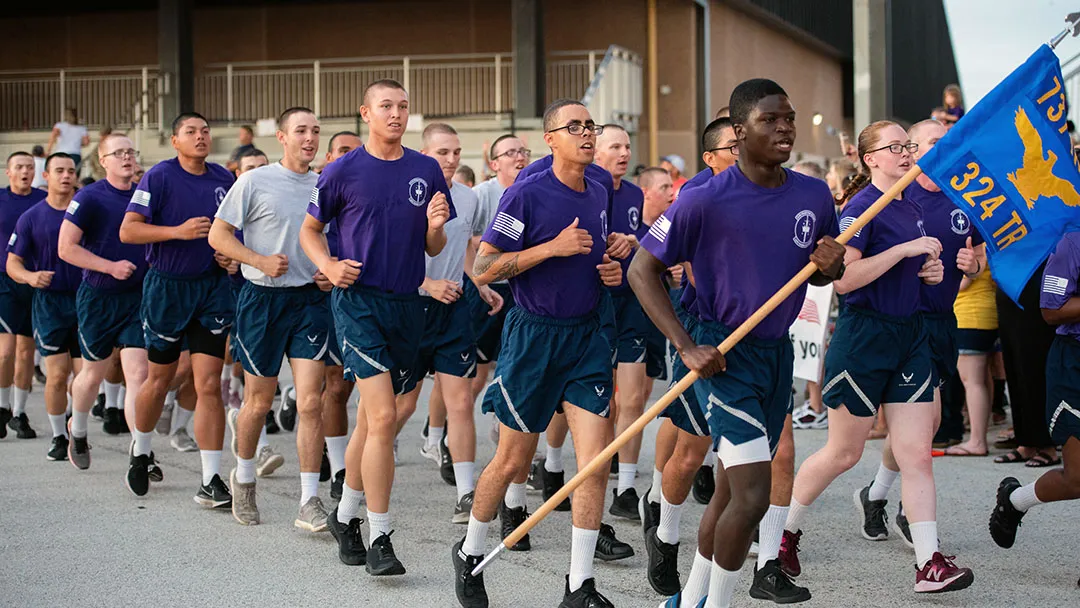
Recruits assigned to the 324th Training Squadron take part in Basic litary Training at Joint Base San Antonio-Lackland, in 2022. Air Force photo by C Arce.

The turnaround suggests that service branches may finally be getting their recruiting messages right—likely something to do with backing off some of the woke nonsense that had been alienating traditional recruits.

But the real question remains: how quickly will these recruits actually become mission ready?

In other words, how long before these men and women finish training, earn their qualifications, and join fully operational units? The Department of War doesn’t seem eager to answer that.

Despite all the numbers and talking points, the Pentagon still can’t produce a simple, transparent metric showing how long it takes from signing day to operational deployment.

Each service trains differently, and timelines can stretch for months, even years, depending on the specialty. An infantry recruit might hit the field in half a year, while cyber, intelligence, or nuclear tech specialists can spend over a year in the pipeline before joining their units.

Air Force and Space Force Surpass 2026 Recruitment Goals Ahead of Schedule
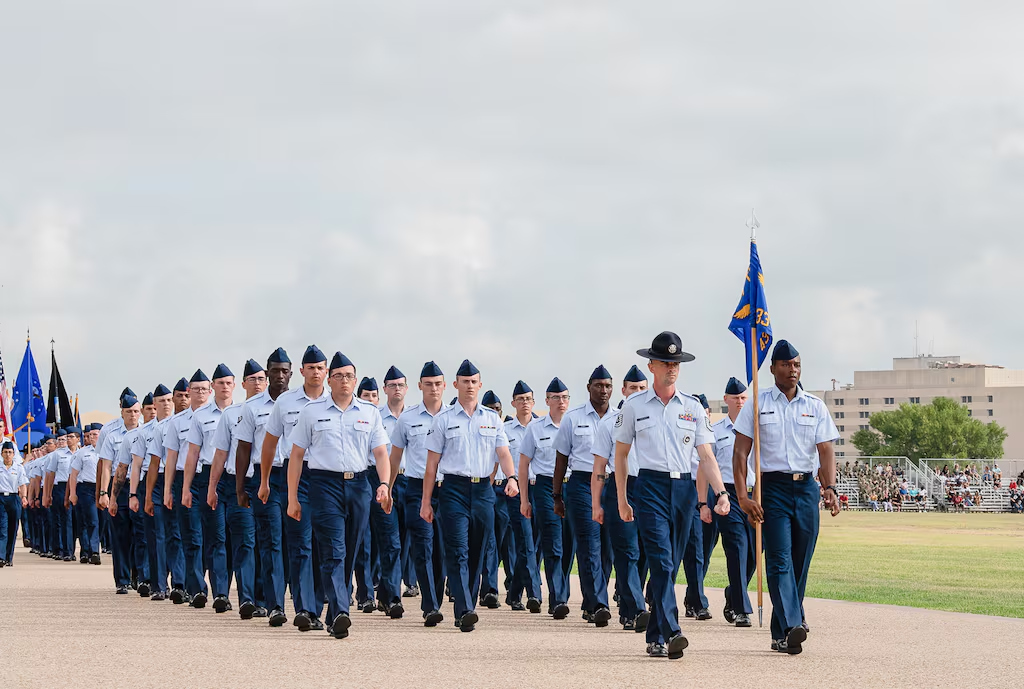
Air Force recruits graduate from basic military training. (U.S. Air Force)

Special operations candidates might spend several years in training before they’re cleared for a real mission.

The Government Accountability Office has reviewed these readiness systems and confirmed that the War Department uses tools like the Defense Readiness Reporting System and the Chairman’s Readiness System to gauge preparedness.

But those systems focus largely on things like equipment and personnel numbers, not how long it takes to train fresh recruits into combat-ready troops. That gap—ignored for years—leaves commanders and Congress guessing how fast new recruits can actually boost the operational force.

According to Navy Capt. Candice Tresch, there’s really no strict timeline for turning a civilian into a proficient sailor. She emphasized that the process depends on job specialty, command needs, and how quickly an individual can demonstrate proficiency. “It’s not really time-based,” she explained.

Marines Roll Out Huge Bonuses to Attract High Tech Talent and Bolster Readiness
Marine Corps recruits move as a fire team through events during the Crucible, the final challenge of recruit training, at Marine Corps Recruit Depot Parris Island, S.C., Dec. 3, 2020.

“[It’s] can you do the mission?” That’s a fair philosophy—but one that provides little grounding for lawmakers tracking readiness or for families asking just how fast the military is replenishing its force.

From training bottlenecks to background check delays, the time to get troops fully ready varies wildly. Cyber and nuclear job training can last many months, while Marines, with their famously brutal boot camps, may continue on to multiple specialty schools before setting foot in an operational unit.

Even then, advanced qualifications, field drills, and command certifications can stretch timelines further.

Under federal law, the Secretary of War must maintain a readiness reporting system that objectively measures the force’s ability to carry out missions.

However, nowhere in that system is there a requirement to track how long individual recruits take to become battle-ready warfighters. That missing data may seem bureaucratic, but it makes a big difference when planning deployments or gauging whether the services can sustain prolonged operations.

Trump-Era Push Elevates Army Recruiting Command to Three-Star Headquarters
Drill sergeants welcome a new class of recruits prior to executing the ‘First 100 Yards’ at Fort Moore, Georgia, January 2024. (Capt. Stephanie Snyder/Army)

The Marine Corps, Army, Navy, and Air Force were all contacted for comment on these readiness benchmarks, but as of publication, most haven’t provided a clear answer.

The Navy alone states that readiness should be measured by proven performance, not by ticking off a clock. Admirable in principle, but in practice, it keeps the process opaque.

Meanwhile, the GAO continues to call out systemic flaws—schoolhouse limitations, instructor shortages, and maintenance backlogs.

These problems delay the very readiness the Pentagon loves to boast about. Even with higher enlistments, if the training system can’t absorb recruits efficiently, the readiness boom could stall before it translates into boots on the ground.

Former Marine Drill Instructor Arrested After Early Release in Hazing Death Case
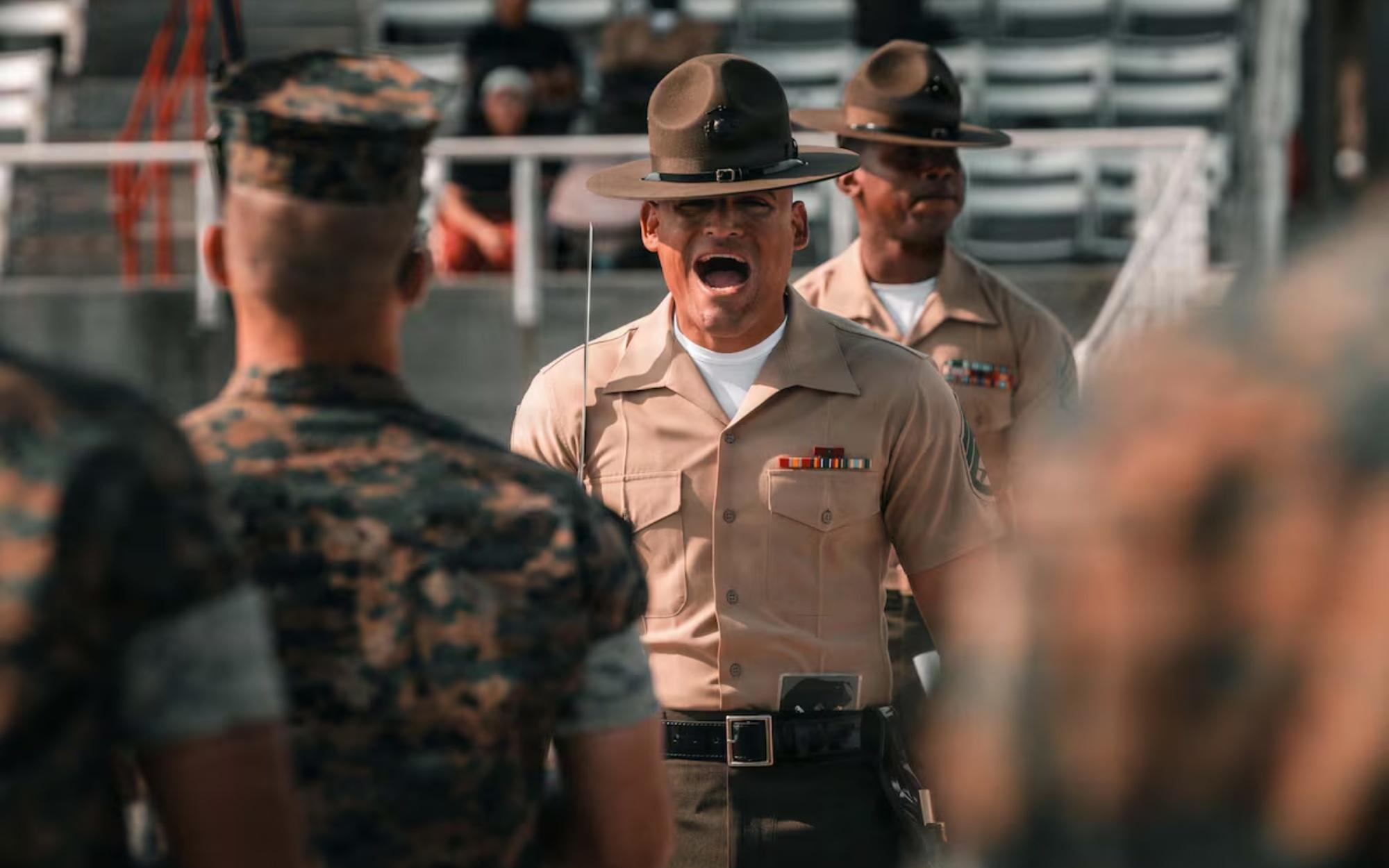
A drill instructor from India Company, 3rd Recruit Training Battalion, commands her recruits during initial drill inspection on Marine Corps Recruit Depot Parris Island, S.C., Sept. 26, 2022. Initial Drill is the first marker of the recruits’ discipline and unit cohesion. (U.S. Marine Corps photo by Lance Cpl. Bradley Williams)

After years of decline, America’s military is clearly regaining strength in numbers. That’s good news for a nation that’s been hamstrung by recruiting shortfalls and a demoralizing drift into politically correct distractions.

But until the War Department can prove it’s speeding up training pipelines and turning promising recruits into capable warriors, the recruiting surge is only half the story. When it comes to restoring full-spectrum readiness, results in the field will matter more than numbers in a spreadsheet.

News

Army Gives Chaplains 90 Days to Strip Rank from Uniforms Under Hegseth Plan

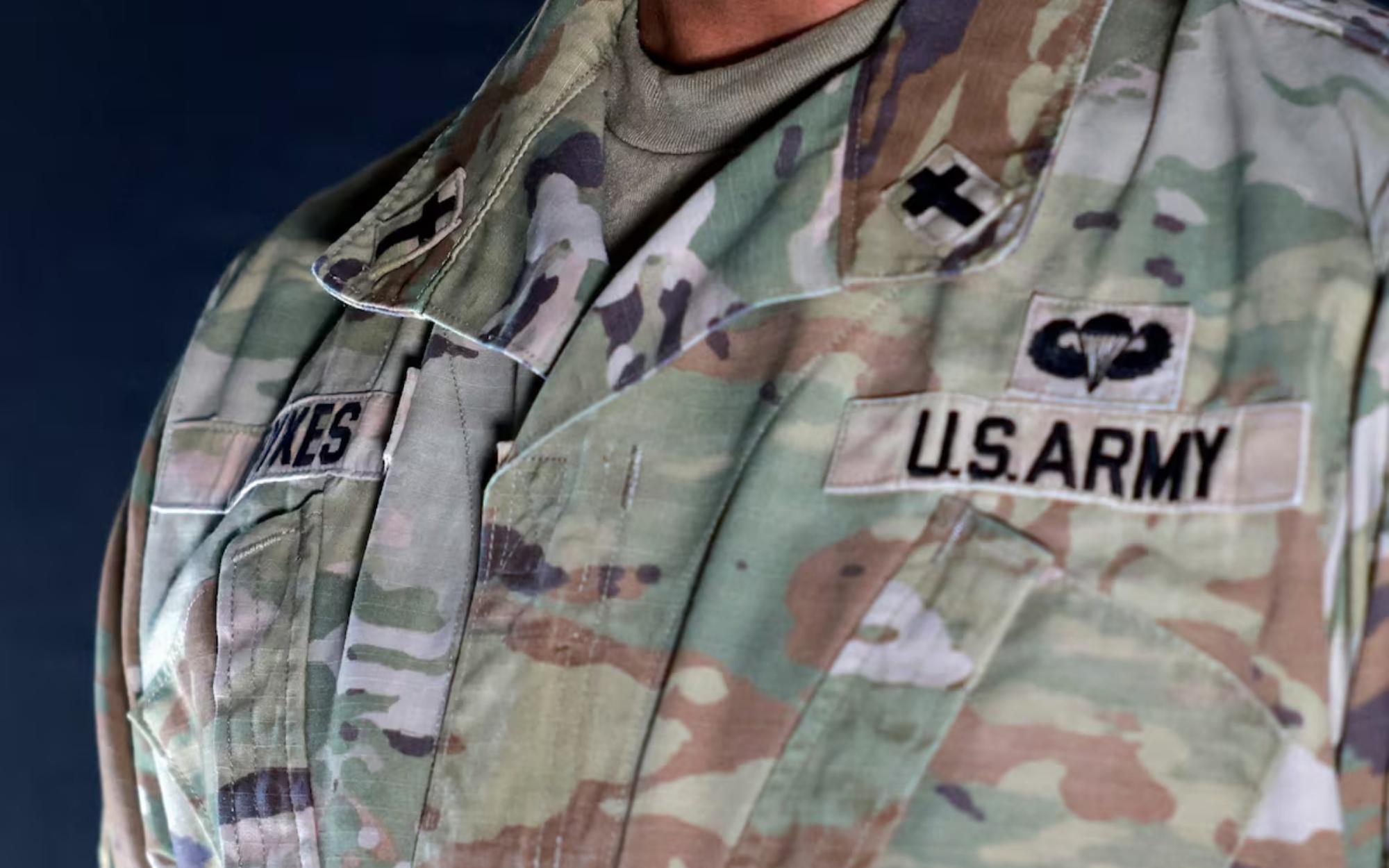
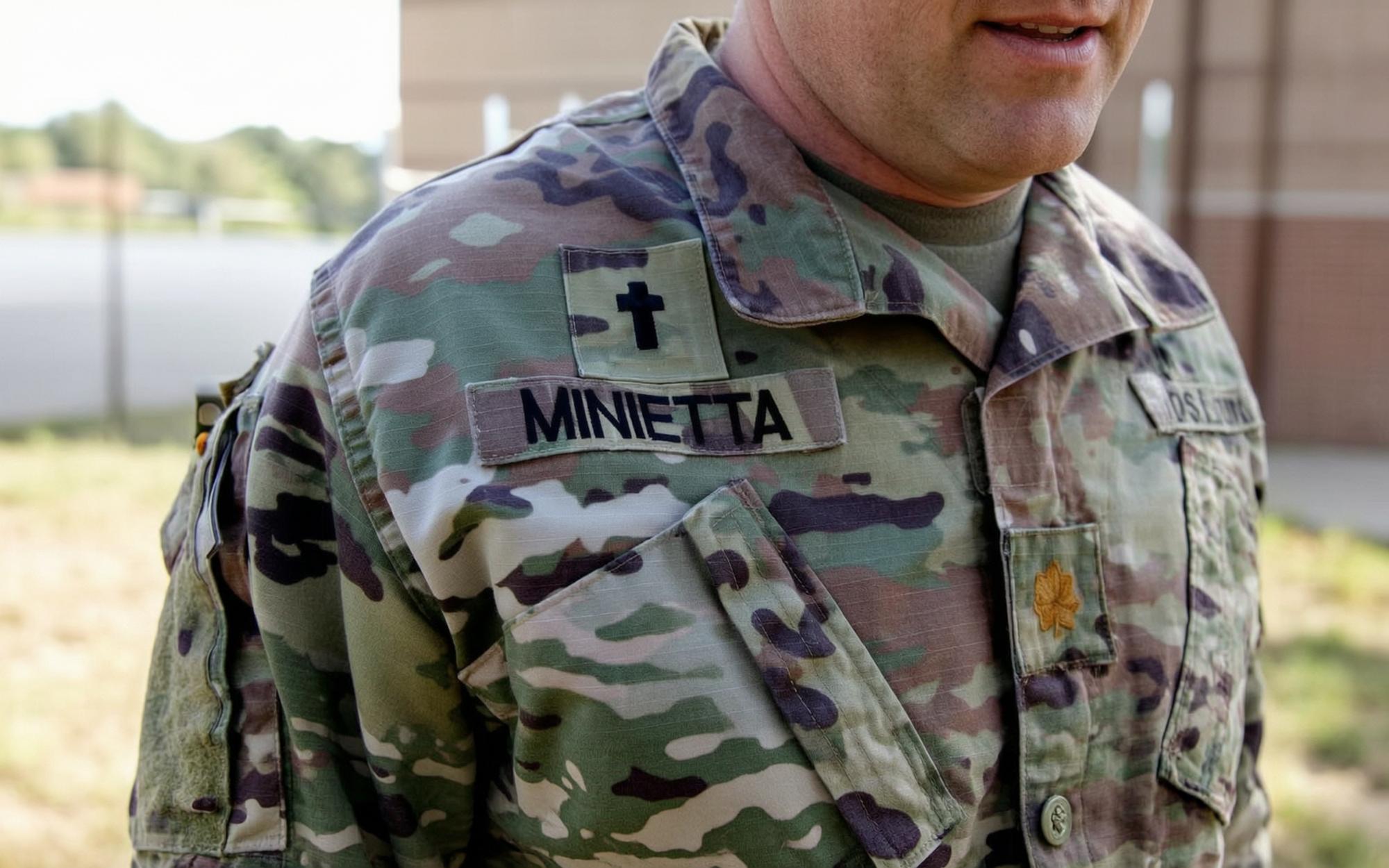
The U.S. Army is giving its chaplains 90 days to remove rank insignia from their uniforms, marking a major milestone in Secretary of War Pete Hegseth’s push to restore the spiritual mission of military chaplains.

The directive reinforces Hegseth’s long-held belief that chaplains serve God first and the chain of command second.

Issued under the signature of Secretary of the Army Dan Driscoll, the order requires chaplains to remove rank from their Army Combat Uniforms within 90 days and from cold-weather gear within 180 days.

The initiative draws a firm line under Hegseth’s March directive stating, “A military chaplain is first and foremost a chaplain, and an officer second.”

The change may sound cosmetic to the uninitiated, but it’s far more than that. It redefines the public face of military chaplains. Hegseth’s goal is clear—recenter faith within the military’s moral core after decades of secular bureaucrats trying to water it down.

For too long, the Pentagon’s religious services have been bogged down by political correctness and half-hearted “spiritual wellness” programs that avoided real faith.

In a video released earlier this year, Hegseth explained that the removal of rank insignia is meant to make every chaplain’s calling visible and unmistakable.

“This change is a visual representation of that fact,” he said. The message? A chaplain isn’t a mere middle manager in uniform; he’s a spiritual guide standing above the chain of rank when it comes to faith and moral guidance.

The Army directive also lays out clear guidance on how to display faith insignia on combat uniforms and headgear.

The approved insignia include the Latin cross, Jewish tablets with the Star of David, Muslim crescent moon, Buddhist wheel of righteousness, and Hindu Om. This limited list standardizes the symbols while steering away from the absurd proliferation of over 200 “faith codes” that had sprouted like bureaucratic weeds over the past several decades.

U.S. Military Chaplaincy Celebrates 250 Years of Faith, Service, and Support
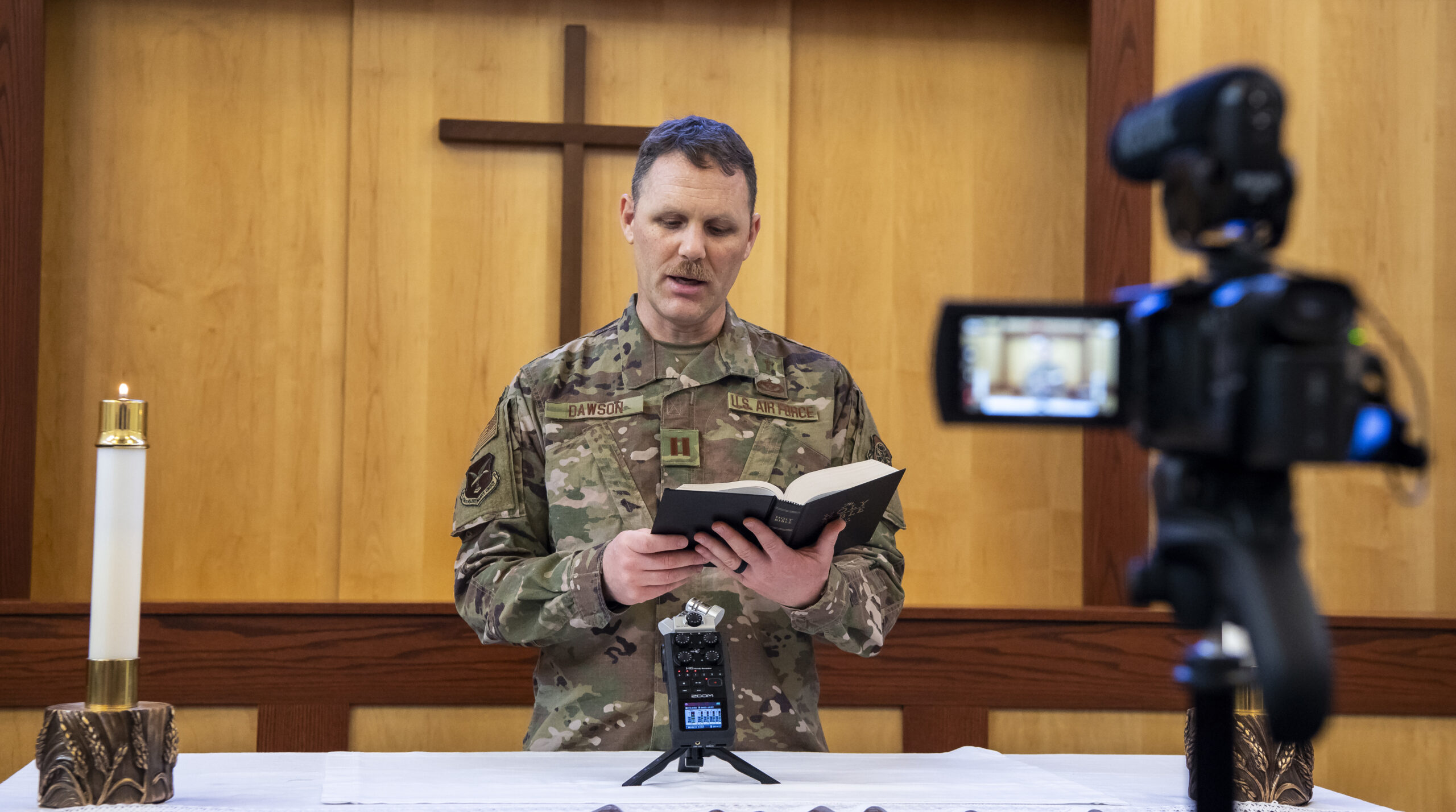
Chaplain (Capt.) Jonathan Dawson, 436th Airlift Wing chaplain, speaks during a service recording April 25, 2020, at Chapel 1 on Dover Air Force Base, Delaware. The recordings are created during the week and aired on Sunday due to COVID-19 restrictions. The recordings allow the chapel to provide services while ensuring people’s safety. (U.S. Air Force photo by Senior Airman Christopher Quail)

Hegseth’s overhaul doesn’t stop there. He also greenlit a full reorganization of the Chaplain Corps and the elimination of the “spiritual fitness guide,” a legacy project of the previous administration’s diversity bureaucracy that treated faith like a mental health exercise.

The War Department has now consolidated more than 200 obscure religious affiliation identifiers down to 31—an overdue clearing of the clutter.

Critics within the old military establishment are already voicing predictable objections, claiming that reducing rank visibility could “confuse” troops or “undermine command structures.”

But for anyone who has served, the meaning of a chaplain’s presence in the field is unmistakable—he or she is there for every soldier, regardless of rank, creed, or circumstance. Stripping the visible rank doesn’t create confusion; it clarifies purpose.

The move also underlines a broader cultural shift under Hegseth and President Trump’s leadership—away from the Pentagon’s bureaucratic self-image and back toward mission, discipline, and faith.

Morale has suffered in recent years not from too much religion but from too little conviction. Making chaplains more visible as spiritual leaders, rather than officers, sends a strong message that faith once again has a rightful place inside the ranks.

U.S. Military Chaplaincy Celebrates 250 Years of Faith, Service, and Support

For many chaplains, the change is welcomed. Many have long felt tension between their pastoral mission and their military status.

One Army chaplain told reporters privately, “When soldiers come to me, I want them to see a symbol of faith, not another officer they have to salute.” Under this new policy, that mission becomes visible again—literally and symbolically.

The visual symbolism matters. Soldiers at the front lines don’t turn to a chaplain because of their rank.

They turn to them because chaplains speak to something deeper than command hierarchy—morality, sacrifice, courage, forgiveness, and the long tradition of faith that guided American warriors from Valley Forge to Fallujah.

It’s not a coincidence that this policy comes under a War Secretary who actually served and understands the terrain. Hegseth, a combat veteran, has emphasized over and over that America’s military cannot maintain readiness if it cuts itself off from its spiritual foundations.

His vision stands in stark contrast to the soulless management style of the past two decades, when chaplains were treated more like HR consultants than spiritual anchors.

Air Force Rolls Out New Faith-Based Insignia For Chaplains, Maternity Uniform Dress For Expectant Airmen

By prioritizing faith above rank, the Army is doing something rare in modern government—it’s acknowledging that spiritual leadership is not subordinate to bureaucratic hierarchy.

Soldiers will still recognize chaplains as officers; the paperwork isn’t changing. But the uniform will now reflect something beyond the chain of command: a moral authority grounded in belief and service to something larger than self.

For a military struggling with recruitment, suicides, and declining morale, the answer isn’t another “resiliency” task force. It’s faith. And with Secretary Hegseth and President Trump putting that back at the core of the mission, the U.S. Army just took one visible, unmistakable step toward remembering what makes it—and America—great.

News

Based Pastor Goes Viral: Real Man of God Beats Down Pervert Who Vowed to Kill His Family [WATCH]

The small Louisiana community of Baton Rouge is once again in the spotlight, and this time the story centers around Pastor Tony Spell, a man who has never shied away from controversy.

Months before a now viral street fight that left a neighbor bloodied and Spell facing serious charges, his family had repeatedly warned police that they were being harassed by that same neighbor’s son.

According to local station WBRZ, Spell’s wife, Shaye, filed police reports in May documenting a string of hostile encounters with Luke Sherwin, the son of neighbor Scott Sherwin.

She told police that Luke had followed her in his vehicle, yelled profanities, and made obscene gestures during separate confrontations.

Officers were informed that he had swerved dangerously near her car, nearly causing an accident.

In a second report, Shaye said Luke again hurled vulgar gestures and pursued them as they were pulling out of their driveway.

These warnings came long before the altercation that captured social media attention this week.

That fight between Pastor Spell and the Sherwins allegedly ended with Luke Sherwin needing stitches to his chin after being punched repeatedly.

Spell, the fiery leader of Life Tabernacle Church, now faces second degree battery charges that could bring up to eight years in prison.

Police documents reveal that the feud between the two families had been simmering for years.

The tension dates back to the height of the pandemic when Spell, who famously defied Louisiana’s COVID gathering bans to keep his church open, accused Sherwin of spying on his church members.

He even filed a civil lawsuit in 2020, alleging that Sherwin installed surveillance cameras to monitor church traffic.

Spell’s suit also named state and local officials, claiming illegal monitoring and phone tapping.

Local law enforcement had previously warned the Sherwins to keep their distance after Shaye Spell reported being followed.

But the neighborhood feud did not die down.

According to police accounts, when officers arrived after one of the incidents, they found both sides hurling accusations.

The Spells were told to back off, and officers urged the Sherwins to calm down.

Nothing more came of the encounter at that time.

By 2023, the hostility flared again when Shaye reported that the same neighbor moved traffic cones to block the church’s entrance.

The Spells say the harassment never stopped, and they believe it escalated into threats of physical harm.

WATCH:

Pastor Spell told reporters that on the day of the fight, Luke Sherwin approached him, shouting violent threats while he was working on a church bus.

According to Spell, Sherwin threatened to rape and murder his wife, their grandchildren, and his children.

The pastor said that after hearing those words, his protective instincts took over.

The confrontation quickly turned violent, leaving Sherwin bruised and bloodied.

WATCH:

Spell admitted to striking Sherwin multiple times, insisting he was acting to defend his family and his duty as a husband, father, and pastor.

“He said, ‘Tony, I’m going to rape your wife, I’m going to rape all your grandchildren, and the next time you go out of town, I’m going to kill them,’” Spell told the press Wednesday.

“Number one, I’m a husband, number two, I’m a father, and number three, I’m a pastor who shepherds his flock. I will not allow a man to murder my children when I’m gone.”

The Baton Rouge pastor’s defiant tone is not new.

During the pandemic, his refusal to bow to government mandates made him both a target of liberal politicians and a hero to many who saw his stand as a defense of religious liberty.

His clashes with local officials then have echoes in this latest drama, which again pits him against those he believes are out to intimidate or silence him.

Critics claim Spell crossed the line from self defense into vigilantism.

Supporters argue that when the legal system fails to address harassment, a man has the right to protect his family.

Even many of his past opponents concede that repeated police calls, harassment claims, and ignored warnings likely played a role in the explosive outcome.

So far, police have not publicly identified Luke Sherwin as the victim in the attack, and his family has not commented on Spell’s account of the threats.

The case remains under investigation while Spell awaits the next step in court proceedings.

The feud between the Spells and the Sherwins, sparked by years of grievances and neighborhood animosity, has now boiled over for everyone to witness.

Whether Spell is judged as a defender of his family or as a hotheaded preacher who went too far, his story offers a glimpse into what happens when communities fray and trust in authority breaks down.

News

Air Force Seeks 1,000-Mile Powerhouse Weapon to Dominate Future Battles

The U.S. Air Force is setting its sights on a serious leap forward in long-range firepower, moving to develop a next-generation weapon capable of striking targets more than 1,000 nautical miles away.

This ambitious endeavor signals a renewed determination to regain air dominance and send a clear warning to adversaries like China and Russia that American aerospace power isn’t fading—it’s sharpening.

For two days in late August, the service will host an Industry Day at Eglin Air Force Base in Florida, calling on traditional and nontraditional defense partners to propose cutting-edge solutions.

The event will serve as a platform for private industry to pitch designs for what the Air Force calls the Air Force Long Range Weapon, or AFLRW, a dual-variant missile system engineered for both air-to-air and air-to-surface missions.

According to a notice from Air Force Materiel Command, the service seeks a weapon that can deliver across a wide spectrum of mission types, especially under classified Defense Planning Scenarios designed to simulate high-intensity combat operations.

These scenarios are part of wargaming exercises that map out how the U.S. would respond to large-scale conflicts with major powers, making this project far more than just a test case—it’s the groundwork for future wars.

The Air Force Life Cycle Management Center is leading the initiative and may select multiple vendors for prototype development. The service’s requirements are stringent: weapons must meet open-architecture standards under the Weapons Open Systems Architecture (WOSA) and integrate seamlessly with the Government Reference Architecture (GRA).

Officials say the new system must be capable of not only reaching exceptional ranges but also operating flexibly across theaters and platforms.

That means these weapons could eventually be mounted on aircraft like the B-52, F-15EX, or any next-generation airframe designed for global strike capabilities.

In its solicitation, the Air Force categorized proposals into two main tracks: All-up-round Solutions and Weapon System Integrator Solutions. Companies developing All-up-round systems are expected to deliver fully integrated missiles with vertical design and manufacturing processes.

That includes managing the subsystems for both the air-to-air and air-to-surface variants, all while remaining compliant with the open-architecture mandates.

Pentagon Orchestrates Bold Surge in Missile Production Across Top Contractors
The Army successfully conducted a test of the Precision Strike Missile on April 10, 2025. (Darrell Ames/Army)

The second track, dubbed the Weapon System Integrator Solution, positions firms as master integrators responsible for assembling various modular components into a complete, fully functional missile.

These integrators will blend government-approved and third-party components within a digital twin environment—a virtual model of the weapon that allows for precision testing and rapid adaptation.

This modular, digital-first approach is part of a broader shift underway across the War Department, emphasizing flexibility, faster development, and battlefield adaptability.

It also embodies the modern doctrine pushed by leaders like War Secretary Pete Hegseth and President Trump, both of whom have emphasized that America’s technological edge must come through innovation—and not be suffocated by bureaucracy.

Allied Forces Obliterate Two Decommissioned Warships During Balikatan 2026 Firepower Showdown
A Japan Ground Self-Defense Force Type 88 Surface-to-Ship Missile System fires during Exercise Balikatan 2026 at Paoay Sand Dunes, Philippines, May 6, 2026. (Jonathan Beauchamp/U.S. Marine Corps)

The Air Force plans to hold follow-on meetings with potential contractors in October and November.

These one-on-one discussions will let the Air Dominance Division, Air Combat Command, and Air Force Global Strike Command dig deeper into vendor proposals and evaluate which solutions can transform quickly from concept to reality. It’s a competitive process designed to weed out theoretical talkers and reward real doers.

The unclassified portion of the request makes clear that this weapon could reshape how the U.S. approaches both deterrence and engagement.

A thousand-mile standoff range dramatically changes tactics, allowing U.S. forces to strike deep into enemy territory without exposing pilots or aircraft to dangerous counterattacks. In an era where potential adversaries invest heavily in air denial systems, the AFLRW would give the U.S. a clear asymmetric edge.

Pentagon Strikes Massive Deal To Build 10,000 Containerized Missiles By 2027
USS Savannah conducts a live-fire demonstration on Oct. 24, 2023, using a containerized launching system that fired a Standard Missile-6 from the ship at a designated target. (Lt. Zachary Anderson/U.S. Navy)

Industry insiders expect participation from both major defense contractors and smaller innovators who’ve been experimenting with scramjet propulsion, adaptive warheads, and advanced composite materials.

The Air Force is making a point to welcome “nontraditional vendors,” recognizing that private sector creativity—especially in the aerospace and tech sectors—has outpaced Washington’s old acquisition playbook.

Eglin Air Force Base, long known for its role in weapons testing, will again be the proving grounds where innovation meets military necessity.

This pairing of American ingenuity with operational intensity is exactly the formula that built the stealth bomber, precision-guided munitions, and hypersonic systems now entering service.

Critics might question the cost, but supporters argue that failing to modernize costs far more in the long term.

Top NATO Commander Accelerates Patriot Missile Deliveries to Ukraine Amid Rising Demand
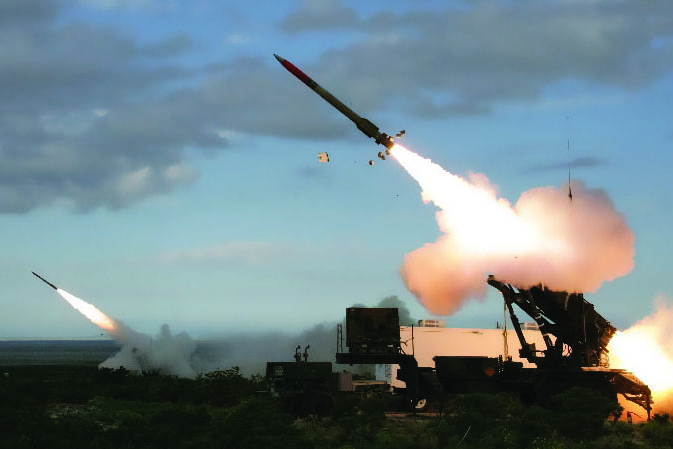
The Army test fires a Patriot missile in a recent test. The Patriot missile system is a ground-based, mobile missile defense interceptor deployed by the United States to detect, track and engage unmanned aerial vehicles, cruise missiles, and short-range and tactical ballistic missiles. Patriot, along with other missile defense systems, are included in the Army Air and Missile Defense 2028, which provides the Army’s overarching vision for the AMD force, describes how the AMD force is postured to support the Army and joint forces, and articulates what must be accomplished to achieve the 2028 desired end state of preventing and defeating adversary air and missile attacks through a combination of deterrence, active and passive defense, and support to attack operations. (U.S. Army photo)

China’s missile arsenal now bristles with long-range precision capabilities designed to push U.S. forces farther from the Pacific battlespace. A weapon that reverses that dynamic would restore balance—and deterrence.

This initiative isn’t just about one missile; it’s a test of whether America’s defense industrial base can move faster, collaborate smarter, and deliver ahead of schedule.

The Air Force’s message is clear: evolve or fall behind. And in today’s geopolitical reality, “falling behind” isn’t an option.

A future of air power dominance depends on weapons like the AFLRW—long-reaching, precise, and American-made. If all goes as planned, the next time an adversary looks to test U.S. resolve, the response won’t need to be close. It’ll already be on its way from a thousand miles out.

Raytheon to Ramp Up Missile Production Amid Pentagon Deals
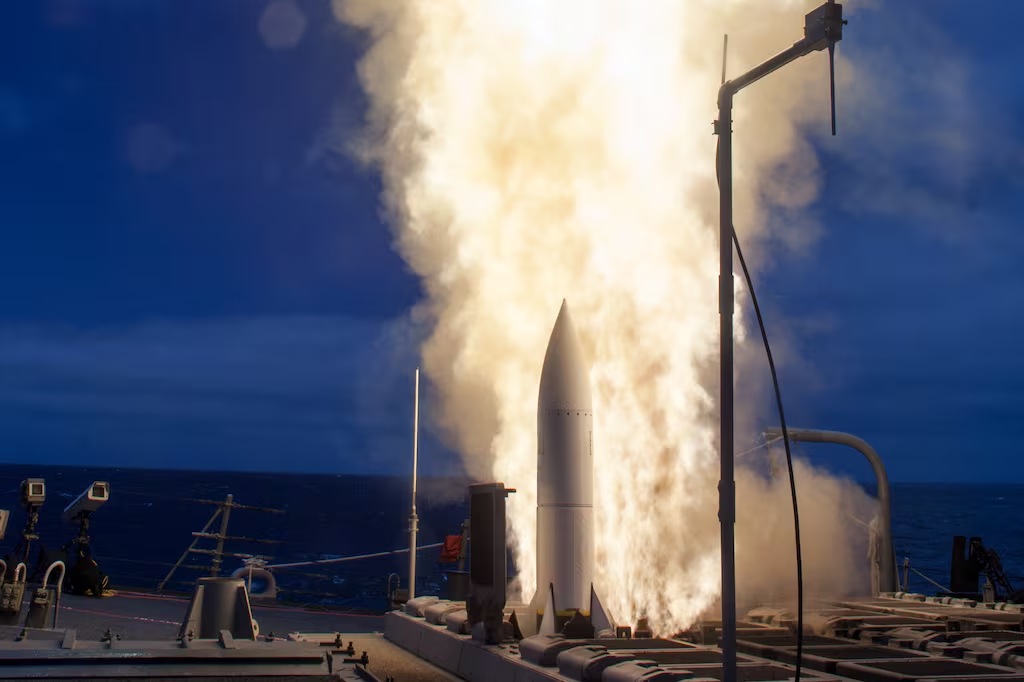
The Arleigh-Burke class guided-missile destroyer USS John Paul Jones launches a SM-6 missile during a live-fire test. (U.S. Navy)

Scroll to Top