Author name: Common Defense

News

Trump Defends White House ‘Drone Port’ Project as Essential National Security Measure

President Donald Trump isn’t backing down from his vision of turning the White House into a high-tech fortress, complete with a sophisticated rooftop drone port.

Over the weekend, he tore into a federal judge’s decision to halt construction, invoking national security and sharply warning against judicial interference in matters of presidential protection.

In his unmistakable Truth Social style, Trump blasted U.S. District Judge Richard Leon, calling on him to “stop playing games with America’s Security.”

The president didn’t mince words, warning that if any harm came from these delays, Judge Leon would be “responsible for the Death and Destruction caused to our Country.”

Trump’s frustrations stem from a federal injunction placed on the $400 million White House ballroom project — a massive undertaking aimed at reimagining part of the East Wing as both a ceremonial space and a cutting-edge defensive installation.

A lawsuit, filed by the National Trust for Historic Preservation, claims that the ballroom’s expansion violated procedural limits because congressional authorization wasn’t secured first.

Leon agreed with that argument in March, ordering a halt to the work. But an appellate court later put that decision on pause, briefly giving the project new life as legal wrangling continues.

Trump, however, is moving ahead mentally and politically, presenting the entire endeavor as a matter of national survival rather than mere architecture.

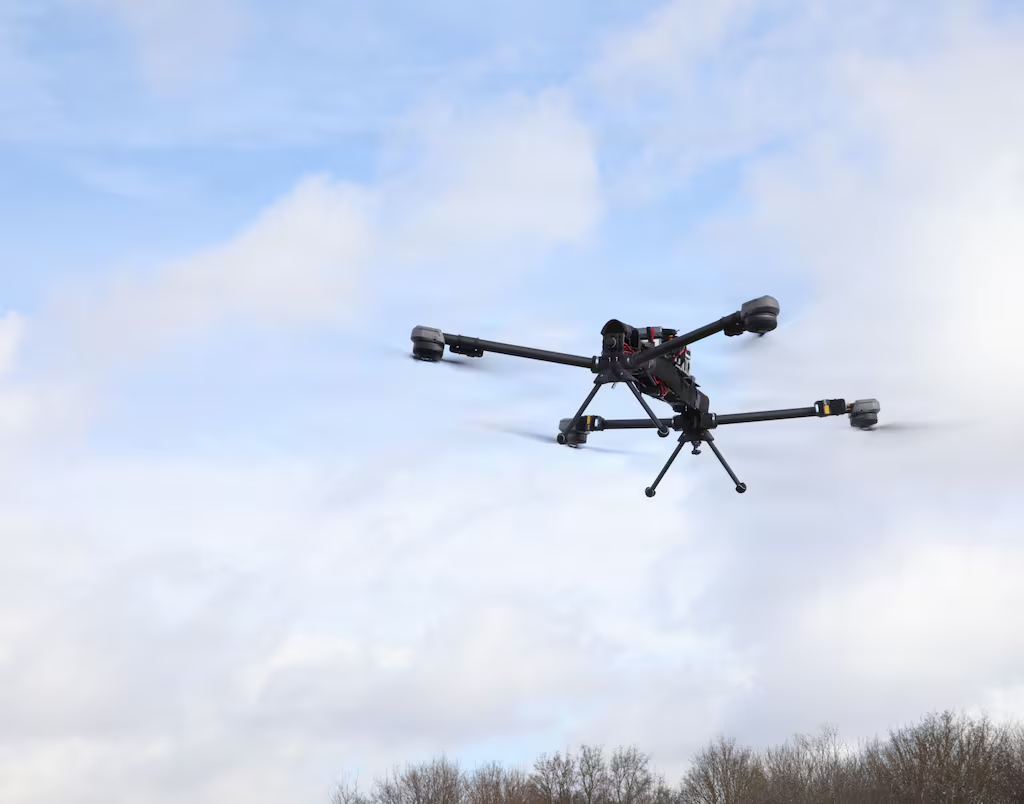
In his Sunday post, Trump showcased digital renderings depicting the White House roof lined with snipers and military-grade drones prepped for rapid deployment. He declared the “DronePort at the White House Ballroom” would be the most sophisticated in the world, defending Washington “long into the future.”

He reminded Americans that the age of simple sidearms is long gone, proclaiming that modern weapons mean “we can no longer defend Washington, D.C., with rifles and pistols alone.”

Trump Unveils Plans for Fortress Ballroom with High-Tech Drone Base and Underground Military Hub [WATCH]

The president personally toured journalists through the site in May, proudly describing how the new ballroom complex will double as a military-grade structure — featuring a medical wing, missile-resistant roofing, and unlimited drone capacity.

“This is all my money and donors’ money,” Trump emphasized, an unsubtle reminder that taxpayers aren’t footing the bill. “On top of the roof, we’re going to have the greatest drone empire you’ve ever seen, and it’s going to protect Washington.”

Critics on the left and in the bureaucracy are predictably recoiling, painting the project as excessive or symbolic. But in the real world, the need for heightened White House security has rarely been clearer.

In just the past month, three separate armed threats have erupted within shouting distance of the president — including one gunman fatally shot near the White House itself after opening fire.

At the start of May, another man was wounded in a firefight near the Washington Monument with the Secret Service, while in late April, an armed individual carrying multiple weapons tried to breach the White House Correspondents’ Association dinner.

Those consecutive close calls underscore why Trump’s insistence on advanced protective measures isn’t vanity. It’s prudence.

Trump Defends White House ‘Drone Port’ Project As Essential National Security Measure
President Donald J. Trump shows concepts of White House Drone Port, June 1, 2026

Acting Attorney General Todd Blanche reinforced that point in filings urging courts not to hamstring the project due to bureaucratic quibbling. “This second attack on the President this month underscores that critical need for top-level, state-of-the-art security at the White House, including the Ballroom,” Blanche argued.

His office described the facility as essential for ensuring the president “can perform his constitutional duties in a safe and heavily secured facility.”

For Trump, the fight is not just against the red tape that bogs down nearly every modern construction project within the federal apparatus — it’s against the mindset that prioritizes optics over protection.

While historic preservation activists fret about sightlines and heritage façades, Trump is looking ahead at the realities of 21st-century warfare and the need to shield America’s command post from every conceivable threat.

The president’s approach toward security has always carried a distinctly modern edge. Where bureaucrats see aesthetics, he sees tactical advantage.

Where traditionalists see a ballroom, he sees a secure assembly space where command and celebration coexist safely under the same reinforced roof.

The “DronePort” may sound futuristic, but experts in modern security are already warning that airborne threats — including weaponized micro-drones — are the next major frontier of domestic and presidential protection.

Trump’s instinct, as usual, is to be two steps ahead of the institutional crowd, ready to equip America’s first fortress with tools fit for real-world dangers, not hypothetical ones.

And that, ultimately, may be the defining feature of Trump’s presidency: a relentless commitment to keeping America secure, regardless of who complains, stalls, or sues.

In an era when too many in Washington prioritize process over protection, it’s refreshing to see the commander in chief thinking like a guardian rather than a bureaucrat.

News

Farewell Flight: Marines Honor Legendary Harrier Jet’s Final Public Ride

After more than four decades of roaring takeoffs, vertical landings, and battlefield heroics, the Marine Corps is saying goodbye to one of its most iconic warbirds—the AV-8B Harrier II.

This week, the jet that has defined Marine air power for a generation will make its final public flight at Marine Corps Air Station Cherry Point, North Carolina, closing a chapter written in grit, smoke, and American steel.

The “sundown” ceremony, scheduled for Wednesday, will mark the retirement of the Harrier from Marine service.

The aircraft, famous for its vertical takeoff and landing capabilities, has been a mainstay of Marine aviation since first entering service in 1985.

The retiring birds belong to Marine Attack Squadron 223, a unit that just last year was deployed to the Caribbean as part of a larger U.S. military operation culminating in the January 3 capture of Venezuelan strongman Nicolás Maduro.

The event will draw thousands of spectators, including active-duty Marines, retirees, and families who know what this jet has meant to the Corps.

Senior Marine Corps leaders and local officials will join them as a formation of five Harriers performs a powerful flyover before landing in front of the crowd.

For many, that thunderous roar from the Harrier’s Rolls-Royce engine will be the sound of patriotism one last time.

Though the ceremony celebrates the end of Harrier operations, the jets aren’t done just yet.

Marine officials say some of the aircraft will make a few more flights as they are ferried to museums or storage sites. The official deactivation of Marine Attack Squadron 223 is set for September, wrapping up nearly forty years of service.

“Ace of Spades” Takes Final Harrier Flight as Marine Corps Advances to F-35 Era

When retired, many of these tactical legends will find their final rest at the 309th Aerospace Maintenance and Regeneration Group at Davis-Monthan Air Force Base in Arizona—America’s famed aircraft “boneyard.” It’s where icons go to sleep under the desert sun.

The Harrier entered Marine service in 1985, building on the British combat-proven design that earned its fearsome “Black Death” moniker during the Falklands War.

Its ability to leap off short runways or even small ships gave Marines air power unlike any other.

When enemy fighters or insurgents thought they had a safe zone, the Harrier came from seemingly nowhere—clearing the field with precision ordnance and roaring away vertically before the dust settled.

Retired Marine Lt. Col. Mike “Gravy” Rountree, who flew Harriers between 2003 and 2011, recalled early days in Iraq when Marine squadrons operated with almost no support. “They were a gunny and a tank of gas and a couple of ordnance Marines,” Rountree recalled.

Harrier Sundown Celebration Honors Legacy as Marines Prepare for Fifth Generation Fleet
The AV-8B Harrier II+ will reach the end of its planned service life in fiscal year 2026. (U.S. Marine Corps)

“They were able to land the jet, turn the jet, launch the jet with minimum ground support, and it did not depend on any tankers.” That rough-and-ready independence defined the Harrier spirit.

Rountree called the aircraft unique not because of its hardware, but because of how Marines used it.

“The Harrier didn’t need an airfield,” he said. “All it needed was a Marine flying it.” That independence exemplified the Marine ethos—self-reliance, lethality, and raw determination.

Marine Expeditionary Units used that flexibility to bring an airborne punch wherever the fight was hottest.

A Harrier could launch from an amphibious assault ship, support ground operations miles inland, and return to deck—all without needing traditional runways.

The jet gave every Marine commander a dedicated air power arm, tightening the Corps’ legendary Air-Ground Task Force concept.

A U.S. Marine Corps AV-8B Harrier II receives fuel over Iraq while supporting Operation Inherent Resolve, Dec. 31, 2015. Operation Inherent Resolve is the coalition intervention against the Islamic State of Iraq and the Levant. U.S. Air Force photo by Tech. Sgt. Nathan Lipscomb
A Marine Corps AV-8B Harrier lands on the amphibious assault ship USS Iwo Jima during the Combined Composite Training Unit Exercise in the Atlantic Ocean, Nov. 20, 2017. The Harrier crew is assigned to Marine Medium Tilt-rotor Squadron 162 (REIN), 26th Marine Expeditionary Unit. Marine Corps photo by Cpl. Jon Sosner

“Now that MAGTAF commander, that ground commander, has his own air force with him all the time,” Rountree said.

“It’s not bringing a bomber’s weight of ordnance, but it’s bringing close air support fires right where it’s needed.”

The Harrier’s combat record speaks volumes. During the first Persian Gulf War, Marine Harriers were the first to the fight, flying 3,380 sorties totaling more than 4,000 flight hours while sustaining an astonishing mission readiness rate above 90 percent.

That kind of reliability didn’t come from fancy bureaucratic contracting—it came from Marines with grease-stained hands keeping their birds combat ready under fire.

Retired Marine Maj. Michael Decker, now with the RAND Corporation, noted that Harriers operated as close as 40 miles from the Kuwaiti border in 1991.

Their short runway requirement let them stay near the fight, something no other American jet could do at the time.

A U.S. Marine Corps AV-8B Harrier II receives fuel over Iraq while supporting Operation Inherent Resolve, Dec. 31, 2015. Operation Inherent Resolve is the coalition intervention against the Islamic State of Iraq and the Levant. U.S. Air Force photo by Tech. Sgt. Nathan Lipscomb

As the last Harriers shut down their engines this week, generations of Marines will recall what that distinct, ear-pounding sound meant.

The Harrier was never just a machine; it was a Marine’s promise to the guy on the ground—that no matter how rough it got, close air support was coming fast.

The torch now passes to newer aircraft like the F-35B, which continues the vertical takeoff legacy with cutting-edge technology.

But there will always be a soft spot in Marine history for the stubborn, rugged, jump-jet workhorse that proved what American innovation and Marine grit could do together.

The Harrier is not just a retired aircraft—it’s a reminder that American warfighters will always find a way to dominate the sky, no matter the odds.

One final roar over Cherry Point will drive that truth home.

News

U.S. Forces Hammer Iranian Targets After Drone Shootdown, Intercept Missiles Over Kuwait

American forces didn’t mince words or fire this weekend as they struck back at Iran’s latest aggression.

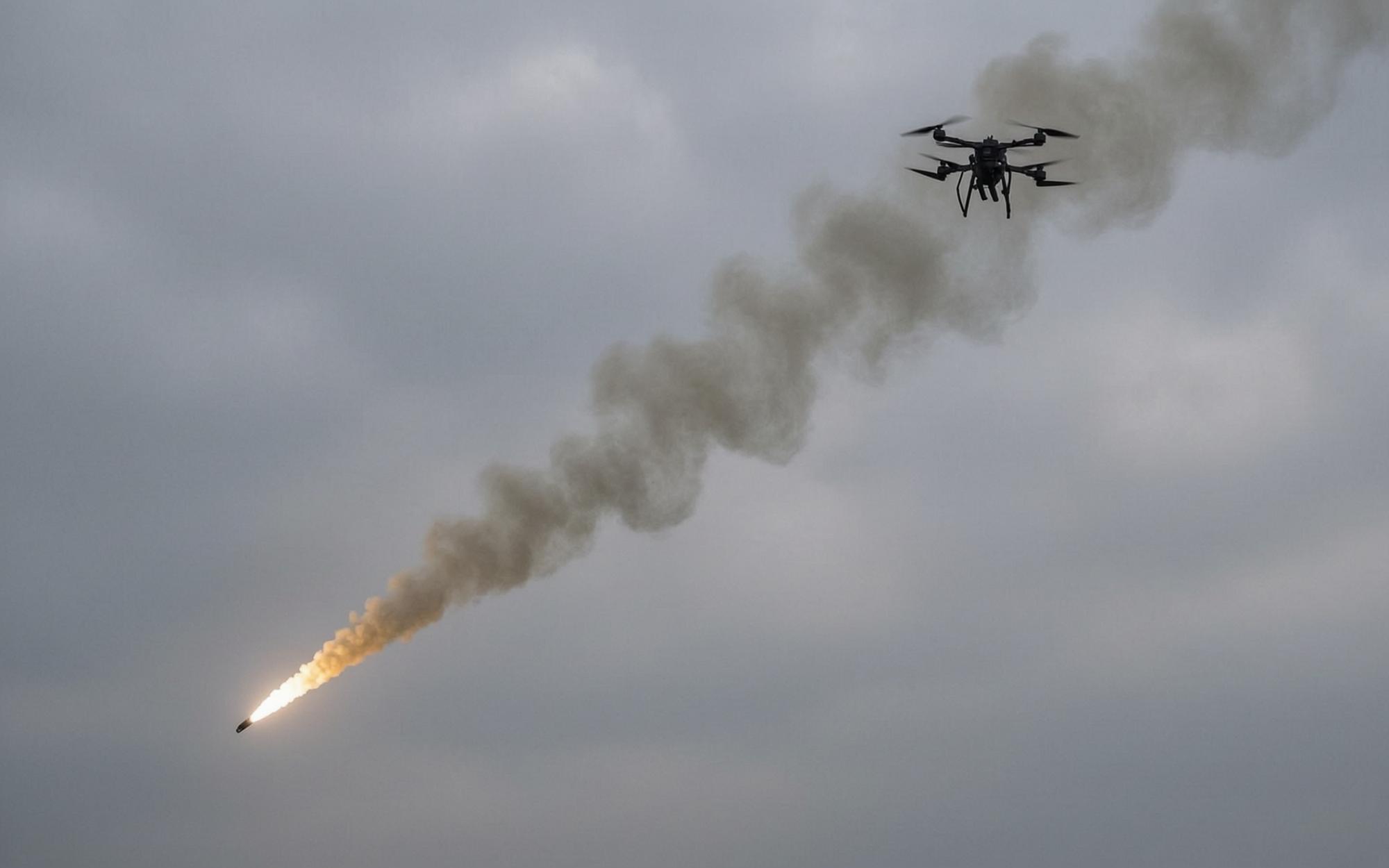
According to U.S. Central Command, the War Department’s precision strikes pounded Iranian command-and-control sites and radar installations following Tehran’s reckless shootdown of a U.S. MQ-1 drone operating legally over international waters.

U.S. fighter jets destroyed multiple Iranian air defense assets, a ground control station, and two suicide drones attempting to disrupt commercial and military traffic in international sea lanes.

In typical fashion, Iran thought it could poke the United States with impunity.

It quickly learned that President Trump’s military does not tolerate direct threats to American forces or allies.

CENTCOM described the response as “measured and deliberate,” language that underscores both the restraint and the readiness of U.S. forces.

While no American lives were lost, the strikes sent a clear signal: the War Department will not stand idle as Iran escalates.

The problem for the Islamic Republic is that every time it tests the Trump administration’s resolve, it exposes its own vulnerabilities.

The United States has the best-trained military on Earth, commanded under a War Secretary, Pete Hegseth, who believes in peace through overwhelming strength. And once again, that doctrine worked precisely as intended.

US Navy Takes Out Two Iranian Tankers Defying Blockade in Strait of Hormuz
An F/A-18E Super Hornet taxis on the flight deck of Nimitz-class aircraft carrier USS Abraham Lincoln on April 16, 2026. (U.S. Navy)

CENTCOM confirmed that even amid heightened military activity, the ceasefire that began April 12 remains technically in effect.

Yet everyone knows this so-called “ceasefire” is hanging by a thread thin enough to slice paper. Iranian militias and naval units continue testing limits in the Gulf, hoping American patience will falter. It won’t.

On May 25, U.S. forces carried out additional strikes on Iranian missile launch sites and boats actively laying naval mines.

Those aggressive Iranian operations directly threatened international shipping lanes and put countless lives at risk. Washington’s answer was swift and surgical—American hardware neutralized those hostile positions before they could cause greater harm.

Then, just as tensions seemed to cool, Tehran tried again. On Sunday evening, Iran launched two ballistic missiles aimed toward U.S. forces stationed in Kuwait.

The attack accomplished little besides proving that Trump’s military deterrence strategy is still needed.

Both missiles were intercepted midflight, an achievement demonstrating American technological superiority and constant readiness.

Naval Blockade Sparks Showdown as Destroyer Halts Iranian-Bound Cargo Vessel
The destroyers Spruance, front, and Decatur alongside the fleet oiler Carl Brashear. (U.S. Navy photo by MC2 Will Gaskill)

While military commanders handle operations on the ground, the Trump administration continues diplomatic maneuvering at the highest level. Reports suggest Washington and Tehran have been engaged in overtures about a potential deal that could end the Iran war.

But in a classic Trump move, the president reportedly modified the deal terms to force Tehran into accountability—a step critics say could finally bring real results after decades of failed “talks.”

The proposed resolution would not only wind down hostilities but also ensure Israel’s right to defend itself is not undercut. Iran would have to lift its blockade of the Strait of Hormuz, reopening one of the world’s most strategic waterways.

For years, Iranian forces have used that strait as leverage against global trade and American influence. That leverage may soon be gone.

The pattern is as predictable as ever: Iran provokes, the U.S. retaliates, and the world watches to see if the regime can take a hint.

Each strike reminds the mullahs in Tehran that they’re not dealing with the indecisive bureaucracy of the Obama years—they’re up against the no-nonsense leadership of President Trump and War Secretary Hegseth, who put results before rhetoric.

As always, American forces remain focused on mission success, safety of personnel, and deterrence of future attacks. This is not nation-building or appeasement; it’s strategic dominance.

It’s the reassertion of what the War Department was meant to do: protect American lives and interests anywhere on the map.

Iran’s repeated provocations only prove how effective U.S. force projection truly is. Their desperation to disrupt stability in the Gulf region is a sign of weakness, not strength.

Every missile they launch and every drone they lose chips away at their shrinking power base and emboldens their internal opposition.

For now, the United States stands ready, steady, and fully capable of defending every inch of international waters, airspace, and land where our forces operate.

Iran, take note: when you fire at America, you will get hit back harder—and faster—every single time.


Scroll to Top