
The Navy’s proposed Trump class guided missile battleship program could carry a staggering total price tag of $275 billion, according to a Congressional Budget Office report released Wednesday. The first nuclear powered BBG(X) alone is estimated to cost $23.4 billion.
President Donald Trump’s administration announced plans in December to pursue a new class of large surface combatants bearing the Trump name.
The ambitious proposal would put unmatched firepower at sea, but it would also test a shipbuilding industry already struggling with delays, overruns and workforce limitations.
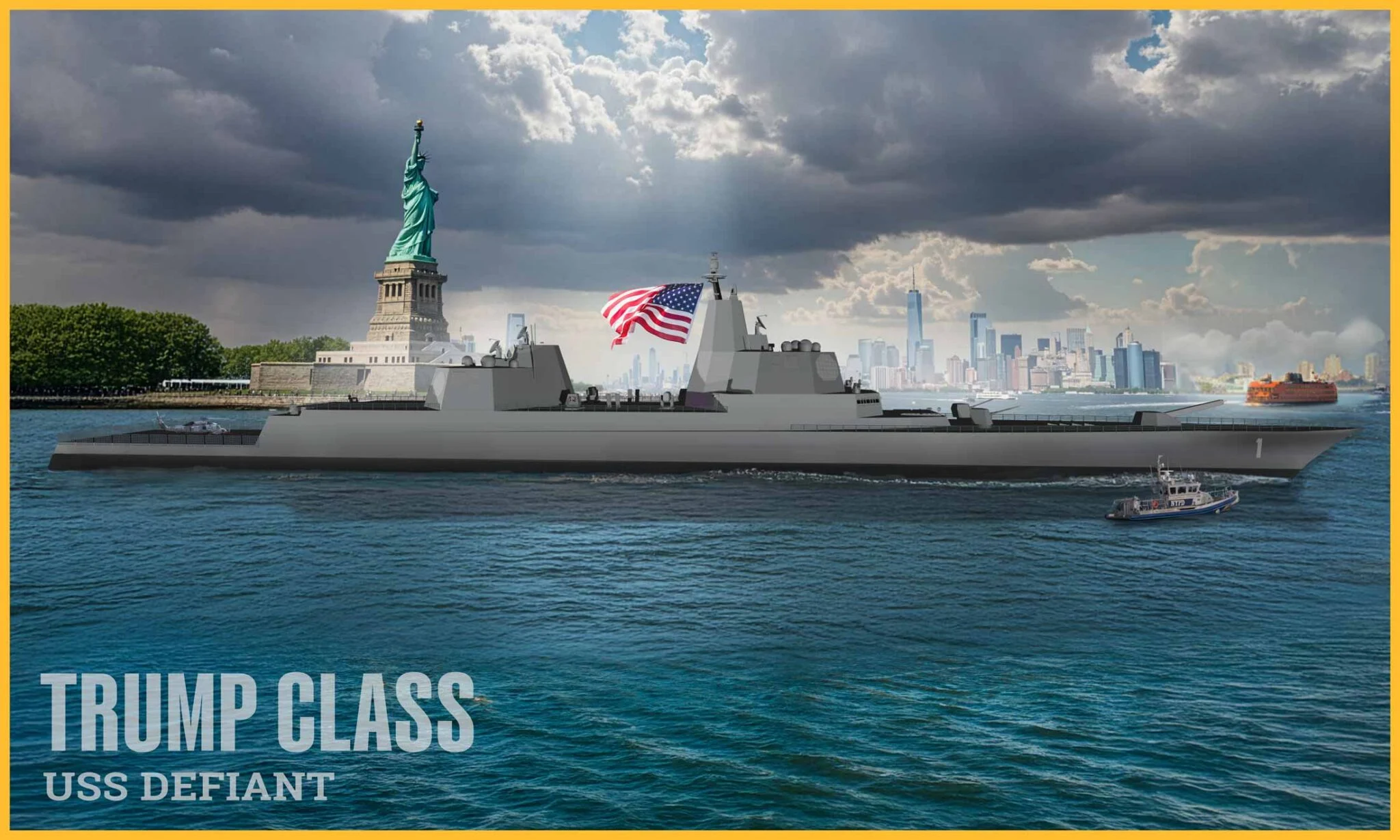
The envisioned warship would displace approximately 35,000 tons and become the most heavily armed surface vessel ever constructed for the United States Navy.
Its arsenal could include air defense missiles, land attack weapons, anti ship missiles, hypersonic systems, nuclear cruise missiles, powerful lasers and a rail gun.
“If built to those specifications, the ship would be the largest surface combatant in the world and larger than any surface combatant built for the Navy since World War II,” the CBO report stated. That would give the fleet a capital ship with a scale not seen in generations.
“It would be more than three and a half times the size of the Navy’s Arleigh Burke-class guided missile destroyer and more than twice the size of the Zumwalt-class guided missile destroyer.” In plain English, this would not be another modest procurement experiment cooked up by Pentagon bean counters.
The Navy currently projects that it could build 15 Trump class guided missile battleships between 2028 and 2056.
After the $23.4 billion lead ship, each of the remaining 14 vessels is estimated to cost approximately $18 billion.
For comparison, the USS Gerald R. Ford, America’s premier nuclear powered aircraft carrier, cost about $13.3 billion.

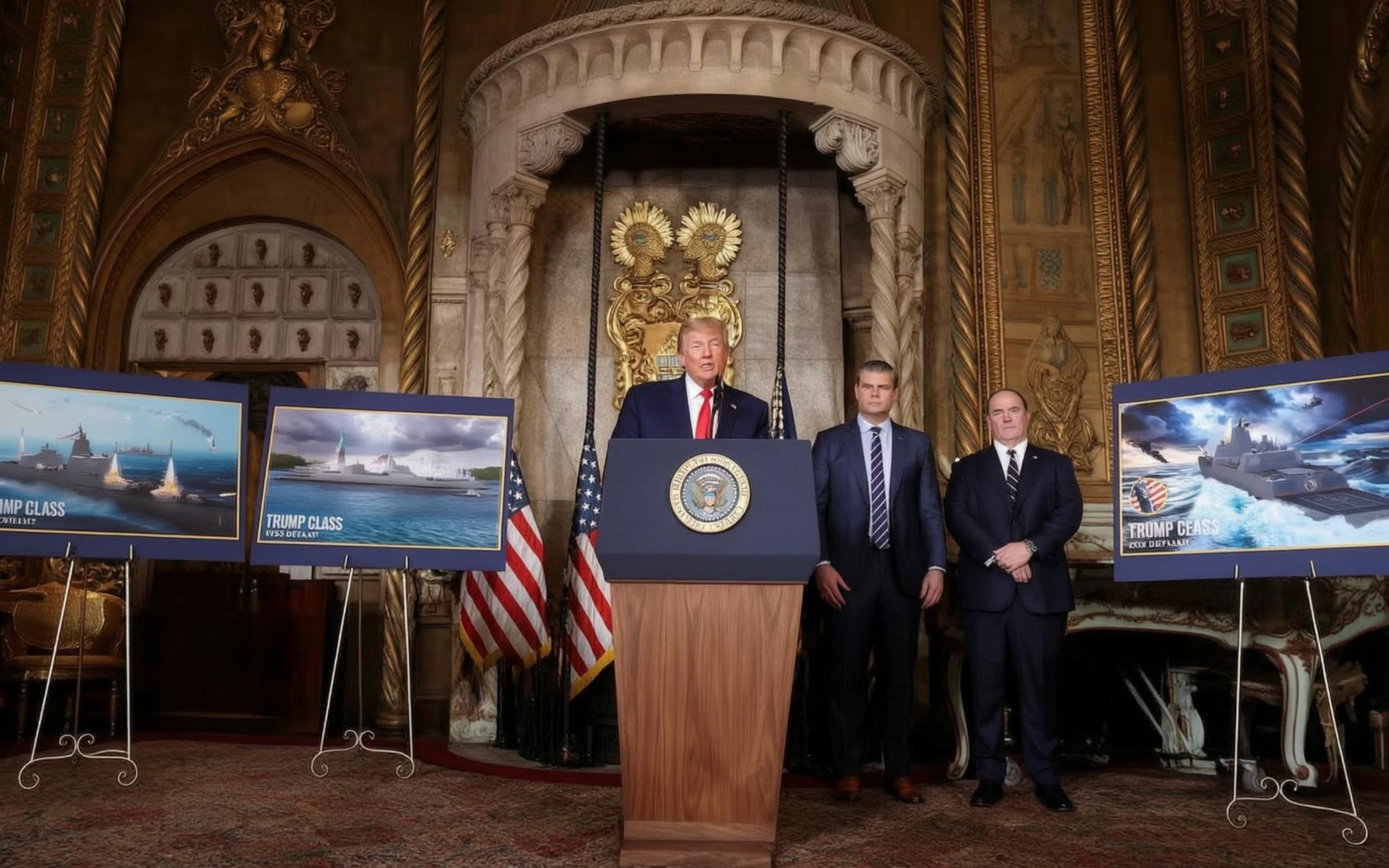
President Donald J. Trump, joined by Secretary of War Pete Hegseth, center right, Secretary of State Marco Rubio, left, and Secretary of the Navy John Phelan, right, announces plans for a “Golden Fleet” of new Navy battleships at the Mar-a-Lago Club in Palm Beach, Fla., Dec. 22, 2025.
That means each Trump class battleship could cost considerably more than the Navy’s newest carrier, even before the usual Washington cost creep starts chewing through taxpayer dollars.
The CBO also warned that the total tonnage of “large surface combatants to be constructed would need to increase by 60 percent,” by 2058.
The report added that such an increase “could be a challenge for the shipbuilding industry.”
That may qualify as bureaucratic understatement. American shipyards would have to dramatically expand output while retaining skilled workers, strengthening strained supply chains and continuing construction of other vessels demanded by the fleet.
The shift toward larger surface combatants would require shipyards to produce 12 percent more tonnage by 2035 under the Navy’s 2027 plan than under its 2025 proposal.
That increase would arrive while the service remains committed to building two DDG 51 destroyers each year.
To meet the Trump class schedule, the Navy would need to deliver roughly one battleship every other year from 2028 through 2056. Doing that while sustaining destroyer production would demand the sort of industrial discipline Washington has discussed for years but too rarely delivered.
A Government Accountability Office report released last March documented nearly two decades of disappointing progress across American shipbuilding.
Too few ships have been completed, new vessels have failed to perform as expected and some deliveries have arrived as much as three years late.
Shelby S. Oakley, a GAO director, told the Senate Armed Services Committee that unrealistic assumptions about schedules and costs have drained resources and created additional delays.
She said Navy programs and shipbuilders have been “effectively made to operate in a perpetual state of triage.”
That troubled record does not make the battleship concept unsound, but it does expose the gulf between an impressive weapons blueprint and an operational ship delivered on time.
Trump’s vision is muscular and appropriately focused on restoring American maritime power, yet Congress and Navy leadership will need to keep contractors from treating the program like another open ended federal cash machine.
Nuclear propulsion could provide meaningful savings over the ships’ service lives because the Navy would not have to purchase conventional fuel for them.
The GAO, however, did not estimate how much those reduced operating expenses might offset the immense cost of construction.
The projected cost has already moved sharply since the December announcement.
The updated $23.4 billion estimate for the first ship is roughly $6 billion higher than the Navy’s initial projection, making strict oversight essential before steel is cut and invoices begin landing on Capitol Hill.
If the Navy can master the industrial challenge, the Trump class could become a fearsome centerpiece of American sea power and a blunt message to China, Russia and every hostile regime watching the horizon.
If the shipbuilding establishment repeats its old habits, however, the $275 billion program could become a monument to delays, excuses and gold plated procurement.
