
The United States Navy has endured a rough stretch, including a destroyer power failure in the South China Sea and reported morale problems aboard the aircraft carrier USS Lincoln.
Still, President Donald Trump’s administration deserves credit for recognizing that American shipbuilding has been neglected for far too long.
The administration has floated several creative ideas for rebuilding maritime power and reshaping the fleet.
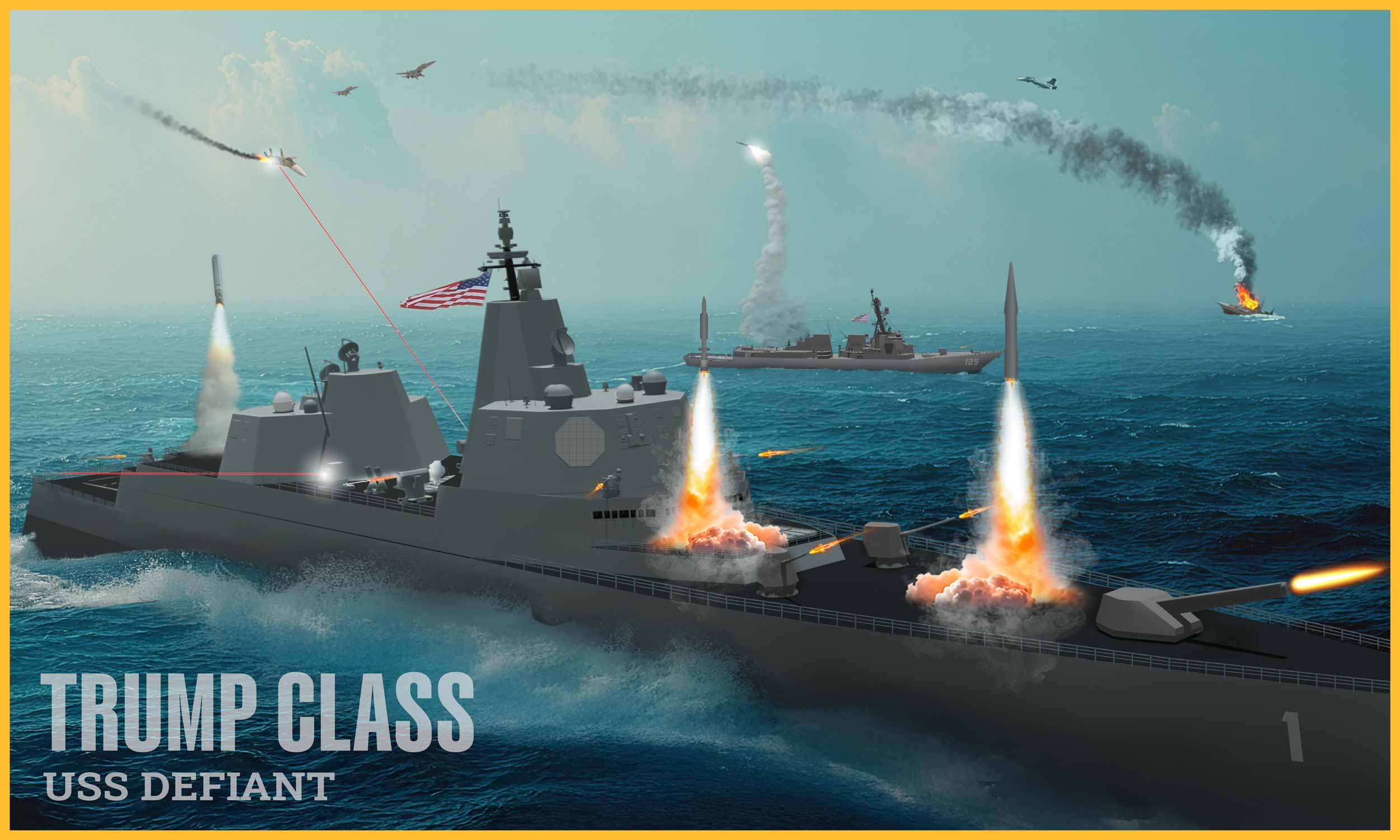
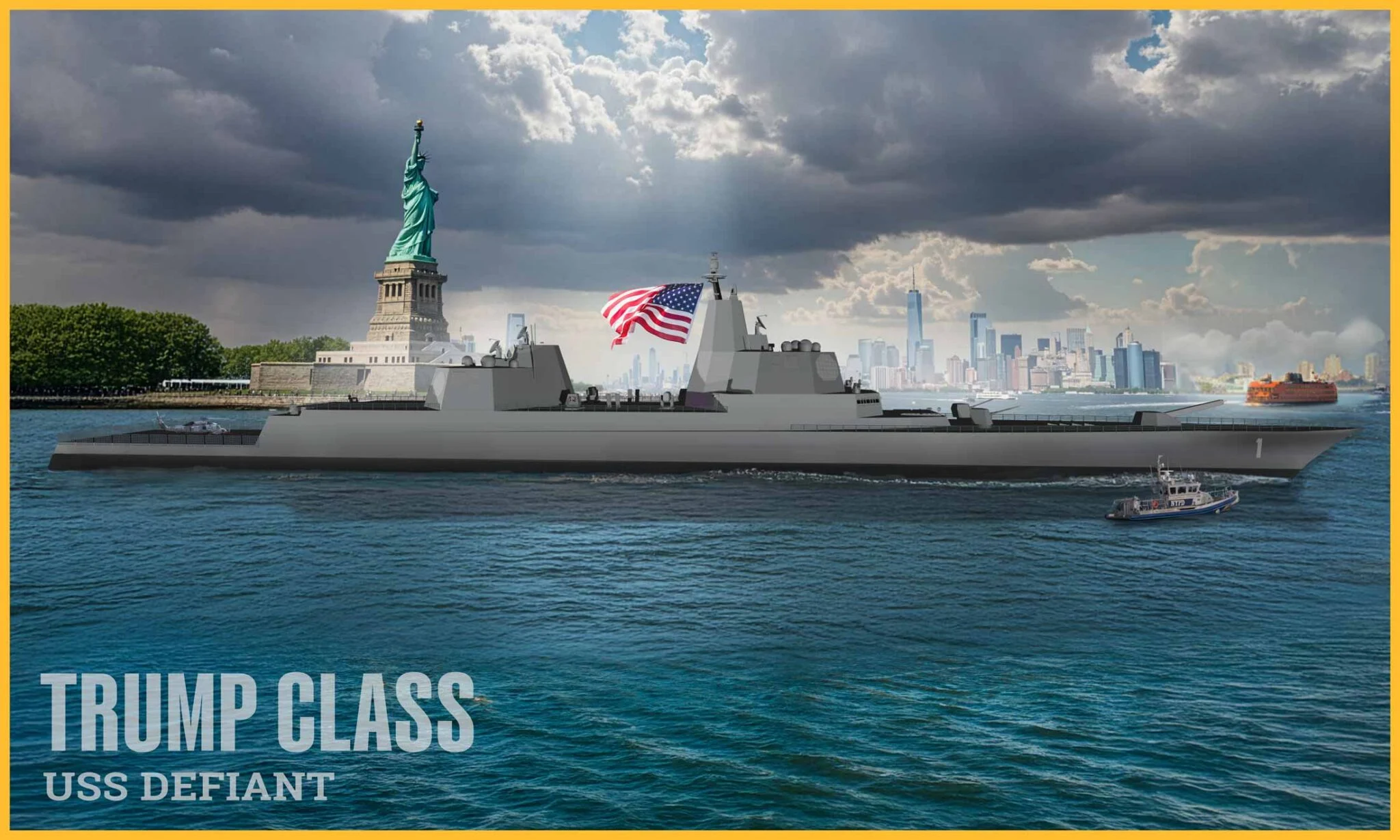
None has generated more controversy than the proposed Trump class battleship, a massive capital ship intended to carry advanced weapons, deep magazines, and nuclear propulsion.
Supporters envision a heavily armed vessel capable of operating independently, absorbing punishment, and remaining at sea for extended periods without refueling.
That sounds formidable, especially after decades in which Washington allowed the American industrial base to rust while China built ships at a staggering pace.
The problem is that impressive concepts must eventually survive contact with budgets, shipyards, engineering limitations, and enemy weapons.
Critics argue that this battleship could become an enormously expensive distraction at precisely the wrong moment for the Navy.
An Aug. 21 article in China National Defense News, an official People’s Liberation Army publication, offers a revealing look at Beijing’s assessment.
Chinese analysts acknowledge that “large vessels can continue to execute certain combat missions even when communications are jammed, and their hulls offer superior damage resistance compared to small or medium-sized ships.”
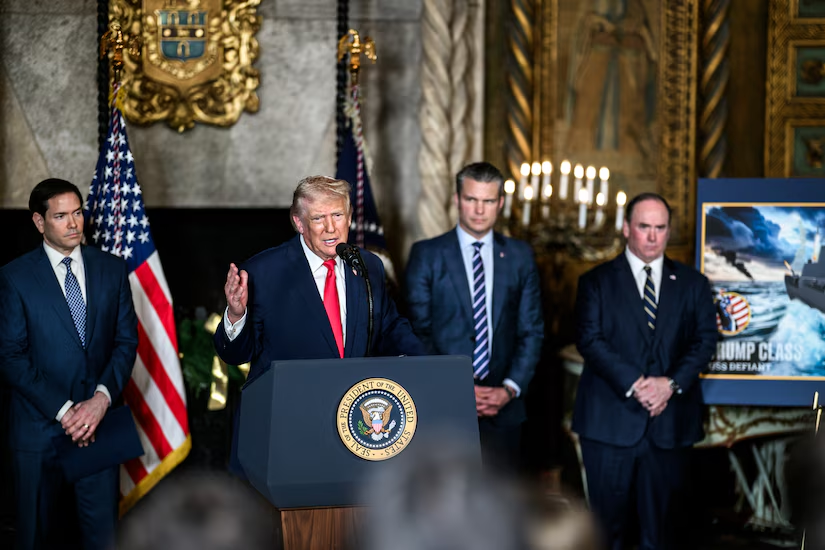
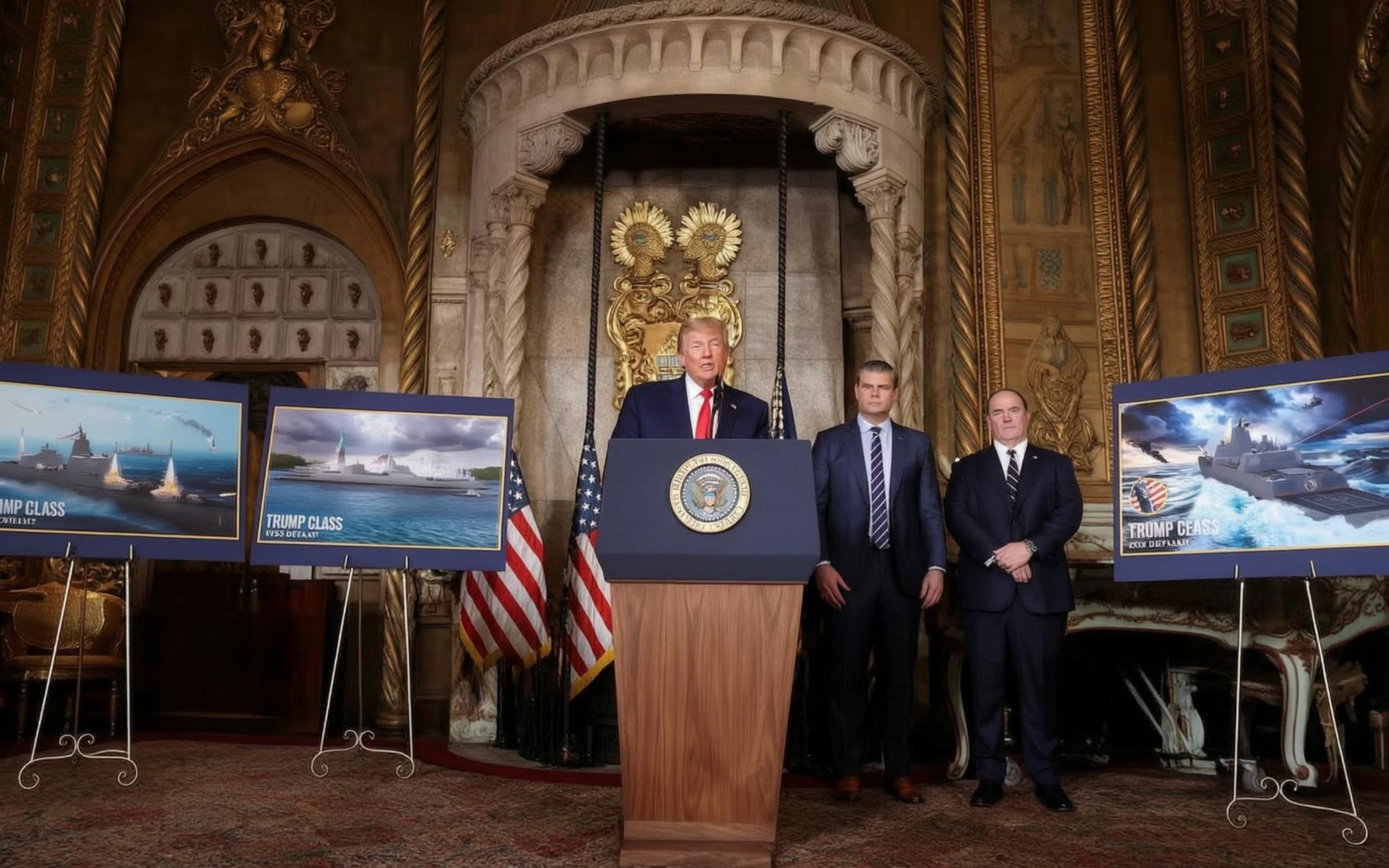
President Donald J. Trump, joined by Secretary of War Pete Hegseth, center right, Secretary of State Marco Rubio, left, and Secretary of the Navy John Phelan, right, announces plans for a “Golden Fleet” of new Navy battleships at the Mar-a-Lago Club in Palm Beach, Fla., Dec. 22, 2025.
The Chinese report also recognizes a weakness inherent in widely dispersed forces, which may “rely on stable data links.”
It further notes that the planned American battleship could use nuclear propulsion and might possibly carry missiles armed with nuclear warheads.
Those acknowledgments, however, are buried beneath a thick layer of skepticism.
Beijing’s analysts appear positively delighted by the possibility that Washington might pour staggering sums into a complicated surface ship while other critical naval programs remain delayed.
According to the report, building 15 Trump class battleships between 2028 and 2056 could cost $275 billion.
The lead vessel alone could reach $23.4 billion, with the switch from conventional propulsion to nuclear power driving costs 55 percent higher and producing a price the Chinese assessment calls “exorbitant.”
Even that eye watering estimate may not capture the full burden.
The report warns that “nuclear waste disposal and vessel dismantling following retirement are not included” in the projected $275 billion total.
Technical uncertainty presents another serious danger because the proposed ship could carry rail guns, hypersonic weapons, lasers, and other systems that remain immature or difficult to integrate.
The Chinese analysis identifies “Unfinalized designs and insufficient technological maturity” as major sources of potential delays and overruns.
The PLA publication delivers a particularly sharp warning about building the hull before its most important systems are ready. “This ‘build the platform first, install equipment later’ approach could increase the risks.”
Recent American experience gives that criticism uncomfortable credibility.
The Zumwalt class destroyer and Littoral Combat Ship programs both demonstrated how ambitious promises, unstable requirements, and immature technology can leave taxpayers funding vessels that fail to deliver their originally advertised combat value.
The proposed battleship would also represent a major doctrinal shift.
As the Chinese report observes, “This design differs from the Distributed Maritime Operations concept that the U.S. Navy has been advancing in recent years. The theory of distributed maritime operations emphasizes the dispersal of detection, command, and strike capabilities across multiple nodes … to mitigate the impact that damage to a few large vessels would have on the entire formation.”
Concentrating enormous firepower aboard a few giant ships creates tempting targets for quiet submarines, hypersonic missiles, and “drone swarms.”
Armor and redundancy matter, but no surface vessel becomes invulnerable merely because its displacement and price tag resemble a floating zip code.
China’s analysts also understand the miserable state of American shipbuilding.
They note that leading United States yards “are currently facing average delays of five years, with the delivery cycle for a single ship extending from approximately five years in the early 2000’s to about eleven years today.”
That bottleneck means the battleship would not exist in a vacuum. The report warns, “Assembly of nuclear-powered battleships … could further slow the construction of aircraft carriers and submarines,” potentially weakening the very capabilities America urgently needs in the Asia Pacific.
China has explored nuclear powered surface vessels and closely studied Russia’s renovated battle cruiser Admiral Nakhimov.
Yet Beijing would be perfectly happy to watch America gamble scarce industrial capacity on a prestige platform while Chinese shipyards continue producing submarines, missiles, drones, and conventional warships.
The Navy should build around proven American advantages, particularly undersea warfare, while expanding unmanned systems and strengthening shipyard capacity. It should also reduce costly “presence” missions that consume readiness without producing decisive strategic effects.
President Trump and War Secretary Pete Hegseth are right to demand bold thinking and a stronger fleet, but boldness does not require buying every shiny concept placed on a briefing slide.
Chinese strategists appear eager for the Trump class battleship because they believe the project would drain American resources, disrupt higher priorities, and ultimately help Beijing without firing a shot.
