News

News

President Trump Goes Scorched Earth on Senator Blumenthal, Demands Investigation Over Vietnam Service Lies

President Donald Trump is calling for an official investigation into Senator Richard Blumenthal, the Connecticut Democrat long accused of fabricating his record of military service in the Vietnam War, as reported by The Gateway Pundit.

Trump’s renewed criticism came Tuesday evening following a fiery Senate Judiciary Committee exchange in which Attorney General Pam Bondi confronted Blumenthal over his past false claims about serving in Vietnam.
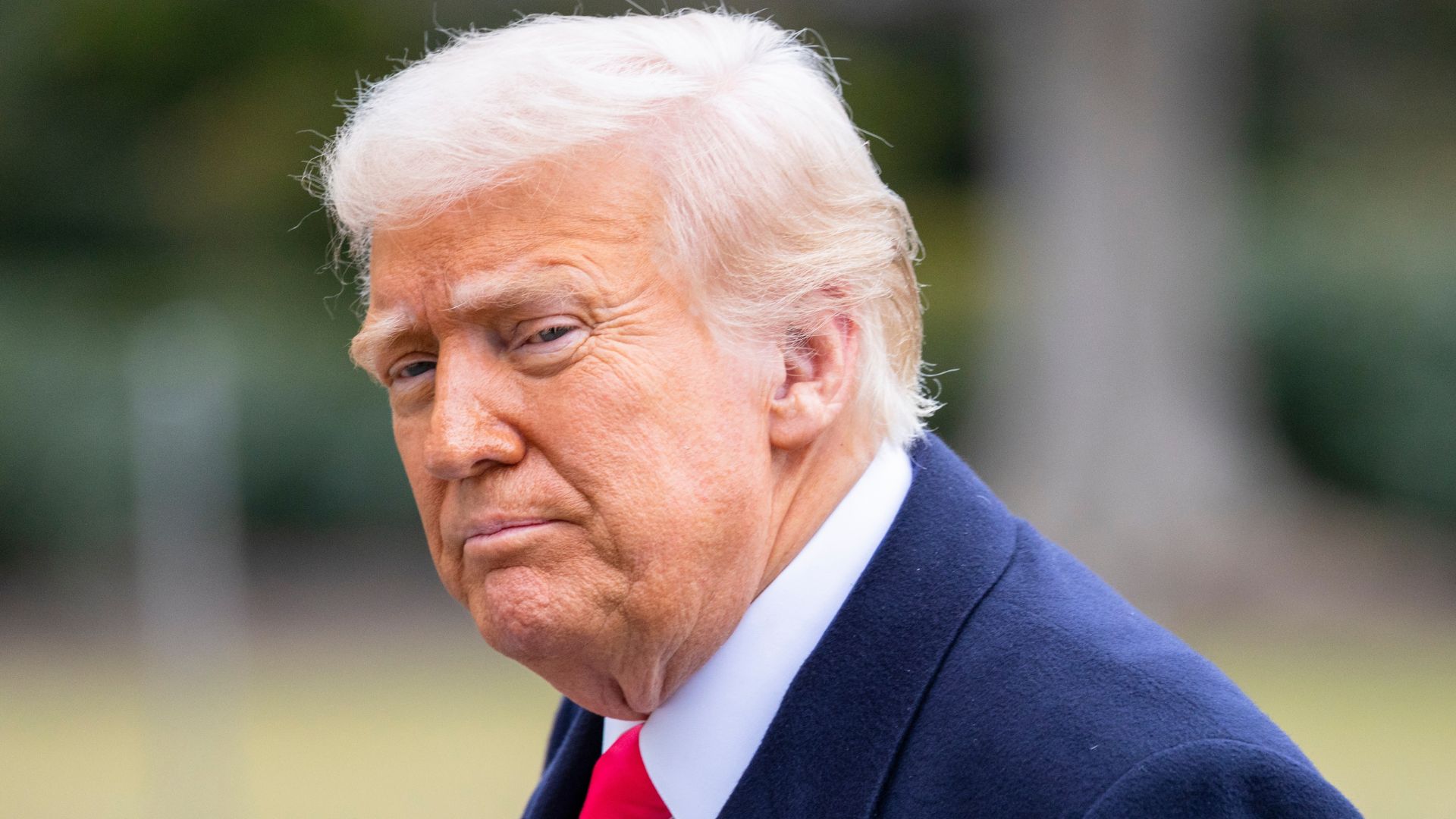
WASHINGTON – February 22, 2025: President Donald Trump arrives at the White House South Lawn on Marine One after his visit to CPAC.

“Sanctimonious Richard ‘Da Nang Dick’ Blumenthal, perhaps the biggest ‘joke’ in the United States Senate, is at it again!” Trump wrote on Truth Social.

“Dick lied until the midpoint of his political career, convincing everyone, in particular the Fake News Media, that he was a great ‘War Hero’ who lived on the precipice of death in the jungles of Vietnam.”

According to Trump, Blumenthal “would talk about his life in the military in almost every speech,” describing “violent and long battles” that never actually happened.

Trump added, “He was found out to be a FRAUD. The soldiers in his so-called ‘platoon’ came forward and said that they had no idea who this guy was. He was revealed, broke down and admitted, tears flowing from his eyes, that he LIED.”

Blumenthal, now 78, has faced scrutiny for years over his misleading statements about military service. Records show that he received five draft deferments before joining the Marine Corps Reserve in 1970, where he served stateside and never deployed to Vietnam.

When the truth came to light, Blumenthal claimed he had “misspoken” and said he meant to say he served “during the Vietnam era.”

“It should be investigated, and Justice should be sought,” Trump continued.

“Right now there is a Congressman sitting in prison for lying about his past during a campaign. Well, those lies were nothing compared to those of Richard ‘Da Nang Dick’ Blumenthal, perhaps the greatest phony in the history of the United States Senate. He should be allowed to speak no longer!”

Trump’s comments followed a heated moment between Bondi and Blumenthal during Tuesday’s hearing. The senator suggested that Bondi had engaged in an improper arrangement to benefit a former law partner.

Bondi forcefully rejected the accusation. “I cannot believe that you would accuse me of impropriety when you lied about your military service!” she said. “You lied to be elected a US Senator.”

Bondi, who previously served as a prosecutor before being confirmed as Attorney General, continued, “Don’t you ever challenge my integrity. I have abided by every ethics standard. Do not question my ability to be fair and impartial as Attorney General.”

Blumenthal did not respond publicly to the renewed controversy or to Bondi’s remarks during the session.

The Connecticut Democrat has held his Senate seat since 2011 and has repeatedly brushed off criticism of his false Vietnam claims, despite military veterans and political opponents arguing that his statements constituted stolen valor.

The calls for an investigation come as Trump continues to spotlight issues of accountability among members of Congress, particularly those accused of misleading the public about their personal records or policy conduct.
News

Trump Considers Insurrection Act as Democrat Cities Descend Into Violence

President Donald Trump said Monday that he is open to invoking the Insurrection Act to federalize National Guard units in certain states if violence continues to escalate but noted that, so far, doing so has not been necessary.

Speaking to reporters in the Oval Office, the president said the option remains on the table to ensure public safety amid rising clashes between protesters and federal immigration authorities in several cities.

“So far, it hasn’t been necessary, but we have an Insurrection Act for a reason. If I had to enact it, I’d do that,” President Trump said when asked under what conditions he would use the 19th-century law.

“If people were being killed and courts were holding us up or governors or mayors were holding us up, sure, I’d do that,” he continued.

“I mean, I want to make sure that people aren’t killed. We have to make sure that our cities are safe.”

The Insurrection Act, passed in 1807, allows the president to deploy U.S. military forces domestically to restore order during times of civil unrest or insurrection.

The statute has been invoked 30 times in U.S. history, most recently in 1992, when President George H.W. Bush authorized troops to respond to the Los Angeles riots.

President Trump’s comments follow his recent authorization to deploy National Guard units to Chicago, Illinois, and Portland, Oregon — two cities that have seen ongoing conflicts between left-wing protesters and immigration enforcement officers.

However, the administration’s attempts to expand those deployments have been slowed by multiple court orders and lawsuits from state officials.

On Sunday, a federal judge issued a temporary injunction blocking the deployment of National Guard units to Portland for a second time.

The most recent order affected units from California and Texas, while an earlier ruling had already barred the use of the Oregon National Guard in the city.

In addition to Oregon, the states of California and Illinois have also filed lawsuits against the Trump administration, challenging the legality of federalizing their National Guard members without state approval.

In Illinois, a federal judge gave the administration until Wednesday at midnight to respond to the state’s complaint and scheduled a court hearing for Thursday.

Despite the ongoing legal disputes, President Trump reaffirmed his commitment to improving safety in cities experiencing high levels of violent crime and political unrest.

He cited Washington, D.C., as an example of how coordinated National Guard efforts can restore order and reduce crime.

“We have no choice but to do this,” Trump said, referencing his broader national public safety strategy.

“Portland has been on fire for years.”

The president added that he views ongoing unrest and resistance to federal authority in certain cities as a form of organized lawlessness.

“I think that’s all insurrection. I really think that’s really criminal insurrection,” he said.

The White House has identified three cities — Portland, Chicago, and Memphis, Tennessee — as top priorities in its current federal safety initiative.

The plan includes increasing cooperation between federal law enforcement and local agencies to address violent crime and to safeguard federal personnel and property.

President Trump’s remarks come amid heightened tensions between federal officials and Democratic governors who have accused the administration of overreach.

Legal experts expect the current lawsuits to determine how far the federal government can go in asserting control over National Guard deployments within individual states.

As legal proceedings continue, the president has maintained that his administration’s actions are aimed solely at ensuring the safety of American citizens.

“We have to protect people,” he said.

“We can’t allow lawlessness to continue unchecked in our cities.”

News

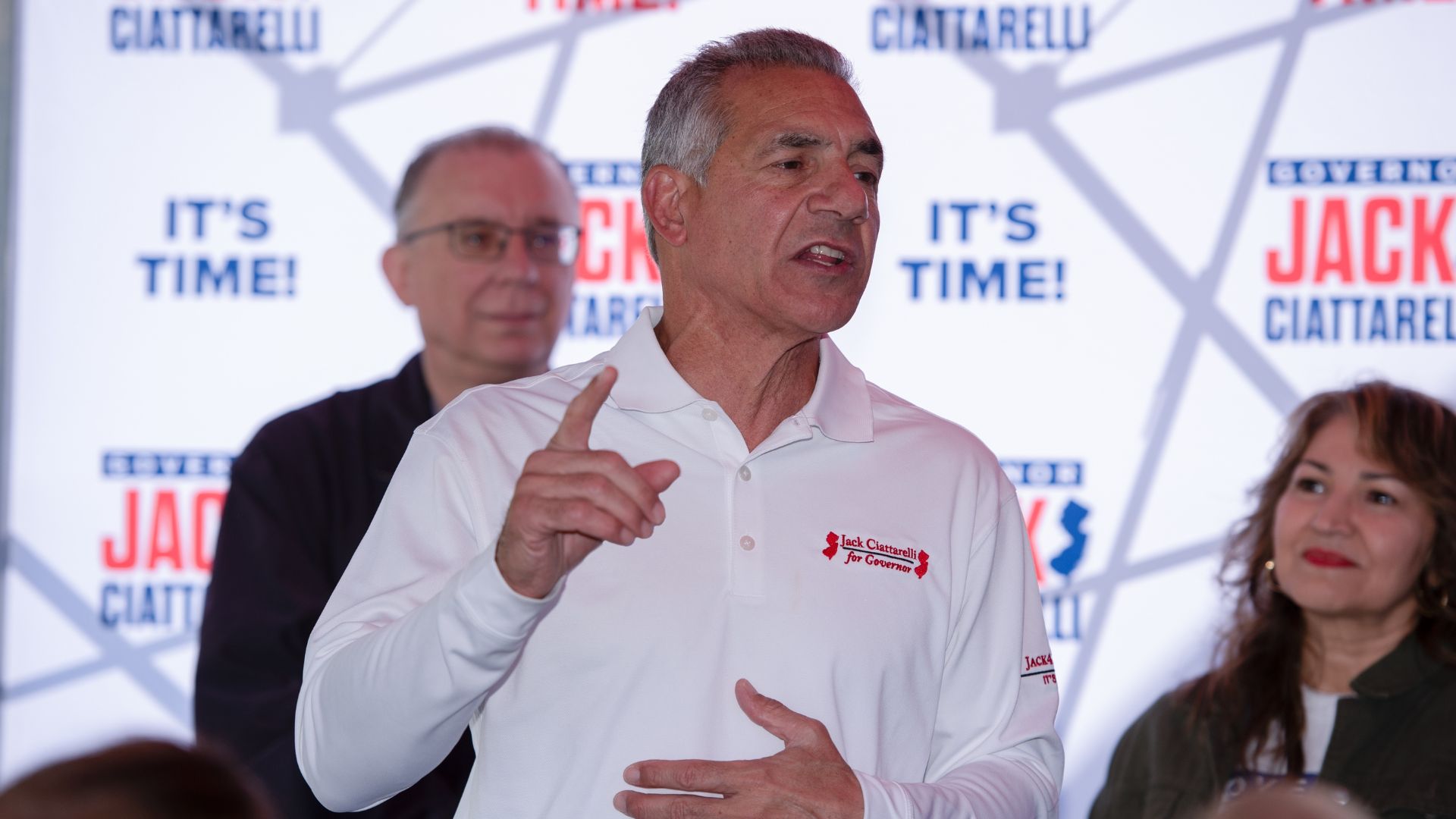
Democrats Flip in Blue New Jersey, Endorse GOP’s Jack Ciattarelli for Governor

Republican Jack Ciattarelli is emerging as a serious contender in the New Jersey governor’s race, where he is locked in a close contest with Democratic Representative Mikie Sherrill.

The race has drawn national attention as both parties see the Garden State contest as one of the most competitive gubernatorial battles of the year.

Recent polling indicates the race is within the margin of error, with Ciattarelli gaining support in traditionally Democratic regions.

The former state assemblyman, who narrowly lost to outgoing Democratic Governor Phil Murphy in 2021, has picked up new endorsements that suggest momentum is shifting in his favor.

On Sunday, Ciattarelli secured public backing from two North Hudson County officials — North Bergen Commissioner Allen Pascual and West New York Commissioner Marcos Arroyo — both Democrats.

Their endorsements mark a significant development in a region long considered a Democratic stronghold.

“When Democrats in Hudson County are standing with us, you know change is coming,” Ciattarelli said after the announcement.

“This isn’t about party lines — it’s about fixing New Jersey, and I’m the only candidate with a plan to get it done.”

The endorsements were first reported by the New York Post and confirmed by Ciattarelli’s campaign.

In addition, The New Jersey Globe reported that former Hudson County Democratic Chairman Anthony Vainieri Jr. is expected to endorse Ciattarelli in the coming days.

Political observers note that bipartisan endorsements in Hudson County are rare and may signal growing dissatisfaction among local voters with the state’s current leadership.

Ciattarelli has campaigned heavily on issues such as property tax relief, small business support, and education reform, themes that have resonated with voters frustrated by the state’s high cost of living and ongoing fiscal challenges.

Representative Mikie Sherrill, Ciattarelli’s Democratic opponent, has faced scrutiny during the campaign over questions about her personal finances and past controversies.

Reports have highlighted that Sherrill’s net worth increased by several million dollars since her election to Congress.

In addition, past records from the U.S. Naval Academy show she did not participate in her class graduation ceremony following a cheating investigation during her time at Annapolis.

Sherrill has also drawn criticism for declining to condemn Assata Shakur, a former member of the Black Liberation Army convicted of murdering New Jersey State Trooper Werner Foerster in 1973.

Shakur escaped from prison in 1979 and fled to Cuba, where she lived in exile until her death last month.

The combination of these issues has given Ciattarelli an opening in a state where Democrats have dominated statewide elections for more than two decades.

His campaign has emphasized restoring trust in government and addressing long-term economic issues that many voters say have worsened under Democratic leadership.

Ciattarelli, a former small business owner and longtime fixture in New Jersey politics, has framed his campaign as a grassroots effort focused on bipartisan problem-solving.

“We’re building a coalition of Republicans, independents, and Democrats who know this state can do better,” he said at a campaign stop in Bergen County last week.

Political analysts point out that Ciattarelli’s narrow loss to Murphy in 2021 demonstrated that a Republican path to victory in New Jersey remains viable, particularly when Democratic turnout is lower in non-presidential election years.

With Sherrill facing growing criticism and Ciattarelli consolidating bipartisan support, the race is shaping up as one of the most closely watched contests heading into the fall.

The New Jersey gubernatorial election is scheduled for November, and both campaigns are expected to intensify outreach efforts in the coming weeks as early voting approaches.

News

Kamala Comes Unglued, Makes Bogus Claim About Her Landslide Loss to Trump

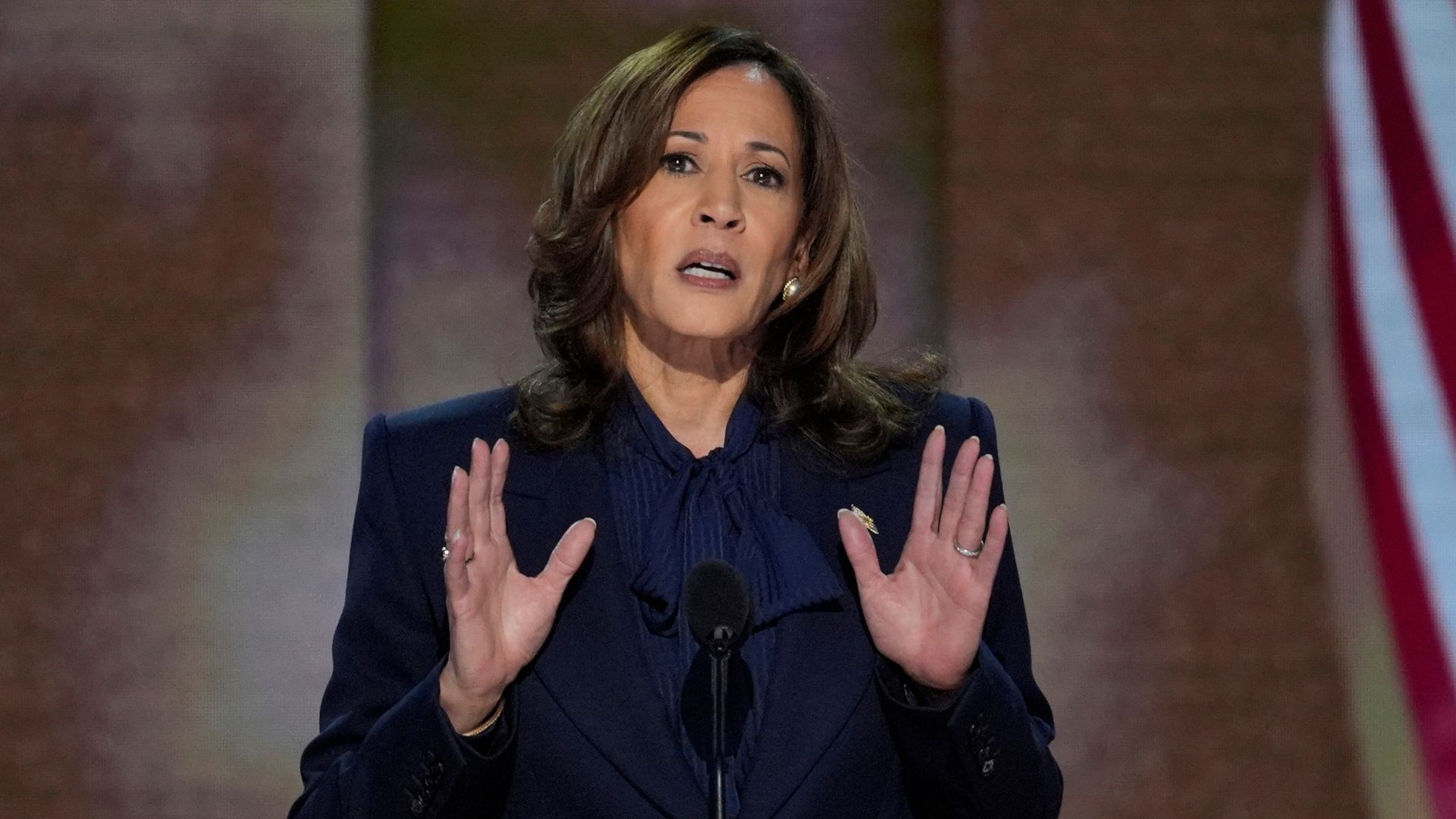
Kamala Harris raised attention during a public appearance in Houston, Texas, after declaring that the 2024 presidential election between her and President Donald Trump was “the tightest, closest presidential election in the 21st century.”

Harris made the remark Saturday during an event promoting her new memoir 107 Days at the Hobby Center for Performing Arts, which seats 2,650 people.

The event featured moderator Carlos Eduardo Espina, a self-described community organizer and immigrant rights activist.

Mediaite reported that Harris appeared animated throughout the program, often standing up, gesturing to the audience, and raising her voice for emphasis.

She described her short-lived presidential campaign as “unprecedented,” citing the roughly three-month period between her nomination and the general election.

“Here’s the other thing that is quite unprecedented — and, it was the tightest, closest presidential election in the 21st century,” Harris told the crowd.

“He does not have a mandate! That is not a mandate! That is not a mandate!”

Audience members responded with applause and cheers, with one person shouting, “And he never did!” in apparent reference to President Trump.

Harris continued, at one point joking that Espina was so energized by her remarks that he “had to get up and celebrate.”

However, Kamala’s claim about the 2024 election being the closest of the century does not align with official results.

President Trump won all major swing states and became the first Republican since 2004 to carry the national popular vote.

His winning margins in key battleground states were significantly larger than those of Joe Biden’s in 2020.

For example, Biden carried Arizona by 10,457 votes in 2020, while Trump won the same state by more than 187,000 votes in November 2024.

Trump also secured comfortable victories in states including Pennsylvania, Michigan, Georgia, and Wisconsin, which had previously been decided by narrow margins.

Following her defeat, Harris chose not to enter the California gubernatorial race and instead launched a national book tour for 107 Days, recounting her campaign and the 2024 election cycle.

Her memoir has drawn attention within Democratic circles for its candid commentary on internal party politics and rival figures.

According to several Democratic insiders, Harris’s tour is being closely watched as an informal test of her potential political future.

Party strategists have said the tour could serve as a way for Harris to gauge interest in a possible comeback campaign or future role in the Democratic Party.

The book reportedly contains pointed criticism of several prominent Democrats, including Minnesota Governor Tim Walz, who served as her running mate in the 2024 race.

Harris wrote that Walz was selected “as a last resort” after she determined that former Transportation Secretary Pete Buttigieg, her preferred choice, would not be viable as a presidential running mate due to concerns over his sexual orientation.

Harris also took aim at Pennsylvania Governor Josh Shapiro, describing him in the book as overly self-assured and politically ambitious.

Shapiro later responded in an interview, saying Harris would “need to answer” for her involvement in what he called the Democratic Party’s failure to address Joe Biden’s cognitive decline during his final year in office.

Harris’s next stop on her book tour is scheduled for Chicago later this month, where she is expected to discuss her tenure as vice president, her 2024 campaign, and her reflections on national politics following her defeat.

News

Armed Citizens Stop Far More Active Shooters Than the FBI Said, New Report Reveals

A decade-long review by the Crime Prevention Research Center (CPRC) said armed citizens have stopped active shootings at least 10 times more often than reflected in commonly cited federal tallies, arguing that defensive actions by private individuals are significantly undercounted in official and media summaries.

In an update released Monday and shared with Washington Secrets, the center reported that good Samaritans halted 36% to 62% of active-shooter incidents from 2014 through 2024, compared with 3.7% in the Federal Bureau of Investigation’s published reports.

The CPRC attributed the gap to definitional limits and classification choices in federal data.

The group said the FBI’s approach excludes situations where an armed citizen displays a firearm but does not fire, even when the display stops an attack.

The center also said certain cases were categorized as being stopped by “professionals” when the individuals were unpaid or volunteer security, which the CPRC counted as armed citizens.

“The FBI defines an active shooter as one or more individuals actively engaged in killing or attempting to kill people in a public place, not involving gang violence or some other crime such as robbery. Such an incident could be something as minor as one person being shot at and missed up to a mass public shooting. While the FBI includes cases where civilians stop active shooters, the news media frequently relies on the limited number of these cases to argue that such interventions are rare,” said the report.

“Evidence compiled by the Crime Prevention Research Center shows that the sources the media relied on undercounted the number of instances in which armed citizens have thwarted such attacks by an order of more than ten, saving untold numbers of lives.

Of course, law-abiding citizens stopping these attacks are not rare.

What is rare is national news coverage of those incidents,” added Lott’s report, shared Monday with Washington Secrets.

John R. Lott Jr., the center’s president, said the new findings expand on a 2022 analysis and were compiled from incidents that met federal criteria for active-shooter events over the ten-year period.

According to the CPRC, there were at least 561 active-shooter cases between 2014 and 2024. In those, the center said, armed citizens stopped 202 incidents.

By comparison, the FBI listed 374 active-shooter incidents in the period and reported that 14, or 3.7%, were stopped by an armed citizen.

The CPRC said its audit identified 42 active-shooter incidents the FBI overlooked and 145 others it said were missed.

The organization wrote that its intent was to present a fuller accounting of defensive interventions by civilians rather than to criticize federal officials, and it urged a wider discussion of how such encounters are categorized.

The report also addressed concerns frequently raised about permitting more civilians to carry firearms.

“News outlets often raise concerns that allowing concealed handgun carry will result in innocent bystanders being shot or in police accidentally shooting permit holders,” said the report.

For example, it added, “All the experts interviewed by the Washington Post and New York Times argue that stopping these attacks should be left to the police.”

Lott’s update cited a PoliceOne survey indicating that 86% of law enforcement officers disagreed with the premise that more legally armed citizens are inherently dangerous in these situations.

The report said that while police are responsible for responding to active-shooter incidents, response times can leave gaps that civilians sometimes fill when violence begins.

To that point, the report quoted firearms trainer and author Massad Ayoob: “When a life-threatening crisis strikes and seconds count, the real first responders are the citizens present.”

The CPRC’s findings arrive amid continuing debate over how to measure and present data on active-shooter incidents.

The center and federal law enforcement use similar base definitions for an “active shooter,” but the CPRC argued that differing inclusion rules can change outcomes, especially when a would-be attacker is deterred without shots being fired or when volunteers rather than sworn officers intervene.

The report said it reviewed cases across the country and included events in public places that met the FBI’s criteria and were not tied to other crimes such as robberies or gang-related violence.

The CPRC said its upper-range estimate of 62% reflects incidents in which an armed citizen was present in venues where civilian carry was allowed, while the lower bound reflects overall incidents nationwide.

The organization argued that both figures suggest private defensive actions play a larger role in ending attacks than previously reported.

The findings are expected to factor into policy discussions over concealed carry, venue security, and training for both civilians and law enforcement.

The report stated that its analysis is intended to inform those debates by documenting instances in which civilians acted and by clarifying why some cases may not appear in official summaries.

According to the CPRC, better harmonization of definitions and classifications would allow for more consistent tracking of how active-shooter incidents end and who stops them.

As the discussion continues, the CPRC’s update presents a contrasting view to federal summaries on the frequency of civilian defensive interventions and calls attention to how methodological choices can shape public understanding of active-shooter responses over the past decade.

News

Vandalizing a Church with “F**k Israel” Graffiti is Protected Speech According to CAIR

The Council on American-Islamic Relations (CAIR) is calling on Texas prosecutors to drop hate crime charges against three individuals accused of vandalizing a church in Euless, Texas, arguing that the incident constituted political expression protected under the First Amendment.

The vandalism took place in 2024, several months after Hamas’ October 7, 2023, terrorist attack on Israel.

The non-denominational church at the center of the case had raised an Israeli flag following the attack.

Church surveillance cameras later captured three people spray-painting the phrase “F**k Israel” and placing pro-Palestinian stickers on the building’s exterior walls.

The suspects, identified as Raqunaq Alam, Asfsheen Khan, and Julia Venzor, were charged with felony criminal mischief.

Prosecutors later upgraded the charges to a third-degree felony hate crime, asserting that the vandalism targeted a house of worship.

In September, Alam was tried and convicted of criminal mischief but acquitted of the hate crime enhancement.

He received a sentence of five years’ probation, a $10,000 fine, and an order to pay $1,700 in restitution to the church. Tarrant County Judge Biran Bolton also imposed an additional 180 days in jail, calling the graffiti “disgusting,” according to The Guardian.

Co-defendant Julia Venzor entered into a plea agreement with prosecutors in exchange for her testimony against Alam and Khan.

As part of the deal, she was sentenced to five years of probation.

Khan’s trial is scheduled to take place in the fall.

Before the trials began, CAIR-Texas issued a public statement urging prosecutors to remove the hate crime enhancements, calling them excessive and inconsistent with the law’s intent.

“Although we strongly condemn the vandalism of this church and believe that those responsible should be held accountable for this crime, Texas prosecutors are going beyond the law attempting to criminalize political speech by conflating criticism of the Israeli government with religious hatred,” said Mustafaa Carroll, Executive Director of CAIR-Texas DFW.

“Our state’s hate crime laws were meant to protect vulnerable communities, not shield foreign governments from critique. We can and should condemn the vandalism of a house of worship without criminalizing speech.”

Defense attorney Alison Grinter-Allen echoed CAIR’s position during the legal proceedings, describing the graffiti as a form of expression.

“Graffiti is the language of folks who are unheard,” Grinter-Allen said.

Texas law allows for hate crime enhancements when a criminal act is determined to target a person or group based on race, religion, national origin, or another protected characteristic.

Prosecutors in Tarrant County argued that the defacement of a church met that definition because the building was a place of worship, regardless of whether the vandals were motivated by anti-Israel sentiment or opposition to the church’s display of an Israeli flag.

The case has drawn national attention, particularly given CAIR’s argument that criticism of Israel is being mischaracterized as religious bias.

Civil liberties groups have also raised questions about the line between protected political expression and criminal conduct when it involves defacing property.

Church officials have not commented publicly since the conclusion of Alam’s trial but had previously condemned the act of vandalism and expressed relief that no physical harm occurred.

Khan’s upcoming trial is expected to further test how Texas courts interpret the state’s hate crime statute in cases where political and religious motives appear to overlap.

The Tarrant County District Attorney’s Office has not indicated whether it intends to continue pursuing the hate crime enhancement for Khan.

News

400 Texas National Guard Troops Headed to Illinois as ‘Chicago Has Become a War Zone’

President Donald Trump has ordered the deployment of 400 Texas National Guard troops to Illinois, Oregon, and other states as federal agents face ongoing clashes with anti-ICE protesters, Illinois Governor J.B. Pritzker said Sunday night.

Pritzker, a Democrat, criticized the move and referred to it as “Trump’s invasion,” following an earlier mobilization of 300 California National Guard members to Portland, Oregon.

That city has seen more than 100 consecutive days of unrest outside an immigration detention center, a situation similar to protests that have gripped Chicago since early September.

The Illinois governor said his administration was not consulted before the announcement and denounced the deployment as overreach.

“We must now start calling this what it is: Trump’s Invasion,” Pritzker said in a post on X.

He urged “every American to speak up and help stop this madness.”

Pritzker said the plan disregards state sovereignty and claimed that federal officials had failed to coordinate with Illinois leadership.

“It started with federal agents, it will soon include deploying federalized members of the Illinois National Guard against our wishes, and it will not involve sending in another state’s military troops,” he wrote.

“I call on [Texas] Governor Abbott to immediately withdraw any support for this decision and refuse to coordinate.”

The governor accused President Trump of using the National Guard for political purposes and condemned the idea of sending troops into what he described as a “sovereign state” without approval.

The decision follows weeks of unrest tied to U.S. Immigration and Customs Enforcement’s “Operation Midway Blitz,” an ongoing enforcement initiative launched last month targeting criminal illegal aliens in the Chicago area.

Federal officials have said the operation focuses on identifying and arresting individuals who relocated to Illinois to take advantage of the state’s sanctuary policies.

Local leaders, including Pritzker and Chicago Mayor Brandon Johnson, have publicly opposed the enforcement effort.

Despite their objections, protests have grown more violent, with demonstrators using vehicles to ram federal agents and block ICE operations.

The Department of Homeland Security reported that two such vehicular attacks occurred earlier in the week in the Chicago area.

On Saturday, U.S. Border Patrol agents patrolling Chicago’s South Side shot and wounded a woman who was armed during what officials described as a coordinated mob attack.

The confrontation took place approximately 15 miles from an ICE processing facility in Broadview, Illinois — an area that has become a focal point for anti-ICE demonstrations.

Since Friday, more than a dozen protesters have been arrested near the Broadview facility, according to reports from Fox News.

DHS Secretary Kristi Noem, who traveled to Illinois on Friday to assess the situation, said the violence has reached a crisis point.

“Chicago has become a war zone,” she told “Fox & Friends Weekend” on Sunday.

Noem also alleged that local officials have obstructed federal agents by restricting their access to public facilities.

She recounted being denied entry to a government building in Broadview on Friday after requesting to use the restroom.

“They wouldn’t even let me in the building,” she said during the interview.

Federal authorities have not specified how long the Texas National Guard will remain deployed in Illinois or Oregon.

Officials have confirmed, however, that the mission’s immediate goal is to reinforce federal agents facing organized resistance to immigration enforcement operations in multiple states.

As of Sunday evening, coordination efforts were ongoing between the Department of Homeland Security and the Department of Defense, with further briefings expected in the coming days.

News

Trump Warns Hamas to ‘MOVE FAST,’ or ‘MASSIVE BLOODSHED WILL FOLLOW’

President Donald Trump said Sunday that negotiations aimed at ending the conflict in Gaza had made significant progress, describing recent meetings with Hamas and international partners as “very positive.”

The announcement came just before a 6 p.m. ET deadline tied to a U.S.-led peace proposal.

In a Truth Social post, Trump wrote that “There have been very positive discussions with Hamas, and Countries from all over the World (Arab, Muslim, and everyone else) this weekend” had taken place to work toward the release of hostages, an end to the war in Gaza, and what he called “long sought PEACE in the Middle East.”

“These talks have been very successful, and proceeding rapidly,” Trump said.

“The technical teams will again meet Monday, in Egypt, to work through and clarify the final details.”

Speaking with reporters later Sunday evening, Trump confirmed that discussions were progressing and that the first phase of the plan “should be completed this week.”

He said, “We had some very good meetings… and it looks like it’s working. So we’ll wait for a little while, see how it all turns out.”

Trump also issued a warning about potential consequences if the deal fails to materialize. “I am asking everyone to MOVE FAST,” he said.

“I will continue to monitor this Centuries old ‘conflict.’ TIME IS OF THE ESSENCE OR, MASSIVE BLOODSHED WILL FOLLOW — SOMETHING THAT NOBODY WANTS TO SEE!”

The peace deadline had been established several days earlier in a post Trump made on Oct. 3, in which he cautioned Hamas against rejecting the terms.

“If this LAST CHANCE agreement is not reached, all HELL, like no one has ever seen before, will break out against Hamas,” Trump wrote.

“THERE WILL BE PEACE IN THE MIDDLE EAST ONE WAY OR THE OTHER. Thank you for your attention to this matter!”

Trump’s peace plan, introduced in late September, outlines a 20-point proposal intended to bring a lasting resolution to the region.

The framework includes the cessation of Israeli military operations, disarmament of Hamas, and reconstruction of Gaza under a Palestinian governing body monitored by an international coalition led by the United States.

According to Reuters, Israeli Prime Minister Benjamin Netanyahu has agreed to the proposal.

The plan’s next phase will be negotiated in Cairo, where technical representatives from multiple nations are expected to finalize implementation details.

Trump’s initiative marks one of the most direct U.S.-led peace efforts in years.

The President has continued to emphasize the urgency of finalizing the agreement, reiterating that swift action is critical to avoid further violence and instability in the region.

With international delegations expected to reconvene in Egypt on Monday, officials have indicated that progress made over the weekend could bring the proposal closer to completion within days.

If successful, the plan would represent a significant shift in diplomatic efforts toward stabilizing relations in the Middle East following months of heightened conflict.

Trump’s administration has not yet provided additional details on the specific timetable for each phase of implementation but confirmed that updates will follow the upcoming technical meetings.

News

ICE Attackers Arrested in Chicago, Kristi Noem Shocked by JB Pritzker’s Actions

Yesterday, a woman rammed a vehicle carrying federal agents in Chicago on Saturday.

The woman, identified as Marimar Martinez, was carrying a weapon and was shot.

She has been arrested.

Anthony Ian Santos Ruiz, a driver of a separate vehicle involved in the ramming, was apprehended by law enforcement.

According to federal officials, the incident occurred on Saturday morning near the intersection of 39th Place and S. Kedzie Avenue, in the vicinity of a U.S. Immigration and Customs Enforcement (ICE) facility.

Border Patrol law enforcement officers were ambushed by vehicles that rammed federal agents.

Agents exited a trapped vehicle, and when a suspect tried to run them over, officers shot the woman.

She drove to the hospital and was later arrested after being discharged. She is in FBI custody.

Officials said Martinez was armed with a semi-automatic weapon and has a history of doxxing federal agents.

McLaughlin said that Martinez has been named in a U.S. Customs and Border Protection (CBP) bulletin for doxxing agents and threatening them.

The armed woman was named in a @CBP intelligence bulletin last week for doxing agents and posting online “Hey to all my gang let’s f**k those mother f**kers up, don’t let them take anyone.”

A video of what was thought to be the encounter was posted on X by Kim Katie USA, but it turned out to be another attack that occurred later that day.

Authorities said the scene became increasingly violent as more people gathered and began throwing smoke, gas, rocks, and bottles at Department of Homeland Security (DHS) law enforcement.

Homeland Security Secretary Kristi Noem has deployed special operations teams to Chicago.

Officials said another person was arrested at the scene for assaulting CBP.

As ICE law enforcement was responding to the shooting, a separate vehicle followed them and rammed their vehicle in an attempt to run them off the road.

That individual was arrested and is in Homeland Security Investigations (HSI) custody.

An ICE vehicle popped a tire and was subsequently surrounded, forcing law enforcement to abandon the vehicle for their safety.

The vehicle was significantly damaged.

Several CBP law enforcement officers were sent to the hospital with various injuries.

Assistant Secretary Tricia McLaughlin issued a public statement calling for an end to violence against officers.

“These attacks on our brave law enforcement officers must END. Secretary Noem has taken action to deploy additional resources to restore law and order. We will not allow domestic terrorists to attack our law enforcement. If you law a hand on law enforcement, you will be prosecuted to the fullest extent of the law.”

McLaughlin reiterated that Martinez had been named in a CBP bulletin and referenced the social media post cited in federal materials.

Officials did not release additional details about the weapon recovered at the scene or the number of shots fired.

No law enforcement officers were seriously injured in this attack, according to federal statements.

Illinois Governor J.B. Pritzker addressed the Chicago-area events during a CNN interview and described federal accounts as political messaging.

He called the ambush “propaganda.” “They are the ones that are making it a war zone,” Pritzker said.

“They need to get out of Chicago if they’re not going to focus on the worst of the worst, which is what the president said they were going to do,” Pritzker said on CNN.

Noem responded in a Fox News interview. “Sanctuary politicians like @JBPritzker have not only turned over their states to violent illegal aliens, they are also actively working against law enforcement in support of lawless anarchists. DHS under President Trump is deploying a whole-of-government approach to restore law and order in America’s cities.”

Commentary about Pritzker’s appearance circulated following the broadcast.

Townhall’s Guy Benson described Pritzker’s interview as “breathtaking.”

Federal authorities said the investigation remains active. Martinez was arrested after receiving medical care and was placed in FBI custody.

Santos Ruiz was apprehended at the scene.

Officials said additional updates would be provided as agencies review video, finalize reports, and coordinate with local law enforcement regarding potential charges.

News

Did Gavin Newsom Just Accelerate 800,000 Drivers’ Trip to the Unemployment Line?

California Governor Gavin Newsom on Friday announced an agreement tied to AB 1340 that allows Uber and Lyft drivers to organize and bargain at an industry level for pay and benefits.

California becomes the second state, after Massachusetts, to authorize app-based ride-hailing drivers to negotiate collectively across companies.

At a press conference, Newsom said the unionization framework is intended to give drivers a formal role in setting compensation and benefits.

“California is determined to give working people a voice, to give them choice, give them dignity and a say about their future,” he said.

According to supporters of the measure, the arrangement was finalized in August following talks in Sacramento involving Democratic lawmakers, representatives of the Service Employees International Union (SEIU), and officials from Uber and Lyft.

The legislation, AB 1340, was introduced by Assemblymembers Buffy Wicks and Marc Berman and sponsored by SEIU California.

AB 1340 establishes rules for industrywide collective bargaining for app-based drivers.

The framework permits recognized driver organizations to negotiate with covered companies over minimum pay rates and access to employee-style benefits, including health insurance.

State officials and participating parties described the approach as a sectoral model designed to set baseline standards that apply across multiple ride-hailing platforms operating in California.

State materials and legislative summaries associated with AB 1340 indicate the policy applies to ride-hailing drivers who use app-based platforms to provide transportation services in California.

Supporters say the change aims to provide a path for drivers to seek improved compensation and benefit options through a formal bargaining structure rather than through separate company-by-company campaigns.

California officials and labor representatives noted the state’s ride-hailing workforce is large and dispersed, with drivers working part time and full time across metro and suburban regions.

Backers of the policy pointed to estimates that hundreds of thousands of drivers use the apps statewide.

The measure’s proponents said a sectoral framework offers a consistent process for negotiations while recognizing the existing marketplace in which multiple platforms compete for riders and drivers.

Uber and Lyft representatives participated in the drafting discussions that concluded in August.

The companies have adjusted driver pay structures and incentives in recent years while pursuing profitability targets.

Driver organizations and labor groups have advocated for minimum earnings floors and access to benefits that resemble those available to traditional employees, including health coverage and other protections.

The move in California follows Massachusetts, which previously adopted a policy permitting industry-level bargaining for ride-hailing drivers.

In both states, supporters say the approach is intended to create a stable standard for compensation and benefits while preserving the underlying app-based model that allows drivers to accept rides on a flexible basis.

The policy discussion also occurs alongside technological developments in the transportation sector.

Companies including Google’s Waymo and Tesla have advanced autonomous vehicle programs that operate in California and in other states such as Arizona and Texas.

Industry analysts and participants have debated how automation could affect long-term demand for human drivers and the structure of compensation across app-based services.

AB 1340’s sponsors said the legislation is designed to establish a process for driver organizations to be recognized and to begin bargaining with covered companies.

The measure outlines roles for state officials in certifying representative groups and in overseeing negotiations that set baseline compensation and benefit terms.

Additional administrative steps are expected to define timelines for recognition and bargaining sessions once the framework is in effect.

California’s adoption of an industrywide bargaining model places it among a small number of states pursuing sectoral arrangements for app-based transportation work.

With AB 1340 in place and the August agreement referenced by participants, drivers in the state will be able to form or join organizations to negotiate minimum pay and access to benefits across Uber and Lyft, consistent with the rules set out in the measure.


Scroll to Top