Author name: Stephen Phelps

News

Disgraced Outgoing D.C. Police Chief Melts Down, Drops F Bomb in Walkout Speech

Outgoing Washington, D.C., Police Chief Pamela Smith ended her tenure Friday with an unexpected and profane address during her final press conference, departing from prepared remarks to confront critics directly and reflect on her time leading the Metropolitan Police Department.

Smith, who announced last week that she would step down as chief, said she “dared not leave” without speaking to what she described as her “haters.”

During the event, she invoked her religious upbringing and church involvement, arguing that criticism of her leadership had not shaken her faith or personal convictions.

“I dare not leave without saying something to my haters. Listen, I know you taught me well. We were raised in the church, Bible study, Sunday school, BTU choir rehearsal, Wednesday night Bible study, Tuesday night Bible study, children’s choir, you name it,” Smith said.

“There’s enough Jesus in me that’s going to get me to heaven if I die tomorrow. But watch this, you’ve taught me well. And I just need you to just follow me with this just for a few moments, mom. Don’t, don’t, because listen, I listen to her even at 50-something years old.”

Smith then escalated her remarks, delivering a profanity-laced message aimed at those who had criticized her during her tenure, before shifting into what she framed as a declaration of forgiveness rooted in Christian teachings.

“So I’m going to the Bible when I say this to my haters. F you. No, it’s not a drop-the-mic moment. Watch me in this space. I forgive you,” Smith said.

“I forgive you. Because the Bible makes it very clear. When Jesus was hanging on the cross, when he said to his father, even in the pit of agony and defeat, he said, ‘Forgive them, for they know not what they do.”

Smith’s remarks came as she prepares to leave her post as chief of the Metropolitan Police Department of the District of Columbia.

She has served in the role since July 2023 and is scheduled to step down at the end of December 2025, bringing her tenure to roughly two and a half years.

Her time as chief unfolded amid heightened scrutiny of crime and public safety in the nation’s capital.

In recent months, tensions escalated between the White House and Washington’s local leadership over law enforcement and crime policy, with President Donald Trump repeatedly criticizing conditions in the city and warning of what he described as a “tragic emergency” involving violent crime.

Those tensions came to a head in August, when Trump briefly moved to assert federal control over the city’s police department.

At that time, he deployed the National Guard and appointed a federal emergency commissioner, a move that placed Smith’s leadership under national attention. Days later, Trump reversed course, allowing Smith to remain in charge of the department.

Throughout her tenure, Smith faced sustained criticism over crime levels, policing strategy, and her handling of public safety concerns, while also receiving support from city officials and allies who defended her leadership.

Her final press conference, however, marked a sharp departure from typical closing remarks for an outgoing police chief, drawing attention not to policy or accomplishments, but to her personal response to critics.

Her resignation will take effect as scheduled at the end of December 2025, concluding a chapter marked by public controversy, federal intervention threats, and an unusually candid farewell address that immediately drew attention for its tone and language.

Media

Chuck Todd Says People Lost Trust in Media Because they Lost Trust in the Experts

Chuck Todd said declining public trust in the media is being driven by broader institutional distrust and amplified by Big Tech algorithms that push Americans into isolated information silos.

Todd, a political commentator and former moderator of NBC’s “Meet the Press,” discussed the issue during an appearance on Saturday’s broadcast of Newsmax TV’s “America Right Now.”

In the interview, Todd said the erosion of confidence in journalism reflects a larger breakdown in trust across major institutions, not just the press.

“Well, I think the short answer is yes, and I think, look, we haven’t had reliable political leadership,” Todd said when asked about declining trust in the media.

Todd said journalists are often dependent on the credibility of their sources, which can directly affect how the public perceives reporting. He said that reliance becomes a problem when the sources themselves are no longer trusted.

“And I think one of the things I like to remind people is one of the reasons I think trust in media has fallen to so low is remember what the media is,” Todd said.

“It’s a reflection of — I say I’m as good as the sources I have, not necessarily the sources I want at times, to borrow a phrase from the late Donald Rumsfeld, meaning, if you’re getting untrustworthy sources, you may be reporting untrustworthy information right? You get my drift here.”

Todd said that dynamic has contributed to a broader collapse in confidence not just in journalism but in institutions more generally.

“And so, I think that the collapse of trust in overall institutions, the media in some ways is a reflection of that distrust and so that we may be reporting what the quote, unquote ‘experts’ tell us,” he said.

According to Todd, journalists often rely on expert analysis to contextualize events and policy, but that approach can backfire when the public no longer trusts those experts.

“But if the public doesn’t trust those experts and then we in the media, are quoting those experts, they don’t trust us, too,” Todd said.

He described the situation as a widespread credibility problem affecting multiple sectors simultaneously.

“It’s sort of across the board,” Todd said.

Todd argued that distrust of the media is no longer confined to one side of the political spectrum, saying both major political camps now view news organizations with skepticism.

“And what you have now, I would argue, Tom, is essentially the left doesn’t trust the media now and the right doesn’t trust the media,” he said.

Todd said the media landscape has become increasingly fragmented, with audiences consuming news through ideologically filtered platforms that reinforce existing beliefs rather than challenge them.

“We are in this siloed world,” he said.

He placed significant responsibility for that fragmentation on technology companies and the systems they use to distribute content.

“I put the blame on Big Tech and algorithms that sort of, I think, make it too easy for too many people to live in a bubble, a filter bubble,” Todd said.

Todd said those algorithm-driven environments allow users to avoid exposure to differing viewpoints, deepening mistrust and polarization.

He also criticized the geographic concentration of journalists, arguing that the industry’s focus on major political and media hubs contributes to public disconnect.

“And I do think in some ways, there’s too many people — I always say we have too many journalists in Washington and New York, and not enough everywhere else,” Todd said.

Todd’s remarks come as public confidence in traditional media outlets continues to register near historic lows, according to multiple surveys conducted over recent years.

Entertainment

Pulp Fiction, The Mask Actor Found Dead With Injuries in Bloody Manhattan Apartment

Actor Peter Greene, known for his roles in Pulp Fiction and The Mask, was found dead last week inside his Lower East Side apartment in Manhattan, with injuries on his body and blood throughout the residence, according to law enforcement sources, as reported by Page Six. Greene was 60 years old.

Authorities discovered Greene lying face down with a facial injury inside his apartment on Dec. 12.

Law enforcement sources told TMZ on Thursday that the actor had “some injuries” on his body, but investigators have not yet determined what caused them.

An official cause of death has not been released by the New York City Medical Examiner’s Office.

The New York Police Department has not publicly detailed whether the injuries were the result of an accident, medical event, or foul play.

Page Six reported that it reached out to Greene’s representative and the NYPD for comment, but no response has been confirmed.

A neighbor who spoke to the New York Daily News described the scene inside Greene’s apartment as graphic.

“There was blood everywhere,” the neighbor said. The neighbor also claimed that a handwritten note was discovered at the scene alongside Greene’s body.

According to the neighbor, the note read: “I’m still a Westie,” a reference to the Irish-American gang that operated in Manhattan’s Hell’s Kitchen neighborhood during the 1970s.

Authorities have not confirmed the note’s significance or whether it is connected to Greene’s death.

Greene, a New York native, appeared in numerous films and television productions throughout his career, including his portrayal of Zed in Quentin Tarantino’s Pulp Fiction.

He was also known for roles in The Mask, Training Day, and Laws of Attraction.

The actor had previously spoken publicly about his struggles with drug addiction and a past suicide attempt. However, those close to Greene have said they saw no signs that he was suicidal in the days leading up to his death.

Gregg Edwards, Greene’s former manager, told Page Six that the actor appeared to be in a positive frame of mind shortly before he died.

“Not at all,” Edwards said when asked whether Greene had seemed suicidal. Edwards added that Greene was in “good spirits on Wednesday,” just two days before he was found dead.

Friends also stated that Greene had been actively making plans for the upcoming holidays. New York-based actor and musician Skam Dust said Greene was planning to spend New Year’s Eve with him and others.

“He was going to rent a truck limousine, and Peter’s vision was that we were going to go bar hopping and restaurant hopping. He wasn’t suicidal,” Skam Dust said.

He added that the plans included spending time with Danny Diablo, also known as Lord Ezec, and graffiti writer MQ.

Investigators have not announced whether the death is being treated as suspicious, and no arrests have been made.

The Medical Examiner’s findings are expected to play a key role in determining the circumstances surrounding Greene’s death.

As of now, the investigation remains ongoing, with authorities awaiting toxicology results and further forensic analysis.

News

Securing the Seas: Preserving America’s Maritime Edge for Generations

In 2025, America marks 250 years of protecting the people and defending our values, and the Navy remains the backbone of that mission.

It has stood as a storied force from the age of sail to the era of nuclear propulsion, long range strike, and undersea dominance, always defending our shores while preserving opportunity.

Yet the strategic environment today is unlike any we have faced in generations, and that demands a sharper focus on readiness and modernization.

For decades, American naval supremacy was treated as a given. Today, that margin is narrowing.

Our adversaries are building vessels expressly designed to contest our ability to project power, support our allies and operate in the Western Pacific and beyond.

Today, we are not the only navy to have an aircraft carrier with electromagnetic catapults.

They are expanding their reach and capabilities, signaling a willingness to operate globally and challenge U.S. dominance on the world’s oceans.

CNO dishes on sailor wellbeing, US Navy success in era of competition. As our competitors extend their capacity and reach, they study every move we make.

Across the Indo-Pacific, surveillance ships monitor our posture, logistics operations, and multilateral exercises; they chart undersea routes, map chokepoints, and track how we maneuver with partners.

In this environment, deterrence cannot be achieved by rhetoric or presence alone. It requires credible, modern, combat ready naval power.

That is why the U.S. Navy must stay ready, modernize rapidly, and invest wisely because the world is no longer defined by uncontested seas or predictable threats.

We are pursuing an ambitious but essential readiness goal: by January 2027, 80% of our ships, submarines and aircraft will be combat surge ready.

Achieving this requires shorter maintenance cycles, greater spare parts availability, improved training pipelines, and targeted upgrades across the fleet. Readiness is not a budget line; it is a promise to the American people that their Navy will never arrive late to a fight.

Modernization is not merely about keeping pace; it is about leap ahead advantages that deter war and, if necessary, win decisively. We are accelerating production of the Columbia class ballistic missile submarine, the bedrock of our nation’s nuclear deterrent.

A recent $2.28 billion contract for five hulls underscores our commitment to sustaining this unmatched capability for decades to come.

But the fleet of the future must be more than larger; it must be smarter, more resilient, and more lethal.

That requires a balanced mix of aircraft carriers, large and small surface combatants, submarines, unmanned systems, and emerging technologies that can out-think, out-sense, and out-fight any adversary on our terms.

The carrier remains indispensable, but its future lies in a closer pairing with stealth aircraft, longer-range strike platforms, unmanned systems, and advanced refueling concepts that extend reach and complicate an adversary’s calculus.

The air wing of the future must be survivable, dispersed, networked, and capable of operating in highly contested environments.

Large surface combatants will provide resilient command and control, massive payloads, and the electrical power and sensors needed for high-end fights, while small surface combatants will offer distributed fires, deception, escort, and maritime security in regions where presence deters and absence invites risk. The balance of these platforms is not a luxury—it is an operational necessity.

New technologies are reshaping maritime warfare faster than at any time in our history. The Navy is moving decisively to stay ahead. Directed energy weapons like HELIOS are already being tested on ships, but more powerful high energy laser and microwave systems are an imperative to counter drone swarms, cruise missiles, and fast inshore threats.

Unmanned systems will multiply the reach and lethality of our manned platforms. Through initiatives like Replicator, medium and large unmanned surface vessels, autonomous ISR platforms, and long-endurance undersea drones, the fleet grows more distributed, more adaptive, and more unpredictable to any adversary.

These platforms will only realize their full potential through a modernized command and control architecture that fuses sensors, weapons, and decision tools into a single operational picture.

That is why we are investing in resilient networks, artificial intelligence for decision support, and battle management systems that accelerate our ability to find, fix, and finish threats at machine speed while preserving human judgment where it matters most.

Even the most advanced fleet will falter without a strong industrial base, a skilled workforce, and world-class sailors. We are expanding the Maritime Industrial Base Program to grow workforce capacity through advanced technical training in welding, CNC machining, additive manufacturing, and nondestructive testing.

The new Maritime Training Center now produces roughly 1,000 trained workers annually—talent that goes directly into our shipyards.

Until American yards fully recover from workforce shortages and supply chain fragility, we are exploring responsible cooperation with allied shipbuilders in places like South Korea and Japan to bridge near-term gaps in maintenance, repair, and production.

These partnerships create strategic depth today while buying time for U.S. shipyards to modernize and expand for tomorrow.

We must be ruthless in our honesty about readiness and relentlessly innovative in our solutions. America does not want a fair fight—we want a fleet so capable, so ready, and so forward that the fight never begins.

Sea power has always reflected national will; if we intend to remain the world’s preeminent maritime power, we must match our ambition with the resources, stability, and discipline required.

What we protect is greater than what we project. We protect freedom of movement, freedom of trade, and freedom of thought.

As we look beyond this 250th anniversary, we must recommit to maritime superiority with stable funding, accelerated shipbuilding and repair, and a bold embrace of innovation—from machine learning to new ship design to new operational concepts.

Sea power is America’s first line of defense — and our last great advantage. We are committed to preserving it.

News

‘What’s the Point of Food Stamps if It’s Just for Real Food?’: Missouri Welfare Queen

A Missouri woman receiving Supplemental Nutrition Assistance Program (SNAP) benefits criticized new restrictions on eligible food purchases after the U.S. Department of Agriculture approved waivers allowing states to prohibit the use of benefits for candy, sugary drinks, and other items beginning in 2026.

According to a report by St. Louis television station KMOV, Hannah Moore told reporter John Kipper that the forthcoming restrictions were unfair and questioned the purpose of the federal assistance program if it is limited to what she described as “real food.”

“What is the point of food stamps if it’s just for ‘real food?’” Moore asked during the interview.

Her comments followed an announcement Wednesday by Secretary of Agriculture Brooke Rollins, who said the USDA had approved waiver requests from Missouri and five other states allowing them to restrict SNAP purchases of candy, sugar-sweetened beverages, and similar items after Oct. 1, 2026.

SNAP, commonly referred to as food stamps, is administered by the Department of Agriculture in coordination with individual states.

The program is intended to supplement grocery budgets for low-income individuals and families so they can purchase “nutritious food essential to health and well-being.”

According to the USDA website, as of Tuesday, 18 states have received waivers to prohibit the use of SNAP benefits for junk food.

Moore told KMOV that she was unhappy with the changes and expressed confusion about the policy direction.

“That’s not even cool, like why they do that?” she said. She later added, “I don’t know what Trump is doing or what is going on.”

The waiver approvals come as federal officials pursue broader efforts to address diet-related health concerns.

Secretary of Health and Human Services Robert F. Kennedy Jr. has advocated removing sugary drinks, including sodas, from SNAP eligibility, according to reporting by The Wall Street Journal. Kennedy has linked the effort to rising rates of chronic disease, which affect roughly three in five Americans, as part of an initiative often referred to as the Make America Healthy Again movement, or MAHA.

Moore told KMOV she was particularly concerned about how the changes could affect families with children.

“Thank God I don’t got kids, but the people out there with kids are not going to be cool,” she said.

Moore added that she worried parents would not be able to buy snacks their children enjoy.

The SNAP program has been the subject of ongoing debate over eligibility requirements, allowable purchases, and work mandates.

During the federal government shutdown in October and November, several federal district judges ordered the Trump administration to access contingency funds to continue SNAP benefits during the funding lapse.

Those orders were overturned by the Supreme Court on Nov. 8, shortly before lawmakers reached an agreement to end the shutdown.

More recently, changes to SNAP eligibility requirements have drawn public criticism.

In a Dec. 3 news report, a woman complained about new work requirements imposed on able-bodied adults up to age 64 as a condition of maintaining SNAP eligibility.

Those requirements were enacted as part of the One Big Beautiful Bill Act, which President Donald Trump signed into law in July.

Under the law, certain adults without dependents must meet work or training requirements to continue receiving benefits.

Supporters of the changes argue the requirements encourage workforce participation and self-sufficiency, while critics say they risk removing benefits from individuals who rely on the program.

The USDA has said the waiver approvals allowing states to restrict junk food purchases are intended to give states flexibility while aligning SNAP with its stated mission of promoting nutrition and health.

States that receive waivers are not required to implement the restrictions but are permitted to do so under federal guidelines.

Missouri officials have not yet announced how the state plans to implement the waiver or what specific items will be prohibited once the changes take effect in 2026.

The USDA has indicated that implementation details will vary by state and that additional guidance will be provided closer to the effective date.

As the debate continues, SNAP remains one of the largest federal assistance programs, serving millions of people each month.

News

AOC Scoffs at Classified Briefing, Labels Trump Boat Strikes ‘a Joke’

Rep. Alexandria Ocasio-Cortez, D-N.Y., sharply criticized a classified briefing provided to lawmakers Tuesday on the Trump administration’s policy of striking vessels linked to narcoterrorism, dismissing the session as inadequate and unserious, as reported by Fox News.

Ocasio-Cortez made the remarks after leaving the briefing on Capitol Hill, where members of Congress were briefed on the administration’s use of targeted strikes against boats allegedly involved in drug trafficking.

NEW YORK, NY – APRIL 24: Rep. Alexandria Ocasio-Cortez (D-NY) speaks at an Earth Day Celebration in Astoria Park on April 24, 2021 in the Astoria neighborhood of the Queens borough of New York City.

Video of her comments was shared on X by MeidasTouch Network senior digital editor Acyn Torabi, showing her speaking with Migrant Insider editor Pablo Manríquez.

“Oh, hell no. That was a joke,” Ocasio-Cortez said when asked about the briefing.

She went on to argue that the session failed to meet the standard of other intelligence briefings lawmakers have received.

“There was not a single piece of intelligence that was shared that even rises to the level of any other briefing that we’ve seen on Ukraine, China, anything,” Ocasio-Cortez said.

She added that it “was not a serious intelligence briefing. This was a communication of opinion.”

The congresswoman also suggested that the administration’s actions could require further congressional authorization.

She said if President Donald Trump’s “administration wants to go to war… they need to go get it from Congress. And if Republicans want to defend this argument that cocaine is a weapon, they can go vote on that. But… this is just conjecture at this point.”

Fox News Digital reached out to the White House for comment following Ocasio-Cortez’s remarks, but did not receive a response by the time of publication.

The briefing addressed a controversial policy under which the Trump administration has authorized strikes against vessels accused of participating in narcoterrorism and large-scale drug trafficking.

Administration officials have argued that the policy is designed to disrupt transnational criminal networks that pose threats to U.S. security.

Secretary of State Marco Rubio and Secretary of War Pete Hegseth participated in providing briefings to both Senate and House members on Tuesday, outlining the legal and intelligence framework supporting the strikes.

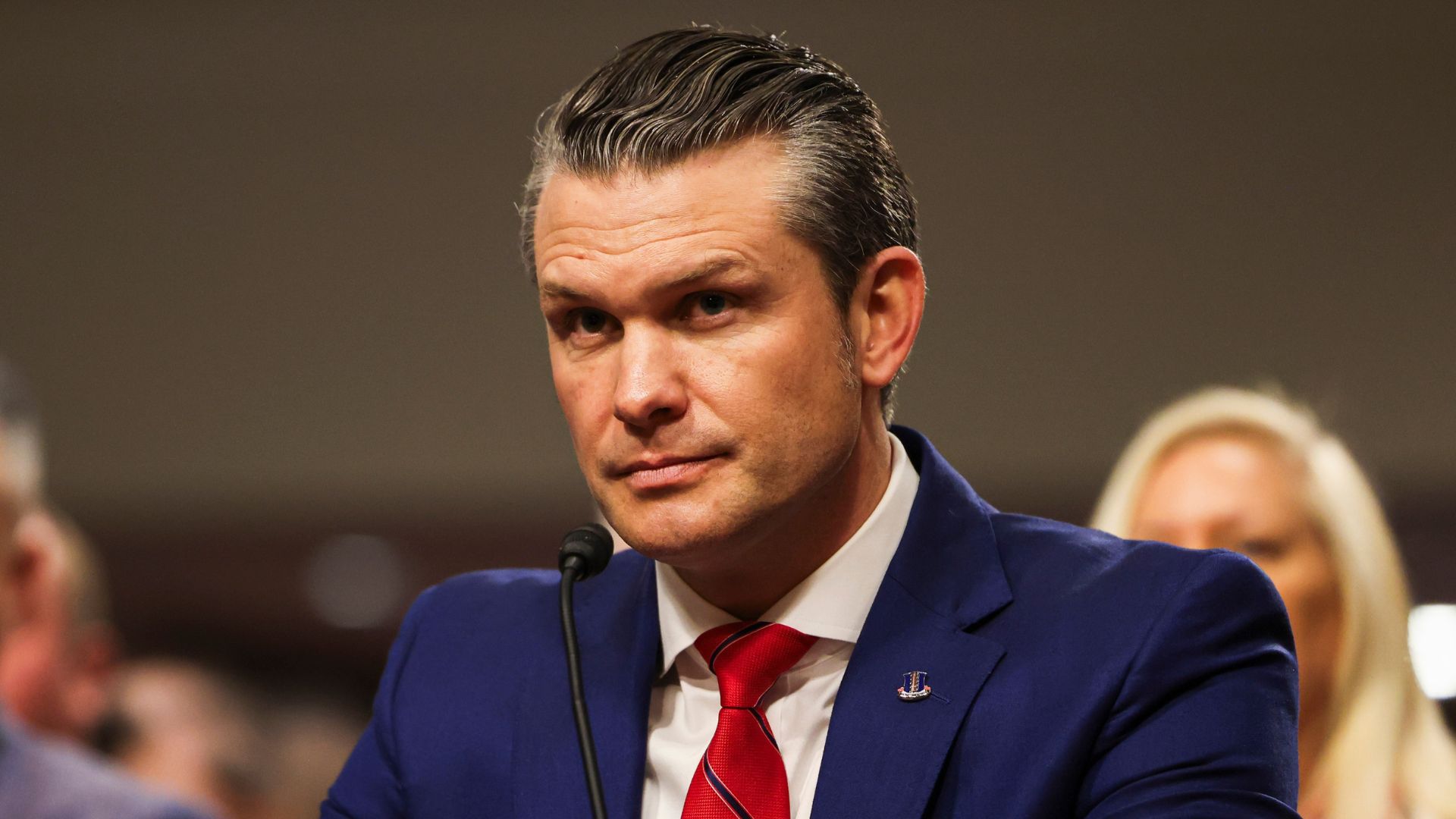
WASHINGTON – January 14 2025: Pete Hegseth, Secretary of Defense nominee, testifies before the Senate Armed Services Committee.

Not all lawmakers shared Ocasio-Cortez’s assessment of the briefing. Sen. John Kennedy, R-La., offered a markedly different view during an appearance Tuesday on the Fox News Channel.

Kennedy said his takeaways from the briefing were that the strikes “are legal” and “effective,” and that they are based on “exquisitely good” intelligence. He also said safeguards are in place to prevent harm to non-combatants.

“There are checks and balances to make sure innocent people who just happen to be in a boat are not hurt,” Kennedy said.

The contrasting reactions underscore ongoing divisions in Congress over the administration’s national security and counter-narcotics strategy.

Supporters of the policy argue it represents a decisive response to international drug trafficking operations tied to organized crime and violence, while critics have questioned both the scope of executive authority and the intelligence supporting the strikes.

The administration has maintained that the targeted operations are limited, lawful, and focused on disrupting criminal networks rather than engaging in broader military conflict. No formal vote in Congress has been taken specifically on the policy.

As debate continues, the classified briefings are expected to remain a point of contention between lawmakers who support the administration’s aggressive approach and those who argue for greater congressional oversight and authorization.

News

NC Man With Prior Murder Conviction Charged After Allegedly Hijacking Ambulance, Killing 74-Year-Old Woman

A North Carolina man with a prior homicide conviction has been charged with first-degree murder after authorities say he hijacked an ambulance, led police on a chase, and fatally shot a 74-year-old woman following a crash, according to law enforcement officials, as reported by The Gateway Pundit.

WPDE-TV reported that 36-year-old Cheyenne Woods was arrested and charged after the death of Marie Locklear, 74, in Robeson County.

The incident occurred on Saturday after first responders were dispatched to a property in Maxton, North Carolina, for a medical emergency.

Authorities said Woods was being transported to a hospital in an ambulance when he allegedly brandished a firearm and forced emergency medical workers out of the vehicle. He then fled the scene in the stolen ambulance.

While driving the ambulance, Woods allegedly crashed into a vehicle driven by Locklear, according to police. After the collision, authorities said Woods exited the ambulance and shot Locklear.

She was transported to a hospital, where she later died from her injuries.

“This is yet another senseless act of murder committed by a repeat felon whose criminal history includes a prior murder conviction,” Robeson County Sheriff Burnis Wilkins said.

“The facts of this case are deeply disturbing,” Wilkins added. “The suspect was armed, requested medical assistance, stole an ambulance, crashed it, and then opened fire on an innocent elderly woman without provocation.”

Locklear’s husband, Ronnie Locklear, said he was attending a Christmas dinner when he learned of the shooting.

“I was at a Christmas dinner. Had finished eating. And I was told my wife had been shot in the arm. And I just could not believe what was going on at that time,” he said. He also noted that his wife had spent much of the day with her terminally ill sister, who was hospitalized.

The couple’s son, Donald Locklear, said he was able to speak with his mother before she died.

“She was in a lot of pain. Of course. She couldn’t understand what had happened. She was in a lot of pain,” he said.

Authorities outlined Woods’ criminal history following his arrest. WRAL-TV reported that Woods’ record includes a 2008 murder and robbery of Jessica Cahoon in Fayetteville, North Carolina.

He was convicted in 2012 of robbery with a dangerous weapon and released in 2016.

In 2017, Woods was convicted of second-degree murder related to a killing that occurred in 2010. He was sentenced to 13 years in prison, with a minimum of 10 years.

However, he was released in 2022 after serving approximately five years. Officials said the reduced time served may have been due to credit for time already served and good behavior.

Law enforcement officials also stated that before the fatal shooting of Locklear, Woods had allegedly struck and injured a 72-year-old bicyclist earlier that same day.

That victim survived, according to prosecutors cited by The New York Post.

Woods remains in custody as the investigation continues. Authorities have not released additional details regarding a potential motive.

Illegal Immigration

Senator Tuberville Drops a Spicy Meme During Rant on Democrats’ Terrorist Buddies

Senator Tommy Tuberville delivered sharp criticism of Democrats during remarks in which he accused them of enabling terrorism through immigration policies, access to public benefits, and what he described as a failure to address security risks tied to foreign extremist groups.

Tuberville’s comments focused on Democratic immigration positions, foreign policy rhetoric, and praise for countries he characterized as unstable and dangerous.

He argued that Democratic leaders are ignoring security threats while allowing individuals he described as terrorists to enter and remain in the United States.

“Democrats invite terrorists from all over the world into this country,” Tuberville said.

“They let them steal our benefits, enjoy our schools, overrun, our hospitals, vote in our elections, and then steal our tax dollars to send back to their home countries to fund terrorism.”

The senator claimed that U.S. resources are being misused and that taxpayer funds are ultimately ending up overseas in ways that undermine national security.

His remarks were framed as part of a broader critique of Democratic priorities on immigration enforcement, public spending, and national defense.

Tuberville also singled out Democratic lawmakers who have spoken favorably about Somalia, questioning those statements by pointing to the country’s security conditions.

He referenced praise he said has come from “woke Democrats like Omar,” arguing that such descriptions are disconnected from realities on the ground.

“By the way I’ve seen all of these woke Democrats like Omar calling Somalia a wonderful place,” Tuberville said.

“If it’s such a wonderful place, why doesn’t she move back?”

He continued by citing violence and instability in Somalia, focusing on terrorist activity carried out by al-Shabaab and conditions in the country’s capital.

“If Somalia is all that, why is the terrorist group al Shabaab murdering Somalian civilians by the masses,” Tuberville said.

“And why is the capital of Somalia considered to be one of the most dangerous Capitals in the World due to frequent terrorist bombings, target targeting, killings and ambushes that sounds like a place no one would ever want to visit or live.”

WATCH:

News

Records Reveal Would-Be Trump Assassin Was Emailing the Biden Administration

Emails obtained through a Freedom of Information Act lawsuit show that Ryan Routh, later convicted of attempting to assassinate President Donald Trump, contacted the Biden-Harris administration’s State Department in what appeared to be an effort to seek assistance recruiting foreign fighters for the war in Ukraine, raising new questions about what federal officials knew about his activities and whether any follow-up occurred.

The records were released following litigation filed by the Center to Advance Security in America (CASA) and obtained by the Daily Caller News Foundation.

The documents show Routh reaching out to State Department officials in 2023 with claims that he was involved in organizing foreign soldiers for combat in Ukraine.

Routh was convicted for attempting to assassinate President Trump at his West Palm Beach golf course in September 2024.

The incident occurred just two months after another gunman’s bullet grazed Trump’s ear during a campaign rally in Butler, Pennsylvania.

Despite concerns within the federal government about Americans returning from foreign conflict zones, Routh does not appear to have been investigated prior to the attempted assassination.

Politico reported in September 2024 that the Department of Homeland Security had launched an initiative in 2022 aimed at identifying Americans who might become violent after returning from Ukraine, but Routh was not flagged under that effort.

Routh had previously drawn attention for his activities and statements.

In 2023, he self-published a book titled “Ukraine’s Unwinnable War,” which included language that appeared to suggest Iran was “free to assassinate Trump.”

He was also featured in a March 2023 New York Times article about Americans traveling to Ukraine to volunteer in the conflict.

Concerns about Routh were raised well before the assassination attempt. According to a Wall Street Journal report published in September 2024, another American who encountered Routh in Ukraine warned U.S. authorities in June 2022, telling a Customs and Border Protection official that Routh was a “ticking time bomb.”

CASA Director James Fitzpatrick said the newly released records show Routh actively trying to communicate with the State Department.

“Through aggressive FOIA litigation, CASA has uncovered Ryan Routh’s attempts to communicate with the Biden State Department,” Fitzpatrick told the DCNF.

“Several unanswered questions remain regarding these communications,” he said.

“We still don’t know whether the Biden administration responded in any substantive way to Routh and the contents of those communications – the American people deserve answers here and CASA will continue to fight through this litigation to shed as much light on Routh’s officials communications as possible.”

One of the emails, dated March 23, 2023, shows Routh making sweeping claims about his alleged involvement in coordinating fighters.

In that message, Routh wrote that his team was “already supplying background checks from the US military through Representative Barry Moore of Alabama,” and claimed there were “5600 soldiers ready to be transported from Pakistan to a neighboring country of Ukraine and bussed into Ukraine to the front lines to fight.”

Rep. Barry Moore’s office denied providing any such assistance. Moore’s communications director, Benjamin Martin, said the congressman had no direct contact with Routh.

“A staffer in our D.C. office took a meeting with Routh after he visited without an appointment and asked to speak with someone,” Martin told the DCNF.

“The staffer determined our office should have no further contact with Routh and referred him to the State Department for any potential assistance. Congressman Moore has never interacted with Routh, and our office did not respond to any further outreach.”

In another email dated Oct. 29, 2023, Routh contacted then-U.S. Ambassador to Ukraine Bridget Brink and Defense Attaché Garrick Harmon, claiming that one of his associates had already communicated extensively with embassy staff.

“Your staff has spoken with [redacted] at great length and most recently had a meeting where he was asked to provide the execution details of the project as well as accounting of how funds would be allocated and spent and he failed to submit those documents to you,” Routh wrote.

“I can be back in Ukraine at a moment’s notice and arrange what you need. Because [redacted] did not fulfill his obligation he is ashamed to give me any contact information since he dropped the ball.”

According to the records released to CASA, both emails received automated replies.

The documents do not indicate that any State Department official followed up directly with Routh.

After Routh’s arrest for the attempted assassination, Ukrainian military units publicly denied any ties to him.

Routh’s sentencing is scheduled for Wednesday.

During his trial, he represented himself and was repeatedly interrupted by the judge for straying from relevant issues.

In court filings, Routh requested to be imprisoned in a state that allows assisted suicide and suggested he could be included in a future prisoner exchange.

“Do not let me take my own life and it have zero benefit for humanity or mankind,” he wrote in an Oct. 29 filing.

Media

Washington Post Pushes VA Job Panic, Reality Tells Different Story

The Department of Veterans Affairs became the focus of renewed media scrutiny after The Washington Post published a headline stating that the agency “plans to abruptly eliminate tens of thousands of health care jobs,” prompting a public response from VA Secretary Doug Collins disputing the framing of the report.

The headline circulated on the outlet’s X account and drew attention online, particularly among veterans and their families who closely follow changes affecting VA medical facilities and staffing.

The wording suggested large-scale job reductions that could impact health care services provided to veterans across the country.

Collins responded on X, criticizing what he described as misleading coverage and labeling the report “fake news.”

In his response, Collins said the headline did not accurately reflect the status of the positions referenced in the article or the department’s ongoing operations.

According to the information cited in the Post’s reporting, “Most of these positions haven’t been filled in a year or more, and all Department of Veteran Affairs medical facilities continue to fill vacancies as needed.”

That clarification appeared at the end of the article but was not included in the headline that circulated on social media.

The VA maintains that unfilled positions referenced in the report do not represent active layoffs or reductions of current medical staff and that patient care operations remain ongoing.

The department has said that facilities continue to hire medical professionals where necessary to meet demand and ensure continuity of care.

The exchange added to a pattern of public rebuttals by Collins against media coverage he believes mischaracterizes the department’s actions.

He has previously addressed reporting related to veterans’ health care during televised interviews and on social media, disputing claims that policy changes would reduce access to care.

The Washington Post article focused on internal staffing decisions and planning within the VA, which employs hundreds of thousands of workers nationwide and operates one of the largest integrated health care systems in the United States.

Staffing levels and hiring practices at the agency are closely watched due to their direct impact on veterans who rely on VA hospitals and clinics for medical services.

While the Post headline emphasized potential job eliminations, the article itself acknowledged that many of the positions discussed were not currently filled. The VA’s response highlighted that distinction, arguing that the omission from the headline created confusion about the agency’s intentions and the potential effects on veterans’ care.

The dispute played out largely on social media, where both the headline and Collins’ response were shared widely.

The VA secretary’s criticism focused on what he described as fear-based reporting that could alarm veterans and their families without fully explaining the context of the staffing information.

No changes to current patient care policies or hospital operations were announced in connection with the report.

The VA has continued to state that medical facilities are authorized to hire as needed and that services for veterans remain in place.

The episode reflects ongoing tension between federal agencies and major media outlets over how internal planning and administrative decisions are reported to the public, particularly when headlines circulate independently of the full context provided in longer articles.


Scroll to Top