Author name: Robert Walsh

News

Josh Hawley Calls Code Pink ‘Human Rights Violators’ in Heated Exchange

Sen. Josh Hawley (R-MO) confronted a Code Pink activist in a hallway Wednesday, accusing the anti-war group of taking “blood money from China” and calling the organization a “human rights violator,” as reported by The Independent Journal Review.

“I think the U.S. ought to investigate your organization and maybe you for the money that you’ve taken from Chinese donors who are persecuting Uyghurs,” Hawley said, according to a video obtained by the Daily Caller News Foundation.

The exchange began when the activist asked the senator whether he supported regime change in Venezuela. Hawley responded by referencing a New York Times report that detailed links between Code Pink and donors tied to the Chinese government.

“I’m pro-Israel. You hate Israel,” Hawley said during the exchange. “You love China. You take blood money from China. It’s simple.”

The activist denied the accusation, calling it a “lie.” Code Pink has repeatedly denied receiving funds from China or any foreign government.

“To state it very clearly: CODEPINK is in no way funded by China, nor any other foreign government or agency,” the group’s China Is Not Our Enemy campaign coordinator wrote in April. “We are funded primarily by donations from concerned citizens that support peace over war.”

A 2023 New York Times investigation reported that roughly a quarter of Code Pink’s donations since 2017 were tied to groups connected to Neville Roy Singham, a wealthy American businessman with strong affiliations to Chinese state media and government-backed organizations.

Republicans in Congress have called for investigations into the group’s alleged connections.

In April, Sen. Jim Banks (R-IN) sent a letter to Attorney General Pam Bondi urging the Department of Justice to examine what he described as “growing evidence of Code Pink’s deep connections” to the Chinese Communist Party.

“Code Pink routinely lobbies for conciliatory U.S. policies on China and aggressively denies reports of CCP atrocities, including the CCP’s genocide against the Uyghur people in Xinjiang,” Banks wrote.

“In January 2025, Code Pink acknowledged that it had organized a 10-day ‘community trip’ to Xinjiang—presumably on a tightly controlled itinerary staged by the Chinese government.”

As the exchange concluded, Hawley continued pressing the activist on Code Pink’s funding. “You don’t have the moral decency to admit to yourself that you take blood money, that you are funded by foreign groups who are persecuting minorities, Christians, Muslims,” he said.

“You’re wearing a Palestinian flag, which tells you everything you need to know, while you take this money from China. You are morally reprehensible.”

Code Pink has not issued an official response to Hawley’s remarks.
News

Democrat Councilman Switches Sides, Joins GOP and Endorses Ciattarelli

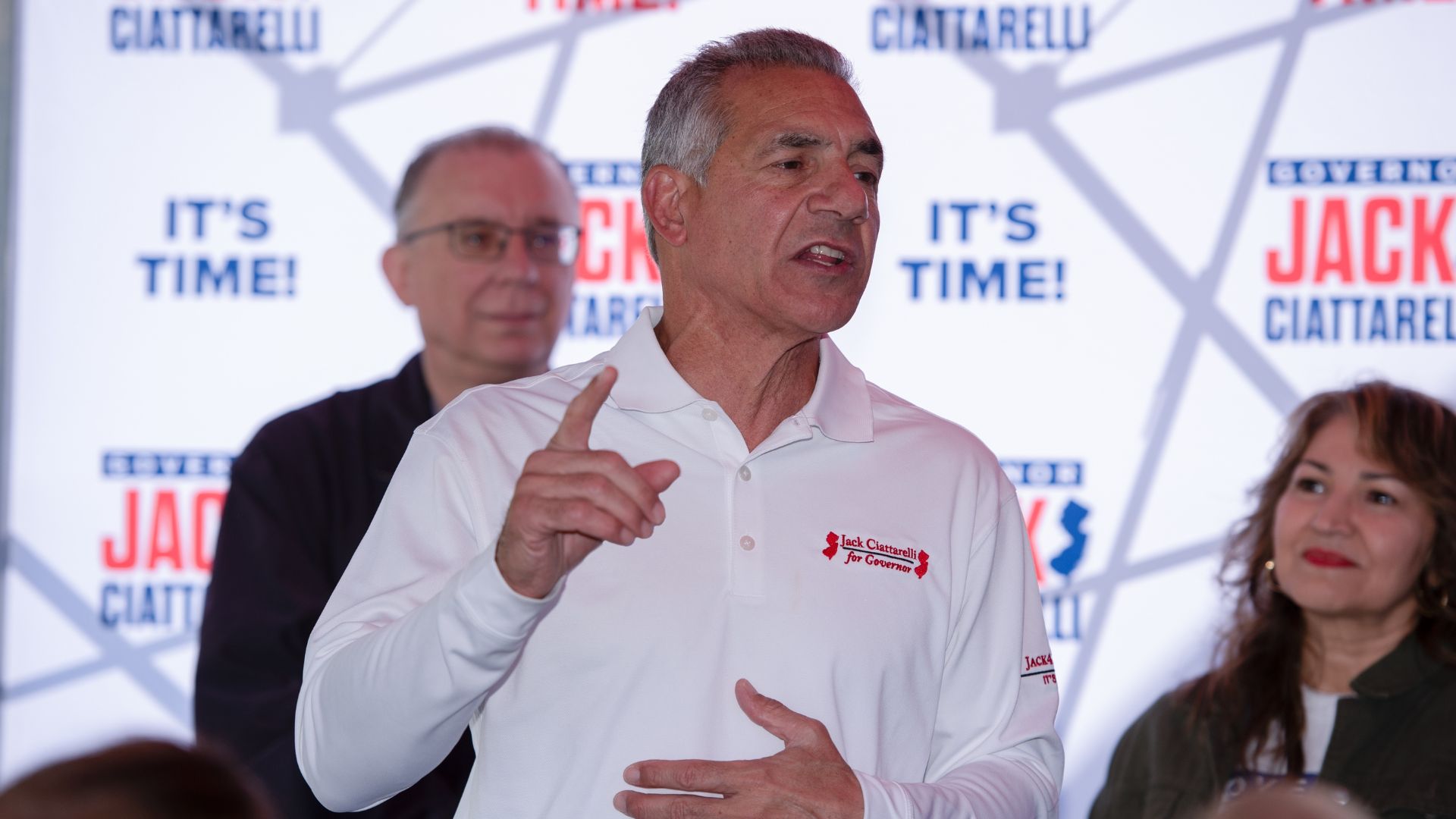
A Democratic councilman in Bergen County, New Jersey, announced Wednesday that he is leaving the Democratic Party and joining the GOP, becoming the latest local official in the state to back Republican gubernatorial nominee Jack Ciattarelli.

Alpine Councilman David Kupferschmid revealed his party switch during a public statement, saying he no longer recognizes the Democratic Party’s direction.

He will now serve as the lone Republican on the Alpine Borough Council, marking the first time in more than two decades that a Republican has held a seat on the governing body.

“The Democrat Party does not represent us anymore,” Kupferschmid said.

“With my switch, I will now be the first Republican on the council in more than 20 years. I hope that this is the beginning of a resurgence for the Republican Party in Alpine where alternate voices are much needed on the governing body.”

Kupferschmid, who was first elected in 2023, will be up for re-election next year.

He cited the increasing influence of far-left figures, such as New York Assemblyman Zohran Mamdani, as an example of how the party’s priorities have shifted.

Mamdani, a self-described socialist and front-runner in the New York City mayoral race, has drawn criticism for his openly pro-communist views.

“The Democratic Party has become unrecognizable,” Kupferschmid said, adding that his decision reflects a growing frustration among voters who no longer feel represented by the current leadership.

Alpine, a small Bergen County community of about 1,750 residents, has been reliably Democratic in local elections despite trending Republican in state and national contests.

In 2021, Ciattarelli carried Alpine by roughly 18 percentage points, and President Donald Trump won the community in last year’s presidential election.

However, Democrats have continued to dominate the town’s council races, with no Republican elected in over 20 years, according to the New Jersey Globe.

Kupferschmid expressed support for Ciattarelli’s campaign message, which he said focuses on issues that matter most to local residents.

“While Sherrill refuses to denounce the far left radicals in her party, Jack Ciattarelli has been appealing to all sides with a common sense message that includes putting the brakes on over-development and cleaning up crime, both of which are critical issues for Alpine,” he said.

Ciattarelli, who previously ran against Gov. Phil Murphy in 2021, has drawn increasing bipartisan support in his current race against Democratic U.S. Rep. Mikie Sherrill.

His campaign has gained traction in several northern New Jersey municipalities that have historically leaned blue.

Kupferschmid is not the only Democrat in Bergen County to break ranks.

Garfield Mayor Everett E. Garnto Jr. also announced his decision to leave the Democratic Party and endorse Ciattarelli.

The North Jersey county, which shifted toward Republicans in 2024, is often viewed as a bellwether for statewide elections.

Other Democrats crossing party lines include Dover Mayor James P. Dodd and Garfield Deputy Mayor Tana Raymond, both of whom also supported former Republican Gov.

Chris Christie’s 2013 re-election campaign. In addition, Jamel Holley, a Democrat who previously served in the State Assembly and as mayor of Roselle, has endorsed Ciattarelli.

Oscar James II, a former Newark City Councilman, said he too plans to vote for Ciattarelli this year.

Speaking with the New York Post, James said he believes Sherrill has failed to connect with average voters.

“When you talk to everyday people, the people picking up the kids when I’m picking up my kids, the people in the grocery line…she does not relate to Democratic voters,” he said.

James, who served on Newark’s City Council from 2006 to 2010, criticized Sherrill’s campaign for focusing too heavily on national politics and her opposition to President Trump instead of local concerns.

“People want to hear what she has to offer, not that this is a vote against Trump — and she’s not talking about what she has to offer.”

With growing discontent among moderate Democrats and independents, Ciattarelli’s campaign continues to gain momentum in areas long considered Democratic strongholds.

The New Jersey gubernatorial election is set for Nov. 4.

News

National Gas Prices Drop Below $3 as OPEC Increases Production, White House Credits ‘Trump Effect’

The national average price of gasoline in the United States has fallen below $3 per gallon, reaching its lowest point since 2020. According to data released Monday, the average now stands at $2.98, marking a significant milestone as prices continue to decline heading into the final months of the year.

A report from GasBuddy showed that the national average is $0.152 lower than at the same time last year and $0.193 lower than just one month ago. The current trend follows what analysts described as the lowest Labor Day gas prices recorded since the early months of the pandemic.

Patrick De Haan, head of petroleum analysis at GasBuddy, confirmed the downward shift and said the U.S. has not seen a $2.99 national average this early in the year since 2020.

“Gas prices have finally fallen below $3 per gallon nationally — the earliest date we’ve seen a $2.99 national average since 2020, when COVID was the primary driver of low prices,” De Haan said. “Currently, 35 states have average gas prices below $2.99/gal.”

De Haan attributed the ongoing decline in fuel prices primarily to expanded oil production by the Organization of the Petroleum Exporting Countries and its allies, collectively known as OPEC+.

“Americans largely have OPEC+ to thank for the decline in prices as they have steadily raised oil production for much of 2025,” he said.

Throughout 2025, OPEC+ has taken multiple steps to increase supply, offsetting prior reductions from earlier in the decade.

In early October, the alliance announced that eight member nations agreed to boost oil output by 137,000 barrels per day, with further adjustments expected before the end of the year.

De Haan said current projections suggest prices are likely to remain stable for the foreseeable future. “Barring any major disruptions, gas prices are likely to remain slightly below year-ago levels and could stay under $3 for much of the next few months,” he said.

The continued drop in gas prices has sparked reaction from Washington, where the White House described the decline as part of the economic stabilization seen under President Donald Trump’s leadership.

Press Secretary Karoline Leavitt credited what she called “the Trump effect” in a statement posted to X, emphasizing that consistent energy policy and increased production have contributed to stronger market conditions and lower consumer costs.

The decline marks a sharp contrast from the period under former President Joe Biden, when gas prices surged to record highs in mid-2022 following supply disruptions and restricted domestic output.

The U.S. Energy Information Administration recorded average prices above $5 per gallon at that time — the highest ever documented nationally.

According to GasBuddy, current price levels vary by region but remain below $3 in a majority of the country, including much of the Midwest, South, and Plains states. California, Hawaii, and Washington remain the only states where the average price per gallon continues to exceed $4.

Analysts say that if OPEC+ maintains its current production pace and demand remains stable, prices could stay below the $3 mark through the winter months.

The White House has not announced any new energy policy measures, but administration officials have expressed optimism that lower fuel prices will provide relief for consumers ahead of the holiday season.

News

After Months of Silence, Hunter Biden Finally Breaks His Silence: ‘I Realize How Privileged I Am’

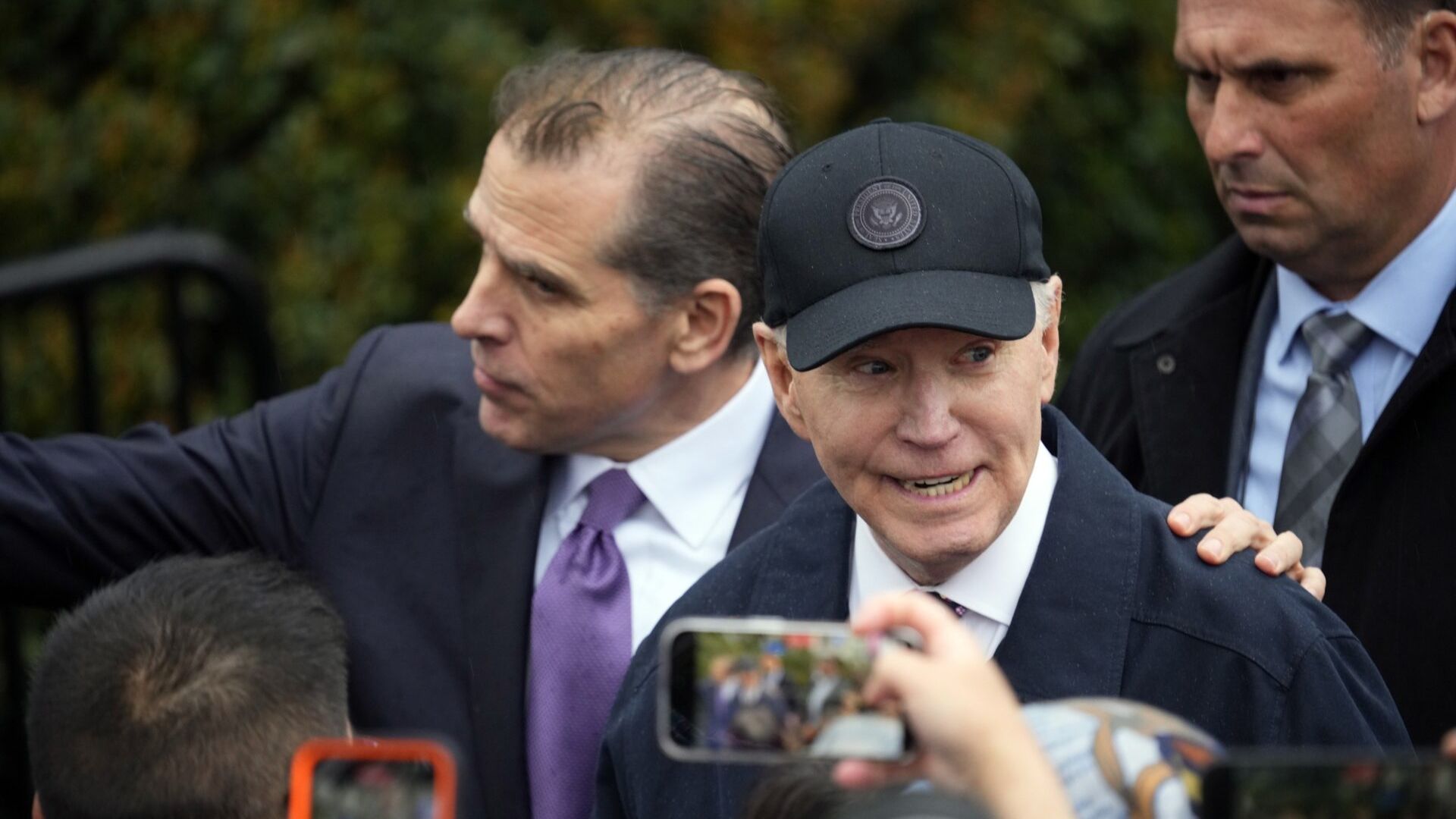
Hunter Biden publicly acknowledged for the first time that his father, former President Joe Biden, granted him a pardon because Donald Trump won the 2024 election, suggesting the move would not have happened otherwise, as reported by The New York Post.

In an interview published Monday on journalist Tommy Christopher’s Substack, the 55-year-old Biden son said President Trump’s return to office “changed everything” and prompted his father to act.

“Donald Trump went and changed everything,” Hunter said. “And I don’t think that I need to make much of an argument about why it changed everything.”

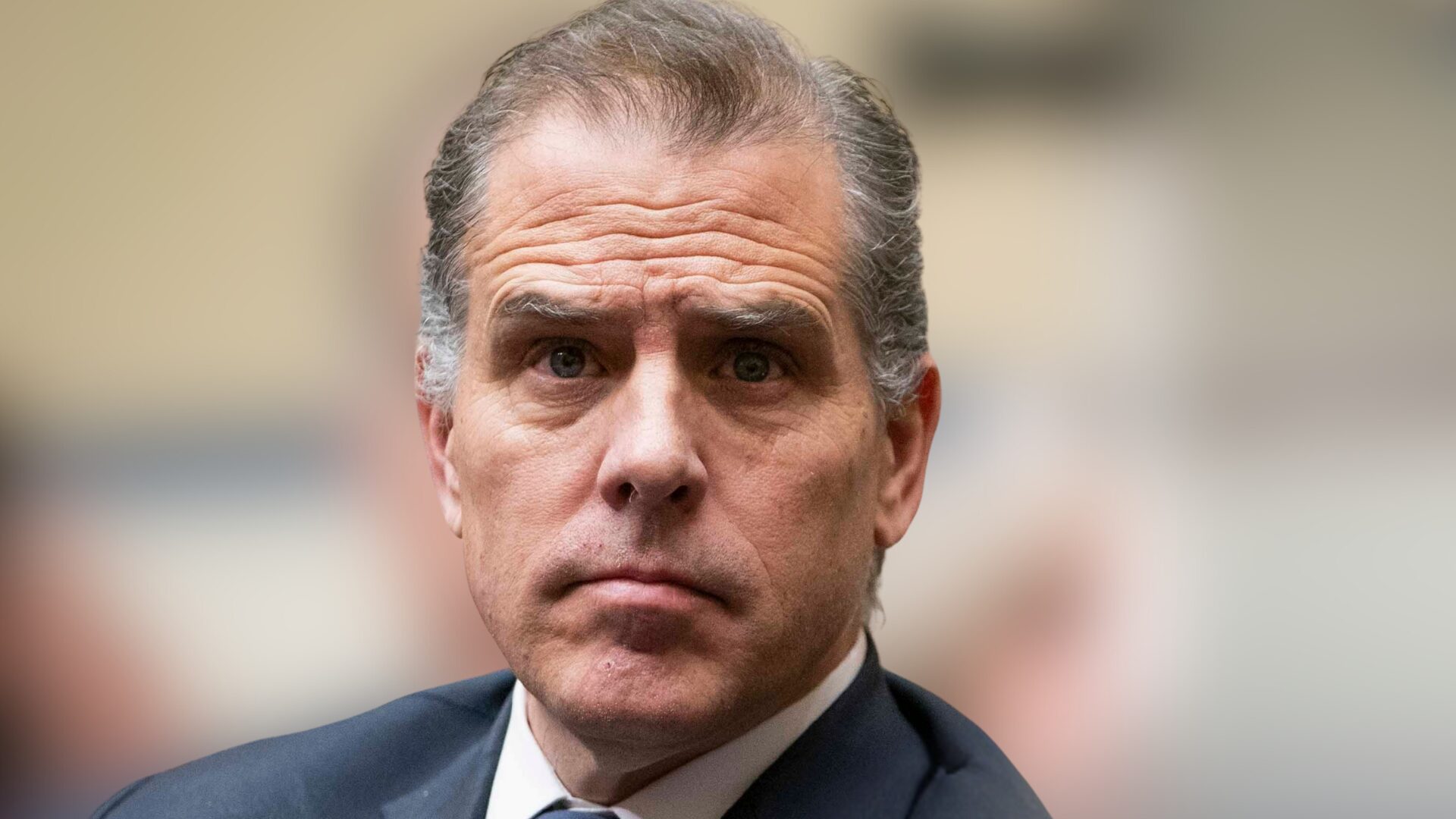
Hunter Biden, the son of President Joe Biden, makes an appearance at the House Committee on Oversight and Accountability on Jan. 10, 2024.

Hunter Biden pleaded guilty last year to evading $1.4 million in back taxes owed to the IRS and was also convicted on felony gun charges.

The pardon from his father came in the final weeks of the Biden administration, following months of speculation about whether the outgoing president would intervene in his son’s legal troubles.

“I’ve said this before,” Hunter continued.

“My dad would not have pardoned me if President Trump had not won, and the reason that he would not have pardoned me is because I was certain that in a normal circumstance of the appeals [I would have won].”

He also accused President Trump of preparing what he called a “revenge tour” against the Biden family.

“I was the easiest target to intimidate and to not just impact me, but impact my entire family into silence in a way that at least he is not — it’s not as easy for him to do [with] me being pardoned,” he said.

Hunter Biden went on to acknowledge that his father’s pardon placed him in a uniquely favorable position.

“I realize how privileged I am,” he said. “I realize how lucky I am; I realize that I got something that almost no one would have gotten. But I’m incredibly grateful for it.”

He defended his father’s decision, claiming it was justified under the circumstances. “I don’t think that it requires me to make much of a detailed argument for why it was the right thing to do, at least from my dad, from his perspective,” Hunter added.

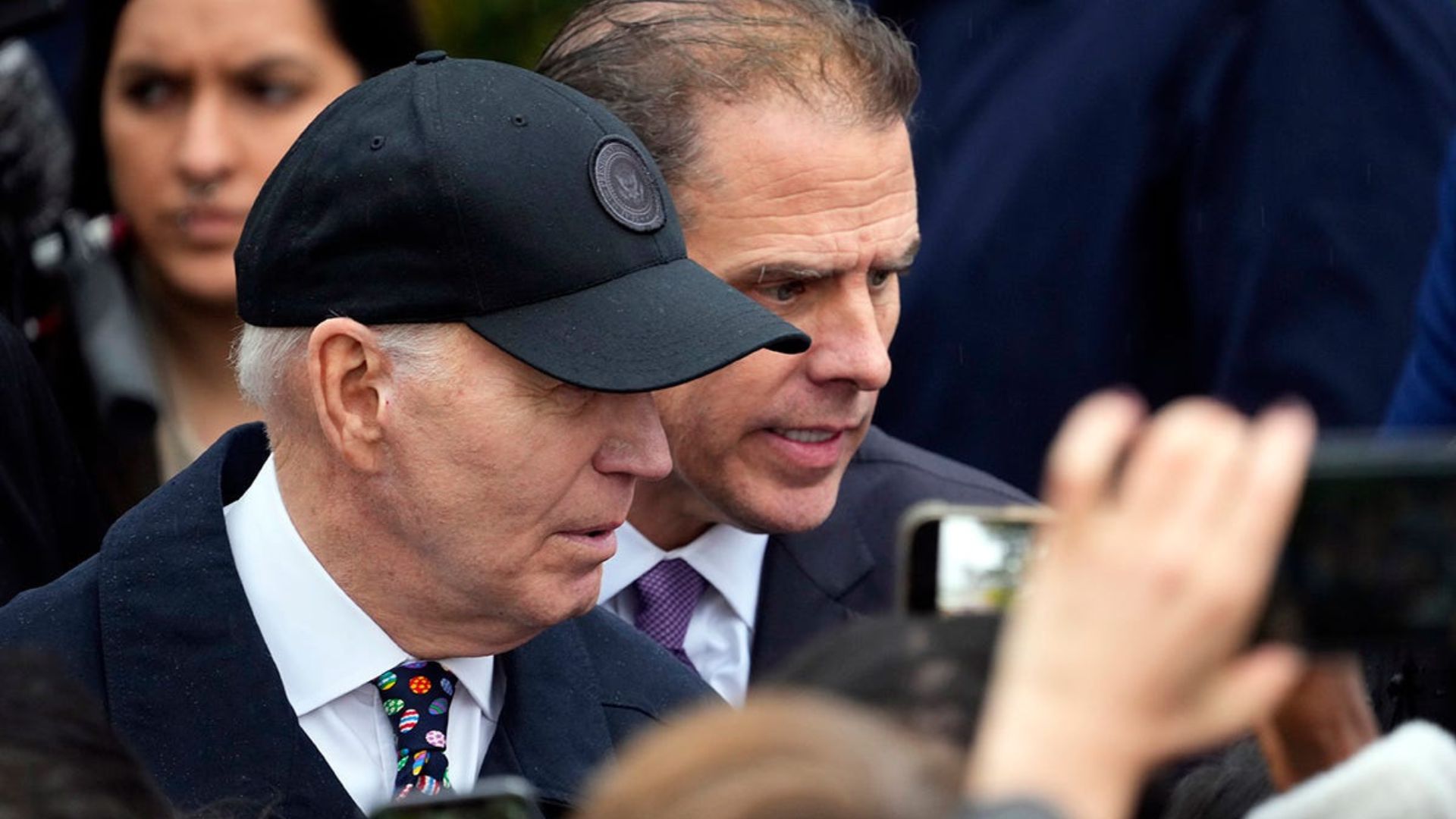
President Joe Biden and his son Hunter Biden attend the annual White House Easter Egg Roll on on April 1, 2024 in Washington, DC. In addition to the traditional egg roll and egg hunt, First Lady Jill Biden continues last year’s theme of ÒEGGucationÓ with educational activities and special performances on the South Lawn.

Last month, former White House Chief of Staff Jeff Zients reportedly told the House Oversight Committee that Hunter Biden “was involved” in discussions about clemency and “attended a few meetings” in the final weeks of the Biden presidency, according to a source familiar with his testimony.

Hunter’s remarks mark his first extended public statement on the pardon, which drew criticism from both political opponents and ethics watchdogs.

The Justice Department confirmed earlier this year that it had closed its investigations into Hunter Biden’s financial and firearm cases following the pardon’s issuance.

Democrats

Dem Senator Defends VA AG Candidate After Texts Surface About Killing Opponent’s Kids

Sen. Tim Kaine (D-VA) defended Virginia Democratic attorney general candidate Jay Jones during an interview on NBC’s Meet the Press Sunday, saying Jones should not withdraw from the race despite outrage over text messages in which he made violent comments about police officers and a fellow lawmaker.

The controversy centers on text messages from 2022, revealed earlier this month, that Jones sent while serving in the Virginia House of Delegates.

In the messages, Jones expressed hope that then-Speaker of the Virginia House Todd Gilbert (R) would die and that Gilbert’s children would be shot and killed, saying such a tragedy might change his stance on gun control.

The messages also included comments suggesting that he wanted to see more police officers die amid legislative debate over qualified immunity in Richmond.

The texts resurfaced during Jones’s campaign against incumbent Republican Attorney General Jason Miyares, who is seeking reelection.

The race remains close as both candidates campaign across Virginia ahead of the November election.

During the interview, host Kristen Welker asked Kaine whether he believed Jones should step aside given the nature of the messages.

Kaine replied that he had known Jones for more than two decades and believed the messages were out of character.

“I’ve known Jay for 25 years,” Kaine said.

“He apologized for those remarks, and I believe him when he says they were out of character.”

Kaine, who served as Virginia’s governor from 2006 to 2010, went on to say that Jones should remain in the race, arguing that voters would ultimately decide whether the comments disqualify him.

When pressed by Welker about whether his answer would be the same if Jones were a Republican, Kaine responded, “Yes.”

The remarks drew sharp criticism from political observers and opponents who accused Kaine of downplaying violent rhetoric.

Jones’s campaign issued a statement reiterating his apology, saying the messages were “inexcusable” and that he had “grown and learned” from the incident.

Miyares’s campaign did not immediately respond to Kaine’s comments but previously condemned the messages as “deeply disturbing” and “unacceptable for any candidate seeking to be Virginia’s top law enforcement officer.”

The controversy follows a heated debate between Miyares and Jones last week, during which both candidates addressed public safety, police reform, and prosecutorial discretion.

According to campaign reports, Jones raised more than $500,000 in the 24 hours following the debate, signaling continued support from Democratic donors despite the scandal.

Political analysts say the race could have significant implications for Virginia’s approach to law enforcement policy.

Miyares, elected in 2021, has focused on combating violent crime, human trafficking, and fentanyl distribution.

Jones, a former state legislator and attorney from Norfolk, has emphasized criminal justice reform and expanded oversight of police departments.

The resurfaced text messages, first obtained by The National Review, have become a major issue in the campaign’s closing weeks. Gilbert, the subject of Jones’s remarks, has not commented publicly.

Jones remains on the ballot as Democratic leaders in Virginia continue to stand by him, while Republicans have used the controversy to question his fitness to serve as the state’s attorney general.

The election will be held on November 5.

News

Gavin Newsom Claims Trump ‘Failed Americans’ While California Struggles with Crime, Homelessness

California Governor Gavin Newsom reignited his political feud with President Donald Trump on Monday, accusing the administration of neglecting workers and weakening public safety amid an ongoing federal government shutdown, as reported by Newsmax.

The remarks came as California continues to face record homelessness, rising crime, and economic uncertainty.

Images by Dr. Alan Lipkin – Shutterstock.com

In two separate press releases, Newsom accused President Trump of “turning his back on workers” and cutting funding for “anti-hate” programs.

The governor’s office issued the statements to coincide with United Against Hate Week and the launch of updates to California’s unemployment benefits system.

“While the federal government tries to build division among neighbors, I’m proud of the people all across California who are joining together to stand united against hate,” Newsom said in his statement.

He highlighted hundreds of millions in state funding for community grants, security upgrades for religious organizations, and a state-run hotline called CA vs Hate, which logged roughly 1,200 reports in the past year.

Newsom’s office claimed the state is “filling the void” left by Washington.

Federal officials, however, noted that the Trump administration has maintained a range of civil rights and anti-crime initiatives through the Department of Justice.

Supporters of President Trump point to his focus on border security, job creation, and curbing inflation as evidence of effective national leadership — contrasting it with California’s worsening social and economic conditions.

Critics also say the governor’s focus on attacking Trump distracts from his own policy record. Under Newsom’s administration, California has reported some of the nation’s highest rates of homelessness, theft, and hate crimes despite heavy state spending on related programs.

In a second statement, Newsom tied his latest attacks to the ongoing federal shutdown, now entering its third week. He claimed the closure has hurt families and workers, while unveiling a new digital tool designed to modernize the state’s Employment Development Department (EDD).

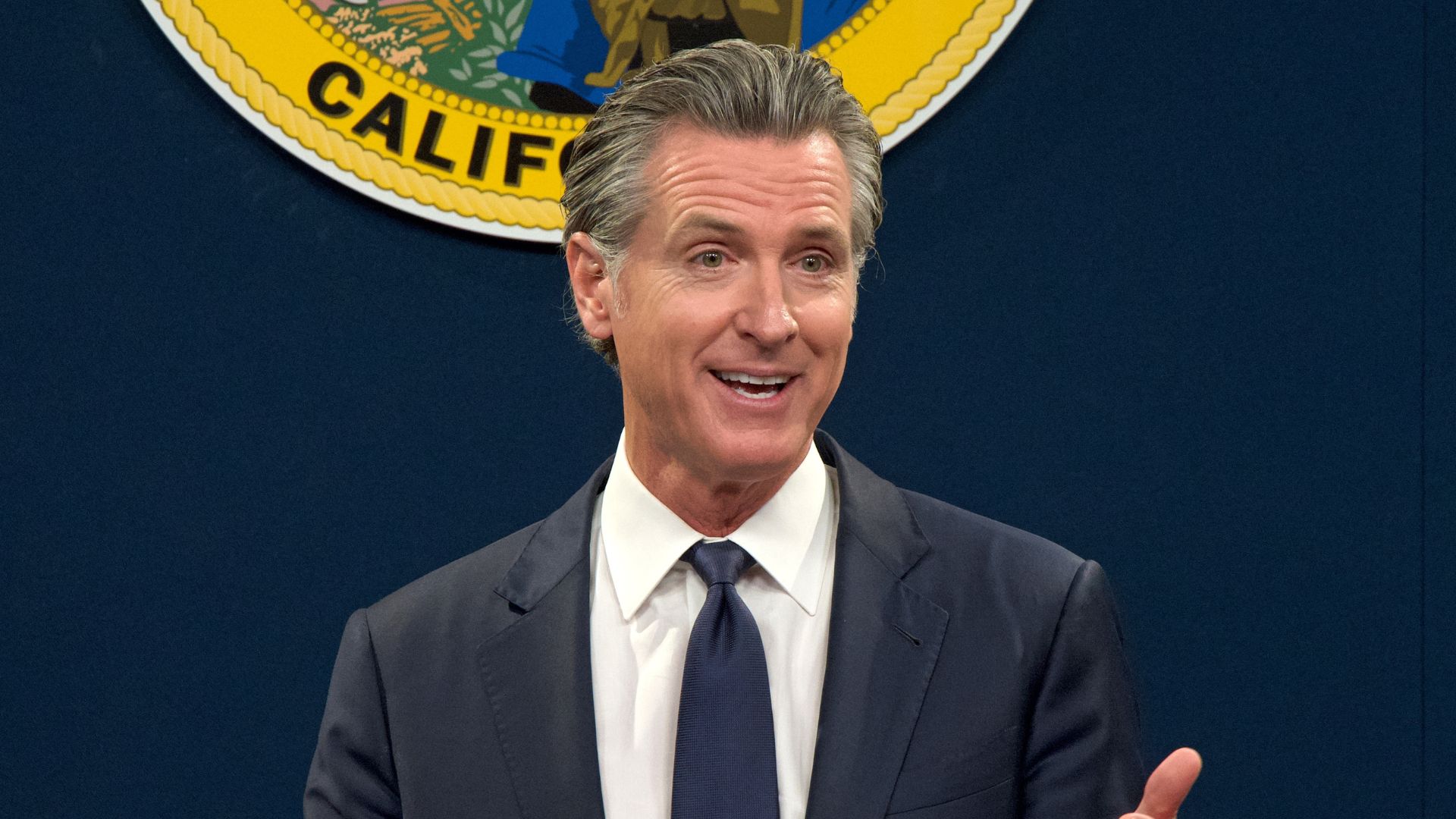
Sacramento, CA – Sept 6, 2024: Governor Gavin Newsom speaking at a press conference discussing new emergency regulation on hemp products currently being sold in grocery stores.

The EDD has faced public criticism for widespread delays and billions in fraudulent payments during the pandemic.

“The Trump presidency has been a disaster by every measure,” Newsom said. “His policies have failed ordinary Americans — making life tougher for working people, small business owners, and families.”

Analysts view the statements as part of a broader effort by Newsom to elevate his national profile. His continued criticism of President Trump aligns with speculation about future political ambitions beyond Sacramento.

President Trump, when asked about the California governor in past remarks, described Newsom as “grossly incompetent.” The President’s supporters argue that Newsom’s latest statements are politically motivated and intended to shift attention away from California’s domestic problems.

News

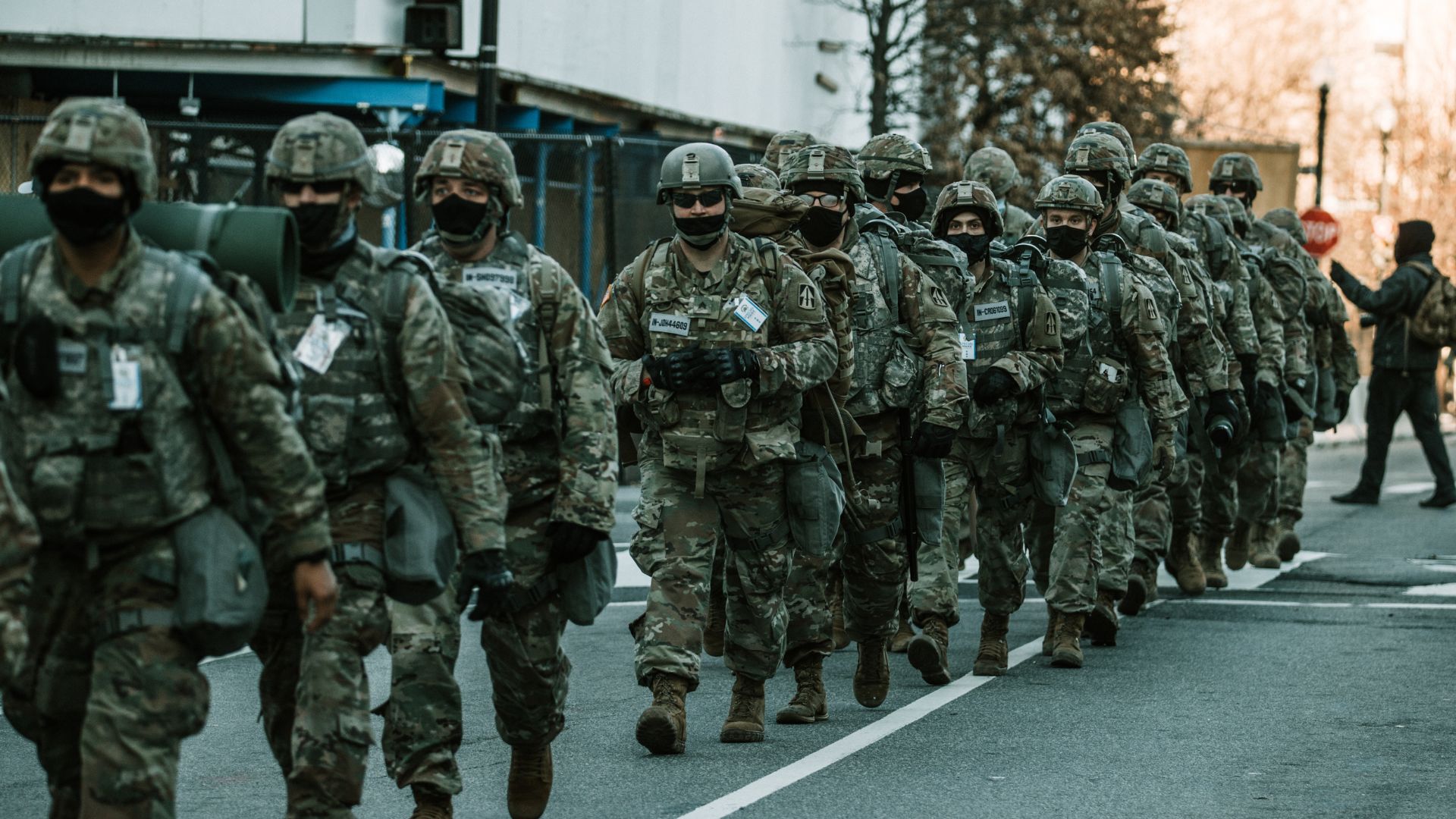
Trump’s Solicitor General Challenges Liberal Judges Over National Guard Deployment

The Trump administration has filed an emergency petition with the U.S. Supreme Court seeking to overturn lower court rulings that block President Donald Trump’s authority to federalize the Illinois National Guard for deployment in Chicago.

The petition follows a series of rulings by two Illinois judges and a three-judge panel of the Seventh Circuit Court of Appeals that limit the President’s power to call Guard units into federal service during civil unrest.

The conflict began on October 4, 2025, when President Trump determined that conditions in Chicago had become too dangerous for federal personnel conducting law enforcement operations, including immigration enforcement actions.

In a written directive, the President ordered Secretary of War Pete Hegseth to “call into Federal service at least 300 members of the Illinois National Guard, until the Governor of Illinois consents to a federally-funded mobilization, under Title 32 of the United States Code, of the Illinois National Guard under State control. The members of the Illinois National Guard called into Federal service shall protect ICE, FPS, and other United States Government personnel who are executing Federal law in the State of Illinois, and Federal property in the State of Illinois.”

Two days later, on October 6, Illinois Governor J.B. Pritzker filed a lawsuit seeking to block the mobilization.

The case was assigned to U.S. District Judge April Perry, who issued a 14-day temporary restraining order prohibiting “the federalization and deployment of the National Guard of the United States within Illinois,” including out-of-state Guard units.

Judge Perry wrote that she found no “credible evidence of a danger of rebellion” or any inability by state authorities to enforce the law.

She added that deploying federalized Guardsmen could “add fuel to the fire.”

The administration immediately appealed to the Seventh Circuit Court of Appeals.

On October 11, the appeals court issued a partial stay of Judge Perry’s order, permitting the President to federalize National Guard troops but not to deploy them for riot control or security patrols.

On October 17, a three-judge panel upheld the district court’s temporary restraining order in full.

In its opinion, the panel wrote, “Although we substantially agree with the definition of rebellion set forth by the district court in Newsom, we emphasize that the critical analysis of a ‘rebellion’ centers on the nature of the resistance to governmental authority.

Political opposition is not rebellion. A protest does not become a rebellion merely because the protestors advocate for myriad legal or policy changes, are well organized, call for significant changes to the structure of the U.S. government, use civil disobedience as a form of protest, or exercise their Second Amendment right to carry firearms as the law currently allows.”

The judges concluded that there was “insufficient evidence of a rebellion or danger of rebellion in Illinois,” ruling that the actions of demonstrators, though sometimes violent, did not meet the statutory threshold required for federal intervention.

The panel included judges appointed by Presidents Barack Obama, George H.W. Bush, and Donald Trump.

In response, Solicitor General John Sauer filed an emergency petition with the Supreme Court, arguing that the rulings unlawfully strip the President of his constitutional authority as Commander in Chief.

“At bottom, the plaintiffs seek to use this suit to second-guess the President’s judgment that recent and repeated acts of violence targeting federal facilities and personnel in Illinois warrant calling up the National Guard—including because the violence has left the President sufficiently ‘unable’ to ensure faithful ‘execut[ion]’ of federal law,” Sauer wrote.

The administration contends that the federal courts have overstepped by substituting their judgment for that of the President.

The filing states that the lower court rulings “cause irreparable harm to the Executive Branch by countermanding the President’s authority as Commander in Chief, jeopardizing the lives and safety of DHS officers, and preventing the President and the Secretary of War from taking reasonable and lawful measures to protect federal personnel from the violent resistance that has persisted in the Chicago area for several months.”

The Solicitor General’s brief urges the Supreme Court to reaffirm that the authority to federalize National Guard units rests solely with the President under 10 U.S.C. § 12406, which grants the executive the power to determine when “insurrection, invasion, or rebellion” conditions require such action.

The plaintiffs, including Governor Pritzker and several Illinois officials, have until 5 p.m. Sunday to file their response.

The administration is expected to submit a rebuttal shortly thereafter. A Supreme Court decision on whether to take up the case could come within the next two weeks.

News

Bernie Sanders Gets ‘Wrecked on National Television’ by a College Student

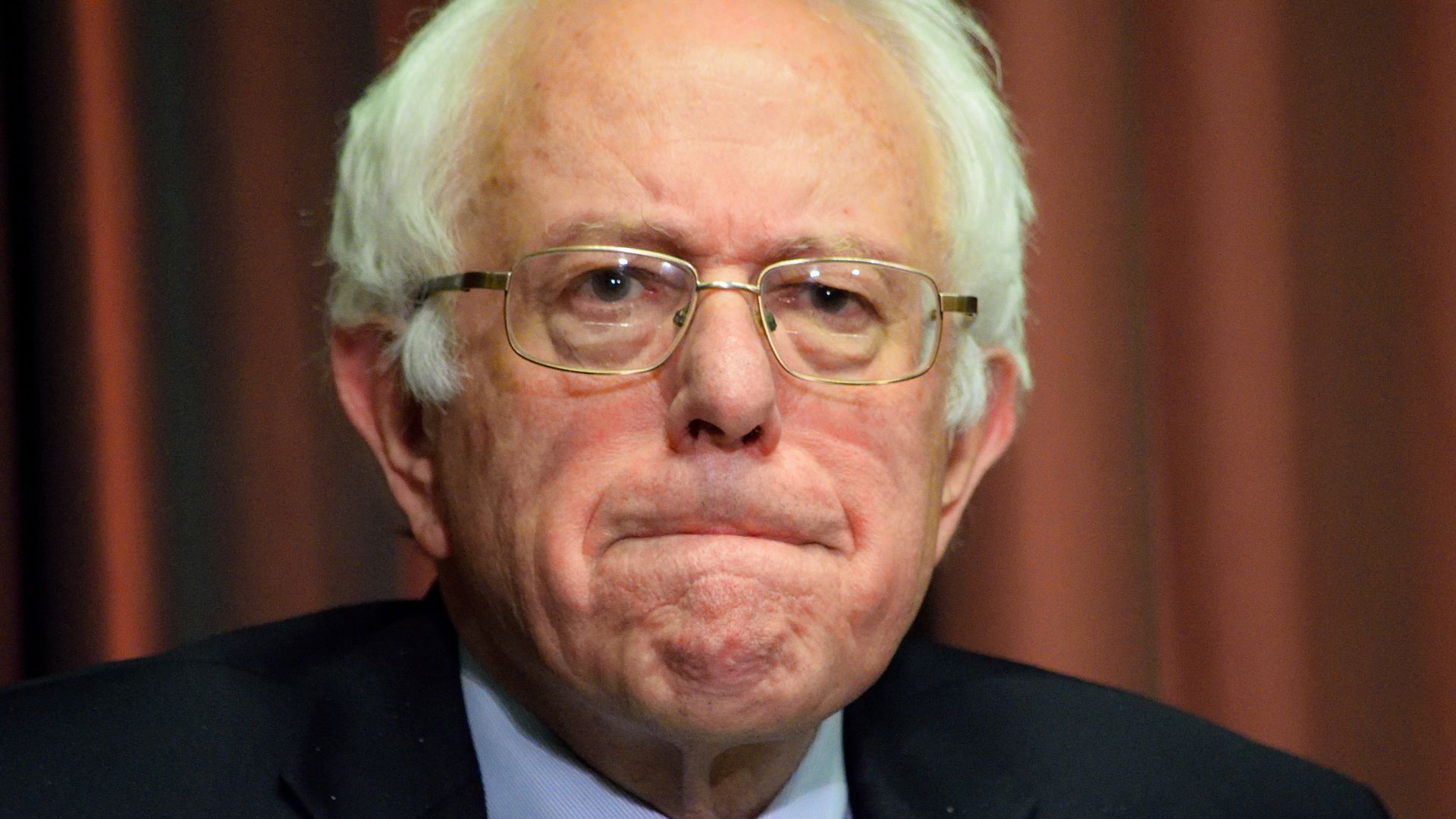
Senator Bernie Sanders engaged in a heated exchange with a Republican college student during a CNN town hall on Wednesday night, defending Senate Majority Leader Chuck Schumer amid mounting criticism over the ongoing government shutdown, now in its 16th day.

The confrontation took place when Rohan Naval, a student from American University and an intern with Americans for Tax Reform, challenged Sanders on Schumer’s handling of the funding standoff that has left much of the federal government partially closed.

The exchange came as public frustration grows over what has been widely described as the “Schumer Shutdown,” a political stalemate that has delayed federal paychecks and essential services nationwide.

“Senator Sanders, how do you think the Schumer Shutdown reflects on the leadership of Senate Majority Leader Chuck Schumer?” Naval asked.

Sanders quickly shifted the blame to Republicans, including Speaker of the House Mike Johnson and President Donald Trump.

“Well, I think it reflects more on Mike Johnson’s leadership and President Trump’s leadership,” Sanders responded.

“This is a leadership that said it’s okay to give a… well, how do you feel? You tell me. You think it’s a good idea to give $1 trillion in tax breaks to the richest people in the country and then make massive cuts to healthcare for working-class people?”

Naval pushed back, citing Schumer’s voting record on previous spending measures. “I think Chuck Schumer has voted for continuing resolutions 13 times in the last four years, and he has the opportunity to vote for one again, but he’s refusing to come to the table,” Naval said.

Sanders countered by arguing that Republicans were responsible for the deadlock.

“I think… look, as I have said, there are 53 Republicans in the Senate, correct? They need 60. What does that mean? It means you have to talk to the other side. Mike Johnson is not talking. John Thune is not talking. President Trump is not talking. That is the problem.”

The exchange highlighted growing partisan tensions as both parties seek to avoid blame for the funding lapse.

Democrats have accused Republicans of holding up the process by refusing to fund an Obamacare expansion in the GOP-led spending bill, while Republicans point to Schumer’s refusal to compromise on healthcare policy demands.

The funding measure, which would have extended government operations through the next fiscal year, failed in the Senate last week after Democrats filibustered the bill. Republicans say the legislation would have maintained essential services and protected military pay while negotiations continued.

As the shutdown drags on, reports indicate that federal agencies are struggling to sustain basic operations.

Thousands of federal workers have missed paychecks, and programs ranging from small business loans to national park services have been disrupted.

Meanwhile, comments by Schumer have intensified criticism of Democratic leadership.

Speaking to Punchbowl News earlier this week, Schumer appeared to celebrate the political fallout of the shutdown, suggesting it benefited his party.

“Every day gets better for us,” Schumer reportedly said.

“It’s because we’ve thought about this long in advance, and we knew that healthcare would be the focal point on Sept. 30, and we prepared for it… Their whole theory was — threaten us, bamboozle us, and we would submit in a day or two.”

Republicans have seized on Schumer’s remarks as evidence that Democrats are prioritizing political gain over governance.

With no agreement in sight, the Senate is not expected to reconvene until Monday.

Negotiations between both chambers have stalled as Schumer continues to demand the inclusion of healthcare-related provisions in any stopgap funding measure.

The standoff marks one of the longest shutdowns in recent U.S. history.

Both sides face increasing pressure from the public to reach a resolution as the fiscal standoff enters its third week.

News

Senate Democrats Block Bill to Pay American Troops During Schumer’s Ongoing Shutdown

Senate Democrats on Thursday blocked consideration of a defense appropriations bill that would have funded the Department of War for the remainder of the fiscal year and ensured that U.S. service members continued to receive pay during the ongoing government shutdown.

The vote failed 50–44, with only three Democrats—Sens. John Fetterman of Pennsylvania, Catherine Cortez Masto of Nevada, and Jeanne Shaheen of New Hampshire—joining Republicans in support of the measure. The legislation required 60 votes to advance.

The bill would have guaranteed uninterrupted pay for active-duty military personnel and provided a scheduled pay raise for troops.

Despite broad bipartisan support when the measure passed out of the Senate Appropriations Committee in July, it became the latest casualty of a partisan stalemate that has now extended the federal government shutdown to its 16th day.

The Biden-Harris administration has relied on temporary funding measures authorized by President Donald Trump to ensure troops continue receiving paychecks.

However, Pentagon officials warned that those funds are limited and will not guarantee pay for service members if the shutdown extends into November.

Senate Minority Leader John Thune (R-SD) sharply criticized Democrats for blocking the measure, noting that they had previously supported a defense authorization bill to raise troop pay but were now preventing the funds from being distributed.

“After voting last week for an authorization bill to increase troop pay, Democrats just voted against the bill that would actually pay the troops,” Thune said on the Senate floor.

“They’re happy to sacrifice any American and evidently any principle to their political goals. Democrats like to position themselves as the party of the little guy and the defender of hard-working Americans, but as this vote makes clear, who do Democrats really care about?”

Republican senators echoed Thune’s criticism, arguing that Democrats were putting politics ahead of national security and the welfare of military families.

Sen. Eric Schmitt (R-MO) said the vote demonstrated that Democrats were “not serious about working on appropriations bills” and called their continued opposition “a losing argument with the American people.”

Democratic Sen. Richard Blumenthal of Connecticut acknowledged earlier in the day that Congress has a responsibility to pay service members but still voted against the bill.

“We have an obligation, and now an opportunity, to pay our military in a lawful way instead of just moving funds from one account to another, as President Trump is doing,” Blumenthal said before the vote.

Earlier Thursday morning, Democrats also filibustered a bipartisan stopgap funding bill that would have reopened the federal government.

That marked the tenth time Democrats have blocked efforts to end the shutdown.

Sen. Fetterman, Sen. Cortez Masto, and Maine Sen. Angus King, an independent who caucuses with Democrats, broke ranks to vote with Republicans in favor of reopening the government.

Republican leaders have accused Senate Majority Leader Chuck Schumer (D-NY) of intentionally prolonging the shutdown to gain leverage on unrelated policy issues.

Schumer has insisted that Democrats will not agree to a temporary funding measure unless Republicans accept additional healthcare provisions tied to the spending package.

The defense appropriations measure would have provided funding for the military through September 2026, including pay for more than 1.3 million active-duty troops and essential defense programs.

The Senate is not scheduled to reconvene until Monday, meaning the government shutdown—already one of the longest in recent history—is expected to continue into next week.

Thune said he intends to keep bringing funding measures to the floor until Democrats agree to reopen the government.

“At some point, reasonable Democrats are going to have to come to the conclusion that this doesn’t benefit anybody,” Thune told MSNBC’s Ali Vitali in an interview that aired Thursday.

“I don’t believe government shutdowns benefit anybody, and that used to be a position that was held by the Democrat leadership.”

As of Thursday evening, there was no agreement between party leaders on how to move forward.

The defense spending measure is expected to be reintroduced when the Senate returns to session next week.

News

New York Democrat Forced to Leave His Own Town Hall by Anti-Israel Hecklers

Democratic Rep. Josh Riley of New York was briefly forced to leave his own town hall event on October 6 after anti-Israel protesters interrupted him for several minutes, shouting over his remarks and accusing him of supporting “genocide” for backing Israel’s war against Hamas.

Riley, who represents a competitive upstate New York district, was speaking at a public meeting held at the State University of New York (SUNY) Sullivan campus when protesters began heckling him.

Video and eyewitness accounts show that he was shouted down for nearly six minutes before stepping away from the event.

According to local reports, the disruption began when a woman stood up and shouted, “Seventy-five percent of Democratic voters are against you — the United States — giving arms to Israel. Why are you voting for arms to Israel?” Riley attempted to respond but was repeatedly interrupted.

“I would love to answer your question,” Riley said, urging the protester to allow him to speak in an orderly manner.

The woman continued to interrupt, shouting, “People are dying. Americans do not want to support genocide.”

The protester also criticized Riley for participating in a congressional trip to Israel in August, organized by the American Israel Education Foundation, an affiliate of the American Israel Public Affairs Committee (AIPAC).

Riley again tried to respond but was met with further disruption from multiple protesters.

“You’re filibustering!” one man shouted, while the woman continued, “You’re supposed to listen to your voters!”

Riley replied, “I’m trying to,” before leaving the room.

The female protester exited the venue shortly afterward, allowing Riley to return and continue the town hall.

Local outlet River Reporter confirmed that the event resumed after several minutes.

The confrontation came as support for Israel has weakened within the Democratic Party amid its ongoing conflict with Hamas.

A ceasefire between Israel and Hamas took effect on Friday under a deal negotiated in part by President Donald Trump.

Polling data has reflected a broader divide among Democrats on U.S. policy toward Israel. A Quinnipiac University poll released in August found that three out of four Democratic voters oppose additional U.S. military aid to Israel.

Riley’s tense town hall follows a series of similar disruptions directed at other prominent Democrats, including Kamala Harris, whose book tour events have been interrupted by anti-Israel demonstrators in multiple cities.

During the same event, Riley was questioned on domestic issues, including federal immigration enforcement.

When asked how local authorities could require Immigration and Customs Enforcement (ICE) agents to unmask during operations, he replied, “Local law enforcement no matter who you are should not be wearing masks.”

He also reiterated support for creating a pathway to citizenship for illegal migrants who do not have criminal records.

The National Republican Congressional Committee (NRCC) criticized Riley’s comments, accusing him of backing policies that weaken law enforcement.

“Radical Democrat Josh Riley has zero respect for anyone who disagrees with his dangerous, far-left agenda that prioritizes criminals and illegal immigrants above law enforcement heroes and hardworking New Yorkers,” NRCC spokeswoman Maureen O’Toole said in a statement.

Although Riley voted in favor of Republican-sponsored legislation aimed at penalizing criminal illegal migrants, he opposed the One Big Beautiful Bill Act, which increased funding for ICE detention facilities and allocated funds for completion of the southern border wall.

Riley said at the time that Republicans were “sh*tting” on the middle class by tying immigration enforcement to reductions in social program spending.

The New York Post has also reported that Riley invested up to $15,000 in a “women-owned, queer-led” distillery that markets politically themed spirits such as “Fascist Tears” vodka and “Dissent” gin.

Political analysts currently rate the 2026 race for New York’s 17th Congressional District as “Lean Democrat.”

Riley defeated then-Rep. Marc Molinaro in 2024 in what became the most expensive House race of that cycle.

Molinaro, now serving as head of the Federal Transit Administration, is not expected to seek a rematch.


Scroll to Top