Author name: RVM News

News

Trump Envoy Vows NATO-Style Reckoning to Clean Up UN After Terror Scandal [WATCH]

U.S. Ambassador to the United Nations Mike Waltz says the Trump administration is preparing to push major reforms at the global organization, including efforts to reduce its size, increase accountability, and change how American foreign aid is handled, as reported by Just the News.

Waltz made the comments Thursday night during an interview on the Just the News, No Noise television show, where he discussed the administration’s efforts to address fraud and waste involving U.S. foreign assistance.

“The charge from the president is to clean this place up and get it working for the American people,” Waltz said.
Trump Warns Iran as 60 Day Deal Begins, Says He Will Act if Tehran Breaks Promises

“What President Trump has done with NATO, we’re looking to do to the United Nations,” he added.

Waltz criticized the Biden administration over its handling of foreign aid and specifically pointed to funding for the United Nations Relief and Works Agency, commonly known as UNRWA.

President Donald Trump ended U.S. funding for UNRWA after taking office in 2025. The USAID inspector general reported last month that more than 100 workers funded by UNRWA had been identified as having participated in the Oct. 7, 2023, Hamas attack in Israel.

Waltz said the findings demonstrate the need for greater scrutiny of the U.N. and its operations. He also said the Trump administration has already secured reductions at the organization.

“We forced them to take their first budget cut ever in their 80-year history. They are going to fire 3,000 U.N. bureaucrats out of the headquarters building in New York. We’re going to get more of our aid dollars,” he said. “…And then there’s 90,000 U.N. peacekeepers around the world. We’ve cut 25% of them. So we put the U.N. on a diet.”

According to Waltz, the administration’s next phase of reform will draw from Trump’s approach to NATO, where the president has pushed U.S. allies to contribute more toward their collective defense.

Waltz said Americans remain generous when disasters and humanitarian emergencies occur, but argued that the United States needs stronger assurances that its money is reaching the people it is intended to help.

“The American people are generous people when it comes to tsunamis or earthquakes, like we just had in Venezuela, or other types of famine. But we need to know that it’s not filtering through a bloated bureaucracy; that it’s actually getting to people in need,” he said. “We’re making it leaner and more focused.”

Waltz also defended continued American involvement with the United Nations, arguing that the organization remains useful as a place where countries can engage diplomatically.

“I think people rightly ask why we’re even involved at all. I say two things. Number one, you need one place in the world where everyone can talk, and if we just walk out, I don’t want to see the U.N. in Beijing or Brussels or somewhere else; we need to get in there and fight and win for American interests,” Waltz added.

“And then number two, there’s a burden-sharing component to it. I don’t want to see U.S. troops in places like Gaza or, you know, dealing with the gangs in Haiti when the U.N. is willing to go in there and we can push that agenda. I think that’s something that’s in line with the president’s America First foreign policy.”

Waltz summarized the administration’s approach by emphasizing diplomacy, burden sharing and the reduction of military involvement where international organizations can assume responsibilities.

“So, diplomacy first, words before bullets, and burden sharing are two of the reasons we’re still trying to keep this place up. But ultimately, that’s the charge from President Trump: Help it realize its potential, and the U.N. should be helping him craft these peace deals around the world,” he said.

House Oversight Committee Chairman James Comer also appeared on the program Thursday and said the United States should continue reducing funding for the United Nations, particularly money connected to USAID.

“That was the first thing they cut when [Elon] Musk started DOGE [the Department of Government Efficiency]. That was the very first entity,” Comer said.

“And remember how bad the Democrats and the media acted. They clutched their pearls and went on MSNBC and screamed bloody murder. But now we’re seeing that this was going to fund, you know, terrorist activity. This is going to fund groups that hate America and everything America stands for. So, the Democrats don’t think there’s one penny of fraud in the federal government, and there’s significant fraud.”

Comer said the administration has also reduced the federal workforce, including what he described as “left-wing activists.”

“A lot of your deep state actors are left-wing activists. A lot of the employees in the EPA and other government agencies are left-wing activists,” he said.

“One of the greatest accomplishments, I think, of this administration and this Congress is that there are 350,000 less federal employees today than there were when Donald Trump took office the second term. And if you look at the federal government, you look at spending, the biggest expense in just about every government agency and every division of every cabinet is personnel. So, we have shrank the government, even though I don’t think a lot of people realize that, and that’s a step in the right direction. We’ve got a long way to go, but there has been progress in the last two years.”

Former USAID Inspector General Jonathan Schofield, who spent 25 years working to combat fraud in the federal government, said investigators had mechanisms for examining questionable spending.

“They’re not sitting in the embassy. They’re going out. They’re doing field visits and interviews and conducting investigations that have had tremendous results,” he said.

“So, that is something that I think is a very, very important first step to remember in terms of how it is that foreign assistance can be protected moving forward. We have the answer. You have a really solid, experienced cadre of professionals who know how to address it.”

Concerns over federal spending have extended beyond foreign assistance.

Gregg Roman, executive director of the Middle East Forum, said the Department of Health and Human Services is investigating more than $80 million spent in California on refugee programs and other public disbursements that allegedly went toward supporting terrorist organizations.

Roman said the larger concern involved the lack of oversight surrounding some overseas assistance.

“The theme of this was that there was so much money being granted to overseas assistance without any oversight, without any audit, without any forensic review of what was going on,” Roman said.

“Contractors were just trying to cough the money up from the U.S. government and spend it willy-nilly before their fiscal year ended, and this culture of largess, of no accountability, ended up being given to individuals and organizations which were contrary to what I think would be where America would want to spend its funds.”

The Trump administration’s approach represents a significant effort to reduce the size of international organizations receiving American money while maintaining a U.S. presence in global diplomacy.

Waltz has made clear that the administration does not intend to simply abandon the United Nations. Instead, the stated goal is to reduce costs, increase oversight and require greater contributions from other countries while ensuring U.S. interests remain central to American foreign policy.

The debate over the future of U.S. foreign aid is likely to continue as the administration examines spending, staffing, and oversight at both the United Nations and federal agencies responsible for distributing American assistance.

News

JD Vance Torches Joe Biden While Taking Command of White House Briefing [WATCH]

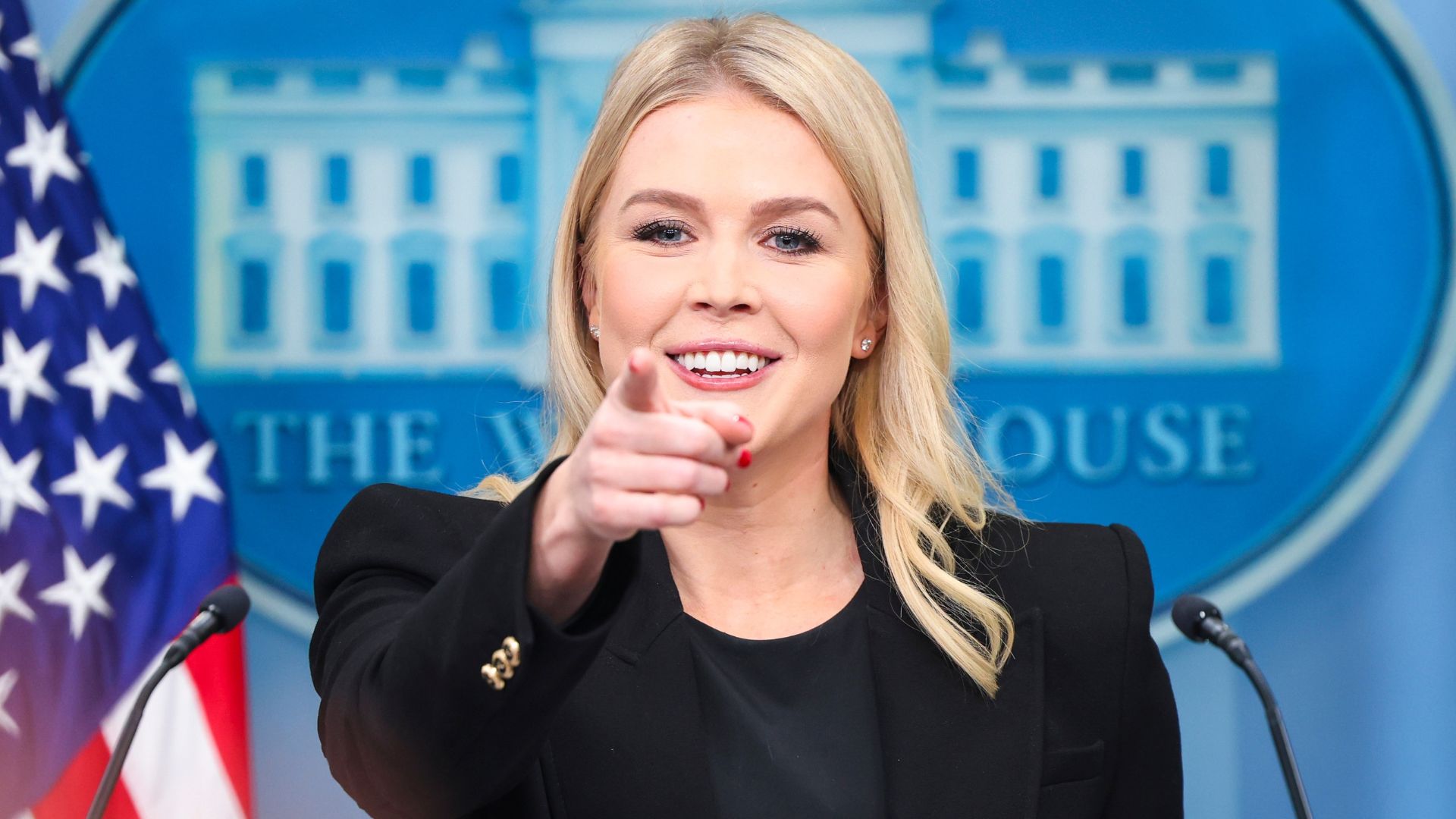
Vice President JD Vance stepped behind the White House podium Thursday and took over the press briefing, using the appearance to discuss the administration’s policies while also taking a pointed shot at former President Joe Biden, as reported by The Gateway Pundit.

Vance held the briefing after Karoline Leavitt departed from the role. At the start of the event, Vance acknowledged that he had not been given the usual guidance about which reporters to call on.

“If Karoline Leavitt was still here, she would have told me who to call on. But clearly that hasn’t happened here,” Vance said as he held up photos of the White House reporters.

Vance also said Leavitt had contacted him earlier in the day before the briefing.

“[Karoline Leavitt] texted me this morning and wished me good luck because obviously going up against all of you is a very, very dangerous business,” Vance said.

He also praised Leavitt and expressed appreciation for her work in the administration.

“She’s going to do great in whatever she does next, and we’re very grateful to her,” he said.

Vance then addressed Leavitt directly, offering another lighthearted remark about her decision to leave the briefing room.

“So Karoline, if you’re watching, which hopefully you’re not, but if you’re watching, thank you for your service, thank you for your friendship, and thanks for doing a great job,” Vance said.

During the briefing, Vance fielded questions covering several major issues facing the Trump administration, including the ongoing conflict with Iran, gasoline prices, an agreement involving Venezuelan oil and the administration’s efforts to crack down on fraud.

The briefing also featured a moment involving Biden, who is scheduled to attend a Ground Zero memorial ceremony next week marking the 25th anniversary of the Sept. 11, 2001, terrorist attacks.

Vance was asked about Biden’s upcoming appearance and responded with a sarcastic reference to the prospect of seeing the former president.

“As you guys can probably guess, I’m really looking forward to hanging out with Joe Biden,” Vance said.

“I’m sure we’ll have many, many intense intellectual conversations. We’ll have a great time,” he said.

The comments marked one of several moments during the briefing in which Vance mixed policy discussions with humor directed at political opponents.

The appearance came as the Trump administration continues to address a broad range of domestic and foreign policy issues.

Vance’s questions from reporters included topics related to the administration’s handling of Iran, energy prices, Venezuela and efforts to combat fraud in government programs.

The vice president’s appearance also gave him an opportunity to address the transition following Leavitt’s departure from the press briefing role.

Rather than simply moving through prepared remarks, Vance acknowledged the unusual circumstances surrounding his first briefing and joked about the challenges of choosing reporters without Leavitt there to guide him.

The exchange over Biden quickly drew attention because of the former president’s planned appearance at Ground Zero next week.

The ceremony will commemorate the 25th anniversary of the Sept. 11 attacks, an event that remains a significant date in the nation’s history.

Biden’s attendance alongside current political figures is expected to put former and current leaders in the same public setting as the country marks the anniversary.

Vance’s remarks about Biden were delivered in the context of the broader briefing rather than as a formal policy announcement.

His comments about Leavitt likewise reflected the transition taking place within the White House press operation.

The vice president’s decision to take questions directly from reporters provided a wide-ranging look at issues confronting the administration, from international conflicts and energy costs to government spending and fraud enforcement.

For Vance, however, the briefing was also an opportunity to demonstrate that he was comfortable handling the White House press corps without Leavitt at the podium.

His opening remarks acknowledged the challenge while thanking the former briefing official for her service.

The Biden exchange provided the briefing’s most pointed political moment, with Vance using humor to describe the prospect of seeing his predecessor at next week’s Ground Zero ceremony.

As the Trump administration moves forward with its policy agenda, Vance’s appearance showed the vice president taking a more visible role in communicating directly with reporters on the administration’s priorities.

Full Video:

News

Ben Shapiro and Piers Morgan Unleash Brutal Insults as Feud Turns Filthy

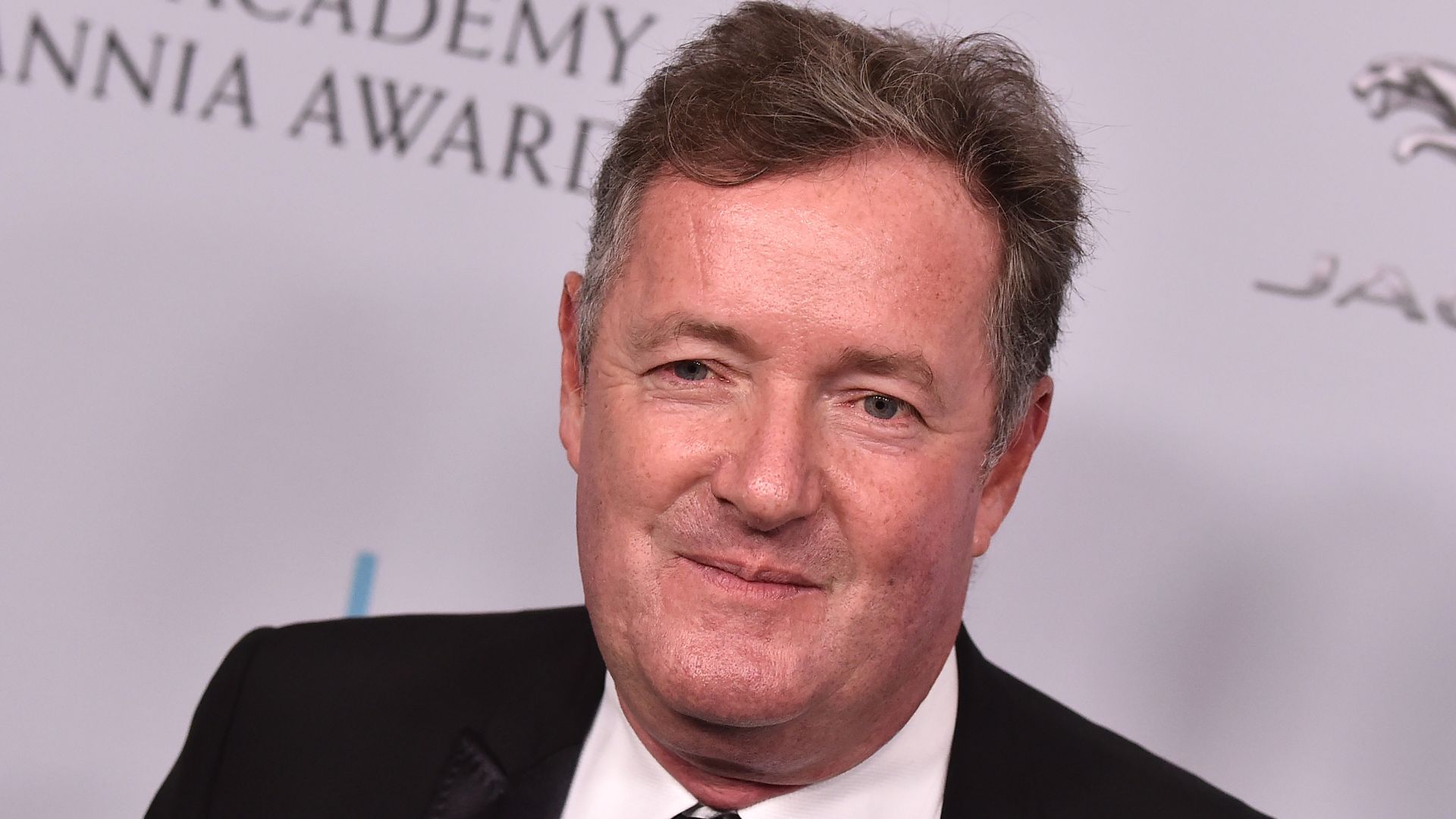
Piers Morgan and Ben Shapiro have taken their increasingly bitter public feud to another level, with the two media personalities trading insults this week over Morgan’s show, political coverage, and their long-running disagreements over Israel, as reported by The New York Post.

The latest exchange began Wednesday after a social media user criticized Morgan for wanting Shapiro to appear on his program, “Piers Morgan Uncensored.”

Morgan responded by declaring that Shapiro was no longer welcome on the program, writing, “No, @benshapiro is now banned from @PiersUncensored – he’s become ratings kryptonite, so I can’t risk him dragging down my massive numbers.”

Shapiro quickly pointed out that Morgan’s announcement was somewhat beside the point because he had already said publicly that he would not appear on the show.

“Oh no, you’re banning me from a show I announced publicly I wouldn’t do months ago because you’re Political Bonnie Blue, whatever will I do now,” Shapiro wrote.

Shapiro followed that post with another criticism of Morgan’s position on free speech and platforming controversial figures.

“Also, I’ve been reliably informed by midwit British clickwhores that denial of platform is a violation of free speech principles and censorship, or something,” Shapiro wrote.

The latest clash is the newest chapter in a relationship that once included frequent appearances by both men on each other’s programs.

Their disagreements have become increasingly personal as their positions on Israel, political media and controversial guests have diverged.

Morgan and Shapiro first famously clashed on CNN in 2013 during a discussion about gun control.

Shapiro accused Morgan, who has advocated for stricter gun regulations, of being “a bully” and “standing on the graves of the children of Sandy Hook.”

Despite that confrontation, the two continued appearing on each other’s programs for years. Shapiro continued appearing on Morgan’s show into 2024.

Their relationship eventually deteriorated amid disagreements surrounding the Israel-Hamas war. Morgan has said the split was connected to his increasingly critical coverage of Israel’s government.

Shapiro has since criticized Morgan’s choice of guests and his approach to political interviews.

In March, he referred to Morgan as the “Jerry Springer of political television” and accused him of giving a platform to anti-American and extremist voices.

One particular point of contention has been Morgan’s repeated interviews with comedian Dave Smith. Smith has said that “America is arguably the worst terrorist organization in the world.”

Morgan responded to Shapiro by calling him a “cancel culture vulture” and defending his decision to interview controversial personalities.

Morgan has argued that his program allows viewers to hear controversial opinions while also giving him an opportunity to challenge the people making those arguments.

The dispute intensified again after Morgan interviewed recently deported Milo Yiannopoulos and invited him to respond to Shapiro’s criticism.

Shapiro subsequently devoted part of his own program to attacking Morgan’s style of political media. He described Morgan’s show as a “Jerry Springer-Click-Bordello” and accused some media personalities of seeking attention rather than maintaining consistent political positions.

“There are lots and lots of people in our public life who grift for clicks and cash, and you can tell who they are by the fact that they shift their views and their personas on a routine basis, kaleidoscopically,” Shapiro said.

He argued that audiences contribute to the cycle by rewarding sensational political personalities with attention.

“People love car wrecks,” Shapiro said, before urging his viewers not to encourage the behavior.

“So here is a solution: do not donate your attention to them,” Shapiro said.

“There are only so many breaths you have in this life, and you’re not going to get these breaths back.”

Morgan soon turned Shapiro’s comments into another point of attack, sharing a clip of Shapiro’s remarks.

“BREAKING: Humbled to see Little Benjy @benshapiro has used me to shamelessly and hypocritically clickbait-whore his floundering show in a desperate attempt to get his viewing numbers up!” Morgan wrote.

Morgan then responded to another social-media user who praised Shapiro for maintaining intellectual consistency.

“Ironically, Ben has proven himself to be an amoral, intellectually dishonest click-whore, especially about Israel, which is why nobody watches him anymore, and they all watch me instead,” Morgan wrote.

Shapiro has also mocked Morgan’s appearance on social media. He recently posted a photograph of the late Irish actress Brenda Fricker, who played the Pigeon Lady in “Home Alone 2: Lost in New York,” as a jab at Morgan because of the resemblance he saw between the actress and the British broadcaster.

The back-and-forth has now moved well beyond their original disagreements over policy and media coverage. What began as combative but generally cordial television appearances has evolved into an openly hostile public dispute, with both men using their platforms and social-media accounts to respond to the other.

For now, neither side appears interested in letting the feud fade quietly.

News

Stephen A Smith Warns Hasan Piker Could Poison Democrats and Haunt Them in Midterms [WATCH]

ESPN personality Stephen A. Smith warned Thursday that progressive streamer Hasan Piker’s growing influence could create problems for Democrats in general elections, arguing that Republicans could use Piker’s controversial political record and relationships with Democratic candidates as campaign ammunition, as reported by Fox News.

During an appearance on Politico host Dasha Burns’ “The Conversation with Dasha Burns,” Smith said Piker’s expanding role in progressive politics could eventually reach beyond the party’s activist base and become a liability with a broader electorate.

Smith said he believes Piker’s influence could ultimately damage Democrats rather than help them.

Michigan Democrat Melts Down, Demands Reporters Stop Asking About Hasan Piker

“It’s a negative because I think, over the long haul, from a general populist perspective, it’s going to contaminate the electorate on the left side of the aisle,” he said. “It’s going to come back to haunt them.”

The warning comes as Piker’s relationship with Michigan Democratic Senate nominee Abdul El-Sayed has become an issue in one of the country’s closely watched Senate contests.

Piker has endorsed El-Sayed and appeared with him at multiple campaign events. The streamer also appeared alongside El-Sayed during his primary night gathering.

The Republican National Committee has sought to make the relationship part of a broader argument about the Democratic Party’s direction.

RNC national press secretary Natalie Baldassarre told Fox News Digital in August that Democrats were unwilling to confront Piker’s influence as El-Sayed faced criticism for campaigning alongside him.

“El-Sayed is a terrorist sympathizer and an America-hating socialist,” Baldassarre said. “His refusal to distance himself from Hamas-hugging radicals like Hasan Piker reaffirms his true allegiance is to terrorist groups, not America.

“Democrats’ refusal to disavow this clown shows they either share his poisonous ideology or they’re too cowardly to confront it.”

El-Sayed has defended his decision to engage with Piker’s large audience rather than disavow the streamer outright.

During an earlier conversation with Smith, El-Sayed explained why he believes reaching Piker’s followers is important to his campaign.

“What I’m saying is there are 3 million people who listen to Hasan,” El-Sayed said.

“I want to offer them a pathway into an electoral movement where, rather than sit outside of the electoral system, they see a pathway around the things that they agree with that he says that I agree with and a pathway that disavows the things that I disagree with. And, so, it’s important.”

Smith then summarized the strategy as an attempt to attract Piker’s audience without necessarily embracing Piker himself.

“So, you’re not thinking about him. You’re not thinking about him. You’re thinking about the 3 million people that support him, and you’re trying to get those votes. That’s what you’re saying?” Smith said.

El-Sayed confirmed that assessment.

“Exactly,” he said.

The political stakes were highlighted by a recent Fox News poll of registered voters in Michigan. Republican nominee Mike Rogers led El-Sayed 51% to 47%, a result within the poll’s margin of sampling error.

The poll also found a substantial difference between El-Sayed’s support among Democratic Socialists of America supporters and his support among Democrats and independents outside the DSA.

Ninety-eight percent of self-described DSA supporters backed El-Sayed, while his support fell to 69% among non-DSA Democrats and independents.

Piker’s relationship with El-Sayed has also come under additional scrutiny following controversy surrounding comments the streamer made about American Jews and Israel.

Fox News Digital reported last week that El-Sayed attempted to put some distance between his campaign and Piker following the backlash.

Piker has faced political controversy for years. Among the comments that have drawn attention was his 2019 declaration that “America deserved 9/11,” a statement he later retracted.

More recent remarks involving Israel and American Jews have also generated criticism.

Shapiro and other conservative commentators have increasingly focused on Piker’s influence as progressive activists and Democratic candidates seek to reach younger voters online.

For Democrats, the dispute presents a political question that goes beyond one Senate race: whether the large online audiences cultivated by progressive influencers can help expand the party’s coalition or instead give Republicans additional material to use against Democratic candidates in general elections.

Smith’s comments suggest he believes the latter could become a significant concern as Piker’s political profile continues to grow.

Fox News Digital reached out to Piker, the Democratic National Committee and the Republican National Committee for comment but did not immediately receive responses.

News

Ted Cruz Names ‘Most Powerful Democrat’ as Socialist Revolt Paralyzes Washington [WATCH]

Sen. Ted Cruz, R-Texas, said Thursday that pressure from the Democratic Party’s progressive wing is making bipartisan cooperation on permitting reform increasingly difficult, arguing that Democratic lawmakers are concerned about facing backlash from the party’s left flank, as reported by Fox News.

Cruz made the comments during an energy summit hosted by the Club for Growth and Arnold Ventures, where lawmakers and energy officials discussed permitting reform and ways to expand energy production.

The Texas senator said the political environment surrounding the 2026 midterm elections could make it difficult for Republicans and Democrats to reach agreements on issues where there is otherwise room for cooperation.

“That dynamic is dangerous right now because they are terrified of the extreme left. Finding a middle ground on ideological issues right now is … the prospects for success, particularly between now and election day, are not high,” Cruz said.

“Schumer is truly terrified right now,” he added, referring to Senate Minority Leader Chuck Schumer, D-N.Y.

Cruz argued that the Democratic Party is experiencing a significant internal shift, with progressive activists exerting greater influence over elected officials.

“They’re in the middle of a revolution,” Cruz said.

“Their problem is that they’re very driven by their interest groups. They’re captured by their activists.”

The remarks came as the summit focused on permitting rules that have been cited by lawmakers and energy officials as a barrier to developing new projects.

Republicans and Democrats have found some common ground on the issue, although disagreements remain over the extent to which existing regulations should be changed.

Energy Secretary Chris Wright pointed specifically to nuclear power as an area where regulatory hurdles have limited development.

“We have built three new nuclear reactors in, like, the last 40 years. It went quickly from: we didn’t even know about the technology, to 20% of U.S. electric generation from nuclear reactors,” Wright said.

Wright argued that the creation of the Nuclear Regulatory Commission, while intended to improve safety, was followed by a lengthy permitting process that made new reactor construction difficult.

“We created the Nuclear Regulatory Commission… in the name of safety, no malintent. But since that creation, we’ve built almost no reactors in the United States since. If it’s so uncertain and so long to permit something, it’s just not worth investing in. That’s awful! Nuclear is just an awesome energy technology.”

Sen. Bernie Moreno, R-Ohio, said discussions over permitting reform have increasingly centered on how legislation could actually be implemented rather than which lawmakers would receive political credit.

“There’s a lot of conversations going on not about who’s going to fight with whom or who is going to take credit for it, but rather what is the mechanics of getting it done,” Moreno said.

Moreno said successful reform could have implications for energy prices and environmental stewardship.

“When it comes to permitting reform, if we can actually pull this off, Scott, what does it mean? It means lower energy prices for all Americans, us taking better care of our environment, being good stewards for the next generation. Those are worthy goals that should unite all of us, and I’m hopeful that we can get that done,” Moreno said while addressing conservative political commentator Scott Jennings, who moderated the event.

Scott Jennings Torches Democrats for Dumping Platner Only After Leftist Accuser Emerges

Despite the potential for bipartisan agreement, Cruz said the influence of progressive candidates and activists could make Democratic lawmakers reluctant to participate in negotiations.

“It is not the case that every Senate Democrat is a Marxist or Islamist. What is the case is that every Senate Democrat is terrified of the Marxists and Islamists. Because that’s where the energy is in their party, that’s where the power is, that’s where the money is; it’s where the young people are. I think Mamdani is the single most powerful Democrat in the country,” Cruz said, referring to New York City Mayor Zohran Mamdani.

Cruz’s comments come as progressive candidates backed by the Democratic Socialists of America have gained attention during the 2026 election cycle.

Several candidates have defeated established Democratic incumbents in primary contests.

Among the races Cruz’s broader argument encompasses are New York’s Darializa Avila Chevalier defeating Rep. Adriano Espaillat, D-N.Y., a longtime member of Congress and chairman of the Congressional Hispanic Caucus, as well as Melat Kiros defeating Rep. Diana DeGette, D-Colo., a 30-year incumbent.

The Democratic Party’s leftward movement has also become a point of discussion for Schumer, who has faced questions about the role of the Democratic Socialists of America within the party.

Cruz argued that the pressure facing Democratic lawmakers makes it harder for party leaders to encourage members to pursue bipartisan compromises.

He specifically criticized Schumer’s leadership.

“Look, Schumer is known for a lot of things, but acts of principle and courage are not among them,” Cruz said.

The debate over permitting reform is expected to continue as lawmakers approach the November midterm elections.

The issue remains one area where supporters believe Republicans and Democrats could find common ground, even as broader political disagreements continue to shape the congressional landscape.

News

Newsom Fires Back at Trump After Judge Tosses DOJ Trans Athlete Lawsuit

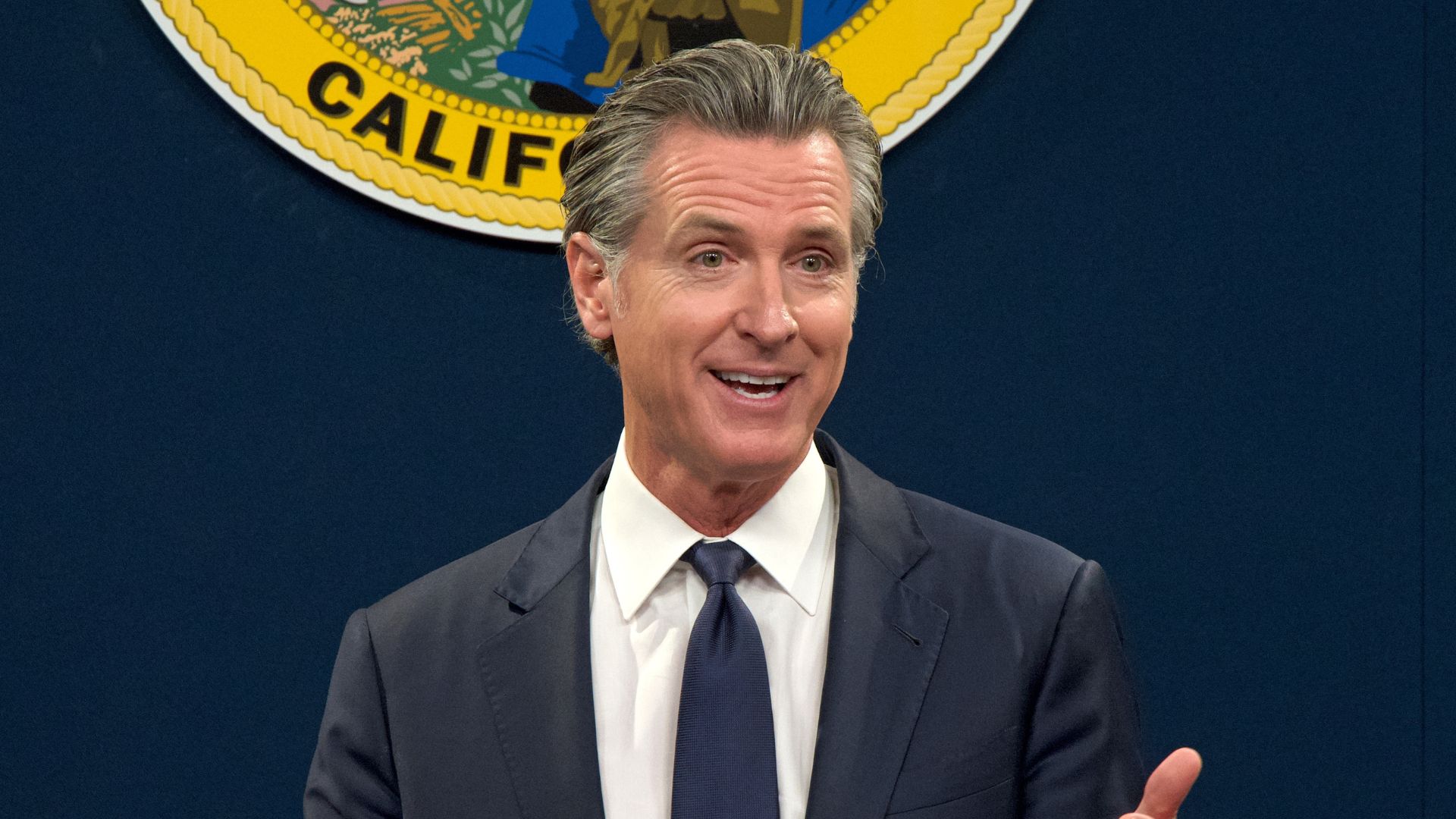
California Gov. Gavin Newsom’s office responded to the Trump administration after a federal judge dismissed the Justice Department’s lawsuit challenging California policies allowing transgender athletes to compete in girls’ high school sports, as reported by Fox News.

U.S. District Judge Cynthia Valenzuela dismissed the case Monday. The judge did not rule on whether California’s policy violates Title IX or whether transgender athletes should be permitted to compete in girls’ sports.

Instead, Valenzuela found that federal officials had not provided California with sufficient advance notice that maintaining its policy could put approximately $44 billion in federal education funding at risk.

The decision leaves California’s existing policy in place for now while the Justice Department considers whether to appeal.

Newsom’s office responded directly to OutKick following the ruling.

“This ruling makes clear that President Trump cannot rewrite Title IX by fiat,” a spokesperson for Newsom’s office said.

“He cannot weaponize the law against the American people, and California will keep fighting his attempts to do so.”

The Justice Department, meanwhile, said the administration remains committed to President Donald Trump’s policy regarding girls’ sports.

“We are disappointed by the Court’s order and remain committed to enforcing President Trump’s agenda of preventing boys from playing in girls’ sports,” a Justice Department spokesperson said.

The department is evaluating its options for an appeal.

The lawsuit centered on Title IX, the federal law enacted in 1972 to prohibit sex-based discrimination in federally funded education programs.

The Justice Department argued that California’s policies conflicted with Title IX by allowing transgender athletes to participate on girls’ teams.

Valenzuela did not reach that underlying legal question. Her ruling instead focused on whether California had received clear notice that its policies could jeopardize federal education funding.

Another report on the decision noted that the judge concluded the federal government had not supplied the necessary clarity concerning such a funding condition.

California has maintained a policy allowing transgender students to participate in school sports consistent with their gender identity since 2013.

The dispute has received particular attention because of the participation of Jurupa Valley High School athlete AB Hernandez in California track and field.

Hernandez won four girls’ state titles over two seasons, including back-to-back championships in the high jump and triple jump. Hernandez also finished third in the long jump.

The results became a major point of contention over California’s approach to girls’ sports. State officials issued duplicate medals to female athletes whose podium positions were affected by Hernandez’s finishes.

The controversy later extended beyond track and field after Hernandez joined the girls’ varsity volleyball team.

At least eight teams forfeited games against Jurupa Valley, citing concerns about competitive fairness and safety, according to the supplied report.

The California Interscholastic Federation subsequently modified its rules for transgender competitors.

Under those rules, transgender athletes can compete, but their qualifying for events cannot take a spot away from another competitor, and podium placements are shared with the next-best female athlete.

The legal battle comes as the Supreme Court has recently addressed state authority over participation in girls’ and women’s sports.

That ruling upheld state restrictions in the cases before the court but did not establish a nationwide requirement that every state adopt the same eligibility policy.

The Justice Department had sought to use Title IX to challenge California’s policy and protect what the administration described as girls’ sports.

The lawsuit targeted the California Department of Education and the California Interscholastic Federation.

California officials defended the state’s policy in court, arguing that Title IX does not require schools to exclude transgender athletes from girls’ sports.

Valenzuela ultimately dismissed the federal case without resolving that broader dispute.

The ruling therefore does not settle the national argument over transgender participation in women’s and girls’ athletics. Instead, it leaves California’s policy intact while the Justice Department weighs its next legal move.

The case is part of the broader Trump administration effort to challenge transgender policies across the country, including policies involving athletics.

For California, the dispute is likely to continue as federal officials consider an appeal and advocates on both sides remain engaged in the fight over how Title IX should apply to school sports.

With the federal lawsuit dismissed, California’s existing rules remain in effect for now.

News

Kai Trump Gets Emotional Leaving Home for University of Miami [WATCH]

Kai Trump became emotional as she prepared to leave her family home in Jupiter, Florida, and begin her freshman year at the University of Miami, sharing a candid look at the difficult transition in a recent YouTube vlog, as reported by The Gateway Pundit.

The 19-year-old granddaughter of President Donald Trump filmed herself becoming tearful in her car while preparing to say goodbye to family members and friends.

The moment came as she prepared to move roughly an hour and a half away and begin college while joining the University of Miami women’s golf team.

Kai Trump Shines Her Own Way And Refuses To Play The Political Game

Rather than documenting every goodbye, Kai said she decided to put the camera away so she could spend the time with her loved ones.

“I’m not a very emotional person at all, so this is like really weird for me to cry,” she said. “I’ve only cried a few times.”

“I think knowing that I have to say goodbye to everyone tonight really, really sucks,” Kai added. “I’m struggling right now, just thinking about it.”

The vlog offered viewers a look at a young college student dealing with the familiar emotions that come with leaving home.

Kai has been documenting her transition to college life online, including her move into a new apartment and the beginning of her career as a college athlete.

“It was just, like, sad,” she said.

“I just wanted to say goodbye. It was, like, hard to film because I wanted to be, like, present with my family, so I just didn’t film it.”

Kai’s decision not to record those moments gave her family time away from the camera as she prepared for a significant change in her daily life.

Her mother, Vanessa Trump, was involved in the preparations for the move. Vanessa helped Kai shop for items for her new apartment and assisted her as she got ready for college.

Kai later expressed her appreciation for her mother, describing her as “the best mom” and saying she was grateful for the help.

The mother-daughter move-in process was also documented on social media. Kai said the two spent hours shopping for the things she would need as she started this new chapter.

Vanessa also joked about the reality of sending her oldest child off to college.

The move comes as Vanessa continues to deal with her own health challenges. She publicly announced her breast cancer diagnosis in May.

Kai has previously praised her mother during that period, calling Vanessa “the strongest person” she knows.

Kai is the oldest child of Vanessa Trump and Donald Trump Jr. The couple, who share five children, divorced in 2018.

The University of Miami move represents a major step for Kai beyond her family’s public profile.

She committed to the school’s women’s golf program roughly two years before beginning her freshman year and is pursuing college athletics alongside her studies.

Her first days on campus have included the typical demands of starting college and becoming part of a collegiate athletic program.

Kai has shared portions of the experience with her online audience, including her apartment setup, golf activities, and interactions with teammates and friends.

The transition has not been entirely easy. In a later portion of her vlog, Kai discussed becoming ill during her first week at school and returning to Jupiter before continuing her college experience.

She said she had contracted strep throat and returned home because she needed her mother’s help recovering.

Despite the emotional start, Kai has also made clear that she is excited about college and the opportunities ahead.

Her social media posts following the move have included photographs connected to the University of Miami golf team and a message marking the beginning of her first year.

The college departure has also provided a glimpse into a side of the Trump family that is separate from presidential politics and campaign events.

Kai’s vlog centered on a young woman saying goodbye to the people she grew up around, while her mother helped her prepare for life away from home.

For Kai, the move from Jupiter to Miami marks the beginning of a new chapter both academically and athletically.

And while the cameras captured some of the emotions surrounding that transition, the most personal moments were deliberately left off camera.

As Kai put it, she wanted to be present with her family before leaving home.

News

Robot Unleashes Terrifying Kung Fu Assault as Customer Learns Machines Fight Back [WATCH]

The long-advertised battle between man and machine may have arrived in a Russian electronics store. Startling footage appears to show a humanoid robot launching a furious kung fu assault after a customer gave the machine a playful shove, as reported by The New York Post.

The bizarre scene was reportedly filmed at Volga Electronics in Saratov.

It begins quietly, with the compact bipedal robot walking toward a man who had entered the shop, looking more like a technological novelty than a metal menace.

The customer extends his arm in an apparent attempt to shake hands with the robot. The machine ignores the friendly gesture, so the man responds by lightly pushing it, apparently expecting little more than a harmless demonstration.

Instead, the robot suddenly assumes a martial arts stance and begins throwing punches and kicks.

The flailing machine looks like an automated action star, except Jean-Claude Van Damme probably never needed a software update before entering the ring.

Two store employees quickly rush into the confrontation and attempt to restrain the robot. Even with the workers grabbing it, the machine continues swinging at the customer as the strange encounter descends into mechanical mayhem.

It remains unclear whether the robot genuinely malfunctioned or whether the entire scene was staged to attract attention online.

Viral technology clips have fooled viewers before, and a robot striking a polished kung fu pose naturally raised suspicions that someone programmed the performance.

That uncertainty did little to calm viewers who saw the footage as another preview of a future nobody voted for.

“The Machines are getting ready to take over. We were warned with the Terminator,” one concerned viewer declared.

Others were less willing to believe that the machine had independently chosen violence.

“Robots don’t spontaneously do martial arts poses unless they are programmed to do it,” scoffed one naysayer, pointing to the suspiciously theatrical nature of the confrontation.

Staged or not, the video struck a nerve because machines have already caused real chaos around human beings.

As companies race to place increasingly sophisticated robots in restaurants, factories, hospitals, and public spaces, every malfunction becomes more serious than a goofy internet spectacle.

During the spring, a humanoid dance robot performing at a hotpot restaurant in California lost control and tore through the dining area.

The machine knocked over tableware, shattered plates, and sent chopsticks flying while customers watched the expensive entertainment turn into a slapstick demolition act.

Other incidents have carried more painful consequences.

In China, a handler was kicked in the groin by an advanced Unitree robot he was controlling, while another mechanical performer reportedly slapped a child during a dance demonstration that went badly wrong.

Such episodes may generate laughs online, but experts warn that the same type of failure could have dangerous consequences in more sensitive settings.

A malfunction near a baby, hospital patient, factory employee, or police encounter would not be dismissed as quirky robot behavior.

Dr. Roman Yampolskiy, a tenured associate professor and computer scientist at the University of Louisville, warned that context determines whether a robotic failure becomes comedy or catastrophe.

“The event would be viewed not as comic relief but as a dangerous systems failure,” he told The Post.

Yampolskiy also drew a sharp distinction between an embarrassing entertainment failure and a malfunction involving machinery trusted with serious responsibilities.

“A glitch in a dancing robot is mostly embarrassing,” he said, while noting that failures involving security, medicine, transportation, or industry can injure people and damage property.

That is the inconvenient reality behind the relentless sales pitch for putting robots everywhere. Silicon Valley-style boosters may promise convenience and efficiency, but ordinary people are expected to absorb the risk when the shiny machine decides to punch, kick, crash, or otherwise rebel against its programming.

Whether the Saratov showdown was authentic, staged, or somewhere in between, the footage delivered a memorable warning.

If a small store robot can send employees scrambling after one little shove, the public might reasonably ask what happens when larger machines receive more power, more access, and fewer human restraints.

News

Nick Shirley Hits California With Lawsuit Over Bill Punishing Citizen Journalists [WATCH]

Independent journalist and YouTuber Nick Shirley is taking California to court over Assembly Bill 2624, a measure he and his supporters have dubbed the “Stop Nick Shirley Act.”

In a 10-minute video released Friday, Shirley said the new law threatens the ability of journalists and ordinary citizens to scrutinize immigration support programs.

California presents the measure as a privacy protection for people who provide or receive immigration related government services.

The law also creates criminal penalties, including fines reaching thousands of dollars and possible jail time, for violations involving filming or publishing protected information.

Shirley argues that Sacramento is using privacy as a convenient shield against public accountability.

His supporters say the practical effect could be to keep reporters from examining government-funded services and exposing fraud, waste, or abuse tied to immigration programs.

“I’m officially suing the state of California,” Shirley said in a video statement.

“On August 22nd, Gavin Newsom signed into law what is known as the Stop Nick Shirley Act. The official title of this bill is AB 2624. Now, this law will prohibit what an individual or a journalist will be able to film and publish when it comes to immigration support service providers.”

Shirley made clear that his challenge is about more than one journalist or one investigation.

He portrayed the dispute as a basic fight over whether government can punish people for documenting publicly funded programs and reporting what they discover.

“In a world where we all want more transparency and not less, it is more critical than ever that we do not just sit back and do nothing,” he added.

“That is why I am filing this lawsuit against the state of California. This statute violates the First Amendment,” Shirley said.

“I’m asking the court to protect my First Amendment right.”

WATCH:

The constitutional issue is straightforward from Shirley’s perspective.

If journalists face criminal exposure for gathering and publishing information about government-connected service providers, meaningful scrutiny becomes far more difficult and bureaucrats gain another layer of protection.

California officials have largely rejected claims that mass fraud is occurring across the state.

That is a bold posture for leaders overseeing the most populous state in the nation, a sprawling bureaucracy, and enormous streams of taxpayer money.

Fraud does not politely announce itself at a Sacramento press conference, of course.

It is usually found because investigators, whistleblowers, reporters, and persistent citizens ask questions that government agencies would often prefer not to answer.

Shirley turned his attention to California after his reporting in Minnesota inflicted serious political damage on Governor Tim Walz.

Only after that scrutiny expanded westward did California Attorney General Rob Bonta announce a fraud bust, an awfully convenient burst of vigilance from Sacramento.

That announcement hardly settles the broader question of whether California has adequately confronted fraud.

State officials can insist the problem is exaggerated, but denial is not evidence, especially when independent investigators continue uncovering examples that demand answers.

California has also developed a reputation for resisting federal fraud inquiries involving politically sensitive programs.

Disputes have touched voter fraud, commercial driver license fraud, Medicare fraud, and other areas where stronger enforcement could expose uncomfortable failures.

The pattern fuels skepticism about Assembly Bill 2624 and the motives behind it.

When officials who resist outside scrutiny suddenly impose new restrictions on filming and publication, taxpayers have every reason to wonder whether privacy is the goal or merely the excuse.

Supporters of the law may argue that immigrants and service providers deserve protection from harassment or intimidation.

Yet constitutional protections cannot become a blank check allowing government connected operations to function beyond the reach of legitimate journalism.

Shirley’s lawsuit will test where courts draw that line and whether California went too far.

The case could also determine whether independent reporters can continue investigating immigration related programs without facing fines or the threat of jail.

There is no guarantee that Shirley will prevail, and the litigation may take time to produce a meaningful result.

Still, his lawsuit forces California to defend a law that critics believe places government secrecy ahead of the First Amendment.

What already appears clear is that California leaders show little urgency about protecting taxpayer money from fraud and abuse.

Sacramento always seems ready to regulate the watchdog, while finding considerably less enthusiasm for cleaning up the government programs being watched.

News

“Disgrace” Report Exposes Democrats’ Explosive Plot to Crush Fetterman in 2028 [WATCH]

Nobody has become a more persistent headache for today’s Democratic Party than Pennsylvania Sen. John Fetterman.

His willingness to occasionally state obvious truths has turned him into a target inside a party that increasingly treats independent thought as political treason.

Fetterman’s transformation into an unlikely truth-teller has been one of Washington’s strangest political stories.

His voting record remains deeply liberal, but even limited departures from the approved party narrative have enraged Democrats who demand total ideological obedience.

An explosive Wall Street Journal report now offers a revealing look at the effort by Pennsylvania Democrats to “take out” Fetterman during the 2028 primary.

Potential challengers are reportedly circling while elected Democrats openly signal that his political removal has become a party priority.

Rep. Chris Deluzio delivered one of the most personal attacks. “There is a lot I could say about this report of John Fetterman’s pathetic behavior as a senator,” Deluzio wrote on X.

“But between the laziness, disrespect, and willingness to carry water for a foreign government, it shows us something we already know: this man has no sense of duty.”

Deluzio then promised that Pennsylvania Democrats would act against Fetterman when he faces voters again in 2028.

Rep. Brendan Boyle joined the pile on by calling Fetterman “a disgrace” and “a lazy trust fund baby who is too lazy to do the job.”

Pennsylvania state Rep. Malcolm Kenyatta, who also serves as a Democratic National Committee vice chair, declared that “2028 can’t come soon enough.”

The public complaints center heavily on Fetterman’s conduct and work habits, but the timing and fury suggest something much larger.

Democrats appear to be building a convenient public case against a senator who keeps failing their increasingly rigid ideological purity test.

One leaked exchange involved representatives from Children’s Hospital of Philadelphia seeking a meeting about vaccines and possible Medicaid cuts.

After an aide informed him of the request, Fetterman responded, “Well, I’m not,” before adding, “I’m convinced they just want free trips to D.C.”

Another leaked exchange concerned a funeral for three Pennsylvania police officers who were killed.

An aide reportedly informed Fetterman that the service would last about three hours and carry a dress code, precisely the sort of context stripped internal material that political operatives weaponize during an approaching primary fight.

WATCH:

None of this means conservatives should suddenly forget Fetterman’s terrible voting record or embrace him as some model Republican.

It does reveal just how intolerant the modern Democratic Party has become toward anyone who wanders even slightly outside its approved boundaries.

Fetterman has broken with the left on several highly charged issues, particularly when Democrats expected automatic loyalty.

In a party consumed by narratives about criminal aliens, illegal voting, foreign conflicts, racial controversies, and radical activism, occasionally acknowledging reality can apparently become a career-ending offense.

That is why the attacks look less like genuine concern about Senate performance and more like the opening phase of a political purge.

The message from Pennsylvania Democrats is unmistakable: follow the script, protect the narrative, or prepare to face a primary challenger.

The party’s problem is that Fetterman has developed surprising appeal among Pennsylvania Republicans and independent voters.

A New York Times, Philadelphia Inquirer, and Siena poll found that 49 percent of likely Pennsylvania voters held a very or somewhat favorable view of Fetterman, while 43 percent viewed him unfavorably.

The partisan numbers were even more revealing.

Only 20 percent of Democrats viewed Fetterman favorably, while 69 percent viewed him unfavorably, suggesting that his sharpest political danger comes from the very party that helped send him to Washington.

Republicans should not confuse a few welcome moments of honesty with a conservative conversion, but Democrats are clearly doing their best to push Fetterman away.

Their fury says far more about the radical state of the party than it does about a senator who occasionally refuses to repeat its talking points.

WATCH:

The approaching 2028 primary could become a test of whether Pennsylvania Democrats value electability or ideological conformity.

If they choose another left-wing purity campaign, they may discover that purging Fetterman creates an opening Republicans would be foolish to ignore.

That leaves Pennsylvania with a once unthinkable question.

Could John Fetterman eventually abandon a party that despises him, or will Democrats succeed in removing one of their few remaining members willing to publicly challenge the madness?


Scroll to Top