Author name: Kyle Stevenson

News

Late-Game Brawl Leads to Three Ejections as Eagles Defeat Commanders, Clinch NFC East

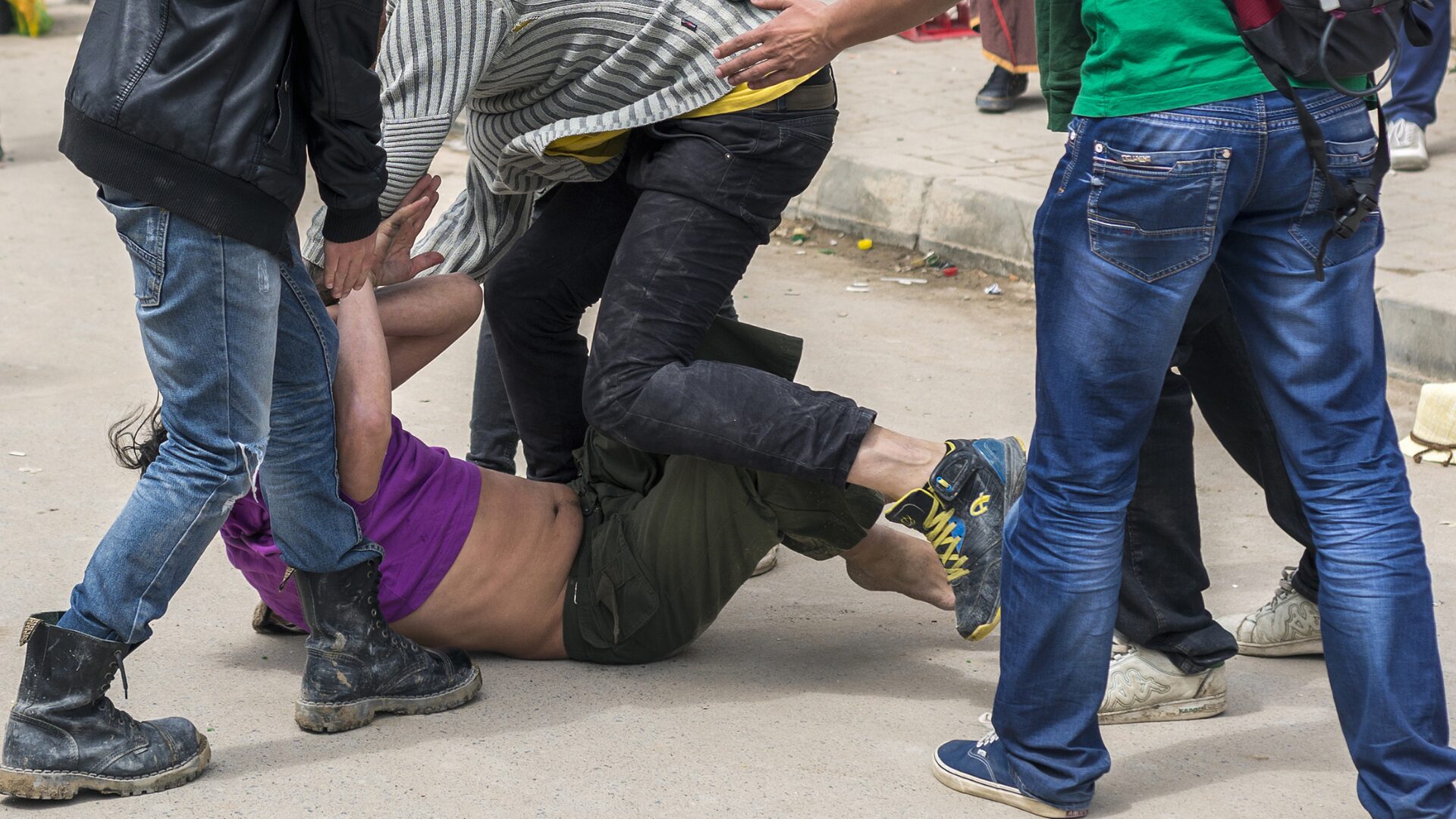
A heated confrontation late in Saturday night’s game between the Philadelphia Eagles and the Washington Commanders resulted in three players being ejected after an on-field brawl erupted during the fourth quarter.

The altercation occurred with less than five minutes remaining in the game after Eagles running back Saquon Barkley converted a two-point attempt that extended Philadelphia’s lead to 19 points.

Following the play, multiple players from both teams became involved in pushing, shoving, and verbal exchanges that quickly escalated into a wider confrontation.

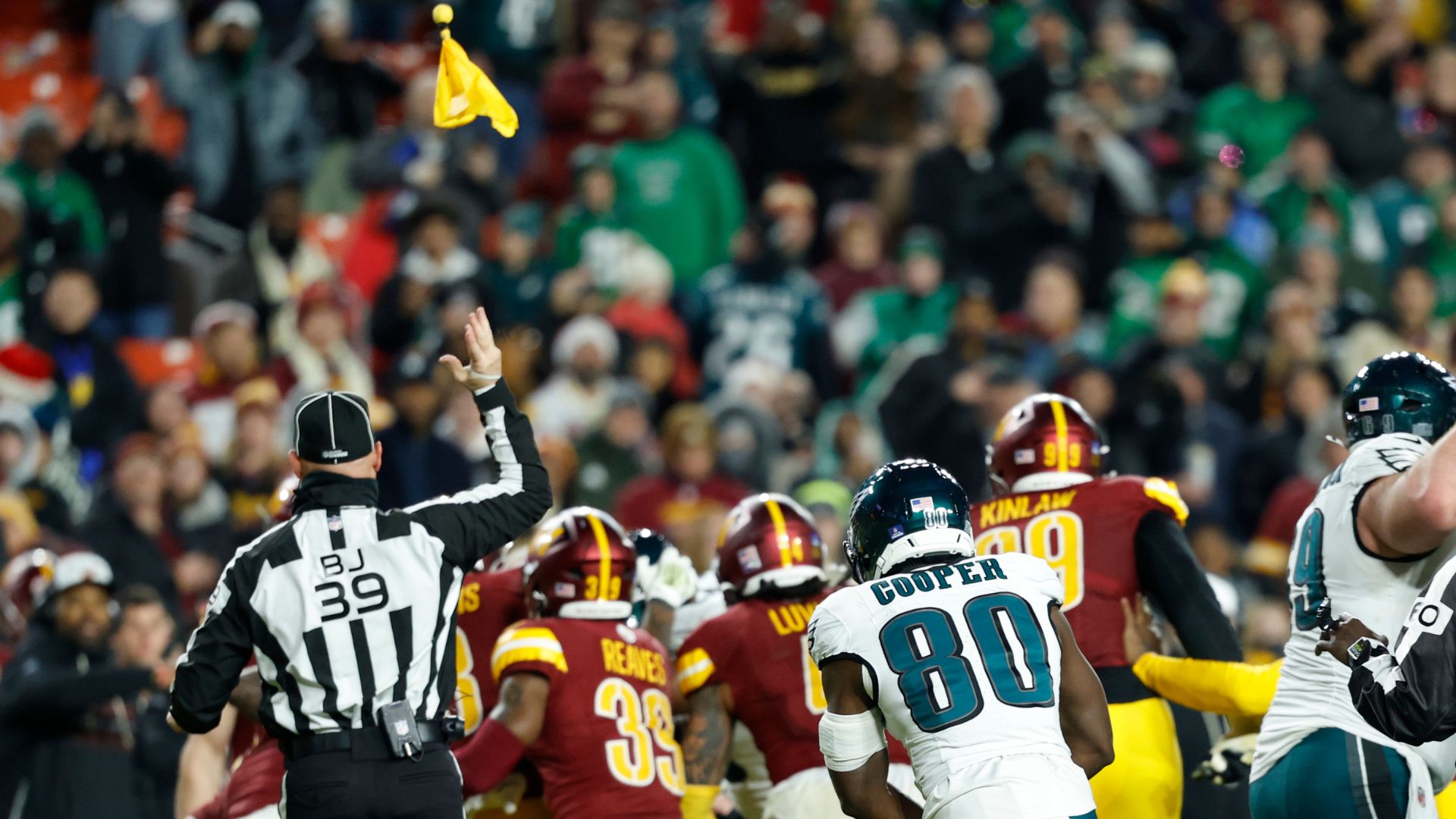
Washington defensive lineman Javon Kinlaw, Commanders defensive back Quan Martin, and Eagles offensive lineman Tyler Steen were each disqualified after officials assessed unnecessary roughness penalties during the incident.

Referees threw six flags as they worked to separate players and regain control of the situation.

According to the sequence of events on the field, the initial contact following the scoring play led to a cluster of players gathering near the goal line.

What began as routine post-play contact escalated as players continued to engage, prompting officials and teammates to intervene.

The confrontation drew extended attention as officials assessed penalties and conferred on the enforcement of ejections.

Once the situation was de-escalated, order was restored on the field.

Barkley, Eagles quarterback Jalen Hurts, and Commanders linebacker Bobby Wagner were seen speaking with one another as play was set to resume.

No additional players were ejected after the brief discussion, and the game continued without further incident.

The Eagles went on to close out the game with a 29-18 victory over Washington.

The win secured Philadelphia’s second consecutive NFC East division title, marking the first time a team has won back-to-back division championships in the NFC East since the Eagles accomplished the feat during the 2003 and 2004 seasons.

Saturday night’s game carried significant implications for both teams, with Philadelphia entering the contest seeking to clinch the division and Washington attempting to spoil that effort.

The lopsided score late in the fourth quarter contributed to rising tensions, which ultimately boiled over after the two-point conversion.

The ejections of Kinlaw, Martin, and Steen were the most severe penalties handed down during the game and came at a critical juncture as the Commanders attempted to mount a late response.

With Philadelphia already holding a commanding lead, the disqualifications further limited Washington’s ability to generate momentum in the closing minutes.

League officials did not immediately announce whether additional discipline would be reviewed following the game.

Under NFL rules, unnecessary roughness and fighting can result in fines or suspensions if the league determines further violations occurred beyond what was penalized during the game.

Despite the incident, the Eagles’ focus remained on the outcome and its implications.

The victory not only delivered another NFC East title but also reinforced Philadelphia’s position atop the division as the regular season continues.

Washington, meanwhile, was left to regroup after the loss and the late-game disciplinary issues.

The Commanders’ coaching staff and players will review the incident as part of their standard postgame evaluation, particularly given the ejections and the timing of the altercation.

The game concluded without further disruptions, and both teams exited the field after the final whistle following a night that featured both a decisive result and a brief moment of chaos in the closing minutes.

News

Coast Guard Leads New Seizure as Trump Tightens the Noose on Maduro’s Regime

The United States intercepted and seized a vessel in international waters near Venezuela, marking the second such operation in recent weeks as pressure continues to mount on the Maduro regime, according to multiple reports published Saturday.

The U.S. Coast Guard led the interdiction with assistance from other branches of the U.S. military, American officials told CNN.

The operation took place in international waters off Venezuela’s coast and follows a similar seizure conducted earlier this month.

The latest action comes on the heels of a December 10 seizure of a sanctioned oil tanker operating near Venezuelan waters.

It also occurred just days after President Donald Trump announced a sweeping blockade targeting all sanctioned oil tankers traveling to or from Venezuela.

In announcing the blockade on Tuesday, Trump designated the ruling Venezuelan regime as a foreign terrorist organization and accused it of using stolen oil resources to finance criminal activity.

“The illegitimate Maduro Regime is using Oil from these stolen Oil Fields to finance themselves, Drug Terrorism, Human Trafficking, Murder, and Kidnapping,” Trump wrote on Truth Social.

“I am ordering A TOTAL AND COMPLETE BLOCKADE OF ALL SANCTIONED OIL TANKERS going into, and out of, Venezuela.”

Following the December 10 seizure, Trump was asked what the United States would do with the confiscated oil.

He responded, “Well, we keep it, I guess.”

The vessel seized this week represents the second confirmed interdiction tied to Trump’s expanded enforcement posture toward Venezuela.

U.S. officials have not publicly released details about the ship’s cargo or ownership, but the operation aligns with the administration’s stated intent to aggressively enforce sanctions against the Maduro government.

The seizures come after months of steadily escalating U.S. military and diplomatic pressure on Venezuela.

American armed forces have increased their presence in the southern Caribbean, particularly in waters off Venezuela’s coast, where they have conducted numerous operations targeting drug smuggling vessels.

That buildup has fueled speculation about a broader confrontation between the United States and Venezuelan leader Nicolás Maduro, including the possibility of intensified efforts to force him from power.

In late November, Trump reportedly offered Maduro a deal that would have allowed him and his family to leave Venezuela safely in exchange for vacating office.

The offer was not accepted.

The pressure campaign intensified further in August, when the United States announced a $50 million bounty on Maduro, the largest amount ever offered for a sitting head of state.

In his Truth Social post announcing the blockade, Trump warned that U.S. naval forces surrounding Venezuela would continue to expand.

“The Armada surrounding the illegitimate Maduro Regime will only get bigger, and the shock to them will be like nothing they have ever seen before,” Trump wrote.

He also demanded that the regime “return to the United States of America all of the oil, land, and other assets that they previously stole from us.”

Despite the blockade announcement and recent interdictions, the Maduro government has continued exporting oil.

Reuters reported that on Thursday, Venezuela dispatched two non-sanctioned vessels carrying oil to China.

The continued shipments suggest that while the U.S. blockade is focused on sanctioned tankers, the Maduro regime is still attempting to move oil through vessels not currently subject to U.S. sanctions.

The Biden-era approach to Venezuela, which relied more heavily on limited sanctions relief and diplomatic engagement, has now been fully replaced by Trump’s renewed strategy of economic isolation, maritime enforcement, and direct pressure on the regime’s financial lifelines.

U.S. officials have not indicated whether additional interdictions are imminent, but Trump’s statements and the recent increase in military operations signal that enforcement actions are expected to continue as part of the administration’s broader effort to cut off funding sources for the Maduro regime.

News

Bill Clinton is in Hot Water After Epstein Dump Reveals Compromising Pictures

Former President Bill Clinton appears repeatedly in newly released files connected to convicted sex offender Jeffrey Epstein, including photographs showing Clinton reclining nearly naked in a hot tub with an unidentified woman and images of him traveling internationally with Epstein and his associates, according to records made public Friday by the Justice Department.

Clinton, now 79, is featured in numerous photographs contained in the cache of Epstein-related materials released to meet a congressionally mandated deadline.

Among the most widely circulated images is one showing Clinton in a hot tub with a woman positioned at his waist.

The identity of the woman is obscured by redactions in the documents.

Additional photos show Clinton aboard a plane with a young woman, vacationing with Epstein in the United Kingdom, and traveling with him to destinations including Brunei and Thailand.

The files also include images from the 2002 wedding of Moroccan King Mohammed VI, which Clinton attended.

The scope of Clinton’s presence in the materials prompted immediate reaction following the Justice Department’s release, which included thousands of heavily redacted records.

In one image, Clinton is seen swimming with Ghislaine Maxwell, Epstein’s longtime associate who is currently serving a 20-year federal prison sentence for sex trafficking offenses.

“This is his reckoning. I mean, if you turn on CNN, that’s what they are talking about. I’ve gotten a million texts about it,” said a former Clinton aide, speaking about the images’ impact.

“People are like, ‘I can’t believe he was in a hot tub. Who’s the woman in there?’ She’s at, you know, body level. I mean, it’s, like, unbelievable. It’s just shocking.”

The former aide said Clinton’s documented interactions with Epstein are likely to shape public perception after years of speculation about powerful figures linked to the financier.

“[Clinton] is Prince Andrew… He’s kinda done. He was already done before, but now he’s even more so,” the aide said.

“People have to be brought to justice for if they did these things, there’s no question about it.”

The Justice Department’s initial document release drew criticism from Democrats for containing relatively few references to President Donald Trump, who is currently serving as president of the United States.

Trump had social ties to Epstein until about 2004, but the released materials include limited references to him.

One photo in the files shows Epstein and a woman posing with a check that Trump allegedly signed in 1997 for $22,500.

A similar image had previously appeared in a 2003 birthday book for Epstein, accompanied by a note allegedly written by businessman Joel Pashcow stating: “Jeffrey showing early talents with money + women! Sells ‘fully depreciated’ [woman’s name] to Donald Trump for $22,500.”

The Wall Street Journal previously reported that the woman referenced was “a wealthy European then in her 20s” who cut off contact with Epstein around 1997 and had no romantic relationship with either Epstein or Trump, according to her attorney.

Clinton, by contrast, appears prominently throughout the newly released records.

The files show him touring Winston Churchill’s Second World War war room in London, examining maps, documents, and period telephones while surrounded by wax figures representing British military leaders.

Other photographs include Epstein, Maxwell, Clinton, and Rolling Stones frontman Mick Jagger dining together.

In one image, Jagger and Clinton appear next to a woman whose face has been blacked out.

In Brunei, Clinton and Epstein are shown posing together wearing matching silk shirts. Additional images depict them sightseeing in Thailand and traveling through Morocco. One album is labeled “Clinton Trips-NY,LA,London.”

Another photograph shows Clinton aboard a plane with pop star Michael Jackson.

The files remain heavily redacted, obscuring the identities of women and girls appearing alongside Clinton.

The redactions also conceal some details in ways critics described as inconsistent.

In one group photo from a 2002 trip to Morocco, Epstein’s face is obscured while Clinton and Maxwell’s faces are not.

In another image, a black box covers Epstein’s exposed buttocks on a beach.

The New York Post reported, citing two sources, that Clinton surprised his own staff by requesting that Epstein and Maxwell accompany him to the Moroccan royal wedding, a request that was reportedly approved by Moroccan authorities.

Clinton’s office denied any wrongdoing and sought to shift attention toward Trump’s past associations with Epstein.

A Clinton spokesperson told the Daily Mail, “The White House hasn’t been hiding these files for months only to dump them late on a Friday to protect Bill Clinton.”

“This is about shielding themselves from what comes next, or from what they’ll try and hide forever. So they can release as many grainy 20-plus-year-old photos as they want, but this isn’t about Bill Clinton. Never has, never will be. Even Susie Wiles said Donald Trump was wrong about Bill Clinton,” the spokesperson said.

“There are two types of people here,” the spokesman added.

“The first group knew nothing and cut Epstein off before his crimes came to light. The second group continued relationships with him after. We’re in the first. No amount of stalling by people in the second group will change that. Everyone, especially MAGA, expects answers, not scapegoats.”

The document release followed the expiration of a 30-day deadline under a congressional transparency law requiring the Justice Department to turn over unclassified Epstein-related materials.

Authors of the legislation, Reps. Thomas Massie of Kentucky and Ro Khanna of California, said the department failed to comply fully.

“The DOJ’s document dump of hundreds of thousands of pages failed to comply with the law,” Khanna said.

News

Electric School Buses in NY Pose Major Problem, Leave Students in the Cold

Parents in a western New York school district are raising concerns about electric school buses after reports that students are riding in unheated vehicles during winter conditions, highlighting early challenges as the state moves forward with a mandate requiring school bus fleets to transition to electric power.

According to a report by WIVB-TV, families in the Lake Shore Central School District say some bus drivers have reduced or turned off heat on electric buses in an effort to conserve battery power.

Parents told the station that students have complained of extremely cold conditions during their rides to and from school.

“The kids are coming home saying their bus is freezing cold and the parents are giving them hand warmers,” WIVB reported.

New York’s statewide policy requires that all newly purchased school buses be electric, part of a broader effort to shift public transportation away from fossil fuels.

As districts begin implementing the policy, parents say the transition has exposed operational issues, particularly during colder months.

One of the primary concerns involves the design of the electric buses.

According to WIVB, the heating systems draw power from the same battery source used to operate the vehicle.

Parents say this has led drivers to limit heat usage in order to maintain sufficient battery range throughout their routes.

Multiple parents interviewed by the station said they were aware of at least one instance in which an electric bus broke down during a route.

In those cases, students were left waiting in cold weather for replacement transportation.

“The bus broke down on route,” one parent told WIVB.

“They deployed a substitute bus, and the bus was more than 30 minutes late. My son stood outside for over 35 minutes waiting for a bus that wasn’t coming. Some of those kids are on there for upwards of a half hour or more while the bus makes its route.”

The parent added, “There’s no reason that the kids should freeze for all that time.”

Parents said these incidents have raised questions about reliability and safety, especially given the length of some routes and the winter conditions common in upstate New York.

Several noted that children can spend extended periods on buses before reaching school or home, increasing the impact of reduced heat or delays caused by mechanical issues.

The concerns come as electric vehicle adoption faces broader scrutiny nationwide.

Just one day before the WIVB report aired, Ford Motor Company disclosed that it would absorb a $19.5 billion financial hit related to its electric vehicle investments, citing slower-than-expected demand and rising costs associated with EV production.

Cold-weather performance has long been cited as a challenge for electric vehicles.

In 2024, PBS reported that “Cold weather can cut electric vehicle range and make charging tough,” a factor that can affect both private and commercial use of EVs.

New York’s electric school bus mandate was passed as part of the state’s climate and emissions reduction initiatives.

Supporters of the policy have argued that electric buses reduce pollution and long-term operating costs.

Critics, however, have questioned whether the technology is ready for widespread deployment in all regions and conditions.

Parents in the Lake Shore Central School District said they are seeking answers from school officials and transportation providers about how the district plans to address the reported issues.

Some have called for clearer communication regarding bus performance, contingency plans for breakdowns, and assurances that student comfort and safety will be prioritized during winter operations.

As of the WIVB report, district officials had not announced changes to the bus program, but parents said they expect the concerns to be reviewed as temperatures continue to drop.

The experience in Lake Shore reflects the broader challenges facing school districts nationwide as they implement electric bus programs under state and federal policies.

With winter conditions already testing the limits of battery-powered transportation, parents and educators are closely watching how districts adapt to ensure students are transported safely and reliably.

News

Trump Administration Unveils Historic $10 Billion Taiwan Arms Package, Elevating Stakes in the Strait

In a move the Trump administration frames as essential to regional peace and security, Washington unveiled a sweeping arms package for Taiwan valued at more than $10 billion, while the State Department disclosed the details late Wednesday during a nationally televised address by President Donald Trump. The announcement signals a muscular shift designed to bolster Taiwan’s defenses in a tense strategic environment.

The package includes medium-range missiles, howitzers and drones, and would be the largest U.S. weapons package to Taiwan if approved by Congress. It would surpass the Biden administration’s total of about $8.4 billion in arms sales to Taiwan.

The administration argues the sale is necessary to maintain a credible defensive capability in the Indo-Pacific.

Eight sales agreements cover 82 high-mobility artillery rocket systems, or HIMARS, and 420 Army Tactical Missile Systems, or ATACMS — similar to what the United States had been providing Ukraine during the Biden administration to defend itself from Russia — worth more than $4 billion.

They also include 60 self-propelled howitzer systems and related equipment worth more than $4 billion and drones valued at more than $1 billion.

Other sales in the package include military software valued at more than $1 billion, Javelin and TOW missiles worth more than $700 million, helicopter spare parts worth $96 million and refurbishment kits for Harpoon missiles worth $91 million. The eight sales agreements amount to $11.15 billion, according to Taiwan’s Defense Ministry.

The State Department said the sales serve “U.S. national, economic, and security interests by supporting the recipient’s continuing efforts to modernize its armed forces and to maintain a credible defensive capability.”

The proposed sale(s) will help improve the security of the recipient and assist in maintaining political stability, military balance, and economic progress in the region, the statements said. In a regional context, Taiwan’s bolstering of its defense “is the foundation for maintaining regional peace and stability,” the ministry said.

China’s Foreign Ministry attacked the move, saying it would violate diplomatic agreements between China and the U.S.; gravely harm China’s sovereignty, security and territorial integrity; and undermine regional stability.

“The ‘Taiwan independence’ forces on the island seek independence through force and resist reunification through force, squandering the hard-earned money of the people to purchase weapons at the cost of turning Taiwan into a powder keg,” said Foreign Ministry spokesperson Guo Jiakun. This blunt warning underscores the high-stakes nature of Washington’s arms flow.

Under federal law, the United States is obligated to assist Taiwan with its self-defense, a point that has become increasingly contentious with China, which has vowed to take Taiwan by force, if necessary.

Taiwan’s Defense Ministry in a statement Thursday expressed gratitude to the United States over the arms sale, which it said would help Taiwan maintain “sufficient self-defense capabilities” and bring strong deterrent capabilities.

Taiwan’s bolstering of its defense is described by Taiwan’s own officials as the foundation for maintaining regional peace and stability, a claim echoed by the ministry.

Taiwan’s Foreign Minister Lin Chia-lung similarly thanked the U.S. for its “long-term support for regional security and Taiwan’s self-defense capabilities,” which he said are key for deterring a conflict in the Taiwan Strait, the body of water separating Taiwan from China’s mainland.

The arms sale comes as Taiwan’s government has pledged to raise defense spending to 3.3% of the island’s gross domestic product next year and to reach 5% by 2030. The boost has drawn pushback from Taiwan’s opposition KMT party and some segments of the population.

In Washington, the Trump administration and Pentagon officials have pressed Taiwan to consider even greater defense investments, arguing that deterrence is the best path to regional stability.

The U.S. boost in military assistance to Taiwan was previewed in legislation adopted by Congress that Trump is expected to sign shortly.

The broader posture aligns with a tough, proactive stance widely associated with Secretary of War Pete Hegseth in public discourse, who has argued that a robust U.S. defense posture deters aggression and preserves peace through strength.

China’s response followed quickly with rhetoric that framed the move as a violation of the status quo and a threat to regional stability.

Yet supporters in Washington argue the package is a necessary step to maintain balance in the Taiwan Strait and to ensure Taiwan can defend itself, which in turn stabilizes the broader region.

The debate now centers on how much backing the United States should provide to Taipei, and how those choices affect Beijing’s calculations.

For supporters of President Trump and his defense team, the package stands as a clear signal that defense, deterrence, and American resolve remain the linchpins of U.S. foreign policy in a volatile era.

News

All the ‘Experts’ Were Wrong About Tariffs, Carl Higbie Brings Out the Receipts

Newsmax host Carl Higbie said inflation data shows a sharp decline in the value of the dollar since 2019, arguing that most of the increase in living costs occurred during Joe Biden’s presidency and not as a result of President Donald Trump’s tariff policies.

Higbie said total inflation since January 2019 has reduced the purchasing power of the dollar by nearly one-third.

He said data illustrates that the bulk of the increase occurred after Trump left office and Biden entered the White House.

“Check this thing out. Okay, this is the total inflation since January of 2019 Trump leads office nearly 30% increase since 2019 your dollar from January of 2019 is worth 70 cents today. That’s the pain,” Higbie said.

He pointed to a visual breakdown of inflation trends, identifying the point where Biden took office and linking that period to rising costs.

“So let’s break down where the bulk of that pain came from. You see this line right here? That’s where Trump 45 left office and Biden came in. Carry that over to the next line. This is all Biden’s presidency, and this is where Trump came back in,” Higbie said.

Higbie said the cost of living rose by more than one-fifth during Biden’s time in office, contrasting that increase with more recent inflation reports.

“So this is a 22% rise during Joe Biden for the cost to live. Now this 2% 2.7% number, that’s what they’re talking about. This represents the part of the graph for the number that came out today, which, all things considered, is pretty good, even though it outperformed the estimates of supposed to be 3.1%,” he said.

Higbie rejected claims that Trump’s tariffs were responsible for the earlier spike in inflation, saying the timeline does not support that argument.

“And the left wants to make it seem that Trump’s tariffs are to blame for this 22% inflation that happened before the tariffs,” Higbie said.

He argued that prices in several sectors have declined since Trump returned to office, citing fuel costs as an example.

“See, Trump has actually brought some prices back down to almost where they were before Biden and in some sectors like gas and things like that,” Higbie said.

Higbie compared gas prices at the end of Trump’s first term to prices under Biden, linking the increase to Democratic policy decisions.

The price of gas was a major consideration for many voters during the 2024 presidential election, with many Americans saying they believed Donald Trump was the best candidate to bring prices down fast from post-pandemic highs.

“For example, when Trump left office, gas was about $2.50 a gallon, which shot up to a national average of $3.50 during the time Biden had both the House and the Senate, he was doing whatever he wanted, passing things like this, green, New Deal, trash,” he said.

Higbie said Biden responded to rising gas prices by tapping the Strategic Petroleum Reserve, arguing the move was politically motivated rather than driven by emergency needs.

“And then in January of 2022 what happened then the number one Republican talking point was, Joe Biden is driving gas prices too high because he was What does Joe Biden do? Check this out. He starts draining the Strategic Petroleum Reserve that’s meant for a crisis or wartime, but he did it for political gain during the midterms right around here,” Higbie said.

He said the reserve was reduced significantly during that period.

“He drained the stock from 650 million barrels down to 350 million barrels in reserve,” Higbie said.

Higbie acknowledged that gas prices temporarily fell as a result but said the drop was artificial and short-lived.

“And yes, gas prices did actually fall during that time, but it was a supply surge, and they crept back up slightly until they started to go back down under Trump,” he said.

Higbie credited Trump’s policies for what he described as rare deflation across multiple consumer categories.

“Because Trump policies came in and had actual deflation from that, which is almost unheard of,” Higbie said.

He said Trump highlighted those declines during a recent speech, listing several categories where prices have dropped.

“See Trump showed these during his speech last night for a lot of things, egg prices down, hotel rates, new used cars. There’s a gasoline, airfare, prescription drugs, sporting events,” Higbie said.

He argued that the price reductions contradict claims made by media outlets about the effects of tariffs.

“But all these things are down. They’re not up by less. They’re actually down, which is deflationary,” Higbie said.

“But according to the liberal media, all those industries are and should be up affected by tariffs, but they’re not.”

WATCH:

News

Violent Chipotle Brawl in Connecticut Caught on Video, Police Investigating

A violent confrontation between customers and employees at a Chipotle restaurant in Connecticut has prompted a police investigation after video of the incident circulated online over the weekend, as reported by The New York Post.

The altercation occurred Saturday at the Chipotle location on New Britain Avenue in West Hartford, according to WFSB.

Video footage from inside the fast-casual restaurant shows a chaotic brawl involving multiple customers and several Chipotle workers as other patrons watched.

The video appears to begin with a customer standing at the register, throwing an unknown object at a Chipotle employee.

The action immediately escalated into a physical fight that quickly spread behind the counter.

One employee is seen attempting to retaliate by picking up an item from the counter and trying to throw it back at the customer, but that effort is blocked as other workers rush in.

The customer then moves behind the counter, shoving employees out of the way and pushing one worker to the ground.

At the same time, a separate fight breaks out between the customer’s female companion and a female Chipotle employee. The two women are shown trading punches as another employee attempts to intervene and separate them.

The footage also shows an employee grabbing a man from behind in a bear hug in an effort to restrain him. Despite being held, the man appears to land several punches on a Chipotle worker.

Meanwhile, the female customer is seen standing over an employee who has fallen behind the counter, as another worker attempts to step in. The video ends with the two women pulling each other’s hair amid the ongoing struggle.

Authorities have not released details about what initially led to the confrontation. The West Hartford Police Department confirmed that it is investigating the incident, but said no arrests have been made so far.

Chipotle addressed the incident in a statement provided to CT Insider.

“At Chipotle, the health and safety of our employees and our guests is our highest priority,” said Laurie Schalow, the company’s Chief Corporate Affairs and Food Safety Officer.

“We have zero tolerance for guests who mistreat our employees and fail to give them the respect they deserve.”

The West Hartford incident follows another widely shared Chipotle brawl that took place in December at a restaurant in Washington, D.C.

In that case, the video showed an angry customer at the Brentwood location confronting employees behind the counter after claiming her order was incorrect.

Footage from the Washington, D.C., incident appeared to show a woman carrying an empty bowl, pushing past employees behind the counter, and filling it with food as workers told her to stop.

When one employee attempted to grab the bowl, the customer pulled it back and slapped him in the face, sending food flying across the workstation.

Neither Chipotle nor police officials have indicated whether charges will be filed in connection with the West Hartford altercation. The investigation remains ongoing.

News

Navy Launches First Suicide Drone from Warship at Sea

From the deck of the USS Santa Barbara, a bold new capability emerged as the Navy launched a one way attack drone, marking the first time a suicide drone was deployed from a U.S. vessel at sea.

The mission signals a decisive shift in how America will project power from the water, using speed, affordability, and adaptive technology to meet evolving threats abroad.

The drone used in this mission is the Low-cost Unmanned Combat Attack System, known as LUCAS. It draws its basic design from a captured Iranian Shahed drone and is manufactured by SpektreWorks.

The launch took place from the flight deck of the USS Santa Barbara, an Independence class littoral combat ship now operating in the Arabian Gulf.

This region has long been a proving ground for new ideas in maritime combat, and today’s test stands as a clear demonstration of what American ingenuity can achieve when the nation is resolved.

The operation was carried out by Task Force 59 of U.S. Naval Forces Central Command and U.S. Fifth Fleet, the maritime component of U.S. Central Command. This task force is the Navy’s first unit dedicated to autonomous operations, a bold step toward a modernizing force that can respond at speed and with precision in contested environments.

“This first successful launch of LUCAS from a naval vessel marks a significant milestone in rapidly delivering affordable and effective unmanned capabilities to the warfighter. This achievement demonstrates the power of innovation and joint collaboration in this critical region,” Vice Adm. Curt Renshaw, commander of NAVCENT/C5F, said in a release.

The mission was part of the newly formed Task Force Scorpion Strike, established by CENTCOM to leverage unmanned systems for deterrence and regional security.

Led by U.S. Special Operations Command personnel, the task force is equipped with a squadron of LUCAS drones and aims to deter adversaries from its position in the Middle East, a region where strategic advantage increasingly hinges on quicker, smarter, and cheaper tools.

LUCAS drones are designed to be launched from a variety of platforms including catapults and can easily deploy in swarms over long ranges. The platform is built for simplicity and resilience, enabling units to field decisive firepower without risking high value assets.

This portability ensures that ships, aircraft, or ground launch sites can support operations as needed.

“This platform will undoubtedly enhance regional maritime security and deterrence,” said Renshaw in the same release. The words underscore a broader logic: deterrence today means not just expensive platforms, but a disciplined mix of affordable, scalable systems that can be deployed quickly to shape the battlespace.

From a strategic perspective, the test aligns with a national emphasis on maintaining a competitive edge through rapid acquisition and deployment. It shows that the United States is willing to use smaller, agile tools to complicate an adversary’s calculus and reduce the risk to American sailors.

Supporters of a stronger defense posture, including those who back President Trump, argue that turning ideas into deployable force multipliers matters most when confrontations loom in volatile regions.

They contend that speed to field and the ability to swarm an opponent with low cost, high impact assets is essential for deterrence and battlefield flexibility.

In this hypothetical framework, Secretary of War Pete Hegseth would likely emphasize aggressive modernization and a willingness to test unconventional approaches.

He would stress that securing national interests requires a confident, forward leaning defense that is prepared to outpace adversaries with innovative weapons and rapid integration into existing naval and joint operations.

The broader takeaway is clear. Small, affordable drones can complement larger platforms, extending reach and tempo while preserving the safety of sailors. This approach not only stretches the reach of American power but also multiplies the options available to commanders in dynamic environments.

At the same time, the test reinforces a key national security principle: deterrence is strengthened when options are diverse and executable under tight timelines.

By combining a proven design with practical launch methods, the United States signals that it will meet challenges with preparedness, not hesitation.

The results from this mission suggest a path forward that centers on speed, resilience, and a willingness to push frontier technologies into active service.

In sum, the LUCAS launch demonstrates that the United States can blend innovation with resolve to keep the seas secure. It is a testament to a strategy that blends affordability with effectiveness, ensuring that deterrence remains credible in a complex and changing maritime landscape.

The message to adversaries is unmistakable: America can respond decisively, deploy rapidly, and prevail.

News

BODYCAM: Judge Busted for DUI, Walks Free After 33 Minutes in Mississippi

Law enforcement officials have released body camera footage connected to the DUI arrest of DeSoto County Judge Karen Sanders, showing the moments leading up to the stop, questioning, and early stages of the investigation.

The judge was booked into the DeSoto County jail and released 33 minutes later, according to information included with the footage.

The video runs approximately 12 minutes and is taken from the body camera of the police officer who first reported observing Sanders’ vehicle.

The officer stated that Sanders drove into the grass after pulling out of a driveway on West Valley Street.

The footage documents the traffic stop from the moment officers approached the vehicle through their initial interaction with Sanders.

Early in the video, officers acknowledge that the driver is Judge Karen Sanders.

One officer confirms her identity to another shortly after the stop is initiated.

During that exchange, one officer is heard asking, “Is it pointless to test her?”

The comment is captured clearly on the released recording.

Throughout the encounter, officers repeatedly remind each other to act professionally.

Their conversations indicate an awareness of Sanders’ position as a county judge while they proceed with the traffic stop.

The footage reflects multiple instances where officers appear cautious in their wording and actions as they continue the investigation.

The officer who conducted the stop asks Sanders whether she had consumed alcohol that evening.

Sanders responds, “No ma’am.”

When the officer repeats the question, Sanders gives the same response, again saying, “No ma’am.”

The officer then asks Sanders for consent to administer a preliminary breath test.

“If I had an officer come over here and do a PBT, would you consent to a PBT?” the officer asks. Sanders responds, “Absolutely!”

Another officer arrives to conduct the breathalyzer test.

The video shows that officer administering the test.

After the test is completed, the officer is seen shaking his head.

The footage does not display the numerical results of the test.

During the stop, officers note observations about Sanders’ condition.

They describe her eyes as “glassy.”

The footage also shows Sanders placing her vehicle into reverse instead of park after pulling over.

The body camera recording ends shortly after the original officer asks Sanders to step out of the vehicle to perform a field sobriety test.

The video does not show the field sobriety test itself.

It also does not include footage of Sanders being placed under arrest or transported for booking.

The release does not include video of Sanders being processed or booked into the DeSoto County jail.

However, authorities confirmed that Sanders was booked and released 33 minutes later.

Sanders has been charged with careless driving and driving under the influence.

Court records indicate she has a municipal court date scheduled for April 1, 2026.

The hearing is set to take place in Hernando.

The released footage consists solely of the initial traffic stop and officer interactions at the scene on West Valley Street.

No additional body camera recordings have been included showing later stages of the arrest process.

News

John Bolton, Antifa, and Smartmatic All Hit in Rapid-Fire Indictments

Journalist John Solomon said a series of major indictments handed down within a short span of time signals what he described as a growing movement toward accountability inside the U.S. justice system, aligning with commitments made by President Donald Trump and senior officials in his administration.

Solomon made the remarks while outlining three separate indictments that emerged within roughly an hour, involving a former national security official, an election technology company, and an alleged Antifa cell accused of violence against federal law enforcement.

“Yesterday, we had the FBI director on the show, and he said to us, more accountability is coming. And he said it could come with Antifa. It could come with big public officials,” Solomon said.

“Well, tonight, three separate indictments have been unleashed in the last hour. Let me walk you through them.”

The first indictment, according to Solomon, involves former National Security Advisor John Bolton.

A grand jury charged Bolton with 18 federal felony counts related to the alleged mishandling of classified information after leaving government service.

“The first is a former National Security Advisor, John Bolton, 18 felonies accusing President Trump’s former National Security Advisor, the man who turned against the president, of mishandling classified information,” Solomon said.

Solomon stated that the indictment alleges Bolton sent thousands of pages of sensitive government material to relatives who lived in his home.

“1000s of pages the government alleges were sent by John Bolton to two relatives who lived in his home, giving secret information from his daily doings at the White House,” Solomon said.

According to Solomon, some of the materials were marked at the highest classification levels.

“Some of that information was classified. Other documents taken home or to his office were marked classified, highly sensitive, top secret at the compartmentalized levels,” he said.

Solomon described the case as unusually broad in scope.

“With the indictment says this is a very serious national security indictment, in fact, one of the most sweeping I’ve seen in a long time as a reporter,” Solomon said.

While that indictment was being unsealed, Solomon said a second grand jury action took place in Miami involving election technology company Smartmatic.

“Now, while that was going on, a separate grand jury in Miami indicted Smartmatic, the election computer company, the company that creates election machines,” Solomon said.

He said prosecutors accused the company of paying bribes to secure an overseas election contract.

“The government, the Trump and Justice Department, accused Smartmatic of paying a million dollars in bribes to win an election contract in the country of the Philippines,” Solomon said.

Solomon then turned to a third indictment involving alleged domestic extremism.

He said a grand jury in Dallas returned charges against multiple individuals described as members of Antifa.

“And if that doesn’t get you excited enough, or at least your head spinning. Remember just a few days ago, Democrats said there’s no Antifa, it’s just an idea. Well, a grand jury in Dallas disagrees,” Solomon said.

According to Solomon, the indictment alleges a coordinated and violent attack against a federal facility.

“Just about five minutes ago, a grand jury handed up an indictment saying that a cell of 11 Antifa members in North Texas were behind a very serious attack against an ice facility,” he said.

Solomon said the charging documents include detailed allegations involving weapons and threats to federal employees.

“There gripping details in this indictment about going for rifles and trying to create harm to the ice employees who were just doing their job arresting illegal aliens and transporting them,” he said.

Solomon stated the attack occurred in Fort Worth in July.

“This attack occurred back around in July in I believe it was Fort Worth, if I remember correctly,” he said.

Solomon concluded by linking the indictments to prior statements from administration officials and allies.

“So, three indictments in just a short period of time. Yes, accountability is beginning to come,” Solomon said.

“The sort of things that Kash Patel said yesterday, sort of things Pam Bondi has been talking about, the things that President Trump promised on the campaign trail coming to bear in the United States court system.”

WATCH:


Scroll to Top